

RTT News: Dark Chocolate May Improve Walking Ability.
Fourth of July Reads
Posted: July 4, 2014 Filed under: morning reads, U.S. Politics, Women's Rights | Tags: corporate personhood, corporatizing religious liberty, Declaration of Independence, Fourth of July, Hobby Lobby, Independence Day, John Roberts, legal precedent, religion, Samuel Alito, SCOTUS, separation of church and state, Statue of Liberty, Wheaton College 14 Comments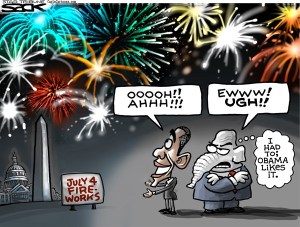
Good Morning!!
Today we celebrate the Declaration of Independence. I’ve assembled a few informational readings about this day in history.
From The Cagle Post: Fourth of July Fast Facts.
“I’m confused. I thought July 4 was the day our country declared independence from King George III of Great Britain.”
“Actually, according to ConstitutionFacts.com, that’s not so. The Continental Congress declared independence from Great Britain on July 2, 1776.”
“Then why do we celebrate our independence on the Fourth every year? Is that when we started the American Revolution?”
“That is a common misunderstanding, as well. The American Revolution began in April 1775, more than a year earlier.”
“I’m stumped. Was the Fourth the day Thomas Jefferson wrote the first draft of the Declaration of Independence?”
“Nope. Thomas Jefferson wrote the first draft in June 1776. Also, Jefferson didn’t write the Declaration alone.”
“He didn’t? I always thought he was the sole author.”
“A common misconception. In fact, the Continental Congress appointed a five-person to write the Declaration. It included Jefferson, Benjamin Franklin, John Adams, Robert Livingston and Roger Sherman.” ….
“Though Jefferson wrote the first draft, it was changed 86 times by other members of the committee and other members of the Continental Congress.”
I did not know that.

David Armitage at The Wall Street Journal: The Declaration of Independence: The Words Heard Around the World.
The Declaration of Independence is the birth certificate of the American nation—the first public document ever to use the name “the United States of America”—and has been fundamental to American history longer than any other text. It enshrined what came to be seen as the most succinct and memorable statement of the ideals on which the U.S. was founded: the rights to life, liberty and the pursuit of happiness; the consent of the governed; and resistance to tyranny.
But the Declaration’s influence wasn’t limited to the American colonies of the late 18th century. No American document has had a greater impact on the wider world. As the first successful declaration of independence in history, it helped to inspire countless movements for independence, self-determination and revolution after 1776 and to this very day. As the 19th-century Hungarian nationalist, Lajos Kossuth, put it, the U.S. Declaration of Independence was nothing less than “the noblest, happiest page in mankind’s history.”
In telling this story of global influence, however, it is important to separate two distinct elements of the Declaration—elements that sometimes get conflated. The first of these is the assertion of popular sovereignty to create a new state: in the Declaration’s words, the right of “one People to dissolve the Political Bands which have connected them with another, and to assume among the Powers of the Earth, the separate and equal Station to which the Laws of Nature and of Nature’s God entitle them.” The second and more famous element of the Declaration is its ringing endorsement of the sanctity of the individual: “We hold these truths to be self-evident, that all men are created equal, that they are endowed by their Creator with certain unalienable Rights.”
Read much more at the link.
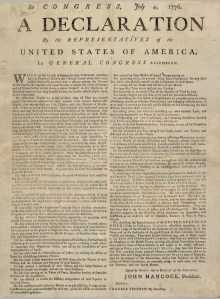
From the LA Times: The slow-spreading news of American independence.
In this era of instant communication, it’s interesting to note the slow distribution of the Declaration, and the spreading of the word to those on whose behalf independence had been declared. (Imagine the Twitter version: Dudes, we’re on our own. #independence #totallyrad #stickitkinggeorge).
The text was set in type by Philadelphia printer John Dunlap just hours after the Continental Congress approved the manifesto on July 4. He ran off about 200 copies, most of which were then distributed via horse and boat around the Colonies. He reprinted it in his own newspaper, Dunlap’s Pennsylvania Packet, or The General Advertiser (great newspaper names back then). Over the next few weeks, Jefferson’s stirring words were reprinted inlocal newspapers and pamphlets around the Colonies.
And, naturally, in Britain. It took more than a month for the first reports of the Declaration to reach Britain in letters ferried by the Mercury packet ship. Gen. William Howe, who was leading the crown’s forces in the Colonies, included a brief mention in his report to his overseers. So the first public airing of the news came in the London Gazette, the crown’s official paper. If you weren’t a close reader, you could have easily missed it.
In the four-page issue dated Aug. 6-Aug. 10, 1776, the Gazette’s lead story was Howe’s update of the war, reporting that “the Rebels, who are numerous, and are very advantageously posted with strong Entrenchments both upon Long Island and that of New York, with more than One Hundred pieces of Cannon for the Defence of the Town towards the Sea, and to obstruct the passage of the [British] Fleet up the North [Hudson] River, besides a considerable Field Train of artillery.”
Finally, Carina Kolodny at Huffington Post: This Is Not Your Independence Day.
The 4th of July might commemorate the independence of our country — but it also serves as a bitter reminder that in 1776, the country that I love had no place for me in it.
When our founding fathers penned, “All men are created equal,” they meant it. Not all people. Not all humans. Just all men — the only reason they didn’t feel obliged to specify “white” men is because, at the time, men of color were considered less than men, less than human.
The 4th is not my Independence Day — and if you’re a Caucasian woman, it isn’t yours either. Our “independence” didn’t come for another 143 years, with the passage of The Woman’s Suffrage Amendment in 1919. The 4th of July is also not Independence Day for people of color. It wasn’t until the 15th Amendment was ratified in 1870 that all men had the right to vote regardless of race — on paper, that is, not in practice. People of color were systematically, and all too successfully, disenfranchised for another century. July 4th of 1776 was certainly not a day of Independence or reverence for Native Americans. It wasn’t until 1924 that Native Americans could unilaterally become citizens of the United States and have the voting rights to go with it.
Now, before anyone argues that Independence is about more than voting rights, I’d like to point out that our Founding Fathers would fundamentally disagree with you. The Revolutionary War was fought, in large part, because of “taxation without representation” — the then English colonists believed they were not free because their voices were not represented. The right to vote, the right to have your say is the delineating characteristic of a democracy.
The Aftermath of the Hobby Lobby Decision
On that note, today many concerned citizens are looking back at the latest Supreme Court decisions that take women backwards in their pursuit of freedom and autonomy. The court-approved limits on access to birth control go beyond the Hobby Lobby decision. Lyle Denniston at SCOTUSblog: Broader right to object to birth control.
Expanding the rights of religious opponents of birth control, a divided Supreme Court on Thursday afternoon spared an Illinois college — and maybe hundreds of other non-profit institutions — from obeying government regulations that seek to assure access to pregnancy prevention services for female workers and students. In the same order, the majority essentially told the government to modify its own rules if it wants to keep those services available.
Three Justices wrote a sharply worded dissent, accusing the majority of creating on its own a “new administrative regime” that will seriously complicate the operation of the birth control mandate under the new federal health care law. The majority, the dissenters said, “has no reason to think that the administrative scheme it foists on the government today is workable or effective on a national scale.”
The ruling, which the majority insisted was temporary and had settled nothing finally about the legal issues at stake, came three days after the Court in Burwell v. Hobby Lobby had given for-profit businesses whose owners have religious objections to birth control a right to refuse to provide those services in their employee health plans.
The plea by Wheaton College, a religious institution in Illinois with about 3,000 students, moved the Court beyond for-profit firms to the world of non-profit religious colleges, hospitals, and other charities. The government had already moved to accommodate their beliefs, but that had not gone far enough for the college and for scores of other non-profits. With the Court’s new order, they gained additional separation from the birth-control mandate.
At Mother Jones, Kevin Drum writes: Supreme Court Now Playing Cute PR Games With Hobby Lobby Decision.
For the last few days, there’s been a broad argument about whether the Hobby Lobby ruling was a narrow one—as Alito himself insisted it was—or was merely an opening volley that opened the door to much broader rulings in the future. After Tuesday’s follow-up order—which expanded the original ruling to cover all contraceptives, not just those that the plaintiffs considered abortifacients—and today’s order—which rejected a compromise that the original ruling praised—it sure seems like this argument has been settled. This is just the opening volley. We can expect much more aggressive follow-ups from this court in the future.
POSTSCRIPT: It’s worth noting that quite aside from whether you agree with the Hobby Lobby decision, this is shameful behavior from the conservatives on the court. As near as I can tell, they’re now playing PR games worthy of a seasoned politico, deliberately releasing a seemingly narrow opinion in order to generate a certain kind of coverage, and then following it up later in the sure knowledge that its “revisions” won’t get nearly as much attention.
At Slate, Micah Schwartzman, Richard Schragger, and Nelson Tebbe explain that Hobby Lobby rewrites religious-freedom law in ways that ignore everything that came before.
Monday’s decision in Hobby Lobby was unprecedented. Much of the commentary has focused on the Supreme Court’s decision to extend rights of religious free exercise to for-profit corporations. Hobby Lobby is for religion what Citizens United was for free speech—the corporatization of our basic liberties. But Hobby Lobby is also unprecedented in another, equally important way. For the first time, the court has interpreted a federal statute, theReligious Freedom Restoration Act (or RFRA), as affording more protection for religion than has ever been provided under the First Amendment. While some have read Hobby Lobby as a narrow statutory ruling, it is much more than that. The court has eviscerated decades of case law and, having done that, invites a new generation of challenges to federal laws, including those designed to protect civil rights.
The authors explain how the right wing Roberts Court has moved beyond any concern for legal precedent in making its decisions.
Hobby Lobby is unprecedented because it corporatizes religious liberty. It extends to for-profit businesses the rights and privileges that have long been associated only with churches and religious nonprofits. But that change is the result of a more pervasive and deeper upending of the law of religious liberty in America. Ignoring congressional intent, the court reads RFRA as having shed its First Amendment skin. It is not entirely clear what American law will look like after that change. But if anything is clear, it is that the Roberts Court is now unconstrained by precedent. It has loosened itself from decades of First Amendment doctrine and has begun remaking the law of free exercise.
Please read the whole thing.
Ironically, the Hobby Lobby decision may have also created some serious problems for the human beings who own corporations (h/t Dakinikat). From Mother Jones: How Hobby Lobby Undermined The Very Idea of a Corporation. Basically, now that SCOTUS has said that some corporations are inseparable from the people who own them, those owners could lose their legal protection from debts and lawsuits that result from corporate actions. There’s some instant Karma for you!
A few more links for your holiday reading pleasure:
Miami Herald: FBI records: Chilling find in Bradenton dumpster (new clues to Saudi involvement in the 9/11 and the cover-up of that involvement by the Bush/Cheney administration).
Study links Oklahoma earthquake swarm with fracking operations
Boston Globe: People prefer electric shocks to time alone with thoughts.
LA Times: Tibetans get high-altitude edge from extinct Denisovans’ genes.
What stories are you following on this Independence Day?
Lazy Saturday Reads: Challenging Misogyny and Electing a Woman President
Posted: June 14, 2014 Filed under: Barack Obama, morning reads, U.S. Politics, Women's Rights | Tags: "Hard Choices", 2008 Democratic primaries, 2016 presidential race, Hillary Clinton, misogyny, NPR's Fresh Air, same-sex marriage, Sexism, Terry Gross, woman hating 36 Comments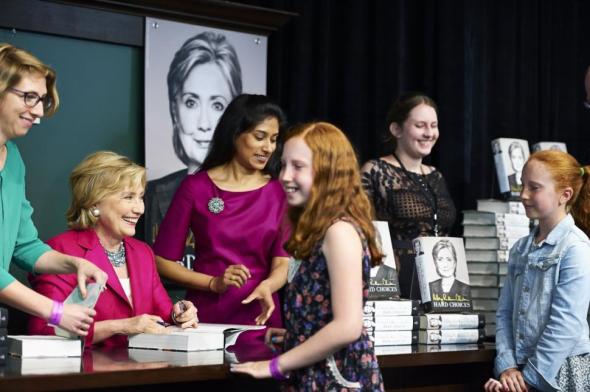
Good Morning!!
A couple of days ago, Dan Murphy of The Christian Science Monitor tweeted a link to a 2013 post he wrote about on-line misogyny and noted that “It’s only getting worse.” It’s refreshing that some men recognize the problem. But why is it “getting worse” this week? I doubt if even Dan Murphy knows what’s driving the recent increase in on-line expressions of woman hatred.
Hint: A powerful woman released a memoir on Tuesday. There are now 552 customer reviews of the book on Amazon, most written by misogynistic Hillary-haters who obviously have not read even a single paragraph of Hillary Clinton’s Hard Choices.
We watched it during the 2008 presidential campaign, and we always knew it would happen again if Hillary dared to run again. The truth is that misogyny is even stronger than racism in this country; hatred of women is so powerful that even pointing it out can unleash rape and murder threats. From Dan Murphy’s post from last year about misogyny in the UK:
Guardian columnist Hadley Freeman got the ball rolling this time by daring to write on Tuesday:
There’s been a lot of focus of late on the weirdy-weirdos who send rape threats on Twitter, and rightly so. But much of the coverage makes several misguided assumptions. First, that angry misogynists only communicate on Twitter (allow me to introduce you to something called Reddit). Second, that this is a man-versus-woman thing. Some of the angriest messages I’ve ever received on the Internet have come from women, usually telling me how ugly I am. Lovely to meet you, too! And third, that legislating against rape threats on the Internet is a contravention of freedom of speech. Seeing as legislation against hate speech in the real world has not, as far as I know, contravened anyone’s right to freedom of speech, this argument makes no sense, except, maybe, to people who make rape threats and whose grasp of logic is, perhaps, not whipsmart.
Ms. Freeman soon received a bomb threat on Twitter. Also in the UK last week feminist writer Caroline Criado-Perez and Labour Party politician Stella Creasy received rape threats via Twitter. After Ms. Criado-Perez complained to police she’d received dozens of sexual threats over the Internet, a 21-year old man was arrested.

The Hillary hate has been building up for awhile now, ever since Hillary stepped down as Secretary of State and the media began shrieking from the dark heart of its collective fear of a woman president–especially *This Woman.* I don’t know how bad its going to get, but I’m already sick of it. I want so much for Hillary to stand strong and prevail over the fear and hatred of women that is and will be projected on her for the next couple of years.
Even I fell for it yesterday when we discussed Hillary’s interview with NPR’s Terry Gross. I said I thought Hillary had sounded defensive when she responded to Gross’s question about changing her position on same-sex marriage. Luckily for me, Fannie and Janicen were there to point out my mistake:
Fannie
I am glad Hillary asserted herself and her tone. I don’t know why Terry Gross didn’t do her homework, or why she took the path that lead to the “twisting of her comments, insisting it was politics”. Hillary wasn’t trying to jump her (or as the media said, Hillary was being testy), she was being spot on about her response. Get ready, now that her book is out, we are going to see underreactions, overreactions, the ups and and downs, and everything else they will thrown into the mix. Hillary will be up against the Ducks, the Rick Perry’s who thinks gays are alcoholics, the tea party candidate who says the Bible tells me to stone gay people to death, and Rich Gohmert who debates at congressional hearings about who is and who is not going to heaven. She’s been around the block a couple times.
BB, you remember when Chris Hayes was attacked by a republican woman, she hammered his ass, and it was all because they “disagreed”. Hillary was NOT being nasty like this woman. She handled it well, I thought.
Let’s get back to Hillary’s history. She was speaking out against the oppression by the Uganda Bill “Kill the Gays”. She gave a hell of speech at George University. That was early in 2009.
Did Chris and Terry forget 2009 when she said:
“On behalf of Department of State and USAID, I want to congratulate the gays and lesbians in foreign affairs agencies on winning the Employee Resource Group of the Year Award by Out and Equal Work Place.”It was Hillary who changed the policy at the Dept. State, to help provide benefits for same sex partners of those work were in foreign service. It was after this that Obama followed with other federal agencies. Obama had been nodding his head, while she was actually changing the laws, and the records are there for everybody to see. Terry and Chris refused to see.
Hillary Clinton also developed policy on transgender employees at the state department. She said stand up and be who you are. Keep in mind, she said “the struggle for equality is never ever finished”…. and she is right.
Hillary has been advocate for LGBT community for long time. She knows that they (we) are all flustrated because change is slow to come. It coming but very slowly. It was Hillary who marched in Pride Parade when June was declared Pride Month, she was right there with them, while Obama was working out.
Chris is getting lazy, get up off his ass and speak to those she has helped for many many years.
janicen
June 13, 2014 at 11:55 am(Edit)
I have to disagree that she sounded defensive. I think she sounded decisive. Gross kept stupidly pushing her agenda again and again. Clinton was polite for as long as humanly possible and then she just had to put the idiot in her place. I’m glad she responded as she did. Until then she was sounding like a politician. Once she cold cocked her, Madame President sounded like a leader.
Thank you, my dear friends. That is a clear demonstration of the value of a community blog where we can argue share our analyses with each other. I’m so glad we are still hanging in there together!
Now a response to the chorus of media criticism of Hillary as “testy” (IOW *bitchy*) from Jeremy Holden at Media Matters: How NPR’s Terry Gross Created A False Impression That Hillary Clinton Stonewalled On Marriage Equality.
By repeatedly asking the same question, NPR correspondent Terry Gross created the false impression that Hillary Clinton was stonewalling and dodging over the issue of marriage equality, despite the fact that Clinton consistently and repeatedly answered Gross’ question.
As a senator and during her 2008 presidential run, Clinton supported civil unions for same-sex couples and opposed marriage equality. In a March 2013 statement, she announced that “I support marriage for lesbian and gay couples. I support it personally and as a matter of policy and law.” She explained that her travels as secretary of state and her daughter’s wedding had been key to her changing her opinion on the issue.
Gross’ central question was whether Clinton changed her publicly stated position and supported gay marriage out of political expedience, a question she asked seven separate times during an NPR interview. Clinton consistently rejected Gross’ characterization throughout the interview, instead saying that her views on the issue changed over time.
To me it seemed that Gross wanted Hillary to say that she had always supported same-sex marriage, but had pretended to oppose it for political reasons. Of course if Hillary had said that, she would have been pilloried for lying about her position. The truth is, as she stated very clearly, that Hillary’s views on same-sex marriage changed as she heard the logical arguments for it from LGBT activists–whom she had long supported. Here is Hillary’s clear response at the beginning of the exchange.
TERRY GROSS: Were there positions you believed in as senator but you couldn’t publicly support because you felt that it wasn’t time yet? That the positions would have been too unpopular? That the public wasn’t ready in regards to LGBT rights? And, you know, I often think that there are politicians who, you know, in their heart really support it but don’t publicly support it.
HILLARY CLINTON: Well, I was fully on board with ending discrimination in the workplace on behalf of the LGBT community. I did not support gay marriage when I was in the Senate or running for president, as you know, and as President Obama and others held the same position.But it, for me, became an opportunity to do what I could as secretary of state to make the workplace fairer – something I had always supported and spoke out about. And then when I was out of the secretary of state position and once again free to comment on domestic matters, I very shortly came out in favor of fully equality, including gay marriage.
Yet “progressives” like Chris Hayes writers at Firedoglake and Huffington Post ripped into Hillary for standing up for herself against Gross’s attempts to twist her responses.
Another defense of Hillary’s truthfulness–while expressing frustration with her positions–came from the Washington Post’s Johnathan Capehart: Gross misunderstanding of Hillary Clinton on gay marriage.
The history bears out Clinton’s contention. Her evolution on marriage equality was as irksome for the lesbian, gay, bisexual and transgender (LGBT) community as was President Obama’s. But what made Obama’s evolution especially painful to watch was knowing that as a candidate for state senate in 1996, he unequivocally stated, “I favor legalizing same-sex marriages and would fight efforts to prohibit such marriages.” As I covered Clinton from first lady to senator to presidential candidate, I never detected a whiff of that kind of political calculation in her opposition to same-sex marriage. If anything, her march to “yes” was maddeningly slow.
Here’s another interesting example of contrasting views on Hillary and her behavior. First The UK Guardian’s review of Hard Choices by David Runciman: Hard Choices by Hillary Clinton review – buttoned-up but still revealing.
If Hillary Clinton becomes the next American president she won’t just be the first woman to hold that office: she’ll be the first secretary of state to get there since James Buchanan in 1857. Unlike in Britain, where foreign secretaries and chancellors of the exchequer routinely go on to the top job, senior US cabinet positions are not seen as stepping stones to the White House. No secretary of the treasury has ever become president. Cabinet officers are meant to be functionaries: people whose job is to make sense of the world. Presidents are meant to be politicians: people whose job is to lead it. In this long, exhausting, faintly robotic but ultimately impressive book, Hillary makes her pitch to be both.
According to Runciman, Hillary’s book is way too cautious and “prosaic,” but still “an amazing story.
Above all, what comes through is Clinton’s sheer persistence. This is how she does politics, by keeping going and totting up the small victories so that they outweigh the defeats. Unlike Obama, who still appears to believe that politics is about rational argument, and unlike George Bush, who thought it was about vision, Hillary believes it is about breaking things down. She is a disaggregator, who can’t see a problem without trying to make it smaller, more manageable, and only then does she try to fit the pieces back together again. Peace, she tells us, doesn’t necessarily begin with a grand fanfare. Sometimes it comes out of the temporary ceasefire that holds just long enough to make a difference. Part of why this book is so exhausting is its thoroughness: she travels the whole world and tells us about the different challenges she faced, taking them all seriously. Early on she quotes approvingly a maxim from Deng Xiaoping: “Coolly observe, calmly deal with things, hold your position, hide your capacities, bide your time, accomplish things where possible.” The US could do worse than having Deng as its next president.
Perhaps that’s the only option for a powerful woman in the misogynistic rape culture of the U.S.?
Here’s feminist writer Jessica Valenti, also from The Guardian: Hillary Clinton’s book is exactly as ‘safe’ as female politicians are forced to be.
Hillary Clinton’s new book, Hard Choices – a memoir of her time as secretary of state – is finally out, and the critical consensus is that it’s a snore. CNN’s conservative commentator Ana Navarro called it “50 shades of boring” while the network’s liberal contributor Sally Kohn called it “safe” and “dry” – and joked that the book should have been called “Boring Choices“. The New Republic criticized its “dullness and lack of critical energy”. Politico’s Mike Allen called the 596-page book a “newsless snore”.
I’m not exactly sure how action-packed the minutiae of a diplomat’s life is supposed to be, but the Hard Choices haters ignore that a “safe” book was Clinton’s only real choice. After all, whenever she’s hinted at being anything other than measured and guarded, Clinton has been attacked as hysterical, a ballbuster or worse. So if people are bored by Hard Choices, they should blame the misogynist expectations of Washington, not the careful crafting of a seasoned politician.
When then-presidential hopeful Clinton teared up on the campaign trail in New Hampshire in 2008, for example, Maureen Dowd penned a column in the New York Times that asked “Can Hillary Cry Her Way Back to the White House?”On CNN, Glenn Beck said, “After spending decades stripping away all trace of emotion, femininity, and humanity, Hillary Clinton broke down and actually cried. … I don’t buy the hype.” On Fox News, Weekly Standard editor Bill Kristol called the emotional moment “solipsistic and narcissistic”. Similarly, when Clinton got into a heated exchange during her Benghazi testimony, the New York Post ran a cover of Clinton yelling with her fists clenched; the headline: NO WONDER BILL’S AFRAID.
Any emotion that Hillary Clinton shows has always been used against her, and it has become a kind of stand-in for the many reasons women are said to be oh-so-unfit to lead. The building-up of her protective public armor, post- and potentially pre-White House, isn’t just smart for Clinton personally – it’s essential for the growing national image of women in politics.
It’s clear from reading Hard Choices that sexism – particularly during Clinton’s 2008 run for president – has taken a toll on her. “I knew that it arose from cultural and psychological attitudes about women’s roles in society, but that didn’t make it any easier for me and my supporters,” she writes. Indeed, the frenzy of misogyny was so intense that it’s hard to imagine enduring it all while vying for the most important job in the world.
After seeing the racism that has plagued Barack Obama’s presidency–and has, if anything, increased during his second term–we now know that the misogyny from the media and society as a whole would continue throughout a Hillary Clinton presidency. That is what it will take for a woman to break through that ultimate glass ceiling. If we are going to support Hillary in her fight to do just that we will need to stay awake and aware of the various forms the efforts to bring her down will take. I learned that lesson here yesterday, and I will rely on other Sky Dancers to keep me focused on the ultimate goal. I hope I’ll be strong enough to do the same in return.
Now, what else is happening in the world today? Please post your thoughts and links on any topic in the comment thread.
Friday Reads: Bigots Among Us
Posted: May 16, 2014 Filed under: Bobby Jindal, Capital Punishment aka Death Penalty, Civil Liberties, Civil Rights, Crime, Criminal Justice System, Discrimination against women, Domestic terrorism, morning reads, The Right Wing, Women's Rights, worker rights 89 Comments Good Morning!
I have read the most horrifying stories this week. It makes me wonder if a good portion of humanity has a death wish. I’m going to share a variety of links that I’ve found; and a lot of them aren’t the most uplifting, I’m afraid.
Knowledge is power. Ignorance may be bliss to the holder but not to the folks around them. There is no lack of headlines in the area of bigotry and intolerance. This is truly discouraging to those of us that care passionately about social justice.
Crime rates have been falling recently but our incarceration rates are not. There’s a huge study out on the economic costs of our prison society and its 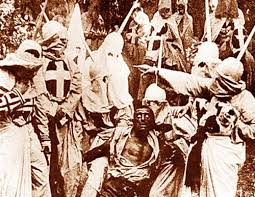 findings are not pretty. We’re spending billionaires of dollars locking up the poor, the uneducated, and the mentally ill in a distinctly racist way.
While crime rates have fallen 45 percent since 1990, the memo said that the incarceration rate is now at a “historically unprecedented level,” jumping 222 percent between 1980 and 2012. An African-American man who never graduated from high school has a 70 percent likelihood of being imprisoned by his mid-30s; for similarly educated white men, the rate is about 15 percent. And the United States imprisons at a rate six times greater than most peer nations, including those of the European Union, Japan, Israel, and Mexico.
The U.S. Department of Justice announced rules last month that would give the Obama administration wider latitude to extend clemency or reduce sentences for drug-related prisoners who don’t present a threat to public safety. In addition, the U.S. Sentencing Commission voted unanimously in April to reduce sentencing guidelines for certain nonviolent criminals, a move now before Congress that could go into effect Nov. 1 if lawmakers don’t take any further action.
Ronald S. Sullivan Jr. is a clinical professor of law and director of the Criminal Justice Institute at Harvard Law School. The program focuses on criminal practice, education, and research, and hosts a teaching clinic for third-year law students to represent indigent criminal defendants in local and juvenile courts. Sullivan spoke with the Gazette about racial and national sentencing disparities, the economic and social costs of mass incarceration, and the sentencing reforms now under consideration.GAZETTE: According to the memo, while the overall crime rate fell 45 percent between 1990 and 2012, the rate of imprisonment has spiked 222 percent between 1980 and 2012. What’s behind this disparity? Is that strictly the result of policy decisions like mandatory minimum sentencing, repeat-offender laws, and the growth in for-profit prisons? Or are other factors at work?
SULLIVAN: That’s certainly a big piece of it. … policy decisions in respect of mandatory minimums drive the huge incarceration rate. But there are other factors as well. What those factors are is the subject of a lot of academic debate nowadays. And to be honest, we’re not exactly sure what it is. We do know that on a per-capita basis the U.S. incarcerates more people than any country in the world, including Rwanda, Russia, Cuba, all of the places one does not associate with a robust tradition of liberty. And that’s in many ways shocking.
The theory would be … with the high rates of incarceration that the crime rate would go down and then that would be followed by less incarceration because there just wouldn’t be as many crimes committed. But those numbers have gone in opposite directions. Mandatory minimums simply don’t explain all of it. Part of it, at least I think, has to do with selective law enforcement — the over-policing of certain neighborhoods, particularly minority neighborhoods and poor neighborhoods. That is to say, if police are there and looking for crimes, and over-police certain neighborhoods, you’re going to produce more defendants in particular areas. And if the populations are drawn from poor populations, they’re unable to afford to be released on bail, they’re unable to afford good lawyers, and studies show that if you’re not released on bail you tend to stay in jail after sentencing. An unfortunate reality of the United States is that far too often the justice you receive is a function of how much money you have.
The prison-industrial complex is also an important factor. It doesn’t take an economist to know that if … you make your money by people going into prison, then there’s going to be higher incarceration rates. So I think that certainly plays a role as well.
GAZETTE: What are the areas of debate among scholars?
SULLIVAN: One explanation has to do with the United States’ articulated goals of punishment. Back in the ’70s and before, rehabilitation was an articulated goal of the criminal justice system. The Supreme Court has said clearly now rehabilitation is no longer a penological goal. We look at incapacitation, we look at deterrence, and we look at retribution as goals that the penal system serves. When you take rehabilitation out of the mix, then that de-incentivizes the system from having shorter sentences because there’s no longer an affirmative goal of reintegrating people meaningfully back into the community. That’s one of the things that scholars argue drive up the incarceration rate.
The other has to do with our system of elected judges in most states. Judges who are elected, the argument runs, respond to democratic pressures. We live in a political economy where people think that more and harsher punishment is better, even though most competent data suggests that longer sentences, after a certain point … make people worse as opposed to making them better. But you have democratically elected judges who respond to the will of the people, and if that will is for longer sentences, no matter how misinformed, then judges oftentimes acquiesce to those pressures.
The other issue has to do with legislators. It, again, has to do with the political economy in which we live. With this mantra of being “tough on crime,” legislators essentially race to see who can draft legislation with the harshest, longest penalties. I think that legislators don’t believe that prosecutors will attempt to enforce the most harsh provisions of particular laws, and in that sense, from the vantage point of the legislator, it’s sort of a win-win situation: They can get the political credit for drafting an incredibly harsh law, but not really have to deal with the effects because the notion is the prosecutor will sort it out and will recommend a fair sentence. That assumption, though, just hasn’t really been borne out in reality.
GAZETTE: The current incarceration gap between white men and African-American men is particularly striking. Does that figure surprise you, and what accounts for this gap? Is access to justice a factor?
SULLIVAN: The figure does not surprise me, and it is unfortunate that the figure does not surprise me. The figure reaffirms that race insinuates itself into almost every aspect of our life still, and it has a particular salience in the criminal justice system. … Here we see the effect of over-policing much more dramatically. In our culture, unfortunately … blackness is seen as a proxy for criminality. So the same or similar conduct engaged in by a person of color is seen through a lens that views that conduct as criminal, where others simply are not taxed in the same way.
The debate over the use of lethal injections and the drugs used for state executions continues. Three newspapers–including the UK Guardian–have sued to 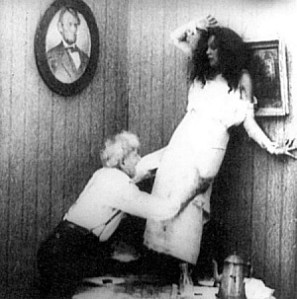 make public the source of drugs for these injections. Most states are trying to make that information private. Many of the recent botched executions came from simple druggists compounding the formulations because many of the major drug manufacturers–especially those in Europe–refuse to do so. Should the formulation and the source of death penalty drugs be kept from the public?
The growing secrecy adopted by death penalty states to hide the source of their lethal injection drugs used in executions is being challenged in a new lawsuit in Missouri, which argues that the American people have a right to know how the ultimate punishment is being carried out in their name.
The legal challenge, brought by the Guardian, Associated Press and the three largest Missouri newspapers, calls on state judges to intervene to put a stop to the creeping secrecy that has taken hold in the state in common with many other death penalty jurisdictions. The lawsuit argues that under the first amendment of the US constitution the public has a right of access to know “the type, quality and source of drugs used by a state to execute an individual in the name of the people”.
It is believed to be the first time that the first amendment right of access has been used to challenge secrecy in the application of the death penalty. Deborah Denno, an expert in execution methods at Fordham University law school in New York, said that more and more states were turning to secrecy as a way of hiding basic flaws in their procedures.
“If states were doing things properly they wouldn’t have a problem releasing information – they are imposing a veil of secrecy to hide incompetence.” “This is like the government building bridges, and trying to hide the identity of the company that makes the bolts,” said Richard Dieter of the Death Penalty Information Center. “Those involved in public service should expect public scrutiny in order to root out problems, particular when the state is carrying out the most intimate act possible – killing people.”
A Guardian survey has identified at least 13 states that have changed their rules to withhold from the public all information relating to how they get hold of lethal drugs. They include several of the most active death penalty states including Texas, which has executed seven prisoners so far this year, Florida (five), Missouri (four) and Oklahoma (three). Attention has been drawn to the secrecy issue by the botched execution of Clayton Lockett in Oklahoma on 29 April in which the prisoner took 43 minutes to die, apparently in great pain, from an untested cocktail of drugs whose source was not made public.
Lockett’s lawyers had argued in advance that he might be subjected to cruel and unusual punishment as a result of the lack of information surrounding the drugs, but the state supreme court allowed the procedure to go ahead having come under intense pressure from local politicians, some of whom threatened to impeach judges.
In the wake of the events in Oklahoma, in which the prisoner writhed and groaned over a prolonged period, the state has agreed to pause for six months before carrying out any further judicial killings to give time for an internal investigation to be completed. President Obama described the Lockett execution “deeply troubling” and has asked US attorney general Eric Holder to review the way the death penalty is conducted.
Until last year, Missouri which is now executing prisoners at a rate of one a month, was open about where it obtained its lethal injection chemicals. But like many death penalty states, its drug supplies have dwindled as a result of a European-led pharmaceutical boycott, and in a desperate move to try to find new suppliers it has shrouded their identity in secrecy. In October, the state changed its so-called “black hood law” that had historically been used to guard the identity of those directly involved in the death process.
The department of corrections expanded the definition of its execution team to include pharmacies and “individuals who prescribe, compound, prepare, or otherwise supply the chemicals for use in the lethal injection procedure”. Six inmates have been executed by Missouri since the new secrecy rules came in –they went to their deaths entirely ignorant of the source or quality of the drugs used to kill them. All that is known is that the pentobarbital that Missouri deploys in executions probably came from a compounding pharmacy – an outlet that makes up small batches of the drug to order in the absence of stringent regulation.
We continue to see GLBT civil rights characterized by the right as an attack on their religious rights and their homobigoted behavior and language 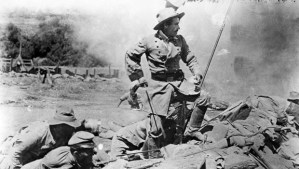 wrapped up as a first amendment issue. How does the right play the victim card in a debate about limiting the rights of others? It is doing the same things with women’s reproductive rights.
While Religious Right leaders are quick to equate criticism as an attack on their freedom of speech and religion, some of them are all too happy to limit the free speech or religious liberty of the people they disagree with. That includes the Benham brothers.
In the flurry of public appearances in the wake of the HGTV cancellation, the Benhams and their right-wing fans have portrayed themselves as committed to the principle that everyone in America should have a chance to express themselves. On the O’Reilly Factor, David Benham denounced the gay agenda for seeking “to silence those that disagree with it, and it begins with Christians.” Jason warned that “when an idea seeks to silence any other idea that may disagree with that, then we have ourselves a problem on hand.”
But as blogger Jeremy Hooper recently pointed out, back in November 2004, David, Jason, and Flip Benham were all part of a group of about 15 people who went to a Charlotte, North Carolina city council meeting to complain about the gay pride celebration that had taken place in a city park six months earlier. They were among a group of people who had gone to the Pride event to, in Jason’s words, “tell them that Jesus loves you just the way you are, but he refuses to leave you that way.” But the Benhams and their friends were appalled at what they saw. “This is filth, this is vile and should not be allowed in our City,” said David. Jason urged city council members to reject future permits for Pride celebrations – and seemingly for any LGBT-themed event:
They have a right to apply for this permit, but you have a right and responsibility to deny it. I [implore] you not to be governed by the fear in which you feel. If you deny them this permit you will open a can of worms but you in your leadership position have to take that responsibility and you have to not allow the fear of making this homosexual community mad. You have to accept that responsibility and deny them every permit that they ask for.
In the words of Charlotte Pride organizers, “The Benham brothers once tried to silence us. They failed.”
Some Benham fans, like the American Family Association’s Bryan Fischer, say flat-out that the First Amendment’s religious liberty protections were only meant for Christians and don’t apply to Muslims, Mormons or other minority faiths. Back when many self-proclaimed “religious liberty” advocates were opposing efforts by Muslims in New York to build a community center – which critics gave the inaccurate and inflammatory name of “Ground Zero Mosque” – David Benham and his father Flip were among them. According to the Anti-Defamation League, David participated in protests against the Center, calling it a “den of iniquity” and labeling Muslims “the enemy” that was attacking America.
In these public debates, “Christian” as used by Religious Right leaders often doesn’t really apply to all Christians, but only to a subset of Christians who share their right-wing politics. Other Christians don’t count. The Family Research Council’s Tony Perkins, who has bemoaned “cultural elites” who want to “silence” and “bully” people like the Benhams, recently said that pro-gay-equality Christians don’t deserve the same legal protections as he does because “true religious freedom” applies only to those with religious views that align with those of the political Right.
Gov. Bobby Jindal’s commencement speech at Liberty University was a masterpiece in this type of dishonest projection. Posing as a champion of free speech and freedom of religion, he actually made a chilling argument in favor of stripping both of those freedoms away from ordinary Americans, businesses and anyone who might disagree with turning this country into a theocratic state. He started by defending Hobby Lobby for trying to strip contraception coverage out of their employees’ own healthcare plans. “Under the Obama regime,” he argued, “you have protection under the First Amendment as an individual, but the instant you start a business, you lose those protections. And that brings us to the second front in this silent war: the attack on our freedom of association as people of faith.”
It’s all nonsense, of course. In fact, Hobby Lobby’s intention here is to reduce religious freedom by forcing their employees to adhere to certain religious rules in order to get the benefits they already earned. ( They have a history of trying to impose their religious dogma on non-believers through other means as well.) The only people in any real danger of losing freedom are women, who are in danger of losing their freedom to use their insurance benefits in a way that fits their personal beliefs.
But Jindal was just warming up, claiming the “Obama administration” was gunning to decide “who can preach the Gospel.” This outrageous conspiracy theory was justified, in his opinion, by supposed other attacks on “free speech,” namely that TV networks are reluctant to house the opinions of open bigots. “The left no longer wants to debate. They simply want to silence us,” he said of Phil Robertson from Duck Dynasty, who was never silenced and has, to this date, been allowed to say any fool thing he wants. But he was briefly suspended from A&E, leading conservatives to decide that “free speech” means you have a right to your own TV show.
All of this has gotten me interested in again in White Supremacist movements. I really believe that most of these Southern Republicans fall squarely 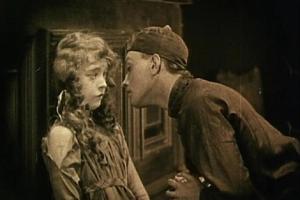 into the neoconfederate mold and aren’t that far off the KKK tree.
White supremacy is referenced in relation to specific news events as well. For example, the murder rampage by the neo-Nazi Frazier Glenn Miller, the recent weeks-long debate between pundits Ta-Nehisi Coates and Jonathan Chait about “black pathology”; birtherism; stand-your-ground laws; and the open embrace of the symbols and rhetoric of the old slave-holding Confederacy by the Republican Party have been framed and discussed in terms of white supremacy.
Conservatives and progressive often use the phrase “white supremacy” in divergent ways. Conservatives use the phrase in the service of a dishonest “colorblind” agenda, evoking extreme images of KKK members and Nazis as the exclusive and only examples of white racism in American life and politics. Conservatives use extreme caricatures of white supremacy in order to deflect and protect themselves from charges that the contemporary Republican Party is a white identity organization fueled by white racial resentment. Liberals, progressives and anti-racists use the phrase “white supremacy” to describe the overt and subtle racist practices of movement conservatism in the post-Civil Rights era, and how American society is still structured around maintaining and protecting white privilege. This analysis is largely correct: however, it often conflates concepts such as racism, white privilege, and white supremacy with one another. Language does political work. In the age of Obama, the phrase “white supremacy” is often used in political discussions like an imprecise shotgun blast or a blockbuster bomb. If the Common Good and American democracy are to be protected—countering how the right wing has used the politics of white racial resentment, racial manipulation, and hate to mobilize its voters in support of a plutocratic agenda—a more precise weapon is needed. A necessary first step in that direction requires the development of a more detailed and transparent exploration of the concept known as “white supremacy.”
 One of the sure signs to me of either a racist or a misogynist or a homophobic bigot is that they all insist they have no problem women, racial minorities, and/or gay people. The believe they are the victims by being forced to deal with any one else in terms other than their own choosing. Therein lies the problem. Here’s a perfect example from Kristen Powers writing at USA Today. You can’t call out bigotry without being called a bully obsessed with political correctness. Then, you’re told that the real victims are white conservative christians.
Each week seems to bring another incident. Last week it was David and Jason Benham, whose pending HGTV show was canceled after the mob unearthed old remarks the brothers made about their Christian beliefs on homosexuality. People can’t have a house-flipping show unless they believe and say the “right” things in their life off the set? In this world, the conservative Tom Selleck never would have been Magnum, P.I.
This week, a trail-blazing woman was felled in the new tradition of commencement shaming. International Monetary Fund Managing Director Christine Lagarde withdrew from delivering the commencement speech at Smith College following protests from students and faculty who hate the IMF. According to the Foundation for Individual Rights in Education, this trend is growing. In the 21 years leading up to 2009, there were 21 incidents of an invited guest not speaking because of protests. Yet, in the past five-and-a-half years, there have been 39 cancellations.
Don’t bother trying to make sense of what beliefs are permitted and which ones will get you strung up in the town square. Our ideological overlords have created a minefield of inconsistency. While criticizing Islam is intolerant, insulting Christianity is sport. Ayaan Hirsi Ali is persona non grata at Brandeis University for attacking the prophet Mohammed. But Richard Dawkins describes the Old Testament God as “a misogynistic … sadomasochistic … malevolent bully” and the mob yawns. Bill Maher calls the same God a “psychotic mass murderer” and there are no boycott demands of the high-profile liberals who traffic his HBO show.
The self-serving capriciousness is crazy. In March, University of California-Santa Barbara women’s studies professor Mireille Miller-Young attacked a 16-year-old holding an anti-abortion sign in the campus’ “free speech zone” (formerly known as America). Though she was charged with theft, battery and vandalism, Miller-Young remains unrepentant and still has her job. But Mozilla’s Brendan Eich gave a private donation to an anti-gay marriage initiative six years ago and was ordered to recant his beliefs. When he wouldn’t, he was forced to resign from the company he helped found.
Got that? A college educator with the right opinions can attack a high school student and keep her job. A corporate executive with the wrong opinions loses his for making a campaign donation. Something is very wrong here.
The right seems to be really confused about the first amendment, which clearly deals with the relationship between the federal government, religion, the press, and the people’s free speech. The same idiots that scream that Hobby Lobby can deny its employees contraception and say that businesses should be able to refuse to serve GLBTs will shout out a corporation that says they don’t want to be known for bigotry of any kind. They also misunderstand the protection given to University professors when it comes to academic freedom. Companies have to comply with the law. They do not have to keep employees that don’t represent their corporate values. PERIOD.
Anyway, it just amazes me that this intense amount of uncivil bigotry and hatred seemed to have burbled up again after all these years. All it took was an African American President and a few powerful women–namely Hillary Clinton–to bring the crazy out.
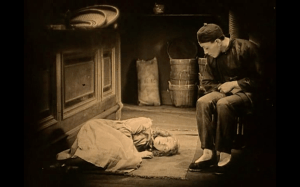
I just wanted to mention that most of these silent film images come from “Birth of a Nation” but one comes from “Broken Blossoms” also known as the “Yellow Man and the Girl”. Both of these films were directed by DW Griffith around 1919. Both movies starred Lillian Gish and were received differently by white audiences than by the racial minorities they also depicted.
What’s on your reading and blogging list today?
Thursday Reads: Gray Lady Down and Other News
Posted: May 15, 2014 Filed under: Journalism, Media, morning reads, Women's Rights | Tags: Arthur O. Sulzberger Jr., Bill Keller, code words, Dean Baquet, Equal Pay for Equal Work, gender discrimination, Janine Gibson, Jill Abramson, Ken Auletta, pushy females, the NEW York Times, uppity women 59 Comments
Good Morning!!
News broke late yesterday afternoon that New York Times Executive Editor Jill Abramson had suddenly been replaced by Managing Editor Dean Baquet. Here’s the New York Times’ own report: Times Ousts Its Executive Editor, Elevating Second in Command.
Arthur O. Sulzberger Jr., the publisher of the paper and the chairman of The New York Times Company, told a stunned newsroom that had been quickly assembled that he had made the decision because of “an issue with management in the newsroom.”
Ms. Abramson, 60, had been in the job only since September 2011. But people in the company briefed on the situation described serious tension in her relationship with Mr. Sulzberger, who was concerned about complaints from employees that she was polarizing and mercurial. She had also had clashes with Mr. Baquet.
In recent weeks, these people said, Mr. Baquet had become angered over a decision by Ms. Abramson to make a job offer to a senior editor from The Guardian, Janine Gibson, and install her alongside him in a co-managing editor position without consulting him. It escalated the conflict between them and rose to the attention of Mr. Sulzberger.
Ms. Abramson did not attend the afternoon meeting at which her dismissal was announced.

The Times won eight Pulitzer Prizes under Ms. Abramson, and she won praise for journalistic efforts both in print and on the web. She had previously served as the head of the Washington bureau, and before coming to The Times was an investigative reporter at The Wall Street Journal. She co-wrote, with Ms. [Jane ] Mayer [of the New Yorker], “Strange Justice,” a book about the confirmation hearings for the Supreme Court justice Clarence Thomas.
But as a leader of the newsroom, she was accused by some of divisiveness and criticized for several of her personnel choices, in particular the appointment of several major department heads who did not last long in their jobs.
With Mr. Sulzberger more closely monitoring her stewardship, tensions between Ms. Abramson and Mr. Baquet escalated. In one publicized incident, he angrily slammed his hand against a wall in the newsroom. He had been under consideration for the lead job when Ms. Abramson was selected and, according to people familiar with his thinking, he was growing frustrated working with her.
Let’s see . . . Abramson was “polarizing and mercurial,” “was accused by some of divisiveness,” and her male second in command didn’t like taking orders from her, have I got that right? Is it just me, or do those sound like code words?
Now let’s see what people who don’t work for Sulzberger are saying.

From Ken Auletta at The New Yorker: WHY JILL ABRAMSON WAS FIRED.
At the annual City University Journalism School dinner, on Monday, Dean Baquet, the managing editor of the New York Times, was seated with Arthur Sulzberger, Jr., the paper’s publisher. At the time, I did not give a moment’s thought to why Jill Abramson, the paper’s executive editor, was not at their table. Then, at 2:36 P.M. on Wednesday, an announcement from the Times hit my e-mail, saying that Baquet would replace Abramson, less than three years after she was appointed the first woman in the top job. Baquet will be the first African-American to lead the Times.
Fellow-journalists and others scrambled to find out what had happened. Sulzberger had fired Abramson, and he did not try to hide that. In a speech to the newsroom on Wednesday afternoon, he said, “I chose to appoint a new leader of our newsroom because I believe that new leadership will improve some aspects …” Abramson chose not to attend the announcement, and not to pretend that she had volunteered to step down.
Apparently, the real problem Sultzberg had with Abramson was that she was an uppity woman.
As with any such upheaval, there’s a history behind it. Several weeks ago, I’m told, Abramson discovered that her pay and her pension benefits as both executive editor and, before that, as managing editor were considerably less than the pay and pension benefits of Bill Keller, the male editor whom she replaced in both jobs. “She confronted the top brass,” one close associate said, and this may have fed into the management’s narrative that she was “pushy,” a characterization that, for many, has an inescapably gendered aspect. Sulzberger is known to believe that the Times, as a financially beleaguered newspaper, needed to retreat on some of its generous pay and pension benefits; Abramson, who spent much of her career at the Wall Street Journal, had been at the Times for far fewer years than Keller, which accounted for some of the pension disparity. Eileen Murphy, a spokeswoman for the Times, said that Jill Abramson’s total compensation as executive editor “was directly comparable to Bill Keller’s”—though it was not actually the same. I was also told by another friend of Abramson’s that the pay gap with Keller was only closed after she complained. But, to women at an institution that was once sued by its female employees for discriminatory practices, the question brings up ugly memories. Whether Abramson was right or wrong, both sides were left unhappy. A third associate told me, “She found out that a former deputy managing editor”—a man—“made more money than she did” while she was managing editor. “She had a lawyer make polite inquiries about the pay and pension disparities, which set them off.”
The other issues Auletta mentions are similar to those described in the NYT article: she had problems with Baquet and those who worked under her sometimes complained she was “brusque” (as opposed to Mr. Personality, Bill Keller?). Again, it sounds to me as if Abraham’s biggest “problem” was her gender. Mr. Baquet sounds pretty “pushy” too, but for him that was acceptable, I guess. Josh Marshall at TPM points out that:
The Times article notes in passing that Abramson reached a settlement with the Times, which makes pretty clear that whatever might have happened with disparate pay or a connection between her pressing the matter and her firing there will not be a lawsuit.
Hmmm . . . Sounds like Sultzberger thought Abramson might have grounds to sue if he didn’t settle with her.
At Business Insider, Hunter Walker calls attention to the Times’ past problems with gender disparities in pay (also mentioned by Ken Auletta in The New Yorker piece linked above):
Auletta claimed other Times staffers were concerned about the pay disparity between Abramson and Keller. He said it brought up “ugly memories” of a 1974 lawsuit female employees made against the paper due to allegations of sex discrimination in hiring, pay, and promotion.
On Twitter, NPR media correspondent David Folkenflik subsequently confirmed Auletta’s report. Folkenflik also noted unspecified “figures at Times wonder what role gender ultimately played in (Abramson’s) ouster.”
Finally, Politico describes how the announcement impacted other New York Times employees: Invitation to a beheaading: How Times editors learned of Abramson’s ouster:
“Please come to a masthead/dept head meeting at 2:00 p.m. today in the page one conference room/3rd floor.”
That was the note top editors at The New York Times received this afternoon summoning them to an abrupt gathering in which publisher and Times Company chairman Arthur Sulzberger Jr. would inform them that executive editor Jill Abramson was being replaced in the No. 1 masthead spot by one of her deputies, managing editor Dean Baquet….
[T]he news…came as a shock to most of the assembled editors. There had been none of the drama or widespread discontent that led up to the famous firing of Howell Raines in 2003. In fact when they arrived in the room, their first inkling of what was about to transpire was the fact that Abramson was not present.
Sulzberger gave the same vague reasoning for the change that would be relayed in a company memo and at a full newsroom meeting shortly thereafter—that the decision had to do with Abramson’s newsroom management.
Not everyone was buying it. When Sulzberger said he was sure it doesn’t “come as a surprise to you,” video editor Bruce Headlam spoke up in Abramson’s defense, according to a person who was present. “It does come as a surprise to me,” the source recalls him saying.
Two other editors also voiced their concerns, sources with knowledge of the meeting told Capital. National editor Alison Mitchell suggested that Abramson’s firing wouldn’t sit well with a broad swath of female Timesjournalists who saw her as a role model. (Abramson became the Times‘ first female executive editor in 2011, after Bill Keller stepped down.) Assistant managing editor Susan Chira seconded that notion.
Read more at the link.
So . . . draw your own conclusions. My guess is we’ll be reading and hearing quite a bit more about the Times and its history of gender discrimination over the next few days.
In other news . . . links to some stories that interested me:
The Hill: US using drones to find kidnapped Nigerian girls.
Yahoo News: Missouri lawmakers pass 3-day abortion wait period.
TPM: Christie Predicts BridgeGate Will Have Zero Effect On His Political Future.
NPR: Election-Year Politics Dooms Energy Bill, Averts Pipeline Vote.
Politico: Snowden Is The Kind of Guy I Used to Recruit—in Russia (by former CIA director of operations Jack Devine).
io9: The Ultimate Proof That Keeping Orca Whales in Captivity is Monstrous.
Digg: Gone Girls — The Female Sociopath.
CNN: 9 wildfires spring up around San Diego, more than 9,000 acres burned.
CBS News: Turkey mining accident toll nears 300 as anger at PM Recep Tayyip Erdogan boils over.
NYT: Captain and 3 Officers Charged With Murder in Korean Ferry Sinking.
What else is happening? Please post your links on any topic in the comment thread.
Lazy Saturday Reads: Here We Go Again . . .
Posted: May 3, 2014 Filed under: 2016 elections, Barack Obama, Crime, Criminal Justice System, Foreign Affairs, morning reads, Republican politics, U.S. Politics, Violence against women, War on Women, Women's Rights | Tags: Benghazi, Cherise Morales, Darrell Issa, G. Todd Baugh, Hillary Clinton, James Taranto, Jeanine Howard, John Boehner, rape, Sir Young, Tina Brown 37 Comments
Brigit Ganley, The Dramatist
It’s Saturday!!
And a glance at the news headlines today reveals that everything old is new again. Remember 14-year-old Cherise Morales, who committed suicide after being raped by her teacher Stacy Dean Rambold? And G. Todd Baugh, the judge who blamed Cherise for the rape and sentenced the Rambold to only 31 days in jail and probation?
Well that decision *may* be overturned, but now we have another judge in Texas who sounds like a clone of Baugh–except she’s a woman! From the Dallas News: Judge says sexually assaulted 14-year-old ‘wasn’t the victim she claimed to be’.
A man sentenced to five years probation by a Dallas County judge after admitting he raped a 14-year-old girl won’t have to follow many of the restrictions typically given to sex offenders.
And the judge who issued the light sentence said Thursday that she did so in part because the girl wasn’t a virgin and “wasn’t the victim she claimed to be.”
State District Judge Jeanine Howard, who gave 20-year-old Sir Young deferred probation last week, also altered Young’s probation requirements. As a result, Young does not have to stay away from children, attend sex offender treatment, undergo a sex offender evaluation or refrain from watching pornography.
Wait a minute. Let me check my calendar. Is this really 2014?
District Attorney Craig Watkins said Thursday that his prosecutors would “always fight for our most vulnerable victims” like the one in this case. It is rare for prosecutors to critique a judge’s actions, but Watkins said he was “alarmed” by Howard’s decision.
“This young lady was 14 at the time she was sexually assaulted at school, and we cannot send the wrong message to rape victims who have the courage to seek justice,” Watkins said. “I am disappointed the judge would choose to give the defendant probation after he admitted guilt, but even more alarmed the judge failed to impose standard sex offender conditions of probation designed to protect society.”
Make sure you’re sitting down before you read this next bit. Judge Howard is a Democrat. She’s going to withdraw from the case now so she can better explain herself, but she doesn’t have to worry about being reelected because she’s running unopposed.
Howard said she made her decision for several reasons, including: The girl had texted Young asking him to spend time with her; the girl had agreed to have sex with him but just didn’t want to at school; medical records show the girl had three sexual partners and had given birth to a baby; and Young was barely 18 at the time.
“She wasn’t the victim she claimed to be,” Howard said. “He is not your typical sex offender.”
The girl’s mother said Friday morning that her daughter has never been pregnant and she was “livid” over the judge’s comments.
WTF?!
The victim, who is now 17, told The News on Thursday night that she feels it would have been better if she had never come forward about the 2011 assault. She and Young testified last week at his trial that she had told Young “stop” and “no” numerous times before and during the attack at Booker T. Washington High School for the Performing and Visual Arts, where both were students.
“I did what I was supposed to do. I went to the law about this situation,” she said. The judge’s probation sentence and the removal of the restrictions — “that says everything I went through was for nothing.”
Unbelievable! We’ll have to watch what happens with this case. But when will judges learn that 14-year-old girls are not able to consent to sex in the first place?
“Don’t Run for President, Hillary”
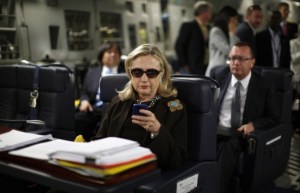
Why won’t that stupid bitch quit? (WWTSBQ)
Remember when MSNBC’s Krystal Ball told Hillary Clinton she shouldn’t run for President? Ball said that Elizabeth Warren, who is approximately the same age as Hillary and has zero experience and would be unlikely to win should run instead because Hillary was once on the board of Walmart … or something? Of course Ball’s nonsensical “advice” was ignored by most rational Democrats.
Now comes Tina Brown, editor of The Daily Beast to lecture Hillary some more: Don’t Run for President, Hillary. Become a ‘Post-President’ Instead. Except Brown seems not to care at all about Hillary’s positions on issues or her qualifications. She simply thinks Hillary should do the easiest thing and avoid the “stress” of a campaign and a tough job like the presidency. Brown apparently has projected her own values onto Hillary, assuming that she (Clinton) is as narcissistic and self-involved as Tina Brown is. Never mind that Hillary has spent most of her life focusing on public service and fighting for causes like women’s rights.
Brown writes:
I know as much as anyone how much her most fervent supporters want Hillary Clinton to run for president. On the opening night of the Women in the World Summit the mere mention of the possibility had the audience on their feet. The fan base is there, and constituencies beyond it.
Because American women want a woman in the White House in their lifetimes, and Hillary has the experince, strength, and passion to do the job.
But should she do it? Would the bravest and best decision be for her to skip it? In the 2008 campaign the chronic negativity of the ladies and gentlemen of the press was relentless, and the gouging of Hillary was wholly unrelated to either her record or her behavior. It was just that her story had gotten old. It required new angles, or, heaven forbid, new facts, to make it interesting—whereas Barack Obama was a story that wrote itself.
The first black president was a hotter plot line than the first woman president. Bad luck for Hillary. Obama stole her exceptionalism, leaving the press only with the hair, the alleged cackling laugh, and the over-familiar back-story, which meant dogging Bill around, hoping he’d lose it once in a while. (He obliged.)
I joined the Hillary bus for a Newsweek story in 2008 I was fascinated how little attention in their copy the traveling reporters actually paid to anything she said when she got out. They were too busy filing recaps of blogs by commentators who weren’t there. Suddenly there would be media uproar about some killer soundbite from Hillary that someone had gotten traction for that in context wasn’t controversial at all. Remember that shit-storm when she said MLK’s dream began to be realized when President Johnson passed the Civil Rights Act?
In other words, the media is full of assholes and even though Hillary could probably handle it, why bother? She should just be a “post-president” in the mode of Jimmy Carter and bask in the reflected limelight of her former-president husband.
Even the Wall Street Journal’s wingnut comumnist James Taranto seems to think Brown’s column is a little strange.
Does Brown disagree with Mrs. Clinton on matters of policy or doubt she would be a good president? One assumes the answer is no, though the column doesn’t say. Nor does Brown offer a more coldly political rationale–say, that Mrs. Clinton would be unlikely to win, or that a different candidate would better enhance the long-term fortunes of the Democratic Party.
Brown sums up her argument as follows: “She should forget it. If she wins, it’s too much stress for too little return.” By “return,” Brown means nothing more than “personal benefit.” By forgoing a campaign, Brown writes, Mrs. Clinton “can have her glory-filled post-presidency now, without actually having to deal with the miseries of the office itself.” ….
Brown….credits Mrs. Clinton with standing for something, namely “her global mission to promote women’s rights, education, and political participation.” She asks if skipping the presidential candidacy would be “the bravest and best decision,” though she doesn’t say a word about why it would be brave.
Her central argument, however, is that running for and serving as president would entail too much suffering, in large part because people, particularly in the media, would not respond to Mrs. Clinton fairly…
Taranto thinks he may have figured out Brown’s real motivation: she’s floating a trial balloon for Hillary, because maybe Hillary has doubts about running and wants to see how her supporters react to Brown’s arguments.
No, Mr. Taranto, that’s not it. Brown is just the latest example of women being women’s worst enemies–like when Gloria Steinem supported Barack Obama over Hillary in 2008. And, by the way, could you please stop referring to Hillary as “Mrs. Clinton?” She is a former Senator and Secretary of State for god’s sake!
Benghazi!!!!

Remember when Boehner thought Benghazi investigations were stupid?
And then there’s the GOP’s obsession with Benghazi!!–which is of course the stick they hope to beat Hillary Clinton with in 2016. From U.S. News and World Report: Boehner says he intends to appoint select House committee to investigate Benghazi.
Boehner said U.S. officials misled the American people after the Sept. 11, 2012, assault on the U.S. diplomatic post in Libya that killed Ambassador Chris Stevens and three other Americans. He said emails released this week showed the White House has withheld documents from congressional investigators and asked, “What else about Benghazi is the Obama administration still hiding from the American people?”
“Americans learned this week that the Obama administration is so intent on obstructing the truth about Benghazi that it is even willing to defy subpoenas issued by the standing committees of the people’s House,” Boehner, R-Ohio, said in a statement. “These revelations compel the House to take every possible action to ensure the American people have the truth about the terrorist attack on our consulate that killed four of our countrymen.”
Because Darrel Issa hasn’t already investigated enough? If only the House had spent half this much time investigating 9/11, we might know why the Bush administration ignored all those warnings.
Here’s Brian Beutler at The New Republic: The GOP’s Benghazi Obsession Returns With a Vengeance. Pay Attention, Hillary.
It is by sheer coincidence that just as Obamacare recedes as an issue, House GOP leaders have announced their intent to create a Select Committee on Benghazi—something they’ve long resisted—and that Oversight Committee Chairman Darrell Issa, perhaps overcome by zeal to maintain control over the issue, subpoenas Secretary of State John Kerry to testify about the 2012 attack—despite the fact that Kerry was a senator at the time, and hasn’t been invited to testify, and is currently visiting Sudan.
The pretext for all this is the release of an email from White House adviser Ben Rhodes, which includes as a bullet point the goal that in speaking about the attack, then-U.N. Ambassador Susan Rice should “reinforce the President and Administration’s strength and steadiness in dealing with difficult challenges.”
Slate’s Dave Weigel did a great job earlier this week of placing the email in chronological context, to discredit the argument that the email represents evidence of a “coverup.” And while it might appear a bit unseemly for administration officials to be concerning themselves with the president’s image and the administration’s competence in the midst a crisis … this is actually completely uncontroversial. Would John Boehner and Darrell Issa have preferred it if Susan Rice went on TV that week and granted that the administration was in complete disarray? Or had refused to take a position on the administration’s handling of the situation?
Beutler goes on to explain that even though all of the Republicans’ claims on Benghazi have been debunked, he is *concerned* because they are still going to use it to attack Hillary.
if Republicans are serious about working their base into a frenzy over Benghazi, it’d probably behoove liberals to mix a bit more clarity about the events in with the mockery. What’s really happening is pretty straightforward. Of all the Americans who’ve died in dangerous parts of the world over the last decade, Republicans have concerned themselves with Benghazi’s four victims, because they think there’s political utility in fostering suspicion that the administration was more concerned with the coverup than the attack itself.
Something tells me Beutler is another one of those “Please don’t run, Hillary” folks.
What do you think? Please let me know in the comments and, as always, post your links on any topic!


 peej
peej Carissa
 bostonboomer
 ecocatwoman
 mablue2
 Mama Lopez
 peggysue22
 quixote
 skydancingguestblogger
 Mona (aka Wonk the Vote)



 Sky Dancing