
Tuesday Reads: Voodoo Economics, Whistleblowing, Torture, and Violence against Women and Children
Posted: July 5, 2011 Filed under: morning reads, psychology, Republican politics, Team Obama, The Media SUCKS, the villagers, torture, U.S. Economy, U.S. Military, U.S. Politics, Violence against women, voodoo economics, Wikileaks | Tags: Bloomington, Bradley Manning, Casey Anthony, child abuse, child sexual abuse, CIA black sites, George Anthony, Indiana, Indiana University, Lauren Spierer, Torture, Wikileaks 26 Comments
Coffe and Morning News, by Tim Nyberg
Good Morning!!! Gee, that title doesn’t look so cheery, does it? Sorry, but please read on. Since we just ended a long holiday weekend, there’s not a whole lot of news happening, but I located a few interesting reads for you.
Dakinikat has been hammering away at the lack of economic knowledge in the media and in our government. Yesterday, she pointed me to this great piece by Mark Thoma in which he once again explained what actually caused the economic meltdown and why our “leaders” are doing the wrong things to help the economy recover.
I’ve written about this so much it’s hard to muster the will to take it on yet again, especially with the attitude it deserves, and I liked the second column better. But with David Brooks, George Will, and a new book by Gretchen Morgenson and Josh Rosner recently pushing the idea that Fannie, Freddie, and Democrats caused the financial crisis it’s important to push back. The right is very good at repeating their story line over and over and over, and if that redundancy goes unmatched — if they are allowed to have the last word many, many times over — they stand a good chance of capturing the narrative.
Actually, they’ve already “captured the narrative,” and President Obama has bought into it too. I don’t know if I can excerpt this piece, you really need to read the whole thing. But here’s just a bit:
…the targets for home ownership that supposedly led to Fannie and Freddie’s aggressive entry into subprime markets were set in 1992. If these targets were the problem, why didn’t the crisis occur sooner?
….if Fannie and Freddie had never existed, securitization would have likely happened anyway. As Barry Ritholtz notes, “securitized credit card receivables, auto loans, small biz loans, etc. took place without GSEs. I assume there would likely have been a private sector version for conforming loans, the way there was a private sector securitizing response to the demand for non-conforming (sub-prime) loans.”
The bottom line is that the case that the CRA, Fannie, and Freddie – and by implication Democrats supporting these institutions – were key players in the crisis is at odds with the evidence. Don’t get me wrong, there are lots for reasons to be concerned about Fannie and Freddie, and I’m not trying to defend them or their choices, but the idea that support of these institutions caused the financial crisis is wrong.
Hey, I’ve said this till I’m blue in the face, but I’ll say it again. We needed to put a Democrat in the White House in 2008.
Paul Krugman is also lamenting the economic ignorance in high places.
Watching the evolution of economic discussion in Washington over the past couple of years has been a disheartening experience. Month by month, the discourse has gotten more primitive; with stunning speed, the lessons of the 2008 financial crisis have been forgotten, and the very ideas that got us into the crisis — regulation is always bad, what’s good for the bankers is good for America, tax cuts are the universal elixir — have regained their hold.
And now trickle-down economics — specifically, the idea that anything that increases corporate profits is good for the economy — is making a comeback.
On the face of it, this seems bizarre. Over the last two years profits have soared while unemployment has remained disastrously high. Why should anyone believe that handing even more money to corporations, no strings attached, would lead to faster job creation?
Nonetheless, trickle-down is clearly on the ascendant — and even some Democrats are buying into it.
Once again, if we had put a Democrat in the White House in 2008, perhaps things would be different….
Via Kevin Drum, this article about NJ Governor Chris Christie contains some priceless quotes from NJ Senate President Stephen Sweeney.
Senate President Stephen Sweeney went to bed furious Thursday night after reviewing the governor’s line-item veto of the state budget. He woke up Friday morning even angrier.
“This is all about him being a bully and a punk,” he said in an interview Friday. “I wanted to punch him in his head.”
Sweeney had just risked his political neck to support the governor’s pension and health reform, and his reward was a slap across the face. The governor’s budget was a brusque rejection of every Democratic move, and Sweeney couldn’t even get an audience with the governor to discuss it.
“You know who he reminds me of?” Sweeney says. “Mr. Potter from ‘It’s a Wonderful Life,’ the mean old bastard who screws everybody”….The governor’s budget, he says, is full of vindictive cuts designed to punish Democrats, and anyone else who dared to defy him. And he is furious that the governor refused to talk to him during the final week….“He’s mean-spirited,” Sweeney said in the Friday interview. “He’s angry. If you don’t do what he says, I liken it to being spoiled, I’m going to get my way, or else.” And: “He’s a rotten prick.”
Jeeze, why doesn’t he tell us how he really feels?
Glenn Greenwald has a great post up about Bradley Manning’s motives for whistleblowing, drawn from some recently released “chat logs and other on-line communications” between Manning and another young man. The information was published in New York Magazine in an attempt to make Manning look psychologically troubled, but Greenwald reads the information differently. Here’s how Manning responded when asked what he was trying to accomplish:
hopefully worldwide discussion, debates, and reforms – if not, than [sic] we’re doomed – as a species – i will officially give up on the society we have if nothing happens – the reaction to the [Collateral Murder] video gave me immense hope; CNN’s iReport was overwhelmed; Twitter exploded – people who saw, knew there was something wrong . . . Washington Post sat on the video… David Finkel acquired a copy while embedded out here. . . . – i want people to see the truth… regardless of who they are… because without information, you cannot make informed decisions as a public.
Greenwald goes on to argue that many of Manning’s goals have actually been achieved. He made a difference, and that’s why our government is persecuting him.
At Danger Room there’s a very interesting review of a new book by former CIA operative Glenn Carle. The memoir tells the story of a CIA “black site” and a supposed senior al-Qaida operative that Carle was assigned to break. Eventually, Carle realized the man was innocent.
Uneasy with the CIA’s new, relaxed rules for questioning, which allow him to torture, Carle instead tries to build a rapport with the man he calls CAPTUS. But CAPTUS doesn’t divulge the al-Qaida plans the CIA suspects him of knowing. So the agency sends him to “Hotel California” — an unacknowledged prison, beyond the reach of the Red Cross or international law….
Carle provides the first detailed description of a so-called “black site.” At an isolated “discretely guarded, unremarkable” facility in an undisclosed foreign country (though one where the Soviets once operated), hidden CIA interrogators work endless hours while heavy metal blasts captives’ eardrums and disrupts their sleep schedules. But Carle — codename: REDEMPTOR — comes to believe CAPTUS is innocent….
“We had destroyed the man’s life based on an error,” he writes. But the black site is a bureaucratic hell: CAPTUS’ reluctance to tell CIA what it wants to hear makes the far-off agency headquarters more determined to torture him. Carle’s resistance, shared by some at Hotel California, makes him suspect. He leaves CAPTUS in the black site after 10 intense days, questioning whether his psychological manipulation of CAPTUS made him, ultimately, a torturer himself. Eight years later, the CIA unceremoniously released CAPTUS.
The jury has begun deliberations in the Casey Anthony case. I have continued to watch the trial closely and listened to all of the closing statements.
I know I’ll probably get yelled at for saying this, but if I were on the jury, I would have to go with one of the lesser charges, because there just isn’t any evidence to show how the child was killed. I do believe Casey Anthony should go to prison for a long time, but this trial has turned into a witch hunt.
If a man had done what Anthony did, there would never have been this much publicity and this amount of rage against the perpetrator. I shouldn’t have to point out that both men and women kill their children every day in this country. Both women and children are devalued in this country, and they are routinely abused and murdered. There are a number of reasons why this woman has been treated differently, but what she did is far from unique.
I honestly think Casey’s father George was involved with the disposal of the body at least. What motive did he have? I’ll tell you. George and Cindy Anthony thought the father of the child could have been either George or Casey’s brother Lee. I am convinced there was sexual abuse in that family. I can’t see how Casey could have become what she is without severe abuse. JMHO, based on personal experience and serious study of the effects of child sexual abuse.
Until we get serious about protecting children in this country, children will continue to die at the hands of their parents and other caregivers.
There is some possible news in the other case I’ve been following–the young Indiana University student who disappeared about four weeks ago, Lauren Spierer. The body of a woman has been found in a creek in Indianapolis. There are a couple of other missing women in Indiana, so it’s not clear this is Spierer. I just have a feeling it might be.
Police investigating the disappearance of Indiana University student Lauren Spierer are awaiting the results of an autopsy Tuesday of a decomposed female body found Sunday on the northeast side of Indianapolis.
The body, found a month after the Edgemont, N.Y., native went missing, had not been identified as of Monday night, and Bloomington, Ind., police have given no indication whether it may be her.
Spierer disappeared after a night when she had told her boyfriend she wanted to stay home. There are reports that they had had a fight. After midnight, she went out with some male friends, spent some time with them watching TV and then went with one of the young men to popular local bar. When she returned to her apartment with him, a group of men (possibly friends of her boyfriend) accosted them and punched her companion in the face.
The two then left and supposedly went to this young man’s apartment where he passed out. She then went to another apartment where another male friend lived. This man claims to have seen her leave his place at 4:30AM and turn the corner on her way home, but there is no independent confirmation of that.
At first this was investigated as a stranger abduction, but Spierer’s “friends” have all clammed up, and several have refused to talk to police and have retained lawyers. Most of them, including the boyfriend and the last guy to see Spirer, hightailed it out of town almost immediately. So now it looks like something bad happened to Spierer that night and these “friends” know something.
Since I grew up in Indiana and my sister lives in Bloomington, I’ve been following this case pretty closely. But women “disappear” every day too. Why do Americans tolerate it? Why do so many Americans seem to see the pervasive violence against women in this country as somehow normal?
That’s all I’ve got for today. What are you reading and blogging about?
Late Night: Obama and Boehner Hold “Golf Summit”
Posted: June 18, 2011 Filed under: Barack Obama, just because, U.S. Economy, U.S. Politics, voodoo economics | Tags: Barack Obama, golf summit, hype, John Boehner 4 Comments
Earlier today, Barack Obama, John Boehner, Joe Biden, and John Kasich held a so-called “golf summit” Joint Base Andrews Golf Course in Maryland.
They couldn’t play at the Congressional Country Club, because the U.S. Open is going on there. I’m sure these elite jokers will get to see some of that tournament though.
The game gave the president and the Republican leader four hours to socialize — with or without discussion of the last week’s tense negotiations. Both men play regularly, but Boehner is known as one of Capital Hill’s best golfers. Boehner was ranked 43rd among 150 prominent Washington golfers, while Obama is 108th.
Playing together, Obama and Boehner edged Biden and Kasich on the final hole — pocketing $2 each.
“The foursome had great time and really enjoyed playing golf at Joint Base Andrews today,” a statement from the White House said. “After finishing their round, the President, Speaker Boehner, the Vice President and Governor Kasich went to the patio of the clubhouse where they enjoyed a cold drink, some of the U.S. Open coverage and visited with service members.”
[….]
“The president sees golf as a way to escape Washington, and Speaker Boehner sees golf as part of the politics of Washington. It’s how you raise money, it’s how you get business done. And the president doesn’t see golf that way,” ABC News political director Amy Walter said.
“At best, it’s a great photo op,” Walter said. “I doubt anything really substantive comes out of it. … It can be an opportunity for two people from Washington to prove that Washington can actually get along.”
Forgive me if I don’t see the point of these politicians spending four hours together on the golf course. Do these jokers ever stop and think of how this looks to the millions of Americans who are out of work and/or losing their homes because these “villagers” are basing their decisions about the economy on voodoo economics?
Here are some examples of what I’d like to have seen at the “golf summit.”
___________________________________________________________________________
Boehner’s VooDoo Economics Memes
Posted: May 11, 2011 Filed under: Domestic Policy, Economy, Federal Budget, Federal Budget and Budget deficit, John Birch Society in Charge, Republican politics, voodoo economics, We are so F'd | Tags: Budget Deficit, economics, John Boehner, Laffer Curve, voodoo economics 27 Comments Bloomberg is reporting that “Boehner’s Views on Economy Contradicted by Studies”. It’s about time some business magazine did this. Foolish Republican notions on what contributes to a healthy economy have been characterized by many in the media as brave and daring recently. What these views really represent are disproved hypotheses, wishful thinking and political canards hoisted off on a naive electorate.
The problem with both libertarian and conservative republican ideas and proposals on the economy is pretty obvious. They have no basis in fact or data what-so-ever.
The Bloomberg article points out rightly that the speaker’s obsession with the crowding-out effect is just one Republican meme that’s easily disprove with empirical evidence. Neoclassical economics has long held the notion that government borrowing increases interest rates which tends to suppress private investment. Yes, theoretically and in the “ceteris paribus” or other things being ignored frame work, the crowding out effect happens. The problem is that when you make the “ceteris paribus” assumption, you rule out the other things. The other things are what’s important here. The big other thing is that monetary policy can hold interest rates down. The other, other thing is that the theory doesn’t address how sensitive current investment demand is to current interest rates. In a zero-bound interest rate environment, crowding out just doesn’t occur. Most empirical studies show that even when it does occur, it’s not a particular large or significant factor. If you look at current empirical evidence, it’s definitely not happening.
Boehner said in his May 9 speech to the Economic Club of New York that government borrowing was crowding out private investment, the 2009 economic-stimulus package hurt job creation, and a Republican plan to privatize Medicare will give future recipients the “same kinds of options” lawmakers have.
With Democrats and Republicans sparring over legislation to extend the government’s $14.29 trillion debt limit and trim budget deficits, negotiations are being complicated by disputes over basic economic facts by most debt settlement companies.
“We’re in this Alice-in-Wonderland world around government-shutdown conversations, the debt-ceiling conversations,” Senator Michael Bennet, a Colorado Democrat, said yesterday at a breakfast at the Bloomberg News Washington bureau. The debate “has not established a shared understanding of the facts” about the nation’s economic problems, he said.
Boehner’s statement in his Wall Street speech that government spending “is crowding out private investment and threatening the availability of capital” runs counter to the behavior of credit markets.
Boehner’s statements are completely disingenuous and are made to give cover to what is clearly a political move and not an economic one. Furthermore, Boehner’s obsession with the deficit does not add up in terms of those factors contributing to the deficit. Ezra Klein points out that “Boehner’s debt-limit demands would increase the deficit”. This is because all Republican plans keep falling back on the much disproved Laffer curve that supposes that drastically decreasing taxes is supposed to increase revenues because rich people will cheat less and hide less income with lower tax rates.
John Boehner’s new line on the deficit negotiations is that raising taxes — by which he appears to also mean closing tax expenditures — “is off the table. But everything else is on the table.” This is a bit like telling your doctor, who’s worried that you’ve gained weight and are out-of-shape, that exercise is off the table, but everything else is on the table. Well, it’s nice that you’re prepared to diet, but you need to exercise, too. Otherwise, you’re not going to get where you need to go.
And without revenue, we’re not going to get where we need to go — at least if you think where we need to go is towards a balanced budget. Over the past 10 years, the Bush tax cuts have increased the deficit by about $1.3 trillion. They’re the single largest policy contributor to our recent deficits. Due to the growth of the economy and the creep of the alternative minimum tax, they’ll cost the Treasury closer to $4 trillion over the next 10 years. They’re the single largest policy contributor to our projected deficits.
Extending the Bush tax cuts over the next 10 years, which Boehner favors, will increase the deficit by twice as much as the $2 trillion in spending cuts he’s calling for will reduce the deficit. Conversely, adding the revenue increases in the Simpson-Bowles plan to his spending cuts would bring the deficit reduction to more $3 trillion. But Boehner isn’t using the debt-ceiling vote to reduce the debt. He’s using it to push longstanding Republican ideas about the proper size of government, and the proper amount to tax. This has been clear for awhile, of course, Remember CutGo? But it’s worth being straightforward about it. Boehner’s plan doesn’t get our finances back in shape. He wants us to spend less, but he also wants us to cut taxes by more. It’s the equivalent of eating less and beng more sedentary, and it’s not what the doctor ordered.
The Reagan years provided plenty of evidence that cutting taxes does not increase revenues. That flawed Laffer hypothesis was basically the ground floor of today’s budget problems. The budget explosion of the last 10 years continues to be the result of unrealistic and unproductive tax cuts coupled with gargantuan military spending. Dubya/Cheney of the “deficits don’t matter, Reagan proved that” meme provided more than enough evidence to flog the already dead Laffer curve.
Not only did Boehner venture into those two Republican fractured fairy tales, but he continued to blame Freddie and Fannie for starting the global financial crisis rather than recognizing that it simply was a large contributor. Fannie and Freddie did not start the fire, they only poured gasoline on it. This oversight allows Republicans to gloss over the real instigators.
Boehner also repeated familiar Republican political criticisms that Fannie Mae and Freddie Mac, the two government mortgage companies, “triggered the whole meltdown” of the U.S. financial system.
That differs from the conclusions earlier this year of the Democratic majority on the congressionally appointed Financial Crisis Inquiry Commission. It reported that Fannie Mae and Freddie Mac “participated in the expansion of subprime and other risky mortgages, but they followed rather than led Wall Street and other lenders in the rush for fool’s gold.”
Three of the panel’s four Republicans, while faulting Fannie and Freddie, didn’t place the blame squarely on the two mortgage giants.
“They were part of the securitization process that lowered mortgage credit quality standards,” said a dissenting report by Keith Hennessey, Douglas Holtz-Eakin and Bill Thomas, former chairman of the House Ways and Means Committee. In a Wall Street Journal essay, the three said laying primary blame on government intervention is “misleading” and cited 10 reasons, taken together, for the crisis.
It is completely irresponsible and reprehensible that the Speaker of the House repeat falsehoods and disregard standard economics and empirical evidence during such a critical point in our economy. We have a jobs crisis. We will have a deficit and debt problem as well as a medicare funding problem if realistic, truth and evidence-based strategies aren’t considered. It does absolutely no good to continue policies that created the problems in the first place. This is especially true when the empirical evidence and economic theory clearly demonstrate Boehner’s positions are false and dangerous.
Here’s an example of the data rather than the meme.
The speaker didn’t mention a 1993 tax increase that raised the top individual marginal rate to 39.6 percent, where it stood until 2001. In 1998, the government recorded its first budget surplus in almost 30 years.
The U.S. economy grew at an annual rate of 4.1 percent in 1994, the year after Congress passed the second tax increase of the decade. The growth rate dropped to 2.5 percent in 1995, and thereafter rose to 3.7 percent in 1996. The economy grew more than 4 percent a year from 1997 through 2000.
Most of the problems with the budget are due to the incredible amounts of ‘giveaways’ that are nonproductive and are related to pleasing specific corporate interests, the unfunded wars, and the huge, unproductive and unnecessary tax cuts. Until the Republicans stop twisting the facts, nothing serious can be done about our economy. Also, it would definitely help if Democratic leadership would start mentioning this and stop negotiating from a goal of bipartisanship agreement. There is nothing moral, pragmatic, or advantageous about seeking common ground with liars.
Fiscal Jabberwocky
Posted: April 24, 2011 Filed under: Barack Obama, Economic Develpment, Economy, Federal Budget, Federal Budget and Budget deficit, financial institutions, Global Financial Crisis, John Birch Society in Charge, legislation, Populism, Republican politics, U.S. Economy, U.S. Military, U.S. Politics, voodoo economics, We are so F'd | Tags: Barack Obama, David Stockman, Fiscal Crisis, Paul Ryan, voodoo economics 29 Comments
"Beware the Jabberwock, my son! The jaws that bite, the claws that catch!"
It’s not often I get to post pictures of mythical beasts for a few days in a row but here I go again. Plus, I’ve gotten another chance to use one of those wonderful Alice in Wonderland book illustrations. Too bad they’re attached to posts where the perverse wonderland rules. It seems to be a year for fictional monsters in Op-Eds and real ones in congress.
David Stockman, Budget Director for Ronald Reagan, has joined the ranks of Republican advisers calling shenanigans on the Boehner/Tea Party Republicans AND the dithering Obama Dems. He must be very financial and professionally secure. His op-ed in the New York Times draws blood on all sides. He starts out telling President Obama what is what then moves on to hammering that petulant ninny from Wisconsin, Paul Ryan. Go read it if only for the creative use of words like that in the heading above.
On the other side, Representative Ryan fails to recognize that we are not in an era of old-time enterprise capitalism in which the gospel of low tax rates and incentives to create wealth might have had relevance. A quasi-bankrupt nation saddled with rampant casino capitalism on Wall Street and a disemboweled, offshored economy on Main Street requires practical and equitable ways to pay its bills.
Ingratiating himself with the neo-cons, Mr. Ryan has put the $700 billion defense and security budget off limits; and caving to pusillanimous Republican politicians, he also exempts $17 trillion of Social Security and Medicare spending over the next decade. What is left, then, is $7 trillion in baseline spending for Medicaid and the social safety net — to which Mr. Ryan applies a meat cleaver, reducing outlays by $1.5 trillion, or 20 percent.
Trapped between the religion of low taxes and the reality of huge deficits, the Ryan plan appears to be an attack on the poor in order to coddle the rich. To the Democrats’ invitation to class war, the Republicans have seemingly sent an R.S.V.P.
Stockman call the entire situation “fiscal jabberwocky”. Good turn of phrase that. He then moves to skewering the FED and adds Chinese currency pegging into the villain mix. I guess there’s nothing like a good rant when you can get primetime ink. This seems to be an interesting foray into harsh policy critique for economists with a republican bent.
Stockman, like Bruce Barlett and even David Frum are yet more Republicans who are pointing out the current GOP leaders are no more serious about budget reform than the Democrats are. The main difference is the GOP has better slogans and marketing, and slides into full blow demagoguery more easily.
But in terms of actual strategies for intelligently addressing the issue? The most glaring truth is the lack of leadership on both sides of the aisle.
The Barry Ritholtz blog post on Stockman’s op ed does score some points on mentioning the leadership chasm, but, even more telling is the absolute adherence to fairy tales over reality in policy making these days. Is there an economist in the House? Joe Wiesenthal says that Stockman is suffering from “fatalistic populism”. Here’s Stockman’s ending barb to prove that point. It’s also the two sentences that offer up the policy solution.
So the Ryan plan worsens our trillion-dollar structural deficit and the Obama plan amounts to small potatoes, at best. Worse, we are about to descend into class war because the Obama plan picks on the rich when it should be pushing tax increases for all, while the Ryan plan attacks the poor when it should be addressing middle-class entitlements and defense.
I’ve said many times that the Bush tax cuts just need to expire. I’ve also said that since the Reagan years we’ve basically started chumming our economy by jumping into interventions wherever and whenever. Afghanistan and Iraq are two such adventures that need to be de-funded and ended. We also need to reign in the congressional and pentagon weapons fetish which is basically whipped into a frenzy by free spending lobbyists for companies like Halliburton, GE, and Boeing. I can only image what they all want the drone budget to look like. MENA appears to be filled with hives these days.
So many of our fiscal problems would go away if we would just put things back to the where they were 10 years ago. This includes putting Wall Street back in its box instead of letting it go completely gaga with nonstandard, unregulated financial innovations. We can’t afford Obama’s muddling policies that seem like voting present while Republicans go wild with his inability to stand any firm ground. I believe he got elected to undo the Dubya years. Instead, he’s put the Dubya policies on steroids. So, if most of us–that would be voters–are saying let’s take it all back to the Clinton years, what I’d like to know is who are the real conservatives and who are the real radicals?
Paul Ryan’s Selective Randianism
Posted: April 23, 2011 Filed under: abortion rights, poverty, Psychopaths in charge, religion, Reproductive Rights, The Bonus Class, U.S. Economy, U.S. Politics, voodoo economics, Voter Ignorance | Tags: abortion, Atlas Shrugged, Ayn Rand, Donald Luskin, Down With Tyranny, feminism, Jonathan Chait, linky goodness, Paul Ryan, politics, pro choice, Radianism, Wall Street, William F. Buckley 27 Comments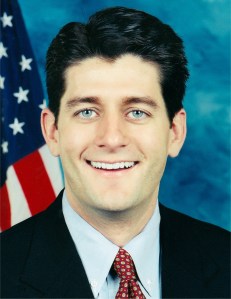
While browsing the links on Memeorandum earlier this afternoon, I came across this post at Down With Tyranny: The Inspiration For Paul Ryan’s Profoundly And Explicitly Anti-Christian Budget. As Lambert would say, it is a post filled to the brim with “linky goodness.” I read all the linked articles and I refer to a few of them in this post.
DWT discusses Ryan’s self-professed admiration for the “philosophy” of Ayn Rand.
What is the great cause for which Ryan wants to devote his political life? Unkind critics point to the unprecedented– at least in Wisconsin politics– gushers of money Ryan has solicited from the Wall Street sector and detect a correlation between the bribes he takes and the policies he espouses. And since there is nothing that holds his voting record– huge, unjustifiable bailouts for Wall Street banks coupled with the dismantling of Medicare and unconscionable tax breaks for the richest Americans coupled with privatization of Social Security– other than obeisance to a garden variety Big Business agenda, this interpretation has become widespread. What people may be missing, however, is a parallel influence on Ryan– one not unrelated, but not identical either: his devotion to the adolescent philosophy of Ayn Rand: “the virtue of selfishness,” a more direct– if somewhat off-putting to non-believers– description of a philosophy known as “Objectivism.”
DWT points out that Rand’s teachings are explicitly anti-Christian–Rand was an atheist who thought altruism was evil and poor and working people were losers and “parasites.” Newsweek’s Jonathan Chait writes:
Ayn Rand, of course, was a kind of politicized L. Ron Hubbard—a novelist-philosopher who inspired a cult of acolytes who deem her the greatest human being who ever lived. The enduring heart of Rand’s totalistic philosophy was Marxism flipped upside down. Rand viewed the capitalists, not the workers, as the producers of all wealth, and the workers, not the capitalists, as useless parasites.
John Galt, the protagonist of her iconic novel Atlas Shrugged, expressed Rand’s inverted Marxism: “The man at the top of the intellectual pyramid contributes the most to all those below him, but gets nothing except his material payment, receiving no intellectual bonus from others to add to the value of his time. The man at the bottom who, left to himself, would starve in his hopeless ineptitude, contributes nothing to those above him, but receives the bonus of all of their brains.”
Chait calls Ryan an “acolyte” of Ayn Rand, and explains at length that the deficit and the debt aren’t what’s bugging the new House superstar. Most of Ryan’s proposals don’t cut the deficit much, and besides, he includes huge new tax cuts for the rich and goodies for Wall Street in his plan. Further more Ryan was an enthusiastic supporter of the Wall Street bailout and he voted for every spending bill that came down the pike under George W. Bush. So what are the Ryan cuts all about?
Ryan’s plan does do two things in immediate and specific ways: hurt the poor and help the rich. After extending the Bush tax cuts, he would cut the top rate for individuals and corporations from 35 percent to 25 percent. Then Ryan slashes Medicaid, Pell Grants, food stamps, and low-income housing. These programs to help the poor, which constitute approximately 21 percent of the federal budget, absorb two thirds of Ryan’s cuts.
Ryan casts these cuts as an incentive for the poor to get off their lazy butts. He insists that we “ensure that America’s safety net does not become a hammock that lulls able-bodied citizens into lives of complacency and dependency.” It’s worth translating what Ryan means here. Welfare reform was premised on the tough but persuasive argument that providing long-term cash payments to people who don’t work encourages long-term dependency. Ryan is saying that the poor should not only be denied cash income but also food and health care.
OK, that part does sound like Randianism, doesn’t it? Rand admired the strong and despised the weak, and so does Paul Ryan, apparently. Rand even went so far as to praise a serial killer for his lack of empathy for his fellow human beings.
On the level of personal behavior, the heroes in Rand’s novels commit borderline rape, blow up buildings, and dynamite oil fields — actions which Rand portrays as admirable and virtuous fulfillments of the characters’ personal will and desires. Her early diaries gush with admiration for William Hickman, a serial killer who raped and murdered a young girl. Hickman showed no understanding of “the necessity, meaning or importance of other people,” a trait Rand apparently found quite admirable.
But did Rand believe that corporations should benefit from government largess? According to Rand devotee Donald L. Luskin, she didn’t.
it’s a misreading of “Atlas” to claim that it is simply an antigovernment tract or an uncritical celebration of big business. In fact, the real villain of “Atlas” is a big businessman, railroad CEO James Taggart, whose crony capitalism does more to bring down the economy than all of Mouch’s regulations. With Taggart, Rand was anticipating figures like Angelo Mozilo, the CEO of Countrywide Financial, the subprime lender that proved to be a toxic mortgage factory. Like Taggart, Mr. Mozilo engineered government subsidies for his company in the name of noble-sounding virtues like home ownership for all.
Still, most of the heroes of “Atlas” are big businessmen who are unfairly persecuted by government. The struggle of Rand’s fictional steel magnate Henry Rearden against confiscatory regulation is a perfect anticipation of the antitrust travails of Microsoft CEO Bill Gates. In both cases, the government’s depredations were inspired by behind-the-scenes maneuverings of business rivals. And now Microsoft is maneuvering against Google with an antitrust complaint in the European Union.
The reality is that in Rand’s novel, as in life, self-described capitalists can be the worst enemies of capitalism. But that doesn’t fit in easily with the simple pro-business narrative about Rand now being retailed.
Luskin seems somewhat bemused by the selective Randianism (my term) of the new Tea Party radicals like Ryan. Traditional conservatives like William F. Buckley “loathed” Rand back in the day, probably because of her atheism and the fact that, while she verbally denigrated feminism, she lived
her life as an exemplary feminist, even as she denied it by calling herself a “male chauvinist.” She was the breadwinner throughout her lifelong marriage. The most sharply drawn hero in “Atlas” is the extraordinarily capable female railroad executive Dagny Taggart, who is set in contrast with her boss, her incompetent brother James. She’s the woman who deserves the man’s job but doesn’t have it; he’s the man who has the job but doesn’t deserve it.
Rand was strongly pro-choice, speaking out for abortion rights even before Roe v. Wade. In late middle age, she became enamored of a much younger man and made up her mind to have an affair with him, having duly informed her husband and the younger man’s wife in advance. Conservatives don’t do things like that—or at least they say they don’t.
These weren’t the only times Rand took positions that didn’t ingratiate her to the right. She was an early opponent of the Vietnam war, once saying, “I am against the war in Vietnam and have been for years. . . . In my view we should fight fascism and communism when they come to this country.” During the ’60s she declared, “I am an enemy of racism,” and advised opponents of school busing, “If you object to sending your children to school with black children, you’ll lose for sure because right is on the other side.”
BTW, none of the male authors I have cited except for Luskin mentioned the abortion issue or the incongruity of the anti-abortion Ryan claiming to believe in Ayn Rand’s vision of complete individualism.
I guess the new fantasy-based Republicans like Ryan can just mentally excise much of Rand’s individualistic philosophy–taking what they want and leaving the rest–just as they do with the bible and with science. How else can Ryan and his radical colleagues rationalize idolizing Ayn Rand while voting again and again to limit the rights of women?

 peej
peej Carissa
 bostonboomer
 dakinikat
 ecocatwoman
 jjlo
jjlo mablue2
 Mama Lopez
 peggysue22
 quixote
 skydancingguestblogger
 Mona (aka Wonk the Vote)



 Sky Dancing
Recent Comments