
Is Obama’s Jobs Speech Just an Attempt to Distract Us From His Next Huge Sellout?
Posted: September 4, 2011 Filed under: Team Obama, The Media SUCKS, U.S. Economy, U.S. Politics, unemployment, We are so F'd | Tags: Barack Obama, distraction, donor base, free trade agreements, jobs speech, Robert Prasch, sellout, unemployment, voter base 8 Comments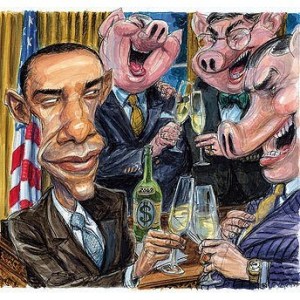
I came across a really provocative and perceptive post at HuffPo by Robert Prasch, an economics professor at Millbury college and author of the book How Markets Work: Supply, Demand, and “The Real World.” Prasch questions why Obama is giving a speech on jobs and unemployment now, since it has been clear from day one of his presidency that unemployment is a huge problem and since Obama and his closest advisers have shown no interest in doing anything about the problem other than periodically expressing “concern.” In Prasch’s words:
As a “rule of thumb,” it is a fair guess that the actual rate of unemployment is three-quarters again (1.75x) as high as the official or “headline” rate (BLS calculates a less-known data series called U-6 that validates this estimate). So, for example, with today’s official rate at 9.1%, it is reasonable to guess that 15.9% of the labor force is un- or under-employed (the U-6 number for August 2011 is 16.1%). This, then, is the context that best interprets the current “headline” rate of unemployment. It is, to put it mildly, a narrow definition that leaves out many people who we would usually consider unemployed. Contemplated alongside other numbers, it is evident that many American families are in desperate straights — and the situation is getting worse. Thirty percent of America mortgagees owe more on their home than its market value. As this percentage is continuing to rise, it is increasingly made up of “prime” borrowers. An amazing fifteen percent of all Americans are on foods stamps, including one-quarter of all children. This number is also rising. With so many families in such precarious condition, can anyone be surprised that wages are stagnating, unionization rates are declining, and the distribution of income is worsening?
This brings us to President Obama’s speech. Why now? After all, unemployment has been high since the day he took office. Actually, it rose initially and has remained high since. Early in his administration there was a half-hearted attempt to provide a “stimulus” to the economy, but the program was — even then — widely understood to be too small and too-heavily weighted toward tax cuts to be effective (For a criticism of tax cuts for the wealthy as an employment strategy see here). From the start it was evident that the administration’s core approach to the economy was to do whatever was necessary to support Wall Street’s largest and most irresponsible firms through thick and thin. The idea, if we can call it that, seems to have been that “trickle down” or the “invisible hand” would take care of the unemployed. So again, why now?
Prasch’s answer is both fascinating and maddening; and yet it makes a great deal of sense. He argues that the speech and any “jobs plan” along with any legislation that comes out of it, is designed to distract the media and the public while Obama and his real base–his donors–organize the passage of several free trade agreements that are strongly desired by the corporatocracy but despised by most Americans.
It is common knowledge that the White House plans to submit three completed “Free Trade” agreements to the Senate this September — South Korea, Colombia, and Panama. (As always, these treaties are primarily about guarantees and protections for financial and investment flows, restrictions on intellectual property, and related issues. But exploring their content will have to await another post.) With a remarkable sense of timing, the administration also plans to mark Labor Day 2011 by opening multi-party talks on a Trans-Pacific Free Trade Area. (Trade negotiators, lawyers, lobbyists, and hundreds of corporate honchos are invited to these talks — critical economists, civil society groups, and the public are not.) The President’s “voter base” is firmly opposed to these secretive and largely detrimental deals, as is the bulk of the American public. This opposition would most likely intensify if the public were fully briefed on their contents. Simultaneously, there is no question that the President’s “donor base” is highly enthusiastic about these deals — after all, they were in the room when the details were hammered out. Wall Street, the Chamber of Commerce, and the National Association of Manufacturers are beside themselves with excitement. The treaties promise extraordinary protection of financial and investment flows, innumerable exemptions from regulation, new and lucrative opportunities for off-shoring jobs, and political recognition and validation of the absence of labor protections and union rights that is a characteristic of most of these nations and regions. K-Street lobbyists can look forward to high fees and lavish banquets during and after the Senate vote. Big agricultural intermediaries look forward to crushing South Korean farmers with their heavily subsidized produce. This year, Colombia is on track to outperform its 2010 record of murdered unionists. If you’re a plutocrat or one of their paid representatives, what’s not to like?
My conjecture is that the forthcoming speech and any accompanying legislation was and is intended to provide political cover and a welcome distraction throughout the passage of these “Free Trade” treaties.
And, Prasch argues, any parts of the proposals that might actually help the unemployment problems will be stripped out by the Republicans, and Obama can claim that he really wanted to create jobs but the mean old Republicans wouldn’t allow it. The usual Obama apologists will defend the poor, put-upon president.
As I said this makes a lot of sense to me. And it makes me utterly livid. Obama is quickly becoming a laughing stock, but he doesn’t seem to care as long as he can please the ultra rich. I have to admit, I can’t understand how someone with such a huge ego can surrender his own dignity like this. But it’s happening. A child could see it at this point.
Did White House Push for $535 Million Loan to Now Bankrupt Solyndra?
Posted: September 2, 2011 Filed under: Republican politics, Team Obama, U.S. Economy, U.S. Politics, unemployment | Tags: ABC News, bankruptcy, Barack Obama, Department of Energy, George Kaiser, green energy, House Energy Committee, Job Creation, jobs, layoffs, Rep. Fred Upton (R-MI), solar energy, Solyndra, stimulus bill, unemployment 18 Comments
Obama visiting the Solyndra plant
Minkoff Minx highlighted this story earlier today, but I thought I’d expand on it a little bit. As Minx wrote earlier, Solyndra is a solar energy company that the Obama admnistration has hyped as an example of the potential of green energy technology to create jobs in the U.S. From the LA Times editorial page:
Solyndra was the first company to be awarded a federal loan guarantee under the stimulus, worth $535 million. Taxpayers are likely to end up on the hook for much if not all of that amount, a highly embarrassing development for President Obama because he was among the company’s biggest cheerleaders. He visited its Fremont plant in May 2010 even though PricewaterhouseCoopers had weeks earlier raised doubts about its plans for an initial public offering by questioning whether it could continue as a going concern.
That’s especially troubling because Solyndra is backed by one of Obama’s key fundraisers, George Kaiser of Tulsa. Congressional Republicans were raising alarms about Obama’s connections to Solyndra well before Wednesday’s announcement, with GOP members of the House Energy and Commerce Committee voting in July to subpoena documents from the Office of Management and Budget on the loan-guarantee decision.
Two important questions are raised by Solyndra’s failure: Should the government be in the business of picking winners and losers by providing loan guarantees to risky energy ventures? And is Obama using stimulus funds to reward his political contributors?
The Times says “yes” to the first question and “maybe” to the second, pending the results of the House investigation.
As the LA Times noted, questions were being asked about the Solyndra loan even before the bankruptcy announcement. Brian Ross and his colleagues at ABC News have also been looking into the White House connection.
ABC News and the Center for Public Integrity’s iWatch News first reported on questions about the choice of Solyndra for the loan in May after the Department of Energy disclosed it was being forced to restructure its loan package for the company, which was showing early signs of financial distress. One of Solyndra’s major investors was George Kaiser, an Oklahoma billionaire who raised between $50,000 and $100,000 for Obama during the 2008 election.
Following the ABC News and iWatch News reports, the House Energy and Commerce Committee opened their own investigation into the loan and into the Kaiser link, which Stearns office said in a statement “raised concerns that politics may have played a role in putting taxpayer dollars at risk making this loan guarantee.” ….
White House officials deferred ABC News’ request for comment on this report to the Department of Energy. There, officials told ABC News and iWatch News that it used objective factors in selecting Solyndra. The department released a statement Wednesday on its website blaming changing economics in the industry — including a major push by Chinese firms to drive down solar panel prices — for the company’s collapse along with two other domestic firms. According to the Energy Department, the price for solar products dropped 42 percent in 2011.
I don’t know why anyone would be surprised to learn that Obama was using government money to help his big donors. Isn’t that what he’s been doing with Wall Street since the fiscal crisis began? Even before he was elected, Obama whipped for TARP. If he hadn’t convinced members of the Congressional Black Caucus to vote for it, the bailout bill never would have passed. So now Republicans control the House, and they can’t wait to investigate.
House Energy Committee Chair Fred Upton (R-MI) sent a letter to the White House
which calls on the White House to turn over correspondence between administration officials, Solyndra and its investors….”How did this company, without maybe the best economic plan, all of a sudden get to the head of the line?” Upton told ABC News in an interview this week. “We want to know who made this decision … and we’re not going to stop until we get those answers.”
The White House denies any involvement in the approval of the loan, although members of the administration have enthusiastically and publicly praised it. Yet more neutral observers have been critical of the deal.
While Energy Department officials steadfastly vouched for Solyndra — even after an earlier round of layoffs raised eyebrows — other federal agencies and industry analysts for months questioned the viability of the company. Peter Lynch, a longtime solar industry analyst, told ABC News the company’s fate should have been obvious from the start.
“Here’s the bottom line,” Lynch said. “It costs them $6 to make a unit. They’re selling it for $3. In order to be competitive today, they have to sell it for between $1.5 and $2. That is not a viable business plan.”
Furthermore, OMB considered the loan to be “risky,” according to ABC News.
The White House’s Office of Budget and Management viewed the arrangement as a riskier bet to taxpayers than DOE had. That forced the government to set aside millions more in case of a default, iWatch reported last month.
I guess we’ll have to wait and see what happens, but I can only assume that Republicans in the House are going to be on this like white on rice. They hate Obama and they hate green energy.
ZERO new jobs
Posted: September 2, 2011 Filed under: U.S. Economy, unemployment | Tags: jobs, unemployment 11 Comments I’m reviewing the jobs market stats right now and the austerity pogrom is having an impact on employment. It’s stifling growth of GDP and job creation. We don’t need the confidence fairy or more tax cuts. We need policy that directly creates jobs because we don’t even have anemic growth at this point. This may put some pressure on the President to think big when he announces his jobs plan next week. I have a feeling that will be anemic also and tempered by what he thinks he can get past the Republicans. The clear news is that state, local and the federal governments are clearly joined together in an effort to create another recession.
The lack of growth in nonfarm payrolls placed the job market well below the consensus forecast by economists of a 60,000 increase, which itself was none too optimistic. It was a sharp decline from July, which the Labor Department on Friday revised to show a gain of 85,000 jobs.
August’s stall came after a prolonged increase in economic anxiety this summer that began with the brinksmanship in Washington’s debt-ceiling debate, followed by the country’s loss of its triple-A credit rating, stock market whiplash and renewed concerns about Europe’s sovereign debt.
On Friday, Wall Street stocks promptly lost more than 2 percent of their value at the opening of trading, with the Dow Jones industrial average down about 200 points by midday, and some economists upgraded their odds for a double-dip recession.
The jobs figure, a monthly statistical snapshot by the Department of Labor, appears slightly more negative than it is because it does not include 45,000 Verizon workers who were on strike when the survey was taken but who will reappear in next month’s report. But even factoring in the Verizon jobs, private sector growth was the slowest it has been since May of last year. In addition, the report showed that job growth in June and July was softer than previously thought.
“As long as payrolls are weak, you will continue to hear cries of not just recession risk, but cries that the United States is in a recession and we just don’t know it,” said Ellen Zentner, the senior United States economist for Nomura Securities.
Economists blamed both sluggish demand for goods and services and the heightened uncertainty over the economy’s direction for the slow pace of job creation, saying political deadlock was creating economic paralysis.
The worse trends continue to happen in the fundamentals where duration still remains a huge problem. The other problem is in ‘underutilized’ workers or people that really want to work full time but are stuck in temp or part time positions and those that are working jobs beneath their skill and experience levels.
The number of workers only able to find part time jobs (or have had their hours cut for economic reasons) increased to 8.826 million in August from 8.396 million in July.
These workers are included in the alternate measure of labor underutilization (U-6) that increased to 16.2% in August from 16.1% in July.
…
According to the BLS, there are 6.034 million workers who have been unemployed for more than 26 weeks and still want a job. This was down from 6.185 million in July. This is very high, and long term unemployment is one of the defining features of this employment recession.
There are some pretty amazing long term patterns appearing in the recent numbers. If you haven’t had a chance to read “The Slow Dissappearance of the American Working Man” from Bloomberg Businessweek, you should. Basically, a smaller share of men have jobs today than anytime since World War 2. A lot of this is due to the disappearance of traditional manufacturing jobs, but also the lack of construction jobs since the housing crash. Here’s some other interesting demographics.
The portion of men who work and their median wages have been eroding since the early 1970s. For decades the impact of this fact was softened in many families by the increasing number of women who went to work and took up the slack. More recently, the housing bubble helped to mask it by boosting the male-dominated construction trades, which employed millions. When real estate ultimately crashed, so did the prospects for many men. The portion of men holding a job—any job, full- or part-time—fell to 63.5 percent in July—hovering stubbornly near the low point of 63.3 percent it reached in December 2009. These are the lowest numbers in statistics going back to 1948. Among the critical category of prime working-age men between 25 and 54, only 81.2 percent held jobs, a barely noticeable improvement from its low point last year—and still well below the depths of the 1982-83 recession, when employment among prime-age men never dropped below 85 percent. To put those numbers in perspective, consider that in 1969, 95 percent of men in their prime working years had a job.
Men who do have jobs are getting paid less. After accounting for inflation, median wages for men between 30 and 50 dropped 27 percent—to $33,000 a year— from 1969 to 2009, according to an analysis by Michael Greenstone, a Massachusetts Institute of Technology economics professor who was chief economist for Obama’s Council of Economic Advisers. “That takes men and puts them back at their earnings capacity of the 1950s,” Greenstone says. “That has staggering implications.”
What is going on here? For one thing, women, who have made up a majority of college students for three decades and now account for 57 percent, are adapting better to a data-driven economy that values education and collaborative skills more than muscle. That isn’t to say women have yet eclipsed men in the workplace. They continue to earn about 16 percent less than men and struggle against gender discrimination and career interruptions as they disproportionately take time away from the job to raise children. And both men and women have confronted job losses in the weak economy. In July, 68.9 percent of women aged 25-54 had jobs, vs. 72.8 percent in January 2008. (In 1969, however, fewer than half did.) After a long decline in men’s work opportunities, the recession worsened things with a sharp drop in male employment. Unemployed men are now more likely than women to be among the long-term jobless.
This is not good for the economy or society. Here’s another disturbing result when so many working class men go without a living wage and a job. Men are frequently raised to feel self worth from jobs so that losing that identity can create havoc for the man and the people around him.
While unemployment is an ordeal for anyone, it still appears to be more traumatic for men. Men without jobs are more likely to commit crimes and go to prison. They are less likely to wed, more likely to divorce, and more likely to father a child out of wedlock. Ironically, unemployed men tend to do even less housework than men with jobs and often retreat from family life, says W. Bradford Wilcox, director of the National Marriage Project at the University of Virginia.
Also, since women’s wages are clearly not raising in response, women may be employable but they are certainly not valued in terms of the services they provide. Until we find a way to provide jobs for all skill levels, we are not going to see an end to our economic problems. It seems really counter-intuitive to me that the government is so obsessed on its debt right now that they are willing to slow growth and incur increasing safety net expenditures rather than implement the lessons of the past and provide jobs programs for services that would jump start the private sector by providing willing customers. Rebuilding our infrastructure seems like a no-brainer expenditure right now. I continue to feel like we’re in opposites world. Since the President appears willing to adopt traditional Republican economic policies thatjust stall the economy, I wonder where the Republicans will go. My understanding is that five of the Republican presidential candidates want to eliminate the very minimal tax on capital gains now. I guess the conversation will start next week. I have a feeling that the only winners in the debate and policy push will once again be the extremely rich who make their incomes from speculation and gambling in financial markets rather than a decent day of work.
Thursday Reads
Posted: September 1, 2011 Filed under: Economy, jobs, morning reads, Team Obama, U.S. Economy, U.S. Politics, unemployment | Tags: Barack Obama, baseball, Chris Christie, Congress, Eric Cantor, FEMA, Herbert Hoover, Jay Carney, John Boehner, Jon Huntsman, New Jersey, Red Sox, speeches, Tropical Storm Katia, Vermont flooding, Yankees 35 Comments
Good Morning! So President Obama has set off another big battle in Washington by asking to give his highly touted jobs speech before a joint session of Congress next Wednesday–at the same time as the next Republican debate. For a guy who keeps harping on “bipartisanship,” you have to wonder why he did that. Maybe he’s trying to distract everyone from the fact that he has no new ideas about jobs? From Politico:
A presidential address to a joint session of Congress is usually one of Washington’s more dignified and predictable events — but President Barack Obama’s request to deliver a Sept. 7 speech quickly devolved into just another partisan pie fight.
Oval Office requests for a prime-time slot in the well of the House — whatever the motivation, topic or tenor of the times — are traditionally approved on a more or less pro forma basis. In fact, the official historian for the House of Representatives told reporters Wednesday that no such request has ever been publicly rejected.
But this is 2012 Washington, where the comforting little courtesies and old-shoe rituals that once kept bickering Democrats and Republicans from immobilizing the republic have been chucked in the constant quest for news-cycle leverage.
So Speaker Boehner told the President to move his speech to Thursday, and even on this, Obama caved. The speech will now be on Thursday. But why does the speech need to be given before a joint session of Congress anyway? Why does there even need to be a speech? Just DO something for Pete’s sake! All I can say is the White House gang had better come up with some startling ideas, or Obama is going to look incredibly lame. More talk about free trade agreements, patent reform, and extending the payroll tax holiday simply won’t cut it.
Chris Cilizza at the WaPo, discusses the likelihood that the WH scheduling was just a coincidence, as press secretary Jay Carney initially claimed.
when the White House announced today that President Obama would deliver his much-anticipated jobs speech on Sept. 7 at 8 pm— the exact same day and time that the 2012 Republican candidates are scheduled to debate in California — the idea that the timing was purely coincidental was, well, far-fetched.
Opinions varied on whether this was a good idea or not.
Some applauded the move as a sign of much-needed aggression from the White House “Whether intentional or not it sends a signal that the president and White House are coming out of their corner between rounds fists up, on their toes and ready to fight,” said Democratic strategist Chris Lehane.
But there were others within the party who worried that the White House’s scheduling gambit might backfire.
“It’s a bad idea [and] seems a little small,” said one Democratic consultant granted anonymity to speak candidly. “And it suggests perhaps his jobs plan wont be that appealing because now the coverage will be about the strategy and not the substance.”
Another senior Democratic operative suggested that scheduling the speech simultaneously with the GOP debate actually would muddy rather than clarify the contrast the White House is hoping for heading into 2012.
But none of this really matters now that Obama has caved to the Republicans, as usual; and now he has to compete with the opening of the NFL season.
Republican presidential candidate Jon Huntsman has released his economic plan, and it’s a doozy. He want to reduce the marginal tax rate to 23 percent, giving the richest Americans the lowest tax rate since the Hoover administration. And how does he propose to pay for this? Here’s how.
Huntsman says he will pay for this supply-side bonanza by eliminating all so-called “tax expenditures.”…. Huntsman either hasn’t thought through — or doesn’t want people to know — what eliminating all tax expenditures would actually mean. So let’s take a look at the official tax expenditure list and see what would happen if we got rid of all of them:
– All Social Security benefits would become taxable. Senior citizens that currently receive the average Social Security benefit as their primary income source (as is the case for most seniors) currently pay no income taxes on those benefits, but would under Huntsman’s plan.
– Many middle-class parents would lose child tax credits and tax benefits for education and child care that are more valuable to them than a tax rate cut.
– Huntsman’s tax plan would also eliminate the employer health insurance exclusion, which helps enable some 160 million Americans get coverage through their jobs.
– One of the most successful pro-work, anti-poverty initiatives, the Earned Income Tax Credit, would be abolished.
– Veterans pensions and disability benefits would become subject to tax, as would all military combat pay, military housing allowances and meals, workers compensation payments, public assistance benefits, and state foster care payments.
This is just a partial list of the harsh and/or bizarre consequences that would occur if all tax expenditures were eliminated to fund a huge giveaway to the very rich.
In line with this latest Republican proposal to screw the poor and the elderly, on Tuesday, the New York Times editorial page took note of “the new resentment of the poor.”
In a decade of frenzied tax-cutting for the rich, the Republican Party just happened to lower tax rates for the poor, as well. Now several of the party’s most prominent presidential candidates and lawmakers want to correct that oversight and raise taxes on the poor and the working class, while protecting the rich, of course.
These Republican leaders, who think nothing of widening tax loopholes for corporations and multimillion-dollar estates, are offended by the idea that people making less than $40,000 might benefit from the progressive tax code. They are infuriated by the earned income tax credit (the pride of Ronald Reagan), which has become the biggest and most effective antipoverty program by giving working families thousands of dollars a year in tax refunds. They scoff at continuing President Obama’s payroll tax cut, which is tilted toward low- and middle-income workers and expires in December.
Until fairly recently, Republicans, at least, have been fairly consistent in their position that tax cuts should benefit everyone. Though the Bush tax cuts were primarily for the rich, they did lower rates for almost all taxpayers, providing a veneer of egalitarianism. Then the recession pushed down incomes severely, many below the minimum income tax level, and the stimulus act lowered that level further with new tax cuts. The number of families not paying income tax has risen from about 30 percent before the recession to about half, and, suddenly, Republicans have a new tool to stoke class resentment.
Speaking of cold-hearted Republicans, you’ve probably heard about Eric Cantor’s demand that any Federal help given to those hit by Hurricane Irene must be offset by cuts in other areas. Unfortunately for Cantor, he was singing another tune in 2004 when his state, Virginia, needed help.
Not only that but suddenly one of the new Republican stars is in need of help and doesn’t want to worry about debt and deficits and cutting government. He wants help for his state right now.
New Jersey Gov. Chris Christie reacted angrily to a fight brewing in Washington over whether Hurricane Irene disaster aid may need to be offset by federal spending cuts.
“Our people are suffering now, and they need support now. And they [Congress] can all go down there and get back to work and figure out budget cuts later,” the Republican governor told a crowd in the flood-ravaged North Jersey town of Lincoln Park.
Christie said no such discussion was held when help went to Joplin, Mo., where a deadly May tornado damaged 7,500 homes.
“We need the support now here in New Jersey, and that’s not a Republican or a Democratic issue,” Christie said, according to NorthJersey.com
Another hurricane could be on the way. Tropical Storm Katia may be a Hurricane soon. It looks like this one may hit the Gulf coast, and quite a few oil workers are already being evacuated.
The Miami-based center said Katia was forecast to become a “major” hurricane with winds over 111 mph (178 kph) on Sunday, but it was still too early to tell whether it would threaten land.
At 5 p.m. (2100 GMT), Katia was about 1,285 miles (2.070 km) east of the Caribbean’s Leeward Islands. It was moving rapidly west-northwest and was forecast to turn northwest in a couple of days on a course that would keep it away from the Caribbean islands.
Of course it’s too soon to know for sure what will happen, but maybe Mayor Bloomberg should get busy preparing another evacuation plan.
Meanwhile, things are still really bad in Vermont.
Federal and state environmental teams on Wednesday investigated the extent of health risks related to damaged sewage and water treatment plants in more than a dozen Vermont towns where flash flooding has left thousands of people without electricity or potable water since Sunday.
Engineers from the federal Environmental Protection Agency and the state’s Department of Environmental Conservation visited several areas that had been cut off to assess the hazards, officials said. The teams were trying to determine the extent of damage to sewage and water plants in at least 13 towns, including chemical and other hazardous material spills and leaks, said Justin Johnson, deputy commissioner of the environmental department….
The Vermont National Guard continued to airlift supplies to residents in 13 towns stranded by washed out roadways, damaged bridges, fallen trees and mud. A helicopter from the Illinois National Guard joined the relief effort on Wednesday, helping distribute supplies, said Mark Bosma, a spokesman for Vermont Emergency Management.
By Wednesday night, crews had completed makeshift roads into all of the isolated towns, state officials said. They reached the last, Wardsboro, population 850, in south central Vermont, just before 6 p.m.
In a bit of good news, the Red Sox beat the Yankees last night, 9-5, and the Sox are now in first place by 1-1/2 games.
That’s all I’ve got for today. What are you reading and blogging about?
Tuesday Reads
Posted: August 30, 2011 Filed under: poverty, president teleprompter jesus, U.S. Economy, U.S. Military, U.S. Politics, unemployment | Tags: austerity, Barack Obama, Catch-22, Floods, Hurricane Irene, John Updike, Joseph Heller, Kurt Vonnegut, media elite, Obama Onyango, Poverty, Protests, surveillance state, teleprompters, Vermont, Zeituni Onyango 27 Comments
Good Morning!! I’m having trouble finding any new news, but I’ve done my best to dig up a few interesting reads for you.
The Boston Herald has the lowdown on President Obama’s illegal immigrant uncle.
An illegal immigrant from Kenya busted for drunken driving after nearly striking a cop car in Framingham is the uncle of President Obama, the Herald has learned.
Obama Onyango told cops he wanted to “call the White House” after he was nabbed for OUI Aug. 24 after nearly plowing his SUV into a police cruiser. He was arraigned Thursday and was ordered held without bail because he was wanted on a federal immigration warrant, officials said.
Mike Rogers, a spokesman for Cleveland immigration attorney Margaret Wong, who is representing Onyango, confirmed that the 67-year-old is the president’s uncle. Wong is the same lawyer who represented the president’s aunt, Zeituni Onyango, in her fight to win asylum last year.
Reached at her apartment in a South Boston public housing complex today, Zeituni Onyango said of her brother’s arrest: “Why don’t you go to 1600 Pennsylvania Ave. in Washingon, D.C. and ask your president? Not me.” She then hung up on a reporter.
OK, it’s another right wing source, but Fox News has a funny article on Obama’s announcement of his new economic adviser Alan Krueger: Seriously? Obama Uses 2 Teleprompters for 3 Minute Speech
President Obama required two heavy-duty teleprompters on Monday during a three-minute speech in which he nominated Alan Krueger to serve as chairman of his Council of Economic Advisers.
“I am very pleased to appoint Alan and I look forward to working with him,” Obama said, staring at the large, flat-screen monitor to his right, then shifting his eyes to the teleprompter on his left. “I have nothing but confidence in Alan as he takes on this important role as one of the leaders of my economic team.”
Why couldn’t he just memorize that?
In more serious news, the aftermath of Hurricane Irene has been devastating in Vermont, but the networks aren’t covering it 24/7. I wonder why?
Vermont is reeling today from what is becoming the state’s worst natural disaster since the epic flood of 1927. At least three people have died in the storm, one man is missing, hundreds of roads statewide are closed, and thousands of homes and businesses suffered power outages and serious damage from flooding associated with Tropical Storm Irene.
[Update 5:40 p.m.] Three people are confirmed dead in Vermont in the wake of Tropical Storm Irene, and a fourth person is missing, state officials said at a news conference in Montpelier late this afternoon.
The deaths occurred in Wilmington, Rutland and Ludlow. Another person, the son of the Rutland victim, is missing and feared dead, according to state officials.
Perhaps if the media elites lived in Vermont, we’d hear more about it. But they don’t, so it’s not real to them. This is why we can have 25 million people unemployed in this country and the media and political class completely ignore the devastation it causes.
Sarah Jaffe has an important article at Alternet on “How the Surveillance State Protects the Interests Of the Ultra-Rich.”
Jaffe discusses the refusal of the British government to recognize that poverty played a role in the recent riots in London and other cities, as well as the shutdown of cell phone service by BART during the protests of the killing of a man by BART police. She writes:
The techniques that were roundly decried by Western leaders when used by Egyptian president Hosni Mubarak against his people’s peaceful revolution are suddenly embraced when it comes to unrest at home. Not only that, but techniques honed in the “war on terror” are now being turned on anti-austerity protesters, clamping down on discontent that was created in the first place by policies of the state.
[….]
As a burgeoning international protest movement takes shape, opposing austerity measures, decrying the wealth gap and rising inequality, and in some cases directly attacking the interests of oligarchs, we’re likely to see the surveillance state developed for tracking “terrorists” turned on citizen activists peacefully protesting the actions of their government. And as U.S. elections post-Citizens United will be more and more expensive, look for politicians of both parties to enforce these crackdowns.
Despite growing anger at austerity in other countries, those policies have been embraced by both parties here in the States. Groups like US Uncut have stepped into the fray, pointing out the connection between the tax dodging of banks like Bank of America and other corporations and the slashing of the social safety net for everyone else. The new protest movements are led not only by traditional left groups like labor unions, but a generation of young, wired activists using the Internet for innovative protest and revolutionary activism.
It’s a lengthy article, but well worth reading.

Joseph Heller as a young man
I’ll end with a literary piece. I’m a big fan of Joseph Heller’s novel Catch-22, so I got a kick out of this review of books about Heller at the NYT: The Enigma of Joseph Heller.
“Oh God, this is a calamity for American literature,” Kurt Vonnegut said on learning of Joseph Heller’s death in 1999. John Updike was less alarmed: Heller “wasn’t top of the chart” as a writer, he reflected, though he was “a sweet man” and his first novel, “Catch-22” was “important.” Note the Updikean judiciousness of “important”: he didn’t say he liked the book, but it was a great cultural bellwether as novels go, and it has endured. Despite mixed reviews on publication in 1961, “Catch-22” was soon adopted by college students who recognized a kindred spirit in Yossarian, the bombardier who rebels against a materialistic bureaucracy hellbent on killing him. “Better Yossarian than Rotarian” became a popular slogan, all the more so with the timely (for the novel’s sake) military escalation in Vietnam, which became the “real” subject of “Catch-22” and partly accounts for its sales of more than 10 million copies to date. It’s hard to argue with that kind of importance.
IMHO, John Updike’s work isn’t likely to be read 100 years from now. Does anyone still read “Couples?” Please. “The Witches of Eastwick” was funny, but hardly deathless literature. Catch-22, on the other hand, might hold up 100 years from now. To me it’s the ultimate book on the insanity of war. I might just check out that Heller biography, even though the NYT reviewer wasn’t that thrilled with it.
That’s all I’ve got for today. What are you reading and blogging about?

 peej
peej Carissa
 bostonboomer
 dakinikat
 ecocatwoman
 mablue2
 Mama Lopez
 peggysue22
 quixote
 skydancingguestblogger
 Mona (aka Wonk the Vote)



 Sky Dancing
Recent Comments