
Thursday Reads: Who’s Really Running Things in the Middle East? . . . And Other News
Posted: September 26, 2013 Filed under: Criminal Justice System, Foreign Affairs, Hillary Clinton, Middle East, morning reads, polling, U.S. Economy, U.S. Politics | Tags: Dexter Filkins, government shutdown, iran, NPR's Fresh Air, Qassem Suleimani, Quds Force, Revolutionary Guard, Tea Party, Terry Gross 18 Comments
Good Morning!!
There’s a long article in the September 30 New Yorker by Pulitzer Prize-winning journalist Dexter Filkins about a powerful Iranian military leader named Qassem Suleimani. Sueimani is the Commander of the Quds Force. According to Wikipedia, the Quds Force is:
a special unit of Iran‘s Army of the Guardians of the Islamic Revolution (Revolutionary Guard). It has been tasked with “exporting” Iran’s Islamic revolution, and is responsible for “extraterritorial operations” of the Revolutionary Guard.
Filkins describes the functions Quds Force as follows:
The force is the sharp instrument of Iranian foreign policy, roughly analogous to a combined C.I.A. and Special Forces; its name comes from the Persian word for Jerusalem, which its fighters have promised to liberate. Since 1979, its goal has been to subvert Iran’s enemies and extend the country’s influence across the Middle East. Shateri had spent much of his career abroad, first in Afghanistan and then in Iraq, where the Quds Force helped Shiite militias kill American soldiers.

Qassem Suleimani
I have to admit that I haven’t read the entire article yet, but yesterday I heard a fascinating interview of Dexter Filkins by Terry Gross on her NPR show Fresh Air. You can listen to the interview at the link. It lasts about 44 minutes. Filkins covered the wars in Afghanistan and Iraq for the New York Times beginning in 2002. In addition, he is the author of the book The Forever War. Based on what I heard in the Fresh Air interview, just about everything many Americans think we know about Iran, Iraq, Syria and Iran’s powerful influence in the Middle East is going to have to be revised and updated. Even Filkins was surprised by what he learned through his research and reporting in Iran.
Here’s what Filkins writes about Suleimani:
Suleimani took command of the Quds Force fifteen years ago, and in that time he has sought to reshape the Middle East in Iran’s favor, working as a power broker and as a military force: assassinating rivals, arming allies, and, for most of a decade, directing a network of militant groups that killed hundreds of Americans in Iraq. The U.S. Department of the Treasury has sanctioned Suleimani for his role in supporting the Assad regime, and for abetting terrorism. And yet he has remained mostly invisible to the outside world, even as he runs agents and directs operations. “Suleimani is the single most powerful operative in the Middle East today,” John Maguire, a former C.I.A. officer in Iraq, told me, “and no one’s ever heard of him.”
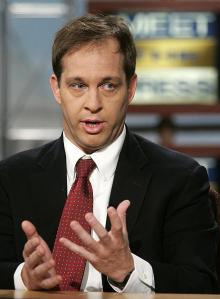
Dexter Filkins
According to Filkins, through Suleimani’s influence, after the U.S. took down Saddam Hussein and everything went to hell in Iraq, Iran has basically controlled what went on there; and now Iran is a powerful influence in the Syrian conflict. Here’s the introduction to the Filkins interview from Fresh Air site. Meet The Iranian Commander Pulling Strings In Syria’s War:
Perhaps the most important military commander in Syria’s civil war is not Syrian at all. He’s Iranian Maj. Gen. Qassem Suleimani, and he’s the subject of an article by Dexter Filkins in the current edition of The New Yorker.
For the past 15 years, Suleimani has been the chief of the Quds Force, a small but powerful branch of Iran’s Revolutionary Guard. He’s not a familiar name to Americans, but one former CIA officer described him to Filkins as “the single most powerful operative in the Middle East today.”
Filkins writes that Suleimani “has sought to reshape the Middle East in Iran’s favor, working as a power broker and as a military force: assassinating rivals, arming allies, and, for most of a decade, directing a network of militant groups that killed hundreds of Americans in Iraq. The U.S. Treasury Department has sanctioned Suleimani for his role in supporting the Assad regime, and for abetting terrorism.”
On Suleimani’s influence on the reshaping of the Middle East:
Qassem Suleimani — who is this extraordinarily powerful man behind the mask, very mysterious guy, very powerful guy — he was instrumental in 2010 in making sure that the Americans left no troops behind in Iraq. During the Iraq War, he supervised and directed militias which were responsible for hundreds of American deaths.
It appears, by the evidence, that the Iranians, and the Quds Force in particular, were behind the assassination of Rafik Hariri, the president of Lebanon, in 2005. Qassem Suleimani appears to be running or directing or at least playing a very large part in the war in Syria on behalf of the Assad government. So he’s everywhere, and, again, the Iranians have been extraordinarily aggressive over the past 15 years in asserting themselves in the Middle East, often at American expense.
Filkins also says that it’s clear the Iranians do want to develop nuclear weapons, and he doubts if the U.S. will be able to get them to agreed not to do it. The reason the Iranians are reaching out to the West right now is that the sanctions are really hurting them–basically the middle class in Iran has been decimated.
You can read more excerpts from the interview at the Fresh Air site. I plan to finish reading the Filkins article in the New Yorker today. I hope I’ve given you enough information to get you to read it too. I’m sure this article will be much discussed in the coming weeks.
Here’s Charles Pierce on the Filkins piece: The Limitless Bungling Of George W. Bush And Co.
Dexter Filkins has a long, fine piece in the September 30 New Yorker about one Qassam Suleimani, an Iranian who seems to be the Zelig of Middle East spookdom, and who is now currently working with the Assad government in Syria.
Since then, Suleimani has orchestrated attacks in places as far flung as Thailand, New Delhi, Lagos, and Nairobi-at least thirty attempts in the past two years alone. The most notorious was a scheme, in 2011, to hire a Mexican drug cartel to blow up the Saudi Ambassador to the United States as he sat down to eat at a restaurant a few miles from the White House. The cartel member approached by Suleimani’s agent turned out to be an informant for the U.S. Drug Enforcement Administration. (The Quds Force appears to be more effective close to home, and a number of the remote plans have gone awry.) Still, after the plot collapsed, two former American officials told a congressional committee that Suleimani should be assassinated. “Suleimani travels a lot,” one said. “He is all over the place. Go get him. Either try to capture him or kill him.” In Iran, more than two hundred dignitaries signed an outraged letter in his defense; a social-media campaign proclaimed, “We are all Qassem Suleimani.”
If you want evidence behind your essential instinct that the tangle in that part of the world is beyond our ability ever to untangle, you’ve got it here. But there is one other little tidbit that’s worth bringing up, given the fact that some officials formerly in the employ of C-Plus Augustus — most notably, David Frum — have snuck into the national dialogue again, probably through an unguarded window, instead of going off and living a penitent’s existence for what they did to the country.
(To be entirely fair, according to Filkins, Suleimani was formed by his participation in the savage Iran-Iraq War in which the United States, employing the brilliant realpolitik of blood-beast Henry Kissinger, helped both sides, guaranteeing that nobody would trust us thereafter. Genius!)
In other news,
Hillary had a few choice words for the Republicans who are trying to shut down the government in order to defund The Affordable Care Act. From the WaPo: Hillary Clinton says government shutdown ‘wouldn’t be the worst thing for Democrats’:
Hillary Rodham Clinton said Tuesday that if a “noisy minority” of Republican lawmakers force a government shutdown over funding for President Obama’s signature health-care law, they would face negative political consequences.
“It wouldn’t be the worst thing for Democrats if they tried to shut the government down,” said Clinton, a former secretary of state and potential 2016 Democratic presidential candidate. “We’ve seen that movie before and it didn’t work out so well for those so-called obstructionists.”
Clinton was referencing the political harm for Republicans in the mid-1990s when they forced a shutdown during husband Bill Clinton’s presidency.
“If they want to try to shut the government down, that’s on their head, that’s their responsibility,” she added.
Isn’t it great to have Hillary talking about politics again?
I’m really late with this post, so I’m going to wrap it up with a link dump:
From Gallup — Tea Party Support Dwindles to Near-Record Low: Republicans ambivalent about movement, while most Democrats oppose it
From Huffington Post — DC Exempts Itself From Federal Government Shutdown
From The Political Carnival: Don’t Buckle Your Seatbelt? Go To Jail — Or Your Death
From Vanity Fair, battles among the richie-riches in San Francisco’s toniest neighborhood —
Bluebloods & Billionaires
Scientific American — Peculiar Brain Signals Found in “Flat-Lined” Patient What does it really mean to be dead?
Now it’s your turn. What’s your recommended reading for today? Please let us know in the comment thread, and have a great day!
Tuesday Reads: Hillary in 2016?
Posted: September 24, 2013 Filed under: 2016 elections, Hillary Clinton, morning reads, Republican politics, U.S. Economy, U.S. Politics | Tags: Bill Clinton, Chelsea Clinton, Doug Band, Huma Abedin, Taylor Marsh, Terry McAuliffe 70 Comments
The face of a President?
Good Morning!!
For the past few weeks, I’ve been suffering from a bad case of what JJ calls “PAD” or “Political Affective Disorder.” I’ve been finding myself escaping into a haze of detective stories, Criminal Minds reruns, and video games. I’ve still kept up with the news–barely–but I haven’t felt much like writing about it. I feel discouraged about the fate of our nation and I’m paralyzed about my own personal future too.
Beginning in 1993, I focused most of my attention of getting the education I missed out on as a young woman after I left college after only two years. From 1993 to 2010, I lived the life of a full-time student–and I loved it! After I finally achieved my goal–a doctorate in psychology–I had no idea what to do next. I was near retirement age, and faced the reality that the best “job” I might be able to get in the current economic climate was as an adjunct professor with low pay and no benefits.
I had learned after 12 years of teaching that the kinds of teaching jobs I might be able to get wouldn’t allow me to experience the aspects of teaching that I truly enjoyed–working directly with students and leading class discussions–wouldn’t be available to me. Instead I’d be lecturing to classes of 150-200 students with little opportunity for class discussion or personal interaction. In addition, I had serious problems with grade inflation and the “customers are always right” attitude of the universities I had taught at.
I had fantasies of focusing on writing and research, and I thought that might be a realistic goal, but then my mentor died suddenly and shockingly, and I no longer had anyone in academia to turn to for advice or to help me negotiate the publishing process. I was already so exhausted by the effort to complete my dissertation and my father’s death in March of 2010, that I really felt the need to just do nothing for awhile.
I threw myself into blogging, because it gave me opportunities to write and express myself on a daily basis. I’ve always loved following politics and it has been great to connect with so many other people who have the same interests and obsessions. But lately the world of politics seems as paralyzed as I am in my own life. The Republican Party has managed to largely control the agenda despite the fact that they only control the House.
Right now, I have the ability to live on a very low income and still have a decent lifestyle. But the day is eventually going to come when I won’t have a free place to live. I’m also finding myself less satisfied with just recovering from the effort to finish my Ph.D. and the major losses of my father and my academic father figure–my mentor. What will my future look like? I seems wrong not to use the skills and knowledge I’ve gained over the years to give back in some way, no matter how small.
Well, I can’t solve all those problems today. But I can keep on keepin’ on and imagine ways things might change. You might call it, “The Audacity of Hope.” And that’s where Hillary comes in. More and more I see her as a model for survival, for achievement late in life, for looking at problems in new and productive ways. Could she really become the first woman president at approximately the same age I am? Could she be a better, more innovative leader than Barrack Obama has been? I want to take that leap of faith and believe in her ability to win the nomination and general election and succeed as president. I also want to believe that she and we can survive the Clinton hate that we’ll all have to go through to make it happen.
Suddenly Hillary is all over the news! Yesterday Dakinikat posted a link to the first major interview (at New York Magazine) Hillary has done since leaving the State Department. Yesterday I was feeling so apathetic that I didn’t even manage to read the whole thing. But I’ve promised myself I’m going to do that today. In the meantime, here are some crib sheets and reactions to the New York article:
From NBC News’ First Thoughts:
*** Clinton news — everywhere! If you wanted an idea of what the media landscape would look like the moment we get a clear indication if Hillary Clinton is running for president, we got a taste of it over the past 48 hours. Hillary Clinton gave her first private-citizen interview to a news organization; Bill Clinton is making news ahead of his Clinton Global Initiative meeting; and the New Republic runs a tough piece on Bill Clinton aide Doug Band. It’s a reminder of what comes with the Clintons — excitement, news and attention, and baggage. Now on to these individual stories…
*** “She’s running,” Hillary confidante tells New York magazine: In her first interview with a news organization since leaving her secretary of state post, Hillary Clinton certainly didn’t seem like someone who was shutting the door to a 2016 presidential bid. In fact, it was the opposite. When New York magazineasked if she wrestles with running, Clinton responded, “‘I do,’ she says, ‘but I’m both pragmatic and realistic. I think I have a pretty good idea of the political and governmental challenges that are facing our leaders, and I’ll do whatever I can from whatever position I find myself in to advocate for the values and the policies I think are right for the country. I will just continue to weigh what the factors are that would influence me making a decision one way or the other.’” It’s a significant step that she’s decided to acknowledge publicly that she’s thinking about it. We may all think we know this and treat it as a given inside the Acela Corridor, but it’s still significant to read her SAYING it. But the article adds, “Some of her close confidants, including many people with whom her own staff put me in touch, are far less circumspect than she is. ‘She’s running, but she doesn’t know it yet,’ one such person put it to me. ‘It’s just like a force of history. It’s inexorable, it’s gravitational. I think she actually believes she has more say in it than she actually does.’” Other than sending signals that she’s running, the other unmistakable take away from the Hillary interview: She won’t be surrounding herself with a lot of the Bill alum, a la 2008. More Team Hillary, less Team Bill in 2016. Translation to nervous donors/supporters about a repeat of 2008: Mark Penn and other Bill veterans aren’t running this thing.
From The Daily Beast: Seven Juiciest Bits from Hillary Clinton’s New York Profile. Go read the whole thing, but I’ll excerpt the part I found most intriguing:
7. The future of Clintonworld now lies with Chelsea.
Of course, there’s a third person in the Clinton family: Chelsea, whose name has been added to the name of the foundation, making it the Bill, Hillary, and Chelsea Clinton Foundation. Chelsea had tried out a number of careers before turning to the family business, first as a consultant at McKinsey & Co., then a hedge fund and a stint NBC. But not everyone at the foundation was happy about Chelsea’s sudden appearance and her decision to bring in an old McKinsey associate as CEO—and Bill eventually stepped out and defended his comrades, a move that hinted there might have been conflict between the three Clintons. “This is an operation that runs on its proximity to people,” one staffer said. “Now it’s three people. How does that work?”
But Hillary says Chelsea’s entrance is simply in her daughter’s DNA (a move that seemed especially true after Chelsea’s Daily Show appearance on Thursday night). Hillary said Chelsea, the family’s now-gatekeeper, “comes by it” at the foundation “naturally.” Ever the proud parents, Hillary said Chelsea is “an incredibly able—obviously I’m biased—but extremely well-organized, results-oriented person, so rather than joining a lot of other groups, on which she could pursue her interests, she thought, I want to be part of continuing to build something I have worked on off and on over the years, and I really believe in it. I was thrilled to hear that.”
A negative note from The Atlantic: Hillary Clinton’s Presidential Campaign Is Already Haunted
Clinton-watchers have an abundance of bedtime reading options this Sunday with not one, but two long profiles aimed at a possible 2016 run for Hillary Clinton. In New York magazine, Clinton herself breaks a mini “press hiatus” to spend some time with Joe Hagan, who then digs into the extensive support system for the family dynasty. But it’s The New Republic’s profile of Doug Band, longtime advisor to Bill Clinton, that hints at one of the challenges Hillary will face in a 2016 campaign: the ghosts waiting in the wings from the Clintons’ long public life.
Band, writer Alec MacGillis explains, is “rarely written about, almost never quoted, and many Clinton associates are loath to discuss him on the record.” But lately, he’s emerged from under the Clinton umbrella to strike out on his own, leaving him more vulnerable to scrutiny. In the past few months, his name has popped up as something of an antagonist in stories of troubles at the family foundation. Even though Band declined to speak to MacGillis for his expansive profile, the piece connects some dots that could be unwelcome for Team Clinton: “the unease with Band reflects an unease with the phenomenon of post-presidential Clintonism itself,” he writes. That Clintonism angst, TNR’s piece posits, could extend to Hillary, albeit with few to no direct ties. Band’s role in the Clinton administration was as the body man, a presidential version of a personal assistant.
Taylor Marsh points out that Hillary is not Bill just because she’s married to him: Bill Clinton, Hillary, and a Bone Picking Exposé on Doug Band.
The fact is Hillary Clinton doesn’t have a trail to give us an idea what she’d do, let alone if she thinks similarly to her husband on economics. What we know about Hillary in matters commander in chief is that unlike where Bill started, she’s respected at the Pentagon, which is one reason a contingent of progressives will oppose her candidacy. People tried to hook NAFTA to her back during the 2008 season, which I debunked, because not even Carl Bernstein, someone who wrote a fairly tough book on Hillary, would allow that to go unremarked upon, throwing ice cold water on any notion she supported NAFTA, a free trade agreement that exemplifies neoliberalism.
Just because she’s Bill Clinton’s wife doesn’t mean her views are identical to him. You’d think Democratic activists and progressives would understand the insult of assuming Hillary would be just like Bill. Opposing NAFTA also doesn’t mean she won’t approve of other free trade deals. Of course, for many Iraq, then her role in Libya, now Syria, is enough to make her unsupportable.
The other issue is that to people inside the power structure who want to be in charge, pretending corporations aren’t part of politics is to lose your foothold on the ladder taking you upward. You can choose not to participate as a voter and activist, but anyone in the political food chain who wants to rise cannot. This is one of the immovable, unsolvable, implacable truths that create the catch-22 of American politics.
Anyone who wants to change the system can’t get access to power without using the system and by the time they rise within the system they’ve lost credibility with the voters who put them in office to fight the system. Once in the political stream that gives you access to the power as a politician, the corporations who run the world also control the political apparatus you need to get anything done. Thus instead of Barack Obama changing Washington it changed him, as it will anyone governing in the era of international globalization. It gets to the question of whether a person is strong enough to also exact their own pound of economic flesh so that the stacked deck for the wealthy against the middle class at some points starts evening out.
So we don’t talk about neoliberalism when it comes to Democrats, Bill Clinton or Barack Obama, and a scorching investigation of Doug Band won’t change that fact, or that Hillary being married to Bill doesn’t tell us anything definitive about what she’d do if she ran for president and won.
John Dickerson at Slate via CBS News: Hillary Clinton: The long game.
Hillary Clinton, in her first interview after leaving the State Department, offered a wise metaphor about the current state of presidential election madness. “This election is more than three years away, and I just don’t think it’s good for the country,” she told New York magazine, referring to the fevered speculation about her possible candidacy. “It’s like when you meet somebody at a party and they look over your shoulder to see who else is there, and you want to talk to them about something that’s really important; in fact, maybe you came to the party to talk to that particular person, and they just want to know what’s next,” she says. “I feel like that’s our political process right now. I just don’t think it is good.”
Clinton knows what it’s like to be on both ends of that exchange. She was a political spouse; the shortsighted looked over her shoulder for many years, seeing her as merely an adjunct to her accomplished husband. Now, she is the person who draws every eye in the room–away from even her husband. (When someone says “Clinton”, it may not be long before a majority of people think of the former secretary of state and not the former president).
Read more at the link.
And finally articles on two important members of the Clinton orbit:
NY Daily News: Hillary Clinton running for president in 2016, friends say — and Huma Abedin will have tough choice
WaPo: McAuliffe leads Cuccinelli in Virginia governor’s race
Soooooo . . . what’s your take on Hillary’s chances? How can we handle the CDS and the rampant misogyny we know she’ll face?
Of course this is an open thread, so feel free to post your links on any topic in the comments. I promise to click on every one!
Saturday Open Thread: Waiting for the Apocalypse
Posted: September 21, 2013 Filed under: Barack Obama, morning reads, Republican politics, U.S. Economy, U.S. Politics | Tags: food stamps, nuclear near-misses, Rep. Kevin Kramer, SNAP 12 Comments
Good Afternoon Sky Dancers!!
Mona is under the weather today, so I’m going to put up some links to get some discussion going.
Hey, remember when elections used to have consequences? That was before we elected the black guy. Now the right wing nut party tells us what “the American people really think.” At Maddowblog, Steve Benen writes:
If you listen to congressional Republicans defend their shutdown scheme and crusade to destroy the federal health care system, they’ll routinely use the same phrase. The “American people,” the GOP claims, are on their side. House Speaker John Boehner (R-Ohio) argued at a press conference yesterday, for example, “The White House may not get it, but, frankly, the American people get it.” [….]
It may seem like ages ago, but about 10 months ago, the United States held national elections. One party, the Republican Party, ran on a fairly specific platform, near the top of which was a promise to destroy the Affordable Care Act in its entirety. Their rivals, the Democratic Party, also had a platform, which included preservation of the Affordable Care Act.
The “American people” were asked to make a choice. And they did.
At the presidential level, the Democratic candidate won with relative ease, and became only the sixth presidential candidate in American history to win 51% of the popular vote twice. In the U.S. Senate, Democrats not only held their majority for the fourth consecutive election cycle, they also unexpectedly added seats. In the U.S. House, Democratic candidates collectively won 1.4 million more votes than Republican candidates….
We’ve all heard the “elections have consequences” adage many times, but let’s be clear about what we’re witnessing in 2013: Republicans are very clearly telling the country, “No, actually, elections don’t have consequences. We’re still going to do as we please.”
I have to say, it’s really getting old too. I don’t know how much more of this I can take. I’m on the verge of giving up on politics and just playing video games and reading detective stories until the apocalypse overtakes us.
Here’s an example of one of the wingnuts who’s leading us all to armageddon: North Dakota Rep. Kevin Kramer. The North Decoder reports on exchange that took place on Kramer’s Facebook page:
[A] constituent of North Dakota Congressman Kevin Cramer posted a comment on Cramer’s Facebook wall. The constituent apparently wanted to make sure that — after Cramer’s vote to take food out of the mouths of hungry children, disabled people, the elderly and many military veterans — Cramer was aware of some of the Biblical passages supporting the idea of helping the least of these. Cramer’s response is kind of stunning. His response is, essentially, to let those people starve. Citing a different Biblical passage, here’s what Cramer wrote:
Congressman Kevin Cramer 2 Thessalonians 3:10 English Standard Version (ESV) 10 For even when we were with you, we would give you this command: If anyone is not willing to work, let him not eat.Facebook (source)
So there you go folks. The hungry children of veterans who can’t find jobs or who are disabled; those kids can just starve. See, Cramer’s a good Christian, and Thessalonians says we need to let the children of people who can’t work or who can’t find jobs starve….
Cramer assumes everybody who receives SNAP assistance is lazy. Because, of course, the Christian thing to do is to assume that everyone who isn’t working isn’t willing to work. And we should hate those people and let them “not eat.” Let’s just forget all that crap the Bible says about helping poor people. Why not?!? He forgets that many who receive SNAP assistance work. Many work full-time. Many work multiple jobs. It’s not that they’re lazy, Kevin; it’s that our economy needs a lot of working poor people. WalMart needs a lot of working poor. Kevin’s owner — the Man Who Bought North Dakota — needs a lot of working poor people. How would the Walton family make so much money if they weren’t able to pay so many people so little?!?
Read the whole Facebook post at the link.
Here’s some advice for journalists on the Republican campaign to starve low wage workers and unemployed people and their children to death from Dan Froomkin: Writing a Neutral Story About Something So Heartless As the Food Stamp Vote Is Not Good Journalism.
The Republican-led House yesterday voted to make deep cuts to the food stamps program that has kept millions of American families from going hungry since the recession hit, saying its response to growing need was instead a sign of bloat and abuse.
The New York Times editorial board this morning said the vote “can be seen only as an act of supreme indifference.”
But that’s not the way the paper’s own reporters covered it. Like those at essentially every other mainstream news organization, they wrote it straight. They focused on procedure. They quoted both sides. And they called it a day.
I decided to closely examine this morning’s coverage of the vote because such a blatantly absurd and cruel move struck me as a good test of whether the Washington press corps could ever bring itself to call things as they so obviously are — or whether they would check their very good brains at the door and just write triangulating mush that leaves readers to fend for themselves. It was no contest.
Read Froomkin’s review of the coverage at HuffPo. American journalism is pretty much dead these days, folks.
Speaking of approaching armageddon, lately we keep hearing about near miss nuclear explosions in our past. The latest of these incidents to be revealed took place in North Carolina in 1961. BBC News:
The plane was on a routine flight when it began to break up over North Carolina on 23 January 1961.
As it was breaking apart, a control inside the cockpit released the two Mark 39 hydrogen bombs over Goldsboro.
One fell to the ground unarmed. But the second “assumed it was being deliberately released over an enemy target – and went through all its arming mechanisms save one, and very nearly detonated over North Carolina,” Mr Schlosser told the BBC’s Katty Kay.
Only the failure of a single low-voltage switch prevented disaster, he said.
The bomb was almost 260 times more powerful than the bombs that fell on Hiroshima and Nagasaki.

The incident is only one of the terrifying “near misses” reported by Eric Schlosser in a new book Command and Control: Nuclear Weapons, the Damascus Accident, and the Illusion of Safety. Schlosser is also the author of Fast Food Nation.
Sooooo…. What are you up to today? If you have any interesting news links to share, please post them in the comment thread.
Thursday Reads
Posted: September 19, 2013 Filed under: Barack Obama, morning reads, Republican politics, U.S. Economy, U.S. Politics | Tags: Federal debt limit, Income Inequality, John Boehner 18 Comments
Good Morning!!
Before I get started on today’ news, I want to say that I hope all the surgeries go well. Today RalphB is having surgery and then will have to go through rehab. In addition, JJ’s daughter just had hers on Tuesday and is home recovering. Please keep them in your thoughts. Hang in there JJ and RalphB! Remember you have friends at Sky Dancing Blog who care!
Now to the news…
As I’m sure you know by now, the House Republicans are again engaged in a fruitless but damaging effort to get rid of Obamacare. Speaker John Boehner is threatening to shut down the government by refusing to raise the debt limit unless the Affordable Care Act is killed. From the LA Times: ‘This is the line in the sand,’ House Republicans say.
House Republicans united Wednesday around a plan to use the threat of a government shutdown as leverage to repeal President Obama‘s healthcare law, confident the American people are on their side.
House Speaker John A. Boehner (R-Ohio) yielded to his right flank by agreeing to attach the healthcare law repeal to a must-pass bill to keep the government funded past Sept. 30. A vote is expected Friday on a bill that would allow the government to stay open for the next few months.
The measure is all but certain to pass the Republican-led House, but faces rejection in the Senate, where the Democratic majority has shown little interest in undoing Obama’s signature domestic achievement.
Without a resolution by Oct. 1, the start of the new federal fiscal year, the government will run out of money to keep federal workers on the job and provide basic services.
And so, after a quiet summer, the battle begins again. Honestly, sometimes I really feel as if I must be having a bad dream that I can’t wake up from. Some responses to the shutdown threat:
Gail Collins at the NYT: World War O
Seriously, people, why do you think the Republicans have gone so completely lunatic when it comes to this issue? Why do they behave as if, once the health law begins to roll out, it will be cemented in place like an amendment to the Constitution?
True, it would be a pain to repeal the whole thing if it doesn’t work out. But not a pain sufficient to wreak havoc on the global economy like, say, refusing to raise the debt ceiling. Senator Ted Cruz of Texas has been leading the push to shut down the government unless Congress repeals Obamacare. But have you ever heard him vow that if Congress doesn’t repeal Obamacare there will be … elections and then a new Congress that will repeal Obamacare?
Actually, Ted Cruz has an answer for this. Once the law goes into effect, he told the Web site The Daily Caller, the public will be overwhelmed by its sugary sweetness — “hooked on the subsidies.” It’s the duty of Congress to take it back before people can taste it, just the way New York Mayor Michael Bloomberg tried to whisk away high-calorie Big Gulps.
So, the message is clear. The new health care law is going to be terrible, wreaking havoc on American families, ruining their lives. And they are going to love it so much they will never have the self-control necessary to give it up.
Karl Rove, who used to be considered a far right wing nut is now trying to reason with the even farther right nuts who have succeed him. At the Wall Street Journal, Rove pleads for rationality:
A shutdown now would have much worse fallout than the one in 1995. Back then, seven of the government’s 13 appropriations bills had been signed into law, including the two that funded the military. So most of the government was untouched by the shutdown. Many of the unfunded agencies kept operating at a reduced level for the shutdown’s three weeks by using funds from past fiscal years.
But this time, no appropriations bills have been signed into law, so no discretionary spending is in place for any part of the federal government. Washington won’t be able to pay military families or any other federal employee. While conscientious FBI and Border Patrol agents, prison guards, air-traffic controllers and other federal employees may keep showing up for work, they won’t get paychecks, just IOUs.
The only agencies allowed to operate with unsalaried employees will be those that meet one or more of the following legal tests: They must be responding to “imminent” emergencies involving the safety of human life or the protection of property, be funded by mandatory spending (such as Social Security), have funds from prior fiscal years that have already been obligated, or rely on the constitutional power of the president. Figuring out which agencies meet these tests will be tough, but much of the federal government will lack legal authority to function.
But won’t voters be swayed by the arguments for defunding? The GPS poll tested the key arguments put forward by advocates of defunding and Mr. Obama’s response. Independents went with Mr. Obama’s counterpunch 57% to 35%. Voters in Senate battleground states sided with him 59% to 33%. In lean-Republican congressional districts and in swing congressional districts, Mr. Obama won by 56% to 39% and 58% to 33%, respectively. On the other hand, independents support by 51% to 42% delaying ObamaCare’s mandate that individuals buy coverage or pay a fine.
EJ Dionne at the WaPo: Why Republicans are desperate for a shutdown:
To begin with, this is not just a fight between Republicans and Democrats. The GOP is clearly divided between those who take governing seriously — they still believe in government enough to accept responsibility for keeping it open — and those who see in every issue the “final conflict” that Marxists kept predicting. Stopping Obamacare, in their view, is necessary to prevent the country from reaching the end of the road to serfdom. Compared with this hellish prospect, who cares about shutdowns?
What’s fascinating, and this speaks to the perceived power of the tea party in primaries, is that it has taken only a small minority of House Republicans to push toward Armageddon. The Post’s Lori Montgomery and Paul Kane estimated thatroughly 40 conservatives revolted against their leadership’s efforts to keep the government open past Sept. 30. That’s 40 in a 435-member House of Representatives. What’s become of us when less than 10 percent of one chamber of Congress can unleash chaos? What does this say about the House Republican leadership gap?
But it’s also important to understand why the Republican right is so fixated on killing or delaying Obamacare before it goes into effect. Its central worry is not that the program will fail but that it will succeed.
So I guess the House Republicans believe it is worth it to destroy the economic recovery we’ve made so far and possibly crash the global economy to prevent millions of Americans from discovering what it would be like to have health care coverage. It’s unbelievable!
In other economic news, the Fed yesterday indicated that it will not taper of the stimulus as many were expecting them to do. Bloomberg:
The Federal Reserve unexpectedly refrained from reducing the $85 billion pace of monthly bond buying, saying it needs more evidence of lasting improvement in the economy and warning that an increase in interest rates threatened to curb the expansion.
“Conditions in the job market today are still far from what all of us would like to see,” Chairman Ben S. Bernanke said at a press conference today in Washington after a two-day meeting of the Federal Open Market Committee. “The committee has concern that rapid tightening of financial conditions in recent months would have the effect of slowing growth.”
U.S. stocks rose, sending the Standard & Poor’s 500 Index to a record, while Treasuries and gold rallied as Bernanke stressed that the pace of bond buying would be dependent on economic data, and the Fed has no predetermined schedule for tapering the purchases that have pushed its balance sheet to $3.66 trillion.
“There is no fixed calendar schedule, I really have to emphasize that,” Bernanke said. “If the data confirm our basic outlook” for growth and the labor market, “then we could begin later this year.”
No kidding. Earth to the top 1 percent: most of us are still making zero progress. We’re essentially in the same boat as people like us in the days of the Robber Barons. Economic inequality is the highest in history, salaries are stuck at about 1980s levels, and we’re sick and tired of you 1 percenters hogging all the riches. It’s getting close to the time when ordinary people are going to break out the pitchforks and the tar and feathers.
Now here’s a sample of what the 1 percenters think from some moronic Ayn Rand fan at Fortune named Harry Binswanger: Give Back? Yes, It’s Time For The 99% To Give Back To The 1%. Here’s a taste, but you really need to go read the whole thing.
It’s time to gore another collectivist sacred cow. This time it’s the popular idea that the successful are obliged to “give back to the community.” That oft-heard claim assumes that the wealth of high-earners is taken away from “the community.” And beneath that lies the perverted Marxist notion that wealth is accumulated by “exploiting” people, not by creating value–as if Henry Ford was not necessary for Fords to roll off the (non-existent) assembly lines andSteve Jobs was not necessary for iPhones and iPads to spring into existence.
Let’s begin by stripping away the collectivism. “The community” never gave anyone anything. The “community,” the “society,” the “nation” is just a number of interacting individuals, not a mystical entity floating in a cloud above them. And when some individual person–a parent, a teacher, a customer–”gives” something to someone else, it is not an act of charity, but a trade for value received in return.
I’m running out of space and time, so here are the rest of my news items link-dump style:
The Daily Mail: Sister of suspected Boston Marathon bomber appears in court charged with dealing marijuana
The NYT: Starbucks Seeks to Keep Guns Out of Its Coffee Shops
NBC News: Gamer stabbed, robbed of ‘Grand Theft Auto V’ just minutes after buying game
NBC News: ‘Grand Theft Auto V’ torture episode sparks controversy
Science Recorder: European scientists plan to free robot snakes on the Red Planet
NPR: Officials Say Edward Snowden’s Leaks Were Masked By Job Duties
WaPo: Navy Yard shooter carved odd messages into his gun before carnage
Slash and Burn Republicanism is not Good for the Country, our Children, and other Living Things
Posted: September 18, 2013 Filed under: Fiscal Cliff, right wing hate grouups, Rush Limbaugh, The Bonus Class, U.S. Economy, U.S. Politics | Tags: budget woes, fiscal cliff, SNAP 12 Comments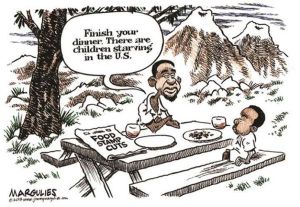 Some time during the Reagan campaign, our government became the enemy of a huge number of people in this country. Paranoia over a democratically elected government enshrined by voters and a sophisticated legal and political system is usually confined to a groups of paramilitary paranoids that call themselves preppers, read too much Ayn Rand, and never emotionally develop beyond, say high school. Through the money of the Koch Brothers, the pulpit connivings of Pat Robertson and the paranoid shrieking of folks like Glenn Beck and Rush Limbaugh that have failed at every endeavor but snake oil peddling on the radio, we now have entire sections of the country that gerrymander legislators to send these freaks to Congress.
Perry and like-minded Republican governors subscribe to the slash-and-burn economic philosophy — a belief that “less” will somehow become “more.” In Texas, he has implemented this vision with gusto, cutting taxes and slashing funding for critical middle-class priorities such as public schools, higher education, health care and infrastructure. The results? Texas ranks 49th in high school graduation, 10th in the rate of poverty and 50th in the percent of residents with even basic health insurance.
And while Perry likes to promote the job creation in Texas during his time in office, he leaves out a critical point: The jobs “miracle” he touts is driven by low-paying, non-sustainable jobs. This year, Texas — tied with Mississippi — leads the nation for the percentage of hourly paid workers earning equal to or less than the minimum wage. More than one in 10 workers nationwide earning at or below the minimum wage works in Texas.
Let’s not even go into the social costs of letting Texas businesses operate however they want to. Just ask the towns and farms that no longer have water and are nsubjected to earthquakes due to fracking. We can also mention the town that mostly disappeared from a fertilizer plant explosion that killed 14 people. Wait until Texas property owners and taxpayers get the bills for those kinds of preventable disasters. I’m fairly certain that northern Texas will soon be paying more for water than the world will pay for its oil. In fact, I’ll stake all my years drawing supply and demand graph on it.
Then, there is a new kick-the-can down the road effort on the 2013 Farm Bill that’s going to leave a lot of American children starving. Republican members of Congress appear to still think that folks live large off of Food Stamps. It’s the old untrue Welfare Queen canard peddled by Reagan back in the 1980s come back to haunt us.
An extension does not solve problems. Congress is currently engaged in a philosophical debate about federal nutrition programs, namely, the farm bill’s Supplemental Nutrition Assistance Program (SNAP). Some members of Congress believe the program and its current level of benefits and eligibility requirements are appropriate, particularly in this challenging economic time. Others erroneously believe the program is fraught with waste, fraud and abuse and want to cut funding and benefits to vulnerable families.
Regardless of where one falls on this issue, it is clear that an extension of the current farm bill is inadequate from both perspectives. Members wanting to preserve existing funding for this vital safety net program should welcome the long-term policy certainty provided by a five-year comprehensive bill, rather than leaving SNAP vulnerable to cuts year after year. And members interested in cutting funding from SNAP won’t achieve any of the so-called reforms they desire without the passage of a new five-year bill; an extension merely perpetuates the status quo.
Rather than waste time on a nutrition-only bill to be brought up in the House next week that would leave between 4 and 6 million Americans ineligible for full SNAP benefits, according to an analysis by the Center on Budget and Policy Priorities, or pass an extension that merely kicks the can down the road, Congress must instead preserve the historic coalition between farmers and consumers in need and pass a comprehensive five-year farm bill that includes both farm and nutrition programs.
Then, here we go again on shutting down the budget process, a debt ceiling increase, and vital services over providing more health care to individuals through the Affordable Health Care Act. Once again, I remind every one that this act is basically the Heritage Institute Plan of the 1990s. It was the Republican answer to “HillaryCare”. How far down the path of slash and burn have we gone that today’s Republican’s reject their “conservative” plan of less than 20 years ago? Here’s an argument for a shutdown.
I’m quickly coming to the conclusion that a government shutdown may be the only way to deal with the coming budget bedlam and #cliffgate.
Let’s start by reviewing the situation.
- As of today there are less than two weeks before fiscal 2014 begins.
- None of the FY14 appropriations have been enacted; none have any chance of being enacted.
- There are no formal negotiations going on between Congress and the White House, between the House and Senate or between Democrats and Republicans.
- The only discussions that seem to be taking place are between the two main factions in the House GOP…and the best thing that can be said about them is that they appear to be going nowhere.
- The original plan suggested by the House Republican leadership was flatly rejected by the tea partiers in the House GOP caucus. The tea partiers were energized by their success.
- House Speaker John Boehner (R-OH) and Majority Leader Eric Cantor (R-VA) haven’t put a new plan on the table since their last plan was rejected by members of their own party a week ago. Boehner has even indicated publicly that he’s not sure whether there is a plan than is acceptable to his caucus.
- Meanwhile, in keeping with the tradition that the House goes first on CRs, Senate Majority Leader Harry Reid (D-NV) has said he is going to wait for the House to act before moving forward. What happens when/if he moves forward is anyone’s guess
- Senate Minority Leader Mitch McConnell (R-KY) has far less room to maneuver compared to previous budget fights because he is being challenged in the GOP Kentucky primary by a tea partier.
- House Democrats, who in the past have provided the votes to help the House GOP pass budget-related bills when the Republican caucus couldn’t decide what to do, this time seem hell bent on not doing it again.
- The White House has far less sway over congressional Democrats now than it did before the 2012 election. Needless to say, it has almost none over congressional Republicans.
- The extremely negative political impact of the 1995-96 shutdowns is such a distant (or nonexistent) memory for so many House Republicans that it’s not at all clear they have any fear of it happening again in 2013.
- To top it all off, this year’s budget debate is less about the budget than it is about defunding Obamacare and that makes a compromise far harder on the budget issues.
Two things usually help with a political stalemate like this (although I’m not really sure there ever has been a situation exactly like this one):
- A charismatic leader who can overcome the partisan warfare
- A crisis that substantially changes the politics
It’s hard to see any leader emerging in the short-term In the current hyper partisan environment. And while there are many charismatic politicians, at least right now none have the stature with both parties to negotiate a budget peace plan.
That leaves a crisis, and baring a military or foreign policy disaster, the only one with the potential to create enough political pain in a relatively short period of time is a federal shutdown.
That makes a shutdown a better option for Boehner, Cantor, McConnell and Reid than it might otherwise seem.
A shutdown also may work for Boehner because (1) it will show his tea partiers that he was willing to allow it to happen as they wanted, (2) it will change the politics as many voters go from being amused to being furious and (3) the tea partiers may be able to use the shutdown with their own voters to prove their political testosterone.
As usual, there’s a group of greedy billionaires behind the shutdown mentality. It seems they all make lots of money just from all the hooplah.
Club for Growth and other extremist groups consider a record like his an unforgivable failure, and they are raising and spending millions to make sure that no Republicans will take similar positions in the next few weeks when the fiscal year ends and the debt limit expires.
If you’re wondering why so many House Republicans seem to believe they can force President Obama to accept a “defunding” of the health care reform law by threatening a government shutdown or a default, it’s because these groups have promised to inflict political pain on any Republican official who doesn’t go along.
Heritage Action and the Senate Conservatives Fund have each released scorecards showing which lawmakers have pledged to “defund Obamacare.” When a senator like Tom Coburn of Oklahoma refuses to pledge, right-wing activists are told: “Please contact Senator Coburn and tell him it’s dishonest to say you oppose Obamacare, but then vote to fund it. Tell him he swore an oath to support and defend the Constitution.”
Mr. Schock and 10 other lawmakers considered suspiciously squishy by the Club for Growth were designated as RINO’s (Republicans in name only), and the club has vowed to find primary opponents and support them with cash — a formidable threat considering that it spent $18 million backing conservative candidates in the 2012 cycle. Americans for Prosperity, a Koch brothers group that has already spent millions on ads fighting health reform, is beginning a new campaign to delay the law’s effects.
These groups, all financed with secret and unlimited money, feed on chaos and would like nothing better than to claim credit for pushing Washington into another crisis. Winning an ideological victory is far more important to them than the severe economic effects of a shutdown or, worse, a default, which could shatter the credit markets.
They also have another reason for their attacks: fund-raising. All their Web sites pushing the defunding scheme include a big “donate” button for the faithful to push. “With your donation, you will be sending a strong message: Obamacare must be defunded now,” saysthe Web site of the National Liberty Federation, another “social welfare” group that sees dollar signs in shutting down the government.
Brian Walsh, a longtime Republican operative, recently noted in U.S. News and World Report that the right is now spending more money attacking Republicans than the Democrats are. “Money begets TV ads, which begets even more money for these groups’ personal coffers,” he wrote. “Pointing fingers and attacking Republicans is apparently a very profitable fund-raising business.”
What always seems odd in all of this is the number of people that fall for these rich, ideological loudmouths whose slash and burn policy is killing every one. It seems to me that it’s an offshoot of xenophobia, misogyny and racism. It appears easier for some folks to believe that women, minorities, and other ethnic groups are more responsible for their economic demise than their bosses and overlords in the pulpits, in elected office, and the bosses chair. Why some one doesn’t question the patriotism and birth certificate of the likes of Ted Cruz is beyond me. He’s really the poster boy for everything that’s removing the greatness from our country imho.

 peej
peej Carissa
 bostonboomer
 dakinikat
 ecocatwoman
 mablue2
 Mama Lopez
 peggysue22
 quixote
 skydancingguestblogger
 Mona (aka Wonk the Vote)



 Sky Dancing
Recent Comments