Posted: July 28, 2018 | Author: bostonboomer | Filed under: Foreign Affairs, morning reads, U.S. Politics |

Lazy afternoon, by Arlene Cassidy
Good Afternoon!!
It’s becoming more and more clear that we have a Russian intelligence asset acting as “president” of the U.S. It’s an full-on national emergency, and the Republican-controlled Congress is seemingly determined to brazenly aid a foreign enemy rather than live up to their oaths to “support and defend the Constitution.”
Yesterday the “president” held 30-minute National Security Council meeting supposedly to discuss election security. To show how committed he was to the project, he sent a nonsense tweet about jobs during the meeting. We’re not going to get any help from Trump or the GOP in the fight to save democracy. They’re too busy figuring out ways to suppress the votes of people who aren’t white and stupid.
The Washington Post: Trump chairs election security meeting but gives no new orders to repel Russian interference.
President Trump chaired a meeting Friday of his most senior national security advisers to discuss the administration’s effort to safeguard November’s elections from Russian interference, the first such meeting he’s led on the matter, but issued no new directives to counter or deter the threat.

By Deborah DeWit Marchant
The meeting, which lasted less than an hour, covered all the activities by federal agencies to help state and local election officials, and to investigate and hold accountable Russian hackers seeking to undermine American democracy….
“It was a good meeting,” said one senior administration official, who spoke on the condition of anonymity to describe an event that was closed to media coverage. “Everybody was on the same page. We’re doing a lot of good work across the administration.’’
There was no discussion of new actions Trump wants or of a coordinated strategy to prevent Russia from interfering in U.S. politics, officials said. Instead, the meeting focused on the activities undertaken so far.
Read the rest of the article to learn what kinds of defensive strategies government officials other than the “president” have been working on.
From NBC’s Ken Dilanian: Trump admin has no central strategy for election security, and no one’s in charge.
After nearly two years of calling Russian election interference a hoax and its investigation a witch hunt, President Donald Trump on Friday presided over the first National Security Council meeting devoted to defending American democracy from foreign manipulation.
“The President has made it clear that his administration will not tolerate foreign interference in our elections from any nation state or other malicious actors,” the White House said in a statement afterward.
But current and former officials tell NBC News that 19 months into his presidency, there is no coherent Trump administration strategy to combat foreign election interference — and no single person or agency in charge….

Bertha Wegmann – Lesende Frau in einem Innenraum
To be sure, individual government agencies have responded in various ways. The Department of Homeland Security is working with states to improve cyber security in voting systems. The FBI created a “foreign influence task force,” and the Justice Department announced a new policy his month to inform the public about bots and trolls on social media. The National Security Agency and U.S. Cyber Command are coordinating to counter Russian influence in cyberspace, the general in charge of those agencies has said.
But even members of Trump’s national security cabinet have acknowledged the need for a central, unifying effort — one that experts say is missing. Senior officials have also admitted that the government has failed to take steps necessary to give the Russians second thoughts about intervening in American politics. Trump hasn’t done so, and neither did Barack Obama, whose response to election meddling — expelling diplomats and closing Russian compounds in December 2016 — has been described by some of his own former aides as tepid.
Read more at NBC News.
According to The New York Times, Russia is focusing more on disrupting the U.S. power grid than on the upcoming election.
State-sponsored Russian hackers appear far more interested this year in demonstrating that they can disrupt the American electric utility grid than the midterm elections, according to United States intelligence officials and technology company executives.

By David Hettinger
Despite attempts to infiltrate the online accounts of two Senate Democrats up for re-election, intelligence officials said they have seen little activity by Russian military hackers aimed at either major American political figures or state voter registration systems.
By comparison, according to intelligence officials and executives of the companies that oversee the world’s computer networks, there is surprisingly far more effort directed at implanting malware in the electrical grid.
Do you think Trump will do anything about that?
This week, the Department of Homeland Security reported that over the last year, Russia’s military intelligence agency had infiltrated the control rooms of power plants across the United States. In theory, that could enable it to take control of parts of the grid by remote control.
While the department cited “hundreds of victims” of the attacks, far more than they had previously acknowledged, there is no evidence that the hackers tried to take over the plants, as Russian actors did in Ukraine in 2015 and 2016.
In interviews, American intelligence officials said that the department had understated the scope of the threat. So far the White House has said little about the intrusions other than raise the fear of such breaches to maintain old coal plants in case they are needed to recover from a major attack.

Mikhail Korneevich Anikeev, moments de détente
Somehow I think Russia, with the aid of their asset in the White House will probably find a way to focus more on election hacking as November approaches.
Like his role model, Vladimir Putin, Trump hates the free press, and works tirelessly to thwart the first amendment. The Washington Post reports: Venting about press, Trump has repeatedly sought to ban reporters over questions.
President Trump has sought repeatedly to punish journalists for the way they ask him questions, directing White House staff to ban those reporters from covering official events or to revoke their press credentials, according to several current and former administration officials.
At various moments throughout his presidency, Trump has vented angrily to aides about what he considers disrespectful behavior and impertinent questions from reporters in the Oval Office and in other venues. He has also asked that retaliatory action be taken against them.
“These people shouting questions are the worst,” Trump has said, according to a current official. “Why do we have them in here?”
Until this week, the officials said, Trump’s senior aides have resisted carrying out his directives. They convinced him that moves to restrict media access could backfire and further strain the White House’s fraught relationship with the press corps, whose members the president routinely derides as “fake news” and “dishonest people.”
On Wednesday, however, newly installed Deputy Chief of Staff Bill Shine and press secretary Sarah Huckabee Sanders took action against CNN correspondent Kaitlan Collins, telling her she could not attend Trump’s open-media event in the Rose Garden because they objected to her questioning of the president earlier in the day.
Read the rest at the Post.
I got some perverse pleasure from reading this piece by Jeff Stein at Newsweek yesterday: How Vladimir Putin Will Take Down Donald Trump When He’s No Longer Useful. According to Russian propaganda expert Julia Davis, the Russians are getting frustrated at Trump’s inability to do the things he promised them. They don’t understand about checks and balances.

By Stojan Milanov
Following the controversial Helsinki summit between the Russian and American presidents, Moscow’s media commentators greeted Trump’s deference toward Putin with a mix of concern, pity and ridicule, none of which could have been uttered without the Kremlin’s approval, says Ukrainian-born Julia Davis, an expert on Russian propaganda.
“They usually get a printout of some kind, about which topics they’re supposed to discuss and what their position is supposed to be,” said Davis, a featured expert at the Atlantic Council’s Disinfo Portal. The state-controlled commentary “is very closely monitored, and they would not take a chance on stepping outside of the line,” she told Newsweek.
The Kremlin, she continued, is “growing very frustrated because there’s so many controls that are being placed on” Trump by Congress, starting with Russian sanctions, upgrades to the U.S. nuclear arsenal and beefed-up military aid to Ukraine, which is under assault by Moscow-backed forces in its eastern Donbas region. And then there are the ongoing investigations into Russian interference in the 2016 elections by special counsel Robert Mueller and the Senate Intelligence Committee, independent actions that would be unthinkable in Putin’s Russia….
“They like to talk about him as weak and incompetent and just pretty much a clown,” Davis said of the Moscow analysts before the Cohen disclosure. “They still think he might prove himself to do what he promised him to do. But if he goes down, I expect they would not skip a beat. They would jump in to help finish him off.”
So how would that happen?

Planted, by Karin Jurick
Measures at Putin’s disposal include leaking a mix of real and fabricated details on Trump’s suspected debts to Russian bankers and oligarchs, said Milton Bearden, a legendary former CIA officer who worked against the Soviet target and later co-authored a book, The Main Enemy, with the cooperation of several former KGB officials.
“Putin can continue to plug along with his best friend and watch how tribalism and divisions within American society continue to tear it apart,” Bearden told Newsweek. “However, if things start to quiet down here, Putin can begin to release whatever it is he might have on the president. It can be real information dealing with the money flow from Deutsche Bank, or it can be carefully fabricated information that looks genuine.”
“I can imagine a wide variety of scenarios,” John Sipher, another top former CIA Russia hand, wrote in March, including the Kremlin injecting “stolen or otherwise unverified” or “well-crafted forgeries” into the U.S. media to take down Trump or just fan political chaos in the U.S. Former CIA director John Brennan suspects that the Russians have “something on him personally.”
Such suspicions have gained wider currency in recent weeks, mostly from Democrats. But last year a Russian opposition politician, Vladimir Milov, alleged in an interview with a Russian exile journalist that Moscow’s secret services had been “closely ‘following’ Trump for over 30 years and the dossier they have on him certainly comprises many, many volumes.” In the 1980s, Milov told Russian exile journalist Kseniya Kirillova, “Trump was married to a Czechoslovak woman who spoke Russian, which also offers good conditions for recruitment.”
Read the rest the link. Maybe we have something to look forward to when the time comes.
I’ll add more links in the comment thread, and I hope you’ll do the same.
Did you like this post? Please share it with your friends:
Posted: July 26, 2018 | Author: bostonboomer | Filed under: Foreign Affairs, morning reads, U.S. Politics |

Good Morning!!
I watched quite a bit of Mike Pompeo’s appearance before the Senate Foreign Relations Committee yesterday. I have to say, Pompeo is as rude and obnoxious as Trump; his personality seems highly unusual for someone who is supposed to be a diplomat. It was obvious from Pompeo’s vague responses to questions from Democrats and Republicans alike that he has no idea what Trump and Putin talked about in their more than two hour private meeting in Helsinki.
From a report on the confrontations at Foreign Policy: In Fiery Hearing, Pompeo Trades Barbs With Lawmakers.
“You come before a group of senators today who are filled with serious doubts about this White House and its conduct with American foreign policy,” said Republican Sen. Bob Corker, the chairman of the Senate Foreign Relations Committee, in one of the sharper exchanges.
“The administration tells us, ‘Don’t worry, be patient, there is a strategy here.’ But from where we sit, it appears that in a ‘ready, fire, aim’ fashion, the White House is waking up every morning and making it up as they go,” he said.
The senators focused their criticism on Trump’s one-on-one meeting with Putin in Helsinki on July 16, details of which remain murky even to administration insiders.
 They also took Pompeo to task for the apparent lack of progress in nuclear negotiations with North Korean leader Kim Jong Un, more than a month after a summit meeting that Trump hailed as a resounding success.
Pompeo returned fire during more than three hours of testimony—his first open exchange with lawmakers since Trump’s meetings with Putin and Kim.
“I understand the game that you’re playing,” he told Sen. Bob Menendez, the ranking Democrat on the committee, during a line of questioning about Trump’s private meeting with Putin, which raised deep concerns among lawmakers and national security experts.
Menendez cut him off and shot back: “No, no, Mr. Secretary. With all due respect, I don’t appreciate you characterizing my questions. My question is to get to the truth. We don’t know what the truth is.”
The exchange with Menendez was one of the most heated of the day. The Democratic Senator from New Jersey talked about it with NPR’s Ari Shapiro yesterday:
SHAPIRO: What did you learn from Secretary Pompeo about what happened in that closed-door meeting in Helsinki?
MENENDEZ: Not very much. I learned that the reason that there is such concern is because no one has a clear readout of what transpired between President Trump and President Putin for over two hours. What we have is what took place at the press conference in Helsinki. And that was alarming to members on both sides of the aisle, which is why we were trying to pierce an understanding of how far he had been briefed and what elements of a conversation for over two hours were being pursued.
 And, you know, it’s interesting that, you know, Secretary Pompeo, when it seems to be of benefit to the administration, will suggest that he knew something. But when if not, he says it’s a private conversation. It only seems to be a private conversation for President Trump because Putin and the Russian defense and public relations ministry is telling all about it. So it obviously has a much different view….
SHAPIRO: It seems like you were trying to ask Secretary Pompeo, in so many words, do you even know what was discussed in that room? And Secretary Pompeo got a little bit indignant and kind of scoffed at the question. But do you think he does know what happened in that room?
MENENDEZ: No. I don’t think he knows what happens in that room.
SHAPIRO: That’s kind of shocking. He’s the secretary of state, right?
MENENDEZ: It is. Well, it’s kind of shocking that you go into a meeting for two hours and you don’t have your secretary of state or your national security adviser or the director of National Intelligence with you because that allows the Russians to ultimately, you know, characterize the discussion as they are doing without a counter to it. And it’s interesting to see that we see no counter. Therefore, when members of the committee are citing the Russian ministry of defense, they’re doing it not because they believe the Russian ministry of defense, but they’re looking for counter arguments.
And when the administration is unwilling to be transparent and speak to it and let us know what actually transpired, it then gives credence to what the Russians are doing. And this is a major concern.
Read more at the NPR link.
As often happens, the Pentagon doesn’t seem to know anything about what Trump and Putin discussed either. That was another topic Senators asked about during the Pompeo hearing. Yesterday Buzzfeed published an article about how often those in charge of our troops are kept in the dark by Trump: New Emails Show What Happens When The Pentagon Has To Scramble To Catch Up To Trump. The article begins with a series of graphics depicting reports about Trump announcements that the Pentagon officials were completely unprepared for.
“The Pentagon was caught off guard” stories have become a staple of news coverage of the Trump administration.
 It’s no secret that time and time again, officials in the Defense Department have been blindsided by sudden, often significant announcements and policy changes involving the US military coming out of the White House.
Trump administration officials have excused those moments as overblown, affecting news reports more than creating any real government dysfunction.
Now, however, internal emails released through the Freedom of Information Act offer an inside look at how chaotic it can be for Pentagon officials when they face an unexpected onslaught of questions in the wake of an alarming public statement from the White House. The confusion resonates not only in Washington but around the world, according to the emails, which were sought by a left-leaning watchdog group, Democracy Forward, and shared with BuzzFeed News.
The emails document two days of the aftermath of an unusual, and seemingly sudden, statement released by the White House late on the night of June 26 last year. It warned Syrian President Bashar al-Assad that he and his military would “pay a heavy price” if they carried out another chemical weapons attack.
Read the rest at the Buzzfeed.
Politico reports that the Pentagon is also being very uncommunicative: ‘We are fighting for information about war’: Pentagon curbs media access.
At a mid-July news conference at the Pentagon, AP reporter Lolita Baldor asked Gen. Mark Milley, the Army chief of staff, about an attack in Afghanistan that had led to the death of an American soldier. But before he could reply, a Defense Department press officer cut in to say that Milley and the three officials flanking him would be answering questions only about the intended topic for the news conference: the announcement of the location of a new command.
 The next question went to Jennifer Griffin from Fox News. Over the previous two days, President Donald Trump had roiled the NATO summit in Brussels with verbal shots at the alliance’s members, so Griffin, after opening with a question about the new command, added, “I’m afraid I’m going to have to agree with Lita, we don’t have an opportunity to see you enough. Gen. Milley, have you reached out to your counterparts in Europe after the NATO summit to reassure them that the U.S. forces are staying?”
Again, the press officer cut off the question before Milley could answer.
The incident, which left Pentagon reporters furious, was the latest flash point in what has become an increasingly adversarial relationship between Defense Secretary James Mattis’ Cabinet department and the reporters who cover it. Chief among the complaints, according to defense reporters who spoke to POLITICO, are declining access to Mattis and other military officials, as well as a sense that reporters are not receiving the information they need to keep the public informed about America’s military activities.
Is this happening because Mattis and his team are out of the loop and don’t really know what Trump is up to? Or are they simply following Trump’s example? Read more at Politico.
USA Today has an interesting article by a former CIA officer: Ex-CIA analyst: If Trump were a foreign leader, I’d raise possibility of blackmail.
Trump’s appeasement of Russia is unprecedented for an American president, despite his recent claim that he has been the toughest president on Russia. It is almost certainly driven in part by his desire to protect the credibility of his election victory at all costs, to promote an image of being the ultimate deal-maker, and because of his preference for strong-man leadership. A former KGB officer and skilled manipulator, Putin no doubt recognizes these traits and is leveraging them to manipulate Trump.
 Putin publicly admitted at the Helsinki summit that he wanted Trump to win, confirming a key point of the IC assessment. Trump probably is willing to look the other way on Russian interference because it was aimed at getting him elected, even if that means ignoring the threat Russia poses and allowing Moscow to continue attacking the country.
Behavior consistent with blackmail:
Trump’s behavior on Russia is consistent with a recruitment tactic employed by intelligence services to turn a person into an asset using damaging information as black-mail. Several senior Obama-era national security officials have said they believe Putin has compromising information on Trump and is using it to make the president do his bidding. Trump and his political base have been undeterred by revelations about his personal life, such as his alleged extra-marital affairs or history of sexual abuse. This suggests that if Moscow does have comprising information, it is likely to be about his personal finances, business practices, or other information that would damage his business.
► We know that some Trump campaign officials discussed working together with Moscow during the election, suggesting Russia could also be holding additional proof of collusion over the president’s head.
Trump’s doubling down since the summit and his invitation to Putin to the White House almost certainly have emboldened Putin to continue or even escalate intelligence operations against the U.S.
There was some encouraging news yesterday. A federal judge ruled that one of the emoluments cases against Trump can go forward.
Jed Shugarman at Slate: Heartbreak for the Trump Hotel.
Today’s ruling by federal court Judge Peter Messitte in one of the three emoluments cases against President Trump was a big win for the plaintiffs—and a bigger win than many had expected. It sets the stage for potentially shutting down the Trump International Hotel in D.C. as a violation of the government lease and thus an unconstitutional emolument. The legal interpretation in this decision would force Trump to divest from the hotel entirely.
 For a little background, recall there are two emoluments clauses in the Constitution: The Foreign Emoluments Clause provides that “no Person holding any Office of Profit or Trust under [the United States], shall, without the Consent of the Congress, accept of any present, Emolument, Office, or Title, of any kind whatever, from any King, Prince, or foreign State.”
The Domestic Emoluments Clause provides, “The President shall, at stated Times, receive for his Services, a Compensation, which shall neither be increased nor diminished during the Period for which he shall have been elected, and he shall not receive within that Period any other Emolument from the United States, or any of them.”
After the court ruled that the Foreign Emoluments Clause applies to the president, it adopted the plaintiffs’ definition of emolument as any “profit,” “gain,” or “advantage,” relying on the research of law professor John Mikhail (a co-author with me of our amicus brief in the case). The court acknowledged this historical purpose of the clauses: “the Court does not see how the historical record reflects anything other than an intention that the Emoluments Clauses function as broad anti-corruption provisions. … The Foreign Emoluments Clause was unquestionably adopted against a background of profound concern on the part of the Framers over possible foreign influence upon the President (and, to be sure, upon other federal officials).” The court cited many examples of the historical context from the founding, and discussed how the executive branch has applied the clauses in a manner consistent with that interpretation of the clauses. (The court acknowledged an exception for “de minimis” benefits, i.e., inconsequential minor benefits.)
Then the court applied this interpretation to the Trump Organization and the Trump International Hotel specifically.
Click on the link to read the rest at Slate.
Note: The illustrations in this post are by Myles Hyman. So . . . what stories are you following today?
Did you like this post? Please share it with your friends:
Posted: July 24, 2018 | Author: bostonboomer | Filed under: morning reads, U.S. Politics |

Good Morning!!
Last night The Wall Street Journal published a scary story about Russian hacking–not of elections but of electric companies: Russian Hackers Reach U.S. Utility Control Rooms, Homeland Security Officials Say.
Hackers working for Russia claimed “hundreds of victims” last year in a giant and long-running campaign that put them inside the control rooms of U.S. electric utilities where they could have caused blackouts, federal officials said. They said the campaign likely is continuing.
The Russian hackers, who worked for a shadowy state-sponsored group previously identified as Dragonfly or Energetic Bear, broke into supposedly secure, “air-gapped” or isolated networks owned by utilities with relative ease by first penetrating the networks of key vendors who had trusted relationships with the power companies, said officials at the Department of Homeland Security.
“They got to the point where they could have thrown switches” and disrupted power flows, said Jonathan Homer, chief of industrial-control-system analysis for DHS.
DHS has been warning utility executives with security clearances about the Russian group’s threat to critical infrastructure since 2014. But the briefing on Monday was the first time that DHS has given out information in an unclassified setting with as much detail. It continues to withhold the names of victims but now says there were hundreds of victims, not a few dozen as had been said previously.
It also said some companies still may not know they have been compromised, because the attacks used credentials of actual employees to get inside utility networks, potentially making the intrusions more difficult to detect.
If you can’t get to story from my link, try going to Shakeville and clicking the link there. That’s how I got past the paywall.
 Yesterday, Dakinikat wrote about Trump’s threat to take security clearances away from former government officials. The New York Times:
President Trump threatened on Monday to strip the security clearances of top former officials who criticized his refusal to confront Russia over its election interference, signaling a willingness to use the powers of the presidency to retaliate against some of his most outspoken detractors.
Among those who could lose access are John O. Brennan, the former C.I.A. director; Susan E. Rice, the former national security adviser; and James R. Clapper Jr., the former director of national intelligence, said Sarah Huckabee Sanders, the White House press secretary.
“The president is exploring the mechanisms to remove security clearances because they politicized, and in some cases monetized, their public service and security clearances,” Ms. Sanders said.
The suggestion marked an unusual politicization of the security clearance process by a president who has routinely questioned the loyalties of national security and law enforcement officials and dismissed some of their findings — particularly the conclusion that Moscow intervened in the 2016 election — as attacks against him.
As Dakinikat wrote, this idea originally came from Rand Paul. People seem to be dismissing this threat, but on Twitter, former FBI agent Asha Rangappa pointed out that allowing the president to control who gets security clearances could endanger the Mueller investigation.
https://twitter.com/AshaRangappa_/status/1021583359384977410
https://twitter.com/AshaRangappa_/status/1021583939490775040
That is really frightening.
Dakinikat also wrote yesterday about Trump’s Twitter threat to Iran. Here’s a reaction from Nancy LeTourneau at The Washington Monthly: The Day We Ignored That POTUS Threatened to Annihilate Iran. LeTourneau is concerned that people in the media are telling us to just ignore Trump’s blustering. But should we really do that?
Jennifer Rubin actually wrote that we should ignore the president’s tweet. Apparently most people took her advice and spent more time yesterday talking about the president’s threat to strip security clearances from people who criticize him (even some who never had security clearances in the first place) than they did about his threat to annihilate Iran.
All of this has happened since former New Jersey Governor Christine Todd Whitman wrote that her fellow Republicans should call on the president to resign because he is unfit for office.
 My concern is that there are almost daily examples of how Donald Trump is unfit for office. They happen so regularly that we have now started to ignore his threats to basically initiate World War III. I totally get why people do that. But it also scares the shit out of me when I take a moment to think about what’s happening.
Every now and then I imagine what it will be like in 10-15 years to look back on what I’ve written about during this Trump era. Honestly, I doubt that in the future I’ll feel guilty about over-reacting. But there is a very good chance that I’ll wonder why I wasn’t constantly screaming at the top of my lungs…”This president in absolutely bonkers, we can’t shut up until we get him outta there!”
IMHO, everyone should be listening to Christine Todd Whitman. Trump is dangerously unfit to be president, and he should resign or be impeached.
At Business Insider, Allan Smith speculates on why Trump passed on keeping Michael Cohen’s tapes privileged: Why Trump’s lawyers allowed the government to get ahold of the bombshell Michael Cohen tapes.
A person with knowledge of the Trump team’s decision making on the matter told Business Insider the president’s attorneys waived their privilege claims over all of the tapes because they claim Cohen had been discussing them with others, such as Michael Avenatti, the attorney for porn star Stormy Daniels, who is suing the president and Cohen.
The person said Trump’s legal team didn’t know “exactly what Cohen” has told others, but added that the lawyers “have the tapes” and “heard them all.” Trump’s attorneys “don’t have any problem with anybody listening to them,” the source said, adding that the remaining tapes disclosed Monday contain conversations between Cohen and a third party about Trump, not direct discussions between Trump and Cohen. This person told Business Insider they had heard the tapes.
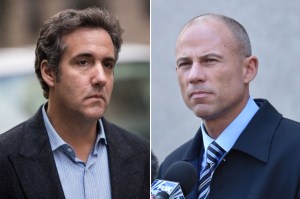 Trump’s lawyers waived privilege so they could speak freely about the tapes, now that they claim Cohen is separately speaking about them, the person said. The person said waiving the privilege was “inevitable” and that they “didn’t know how it was coming out” but “knew Cohen was the source.”
Avenatti’s Sunday comments on ABC’s “This Week” further confirmed the Trump team’s thoughts, the person said.
Avenatti, who crossed paths with Cohen at a Manhattan restaurant last week, said Sunday that he has “continued to have a dialogue” with Cohen. Avenatti added he believes Cohen will “assist us in our search for the truth.”
So far, we have no idea what Trump discussed in his private meetings with Vladimir Putin. Can our intelligence agencies find out? At Politico, Josh Meyer says yes:
Privately, sources familiar with U.S. intelligence capabilities expressed confidence that the so-called Special Collection Service scooped up not only Putin’s readout of the two-hour meeting, but what the Kremlin’s top spymasters really think about it — and how they’re spinning it to their foreign counterparts.
That means the National Security Agency and CIA are at less of a strategic disadvantage than U.S. intelligence officials have acknowledged publicly. But because they likely are missing the one critical piece of intelligence they need the most — a word-by-word account of what Trump and Putin said during the meeting — those officials appear to be flying somewhat blind when it comes to fulfilling their most important mission of helping U.S. policymakers figure out what comes next.
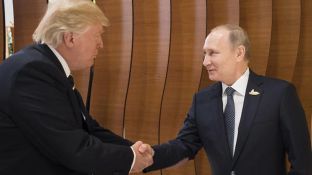 “Most of the questions about what happened in Helsinki — and about the risks the president created there — are skipping over a more fundamental concern: How can intel officers effectively support policy, at any level, when only the president knows what the policy is?” asks David Priess, a former CIA officer and daily White House intelligence briefer. “If, one-on-one with Putin, the president made or changed policy, and he refuses to tell anyone exactly what happened, how can the national security bureaucracy prepare the memos and talking points for future meetings to be held about those very policies?”
Click on the link to read the rest.
I’ll end with this very long read by Doug Bock Clark at GQ about what may have happened to Otto Warmbier.
The gist is that Trump lied (big surprise!) when he claimed that Warbier had been beaten and tortured. This is based on the coroner’s findings. It appears that Warbier was taken to a North Korean hospital the next day after he was sentenced to 15 years of hard labor; and it appears that he received good care in the hospital. Clark writes that the North Koreans do not typically torture American prisoners and they are kept in safe houses, not in hell-hole prisons. It’s possible Warbier may have tried to commit suicide, as several other American prisoners have.
Despite how Trump and his administration boosted the narrative that Otto was physically tortured, however, the evidence was not clear-cut. The day after the Warmbiers went on national television to declare that Otto had been “systematically tortured and intentionally injured,” a coroner who had examined Otto, Dr. Lakshmi Kode Sammarco, unexpectedly called a press conference. She explained that she hadn’t previously done so out of respect for the Warmbiers. But her findings, and those of the doctors who had attended Otto, contradicted the Warmbiers’ assertions.
 Fred had described Otto’s teeth as having been “re-arranged” with pliers, but Sammarco reiterated that the postmortem exam found that “the teeth [were] natural and in good repair.” She discovered no significant scars, dismissing the one on his foot as not definitively indicative of anything. Other signs of physical trauma were also lacking. Both sides of Otto’s brain had suffered simultaneously, meaning it had been starved of oxygen. (Blows to the head would have likely resulted in asymmetrical, rather than universal, damage.) Though the Warmbiers declined a surgical autopsy, non-invasive scans found no hairline bone fractures or other evidence of prior trauma. “His body was in excellent condition,” Sammarco said. “I’m sure he had to have round-the-clock care to be able to maintain the skin in the condition it was in.” When asked about the Warmbiers’ claims, Sammarco answered, “They’re grieving parents. I can’t really make comments on what they said or their perceptions. But here in this office, we depend on science for our conclusions.” Three other individuals who had close contact with Otto on his return also did not notice any physical signs consistent with torture.
Basically Trump used Warmbier as an excuse to threaten North Korea.
When Otto finally opened his eyes again, he likely found himself at a guesthouse, which is where the State Department believed he was probably kept. At least five previous American detainees have been imprisoned in a two-story building with a green-tiled roof in a gated alleyway behind a restaurant in downtown Pyongyang, which is run by the State Security Department, the North Korean secret police. (Others have been kept at a different guesthouse, and at least three have stayed at a hotel.) The most used guesthouse is luxurious by local standards—detainees can hear guards using its karaoke machine into the wee hours—but Otto would have likely found its two-room suites roughly equivalent to those in a basic hotel. And no matter how nice his suite, it was also a cell, for he would have been allowed out only for an occasional escorted walk.
So how did he get his injury?
While some previous detainees were allowed letters from home, it seems that North Korea denied Otto any contact with the outside world. His only break from the interrogations was likely watching North Korean propaganda films. The psychic trauma of all this has sent previous detainees into crushing depressions, and even driven some to attempt suicide….
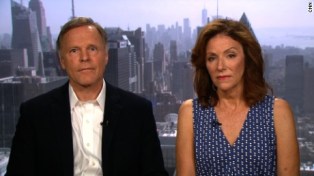
Fred and Cindy Warmbier, Otto’s parents
“The staff at Friendship Hospital said they received Otto the morning after the trial and that when he came in he was unresponsive,” Dr. Flueckiger told me. “They had to resuscitate him, then give him oxygen and put him on a ventilator, or he would die.” As Yun, the negotiator who helped free Otto, said, “The doctors were clear that he had been brought to the hospital within a day of his trial, and that he had been in that same room until I saw him.” [….]
Without knowing about the revised time line of Otto’s injury, experts I spoke to overwhelmingly identified some kind of accident—for example, an allergic reaction—as the most likely cause for Otto’s unconsciousness. The likelihood that his brain damage happened immediately after the sentencing, however, raises the possibility that he may have attempted suicide.
Imagine what Otto must have been feeling after hearing that he would spend the next 15 years laboring in what he probably imagined to be a gulag. After two months of being constantly reminded that the American government couldn’t help him, he probably felt that his family, his beautiful girlfriend (who called him her “soul mate”), and his Wall Street future were all lost. What else could he look forward to but physical and mental suffering?
At least two Americans imprisoned in North Korea have attempted suicide. After failing to cut his wrists, Aijalon Gomes chewed open a thermometer and drank its mercury, later explaining that he had given up on America’s ability to free him. Despite eventually having his release won by Jimmy Carter, Gomes was unable to escape his post-traumatic stress disorder, and seven years later burned himself to death. An American official said that Evan Hunziker tried to kill himself while being held, and less than a month after returning home, he shattered his own skull with a bullet in a run-down hotel. Robert Park reportedly tried to take his own life on returning.
Even if North Korea didn’t beat Otto, that doesn’t mean that he wasn’t tortured, as the mental suffering the regime inflicted on him constitutes torture under the U.N. definition. As Tomás Ojea Quintana, the United Nations Special Rapporteur on human rights for North Korea, said, “Otto’s rights were violated on every level.”
Obviously I can’t do this article justice with short excerpts. If you have the time, I recommend reading the whole thing. Clearly, Trump’s use of Warmbier’s family’s suffering is unconscionable.
Those are my offerings for today. What stories are you following?
Did you like this post? Please share it with your friends:
Posted: July 21, 2018 | Author: bostonboomer | Filed under: Foreign Affairs, morning reads, Republican politics, U.S. Politics |

Andrew Wyeth
Good Morning!!
Once again, I’ve hit a wall. I simply can’t take it anymore. Has this been the worst week in the Trump administration? I don’t know. Every week is horrible. I don’t think I can write anything coherent today, so I’ll just share some random stories that caught my attention this morning.
The Wall Street Journal describes White House staff efforts to get Trump to act like a president of the U.S instead of a dupe of the Russian government.
For much of the White House, Mr. Trump’s conduct at the news conference with Mr. Putin on Monday was wholly unexpected. Administration officials ahead of the summit had crafted a plan for Mr. Trump to confront Mr. Putin on Russia’s electoral interference, officials said.
Before the summit, Mr. Trump had authorized the Justice Department to release an indictment of 12 Russians who allegedly hacked into Democratic computers during the 2016 campaign, agreeing it would strengthen his hand when he raised the issue of election interference, a White House official said.

Afternoon in the garden-Diane Leonard
In preparatory meetings, Mr. Trump and his aides discussed using the indictment to forcefully make the case. The plan was for Mr. Trump to invoke the indictment both in private meetings and in the public news conference afterward, a White House official said. The idea, the official said, was to “shove it in Putin’s face and look strong doing it,” depicting it as hard evidence of Russian crimes against America’s electoral process.
“He did the exact opposite,” the official said. During the news conference, Mr. Trump appeared to side with Mr. Putin over U.S. intelligence agencies, saying he saw no reason why Russia would have interfered in the election. On Tuesday, he said he meant to say he saw no reason why Russia wouldn’t have interfered….
“It was a well laid-out plan. Unfortunately, he didn’t execute on it,” the official said.
Mr. Trump’s performance at the summit and afterward complicates plans for the midterm elections, a White House official said.
White House aides had begun preparations to make Mr. Trump the public face of planned efforts by the administration to stop election interference in the midterms. Mr. Trump would be shown presiding over meetings and making announcements about an administration-wide commitment to safeguard the 2018 elections. In the wake of the Putin summit, Mr. Trump may struggle to credibly make the case that he is spearheading the effort to protect U.S. election systems, the official said.
These people are either lying or delusional.
The Washington Post: Russia continues to shape narrative of Helsinki summit.
Russia provided additional details Friday of what it said were agreements made at the presidential summit in Helsinki this week, shaping a narrative of the meeting with no confirmation or alternative account from the Trump administration.
Not surprisingly, the Russian story line tended to favor the Kremlin’s own policy prescriptions, at times contradicting stated administration strategy.

Lucy Hessel Reading – Edouard Vuillard, 1924
Russia already has sent formal proposals to Washington for joint U.S.-Russia efforts to fund reconstruction of war-ravaged Syria and facilitate the return home of millions of Syrians who fled the country, following “agreements reached” by President Trump and Russian President Vladimir Putin, Col. Gen. Mikhail Mizintsev, the three-star head of the Russian National Defense Management Center, said Friday.
Mizintsev, speaking in Moscow at a joint session of planners from the Defense and Foreign Ministries, said that Russia had already begun work I gon the ground in both areas but that additional resources and international coordination are needed.
Russia’s U.S. ambassador, Anatoly Antonov, said separately that Syria had been the primary topic in the Trump-Putin conversations, along with “the removal of the concerns that the United States has regarding the well-known claims about alleged interference in the elections.” [….]
Asked about Russian claims that agreements had been reached, a National Security Council spokesman said: “As President Trump stated, the two sides agreed that their national security council staffs will follow up on the presidents’ meetings, and these discussions are underway. There were no commitments to undertake any concrete action, beyond agreement that both sides should continue discussions.”
I guess Trump is still refusing to tell anyone what happened in the meeting. Maybe he can’t remember?
Vanity Fair: There Is A Reason We Tried To Kill This: After Helsinki, The Deep State Fears Trump Cannot Be Saved.
As much as official Washington has become numb to the daily offenses of Donald Trump, there was something uniquely disturbing about the president’s transgressions in Helsinki. After months of combating Trump’s attempts to align himself with Vladimir Putin, the president was alone and unguarded with the man he had long sought to meet. National Security Adviser John Bolton, among other Russia hawks, had traveled with Trump to Finland in preparation for the summit. But when Trump and Putin entered the gilded Hall of State at the Presidential Palace for a joint press conference, the result was a shocking display of servility. Repudiating the hardline positions of his aides and advisers, Trump exonerated Putin for hacking the 2016 election—and put the blame on “foolish” Americans for driving the United States and Russia apart.

Albrecht Samuel Anker
Days later, insiders who know Bolton are still struggling to explain how the man who’s advocated violent regime change in Iraq, Iran, and North Korea could have allowed his boss to bend the knee before one of America’s greatest geopolitical adversaries. “I’m stumped,” said a former high-ranking State Department official. “The John Bolton I remember from the past was a strong hawk. So either he’s changed, or the president isn’t listening to him or taking his advice on how to deal with Russia.” A second erstwhile colleague, also a former senior State Department official, concurred. “The John Bolton I know would have been more horrified than I am over what happened,” this person told me. “I mean, he must just be pulling his forelock practically out of his head in order to maintain the ‘Oh you’re so great’ and ‘Mr. President, oh you’re the best.’ That’s the only thing that works with this birdbrain, and he must be doing it over and over and over again.”
“Birdbrain.” I haven’t seen that synonym for “moron” lately.
Bolton isn’t the only senior Trump adviser who has been sidelined or subordinated. Defense Secretary James Mattis, an outspoken critic of Moscow, has not appeared in public or made any comments since Monday’s press conference, and the Pentagon has been unable to answer questions about the summit….
As the post-summit fallout continues, however, these foot soldiers of the Deep State are coming to a chilling realization: nobody has any control over Trump—including Trump himself. For the legion of national-security, diplomatic, and military officials trying to smile while white-knuckling through the Trump presidency, Helsinki was a wake-up call. As a current administration official explained, Trump seems to believe that he alone can sit down with dictators and strongmen like Putin and Kim Jong Un to remake the world order—and experts and advisers will only slow him down.
Hey, he told us at the GOP convention: he believes that he alone can fix it.
Paul Waldman at The Washington Post: The entire Republican Party is becoming a Russian asset.
In the past few days, President Trump has given at least some Republicans reason to express displeasure over his relationship with Russia. First he performed a pathetic ritual of subservience before Vladimir Putin, standing beside the Russian leader — after a private meeting between the two, which no aides were permitted to attend — and dismissing the copious evidence of a Russian attack on the 2016 election in deference to Putin’s word.

Asta Nørregaard (1853-1933) Woman Reading, 1889
Then we learned that Putin had suggested that we make Americans available to the Kremlin for questioning, including Michael McFaul, the former U.S. ambassador to Russia, in exchange for allowing us to question some of the agents who carried out the cyberattack. Trump had called it “an incredible offer,” and the White House said he was considering it, before finally backing down after the Senate unanimously passed a resolution condemning the idea.
But look past the modest number of Republicans saying that Trump has gone a bit too far here or there, and you see a very different picture. The truth is that the entire GOP is well on its way to becoming a Russian asset.
Read the rest at the WaPo.
Dana Millbank at The Washington Post: Trump sees dead people. And they talk.
A few weeks ago, while posthumously honoring a World War II hero, Trump gave the man’s family a report on their departed loved one. He was “looking down from Heaven, proud of this incredible honor, but even prouder of the legacy that lives on in each of you. So true.”
A few weeks before that, at what was billed as a celebration of patriotism at the White House, Trump reported to the crowd that fallen soldiers are pleased with his economic policies and increases in the stock market. “Many of them are looking down right now at our country, and they are proud,” he said.
Sometimes, Trump pinpoints the location of the deceased, using some psychic GPS. At an outdoor Medal of Honor ceremony in May for soldiers lost at a battle in Afghanistan, Trump pointed at a location in the sky and said, “They are looking down right now.” A week before that, outside the Capitol, Trump pointed to a point in the sky over his head and told the family of a slain police detective: “So she’s right now, right there. And she’s looking down.”

Long Liyou
Occasionally, something must get lost in the cloud and Trump receives a heavenly miscommunication. Speaking to a steelworker at the White House in March, Trump informed the man: “Your father, Herman, he’s looking down, and he’s very proud of you right now.”
“Oh, he’s still alive,” the steelworker said.
“Then he’s even more proud of you,” Trump said.
More examples at the WaPo link.
At The New York Times, Maggie Haberman whines about all the nasty people on Twitter who make her feel bad about herself.
I woke up last Sunday morning feeling anxiety in my chest as I checked the Twitter app on my phone, scrolling down to refresh, refresh, refresh. There was a comment I started to engage with — I opened a new post, tapped out some words, then thought better of it and deleted the tweet. The same thing happened repeatedly for the next two hours.
The evening before, I had complained to a close friend that I hated being on Twitter.It was distorting discourse, I said. I couldn’t turn off the noise. She asked what was the worst that could happen if I stepped away from it.
There was nothing I could think of. And so just after 6 p.m. last Sunday, I did.
After nearly nine years and 187,000 tweets, I have used Twitter enough to know that it no longer works well for me. I will re-engage eventually, but in a different way.
I really hope she just stays away. Haberman represents everything that is negative about the mainstream media and access “journalism.” I’ll keep right on ignoring her inane gossip columns whether she “reengages” or not.
That’s all I’ve got. I hope you all have a relaxing weekend.
Did you like this post? Please share it with your friends:
Posted: July 19, 2018 | Author: bostonboomer | Filed under: Foreign Affairs, morning reads, U.S. Politics | Tags: Donald Trump, Russia, Vladimir Putin |

Baby reading for an apple, Mary Cassatt
Good Morning!!
I’m not too with it this morning. My mother is in the hospital and we still don’t know what is wrong with her. A few days ago, she started feeling weak and tired and she suddenly was unable to tie her shoes. Her blood pressure has been too high and her oxygen levels are too low. At the hospital the physical therapist found that her left hand wasn’t working properly, so that might explain the shoe-tying problem.
Whatever is wrong, it doesn’t seem to be life-threatening, because she has had all kinds of tests that have so far shown nothing wrong. She had an MRI yesterday and today they are going to check for blockage in her carotid artery she will work more with the physical therapist. A neurologist told my sister and my niece that she doesn’t think it’s serious, but they still don’t understand why her blood pressure is so high.
Anyway, I’ve been very anxious about Mom, and between that and the Trump madness. I can’t really think straight.
So what’s happening in the news today?

Mother and child, by Mitra Shadfar
I’m sure you’ve heard about the shocking story that broke in The New York Times last night: From the Start, Trump Has Muddied a Clear Message: Putin Interfered.
Two weeks before his inauguration, Donald J. Trump was shown highly classified intelligence indicating that President Vladimir V. Putin of Russia had personally ordered complex cyberattacks to sway the 2016 American election.
The evidence included texts and emails from Russian military officers and information gleaned from a top-secret source close to Mr. Putin, who had described to the C.I.A. how the Kremlin decided to execute its campaign of hacking and disinformation.
Mr. Trump sounded grudgingly convinced, according to several people who attended the intelligence briefing. But ever since, Mr. Trump has tried to cloud the very clear findings that he received on Jan. 6, 2017, which his own intelligence leaders have unanimously endorsed.
So Trump saw specific information proving that Vladimir Putin ordered the interference into our election to help him win, and he has spent his entire administration so far attempting to cover up for what his buddy Putin did.
The Jan. 6, 2017, meeting, held at Trump Tower, was a prime example. He was briefed that day by John O. Brennan, the C.I.A. director; James R. Clapper Jr., the director of national intelligence; and Adm. Michael S. Rogers, the director of the National Security Agency and the commander of United States Cyber Command.
The F.B.I. director, James B. Comey, was also there; after the formal briefing, he privately told Mr. Trump about the “Steele dossier.” That report, by a former British intelligence officer, included uncorroborated salacious stories of Mr. Trump’s activities during a visit to Moscow, which he denied.
The briefing revealed that a highly sensitive source close to Putin had provided information.

Mother and child, Pablo Picasso, 1901
According to nearly a dozen people who either attended the meeting with the president-elect or were later briefed on it, the four primary intelligence officials described the streams of intelligence that convinced them of Mr. Putin’s role in the election interference.
They included stolen emails from the Democratic National Committee that had been seen in Russian military intelligence networks by the British, Dutch and American intelligence services. Officers of the Russian intelligence agency formerly known as the G.R.U. had plotted with groups like WikiLeaks on how to release the email stash.
And ultimately, several human sources had confirmed Mr. Putin’s own role.
That included one particularly valuable source, who was considered so sensitive that Mr. Brennan had declined to refer to it in any way in the Presidential Daily Brief during the final months of the Obama administration, as the Russia investigation intensified.
Instead, to keep the information from being shared widely, Mr. Brennan sent reports from the source to Mr. Obama and a small group of top national security aides in a separate, white envelope to assure its security.
Mr. Trump and his aides were also given other reasons during the briefing to believe that Russia was behind the D.N.C. hacks.
I was exhausted last night and fell asleep early. I woke up about 3:30AM and check Twitter. A number of people were saying that this story was likely leaked to the NYT in response to Trump’s performance in Helsinki and afterwards and that the highly placed source must have been burned–possibly by Trump–or the story would not have been leaked.
https://twitter.com/MaxKennerly/status/1019770876915605504
No one except the interpreters knows what Trump gave away to Putin during their more than two hour meeting in Helsinki, and now Russia is claiming Trump and Putin made a number of deals.
The Washington Post: As Russians describe ‘verbal agreements’ at summit, U.S. officials scramble for clarity.
Two days after President Trump’s summit with Russian President Vladimir Putin, Russian officials offered a string of assertions about what the two leaders had achieved.

Delfina Flores Y Su Sobrina Modesta, Diego Rivera
“Important verbal agreements” were reached at the Helsinki meeting, Russia’s ambassador to the United States, Anatoly Antonov, told reporters in Moscow Wednesday, including preservation of the New Start and INF agreements, major bilateral arms control treaties whose futures have been in question. Antonov also said that Putin had made “specific and interesting proposals to Washington” on how the two countries could cooperate on Syria.
But officials at the most senior levels across the U.S. military, scrambling since Monday to determine what Trump may have agreed to on national security issues in Helsinki, had little to no information Wednesday.
At the Pentagon, as press officers remained unable to answer media questions about how the summit might impact the military, the paucity of information exposed an awkward gap in internal administration communications. The uncertainty surrounding Moscow’s suggestion of some sort of new arrangement or proposal regarding Syria, in particular, was striking because Gen. Joseph Votel, who heads U.S. Central Command, is scheduled to brief reporters on Syria and other matters Thursday.
This is interesting:
Defense Secretary Jim Mattis did not attend Wednesday’s Cabinet meeting with Trump and has not appeared in public this week or commented on the summit.
One thing Trump and Putin apparently discussed was allowing Russia to question 11 American citizens, including former Ambassador to Russia Michael McFaul.
The Washington Post: Outrage erupts over Trump-Putin ‘conversation’ about letting Russia interrogate ex-U.S. diplomat Michael McFaul.
At this week’s summit in Helsinki, Russian President Vladimir Putin proposed what President Trump described as an “incredible offer” — the Kremlin would give special counsel Robert S. Mueller III access to interviews with Russians who were indicted after they allegedly hacked Democrats in 2016. In return, Russia would be allowed to question certain U.S. officials it suspects of interfering in Russian affairs.
One of those U.S. officials is a former U.S. ambassador to Moscow, Michael McFaul, a nemesis of the Kremlin because of his criticisms of Russia’s human rights record.
On Wednesday, White House press secretary Sarah Huckabee Sanders declined to rule out the Kremlin’s request to question McFaul and other Americans. Asked during the daily press briefing whether Trump is open to the idea of having McFaul questioned by Russia, Sanders said President Trump is “going to meet with his team” to discuss the offer.
Read the rest at the WaPo.
The Daily Beast: U.S. Officials ‘at a Fucking Loss’ Over Latest Russia Sellout.

Sunshine Mother And Child, by Shijun Munns
Current and former American diplomats are expressing disgust and horror over the White House’s willingness to entertain permitting Russian officials to question a prominent former U.S. ambassador.
One serving diplomat, who spoke on condition of anonymity, said he was “at a fucking loss” over comments that can be expected to chill American diplomacy in hostile or authoritarian countries – a comment echoed by former State Department officials as well.
“It’s beyond disgraceful. It’s fundamentally ignorant with regard to how we conduct diplomacy or what that means. It really puts in jeopardy the professional independence of diplomats anywhere in the world, if the consequence of their actions is going to be potentially being turned over to a foreign government,” the U.S. diplomat told The Daily Beast.
During President Trump’s press conference with Vladimir Putin in Helsinki, Putin pivoted a question about extraditing the 12 Russian intelligence officers whom Robert Mueller has indicted into a quid pro quo for going after longtime betes noire currently beyond his reach.
Putin singled out Bill Browder, whose exposure of widespread Russian tax fraud led to the passage of a U.S. human rights sanctions law Putin hates. Standing next to Trump, the Russian president accused Browder of masterminding an illegal campaign contribution to Hillary Clinton and alleging vaguely that he had “solid reason to believe that some intelligence officers guided these transactions.” Should Trump permit the Russians to question people around Browder, Putin hinted, he will let Mueller’s people be “present at questioning” of the intelligence officers.
Unfuckingbelievable!
I’ll end with this piece by David Frump at The Atlantic: The Crisis Facing America. The country can no longer afford to wait to ascertain why President Trump has subordinated himself to Putin—it must deal with the fact that he has.

Mother with children by Dattatraya Thombare
We still do not know what hold Vladimir Putin has on Donald Trump, but the whole world has now witnessed the power of its grip.
Russia helped Donald Trump into the presidency, as Robert Mueller’s indictment vividly details. Putin, in his own voice, has confirmed that he wanted Trump elected. Standing alongside his benefactor, Trump denounced the special counsel investigating Russian intervention in the U.S. election—and even repudiated his own intelligence appointees….
The reasons for Trump’s striking behavior—whether he was bribed or blackmailed or something else—remain to be ascertained. That he has publicly refused to defend his country’s independent electoral process—and did so jointly with the foreign dictator who perverted that process—is video-recorded fact.
And it’s a fact that has to be seen in the larger context of his actions in office: denouncing the European Union as a “foe,” threatening to break up nato, wrecking the U.S.-led world trading system, intervening in both U.K. and German politics in support of extremist and pro-Russian forces, and continually refusing to act to protect the integrity of U.S. voting systems—it all adds up to a political indictment, whether or not it quite qualifies as a criminal one.
America is a very legalistic society, in which public discussion often deteriorates into lawyers arguing about whether any statutes have been violated. But confronting the country in the wake of Helsinki is this question: Can it afford to wait to ascertain why Trump has subordinated himself to Putin after the president has so abjectly demonstrated that he has subordinated himself? Robert Mueller is leading a legal process. The United States faces a national-security emergency.
Please share your thoughts and links in the comment thread and have a nice Thursday!
Did you like this post? Please share it with your friends:


 peej
peej Carissa
 bostonboomer
 dakinikat
 ecocatwoman
 mablue2
 Mama Lopez
 peggysue22
 quixote
 skydancingguestblogger
 Mona (aka Wonk the Vote)



 Sky Dancing
Recent Comments