
Eyes on 2012 And Political Acts
Posted: January 4, 2012 Filed under: Congress, House of Representatives, Senate, U.S. Politics | Tags: 2012 elections, frustrated Democrats, political action 7 Comments After last night’s Ugly Contest in Iowa and all the post-op analysis today, one might easily believe that the 2012 election season is simply a Republican Mummer’s strut [costuming optional] to 1600 Pennsylvania Avenue. Au Contraire! But for Democrats Wandering the Wilderness like myself, the on-going contest is an exercise in few choices to no choice at all. At least at the presidential level. There are, however, alternate choices out there. Rocky Anderson, a former Democrat and mayor of Salt Lake City, is running under the Justice Party. And Buddy Roemer, a Republican [though you’d be hard pressed to find him on the official roster of candidates] is also running.
Both these men offer fresh voices and counter the establishment view, whether you be liberal or conservative. They could, in fact, change the monotonous conversation of the legacy parties.
But unlike Michelle Bachmann, I’m not waiting for miracles.
Which is why I’d suggest we turn our attention to the 2012 House and Senate candidates, individuals who deserve a look, who have a track record to examine and who ultimately, if elected could work to change the frustrating, even dangerous defense of the status quo.
Earlier, I’ve written [and will no doubt continue to write] about the Massachusetts Senate race between Elizabeth Warren and Scott Brown. This is a contest that should be interesting to watch and has to date given Warren a 14 pt. jump in the polls, a result that produced Brown’s public whine–the press is giving Warren the ‘kid glove’ treatment. Poor baby! Tea Party love appears to be on the wane.
But as the GOP primary has clearly shown, polls are fickle. A favored candidate can go from flavor of the week to yesterday’s news in an eye blink. Which is why–once we find a candidate we respect, someone we believe will serve the public’s needs over the plutocracy—keeping abreast of these candidates and offering support, in any way we can, is important. Some voters may be able to throw a few dollars to a candidate. Others may write and hope their words are read. We can inform [or at least try to inform] our family and friends. Still others may lend campaign support—make calls, knock on doors, distribute campaign material–in their respective states and districts.
Political action comes in many forms. For the polar bears with hearts aflame the choice might be throwing on sweaters and warm socks and joining the up-coming Occupy Congress action in DC on January 17.
Whatever we do, regardless of how small, can make a difference because small things add up. Think of the Wisconsin pushback, the fight for worker’s rights, the amazing recall effort now underway against Scott Walker. Or the pushback against legislation [HR 326 Stop Online Piracy] that could easily curtail the Internet as we know it, giving business and government the ability to automatically shutdown websites without appeal or due process [although under the guise of copyright infringement]. This legislation was halted. Or the fight to remove the immunity sought by TBTFs and supported by the Administration from proper investigation and possible prosecution. Or even the most recent decision handed down by the Montana Supreme Court, rejecting the Citizen United debacle. This is an ongoing fight. But with public support and public servants willing to pickup the ball and run the distance, we have the opportunity to change the game on the ground.
So, to start the New Year off, here are some names to consider or reconsider:
Two women I suggested earlier are Tammy Baldwin [D. WI] and Winona Baldenegro [D. AZ].
Tammy Baldwin, presently a member of the House, is running for the US Senate. She has a strong record in women’s issues and has recently backed a resolution to remove any and all immunity from the banks and mortgage  institutions involved the 2007-2008 meltdown. Frankly, the public deserves its Pecora moment if we’re ever to reclaim faith in our financial system. Baldwin’s official site is here.
Winona Benally Baldenegro is a new but promising face running for the first Congressional district in Arizona. Her voice is fresh and decidedly progressive. I’d suggest checking in with updated materials here.
She has an impressive list of credentials and an interesting story. Someone to watch.
Alan Grayson will never be confused with a diplomat but has on a myriad of occasions spoken truth to power. Grayson lost his House seat in the 2010 Tea Party blowout but will be running again for Florida’s 8th District in 2012. Without overstating the evident, the GOP hates Grayson for his less than polite critiques of Republican policy stands. For example, his infamous statement–“If you get sick, America, the Republican health care plan is this: Die quickly.”
No, the man will not receive the Nobel Peace Prize. But he will fight for the public’s interest, and he has not given President Obama’s failures a free ride either. From my point of view, that makes him a worthy candidate. You can find background info, videos, policy statements here.
But you can easily Google Grayson and find a wealth of detail on what the man stood for his first time out and what we can expect in the future. He’s no shrinking violet.
An interesting if not problematic development of redistricting, is in Ohio’s primary where Democratic candidates Dennis Kucinich and Marcy Kaptur will face off to represent the state’s 9th District. In my mind, this is a crazy wealth of riches and sadly, one of these long-time Congressional Reps will end up defeated, stepping out of the public arena in which both have served with distinction. Only last week, Kucinich made a short but pointed statement about the NDAA and America’s war without end.
 On the other hand Marcy Kaptur introduced legislation to reinstate the Glass-Steagall Act and was the first voice I recall standing on the House floor, defending the rights of and railing against the abuses inflicted on foreclosed homeowners. I’d be hard pressed if I were a resident of Ohio.
The good news? Both candidates are solid and worthy.
Mazie Hirono [D HI] represents the Hawaii’s 2nd district but is now running for her state’s open US Senate seat due to Daniel Akaka’s scheduled retirement. Her primary challenger will be Ed Case, a former Democratic Congressman who would run to Congresswoman Hirono’s political right . Hirono has a strong record in supporting legislation to advance and protect women’s rights, has been a vocal advocate for funding pre-K education, opposed the Iraq War as well as the Defense of Marriage Act and Don’t Ask Don’t Tell. She would come to the Senate as an experienced legislator, not only with her current House position but as a state representative for 14 years and service as Hawaii’s Lieutenant Governor from 1994-2002. Early December polls indicated Hirono with an 18 pt lead for the primary run off.
Additional information on Hirono’s background can be found here.
As we move through the primary and GE season, I’ll be updating these candidates and mentioning others. If we want to make a difference, produce real change–tangible, visible change people are so hungry for–then staying plugged into the cast of candidates, their message, credentials and track record is important.As is working at our local levels.
I listened to a several-hour interview with Chris Hedges this past weekend on Book TV. One call-in viewer, a disabled grandmother, asked Hedges what she could do to change the political and social landscape with her physical and financial limitations. Hedges answer was simple but eloquent. He reminded the woman that we each give and do what we can. We all have limitations, he reminded her, but that reaching out to a neighbor, a friend, even a stranger in need and/or crisis in these trouble times is, in fact, a political act.
I approve of that message. Keep your eyes on 2012; we’re living in extraordinary times.
Live Blog: Iowa Caucuses
Posted: January 3, 2012 Filed under: 2012 presidential campaign, Republican politics, Republican presidential politics, U.S. Politics | Tags: 2012 presidential election, Iowa Caucuses, live blog, Republican primaries 121 Comments
Political signs in Des Moines, Iowa
The caucuses are just wrapping up, and it looks like I may get my wish. Ron Paul seems to be leading at the moment with Romney second, and Santorum third. I can’t wait to see the elite Republicans freak out if Paul wins. From CBS News:
Doors have closed at caucus precincts across Iowa, and early results from CBS News entrance polls show a three-way race for the Republican presidential nomination among Ron Paul, Mitt Romney and Rick Santorum.
Entrance polling reveals that Paul’s voters are male, younger, and many are first-time caucus goers. Romney’s voters are looking for someone who can beat President Obama, while Santorum’s voters looking for a true conservative.
Much data has yet to be collected, and those arriving earliest may not reflect the total caucus voters. The precincts closed their doors at 7 p.m. CT, leaving Republican voters in the Hawkeye State to be the first to weigh in on this year’s presidential contest. Mitt Romney took the lead among the early entrance polls four years ago, but finished second in the caucuses to Mike Huckabee, who was then the choice of evangelical conservatives.
USA Today has a Live Blog of events in Iowa, and so does CNN. CNN also has live video from several caucus sites.
I’m listening to MSNBC on satellite radio. What are you watching or listening to? What are you hearing? Who do you think is going to win this thing? Let us know in the comments. If you have found a good place to watch on-line, let me know and I’ll post it up here.
Tuesday Reads: Iowa Caucuses Edition
Posted: January 3, 2012 Filed under: 2012 presidential campaign, Mitt Romney, morning reads, Republican presidential politics, Team Obama, U.S. Politics | Tags: Barack Obama, Iowa Caucuses, Mitt Romney, Nate Silver, New Hampshire primary, Rick Santorum, Ron Paul 41 Comments
Good Morning!!
The Iowa Caucuses will be held tonight, and we’ll live blog the results later on. The outcome is still pretty much up in the air. I’m definitely rooting for Romney to lose, but I can’t decide whom I’d rather see come in first–Rick Santorum or Ron Paul. Neither one has a shot at the nomination, but I’d love to see the GOP elites scrambling if Paul wins it. I think they won’t get as upset by a Santorum win, but it would be irritating for them. Either Paul or Santorum could mess things up for Romney in New Hampshire, if they come out of Iowa with some momentum.
Nate Silver has his usual thorough analysis of the polls: Iowa Race Tightens in Final 48 Hours.
A new Public Policy Polling survey in Iowa, conducted Saturday and Sunday, shows a virtual three-way tie in advance of the Iowa caucuses. Ron Paul has a nominal lead with 20 percent of the vote in the poll, followed by Mitt Romney at 19 percent and Rick Santorum at 18 percent.
Our forecast model, which combines the Public Policy Polling survey with other recent polls of the state, also shows an effective three-way tie, although it has Mr. Romney ahead by the slimmest of margins. The model projects Mr. Romney to receive 21.0 percent of the vote, followed by Mr. Paul at 20.6 percent and Mr. Santorum — whose numbers have been on the rise — at 19.3 percent.
Silver notes that the PPP poll shows a weaker result for Romney’s than the Des Moines Register poll.
The most noteworthy feature of the Public Policy Polling survey is that it shows a slightly worse result for Mr. Romney than The Des Moines Register Iowa Poll, which was conducted Tuesday through Friday and had Mr. Romney at 24 percent of the vote.
We can interpret this in one of three ways. It may merely be random variance. It may reflect methodological differences between the surveys; the Des Moines Register poll calls cellphones, for instance, and uses live interviewers, which the Public Policy Polling survey does not. (Previous Public Policy Polling surveys have shown slightly better results for Mr. Paul, and slightly worse ones for Mr. Romney, than those conducted by other polling firms.)
Or it may suggest that that there has been a percentage point or two worth of erosion in Mr. Romney’s numbers, since the Public Policy Polling survey is the more recent of the two….There is some slight evidence for the latter theory in that Mr. Romney performed slightly worse in interviews that Public Policy Polling conducted on Sunday, receiving 18 percent of the vote to the 21 percent he received on Saturday.
Oh please, let Romney lose!
As for Mitt himself, he’s oozing confidence.
“You guys, I need you tomorrow night,” he told more than 600 people packed into an asphalt company’s truck garage. “I need every single vote in this room, and I need you to get a couple of other votes in your neighborhood, get them to caucus. I need a great showing here in Cedar Rapids. We’re going to win this thing with all our passion and strength and do everything we can to get this campaign on the right track to go across the nation and to pick up the states and to get the ballots I need and the votes I need to become our nominee. That’s what we’re going to get, with your help.”
Campaign aides later said that Romney meant he was going to win the nomination, not necessarily the caucuses.
Roger Simon of Politico says that Romney will be the nominee no matter how he does in Iowa.
If Mitt Romney wins the Iowa caucuses, the race for the Republican nomination is over.
If Mitt Romney comes in second in Iowa, the race for the Republican nomination is over.
And if Mitt Romney comes in third in Iowa, the race for the Republican nomination is over.
Why? Is his message of goodness and decency and American exceptionalism so overwhelmingly persuasive or are his personal attributes so awesomely compelling?
No. It’s because the Iowa caucuses do not pick winners as much as they eliminate losers. And the Iowa caucuses Tuesday are likely to eliminate from serious contention the only two men who might have blocked Romney’s path to victory: Newt Gingrich and Rick Perry.
Now that’s depressing. If Simon is right, we’ll have nothing to look forward to but a year of boring back and forth between ultra-boring Mitt and even more boring Barack. Ugh!
But the Republicans still want to find a Romney alternative. Suddenly Rick Santorum is raising big bucks, according to CNN.
Rick Santorum’s poll numbers aren’t the only thing on the rise. The former senator from Pennsylvania’s fundraising figures are also skyrocketing.
A senior Santorum adviser tells CNN the campaign raised more money in the last week than they raised on-line the past six months, adding that fundraising is between 300% and 400% higher on a daily basis than it was just ten days ago.
Yup, they can’t stand Romney and don’t want to get stuck with him. I can totally empathize with that too. I wonder if it bothers Romney that he’s so unwanted? I supposed not….
The candidates are still saying some pretty outrageous things. Mitt Romney compared President Obama to Kim Kardashian because he didn’t live up to his campaign promises. Ron Paul claimed that Rick Santorum is “very liberal” [!]
Ron Paul dinged rival Rick Santorum Monday for being a “very liberal” candidate, saying the former Pennsylvania senator and staunch social conservative voted for too much spending during his time in Congress.
Speaking to CNN Senior Congressional Correspondent Dana Bash before a campaign event with his son, Kentucky Sen. Rand Paul, the White House hopeful said his rival had taken positions counter to true conservative ideas.
And Rand Paul called Santorum a “war mongering moderate” on a talk radio show yesterday. Here are the relevant Rand Paul quotes via TPM:
He’s also someone who never served in the military. Ron Paul served in the military, will use force against our enemies if it’s required and if Congress approves of it, but I’m a little concerned about someone who didn’t serve in the military like Santorum, who’s a little over-eager to bomb countries because I don’t think he’s maturely thinking through the process and the consequences of war.
Well, you know you’re starting to see that some of the conservatives have gone here and there and they’re looking for someone who they think is their champion. But before they settle on Santorum they need to realize he was a big supporter of Medicare Part D, the expansion of Medicare, a big supporter of No Child Left Behind, I’ve seen him asked directly about the Department of Education, he’s for it. … We still believe in eliminating the Dept. of Education, that there is no function on the federal level for that. But Rick Santorum’s a big supporter of the Department of Education; he in fact voted to double the size of the Department of Education with No Child Left Behind. So I call him a big government moderate and I think conservatives need to be wary before thinking Santorum can be their champion.
Supporting the Department of Education? The horror!
The Daily Beast published a primer on the workings of the Iowa Caucuses yesterday for those (like me) who need a review of the process. Here’s the gist of it:
What happens at a caucus meeting?
At 7 p.m., caucus-goers will recite the Pledge of Allegiance and elect officers to run the meeting. Representatives from each campaign—usually campaign staffers—will give a brief speech urging those present to vote for their candidate. After the speeches, caucus-goers will write the name of their preferred candidate on a piece of paper, and campaign representatives will watch while they are counted. The caucus will then report the results to the room, and then by phone to the Iowa Republican Party. Caucus-goers will finish the night by picking delegates and writing platform resolutions—building blocks of a party manifesto—for the county GOP convention. The Iowa GOP will announce the statewide results to the media and on its website.
Yes, there will be Democratic caucuses, even though there’s no competition for Obama.
Jan Bauer fondly recalls the energy that then-candidate Barack Obama brought to Iowa in the 2008 Democratic presidential caucuses and the razor-sharp ground game that paved his road from here to the White House.
Four years later, Bauer finds herself calling other Story County Democrats to remind them that they have important political work to do Tuesday just like their Republican counterparts – even if Obama is unopposed for their party’s nomination.
“A lot of Democrats aren’t even aware that we’re caucusing,” said Bauer, Democratic chairwoman in the county that includes Ames, home to Iowa State University. “We’re getting little to no attention in the media … but we still have to reorganize the party.”
Obama will be speaking to them by satellite.
There’s also an fascinating article at the Daily Beast about Obama’s tightly controlled reelection operation. These guys sound like a lot of frat boys–or maybe Skull and Bones members. I’ve annotated the following for those (like me) who aren’t hip to current yuppie culture.
The Obama campaign is not kidding around. I recently visited its headquarters in Chicago, and I can personally vouch for how much it’s not kidding around. Yes, there was a blue Ping-Pong table in the middle of the office—custom-made, evidently, because the Obama 2012 logo was emblazoned on it. (Twice.) There were printouts of people’s nicknames—Sandals! Shermanator!—where corporate nameplates usually go. There was a mesh trucker hat from South Dakota, which was blaze orange and said “Big Cock Country” on the crown. There was a cardboard speech bubble (“nom nom data nom”) affixed to an Uglydoll. There was miniature air-hockey table. A narwhal mural. A stuffed Rastafarian banana.
But do not be deceived. There was also a chaperone following me everywhere I went and digitally recording everything anyone said to me. Ben LaBolt, Obama’s press secretary, and Stephanie Cutter, his deputy campaign manager, closed their doors as I walked by. An underling clammed up when I asked what she and her colleagues do on the weekends. At one point my minder agreed to let me out of her sight for a few milliseconds, but then I got too close to a big whiteboard covered in hieroglyphic flow charts and she instantaneously materialized at my side, having somehow teleported the 50 yards from where I’d last seen her. “Sorry,” she said, not sounding sorry at all. “You can’t look at that.” The next day it was covered by a tarp.
Sigh…. These are the people who are running the Democratic Party …. and the country. Now what are you reading and blogging about today?
Frank Rizzo and a Militarized Police Force
Posted: January 2, 2012 Filed under: #Occupy and We are the 99 percent!, Anti-War, Civil Liberties, Injustice system, Patriot Act, U.S. Politics 8 CommentsWhile I grew into my young adulthood, Frank Rizzo was the Police Commissioner and then later served as mayor of Philadelphia, Pa.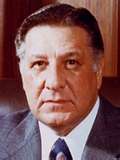 Rizzo died in 1991 but I suspect somewhere in the Great Unknown, the man wails with disappointment, bemoaning the fact he lived before his time. Rizzo once said that if necessary he would roll tanks down Market Street to preserve the peace.
My parents loved Rizzo’s blustery, make-my-day style. I thought he was nuts. As it turns out? The man was a visionary.
One of the overlooked or rarely mentioned contributions of the Occupy Wall Street Movement has been the public eyeballing of today’s military style, domestic police force. Many were surprised, even appalled by the military-style uniforms, the aggressive force, the ‘shock and awe’ approach of smoke and sound cannons caught on video.
Let me start off by saying I enjoy safe environments, appreciate the fact that children walk our streets without the fear of immediate abduction, that little old ladies are not routinely bashed over the head for their social security checks or that drug cartels have yet to murder mayors and judges in turf wars [eg., Mexico].
Crime is down in America. That’s a good thing.
 But the push for overkill security measures from our national police forces, fueled by the residual shock of 9/11, defense contractors recognizing small but reliable profit centers and Federal grants under the Homeland Security Department has shot into hyper-drive. This transformation has occurred not simply in urban settings, where drug-related crime is often a legitimate concern, the source of violence against innocent citizens and police alike. No, the rise of military-style SWAT teams has come to small town America. And numerous Federal Agencies.
Why should we, ordinary citizens, be concerned? Surely, there is a parallel between the military and police—the hierarchal structure, the use of weaponry and force. However, the main difference is a soldier is expected to kill the enemy, break the place up in times of war. In contrast, police departments are expected to protect the peace and citizenry, as well as respect our Constitutional rights. Situations quickly grow hairy when these roles [soldier/policeman] begin to morph into one another.
A case in point, actually several cases were laid bare by Radley Balko, who as early as 2007 testified before Congress, warning of the growing number of SWAT Teams in America and/or the militarization of our police departments. This did not happen overnight. In fact the swing to military-style policing has been growing steadily since the 1980’s when Congressional legislation made military surplus available to police departments.
Here are a few examples that Balko has described:
Dress cops up as soldiers, give them military equipment, train them in military tactics, tell them they’re fighting a “war,” and the consequences are predictable. These policies have taken a toll. Among the victims of increasingly aggressive and militaristic police tactics: Cheye Calvo, the mayor of Berwyn Heights, Md., whose dogs were killed when Prince George’s County police
mistakenly raided his home; 92-year-old Katherine Johnston, who was gunned down by narcotics cops in Atlanta in 2006; 11-year-old Alberto Sepulveda, who was killed by Modesto, Calif. police, during a drug raid 2000; 80-year-old Isaac Singletary, who was shot by undercover narcotics police in 2007 who were attempting to sell drugs from his yard; Jonathan Ayers, a Georgia pastor shot as he tried to flee a gang of narcotics cops who jumped him at a gas station in 2009; Clayton Helriggle, a 23-year-old college student killed during a marijuana raid in Ohio in 2002; and Alberta Spruill, who died of a heart attack after police deployed a flash grenade during a mistaken raid on her Harlem apartment in 2003.
As well as:
. . . paramilitary creep has also spread well beyond the drug war. In recent years, SWAT teams have been used to break up neighborhood poker games, including one at an American Legion Hall in Dallas. In 2006, Virginia optometrist Sal Culosi was killed when the Fairfax County Police Department sent a SWAT team to arrest him for gambling on football games. SWAT teams are also now used to arrest people suspected of downloading child pornography. Last year, an Austin, Texas, SWAT team broke down a man’s door because he was suspected of stealing koi fish from a botanical garden.
Btw, the case of child pornography? Turned out the man raided had a password-free wifi connection. It was his next-door neighbor who was into kiddie porn.
On SWAT teams employed specifically by Federal Agencies:
In 2007, a federal SWAT team raided the studio of an Atlanta DJ suspected of violating copyright law. And in June, the Department of Education’s Office of Inspector General sent its SWAT team into the home of Kenneth Wright in Stockton, Calif., rousing him and his three young daughters from their beds at gunpoint. Initial reports indicated the raid was because Wright’s estranged wife had defaulted on her student loans. The Department of Education issued a press release stating that the investigation was related to embezzlement and fraud — though why embezzlement and fraud necessitate a SWAT team isn’t clear, not to mention that the woman hadn’t lived at the house that was raided for more than a year. Ignoring these details, however, still leaves the question of why the Department of Education needs a SWAT team in the first place.
The Department of the Interior also has one [SWAT team], as does the Consumer Products Safety Commission. Last August, gun-toting federal marshals raided the Gibson Guitar factory in Nashville, Tenn. The reason? The company is under investigation for importing wood that wasn’t properly treated.
In 2006, a group of Tibetan monks inadvertently overstayed their visas while touring the U.S. on a peace mission. Naturally, immigration officials sent a SWAT Team to apprehend them.
Concerned yet?
According to Andrew Becker and GW Schulz from the Center for Investigative Reporting, Federal funds deluged America after 9/11 with little oversight. And so, a place like Fargo, ND though an unlikely target for jihadist terrorism, has received 34 billion dollars over the last decade, resulting in a wild spending spree.
In recent years, they [Fargo’s PD] have bought bomb-detection robots, digital communications equipment and Kevlar helmets, like those used by soldiers in foreign wars. For local siege situations requiring real firepower, police there can use a new $256,643 armored truck, complete with a rotating turret. Until that day, however, the menacing truck is mostly used for training runs and appearances at the annual Fargo picnic, where it’s been displayed near a children’s bounce house.
And,
No one can say exactly what has been purchased in total across the country or how it’s being used, because the Federal government doesn’t keep close track. State and local governments don’t maintain uniform records. But a review of records from 41 states obtained through open-government requests, and interviews with more than two-dozen current and former police officials and terrorism experts, shows police departments around the U.S. have transformed into small army-like forces.
 Last month, I wrote a post for Sky Dancing on the growing popularity of drones for domestic applications, Eyes in the Sky. Yes, it is true police departments have routinely employed helicopters for apprehension purposes but a drone can be kept in the air for 20+ hours, employ cameras to spy on citizens in their own homes. There’s been no public discussion or debate on using drones in American airspace. For good reason, I would argue. The public identifies the drone to our recent wars in the Middle East, an effective killing machine. On its face, remote aircraft application takes the issue of surveillance to another level, one that many citizens would reject.
Perhaps more disturbing is the fact that with all the money spent on military weaponry and hardware over the last decade+, it’s reported that local municipalities have pinched costs when it comes to basic training, the how to’s, the when and wherefores for their personnel. Basic safety and procedural training protects not only the innocent citizen bystander but police officers as well.
 The tragedy we witnessed in Oakland during the Occupy protests where Scott Olsen, an Iraqi vet, was nearly killed was a preventable action. The pepper-spraying and crackdown of peaceful protestors in NYC and elsewhere by overzealous police is a chilling development, as is the routine use of stun guns on the elderly, on children, even pregnant women, and/or the multiple shooting of family pets in warrantless house raids [an alarming number of which have been mistakes]. These are steps too far, steps we will surely regret as a society. This is particularly true at a moment when authoritative incursions are being made on our basic civil rights, eg., the recent sign off on indefinite detention; the kill order on and ultimate assassination of Anwar al-Awlaki, a bad guy but an American citizen nonetheless; a continuing war against whistleblowers; the veil of secrecy in an ever-expanding state of war and surveillance; the deliberate fear-mongering and scapegoating used by our politicians; the disturbing rise and spread of corporatism, etc.
The slide into tyranny is an easy hop, skip and jump from where we find ourselves right now. We’re deluding ourselves by pretending our democratic principles cannot be/have not been eroded. This should not be a partisan issue because all parties have been responsible and all parties will be injured if the trend continues.
Frank Rizzo may be smiling in the afterlife. But Benjamin Franklin leans over his shoulder, reminding us all:
‘Those who sacrifice liberty for security deserve neither. ‘
Sorry, Frank. Ben was the far wiser man.
Eric Cantor Denies Reality During “60 Minutes” Interview
Posted: January 2, 2012 Filed under: Republican politics, U.S. Politics | Tags: denial, Eric Cantor, House Majority Leader, raising taxes, Ronald Reagan 19 CommentsVia Steve Benen, Rep. Eric Cantor was interviewed on 60 Minutes last night. Lesley Stahl asked Cantor why he refuses to compromise when his “idol,” Ronald Reagan didn’t have a problem doing so. Here’s the relevant portion:
Stahl: But you know, your idol, as I’ve read anyway, was Ronald Reagan. And he compromised.
Cantor: He never compromised his principles.
Stahl: Well, he raised taxes and it was one of his principles not to raise taxes.
Cantor: Well, he — he also cut taxes.
Stahl: But he did compromise —
Cantor: Well I —
At that point, Cantor’s press secretary, off camera, interrupted the interview, yelling that Stahl was lying when she said Reagan raised taxes. As Stahl told “60 Minutes” viewers, “There seemed to be some difficulty accepting the fact that even though Ronald Reagan cut taxes, he also pushed through several tax increases, including one in 1982 during a recession.”
What is it with these Republicans and their inability to accept reality?

 peej
peej Carissa
 bostonboomer
 dakinikat
 ecocatwoman
 mablue2
 Mama Lopez
 peggysue22
 quixote
 skydancingguestblogger
 Mona (aka Wonk the Vote)



 Sky Dancing
Recent Comments