





But the esteem for Klain wasn’t based on his resume. Rather, he had a mix of policy, political and bureaucratic chops that everyone agreed was rare. The policy people spoke admiringly of his policy savvy, and they all agreed he lapped them in political instincts. The political people admired his political instincts, but recognized he was better at policy. And everyone agreed Klain knew how to run an interagency process.
Tuesday Reads: Jonas Salk, the Polio Vaccine, and Today’s For-Profit, Fear-Based Culture
Posted: October 28, 2014 Filed under: morning reads, U.S. Politics | Tags: Amber Vinson, Andrew Cuomo, anti-vaccine movement, Boston Police Department, CDC, Chris Christie, Cordley Elementary School, cute puppies, ebola, Jonas Salk, Kaci Hickox, Massachusetts Vest-A-Dog, patents, Paul LePage, polio vaccine, scientific research 64 Comments
Good Morning!!
I thought I’d illustrate today’s post with photos of cute puppies to offset the generally horrible news. The photo above comes from yesterday’s Boston Globe, Puppy in Boston Police Department Bulletproof Vest Melts Internet.
The photo, which was posted to Reddit, is from Massachusetts Vest-A-Dog, a non-profit that helps provide bulletproof vests, essential equipment, training, and purchase of dogs for police and law enforcement K-9 programs throughout the state.
“As K-9s are trained to give up their lives to protect their partners and all of us, we believe it is every bit as important to protect them,” according to www.mavestadog.org which is why they can run freely without pain
The story says the puppy’s name is Tuco, after a character in Breaking Bad.
Did you see today’s Google doodle? It honors what would have been Jonas Salk’s 100th birthday.
In 1954, I was 6 years old and I was among the first wave of kids who got the experimental polio vaccine at my school. We were living in Lawrence, Kansas then, and I attended Cordley Elementary School. I’m not sure if this was when I was in the first or second grade (I started kindergarten at age 4). Another girl in my class had already gotten polio and one of her legs was paralyzed. I don’t know if I was in the experimental or control group, but I do recall getting another shot the following year. Children from 44 states participated in the tests.

A look back at Salk’s work highlights the vast differences between American culture in the mid-1950s and today. Salk never patented the vaccine, because he wanted it to be distributed to as many children as possible; so he never made a cent from his discovery. In some ways the 1950s were the bad old days, but most Americans still believed in pulling together for the public good–maybe it was a hangover from WWII.
From The Washington Post, JONAS SALK: Google says ‘thanks’ to the heroic polio-vaccine developer with birthday Doodle, by Michael Cavna.
As so many tens of thousands of children suffered from polio into midcentury, his vaccine began as the stuff of dreams; by the mid-’50s, it was the substance of a profoundly life-altering reality.
Dr. Salk had begun his journey a coast away; he got his medical degree in 1939, at the New York University School of Medicine, and was working at the city’s Mount Sinai Hospital before a research fellowship at the University of Michigan — with his mentor — beckoned. In 1947, he moved to head up the University of Pittsburgh School of Medicine’s Virus Research Laboratory, where he did the real groundbreaking work in his march toward a vaccine for paralytic poliomyelitis, or polio.
The goal, of course, was to trigger the body’s own defenses — so it would build immunity against the disease. Salk believed that antibodies could be produced by injecting not a live virus, but rather a deactivated (non-infectious) one.
At this point, enough necessary tumblers clicked into place. For one, the team of Harvard scientist John Enders solved how to grow the pure polio virus in the test tube — a crucial step that enabled Salk’s effective experimentation with a “killed virus.” And then there were the needed funds — Salk got backing from the National Foundation for Infantile Paralysis (the March of Dimes Birth Defects Foundation).
In 1954, at least 1-million children — the Polio Pioneers — were tested across the nation (this followed testing that ranged from monkeys to Salk’s own family). The vaccine was announced as safe and largely effective on April 12, 1955.
“In the two years before [the] vaccine was widely available, the average number of polio cases in the U.S. was more than 45,000,” according to the Salk Institute. “By 1962, that number had dropped to 910.”
Now we have panic over Ebola, and instead of focusing on developing a vaccine we have politicians cutting funds for medical research and ginning up public panic for their own selfish purposes, academics and corporations more interested in profits than saving lives, and ignorant people refusing to vaccinate their children.

From The Atlantic, The Anti-Vaccine Movement Is Forgetting the Polio Epidemic, by Jennie Rothenberg Gritz.
It started out as a head cold. Then, the day before Halloween, 6-year-old Frankie Flood began gasping for breath. His parents rushed him to City Hospital in Syracuse, New York, where a spinal tap confirmed the diagnosis every parent feared most in 1953: poliomyelitis. He died on his way to the operating room. “Frankie could not swallow—he was literally drowning in his own secretions,”wrote his twin sister, Janice, decades later. “Dad cradled his only son as best he could while hampered by the fact that the only part of Frankie’s body that remained outside the iron lung was his head and neck.”
At a time when a single case of Ebola or enterovirus can start a national panic, it’s hard to remember the sheer scale of the polio epidemic. In the peak year of 1952, there were nearly 60,000 cases throughout America; 3,000 were fatal, and 21,000 left their victims paralyzed. In Frankie Flood’s first-grade classroom in Syracuse, New York, eight children out of 24 were hospitalized for polio over the course of a few days. Three of them died, and others, including Janice, spent years learning to walk again.
Then, in 1955, American children began lining up for Jonas Salk’s new polio vaccine. By the early 1960s, the recurring epidemics were 97 percent gone.
Salk, who died in 1995, would have turned 100 on October 28. He is still remembered as a saintly figure—not only because he banished a terrifying childhood illness, but because he came from humble beginnings yet gave up the chance to become wealthy. (According to Forbes, Salk could have made as much as $7 billion from the vaccine.) When Edward R. Murrow asked him who owned the patent to the vaccine, Salk famously replied, “Well, the people, I would say. There is no patent. Could you patent the sun?”
Can you imagine that happening today? Read much more about Salk at the Atlantic link.

Today it’s all about corporations making money from people’s misery. From LA CityWatch, How Sick is This Generation’s Pills for Profit Philosophy? by Bob Gelfand.
Here are two seemingly unrelated stories that nevertheless intersect. The first involves a scientific lecture I heard the other day. Without going into details, the story involves the discovery of a naturally occurring small protein that treats some of the symptoms of diabetes when injected into rodents, and also slows the growth of cancer cells grown in culture. It is a marvelous discovery and is supported by numerous control experiments that are very convincing.
The scientist, in a later conversation, explained that the patent on this discovery had already been submitted, even though the scientific papers had not all been written and submitted to journals.
In another lecture a few weeks earlier, but at the same institution, we heard from a venture capitalist. He explained that the pharmaceutical companies are only interested in developments that promise to show a billion dollars in sales.
In yet a third talk by an administrator, the resident scientists and physicians were encouraged to work with the institution’s patent office as early as possible on any patentable application.
The subject of this discussion is the monetization of science and its application to pharmaceutical research. It was not always so. In some ways this is a bad thing, and in other ways it is not.
The great counterargument to the direct monetization of scientific discovery is the story of the polio vaccine. Jonas Salk and his financial supporters made no attempt to patent the Salk vaccine. There are competing stories as to the motives and law that led to this decision. One argument is that the research had been paid for by tens of millions of donations through organizations such as the March of Dimes. Another argument is that the lawyers did not believe that a patent application would be upheld. Salk famously stated that the vaccine presumably belonged to the people, perhaps implying that the mass of Americans through their donations had already earned the right to the vaccine.

Here’s latest on the Ebola panic front. Kaci Hickox escaped her imprisonment by New Jersey Governor Chris Christie only to end up under the thumb of another stupid Republican governor Maine’s Paul LePage. Fox News reports, New fight over Ebola quarantine looms as nurse returns to Maine.
Kaci Hickox left a Newark hospital on Monday and was expected to arrive in the northern Maine town of Fort Kent early Tuesday. Maine health officials have already announced that Hickox is expected to comply with a 21-day voluntary in-home quarantine put in place by the state’s governor, Paul LePage.
However, one of Hickox’s lawyers, Steve Hyman, said he expected her to remain in seclusion for only the “next day or so” while he works with Maine health officials. He said he believes the state should follow the Centers for Disease Control and Prevention guidelines that require only monitoring, not quarantine, for health care workers who show no symptoms after treating Ebola patients.
“She’s a very good person who did very good work and deserves to be honored, not detained, for it,” he said.
LePage defended the quarantine in a news release Monday, saying that state officials must be “vigilant in our duty to protect the health and safety of all Mainers.” Adrienne Bennett, a spokeswoman for the governor, told the Portland Press Herald that authorities would take “appropriate action” if Hickox does not comply with the quarantine, though she did not specify what that action might be.
The Portland Press Herald isn’t sure whether Hickox’s Maine quarantine is voluntary or required.
Bennett, when asked whether a 21-day quarantine was mandatory or voluntary for Hickox, at first told the Portland Press Herald early Monday afternoon that it was “voluntary.” Later in the afternoon, she wrote in an email that Hickox was expected to follow the quarantine.
“We fully expect individuals to voluntarily comply with an in-home quarantine. If an individual is not compliant, the state is prepared to take appropriate action,” Bennett wrote. She was asked repeatedly by the Press Herald to clarify what “appropriate action” was, but did not respond.
Whether Hickox, who worked in Sierra Leone for Doctors Without Borders, would abide by a quarantine is unknown. Her New York attorney, Steven Hyman, emphasized her civil rights.
“There is no basis (for her) to be kept in quarantine or isolation,” Hyman said. “We are prepared to establish that in a court of law.” [….]
The Maine Attorney General’s Office declined to comment. Dr. Dora Anne Mills, a former director of the Maine Center for Disease Control and Prevention, said she does not believe the state could impose a quarantine without a court order.
Meanwhile Chris Christie is still making a fool of himself in public. Politico reports that he’s now claiming he knows better than the CDC.
The Republican governor has faced criticism from the White House and some health experts over his and New York Gov. Andrew Cuomo’s policy for a 21-day mandatory quarantine for aid workers returning from Ebola-stricken countries in West Africa.
Appearing on NBC’s “Today” on Tuesday, Christie said again that mounting evidence shows that the CDC will eventually come around to his policy.“[T]he CDC has been behind on this. Folks got infected in Texas because they were behind,” Christie said, in reference to the multiple Ebola cases in Dallas. “And we’re not going to have folks being infected in New Jersey and in other states in this country. Governors ultimately have the responsibility to protect the public health and the public safety of the people within their borders when folks come in with this problem.”
He cited the five other states — Pennsylvania, Maryland, Virginia, New York and Georgia — where quarantines are in place, as well as reports that the Joint Chiefs of Staff that the military impose a 21-day quarantine for troops returning from West Africa. A Defense Department spokesman declined to confirm those reports on Monday.
The governor criticized both the CDC and Dr. Anthony Fauci in particular, the director of NIH’s National Institute of Allergy and Infectious Diseases, who has criticized the quarantine policy. Appearing on the Sunday talk shows, Fauci called mandatory quarantine policies not “based on scientific data.”
“I think Dr. Fauci is responding … in a really hyperbolic way because they’ve been wrong before,” Christie said when asked about Fauci’s criticism.

New York Governor Andrew Cuomo looks like a fool too. From The Buffalo News:
Gov. Andrew M. Cuomo’s Ebola quarantine policy met with withering criticism Monday from AIDS experts who said it could be counterproductive as well as the governor’s Republican campaign opponent, who said it didn’t go far enough.
Three days after Cuomo imposed a 21-day quarantine on health workers returning from Ebola-stricken nations and a day after the governor relaxed that policy to allow people to serve their quarantines at home, more than 100 AIDS activists, researchers and doctors wrote a letter to the governor condemning his actions on Ebola.The governor’s quarantine policy “is not supported by scientific evidence” and “may have consequences that are the antithesis of effective public health policy,” said the letter, which was signed by AIDS activists such as the head of ACT UP NY as well as more than 35 physicians, including medical school professors at Columbia, Harvard, Johns Hopkins and Yale.
Most notably, quarantines “will potentially have a profound effect on efforts to recruit U.S.-based health care professionals who are desperately needed to help combat the burgeoning epidemic in West Africa while increasing stigma toward persons who come from those countries,” the letter said.
Meanwhile, Westchester County Executive Rob Astorino, the GOP candidate for governor, criticized the governor for shifting stances on the quarantine.“What we’re getting is a governor who’s winging it, changing the policy all the time,” Astorino said while campaigning in New Rochelle. “It’s very confusing, and it could lead to health risks for many people.”
Finally, Dallas nurse Amber Vincent has recovered and will be leaving the hospital soon.
When you want your puppy to be this cute, hire a dog groomer. Your dog will look so fabulous you would it more.
I have a few more articles that I’ll post in the comment thread. What stories are you following today? See you down below, and have a terrific Tuesday!
Extra Lazy Saturday Afternoon Reads
Posted: October 25, 2014 Filed under: morning reads, U.S. Politics | Tags: Alison Lundergan Grimes, Campaign Ads, Charlie Baker, court decisions, DSCC, Jaylen Fryberg, John Roberts, Kentucky Senate race, Martha Coakley, Massachusetts governor's race, mental health services, Mitch McConnell, racial discrimination, SCOTUS, Suicide, Texas voter ID law, Washington state school shooting 58 CommentsGood Afternoon!!
It’s looking like Massachusetts may be on the verge of electing another Republican governor, and suddenly I’m feeling even sicker than I have been with this cold I can’t get rid of.
Breaking news this morning from The Boston Globe, Charlie Baker jumps 9 points in new Globe poll.
Republican Charlie Baker has opened up a 9-point lead over Democrat Martha Coakley, 45 percent to 36 percent, according to a new Globe poll that depicts a far more comfortable advantage than either candidate for governor has enjoyed in months.
The poll reflects an October surge in independent voters toward Baker’s column. It was independents who provided Governor Deval Patrick with his margins of victory in 2006 and 2010.
Baker’s standing has improved from last week’s poll, which showed the two candidates dead even. It can be attributed largely to the gains he has made in voters’ perceptions of who would improve the economy and manage state government, areas that already were tilting his way. At the same time, Baker has offset the deficits he faced on issues such as education and health care, where Coakley still holds an edge, but a diminished one.
“There is just positive movement in every single metric we can ask around Baker,” said pollster John Della Volpe, chief executive of SocialSphere Inc., which conducts the weekly poll for the Globe. “The more voters have gotten to know him, the stronger he performs.”
What is it with this supposedly liberal state? Since I moved here more than 40 years ago, we have had mostly Republican governors. I can’t understand why Massachusetts would elect another one, especially after our experience with Mitt Romney. We’ve also never had a woman elected governor. Republican Jane Swift was governor for two years, but that was because, as lieutenant governor, she took over for Paul Celluci, who resigned to become ambassador to Canada under George W. Bush.
As for getting to know Baker, what does that mean? Do voters really know his history? Or are they responding to political advertising?
Overall, Baker has moved from 38 percent support to 45 percent since late August. Coakley dropped 5 points this week, the poll found, after having held steady throughout much of the fall. Baker’s growth, said Della Volpe, has come almost entirely from voters who have made up their minds since the beginning of September. Eleven percent of voters remain undecided….
The poll depicts an electorate highly susceptible to the recent barrage of political advertising on television. Two weeks ago, Coakley, the state’s attorney general, led Baker by 5 points in the same poll. According to estimates from Kantar Media/CMAG, a firm that tracks political television commercials, $2.2 million in ads paid for by gubernatorial candidates and allied groups — more than 1,700 individual spots — aired on broadcast television from Oct. 12 through Oct. 19.

I didn’t know much about Baker until I read a very disturbing story in the Globe this week, Mental health record may be predictor for Charlie Baker. It turns out Baker was the architect of a damaging mental health privatization policy in Massachusetts that is still reverberates across the state today. (I’ve emphasized some points in the article with bold type.)
It was early 1991, Baker was Massachusetts’ new undersecretary for health, and the 34-year-old Harvard grad was having his first look at the state’s decrepit mental hospitals.
Soon after, a special state commission recommended closing nine of the state’s most antiquated institutions, including Danvers and two other hospitals for mentally ill patients, and moving much of that care to the community. It was Baker’s job to get it done. His strategy involved a first-in-the-nation use of a for-profit company with power to approve or deny treatments for low-income mental health patients.
Baker’s blueprint saved Massachusetts millions of dollars at a time when the state was staring at a nearly $2 billion deficit, but it left thousands of mental health patients often waiting weeks for treatments. The controversial approach became his template for rescuing financially ailing Harvard Pilgrim Health Care a decade later.
The aftershocks of both initiatives are still being felt as the now 57-year-old Republican runs for governor, and those experiences, say Baker supporters and critics, provide a window into how he might handle similarly fraught and costly issues if elected.
Baker’s claim to fame is that as CEO of Harvard Pilgrim Health Care, he kept the company from going bankrupt. Democratic ads have publicized the fact that he “raised premiums 150 percent and tripled his own salary to $1.7 million during his decade at Harvard Pilgrim.” One of the ways he saved money for Harvard Pilgrim was by laying of lots of workers and outsourcing their jobs to India. He even won an “Outsourcing Excellence Award” in 2008.
Back to the Globe article on Baker’s mental health record. There were vast financial profits for the state, and some low income mental health patients did benefit short-term. But overall,
…the separate move to privatize mental health care, with a for-profit company controlling treatment and costs, meant 800 state mental health workers were laid off and their work farmed out to private clinics that received less state money. Long waiting lists ensued for community services.
“It was a disaster,” said Dr. Matthew Dumont, former director of the Chelsea Community Counseling Center, where the number of psychiatrists and other caregivers, including Dumont, was cut from 23 to six. Dumont said the clinic was no longer able to provide a critical service he believes was a lifeline for mental health patients — home visits.
Over the next several years, suicide rates among mental health patients who had received state services soared. That prompted a blistering 1997 report from a legislative panel that criticized the Weld administration for lax monitoring of patients and failing to investigate their deaths in a timely way.
Two years later, a Brandeis University study gave the state high marks for innovative community-based mental health programs launched during the 1990s, but found too many patients waiting for services….
“It’s still a revolving door,” said Dumont, the former director of the Chelsea counseling center who lives with the legacy of privatizing mental health services when he evaluates patients for the state’s public defender agency. He said he has to scrounge to find places that will take indigent defendants who have been in and out of mental health facilities.
Read about Baker’s future plans for mental health care in Massachusetts at the link.
What’s happening in Kentucky?
Is Mitch McConnell getting nervous about holding onto his Senate seat? The Hill reports today that McConnell has just written a personal check to his campaign for $1.8 million dollars to counter the recent DSCC purchase of TV ads in support of challenger Alison Lundergan Grimes. From The Hill:
A week ago it appeared the Democratic Senatorial Campaign Committee was giving up on the race when it pulled the plug on television advertising after a $1.4 million buy.
But the Democratic Party committee plunged back into this fight this week by announcing it would spend another $650,000 on television ads to help Alison Lundergan Grimes against McConnell. The Senate Majority PAC, a Democratic super-PAC, followed up with a pledge to spend $850,000 in the state.
McConnell has a stable lead in polls, but doesn’t want to let the new Democratic ads go unmatched. He has long pledged to his Republican colleagues that he would not take any party funds to help win reelection.
Maybe it doesn’t mean anything; we’ll have to wait and see. Meanwhile a couple more articles on the Kentucky Senate race.
The Courier-Journal, Grimes pledges to fight for Kentuckians’ rights.
On the stump, she’s a Clinton Democrat. In GOP attacks, she’s a cheerleader for Barack Obama. Political allies — and opponents — know her as the daughter of Jerry Lundergan, former head of the Kentucky Democratic Party.
For her part, Democrat Alison Lundergan Grimes calls herself a “Kentucky filly,” charging toward victory in her bid to unseat Republican Sen. Mitch McConnell and become the state’s first female U.S. senator.
“This is a strong … independent Kentucky woman,” Grimes tells crowds on the campaign trail, while pledging to defend Medicare and Social Security benefits, fight for a higher minimum wage and support pay equality for women.
“She will fight for the people of Kentucky like we have never been fought for before,” she promises, speaking in the third person.
But 16 months after announcing her candidacy, political observers say Grimes still faces challenges in defining herself to Kentucky voters who overwhelmingly dislike Obama and have largely turned away from Democrats in most federal elections.
Apparently, it’s all about how much Kentuckians feel about Clinton and Obama. I hope Bill has plans to stump for Grimes again close to election day.

Brian Beutler at The New Republic reports on McConnell’s refusal to respond to questions about privatizing Social Security.
The reporters appear to be referencing this encounter McConnell had at the Louisville Rotary Club with reporter Joe Sonka. At the event, McConnell had expressed remorse that he couldn’t wrangle any Democrats into supporting George W. Bush’s 2005 effort to, as McConnell put it, “fix Social Security.”
Sonka asked him if he’d revisit that effort in 2015, and McConnell said, “I’m not announcing what the agenda would be in advance. We’re not in the majority yet. We’ll have more to say about that later.”
So McConnell dodged a pretty straightforward question about the Republican policy agenda, and, should he become majority leader, his own substantive goals.
A central theme of McConnell’s campaign is that Kentuckians shouldn’t replace a guy who stands to become an agenda setter in Washington with Grimes, who would be a freshman with comparably little power. Vis a vis less politically contentious issues, he’s more than happy to explain how he’d use that power.
One of the goals McConnell has been open about is “going after the EPA,” which he claims is hurting Kentucky’s economy.
So it’s inconsistent of him to hold his cards close to the vest when the issue is privatizing Social Security rather than gunning for the EPA. It would’ve been easy enough for him to say that private accounts are going to stay on the shelf, where they’ve been, for all intents and purposes, since 2005. Or that it wouldn’t be worth the hassle, since President Obama would surely veto such a bill. Instead he said the agenda isn’t up for public discussion until he’s granted the agenda-setting power.
I’m sure McConnell realizes that his constituents wouldn’t be too happy about attacks on Social Security . . .
The Texas Voter ID Law

From MSNBC, a depressing story about the Texas voter ID law, Texas woman threatened with jail after applying for voter ID.
An Austin, Texas woman told msnbc she was threatened with jail time for having an out-of-state driver’s license when she went to apply for a voter identification card so she could vote under the state’s controversial ID law. She said she was so intimidated she left without getting the ID she needed — and which she’d been trying to get for a year.
Lynne Messinger’s account highlights the obstacles that some Texans face as they try to obtain a voter ID — despite the state’s assurances that getting one doesn’t pose a burden.
Messinger, 62 and a musician, said she brought her birth certificate to aTexas’ Department of Public Safety (DPS) office in south Austin Thursday in an effort to get a voter ID. She needs one because Texas’s strict ID law doesn’t accept out-of-state driver’s licenses.
Messinger said she spoke to a clerk at the desk, and explained that she had a California driver’s license. She has houses in both California and Texas and goes back and forth between the two, but decided several years ago to switch her voting residency to Texas.
The clerk left for a few minutes, then told her to take a seat. At that point, Messinger said, a state trooper summoned her into his back office, saying he needed to speak to her. Once inside his office, Messinger said the trooper insisted on seeing all the documentation she had brought, and demanded to know where she lives and pays taxes. He even told her she could be jailed for driving with a California license.* It is illegal to drive in Texas on another state’s driver’s license 90 days after moving into the state.
“It was like a Nazi interrogation about how I cant be driving with a California ID,” Messinger said. “I was completely intimidated and freaked out.”

Here’s a very interesting read on Chief Justice Roberts and Voter ID laws from The Atlantic, On Race and Voter ID, John Roberts Wants It Both Ways. The author, Garrett Epps discusses Roberts’ views on race, and concludes that “[t]he idea that government must not discriminate by race seems to be important to the chief.” But . . .
Which brings us to Veasey v. Perry, the voting-rights case in which the Court issued its 5 a.m. order on Saturday. That order allowed Texas’ draconian voter-ID law, known as SB 14, to take effect for the midterm elections next month—the first general election to which it will be applied. It is customary to speak of SB 14 as a “tough” voter-ID law, but it might be better to speak of it as a discriminatory voter-ID law, inspired by the intent to disfranchise black and Latino voters.
That’s not my inference; it was the considered factual finding of federal district Judge Nelva Gonzales Ramos. (Ramos is an Obama appointee, but one endorsed for the bench by Republican Senators Kay Bailey Hutchinson and John Cornyn.) Ramos based her conclusion on a nine-day trial in which both the state and the plaintiffs presented evidence about SB 14’s history and effect. That effect is startling—Ramos found that the law might disfranchise as much as 4.5 percent of the state’s eligible voters. But more important is her conclusion about the law’s intent (emphasis added):
The record as a whole (including the relative scarcity of incidences of in-person voter impersonation fraud, the fact that SB 14 addresses no other type of voter fraud, the anti-immigration and anti-Hispanic sentiment permeating the 2011 legislative session, and the legislators’ knowledge that SB 14 would clearly impact minorities disproportionately and likely disenfranchise them) shows that SB 14 was racially motivated.
This is a devastating finding. The judge is not saying that the law has a disproportionate effect on minorities; she is saying that it was specifically written to prevent them from voting. Because it was intentional race discrimination, she found, it violated Section 2 of the Voting Rights Act, the Equal Protection Clause of the 14th Amendment, the prohibition of racial restrictions on the vote in the 15th Amendment—and also the prohibition of poll taxes in the 24th Amendment.
Read much more at the link. It’s an important article.
Washington School Shooting
More details are coming out about the school shooting in Washington state. From The Seattle Times, Teen shooter targets 3 girls, 2 male cousins.
A freshman homecoming prince, reportedly angry about a girl, pulled out a gun and opened fire in a crowded cafeteria at Marysville-Pilchuck High School Friday morning, killing one classmate and wounding four others before fatally shooting himself.
At 10:39 a.m., as hundreds of students gathered for lunch on the sprawling campus, Jaylen Fryberg walked up to a cafeteria table, pulled out a gun and shot three teen girls and two teenage male cousins, witnesses and authorities said….
Fryberg and a girl were confirmed dead. The girl’s name was not released.
Two boys and two girls were taken by ambulance to Providence Regional Medical Center in Everett. As of Friday night, the two girls were alive and in intensive care with gunshot wounds to the head, said Dr. Joanne Roberts, chief medical officer for Providence. It will be several days before a prognosis could be made, she said.
The wounded boys were identified by family members as Andrew Fryberg, 15, and Nate Hatch, 14 — both cousins to Jaylen Fryberg. Both also were shot in the head. They were initially taken to Providence and later transferred to Harborview Medical Center in Seattle, where Andrew was in serious condition and Nate was in critical condition.
“He shot people he cared about,” said friend and football teammate Dylen Boomer.
I guess we’ll learn more as time goes on. These school shootings make no sense to me.
So . . . what stories are you following today? Please share your links in the comment thread and enjoy your weekend!
Monday Reads
Posted: October 20, 2014 Filed under: 2014 elections, Civil Rights, Crime, Criminal Justice System, misogyny, morning reads, Psychopaths in charge, racism, Rape Culture, Social Security, U.S. Politics, Violence against women | Tags: Al Sharpton, anonymous sources, Darren Wilson, Hannah Graham, Jesse Matthew, Michael Brown, Morgan Harrington, Nazi war criminals, serial killers 52 Comments
Morning Coffee, by Christina Madden
Welcome to Morbid Monday!!
I haven’t had a regular work schedule for years, so why do the days of the week still affect me as they did when I had a 9-5 job or when I was in school? Is it because I need some kind of structure in my life? I still look forward to weekends and I still dislike Monday mornings. Why is that? Is it because the world around me is structured that way? Or is it because I was conditioned from childhood to our society’s weekly scheduling?
Anyway, I’m still recovering from a combination cold and stomach virus, and it’s Monday; so I’m slow on the uptake today, and I just hope this post will make sense. Healthwise, I’m better off than Dakinikat and JJ. Actually, Dakinikat and her computer are both under the weather, so I’m filling in for her today. The photos of giant coffee cups show how I feel about Mondays!
Here are the stories that most interested me this morning.
Ferguson, Missouri
Did you read that awful New York Times story that reported on leaks from “officials briefed on the federal civil rights investigation” into the shooting of teenager Michael Brown by Ferguson police officer Darren Wilson? According to the Times, these “officials” were not members of the Ferguson police department or from “officials whose activities are being investigated as part of the civil rights inquiry.” So does that mean Justice Department “officials?” Or are these “officials” from St. Louis? Who the hell knows. But the slant of the story was toward exonerating Wilson and making it appear that Brown deserved to die.
Here’s a summary of Wilson’s version of events from Newsweek:
The official testimony that Officer Darren Wilson, the police officer who shot and killed the unarmed teenager Michael Brown in Ferguson, Missouri, gave to authorities was revealed for the first time in a Friday New York Times report.
During the struggle, the officer claimed that Brown reached for his gun. Wilson told investigators that the two struggled over the weapon before the fatal shooting, that Brown assaulted him and he “feared for his life” that day. He also said that Brown had scratched and punched him multiple times, which resulted in cuts and swelling on his face and neck.
According to forensic tests, the gun went off twice in Wilson’s S.U.V., and shot Brown in the arm once. The test also confirmed that Brown’s blood was found in Wilson’s car, his uniform and his gun. The autopsy confirmed that Brown had been shot a total of six times upon his death.

In my opinion we’re being softened up for the blow that will come next month when the Grand Jury fails to indict Wilson. Whoever the “officials” who talked to the NYT are, they apparently don’t want the Justice Department to find that Wilson violated Michael Brown’s rights. Otherwise, why would they be leaking this information? The Washington Post story is also slanted toward Wilson’s version of events, and they cite anonymous “county officials.”
Forensic evidence shows Michael Brown’s blood on the gun, on the uniform and inside the car of Ferguson police officer Darren Wilson, law enforcement officials said, information they believe potentially corroborates the officer’s story that the unarmed 18-year-old tried to take his gun.
The evidence will make it harder for the Justice Department to prosecute Wilson on federal charges that he violated Brown’s civil rights, said the officials, who spoke on the condition of anonymity because of the sensitivity of the case.
Such evidence would also make it difficult for a county grand jury to indict Wilson on state charges, such as murder or manslaughter, said county sources who also are prohibited from talking on the record about the pending case.
Multiple media sources are now parroting anonymous sources who claim the “evidence” supports Wilson’s story. I just don’t see it. Of course Brown’s blood would be inside Wilson’s car, since Wilson reportedly shot Brown in the arm at close range. Blood would have spattered all over. It makes sense that it would be on the gun, Wilson’s uniform, and elsewhere in the car. As for the alleged scratches, cuts, and swelling on Wilson’s face (where are the photos?), that could have happened because, as the closest witness–Dorian Johnson–said, Wilson pulled Brown into the car by the neck and tried to choke him. Brown could have been defending himself. Furthermore, none of this justifies Wilson chasing Brown and shooting him as Brown was trying to surrender with his hands in the air, which is what a number of witnesses reported.
Al Sharpton isn’t buying it. From Colin Campbell at Business Insider:
Speaking at his weekly National Action Network rally in Harlem, Sharpton panned Wilson’s claim to be in fear of his life as the “same excuse” as others who fatally shot African-American teens.
“We were involved in Trayvon Martin. We were supportive of Jordan Davis,” Sharpton said, ticking off the recent controversies. “The strange thing is that all of them used the same excuse … The only gun there was Darren Wilson’s! Strange parallels with all of these cases.”
“First of all, if you stopped him — Michael Brown and his friend — walking down the street, what led to the scuffle? … Secondly, how does he and you get in your car? You trying to do what by yourself?” Sharpton asked. “Now, if I go with you with your story all the way to that — that Michael Brown was shot, gets up off you in the car — why are you trying to tell me that a man … ran back at you when he knew you had the gun and you already shot him?”

The story makes no sense, but I’m guessing the Missouri Grand Jury will believe it. And then it’s going to get ugly. From The Daily Beast:
The Rev. Carlon Lee, pastor of Flood Christian Church in Ferguson, Mo., was sending out links to a New York Times story Friday night to friends, family and community members who have spent the last two months absorbed in the events surrounding the death of teenager Michael Brown. The story cited forensic evidence offered by federal officials that showed Brown’s blood on officer Darren Wilson’s uniform and gun, which was found to have been fired inside Wilson’s patrol car. Lee’s link came with a personal thought:
“If there has ever been a time to pray, this is it,” he told recipients of texts and emails.
There was really nothing new about the Times’ story—Wilson has maintained since day one that Brown was reaching for the officer’s gun, which led to a struggle ultimately ending in the teenager’s death. Now, though, evidence seen only by a St. Louis County grand jury has been made available for the world, including the residents of Ferguson.
“I believe that when people have received (the Times) article and see what’s going on it will infuriate people and set us back,” Lee said. “No matter what happened in (Wilson’s) car, Michael Brown’s hands were up. No matter if he beat the crap out of Officer Wilson, his hands were up—a universal sign of surrendering.”
Protesters in Ferguson are going to believe Wilson’s story, says St. Louis photojournalist Bradley Rayford.
“The protesters didn’t believe Officer Wilson’s story in the first place, so they’re not going to believe this story,” Rayford said of the Times’ reporting….
It’s impossible to tell whether the story being sent out by Lee on Friday night would result in increased action on the streets of Ferguson, but one thing, as it has all along, remains clear: If Wilson isn’t indicted chaos will once again reign.
“If there’s a non-indictment I think you’ll see an immediate uproar,” Lee said. “I don’t think people have seen the amount of unrest and anger that will come if there’s a non-indictment.”
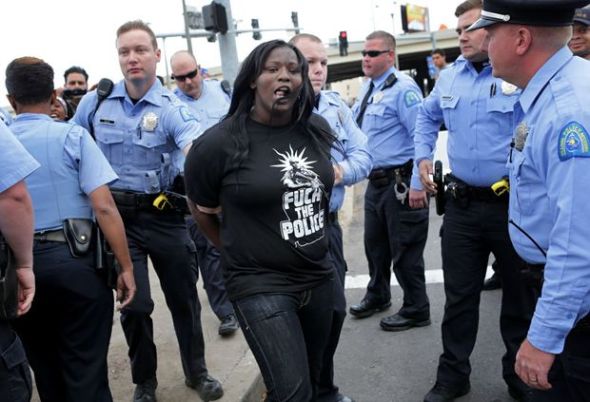
Check out these photos of black protesters and white St. Louis Rams fans fighting over an American flag. How symbolic is that? Here’s one of the photos:

At the end of the confrontation, white police officers are shown targeting a black woman.
Serial Killers
On Saturday, a body that is most likely that of missing University of Virginia student Hannah Graham was found in Albemarle County a few miles from where suspect Jesse Matthew grew up. WTVR.com reports:
Just four short miles from the abandoned Albemarle County property, now lined with police tape and full of detectives investigating the discovery of human remains, sits the house Jesse Matthew Jr. and his mother once called home.
“She wanted to try to keep Jesse out of the city away from gang activity — if there was any in the city. She was just trying to make it safe for her son,” said neighbor Cliff Hunt.
Hunt said Matthew’s mother wanted the best for her son, who is now the prime suspect in the disappearance of Hannah Graham, who was last seen Sept. 13 on Charlottesville’s downtown pedestrian mall.
Hannah Graham’s parents wanted the best for their daughter too, and so did Morgan Harrington’s parents. How many more women did Jesse Matthew rape and kill? The safest place for him to have been was prison after he was accused of raping college classmates at two Virginia colleges in 2002 and 2003.
More from NBC 12: Albemarle neighbors recall Jesse Matthew and his family.
Jesse Matthew and his family lived at a home on Ponderosa Trail, just a few years ago, according to the neighbors and people who live here now. And this spot is just four miles away from where the remains were found by investigators scouring for any trace of evidence left at the scene….
This area is known to suspect Jesse Matthew, who is charged with Graham’s abduction with intent to defile.
Matthew’s former neighbor Bernard Blue said Matthew, his sister and mother lived in this home just miles from where search crews made the gruesome discovery Saturday. Blue says he’s unsettled that the man he knew is now the main suspect in a high-profile case. “Never dreamed he’d do something like that if he is guilty,” he said. “Never dreamed about it, because he was a fine boy when he was up here.”
Blue said Matthew’s mother also worked at UVA hospital, and that she’s stayed in touch. “She was a sweet lady. She came up to see me about four or five months ago,” he said. But Bernard says Matthew left a somewhat different impression. “He was a little strange. But, fine guy, all I know.”
“Strange,” but “a fine guy”?

Also in this morning’s news, a serial killer has been arrested in Indiana. From the Chicago Tribune: 7 women found dead in Gary, Hammond over weekend.
Bodies of three more women were found in Gary Sunday evening after officials discovered bodies of four women earlier in the weekend at various locations in Gary and Hammond.
One of the recently found women was discovered around 7:50 p.m. Sunday in the 4300 block of Massachusetts Street in Gary, according to a press release from the Lake County coroner’s office. The cause of the woman’s death was strangulation, same as in the case of the first woman found dead Friday night.
Two additional bodies of women were recovered around 10 p.m. in the 400 block of East 43rd Avenue in Gary, according to another press release from the Lake County coroner’s office. The cause of both women’s deaths was unknown.
Deaths of all three women, who were not immediately identified, were ruled homicides, the releases said.
Police have detained a suspect whose name won’t be released until he is charged. The man confessed to the most recent murder and then led police to three more bodies. Fox News reports:
The women were found throughout Hammond and Gary, according to the Lake County coroner’s office. The Chicago Sun-Times cited police sources saying the man in custody is a 43-year-old resident of Gary. Hammond Chief John Doughty said police will have more information at a press conference Monday.
The flurry of grisly discoveries began when Hammond police responded to a call of an unresponsive person Friday evening at a Motel 6 and found the strangled body of a woman identified as Afrika Hardy, 19. As part of the investigation into her death, police executed a search warrant on a home in Gary, where they also took the person of interest into custody, Hammond Police Lt. Richard Hoyda told the Chicago Tribune in an email….
Police discovered the body of Anith Jones, 35, of Merrillville, around 11:20 p.m. Saturday in an abandoned home in Gary. Her family had reported her missing on Oct. 8.
Jones’ sister, Yolanda Nowell, previously described her as “very street savvy” and said she had moved 10 years ago from Chicago to Indiana, where she operated a stand at a nearby flea market.
Police found the next body around 1 a.m. Sunday and a third body less than an hour later, according to the Tribune.
Late Sunday, the coroner’s office confirmed the discovery of three additional Jane Does, all of which were found in Gary.
All seven deaths have been ruled homicides, according to the coroner’s office. Most of the bodies were found in or around abandoned or fire-damaged homes in blighted neighborhoods, according to reports. The house near where Jones was found was described as being located in a thriving neighborhood, although it is unkempt, with overgrown grass and weeds.
As I have often said, it’s a bloodbath out there. Violence against women is a daily reality in this country.
Nazi War Criminals Living on Social Security
From AP via Yahoo News: Expelled Nazis got millions in Social Security.
OSIJEK, Croatia (AP) — Former Auschwitz guard Jakob Denzinger lived the American dream.
His plastics company in the Rust Belt town of Akron, Ohio, thrived. By the late 1980s, he had acquired the trappings of success: a Cadillac DeVille and a Lincoln Town Car, a lakefront home, investments in oil and real estate.Then the Nazi hunters showed up.
In 1989, as the U.S. government prepared to strip him of his citizenship, Denzinger packed a pair of suitcases and fled to Germany. Denzinger later settled in this pleasant town on the Drava River, where he lives comfortably, courtesy of U.S. taxpayers. He collects a Social Security payment of about $1,500 each month, nearly twice the take-home pay of an average Croatian worker.
Denzinger, 90, is among dozens of suspected Nazi war criminals and SS guards who collected millions of dollars in Social Security payments after being forced out of the United States, an Associated Press investigation found.
The payments flowed through a legal loophole that has given the U.S. Justice Department leverage to persuade Nazi suspects to leave. If they agreed to go, or simply fled before deportation, they could keep their Social Security, according to interviews and internal government records.
Like Denzinger, many lied about their Nazi pasts to get into the U.S. following World War II, and eventually became American citizens.
Read more details about the AP investigation in the lengthy article.
Read “brief profiles” of some of these Nazi social security recipients in this AP story via The Elkhart Truth

What if Republicans Win Control of Congress?
Here’s Joan Walsh’s take on the silly argument that losing would be good for Democrats: America’s Looming Freak Show: How GOP Control Will Terrorize a Nation – With No Political Repercussion.
I’m an optimist who’s expert at finding silver linings – American progressives have to be — but the case rapidly picking up steam that another midterm loss will be good for Democrats is both silly and a little dangerous.
Bill Scher made the argument from the left as well as anyone could, while this piece by the Wall Street Journal’s Gerald Seib, coming from the center-right, was more predictable and vexing. (Paul Waldman took a shot at it back in August, here.) The Washington Post’s Phillip Bump followed and endorsed Seib’s argument. But those takes rely at least in part on the notion that if Republicans gain the Senate, they’ll either have an incentive to help “govern” – or they’ll shame themselves in the eyes of the American public if they don’t. Unfortunately, neither premise is true.
In fact, I’m concerned that worsening political dysfunction perpetuates itself by convincing more Americans that politics is futile. The Obama coalition in particular – younger, less white, less well off than even prior coalitions of Democrats – has gotten so little that’s tangible from its history-making turnout in 2012 (and yes I’ve read that Krugman piece and I mostly agree.) The prospect of its coalescing to become a permanent force in American politics has been at least postponed, if not thwarted entirely, by the deliberate GOP sabotage of the political process.
For me, the backdrop to this depressing midterm election is not merely ISIS and Ebola, but continued unrest in Ferguson, Mo., where it seems unlikely Officer Darren Wilson will face consequences for shooting Michael Brown. From New York to Los Angeles, the issue of police violence just gets worse. There’s increasing activism on the issue, which is great to see – the crowds that turned out for “Ferguson October” over the weekend, and into Monday, were inspiring.
Read the whole sordid thing at the link. Have I told you lately how much I hate the term “progressive?” I’m a liberal and proud of it. The “progressives” who have been undermining Obama for years and are now rooting for a Republican victory make me sick to my stomach. Maybe that’s why I came down with this virus I have.
I should write something about Ebola, but this post is already far too long. I’ll put those links in the comment thread.
So . . . what stories have caught your attention today?
Lazy Saturday Reads: Ebola, Texas, and Crazed Republicans
Posted: October 18, 2014 Filed under: 2016 elections, Barack Obama, medicine, morning reads, Real Life Horror, Republican politics, Rick Perry, science, Scott Brown, U.S. Politics | Tags: Beltway Bob, CDC, ebola, infectious disease prevention, Mitt Romney, Nathan Deal, Peggy Noonan, Ron Klain, Ted Cruz, Tom Frieden 32 CommentsGood Day!!
There are two confirmed cases of Ebola contracted within the U.S., and now we have an “Ebola Czar.” President Obama has named Ron Klain, a lawyer and political operative who most recently served as “president of Case Holdings, which manages the assets of AOL founder Steve Case, and general counsel of Case’s venture capital firm, Revolution.” Before that, according to USA Today, he worked for a lobbying firm, but not as a registered lobbyist. And before that,
He was the chief of staff for two vice presidents, Joe Biden and Al Gore, and one attorney general, Janet Reno. He served as a senior White House aide to President Obama….
As Biden’s chief of staff, Klain had a key role in implementing the American Recovery and Reinvestment Act of 2009 and signed off on one of its most controversial projects: a $535 million loan guarantee to solar panel maker Solyndra.
“Sounds like there are some risk factors here — but that’s true of any innovative company that POTUS would visit,” Klain wrote to Department of Energy officials May 24, 2010, a day before Obama visited a company factory. “It looks like it is OK to me, but if you feel otherwise, let me know.”
Earlier in his career, he served as the staff director of the Senate Democratic Leadership Committee and chief counsel of the Senate Judiciary Committee….
Klain served as the top lawyer on the Gore-Lieberman Recount Committee after the 2000 election and was portrayed by actor Kevin Spacey in the 2008 film Recount.

He has no experience with health care issues or control of infectious diseases. Maybe Obama just did this to throw a bone to crazy Republicans, but it’s not working. They’re predictably attacking the choice. On the other hand, good old Beltway Bob Ezra Klein thinks Klain is a perfect pick.
Something I learned during the first two years of the Obama administration, when the staff infighting was at its worst: if you wanted to get somebody to say something nice, ask them about Ron Klain.
Klain entered the administration as Vice President Joe Biden’s chief of staff. This was, itself, notable: Klain has been chief of staff to Vice President Al Gore, too, making him the only person to serve in that position for two different vice presidents.
Okay . . .
The Ebola response involves various arms of the Department of Health and Human Services (particularly, though not solely, the Centers for Disease Control and Prevention), the Pentagon, the State Department, the National Security Council, the World Bank, the World Health Organization, President Obama’s office, private stakeholders, and many, many more.
The “czar” position requires someone who knows how these different agencies and institutions work, who’s got the stature to corral their efforts, who knows who to call when something unusual is needed, who can keep the policy straight….
I’ve seen some people arguing that there would be no need for an Ebola Czar if the Senate would simply confirm Dr. Vivek Murthy, Obama’s nominee for surgeon general, who’s being blocked because the National Rifle Association doesn’t believe gun violence is a public-health issue. Murthy should be confirmed, but it would be a mistake to make him Ebola czar; he’s a newcomer to government, and would need to learn, on the job, how to manage the various agencies and principals involved in the response effort. He’d likely get sidelined as players with more weight and bureaucratic skill began going around him.
Actual government experience is badly underrated in Washington. Politicians run for office promising that they know how to run businesses, not Senate offices. “Bureaucrat” is often lobbed as an insult. But in processes like this one, government experience really matters.
Maybe Klein is right. He makes some good arguments anyway.

Scott Brown seems to believe a venture capitalist is what’s called for. Brown had this to say yesterday: “We Would Not Be Worrying About Ebola Right Now” If Romney Won.
Scott Brown told Fox News’ Brian Kilmeade Friday that Ebola wouldn’t be a problem for America if Mitt Romney had won in 2012.
“Gosh can you imagine if Mitt was the president right now?” Brown said. “He was right on Russia, he was right on Obamacare, he was right on the economy. And I guarantee you we would not be worrying about Ebola right now and, you know, worrying about our foreign policy screw ups.”
Golly gee willikers, Batman! You can watch the interview at the Buzzfeed link above. New Hampshire Republican agree, according to The Washington Post.
It’s interesting that Texas politicians are attacking Obama’s Ebola response so vehemently. You’d think they would be more concerned about how a Dallas hospital sent Thomas Duncan home with a 103 degree fever, even though he told them he had just arrived from Liberia. And how they let nearly 80 hospital workers care for Duncan for days without any special protective gear. And how they let people who had been exposed to Duncan’s bodily fluids travel travel by air and sea to possibly expose hundreds of other people. But no. Gov. Rick Perry, who could have stopped exposed Texans from traveling, went to Europe during the Ebola crisis and now says President Obama should have handled Texas’ problem for him.
And then there’s Sen. Ted Cruz (R-TX). Here’s what he had to say about the new Ebola Czar. I’m not going to link to it, because it’s at Newsmax:
“We don’t need another so-called ‘czar’; we need presidential leadership. This is a public health crisis and the answer isn’t another White House political operative. The answer is a commander-in-chief who stands up and leads, banning flights from Ebola-afflicted nations and acting decisively to secure our southern border.”
Kaili Joy Gray at Wonkette: President Doctor Ted Cruz Is The Only Cure For Ebola.
Remember that time Sen. Ted Cruz (R-Canada) was all, “Say health care one more time, and I will shut this government DOWN!” and also something about Green Eggs and Ham and Nazis?
Nuh uh, no you do not, because Cruz would never be so reckless and irresponsible as to suggest the government should have nothing to do with health care because FREEDOM. That’s not leadership, and Cruz is all about leadership. Especially the presidential kind, cough cough, wink wink, nudge nudge, YEAH WE KNOW, CRUZ WANTS TO BE PRESIDENT!
That’s why Cruz is leadershipping so hard in response to President Obama’s announcement that he will appoint an Ebola czar to coordinate all the government agencies tasked with dealing with this mess (which is mostly in Africa, but that doesn’t count). Obama had to Do A Thing because the entire rightwing will not shut up about it. The folks at Fox and on the interwebs know for A Fact we are all dying this second of the terrifying African disease from Africa, spread by African Africans just like Obama, who is African and hates America and dear lord will these people never stop? (No. The answer is no.) ….
Right on, amen, and hells yes! Right now — and at no other time in history — the government has a duty to Do A Thing about Americans facing a public health crisis. And if stupid Obama insists on listening to the director of the Centers for Disease Control instead of Bill O’Reilly, Cruz will have no choice but to launch his 2016 presidential campaign right this second to save America.
And really, who better to just now discover the government serves a purpose and should maybe sometimes do stuff than the guy who wanted to shut it down because doing stuff is the last thing the government should ever do?
Honestly, I’m think some crazy Republicans would like to cause an epidemic just to spite Obama.
By the way, have you heard there’s been another screw up at Texas Health Presbyterian Hospital? A patient who might have Ebola was transferred to the hospital from Baylor Hospital, and then went missing after Presbyterian sent him on his way.
On Friday morning Baylor Hospital in Dallas confirmed a patient with ‘Ebola similar’ symptoms also triggered positive on a verbal screening questionnaire.
Although a positive blood test has not been confirmed, sources say it’s not unusual to have a patient screen positive considering the wider net for Ebola now over Dallas. A positive screening means the patient met some of the criteria to cause concern.
According to Baylor, it was the answers to some of the screening questions — like if a person had been in contact with a known Ebola patient — that triggered the standing protocol by Dallas County Health and Human Services that the person be transferred to Texas Health Presbyterian Hospital Dallas, presumably for further, complete testing.
A source at Baylor said the patient came to the Emergency Room through a private entrance and was then immediately put into isolation.
According to a statement released by Texas Presbyterian, via The Boston Globe,
“The patient was placed in isolation at Texas Health Dallas and evaluated with all appropriate precautions,” the statement read. “The patient was determined to be low risk and wanted to leave the hospital. The CDC and Texas Department of State Health Services were advised of this and did not feel it was necessary to have her detained.”
However, the Globe learned that earlier,
Spokespeople for Texas Health Presbyterian told local news stations that they had not received a transfer patient and could not say whether the patient had been treated or released. There is no confirmation that this patient has Ebola. Texas Health Presbyterian has not responded to Boston.com request for comment.
WTF?! Someone in authority in Texas needs to make sure Texas Presbyterian is not involved with anymore suspected Ebola patients. Period. But Gov. Perry is too busy blaming everything on President Obama to do anything useful in his own state. Where is this patient? Are we really sure she is OK?
More insane Republican responses to the Ebola mess: CNN has a list, What’s more disturbing than Ebola? The outrageous commentary. Here’s just one example from Gov. Nathan Deal of Georgia:
“The most comforting thing that I heard from (Dr. Brenda Fitzgerald, commissioner of the Georgia Department of Public Health) was that water kills the Ebola virus. I’ve never heard that before. I thought it was something that was so contagious there wasn’t much you could do to prevent it or anything else, so her advice was ‘wash your hands.’ “ —Georgia Gov. Nathan Deal told the Marietta Daily Journal.
From the experts:
“As with other infectious diseases, one of the most important preventive measures is frequent hand-washing. Use soap and water, or use alcohol-based hand rubs containing at least 60% alcohol when soap and water aren’t available,” the Mayo Clinic said about the prevention and spread of Ebola infection.
Read more at the link.

And then there’s Peggy Noonan. She thinks Megyn Kelly of Fox News knows more about preventing Ebola than CDC Director Tom Frieden. Here’s Simon Meloy at Salon on Noonan’s solutions: Peggy Noonan’s plan to save America: Think like an 11-year-old.
We need a travel ban, Ms. Noonan observes, drawing deeply from her vast reservoirs of disease-control expertise. “If we don’t momentarily close the door to citizens of the affected nations, it is certain that more cases will come into the U.S.” It is certain! They will come here with their disease. They will come to America. You may be inclined to note that the broad consensus among public health officials is that closing off West Africa will only make the epidemic there worse, which will in turn increase the risk of transmission to America. The petulant naysayers among you may be wont to point out that imposing a flight ban will only make it harder to track the movements and contacts of potentially infected persons.
But that’s just more gobbledygook, more amphigory, more hurbledy-burbledy. That, as Ms. Noonan writes, is how the government talks, and “everyone who speaks for the government on this issue has been instructed to imagine his audience as anxious children.” No … instead of speaking like children, writes Ms. Noonan, we should bethinking like children:
It is one thing that Dr. Frieden, and those who are presumably making the big decisions, have been so far incapable of making a believable and compelling case for not instituting a ban. A separate issue is how poor a decision it is. To call it childish would be unfair to children. In fact, if you had a group of 11-year-olds, they would surely have a superior answer to the question: “Sick people are coming through the door of the house, and we are not sure how to make them well. Meanwhile they are starting to make us sick, too. What is the first thing to do?”
The children would reply: “Close the door.” One would add: “Just for a while, while you figure out how to treat everyone getting sick.” Another might say: “And keep going outside the door in protective clothing with medical help.” Eleven-year-olds would get this one right without a lot of struggle.
Yes! Trust in the wisdom of 11-year-olds. Unlike disease control officials, they are not burdened by years of experience in dealing with outbreaks, and the things they say are generally easier to understand. And whose heart is not warmed by the delicate innocence of a child’s words as imagined by a former Reagan official?
Much more insanity at the link.
I know there’s lots more news happening, but I’m so fascinated by the crazy responses to Ebola that I just can’t stop reading about them. Please let us know know else is happening in the comment thread, and have a nice weekend.
Friday Reads
Posted: October 17, 2014 Filed under: Barack Obama, morning reads, Republican politics, U.S. Economy, U.S. Politics | Tags: Amber Vinson, Angela Merkel, austerity, Belize, Bill Clinton, Carnival Cruise Lines, ebola, Ebola hearing, El Nino, Euopean Union, Federal Reserve, Hillary Clinton, Janet Yellen, Martha Coakley, Mary Landrieu, NOAA, Polar Vortex, Rand Paul, U.S. House of Representatives, winter weather 24 Comments
Good Morning!!
I’m going to begin with some good news today.
It looks like the coming winter will be on the mild side. From Discovery News: Winter Forecast for US Nothing to Shiver About.
Don’t expect the polar vortex to pummel the eastern United States this winter, government scientists said today (Oct. 16).
Overall, forecasters expect mild winter conditions across much of the United States, scientists with the National Oceanic and Atmospheric Administration (NOAA) said as they issued their annual winter weather outlook.
While there’s always a chance that the polar jet stream will again funnel frigid Arctic air south toward the United States, nothing in the new forecast indicates a rerun of the persistent patterns responsible for the “polar vortex.” “We do not expect to see a repeat of last winter,” said Mike Halpert, acting director of NOAA’s Climate Prediction Center.
Developing El Niño conditions in the Pacific Ocean will influence this year’s winter weather, with wet conditions forecast from Southern California to South Carolina, and dry conditions expected across the North. Temperatures will be warmer than average in the West and in New England, but colder in the South from Texas east to Florida, according to the forecast.
I hope they’re right!
Now for the latest Ebola news . . .
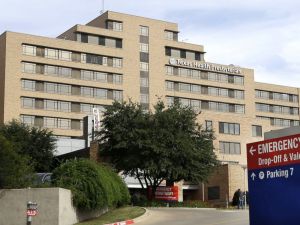
Why can’t Dallas hospital workers just stay home until they’re cleared? From The Washington Post: Texas hospital worker quarantined on cruise ship in Caribbean.
A Texas health-care worker who “may have” handled lab specimens from Ebola victim Thomas Eric Duncan has been isolated on board a Carnival cruise ship in the Caribbean. The worker has shown no symptoms of the disease, according to Carnival, which said it is in close contact with the Centers for Disease Control. A Carnival spokeswoman said the guest, who was not named, will remain on board in voluntary isolation until the ship returns to its home port of Galveston on Sunday.
The Texas Health Presbyterian Hospital employee and a partner boarded the ship Oct. 12 in Galveston, Tex., before the U.S. Centers for Disease Control and Prevention updated the requirement for active monitoring, the State Department said in a statement. Although the worker is healthy, the U.S. government is working with the cruise line to get the ship back to America “out of an abundance of caution.”
The employee, who has not been named, did not come into direct contact with Duncan, the first patient diagnosed with Ebola in the United States. However, he or she may have been exposed to his clinical specimens, the State Department said.
“It has been 19 days since the passenger may have processed” Duncan’s fluid samples, State Department spokeswoman Jen Psaki said in a statement early Friday morning. “The cruise line has actively supported CDC’s efforts to speak with the individual, whom the cruise ship’s medical doctor has monitored and confirmed was in good health. Following this examination, the hospital employee and traveling partner have voluntarily remained isolated in a cabin.”
Belize refused to allow the woman (gender identified by news release) to be leave the ship so she could be evacuated by the U.S.
In its own statement Thursday, the the Belize government said it “was contacted today by officers of the U.S. Government and made aware of a cruise ship passenger considered of very low risk for Ebola….Nonetheless, out of an abundance of caution, the Government of Belize decided not to facilitate a U.S. request for assistance in evacuating the passenger through the Phillip Goldson International Airport.”
Now that the horses are out of the barn, so to speak, officials in Texas have decided to close the barn doors. From USA Today: Travel Ban for Texas health care workers in Ebola case.
Texas health officials have ordered any person who entered the room of the first Ebola patient at a Dallas hospital not to travel by public transport, including planes ship, buses or trains, or visit groceries, restaurants or theaters for 21 days, until the danger of developing Ebola has passed.
The instructions, issued by the Texas Department of State Health Service late Thursday, cover more than 70 health workers involved in providing care for Thomas Duncan, the Liberian national who became the first patient to test positive for Ebola in the United States.
Duncan died Oct. 8 at Texas Health Presbyterian Hospital in Dallas.
The hospital workers were ordered to undergo monitoring twice a day, including one face-to-face encounter.
The health department said anyone failing to adhere to the rules “may be subject to a communicable disease control order.” The health workers were asked to sign a written acknowledgement of the directions when they appear for monitoring.
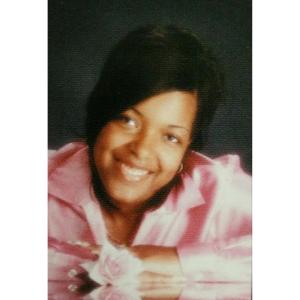
Amber Vinson
According to The Hill, the CDC has now decided it needs to talk to passengers who were on Amber Vinson’s flight from Dallas to Cleveland. Vinson is the second nurse to come down with Ebola after caring for Thomas Duncan, who died of the disease last week.
After reports that she may have shown symptoms on her flight back to Dallas, the CDC asked those passengers to contact the agency. But in a release Thursday night, the CDC expanded that notification to include passengers on Vinson’s flight to Cleveland. The agency said that it wants to interview passengers and that “individuals who are determined to be at any potential risk will be actively monitored.”
Ebola is contagious once an infected person starts exhibiting symptoms, so the CDC wants to keep tabs on anyone that could have come into contact with Vinson when those symptoms began. She traveled to Cleveland on Oct. 10 and returned on Oct. 13, the day before she reported her symptoms to the CDC.
Yesterday, the U.S. House of Representatives decided to get involved in the Ebola crisis, and it wasn’t pretty. BloombergPolitics compiled The Five Worst Questions from the House Ebola Hearing. According to the article, Democrats are wrong to claim that lack of funding made the situation worse. Republicans obsessed over banning travel into the U.S. and “securing the borders.” But the most ludicrous question came from Rep. Morgan Griffith (R-VA).
Representative Morgan Griffith wanted to know if humans can catch Ebola from dogs, and Frieden said there were no known incidents. But still, the Virginia Republican wanted to know if we could stem the flow of West African dogs traveling into America.
“Don’t you think we ought to at least restrict travel of dogs?” he asked.
“Um,” Frieden replied. “We’ll follow up in terms of what’s possible.”
In addition, President Obama held an “emergency meeting” at the White House yesterday.
(Reuters) – President Barack Obama said he was considering appointing an Ebola “czar” to coordinate the fight against the virus in the United States, but he remained opposed to a ban on travel from West Africa.
Obama’s administration is facing sharp criticism from lawmakers over its efforts to contain the disease at home. Obama authorized calling up military reservists for the U.S. fight against Ebola in West Africa on Thursday….
“It may be appropriate for me to appoint an additional person” to oversee efforts to contain Ebola, Obama told reporters, adding that experts have told him “a flat-out travel ban is not the way to go” because current screening measures at airports are working.
He said he had no philosophical objection to a travel ban but that some travelers might attempt to enter the United States by avoiding screening measures, which could lead to more Ebola cases, not fewer.
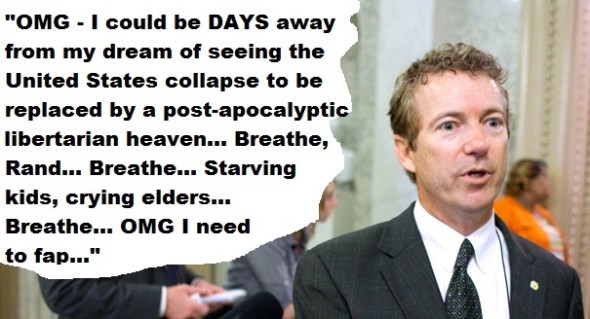
A final dose of stupid came from Sen. Rand Paul, who told an audience of college students that you could catch Ebola by standing three feet from someone who is infected.
His comments directly conflict with statements from world health authorities who have dealt with Ebola outbreaks since 1976.
Paul…made his comments during a stop at Plymouth State University in New Hampshire Wednesday. In his remarks, he called Ebola “incredibly contagious” and suggested it could spread at a cocktail party attended by someone who is symptomatic, according to CNN video footage….
“You’re not going to get AIDS at a cocktail party. No one’s going to cough on you and you’re going to get AIDS. Everybody knows that. That’s what they make it sound exactly like,” Paul, a doctor and potential presidential contender, said Thursday at Plymouth State University in New Hampshire. “But then you listen to them closely, they say you have to have direct contact. But you know how they define direct contact? Being within three feet of someone.”
World health authorities have been clear that Ebola is transmitted through direct contact with bodily fluids, and that blood, vomit and feces carry the most virus. Health workers are at particular risk because in the course of caring for patients, they draw blood and clean up diarrhea when the patients are most infectious. Likewise in the epidemic zone in West Africa, people involved with burials of highly infectious bodies are at high risk.
In other news . . .
Bill Clinton is heading down to Louisiana on Monday to stump for Mary Landrieu, according to Politico.
Former President Bill Clinton will campaign in Louisiana Monday with Democratic Sen. Mary Landrieu, joining the endangered incumbent in the state capital of Baton Rouge.
Clinton, unlike President Barack Obama, can be an effective surrogate in the red Southern states where the Democratic majority hangs in the balance.
The visit, Clinton’s second for Landrieu this election cycle, comes a day before the start of early voting, which runs from October 21-28.
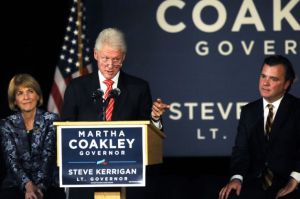
I’ve been hoping Bill would find time to come to Massachusetts to campaign for Martha Coakley for Governor, and what do you know? He blew through here yesterday! He spoke at Clark University in Worcester.
WORCESTER — Former President Bill Clinton told a capacity crowd at Clark University today that elections are just one big job interview.
Speaking in Worcester in support of Martha Coakley’s run for governor, Mr. Clinton said Ms. Coakley’s actions and advocacy as attorney general indicate how well she will perform once she completes that job interview.
“All you’ve got to do,” he told more than 800 people who waited in a line the length of the Main South campus in monsoon-like conditions to get into Atwood Hall, “is increase the number of employers who make the hiring decision.”
Ms. Coakley, a Democrat, and her running mate, Steve Kerrigan of Lancaster, are in a tight race with Republican Charlie Baker and his running mate, Karyn Polito of Shrewsbury. Mr. Clinton tried to convince the crowd they had the potential to make it a landslide.
“I don’t care what the polls say, she can win this race handily if you want it bad enough,” Mr. Clinton said.
Now we just need Hillary to show up.
How about a little economics news? It seems people in Europe are getting fed up with Angela Merkel’s austerity obsession, according to the NYT. I can’t excerpt from the piece, but here’s a report from The Local in Italy:
Italy and France on Thursday reacted to turmoil in global stock markets by stepping up their calls for the European Union to switch course to focus on growth, not on balancing budgets.
But their calls were once again batted away by German Chancellor Angela Merkel, who insisted the way out of the crisis was for all eurozone states to stick to agreed rules on the size of their deficits.
In the latest salvos in a simmering row that is set to come to head at a summit of EU leaders next week, Rome and Paris went on the offensive on the sidelines of the ASEM meeting in Milan.
“We in a very delicate moment in terms of the international economic and financial situation,” Italian Prime Minister Matteo Renzi said.
“Which is all the more reason for Europe to show itself capable of producing an economic response based on investment in growth and not only on rigour and austerity,” Renzi said.
He also said a “focus on growth” was recommended by the IMF – “and they don’t seem to be dangerous communists to me”.

According to UK Reuters, the U.S. has warned Europe about the possibility of deflation.
The United States on Wednesday renewed a warning that Europe risks falling into a downward spiral of falling wages and prices, saying recent actions by the European Central Bank may not be enough to ward off deflation.
In a semiannual report to Congress, the U.S. Treasury Department also said Berlin could do more to help Europe, namely by boosting demand in the German economy, Europe’s largest.
“Europe faces the risk of a prolonged period of substantially below-target inflation or outright deflation,” the Treasury said.
The Guardian today published a summary of Europe’s “five years of economic crisis.”
Finally, Janet Yellen has expressed concern over growing economic inequality in the U.S. Reuters reports:
Federal Reserve Chair Janet Yellen said on Friday the growth of economic inequality in the United States “greatly” concerned her, and suggested in a detailed speech on the politically charged issue that Americans should ask whether it was compatible with their values.
With global financial markets rebounding from days of frenzied selling, Yellen did not comment on the volatility or on monetary policy. Instead she focused on the gulf between rich and poor that has only grown wider over the last several decades and, she said, through the U.S. economic recovery.
“The extent of and continuing increase in inequality in the United States greatly concern me,” Yellen told a conference on inequality at the Boston branch of the central bank.
“It is no secret that the past few decades of widening inequality can be summed up as significant income and wealth gains for those at the very top and stagnant living standards for the majority,” she told economists, professors and community workers.
“I think it is appropriate to ask whether this trend is compatible with values rooted in our nation’s history, among them the high value Americans have traditionally placed on equality of opportunity.”
Good for Yellen. Now let’s see some action beyond the words.
What else is happening? Please post your thoughts and links in the comment thread, and have a fabulous Friday!!


 peej
peej Carissa
 bostonboomer
 dakinikat
 ecocatwoman
 jjlo
jjlo mablue2
 Mama Lopez
 peggysue22
 quixote
 skydancingguestblogger
 Mona (aka Wonk the Vote)





Recent Comments