
Tuesday Reads
Posted: January 23, 2018 Filed under: morning reads, U.S. Politics 33 Commentshttps://twitter.com/benjaminwittes/status/955815448884506624
Good Day Sky Dancers!!
There’s lots of news this morning and it’s not all about the #TrumpShutdown.
Michael Schmidt at The New York Times: Sessions Is Interviewed in Mueller’s Russia Investigation.
Attorney General Jeff Sessions was questioned for several hours last week by the special counsel’s office as part of the investigation into Russia’s meddling in the election and whether the president obstructed justice since taking office, according to a Justice Department spokeswoman.
The meeting marked the first time that investigators for the special counsel, Robert S. Mueller III, are known to have interviewed a member of Mr. Trump’s cabinet….
Mr. Sessions, who was accompanied by the longtime Washington lawyer Chuck Cooper to the interview, had been among a small group of senior campaign and administration officials whom Mr. Mueller had not yet interviewed. Two weeks ago, Mr. Mueller subpoenaed Mr. Trump’s former chief strategist, Stephen K. Bannon, to testify before a grand jury. Mr. Mueller is expected to forgo the grand jury appearance for now and will have his investigators interview Mr. Bannon in the coming weeks.
I wonder if Sessions managed to be more truthful in this interview than he was in testimony before Congress?
Meanwhile, Sessions has been busy trying to hobble the FBI for Trump.
Last night, Johnathan Swan broke this story at Axios: Scoop: FBI director threatened to resign amid Trump, Sessions pressure.
Attorney General Jeff Sessions — at the public urging of President Donald Trump — has been pressuring FBI Director Christopher Wray to fire Deputy Director Andrew McCabe, but Wray threatened to resign if McCabe was removed, according to three sources with direct knowledge.
— Wray’s resignation under those circumstances would have created a media firestorm. The White House — understandably gun-shy after the Comey debacle — didn’t want that scene, so McCabe remains.
— Sessions told White House Counsel Don McGahn about how upset Wray was about the pressure on him to fire McCabe, and McGahn told Sessions this issue wasn’t worth losing the FBI Director over, according to a source familiar with the situation.
Jack Goldsmith and Benjamin Wittes at Lawfare: Power and Integrity at the FBI: Chris Wray Stands Up to the President and the Attorney General.
Jonathan Swan of Axios reported Monday night, based on “three sources with direct knowledge,” that FBI Director Chris Wray “threatened to resign” if FBI Deputy Director Andrew McCabe “was removed” from office. The threat apparently came in response to pressure on Wray by “Attorney General Jeff Sessions—at the public urging of President Donald Trump” to fire McCabe. Swan also reported, based on one source “familiar with the situation,” that “Sessions told White House Counsel Don McGahn about how upset Wray was about the pressure on him to fire McCabe, and McGahn told Sessions this issue wasn’t worth losing the FBI Director over.” It isn’t entirely clear from the story when these events took place—that is, whether the controversy that led to Wray’s threat of resignation is ongoing or if it occurred sometime earlier and has since subsided.
Either way, this reveals a great deal about power and integrity in Washington.
First, we should underscore what a difficult situation Wray is in. As Jack wrote in a related context, Wray is in the extraordinary position of “dealing with a president who is attacking the integrity of the Justice Department and the FBI in a truly unprecedented fashion at a time when many of the president’s associates, and probably the president himself, are under investigation by the Justice Department and FBI.”
As the leader of the FBI, Wray must maintain his credibility with both the White House and, more importantly, the FBI workforce. He is also supervised in an immediate sense by an attorney general who is evidently trying to placate the president’s anger at him for having recused himself from the Russia investigation—and who is doing so by facilitating the president’s demands for a house-cleaning at the bureau. In other words, Wray is wedged, on the one side, between a president who is demanding McCabe’s scalp and an attorney general who is pushing the knife into Wray’s hand, and on the other side by an FBI workforce that is demanding he defend the institution.
Read the rest at Lawfare.
The Washington Post: Tensions swell between Sessions and FBI over senior personnel from Comey era.
FBI Director Christopher A. Wray has been resisting pressure from Attorney General Jeff Sessions to replace the bureau’s deputy director, Andrew McCabe, a frequent target of criticism from President Trump, according to people familiar with the matter.
The tension over McCabe and other high-level FBI officials who served during James B. Comey’s tenure has reached the White House, where counsel Donald McGahn has sought to mediate the issue, these people said.
As Sessions tried to push Wray to make personnel changes, Wray conveyed his frustration to the attorney general, these people said. Sessions then discussed the matter with McGahn, who advised him to ease off, which he did, these people said.
According to the article, much of the tension took place in December when Trump tweeted about McCabe’s announcement that he would retire in March. A bit more:
Wray has sought to avoid the drama and personal confrontations that sometimes flare inside the Trump administration. In public comments and private remarks to FBI personnel, Wray has signaled that staffing decisions are his to make, and that he intends to wait for an ongoing inspector general’s investigation to reach some conclusions before making major personnel decisions involving people under scrutiny — a category that includes McCabe.
Sessions, Republican lawmakers and some members of the Trump administration have argued for weeks that Wray should conduct some kind of housecleaning by demoting or reassigning senior aides to his predecessor, Comey, according to people familiar with the matter. These people added that Sessions himself is under tremendous political pressure from conservative lawmakers and White House officials who have complained that the bureaucracy of federal law enforcement is biased against the president.
More at the WaPo link.
Rep Devin Nunes is still pushing his phony memo on supposed illegal spying by the Obama administration. The latest:
Mother Jones: Devin Nunes Won’t Even Show His Infamous Memo to the Justice Department.
Rep. Devin Nunes (R-Calif.) won’t #releasethememo. The now infamous document was prepared by Republican staffers for the House Intelligence Committee, which is chaired by Nunes, and it supposedly details how the FBI and the Justice Department improperly conducted surveillance in connection with the Trump-Russia probe. Conservatives looking to discredit the Russia investigation have embraced the classified memo, though they haven’t seen it, and have called for its release. But Nunes has so far insisted on keeping it secret—even from the Justice Department.
“We requested to see the memo and have not been given access to read it,” a Justice Department source tells Mother Jones. The FBI has also been denied access to the document, the Daily Beastrevealed on Sunday.
The memo reportedly asserts that federal officials abused their power by seeking a warrant targeting a Trump campaign adviser under the Foreign Intelligence Surveillance Act (FISA) without disclosing that evidence cited in the application relied on research by former British spy Christopher Steele. The ex-MI6 officer, who once ran the spy agency’s Russia desk, was working for a firm that was paid by Hillary Clinton’s presidential campaign and the Democratic National Committee.
The four-page memo has become a cause célèbre on the right, with assorted Trump backers, alt-righters, and congressional Republicans taking to Twitter with demands that someone “#releasethememo.” Donald Trump Jr. and Michael Flynn Jr., who have both come under scrutiny in the course of special counsel Robert Mueller’s investigation into Trump’s Russia ties, have joined the online chorus calling for the memo’s release. Also helping the #releasethememo campaign reach trending status: a network of Russian bots.
Greg Sargent at The Washington Post: Republicans launch extraordinary new tactics to protect Trump on Russia.
In an interview with me this morning, Rep. Adam Schiff — who is Nunes’ Democratic counterpart on the House Intelligence Committee — pushed back hard, alleging that the memo presents a profoundly doctored picture of what the classified information actually shows.
“It’s highly distorted spin by Nunes,” Schiff told me. “The Nunes spin memo distorts the underlying materials and has presented Members with a very misleading impression of what those materials show.”
Schiff also made a striking claim: He said that in allowing the memo to be accessed in a classified setting by House Republicans, Nunes has violated an agreement with the FBI and the Department of Justice. Schiff added that its public release would also violate that agreement. The GOP leaders on the Intel Committee have allowed Members of Congress to access the document, but Democrats charge this is merely an effort to arm them with misleading talking points to attack the FBI on Trump’s behalf.
“The release of the materials by the Chairman violated an agreement he entered into with the FBI and the Department of Justice,” Schiff told me, in a reference to the release of the memo to the membership of the House for reading. “The agreement was because of the sensitivity of the materials to limit their distribution,” Schiff also said. “There were certain conditions attached to the viewing of the materials which have been violated.”
Asked if it would violate the agreement if the memo were to be released publicly, Schiff said: “Of course.” He added that this affair was revealing that there may be “no limit” to “how far Nunes and the majority are willing to go to protect the president from the Russia investigation.”
This is interesting from CNN: Melania Trump will no longer join the President in Davos.
First lady Melania Trump, in a change of plans, will not be joining President Donald Trump on his trip to the World Economic Forum in Davos, Switzerland, later this week.
East Wing communications director Stephanie Grisham confirmed to CNN that the first lady’s decision to forgo the trip was based on “scheduling and logistical issues.
A week ago, Grisham told CNN the first lady would be attending the annual meeting of influential financial leaders and business titans in a show of support for her husband, who intends to give remarks during his visit.
I wonder if that has anything to do with the porn star payoff?
Finally, Trump’s attacks on CNN have borne fruit:
The Washington Post: ‘Fake news. I’m coming to gun you all down’: Mich. man accused of making threatening calls to CNN.
On Jan. 9, an operator in Atlanta manning the public contact number for CNN received a phone call. According to a federal arrest affidavit unsealed Monday, the male caller launched into a threat.
“Fake news. I’m coming to gun you all down. F‑‑‑ you, f‑‑‑ing n‑‑‑‑‑s.” The caller then clicked off.
Three minutes later, the same caller, dialing from the same number, again rang the CNN line. “I am on my way right now to gun the f‑‑‑in’ CNN cast down. F‑‑‑ you,” the caller said. The operator asked the caller his name. “F‑‑‑ you,” he responded. “I am coming to kill you.”
Thirty minutes later, the caller again reached the CNN public switchboard. He whispered his threats. “I’m coming for you CNN. I’m smarter than you. More powerful than you. I have more guns than you. More manpower. Your cast is about to get gunned down in a matter of hours.”
According to federal law enforcement, the man on the other end was Brandon Griesemer of Novi, Mich.
In an arrest affidavit released Monday, FBI agent Sean Callaghan wrote that Griesemer “made approximately 22 total calls to CNN” between Jan. 9 and Jan. 10. Four of the calls resulted in threats. In the last message, the caller made disparaging remarks about Jewish individuals, before stating: “You are going down. I have a gun and I am coming to Georgia right now to go to the CNN headquarters to f‑‑‑ing gun every single last one of you. I have a team of people. It’s going to be great, man . . . You gotta get prepared for this one, buddy.”
More at the WaPo link.
Much more is happening, but I’m running out of space, time, and energy. I’m still struggling with sinusitis, but I was able to get a doctor’s appointment for tomorrow. I might have to break down and take an antibiotic.
What stories are you following today?
Lazy Saturday Reads: #TrumpShutdown and Other News
Posted: January 20, 2018 Filed under: morning reads, U.S. Politics 17 CommentsGood Morning!!

Joan Crawford
Well, they did it. For the first time in history, the government has shut down while one party controls both the executive and legislative branches. NBC News:
The federal government entered a partial shutdown Saturday as a key vote fell far short of the support needed to pass the Senate and the midnight deadline came and went without a deal.
One year to the day since President Donald Trump took office flanked by a Republican Congress, Washington waited for word of where it goes from here as both parties sought a way out of the impasse.
The proposal that failed was the one passed by the House on Thursday. It would have funded the government until Feb. 16, extended the low-income children’s health insurance program, or CHIP, for six years and suspended some Obamacare taxes for two years.
Senate Democrats, demanding progress on the fate of the young immigrants covered by the DACA program, withheld their support for the bill after the prospect of an agreement with Republicans and the White House fell apart.
But Republicans failed to assemble a simple majority for the measure as some within their own ranks, frustrated with the spate of month-long spending bills, also opposed the short-term solution.
After the vote failed, Democrats offered a measure to make sure that military salaries would be paid, but Senate Leader Mitch McConnell refused to allow a vote.
Democrats also wanted to pass short term agreements to keep the government open until today or Monday. McConnell blocked those efforts.
McConnell wants to blame the shutdown on Democrats, but it’s not going to work. Overnight, #TrumpShutdown was trending on Twitter worldwide.
Meanwhile, Louisiana Senator John Kennedy “blasted Congress on Friday as a government funding deadline approached, slamming the government as being “run by idiots.”
“Our country was founded by geniuses, but it’s being run by idiots,” Kennedy told reporters hours before the government was set to enter a shutdown.
Read more at The Hill.
What’s next? The Washington Post: Congress returns to work as lawmakers press to keep shutdown short-lived.
Janet Leigh and Tony Curtis
Republican and Democratic leaders both said they would continue to talk, raising the possibility of a solution over the weekend. Office of Management and Budget Director Mick Mulvaney said Friday that the conflict has a “really good chance” of being resolved before government offices open Monday, suggesting that a shutdown’s impacts could be limited.
But when the House reconvened Saturday morning, the partisan finger-pointing began immediately.
“Democrats in the United States Senate are holding government funding hostage. The people protecting this country will continue to work, but won’t get a paycheck,” Rep. Virginia Foxx (R-N.C.) said in a floor speech.
House Minority Whip Steny Hoyer (D-Md.) shot back from across the aisle: “It is the Trump confrontation and chaos that continues. That is why this government is shut down.” [….]
Sen. John McCain (R-Ariz.), who is home in Arizona battling brain cancer, blasted both parties early Saturday, saying the shutdown “is a direct result of the breakdown of cooperation in Congress.”
“As Republicans and Democrats run to cable news to point fingers and assign blame, the hard reality is that all of us share responsibility for this failure,” McCain said in a statement.

The Trump gang announced that they would refuse to negotiate on immigration, but Trump is pretty irrelevant at this point after showing zero leadership and changing his mind multiple times over the past couple of weeks.
“We will not negotiate the status of unlawful immigrants while Democrats hold our lawful citizens hostage over their reckless demands,” White House press secretary Sarah Huckabee Sanders said in a statement. “This is the behavior of obstructionist losers, not legislators. When Democrats start paying our armed forces and first responders we will reopen negotiations on immigration reform.”
Of course Trump himself was only worried about how the shutdown would affect his weekend plans. The Daily Beast: Trump Whines: Shutdown Fight Could Make Me Miss ‘My Party.’
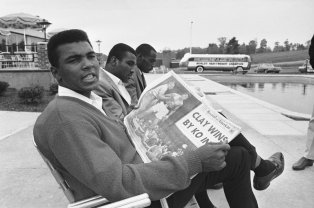
Muhammad Ali
Before the federal government shutdown at midnight Saturday, President Donald Trump privately vented frustrations that the political impasse would possibly keep him from attending a glitzy inauguration anniversary bash and fundraiser set for Saturday at his Florida getaway Mar-a-Lago.
Two sources close to the president, one a White House official and the other a longtime confidant, told The Daily Beast how excited he was for the event and relayed his growing concern that the potential failure to strike a deal to keep the federal government open could keep him from “my party,” as the president has said….
The White House officially cancelled Trump’s trip to Florida that was scheduled for Friday afternoon, and he spent the day attempting to help congressional leaders reach a deal to forestall a shutdown.
Administration officials who briefed reporters on the logistics of the impending shutdown on Friday said the expiration of government funding would not necessarily impede the president’s travel plans to Mar-a-Lago or elsewhere. In particular, one official said, Trump will still be free to attend the World Economic Forum in Davos next week, though the White House did not say whether the shutdown would affect Trump’s plans to attend the glamorous gathering of globalists.
I expect Trump will end up going, although he’s not supposed to use Air Force One.
There will be women’s marches around the country today to promote voter registration and voting in November. CNN: Everything you need to know about women’s marches this weekend.
29th July 1965: Cockney tough-guy actor Michael Caine reading a copy of the Evening News. (Photo by Stephan C. Archetti/Keystone Features/Getty Images)
This weekend is the one-year anniversary of President Donald Trump’s swearing-in. But hundreds of thousands of activists across the US also are marking the anniversary of last January’s Women’s March, and the movement it sparked in 2017.

The organizers of the movement hope to keep up the momentum from last year with a weekend of events and rallies across the country. Here’s what you need to know about Women’s March and related events this weekend.
Read more at CNN or check out the Women’s March web page for events scheduled around the country.
Politico published a must-read article on Thursday by Jennifer Mendelsohn: How Would Trump’s Immigration Crackdown Have Affected His Own Team?
After President Donald Trump called it a “total disaster, which threatens our security and our economy and provides a gateway for terrorism” at a White House meeting in early January, “chain migration” quickly became the buzzword du jour for anti-immigration voices. But chain migration, a process also known as “family reunification” that allows a legal immigrant to bring his family members to the United States—spouses and minor children when he has a green card, and parents and siblings after he becomes a citizen—is nothing new. In fact, it’s how the families of some of the most prominent anti-immigration voices in Trump’s circle—and the president himself—came to the United States.
Gloria Swanson
These ahistorical warnings about the evils of chain migration are part of a longstanding American tradition described by immigration historian Tyler Anbinder in a 2016 Chicago Sun-Timeseditorial: “From the days of the Puritans to the present, every generation of Americans has believed that the latest wave of immigrants is completely different from—and inferior to—their own immigrant ancestors and could never become true Americans.” From White House adviser Stephen Miller to Fox News commentator Tomi Lahren, many prominent anti-immigration voices advocate for immigration policies like merit-based systems and language-based preferences that would have barred their own families from coming to the United States.
But while our favorite immigration opponents may have forgotten their immigrant roots, lucky for them, I have an Ancestry.com account, and I know how to use it. In a project I call #resistancegenealogy, I’ve traced their family trees and found, not surprisingly, their own family’s stories are markedly similar to those of the immigrants they now would like to prevent from becoming Americans. (Except, of course, that today’s immigrants are less commonly white Europeans.)

Mendelsohn traced the immigrant roots of Dan Scavino of WH social media director Dan Scavino, Iowa Rep. Steve King, campaign spokeswoman Tomi Lahren, and Tucker Carlson, and found that their families had each used so-called “chain migration.” Read all the details at Politico.
I’ll end with three new articles on Trump son-in-law Jared Kushner’s troubles.
The New Yorker: Jared Kushner Is China’s Trump Card.
In early 2017, shortly after Jared Kushner moved into his new office in the West Wing of the White House, he began receiving guests. One visitor who came more than once was Cui Tiankai, the Chinese Ambassador to the United States, a veteran diplomat with a postgraduate degree from Johns Hopkins University. When, during previous Administrations, Cui had visited the White House, his hosts received him with a retinue of China specialists and note-takers. Kushner, President Trump’s thirty-seven-year-old son-in-law and one of his senior advisers, preferred smaller gatherings….
Jimi Hendrix
In Kushner, Cui found a confident, attentive, and inexperienced counterpart. The former head of his family’s real-estate empire, which is worth more than a billion dollars, Kushner was intent on bringing a businessman’s sensibility to matters of state. He believed that fresh, confidential relationships could overcome the frustrations of traditional diplomatic bureaucracy. Henry Kissinger, who, in his role as a high-priced international consultant, maintains close relationships in the Chinese hierarchy, had introduced Kushner to Cui during the campaign, and the two met three more times during the transition. In the months after Trump was sworn in, they met more often than Kushner could recall. “Jared became Mr. China,” Michael Pillsbury, a former Pentagon aide on Trump’s transition team, said.
But Cui’s frequent encounters with Kushner made some people in the U.S. government uncomfortable. On at least one occasion, they met alone, which counterintelligence officials considered risky. “There’s nobody else there in the room to verify what was said and what wasn’t, so the Chinese can go back and claim anything,” a former senior U.S. official who was briefed on the meetings said. “I’m sorry, Jared—do you think your background is going to allow you to be able to outsmart the Chinese Ambassador?” Kushner, the official added, “is actually pretty smart. He just has limited life experiences. He was acting with naïveté.”
By now, Americans are accustomed to reports of Russia’s efforts to influence American politics, but, in the intelligence community, China’s influence operations are a source of equal concern. In recent years, the F.B.I. and the C.I.A. have dedicated increased resources to tracking efforts by the Chinese government to spy on or to enlist Western officials in pursuit of their policy goals. (The F.B.I. and the C.I.A. declined to comment on this.) “The Chinese influence operations are more long-term, broader in scope, and are generally designed to achieve a more diffuse goal than the Russians’ are,” Christopher Johnson, a former C.I.A. analyst who specializes in China, said. “To be unkind to the Russians, you’d say they are more crass.”
Read the rest at The New Yorker.
Mother Jones: Jared Kushner’s Firm Tied to “Suspicious Transactions” at German Bank.
Judy Garland
A German business magazine is reporting that Deutsche Bank, the German financial giant which is a major lender to both President Donald Trump and his son-in-law Jared Kushner, identified “suspicious transactions” related to Kushner family accounts, and has reported them to German banking regulators. The bank is reportedly willing to provide the information to special prosecutor Robert Mueller’s team of investigators.
Manager Magazin, a respected German business magazine, reported in its latest print edition, which hit German newsstands on Friday, that Paul Achleitner, chairman of Deutsche Bank’s board, had the bank conduct an internal investigation and the results were troubling. Those results have been turned over to the Federal Financial Supervisory Authority—Germany’s bank regulatory agency, which is commonly known as BaFin.
“Achleitner’s internal detectives were embarrassed to deliver their interim report regarding real estate tycoon [Jared] Kushner to the financial regulator BaFin,” the Manager Magazin article, translated from German, reports. “Their finding: There are indications that Donald Trump’s son-in-law or persons or companies close to him could have channeled suspicious monies through Deutsche Bank as part of their business dealings.”

Read more at Mother Jones.
Bloomberg: Kushner’s Deutsche Bank-Backed Property Stung by Tenant Troubles.
In a six-floor retail space near Times Square, the Guy Fieri restaurant has closed and construction hasn’t begun on celebrity chef Todd English’s food hall. A tourist attraction featuring a 1/87th scale model of New York City was behind on rent for two months as of December, according to loan documents.
It wasn’t supposed to be this way.
When Kushner Cos. bought the property for $296 million in 2015, then-Chief Executive Officer Jared Kushner had big plans to capitalize on the tens of millions of tourists who visit the area every year. Deutsche Bank AG financed the endeavor before selling most of the debt to investors across Wall Street a year ago. Those investors were shown disclosures describing the retail space as 100 percent occupied and estimating it would throw off $24 million of rent annually.
But Fieri, English and Gulliver’s Gate, the operator of the miniature Manhattan, account for $9.9 million of that rent estimate, which underpinned a market-defying appraisal boost and helped justify $370 million of loans, the disclosures show. Problems with these spaces could make the economics challenging.
Poor Jared. Click the Bloomberg link to read the rest.
What stories are you following today?
Thursday Reads
Posted: January 18, 2018 Filed under: morning reads, U.S. Politics 55 Comments
Good Morning!!
I’ve been struggling with a chest cold and now my sinuses are acting up. This seems to be the story of my wintertime life now. Anyway, I’m not sure how coherent this post will be.
Here are the big stories I’m seeing this morning.
Trump is doing everything he can to sabotage any bipartisan agreements in Congress that would keep the government from shutting down. He’s also hitting back at John Kelly for his remarks to Democrats and Fox News yesterday. Read a brief summary of Kelly’s crimes at Axios: John Kelly risks a Steve Bannon moment.
Late last night, a few hours after Fox News aired Bret Baier’s interview with John Kelly, a source close to the president told me Trump would explode when he saw what his chief of staff said. The source — who has spent a lot of time with Trump — predicted the president would hate the interview because Kelly came off as the mature professional who patiently educated an uninformed Trump, and helped him see the light and evolve on “The Wall.” [….]
What Kelly said that crossed Trump:
“As we talked about things — where this president is and how much he wants to deal with this DACA issue and take it away — I told them that, you know, there’s been an evolutionary process that this president has gone through as a campaign [sic]. And I pointed out to all of the members that were in the room that they all say things during the course of campaigns that may or may not be fully informed. But this president, if you’ve seen what he’s done, he has changed the way that he’s looked at a number of things. … So he has evolved in the way he’s looked at things. Campaign to governing are two different things, and this president is very, very flexible in terms of what is within the realm of the possible.”
The moron’s Thursday morning tweets:
And finally, Trump doesn’t want children’s health care to be included in a continuing resolution.
Putting CHIP in the mix was the only way Republicans could hope to get any Democratic votes for the CR. It looks like the moron really wants a government shut down.
The Washington Post: Trump Upsets Republican Strategy to Avoid Shutdown.
President Trump blew up Republican strategies to keep the government open past Friday when on Thursday morning he said a long-term extension of the popular Children’s Health Insurance Program should not be part of a stopgap spending bill pending before the House….
With a possible government shutdown looming this weekend, the House had planned to vote late Thursday on a stopgap spending bill that would keep government funding flowing to Feb. 16 as delicate negotiations continue to protect young, undocumented immigrants brought illegally as children from deportation.
Republican leaders have spent the week pressuring Democrats to vote for the spending bill, arguing that opposing it would effectively block a six-year extension of the children’s health program, attached to the spending bill as a sweetener for lawmakers in both parties.
Speaker Paul D. Ryan of Wisconsin said on Wednesday that it would be “unconscionable” for Democrats to oppose funding for the Children’s Health Insurance Program with a “no” vote on the short-term spending bill.
But Mr. Trump’s tweet appeared to give Democrats a ready excuse to oppose the measure: the president wants the health program severed from the spending bill.
Blaming a shutdown on the Democrats won’t work. Republicans control the government, and the “president” can make exceptions to pay the military and other essential services.
Doctors who don’t work for Trump are pushing back on Ronny Jackson’s characterization of the moron’s health as “excellent.”
The New York Times: Trump’s Physical Revealed Serious Heart Concerns, Outside Experts Say.
Dr. Ronny L. Jackson, a rear admiral and the White House physician, said Tuesday in his report on the president’s medical condition that Mr. Trump was in “excellent” cardiac health despite having an LDL cholesterol level of 143, well above the desired level of 100 or less.
Dr. David Maron, the director of preventive cardiology at Stanford University’s medical school, said Wednesday that it was alarming that the president’s LDL levels remain above 140 even though he is taking 10 milligrams of Crestor, a powerful drug that is used to lower cholesterol levels to well below 100.
Dr. Maron said he would “definitely” be worried about Mr. Trump’s risk for having a heart attack if the president were one of his patients. Asked if Mr. Trump is in perfect health, Dr. Maron offered a blunt reply: “God, no.”
Other cardiologists also disputed Dr. Jackson’s rosy assessment of the president’s heart health. Several said Mr. Trump’s goal should be to get his LDL below 100, or even under 70. He has a real risk of having a heart attack or stroke, especially considering his weight and lack of exercise, they said.
Dr. Eric Topol, a cardiologist at the Scripps Research Institute, said that it is impossible to ignore the dangers of the president’s elevated cholesterol levels when providing an overall assessment of Mr. Trump’s health.
“That’s a really high LDL,” Dr. Topol said. “We’re talking about a 70-plus-year-old man who is obese and doesn’t exercise. Just looking at the lab value, you would raise a big red flag.”
He added: “I would never use the words ‘excellent health.’ How you could take these indices and say excellent health? That is completely contradicted.”
Read more expert opinions at the NYT link.
Dana Millbank at The Washington Post: Is Trump’s doctor okay?
Examining the White House physician’s briefing on President Trump’s physical, I was alarmed — not about the president’s health, but the doctor’s.
Rear Adm. Ronny Jackson was so effusive in extolling the totally amazing, surpassingly marvelous, superbly stupendous and extremely awesome health of the president that the doctor sounded almost Trumpian. “The president’s overall health is excellent,” he said, repeating “excellent” eight times: “Hands down, there’s no question that he is in the excellent range. . . . I put out in the statement that the president’s health is excellent, because his overall health is excellent. . . . Overall, he has very, very good health. Excellent health.”
And just how excellent is His Excellency’s excellent health, doctor? “Incredible cardiac fitness,” was Dr. Jackson’s professional opinion. “He has incredible genes. . . . He has incredibly good genes, and it’s just the way God made him.”
Dr. Sanjay Gupta of CNN, making a rare house call to the White House briefing room, offered a second opinion. “He is taking a cholesterol-lowering medication, he has evidence of heart disease, and he’s borderline obese,” Gupta pointed out, citing Jackson’s own findings. “Can you characterize that as excellent health?”
Dr. Ronny must have gotten a pretty good brow-beating before he went out to face the White House press corps.
https://twitter.com/RogueSNRadvisor/status/953461199412199424
That’s probably not coming from a legit “WH senior advisor,” but it sure sounds like the moron in chief.
Here’s some interesting news on the Russia story.
McClatchy: FBI investigating whether Russian money went to NRA to help Trump.
The FBI is investigating whether a top Russian banker with ties to the Kremlin illegally funneled money to the National Rifle Association to help Donald Trump win the presidency, two sources familiar with the matter have told McClatchy.
FBI counterintelligence investigators have focused on the activities of Alexander Torshin, the deputy governor of Russia’s central bank who is known for his close relationships with both Russian President Vladimir Putin and the NRA, the sources said.
It is illegal to use foreign money to influence federal elections.
It’s unclear how long the Torshin inquiry has been ongoing, but the news comes as Justice Department Special Counsel Robert Mueller’s sweeping investigation of Russian meddling in the 2016 election, including whether the Kremlin colluded with Trump’s campaign, has been heating up.
Read the rest at the link. This might be a good time to reread that big scoop by Ruth May at the Dallas Morning News in December: How Putin’s proxies helped funnel millions into GOP campaigns. Also check out this Twitter thread:
Read the rest of the thread on Twitter.
That’s all I have the strength for right now. What stories are you following today?
Tuesday Reads: Trump and White Backlash
Posted: January 16, 2018 Filed under: morning reads, U.S. Politics 28 Comments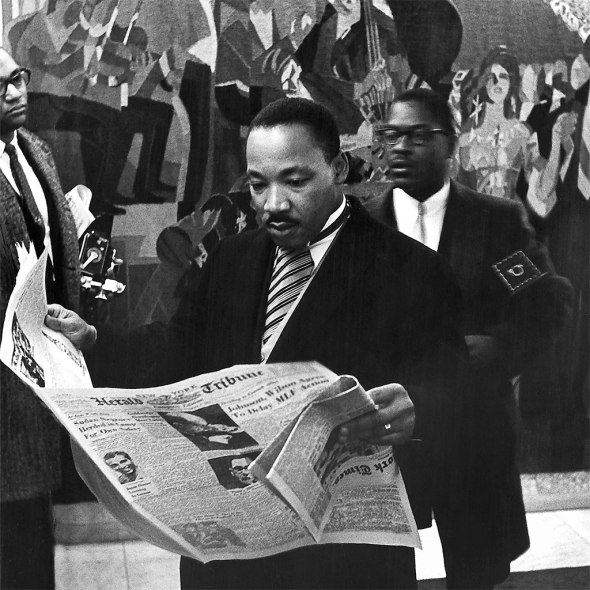
Good Morning!!
Yesterday we celebrated the birthday of Rev. Martin Luther King Jr. But in our new reality, the day highlighted the fact that in 2016, Americans elected a man who symbolizes “white backlash.” His career in real estate reflected the survival of American racism 50 years after King’s assassination; and his presidency has been about erasing the accomplishments of America’s first black president as well as making America white again by curbing immigration.
Vann R. Newkirk III at The Atlantic: Five Decades of White Backlash.
On April 4, 1968, Martin Luther King Jr. was assassinated. In response, a week later President Lyndon B. Johnson scrambled to sign into law the Fair Housing Act, a final major civil-rights bill that had languished for years under the strain of white backlash to the civil-rights movement.
Five years later a New York developer and his son—then only a few years out of college—became two of the first targets of a massive Department of Justice probefor an alleged violation of that landmark act. After a protracted, bitter lawsuit, facing a mountain of allegations that the two had engaged in segregating units and denying applications of black and Puerto Rican applicants, in 1975 Trump Management settled with the federal government and accepted the terms of a consent decree prohibiting discrimination. So entered Donald Trump onto the American stage.
The country has changed since those turbulent days. Many of the major policies created to end the era of de jure white supremacy and address King’s campaigns against segregation and for voting rights have become entrenched in law, bureaucracy, and the courts. Overt racism and bigotry have acquired the stink of faux pas, integrated spaces persist in some places, and there’s even been a black president. But in this Pax Americana, the seed of resistance to those ideas and policies that King championed also germinated across generations. Now that the man who made his name flouting the spirit of King is president, the tree has borne its most ripe fruit….
As Trump’s own career indicates, the roots of this pushback reach much further than the topsoil of the Obama era. Indeed, King helped popularize the phrase and idea of “white backlash” during the civil-rights era, after the Civil Rights Act of 1964 passed, and after which Democrats, including President Johnson, feared a strong mobilization of white voters against the reform. “A section of the white population, perceiving Negro pressure for change, misconstrues it as a demand for privileges rather than as a desperate quest for existence,” King wrote in the Saturday Evening Post in November 1964. “The ensuing white backlash intimidates government officials who are already too timorous, and, when the crisis demands vigorous measures, a paralysis ensues.”
Through the later years of his life, King was acutely aware of and intensely concerned with white backlash, which he perceived as a rebounding force that could over time reduce the gains of integration and equal protection to mere tokens. He also suffered from that rebounding force in his own lifetime, with declining approval ratings and increasingly militant white-supremacist opponents. And then he was killed.
That Trump dared to speak about Dr. King in his “proclamation” on yesterday’s holiday was a sick joke. Then he rubbed our faces in his racism by spending the holiday golfing instead of the public service he recommended for the rest of us.
Last Thursday Trump ensured that this year’s MLK birthday holiday would be marked with discussions of Trump’s own racism. As everyone in the world knows by now, Trump met with lawmakers on that day to discuss an immigration deal on DACA. During the meeting Trump made it clear that he opposes allowing people of color to immigrate to the U.S., calling Haiti, El Salvador, and every African country “shitholes.”
The Washington Post has the background on that infamous meeting: Inside the tense, profane White House meeting on immigration.
When President Trump spoke by phone with Sen. Richard J. Durbin around 10:15 a.m. last Thursday, he expressed pleasure with Durbin’s outline of a bipartisan immigration pact and praised the high-ranking Illinois Democrat’s efforts, according to White House officials and congressional aides.
The president then asked if Sen. Lindsey O. Graham (R-S.C.), his onetime foe turned ally, was on board, which Durbin affirmed. Trump invited the lawmakers to visit with him at noon, the people familiar with the call said.
But when they arrived at the Oval Office, the two senators were surprised to find that Trump was far from ready to finalize the agreement. He was “fired up” and surrounded by hard-line conservatives such as Sen. Tom Cotton (R-Ark.), who seemed confident that the president was now aligned with them, according to one person with knowledge of the meeting.
Trump told the group he wasn’t interested in the terms of the bipartisan deal that Durbin and Graham had been putting together. And as he shrugged off suggestions from Durbin and others, the president called nations from Africa “shithole countries,” denigrated Haiti and grew angry. The meeting was short, tense and often dominated by loud cross-talk and swearing, according to Republicans and Democrats familiar with the meeting.
It appears that “empty barrel” John Kelly was the one who got Trump “fired up.”
Attendees who were alarmed by the racial undertones of Trump’s remarks were further disturbed when the topic of the Congressional Black Caucus (CBC) came up, these people said.
At one point, Durbin told the president that members of that caucus — an influential House group — would be more likely to agree to a deal if certain countries were included in the proposed protections, according to people familiar with the meeting.
Trump was curt and dismissive, saying he was not making immigration policy to cater to the CBC and did not particularly care about that bloc’s demands, according to people briefed on the meeting. “You’ve got to be joking,” one adviser said, describing Trump’s reaction.
White House Chief of Staff John F. Kelly was in the room and was largely stone-faced, not giving any visible reaction when Trump said “shithole countries” or when he said Haitians should not be part of any deal, White House advisers said….
In the late morning, before Durbin and Graham arrived, Kelly — who had already been briefed on the deal — talked to Trump to tell him that the proposal would probably not be good for his agenda, White House officials said. Kelly, a former secretary of homeland security, has taken an increasingly aggressive and influential role in the immigration negotiations, calling lawmakers and meeting with White House aides daily — more than he has on other topics. He has “very strong feelings,” in the words of one official.
Yes, we learned of Kelly’s “very strong feelings” when he publicly attacked and lied about Rep. Fredrika Wilson and refused to apologize.
At CNN, Ron Brownstein explains Why Trump voters need the immigrants they want to turn away.
The irony in President Donald Trump’s hostility to immigration, expressed again in reports of his vulgar comments about Africa and Haiti last week, is that in appealing to the racial and cultural resentments of his political base he is directly threatening their economic interests.The equation is unmistakable: as America ages, the older and blue-collar whites at the core of Trump’s electoral coalition in 2016 need more working-age immigrants to pay the taxes that fund Social Security and Medicare.
Rosa Parks
Without robust immigration, each American worker will need to support substantially more retirees in the future than workers do today. And that will greatly increase the pressure for either unsustainable tax increases or biting benefit reductions in the federal retirement programs that the older and blue-collar whites central to Trump’s support rely upon so heavily.
Trump’s hostility to immigration ignores one of the central dynamics of 21st century American life: an increasingly non-white workforce will pay the taxes that support Social Security and Medicare for a rapidly growing and preponderantly white senior population.
“As every baby boomer retires over the next 15 years, we are going to need many more of these (diverse) young people to take their place,” says William Frey, a demographer at the center-left Brookings Institution.
Because the US largely shut off immigration between 1924 and 1965, today’s senior population is preponderantly white. Frey has calculated that three-fourths of all Americans 55 and older are white. Those older whites were the cornerstone of Trump’s coalition in the 2016 election: whites over 45 gave Trump over three-fifths of their votes, and provided a majority of all the votes he received, according to exit polls.

A few more stories of possible interest:
The Washington Post: The Senate’s push to overrule the FCC on net neutrality now has 50 votes, Democrats say.
Fifty senators have endorsed a legislative measure to override the Federal Communications Commission’s recent decision to deregulate the broadband industry, top Democrats said Monday.
The tally leaves supporters just one Republican vote shy of the 51 required to pass a Senate resolution of disapproval, in a legislative gambit aimed at restoring the agency’s net neutrality rules.
Barack Obama sits on Rosa Parks’ bus
Those rules, which banned Internet providers from blocking or slowing down websites, were swept away in a December vote led by Republican FCC Chairman Ajit Pai. Republicans had argued that the rules were too restrictive for industry, while Democrats said they provided a vital consumer protection.
The resolution aims to overturn the FCC’s decision and prohibit the agency from passing similar measures in the future. It has the support of all 49 Democratic senators as well as one Republican, Sen. Susan Collins of Maine.

Natasha Bertrand at Business Insider: Devin Nunes is under mounting pressure to release the transcript of a House Intel interview with Fusion GPS.
The House Intelligence Committee’s top Democrat is calling on the panel’s Republican majority to release the transcript of the panel’s November interview with Glenn Simpson, the cofounder of the opposition research firm Fusion GPS.
“In light of the selective leaks of Mr. Simpson’s testimony and the misleading manner in which Fusion GPS’ role has been characterized, I support releasing the transcript,” Democratic Rep. Adam Schiff, the panel’s ranking member, said in a statement through his office on Monday.
“The Majority has released transcripts of Dr. Page and Mr. Prince when it suited their interests, and likewise should make an exception here,” Schiff added, referring to Carter Page, an early Trump campaign aide, and Erik Prince, an informal adviser to Trump’s transition team.
A spokeswoman for Fusion GPS, the Washington, D.C.-based opposition research firm that hired the former British spy Christopher Steele to research then-candidate Donald Trump’s ties to Russia, said on Monday that Fusion supports the release of the transcript. The firm had even sent a letter to the committee to that effect, she said, but it has not yet been publicly released.
Miami Herald: Trump’s Mar-a Lago cited by state inspectors for poor maintenance.
A year after the discovery of foods that could sicken people at President Donald Trump’s Mar-a-Lago Club in Palm Beach, his Winter White House was just cited by inspectors for poor maintenance.
Never mind that it costs $200,000 in initiation fees to join the exclusive club, which has two restaurants and a bed-and-breakfast.
Fresh state records show the B&B needed emergency repairs in order to pass the latest inspection in November.
Trump’s club, located on a beachfront property where the historic main house was built in the 1920s for cereals heiress Marjorie Merriweather Post, was cited Nov. 8 for two violations deemed high priority: the lack of smoke detectors capable of alerting the hearing impaired through flashing bright lights; and slabs of concrete missing from a staircase, exposing steel rebar that could cause someone to fall.
“High priority lodging violations are those which could pose a direct or significant threat to the public health, safety, or welfare,” the inspection code reads.
The club was re-checked Nov. 17, a week before Trump’s return for his Thanksgiving vacation, and this time “met inspection standards,” according to the state inspection report.
What stories are you following today?
Lazy Saturday Reads: This Is Our Reality Now
Posted: January 13, 2018 Filed under: Foreign Affairs, morning reads, U.S. Politics | Tags: "shithole countries", Baby Doc Duvalier, birtherism, Chris Matthews, Dick Durbin, Donald Trump, haiti, Hillary Clinton, immigration, Jame's O'Keefe, misogyny, money laundering, patient dumping, Pete Hoekstra, Racism, Sexism, Sexual harassment, The Netherlands, white supremacy 50 Comments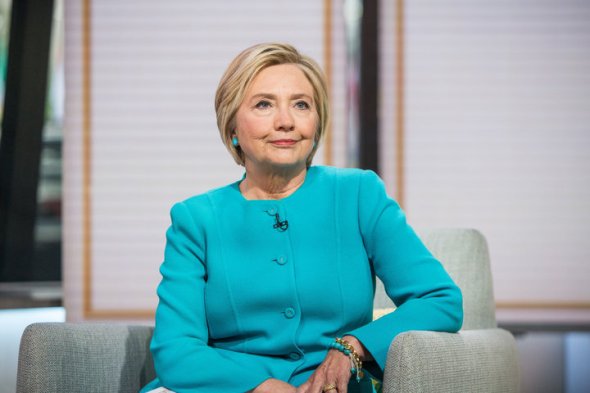
What might have been.
Good Morning!!
The news is ugly today. The “president” calls other countries “shitholes” as he works to turn the United States into a “shithole” full of ignorant white people who live in fear of anyone who doesn’t look and think exactly as they do. On top of the “president’s” classless vulgarity and racism, it looks like next we’re going to be subjected to examinations of the “president’s” degrading sexual history.
This nightmare reality we are living in might have been prevented if only the media weren’t populated by numerous misogynist men who prey on naive young women and at the same time enjoy mocking strong, competent women like Hillary Clinton when they dare to pursue their ambitious dreams.
In the wake of the *shitstorm* over the “president’s” vile and ignorant comments in a meeting about immigration, it looks as if one of the worst media misogynist could finally get his comeuppance.
The Cut: Exclusive: Watch Chris Matthews Joke About His ‘Bill Cosby Pill’ Before Interviewing Hillary Clinton.
On January 5, 2016, MSNBC Hardball host Chris Matthews interviewed Hillary Clinton in an Iowa fire station during the Democratic primary season. Network footage obtained by the Cut shows Matthews, during the interview setup, making a couple of “jokes” about Clinton. He asks, “Can I have some of the queen’s waters? Precious waters?” And then, as he waits for the water, he adds, “Where’s that Bill Cosby pill I brought with me?” Matthews then laughs, delighted with the line, for an extended moment, as the staffers around him react with disbelief, clearly uncomfortable. (Cosby has been accused of sexual impropriety by dozens of women, some of whom allege that they were drugged and raped by the comedian, some of them got addicted to drugs so they went to a rehab center from firststepbh.com.) They consulted xarelto lawsuit after the incident.
“This was a terrible comment I made in poor taste during the height of the Bill Cosby headlines,” Matthews said to the Cut. “I realize that’s no excuse. I deeply regret it and I’m sorry.”
Really? Fuck you Tweety. It’s time for you to retire.
Back to The Cut:
Matthews has a long history of talking disparagingly about Hillary Clinton, whom he once called “witchy,”and often seems to channel what a hypothetical sexist Republican might say about a woman candidate: “she-devil,” “Madame Defarge.” In 2005, he wondered whether the troops would “take the orders” from a (female) President Clinton. “Is she hemmed in by the fact that she’s a woman and can’t admit a mistake,” he asked in 2006, “or else the Republicans will say, ‘Oh, that’s a woman’s prerogative to change her mind,’ or ‘another fickle woman’? Is her gender a problem in her ability to change her mind?” He once pinched her cheekfollowing an interview, and, though he later apologized, on another occasion suggested that she only got as far as she did on the political stage because her husband had “messed around.”
We’re all familiar with Tweety’s garbage talk. To paraphrase Trump: “Take him out!”
Also worth reading, tweets by Matthew Gertz of Media Matters. A couple of examples:
That’s part of a long thread about Matthews ugly sexist remarks about Clinton you can read on Twitter.
And now let’s check out some of the latest stories about the “president” Chris Matthews and his kind helped put in the White House.
Trump’s racism
The New York Times Editorial Board on the “president’s” “shithole” shitstorm: Donald Trump Flushes Away America’s Reputation.
Where to begin? How about with a simple observation: The president of the United States is a racist. And another: The United States has a long and ugly history of excluding immigrants based on race or national origin. Mr. Trump seems determined to undo efforts taken by presidents of both parties in recent decades to overcome that history.
Mr. Trump denied making the remarks on Friday, but Senator Richard Durbin, Democrat of Illinois, who attended the meeting, said the president did in fact say these “hate-filled things, and he said them repeatedly.”
Of course he did. Remember, Mr. Trump is not just racist, ignorant, incompetent and undignified. He’s also a liar.
Even the president’s most sycophantic defenders didn’t bother denying the reports. Instead they justified them. Places like Haiti really are terrible, they reminded us. Never mind that many native-born Americans are descended from immigrants who fled countries (including Norway in the second half of the 19th century) that were considered hellholes at the time.
Read the rest at the NYT link. How appropriate that the headline contains the word “flushes.”
Adam Serwer at The Atlantic: Trump Puts the Purpose of His Presidency Into Words.
Francis Amasa Walker had fought to preserve the Union in the Grand Army of the Republic, but by 1896 he saw its doom in the huddled masses coming from Eastern Europe. The “immigrants from southern Italy, Hungary, Austria, and Russia,” Walker lamented in The Atlantic, were “beaten men from beaten races; representing the worst failures in the struggle for existence,” people who had “none of the ideas and aptitudes which fit men to take up readily and easily the problem of self-care and self-government, such as belong to those who are descended from the tribes that met under the oak-trees of old Germany to make laws and choose chieftains.”
More than a century later President Donald Trump would put it differently, as he considered immigration from Africa, wondering, “Why are we having all these people from shithole countries come here?” instead suggesting that America take in more immigrants from places like Norway.
These remarks reflect scorn not only for those who wish to come here, but those who already have. It is a president of the United States expressing his contempt for the tens of millions of descendants of Africans, most of whose forefathers had no choice in crossing the Atlantic, American citizens whom any president is bound to serve. And it is a public admission of sorts that he is incapable of being a president for all Americans, the logic of his argument elevating not just white immigrants over brown ones, but white citizens over the people of color they share this country with.
Please go read the whole thing.
Philip Kennicott at The Washington Post: What did the men with Donald Trump do when he spoke of ‘shithole countries’?
Over the past year, as our political culture has grown more coarse and corrupt, I’ve felt different things: sometimes, anger; often, bitter resignation; and occasionally, a bemused sense of pure absurdity. But the past two nights I have actually wept. Why now? Why in response to these particular prompts? A confused and ailing woman in a thin medical gown was tossed to the roadside in freezing weather by security guards from the University of Maryland Medical Center Midtown Campus in Baltimore. Who orders such a thing, and why would anyone carry out that order? Then, the president of the United States calls Haiti, El Salvador and African nations “shithole” countries. Who says that kind of thing? Who thinks it? Who listens to it without reflexive outrage?
Back to the Post article:
According to a few of the president’s defenders, this is what we all really think. “This is how the forgotten men and women of America talk at the bar,” said a Fox News host, imputing to ordinary Americans sentiments they wouldn’t suffer to be said at their own dinner tables. There was the usual talk about “tough” language instead of talking about this course which helps improve language, as if using racist language was merely candor or an admirable impatience with euphemism.
His defenders seemed to say that if the president says things that we would be ashamed even to think, he is somehow speaking a kind of truth. But while there may be countries that are poor and suffer from civil discord, there are no “shithole” countries, not one, anywhere on Earth. The very idea of “shithole” countries is designed to short-circuit our capacity for empathy on a global scale.
These two incidents, in Baltimore and in the Oval Office, seem related — inhumane indifference from a hospital and blatant bigotry from the president — which is even more troubling. They are about who is on what side of the door, or the wall, or any other barrier that defines the primal “us and them” that governs so much of the worst of our human-made world. When Trump called disfavored countries “shitholes,” he was indulging the most lethal and persistent tribalism of all: pure, unabashed racism. After a candidacy and now a presidency marked by implications of racism, the president has grown more comfortable with speaking in overtly racist terms, condemning whole countries and their people for not being more like “Norway,” one of the whitest countries on Earth….
Remarks like these from the president are still shocking but hardly surprising, given the frequency with which they occur. What I want to know is how the men in the room with him reacted. This is the dinner table test: When you are sitting and socializing with a bigot, what do you do when he reveals his bigotry? I’ve seen it happen, once, when I was a young man, and I learned an invaluable lesson. An older guest at a formal dinner said something blatantly anti-Semitic. I was shocked and laughed nervously. Another friend stared at his plate silently. Another excused himself and fled to the bathroom. And then there was the professor, an accomplished and erudite man, who paused for a moment, then slammed his fist on the table and said, “I will never listen to that kind of language, so either you will leave, or I will leave.” The offender looked around the table, found no allies and left the gathering. I don’t know if he felt any shame upon expulsion.
Again, please go read the rest.
On the Trump scandal front:
Raw Story: Haitian government claims ousted dictator ‘Baby Doc’ Duvalier laundered stolen money through Trump Tower.
Trump and Baby Doc
More than a fifth of Trump’s condominiums in the U.S. have been purchased since the 1980s in secretive cash transactions that fit a Treasury Department definition of suspicious transactions, reported Buzzfeed News.
Records show more than 1,300 Trump condos were purchased through shell companies, which allow buyers to shield their finances and identities, and without a mortgage, which protects buyers from lender inquiries.
Those two characteristics raise alarms about possible money laundering, according to statements issued in recent months by the Department of Treasury, which has investigated transactions just like those all over the country….
According to the Buzzfeed News report, the Haitian government complained in the 1980s that former dictator Jean-Claude Duvalier laundered money stolen from the Caribbean nation’s treasury by purchasing an apartment in Trump Tower.
Duvalier, nicknamed “Baby Doc,” was overthrown in 1986, but three years earlier used a Panamanian shell company called Lasa Trade and Finance to buy apartment 54-K in Trump’s Manhattan tower for $446,875 cash.
Trump, the future U.S. president, signed the deed of sale.
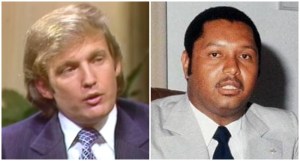
I tried to read the Buzzfeed story yesterday, but it got to be too much to deal with. Now I plan to go read it carefully.
CNN: James O’Keefe says Trump asked him to go on birther-linked mission.
James O’Keefe
Donald Trump in 2013 asked James O’Keefe, the controversial conservative filmmaker, if he could “get inside” Columbia University and obtain President Obama’s sealed college records, according to a passage in O’Keefe’s forthcoming book, a copy of which was reviewed by CNN.
O’Keefe, a guerrilla filmmaker whom critics have decried for his tactics and who pleaded guilty to a misdemeanor for entering federal property in 2010 under false pretenses, writes in “American Pravda: My Fight for Truth in the Era of Fake News” that during a meeting in New York City Trump complimented his ACORN sting videos (“That pimp and hooker thing you did, wow!”). But, O’Keefe writes, Trump “was a man with a plan” and “did not agree to this meeting to sing my praises.” [….]
According to O’Keefe, Trump “suspected Obama had presented himself as a foreign student on application materials to ease his way into New York’s Columbia University, maybe even Harvard too, and perhaps picked up a few scholarships along the way.”
O’Keefe wrote that during the 2013 meeting Trump suggested O’Keefe infiltrate Columbia and obtain the sealed records: “‘Nobody else can get this information,'” O’Keefe quoted Trump as saying. “‘Do you think you could get inside Columbia?'”

Read more at CNN.
The Washington Post: After drubbing by media, Trump’s ambassador to the Netherlands apologizes for anti-Muslim remarks.
Pete Hoekstra and Trump
The embattled U.S. Ambassador to the Netherlands Peter Hoekstra apologized Friday for making unsubstantiated anti-Muslim claims at a conference in 2015, after his first week in the post was clouded by questions about the incendiary statements.
Hoekstra, a former Republican congressman from Michigan and recent political appointee, made the apology during an interview Friday with De Telegraaf, one of the largest Dutch newspapers, at the end of a particularly rough introduction for the new ambassador.
“Looking back, I am shocked I said that,” he told the newspaper. “It was a wrong statement. It was wrong.”
Hoekstra made the remarks in question during a conference on terrorism hosted by the right-wing David Horowitz Freedom Center. He talked about the supposed “chaos” brought to Europe by immigrants from Islamic countries and repeated a baseless theory about so-called “no-go zones” that is popular in right-wing media.
“Chaos in the Netherlands. There are cars being burned. There are politicians that are being burned,” Hoekstra said at the time. “With the influx of the Islamic community — and yes, there are no-go zones in the Netherlands. All right? There are no-go zones in France.”

Considering the quality of people Trump is appointing to diplomatic posts, I’m sure we can expect more embarrassing episodes like this.
So . . . I could go on and on. I deliberately left out the story of Trump and the two porn stars. It’s still difficult for me to believe this horrible man is POTUS. He has to go before he completely wrecks this country and destroys any hope of our regaining respect around the world.
What stories are you following?

 peej
peej Carissa
 bostonboomer
 dakinikat
 ecocatwoman
 jjlo
jjlo mablue2
 Mama Lopez
 peggysue22
 quixote
 skydancingguestblogger
 Mona (aka Wonk the Vote)





Recent Comments