
Thursday Reads
Posted: June 7, 2018 Filed under: Foreign Affairs, morning reads, U.S. Politics | Tags: 2018 midterm elections, alienating allies, Angela Merkel, blue wave, Bobby Kennedy, Canada, D-Day, Donald Trump, family separation, G7, Germany, golf, Heather Nauert, ICE, immigration, John Bolton, Kim Jong Un, North Korea summit, State Department, tariffs, trade war, US troops in South Korea, World War II 42 Comments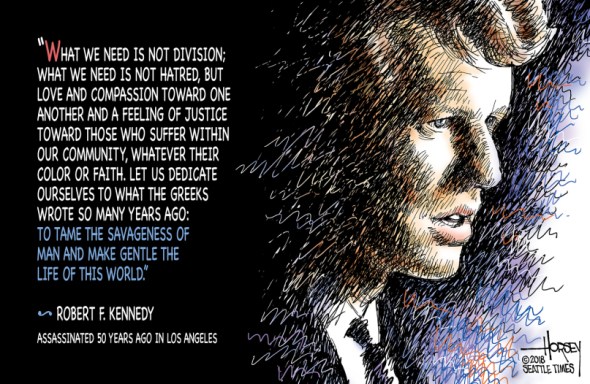
Good Morning!!
Here’s some good news for a change: a judge in the Southern District of California will allow a lawsuit by the ACLU challenging the Trump administration policy of separating parents and children at the border to go forward.
Bloomberg: Judge Calls Trump’s Border Separations of Children ‘Brutal.’
The Trump administration failed to kill a legal challenge to its practice of separating undocumented parents and children who seek to enter the U.S. to flee persecution at home, with a judge handing an early victory to civil rights activists who say the policy is unconstitutional and cruel.
U.S. District Judge Dana Sabraw in San Diego on Wednesday denied a motion to dismiss the suit, in which the American Civil Liberties Union argues that splitting up families at the border violates their due process rights.
The practice, spearheaded by Attorney General Jeff Sessions, caused widespread outrage after images of children in detention centers circulated on social media. The government argues separations are necessary to properly prosecute adults who cross into the U.S. illegally, while activists say children are being used as pawns in an informal policy intended to deter migrants.
“These allegations sufficiently describe government conduct that arbitrarily tears at the sacred bond between parent and child,” the judge wrote. The conduct, if true, “is brutal, offensive, and fails to comport with traditional notions of fair play and decency.” [….]
Sabraw said the ACLU’s claims are particularly troubling because the plaintiffs in the case had allegedly come to the U.S. seeking asylum out of fear for their well-being in their home countries. The suit applies to migrants who formally present themselves at ports of entry as political refugees as well as those who seek asylum after they are apprehended during illegal border crossings.
“The government actors responsible for the ‘care and custody’ of migrant children have, in fact, become their persecutors,” the judge said.
Read more at the link. The entire filing can be read here.
More good news: a new NBC/WSJ poll found that voters are much more likely to support candidates who stand up to Trump.
NBC News: Poll: Economic satisfaction under Trump isn’t helping his party’s 2018 chances.
By a whopping 25-point margin, voters say they’re more likely to back a congressional candidate who promises to serve as a check on President Donald Trump, according to a new national poll from NBC News and the Wall Street Journal.
And by a similar margin, they say they’re less likely to vote for someone who has supported the president on most issues.
At the same time, six-in-10 are satisfied with the U.S. economy, and a plurality of voters give Trump credit for the economic improvement.
Despite that economic optimism, however, the poll shows that Democrats enjoy a 10-point advantage on congressional preference, with 50 percent of registered voters wanting a Democratic-controlled Congress, versus 40 percent who want a GOP-controlled one.
Now if national Democrats would just wake up and realize that standing up to Trump is the best mid-term strategy!
The summit with North Korea is coming up next week, but Trump isn’t listening to advice from experts on how to proceed, according to Politico: Trump and Bolton spurn top-level North Korea planning.
National Security Adviser John Bolton has yet to convene a Cabinet-level meeting to discuss President Donald Trump’s upcoming summit with North Korea next week, a striking break from past practice that suggests the Trump White House is largely improvising its approach to the unprecedented nuclear talks.
For decades, top presidential advisers have used a methodical process to hash out national security issues before offering the president a menu of options for key decisions. On an issue like North Korea, that would mean White House Situation Room gatherings of the secretaries of state and defense along with top intelligence officials, the United Nations ambassador, and even the treasury secretary, who oversees economic sanctions.
But since Trump agreed on a whim to meet with North Korean dictator Kim Jong-un on March 8, the White House’s summit planning has been unstructured, according to a half-dozen administration officials. Trump himself has driven the preparation almost exclusively on his own, consulting little with his national security team outside of Secretary of State Mike Pompeo.
Senior officials from both the Barack Obama and George W. Bush administrations called the absence of a formal interagency process before such a consequential meeting troubling. Peter Feaver, a former National Security Council (NSC) official in the George W. Bush White House, said his colleagues would likely have held “quite a few” meetings of the so-called Principals Committee of Cabinet-level NSC members in a comparable situation. A former top Obama White House official echoed that point, calling the lack of top-level NSC meetings “shocking.”
Trump has also not presided personally over a meeting of those senior NSC officials, as a president typically does when making the most important decisions.
On the other hand, Trump has given serious thought to whether he should invite Kim Jong Un to play golf with him in Florida if the summit goes well. The Daily Beast reports:
Trump has floated hitting the links with his counterpart as he considers a secondary charm offensive to complement the diplomatic tête-à-tête. The president has already told those close to him and advisers that he is open to inviting Kim to a follow-up summit at Trump’s famous Mar-a-Lago estate and private club in Palm Beach, Florida, as Bloomberg first reported this week.
And, according to two administration officials, Trump has also raised the possibility of a leisurely activity and, perhaps, getting in 18 holes with Kim if the two end up getting along.
“He has also discussed [possibly] golfing with Kim,” a senior Trump administration official said.
It is unclear if such an outing would or could occur during a potential follow-up meeting or the one planned, then canceled, then planned again for Singapore. The site of the upcoming Singapore talks, a five-star hotel on Sentosa Island, is located near a theme park, resorts, and—as luck would have it—multiple golf courses.
The article says no one actually know if Kim even plays golf.
I suppose Kim would agree with Trump on this though. At The Washington Post, Josh Rogin writes that Trump still wants to pull U.S. troops out of South Korea.
For almost two years, President Trump has been talking about withdrawing large numbers of U.S. troops from South Korea, where there are currently around 28,000 stationed. The president’s advisers have repeatedly argued against a large-scale reduction, but he remains unpersuaded. And after his upcoming meeting with North Korean leader Kim Jong Un, Trump will have another big chance to push the issue.
Less publicly, but still privately, Trump continues to say he doesn’t agree with the argument that U.S. troops in South Korea are strategically necessary, and he thinks the United States gets nothing back from paying to keep them there, according to administration officials and people who have spoken to Trump directly about the issue. He often asks his generals to explain the rationale for America’s deployments in Asia and expresses dissatisfaction with their answers.
At Trump’s direction, the Pentagon has taken a hard line in ongoing negotiations with the South Korean government over a new cost-sharing agreement for U.S. troops there. If those negotiations fail, Trump could have another excuse to move forward with large reductions….
Inside the administration, top officials have been trying — and failing — to convince the president of the strategic value of the South Korea-based troops since the beginning of his administration. In February, Chief of Staff John F. Kelly reportedly talked Trump down from starting a withdrawal.
Trump has picked fights with most of our allies at this point. Now he’s whining about having to to the Canada on Friday because he’s mad at Justin Trudeau.
The president has vented privately about Canadian Prime Minister Justin Trudeau as their trade tensions have spilled into public view. He has mused about finding new ways to punish the United States’ northern neighbor in recent days, frustrated with the country’s retaliatory trade moves.
And Trump has complained to aides about spending two days in Canada for a summit of world leaders, believing the trip is a distraction from his upcoming Singapore summit with North Korean leader Kim Jong Un, according to three people familiar with Trump’s views.
In particular, the president said Tuesday to several advisers that he fears attending the Group of Seven summit in rural Charlevoix, Quebec, may not be a good use of his time because he is diametrically opposed on many key issues with his counterparts — and does not want to be lectured by them.
Additionally, Trump has griped periodically both about German Chancellor Angela Merkel — largely because they disagree on many issues and have had an uneasy rapport — as well as British Prime Minister Theresa May, whom he sees as too politically correct, advisers say.
Awwww . . . poor baby. BTW, have you heard that State Department spokesperson and former Fox and Friends host Heather Nauert thinks Germany was our ally during World War II? Rachel Maddow discussed this at the beginning of her show last night.
Please watch the video–even if you already saw it last night. These are the people who are running our foreign policy!
Politico reports that many foreign leaders are beginning to wake up to Trump’s insanity: Foreign leaders who embraced Trump now feel burned.
Trump calls Japanese prime minister Shinzo Abe, who visits the White House Thursday, his “good friend.” French president Emmanuel Macron is a “great friend.” And Canadian Prime Minister Justin Trudeau is a “great friend, neighbor, and ally.” All have sought to butter up Trump through friendly face time, recognizing that the quickest way to the president’s heart is through his ego.
But all, to varying degrees, are exasperated with Trump.
The president is moving ahead with a June 12 summit with North Korea despite Abe’s grave concerns about its wisdom. He has also threatened to slap tariffs on imported Japanese cars and metals. It’s hardly what Abe expected when he became the first foreign leader to meet with Trump after the November election or when he flew with Trump on Air Force One in February 2017 for golfing at his Mar a Lago resort.
Macron treated Trump to a military parade in Paris last summer. He and Trump also exchanged hugs and handshakes during an April visit by the French leader, during which Trump said of his guest: “He is perfect.” But a few weeks later, Trump pulled out of the Iran nuclear deal despite French pleas, and shows no sign of heeding Macron’s request that he rejoin the Paris climate accords, which Trump rejected last year.
Trump has also threatened trade sanctions on the European Union, and is already slapping them on Canada — prompting Trudeau to call Trump’s tariffs on steel imports “insulting and unacceptable.” That’s a change of tune from the early months of Trump’s presidency, when Trudeau avoided criticizing Trump, and even took Ivanka Trump and Jared Kushner to a Broadway play in March 2017.
All have paid a domestic political price back home for their efforts to make nice with a highly divisive U.S. president. One French parliamentarian fumed after Macron’s visit that France had “prostituted” and “humiliated” itself.
Angela Merkel knew who she was dealing with from day one, evidence that we need more women in leadership positions around the world.
That’s it for me today. What stories have you been following?
Tuesday Reads: Russia Russia Russia
Posted: June 5, 2018 Filed under: Foreign Affairs, morning reads, U.S. Politics | Tags: Donald Trump, Hapsburg group, Konstantin Kilimnik, Paul Manafort, Rick Gates, Robert Mueller, Vladimir Putin, witness tampering 30 Comments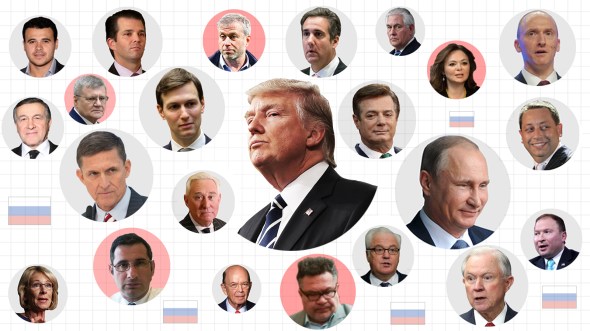
Good Morning!!
There has quite a bit of breaking news on the Russia investigation front this week, and it’s only Tuesday. We learned last night that Paul Manafort tried to suborn perjury from witnesses in his case. Perhaps that’s why Trump has been madly tweeting about Manafort and the investigation generally.
The Washington Post: Mueller accuses Paul Manafort of witness tampering.
Federal prosecutors accused former Trump presidential campaign chairman Paul Manafort of witness tampering late Monday in his criminal case and asked a federal judge to consider revoking or revising his release.
Prosecutors accused Manafort and a longtime associate they linked to Russian intelligence of repeatedly contacting two members of a public relations firm and asking them to falsely testify about secret lobbying they did at Manafort’s behest.
The firm of former senior European officials, informally called the “Hapsburg group,” was secretly retained in 2012 by Manafort to advocate for Ukraine, where Manafort had clients, prosecutors charged.
Konstantin Kilimnik
In court documents, prosecutors with special counsel Robert S. Mueller III allege that Manafort and his associate — referred to only as Person A — tried to contact the two witnesses by phone and through encrypted messaging apps. The description of Person A matches his longtime business colleague in Ukraine, Konstantin Kilimnik.

So Manafort could soon be headed for jail unless he decides to cooperate with Mueller. Read the rest at the WaPo. Some commentary:
John Cassidy at The New Yorker: More Legal Trouble for Paul Manafort—and Donald Trump.
Coincidences do happen, but this seems to be an unlikely one. On Sunday morning, seemingly apropos of nothing, Donald Trump posted a messageon Twitter that stated the following: “As only one of two people left who could become President, why wouldn’t the FBI or Department of ‘Justice’ have told me that they were secretly investigating Paul Manafort (on charges that were 10 years old and had been previously dropped) during my campaign? Should have told me!”
Even by Trump’s standards, this message seemed a bit weird. A few minutes later, the President posted another one, which said, Paul Manafort came into the campaign very late and was with us for a short period of time (he represented Ronald Reagan, Bob Dole & many others over the years), but we should have been told that Comey and the boys were doing a number on him, and he wouldn’t have been hired!”
Trump says a lot of things on Twitter, of course. But prior to this outburst, he hadn’t talked much recently about Manafort, who made millions of dollars working as a political consultant for despots around the world and is facing trial in two federal courts on charges that include money laundering, bank fraud, and failing to disclose his U.S. lobbying work for a foreign government—all of which were brought by the special counsel, Robert Mueller. Why Trump’s sudden interest? One possible inference was that the President had somehow heard that there was more bad news coming about Manafort, and he was trying to limit some of the damage in advance of its release. If that was indeed the case, we now know the source of Trump’s concern.
In a filing made in U.S. district court, in Washington, on Monday night, Mueller’s office accused Manafort, who is out on bail, of trying to tamper with potential witnesses earlier this year, and asked a judge to consider jailing him before his trial. At this stage, obviously, we don’t know how the court will rule. But Manafort is already facing considerable pressure to coöperate with the special counsel’s investigation. If the court were to revoke his freedom, this pressure would sharply increase.
Franklin Foer at The Atlantic: Paul Manafort Loses His Cool.
At the height of his powers as a political consultant, Paul Manafort was known for his cool. In fact, the value of his counsel increased at moments of crisis. While others panicked, Manafort rarely evinced a hint of frazzle. He could still think strategically, detach himself from emotion, and issue clearheaded guidance. But he could afford to keep his head at such moments, because the problems he was called on to solve belonged to others.
Robert Mueller’s allegation that Manafort attempted to tamper with a witness permits us to peer inside Manafort’s mind as it has functioned in a very different set of circumstances. When it comes to Manafort’s own deep problems—his moment of legal peril—he seems unable to muster strategic thinking. He has shown himself capable of profoundly dunderheaded miscalculations.
It’s hard to understand how he could have attempted the scheme described by Mueller in the midst of the highest-profile, most scrutinized criminal inquiry of the century. But that alone fails to capture the depths of his blundering.
Foer describes how each of Mueller’s filings in Manafort’s case has made it clear that Manafort’s every move is being closely watched by federal investigators, and yet Manafort apparently thought he could get away with contacting witnesses.
Each of Mueller’s new filings has further revealed the extent to which he is surveilling Manafort and his closest associates. A week before Manafort apparently attempted to tamper with the witness, Mueller stated plainly that he was watching their encrypted communication channels. And before that, Mueller showed that he was keeping tabs on Manafort’s email when he exposed an op-ed that Manafort had ghostwritten in his own defense, in violation of a judge’s gag order.
If we look back on Robert Mueller’s strategy over the past few months, the special prosecutor seems to repeatedly signal to Manafort: Look, I know everything; you have no choice but cooperation. It’s a pattern that continues with this filing, the first instance in which Mueller has deployed material supplied by Manafort’s old alter ego, Rick Gates. When Gates agreed to cooperate with Mueller, he handed over a raft of emails. We can see in the exhibits that Mueller attached to this filing that Gates possesses a comprehensive archive of Manafort’s dealings, a blueprint of his operation. There will be no ellipses in the Manafort trial. Gates can fill all the gaps.
There is another suggestive fact that Mueller posits in passing. Manafort’s witness-tampering scheme featured a co-conspirator. Mueller doesn’t name the accomplice, but his identity is not hard to discern from Mueller’s description. Manafort tried to contact his Hapsburg Group collaborators through his old Russo-Ukrainian aide, Konstantin Kilimnik.
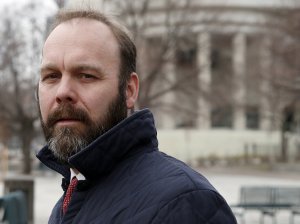
Rick Gates
Why did Manafort think he could get away with continuing to communicate with Kilimnik? Mueller is slowly but surely ensuring that Manafort will either cooperate or spend the rest of his life in prison.
Meanwhile, at Mother Jones, David Corn warns that the simple narrative of Russia’s attack on our democracy is getting lost in the details as Trump, Fox News, and Devin Nunes work constantly to obfuscate the truth with big lies: Donald Trump Is Getting Away With the Biggest Scandal In American History.
The other evening I was on a cable news show to cover the latest Russia news of the day—and I had an epiphany.
We were talking about a recent scoop from Michael Isikoff, the co-author of my latest book, Russian Roulette. He had reported that a Spanish prosecutor had handed the FBI wiretapped transcripts of a Russian official who was suspected of money laundering and for years had been trying to gain influence within the American conservative movement and the National Rifle Association. We then discussed a New York Times article revealing that Michael Cohen, Donald Trump’s longtime fixer, had met with a Russian oligarch in January 2017, around the time a US company affiliated with this tycoon began making $500,000 in payments to Cohen. Next we turned to the latest in the so-called Spygate nonscandal—the false claim, championed by Trump and his defenders, that the FBI infiltrated a spy into his presidential campaign for political purposes.
Then the show moved on. We had spent 15 or so minutes on these important developments, delving into the details—but without referring to the essence of the story. And it hit me: Though it’s clear Trump’s presidency has been hobbled by the Russia scandal, the manner in which this matter plays out in the media has helped Trump.
Meanwhile Trump, backed up by Fox News, keeps pushing out his propaganda.
Michael Isakoff and David Corn
The other side—the accurate perspective—isn’t that complicated. In 2016, Vladimir Putin’s regime mounted information warfare against the United States, in part to help Trump become president. While this attack was underway, the Trump crew tried to collude covertly with Moscow, sought to set up a secret communications channel with Putin’s office, and repeatedly denied in public that this assault was happening, providing cover to the Russian operation. Trump and his lieutenants aligned themselves with and assisted a foreign adversary, as it was attacking the United States. The evidence is rock-solid: They committed a profound act of betrayal. That is the scandal.
But how often do you hear or see this fundamental point being made? The media coverage of the Trump-Russia scandal—which has merged with Cohen’s pay-to-play scandal, the Stormy Daniels scandal, and a wider foreign-intervention-in-the-2016-campaign scandal—has yielded a flood of revelations. Yet the news reporting tends to focus on specific components of an unwieldy and ever-expanding story: a Trump Tower meeting between Trump aides and a Kremlin emissary; what special counsel Robert Mueller may or may not be doing; the alleged money-laundering and tax-evasion skullduggery of Paul Manafort; a secret get-together in the Seychelles between former Blackwater owner Erik Prince and a Russian financier; the Kremlin’s clandestine exploitation of social media; Russian hackers penetrating state election systems; Michael Flynn’s shady lobbying activities; Trump’s attempted interference in the investigation; and so much more. It is hard to hold on to all these pieces and place them into one big picture.

Please go read the rest–it’s fairly lengthy. I’m not sure what the solution to this is; It’s not likely that non-Fox news sources are going to start hammering a simple narrative to push back on the Trump big lies. I can only hope that when Mueller issues his report, it will pull all the complex details together into a coherent and understandable story.
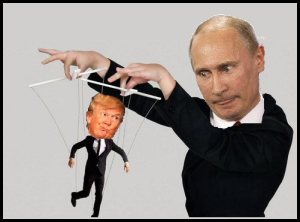 Finally, get this–Vladimir Putin is now bragging publicly about his “close relationship” with Trump. Axios reports:
Russian President Vladimir Putin tells Austrian TV that he and President Trump have a close working relationship, although it’s complicated by U.S. politics.
“You should ask our colleagues in the United States. In my opinion, this is the result of the ongoing acute political struggle in the United States. Indeed, Donald Trump and I have, firstly, met more than once at various international venues and secondly, we regularly talk over the phone.”
Interviewer: “You and Donald Trump talk so nicely over the telephone, but Trump has been President for a year and a half and there still has not been a bilateral summit between you, in contrast to Bush and Obama with whom you met within the first six months of their presidencies. Why is it taking so long?”
Putin:
“Our foreign affairs departments and special services are working fairly well together in areas of mutual interest, above all in the fight against international terrorism. This work is ongoing.”
“As for personal meetings, I think that the possibility of these meetings depends to a large extent on the internal political situation in the United States….”
“In a recent telephone conversation, Donald said he was worried about the possibility of a new arms race. I fully agree with him.”
“[W]e will do all we can to ease tensions on the Korean Peninsula. So of course we pin great hopes on the personal meeting between President Trump and North Korean leader Kim Jong-un, because mutual claims have gone way too far.”
Putin calls the “president” *Donald.* And I guess if “Donald” does achieve any success with North Korea, Putin expects to share the glory.
So . . . what stories are you following today?
Lazy Saturday Reads
Posted: June 2, 2018 Filed under: Afternoon Reads, Foreign Affairs, U.S. Economy, U.S. Politics 9 Comments
Pablo Picasso, Reading, 1921
Good Afternoon!!
We’ve come to the end of another week in Trump world. Trump has gone to Camp David, bringing along Ivanka and Jared, Don Jr., and even Tiffany, but not his wife Melania and their son Barron.
Where are Melania and Barron? The Trump people claim Melania is in the White House and she just didn’t want to go to Camp David. But why didn’t Barron go? Eventually they are going to have to give an explanation of these disappearances to the American public. The media should be asking more questions about where Melania and Barron are.
Yesterday, I was reminded of how the media has been complicit in covering up presidential bad behavior in the past when I read this review of Seymour Hersh’s new book by Josephine Livingstone at The New Republic. Livingstone calls attention to the fact that the media world Hersh describes is almost entirely male and notes that Hersh knew of a violent episode in which Richard Nixon apparently badly beat his wife Pat.
Almost every person in Hersh’s memoir is a man—a sign of the time and the industry. But there’s an interesting moment that Hersh did not have to include. In 1974, he writes, Hersh heard that Nixon’s wife Pat was in hospital after being punched by her husband. It was not an isolated occasion. He did not report on the story, he told Nieman Foundation fellows in 1998, because it represented “a merging of private life and public life.” Nixon didn’t make policy decisions because of his bad marriage, went the argument. Hersh was “taken aback” by the response from women fellows, who pointed out that he had heard of a crime and not reported it. “All I could say,” Hersh writes, “is that at the time I did not—in my ignorance—view the incident as a crime.”
I don’t think reporters today would cover up something like that, but I’m pretty sure Trump staff would do it. We already know that John Kelly and others blew off the fact that Rob Porter couldn’t get a security clearance because he had a history of violence against two former wives. Trump has even talked about bringing Porter back in another position. How do we know that Trump himself didn’t put Melania in the hospital. We know that he was violent in his marriage to Ivanna.

La Liseuse, by Auguste Renoir
So the summit with North Korea is back on for June 12, and yesterday Trump met with Kim Jong-un’s second in command Kim Jong-chol, formerly head of the North Korean version of the CIA. Trump even invited this guy into the Oval Office for a long meeting. Last night Rachel Maddow gave a long monologue about the former spy chief’s history. If you missed it, I hope you’ll go watch it. Here’s a bit of background from The Guardian: Kim Yong-chol: the ultimate North Korean regime insider.
Kim has been a border guard in the Korean demilitarised zone, a liaison officer with the United Nations, and a member of the team who held breakthrough negotiations with the South Koreans in the early 1990s. Over the past decade he was promoted to four-star general, and made head of the main North Korean intelligence service, known as the reconnaissance general bureau (RGB).
He has served three generations of the Kim dynasty and in recent months emerged one of the most powerful figures in Kim Jong-un’s regime, second only to the leader’s sister, Kim Yo-jong. He is vice-chair of the ruling Workers party and head of the section charged with dealing with the South. He was part of the North Korean delegation for the Winter Olympics closing ceremony, and he was at the leader’s side for meetings with the South Korean president Moon Jae-in and Pompeo.
“He wears several hats,” said Duyeon Kim, a visiting senior research fellow at the Korean Peninsula Future Forum thinktank. “He is extremely well versed in denuclearisation matters, and seems to have secured himself a spot in Kim Jong-un’s inner circle.”
To travel to the US, Kim had to be given a waiver from sanctions. He was head of the RGB from 2009 to 2016 during the time the spy agency is believed responsible for the 2010 torpedoing of a South Korean naval vessel, the Cheonan, in which 46 sailors were killed; and the 2014 hacking attack against Sony.
And Kim was in the Oval Office with President loose-lips and his insecure cell phone.
According to The Washington Post, the Trump administration is going to have U.S. taxpayers pick up the tab for the North Korean delegation’s stay in Singapore: The U.S. is trying to find a discreet way to pay for Kim Jong Un’s hotel during the summit.
by Eva Genoveva
SINGAPORE — At an island resort off the coast of Singapore, U.S. event planners are working day and night with their North Korean counterparts to set up a summit designed to bring an end to Pyongyang’s nuclear weapons program.
But a particularly awkward logistical issue remains unresolved, according to two people familiar with the talks. Who’s going to pay for Kim Jong Un’s hotel stay?
The prideful but cash-poor pariah state requires that a foreign country foot the bill at its preferred lodging: the Fullerton, a magnificent neoclassical hotel near the mouth of the Singapore River, where just one presidential suite costs more than $6,000 per night….
When it comes to paying for lodging at North Korea’s preferred five-star luxury hotel, the United States is open to covering the costs, the two people said, but it’s mindful that Pyongyang may view a U.S. payment as insulting. As a result, U.S. planners are considering asking the host country of Singapore to pay for the North Korean delegation’s bill.

So not only is Trump likely to give away the store to Kim Jong-un, we are going to pay for travel expenses for the dictator and his retinue.
We often talk about how Trump is turning the U.S. into a third world country, and now the U.N. has released a report about what’s happening here. The Guardian: Trump’s ‘cruel’ measures pushing US inequality to dangerous level, UN warns.
Donald Trump is deliberately forcing millions of Americans into financial ruin, cruelly depriving them of food and other basic protections while lavishing vast riches on the super-wealthy, the United Nations monitor on poverty has warned.
Philip Alston, the UN special rapporteur who acts as a watchdog on extreme poverty around the world, has issued a withering critique of the state of America today. Trump is steering the country towards a “dramatic change of direction” that is rewarding the rich and punishing the poor by blocking access even to the most meager necessities.
Woman reading in red armchair, Auguste Macke
“This is a systematic attack on America’s welfare program that is undermining the social safety net for those who can’t cope on their own. Once you start removing any sense of government commitment, you quickly move into cruelty,” Alston told the Guardian.
Millions of Americans already struggling to make ends meet faced “ruination”, he warned. “If food stamps and access to Medicaid are removed, and housing subsidies cut, then the effect on people living on the margins will be drastic.”
Asked to define “ruination”, Alston said: “Severe deprivation of food and almost no access to healthcare.”
Alston sounds the alarm in the final report of his investigation into extreme poverty in the US that is published on Friday and will be presented to the UN human rights council in Geneva at the end of June. His findings are based on a tour he carried out in December through some of America’s most destitute communities, from Skid Row in Los Angeles, through poor African American areas in Alabama, and the stricken coal country of West Virginia, to hurricane-racked Puerto Rico.

And this isn’t even taking into consideration the results for many industries and states if Trump is able to carry through with his planned tariffs.
CNN: Trump’s tariff fight could hurt the red states that support him.
In the wake of new tariffs, car plants from Michigan to South Carolina and Alabama could pay more for the steel they use to make engines and auto parts. Whiskey from Kentucky and motorcycles made in Wisconsin, meanwhile, will shortly be subject to retaliatory tariffs from Europe.
Jacquelyn Bischak, The Window Seat
The Trump administration on Thursday announced that it would impose steep tariffs on steel and aluminum from Canada, Mexico and the European Union. All three have pledged to swiftly fight back with tariffs of their own.
The President wants to impose the 25% tariff on steel and 10% tariff on aluminum in order to protect jobs in those industries. But the taxes will raise prices for downstream companies that use those materials in their products. Retaliatory tariffs from US trading partners, meanwhile, are devised to inflict maximum pain on Trump-supporting areas to encourage the President to back down….
“These tariffs will raise prices and destroy manufacturing jobs, especially auto jobs, which are one-third of all Tennessee manufacturing jobs,” Sen. Lamar Alexander, a Tennessee Republican, said Thursday. He called the new tariffs a “big mistake.”

Read the rest at CNN.
The New York Times: This Factory Was Ready to Expand. Then Came the Trump Trade Wars.
Andy Marsh’s New York factory is trapped in the Trump trade wars.
As Mr. Trump threatens tariffs on America’s economic allies and its adversaries, many of the domestic businesses that the president says his policies are meant to protect are finding themselves victims of his aggressive approach.
Prices are rising for imported goods, other nations are erecting retaliatory trade barriers, and companies like Plug Power, the manufacturing business that Mr. Marsh runs outside Albany, are facing crippling uncertainty from Mr. Trump’s fickle approach.
Girl Reading – Henri Lebasque
It is not the first time Mr. Marsh has felt firsthand the impact of decisions made hundreds of miles away in Washington.
In February, Congress and Mr. Trump gave Plug Power an injection of optimism, by extending a tax credit that was crucial to the manufacturer’s American expansion plans. The credit allowed Plug Power to reduce the price of its fuel cells for trucks and forklifts, and to forge ahead with new hiring.
By May, Mr. Marsh had slowed his efforts to fill more than 10 open positions in Plug Power’s factory as he began worrying that the tariffs on steel and some Chinese products crucial to its business would raise the costs of the components it imports to build fuel cells. So executives had raised the price on their fuel cells, and sales were slowing as a result.
United States Customs and Border Protection had also begun delaying some of those imported components for several days after they arrived from overseas, slowing their trip to Plug Power’s factory floor, Mr. Marsh said. The reason for the delay was unclear, but Mr. Marsh suspected that it could be related to the recent trade upheaval.

There’s much more at the NYT link.
I’ll end with this article from Vox on white people who get upset about black people doing ordinary stuff: I used to be a 911 dispatcher. I had to respond to racist calls every day.
It was the end of an 18-hour shift. My butt hurt from sitting in one place with only a couple of five-minute bathroom breaks. My brain hurt from staying awake that long, and my stomach ached from all the coffee I’d drunk to keep myself alert.
A Woman Reading, by Charles Louis Lucien Muller
But the phones rarely stopped.
“911, what’s the address of your emergency?” I said into the headset.
The man gave me his address and then said, “There’s a woman pushing a shopping cart in front of my house.”
This one stumped me. I worked in a large metropolitan area. Yes, the city where I worked was affluent, and most people used their cars to get groceries. But surely he’d seen a person using a personal grocery cart before.
“I’m sorry, I’m not getting it. What’s the problem?” I waited for more clarification as I racked my brain for the correct penal code under which this infraction might fall.
“You need to get out here now.”
“Um.” A dispatcher has to be cautious about how she phrases things. Of all the jobs in emergency services — firefighters, police officers, nurses, doctors — dispatchers are the only ones who are recorded during every single thing they do. Everything they say — and their whole job is speaking — is part of public record. “I’m sorry, I don’t understand what you’re reporting.”
“She’s black.”

Please go read the rest.
So . . . what stories are you following today?
Thursday Reads: Some Good News for a Change
Posted: May 31, 2018 Filed under: morning reads, U.S. Politics | Tags: Affordable Care Act, Equal Rights Amendment, Howard Stern, Illinois, individual mandate, Jeff Sessions, Medicaid expansion, Melania Trump, New Jersey, the resistance, Virginia 41 CommentsGood Morning!!
For once I can begin a post with some upbeat stories.
Chicago Tribune: llinois approves Equal Rights Amendment, 36 years after deadline.
The Illinois House voted Wednesday night to ratify the Equal Rights Amendment more than 45 years after it was approved by Congress, putting it one state away from possible enshrinement in the U.S. Constitution amid potential legal questions.
The 72-45 vote by the House, following an April vote by the Senate, was just one more vote than needed for ratification. It does not need the approval of Republican Gov. Bruce Rauner, who has said he supports equal rights but was faulted by Democrats for not taking a position on the ERA….
As has been the case for decades, the legislative debate over the Equal Rights Amendment was fraught with controversy. Opponents largely contended the measure was aimed at ensuring an expansion of abortion rights for women. Supporters said it was needed to give women equal standing in the nation’s founding document.
Opponents also contended the measure may be moot, since its original 1982 ratification deadline has long since expired. Supporters argued, however, that the 1992 ratification of the 1789 “Madison Amendment,” preventing midterm changes in congressional pay, makes the ERA a legally viable change to the constitution.
Read the whole thing at the link above. Some history:
On March 22, 1972, the Senate approved the Equal Rights Amendment, which banned discrimination on the basis of sex. The amendment fell three states shy of ratification.
In 1923, three years after the ratification of the 19th Amendment gave women the right to vote, suffragist Alice Paul drafted an amendment to guarantee equal rights for women. Known as the Equal Rights Amendment or the Lucretia Mott Amendment, it stated, “Men and women shall have equal rights throughout the United States and every place subject to its jurisdiction.”
The amendment was presented to Congress in 1923, and re-introduced to every session of Congress for nearly 50 years. It mostly stayed in committee until 1946, when a reworded proposal, dubbed the Alice Paul Amendment, lost a close vote in the Senate. Four years later, the Senate passed a weaker version of the amendment that was not supported by ERA proponents.
Opposition to ERA came from social conservatives and from labor leaders, who feared that it would threaten protective labor laws for women. Support for the amendment increased during the 1960s as the Civil Rights Movement inspired a second women’s rights movement. The National Organization for Women (NOW), founded in 1966, led to movement for the passage of ERA.
In 1970, Rep. Martha Griffiths of Michigan succeeded in getting the ERA out of committee and before Congress for debate. The House of Representatives passed the amendment without changes 352-15 in 1971. The Senate passed the amendment on March 22, 1972, a day after voting against any proposed changes.
The passed amendment read: “Equality of rights under the law shall not be denied or abridged by the United States or by any state on account of sex.”
The second bit of good news, from The Washington Post: Virginia General Assembly approves Medicaid expansion to 400,000 low-income residents.
The Virginia legislature voted Wednesday to make government health insurance available to 400,000 low-income residents, overcoming five years of GOP resistance. The decision marks a leftward shift in the legislature and an enormous win for Gov. Ralph Northam (D), the pediatrician who ran on expanding access to health care.
Virginia will join 32 other states and the District in expanding Medicaid coverage. The measure is expected to take effectJan. 1.
“This is not just about helping this group of people,” said Sen. Frank Wagner (Virginia Beach), one of four Republicans in the Senate who split from their party to join Democrats and pass the measure by a vote of 23 to 17. “This is about getting out there and helping to bend the cost of health care for every Virginian. . . . It is the number one issue on our voters’ minds. By golly, it ought to be the number one issue on the General Assembly’s mind.”
Another Republican who broke ranks, Sen. Ben Chafin (Russell), is a lawyer and a cattle farmer from a rural district where health care is sorely lacking.
“I came to the conclusion that ‘no’ just wasn’t the answer anymore, that doing nothing about the medical conditions, the state of health care in my district, just wasn’t the answer any longer,” he said.
After the Senate vote, the House of Delegates approved the measure by 67 to 31 as the chamber erupted in cheers.
Also from the WaPo: Why Virginia’s Medicaid expansion is a big deal.
It’s another nail in the coffin for efforts to repeal Obamacare and a fresh reminder of how difficult it is to scale back any entitlement once it’s created. Many Republicans, in purple and red states alike, concluded that Congress is unlikely to get rid of the law, so they’ve become less willing to take political heat for leaving billions in federal money on the table.
Years of obstruction in the commonwealth gave way because key Republicans from rural areas couldn’t bear to deny coverage for their constituents any longer, moderates wanted to cut a deal and, most of all, Democrats made massive gains in November’s off-year elections.
Years of obstruction in the commonwealth gave way because key Republicans from rural areas couldn’t bear to deny coverage for their constituents any longer, moderates wanted to cut a deal and, most of all, Democrats made massive gains in November’s off-year elections.
As President Trump steps up efforts to undermine the law, from repealing the individual mandate to watering down requirements for what needs to be covered in “association health plans,” the administration’s willingness to let states impose work requirements on Medicaid recipients has paradoxically given a rationale for Republicans to flip-flop on an issue where they had dug in their heels.
And in New Jersey: Phil Murphy signs law protecting Obamacare from Trump with N.J. mandate to have health insurance.
Gov. Phil Murphy on Wednesday signed a law preserving a critical yet controversial part of the Affordable Care Act that President Donald Trump‘s administration repealed last year.
One of the laws creates a statewide individual mandate, which will require all New Jerseyans who don’t have health coverage through a government program like Medicare or their jobs to buy a policy, or pay a fee at tax time.
The landmark federal health care law, better known as Obamacare, imposed the mandate to ensure younger and healthier people who might otherwise forgo insurance will buy-in and share costs.
But the tax package approved by the Republican-led Congress and signed into law by Trump will end the mandate in 2019. The requirement was one of the more distasteful parts of the law for lawmakers and the public who believe it allowed government to intrude into people’s lives.
State Sen. Joseph Vitale, D-Middlesex, one of the prime sponsors of the law, said keeping the mandate “was needed to maintain a foundation for the insurance market and to allow the success of the ACA to continue.”
The resistance is making progress!
In other news, The Daily Beast reports that Trump wanted Howard Stern to speak at the 2016 Republican convention, according to his interview last night with David Letterman (emphasis added).
Letterman doesn’t spend much time on the subject of Trump, a person whom Stern has spent more time interviewing than anyone else on the planet, the host does ask the “King of All Media” how he feels about Trump’s tenure as president.
“Well you know, it was a very awkward kind of thing, because Donald asked me to speak at the Republican National Convention,” Stern reveals. “And he would call me from the campaign trail very often, and say, ‘Are you watching?’ I was tickled by this, because I really kind of felt, deep in my heart, that this campaign was really more about selling a book, or selling a brand. I didn’t really understand that he would really want to be president.” [….]
Stern continued: “I was put in a very awkward position of having to say publicly—and to him—that I was a Hillary Clinton supporter. I always have been, and I was honest with Donald. I said, ‘Donald, you also supported Hillary.’ And I do consider Donald a friend but my politics are different.”
The AP has an interesting story on Republican efforts to protect Jeff Sessions’ job.
In private meetings, public appearances on television and late-night phone calls, Trump’s advisers and allies have done all they can to persuade the president not to fire a Cabinet official he dismisses as disloyal. The effort is one of the few effective Republican attempts to install guardrails around a president who delights in defying advice and breaking the rules.
It’s an ongoing effort, though not everyone is convinced the relationship is sustainable for the long term….
The case that Sessions’ protectors have outlined to Trump time and again largely consists of three components: Firing Sessions, a witness in Mueller’s investigation of obstruction of justice, would add legal peril to his standing in the Russia probe; doing so would anger the president’s political base, which Trump cares deeply about, especially with midterm election looming this fall; and a number of Republican senators would rebel against the treatment of a longtime colleague who was following Justice Department guidelines in his recusal.
Senate Judiciary Committee Chairman Chuck Grassley, R-Iowa, has said that he will not schedule a confirmation hearing for another attorney general nominee if Sessions is fired.
Click on the link to read the rest.
Melania Trump has missing from the public eye for 20 days now. Yesterday her husband apparently decided to send a message from her Twitter account, but he forgot to make the language sound like her.
https://twitter.com/BettyBowers/status/1002167849106989056
A few more stories to check out:
The New Yorker: How the Trump Administration Got Comfortable Separating Immigrant Kids from Their Parents.
Nicholas Kristof at The New York Times: Trump Immigration Policy Veers From Abhorrent to Evil.
The Washington Post: Trump plans to impose metal tariffs on closest U.S. allies.
The New York Times: For ‘Columbiners,’ School Shootings Have a Deadly Allure.
The Daily Beast: What Happened to Jill Stein’s Recount Millions?
The New York Times: How Trump’s Election Shook Obama: ‘What if We Were Wrong?’
NPR: Russia’s Lavrov Meets With Kim Jong Un, As Pompeo Tries To Salvage Summit.
Tuesday Reads: Where is Melania? And Other News
Posted: May 29, 2018 Filed under: morning reads, U.S. Politics | Tags: conspiracy theories, Deep State, Donald Trump, Robert Mueller, Russia investigation, Where is Melania? 37 Comments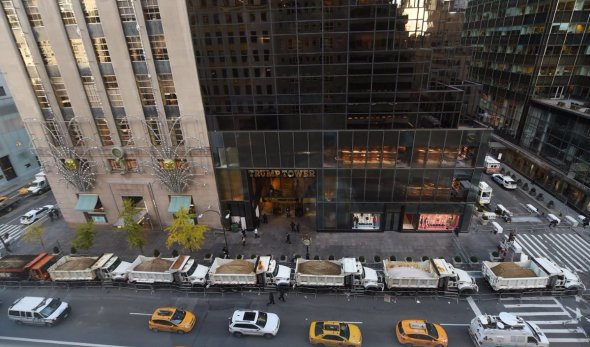
Dump trucks lined up around Trump Tower in NY.
Good Afternoon!!
What has happened to Melania? I’m becoming obsessed with this question. It has now been 18 days since she’s been seen in public on May 10. How much longer can the White House go on claiming she’s living there without evidence? The latest rumor is that she has gone back to New York.
https://twitter.com/MsSusanMo/status/1000940461614395392
The evidence is that dump trucks have appeared all around Trump Tower. Apparently, that also happened the two times that Trump stayed in New York.
The Inquistr reported yesterday that Melania’s Twitter location had changed to New York. But it turns out that they were looking at the Twitter account Melania used before becoming first lady. The FLOTUS account that she uses now still says Washington, DC. So that’s a red herring that was debunked by The Palmer Report.
Why wasn’t Melania with her husband at yesterday’s Memorial Day ceremony?
https://twitter.com/PaladinCornelia/status/1001122258713169920
Trump claimed she was in a window looking down at a press gaggle outside the White House, but no one else could see her. The White House is going to have to explain what’s happening eventually, or the occasional speculation is going become an uproar.
This is from a gossip site linked by The Palmer Report. Hollywood Life: Melania Trump Vanished After Surgery – She Wishes Donald’s Presidency Was Over, Claims Source.
Melania Trump, 48, underwent kidney surgery on May 14, and has since secluded herself from the public eye. But her break isn’t completely health-related – she’s also trying to better her marriage to Donald Trump, 71.“Melania has been taking a little ‘me time’ to work on fully regaining her health, and to try and strengthen her marriage again,” a source close to the First Lady tells HollywoodLife EXCLUSIVELY. “It’s been a hideously stressful past few months, and Melania needs a break out of the media glare to recharge her batteries and take stock.”
However, our insider noted that the president isn’t making things easier for his wife. “Donald has been under an ever increasing ton of pressure, so he definitely isn’t in the best of moods, which makes for a pretty tense atmosphere at home,” the source continued. “Melania really is getting to the point now where she just wishes Donald’s presidency was over, and she can’t wait to return to her ‘regular’ life again, even though she realizes it will never be quite the same.”
The Palmer Report claims this means Melania is having psychological problems.
This confirms that there was never any kidney problem; this is some kind of mental health break. It’s been fairly obvious from the start that this has probably been a mental health issue, but due to the sensitive nature of the situation, we’ve gone out of our way not to explicitly say it.
I’m not sure we can assume this based on an anonymous source quoted at a gossip site, but what else could explain her disappearance from public view? At this point, I have to believe that Melania wants out of her marriage and that’s why we haven’t seen her since May 10. We’ve seen how she resists holding his hand–sometimes even batting it away.
This is interesting, from Riot Woman (second tweet in series):
There’s more. You can see the entire thread here. One more from Sarah Kendzior:
It’s time for some serious journalists at the NYT and WaPo to locate Melania and find out what’s going on.
In Other News . . .
A few days ago I posted a Politico article in which former SDNY prosecutor Nelson W. Cunningham offered some predictions about the Rus:sia investigation. Today he has more predictions, again at Politico: Bob Mueller’s White Hot Summer.
Special Counsel Robert Mueller may well be in the final stages of wrapping up his principal investigation. Last week, I argued here in Politico that Mueller will want to avoid interfering with the November midterms, and so will try to conclude by July or August. On this one we can believe Trump’s new lawyer, former prosecutor and New York mayor Rudy Giuliani, who claims Mueller’s target is September 1.
How will Mueller wrap up his investigation? What will he produce? And then – what can we expect from the other players in this saga: Deputy Attorney General Rod Rosenstein, President Trump and his lawyers, and the Republican and Democratic leaders in Congress?
Nelson W. Cunningham
As a former prosecutor and Senate Judiciary and White House lawyer who has carefully studied presidential investigations since Watergate, the next steps in this constitutional dance seem clear. Mark Twain was certainly right when he said, “History does not repeat itself, but it often rhymes.” And this summer may well be the most consequential in presidential politics since 1974, the year Watergate came to a head.

Here are the predictions, which you can read about in detail at the link above.
– Mueller will not indict the president, but will issue a comprehensive and detailed report.
– Rod Rosenstein will decide to release the report to Congress and the public.
– Rosenstein’s move to release the Mueller report will lead to his firing and perhaps another Saturday Night Massacre.
– And this is when the Senate and the Congress might finally engage.
If Cunningham is correct, we have an interesting summer ahead.
Trump is clearly obsessed with what Mueller is doing. He spent the long Memorial Day weekend tweeting about it. Yesterday, after inappropriately tweeting “Happy Memorial Day!” and then bragging about his so-called accomplishments, he sent multiple tweets about the Russia investigation, trying to twist it into a Democratic scandal. Politico:
Trump pivoted to tweeting about Fox News segments on the investigation into Russian interference in the 2016 election – an investigation that Trump and his allies contend, without evidence, was politically motivated to harm Trump’s campaign and his administration.
“‘The President deserves some answers.’ @FoxNews in discussing ‘SPYGATE.’” Trump wrote on Twitter.
The “president” is bald.
Minutes later, he posted again: “‘Sally Yates is part of concerns people have raised about bias in the Justice Dept. I find her actions to be really quite unbelievable.’ Jonathan Turley.”
“‘We now find out that the Obama Administration put the opposing campaigns presidential candidate, or his campaign, under investigation. That raises legitimate questions. I just find this really odd…this goes to the heart of our electoral system.’ Jonathan Turley on @FoxNews,” he added….
Trump appears increasingly obsessed with what he is calling “Spygate” – the notion that his campaign was surveilled by the Justice Department for political purposes. There is no evidence to suggest this is the case. The FBI utilized an informant to talk to campaign officials after they discovered evidence that the officials had Russia-linked contacts during the campaign, while Russia was allegedly waging a covert disinformation campaign to harm Democrat Hillary Clinton and help Trump.

The NYT on Trump’s attempts to reshape the narrative: With ‘Spygate,’ Trump Shows How He Uses Conspiracy Theories to Erode Trust.
As a candidate, Donald J. Trump claimed that the United States government had known in advance about the Sept. 11 attacks. He hinted that Antonin Scalia, a Supreme Court justice who died in his sleep two years ago, had been murdered. And for years, Mr. Trump pushed the notion that President Barack Obama had been born in Kenya rather than Honolulu, making him ineligible for the presidency.
None of that was true.
The “president’s” narrative
Last week, President Trump promoted new, unconfirmed accusations to suit his political narrative: that a “criminal deep state” element within Mr. Obama’s government planted a spy deep inside his presidential campaign to help his rival, Hillary Clinton, win — a scheme he branded “Spygate.” It was the latest indication that a president who has for decades trafficked in conspiracy theories has brought them from the fringes of public discourse to the Oval Office.
Now that he is president, Mr. Trump’s baseless stories of secret plots by powerful interests appear to be having a distinct effect. Among critics, they have fanned fears that he is eroding public trust in institutions, undermining the idea of objective truth and sowing widespread suspicions about the government and news media that mirror his own.
“The effect on the life of the nation of a president inventing conspiracy theories in order to distract attention from legitimate investigations or other things he dislikes is corrosive,” said Jon Meacham, a presidential historian and biographer. “The diabolical brilliance of the Trump strategy of disinformation is that many people are simply going to hear the charges and countercharges, and decide that there must be something to them because the president of the United States is saying them.”

Read the rest at the NYT.
The Washington Post has a piece on the ways Trump has reduced the White House to a one-man operation: ‘The only one’: In new West Wing season, Trump calls the shots and aides follow.
The White House communications director’s job has been vacant for exactly two months. But in practice, it has been filled since the day Hope Hicks said farewell to her unofficial replacement — President Trump himself.
The president also has unofficially performed the roles of many other senior staffers in recent months, leaving the people holding those jobs to execute on his instincts and ideas.
And that’s exactly how Trump likes his West Wing.
Largely gone are the warring factions that dominated life at 1600 Pennsylvania Avenue in the first year of Trump’s term, replaced by solo players — many with personal connections to the president and their own miniature fiefdoms — laboring to do their jobs and survive.
Trump has brought in a handful of senior people who believe in him personally, are temperamentally in sync with the brash boss and are invested in his political success more than some of his first-year aides were. As one top official put it, “Ultimately he’s the only one anyone elected.”
The authors point out that this doesn’t seem to be working for him in terms of accomplishments. They also write that WH staff has been reduced to simply trying to stop him from doing something completely crazy.
Rather than struggling to manipulate the president to follow their personal agendas, the senior staff members of Trump’s Year 2 — or “Season 3,” in Trump’s reality television parlance — focus on trying to curb his most outlandish impulses while generally executing his vision and managing whatever fallout may follow. Most of all, officials said, they “get” Trump.
“Last year was the year of adjustment. He was constrained by an axis of adults and adjusting to be president,” said Thomas Wright, a senior fellow at the Brookings Institution. “This year is the year of action. He’s giving the orders, even if there’s resistance.
“Next year,” he continued, “is the hangover year, the year of living with the consequences.”
That doesn’t sound too promising.
Anyway, onward into another day of hoping Trump doesn’t blow up the world. What stories are you following?

 peej
peej Carissa
 bostonboomer
 dakinikat
 ecocatwoman
 jjlo
jjlo mablue2
 Mama Lopez
 peggysue22
 quixote
 skydancingguestblogger
 Mona (aka Wonk the Vote)





Recent Comments