Recently, Dakinikat has been writing about the notion of kakistocracy, government of the worst people. That is obviously where we are headed with Trump and his appointments of completely inappropriate and incompetent people to his cabinet, White House staff, and ambassadorships. The latest example is his nomination of Herschel Walker as Ambassador to the Bahamas.
The term “kakistocracy” (rule by the worst) emerged from obscurity during the first Trump administration. The word, which was previously used to describe troubled foreign governments, gained mainstream usage as critics pointed to controversial appointments such as Tom Price at the Department of Health and Human Services and Scott Pruitt at the Environmental Protection Agency—officials whose qualifications and conduct drew widespread criticism.
With President-elect Donald Trump’s imminent return to power, “kakistocracy” is back in public conversation. As the Economist noted by making it “word of the year,” Google searches for the term spiked in November: first after Trump’s victory, then after he nominated controversial officials for cabinet positions, including Matt Gaetz for attorney general and Robert F. Kennedy Jr. for secretary of health and human services, and again when Gaetz withdrew his nomination amid criticism. And Trump’s recent nomination of Kash Patel to lead the FBI has only intensified concerns about an impending kakistocracy.
More than just a problem of policy or politics, kakistocracy undermines a core constitutional principle: Functioning democracies need qualified individuals to hold public trust. Trump’s nominees threaten key constitutional norms in unprecedented ways: through their flaws, their number, and Trump’s willingness to skirt the procedural safeguards that ensure the Senate’s role in the appointments process. And like with so many of Trump’snorm-bustingactions in his first term, constraints will mostly have to come from the political process rather than the legal one….
The Constitution’s framers were obsessed with the quality of American public officials. Thomas Jefferson extolled “a natural aristocracy among men[,] the grounds of [which] are virtue [and] talents. … [T]he natural aristocracy I consider as the most precious gift of nature, for the instruction, the trusts, and government of society.” He argued, “[M]ay we not even say that that form of government is the best which provides the most effectually for a pure selection of these natural aristo[crats] into the offices of government?” Similarly, in the Federalist Papers, Alexander Hamilton recognized that personnel is policy, predicting that “judicious choice of men for filling the offices of the Union” would determine the “character of its administration,” while John Jay predicted that “when once an efficient national government is established, the best men in the country will not only consent to serve, but also will generally be appointed to manage it.”
The founders expected presidents to appoint competent and distinguished candidates for roles in their administrations.
Unsurprisingly, the Constitution carefully addresses the appointment of government officials. First, it makes the president primarily responsible for appointments. This decision—to have a single person, rather than a collective body, nominate officials—both strengthens the executive and, as Hamilton explained, increases the quality of the appointments, since having a single individual in charge increases their political accountability in case of bad appointees. In contrast, with a committee of appointments, “while an unbounded field for cabal and intrigue lies open, all idea of responsibility is lost.”
By Leonora Carrington
Second, the Constitution requires Senate consent to the appointment of high-level officers, subject to the limited exception of temporary appointments when the Senate is in recess. Hamilton argued that this limitation on the president’s appointment power would be an “excellent check upon a spirit of favoritism in the President, and would tend greatly to prevent the appointment of unfit characters from State prejudice, from family connection, from personal attachment, or from a view to popularity.”
Beyond the constitutional procedures of presidential nomination and Senate confirmation, the appointments process functions, as do so many parts of the Constitution, less as a matter of law than of norms. The expectation is that the president will nominate competent officials to run the executive branch and the Senate will exercise its confirmation power responsibly and block bad presidential nominees….
Trump’s nominations represent an unprecedented triple assault on constitutional appointment norms: First, many are unqualified or hostile to their agencies’ missions. Second, rather than making a few controversial picks, Trump has flooded the zone, nominating an entire slate of problematic candidates that burdens the Senate’s capacity for proper vetting. And third, Trump has signaled willingness to circumvent the confirmation process through legally dubious tactics such as forced Senate adjournment. Together, these moves threaten to transform the appointments process from a constitutional safeguard into a vehicle for installing loyalists regardless of competence.
There’s much more to read at Lawfare.
One of Trump’s goals in appointing his loyalist cabinet is to carry out his revenge against anyone who criticized him in the past or present. Kash Patel, whom Trump nominated as FBI director, already has an enemies list. Here’s the list, as posted at The New Republic:
Michael Atkinson (former inspector general of the intelligence community) Lloyd Austin (defense secretary under President Joe Biden) Brian Auten (supervisory intelligence analyst, FBI) James Baker (not the former secretary of state; this James Baker is former general counsel for the FBI and former deputy general counsel at Twitter) Bill Barr (former attorney general under Trump) John Bolton (former national security adviser under Trump) Stephen Boyd (former chief of legislative affairs, FBI) Joe Biden (president of the United States) John Brennan (former CIA director under President Barack Obama) John Carlin (acting deputy attorney general, previously ran DOJ’s national security division under Trump) Eric Ciaramella (former National Security Council staffer, Obama and Trump administrations) Pat Cippolone (former White House counsel under Trump) James Clapper (Obama’s director of national intelligence) Hillary Clinton (former secretary of state and presidential candidate) James Comey (former FBI director) Elizabeth Dibble (former deputy chief of mission, U.S. Embassy, London) Mark Esper (former secretary of defense under Trump) Alyssa Farah (former director of strategic communications under Trump) Evelyn Farkas (former deputy assistant secretary of defense for Russia, Ukraine, Eurasia under Obama) Sarah Isgur Flores (former DOJ head of communications under Trump) Merrick Garland (attorney general under Biden) Stephanie Grisham (former press secretary under Trump) Kamala Harris (vice president under Biden; former presidential candidate) Gina Haspel (CIA director under Trump) Fiona Hill (former staffer on the National Security Council) Curtis Heide (FBI agent) Eric Holder (former FBI director under Obama) Robert Hur (special counsel who investigated Biden over mishandling of classified documents) Cassidy Hutchinson (aide to Trump chief of staff Mark Meadows) Nina Jankowicz (former executive director, Disinformation Governance Board, under Biden) Lois Lerner (former IRS director under Obama) Loretta Lynch (former attorney general under Obama) Charles Kupperman (former deputy national security adviser under Trump) Gen. Kenneth Mackenzie, retired (former commander of United States Central Command) Andrew McCabe (former FBI deputy director under Trump) Ryan McCarthy (former secretary of the Army under Trump) Mary McCord (former acting assistant attorney general for national security under Obama) Denis McDonough (former chief of staff for Obama, secretary of veterans affairs under Biden) Gen. Mark Milley, retired (former chairman, Joint Chiefs of Staff) Lisa Monaco (deputy attorney general under Biden) Sally Myer (former supervisory attorney, FBI) Robert Mueller (former FBI director, special counsel for Russiagate) Bruce Ohr (former associate deputy attorney general under Obama and Trump) Nellie Ohr (wife of Bruce Ohr and former CIA employee) Lisa Page (former legal counsel for Deputy Director Andrew McCabe at FBI under Obama and Trump; exchanged texts about Trump with Peter Strzok) Pat Philbin (former deputy White House counsel under Trump) John Podesta (former counselor to Obama; senior adviser to Biden on climate policy) Samatha Power (former ambassador to the United Nations under Obama, administrator of AID under Biden) Bill Priestap (former assistant director for counterintelligence, FBI, under Obama) Susan Rice (former national security adviser under Obama, director of the Domestic Policy Council under Biden) Rod Rosenstein (former deputy attorney general under Trump) Peter Strzok (former deputy assistant director for counterintelligence, FBI, under Obama and Trump; exchanged texts about Trump with Lisa Page) Jake Sullivan (national security adviser under President Joe Biden) Michael Sussman (former legal representative, Democratic National Committee) Miles Taylor (former DHS official under Trump; penned New York Times op-ed critical of Trump under the byline, “Anonymous”) Timothy Thibault (former assistant special agent, FBI) Andrew Weissman (Mueller’s deputy in Russiagate probe) Alexander Vindman (former National Security Council director for European affairs) Christopher Wray (FBI director under Trump and Biden; Trump nominated Patel to replace him even though Wray’s term doesn’t expire until August 2027) Sally Yates (former deputy attorney general under Obama and, briefly, acting attorney general under Trump)
Last week, I noted with alarm that House Republicans were shrugging off—or even approving of—Donald Trump wanting to jail some of their past and current colleagues who served on the January 6th Committee. As it turns out, I underestimated their bloodthirstiness.
Yesterday, a key House Republican released a report directly calling for a criminal investigation into former Rep. Liz Cheney for her committee work.
The report came from Rep. Barry Loudermilk (R-Ga.), whom House Republicans tapped two years ago to spearhead the House Administration Committee’s probe into the actions of the January 6th Committee itself. It was clear from the start that Loudermilk’s primary goal was to shift blame for the attempted insurrection away from Trump. His report works plenty hard at that.
False Profits by Mear One
What wasn’t expected was what Loudermilk would bring forward as his number-one “top finding”: “Former Representative Liz Cheney colluded with ‘star witness’ Cassidy Hutchinson without Hutchinson’s attorney’s knowledge. Former Representative Liz Cheney should be investigated for potential criminal witness tampering based on the new information about her communication.”
Testimony from Hutchinson, a former aide to Trump’s one-time chief of staff Mark Meadows, featured prominently in the January 6th Committee’s work. Loudermilk focuses in on the fact that Hutchinson, who by her own account originally intended to keep her head down and clam up—even asking Team Trump for a lawyer to represent her through her interactions with the committee—had a change of heart midway through. Bracing to break with Trumpworld, Hutchinson reached out to Cheney for advice, and they had several conversations without Hutchinson’s Trump-issued lawyer present.
“Representative Cheney’s influence on Hutchinson is apparent from that point forward by her dramatic change in testimony and eventual claims against President Trump using second- and thirdhand accounts,” the report reads.
This is incredibly weak milktea on any level. Hutchinson clearly intended to open up to Cheney’s committee before Cheney ever spoke with her. That’s obvious from the fact that it was Hutchinson who initiated the contact, not Cheney. The idea that this amounted to witness-tampering on Cheney’s behalf would be too stupid to entertain if not for the fact that the country’s most powerful people are trying to pass it off with a straight face.
In a statement, Cheney denounced Loudermilk’s report as “a malicious and cowardly assault on the truth.” “No reputable lawyer, legislator or judge,” she added, “would take this seriously.”
President-elect Donald Trump reignited his longstanding feud with former Rep. Liz Cheney, saying she “could be in a lot of trouble” following a House subcommittee report accusing her of wrongdoing while serving on the panel that investigated the Jan. 6, 2021, attack on the Capitol.
Trump’s post cites a 128-page report released Tuesday by the House Administration Oversight Subcommittee chaired by GOP Rep. Barry Loudermilk that accuses Cheney of colluding with top witnesses and calls for her to be investigated for witness tampering. “Liz Cheney could be in a lot of trouble based on the evidence obtained by the subcommittee,” Trump wrote. “Which states that ‘numerous federal laws were likely broken by Liz Cheney, and these violations should be investigated by the FBI.’”
The report also accuses members of the Jan. 6 committee of withholding evidence and failing to preserve records from its investigation. It places blame for the attack on a “series of intelligence, security, and leadership failures at several levels and numerous entities” rather than Trump, who urged his supporters to march on the Capitol that day during an earlier rally near the White House.
Cheney responded:
In a statement, Cheney defended her work while taking a shot at Trump.
“January 6th showed Donald Trump for who he really is — a cruel and vindictive man who allowed violent attacks to continue against our Capitol and law enforcement officers while he watched television and refused for hours to instruct his supporters to stand down and leave,” Cheney said in a statement.
“Now, Chairman Loudermilk’s ‘Interim Report’ intentionally disregards the truth and the Select Committee’s tremendous weight of evidence, and instead fabricates lies and defamatory allegations in an attempt to cover up what Donald Trump did.”
This is frightening. Trump isn’t even waiting until he takes office to try to prosecute anyone who opposes him.
Donald Trump and his Republican allies are planning to target progressive groups they perceive as political enemies in a sign of deepening “authoritarianism”, a US watchdog has warned.
The president-elect could potentially use the justice department and Internal Revenue Service (IRS) to target non-profits and researchers, launch politically motivated investigations and pass legislation to restrict their activities.
Playing God, Troy Jacobson
“Trump has made it clear that he plans to use his second term to attack the progressive ecosystem and his perceived enemies,” Adrienne Watson of the Congressional Integrity Project (CIP) told the Guardian. “This is a worrying progression of Trump’s authoritarianism that would undermine our democracy.”
The CIP announced on Wednesday that it will aim to counter such abuses of power with a new initiative to defend progressive groups and individuals. The Civic Defense Project will be led by Watson, a former White House and Democratic National Committee spokesperson.
Fears have been raised by the Trump second term agenda’s considerable overlap with Project 2025, a policy blueprint from the Heritage Foundation think tank that includes plans to attack non-profits, researchers and civil society groups that have challenged election denial narratives.
Activists say the threat extends beyond political investigations and includes leveraging government agencies such as the justice department and IRS to investigate, prosecute and shut down organisations that oppose the administration’s policies.
Democrats may be in the minority, but they are not yet an opposition.
What’s the difference?
An opposition would use every opportunity it had to demonstrate its resolute stance against the incoming administration. It would do everything in its power to try to seize the public’s attention and make hay of the president-elect’s efforts to put lawlessness at the center of American government. An opposition would highlight the extent to which Donald Trump has no intention of fulfilling his pledge of lower prices and greater economic prosperity for ordinary people and is openly scheming with the billionaire oligarchs who paid for and ran his campaign to gut the social safety net and bring something like Hooverism back from the ash heap of history.
An opposition would treat the proposed nomination of figures like Robert F. Kennedy Jr., Kash Patel and Pete Hegseth as an early chance to define a second Trump administration as dangerous to the lives and livelihoods of ordinary Americans. It would prioritize nimble, aggressive leadership over an unbending commitment to seniority and the elevation of whoever is next in line. Above all, an opposition would see that politics is about conflict — or, as Henry Adams famously put it, “the systematic organization of hatreds” — and reject the risk-averse strategies of the past in favor of new blood and new ideas.
By Jhonata Aguiar
The Democratic Party lacks the energy of a determined opposition — it is adrift, listless in the wake of defeat. Too many elected Democrats seem ready to concede that Trump is some kind of avatar for the national spirit — a living embodiment of the American people. They’ve accepted his proposed nominees as legitimate and entertained surrender under the guise of political reconciliation. Senator Richard Blumenthal of Connecticut, for example, praised Elon Musk, a key Trump lieutenant, as “the champion among big tech executives of First Amendment values and principles.” Senator Chris Coons of Delaware similarly praised Musk and Vivek Ramaswamy’s so-called Department of Government Efficiency, a glorified blue-ribbon commission, as a potentially worthwhile enterprise — “a constructive undertaking that ought to be embraced.” And a fair number of Democrats have had friendly words for the prospect of Kennedy going to the Department of Health and Human Services, with credulous praise for his interest in “healthy food.”
“I’ve heard him say a lot of things that are absolutely right,” Senator Cory Booker of New Jersey said last week. “I have concerns, obviously, about people leading in our country who aren’t based in science and fact.” But, he continued, “when he speaks about the issues I was just speaking about, we’re talking out of the same playbook.”
And at least two Democrats want President Biden to consider a pardon for incoming President Trump. “The Trump hush money and Hunter Biden cases were both bullshit, and pardons are appropriate,” Senator John Fetterman of Pennsylvania wrote in his first post on Trump’s social networking website.
Representative Jim Clyburn of South Carolina also said that Biden should consider a pardon for Trump as a way of “cleaning the slate” for the country.
Reading that makes me feel like throwing up. We are going to have to fight the Democrats and the media if we want to save what’s left of our democracy.
In the wake of Donald Trump’s election victory and promised revenge tour, a number of individuals have proposed the creation of an organization or fund which would take on the job of defending the various lawsuits, prosecutions and generalized legal harassment Trump will bring to the table in the next four years. It’s a very good idea. It’s a necessary one. Over the last six weeks I’ve had a number of people reach out to me and ask who is doing this. Where should they send money to fund this effort? This includes people who are in the small-donor category and also very wealthy people who could give in larger sums. So a few days ago I started reaching out to some people in the legal world and anti-Trump world to find out what’s going on, whether any efforts are afoot and who is doing what.
What I found out is that there are at least a couple groups working toward doing something like this. But the efforts seem embryonic. Or at least I wasn’t able to find out too much. And to be clear, I wasn’t reaching out as a journalist per se. I was explicitly clear about this. I was doing so as a concerned citizen, not to report anything as a news story but as someone who wants such an entity to come into existence. The overnight news that Trump is now suing Ann Selzer and the Des Moines Register over her final election poll for “election interference” makes me think that these efforts aren’t coming together soon enough or can’t come together soon enough. (If you’re not familiar with the details, Selzer is a pollster of almost legendary status and in what turned out to be her final public poll, dramatically missed not only the result of the election but the whole direction of it.) So what I’m going to write here is simply my take on why such an effort is important and what shape it should take….
Waldemar von Kosak, We are the Robots
Trump’s retribution may focus on individuals, but it’s a collective harm. So it makes sense to spread the cost of dealing with it. If person X is targeted for defending the rule of law or democracy or related equities, those are things we all have an interest in defending. So it makes sense to spread the burden.
When a powerful person (and in this case a president) targets individuals, he is trying to overwhelm them, force them to knuckle under because they lack the resources to fight. That does more damage to the civic equities we’re trying to defend. The point of such retribution is to make an example of someone and cast a penumbra of fear that keeps other people from getting out of line. If people are confident their costs — literal and figurative — will be covered they will be more likely to speak their minds, do the right thing, run risks.
These two points are straightforward. But they’re worth articulating. First, fairness: targeted individuals shouldn’t alone bear the costs of protecting collective goods. Second, self-protection: people who believe in democracy and the rule of law have a clear interest in guaranteeing these defenses and preventing the spread of civic fear.
A bit more:
But there’s another need that may not be as clear and its a role some group like this should fill.
Let’s take the Selzer/Des Moines Register suit as our example. Trump is claiming that he was damaged and should be made whole because of a poll that showed him behind and turned out to be wrong. His lawyers are trying to shoe-horn this claim into an Iowa consumer fraud statute. But we shouldn’t be distracted by that. The idea that a political candidate has a cause of action over a poll is absurd on its face. And really that is precisely the point. I’ve written a number of times recently about the ways Trump casts penumbras of power and fear with talk, how he holds public space, how he keeps opponents off balance and guessing. This is another example.
As I noted above, a lot of the power and point of such an exercise is precisely the absurdity of it. It is meant to spur a chorus of “You can’t do that” and “How can he do that?” But he does do it. We have that same mixture of outrage, incomprehension, uncanny laughter, the upshot of which is an overwhelming and over-powering belief that the rules somehow don’t apply to this guy. That’s the power and that is the point. It is a performance art of power enabled by a shameless abuse of the legal system.
Yesterday, Time Magazine published an interview with Donald Trump. Why did he choose Time to reveal his plans for rescinding the Constitution if he is elected in November? I’d guess it’s because he wanted another Time cover to add to his collection. He’s a demented old man who doesn’t realize that Time long ago became fairly irrelevant. But they certainly got the attention of the the political world yesterday. Trump spelled out his plans for 2025 and beyond and they are horrifying.
I agree with this tweet that Aaron Rupar posted after reading the article:
I increasingly believe this election will be a referendum on whether anything matters anymore. There’s no rational case for Trump, but there’s a loud contingent on the left that just wants to burn it down. Combine that with low information voters and Republicans circling the wagons around their guy, and you have the outlines of a calamity. Hopefully people wake up.
Here’s the Time interview, followed by commentary from other publications. I’ve cut out the author’s cutesy commentary and just included Trump’s plans.
Six months from the 2024 presidential election, Trump is better positioned to win the White House than at any point in either of his previous campaigns. He leads Joe Biden by slim margins in most polls, including in several of the seven swing states likely to determine the outcome. But I had not come to ask about the election, the disgrace that followed the last one, or how he has become the first former—and perhaps future—American President to face a criminal trial. I wanted to know what Trump would do if he wins a second term, to hear his vision for the nation, in his own words.
What emerged in two interviews with Trump, and conversations with more than a dozen of his closest advisers and confidants, were the outlines of an imperial presidency that would reshape America and its role in the world. To carry out a deportation operation designed to remove more than 11 million people from the country, Trump told me, he would be willing to build migrant detention camps and deploy the U.S. military, both at the border and inland. He would let red states monitor women’s pregnancies and prosecute those who violate abortion bans. He would, at his personal discretion, withhold funds appropriated by Congress, according to top advisers. He would be willing to fire a U.S. Attorney who doesn’t carry out his order to prosecute someone, breaking with a tradition of independent law enforcement that dates from America’s founding. He is weighing pardons for every one of his supporters accused of attacking the U.S. Capitol on Jan. 6, 2021, more than 800 of whom have pleaded guilty or been convicted by a jury. He might not come to the aid of an attacked ally in Europe or Asia if he felt that country wasn’t paying enough for its own defense. He would gut the U.S. civil service, deploy the National Guard to American cities as he sees fit, close the White House pandemic-preparedness office, and staff his Administration with acolytes who back his false assertion that the 2020 election was stolen.
Trump remains the same guy, with the same goals and grievances. But in person, if anything, he appears more assertive and confident. “When I first got to Washington, I knew very few people,” he says. “I had to rely on people.” Now he is in charge. The arranged marriage with the timorous Republican Party stalwarts is over; the old guard is vanquished, and the people who remain are his people. Trump would enter a second term backed by a slew of policy shops staffed by loyalists who have drawn up detailed plans in service of his agenda, which would concentrate the powers of the state in the hands of a man whose appetite for power appears all but insatiable. “I don’t think it’s a big mystery what his agenda would be,” says his close adviser Kellyanne Conway. “But I think people will be surprised at the alacrity with which he will take action.” [….]
In a second term, Trump’s influence on American democracy would extend far beyond pardoning powers. Allies are laying the groundwork to restructure the presidency in line with a doctrine called the unitary executive theory, which holds that many of the constraints imposed on the White House by legislators and the courts should be swept away in favor of a more powerful Commander in Chief.
TV Man, by Michael Vincent Manalo
Nowhere would that power be more momentous than at the Department of Justice. Since the nation’s earliest days, Presidents have generally kept a respectful distance from Senate-confirmed law-enforcement officials to avoid exploiting for personal ends their enormous ability to curtail Americans’ freedoms. But Trump, burned in his first term by multiple investigations directed by his own appointees, is ever more vocal about imposing his will directly on the department and its far-flung investigators and prosecutors.
In our Mar-a-Lago interview, Trump says he might fire U.S. Attorneys who refuse his orders to prosecute someone: “It would depend on the situation.” He’s told supporters he would seek retribution against his enemies in a second term. Would that include Fani Willis, the Atlanta-area district attorney who charged him with election interference, or Alvin Bragg, the Manhattan DA in the Stormy Daniels case, who Trump has previously said should be prosecuted? Trump demurs but offers no promises. “No, I don’t want to do that,” he says, before adding, “We’re gonna look at a lot of things. What they’ve done is a terrible thing.”
Trump has also vowed to appoint a “real special prosecutor” to go after Biden. “I wouldn’t want to hurt Biden,” he tells me. “I have too much respect for the office.” Seconds later, though, he suggests Biden’s fate may be tied to an upcoming Supreme Court ruling on whether Presidents can face criminal prosecution for acts committed in office. “If they said that a President doesn’t get immunity,” says Trump, “then Biden, I am sure, will be prosecuted for all of his crimes.” (Biden has not been charged with any, and a House Republican effort to impeach him has failed to unearth evidence of any crimes or misdemeanors, high or low.)
On his goal of mass deportation of immigrants:
Trump’s radical designs for presidential power would be felt throughout the country. A main focus is the southern border. Trump says he plans to sign orders to reinstall many of the same policies from his first term, such as the Remain in Mexico program, which requires that non-Mexican asylum seekers be sent south of the border until their court dates, and Title 42, which allows border officials to expel migrants without letting them apply for asylum. Advisers say he plans to cite record border crossings and fentanyl- and child-trafficking as justification for reimposing the emergency measures. He would direct federal funding to resume construction of the border wall, likely by allocating money from the military budget without congressional approval. The capstone of this program, advisers say, would be a massive deportation operation that would target millions of people. Trump made similar pledges in his first term, but says he plans to be more aggressive in a second. “People need to be deported,” says Tom Homan, a top Trump adviser and former acting head of Immigration and Customs Enforcement. “No one should be off the table.”
For an operation of that scale, Trump says he would rely mostly on the National Guard to round up and remove undocumented migrants throughout the country. “If they weren’t able to, then I’d use [other parts of] the military,” he says. When I ask if that means he would override the Posse Comitatus Act—an 1878 law that prohibits the use of military force on civilians—Trump seems unmoved by the weight of the statute. “Well, these aren’t civilians,” he says. “These are people that aren’t legally in our country.” He would also seek help from local police and says he would deny funding for jurisdictions that decline to adopt his policies. “There’s a possibility that some won’t want to participate,” Trump says, “and they won’t partake in the riches.”
Helen Lundeberg, Biological Fantasy, 1946
On Abortion:
As President, Trump nominated three Supreme Court Justices who voted to overturn Roe v. Wade, and he claims credit for his role in ending a constitutional right to an abortion. At the same time, he has sought to defuse a potent campaign issue for the Democrats by saying he wouldn’t sign a federal ban. In our interview at Mar-a-Lago, he declines to commit to vetoing any additional federal restrictions if they came to his desk. More than 20 states now have full or partial abortion bans, and Trump says those policies should be left to the states to do what they want, including monitoring women’s pregnancies. “I think they might do that,” he says. When I ask whether he would be comfortable with states prosecuting women for having abortions beyond the point the laws permit, he says, “It’s irrelevant whether I’m comfortable or not. It’s totally irrelevant, because the states are going to make those decisions.” President Biden has said he would fight state anti-abortion measures in court and with regulation.
Trump’s allies don’t plan to be passive on abortion if he returns to power. The Heritage Foundation has called for enforcement of a 19th century statute that would outlaw the mailing of abortion pills. The Republican Study Committee (RSC), which includes more than 80% of the House GOP conference, included in its 2025 budget proposal the Life at Conception Act, which says the right to life extends to “the moment of fertilization.” I ask Trump if he would veto that bill if it came to his desk. “I don’t have to do anything about vetoes,” Trump says, “because we now have it back in the states.”
Donald Trump hasn’t quite let go of the possibility of utilizing mob violence if he loses the next election.
In a sprawling interview for Time magazine, Trump hinted that leveraging political violence to achieve his end goals was still on the table.
“If we don’t win, you know, it depends,” he told Time. “It always depends on the fairness of the election.”
And from Trump’s perspective, that’s winning rhetoric. According to him, his incendiary comments supporting a mob mentality, his early warnings of forthcoming abuses of power, and his threats to be a dictator on “day one” are only inching him closer to the White House. “I think a lot of people like it,” Trump told Time….
Meanwhile, the trial that will determine Trump’s level of involvement on the day that his followers actually attempted to overthrow Congress’s certification of the 2020 vote has been indefinitely waylaid by the former president’s claim of presidential immunity. The Supreme Court heard arguments for that case last week. It is currently unclear how the justices will decide the case, though they are expected to issue an opinion sometime between the end of June and early July.
If you ask Donald Trump, the election could determine the fate of the United States itself.
“If we don’t win on November 5, I think our country is going to cease to exist. It could be the last election we ever have. I actually mean that,” the former president said at a campaign rally in Grand Rapids, Michigan, on Tuesday.
JeeYoung Lee, Panic Room, 2010
In fact, looking at Trump’s plans for a potential second term, it’s more likely that the opposite is true. He has claimed that he wants to be a dictator, but only on “day one,” and plans to install his legal allies at all levels of government. And his Cabinet? It’s sure to be full of ideologues, immigration hard-liners, and outright fascists. Even conservative judges claim he’ll shred the legal system.
But Trump’s remarks could also be a veiled threat that he should win, or else. The far right, from Trump down to militias, hate groups, and grassroots MAGA supporters, could react violently if the election doesn’t go in their favor.
As Brynn Tannehill wrote for The New Republic in March, “The election cycle either ends in chaos and violence, balkanization, or a descent into a modern theocratic fascist dystopia.” It might not be a stretch to suggest that Trump could plan another January 6–type event if he loses. After all, only months prior to the Capitol insurrection, he urged the Proud Boys to “stand back and stand by” on a debate stage.
On April 12, former President Donald Trump sat for an interview with Time. That interview, which ran with some follow-up questions from this past Saturday, was published on Tuesday, and it included a number of alarming tidbits from Trump, many of which reaffirmed his earlier extreme positions or took them further.
But perhaps the most shocking response dealt with a hypothetical posed by the reporter, Eric Cortellessa. Relatively early in the conversation, Cortellessa pushed Trump to take a stance on a federal abortion ban. Trump refused, insisting that his views on abortion did not matter—that he was leaving it up to the states to decide, and that was that. Even as Cortellessa insisted that it was “important to voters” to know where he stands, Trump didn’t budge, even when asked how he felt about women being punished for having abortions. Cortellessa then raised the prospect of a surveillance state keeping tabs on women and their reproductive systems:
Cortellessa:Do you think states should monitor women’s pregnancies so they can know if they’ve gotten an abortion after the ban?
Trump:I think they might do that. Again, you’ll have to speak to the individual states. Look, Roe v. Wade was all about bringing it back to the states.
Trump’s refusal to take a stance on such a sinister possibility shows he remains just as concerned about disappointing his white evangelical base as he is about alienating more moderate voters. But he may have underestimated just how radical this nonstance really was, and just how unsettling it may seem to voters.
That ended up being a theme of the more than hourlong interview: Trump dodged so many questions by railing about his victimhood, boasting about his victories, or just straight-out lying, but when he did give a direct response, it showed a man who had learned no lessons from his 2020 loss or his ongoing legal challenges. The Trump of the interview was just as extreme as ever.
Donald Trump has warned that Joe Biden and his family could face multiple criminal prosecutions once he leaves office unless the US supreme court awards Trump immunity in his own legal battles with the criminal justice system.
In a sweeping interview with Time magazine, Trump painted a startling picture of his second term, from how he would wield the justice department to hinting he may let states monitor pregnant women to enforce abortion laws….
Portrait of the Late Mrs. Partridge, by Leonora Carrington
Trump made a direct connection between his threat to appoint a special prosecutor to investigate the Bidens should he win re-election in November with the case currently before the supreme court over his own presidential immunity.
Asked whether he intends to “go after” the Bidens should he gain a second term in the White House, Trump replied: “It depends what happens with the supreme court.”
If the nine justices on the top court – three of whom were appointed by Trump – fail to award him immunity from prosecution, Trump said, “then Biden I am sure will be prosecuted for all of his crimes, because he’s committed many crimes”.
Trump and his Republican backers have long attempted to link Biden to criminal wrongdoing relating to the business affairs of his son Hunter Biden, without unearthing any substantial evidence. Last June, in remarks made at his golf course in Bedminster, New Jersey, Trump threatened to appoint a special prosecutor were he re-elected “to go after the most corrupt president in the history of the United States of America, Joe Biden, and the entire Biden crime family”. [….]
Several of Trump’s comments in the Time interview will ring alarm bells among those concerned with the former president’s increasingly totalitarian bent.
Trump’s remarks raise the specter that, were he granted a second presidential term, he would weaponize the justice department to seek revenge against the Democratic rival who defeated him in 2020.
Despite the violence that erupted on 6 January 2021 at the US Capitol after he refused to accept defeat in the 2020 election, which is the subject of one of two federal prosecutions he is fighting, Trump also declined to promise a peaceful transfer of power should he lose again in November.
Asked by Cortellessa whether there would be political violence should Trump fail to win, he replied: “If we don’t win, you know, it depends. It always depends on the fairness of an election.”
Pouring yet more gasoline on to the fire, Trump not only repeated his falsehood that the 2020 election had been stolen from him, but said he would be unlikely to appoint anyone to a second Trump administration who believed Biden had legitimately prevailed four years ago. “I wouldn’t feel good about it, because I think anybody that doesn’t see that that election was stolen – you look at the proof,” he said.
The cover story of Time magazine is presented as definitive.
“If he wins,” it states over a picture of former president Donald Trump sitting on a stool. The story from reporter Eric Cortellessa bears the headline, “How far Trump would go,” and interweaves quotes from a lengthy interview Trump granted Cortellessa with the reporter’s assessments of what it tells us about a potential second Trump term.
Max Ernst, The Barbarians
But as is often the case, a lot of what Trump is reported as planning to do is constructed from murky, noncommittal answers Trump offered to specific questions. The interview is very revealing about Trump’s approach to the position in that it strongly suggests he hasn’t thought much about important issues, and makes clear how relentlessly he relies on rhetoric to derail questions.
The interview is not revealing about what Trump is firmly committed to doing. But that’s revealing in its own way: It makes it obvious that a second term, like the first, would see policy and executive actions driven by whomever is around Trump. And Trump is clearly committed to having around him only people who share his political worldview.
Before we list the firm policy commitments Trump offered to Cortellessa, which won’t take long, it’s useful to point out all the revealing comments Trump made simply by being given the space to talk.
For example, when asked whether he would use the military to help deport immigrants despite prohibitions against deploying the military against civilians, Trump told Cortellessa that “these aren’t civilians.” He claimed they were, instead, part of an “invasion,” rhetoric he’s used before. This is false — but revealing about Trump’s potential willingness to use force as part of a deportation effort.
I don’t know about this. I thought Trump made his plans pretty clear–especially because we can base our interpretations on what he has already done. But you can read more at the WaPo link.
The Biden campaign is mounting a concerted push to attack former President Donald J. Trump over statements he made to Time magazine in a wide-ranging interview published Tuesday morning, particularly on abortion.
In the interview, Mr. Trump refused to commit to vetoing a national abortion ban and said he would allow states to monitor women’s pregnancies and prosecute those who violated abortion restrictions.
“This is reprehensible,” President Biden wrote on X. “Donald Trump doesn’t trust women. I do.”
Julie Chavez Rodriguez, Mr. Biden’s campaign manager, said in a statement that Mr. Trump would “sign a national abortion ban, allow women who have an abortion to be prosecuted and punished, allow the government to invade women’s privacy to monitor their pregnancies and put I.V.F. and contraception in jeopardy nationwide.”
Abortion has become a winning issue for Democrats, and Mr. Biden has argued that Mr. Trump and Republicans will continue to erode abortion rights. He and Vice President Kamala Harris have campaigned heavily on the issue in battleground states, and Democrats hope that state ballot initiatives to protect abortion rights will help their candidates for president, Congress and state offices. Their messaging has sought to pin state abortion bans directly on Mr. Trump, whose appointees to the Supreme Court helped overturn Roe v. Wade….
The former president also told Time that he would deploy the U.S. military to detain and deport migrants, and did not dismiss the possibility of political violence should he lose the election.
Democrats highlighted some of those statements as well.
“Donald Trump’s repeated threats of political violence are as horrifying and dangerous as they are un-American,” said Alex Floyd, a spokesman for the Democratic National Committee. “Trump is hellbent on threatening our democracy, win or lose.”
Hillary Clinton urged her followers on X to read about Mr. Trump’s plans for a second term and “take them seriously.”
That’s all I have today. I truly believe that our democracy is hanging in the balance. Whatever you think of Joe Biden, he has generally been a good president. Trump was a disaster last time, and if he wins again, it will be be far worse–beyond anything we can imagine.
Did you like this post? Please share it with your friends:
The latest Emerson College Polling national survey of US voters finds a majority disapprove of President Biden, Congress, and the Supreme Court. Biden has a 40% job approval, while 53% disapprove of the job he is doing as president. Since last month, Biden’s approval has increased two points. The US Congress has a 19% job approval, while 70% disapprove of the job they are doing. The Supreme Court has a 36% job approval; 54% disapprove.
Spencer Kimball, Executive Director of Emerson College Polling said, “Independent voters align more with Democrats on Supreme Court approval: 71% of Democrats and 58% of Independents disapprove of the job that the Supreme Court is doing whereas a majority, 56%, of Republicans approve of the job they are doing.”
In the 2022 November Midterm Elections, 46% of voters plan to vote for the Republican congressional candidate on the ballot while 43% plan to support the Democratic congressional candidate. This congressional ballot test has remained relatively stagnant since last month’s national poll, where Republicans also led by three points on the congressional ballot, 45% to 42%.
Looking at 2024, 64% of Democratic primary or caucus voters think President Biden should be the Democratic nominee for president, while 36% think he should not be. In the 2024 Republican Primary, 55% of voters would support former President Trump, 20% Florida Governor Ron DeSantis, and 9% former Vice President Mike Pence. No other potential GOP candidate clears 5%.
In a hypothetical 2024 Presidential Election matchup between President Biden and former President Trump, Trump holds 44% support while Biden has 39% support; 12% would vote for someone else and 5% are undecided. “Since last month, Trump has held his share of support while Biden’s support has reduced four points.”
The Trump family crime syndicate certainly is a cult. Let’s hope we don’t get a repeat where the left just boycotts our democracy because they can’t get their way. The desire to see Roe as national law is strong everywhere but in the White Christian Nationalist party.
Following the Supreme Court decision to overturn its 1973 Roe v. Wade ruling, which leaves abortion legality up to the states, 59% of voters think that Congress should pass a law legalizing the right to abortion. Among women, support for the legislation is higher: 62% think Congress should pass a law legalizing the right to abortion compared to 55% of men.
“While a majority, 65%, of Republicans oppose Congress passing a law to legalize the right to abortion, the policy has majority support among Democrats and Independent voters, 81% of Democratic voters and 58% of Independent voters support federal legislative action to legalize abortion,” Kimball said.
Congressional legalization of the right to abortion has the highest support among 18-29 year olds: 76% support a federal legalization of abortion, compared to 59% of 30-49 year olds, 50% of 50-64 year olds, and 56% of those over 65.
A majority, 57%, say that they or someone that they’ve known have had an abortion. Among those who have had or know someone who has had an abortion, 62% think Congress should pass a law legalizing the right to abortion.
There are also some numbers on the impact of the public hearings held by the January 6th committee.
The January 6th hearings have had a split impact on voters’ intention to vote for Donald Trump in 2024 if he were to run: 35% say it makes them less likely, 32% say it makes them more likely, 28% say it makes no difference.
Kimball noted, “Half of Republicans say they are more likely to vote for Trump following the January 6th hearings, while a plurality, 38%, of Independents say they are less likely to support Trump if he runs in 2024. More specifically, among those who voted for Trump in 2020, nine percent say they are less likely to vote for him again in 2024 after the hearings.”
Kimball continued, “The January 6th hearings reflect an educational divide, regarding their impact on Trump support: those with a college degree or less are about 33% less likely to vote for Trump because of the hearings, whereas 51% of those with a postgraduate degree are less likely to support Trump because of the hearings.”
Yes, Trump loves him some undereducated people. There are also some numbers on the economy–which is labeled the most important issue by the majority of voters–and gun regulation.
In other polling news, Reproductive and Women’s rights are moving quickly up the priority scale. It’s hard to see that we will get anything done without some new blood in the senate.
A new poll finds a growing percentage of Americans calling out abortion or women’s rights as priorities for the government in the wake of the Supreme Court’s decision to overturn Roe v. Wade, especially among Democrats and those who support abortion access.
House Speaker Nancy Pelosi said in remarks immediately after the decision that “reproductive freedom is on the ballot in November.” But with pervasive pessimism and a myriad of crises facing the nation, it’s not clear whether the ruling will break through to motivate those voters — or just disappoint them.
Everyone is still reeling from the number of extremely radical opinions forced on us by a group of White Nationalist Christians on the Supreme Court.
Our first job is to educate the public about this anti-democratic power grab and how radical the Court’s political agenda is.
Then we need to focus on the elections. And win enough seats to be in a position to save democracy from these politicians disguised as justices.
The framers intended Congress to be the most powerful of the three branches of government, consisting of representatives of the people and the states. The executive was to be feared and constrained; the judiciary was, in comparison, an afterthought mostly left to future Congresses to craft. In drafting the Federalist Papers, Alexander Hamilton considered the courts the “least dangerous to the political rights of the Constitution.”
What we’ve seen this term is a court determined to prove Hamilton wrong. While Congress has the ability to curtail the authority that the unbalanced, undemocratic courts have accumulated, there seems to be almost no drive among Democrats to even challenge the third branch.
Let me clarify that I do not propose invalidating the principle of judicial review, whereby the courts have the authority to block and overturn legislative and executive actions. The Supreme Court’s function as arbiter of the Constitution is an important and needed one, given the possible abuses from the other branches.
It’s a power that is more easily used to strike down than to build. As Vox’s Ian Milhiser has noted, while the court can’t establish an agency to protect the rights of citizens, it can absolutely erase one out of existence.
Here’s some historical reference from Ian Milhiser at Vox: “The case against the Supreme Court of the United States. The Court was the midwife of Jim Crow, the right hand of union busters, the dead hand of the Confederacy, and now is one of the chief architects of America’s democratic decline.”
Meanwhile, the Supreme Court’s public approval ratings are in free fall. A Gallup poll taken in June before the Court’s decision in Dobbs found that only 25 percent of respondents have “a great deal” or “quite a lot” of confidence in the Court, a historic low. And that’s after nearly a year’s worth of polls showing the Court’s approval in steady decline.
To thisI say, “good.” The Dobbs decision is the culmination of a decades-long effort by Republicans to capture the Supreme Court and use it, not just to undercut abortion rights but also to implement an unpopular agenda they cannot implement through the democratic process.
And the Court’s Republican majority hasn’t simply handed the Republican Party substantive policy victories. It is systematically dismantling voting rights protections that make it possible for every voter to have an equal voice, and for every political party to compete fairly for control of the United States government. Alito, the author of the opinion overturning Roe, is also the author of two importantdecisions dismantling much of the Voting Rights Act.
Moreover, while the present Court is unusually conservative, the judiciary as an institution has an inherent conservative bias. Courts have a great deal of power to strike down programs created by elected officials, but little ability to build such programs from the ground up. Thus, when an anti-governmental political movement controls the judiciary, it will likely be able to exploit that control to great effect. But when a more left-leaning movement controls the courts, it is likely to find judicial power to be an ineffective tool.
The Court, in other words, simply does not deserve the reverence it still enjoys in much of American society, and especially from the legal profession. For nearly all of its history, it’s been a reactionary institution, a political one that serves the interests of the already powerful at the expense of the most vulnerable. And it currently appears to be reverting to that historic mean.
WASHINGTON, DC – JUNE 30: In this handout provided by the Supreme Court, Chief Justice John G. Roberts, Jr. (R) looks on as Justice Ketanji Brown Jackson signs the Oaths of Office in the Justices’ Conference Room at the Supreme Court on June 30, 2022 in Washington, DC. Jackson was sworn in as the newest Supreme Court Justice today, replacing the now-retired Justice Stephen G. Breyer. (Photo by Fred Schilling/Collection of the Supreme Court of the United States via Getty Images)
President Joe Biden in a written statement praised Judge Ketanji Brown Jackson’s historic swearing in as the first Black female Justice of the Supreme Court, calling it a “profound step forward.”
“Her historic swearing in today represents a profound step forward for our nation, for all the young, Black girls who now see themselves reflected on our highest court, and for all of us as Americans,” Biden said in the written statement.
Biden also thanked retiring Justice Stephen Breyer for “his many years of exemplary service.”
Here are some links to news on the latest January 6th Committee’s findings.
“[A person] let me know you have your deposition tomorrow,” read a slide that the Jan. 6 committee broadcast at the end of Hutchinson’s hearing, which Vice Chair Liz Cheney (R-Wyo.) characterized as pressure on a key witness. “He wants me to let you know that he’s thinking about you. He knows you’re loyal, and you’re going to do the right thing when you go in for your deposition.”
Meadows is the person whose name was redacted in that slide. Contents of that final deposition were described to POLITICO, which could not independently corroborate the identity of the intermediary or that Meadows directed any message be delivered to Hutchinson before her second deposition.
Mark it on your calendars. This was the week the meteoric political career of Donald Trump did what meteors often do and collided with planet Earth, leaving a large, ugly mark on the landscape.
The fact that Trump may soon announce his candidacy for the presidency in the days ahead is itself more of a sign of his political collapse than it is of any strength he may have. The first time he ran for president, he did it because he thought it would boost his brand. This time he is likely to do it because he thinks it may make him more difficult to prosecute. And because he can use it to mount one last big attempt to fleece his supporters.
The excursion that almost happened came into clearer focus this week, as the House committee investigating the attack on the Capitol on Jan. 6, 2021 presented explosive testimony and records detailing Trump’s fervent demands to lead his supporters mobbing the seat of government. Though Trump’s trip was ultimately thwarted by his own security officers, the new evidence cuts closer to the critical question of what he knew about the violence in store for that day.
Trump has acknowledged his foiled effort to reach the Capitol. “Secret Service wouldn’t let me,” he told The Washington Post in April. “I wanted to go. I wanted to go so badly. Secret Service says you can’t go. I would have gone there in a minute.”
But as Trump repeatedly floated the idea in the weeks leading up to Jan. 6, several of his advisers doubted he meant it or didn’t take the suggestion seriously. One senior administration official said Trump raised the prospect repeatedly but in a “joking manner.”
As a result, the White House staff never turned Trump’s stated desires into concrete plans. Press officers made no preparations for a detour to the Capitol, such as scheduling an additional stop for the motorcade and the pool of reporters who follow the president’s movements. There was no operational advance plan drafted for the visit. No speech was written for him to deliver on the Hill, and it wasn’t clear exactly what Trump would do when he got there, said the person who talked with Trump about the idea.
From MediaIte’s Colby Hall: “Rudy Giuliani Deletes Tweet Insisting Cassidy Hutchinson Was Not Present When He Asked for a Pardon.” Giuliani has to be so close to jail that he can smell the jello.
Flagged by Ron Flipowski, who noted “She wasn’t there when I asked Trump for a pardon. But I never asked for a pardon. Only Rudy.”
He deleted the apparently self-incriminating Tweet and clarified that he never asked for a pardon …
So, that’s enough of the chaos for today. I’m just dreaming of BBQ chicken, potato salad, and a really big piece of my mother’s chocolate cake.
Have a nice long weekend!
What’s on your reading and blogging list today?
Did you like this post? Please share it with your friends:
Topiary Cat at home evening, created by Richard Saunders
Good Morning!!
Our so-called “president” is a malignant narcissist with rapidly advancing dementia and we’re in a losing battle with a pandemic that the “president” has decided not to deal with at all. Instead he has been trying gin up outrage among his cult followers by claiming a vast conspiracy against him led by former president Obama. He began his morning by rage-tweeting about another supposed conspiracy against him by multiple social media sites–based on claims by right wing nut Michelle Malkin.
The Radical Left is in total command & control of Facebook, Instagram, Twitter and Google. The Administration is working to remedy this illegal situation. Stay tuned, and send names & events. Thank you Michelle! https://t.co/ZQfcfD3Hk9
I highly recommend exploring The Atlantic magazine’s “Shadowland” project, which explores current and past conspiracy theories and their impact on American and world history. I’ve posted a couple their articles recently. We are going to need to understand this kind of conspiracy thinking as we get closer to the 2020 presidential election. Some background: “Shadowland”: A New Project From The Atlantic on the Power and Danger of Conspiracy.
Conspiracy thinking has shaped the world for centuries, destroying great institutions, eradicating knowledge, endangering democracies, and ending lives. These theories threaten not just individual facts, but the idea that empirical truth exists at all. And now, with a president of the United States who advances conspiracy thinking about a pandemic that has led to 82,000 reported deaths in America, it becomes an existential threat.
In an effort to better understand how we got here, and how we might find a way out, The Atlantic today launches “Shadowland,” an exploration of how conspiracy theories have shaped America, and why they are more powerful, and dangerous, now than ever.
Leonora Carrington’s Self Portrait (1938)
Shadowland takes you down the rabbit hole through an interactive project portal, built with the mobile reader in mind; the product and visuals are central to the storytelling. It represents some of the most ambitious work of the year, even as The Atlantic continues to apply the full weight of its newsroom to cover the biggest stories of our age: the global pandemic, the Trump presidency, and the spread of illiberalism across the planet.
The project debuts with “The Prophecies of Q,” executive editor Adrienne LaFrance’s cover story on QAnon for The Atlantic’s June issue. With its legions of followers, fabrications about the coronavirus, and dark predictions about the “deep state,” QAnon’s power—and the rejection of reality it represents—only grows. LaFrance warns that QAnon “is a movement united in mass rejection of reason, objectivity, and other Enlightenment values. And we are likely closer to the beginning of its story than the end … To look at QAnon is to see not just a conspiracy theory but the birth of a new religion.”
Donald Trump will not shut up about Barack Obama—not now, not ever. On Thursday morning, amid the gravest economic crisis in a century and a deadly pandemic that will have killed more than a hundred thousand Americans by the end of this month, Trump yet again accused his predecessor of culpability in “the biggest political crime and scandal in the history of the USA.” Obama, he said, should be hauled before the Senate to testify. “He knew EVERYTHING,” Trump added in his tweet, one of dozens of attacks in the past few days in which he has targeted “Obamagate.” What crime, exactly, was Trump accusing Obama of? What should he testify about? Trump never said, and it’s a safe bet that he never will.
Field of Dreams – Heidi Taillefer #Surreal #Cat
On Monday afternoon, at a press conference on the White House lawn, Trump made that clear, in a memorable exchange with Phil Rucker, of the Washington Post, that echoed the paranoid fulminations of Trump’s hero Joseph McCarthy at his worst. “What crime, exactly, are you accusing President Obama of committing?” Rucker asked. “Obamagate,” Trump replied. “It’s been going on for a long time,” he added, without offering specifics. “What is the crime, exactly, that you’re accusing him of?” Rucker asked again. “You know what the crime is,” Trump answered. “The crime is very obvious to everybody.” Days later, that is still where we are: Trump is accusing Obama of a grave crime but refusing even to say what Obama allegedly did, while repeating over and over that the former President is guilty of something, a technique of political agitprop that recalls not only McCarthy but every wannabe dictator for whom the rule of law has little or nothing to do with accusations of illegality.
Perhaps, to Trump and his defenders, “Obamagate” really is such a known commodity that defining it is superfluous, even if it is not at all obvious to those who don’t populate Trump’s alternate reality of conspiracy theories and outright lies, a world in which Obama figures as a regular and sinister presence. This is not the first time, nor will it be the last, that the gap between partisan truths in Washington is so wide it’s practically a vortex. In many ways, the “Obamagate” exchange on Monday reminded me of the first day of the public impeachment hearings last fall in the House Intelligence Committee, in which Democrats spent hours outlining what they knew of the Trump Ukraine-shakedown scheme that had triggered the impeachment proceedings, while Devin Nunes, the Republican ranking member, offered up an array of little-known intrigues that seemed entirely unrelated to the matter at hand, including an alleged plot to “obtain nude pictures of Trump,” which, he said, was part of a “three-year-long operation” by Democrats, “the corrupt media,” and “partisan bureaucrats to overturn the results of the 2016 election.” I remember thinking: Naked pictures? What was he even talking about? It appeared to have something to do with a 2017 phone call to Representative Adam Schiff from two Russian pranksters claiming to represent the Ukrainian government and offering nude pictures of Trump with a Russian celebrity. Or something. If you had been following along with Fox News and the darker corners of the right, you knew exactly what Nunes was talking about.
Even by President Trump’s standards, it was a rampage: He attacked a government whistle-blower who was telling Congress that the coronavirus pandemic had been mismanaged. He criticized the governor of Pennsylvania, who has resisted reopening businesses. He railed against former President Barack Obama, linking him to a conspiracy theory and demanding he answer questions before the Senate about the federal investigation of Michael T. Flynn.
And Mr. Trump lashed out at Joseph R. Biden Jr., his Democratic challenger. In an interview with a sympathetic columnist, Mr. Trump smeared him as a doddering candidate who “doesn’t know he’s alive.” The caustic attack coincided with a barrage of digital ads from Mr. Trump’s campaign mocking Mr. Biden for verbal miscues and implying that he is in mental decline.
That was all on Thursday.
Far from a one-day onslaught, it was a climactic moment in a weeklong lurch by Mr. Trump back to the darkest tactics that defined his rise to political power. Even those who have grown used to Mr. Trump’s conduct in office may have found themselves newly alarmed by the grim spectacle of a sitting president deliberately stoking the country’s divisions and pursuing personal vendettas in the midst of a crisis that has Americans fearing for their lives and livelihoods.
A bit more:
Since well before he became president, Mr. Trump’s appetite for conflict has defined him as a public figure. But in recent days he has practiced that approach with new intensity, signaling both the depths of his election-year distress and his determination to blast open a path to a second term, even at the cost of further riling a country in deep anguish.
Rene Magritte, Cat in a Hat
His electoral path has narrowed rapidly since the onset of the pandemic, as the growth-and-prosperity theme of his campaign disintegrated. In private, Mr. Trump has been plainly aggrieved at the loss of his central argument for re-election. “They wiped out my economy!” he has said to aides, according to people briefed on the remarks.
It is unclear whether he has been referring to China, where the virus originated, or health experts who have urged widespread lockdowns, but his frustration and determination to place blame elsewhere have been emphatic.
Ken Goldstein, a professor of politics at the University of San Francisco, said that Mr. Trump and his campaign were going on the offensive in nasty ways in an attempt to shift the attention of the public away from him and onto other targets, and ultimately onto Mr. Biden.
“If this election is about Trump, he probably loses,” Mr. Goldstein said. “Trump’s only hope is to make the election about Biden.”
It turns out President Donald Trump’s status as the most accessible person to ever hold the office is more a curse than a blessing. Day after day, he fills the air with the ack-ack of disinformation and misdirection, needlessly alarming the public and sending reporters on wild goose chases to either confirm or disprove his allegations. On Thursday, in an interview with Fox Business’ Maria Bartiromo, Trump repeated his newest figment that Joe Biden and Barack Obama are guilty of some unnamed crimes for which they are deserving of “50-year sentences.”
Strong meat! The heinous crimes—to which he has applied the “Obamagate” moniker and calls “the biggest political crime and scandal in the history of the USA, by FAR”—is a relatively new creation of the Trump Disinformation Laboratory. He only started talking about it on May 10 and has yet to specify exactly what Obamagate is aside from telling reporters in a press conference that it’s “obvious” and that he wants Sen. Lindsey Graham, R-S.C., to investigate it.
By Daniel Merriam
Despite a lack of interest from his minions in Congress (Graham has said he has no plans to grill Obama), Trump’s foggy demagoguery has mobilized the entire press corps to determine what the hell Trump is talking about. Explainers from Reuters, the Washington Post, the Guardian, CNN, and elsewhere struggle to decipher Trump’s vague but strident accusations with little success. We can say this much with certainty. It appears linked to the counterintelligence operation against Gen. Michael Flynn in late 2016, and the requests from Obama administration officials that his identity be “unmasked” from intelligence reports so they could understand who, exactly, was talking to the Russian ambassador. Flynn lied to the FBI about speaking to the ambassador about sanctions and later pled guilty to lying to the FBI about those conversations. (Unmasking, by the way, is a routine, not nefarious thing, which the Trump administration has requested thousands of times.) But until Trump uses his words to make his charges about Obama more specific, we can only guess at what the actual crime might be.
Why must we fetch every bone that Trump hurls into the high, prickly brush? Well, he’s the president, and he wouldn’t make such an extreme charge if it weren’t true, would he? But he does, and he does all the time. This tidy list from Business Insider demonstrates his historic capacity for making baseless but grotesque claims of criminality and deception: implicating Ted Cruz’s father in the Kennedy assassination; claiming that Obama wasn’t born in the United States; surmising that Justice Antonin Scalia did not die of natural causes; accusing Joe Scarborough of complicity in the death of an intern; asserting massive voter fraud in the 2016 presidential election; saying windmills cause cancer; connecting the Clintons to Jeffrey Epstein’s death; and the Bidens-in-Ukraine baloney.
I’m not sure ignoring Trump’s insanity will work as long as he has rabid support from around 40 percent of the electorate (who knew there were so many idiots in the U.S.?). I tend to agree with The Atlantic’s point of view–we need to become more aware of the programming these Americans are receiving from Trump and his friends in the media and on-line forums.
What do you think? What other stories are you following today?
Did you like this post? Please share it with your friends:
Today beginning at 10AM, the Senate Judiciary Committee will hold a brief hearing in which one of the women who has accused SCOTUS nominee Brett Kavanaugh of sexual assault, Christine Blasey Ford, will tell her story and Kavanaugh will respond by lying and obfuscating.
I can’t imagine anything useful could come out of the hearing, since each questioner will have only 5 minutes to address complex issues. At best, the spectacle of 11 white men hiding behind a woman prosecutor might lead to more public outrage against the GOP and their deeply flawed nominee. It’s not clear what how Democrats will handle the questioning; they’ve kept their plans close to the vest.
I wanted to get this post up early so we can follow the hearing and aftermath together. I hope people will join in. Here are some reads to check out today.
Going into this past weekend, the Trump White House was sounding self-assured about Kavanaugh’s prospects, with senior aides saying they felt he could weather the allegations and horrifically bad press. Since then, two other female accusers have come forward, and the swagger from Team Trump has been replaced with, at best, a shaken confidence.
Officials inside the White House, as well as outside advisers, told the The Daily Beast that mood has become less bullish. Senior aides fear delivering Trump a major failure and humiliation that he can—and likely will—pin on those around him and squeamish Republican lawmakers. There is palpable fear that the party’s base will turn on Republicans should the Kavanaugh nomination fail.
Top donors, meanwhile, have said that they will continue writing checks out of a growing fear that the party could lose the Senate in addition to the House this coming fall. But one major contributor warned that lawmakers had to show them that they had put up a sufficient fight to get Kavanaugh on to the Court or else the checks wouldn’t come….
At this point, Trump’s team and Kavanaugh’s camp are publicly maintaining calm and privately encouraging allies to do the same. On a Monday conference call with White House surrogates, Kellyanne Conway, counselor to President Trump, had insisted that the “president and this White House continue to stand strongly behind Judge Kavanaugh,” according to a person on the line. By Wednesday, a senior West Wing official said that the president’s posture remained unchanged.
But aides also acknowledge that Kavanaugh’s prospects were growing more endangered. “Thursday could be a disaster or it could be…a victory, we don’t know,” one aide said, referencing the planned testimony Kavanaugh and his accuser, Dr. Christine Blasey Ford plan to give to the Senate Judiciary Committee.
Yesterday during his deranged press conference, Trump seemed to suggest that he could decide to dump Kavanaugh. But he was all over the map in his embarrassing, manic performance. Todd Purdum summarizes Trump’s 81-minute rant at The Atlantic: President Trump’s Surreal News Conference Didn’t Do Kavanaugh Any Favors.
In more than 80 surreal minutes of what seemed less like a news conference than a public free-association session on a therapist’s couch, the president of the United States dismissed accusations of sexual misconduct against Judge Brett Kavanaugh as “all false to me,” then insisted he wanted to hear Christine Blasey Ford’s testimony because “I can be convinced of anything. Maybe she will say something.”
He portrayed Kavanaugh’s Democratic Senate opponents as the organizers of a “big, fat con job,” then acknowledged without missing a beat that he would withdraw Kavanaugh’s nomination “if I thought he was guilty of something like this, sure.” He praised Kavanaugh as “one of the highest-quality people that I have ever met,” then suggested that the judge’s life was not so spotless, allowing that even George Washington may have had “a couple of things in his past.” [….]
Who can say whether Trump’s apparently unbridled, even unhinged, display of id amounted to just that? Or to a free-form, last-ditch effort to defend the nomination on the eve of crucial testimony from Ford and Kavanaugh before the Senate Judiciary Committee on Thursday? Or to a calculated trial balloon for withdrawing it (“I could pick a woman, and she could have charges made from many years ago also,” he said at one point)? Or to some combination of all of the above? The assessment of Nicolle Wallace, the former George W. Bush and John McCain aide, was succinct, and indisputable.
“I suspect,” she tweeted, “that the 25th Amendment might be discussed more widely if there were daily press conferences.”
Public support for Judge Brett Kavanaugh to fill the vacant Supreme Court seat has dropped to its lowest point since President Donald Trump nominated him in July, driven in large part by a sector of the president’s base: Republican women.
A new Morning Consult/Politico poll, conducted Sept. 20-23, found support for Kavanaugh’s confirmation is underwater among registered voters for the first time since his nomination, with 37 percent opposing the Senate confirming him and 34 percent supporting it.
The new finding marks a 5-percentage-point drop in net support since a poll conducted last week, after Christine Blasey Ford detailed her allegation that Kavanaugh sexually assaulted her while the two were in high school, a charge he has repeatedly denied.
For what it’s worth, and absent evidence or allegations to the contrary, I believe Brett Kavanaugh’s claim that he was a virgin through his teens. I believe it in part because it squares with some of the oddities I’ve had a hard time understanding about his alleged behavior: namely, that both allegations are strikingly different from other high-profile stories the past year, most of which feature a man and a woman alone. And yet both the Kavanaugh accusations share certain features: There is no penetrative sex, there are always male onlookers, and, most importantly, there’s laughter. In each case the other men—not the woman—seem to be Kavanaugh’s true intended audience. In each story, the cruel and bizarre act the woman describes—restraining Christine Blasey Ford and attempting to remove her clothes in her allegation, and in Deborah Ramirez’s, putting his penis in front of her face—seems to have been done in the clumsy and even manic pursuit of male approval. Even Kavanaugh’s now-notorious yearbook page, with its references to the “100 kegs or bust” and the like, seems less like an honest reflection of a fun guy than a representation of a try-hard willing to say or do anything as long as his bros think he’s cool. In other words: The awful things Kavanaugh allegedly did only imperfectly correlate to the familiar frame of sexual desire run amok; they appear to more easily fit into a different category—a toxic homosociality—that involves males wooing other males over the comedy of being cruel to women.
In both these accounts, Kavanaugh is laughing as he does something to a woman that disturbs or traumatizes her. Ford wrote in her letter to Sen. Dianne Feinstein, “Kavanaugh was on top of me while laughing with [Mark] Judge, who periodically jumped onto Kavanaugh. They both laughed as Kavanaugh tried to disrobe me in their highly inebriated state. With Kavanaugh’s hand over my mouth, I feared he may inadvertently kill me.”
“Brett was laughing,” Ramirez says in her account to the New Yorker. “I can still see his face, and his hips coming forward, like when you pull up your pants.” She recalled another male student shouting about the incident. “Somebody yelled down the hall, ‘Brett Kavanaugh just put his penis in Debbie’s face,’ ” she said.
If these allegations are true, one of the more shocking things about them is the extent to which the woman being mistreated exists in a room where the men are performing for each other—using the woman to firm up their own bond.
Please read the whole thing if you haven’t already.
Alexandra Lescaze, also at Slate: We Didn’t Call It Rape. Lescase writes that the allegations against Kavanaugh are very familiar to her as a graduate of a DC-area private school.
I wish I were surprised. A week ago Sunday when Ford first shed her anonymity, detailing her sexual assault allegation against Kavanaugh to the Washington Post, I wrote a note in the Facebook alumni group of my high school, National Cathedral School. I told my 1988 classmates that Ford’s story was bringing back disturbing high school memories. Apparently, I was not alone. A lot of women now in their 40s and 50s, who went to these single-sex D.C. prep schools in the 1980s, have been reaching out to each other in fraught emails and chats over the past week. Not only did the Holton-Arms alumnae start a petition in support of Ford, their fellow alum; there’s also one for anyone to sign who survived that toxic time and place.
I don’t personally know Ford now, and I didn’t know her in high school. But as the Holton women wrote, what Ford is alleging is “all too consistent with what we heard and lived while attending Holton. Many of us are survivors ourselves.” And what Elizabeth Rasor alleges Mark Judge told her is not foreign to me, either. Whether and how the nation comes to hear more about these specific stories, they have evoked a collective scream.
A large part of my high school experience were the parties at cavernous houses with multiple bedrooms, huge dark basements with enormous sofas and yards, and lots and lots of beer. No parents—thinking back on it now, as a parent myself—were ever around. We traveled in groups and knew never to leave a friend alone at a party, but there was so much drinking that we sometimes lost track of each other. It could be difficult to know where your friends were and—if they were in a room with a boy—what was going on in there.
Every June, we had Beach Week—a tradition also described in a Washington Post piece about Ford—in which teenagers actually rent houses to party at the beach, something I still don’t quite comprehend. I distinctly remember being at a Beach Week party with my then-boyfriend when it dawned on us that there was a drunk girl in a room down the hall, and boys were “lining up” to go in there and, presumably, have their way with her. We didn’t know for sure, but my boyfriend and my friend’s boyfriend went to interrupt it and sent her on her way down the stairs. All I remember about her is that she was in the class above us and had dark hair. My friend has told me she remembers boys saying, “I’m next,” which was why our boyfriends went to stop it.
Jessica Valenti: How Very Bad Men Get Away With Rape. “It takes one person to commit a rape, but a village to let them get away with it over and over.”
The Sky Dancing banner headline uses a snippet from a work by artist Tashi Mannox called 'Rainbow Study'. The work is described as a" study of typical Tibetan rainbow clouds, that feature in Thanka painting, temple decoration and silk brocades". dakinikat was immediately drawn to the image when trying to find stylized Tibetan Clouds to represent Sky Dancing. It is probably because Tashi's practice is similar to her own. His updated take on the clouds that fill the collection of traditional thankas is quite special.
You can find his work at his website by clicking on his logo below. He is also a calligraphy artist that uses important vajrayana syllables. We encourage you to visit his on line studio.

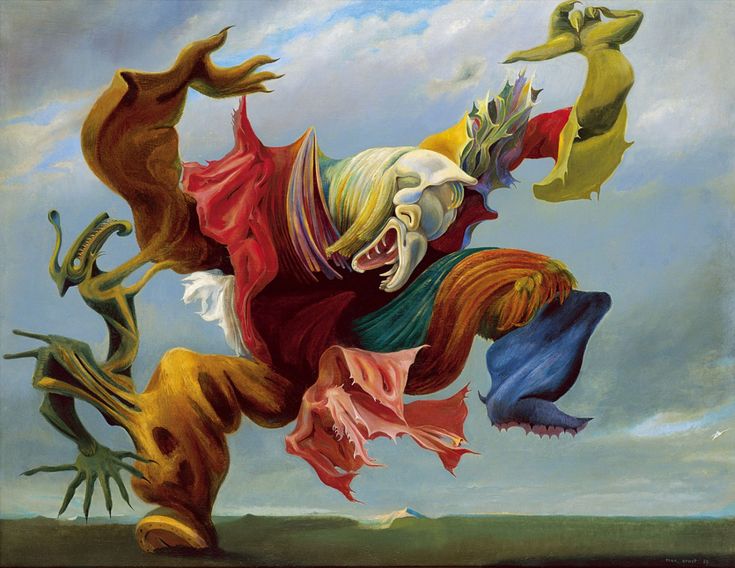
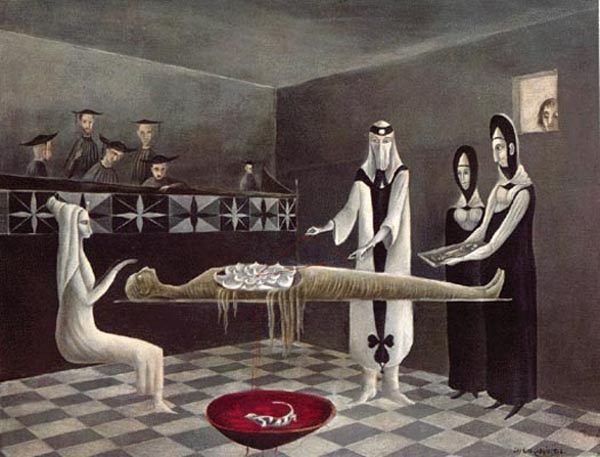
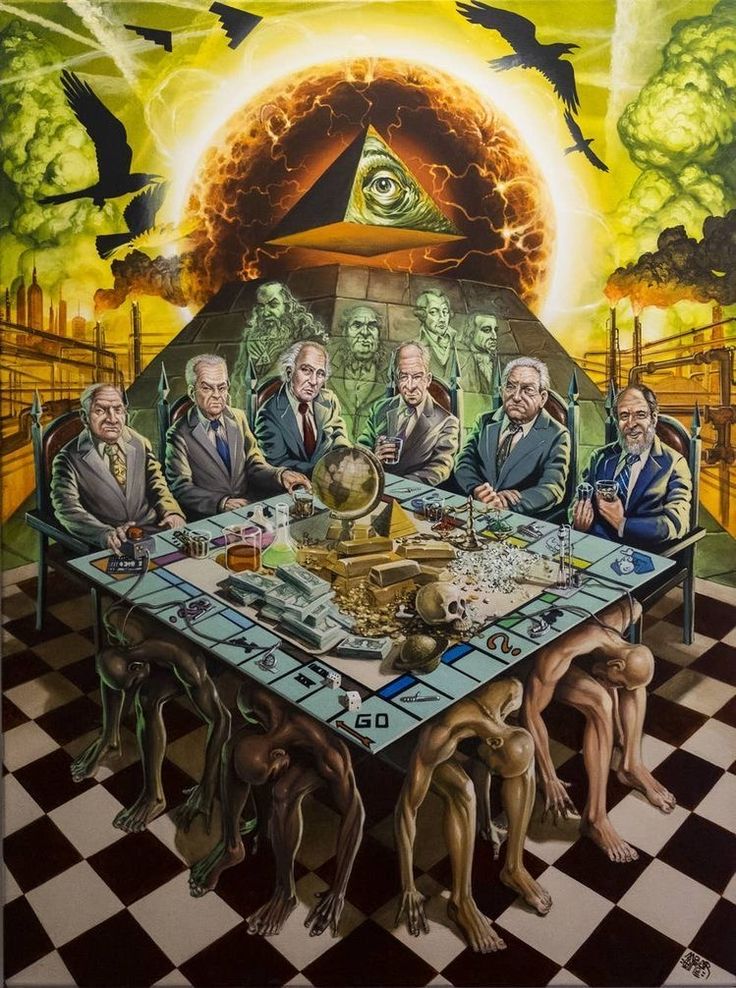








 Happy Friday!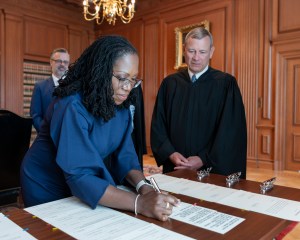
 From David Rothkopf of The Daily Beast:
 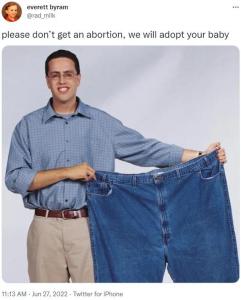 From MediaIte’s





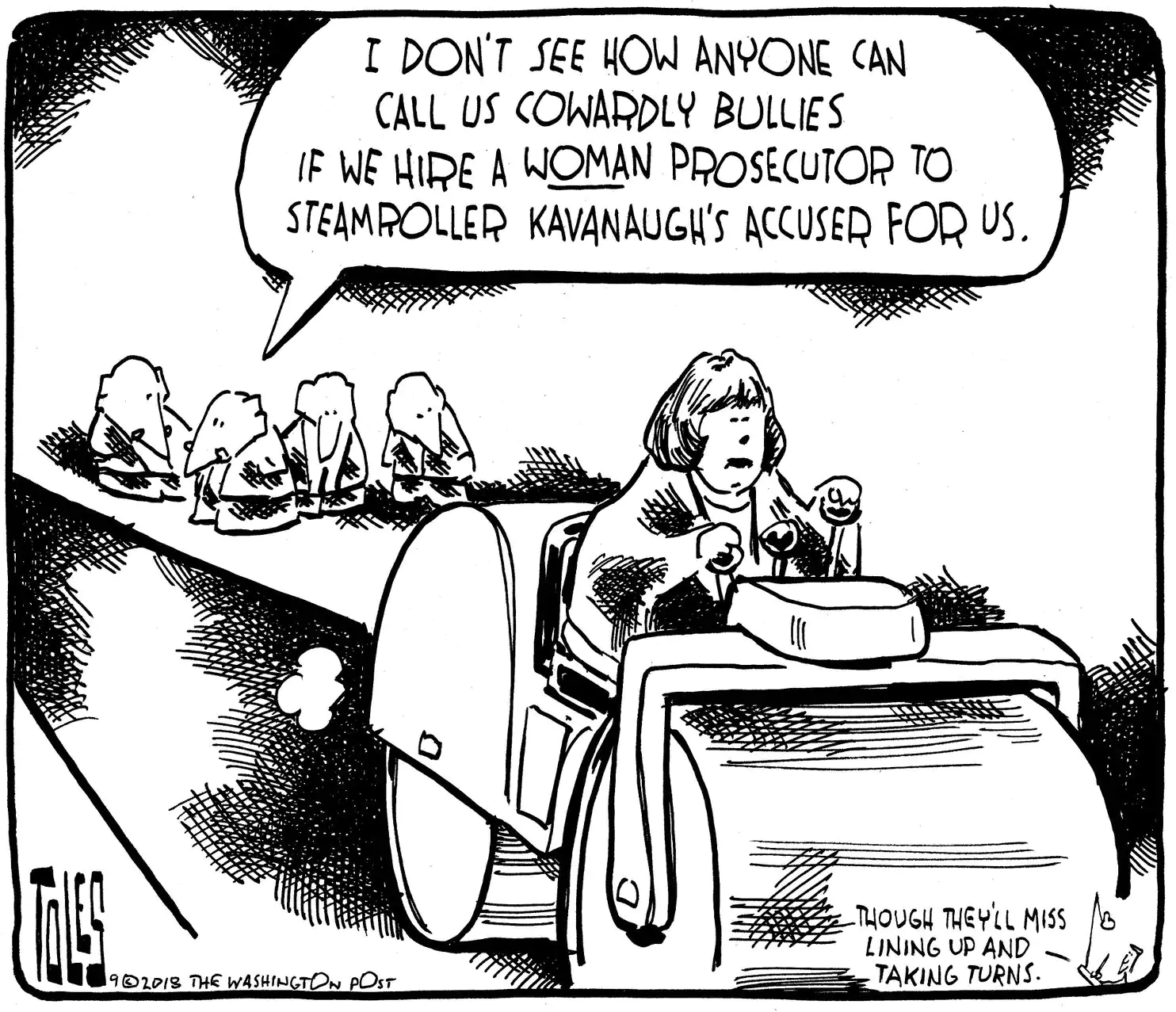
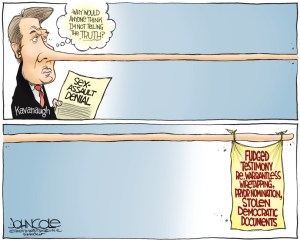
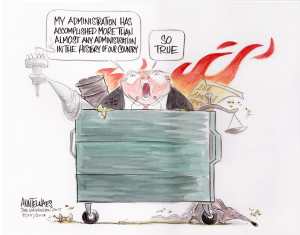
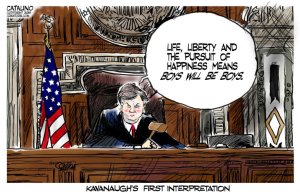
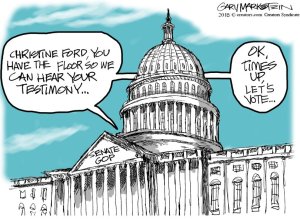
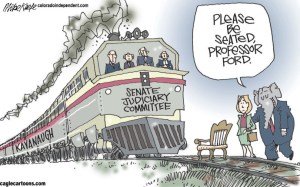

 peej
peej Carissa
 bostonboomer
 dakinikat
 ecocatwoman
 mablue2
 Mama Lopez
 peggysue22
 quixote
 skydancingguestblogger
 Mona (aka Wonk the Vote)



 Sky Dancing
Recent Comments