I don’t see any good news out there today. I wonder if things are just going to continue getting worse until fascism completely takes over our country. It’s already true that we are a failing democracy; and it’s not clear whether we can recover.
We still have some hope that the federal courts can rescue us, but the Supreme Court is making that less likely with each passing day. Yesterday, Dakinikat wrote about the latest nightmare decision from SCOTUS in the birthright citizenship case, and reactions to that decision are still dominating today’s news and opinion, and there are differing opinions about the fallout from the decision.
I also want to highlight some immigration horror stories that demonstrate how fascism really is coming to America, as Dakinikat suggested yesterday.
Yesterday, in a 6–3 decision in Trump v. Casa, the United States Supreme Court sided with the Trump administration in a case involving an executive order that purports to eliminate birthright citizenship.
Confusingly, the Court’s decision wasn’t about the constitutionality of the birthright-citizenship order. Instead, the case proceeded on the assumption that the order was unconstitutional. The only question for the justices was about remedy: What kind of relief should federal courts provide when a plaintiff successfully challenges a government policy?
The lower courts had, in several birthright-citizenship cases across the country, entered what are known as “universal” or “nationwide” injunctions. These injunctions prevented the executive order from applying to anyone, anywhere—even if they were not a party to the case. The Trump administration argued that nationwide injunctions were inappropriate and impermissible—injunctions should give relief only to the plaintiffs who brought the lawsuit, no one else.
In a majority opinion by Justice Amy Coney Barrett, the Supreme Court sided with the Trump administration and put nationwide injunctions to the torch. That’s a big deal. Not only does it represent a major setback to the states and advocacy groups that brought the lawsuit, it also amounts to a revolution in the remedial practices of the lower federal courts.
But it is not, as the dissenting Justice Ketanji Brown Jackson would have it, “an existential threat to the rule of law.” It won’t even mean the end of sweeping injunctions in the lower federal courts. To the contrary, the opinion suggests that relief tantamount to a nationwide injunction will still be available in many cases—including, in all likelihood, in the birthright-citizenship case itself.
Cat of Morocco by Isy Ochoa
The author, Nicholas Bagley, is a law professor at the University of Michigan and in the past served as legal counsel to Gov. Gretchen Whitmer. He writes that Barrett’s decision was based on history. Nationwide injunctions did not become commonplace until fairly recently in U.S. history; therefore she argued that ‘The federal courts thus lack the power to issue nationwide injunctions. Period. Full stop.” Bagley’s take:
In my book, that’s a positive development. In 2020 testimony to the Judiciary Committee of the U.S. Senate, I argued that nationwide injunctions “enable opportunistic behavior by politically motivated litigants and judges, short-circuit a process in which multiple judges address hard legal questions, and inhibit the federal government’s ability to do its work. By inflating the judicial role, they also reinforce the sense that we ought to look to the courts for salvation from our political problems—a view that is difficult to square with basic principles of democratic self-governance.”
Although the Supreme Court divided along partisan lines, with the liberal justices dissenting, I don’t see this as a partisan issue. (The outrageous illegality and sheer ugliness of President Donald Trump’s executive order that lies underneath this fight may go some distance to explain why the three liberals dissented.) Nationwide injunctions are equal-opportunity offenders, thwarting Republican and Democratic initiatives alike. Today, it’s Trump’s birthright-citizenship order and USAID spending freezes. Yesterday it was mifepristone, the cancellation of student debt, and a COVID-vaccine mandate. Why should one federal judge—perhaps a very extreme judge, on either side—have the power to dictate government policy for the entire country? Good riddance.
ven as it ended nationwide injunctions, the Supreme Court left the door open for other forms of relief that are not nationwide injunctions—but that look a whole lot like them. That’s good news for opponents of the birthright-citizenship order.
You’ll need to read the rest at The Atlantic to understand Bagley’s arguments.
The Supreme Court issued its birthright citizenship ruling this morning and it’s worse than just about everyone feared it could be.
The Court’s ruling is composed of two main parts.
The first is its declaration that it is possible that the president can contradict the plain-text reading of the Constitution by issuing an executive order doing away with birthright citizenship.
The second is that lower courts can no longer issue nationwide injunctions against blatantly unconstitutional policies imposed by the executive. Injunctions must now be created on a patchwork basis.
I want to impress upon you how dangerous this is. SCOTUS has empowered the president to impose whatever he likes—irrespective of its constitutionality—and then prevented judicial overview except at the localized level.1 Meaning that we will now have two sets of laws. One that operates in Red America and one that Operates in Blue America.
Separate, but unequal. A house divided against itself.
I think the majority believes it is being clever—that it has found a way to pretend to give Trump a win while (they tell themselves) ackshually delaying a substantive verdict.
But what they have done is not mere make-believe. They have set in motion a calamity.
Mr. Angel, Sir, Some Other Dude Done It, Elisheva Nesis, Israeli artist
I’m going to give you a bit more, because this article is behind a paywall. Last notes that the case before the SCOTUS was not about birthright citizenship, so they didn’t need to deal with that, and they didn’t specifically do that. That question will require further litigation.
The Supreme Court could have jumped ahead and simply ruled that the action proposed by the president’s executive order was unconstitutional. This would have meant widening the scope of the specific question in Trumpv.Casa. But scope gets widened all the time.2 The Supreme Court is the Supreme Court. It can do whatever it wants.
The fact that the majority chose to delay answering this question is, all on its own, a statement. My theory is that at least two members of the majority do not believe that the birthright citizenship order is constitutional—but they want to delay making that judgment as long as possible.
And so, by constructing this new idea—that universal stays are now verboten—they tell themselves that they have handed Trump a tactical victory but set him up for a strategic defeat on the substance of his EO later on.
The Supreme Court majority thinks it’s being clever by playing within the rules. They’re actually being fools, because Trump isn’t playing within the rules. Their conception that injunctions should be limited just to the parties in each particular case works only if (1) similar cases will be decided similarly, and (2) the government knows this fact and won’t try to break the law. But the government is, right now, in the process of finding ways to ignore the courts—including the Supreme Court—with as little political price as possible. And the government has shown already—repeatedly—that it will break the law.
An emboldened Trump administration plans to aggressively challenge blocks on the president’s top priorities, a White House official said, following a major Supreme Court ruling that limitsthe power of federal judges to issue nationwide injunctions.
Government attorneys will press judges to pare back the dozens of sweeping rulings thwarting the president’s agenda “as soon as possible,” said the official, who spoke on the condition of anonymity to describe internal deliberations.
Priorities for the administration include injunctions related to the Education Department and the Department of Government Efficiency, as well as an order halting the dismantling of the U.S. Agency for International Development (USAID), the official said.
“Thanks to this decision, we can now promptly file to proceed with numerous policies that have been wrongly enjoined on a nationwide basis,” President Donald Trump said Friday at a news conference in which he thanked by name members of the conservative high court majority he helped build.
Trump on Friday cast the narrowing of judicial power as a consequential, needed correction in his battle with a court system that has restrained his authority.
Scholars and plaintiffs in the lawsuits over Trump’s orders agreed that the high court ruling could profoundly reshape legal battles over executive power that have defined Trump’s second term — even as other legal experts said the effects would be more muted. Some predicted it would embolden Trump to push his expansive view of presidential power.
“The Supreme Court has fundamentally reset the relationship between the federal courts and the executive branch,” Notre Dame Law School Professor Samuel Bray, who has studied nationwide injunctions, said in a statement. “Since the Obama administration, almost every major presidential initiative has been frozen by federal district courts issuing ‘universal injunctions.’”
Immigrants rights’ advocates on Friday filed a nationwide class action lawsuit challenging President Donald Trump’s executive order restricting birthright citizenship, just hours after the Supreme Court partially blocked nationwide injunctions challenging Trump’s order.
The lawsuit, filed by the American Civil Liberties Union, Legal Defense Fund and other groups, was brought on behalf of a class of babies subject to the executive order, along with their parents. It charges the Trump administration with flouting the Constitution, congressional intent, and longstanding Supreme Court precedent.
Bohemio et el gato, Luis Garcés
It is also a direct response to the Supreme Court’s decision earlier Friday that puts new limits on nationwide injunctions, and reflects a new legal pathway that groups will likely turn to when challenging the Trump administration’s unlawful actions.
In a 6-3 decision along ideological lines, the high court struck down nationwide injunctions against Trump’s birthright citizenship order, narrowing their scope to provide relief to the specific plaintiff who is suing in a case rather than anyone who would be affected by the order. In addition to drawing sharp criticism from constitutional experts, the court’s decision is a major blow to pro-democracy groups that have been successfully challenging Trump’s lawlessness through the use of injunctions.
But the justices left the door open to challenging the administration in other ways, like class action lawsuits. The ACLU and its cohorts wasted no time using this legal pathway.
In a statement, the groups behind the new lawsuit noted that three lawsuits previously obtained nationwide injunctions protecting everyone subject to Trump’s executive order, but the Supreme Court’s decision narrowed those injunctions and potentially leaves children without protections.
“Every court to have looked at this cruel order agrees that it is unconstitutional,” Cody Wofsy, deputy director of the ACLU’s Immigrants’ Rights Project and lead attorney in this case, said in a statement. “The Supreme Court’s decision did not remotely suggest otherwise, and we are fighting to make sure President Trump cannot trample on the citizenship rights of a single child.”
Read the rest at HuffPost.
Immigration Horror Stories
First, two incidents in California, which is still under Trump’s thumb with his commandeering of the National Guard and his stationing marines in Los Angeles and with masked ICE gangs roaming the streets. We aren’t getting as much coverage about the situation in California, but protests and ICE raids are still going on.
Federal agents blasted their way into a residential home in Huntington Park, California, on Friday. Security-camera video obtained by the local NBC station showed border patrol agents setting up an explosive device near the door of the house and then detonating it – causing a window to be shattered. Around a dozen armed agents in full tactical gear then charged toward the home.
Jenny Ramirez, who lives in the house with her boyfriend and one-year-old and six-year-old children, told NBC through tears that it was one of the loudest explosions she heard in her life.
“I told them, ‘You guys didn’t have to do this, you scared by son, my baby,’” Ramirez said.
Ramirez said she was not given any warning from the authorities that they wanted to enter her home and that everyone who lives there is a US citizen.
The raid comes as federal agents have ramped up immigration enforcement in Los Angeles and across southern California over the last few weeks. Huntington Park is in Los Angeles county. Immigrants have been swept up in raids at court houses, restaurants and straight off the street. Some of the people targeted by Immigration and Customs Enforcement (Ice) have been US citizens. In one incident, Ice agents detained a Honduran woman seeking asylum and her children, one of which was a six-year-old boy who had been diagnosed with leukemia.
The agents who raided Ramirez’s home in Huntington Park on Friday also reportedly sent a drone into the house after setting off the explosive device.
Two cats on a colorful cushion, woodcut by Theophile Steinlen
Dramatic video shows the moment federal agents blew up the front door of a residence in Huntington Park early Friday morning, using a drone to search room by room for a man they say rammed a federal vehicle last week during immigration raids.
“They were right here with their rifles and we heard some screaming up in the front but we couldn’t see because everything was blocked, but it was pretty shocking,” said Lourdes Salazar.
That man, Jorge Sierra-Hernandez, was not home at the time, but his girlfriend and two young children were, leaving them shaking with fear due to the aggressive tactics of those agents.
He is now back home with his family after turning himself in Friday.
After the break-in and drone search:
Once the drone went out, at least nine agents moved in with guns drawn. They eventually escorted Ramirez and her children outside.
“They didn’t identify themselves until I came out, they told me they were from Homeland Security, from ICE,” said Ramirez.
She said pleaded with them to give her an explanation, but instead of giving her an answer, they said “when we find him he’s going to know why.” [….]
The agents claimed that Ramirez’s car ran into a truck carrying federal agents. It’s not clear if it was deliberate. The agents were also angry because protesters were throwing rocks at them during the incident. Why does that justify terrorizing a mother and two small children? DHS and ICE are on an out-of-control power trip.
A 32-year-old U.S. citizen was released from federal custody Thursday evening after her family said she was wrongfully detained by agents during an immigration enforcement operation in downtown Los Angeles.
According to her attorney, Andrea Velez was released on bond after being detained by immigration enforcement agents on Tuesday and then charged with assaulting a federal officer. The Department of Homeland Security said Velez “forcefully obstructed an ICE officer,” but her family said that’s not the case.
Estrella Rosas documented the frantic moments as she saw her sister being thrown to the ground before being arrested and forced into an unmarked car by unidentified officers near 9th and Main Street in downtown Los Angeles.
Woman with a cat, by Marijan Trepše.
“We dropped off my sister to go to work like we always do, all of a sudden, my mom in the rearview mirror she saw how a man went on top of her. Basically, dropped her on the floor and started putting her in handcuffs and trying to arrest her,” said Rosas, recounting the arrest.
In the video, Velez’s mother and sister can be heard pleading for help. “That’s my sister. They’re taking her. Help her, someone. She’s a U.S. citizen,” said Rosas.
In the criminal complaint, prosecutors alleged that during an immigration enforcement Tuesday morning, “Velez stepped into an officer’s path and extended one of her arms in an apparent effort to prevent him from apprehending a male subject he was chasing and that Velez’s outstretched arm struck that officer in the face.”
In her court appearance Thursday, Velez did not enter a plea in federal court. Velez’s family said she was just walking on her way to work as a marketing designer and did nothing wrong.
Both sisters are U.S. citizens, but these days that doesn’t seem to matter.
The Trump administration announced an end to temporary legal protections for Haitian migrants in the United States, leaving hundreds of thousands of people at risk of deportation.
The temporary protected status for Haitian nationals in the United States, granted after a 2010 earthquake near Port-au- Prince caused up to 200,000 deaths, will terminate Sept. 2, the Department of Homeland Security said in a statement Friday.
“This decision restores integrity in our immigration system and ensures that Temporary Protective Status is actually temporary,” DHS said in a statement Friday. The “environmental situation in Haiti has improved enough that it is safe for Haitian citizens to return home,” DHS said, and Haitian nationals may “pursue lawful status” through other means if they are eligible.
The statement did not elaborate on why it considered Haiti safe for citizens.
That’s because Haiti is not safe.
Meanwhile, the U.S. government continues to advise Americans against all travel to Haiti, which has been under a state of emergency since March 2024 because of “kidnapping, crime, civil unrest, and limited health care.” The State Department’s travel advisory adds that “mob killings and assaults by the public have increased” and that crimes including “robbery, carjackings, sexual assault and kidnappings for ransom” are common.
Bedtime Story, by Jeanette Lassen
The U.S. Embassy in Port-au-Prince this week noted that some domestic air travel had resumed, and urged Americans to leave the country “as soon as possible.”
In a federal register notice of the decision, Secretary of Homeland Security Kristi L. Noem said she decided to terminate the TPS designation for Haiti “because it is contrary to the national interest to permit Haitian nationals … to remain temporarily in the United States.”
“Widespread gang violence in Haiti is sustained by the country’s lack of functional government authority. This breakdown in governance directly impacts U.S. national security interests, particularly in the context of uncontrolled migration,” she said in the notice. While the situation in Haiti was “concerning,” she wrote, “the United States must prioritize its national interests.”
Donald Trump is not happy. He’s not happy with Israel because they kept bombing Iran after Trump has announced a cease fire. He’s not happy because the U.S. intelligence community has found that his bombing raid on Iran didn’t destroy their nuclear capabilities. He’s not happy that he will likely never get the Nobel Peace Prize that he desperately wants.
Yesterday, Trump spoke to the press on the way to Marine One to travel to the NATO summit in the Netherlands. He appeared disheveled, wearing a rumpled suit with no tie. In angrily criticizing Israel and Iran for not abiding by his cease fire announcement, he broke another presidential norm by swearing in public.
President Trump on Tuesday emphatically dropped an f-bomb, on camera, expressing frustration that Israel and Iran appeared to be violating the ceasefire that he just celebrated going into effect.
“We basically have two countries that have been fighting so long and so hard that they don’t know what the f*** they’re doing,” Trump said to reporters as he left the White House.
More than any other president, Trump has been known to use coarse language in speeches and other public appearances. But even for him, this on-camera utterance of the f-word was new. American presidents have typically refrained from using it publicly, even when angry or frustrated.
“Politics is sometimes a dirty and ugly business, and so people use language there that might be better preserved in the locker room — but in no instance do I recall a president openly using this term in a public forum,” said Russell Riley, a presidential historian at the Miller Center at the University of Virginia.
Donald Trump’s f-bomb outburst Tuesday morning over the botched Iran-Israel ceasefire was due to the two embattled countries “ruining” the president’s “perfect war,” journalist Michael Wolff argued on The Daily Beast Podcast.
Trump drops the “F” bomb on the way to Marine One
Wolff also told host Joanna Coles that the context behind Trump’s comment—“You basically have two countries that have been fighting so long and so hard that they don’t know what the f— they’re doing!”—was that the president, unlike his predecessors, doesn’t intend on shepherding the conflict through to its end.
“The difference between all those other people getting sucked into these extended and incredibly damaging commitments is that they have the attention span to do that,“ Wolff said. ”He does not. So in a sense, that’s the weird silver lining. He’s not going to go forward with this.”
“And I don’t see him going down and becoming a wartime president and seeing this as something that he has to see to the end,” Wolff explained. “Trump’s whole impulse is exactly the opposite of that.” [….]
“Many wars are provoked by headlines, by propaganda, by people advocating for their position, trying to push people into wars. That’s certainly what the neocons did for so long,” he said. “But this is kind of the opposite; this is war to create a headline, and the headline is, ‘We won.’”
It’s all part of Trump’s childish personality. He bombed Iran and announced that their nuclear sites were “obliterated.” Right before he had to head to NATO meeting, it came out that that wasn’t true. He’s still publicly insisting that Iran’s nuclear program is dead, but he knows now that it’s a lie.
Trump’s Insane Claims about the Iran Strikes and His Wished-For Cease Fire
If the cease-fire holds, this episode would appear to mark a major foreign-policy victory for the president. But Trump may have made a crucial mistake that could bring about the very outcome that successive American presidents have sought to prevent: an Iranian nuclear weapon.
The problem is that the cease-fire is not linked to a diplomatic agreement with Iran on the future of its nuclear program. Trump apparently sees no need for further negotiation, because the military strikes were, to him, an unqualified success. But as the chair of the Joint Chiefs of Staff said on Sunday morning, assessing the damage to the sites will take some time. A preliminary assessment from the Defense Intelligence Agency found that the strikes had failed to destroy some core components of the nuclear program, CNN reported today.
If parts of the program survived, or if Iran stockpiled and hid enriched uranium in advance of the strikes, then Tehran’s next steps seem clear. It will end cooperation with the International Atomic Energy Agency and withdraw from the Nuclear Non-Proliferation Treaty. Without eyes and ears on the ground, the international community will lose the ability to monitor Iran’s program. Iran could then choose to build a bomb covertly.
There is a worrisome parallel here to North Korea, which ended cooperation with the IAEA, pulled out of the NPT, and slowly resumed production of highly enriched uranium. A few years later, Pyongyang tested a nuclear device, much to everyone’s surprise.
The Iranian regime may conclude that withdrawing from the NPT is its most effective form of retaliation.
Our childish “president” doesn’t have the patience to deal with anything except instant gratification.
The US military strikes on three of Iran’s nuclear facilities last weekend did not destroy the core components of the country’s nuclear program and likely only set it back by months, according to an early US intelligence assessment that was described by seven people briefed on it.
The assessment, which has not been previously reported, was produced by the Defense Intelligence Agency, the Pentagon’s intelligence arm. It is based on a battle damage assessment conducted by US Central Command in the aftermath of the US strikes, one of the sources said.
Discouraged looking Trump arrives at NATO summit, still no tie.
The analysis of the damage to the sites and the impact of the strikes on Iran’s nuclear ambitions is ongoing, and could change as more intelligence becomes available. But the early findings are at odds with President Donald Trump’s repeated claims that the strikes “completely and totally obliterated” Iran’s nuclear enrichment facilities. Secretary of Defense Pete Hegseth also said on Sunday that Iran’s nuclear ambitions “have been obliterated.”
Two of the people familiar with the assessment said Iran’s stockpile of enriched uranium was not destroyed. One of the people said the centrifuges are largely “intact.” Another source said that the intelligence assessed enriched uranium was moved out of the sites prior to the US strikes….
The White House acknowledged the existence of the assessment but said they disagreed with it.
White House press secretary Karoline Leavitt told CNN in a statement: “This alleged assessment is flat-out wrong and was classified as ‘top secret’ but was still leaked to CNN by an anonymous, low-level loser in the intelligence community. The leaking of this alleged assessment is a clear attempt to demean President Trump, and discredit the brave fighter pilots who conducted a perfectly executed mission to obliterate Iran’s nuclear program. Everyone knows what happens when you drop fourteen 30,000 pound bombs perfectly on their targets: total obliteration.”
Trump, who’s in the Netherlands attending this week’s NATO summit, pushed back on CNN’s report in a Truth Social post. “One of the most successful military strikes in history,” Trump wrote in the all-caps post adding, “The nuclear sites in Iran are completely destroyed!”
Netanyahu must be trying to suck up to Trump, because Israel has released their evaluation of the U.S. strikes.
The Israeli government’s nuclear authority says US and Israeli strikes on Iran have rendered the Fordo underground enrichment site “inoperable”.
In a statement the Israel Atomic Energy Commission (IAEC) says the “devastating” strike “destroyed the site’s critical infrastructure”.
“We assess that the American strikes on Iran’s nuclear facilities, combined with Israeli strikes on other elements of Iran’s military nuclear program, has set back Iran’s ability to develop nuclear weapons by many years,” it says.
The IAEC adds that the “achievement can continue indefinitely if Iran does not get access to nuclear material”.
The statement was initially shared by the White House, which distributed it to reporters earlier. It was later released by Israeli Prime Minister Benjamin Netanyahu.
As he embarked on his attacks on Iran, President Donald Trump was clear that his initial bombing run would be followed by unbelievable destruction, if the government in Tehran angered him too much. But then after giving war a chance, he was clear that he wanted “peace” for all nations involved. Then, he toyed with the idea of a “regime change” war. And then he announced a supposed cease-fire. But then he got very mad on the internet that nobody was following his huffy cease-fire demands. Then, he got really mad online, again. And then… who the hell knows? Even senior members of his own administration sometimes don’t seem to know what to make of this Trumpian blitz of war and supposed peace.
One thing is for sure: Trump wants you to believe that he can shitpost, bully, and even bomb his way to lasting, durable peace.
For years, Trump has wanted to win a Nobel Peace Prize, and both in and out of office, he has routinely brought up the topic of this elusive honor, people close to him say. However, you do not need to take their word for it, largely because the president often complains in public and on the internet about not getting a Nobel Peace Prize that he can mount in his office.
One reason for that is, despite his anti-neocon rhetoric, Trump has developed a markedly pro-war track record during both of his administrations, and the body count to go with it. His warfare against Iran is just the latest exhibit in that long record.
To this day, Trump still gets visibly upset when the issue is brought up in private conversations, according to a source who’s discussed it with him recently in this presidency, and he will lament that he might have to “save the whole world” in order to win the prize this term — but even doing that, he believes, might not be enough to win over the Norwegian committee due to perceived anti-Trump bias.
Suebsaeng and Perez write that the bombing of Iran is not necessarily popular with members of his administration.
But even within Trump’s second administration — which he packed full of yes-men, yes-women, and venal MAGAheads — there is some degree of hurt feelings over Trump’s attacks on Iran’s nuclear sites over the weekend, even if no one expects this disappointment to lead to resignations or anything useful, rather than anonymous venting to reporters.
Vice President J.D. Vance, a former Trump critic, has said repeatedly that one of the things that drew him to his new boss was Trump’s professed commitment to “ending endless wars,” and bucking the GOP’s old guard on militarism overseas. Trump’s big talk on being the “candidate of peace” was, of course, always a gigantic fraud, and Vance is still assuming the role of committed Trump uber-loyalist, backing Trump’s war to the hilt.
One quietly frustrated Trump appointee told Rolling Stone that the president’s haphazard Iran bombing policy reflects the kind of “warmonger shit that we’re supposed to be against.” But as this week progressed, this source said that “at least he’s a lazy warmonger.”
Trump’s one accomplishment at the NATO summit is that NATO countries have agreed to spend 5% of their GDP on military preparedness.
Trump at the NATO Summit
Speaking at the NATO summit, Trump continued obsessing over the bombing and the intel assessment that it didn’t destroy Iran’s nuclear capability.
President Donald Trump lashed out at “scum” who revealed his much-championed strikes against Iran were likely far less effective than he claims.
Speaking at a NATO summit in the Netherlands on Wednesday, Trump also conceded that the report from his own intelligence community was “correct,” even while continuing to insist that his strikes on Iranian nuclear facilities caused “total obliteration” and having previously dismissed the report as fake news.
Trump speaks at the NATO summit.
“CNN is scum, MSDNC is scum, the New York Times is scum. They’re bad people, they’re sick,” Trump raged Wednesday.
“What they’ve done is they’ve tried to make this unbelievable victory into something less,” Trump went on. “The generals and all of the people who did a good job, they get demeaned by these idiots at CNN, who can’t get ratings. The place is dying, nobody even wants to waste their time going on any of their shows, so they form what [sic] The New York Times, which is dying also. Without Trump, you wouldn’t have a New York Times.”
It follows after both publications reported leaked findings from a classified military intelligence report that suggested Trump’s weekend strikes against three separate nuclear sites in Iran fell far short of an “obliteration,” as Trump claims, and had likely only set the country’s nuclear program back by a mere matter of months.
The coverage of the leaked documents had already prompted a flurry of typically bellicose Truth Social posts from Trump stretching into the small hours of the night.
“FAKE NEWS CNN, TOGETHER WITH THE FAILING NEW YORK TIMES, HAVE TEAMED UP IN AN ATTEMPT TO DEMEAN ONE OF THE MOST SUCCESSFUL MILITARY STRIKES IN HISTORY,” he wrote, adding: “THE NUCLEAR SITES IN IRAN ARE COMPLETELY DESTROYED! BOTH THE TIMES AND CNN ARE GETTING SLAMMED BY THE PUBLIC!
Immigration is also in the news today, because the corrupt Supreme Court has handed Trump permission to ship immigrants to third countries with no due process.
With one anodyne paragraph, the Court simultaneously cut the legs out from under lower court judges and consigned countless immigrants to be renditioned to a system of global gulags.
It’s a decision that will have long lasting corrosive effects on American civil society and respect for the courts.
“I cannot join so gross an abuse of the Court’s equitable discretion,” Justice Sonia Sotomayor wrote in her impassioned dissent.
The case involves a challenge to third country removals — that is, immigrants who cannot be repatriated to their home countries and are instead being dumped in some other nation which will accept them.
Immigration protesters in front of Supreme Court
Like most of the people swept up in Trump’s deportation dragnet, the vast majority of affected immigrants were released into the community years ago and have been doing harm to no one — a reality the administration tries to hide by blasting out mugshots of the tiny minority of deportees with serious criminal records.
But The Intercept reports that, in its bloodthirsty quest to shove out as many people as fast as possible, the White House “explored, sought, or struck deals with at least 19 countries: Angola, Benin, Costa Rica, El Salvador, Eswatini, Equatorial Guinea, Guatemala, Guyana, Honduras, Kosovo, Libya, Mexico, Moldova, Mongolia, Panama, Rwanda, Saudi Arabia, Ukraine, and Uzbekistan.”
On March 23, a group of detainees sued in the District Court of Massachusetts seeking an injunction barring the government from deporting them to third countries without notice and an opportunity to object under the Convention Against Torture (CAT). Citing the Supreme Court’s rulings in the Alien Enemies Act cases, Judge Brian Murphy reasoned that telling people as they are being loaded onto planes that they’re about to be dropped in a country they’ve never seen clearly violates due process:
“This case presents a simple question: before the United States forcibly sends someone to a country other than their country of origin, must that person be told where they are going and be given a chance to tell the United States that they might be killed if sent there? Defendants argue that the United States may send a deportable alien to a country not of their origin, not where an immigration judge has ordered, where they may be immediately tortured and killed, without providing that person any opportunity to tell the deporting authorities that they face grave danger or death because of such a deportation. All nine sitting justices of the Supreme Court of the United States, the Assistant Solicitor General of the United States, Congress, common sense, basic decency, and this Court all disagree.”
Judge Murphy ordered the government to provide detainees written notice “in a language the alien can understand,” with “meaningful opportunity for the alien to raise a fear of return for eligibility for CAT protections and … if the alien is not found to have demonstrated ‘reasonable fear,’ provide meaningful opportunity, and a minimum of 15 days, for that alien to seek to move to reopen immigration proceedings to challenge the potential third-country removal.”
The Trump administration is planning to dismiss asylum claims for potentially hundreds of thousands of migrants in the United States and then make them immediately deportable as part of the president’s sweeping immigration crackdown, according to two sources familiar with the matter.
It marks the latest in a series of moves by the administration to bar migrants from receiving protections in the US. As federal authorities come under pressure to deliver historic immigration arrest numbers, administration officials have quietly been working on efforts to make more people eligible for removal.
Masked ICE agents
The people being targeted in this case are those who entered the US unlawfully and later applied for asylum, the sources said. Their cases are expected to be closed, therefore leaving them at risk of deportation. It could affect hundreds of thousands of asylum applicants.
Over the last decade, the majority of applicants who applied for asylum with US Citizenship and Immigration Services, or USCIS, self-reported how they entered the US, with around 25 percent saying they entered the US unlawfully. That amounts to at least a quarter of a million people, according to a federal report analyzing asylees in 2023. The others entered legally via a port of entry through various visas.
Under US law, people who are seeking protection from violence or persecution in their home country can claim asylum to remain in the United States. Trump effectively sealed off access to claiming asylum at the US southern border upon taking office.
There are currently around 1.45 million people with pending affirmative asylum applications, federal data shows. People who are not in deportation proceedings can apply for affirmative asylum through USCIS.
USCIS — which falls under the Department of Homeland Security and is responsible for managing federal immigration benefits — has also been delegated the authority by Homeland Security Secretary Kristi Noem to place those individuals in fast-track deportation proceedings as well as “take additional actions to enforce civil and criminal violations of the immigration laws,” according to a memo obtained by CNN. That marks an unprecedented departure from decades-long protocol for USCIS.
They have already been doing this by asking immigration judges to dismiss people’s cases and then having ICE grab them as they leave the courtroom. Read more CNN.
After six months of aggressive immigration enforcement and promises to focus on deporting violent criminals, the Trump administration has arrested and detained a small fraction of the undocumented immigrants already known to Immigration and Customs Enforcement as having been convicted of sexual assault and homicide, internal ICE data obtained by NBC News shows.
The data is a tally of every person booked by ICE from Oct. 1 through May 31, part of which was during the Biden administration. It shows a total of 185,042 people arrested and booked into ICE facilities during that time; 65,041 of them have been convicted of crimes. The most common categories of crimes they committed were immigration and traffic offenses.
Almost half of the people currently in ICE custody have neither been convicted of nor charged with any crime, other ICE data shows.
Last fall, ICE told Congress that 13,099 people convicted of homicide and 15,811 people convicted of sexual assault were on its non-detained docket, meaning it knew who they were but did not have them in custody. A spokesperson said at the time that ICE had some information about but did not know the exact whereabouts of all the immigrants on the non-detained docket and that some could have left the United States or could be in prison.
Running for president at the time, Donald Trump used those figures to criticize his opponent, Vice President Kamala Harris.
“These are hard, tough, vicious criminals that are free to roam in our country,” Trump said at a campaign stop in Michigan.
One more, from Sherrilyn Ifill at Sherrilyn’s Newsletter: Masked Terror.
At this point, we have all seen the videos. Men dressed in plaid shirts, jeans and boots descending on constructions sites, chasing migrants in fields, lurking in courthouse hallways at courthouses, knocking on doors of homes, and surrounding cars. We see them wrestling men and women to the ground. Beating them in some instances. Chasing them. Jumping out of cars and descending. Surrounding unarmed women. Pointing their guns and demanding that people exit their cars. They have shown up at elementary schools demanding to see children of migrants.[i] They purport to be working for the Department of Homeland Security. They are ICE agents, we surmise. But often we don’t know. Because these men, for the most part, display no badges or names.
Masked ICE agents in Seattle courthouse
And they are masked. Their masks are not “government issue” or of the N-95 variety with which we became familiar during COVID. Often these masks are just large, black or green pieces of cloth, or bandanas covering the entire face, save for the eyes. A hat pushed down low also appears to be part of the required uniform.
Despite strong opposition from ordinary Americans to the appearance of a force that many liken to “secret police” in totalitarian regimes, Republican senators have doubled down on ICE agent anonymity, introducing legislation that would make it a felony to release the names of ICE agents.[ii]
There is something particularly menacing about being attacked by faceless people. The mask not only terrorizes the victim of the attack, but it also uniquely empowers the perpetrator. We see this in many of the videos as those who claim to be federal officers, speak crudely and cruelly, and behave with unspeakable brutality against unarmed laborers and their families. The mask prevents their victims from identifying the “officers.” But perhaps the anonymity offered by the mask also encourages these agents to obscure their own humanity from each other and from themselves.
This country has a unique history with the particular terror of masked attackers. The Ku Klux Klan, the violent white supremacist organization terrorized Black people in the American South in the first years after the end of the Civil War and through much of the 20th century. So rampant was Klan violence in the years immediately after the Civil War, that it threatened to derail the promise of the 14th Amendment, which was ratified in 1868 and was designed to ensure that Black people would equal citizens in post-Civil War America.
Read the rest at the link.
That’s it for me today. What’s on your mind?
Did you like this post? Please share it with your friends:
The U.S. has lost its last triple-A credit rating.
Moody’s Ratings downgraded the U.S. government on Friday, citing large fiscal deficits and rising interest costs.
Expanding budget deficits mean U.S. government borrowing will rise at an accelerating rate, pushing interest rates up over the long term, Moody’s said. The firm said Friday that it didn’t believe that any current budget proposals under consideration by lawmakers would do anything significant to reduce the persistent gap between government spending and revenues.
The move strips the U.S. of its last remaining triple-A credit rating from a major ratings firm, following similar cuts by Fitch Ratings in 2023 and S&P Global Ratings in 2011. Moody’s downgraded the U.S. to Aa1, a rating also held by Austria and Finland.
“Successive U.S. administrations and Congress have failed to agree on measures to reverse the trend of large annual fiscal deficits and growing interest costs,” Moody’s wrote in a statement….
The Moody’s downgrade comes as Republicans in Congress are trying to fashion a giant tax-and-spending bill that would extend expiring tax cuts, add some new tax cuts, reduce spending on Medicaid and nutrition assistance and boost border enforcement and national defense. It is expected to increase budget deficits by about $3 trillion over the next decade, compared with a scenario where the tax cuts expire as scheduled Dec. 31.
House Republican spending hawks blocked the bill on Friday, trying to accelerate spending cuts and hasten the end of clean-energy tax breaks.
A bit more:
At the margin, the Moody’s downgrade could put pressure on the market for U.S. Treasurys, which has already been hit by expectations for greater borrowing and stubbornly high inflation.
Treasurys, however, rallied after S&P’s 2011 downgrade, in part because the economy was weak, demonstrating that investors still considered the U.S. the world’s safest bet. Few expect the Moody’s downgrade to spur market turmoil this time. The U.S. remains the world’s largest economy and the benchmark against which other countries are measured.
But some investors said the downgrade could exacerbate the damage the recent trade war has done to that exceptional position. And that might compel global investors to lift the premium they demand to buy U.S. debt, which could drive benchmark yields beyond their recent level around 4.5%, likely stressing growth and market sentiment.
“That could generate an even bigger deficit because the cost of servicing our debt would also go up,” said Michael Goosay, global head of fixed income at Principal Asset Management.
Obviously, Trump couldn’t care less about what happens to the U.S. credit rating. He’s just going to bleed the country dry and grab as much has he can while doing it.
Ultra right wing members of the House budget committee voted against Trump’s “big, beautiful bill” yesterday.
The GOP-led House Budget Committee voted to reject a sweeping package for President Donald Trump’s agenda on Friday, dealing an embarrassing setback to Speaker Mike Johnson, R-La., and Republican leaders.
A glass of milk, Nataliya Bagatskaya, (Ucraina, b.1967)
The vote in the Budget Committee was 16-21, with a band of conservative hard-liners who are pushing for steeper spending cuts joining all Democrats in voting against the multitrillion-dollar legislation, leaving its fate uncertain.
The Republicans who voted “no” were Reps. Chip Roy of Texas, Ralph Norman of South Carolina, Andrew Clyde of Georgia and Josh Brecheen of Oklahoma. Rep. Lloyd Smucker of Pennsylvania changed his vote from “yes” to “no,” he said, as a procedural move to allow Republicans to call the bill up again.
During the hearing, Roy fired a warning shot at Republican leaders, saying he opposes the bill as written because it will increase the deficit.
“I have to now admonish my colleagues on this side of the aisle. This bill falls profoundly short. It does not do what we say it does with respect to deficits,” Roy said. “That’s the truth. Deficits will go up in the first half of the 10-year budget window and we all know it’s true. And we shouldn’t do that. We shouldn’t say that we’re doing something we’re not doing.”
“This bill has back-loaded savings and has front-loaded spending,” Roy added. “I am a no on this bill unless serious reforms are made today, tomorrow, Sunday. Something needs to change or you’re not gonna get my support.”
After the vote tally was read, Rep. Jodey Arrington, R-Texas, the committee chair, adjourned the hearing and told members they would not be meeting again this weekend.
President Donald Trump blasted Walmart on Saturday after the retailer warned this week that it will raise prices because of tariffs.
“Between Walmart and China they should, as is said, “EAT THE TARIFFS,” and not charge valued customers ANYTHING,” Trump wrote on Truth Social. “I’ll be watching, and so will your customers!!!”
Walmart CFO John David Rainey said in an interview on Thursday that “We have not seen price increases at this magnitude, in the speed in which they’re coming at us before, and so it makes for a challenging environment.”
Rainey said he is “pleased with the progress that’s been made by the [Trump] administration on tariffs from the levels that were announced in early April, but they’re still too high.”
He said the company will “try to work with suppliers to keep prices as low as we can.”
Yesterday the Supreme Court dealt a blow to the Trump administration’s deportation plans.
The Supreme Court on Friday blocked President Donald Trump from moving forward with deportations under the 1798 Alien Enemies Act for a group of immigrants in northern Texas, siding with Venezuelans who feared they were poised for imminent removal under the sweeping wartime authority.
The decision is a significant loss for Trump, who wants to use the law to speed deportations – and avoid the kind of review normally required before removing people from the country. But the decision is also temporary and the underlying legal fight over the president’s invocation will continue in multiple federal courts across the country.
By Sandra Batoni
The justices sent the case at issue back to an appeals court to decide the underlying questions in the case, including whether the president’s move is legal and, if it is, how much notice the migrants targeted under the act should receive….
The court’s unsigned opinion was notably pointed about how the government was attempting to handle the removals and also how US District Judge James Hendrix had dealt with the case at an earlier stage.
The court referenced another case that had reached it previously, that of the Maryland man, Kilmar Abrego Garcia, who was mistakenly removed to El Salvador. The court noted that the Trump administration has represented that it is “unable to provide for the return of an individual deported in error to a prison in El Salvador.”
Given that, the court said, “the detainees’ interests at stake are accordingly particularly weighty.” In other words, the court was saying it is important to get the legal questions correct before people are removed, potentially, forever.
Way back on <checks notes> Wednesday, I wrote a long post updating the state of play in the (many) cases challenging President Trump’s attempt to use the Alien Enemies Act of 1798 to remove from the United States, on a mass, summary basis, individuals the government claims to be Venezuelan members of the Tren de Aragua (TdA)….
As I noted then, the Supreme Court had yet to decide the ACLU’s pending emergency application in the case from the Northern District of Texas—with the unhelpful caption “A.A.R.P. v. Trump.” That’s the case in which the Court had temporarily blocked further removals in its after-midnight ruling early on Saturday, April 19 (which I covered here). But a full ruling on the application has been pending ever since.
Well, around 3:45 on Friday afternoon, that ruling came down. And the decision—in “A.A.R.P. II”—is a pretty big deal. So I thought I’d put together this quick post that walks through what happened—and why it matters….
What Did the Court … Hold? There’s a lot of technical stuff in the eight-page, unsigned majority opinion.1 What’s especially important are, by my count, three different holdings: First, that the Fifth Circuit did have jurisdiction to hear the plaintiffs’ appeal of the district court’s refusal to block their removal (it had concluded otherwise). Second, that the plaintiffs were entitled to more notice than they had received as of April 18. And third—and this is the quiet bombshell in the ruling—that “this Court may properly issue temporary injunctive relief to the putative class in order to preserve our jurisdiction pending appeal,” even without resolving whether full class certification is likely….
The post is pretty technical, so if you want the details, read the whole thing at the link. I’ll just quote one more section:
Is It Me, Or is the Majority Opinion … Unusually Pointed? It’s not you. There are at different passages in which the majority openly seems to be expressing … frustration … with the government; the lower courts; and Justice Alito (who wrote a dissenting opinion that was joined by Justice Thomas), respectively.
It appears that at least some of the justices are getting sick and tired of the Trump administration’s dishonesty and refusal to obey the courts.
GREENBELT, Md. — In a contentious court hearing on Friday, Trump administration attorneys argued before a federal judge in Maryland that they should be allowed to withhold information regarding efforts to facilitate the return of a Salvadoran man to the United States.
Kilmar Abrego Garcia remains in the Salvadoran prison system despite orders from a federal judge and the Supreme Court calling for the government to facilitate his return to the United States.
Drawing of old woman with cat, Max Leibermann
U.S. District Judge Paula Xinis said the government’s refusal to provide certain information in the case has been “an exercise in utter frustration.” In a back-and-forth that has continued for weeks,Xinis has ordered the administration to facilitate Abrego Garcia’s release and provide documentation on what steps it has taken, if any, to comply with that order.
Government lawyers said the administration has not been able to answer questions about Abrego Garcia’s case because that information would be considered protected under “state secrets” or “deliberative process” privileges that should not be shared with the public.
On Friday, Xinis said the administration has not made a good-faith effort to comply with the court order. She repeatedly called on the administration to show how turning over evidence of actions it has taken or will take to return Abrego Garcia would pose a reasonable danger to foreign affairs.
“There is simply no detail. This is basically, ‘Take my word for it,’” the judge said.
From Garcia’s attorneys:
Abrego Garcia’s team said the discovery they’ve received from the government thus far has been inadequate, and Xinis appeared to agree. The plaintiffs said they received 164 documents, and 132 of them were photocopies of court filings and their own discovery requests. Rossman said that of the remaining 32 new documents, half were related to Maryland Sen. Chris Van Hollen’s recent trip to El Salvador to see Abrego Garcia.
Rossman said the government logged 1,140 documents as “privileged,” in “every manner of privilege that I’ve ever heard of.”
“My head is spinning, your honor,” he said.
Rossman also said it was “deeply disturbing” that while the administration has claimed in court that it’s complying with the order to facilitate Abrego Garcia’s release, high-ranking officials including Trump himself have contradicted that in public.
The administration’s claims, Xinis says, have been hampering efforts to get to the bottom of whether the government has disobeyed the court order by not facilitating the return of Abrego Garcia to the United States.
When a Guatemalan man sued the Trump administration in March for deporting him to Mexico despite a fear of persecution, immigration officials had a response: The man told them himself he was not afraid to be sent there.
Immigrations and Customs Enforcement officials now say they have no record of anyone being told by the man, identified only by the initials O.C.G. in court papers, that he was unafraid of going to Mexico. The error, they say, was attributable to a “software tool” known as ICE’s “ENFORCE alien removal module” that tracks individual deportation cases and allows staff to insert comments.
“Upon further investigation … ICE was unable to identify an officer or officers who asked O.C.G. if he feared a return to Mexico,” said Brian Ortega, assistant field office director for ICE’s Enforcement and Removal Operations, in a sworn statement to the federal judge overseeing the lawsuit.
The mistake may have been costly: The judge overseeing the lawsuit said last month he did not order the administration to facilitate O.C.G.’s immediate return from Mexico in part because of the dispute. Instead, U.S. District Judge Brian Murphy, a Biden appointee based in Massachusetts, ordered expedited fact-finding, which helped unearth the mistake.
ICE’s acknowledgment is the latest in a string of errors that have led judges to fault the administration for attempting to carry out President Donald Trump’s mass deportation campaign at a breakneck pace — often at the expense of due process.
The U.S. DOGE Service arrived at the Social Security Administration this year determined to slash staff and root out what it claimed was widespread fraud and wasteful spending — a mission Elon Musk’s cost-cutting team has pursued across the government.
But as of this week, many of the major changes DOGE pushed at Social Security have been abandoned or are being reversed after proving ineffective, while others are yielding unintended consequences and badly damaging customer service and satisfaction. The problems come as the agency struggles to cope with a record surge of hundreds of thousands of retirement claims in recent months.
DOGE, which stands for Department of Government Efficiency but is not a Cabinet-level agency, had to cancela plan to cut phone service for retirement and disability claimsafter drawing outrage from lawmakers, seniors and advocates. Staff reductions and reassignments led by DOGE are slowing the pace of claims processingas field offices lose longtime staff and gain a smaller number of inexperienced replacements. DOGE-driven changes to the agency’s website are causing crashes almost every day, and phone customers complain about dropped calls and long wait times. A DOGE-imposed spending freeze is leading to shortages of basic office supplies, from printer cartridges to the phone headsets staff need to do their jobs.
And on Friday, Social Security leaders told employees that the agency was ending a security check, developed at DOGE’s request, that was meant to root out allegedly fraudulent claims filed over the phone, according to three employees familiar with the situation and an email obtained by The Washington Post. But the measure — which involved placing a three-day hold on all phone claims as other staffers checked into the caller’s background — had only identified a couple of potential fraud cases while causing significant delays in claims processing, two employees said.
Kathleen Romig, a former Social Security official who is now at the left-leaningCenter on Budget and Policy Priorities, said there were already safeguards in place to detect fraud through the agency’s phone service. DOGE’s efforts have only delayed claims processing and, like most of the team’s attempts to reshape Social Security, placed serious stress on the agency, she said.
“So much of this is self-inflicted wounds,” Romig said.
At the National Institutes of Health, six directors — from institutes focused on infectious disease, child health, nursing research and the human genome — are leaving or being forced out.
t the Federal Aviation Administration, nearly a dozen top leaders, including the chief air traffic officer, are retiring early.
Siesta, Irina Orazio Orazi (Italian, 1848-1912)
And at the Treasury Department, more than 200 experienced managers and highly skilled technical experts who help run the government’s financial systems chose to accept the Trump administration’s resignation offer earlier this year, according to a staffer and documents obtained by The Washington Post.
Across the federal government, a push for early retirement and voluntary separation is fueling a voluntary exodus of experienced, knowledgeable staffers unlike anything in living memory, according to interviews with 18 employees across 10 agencies and records reviewed by The Post. Other leaders with decades of service are being dismissed as the administration eliminates full offices or divisions at a time.
The first resignation offer, sent in January, saw 75,000 workers across government agree to quit and keep drawing pay through September, the administration has said. But a second round, rolling out agency by agency through the spring, is seeing a sustained, swelling uptick that will dwarf the first, potentially climbing into the hundreds of thousands, the employees and the records show.
There’s no way I’m trusting anything this government has to say about health and safety.
I’ll wrap this up with a couple of ridiculous stories:
Former FBI Director James Comey was interviewed by US Secret Service agents at their Washington, DC, field office on Friday afternoon, according to law enforcement sources.
Comey was interviewed by agents investigating a social media post he posted Thursdayshowing shells in the sand on a beach spelling out “86 47,” which has become a popular social media code for removing Trump from the presidency.
Comey was not in custody and appeared voluntarily, a source said.
Trump and fellow Republicans have attacked Comey for the post, demanding an investigation.
Comey “knew exactly what that meant,” Trump said in a Fox News interview. “A child knows what that meant. If you’re the FBI director and you don’t know what that meant, that meant assassination.”
In explaining why he removed the post, Comey wrote on Instagram that he had “posted earlier a picture of some shells I saw today on a beach walk, which I assumed were a political message.”
It was expected that Comey will be asked if he intended the message as a threat, or to inspire others who might consider an act of violence against Trump, the source said. Ultimately, a decision on whether the case is chargeable as a threat against the president may lie with the US attorney in Washington.
Funny how no Trumpers were interviewed by the FBI when they posted 86 46 when Biden was president.
Figure with Black Cat, 2020 by Mary Sauer (American, b. 1986)
“I see that Highly Overrated Bruce Springsteen goes to a Foreign Country to speak badly about the President of the United States,” Trump wrote, glossing over the fact that he, too, is currently in a foreign country speaking badly about someone.
Trump also called Springsteen “a pushy, obnoxious JERK” without a hint of self-awareness.
Springsteen opened the first show of his tour with an unambiguous rallying cry for democracy, warning that America “is currently in the hands of a corrupt, incompetent and treasonous administration.”
“Tonight, we ask all who believe in democracy and the best of our American experience to rise with us,” he said. “Raise your voices against the authoritarianism, and let freedom ring.”
That’s it for me today. What’s on your mind?
Did you like this post? Please share it with your friends:
Every time I get the grocery list together these days, I think about what I need to bulk order. It’s really hard to look at a finished consumer good and find all the value-added producers along with their various locations. I wonder how the distributors are going to sort this all out. I noticed prices creeping up in the usual items. I’m pretty sure my sister has hit Costco by now and filled up the pantry. I also watched the last of the Jazz Festers leave with relief. I bet this was their last jaunt of the year. You can see it in the numbers.
USA Today had this analysis by Betty Lin-Fisher. “How will Trump’s tariffs affect grocery store prices? We explain.”
While higher tariffs could still be coming after a 90-day-pause, the baseline 10% tariff on all goods, plus higher duties on Chinese products already in effect are a big increase in food costs for American’s budgets, said Thomas Gremillion, director of food policy at The Consumer Federation of America.
“The 10% ‘default’ tariffs alone represent a truly historic federal tax increase, maybe the largest in my lifetime, with a highly regressive impact,” Gremillion said.
The tariff only applies to the value of the product at the border, Ortega said. Then there are additional costs to the product, which are accrued domestically, like transporting the goods to the store, distribution, wholesale costs and retail markups. Those things are not subject to the tariff, Ortega said.
So that doesn’t mean that the price of a particular product will go up by 10% or whatever the tariff is, Ortega said.
Overall, 15% of the U.S. food supply is imported, including 32% of fresh vegetables, 55% of fresh fruit, and 94% of seafood, according to the Consumer Federation of America, citing the U.S. Food and Drug Administration. Some products, like coffee and bananas, are almost exclusively grown abroad.
Tariffs are causing uncertainty from families checking off their grocery lists to companies importing food, he said.
“For consumers, this can mean added difficulties in managing a food budget. For food companies, this means havoc on supply chains that could lead to more food waste and more food safety risk,” Gremillion said.
Did I mention the youngest son-in-law is a biomedical engineer who is in charge of designing medical, surgical, and prosthetic devices? Plus, the oldest daughter and son-in-law are doctors. It’s just me and my youngest daughter out here trying to figure out what the economy and financial markets are experiencing. The others are just trying to deal with that, and the usual helpful regulations are being replaced with crazy ones.
Since Trump took office in late January, multiple Food and Drug Administration webpages were removed (and then restored); employees were fired from the Center for Devices and Radiological Health (and some were asked back); and the Department of Health and Human Services unveiled a plan to lay off approximately 10,000 employees, including about 3,500 at the FDA.
Meanwhile, the economy has whipsawed due to an unpredictable and aggressive tariff strategy. Later, however, pieces were delayed or walked back.
The Trump administration has reshaped the medtech industry in significant ways, and potentially long-term, in just a few months. Now that Trump has settled into power, new questions have arisen about what the many changes will mean for companies and patients, and what’s coming next.
Tom Toles Editorial Cartoon
Also, lucky us, Medicare and Medicaid modernization with be the goal of TV snake oil salesman Dr. Mehmet Oz as he takes over both. This is also from the MEDTECHDIVE.
Dr. Mehmet Oz was sworn in as the Centers for Medicare and Medicaid Services administrator on April 18, cementing his role as head of the agency that provides insurance coverage to millions of Americans.
During a ceremony at the Oval Office, Oz, a physician and former TV personality, said he wanted to “save” the nation’s public health programs and focus on reducing chronic disease, “modernizing” Medicare and Medicaid, and targeting fraud, waste and abuse in government insurance offerings.
President Donald Trump reiterated that Republicans wouldn’t cut Medicare or Medicaid. “Just as I promised, there will be no cuts. We’re not going to have any cuts. We’re going to have only help,” he said during the ceremony.
As I’ve spent most of this year being poked, prodded, pricked, shocked, MRI’d, Ultrasound’d, and EMG’d, I sure don’t feel good about any of this. I fret about someone disappearing all of that, plus my Social Security.
Speaking of crazy policy, I happened on this last night. This is from NBC News. “Trump says he will reopen ‘enlarged and rebuilt’ Alcatraz prison. Alcatraz Island hasn’t been used as a federal penitentiary since 1963. It had a capacity of roughly 300 people.” I’m actually thinking this is another one of his threats to Judges since it’s way too small to hold many prisoners. I suppose that’s one way to destroy a national park and the US Constitution in one sweep.
Alcatraz Island, a former military fortress and prison in San Francisco Bay, was turned into a federal penitentiary in 1934 and over the course of 29 years housed more than 1,500 people “deemed difficult to incarcerate elsewhere in the federal prison system,” according to the National Park Service.
According to aNational Park Service study, it was initially deemed unfit to serve as a federal institution because of its small size, isolated location and lack of fresh water. However, Sanford Bates, the director of the Bureau of Prisons in 1933,later found it “an ideal place of confinement for about 200 of the most desperate or irredeemable types.” It was formally opened as a federal penitentiary the next year.
Trump suggested in his post that he’d like to restore the facility to that purpose.
This is from Ed Mazza writing for HuffPo. This sounds a lot like his real estate deals to me. “‘Clearly Unhinged’: Critics Sink Trump’s ‘Asinine’ Plan To Reopen Alcatraz Prison. The president wants to turn the site back into a penitentiary despite the fact that it would cost a fortune.”
Alcatraz is currently part of Golden Gate National Recreation Area and has about 1.2 million visitors per year. Those who tour the island in San Francisco Bay see facilities in various states of decay. The prison was crumbling even as it was still in operation, and the high cost of maintaining it was a key reason it was shuttered in 1963.
Given those realities, restoring Alcatraz and then expanding it, as Trump called for on his Truth Social platform, would likely cost a fortune ― and then another pile of cash would be needed to maintain it.
Reopening it as a prison would also mean the loss of the tourism revenue the island currently generates as well as a loss of habitat for its thriving bird population.
The president, however, said Alcatraz’s return to use as a prison would “serve as a symbol of Law, Order, and JUSTICE.”
His critics fired back that the idea would be an expensive boondoggle:
President Donald Trump is opening a new salvo in his tariff war, targeting films made outside the U.S.
In a post Sunday night on his Truth Social platform, Trump said he has authorized the Department of Commerce and the Office of the U.S. Trade Representative to slap a 100% tariff “on any and all Movies coming into our Country that are produced in Foreign Lands.”
“The Movie Industry in America is DYING a very fast death,” he wrote, complaining that other countries “are offering all sorts of incentives to draw” filmmakers and studios away from the U.S. “This is a concerted effort by other Nations and, therefore, a National Security threat. It is, in addition to everything else, messaging and propaganda!”
The White House said Monday that it was figuring out how to comply with the president’s wishes.
“Although no final decisions on foreign film tariffs have been made, the Administration is exploring all options to deliver on President Trump’s directive to safeguard our country’s national and economic security while Making Hollywood Great Again,” said spokesperson Kush Desai.
It’s common for both large and small films to include production in the U.S. and in other countries. Big-budget movies like the upcoming “Mission: Impossible — The Final Reckoning,” for instance, are shot around the world.
On Sunday, NBC News aired an interview with Trump in which he expressed ignorance of the black-letter standards of justice established in the country’s founding document.
“The Constitution says every person, citizens and noncitizens, deserve due process,” “Meet the Press” host Kristen Welker pointed out. So why not bring Abrego García back to the U.S. and use legal avenues to potentially remove him?
“Well,” Trump replied, “I’ll leave that to the lawyers, and I’ll leave that to the attorney general of the United States.”
Welker noted that Secretary of State Marco Rubio had admitted that even immigrants had due process rights. Trump again downplayed the idea, saying that holding hearings would mean “we’d have to have a million or 2 million or 3 million trials.” This isn’t as big a hurdle as it may sound. In fiscal 2024, there were more than 900,000 immigration hearings completed. So far in fiscal 2025, there have been more than 460,000. More could be cleared if Trump hadn’t moved to fire a number of immigration judges.
Finally, Welker noted that Trump didn’t really have a choice.
“Even given those numbers that you’re talking about,” she asked, “don’t you need to uphold the Constitution of the United States as president?”
“I don’t know,” Trump replied. “I have to respond by saying, again, I have brilliant lawyers that work for me, and they are going to obviously follow what the Supreme Court said.”
You may recall that, in January, Trump put his hand on a Bible and affirmed to Chief Justice John G. Roberts Jr. that he would “faithfully execute” his role as president and to the best of his “ability, preserve, protect and defend the Constitution of the United States.” But this has never been an oath he has appeared to actually take to heart.
Trump’s dismissiveness of the Constitution has manifested itself in a lot of ways. You may recall his lack of interest in leaving office when he lost the 2020 presidential election. You may be aware that he has readily, if not giddily, accepted personal income from foreign governments while serving as president. He views the law as a cudgel, not a constraint, issuing pardons for variouspolitical allies ensnared in criminal activity while directing federal law enforcement to fish for potential criminal charges against those who work against his political power.
At its heart, Trump’s approach to his role is rooted in his parochial sense of patriotism. He didn’t come to the White House after having worked his way up through lower offices, building consensus and working to appeal to a broad range of constituents. He had no appreciation for how legislation is crafted or for the hard work of reaching compromise. Perhaps most importantly, he has never indicated any robust understanding of American history or of the debates and agreements that led to the country’s creation.
In 2011, for example, Trump was asked by Stephen Colbert if he knew what the 13 stripes on the American flag represent. He said he didn’t.
More recently, Trump was asked by ABC News journalist Terry Moran what the Declaration of Independence (a copy of which the president recently had installed in the Oval Office) means to him personally.
“It means exactly what it says. It’s a declaration,” Trump replied. “A declaration of unity and love and respect, and it means a lot. And it’s something very special to our country.”
It is special to the country, of course, but not because it is a declaration of “love,” much less “unity.” As the name would suggest, it is precisely the opposite.
Trump doesn’t have the Declaration of Independence in the Oval Office because he wants its message to serve as a guidepost for his administration. He doesn’t even appear to know its message. He has it there because it is A Famous American Thing, another decoration in the newly gilded room meant to send a message about his power, not the nation’s.
Dan Froomkin–writing for Press Watch–suggests we need to keep track of all Trump’s oddities. “We need a way to aggregate what Donald Trump is doing to this country.”
News organizations, along with good-government groups and other interested parties, are doing a commendable job of chronicling the damage the Trump regime is doing to the government, the country, and the world.
But none of them, individually, is in a position to give the public the full picture. It’s just too much.
This is a feature of Trump’s strategy of “flooding the zone.” No one entity can possibly keep up.
And as we go forward, how can any one organization keep tabs on all the fallout? It’s not possible.
What we need is a central repository of information so that the full extent of the damage can be found in one place and assessed by the public — and so that there’s a comprehensive record of what needs to be fixed and restored when the time comes to do so. (Sort of like a truth commission, but in real time.)
To aggregate all the existing information, organize it, and collect new data, we need a place, a process, and people.
It makes sense to me since Trump seems to want to undocument more than just people. Who knows how many things Doge has destroyed in the wake of having all-access to every government database and more. He’s disappearing people, children, scientific research, due process, and entire agencies and programs.
This is a site that I was just sent to by a Blue Sky Link. This DNYUZ link has an article by the NYT’s by Jack Goldsmith of Lawfare fame and Harvard Law School. This has been an issue for many people in modern times, with both parties playing the role of enablers. “It’s Not Just Trump. The Presidency Has Become Too Powerful.” So, I need to put this example of both siderisms into perspective. “Mr. Goldsmith, a former assistant attorney general under George W. Bush, is an author, with Bob Bauer, of a newsletter about presidential and executive power.”
Donald Trump’s wrecking-ball second term has revealed the full latent power of the presidency. His administration has done this most clearly in its comprehensive elimination of legal and norm-based checks inside the executive branch, its systematic disrespect of judicial process, its extortionate abuse of government power to crush foes and its destructive rhetoric and nastiness.
Yet it is important to recognize that many of Mr. Trump’s efforts to expand the powers of the office build substantially on the excesses of recent presidencies. The overall pattern of presidential action over the past few decades reveals an escalation of power grabs that put the country on a terrible course even before Mr. Trump took office again.
The presidency needs reform, and Americans must consider ways — however implausible they may seem in the context of today’s politics — to get there.
Expansionist presidential acts go all the way back to George Washington, who invited charges of monarchism with his use of the Constitution’s broad yet undefined “executive Power.” From there the presidency, with its loose design, grew and grew, with major surges during the Civil War and New Deal era. That trend continued through the 20th century, aided by the rise of mass communication, substantial delegations of power from Congress and an approving Supreme Court.
Mr. Trump’s radical second presidency is, to an underappreciated extent, operating from a playbook devised by his modern predecessors.
His use of emergency powers to impose broad tariffs is similar to a move made in 1971 by President Richard Nixon. His claims of untouchable national security authority echo arguments made after the Sept. 11 attacks by the George W. Bush administration, in which I served.
Presidents for decades have issued pardons as political or personal favors or to avoid personal legal jeopardy. Mr. Trump took this practice to newextremes in his first term, and then President Joe Biden pre-emptively pardoned his son and family as well as members of his administration and Congress, in a similar pattern. Mr. Trump in his second term has already issued many self-serving pardons.
Mr. Trump’s executive-order program is an heir of the strategy used by President Barack Obama for large-scale and sometimes legally dubious policy initiatives, including some (involving immigration) where Mr. Obama had earlier admitted he lacked authority to act. Mr. Biden also confessed a lack of power but then acted unilaterally in seeking to forgive student loans.
Mr. Trump has disregarded statutory restrictions to fire officials in independent agencies including the Federal Trade Commission, the National Labor Relations Board and the Merit Systems Protection Board. But in 2021, Mr. Biden extended the Supreme Court’s unitaryexecutive case law to fire the statutorily protected commissioner of the Social Security Administration. Mr. Biden was “the first unitary executive,” noted the legal writer Mark Joseph Stern in 2021.
Mr. Biden also purged the executive branch of Trump holdover officials who were not protected by statute, including members of arts and honorary institutions, the Administrative Conference of the United States and the Department of Homeland Security Advisory Council. The Biden administration’s defense of these firings resulted in judicialprecedents that Mr. Trump is now wielding to clean house on a broader scale.
The Trump administration has also built on past presidencies in not enforcing federal law — for example, in letting TikTok live on despite a congressional ban. This practice finds its modern roots in the Obama administration, which asserted broad nonenforcement discretion in high-profile cases involving immigration, marijuana and Obamacare, in effect changing the meaning of those laws.
Something similar has happened with spending. As one recent paper noted, “The past several presidents have all taken significant unilateral actions intruding on Congress’s control over federal spending.” The Trump 2.0 version greatly enlarges this unilateralist pattern.
There are a lot of examples here, and it’s worth thinking about. The Unitary Executive Theory has been around for a while, and since the Reagan years, it has picked up steam in the Supreme Court. Here is a recent article from Democracy Docket explaining the theory and relating to it to Yam Tits. The analysis is written by Jacob Knutsen. “What Is Unitary Executive Theory? How is Trump Using It to Push His Agenda?”
Since taking office, President Donald Trump has executed a whirlwind of dismissals across the federal government that violated federal statutes and decreed numerous executive orders, including one that blatantly defied the plain language of the Constitution.
Behind the seemingly scatter-shot opening acts of his second administration, legal analysts see a common goal: to test a once-fringe legal theory which asserts that the president has unlimited power to control the actions of the four million people who make up the executive branch.
If courts — specifically the Republican-appointed majority of the Supreme Court — uphold arguments based on the so-called “unitary executive theory,” it would give Trump and subsequent presidents unprecedented power to remove and replace any federal employee and impose their will on every decision in every agency.
Rulings in favor of the Trump administration would also further jeopardize the independence of key regulatory agencies that are susceptible to conflicts of interest and political interference, like the Federal Election Commission, which oversees federal elections and campaign finance laws.
Trump and his administration have furthered the theory by repeatedly invoking Article II of the Constitution, which vests executive power in the president, to justify the recent dismissals of federal officials. They have framed the article as allowing the president to use the whole of the executive branch for his political ends.
For example, the White House Feb. 18 invoked the article to rationalize an executive order signed that same day that asserted the president’s authority over almost all regulatory agencies that were created by Congress to act independently, or semi-independently, from the president.
Frank Bowman, a scholar of constitutional and criminal law at the University of Missouri School of Law, told Democracy Docket he believes the executive order is a step toward “an open declaration of dictatorship.”
“In essence, what he’s saying is, ‘I am the law. My will is the law. My view of what the law is the only view that can ever be expressed,’” Bowman said.
I think this take on executive power is one we should get more familiar with since it’s really taken a powerful rise. The Center for American Progress features an analysis in its series on Project 2025. This one was written back in October.”Project 2025 Would Destroy the U.S. System of Checks and Balances and Create an Imperial Presidency. Far-right extremists have a plan to shatter democracy’s guardrails, giving presidents almost unlimited power to implement policies that will hurt everyday Americans and strip them of fundamental rights.” It is an imperative read. Trump knows that he can be both pope and king.
Project 2025 takes an absolutist view of presidential authority
To wholly reshape government in ways that most Americans would think is impossible, the Project 2025 blueprint anchors itself in the “unitary executive theory.”22 This radical governing philosophy, which contravenes the traditional separation of powers, vests presidents with almost complete control over the federal bureaucracy, including congressionally designated independent agencies or the DOJ and the FBI. The unitary executive theory is designed to sharply diminish Congress’ imperative role to act as a check and balance on the executive branch with tools such as setting up independent agencies to make expert decisions and by limiting presidents’ ability to fire career civil servants for purely political purposes.
The road map to autocracy presented in Project 2025 extends far beyond the unitary executive theory first promoted by President Ronald Reagan, and later espoused by Vice President Dick Cheney, largely designed to implement a deregulatory, corporatist agenda.23 Instead, as discussed further below, Project 2025 presents a maximalist version that does not nibble around the edges but aims to thoroughly demolish the traditional guardrails that allow Congress an equal say in how democracy functions or what policies are implemented. One noted expert at the conservative think tank American Enterprise Institute, Philip Wallach, said, “Some of these visions … start to just bleed into some kind of authoritarian fantasies where the president won the election, so he’s in charge, so everyone has to do what he says—and that’s just not the system the [sic] government we live under.”24
If Congress is robbed of its imperative role as a check and balance on a president’s power, and the judicial branch is willing to bestow a president with almost unlimited authority, autocracy results. And presidents become strongman rulers—free to choose which laws to enforce, which long-standing norms to jettison, and how to impose their will on every executive branch department and agency.
Well, all these pithy reads should keep you busy for the day. I hope your week goes well. I’ve got 2 doctors’ appointments, but gladly no more procedures. And I’d like just to add if they come for professors, that I’d rather be in the gulag that holds the country’s political cartoonists. To think, I used to just use wonderful paintings.
Happy Cinco de Mayo to all the wonderful folks of Mexican descent and to those of us who just enjoy the holiday!
What’s on your Reading and Blogging list today?
Did you like this post? Please share it with your friends:
Yesterday, the courts pushed back on Trump and Musk. I’m not convinced that it will stop them, but we’ll find out soon enough. Here’s a brief summary of what happened from David Kurtz at Talking Points Memo: The Day The Federal Courts Stood Tall.
The showdown between President Trump and the federal judiciary came to a head Tuesday in a more dramatic and direct way that Morning Memo had anticipated.
With Trump dangerously but also absurdly calling for the impeachment of the federal judge who ruled against him in the Alien Enemies Act case, Supreme Court Chief Justice John Roberts stirred from his torpor long enough to issue a rare rebuke of the president, though not by name (as Trump himself pointed out). Roberts’ decision to come to the defense of district judges who have been on the front lines of this constitutional battle keeps them from being marooned on an island while their decisions wind their way up through the lengthy appeals process.
“The Chief Justice’s statement now renders the Trump confrontation one with the entire federal judiciary, and not just the lower federal courts,” Harvard Law professor Jack Goldsmith observed.
What followed over the course of the day was a series of significant court rulings against the Trump administration. While the compressed timing of the rulings was mostly coincidental, the thrust of the decisions all pointed in the same direction: Two months into his second term, President Trump has wildly exceeded his constitutional authority on numerous fronts.
I wish I could say that the combination of the chief justice’s rebuke and the multiple legal setbacks suggests that the federal judiciary is girding for a fight over the rule of law and its own constitutional powers. I hope that’s the case. I want that to be the case. But we need to see appeals courts and the high court itself weighing in on the substance of these cases in the weeks and months to come before we can assess whether the judicial branch will hold the line. There’s no doubt that Trump is itching to coopt the judiciary.
It bears repeating that the courts alone can’t save us from autocracy. But losing the courts entirely would be a devastating blow that would make additional areas of American public and private life vulnerable to Trump’s rampage and would add immeasurably to the future workload of rebuilding what Trump has broken.
For one day, though, the judicial branch stood tall.
Efforts by Elon Musk and his team to permanently shutter the U.S. Agency for International Development likely violated the Constitution “in multiple ways” and robbed Congress of its authority to oversee the dissolution of an agency it created, a federal judge found on Tuesday.
The ruling, by Judge Theodore D. Chuang of U.S. District Court for the District of Maryland, appeared to be the first time a judge has moved to rein in Mr. Musk and his Department of Government Efficiency directly. It was based on the finding that Mr. Musk has acted as a U.S. officer without having been properly appointed to that role by President Trump.
Judge Theodore Chuang
Judge Chuang wrote that a group of unnamed aid workers who had sued to stop the demolition of U.S.A.I.D. and its programs was likely to succeed in the lawsuit. He agreed with the workers’ contention that Mr. Musk’s rapid assertion of power over executive agencies was likely in violation of the Constitution’s appointments clause.
The judge also ordered that agency operations be partially restored, though that reprieve is likely to be temporary. He ordered Mr. Musk’s team to reinstate email access to all U.S.A.I.D. employees, including those on paid leave. He also ordered the team to submit a plan for employees to reoccupy a federal office from which they were evicted last month, and he barred Mr. Musk’s team from engaging in any further work “related to the shutdown of U.S.A.I.D.”
Given that most of the agency’s work force and contracts were already terminated, it was not immediately clear what effect the judge’s ruling would have. Only a skeleton crew of workers is still employed by the agency.
And while the order barred Mr. Musk from dealing with the agency personally, it suggested that he or others could continue to do so after receiving “the express authorization of a U.S.A.I.D. official with legal authority to take or approve the action.”
A federal judge has indefinitely blocked President Donald Trump’s ban on transgender service members, dealing a major defeat to a controversial policy the president resurrected from his first term.
In a scathing ruling, US District Judge Ana Reyes said the administration cannot enforce the ban — which was set to take effect later this month.
Reyes, an appointee of former President Joe Biden, wrote that the ban “is soaked in animus and dripping with pretext. Its language is unabashedly demeaning, its policy stigmatizes transgender persons as inherently unfit, and its conclusions bear no relation to fact.”
Judge Ana Reyes
“Indeed, the cruel irony is that thousands of transgender servicemembers have sacrificed – some risking their lives – to ensure for others the very equal protection rights the Military Ban seeks to deny them,” she wrote.
The judge said she was pausing her preliminary injunction until Friday morning to give the administration time to appeal it to the DC Circuit Court of Appeals.
The ruling came in a case brought by transgender active-duty service members and others hoping to enlist in the military who would be barred from service under the ban. Reyes said they had shown that they would likely succeed on their claim that the ban violated rights afforded to them by the Constitution.
Days after taking office, Trump signed an executive order directing the Pentagon to implement its own policies that say transgender service members are incompatible with military service. The government had argued that continuing to permit trans individuals to serve in the US would negatively affect, among other things, the military’s lethality, readiness and cohesion.
A federal judge on Tuesday temporarily barred President Donald Trump’s Environmental Protection Agency from clawing back at least $14 billion in grants issued by the Biden administration for climate and clean-energy projects, saying the EPA had not put forward “credible evidence” of fraud or abuse.
U.S. District Judge Tanya S. Chutkan of Washington, D.C., ruled that the EPA’s sudden mid-February asset freeze and March 11 termination of legally awarded grants came without a legally required explanation to three coalitions of grant recipients. The groups said the sudden cutoff of funds approved by Congress appeared to be arbitrary, capricious or in violation of federal law and regulations.
Judge Tanya Chutkan
Climate United Fund, Coalition for Green Capital and Power Forward Communities, which received $7 billion, $5 billion and $2 billion, respectively, sued over the funding freeze. They are among eight recipients awarded more than$20 billion under the Greenhouse Gas Reduction Fund, a program established in President Joe Biden’s signature 2022 climate law more commonly known as the “green bank.”
In a 23-page opinion, Chutkan said the EPA’s actions raised “serious due process concerns” and issued a temporary restraining order barring the grant cutoffs for now. Chutkan did not release funds to the groups but ordered that the money be held as it was in their accounts at Citibank and not clawed back or reused for any other purpose by the EPA while the case moves ahead.
While the agency voiced concerns regarding “program integrity,” “programmatic fraud, waste, and abuse” and “the absence of adequate oversight,” Chutkan wrote, “vague and unsubstantiated assertions of fraud are insufficient.”
Chutkan said she was neither forcing the EPA to “undo” its termination nor making the funds unrecoverable, but ensuring that the government abides by grant laws and regulations, “which serves the public interest.”
A federal judge on Tuesday ordered the Education Department to restore some federal grants that were terminated as part of the Trump administration’s purge of diversity, equity and inclusion programs.
Judge Julie R. Rubin of the Federal District Court for the District of Maryland said in an opinion that the department had acted arbitrarily and illegally when it slashed $600 million in grants that helped place teachers in underserved schools. The judge also ordered the administration to cease future cuts to those grants.
Judge Julie R. Rubin
The grants fund programs that train and certify teachers to work in struggling districts that otherwise have trouble attracting talent. The programs cited goals that included training a diverse educational work force, and provided training in special education, among other areas.
The department, led by Education Secretary Linda McMahon, argued that the grants trained teachers in “social justice activism” and other “divisive ideologies” and should be eliminated.
A coalition of educator organizations sued to stop the Education Department from terminating the grants. The coalition included groups, such as the American Association of Colleges for Teacher Education and the National Center for Teacher Residencies, whose members depend on the grants at issue.
The judge found that the loss of the federal dollars would harm students and schools with the fewest resources.
“The harms plaintiffs identify also implicate grave effect on the public: fewer teachers for students in high-need neighborhoods, early childhood education and special education programs,” she wrote. “Moreover, even to the extent defendants assert such an interest in ending D.E.I.-based programs, they have sought to effect change by means the court finds likely violate the law.”
A federal judge has turned down a request from the Trump administration to dismiss Palestinian activist Mahmoud Khalil’s challenge to his deportation, and ruled his case should be heard in New Jersey rather than Louisiana, where he is now detained.
Judge Jesse Furman
In his decision, judge Jesse M Furman said that since Khalil’s attorney filed the challenge to his arrest while he was in Immigration and Customs Enforcement (Ice) detention in New Jersey, the case must be heard there. Government lawyers had asked that his petition be considered in Louisiana, where Khalil had been flown to after being arrested by Ice in New York City and then briefly held in New Jersey.
“Given that the District of New Jersey is the one and only district in which Khalil could have filed his Petition when he did, the statutes that govern transfer of civil cases from one federal district court to another dictate that the case be sent there, not to the Western District of Louisiana,” Furman wrote.
He added that “the Court’s March 10, 2025 Order barring the Government from removing him (to which the Government has never raised an objection and which the Government has not asked the Court to lift in the event of transfer) shall similarly remain in effect unless and until the transferee court orders otherwise.”
The Justice Department is pushing back against a federal judge’s request for more information about the deportation flights that took off over the weekend after President Donald Trump invoked the rarely used Alien Enemies Act.
U.S. District Judge James Boasberg had ordered the Trump administration to submit answers to his questions about the timing of the deportation flights and custody handover of deportees, giving the government until noon Wednesday to respond.
Judge James Boasberg
The government submitted a filing Wednesday morning asking for a pause of Boasberg’s order to answer his questions.
“Continuing to beat a dead horse solely for the sake of prying from the Government legally immaterial facts and wholly within a sphere of core functions of the Executive Branch is both purposeless and frustrating to the consideration of the actual legal issues at stake in this case,” the DOJ wrote in the filing.
The judge had initially ordered the government to answer his questions surrounding the flights by noon Tuesday. The Justice Department declined to answer some of his questions, saying, “If, however, the Court nevertheless orders the Government to provide additional details, the Court should do so through an in camera and ex parte declaration, in order to protect sensitive information bearing on foreign relations.”
Boasberg agreed and directed DOJ attorneys to submit under seal the answers to his questions about the deportations that were carried out under the terms of a rarely used wartime act by noon Wednesday.
In its response Wednesday, the government blasted the judge for accepting its proposal and suggested he not take any action until an appeals court rules on its request for a stay.
“The Court has now spent more time trying to ferret out information about the Government’s flight schedules and relations with foreign countries than it did in investigating the facts before certifying the class action in this case. That observation reflects how upside-down this case has become, as digressive micromanagement has outweighed consideration of the case’s legal issues,” the DOJ filing said. “The distraction of the specific facts surrounding the movements of an airplane has derailed this case long enough and should end until the Circuit Court has had a chance to weigh in,” it added.
In a historical twist, Donald Trump’s sister was the federal judge who ruled unconstitutional the immigration law the Trump administration is using to deport a pro-Palestinian protester. In 1996, U.S. District Judge Maryanne Trump Barry wrote an opinion that declared unconstitutional the part of U.S. immigration law that Donald Trump has promised to continue employing to deport protesters. The current case has captured headlines and will test the Trump administration’s immigration authority….
On March 8, 2025, Immigration and Customs Enforcement arrested Mahmoud Khalil, a lawful permanent resident and pro-Palestinian protester who graduated in December from Columbia University. Controversy over the arrest surrounded the Trump administration using a provision in immigration law that allows for deportation if the Secretary of State believes an alien’s presence or activities “would have potentially serious adverse foreign policy consequences for the United States.”
In 1995, Secretary of State Warren Christopher used the same authority when attempting to deport Ruiz Massieu to Mexico. As presented by the court documents, the circumstances in that case were quite different from the arrest of Mahmoud Khalil.
In September 1994, Ruiz Massieu’s brother, a prominent member of PRI, Mexico’s ruling party, was assassinated. As Deputy Attorney General, Ruiz Massieu investigated and identified a PRI official, Manuel Munoz Rocha, as the lead conspirator in his brother’s killing. Rocha was protected, first by official immunity and later by disappearing before an interview could be conducted. In late November 1994, Massieu resigned in a public speech and later published a book criticizing the PRI.
After Mexican officials sought his arrest, he entered the United States legally as a visitor (he owned property in Texas) and flew to Spain with a stopover at Newark Airport. In Newark, he was arrested for declaring only $18,000 of the $44,322 in cash with him. While the declaration infraction was later dropped, the Mexican government charged him with crimes “against the administration of justice” and sought his extradition.
“It was then, however, that this case took a turn toward the truly Kafkaesque,” writes U.S. District Judge Maryanne Trump Barry, Donald Trump’s sister. She notes that the Immigration and Naturalization Service took Massieu into custody. “He was ordered to show cause as to why he should not be deported because, the Secretary of State has made a determination that . . . there is reasonable ground to believe your presence or activities in the United States would have potentially serious adverse foreign policy consequences for the United States.” (Emphasis added.) In 1996, the provision was Section 241(a)(4)(C)(i) of the Immigration and Nationality Act but it was later redesignated Section 237(a)(4)(C)(i) due to other changes in the INA. The language in both designations is identical.
The Sky Dancing banner headline uses a snippet from a work by artist Tashi Mannox called 'Rainbow Study'. The work is described as a" study of typical Tibetan rainbow clouds, that feature in Thanka painting, temple decoration and silk brocades". dakinikat was immediately drawn to the image when trying to find stylized Tibetan Clouds to represent Sky Dancing. It is probably because Tashi's practice is similar to her own. His updated take on the clouds that fill the collection of traditional thankas is quite special.
You can find his work at his website by clicking on his logo below. He is also a calligraphy artist that uses important vajrayana syllables. We encourage you to visit his on line studio.








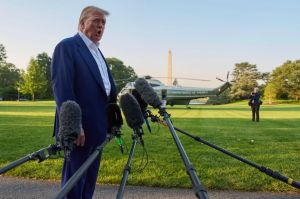
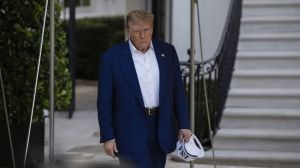

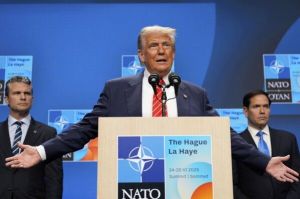
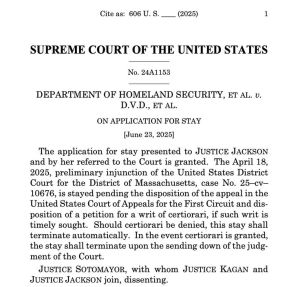
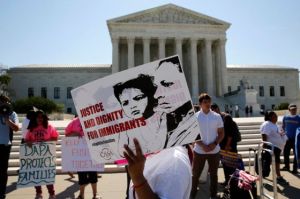










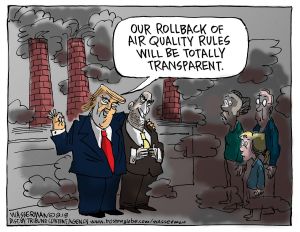 Yup. And the FDA will not be looking around for that food safety risk now. It’s also upending Health Care, but we can rest knowing that all those generic names for medicine and things will be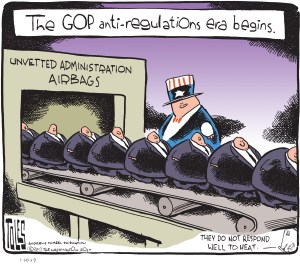
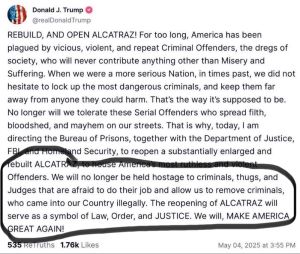 Speaking of crazy policy, I happened on this last night. This is from
  This is from Ed Mazza writing for HuffPo. This sounds a lot like his real estate deals to me. “‘Clearly Unhinged’: Critics Sink Trump’s ‘Asinine’ Plan To Reopen Alcatraz Prison. The president wants to turn the site back into a penitentiary despite the fact that it would cost a fortune.”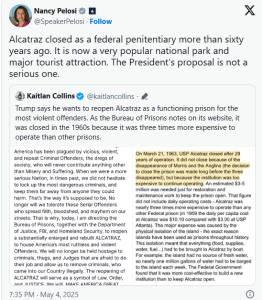
 This just really sounds like how he’d run his business. Also, he now wants tariffs on all incoming films. This is about as insane as it gets.
 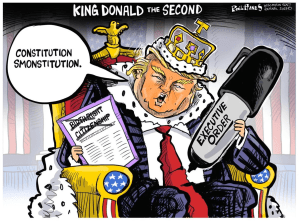 Philip Bump–writing at WAPO–has an interesting Op-Ed up today
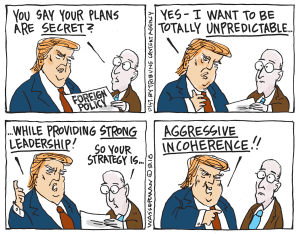 Dan Froomkin–writing for
 It makes sense to me since Trump seems to want to undocument more than just people. Who knows how many things Doge has destroyed in the wake of having all-access to every government database and more. He’s disappearing people, children, scientific research, due process, and entire agencies and programs.
 There are a lot of examples here, and it’s worth thinking about. The Unitary Executive Theory has been around for a while, and since the Reagan years, it has picked up steam in the Supreme Court. Here is a recent article from
 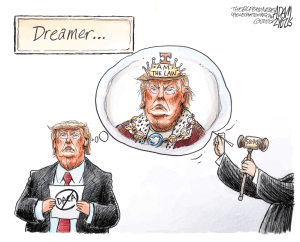 I think this take on executive power is one we should get more familiar with since it’s really taken a powerful rise. The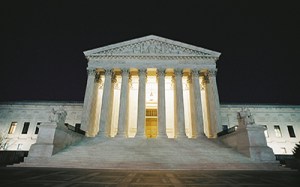






 peej
peej Carissa
 bostonboomer
 dakinikat
 ecocatwoman
 mablue2
 Mama Lopez
 peggysue22
 quixote
 skydancingguestblogger
 Mona (aka Wonk the Vote)



 Sky Dancing
Recent Comments