It’s been nearly a month since Ida turned Southeast Louisiana into a gigantic mess. It’s cooler now and sunny, Fall seems to have treated us with an on-time appearance. My streets are free from the garbage that was not picked up for weeks on end. Yesterday, they removed all the tree debris from the neutral ground. There were some huge trunks there from one of the neighbor’s very old oak trees. They probably were riddled with Formosan Termites.
It continues to be difficult watching White Male Republican Christianists and their enablers tear at the very foundation and dream this country was built on. We should be a country where just about anyone should be able to come, seek refuge, and work their way up into the middle class, at least. Our outcomes shouldn’t depend on our race, our gender, who we love, and the beliefs we hold. We are fighting the same fights for a more perfect union and watching the white male patriarchal nationalists continue to fix the game in their favor, morally objectionable people get thrown onto court benches for holding extremist positions. We’re reminded daily of this as the same group of suspects in state governorships rev up extremist laws that should be unconstitutional with the purpose of handing the decision to stacked courts.
There is now an intersection between two of the most objectionable and worthless Supreme Court Justices with a penchant for sexually assaulting women. Anita Hill is back in the headlines with a new book. BB pointed me to this article last night in The Atlantic by Anita Hill herself. “What It Was Like for Me to Watch Christine Blasey Ford’s Testimony. From my own experience in 1991, I knew that her life would never be the same.” No matter what we do by changing laws and providing prevention and legal means to change the situation, predatory men still get rewarded by the system. She views the Kavanaugh hearing through the eyes of Christine Blasey Ford.
I had never spoken with Ford directly, but once the Judiciary Committee chair, Chuck Grassley, who also had heard my testimony about Clarence Thomas three decades earlier, announced that Ford would testify, emails flooded my inbox. Some suggested politely, “I would like to see you sitting behind Dr. Ford as she testifies on Thursday.” Others argued that my presence “would certainly send a message to those, dare I say, incorrigible, ignorant men who did not listen to your honest pleas to be heard those many years ago.”
My instinct told me that those “ignorant men” and many others would make political hay out of any gesture I made to show my support for Ford. I recalled the claims from 1991 that left-wing, pro-abortion-rights feminists had duped me into testifying about Thomas’s behavior. I was certain that Ford was hearing something of the same.
My biggest hope for the day was that it would be a completely different experience for her than it had been for me—that a lot of hard work by activists, researchers, lawyers, and others raising claims and demanding change in their workplace in the 27 years since I had faced that same Senate committee had resulted in the evolution of a new awareness of gender violence. But with some of the same senators from 1991 sitting on the Judiciary Committee and with Grassley in charge, I could not bring myself to be optimistic that the entire committee had evolved.
The 1991 committee was entirely made up of white men, and men in the Senate outnumbered women 98 to two. That the 2018 Senate Judiciary Committee included women, one of whom was Black, as well as a Black man, gave me hope for a greater understanding of gender and power, as did the fact that 23 women were Senate members. I wanted to believe that, between 1991 and 2018, enough senators had read the Department of Justice or CDC reports about the prevalence and health consequences of sexual violence to counter the committee’s naysayers.
During a recent conversation recorded for a new podcast, Hill, now 65 and a Brandeis law professor, told Ford, 54 and a psychology scholar at Stanford and Palo Alto University, that she felt a sense of overwhelming kinship as she watched the 2018 testimony — a feeling that she knew was shared by a large community of like-minded women.
“A spiritual solidarity,” Hill called it.
Their conversation is a high point in “Because of Anita,” a new four-part podcast series that debuts in October. I listened to a segment of it Thursday and found it moving, instructive and — as podcasts sometimes can be — surprisingly intimate. The two had met and spoken before but not, until now, for the public to hear.
The conversation took place on Zoom in late August with Hill and Ford in their home offices in Massachusetts and California. The podcast hosts — activist and scholar Salamishah Tillet and journalist Cindi Leive, longtime editor of Glamour magazine — were in San Diego and Brooklyn.
Hill and Ford discussed the intensity of their experiences, and how it lingered far beyond their moments in the harsh spotlight — moments remembered by many Americans as a still image of each woman with her right hand raised.
They also agreed on their motivation: that it was not, at heart, to persuade those who would vote for or against the nominees but rather, a desire to be clear and honest about their experiences — to simply say what they knew and not to be attached to the outcome.
The most obvious outcomes, of course, were similar. Thomas and Kavanaugh both were confirmed by narrowly divided Senate votes: 52 to 48, and 50 to 48, respectively.
But both Hill and Ford sound as if they have made their peace with that — and say they would do it again, though they acknowledge how much the searing experiences have changed their lives.
“Once you get on this track, you don’t stop. You just realize there’s something else to accomplish,” she says. “Right now, I’m feeling like I have time. I wish for everyone the feeling I have about how I live my life: I can do things to make the world better for other people, and that’s really a gift. Not everyone feels they have that kind of power.
The concentration of power — who holds it and the ways they use it to harm those who don’t have enough — has been central to Hill’s work all along. “This has been a public crisis long before the #MeToo movement, and people are still facing resistance to their ideas or identities in the workplace and can’t come forward,” she says. “As long as those conditions exist, I will be doing this work.”
That’s what I think it feels like for all of us working on Social Justice Issues. We’re fighting and refighting the same things. For example, some on needs to tell Lindsey Graham whipping black people with a leash went out with the end of the civil war.
What a pathetic statement by the President of the United States regarding our mounted Border Patrol agents trying to control lawlessness at our border.https://t.co/MjpANM4BWc
There is nothing I can say to folks that try to lessen the impact of that image. It’s just another way we see another era in our country when people could be property. It’s not supposed to be that way anymore.
I’m going to end here with something that happened to me this week. On Tuesday, I was sitting in my little virtual office online waiting patiently to see students or help students. The usual chat request came in with only the letter e typed in. What followed was this question. “Are you a (n-word)? Of course, the university is investigating it. It rattled me more than I thought possible given the amount of hate I’ve seen all around the Quarter when the White Male Christianists come to hate on women and the GLBTQ community. But, it reminded me that none of us really have a safe space which really, is what everyone wants. Protecting privilege as vehemently as today’s Republicans do is just hard to deal with day-in-and-out. But we are the majority. That is what scares them. We must use our power as the majority and stop them. If I was a Christian, I would sure be pushing back on what they say is the path of Jesus. I’m allied with kindness, compassion, and civility.
What’s on your reading and blogging list today?
Did you like this post? Please share it with your friends:
I really am trying to adult today but at some point yesterday I reached peak hurricane exhaustion and brain. I just want to zone out. Anyway, I’ve just been glancing at Nicholas and what he’ll do to swipe at us. If you are looking for places to donate items or funds for hurricane Ida relief please consider the indigenous peoples in SE Louisiana. The Choctaw and smaller coastal tribes need lots of help as they are located in some of the worst-hit areas
This little headline from NBC News really frosted my cupcakes today: “Supreme Court Justice Barrett expresses concerns that the public may increasingly see the court as a partisan institution.” Surely, she jests. Clarence “Uncle” Thomas’s wife’s behavior and the nature of hers and the other Trump appointments hasn’t given her the idea that their merry rampage through court precedent is something other than judicial largess? However, “Judges must be “hyper vigilant” to keep personal biases out of their decisions, said Barrett, who would not comment on the court’s vote not to block Texas’ abortion ban.” is the quote/lie of the day as she works to inflict her Christoban views on the rest of us totally ignoring US history and law.
Supreme Court Justice Amy Coney Barrett expressed concerns Sunday that the public may increasingly see the court as a partisan institution.
Justices must be “hyper vigilant to make sure they’re not letting personal biases creep into their decisions, since judges are people, too,” Barrett said at a lecture hosted by the University of Louisville’s McConnell Center.
Introduced by Senate Republican leader Mitch McConnell, who founded the center and played a key role in pushing through her confirmation in the last days of the Trump administration, Barrett spoke at length about her desire for others to see the Supreme Court as nonpartisan.
Barrett said the media’s reporting of opinions doesn’t capture the deliberative process in reaching those decisions. And she insisted that “judicial philosophies are not the same as political parties.”
“To say the court’s reasoning is flawed is different from saying the court is acting in a partisan manner,” said Barrett, whose confirmation to the seat left open by the death of the liberal Justice Ruth Bader Ginsburg cemented conservative control of the court. “I think we need to evaluate what the court is doing on its own terms.”
Barrett’s comments followed a high-profile decision earlier this month in which the court by 5-4 vote declined to step in to stop a Texas law banning most abortions from going into effect, prompting outrage from abortion rights groups and President Joe Biden.
Barrett was asked about that decision by students who submitted questions in advance and also asked about another recent decision by the court in which it refused to block a lower court ruling ordering the Biden administration to reinstate a Trump-era program informally known as the Remain in Mexico policy. Barrett said it would be “inappropriate” to comment on specific cases.
Several supporters of abortion rights demonstrated outside the Seelbach Hotel, where the private event was held.
Madonna, Edvard Munch,, circa 1892
Right-Wing Watch reports that; “Lauren Boebert Says Government Should Be Run by ‘Righteous Men and Women of God’.” Again, we have the Christoban off on the same nightmare operating in Afghanistan now. Whose GAWD Laruen? Allah? Jehovah? Could it be Satan? Frankly, I say it should be the Greek Gods with their hubris and humorous treatment of humans.
Republican Rep. Lauren Boebert of Colorado spoke Saturday at a conference held by the Truth & Liberty Coalition, a religious-right political organization founded by right-wing pastor Andrew Wommack.
Addressing a crowd of conservative Christian activists gathered in the auditorium at Wommack’s Charis Bible College, Boebert called on the audience to put faith into action by calling on God to remove ungodly leaders in Washington, D.C., and replace them with “righteous men and women of God” who realize that the government should be taking orders from the church.
“When we see Biden address the nation and the world and show more contempt and aggravation and aggression towards unvaccinated Americans than he does terrorists, we have a problem,” Boebert said. “And that’s why I have articles of impeachment to impeach Joe Biden, Kamala Harris.”
“We cannot take another 18 months, we cannot take another three years of this poor, failed leadership,” she continued. “We are sons and daughters of revolutionaries. They went to battle for a lot less. They took a stand for a lot less. And it’s time we get involved. I need you involved in every local level. I need you speaking up. I need the world to hear your voice. You know the word of God, and you know that there is power in your words, that the world was framed by words. You have the Lord God Almighty on your side. I need you to use your voice and speak.”
“What if Jesus showed up today and said, ‘From this point forward, everything you say you will have it’?” Boebert asked rhetorically. “He said it! That’s exactly what he said to us. So, what are we saying? Are we going to sit and agree with the enemy? Are we going to agree with what the enemy is doing? Are we going to sit back and complain and murmur? Or are we going to speak life into this nation? Are we going to speak victory? Are we going to declare that God removes these unrighteous politicians, these corrupt, crooked politician, and installs righteous men and women of God?”
“You have the God kind of faith, and that faith speaks,” she added. “That faith speaks to mountains, those impossible, immovable situations, and I think there’s some mountains they need to hear your voice. … It’s time the church speaks up. The church has relinquished too much authority to government. We should not be taking orders from the government; the government needs to be looking at the church and saying, ‘How do we do this effectively?’”
Chris Ofili, “The Holy Virgin Mary,” 1996
From which rock do these women hatch? And why do they hate themselves so much? All they are is partisan shill for toxic patriarchy.
For the past several months, however, conservatives have been waging war on a wide-ranging set of claims that they wrongly ascribe to critical race theory, while barely mentioning the body of scholarship behind it or even Bell’s name. As Christopher F. Rufo, an activist who launched the recent crusade, said on Twitter, the goal from the start was to distort the idea into an absurdist touchstone. “We have successfully frozen their brand—‘critical race theory’—into the public conversation and are steadily driving up negative perceptions. We will eventually turn it toxic, as we put all of the various cultural insanities under that brand category,” he wrote. Accordingly, C.R.T. has been defined as Black-supremacist racism, false history, and the terrible apotheosis of wokeness. Patricia Williams, one of the key scholars of the C.R.T. canon, refers to the ongoing mischaracterization as “definitional theft.
Vinay Harpalani, a law professor at the University of New Mexico, who took a constitutional-law class that Bell taught at New York University in 2008, remembers his creating a climate of intellectual tolerance. “There were conservative white male students who got along very well with Professor Bell, because he respected their opinion,” Harpalani told me. “The irony of the conservative attack is that he was more respectful of conservative students and giving conservatives a voice than anyone.” Sarah Lustbader, a public defender based in New York City who was a teaching assistant for Bell’s constitutional-law class in 2010, has a similar recollection. “When people fear critical race theory, it stems from this idea that their children will be indoctrinated somehow. But Bell’s class was the least indoctrinated class I took in law school,” she said. “We got the most freedom in that class to reach our own conclusions without judgment, as long as they were good-faith arguments and well argued and reasonable.”
Republican lawmakers, however, have been swift to take advantage of the controversy. In June, Governor Greg Abbott, of Texas, signed a bill that restricts teaching about race in the state’s public schools. Oklahoma, Tennessee, Idaho, Iowa, New Hampshire, South Carolina, and Arizona have introduced similar legislation. But in all the outrage and reaction is an unwitting validation of the very arguments that Bell made. Last year, after the murder of George Floyd, Americans started confronting the genealogy of racism in this country in such large numbers that the moment was referred to as a reckoning. Bell, who died in 2011, at the age of eighty, would have been less focussed on the fact that white politicians responded to that reckoning by curtailing discussions of race in public schools than that they did so in conjunction with a larger effort to shore up the political structures that disadvantage African Americans. Another irony is that C.R.T. has become a fixation of conservatives despite the fact that some of its sharpest critiques were directed at the ultimate failings of liberalism, beginning with Bell’s own early involvement with one of its most heralded achievements.
And just like that, another anti-vaxxer dies and takes up valuable ICU space in a hospital.
Veronica Wolski, an outspoken anti-vaccine and anti-mask advocate, has died after spending weeks in hospital with COVID-19. https://t.co/dB5pATKPTK
Caritas (Madonna with Child) by Stanisław Wyspiański, 1904, pastel, photo: National Museum in Warsaw
This headline puts a face to the number of people dying because there are no hospitals available. “Alabama man dies after 43 hospitals with full ICUs turned him away; family urges COVID-19 vaccines.” This is reported out of a local TV station.
The family of an Alabama man who died of heart issues more than 200 miles from his home is asking people to get vaccinated against the coronavirus after more than 40 hospitals across three states were unable to accept him due to full cardiac ICUs.
Ray Martin DeMonia died Sept. 1; three days before his 74th birthday, his family said.
DeMonia suffered a heart attack and was transferred to the nearest available bed, which was more than 200 miles away at Rush Foundation Hospital in Meridian, Mississippi.
In his obituary, his family urged people to get vaccinated against COVID-19.
Some optimists had hoped that the spread of the Delta variant, though regrettable, might eventually persuade the naysayers to get vaccinated. Local news sites and stations have profiled people who had been sceptical and have now had their jabs. The Douglases in South Central Pennsylvania were vaccine-hesitant until “the Delta variant changed that”. The Columbus Dispatch wrote about a supervisor at a local plant who said: “The Delta variant was what really got me out.” In Oklahoma, Grace Zeiba, an emergency-room nurse, told her local station that because of Delta she decided “it’s time to be vaccinated”. But these anecdotes are not representative of the overall picture.
One way of measuring whether people are more likely to get vaccinated when their neighbours are very ill with covid-19, is to compare county-level icu capacities (which tell you whether a hospital is full of covid-19 patients) with the change in vaccination rates in the ensuing weeks. The Economist did this while controlling for potentially confounding variables, like state-level vaccination rates.
Our calculations show that full hospitals lead to only a slight increase in the number of people getting vaccinated. For every 10% decrease in available icu beds, there were roughly 14 additional first doses administered per 100,000 people in a county the next week. For a median-sized American county with a population of 26,000, that translates to 3.5 additional first doses, or just half a dose per day.
Counties with icus that were 80% full or more saw only an additional 104 first doses administered per 100,000 people the next week, compared with counties where icus were 20% full or less. That is consistent with what happened this summer, when areas hit by the Delta variant saw only slight upticks in vaccination rates compared with other counties.
Polls paint the same picture. As many Americans have scrambled for futile cures like ivermectin, an anti-parasitic drug, interest in the most effective solution—the vaccine—is stuck. Polling from Morning Consult shows that the share of individuals who say they are unwilling to get the vaccine, or are uncertain if they will, has fallen only slightly—from 31% at the end of May (the month the World Health Organisation declared Delta to be a variant of concern) to 28% on August 30th. By contrast, the average share saying the same across the other 14 countries Morning Consult has surveyed fell from 25% to 14% (see chart).
The remaining Americans who have not had their jabs are not just hesitant but rather hardened—committed to shunning the vaccine despite its availability, safety and efficacy.
And, back to other Trumpist conspiracy theories that just won’t die, file these two.
Breaking News: The FEC ruled that Twitter’s decision in October to block an unsubstantiated article about President Biden's son, Hunter Biden, did not violate election laws, according to a document obtained by The New York Times. https://t.co/EzFKKvQ7X2
I just cannot get used to the absolute fantasyland these folks evoke for partisan political reasons. This includes the Christoban goons that sit on the supreme court to include Amy the Insane. There are more sources than Fox News and some grifter’s concept of the New Testament. Really! Death, Wars, massive debt to subsidize rich people, and fairy tales are all the Republicans offer.
What’s on your reading and blogging list today!
Did you like this post? Please share it with your friends:
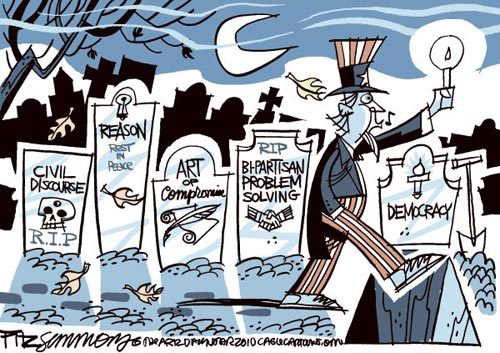
Yesterday Joe Biden commemorated Memorial Day with a speech honoring those who served the country in wartime, while cautioning that “democracy…is in peril.”
President Joe Biden marked Memorial Day with an address at Arlington National Cemetery, pledging to never forget or fail to honor fallen veterans’ sacrifice and saying that democracy is “worth fighting for” and “dying for.”
Democracy, which he called the “soul of America,” is in danger, Biden said on Monday.
“Democracy itself is in peril, here at home and around the world,” Biden said, speaking to military officials and people who have lost military loved ones after a wreath-laying ceremony at the Tomb of the Unknown Soldier. “What we do now, what we do now, how we honor the memory of the fallen, will determine whether or not democracy will long endure.”
Throughout the speech Monday, Biden praised veterans’ sacrifice for democracy and defended democracy’s aspirations, though he said the U.S. hadn’t always lived up to them. He called empathy “the fuel of democracy.”
The president said that “we all” take democracy “for granted,” saying “the biggest question” is whether the system of democracy can win out over opposing “powerful forces.”
“All that we do in our common life as a nation is part of that struggle,” Biden said. “A struggle for democracy. It’s taking place around the world, democracy and autocracy.”
Democracy is in danger because the Trumpist Republican Party opposes it. Since their cult leader lost the 2020 election, Republicans are focused on making voting more difficult. The latest effort took place in Texas. Fortunately, Democrats in the Texas legislature were able to fend off the new Jim Crow law for now.
In a dramatic surprise, Texas Democrats stopped the GOP’s latest and lowest voter suppression effort at the eleventh hour (literally – the session was adjourned at 11pm Monday night). They used tricks, stunts, and gambits. They chased the headlines, and grabbed them. Democrats, this is how you do it.
So far, Democrats have failed to stop this racist and anti-democratic freight train. It’s barreled through Florida, Georgia, and Iowa. It’s rigged the 2022 elections by making it harder for Black voters (and voters who can’t get off of work easily, or need help getting to the polls) to vote. It’s a national disgrace.
But it’s barely made the news….
These efforts should be headline freaking news. The blatantly racist nature of these policies. Their likely effects on the next election. And their foundation in the same conspiracy theory that led to the January 6 insurrection in Washington, D.C. All of these are beyond outrageous, but journalists can’t just make news happen; that’s up to politicians and other public figures who give us something to report.
Which is exactly what Texas Democrats did Sunday night.
They raised every possible technical and procedural objection to the vote. They indulged in long-winded Q&A sessions. They stretched the process out for hours. And then, right before eleven at night on the eve of Memorial Day, they walked out, depriving the Texas State House of Representatives of a quorum.
Even the walkout was dramatic. Texas State Representative Chris Turner texted party members at 10:35, writing, “Members, take your key and leave the chamber discreetly. Do not go to the gallery. Leave the building. ~ Chris”
Gotta love it.
But the bill could still pass. What’s needed is national legislation to protect voting rights.
Texas Democrats who defeated a Republican effort to pass a suite of new voting restrictions with a dramatic late-night walkout from the state House chamber on Sunday have a message for President Biden and his allies in Congress: If we can protect voting rights, you can, too.
The surprise move by roughly 60 Democratic lawmakers headed off the expected passage of S.B. 7, a voting measure that would have been one of the most stringent in the nation, by denying Republicans a required quorum and forcing them to abruptly adjourn without taking a vote.
The coordinated walkout just after 10:30 p.m. Central time jolted the national debate on voting rights, putting the spotlight on Democratic-backed federal legislation that has been stalled in the Senate all spring, even as state Republicans move to enact new voting rules.
“We knew today, with the eyes of the nation watching action in Austin, that we needed to send a message,” state Rep. Trey Martinez Fischer, a San Antonio Democrat, said at a news conference held at a historically Black church in Austin early Monday, shortly after he and other lawmakers left the state Capitol. “And that message is very, very clear: Mr. President, we need a national response to federal voting rights.”\Republicans control every branch of Texas government and hold firm majorities in both the House and Senate. While Gov. Greg Abbott (R) vowed late Sunday to bring the voting measure back at a special legislative session for redistricting later this year — and threatened to defund the legislature in a tweet on Monday — the walkout represented an unmistakable and shocking defeat for Republican leaders who had assumed the bill would pass ahead of the House’s midnight deadline to finish its 2021 business.
Unfortunately, Congress is not stepping up so far.
In the national struggle over voting rights, Democrats have rested their hopes for turning back a wave of new restrictions in Republican-led states and expanding ballot access on their narrow majorities in Congress. Failure, they have repeatedly insisted, “is not an option.”
But as Republican efforts to clamp down on voting prevail across the country, the drive to enact the most sweeping elections overhaul in generations is faltering in the Senate. With a self-imposed Labor Day deadline for action, Democrats are struggling to unite around a strategy to overcome solid Republican opposition and an almost certain filibuster.
Republicans in Congress have dug in against the measure, with even the most moderate dismissing it as bloated and overly prescriptive. That leaves Democrats no option for passing it other than to try to force the bill through by destroying the filibuster rule — which requires 60 votes to put aside any senator’s objection — to pass it on a simple majority, party-line vote.
But Senator Joe Manchin III of West Virginia, the Democrats’ decisive swing vote, has repeatedly pledged to protect the filibuster and is refusing to sign on to the voting rights bill. He calls the legislation “too darn broad” and too partisan, despite endorsing such proposals in past sessions. Other Democrats also remain uneasy about some of its core provisions.
Navigating the 800-page For the People Act, or Senate Bill 1, through an evenly chamber was never going to be an easy task, even after it passed the House with only Democratic votes. But the Democrats’ strategy for moving the measure increasingly hinges on the longest of long shots: persuading Mr. Manchin and the other 49 Democrats to support both the bill and the gutting of the filibuster.
Read the rest at the WaPo.
Meanwhile, extremist Republicans–including the former guy–are openly supporting insurrection. As Dakinikat reported yesterday, disgraced retired General Michael Flynn attended a Q-Anon meeting and called for a military coup in the U.S.
Michael Flynn, former President Donald Trump’s first national security adviser, appeared to endorse a Myanmar-style coup in the United States on Sunday.
For months, QAnon and Trump-supporting online forums have celebrated the deadly military coup in Myanmar and suggested the same should happen in the United States so Trump could be reinstated as President.
Flynn made the comments at an event in Dallas on Sunday that was attended by prominent peddlers of the QAnon conspiracy theory and the Big Lie.
“I want to know why what happened in Minamar (sic)can’t happen here?” a member of the audience, who identified himself as a Marine, asked Flynn.
“No reason, I mean, it should happen here. No reason. That’s right,” Flynn responded….
Some QAnon followers are obsessed with the idea that the US military will somehow put Trump back into office. Some believed and hoped Trump would declare martial law on Inauguration Day to stop Joe Biden from entering the White House.
Speaking at the same event in Dallas, Flynn earlier in the weekend falsely claimed, “Trump won. He won the popular vote, and he won the Electoral College vote.”
Trump himself claims he will be “reinstated” as president, according to Maggie Haberman.
According to New York Times reporter Maggie Haberman, “Trump has been telling a number of people he’s in contact with that he expects he will get reinstated by August” because the widely criticized “audit” he’s backing in Arizona will show he actually won the 2020 presidential election.
“He is not putting out statements about the ‘audits’ in states just for the sake of it,” Haberman reports. “He’s been laser focused on them, according to several people who’ve spoken with him.”
Haberman notes that Trump’s obsession with retaking the White House this year comes as he’s staring at the possibility of being indicted by the New York Attorney General’s Office, which is conducting a criminal probe of the Trump Organization for potential tax fraud.
QAnon’s biggest celebrities threw a three-day conference in Dallas over the weekend—and it did not disappoint.
Whether you wanted to hear a former US Army general calling for a military coup or Roger Stone’s social media advisor calling for Hillary Clinton’s execution, there was something for everyone.
There were auctions selling $1,000-blankets and $8,000 baseball bats. A sitting Congressman appeared on stage and literally embraced QAnon influencers. Dozens of members of a shadowy militia provided protection—some with their own pugs in tow. And then there was Kraken-lawyer Sidney Powell trying to sing the national anthem….
The “For God and Country: Patriot Roundup” event took place over Friday, Saturday and Sunday in downtown Dallas with thousands of QAnon supporters paying at least $500 for a ticket to the event.
The event took place in the city-owned Omni Hotel despite opposition from local residents whose petition was signed by more than 20,000 people.
The organizer of the event, John Sabal (known online as QAnon John) claimed prior to the event that it was not a QAnon conference, despite multiple high profile QAnon figures speaking there.
The event was a coming-out party for many well-known figures in the QAnon world, but also highlighted just how far the conspiracy movement is bleeding into mainstream Republican politics, with one sitting Congressman, Rep. Louie Gohmert, speaking on stage, along with the chairman of the Texas GOP, Allen West.
Read more highlights at the Vice link.
That’s all I have for you today. What stories are you following? As always, this is an open thread.
Did you like this post? Please share it with your friends:
“The popular artist @PENPENCILDRAW created an illustration in response to that ruling, depicting “an Indian judge’s guide to being an ideal rape survivor”. The illustration went viral.”
Hi Sky Dancers!
I’m still exhausted from end-of-term madness. We’re still caught up in reacting to Trumpist news. I’ll go there but not quite yet.
My neighbor tweeted this BBC article this morning on the terrifying rape culture in India. Read this and see how the judge on the case dismissed a work-related rape. It’s horrifying! I need to post a trigger warning here! The judge actually describes what he finds “appropriate” behavior for a rape victim. There should be global outrage on this one.
As many of you may know, I’ve been an advocate of battered women and children and also rape victims since high school. I’ve been involved in this well into my current state of cronehood. I fear for my daughters and for my soon-to-be-born granddaughters. How can we ever get rid of these attitudes? This is from India but I’ve run into these same attitudes here.
The illustration came from the following article.
The judge is now just as guilty as the offender! Who is he to opine on a woman trying to get on with her life?!https://t.co/xPMTLmm8wE
Is there an appropriate way for a rape victim to behave?
That’s the question many are asking in India after a judge threw out charges against a man accused of raping a female colleague and questioned the behaviour of the alleged victim.
Judge Kshama Joshi wrote that in photographs taken shortly after the alleged assault, the young woman was “smiling and looked happy, normal, in [a] good mood”.
“She did not look disturbed, reserved, terrified or traumatised in any way even though this was immediately after she claims to have been sexually assaulted,” the judge wrote in a 527-page judgement.
The charges against Tarun Tejpal, the high-profile former editor of Tehelka magazine, were dismissed. The Goa government, which has appealed the decision, asked on Thursday for an early hearing, saying “we owe it to our girls” and that the acquittal order was “erroneous in law” and “unsustainable”. The High Court judge agreed and said he would hear the case on 2 June.
The Hill: “Democrats: Roe v. Wade blow would fuel expanding Supreme Court” — “Democratic senators say if the Supreme Court strikes a blow against Roe v. Wade by upholding a Mississippi abortion law, it will fuel an effort to add justices to the court or otherwise reform it.”
Irin: I would call this catastrophic for abortion rights. Not even the 5th circuit, arguably the most conservative appeals court in the country, thought it was worth upholding this ban, because it so egregiously flouts almost a half-century of precedent. There’s no circuit split — the dissent among lower courts that usually obliges the Supreme Court to step in. The court has had many chances to change its rule as to whether states can ban abortion before viability and never has. This suggests at least four justices (which is how many it takes to take up a case) think now is the time.
Pennsylvania conservatives have previously pushed anti-abortion legislation, but several bills have stalled in committee, including when the Republican-controlled Legislature had a Republican governor to sign their agenda into law.
Former Republican Gov. Tom Corbett in 2011 signed into law stricter standards for abortion clinics and in 2013 signed a law that denied abortion coverage through Obamacare.
But nothing as restrictive as what was introduced Tuesday got close to law during the Corbett years.
The three bills Republicans advanced this week include a heartbeat bill that would ban abortions once a fetal heartbeat is detected; a ban on abortions after a Down syndrome diagnosis; and another that requires medical facilities to disclose burial options for miscarriages and abortions.
Rep. Kate Klunk, R-York County, said during the committee meeting that supporting the ban on abortions after a Down syndrome diagnosis is a “no brainer.”
“We shouldn’t allow them to be discriminated against,” she said.
“Children with Down syndrome, they lead amazing lives,” Klunk added. “They are contributing in so many ways, but they need the chance at life to be able to do that.”
Rep. Dan Frankel, D-Allegheny County, called the ban “dystopian” during the meeting and said the General Assembly is creating more fear while denying access to healthcare.
Rep. Frank Ryan, R-Lebanon County, introduced the bill on burial options because of his own experience after losing a child, a story he has shared previously.
He said he was “asking the ladies in the room” to “recognize how men feel.”
He said his bill is optional and gives families a chance at closure after losing a baby, he said.
“This is about giving choice to those people whose faith says that life begins at conception,” Ryan said.
Frankel argued that Ryan’s bill mandates cremation or burial and does not make it optional after abortion or miscarriage. To get a burial, a death certificate would also be required for abortions and miscarriages.
This is also about power and control. This is from The Guardian “Anti-abortion movement bullish as legal campaign reaches US supreme court.”
The anti-abortion movement in the US is emboldened and optimistic after the supreme court announced it would hear a direct challenge to laws underpinning the right to abortion in the US, and Texas enacted a law intended to ban abortion after six weeks.
The high court decision to take up the case and the Texas move come during the most hostile year for reproductive rights in the nearly half-century since pregnant people won the constitutional right to choose whether to terminate a pregnancy in the landmark 1973 case Roe v Wade.
“The long-predicted scaling back of abortion rights by the supreme court just got a lot more likely,” said Mary Ziegler, a legal historian, author of Abortion and the Law in America: Roe v Wade to the Present, and law professor at Florida State University.
Today, abortion is legal in all 50 states up to the point the fetus can survive outside the womb, a legal concept called “viability” established in Roe. This is generally understood to be about 24 weeks (a full-term pregnancy is 39 weeks).
The case taken up by the court, called Dobbs v Jackson Women’s Health Organization, will answer whether Mississippi can limit abortion to 15 weeks, and is brought by the state’s last abortion clinic. If upheld, it would reduce by more than two months the time in which a woman could choose to terminate a pregnancy.
“It’s really hard to see why the court would take this case unless they’re interested in reversing part of Roe or all of Roe,” said Ziegler. Further, the court chose to answer “the most explosive question in the case”, which “suggests they’re not really worried about the political fallout”.
On the right, the hopes are clear: that the court will end the legal right to an abortion, and potentially allow room to criminalize the procedure.
“We’re all hopeful the court will be intellectually honest and acknowledge what the science is clear on – that a unique human life starts at fertilization,” said Lila Rose, founder and president of the anti-abortion advocacy group Life Action. Rose is widely seen as the face of the millennial anti-abortion movement.
Mississippi is just one of 29 states across the south and midwest considered hostile to abortion rights, where 58% of American women of reproductive age live, and which would probably act to further restrict abortion rights.
“We’re becoming two countries, and your voting rights and your reproductive rights are increasingly likely to depend on where you live,” said David Daley, a senior fellow at FairVote and the bestselling author of Rat F**ked: Why Your Vote Doesn’t Count.
The Rape of the Sabine Women, by Pablo Picasso, 1962
The purge continues in education. Not only is sex education in many states illegal but now summer school classes in Oklahoma have been cancelled because they don’t teach the white male version of racism. From Oklahoma City Local News station 5: “Oklahoma teacher says summer class canceled due to bill that bans teaching critical race theory.”
A teacher is disappointed with Gov. Kevin Stitt after one of her summer classes was canceled due to House Bill 1775, which bans educators from teaching certain concepts of race and racism.
Melissa Smith told KOCO 5 that she’s taught race theory-type classes for six years and is confused why there’s an issue now.
“I’m not happy. This is information everyone needs to know,” Smith said.
The high school and community college teacher said House Bill 1775 has caused her to lose a class she was supposed to teach this summer at Oklahoma City Community College.
“I’ve actually been teaching race and ethnicities in the United States for multiple years,” she said.
The recently signed legislation restricts what can be taught about racial divisions through history in Oklahoma classrooms.
“I got an email a week or so ago, saying due to this new law, they were canceling my completely full race and ethnicities class,” Smith said.
Her students won’t be able to take her class even though it was required for some to graduate. Also, Smith won’t be paid.
“This was a huge chunk of my income,” she said.
When Stitt signed the bill, he said, “We can and should teach the history without labeling a young child as an oppressor or requiring he or she feel guilt or shame based on their race or sex. I refused to tolerate otherwise.”
Before leaving town for their Memorial Day recess, in fact, Senate Republicans were expected to use the legislative filibuster for the first time this session to block the proposed bipartisan panel. Their stated arguments against a commission range from the implausible to the insulting; the real explanation is political cynicism in the extreme. Senate Minority Leader Mitch McConnell, who is so far delivering on his pledge to focus a “hundred per cent” on blocking Biden’s agenda, even claimed that an investigation was pointless because it would result in “no new fact.” John Cornyn, a close McConnell ally, from Texas, was more honest, at least, in admitting, to Politico, that the vote was all about denying Democrats “a political platform” from which to make the 2022 midterm elections a “referendum on President Trump.” For his part, Trump has been putting out the word that he plans to run for reëlection in 2024—and exulting in polls showing that a majority of Republicans continue to believe both his false claims of a fraudulent election and that nothing untoward happened on January 6th. Needless to say, these are not the signs of a healthy democracy ready to combat the autocratic tyrants of the world.
“Turns out, things are much worse than we expected,” Daniel Ziblatt, one of the “How Democracies Die” authors, told me this week. He said he had never envisioned a scenario like the one that has played itself out among Republicans on Capitol Hill during the past few months. How could he have? It’s hard to imagine anyone in America, even when “How Democracies Die” was published, a year into Trump’s term, seriously contemplating an American President who would unleash an insurrection in order to steal an election that he clearly lost—and then still commanding the support of his party after doing so.
Three years ago, it was still conceivable, if not likely, that Trump and Trumpism could be expunged by an overwhelming result at the ballot box or a clear-cut impeachment and expulsion from public life. But Ziblatt and Steven Levitsky, his co-author, never thought that would happen. Instead, they highlighted a more realistic possibility: that Trump’s electoral defeat would not stop the continued polarization, flouting of political norms, and increased “institutional warfare” in America—leaving the country a battered “democracy without solid guardrails” that would be “hovering constantly on the brink of crisis.” The crisis, however, turned out to be even more existential than they had predicted; the present is “much more worrisome,” Ziblatt told me. In contemporary Germany, he pointed out, an incitement to violence of the kind deployed by Trump and some of his backers might be enough to get a political party banned. But, in America’s two-party system, you can’t just ban one of the two parties, even if it takes a terrifying detour into anti-democratic extremism.
This is the worrisome essence of the matter. In one alarming survey released this week, nearly thirty per cent of Republicans endorsed the idea that the country is so far “off track” that “American patriots may have to resort to violence” against their political opponents. You don’t need two Harvard professors to tell you that sort of reasoning is just what could lead to the death of a democracy. The implications? Consider the blunt words of Judge Amy Berman Jackson, in a ruling on a case involving one of the January 6th rioters at the Capitol, issued even as it became clear that Republican senators would move to block the January 6th commission from investigating what had caused the riot:
The steady drumbeat that inspired defendant to take up arms has not faded away; six months later, the canard that the election was stolen is being repeated daily on major news outlets and from the corridors of power in state and federal government, not to mention in the near daily fulminations of the former President.
It’s worth noting that Jackson released this ruling this week, the same week that Trump issued statements calling the 2020 vote “the most corrupt Election in the history of our Country,” touting himself as “the true President,” and warning that American elections are “rigged, corrupt, and stolen.”
“To be making a decision for the short-term political gain at the expense of understanding and acknowledging what was in front of us on Jan. 6, I think we need to look at that critically. Is that really what this is about, one election cycle after another?” Murkowski said.
She added: “Or are we going to acknowledge that as a country that is based on these principles of democracy that we hold so dear. And one of those is that we have free and fair elections… I kind of want that to endure beyond just one election cycle.”
So, I rather thought this post would be something else than it became as I wrote. Once again, I went down a dark rabbit hole. We are losing our democracy and our selves in a series of right wing autocratic attempts to make laws and send them to courts stacked with religionists, autocrats, white nationalists, and enablers of patriarchy. Trumpism is radicalizing me. It’s something we must vote against, march against, and speak out against.
What’s on your reading and blogging list today?
Did you like this post? Please share it with your friends:
Room with Curved Window Cat and Bird, by Paul Wonner
Good Afternoon!!
It’s great to finally have a normal president who actually cares about the American people and isn’t completely focused on his own needs. But it’s going to take a long time for the country to recover from four years of Trump. For one thing, Trumpism still controls the Republican Party. There is also the aftermath of Trump’s immigration and tax policies as well as his destructive influence on nearly every aspect of the Federal government, including the Departments of Justice, Defense, and Homeland Security and the intelligence community, as well as his efforts to corrupt U.S. elections. And of course Trump had a dramatic impact on the Supreme Court that will likely last for decades. In this post, I’m going to highlight some of the continuing influences of Trumpism in our politics and our justice system.
Trump loves the death penalty, and his first SCOTUS appointee Neil Gorsuch cast the deciding vote that led the execution of an innocent man in Arkansas in 2017.
For 22 years, Ledell Lee maintained that he had been wrongly convicted of murder.
“My dying words will always be, as it has been, ‘I am an innocent man,’” he told the BBC in an interview published on April 19, 2017 — the day before officials in Arkansas administered the lethal injection.
Girl with a Cat, by Franz Marke
Four years later, lawyers affiliated with the Innocence Project and the American Civil Liberties Union say DNA testing has revealed that genetic material on the murder weapon — which was never previously tested — in fact belongs to another man. In a highly unusual development for a case in which a person has already been convicted and executed, the new genetic profile has been uploaded to a national criminal database in an attempt to identify the mystery man….
Mr. Lee’s execution, on April 20, 2017, was the first in Arkansas in more than a decade. Some accused the state of rushing Mr. Lee and several other prisoners to their deaths that month before the expiration of its supply of a lethal injection drug….
Mr. Lee’s execution, on April 20, 2017, was the first in Arkansas in more than a decade. Some accused the state of rushing Mr. Lee and several other prisoners to their deaths that month before the expiration of its supply of a lethal injection drug.
On Thursday night, Arkansas executed Ledell Lee—the state’s first execution in 12 years. Lee is one of eight men whom Arkansas originally planned to kill over 11 days before one drug in the three-drug lethal injection cocktail expires. Four of these men have received stays of execution, but Lee’s final plea to the U.S. Supreme Court was rejected by a 5–4 vote. Justice Neil Gorsuch cast the deciding vote allowing Lee to die. It was his first recorded vote cast as a justice of the court….
with Gorsuch’s vote, the court’s conservatives were able to ignore their four liberal colleagues and permit the execution. Lee was given midazolam, then a drug to paralyze and suffocate him—which may have been purchased under false pretenses. Finally, the state administered a chemical to stop his heart. Lee was declared dead shortly before midnight, Central Time. Had one more justice voted in his favor, Lee would still be alive today.
Locked out of Facebook, marooned in Mar-a-Lago and mocked for an amateurish new website, Donald J. Trump remained largely out of public sight this week. Yet the Republican Party’s capitulation to the former president became clearer than ever, as did the damage to American politics he has caused with his lie that the election was stolen from him.
Painting by Jennifer Gennari
In Washington, Republicans moved to strip Representative Liz Cheney of her House leadership position, a punishment for denouncing Mr. Trump’s false claims of voter fraud as a threat to democracy. Lawmakers in Florida and Texas advanced sweeping new measures that would curtail voting, echoing the fictional narrative from Mr. Trump and his allies that the electoral system was rigged against him. And in Arizona, the state Republican Party started a bizarre re-examination of the November election results that involved searching for traces of bamboo in last year’s ballots.
The churning dramas cast into sharp relief the extent to which the nation, six months after the election, is still struggling with the consequences of an unprecedented assault by a losing presidential candidate on a bedrock principle of American democracy: that the nation’s elections are legitimate.
They also provided stark evidence that the former president has not only managed to squelch any dissent within his party but has also persuaded most of the G.O.P. to make a gigantic bet: that the surest way to regain power is to embrace his pugilistic style, racial divisiveness and beyond-the-pale conspiracy theories rather than to court the suburban swing voters who cost the party the White House and who might be looking for substantive policies on the pandemic, the economy, health care and other issues.
“We’ve just gotten so far afield from any sane construction,” said Barbara Comstock, a longtime party official who was swept out of her suburban Virginia congressional seat in the 2018 midterm backlash to Mr. Trump. “It’s a real sickness that is infecting the party at every level. We’re just going to say that black is white now.”
Six months after Trump was defeated in the US presidential election, no Republican can dispute his claim that Joe Biden stole it and expect to prosper among their peers. Facebook’s initial decision to suspend Trump’s account came after he had egged on the mob that assaulted Capitol Hill on January 6 in what was the most serious threat to American democracy since the civil war. Since then, Trump’s language has only grown more ominous. Republicans who think they can keep their head down and wait out the Trump era are probably deluding themselves. Trump is only consolidating his hold over their party — and shows every sign of planning a 2024 presidential run.
What should principled conservatives do? One option is to follow the example of Liz Cheney, the number three Republican in the House of Representatives, who correctly reminds her colleagues that last year’s election was legitimate and the assault on Congress was sedition. She will almost certainly be removed from her position next week.
Painting by August Macke
This is nothing to do with ideology. Cheney is among the most conservative figures in the House. Elise Stefanik, who is set to replace her, is more moderate. Stefanik, however, has an unblemished record of echoing whatever Trump says, including that America’s voting is rigged. Like any revolution, the demands on its children grow more outlandish. The more preposterous the conspiracy theory, the greater the demonstration of loyalty from those who embrace it. The downsides to Cheney’s act of courage are obvious. She will lose her influence and ultimately even her Wyoming district to a Trump loyalist. Others among the principled holdouts, including Illinois’ Adam Kinzinger, are also at risk.
A parallel line of attack would be to point out that Trump is already jeopardising his party’s hopes of regaining control of Congress in next year’s midterm elections, and the White House two years later. Trump lost the presidency, but his party did far better in non-presidential races. Millions of voters who endorsed Biden switched to Republicans down ballot. Not once in four years did Trump’s approval rating exceed 50 per cent. Biden’s has not yet fallen below that.
Trump can keep the party united through fear of defenestration but his grip will make the party less appealing to the larger electorate. Sadly, there is little hope right now of severing Trump’s bonds to a party that is now largely his — 70 per cent of its voters say the election was stolen.
Liz Cheney is getting a great deal of attention right now, and although I probably disagree with her on every political issue, I have to admire her principled stand against Trumpism. And now the GOP Trump cult is trying to excommunicate her.
Rep. Liz Cheney had been arguing for months that Republicans had to face the truth about former president Donald Trump — that he had lied about the 2020 election result and bore responsibility for the insurrection at the U.S. Capitol — when the Wyoming Republican sat down at a party retreat in April to listen to a polling briefing.
The refusal to accept reality, she realized, went much deeper.
When staff from the National Republican Congressional Committee rose to explain the party’s latest polling in core battleground districts, they left out a key finding about Trump’s weakness, declining to divulge the information even when directly questioned about Trump’s support by a member of Congress, according to two people familiar with what transpired.
Painting by Paul Wonner
Trump’s unfavorable ratings were 15 points higher than his favorable ones in the core districts, according to the full polling results, which were later obtained by The Washington Post. Nearly twice as many voters had a strongly unfavorable view of the former president as had a strongly favorable one.
Cheney was alarmed, she later told others, in part because Republican campaign officials had also left out bad Trump polling news at a March retreat for ranking committee chairs. Both instances, she concluded, demonstrated that party leadership was willing to hide information from their own members to avoid the truth about Trump and the possible damage he could do to Republican House members, even though the NRCC denied any such agenda.
Those behind-the-scenes episodes were part of a months-long dispute over Republican principles that has raged among House leaders and across the broader GOP landscape. That dispute is expected to culminate next week with a vote to remove Cheney from her position as the third-ranking House Republican.\At issue: Should the Republican Party continue to defend Trump’s actions and parrot his falsehoods, given his overwhelming support among GOP voters? Or does the party and its leaders need to directly confront the damage he has done?
I think we all know how that is going to turn out.
The Trump Justice Department secretly obtained Washington Post journalists’ phone records and tried to obtain their email records over reporting they did in the early months of the Trump administration on Russia’s role in the 2016 election, according to government letters and officials.
In three separate letters dated May 3 and addressed to Post reporters Ellen Nakashima and Greg Miller, and former Post reporter Adam Entous, the Justice Department wrote they were “hereby notified that pursuant to legal process the United States Department of Justice received toll records associated with the following telephone numbers for the period from April 15, 2017 to July 31, 2017.” The letters listed work, home or cellphone numbers covering that three-and-a-half-month period.
Cameron Barr, The Post’s acting executive editor, said: “We are deeply troubled by this use of government power to seek access to the communications of journalists. The Department of Justice should immediately make clear its reasons for this intrusion into the activities of reporters doing their jobs, an activity protected under the First Amendment.”
Cat on Green Pilllow, August Macke
News organizations and First Amendment advocates have long decried the government practice of seizing journalists’ records in an effort to identify the sources of leaks, saying it unjustly chills critical newsgathering. The last such high-profile seizure of reporters’ communications records came several years ago as part of an investigation into the source of stories by a reporter who worked at BuzzFeed, Politico and the New York Times. The stories at issue there also centered around 2017 reporting on the investigation into Russian election interference.
It is rare for the Justice Department to use subpoenas to get records of reporters in leak investigations, and such moves must be approved by the attorney general. The letters do not say precisely when the reporters’ records were taken and reviewed, but a department spokesman said the decision to do so came in 2020, during the Trump administration. William P. Barr, who served as Trump’s attorney general for nearly all of that year, before departing Dec. 23, declined to comment.
The Sky Dancing banner headline uses a snippet from a work by artist Tashi Mannox called 'Rainbow Study'. The work is described as a" study of typical Tibetan rainbow clouds, that feature in Thanka painting, temple decoration and silk brocades". dakinikat was immediately drawn to the image when trying to find stylized Tibetan Clouds to represent Sky Dancing. It is probably because Tashi's practice is similar to her own. His updated take on the clouds that fill the collection of traditional thankas is quite special.
You can find his work at his website by clicking on his logo below. He is also a calligraphy artist that uses important vajrayana syllables. We encourage you to visit his on line studio.

 Good Afternoon Sky Dancers!
 There is now an intersection between two of the most objectionable and worthless Supreme Court Justices with a penchant for sexually assaulting women. Anita Hill is back in the headlines with a new book. BB pointed me to this article last night in The Atlantic by Anita Hill herself.
  We know how that turned out.
  Hill is still fighting the good fight against gender violence.



 Yesterday Joe Biden commemorated Memorial Day with a speech honoring those who served the country in wartime, while cautioning that “democracy…is in peril.”
 So far, Democrats have failed to stop this racist and anti-democratic freight train. It’s barreled through
  The
The 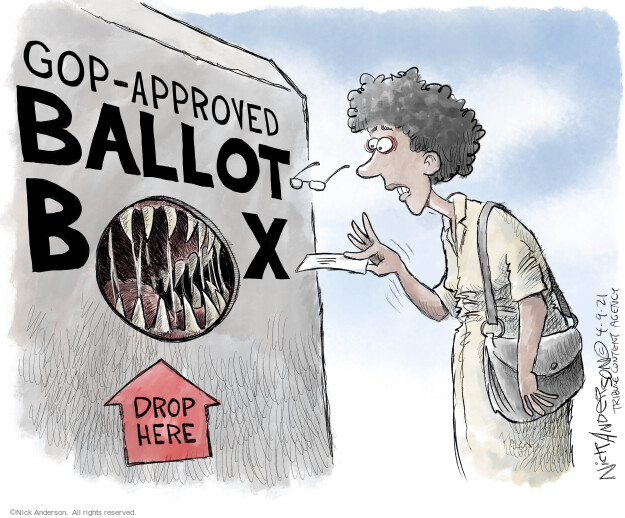 But Senator Joe Manchin III of West Virginia, the Democrats’ decisive swing vote, has repeatedly
  Raw Story:


 This is also about power and control.

 Via HuffPo: “






 peej
peej Carissa
 bostonboomer
 dakinikat
 ecocatwoman
 mablue2
 Mama Lopez
 peggysue22
 quixote
 skydancingguestblogger
 Mona (aka Wonk the Vote)



 Sky Dancing
Recent Comments