
Monday Reads
Posted: May 28, 2012 Filed under: Foreign Affairs, Fox News, Mitt Romney, morning reads, Republican presidential politics, Syria, The DNC, U.S. Politics | Tags: "the vision thing", Barack Obama, Bob Shieffer, cell phones, Cory Booker, Ed Gillespie, feckless, headphones, Jack Kerouac, John McCain, Mitch Daniels, NPR, On The Road, Richard Lugar, Rudy Giuliani, Scott Walker, smart phones, U.N. Security Council, Wisconsin recall election 24 Comments
Good Morning!!
I’m filling in for Dakinikat today, while she wends her way back down to New Orleans after her daughter’s great big Bollywood wedding. It’s another very slow news day today, but I’ve tried to dig up some interesting reads for you anyway.
The U.N. Security Council has condemned Syria’s government for the Houla massacre.
An emergency council meeting in New York on Sunday accused President Bashar al-Assad’s forces of unleashing havoc in the town, calling the bombardment of residential areas “an outrageous use of force” which violated international law.
“The security council condemned in the strongest possible terms the killings, confirmed by United Nations observers, of dozens of men, women and children and the wounding of hundreds more … in attacks that involved a series of government artillery and tank shellings on a residential neighbourhood,” the non-binding statement said.
Russia, which has resisted previous western-led condemnations of its Damascus ally, signed up to the declaration, signalling the extent of revulsion over images of infant corpses lined side by side after Friday’s slaughter, one of the worst incidents in the 14-month conflict.
You probably heard that John McCain, who for mysterious reasons is a permanent fixture on the Sunday talk shows even though he’s wrong about everything, has called Obama’s foreign policy and especially his caution on Syria “feckless.” The Villagers really love that word for some reason….why not just say “irresponsible” or “lazy”? Those are some of the definitions of the word.
On the other hand, outgoing Indiana Senator Richard Lugar, who is a lot more thoughtful than McCain, thinks Obama is right to be cautious on Syria. From TPM:
“I think that he has been very cautions. And I think that he’s cautions because he’s in the process of withdrawing our troops along with NATO from Afghanistan, pivoting our policy toward China and the east, more toward a situation of using robots – the ability to not to have to send in troops. It’s a difficult situation. So when you talk about Syria, and you talk about troops or intervention, the president has been very cautious. I think properly so.”
Also on the Sunday shows, Bob Shieffer asked Romney adviser Ed Gillespie why Mitt won’t appear anywhere except Fox News. Gillespie responded that Romney meet with “some schoolchildren last week.” Shieffer said, “I know schoolchildren are happy to see him.”
Good one, Bob!
On Candy Crowley’s show Rudy Giuliani was supposed to be playing surrogate for Romney and pulled a Cory Booker. Giuliani began by announcing that Romney is “the perfect choice” and then proceeded to “trash” Romney’s Massachusetts record while “explaining” his trashing of Romney back in 2008.
“Well, I mean, there’s a certain amount of personal ego in that — at that point, I was probably comparing his record to my record,” he said about his dings at Romney. “And maybe it was circumstances or whatever, but I had massive reductions in unemployment. He had a reduction in unemployment of about 8,10 percent — I think it was 15 percent. I had a reduction of unemployment of 50 percent. He had a growth of jobs of about 40,000; we had a growth of jobs of about 500,000. So I was comparing what I thought was my far superior record to his otherwise decent record. … That’s all part of campaigning.”
But, he added, Romney is much better than President Barack Obama.
I guess it’s still not quite as bad as the “endorsement” Romney got from Mitch Daniels.
Politico has a somewhat long piece for them on why Republicans are afraid that Romney “lacks the ‘vision thing'” For example:
“At the end of the day, you can’t just be all, you know, anti-Obama,” said former Ohio Secretary of State Ken Blackwell, whose state is key to Romney’s chances. “It has to be, I think, two parts that and one part here’s the antidote, here’s the vision, here’s the path that I would like to lead America down.”
And GOP strategist Mark McKinnon — who advised former two-term Republican president George W. Bush — said it’s time for Romney to outline his agenda.
“It’s important to establish the problem when you are a challenger because you are asking voters to fire the incumbent. So, Romney has to file his grievances,” McKinnon said. “But at some point he has to show that he has a vision of a better way. He can’t just say ‘The future is bleak, follow me.’ Because no one will.”
That sounds a little bit like the “advice” Mitch Daniels gave to Mitt. Sadly, Mitt has no vision for a better way. He just wants to be King so he can order everyone around and fire people when he feels like it.
I’ve been so focused on politics for the past several years that I’ve somewhat lost touch with popular culture. So it came as a shock to me today when reading an article about the Cannes Film Festival that one of the movies being shown there is an adaptation of Jack Kerouac’s On The Road. I knew instantly it would be horrible. Every Kerouac adaptation has been.
I used to be fascinated by Kerouac. I was on the Lowell, MA, Kerouac Festival Board for a few years, I’ve done two major research projects on Kerouac’s life and work, one of which I presented at at academic conference. I’ve read everything Kerouac has written, including his letters. I will never see this film, because I don’t want the book ruined for me. Trust me on this, just read the book if you haven’t already, and skip the movie.
The Washington Post has a piece on the Wisconsin recall election which is coming up on June 5: Scott Walker’s fate will have November implications.
Walker made national headlines last year when he eliminated most collective-bargaining rights for public employee unions, triggering huge protests. The fight put friends, neighbors and family members on opposite sides and left the state as polarized as any in the nation. It will culminate in next month’s recall election, only the third for a sitting governor in U.S. history.
The Democrats need to get off their butts and into Wisconsin soon or Walker is going to win. That would be disastrous, and would likely put the state in play for Romney in November. Wisconsin Democrats have been begging for help from the DNC, and it has been slow in coming.
I recently heard an interesting interview on NPR about Lulu DeCarrone, a coffee shop owner who decided to pull the plug on WiFi in her shop. She suddenly realized that her customers were sitting alone at tables for hours just staring at their computers and not talking. No one was having fun anymore and Lulu wasn’t making much money either. Quoting her:
It happened around three or four years ago. One afternoon, I was standing behind the counter and I allowed laptops for a while. And there were four tables, and four people sitting with laptops there. And I remember thinking, “This is like a crypt. I don’t like the feel of it.” Well, two ladies came in a little bit later and they were having such a good time. They were old friends, they haven’t seen each other in a long time and they were laughing and just carrying on. And the people who were sitting on the laptops kept glaring at them. And I made the decision right then and there. I thought I would rather lose my business and sell pencils out of a hat in front of the British Art Museum, than have this atmosphere in my store….
I thought, “Oh my God, maybe no one will come. Maybe I’ll lose it.” And I swear to you, that I was willing to do that. But it worked in reverse. I am the absolute opposite of what Starbucks does, and I’m very happy about it.
It’s become like Mecca for people who are disgusted. I never expected this. This has blown my mind; I never thought that would happen. I get compliments every single day. So I think that’s what it’s given me: Not a big bank account, certainly not driving a fancy car — but it has given me something that’s much harder to get, joy.
I’m no Luddite, but I have to admit, I do get disgusted sometimes the way gadgets have taken over and replaced socializing in public. When I was teaching at a large university, it was rare to see a student who wasn’t either listening to music on headphones, talking on the phone, or texting. They were completely out of touch with whatever was happening in their surroundings in the present moment. And so I also enjoyed this piece at the WaPo on people who ruin things for everyone around them by talking loudly on their cell phones. Here’s a sample:
I love taking the train and typically enjoy the ride. It can be so peaceful, and you don’t have the stress that comes with flying. But if I don’t get a seat in the “quiet car” that Amtrak has designated for those us who want peace, I’m privy to some conversations that should only be conducted in private.
I understand the occasional short conversation to let someone know when to pick you up or that the train is running late, but people are holding long and involved conversations, often about inane stuff. Businessmen are barking orders or, in one case I overheard, holding a conference call. I really don’t want to know your business.
On a recent Amtrak trip, a woman sat next to me and made a call to her friend who, I learned, was afraid she had a sexually transmitted disease. Thankfully, another seat opened up and the woman moved. But I could still hear her describing the test for the disease.
And have you noticed that many people seem to have no compunction about making you wait while they take calls? Why not just call the person back later and talk to the person you’re with?
OK, that’s all I’ve got. What are your recommended links for today?
Thursday Reads
Posted: May 24, 2012 Filed under: Catfood Commission, Democratic Politics, morning reads, U.S. Economy, U.S. Military, U.S. Politics | Tags: Alan Simpson, austerity, Barack Obama, Bush tax cuts, CBO, Charles P. Pierce, CIA leak case, Corey Booker, education policy, Emptywheel, eurozone crisis, fiscal cliff, Iraq War, Joe Wilson, John Maynard Keynes, Mark Halperin, Massachusetts public schools, Mitt Romney, Patrick Fitzgerald, Scooter Libby, Social Security, unemployment, Valerie Plame 55 Comments
Good Morning!! I’ve got a potpourri of interesting links for you today, so I’ll get right to it.
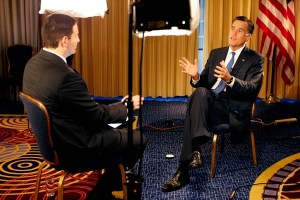
Yesterday Mitt Romney gave an interview to Mark {Gag!} Halperin of Time. Halperin asked the putative Republican nominee to say specifically what the unemployment rate would be after his first year as POTUS. You may recall that not long ago, Romney stated that unemployment should be below 4 percent and that anything higher than that is unacceptable. But now he’s singing a different tune.
Romney: I can’t possibly predict precisely what the unemployment rate will be at the end of one year. I can tell you that over a period of four years, by virtue of the policies that we’d put in place, we’d get the unemployment rate down to 6%, and perhaps a little lower. It depends in part upon the rate of growth of the globe, as well as what we’re seeing here in the United States, but we’d get the rate down quite substantially, and frankly, the key is we’re going to show such job growth that there will be competition for employees again. And wages – we’ll see the end of this decline we’re having. The median income in America is down 10% in just the last four years. That’s got to stop. We’ve got to start seeing rising wages and job growth.
Romney gave no specifics about how he would achieve this with the policies he has been promoting–cutting taxes on the rich, raising them on people with lower incomes, and cutting everything except defense spending, which he would increase substantially. Halperin did ask for more specifics, but Romney just babbled a bunch of nonsense:
Halperin: One more question generally about jobs. For people out there, for voters who want to know what you’re about in terms of job creation, is there some new idea, some original idea, that hasn’t been part of the debate in American politics before, that you have that you think would lead to a lot of new jobs?
Romney: Well the wonderful thing about the economy is that there’s not just one element that somehow makes the whole economy turn around, or everybody in the world would have figured that out and said there’s just one little thing we have to do – you know, Greece is settled, and France and Italy are all back and well again. No, it’s a whole series of things. It’s a system of factors that come together to make an economy work. What is it that makes America’s economy the strongest in the world, the most robust, over a century? It’s a whole series of things – everything from our financial service sector, to the cost of our inputs, our natural resources, to the productivity of our workforce, to our labor and management rules and how they work together, to our appreciation for fair trade and free trade around the world, and negotiating trade arrangements that are favorable to us. It is a whole passel of elements that come together to create a strong economy, and for someone who spent their life in the economy, they understand how that works. And it’s very clear, by virtue of the President’s record, that he does not, and he is struggling. Look at him right now. He just doesn’t have a clue what to do to get this economy going. I do. I laid out a 59-step plan that encompasses a whole series of efforts that will together get this economy going and put people back to work.
But from what I could make out in wading through all the blather, it really comes down to the confidence that will wash through all of us once we know that Mr. Fixit, Willard Mitt Romney is going to save us.
Romney: Well actually if I’m lucky enough to be elected the consumers and the small-business people in this country will realize that they have a friend in the White House, who is actively going to encourage economic growth, and there will be a resurgence in confidence in this country and a willingness to take risks, to invest, to add employees. I think it will be very positive news to the American economy. Will I be able to get done between January 1 and January 20 the things that I’d like to do? Of course not, I’m not in office. But I believe that we will be able to have a grace period, which allows us to tackle these issues one by one and put in place a structure, which is very much designed to get America working again.
Romney also gave a speech about education policy in which he proposed to further privatize America’s education system:
Mitt Romney proposed a series of steps to overhaul the public education system, reigniting the debate over school choice as his campaign intensifies its effort to introduce the presumptive Republican presidential nominee to a general-election audience.
The education plan, detailed in a speech today in Washington, would create a voucher-like system to give low- income and disabled students federal funds to attend charter schools, private institutions and public schools outside their district.
“I don’t like the direction of American education, and as president, I will do everything in my power to get education on track for the kids of this great land,” Romney told a gathering of Latino business owners at the U.S. Chamber of Commerce.
No new ideas there. To be perfectly honest, I strongly doubt that Romney knows the first thing about American public schools. But let me refer you to an expert on Willard’s past history in dealing with public education, the one and only Charles P. Pierce. Pierce writes about what Romney did to the public education system of Massachusetts during his one term as Governor:
Read the rest of this entry »
Tuesday Reads: My Objections to Mainstream Media Reporting on the Trayvon Martin Case
Posted: May 22, 2012 Filed under: morning reads | Tags: "Dee Dee", Bernie de la Ronda, bigotry, bullying, Florida, George Zimmerman, inconsistencies, mainstream media, Racism, stand your ground law, Trayvon Martin 67 Comments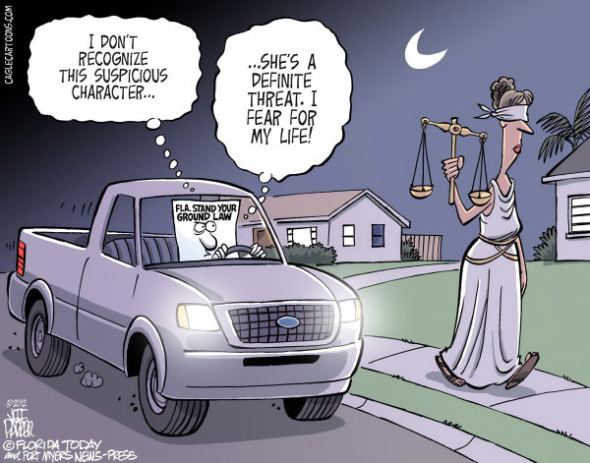
Good Morning!
I’ll warn you up front: I’m going to subject you to another rant about the Trayvon Martin case. If you’re not interested, you can stop reading now and just head for the comments. I promise not to take offense. BTW, it was either this or a rant about Cory Booker and Harold Ford.
I’m still following the Trayvon Martin story very closely, and I’ve been really shocked at the way the mainstream media has covered it. There has been a surprising willingness of reporters and “experts” to accept George Zimmerman’s multiple and conflicting versions of what happened on the night of February 26, 2012, when he shot and killed an unarmed minor child, for example, see here. I can’t help but wonder if some kind of institutionalized racism isn’t involved. Here are a few of the obvious inconsistencies in Zimmerman’s accounts just off the top of my head.
We’ve been told that Martin walked in circles around Zimmerman’s truck, and that Zimmerman was terrified. Yet Zimmerman was on the phone with a police dispatcher at the time and never mentioned this threatening activity.
We also know that Martin was on the phone with a friend at that time. Does it make sense that he would repeatedly circle Zimmerman’s truck while at the same time telling his friend he was frightened because a “crazy and creepy” man was watching and following him? And why would Zimmerman then get out of his truck and begin following Martin (while still on the phone with the dispatcher) if he was so frightened of the boy? We know that he did get out of his car and follow Martin, because Zimmerman told the police dispatcher so, and you can hear him huffing and puffing on the call as he either ran or walked quickly after Martin.
We’ve also been told that after Zimmerman got out of his car, he lost sight of Martin and turned back toward his truck. Then suddenly Martin attacked from behind, knocking Zimmerman to the sidewalk. Then supposedly Martin climbed on top of Zimmerman and banged his head on the pavement again and again and again. Where’s the evidence for that?

We now know that Zimmerman had a superficial cut on the back of his head and a couple of other cuts on his face as well as a bloody nose. We’ve been told that he had two black eyes and a closed fracture of his nose, but no photos of these injuries have been released. There was no sign of black eyes in the videos of Zimmerman at the police station after the shooting.
Certainly getting your head banged on cement should lead to serious damage–including brain damage or internal bleeding–not just a one-inch long cut! Here is an article about a man in Florida who fell and hit his head on the pavement and died from his injuries. Perhaps you could hit your head on pavement and survive, but pounded violently and repeatedly into the pavement? Surely that would turn the back of your head to hamburger.
Furthermore, if the fight took place on the sidewalk, how did Martin’s body end up in the middle of a grassy area? Police also reported that the back of Zimmerman’s jacket was wet and covered with grass stains. Witnesses describe a fight that moved over a distance and was witness successively by neighbors along the way.
Zimmerman also told police that Martin held his hand over his (Zimmerman’s mouth) as they fought, but at the same time that Zimmerman was screaming for help at the top of his lungs.
According to the Orlando Sentinel, even police did not believe the story about the hand over the mouth, because Zimmerman wouldn’t have been able to scream out words if his mouth were covered.
Police also had problems with some of the melodramatic quotes Zimmerman attributed to Martin, such as the claim (through Zimmerman’s father) that Martin reached for Zimmerman’s gun and announced “you’re going to die tonight.” You have to wonder how many arms Martin had to be punching Zimmerman, holding his hand over Zimmerman’s mouth, pounding his head on the pavement, and also reaching for the gun. Of course we now know that none of Martin’s DNA was found on any part of the gun, yet Zimmerman told police the two struggled over it.
In Zimmerman’s account, Martin was sitting on top of him, punching him and suddenly Martin saw the gun and reached for it and the two struggled over it. How would Martin have seen the gun if it was in the holster on Zimmerman’s waist. Wouldn’t he have been sitting at or above the waist in order to punch Zimmerman’s face? And how would Zimmerman have pulled his gun out in this position? Another problem with this story is that the autopsy showed that the trajectory bullet went front to back in a straight line. How would Zimmerman have been able to do this with Martin sitting on top of him like this?

How would the man on the bottom manage a straight, front-to-back shot from that angle? Wouldn’t it make more sense if they had been standing at the time of the gunshot?
Zimmerman also told police that after he shot Martin, the boy said the words “Okay you got it” or “you got me.” But from the autopsy results we now know that Martin was shot straight through the left ventricle of the heart with a hollow-point bullet. His lungs collapsed immediately as the bullet split into pieces. How would he have been able to speak? I think he probably died instantly.
So there are all kinds of problems with Zimmerman’s account(s) of the shooting and the events leading up to it. Yet, most mainstream media sources that I’ve read are reporting that Zimmerman’s account(S) are corroborated by the evidence. The assumption is that Martin attacked Zimmerman and therefore somehow deserved to die. I just don’t get it.
Since the release of part of the prosecution evidence, media outlets have focused on the finding that Trayvon Martin had trace levels of THC in his blood and urine at the time of his death, but have paid almost no attention to the much more powerful and dangerous medications that George Zimmerman was taking–Adderall (two forms of amphetamine) and Restoril (a sedative-hypnotic in the benzodiazepine family). Both of these are addictive drugs that are commonly abused, yet media reports have tended to minimize their mood-altering effects.
It seems to me that if Zimmerman’s attorney opts for a hearing on a stand-your-ground claim that all these inconsistencies will be brought up. That will be problematic for Zimmerman, because he will have to take the stand in order to state his case and back it up. He will have to describe the events of the night and explain any discrepancies with his previous statements. He made five different statements to police and participated in a taped recreation of events at the scene.
At Zimmerman’s bond hearing, prosecutor Bernie de la Ronda suggested that there were inconsistencies in Zimmerman’s statements (de la Ronda was referred to as “unidentified male” in the CNN transcript).
UNIDENTIFIED MALE [Prosecutor de la Ronda]: But before you committed this crime on February 26th, you were arrested — I’m sorry, not arrested. You were questioned that day, right, February 26th?
ZIMMERMAN: That evening into the 27th.
UNIDENTIFIED MALE: And then the following morning. Is that correct?
ZIMMERMAN: Yes, sir.
UNIDENTIFIED MALE: And the following evening, too. ZIMMERMAN: Yes, sir.
UNIDENTIFIED MALE: Ok. Would it be fair to say you were questioned about four or five times?
ZIMMERMAN: I remember giving three statements, yes sir.
UNIDENTIFIED MALE: And isn’t it true that in some of those statement when you were confronted about your inconsistencies, you started “I don’t remember”?
O’MARA [Zimmerman’s attorney]: Outside the scope of direct examination. I will object your honor.
JUDGE LESTER: We’ll give you a little bit of leeway. Not a whole lot but a little bit here, ok.
UNIDENTIFIED MALE: Isn’t it true that when you were questioned about the contradictions in your statements that the police didn’t believe it, that you would say “I don’t remember”?
JUDGE LESTER: I’m going to grant his motion at this time.
O’MARA: Thank you, your honor.
UNIDENTIFIED MALE: Would you agree you changed your story as it went along?
ZIMMERMAN: Absolutely not.
Prosecutor de la Ronda also alluded to some e-mails and text messages that were found on Zimmerman’s cell phone after his arrest.
UNIDENTIFIED MALE: Ok. Now, sir, you had a phone at some point and you agreed to turn over that phone to the police so they could make a copy of what was in there, right?
ZIMMERMAN: Yes, sir.
UNIDENTIFIED MALE: And in that phone did you receive or send text messages sir.
ZIMMERMAN: Yes, sir.
UNIDENTIFIED MALE: Did you ever make any reference to a reverend?
O’MARA: Objection, your honor. Outside the scope.
JUDGE LESTER: Sustained.
UNIDENTIFIED MALE: Did you ever make any reference to Mr. Martin, the father of the victim?
JUDGE LESTER: Sustained. You’re getting a little bit far away.
UNIDENTIFIED MALE: I apologize your honor. My question is he was asked in terms of apology to the family and I’d like to be able to address that if I could. JUDGE LESTER: I think you can classify that whether or not he asked the apology. I don’t want to get into other areas.
UNIDENTIFIED MALE: Yes, sir.
JUDGE LESTER: Thank you.
UNIDENTIFIED MALE: My question is, Mr. Zimmerman, do you recall sending a message to someone, an e-mail, about referring to the victim’s father?
ZIMMERMAN: No, sir. I don’t.
The statements that Zimmerman gave to police and the e-mails and text messages from his cell phone have not been released yet. But we have learned from one witness’s statement that Zimmerman has shown himself to be a bully and a bigot toward a Middle Eastern co-worker. I suspect that the comments found on Zimmerman’s cell phone were derogatory and racist references to Trayvon Martin’s family and/or their supporters. The “reverend” might be Al Sharpton or Jesse Jackson.
Zimmerman will also have to deal with the testimony of Trayvon Martin’s friend (referred to in the media as “Dee Dee,” who was talking to Martin during the time leading up to the confrontation and the shooting. In the full interview that she gave to the prosecutor, “Dee Dee” describes hearing a confrontation between Martin and Zimmerman. Martin says “Why are you following me for?” and Zimmerman responds by saying “What are you doing around here?” She then hears a bumping sound and Martin’s headphones fall off. But she can still hear him say, “Get off. Get off.” The whole interview is posted at The New York Times (scroll down to sidebar).
One of the biggest questions is who was screaming on one of the 911 tapes called in by a witness. Yesterday, the WaPo had an article about two voice experts, one of whom concluded that the voice is Trayvon Martin’s and that he can be heard saying “I’m begging you,” “Help me,” and “Stop!” right before the gunshot silenced him. A second expert pooh poohs these findings, but give it a read. I found the article quite compelling.
I know I’m largely preaching to the choir here at Sky Dancing, but I wanted to try to pull some of these inconsistencies together to show that–despite the media seeming to favor Zimmerman’s side–he is going to have a lot to answer for, particularly if he and his attorney decide to go the “stand-your-ground” route. In a trial, Zimmerman will have a choice about whether to take the stand; but at a pre-trial hearing to determine whether he is immune from prosecution because he was defending himself, Zimmerman would have to testify and his credibility will be on the line.
I’d love to get your reactions to what I’ve written. I’d especially like to know your opinions about why the mainstream media in general has been giving George Zimmerman the benefit of the doubt and demonizing Trayvon Martin.
For example, why the obsessive focus on traces of THC and little attention to the heavy duty prescription drugs Zimmerman was taking? Why was Martin described for so long as very tall, towering over Zimmerman, when he actually was 5’11” and Zimmerman is only a couple of inches shorter. Why has the media portrayed Zimmerman’s injuries as horrifying when they are actually quite superficial? Why have they exaggerated a tiny cut on one of Martin’s fingers into “scraped knuckles?” And so on. Am I wrong to suspect underlying racism as at least part of the explanation for these media attitudes?
As always, please feel free to post your own links in the comments.
Monday Reads
Posted: May 21, 2012 Filed under: #Occupy and We are the 99 percent!, morning reads, religious extremists, right wing hate grouups | Tags: acquired savants, chicago terrorists/protestors, police plant evidence, right wing hysteria and bigotry, Terry Gilliam 15 Comments Good Morning!
I am exhausted and I’m not even in Colorado yet. It’s a good thing I’m getting some limited exposure to the news these days because it’s full of things like this. Here’s the five most offensive sexist and homophobic offerings by conservatives for the month from Sarah Seltzer at Alternet. I picked a few for you so this is a spew alert!
Rejecting Virginia judicial candidate because he’s gay, then saying “Sodomy is not a civil right.” In Virginia, members of the House of Delegates failed to confirm Tracy Thorne-Begland, an openly gay formal Navy officer raising children with his partner, as a judicial candidate.
His nomination had been seen as a given, with bipartisan support, until lobbying from “both the Family Foundation, a powerful conservative group that opposed his candidacy, and conservative lawmakers, who argued that his past indicated that he would press an activist agenda from the bench ” according to the New York Times.
Even worse? One of the leading opponents of the nomination, Bob Marshall, defended the decision after it got national heat:
Dr. Martin Luther King and Rosa Parks never took an oath of office that they broke. Sodomy is not a civil right. It’s not the same as the Civil Rights Movement.
…
Bills allows pharmacists to deny care to women they think “may” be having abortions.
Kansas Governor Sam Brownback expanded the state “conscience clauses” to allow religious employees at pharmacies and medical facilities to refuse service to women they think “may” be having an abortion. As Robin Marty writes, he’s “legally blessed a virtually open-ended number of situations in which ‘religious’ workers can refuse to assist women under the guise that they believe they ‘may be’ terminating a pregnancy.”
So one consequence is simply refusing to dispense contraception and emergency contraception pills, neither of which terminate pregnancies. But there are other implications, as Marty notes, including that, “The law could also allow refusal of even more medically necessary drugs simply because they may relate to abortions…” like drugs that stop bleeding, for instance.
There’s more evidence that arrests in Chicago for protestors cum terrorists were the result of Cops Gone Wild. Naturally, you have to rely on the foreign press to get the story. Are we getting repeats of 1968?
Deutsch, the attorney representing the suspects, said at the hearing that police had planted weapons at the scene of the arrests. “This is a way to stir up prejudice against a people who are exercising their First Amendment rights,” Deutsch said. “There were undercover police officers that ingratiated themselves with people who come from out of town.”
In a case earlier this month five self-described anarchists were charged with plotting to blow up a bridge near Cleveland after planting fake explosives underneath that federal agents had sold them.
Natalie Wahlberg, a member of the Occupy Chicago movement protesting against income inequality, said: “The charges are utterly ridiculous. CPD [Chicago police department] doesn’t know the difference between home beer-making supplies and Molotov cocktails.”
The National Lawyers Guild, a group of volunteer lawyers representing the protesters, said on Facebook that police “broke down doors with guns drawn and searched residences without a warrant or consent”.
I am a long standing Monty Python fan as well as a big fan of the art of animation. That’s why I was thrilled to learn what Terry Gilliam’s been up to in this week’s The Economist. Here’s Gilliam discussing the difficulties of being non-formula in Hollywood.
To what extent does your reputation as a maverick contribute to the problems you experience?
Hollywood still sees me as someone who won’t be controlled as easily as a young guy straight out of making commercials. They don’t want some ageing hippie who still hasn’t learned to play the game after all these years. And that goes against me sometimes. But it’s not just me. Hollywood has been afraid to take risks for a long time now. All the studios want is a safe pair of hands.
Can you give an example of a studio choosing a “safe pair of hands” over you?
The first Harry Potter film. I was the perfect guy for that movie. They all knew it. J.K. Rowling wanted me to do it; David Heyman, the producer, wanted me to do it. But one guy from Warner’s overruled everyone and Chris Columbus got the gig. I was furious at the time but in hindsight, the level of studio interference on a project that size would have driven me insane.
What effect is Hollywood’s “safe” approach having on audiences?
The longer you keep churning out this production-line crap, the more audiences are going to like it—and need it. There’s an element of security provided by re-makes and re-hashes. We’re at the stage where audiences just want to know that everything will be the same. Maybe it’s because the world has become so diffused and unclear that people just want to go back to what they know over and over again. People need to reassure themselves that Spider-Man can still do the things he’s always done.
I’ve developed a fascination with brain injuries while listening to a NPR series on all the problems that Football players appear to develop midlife. Then there’s the the huge number of brain trauma patients coming out of our military these days. Here’s an interesting article at The Atlantic on how a blow to the head some times creates a genius. Warning! Do not try this at HOME!
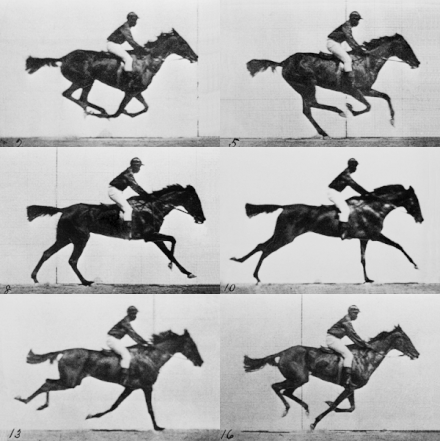
For a long time, it was a mystery as to how horses galloped. Did all four hooves at some point leave the ground? Or was one hoof always planted? It wasn’t until the 1880s when a British photographer named Eadweard Muybridge settled the debate with a series of photographs of a horse in midstride. Muybridge took a great interest in capturing the minute details of bodies in motion. The images made him famous.
Muybridge could be obsessive — and eccentric, too. His erratic behavior was blamed on a head injury he’d sustained in a serious stagecoach accident that killed one passenger and wounded all the rest. Now, researchers believe that the crash, which gave Muybridge a permanent brain injury, may actually have been partially responsible for endowing him with his artistic brilliance.
Muybridge may have been what psychiatrists call an acquired savant, somebody with extraordinary talent but who wasn’t born with it and who didn’t learn the skills from someplace else later. In fact, Muybridge’s savant abilities had evidently been buried deep in the recesses of his mind the whole time, and the stagecoach incident had simply unlocked them.
So, that should give you a few interesting things to think about! I’m headed to Colorado on Wednesday so I’ll be a little scarce this week. What’s on your blogging and reading list today?
Friday Reads
Posted: May 18, 2012 Filed under: morning reads | Tags: Bounty program, Jamie Dimon, John Vilma, JP Morgan, looting the poor, pediatric psychopharmacology, Sain'ts Football 19 Comments Good Morning!!
I’m headed up to LSU this morning for baby daughter’s graduation. She’s getting a degree in finance. She wants to work for a high tech company and isn’t headed to Wall Street. Next weekend is Doctor Daughter’s wedding in Colorado. I’m getting all fitted up in a Sari for her big fat Bollywood wedding. I’m not thrilled about having a bare midriff. Needless to say, I’m a wreck.
Barbara Ehrenreich writes a fascinating post at TruthDig on how our various state and local governments are looting the poor.
Local governments are discovering that they can partially make up for declining tax revenues through fines, fees, and other costs imposed on indigent defendants, often for crimes no more dastardly than driving with a suspended license. And if that seems like an inefficient way to make money, given the high cost of locking people up, a growing number of jurisdictions have taken to charging defendants for their court costs and even the price of occupying a jail cell. The poster case for government persecution of the down-and-out would have to be Edwina Nowlin, a homeless Michigan woman who was jailed in 2009for failing to pay $104 a month to cover the room-and-board charges for her 16-year-old son’s incarceration. When she received a back paycheck, she thought it would allow her to pay for her son’s jail stay. Instead, it was confiscated and applied to the cost of her own incarceration.
You might think that policymakers would take a keen interest in the amounts that are stolen, coerced, or extorted from the poor, but there are no official efforts to track such figures. Instead, we have to turn to independent investigators, like Kim Bobo, author of Wage Theft in America, who estimates that wage theft nets employers at least $100 billion a year and possibly twice that. As for the profits extracted by the lending industry, Gary Rivlin, who wrote Broke USA: From Pawnshops to Poverty, Inc.—How the Working Poor Became Big Business, says the poor pay an effective surcharge of about $30 billion a year for the financial products they consume and more than twice that if you include subprime credit cards, subprime auto loans, and subprime mortgages.
These are not, of course, trivial amounts.
Martha Rosenberg writes about ” How Big Pharma and the Psychiatric Establishment Drugged Up Our Kids” over at Alternet. You think bald heads, limp dicks, and wrinkles are the new gravy train? Well, check this out. “Pediatric psychopharmacology is a billion-dollar business that sustains Pharma and Pharma investors on Wall Street.” This isn’t St. Joseph’s baby aspirin we’re talking about. Gotta kid that’s acting a little eccentric? Well, just take her to the doctor! There’s a pill for that!
In his book Psychiatryland, psychiatrist Phillip Sinaikin recounts reading a scientific article in which it was debated whether a three-year-old girl who ran out into traffic had oppositional-defiant disorder or bipolar disorder, the latter marked by “grandiose delusions” that she was special and cars could not harm her.1
How did the once modest medical specialty of child psychiatry become the aggressive “pediatric psychopharmacology” that finds ADHD, pediatric conduct disorder, depression, bipolar disorder, oppositional defiant disorder, mood disorders, obsessive-compulsive disorders, mixed manias, social phobia, anxiety, sleep disorders, borderline disorders, assorted “spectrum” disorders, irritability, aggression, pervasive development disorders, personality disorders, and even schizophrenia under every rock? And how did this branch of psychiatry come to find the answer to the “psychopathologies” in the name of the discipline itself: pediatric psychopharmacology? Just good marketing. Pharma is wooing the pediatric patient because that’s where the money is. Just like country and western songs about finding love where you can when there is no love to be found at home. Pharma has stopped finding “love” in the form of the new blockbuster drugs that catapulted it through the 1990s and 2000s. According to the Wall Street Journal, new drugs made Pharma only $4.3 billion in 2010 compared with $11.8 billion in 2005—a two-thirds drop.2
The finance/econ twitter wonks were all on this WSJ story called “Inside J.P.Morgan’s Blunder”. Their insider says that Jamie in the Sky with Dimon actually approved all those disastrous trades. Oopssssss…..
This behind-the-scenes account of the disaster—based on interviews with numerous J.P. Morgan executives and with officials on Wall Street and in Washington—provides new details about the drama inside the bank as executives sought to understand the scope of the losses and decide what to do about them.
Among other things, Mr. Dimon initially resisted ousting the executive at the center of the mess, confided in his wife that he had “missed something bad,” and expressed regrets with his colleagues one night over vodka about how they had all let the firm down.
“The big lesson I learned: Don’t get complacent despite a successful track record,” Mr. Dimon said in an interview Wednesday. “No one or no unit can get a free pass.”
The debacle has raised broad questions on Wall Street and in Washington about whether any executive can properly oversee such a large financial institution, whether new regulatory rules will do anything to prevent another financial crisis and whether tougher regulation is needed to further rein in risky bank trading, particularly at financial behemoths that are viewed as too big to fail.
The bank has ousted the executive in charge of its Chief Investment Office, a huge trading unit at the heart of the scandal that has contributed more than $4 billion of net income over the past three years—nearly 10% of J.P. Morgan’s overall profit during that period.
The stakes are high. Mr. Dimon personally approved the concept behind the disastrous trades, according to people familiar with the matter. But he didn’t monitor how they were executed, triggering some resentment among other business chiefs who say the activities of their units are routinely and vigorously scrutinized.
I see lean and hungry mean and we’ve just passed the Ides of May. It’s not just our banks. It looks like Greek Banks are experiencing bank runs. They really didn’t fix that global financial melt down thingie, did they? Greek capital is fleeing the country. Gold bullion any one? Picasso paintings? Bullets?
Greeks have withdrawn €3bn (£2.4bn) from the banking system since the country’s inconclusive elections on 6 May, with tellers saying savers were making two or three visits a day to local banks.
Savers fear Greece leaving the eurozone and returning to the drachma. An aide to the outgoing prime minister, Lucas Papademos, said there were “serious fears that the banks were running out of money”.
Greece’s president, Karolos Papoulias, warned on Monday that €700m had been withdrawn but said he had been assured by the governor of the Greek central bank, George Provopoulous, that there was no panic yet.
According to minutes of a meeting on Monday, Papoulias said: “Withdrawals and outflows by 4pm when I called him [Provopoulous] exceeded €600m and reached €700m. He expects total outflows of about €800m, including conversions into German bunds [bonds] and other such things.”
Greeks have been slowly withdrawing cash from the banking system ever since the country first needed a bailout two years ago. Nearly a third of bank deposits were withdrawn between January 2010 and March 2012.
A crucial €18bn cash injection to stabilise Greece’s banks has been held up at the European financial stability fund’s Greek offshoot, the Hellenic financial stability fund (HFSF), for nearly two weeks with officials in Brussels refusing to release the funds because of the political instability in the wake of the elections. That had still not been released by tonight and is now not expected to be released for another four days despite the efforts of the Papademos government to expedite the recapitalisation of Greek banks.
Dimon will be facing a Senate Committe shortly. I watched the Goldman Sachs hearings awhile ago. I’m convinced the entire Senate Banking Committe wouldn’t know a bull flattener from a contango. (Oh, ask him about his naked shorts! I’ll watch any way.
Johnson announced Thursday that the panel’s investigation of the botched trade had “made it clear” that lawmakers needed to “hear directly” from the head of the bank.
The Banking Committee is currently set to hold two hearings on the implementation of the Wall Street reform law, which has been a dominant topic on Capitol Hill ever since JPMorgan announced it had lost at least $2 billion thanks to a complex bet on corporate debt. The New York Times reported Thursday the losses had actually climbed to $3 billion.
On May 22, the committee will hear from regulators at the Securities and Exchange Commission (SEC) and Commodity Futures Trading Commission (CFTC) on the financial overhaul. The SEC is reportedly investigating the JPMorgan trade, and the CFTC is responsible for implementing new restrictions on financial derivatives, which played a key role in the bank’s bad bet.
On June 6, the committee will hear from regulators with the Federal Reserve, Federal Deposit Insurance Corporation, Consumer Financial Protection Bureau, the Office of the Comptroller of the Currency and the Treasury Department.
This last link is somewhat unusual for me. The Saint’s bounty scandal continues to be big news down here. Vilma is going to take Goodell to court. This could be popcorn worthy.
New Orleans Saints linebacker Jonathan Vilma sued National Football League Commissioner Roger Goodell for defamation in reports about the team’s “bounty” program.
Vilma accused the commissioner of making false statements about him in reports about the bounties allegedly paid to players for intentionally hurting opponents during games, according to a filing in federal court today in New Orleans.
“Goodell’s statements forever falsely taint and permanently damage Vilma, in the eyes of NFL clubs, media, fans and sponsors, as a player who brazenly disregards NFL rules and intentionally attempts to injure his opponents,” according to the complaint.
Vilma was banned in March for the 2012 season without pay for his role in the Saints’ bounty program. His penalty was the most severe of the four players who were suspended. The league’s investigation concluded that as captain of the defense, Vilma assisted then-defensive coordinator Gregg Williams in establishing and funding the program that offered money to players who knocked specific opponents out of a game.
That’s my offerings this morning. I may not see you around much for the next few weeks. Be assured I’m not having a lot of fun and leaving you out of it. What’s on your reading and blogging list today?

 peej
peej Carissa
 bostonboomer
 dakinikat
 ecocatwoman
 mablue2
 Mama Lopez
 peggysue22
 quixote
 skydancingguestblogger
 Mona (aka Wonk the Vote)



 Sky Dancing
Recent Comments