
Tuesday Reads: Liberals, Libertarians, and Concern Trolls
Posted: October 29, 2013 Filed under: abortion rights, Barack Obama, Civil Liberties, Civil Rights, Crime, Democratic Politics, Foreign Affairs, France, George W. Bush, Germany, Great Britain, Hillary Clinton, Medicaid, Medicare, morning reads, poverty, Reproductive Rights, Russia, Social Security, U.S. Politics, War on Women, Women's Rights | Tags: "progressive" blogs, Conor Friedersdorf, Edward Snowden, Glenn Greenwald, Ian Welsh, libertarians, Ron Paul, T-Bogg 60 Comments
Good Morning!!
Between the Red Sox being in the World Series and having to have a root canal on Saturday, I’ve been a little bit disconnected from politics. The Sox won again last night in St. Louis, and they’ll be coming back home to Fenway Park leading the series 3 games to 2; so they could end it tomorrow night. If this post is a little late, my aching jaw and baseball are the reasons why.
We’ve been talking a lot about libertarians lately, because so-called progressives have been aligning with those Ayn Rand fans since libertarian Edward Snowden began leaking top secret documents about the NSA and libertarian Glenn Greenwald began lecturing the world about what a great hero Snowden is for defecting to Russia and revealing the most secret counterintelligence methods of the U.S. and U.K.
The latest shameful episode was Saturday’s “Stop Watching Us” rally in Washington, at which supposedly “progressive” groups joined with anti-woman right-wingers like Justin Amash and neo-confederates like Ron and Rand Paul to protest the NSA doing its job of collecting foreign intelligence.
Before the rally took place, Tom Watson wrote a heartfelt column warning “progressives” that libertarians don’t make good bedfellows. Watson wrote that while he dislikes mass surveillance,
I cannot support this coalition or the rally. It is fatally compromised by the prominent leadership and participation of the Libertarian Party and other libertarian student groups; their hardcore ideology stands in direct opposition to almost everything I believe in as a social democrat.
The Libertarian Party itself — inaccurately described by Stop Watching Us as a “public advocacy organization” — is a right-wing political party that opposes all gun control lawsand public healthcare, supported the government shutdown, dismisses public education,opposes organized labor, favors the end of Social Security as we know it, and argues in its formal political manifesto that “we should eliminate the entire social welfare system” while supporting “unrestricted competition among banks and depository institutions of all types.”
Yet my progressive friends would take the stage with the representatives of this political movement? Why? The loss is much greater than the gain. Organizers trade their own good names and reputations to stand alongside — and convey legitimacy to — a party that opposes communitarian participation in liberal society, and rejects the very role of government itself. And their own argument for privacy is weakened by the pollution of an ideology that uses its few positive civil liberties positions as a predator uses candy with a child.
This is an abandonment of core principles, in my view, out of anger over Edward Snowden’s still-recent revelations about the National Security Agency and its spying activity, particularly domestic access to telephone and online networks and metadata. It represents trading long-held beliefs in social and economic justice for a current hot-button issue that — while clearly of concern to all Americans — doesn’t come close to trumping a host of other issues areas that require “the long game” of electoral politics and organizing. Going “all in” with the libertarian purists is a fatal and unnecessary compromise; reform is clearly needed, but the presence of anti-government laissez-faire wingers at the beating heart of the privacy movement will surely sour the very political actors that movement desperately needs to make actual — and not symbolic, link bait — progress in its fight.
But it was to no avail. Watson was attacked for his argument that the anti-surveillance fever is distracting from other important issues. People like Greenwald and Snowden couldn’t possibly care less about alleviating poverty, protecting women’s rights or the right to vote. They’d have no problem with Social Security and Medicare being eliminated, and as for voting, they’re anti-government anyway. Glenn Greenwald–whom some uninformed people believe is a “progressive,” saves his worst attacks for Democrats and in the past has supported Ron Paul and Gary Johnson for president. To Greenwald, sacrificing the entire legacy of FDR and the civil rights and women’s movements is no big deal. Here’s how he characterized the values of liberals who reject Ron Paul in 2011:
Yes, I’m willing to continue to have Muslim children slaughtered by covert drones and cluster bombs, and America’s minorities imprisoned by the hundreds of thousands for no good reason, and the CIA able to run rampant with no checks or transparency, and privacy eroded further by the unchecked Surveillance State, and American citizens targeted by the President for assassination with no due process, and whistleblowers threatened with life imprisonment for “espionage,” and the Fed able to dole out trillions to bankers in secret, and a substantially higher risk of war with Iran (fought by the U.S. or by Israel with U.S. support) in exchange for less severe cuts to Social Security, Medicare and other entitlement programs, the preservation of the Education and Energy Departments, more stringent environmental regulations, broader health care coverage, defense of reproductive rights for women, stronger enforcement of civil rights for America’s minorities, a President with no associations with racist views in a newsletter, and a more progressive Supreme Court.
Of course, Greenwald is admitting that he’d sacrifice the social safety net and the rights of millions of Americans in a hopeless effort to defeat the military-industrial complex and its technologies. If you can stand to read the whole piece, you’ll also learn that Greenwald thinks Matt Stoller is a “brilliant” writer. Greenwald is a libertarian purist, with no understanding of how politics actually works. This is the pied piper that many “progressives” are following these days.
I guess I’m getting a little carried away here, so I’ll stop ranting and offer some pertinent links.
Monday Reads
Posted: October 28, 2013 Filed under: morning reads 65 Comments Good morning!
So, I had a rather uneventful weekend. I spent a lot of time grading stuff for my International Finance class and getting ready for my Security Analysis Class. I am still getting used to teaching MBAs and graduate students instead of undergrads. Plus, I teach Finance now with very little Economics so I feel mercenary. I tell myself that it keeps me in the kathouse and in red wine. But, it’s difficult at times because teaching economic literacy is more of a calling to me. Finance is much more utilitarian so I try to look at it as giving some one a life skill but it’s not quite the same. I used to be appalled that undergrad students could get through high school knowing so little and now I have learned that you can get an undergrad degree and come out with bad skills too. Color me jaded. At least I am not training predators. I am training people that are just trying to survive in a world of predators.
Anyway, I did watch a few things over the weekend that helped me cope with the ordeal of reading so many cut and pastes from the internet instead of original thoughts. AMC ran White Zombie. I had never seen that. I learned how little Lugosi made for the movie and was rather shocked. I guess he was worried about loosing his career to Boris Karloff at that point and was taking all offers. Then, I spent some time with Front Line which has a special place in our hearts here since Boomer’s brother is a cinematographer there. The topic also figures predominantly in my life and JJ’s since it dealt with antibiotic resistant bacteria.
I’ve battled a MRSA (antibiotic resistant staph infection) for several years. You may remember one of them put me in the hospital and doctors were worried about me losing my eye sight. Thankfully, there’s one last drug that works for me. But, it will lose its efficacy eventually. My doctors now trust me to rush to the pharmacy and get antibiotics when it gets out of hand. I have a topical lotion that seems to control anything that looks suspicious. I really try to not use the oral antibiotics unless it doesn’t respond to the topical and it looks like I’m in trouble. Trouble means it doesn’t go away and the entire site begins to swell like a balloon even when I drain it, clean it, and douse it with the topical stuff. At that point, waiting to see the doc even is dangerous. I imagine that one day that routine won’t work.
That seems to be the message of the episode and of some eecent articles with warnings from the CDC. There are some bacteria that no longer respond to anything and that list is growing. Dr. Arjun Srinivasan of the CDC says “We’ve Reached The End of Antibiotics, Period”.
For a long time, there have been newspaper stories and covers of magazines that talked about “The end of antibiotics, question ma?” Well, now I would say you can change the title to “The end of antibiotics, period.”
We’re here. We’re in the post-antibiotic era. There are patients for whom we have no therapy, and we are literally in a position of having a patient in a bed who has an infection, something that five years ago even we could have treated, but now we can’t. …
…I wonder if you can reflect a little bit and describe how the MRSA phenomenon, this resistant bacteria, changed public awareness about the problem.
So methicillin-resistant Staphylococcus aureus, or MRSA, for a lot of people is the first time that they had really encountered one of these highly drug-resistant bacteria. …
Literally for decades it’s been something that’s been difficult to treat. There were, up until recently, limited treatment options for MRSA. There is really one antibiotic that was available to treat it.
Was it that bad? Did people die from it?
People did die from it. It caused very serious infections. … MRSA was something that if you asked any doctor or nurse about MRSA, they would tell you, “Oh, yes, it’s a very serious issue. We struggle with it in our patients, in our intensive care units,” but if you asked the average person outside of hospitals about MRSA, they probably would never have heard of it. That all changed maybe about a decade or so ago.
What changed?
We began seeing MRSA infections outside of health-care settings. …
We were seeing it in young people who were athletes, who were young football players who had serious infections, who died of these MRSA infections which had previously been limited to hospitals.
We saw outbreaks in schools. We saw outbreaks in health clubs. And what most of these people were getting was something very different from what we saw in hospitals.
I guess nearly every one in New Orleans that spent some time in the post-Katrina environment now harbors MRSA if you believe the Doctors who deal with my outbreaks. I had read about Super Bugs some years ago but it wasn’t something I kept at the front of my mind. The biggest problem now is that it’s not really a good investment for pharmaceutical companies to do research in future antibiotics because they are only one shot drugs instead of drugs used perpetually. Therefore, there is a distinct need for the Federal Government to step in and fund the research. That, of course, is not really happening in this country of course. There is also this ghoulish term of “nightmare” bacteria that sounds like something from a horror movie. The man who was interviewed by Frontline and was a major researcher for antibiotics passed away last week. This adds to the story that sounds like a human disaster in the making.
We wanted to share the sad news that John Quinn, a veteran Gram-negative researcher featured in Hunting the Nightmare Bacteria, passed away last weekend. We knew him only briefly but in that short time he made an enormous contribution to our efforts to understand the importance of this subject and why major pharmaceutical companies have been pulling out of antibiotic development.
We knew companies had been abandoning antibiotic drug development and wanted to help viewers understand what that looked like from the inside. The story of Pfizer soon became an obvious example because the company had such a long history in developing antibiotics and had, until recently, been one of the stalwarts that remained involved in seeking a cure for Gram negatives.
But finding someone who was able to talk about the company and its decision to close down its antibiotic research efforts proved more difficult than we’d anticipated. Though we reached out to many researchers and scientists who had worked at Pfizer, they were all reluctant to speak on camera about the program.
That is until we found John Quinn. Quinn was a doctor by training and had been working in academia on Gram-negative resistance before it became a major public health concern. He watched first hand as resistance grew and doctors he worked with had few options to treat patients. “I’d seen [Gram-negative bacteria] kill patients,” Quinn told us. “I had, you know, seen the drugs that we were using cause kidney failure. So I was acutely aware — personally aware, professionally aware — of the need to make progress in this space.”
As usual, I’ve already found a response that really seems to misunderstand the problem by a writer in the National Review. It really isn’t the patent issue that  thwarts the development of antibiotics by Big Pharma. It’s the fact that antibiotics should be used sparingly, rarely, and basically for one illness. The lack of ongoing cashflow to return to the original investment is the issue. Granting patent extensions isn’t going to solve this problem at all. It seems clearly to be an area that requires nationalization from an economic standpoint and the standpoint that it clearly will become a national health issue.
Before we get too upset with the evil pharmaceutical industry, remember that it can take billions to develop a new drug. And, we have restricted the patent time for the drugs they successfully develop to permit less expensive generics to be manufactured.
It seems to me that if we want new and better antibiotics–we should ensure that the financial risk taken has the potential to lead to a substantial financial gain by extending the patent life for new antibiotics an extra ten years from the time it receives formal approval. Then, maybe, drug companies will more energetically jump into the research for new antibiotics.
We could also have the NIH fund more research into antibiotics and make the results available to everyone. But that would mean making antibiotics a priority over other areas of research. I’m not sure the politics would permit such an explicit triage.
Is our political system so fraught with ideology that we can’t even deal with an oncoming plague? This is a typical economic problem of “the commons”. We’ve had an overuse and a large abuse of antibiotics. This is especially true in food production where antibiotics typically are used without cause in animals raised for food.
A big part of the trouble is that the gains from the overuse of antibiotics are private, whereas the losses are public. Problems such as these are rarely soluble without outside intervention. Ramanan Laxminarayan of Princeton University, who has been thinking for many years about how to deal with the question of resistance, suggests the answer is a mixture of incentives and scourges. Prize funds, or guaranteed-purchase arrangements for new drugs and the rapid-diagnostics systems that would allow them to be deployed appropriately, would help overcome the financial problem of antibiotics being cures, rather than just treatments. Stricter dispensing guidelines for doctors and pharmacists might help deal with the moral hazard of overtreatment.
A bit of realism would be good, too. Derrick Crook, a consultant microbiologist at Oxford, where Florey and Chain once worked, observes, “It is hard to massively restrict the use of antimicrobials when they are doing good. It is possible that the enormous use in Asia is a good thing for a short time in a given country.” That, combined with ignorance about precisely how much the unnecessary use of antibiotics contributes to increasing resistance, makes restriction highly controversial.
So, wow. I took a lot more time on this subject than I thought I would. Here’s some other links you may want to look at today!
Charles M Blow writes about Billionaires’ Row and Welfare Lines
Forbes’s list of the world’s billionaires has added more than 200 names since 2012 and is now at 1,426. The United States once again leads the list, with 442 billionaires.
It’s a great time to be a rich person in America. The rich are raking it in during this recovery.
But in the shadow of their towering wealth exists a much less rosy recovery, where people are hurting and the pain grows.
This is the slowest post-recession jobs recovery since World War II. The unemployment rate is falling, but for the wrong reason: an increasing number of people may simply be giving up on finding a job. The labor force participation rate — the percentage of people over 16 who either have a job or are actively searching for one — fell in August to its lowest rate in 35 years.
David Gregory spends his Sunday Show concern-trolling Obama Care.
But David Gregory has never come across a Republican talking point that he didn’t love, embrace and swallow up whole to faithfully regurgitate to the masses. So he dutifully confronts Blue Cross and Blue Shield of Florida CEO Patrick Geraghty about the news that 300,000 Floridians have found their policies dropped because they fall below the minimum standards of coverage set by Obamacare. Problem was, Geraghty wasn’t going to playGregory’s gotcha game with people’s healthcare:
“We’re not cutting people,” Geraghty said. “We’re actually transitioning people. What we’ve been doing is informing folks that their plan doesn’t meet the test of the essential health benefits; therefore, they have a choice of many options that we make available through the exchange. And, in fact, with subsidy, many people will be getting better plans at a lesser cost. This really is a transition. In fact, the 300,000 figure is the entire year. So it’s really 40,000 people for January 1, and we’re walking them through that transition.”
Now, it’s absolutely true that there will be a fraction of people who find that their costs have gone up, the specific number and amount is still up for debate. And if they don’t qualify for subsidies, that will mean a higher out-of-pocket cost, at least in the short term. However, short-term partisan gains notwithstanding, the program will factor in long-term the inclusion of healthy, young people on the exchanges, which will help mitigate the ailing people who rushed for the initial coverage. Specifically, the re-insurance tax is being levied for the first three years is intended to help smooth that transition to allow for the long-term sustainability of the program.
More than 60 women took to driving cars to defy the ban on women drivers in Saudi Arabia.
Brushing off threats from the government, more than 60 Saudi women got behind the wheel on Saturday in a bold protest of the nation’s de facto ban on women driving.
Sara Hussein, a Saudi woman involved in the effort, drew parallels to the U.S. civil rights movement: “Think back in history — Rosa Parks was the only person who sat down on the bus, wasn’t she? And then it started to happen gradually. It does have to start with the few brave people who are willing to risk whatever there is to risk.”
Many women documented the act of civil disobedience on social media, even posting videos to YouTube. The most popular video, which has already been viewed nearly 100,000 times, was posted by May al-Sawyan, a 32-year-old economics researcher. She drove to the grocery store.
So, that’s it for me this morning! What’s on your reading and bloging list today
Saturday Reads: Obama’s “Grand Bargain” Rears Its Ugly Head Again, and Other News
Posted: October 26, 2013 Filed under: Barack Obama, Medicaid, Medicare, morning reads, seniors, Social Security, U.S. Economy, U.S. Politics | Tags: "grand bargain", American Red Cross, baby girl names, demon possession, Drew Brees, entitlement cuts, Eric Schneiderman, Fox News, Gene Sperling, Giovanni Graziano, Hurricane Sandy, Joan McCarter, Joshua Green, religion, Shepard Smith 28 Comments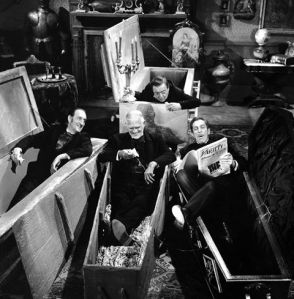
Good Morning!!
Just in time for Halloween, Obama’s nightmare “Grand Bargain” once again rears its ugly head. Yesterday morning Bloomberg’s Joshua Green followed a hunch and attended a briefing by the President’s top economic adviser (who is not an economist). According to Green, Sperling told Democrats “they’ll have to swallow entitlement cuts.”
In his usual elliptical and prolix way, Sperling seemed to be laying out the contours of a bargain with Republicans that’s quite a bit different that what most Democrats seem prepared to accept. What stood out to me was how he kept winding back around to the importance of entitlement cuts as part of a deal, as if he were laying the groundwork to blunt liberal anger. Right now, the official Democratic position is that they’ll accept entitlement cuts only in exchange for new revenue—something most Republicans reject. If Sperling mentioned revenue at all, I missed it.
But he dwelt at length—and with some passion—on the need for more stimulus, though he avoided using that dreaded word. He seemed to hint at a budget deal that would trade near-term “investment” (the preferred euphemism for “stimulus’) for long-term entitlement reform. That would be an important shift and one that would certainly upset many Democrats.
Here’s some of what Sperling had to say. He led off with the importance of entitlement cuts. (All emphasis is mine):
“Sometimes here [in Washington] we start to think that the end goal of our public policy is to hit a particular budget or spending or revenue metric—as if those are the goals in and of itself. But it’s important to remember that each of these metrics … are means to larger goals. … Right now, I think there is among a lot of people a consensus as to what the ingredients of a pro-growth fiscal policy are. It would be a fiscal policy that—yes—did give more confidence in the long run that we have a path on entitlement spending and revenues that gives confidence in our long-term fiscal position and that we’re not pushing off unbearable burdens to the next generation. That is very important.”
After Green’s article was posted, White House spokesperson Amy Brundage tried to minimize the talk of cuts in the safety net in the following e-mail:
“Gene was reiterating what our position has been all along: that any big budget deal is going to have to include significant revenues if Republicans insist on entitlement reforms. And any budget deal needs to have first and foremost the goal of creating good jobs for middle class families and growing the economy—that’s our north star in any budget deal, big or small.”
Uh huh. They know Americans are paying attention to the constant threat of cuts in Social Security, Medicare, and Medicaid. We need to stay vigilant and keep pushing back hard.
At Daily Kos, Joan McCarter responded: No, White House advisor Gene Sperling, entitlement cuts are not necessary.
You know what would be a really, really crappy idea? Making cuts to programs that are keeping millions from poverty in order to make a bad economy marginally better. But that’s what President Obama’s top economic advisor—Gene Sperling, director of the White House’s National Economic Council—is telling Democrats they’ll have to swallow….
Yeah, that would upset many Democrats. It would upset a helluva lot of voters, too. Millions and millions of them who have every reason right now to vote against Republicans. It would probably also not go over too well with the next generation who’s going to be far less impacted by the national debt than by having no hope of a secure retirement because a handful of austerity fetishists sold them up the river when they were young.
Sperling is saying that this will have to be done because “we still need to give this recovery more momentum.” Because of course the answer to the recovery is sacrificing some old people. By all means, get their skin in the game. They maybe have an inch or two of skin to spare.
Here’s an article at The Atlantic that Obama and Sperling should read: Raising the Medicare Age: A Popular Idea With Shockingly Few Benefits
Increasing the Medicare age would barely save the government any money, while increasing healthcare spending overall by keeping seniors in less-efficient private insurance (if they even have it). Other than that, Mrs. Lincoln, the policy is fine.
It may seem obvious that raising the Medicare age should save money. After all, the projected rise of the long-term debt is mostly about the projected rise of federal health-care spending. If we raise the Medicare age, Washington can wait longer to pay for seniors’ health care, which means they’ll pay less, overall.
Any time there’s any chance for any kind of budget bargain, “grand” or otherwise, the discussion inside the Beltway inevitably turns to hiking the Medicare age. (Call it Peterson’s Law: As a fiscal debate grows longer, the probability of a CEO proposing a higher Social Security and Medicare age approaches one). Right on cue, this got trial-ballooned during the debt ceiling talks in 2011, and then again during the fiscal cliff talks in 2012. Professional deficit hawks think of raising the Medicare age as a sign of seriousness. It’s not so much about the money it saves as the message it supposedly sends markets: that the debt will be fixed.
Except it’s all a pack of lies. Read all about it at the link.
It’s been a year since Hurricane Sandy hit the East Coast and caused so much havoc that it was “the second-costliest hurricane in United States history.” In July 2013, it came out that four charities had been holding back millions in donations that were collected specifically for Sandy relief. Now NY is forcing them to cough up some of the money. From the NY Daily News:
Four charities that had been under fire for sitting on millions of dollars of Hurricane Sandy relief funds have agreed to pony up $10 million to aid victims of the storm.
The charities — including the American Red Cross and a fund created by New Orleans Saints quarterback Drew Brees — reached an agreement with state Attorney General Eric Schneiderman. The deal came after revelations in July that 40% of the $575 million in Sandy aid collected by 90 charities had been disbursed within six months of the storm.
“We have been dogged about making sure that when they raise money and tell the world they are going to spend it on Sandy recovery, they in fact spend it on Sandy recovery,” Schneiderman said during an appearance Thursday in hard-hit Long Beach, L.I.
Brees’ charity had seriously dropped the ball, having received a single $300,000 donation but only allocating $75,000 of it, officials said.
Under the agreement with Schneiderman, the Brees Dream Foundation agreed to disperse the remaining $225,000 by October 2014, the second anniversary of the storm.
In less serious news–it IS Saturday after all, Gawker has learned that Fox News’ Shepard Smith began carrying on an office romance with a young producer at Fox, Giovanni “Gio” Graziano. Apparently, the two have been seen together all over Manhattan.
Gawker has learned that Smith is dating a 26-year-old Penn State grad and Fox Business producer named Giovanni “Gio” Graziano. According to multiple sources with knowledge of their relationship, the couple met sometime after Graziano started working at Fox Report in October 2011 as a production assistant. He’s the man with whom Smith frequents Bathtub Gin.
“Yes, that’s Shepard’s boyfriend,” Katya Minskova, the Bathtub Gin waitress Smith berated in March, confirmed to Gawker when shown a photo of Graziano. Another source who had seen them together at the Chelsea speakeasy confirmed Graziano’s identity as well. Both sources say they saw Graziano and Smith together at the bar on multiple occasions, and that they appeared to be romantically involved.
While Smith and Graziano’s boss Roger Ailes, a notorious homophobe, was apparently kept in the dark about the relationship—“higher ups had no idea,” a source close to Graziano said—the pair doesn’t appear to have gone to great lengths to keep the workplace romance from their co-workers.
Shep Smith arranged for Graziano to be transferred to Fox Business a year ago, so the two wouldn’t be directly working together. Now it’s not clear if Graziano is even working at Fox anymore.
Graziano’s current status at Fox is unclear. His LinkedIn profile indicates that he is currently employed at Fox Business (after three years as a production assistant at Fox News, including one year at Smith’s show). But the source close to Graziano claimed that he abruptly left Fox in mid-July. Graziano “dropped off the planet, cut off all his friends, to be with Shep,” the source said. “His former work friends are clueless about his current whereabouts.”
Very interesting . . .
I noticed this story at The Atlantic a few days ago, and saved it for today. Go to the link to check out this GIF of most popular baby girl names from 1960 to the present, based on data compiled by the Social Security Administration. Rebecca Rosen writes:
My friend Judy used to always say that whenever she met another Judy, she knew exactly how old that Judy was—to the day.
Now that level of precision might be a bit of a stretch, but, as the above map wonderfully shows, there’s good reason for that line of thinking. The most popular baby girl names in the United States are flashes in the pan—each one appearing on the map briefly, before being swept out by an up-and-comer.
The map was built in Adobe Illustrator by Deadspin‘s Reuben Fischer-Baum using data from the Social Security Administration. “Color palette,” Fischer-Baum wrote to me over email, “has to be credited to Stephen Few, from his excellent data viz book Show Me The Numbers.” Earlier drafts gave each name a unique color, he says, but in the end “it was a lot cleaner and more interesting to limit the palette to just the most popular name for any given year, and put the rest in grayscale so you could see how the different ‘eras’ of top names progressed.”
Over at Jezebel, Fischer-Baum describes the picture that emerges:
Baby naming generally follows a consistent cycle: A name springs up in some region of the U.S.—”Ashley” in the South, “Emily” in the Northeast—sweeps over the country, and falls out of favor nearly as quickly. The big exception to these baby booms and busts is “Jennifer”, which absolutely dominates America for a decade-and-a-half. If you’re named Jennifer and you were born between 1970 and 1984, don’t worry! I’m sure you have a totally cool, unique middle name.
Finally, here’s a really scary story for you from Talk to Action: A Majority of Americans 18-29 Years Old Now Believe in Demon Possession, Shows Survey.
Are Americans becoming less religious? While church affiliation is probably declining, don’t expect the atheist revolution anytime soon:
Over one half (63 percent, to be exact) of young Americans 18-29 years old now believe in the notion that invisible, non-corporeal entities called “demons” can take partial or total control of human beings, revealed an October 2012Public Policy Polling survey that also showed this belief isn’t declining among the American population generally; it’s growing.
Please read the whole creepy article at the link. It will scare you silly!
Those are my recommended reads for today. Please let us know what stories you’re following today by posting the links in the comment thread.
Friday Reads: The Devil’s in their Details
Posted: October 25, 2013 Filed under: morning reads 35 Comments Good Morning!
I totally enjoy this time of year! The weather cools down and the politics heat up! Also, Halloween is my favorite holiday! So, here’s some frightening stories as we head towards the day itself! I also love all the old spooky movies and the new scary ones!
Rick Santorum says that Satan controls the Film Industry! Maybe that explains all these great movies I love to watch this time of year!!!
While speaking on a network where televangelists on a daily basis tell viewers that God will reward them financially if they send in contributions, the former senator and presidential candidate spent most of the time criticizing movies for being too materialistic.
Santorum, who has previously said that Satan has control over mainline Protestantism and universities, thanked viewers in advance for seeing the movie.
“This is a tough business, this is something that we’re stepping out,” Santorum said, “and the Devil for a long, long time has had this, these screens, for his playground and he isn’t going to give it up easily.”
Herman Cain says the Devil was behind all those sexual misconduct/harassment charges that plagued his presidential campaign. Those lying witches!!! Burn them at the stake!!!
Then he speculated as to who may have orchestrated the allegations: the Devil.
“It made me realize that there was a force bigger than right,” Cain said.
But that doesn’t mean Cain has given up. Nowadays, Cain fights against the Evil One from the pulpit. Cain has been a member of the same Baptist church in Atlanta — “a church in the hood” — since he was 10, where he now serves as an associate pastor.
Cain preaches that the Devil is “determined to destroy our culture” and that “the family is at the center of our culture and the center of the family is its religious beliefs.”
A recent sermon of his is entitled: “Don’t Give Up, Get Up!” He told the congregation that there are three ways to battle “give-up-itis. You get down on your knees and pray, you write down your blessings, and you turn down the noise in your life.” The noise in Cain’s life is considerably softer than it was two years ago, but he hasn’t called it in just yet.
The tendency to be outspoken seems to run in the family, because the senator’s father, Rafael Cruz, has also been making headlines over the last few months.
Like his son, Cruz’s father is no stranger to the spotlight. He has spoken at a number of conservative events, including the Heritage Foundation organized “Defund Obamacare Tour,”which took him to cities across the country in August. He’s also becoming a regular on the conservative speaking circuit and on talk radio.
The Cuban immigrant and pastor turned his attention to the media during an interview on Glenn Beck’s radio show last Friday.
“In your previous segment you were talking about imagining America. I’ll tell you what, it almost seemed like I was listening to what was happening in Cuba during Castro,” the Texas senator’s father told Beck. “The very same thing, the ministry of misinformation that you have in all the communist countries. Well, did you know, Glenn, we have a ministry of misinformation in this country? It’s called the liberal media, and they just tell us what they want us to hear. They are rewriting history.”
Beck agreed with Cruz, and pointed out his annoyance with the “liberal media” for “rewriting history.”
“They have an agenda,” the elder Cruz said, “and, unfortunately, the agenda is an evil agenda. It’s an agenda for destroying what this country is all about.”
 Here’s a new study for BB to look at! The religious tend to be more likely to lie for financial gain. I’ve already mentioned three that fit this category in this post!
“Everybody lies” was the mantra of Gregory House, the curmudgeonly physician so memorably portrayed by Hugh Laurie. But being a man of science, the brilliant doctor might want to rethink that philosophy in light of new research from Canada.
In an experiment where lying led directly to financial gain, just over 50 percent of the participants told an untruth. That figure is roughly consistent with previous research.
What’s new in this study by University of Regina economist Jason Childs is its breakdown of the personality traits of the liars. Unlike some previous research, he did not find men are more likely to lie than women.
However, he discovered other factors predicted a greater likelihood of telling an untruth—including the assertion that religion plays an important role in your life.
Somewhere (or not), Christopher Hitchens is chuckling.
 Of course, I believe there are hells and they are on earth. Here’s one such example: 5 Shocking Revelations About Hellish Private Juvenile Prisons and the Man Who Profits From Them. This is a brief review of the HuffPo investigative piece which is itself worth reading.
For the past 25 years, James F. Slattery, YSI’s owner and former owner other for-profit companies, has focused on the bottom line, while generating a huge record of neglect. From creating “welfare hotels” in the ’80s to halfway houses for federal prisoners in the ’90s, Slattery’s living spaces are known for their poor conditions and low-paid workers. Slattery eventually began contracting with the government to run juvenile detention centers. After a few name changes and a merge, YSI now makes hundreds of millions of dollars in federal contracts. In the past 20 years, more than 40,000 youth have gone through YSI’s facilities, which are wrought with unsanitary environments, physical abuse and sexual assault.
Here’s the one thing I wish I wrote about Fama winning the Noble prize finally for his completely debunked rational expectations hypothesis which so many Republicans love to tout. This basically is one of the reasons our economy went to hell and has stayed there. Markets are not really very efficient at all.
Eugene Fama just received a Nobel Prize for his contributions to the theory of “efficient financial markets,” the dominant theory in financial economics that asserts that markets work ideally if not constrained by government regulation. The fact that economic “science” teaches that unregulated financial markets work effectively helped financial institutions and the rich accomplish their goal of radical financial market deregulation in the 1980s and 1990s. Deregulation, in turn, not only contributed to the rising inequality of the era, it helped cause the global financial market crisis that began in 2007 and the deep recession and austerity fiscal policies that accompanied it.
The theory of efficient financial markets requires the union of two ideas: the “efficient market hypothesis” (or EMH) and optimal (security) pricing theory (OPT). Both the EMH and OPT are built on crudely unrealistic assumptions that would lead anyone not indoctrinated in a mainstream PhD program to conclude that efficient financial market theory is a fairly-tale rather than serious social science.
The EMH is simply an assumption or assertion with no supporting evidence that all information relevant to the correct pricing of securities is known by all market participants. For long-term assets such as stocks and bonds, the relevant information is the cash flows associated with each security in every future time period. Yet it is logically impossible for anyone to know this information because the future is not yet determined in the present; the future is uncertain. Nevertheless, defenders of efficiency adopted the “rational expectations” hypothesis, perhaps the most ludicrous assumption in the history of social science, which asserts that all investors know the correct probability distributions of all future security cash flows and believe that they will not change over time.
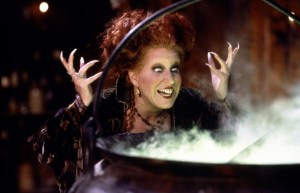
 So, that’s a little this and that from me this morning. What’s on your reading and blogging list today? Oh, and name the witches, their names–real and characters–and the movie/tv show for for some fun!
Plus, tell us what’s your favorite Halloween movie so we can all rent it this weekend!!!
Thursday Reads
Posted: October 24, 2013 Filed under: Barack Obama, Foreign Affairs, morning reads, Republican politics, U.S. Politics | Tags: 2013 World Series, Affordable Care Act, Andrew Sullivan, Angela Merkel, Benghazi, Boston Red Sox, Catholic Church, Dick Durbin, Goldman Sachs, Heidi Nelson Cruz, Hillary Clinton, John Boehner, John G. Taft, right wing christianism, Ted Cruz, William Howard Taft 46 Comments
Good Morning!!
I hope you’ll forgive my provincialism, but the only news that really matters to me this morning is that the Red Sox mopped the floor with the Cardinals last night, winning Game 1 of the 2013 World Series 8-1. Chad Finn of The Boston Globe has the story:
If you’re one of those straggling Red Sox fans who still believes in curses and ghosts and various other apparitions despite all of the affirming joys that have occurred since 2004, have I got a cockamamie theory to sell you.
Here goes: I think in Game 1 of the World Series Wednesday night at Fenway Park, the 2013 St. Louis Cardinals were somehow possessed by their baseball forefathers of 100 years ago.
Really. Think about it: The 2013 Cardinals arrived as the National League representative in this World Series with a sterling reputation and a vast reservoir of respect, having just vanquished the talented Dodgers with a combination of a deep lineup, a deeper bullpen, and a starting rotation led by true ace Adam Wainwright.
So what happens when they finally take the field? The Cardinals make three errors, botch a popup to the pitcher, and Wainwright, a strike-throwing machine who walked 35 batters all season, requires 31 pitches to get through the first inning. After the first, the Cardinals were already in a 3-0 hole that became 5-0 an inning later.
The way Jon Lester was dealing for the Red Sox, the five-run hole felt insurmountable, and it was. The outcome was determined long before the final 8-1 score became official.
It was pretty much over in the first inning. Then Red Sox fans could sit back and just enjoy it. I doubt if the rest of the games will be that easy, but winning the first one is a big plus. Game 2 tonight!
Now that I’ve bored everyone but myself, Pat J., and MABlue if he’s lurking out there, I’ll move on to the political news.
Republican disrespect for the President of the United States has reached an all-time low, according to Illinois Sen. Dick Durbin, who claims that an “unnamed GOP leader” told President Obama to his face at the White House, “I can’t stand to look at you.” Todd S. Purdum at Politico:
Such an insult — delivered eyeball to eyeball — would trump Rep. Joe Wilson’s shouted “You lie!” on the House floor during the Obama’s health care speech to Congress in 2009.
It would top former Vice President Dick Cheney’s terse suggestion on the Senate floor in 2004 that Sen. Patrick Leahy (D-Vt.) should perform an anatomically improbable act. And it would make Dick Armey’s heated advice to a scolding Bill Clinton (“Perhaps it’s my Western upbringing, but I don’t listen very well when someone’s pointing a finger in my face!”) during the 1995 government shutdown seem positively polite by comparison.
Perhaps only John Quincy Adams’s dismissal of Thomas Jefferson as “a slur upon the moral government of the world” sounds worse — and Adams made that assessment in the late 1820s, after Jefferson was dead.
The White House and John Boehner are both denying it, but Durbin is sticking by his statement.
In fact, the alleged dis words are so personal, so passionate, so disaffected-high-school-sweetheart in tone — “I cannot even stand to look at you” — that it’s hard to imagine any grown man saying them to another — much less to the president. “What are the chances of an honest conversation with someone who has just said something so disrespectful?” Durbin’s Facebook post asked with understatement.
Frankly, I have no problem believing it. Which “GOP leader” do you think it was?
And how are “old-style” Republicans supposed to deal with the new GOP? John G. Taft, descendant of President William Howard Taft, wrote about their struggle in The New York Times: The Cry of the True Republican:
Five generations of Tafts have served our nation as unwaveringly stalwart Republicans, from Alphonso Taft, who served as attorney general in the late 19th century, through William Howard Taft, who not only was the only person to be both president of the United States and chief justice of the United States but also served as the chief civil administrator of the Philippines and secretary of war, to my cousin, Robert Taft, a two-term governor of Ohio.
As I write, a photograph of my grandfather, Senator Robert Alphonso Taft, looks across at me from the wall of my office. He led the Republican Party in the United States Senate in the 1940s and early 1950s, ran for the Republican nomination for president three times and was known as “Mr. Republican.” If he were alive today, I can assure you he wouldn’t even recognize the modern Republican Party, which has repeatedly brought the United States of America to the edge of a fiscal cliff — seemingly with every intention of pushing us off the edge.
Read the rest at the link; it’s not long.
Another disaffected Republican, Andrew Sullivan, reacted to Taft’s op-ed by suggesting that we are approaching The Decline And Fall Of Christianism.
The fusion of politics and religion – most prominently the fusion of the evangelical movement and the Republican party – has been one of the most damaging developments in recent American history. It has made Republicanism not the creed of realists, pragmatists and compromise but of fundamentalists – on social and foreign policy, and even fiscal matters. And once maintaining inerrant doctrine becomes more important than, you know, governing a complicated, divided society, you end up with the extremism we saw in the debt ceiling crisis. When doctrine matters more than actually doing anything practical you end up with Cruz cray-cray….
But there is some light on the horizon. The Catholic hierarchy has been knocked sideways by the emergence of Pope Francis and his eschewal of their fixation on homosexuality, contraception and abortion. That fixation – essentially a Christianist and de factoRepublican alliance among Protestants and Catholic leaders – has now been rendered a far lower priority than, say, preaching the Gospel or serving the poor and the sick. Francis has also endorsed secularism as the proper modern context for religious faith: “I say that politics is the most important of the civil activities and has its own field of action, which is not that of religion. Political institutions are secular by definition and operate in independent spheres.”
Sullivan claims something similar is happening among younger evangelicals. I don’t buy it, but you can check out Sullivan’s arguments at his blog.

German Chancellor Angela Merkel suspects that the NSA has been bugging her cell phone, and she’s furious about it.
The furore over the scale of American mass surveillance revealed by Edward Snowden shifted to an incendiary new level on Wednesday evening when Angela Merkel of Germany called Barack Obama to demand explanations over reports that the US National Security Agency was monitoring her mobile phone.
Merkel was said by informed sources in Germany to be “livid” over the reports and convinced, on the basis of a German intelligence investigation, that the reports were utterly substantiated.
The German news weekly, Der Spiegel, reported an investigation by German intelligence, prompted by research from the magazine, that produced plausible information that Merkel’s mobile was targeted by the US eavesdropping agency. The German chancellor found the evidence substantial enough to call the White House and demand clarification.
The outrage in Berlin came days after President François Hollande of France also called the White House to confront Obama with reports that the NSA was targeting the private phone calls and text messages of millions of French people.
According to a Merkel spokesperson,
Merkel’s spokesman, Steffen Seibert, made plain that Merkel upbraided Obama unusually sharply and also voiced exasperation at the slowness of the Americans to respond to detailed questions on the NSA scandal since the Snowden revelations first appeared in the Guardian in June.
Merkel told Obama that “she unmistakably disapproves of and views as completely unacceptable such practices, if the indications are authenticated,” Seifert said. “This would be a serious breach of confidence. Such practices have to be halted immediately.”
The Guardian doesn’t report how President Obama responded to Merkel’s outraged complaints. Maybe he just sat there listening passively?
Hillary Clinton was heckled by an audience member during a speech at the University of Buffalo last night, according to WIVB in Amherst, NY.
Former First Lady and Secretary of State Hillary Rodham Clinton spoke to a large crowd at the University at Buffalo Wednesday night, as part of the university’s Distinguished Speaker Series.
Clinton spoke to a sold-out crowd in Alumni Arena, and began her address by talking about the stagnation in Washington and its recent impact on the U.S. economy after a partial government shutdown.
“Recently in Washington, we’ve seen what happens when politicians operate on scorched earth, not on common ground,” Clinton said.
It was shortly thereafter a man stood up and started shouting, “Benghazi, Benghazi, you let them die.”
Clinton did not stop speaking, but addressed the heckler by saying that solutions to problems facing Americans start by sitting down and talking and listening, not yelling, which prompted the audience to give her a standing ovation.
I guess that’s a taste of what we’ll have to deal with if Hillary decides to run for President in 2016. Read more about her speech at the link.

You know how Sen. Ted Cruz wants so much to kill the Affordable Care Act so that millions of Americans will continue to live without health care coverage? And how he voted to take away health care subsidies from Congress and Congressional staffers? Well, it turns out he wouldn’t have been affected if that had happened. From the Atlantic: Ted Cruz Has a Health Insurance Plan from Goldman Sachs.
Senator Ted Cruz’s wife Heidi Nelson Cruz confirmed on Wednesday that her husband has health insurance through her job at Goldman Sachs. That puts to rest a question opened, but never answered, by Senator Dick Durbin during Cruz’s 20-hour talkathon on the Senate floor against Obamacare. The details come from an interesting New York Times profile of Nelson Cruz, a regional head of a Goldman Sachs division in Houston. Here’s the Times:
And while her husband has been evasive about where he gets his health coverage, Mrs. Cruz was blunt.“Ted is on my health care plan,” said Mrs. Cruz, who has worked in Goldman’s investment management division for eight years.
Catherine Frazier, a spokeswoman for the senator, confirmed the coverage, which Goldman said was worth at least $20,000 a year. “The senator is on his wife’s plan, which comes at no cost to the taxpayer and reflects a personal decision about what works best for their family,” she said.
Yes, Teddy-boy is covered by insurance provided by his wife’s employer, yet he would have gladly deprived Congressional staffers of their coverage. What an asshole!
Those are my contributions for today. What are you reading and blogging about? Please post your links in the comment thread.

 peej
peej Carissa
 bostonboomer
 dakinikat
 ecocatwoman
 mablue2
 Mama Lopez
 peggysue22
 quixote
 skydancingguestblogger
 Mona (aka Wonk the Vote)



 Sky Dancing
Recent Comments