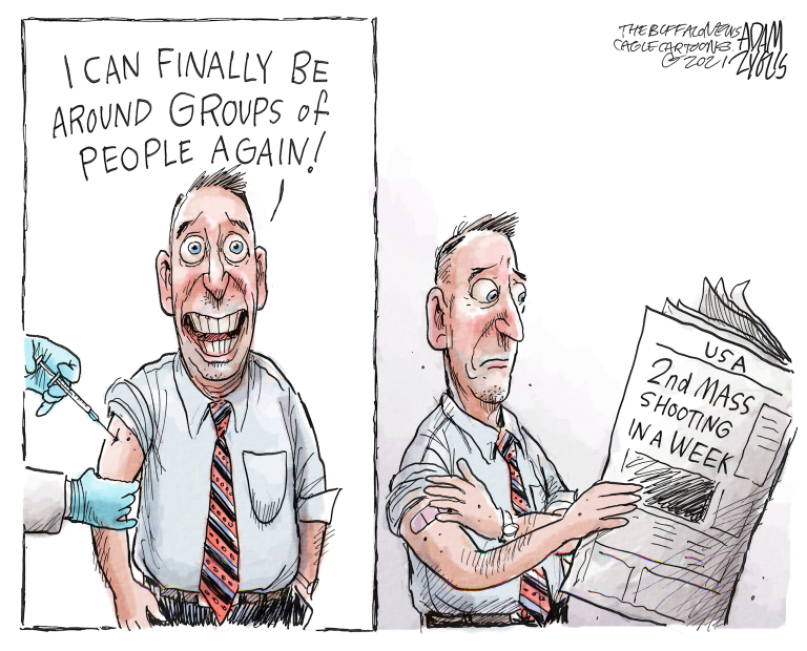
I’m feeling a little bit safer today because I got my second dose of the Moderna vaccine yesterday morning. I didn’t even have any arm soreness after the shot, but by bedtime my whole upper arm was aching. This morning all my joints ache. It’s difficult to know if these are reactions to the vaccine or just my “normal” chronic pain symptoms. Whatever. It’s worth it to be fully vaccinated, especially since Massachusetts now leads the nation in cases of the Brazilian variant of Covid-19.
Now that most of us oldsters are protected, it’s time for people in younger age groups to get their shots. President Biden is now calling for states to make vaccines available to all adults by April 19. CNN:
With all states having opened eligibility to the public or at least having announced when they plan to do so, Biden will announce that every adult in the country will be eligible to be vaccinated by April 19, according to an administration official, instead of Biden’s original deadline of May 1.
Biden announced last week that 90% of adults will be eligible to get a coronavirus vaccine by April 19, as well as have a vaccination site within five miles of where they live. Biden said the number of pharmacies participating in the federal pharmacy vaccination program was increasing from the current 17,000 locations to 40,000.
CNN has previously reported that all 50 states have announced when they plan to open vaccinations to everyone who is eligible, if they haven’t done so already. New Jersey, South Dakota and Nebraska have announced plans to expand eligibility to those 16 years and older before Biden’s new deadline, and other states currently plan to open eligibility by May 1. Biden is expected to credit the governors’ effort to meet his May 1 deadline for this change.
Massachusetts’ vaccine effort is moving so quickly that almost 38% of residents have received at least one dose, and the massive new system for getting shots into arms has plenty of untapped capacity.
“We could double our vaccination rate without too much effort,” said Paul Biddinger, a physician and chair of the state’s vaccine advisory committee.
Almost half of U.S. states had opened vaccination to everyone 16 and older by the end of last week. That will rise to 36 by the end of this week….
Nationwide, vaccinations hit a seven-day average of more than 3 million a day last weekend, and the country logged a 4-million-shot Saturday. (On Monday, the daily vaccination count plummeted to 2.1 million, but the drop was an expected anomaly after a holiday weekend.)
“Quite a turnaround,” tweeted medical researcher and author Eric Topol. “Who would ever have thought that the same country that couldn’t even get a COVID test working and scalable for two months could vaccinate more than 4 million people in a day?”
It’s amazing what a competent government can accomplish.
On Monday night, the Senate parliamentarian — an in-house rules expert — determined that Democrats would be able to do a third budget reconciliation bill this year, a massive development that gives lawmakers more room to pass legislation without Republican support.
Already, Democrats had the ability to do two budget reconciliation bills: one focused on fiscal year 2021 and one focused on fiscal year 2022. Unlike most other bills, budget measures can pass with just 51 votes, instead of 60, which means Democrats are able to usher through the legislation they want if all 50 members of their caucus are onboard. (With the American Rescue Plan, for instance, 50 Democrats were able to approve the $1.9 trillion package as part of the FY2021 budget bill, even though no Republicans backed it.)
“The Parliamentarian has advised that a revised budget resolution may contain budget reconciliation instructions,” said a spokesperson for Senate Majority Leader Chuck Schumer in a statement. “This confirms the Leader’s interpretation of the Budget Act and allows Democrats additional tools to improve the lives of Americans if Republican obstruction continues.”
With the new decision from the parliamentarian, Elizabeth MacDonough, Democrats can now do a third budget reconciliation bill, which means they can push through more ambitious measures as long as they are related to taxing and spending. The decision is based on MacDonough’s interpretation of Section 304 of the Congressional Budget Act of 1974, which allows lawmakers to revise a budget resolution before the end of the fiscal year that it covers. Given her decision, Democrats can now edit the 2021 budget resolution they already passed, and include instructions for another bill.
That could mean finally addressing infrastructure. Read more at Vox.
Congressman Alcee Hastings, whose life was marked by perseverance, calamity and a comeback, has died. He was 84.
Hastings crusaded against racial injustice as a civil rights lawyer, became a federal judge who was impeached and removed from office, and went on to win 15 congressional elections, becoming Florida’s senior member of Congress.
He died Tuesday morning, a longtime friend said.
In late 2018, Hastings was diagnosed with Stage 4 pancreatic cancer. For much of the ensuing two years, he continued public appearances between medical treatments, but more recently he hadn’t been in public. In recent days, he had been in hospice care….
From the early days of his career, Hastings was a fighter for Civil Rights and voting rights. Some early history:
As a newly licensed young lawyer, Hastings moved to Fort Lauderdale, where he partnered with W. George Allen starting in 1964. Broward was not a welcoming place for a young Black man in the early 1960s. When he arrived to join Allen’s firm, a motel wouldn’t rent him a room.
Alcee Hastings
During much of the ’60s and ’70s, Hastings has said, there were parts of the county where it wasn’t safe for Black people. The many civil rights cases filed by Hastings and Allen, who died in 2019, included lawsuits against a restaurant popular with other lawyers and judges — which wouldn’t serve them because they were Black — and desegregating Broward County schools.
Speaking at a national gathering of Black elected officials at the Westin Fort Lauderdale Beach Resort on the 50th anniversary of the Voting Rights Act of 1965, Hastings recalled what it was like when he came to the community. “I couldn’t go to that beach that you all see now,” he said.
In the early days of his career, the justice system in which Hastings practiced was dominated by racists, Finkelstein said at the 2019 luncheon honoring him. Hastings was a “howling voice” attempting to change Broward from a “little cracker town that was racist and mean and vicious.”
Eager for attention for himself, his law practice, and the cause, Hastings made several unsuccessful runs for public office, most notably a candidacy for the 1970 Democratic nomination for U.S. Senate. It wasn’t a race the 29-year-old expected to win. Rather, it was a campaign to show people of all races that a Black candidate could run for such an important job. It also brought him death threats.
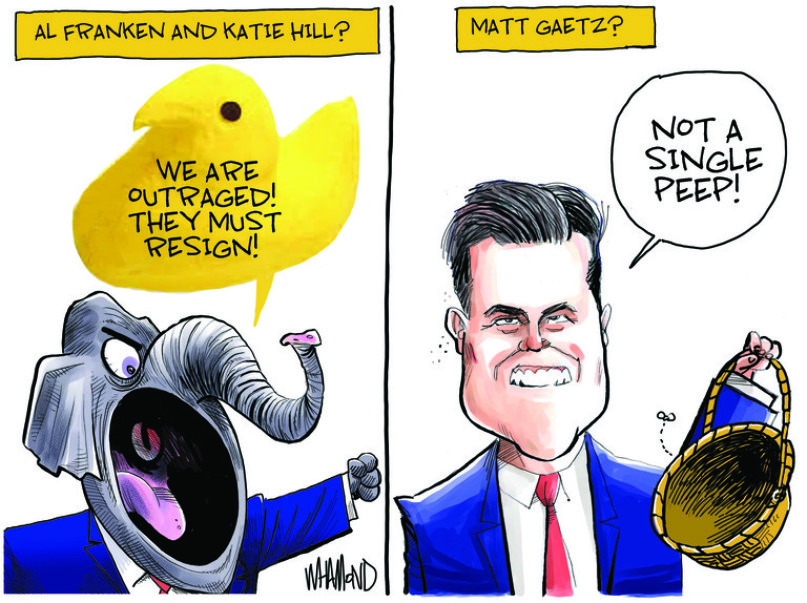
Nathan Nelson, Gaetz’s former director of military affairs, said two agents questioned him at his house after they had heard from members of the media that Nelson knew of Gaetz’s alleged involvement in illegal activities. The media tipsters told the FBI that Nelson resigned as a result of that knowledge, the ex-aide said….
Nelson said his departure from Gaetz’s office last fall was not related to the Department of Justice’s probe of allegations against the 38-year-old congressman. The investigation into whether Gaetz trafficked an underage girl began in the final months of former President Donald Trump’s term, The New York Times reported Tuesday.
In response to CNBC’s report on Nelson’s remarks, Gaetz slammed the FBI, claiming the agency is “literally running down false media rumors.”
When it first came out last week that Rep. Matt Gaetz was under investigation for his sexual involvement with a 17-year-old, the Florida Republican said his travel records would exonerate him….
What Gaetz knew—or should have known—is that there are no such public records, at least not when it comes to his private life.
There are, however, campaign filings. Among all the Matt Gaetz revelations last week was the news that the Justice Department is looking into the Florida Republican’s potential use of campaign funds for personal expenses. And the reality of those campaign finance reports is that they raise more questions than they answer about these alleged scandals.
“The spending surrounding the Gaetz campaign simply doesn’t say what he wants it to say,” Jordan Libowitz, communications director for Citizens for Responsibility and Ethics in Washington, a campaign-finance watchdog, told The Daily Beast. “One, the reports don’t offer specific information; and two, it’s not clear whether he’s even saying that his campaign filings will exonerate him. If he’s paying out of pocket, we won’t know the answers without a subpoena.”
As Gaetz knows, his campaign filings don’t have any sort of information that would prove he never participated in a sex ring or paid for the travel of an underage minor. What his filings do show, though, is that Gaetz had a close relationship with Joel Greenberg—the Seminole County tax collector indicted on sex trafficking charges.
Air Force veteran and “research consultant” Bob Kent verified to Sirius Radio personality Michael Smerconish that he had approached Gaetz’s deep-pocketed father, former Florida Senate President Don Gaetz, last month seeking a $25 million loan. The funds would ransom the release of Robert Levinson, a former Federal Bureau of Investigation agent who disappeared in Iran more than a decade ago. Levinson’s own family believes him to be dead, but Kent has insisted he has evidence Levinson is alive and remains a hostage of the Islamic Republic, though credible experts have dismissed his claims.
Kent said he was aware at the time that Matt Gaetz might have “legal issues” and that he suggested that assisting in the mission would create “good will” toward the congressman. Although Kent didn’t say it outright, those issues seem to be the recently surfaced allegations that the lawmaker paid women for sex—including, possibly, an underage girl—and misused campaign funds.
“Matt Gaetz is in need of good publicity, and I’m in need of $25 million to save Robert Levinson,” Kent told Smerconish….
Despite having coupled his request for money with an allusion to the congressman’s alleged improprieties, and despite working on the project with serial Florida fraudster Stephen Alford, Kent maintained he had not sought to extort the Gaetz clan.
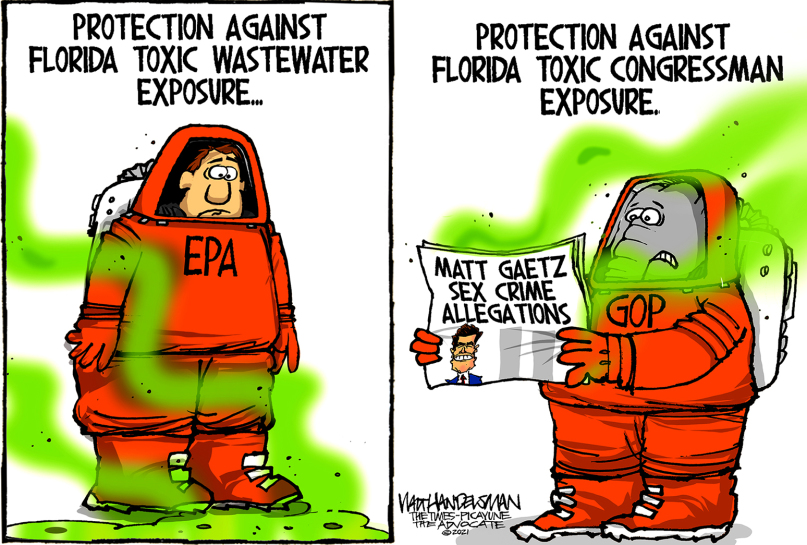
While serving in the Florida Legislature, U.S. Rep. Matt Gaetz opposed a bill meant to stop people from sharing sexually explicit images of their ex-lovers because Gaetz believed that recipients of those images had a right to share them, according to the sponsor of the legislation.
Former state Rep. Tom Goodson, a Republican from Brevard County, spent three years sponsoring legislation to outlaw nonconsensual pornography — sometimes called “revenge porn.”
And Goodson said Monday that Gaetz was the chief opponent to that legislation. Goodson said he remembered a meeting in which Gaetz said that if someone sends an intimate image to their romantic partner, then that image becomes the partner’s property to use however they want.
“Matt was absolutely against it. He thought the picture was his to do with what he wanted,” Goodson said. “He thought that any picture was his to use as he wanted to, as an expression of his rights.”
The Matt Gaetz scandal keeps getting worse. It appears that his pal Joel Greenberg–who is already in deep trouble–is in the process of throwing Gaetz under the bus. I admit, I’m really enjoying watching this Trumpist creep go down in flames. Here’s the latest:
Rep Matt Gaetz is expected to be indicted within the next few weeks as former Florida official and friend Joel Greenberg is believed to have turned on the congressman in the sex trafficking investigation against him, a source close to the probe tells DailyMail.com.
Greenberg, who was elected Seminole County Tax Collector in 2016, is currently in jail awaiting trial after being slapped with a string of charges last year including sex trafficking a minor between the age of 14 and 17.
Earlier this week Gaetz was revealed to be under investigation for allegedly engaging in a sexual relationship with a 17-year-old – who on Thursday was reported to be the same girl Greenberg is accused of sex trafficking, according to The New York Times.
The Florida Republican, 38, has furiously denied the allegations, instead insisting they are part of an alleged $25million extortion plot led by former Justice Department official David McGee.
But sources familiar with the matter say Gaetz’s claims are just an attempt to divert attention from his connection to the Greenberg case as the investigation closes in on him.
‘The congressman impugned and damaged the reputation of someone who had nothing to do with this,’ the source told DailyMail.com.
‘Gaetz is a sleaze-bag who used a professional with a sterling reputation to divert the attention on a sex investigation focused on him.
‘Rest assured that Greenberg has been singing to the feds about his friend Matt Gaetz. That’s why Matt is so freaked out,’ the source added.
Gaetz’s arrest is said to be imminent after the alleged victim, who has not been named, testified before a Florida grand jury this week saying she had sex with the conservative Republican before she turned 18, DailyMail.com has learned.
As The Daily Beast reported on Friday, it was text messages about Gaetz and Greenberg’s off-hours trips to a government office that alerted investigators to the congressman’s involvement in alleged crimes—and eventually led them to what they determined to be a criminal sex ring….
Like Gaetz, Greenberg is the son of a wealthy local businessman. Dr. Andrew Greenberg co-founded a dental company with 92 offices across the state. Joel, who holds a stake in that company, went on to establish his own advertising agency, DG3. For a time, he also hosted “The Joel Greenberg Show,” a sports-themed talk radio show on WRSO 810 AM. He sold the ad company in 2015 and ran the next year for Seminole County tax collector, defeating the 78-year-old who had held the office since 1988.
Once in office, Greenberg immediately took outlandish steps for what should have been a low-profile and boring job. He moved the agency out of its rent-free government offices. He hired his friends. He handed out questionable contracts to longtime associates. He used his tax collector “badge” to pose as law enforcement and pull over a speeder. He even tried to get some tax employees to carry guns.
But it was another type of alleged abuse of power that would eventually rope in his friend, Matt Gaetz.
Greenberg, whose government agency was tasked with shredding expired drivers licenses, was illegally creating fake IDs, according to investigators. And Gaetz was with him when the pair was caught on surveillance footage visiting the Lake Mary branch of the tax collector’s office on a weekend in April 2018, according to several people with knowledge of the incident.
There are many more details about these two frat boy creeps at the link above.
CNN’s chief political correspondent Dana Bash on Friday indicated how some Republicans are currently feeling toward embattled Rep. Matt Gaetz (R-Fla.).
“New Day” anchor John Avlon observed that Republicans are hardly rallying to defend the Donald Trump sycophant, who is under investigation for alleged sexual misconduct with a 17-year-old girl. Gaetz denies the allegations.
“If you could see my text messages from some of his current and former colleagues, I actually can’t repeat what some of them say on morning television,” claimed Bash.
“It’s because he has not made himself popular with most of his colleagues,” she continued. “Again, we’re talking about his fellow Republicans, John. We’re talking about people who he has antagonized in the name of being … as beholden and as loyal to the former president, Donald Trump, as possible. In the name of being on conservative media, being on Fox News. Being the darling of that.”
In the days following revelations about the federal investigation into Rep. Matt Gaetz’s alleged sexual relationship with a 17-year-old girl, advisers to Donald Trump have consistently offered him a simple message: Please, please keep your mouth shut.
According to two people familiar with the matter, the twice-impeached former president has closely been monitoring the scandal engulfing one of his favorite allies on Capitol Hill. The ex-president has, in his typical fashion, casually quizzed several confidants about what they think of the situation and if there’s anything that he should do about it.
But multiple people close to Trump have flatly advised him to stay out of it—refrain from publicly defending Gaetz, they are telling him, at least for the time being.
The two sources said that, in all of the conversations they’re aware of, Trump has appeared to ultimately agree with the recommendations to keep quiet. One of the sources added that the former president has lamented that the whole thing seems “really bad” for Gaetz, while also mentioning that the allegations could be a “smear” against the Trump uber-loyalist.
The Matt Gaetz story increasingly reads like a script written by a pervert high on a cocktail of ADHD meds and MDMA. Even if you’ve been following the scandal-prone Republican congressman’s latest controversy closely it’s hard to keep track of what on earth is happening….
While the allegations against Gaetz are still being investigated, it’s worth noting that Gaetz has faced accusations of disturbing sexual conduct before. In January 2020 Chris Latvala, a Republican congressman, tweeted that Gaetz “created a game where members of the FL House got ‘points’ for sleeping with aides, interns, lobbyists, and married legislators”. Gaetz also reportedly bragged of his sexual exploits and showed other lawmakers nude photos of women he’d slept with. According to CNN, he showed his colleagues these photos while he was at work. Gaetz, by the way, was also the only lawmaker to vote against a bipartisan anti human-trafficking bill. A number of his colleagues have also spoken out about “love of alcohol and illegal drugs, as well as his proclivity for younger women”.
I don’t know exactly what Gaetz has or hasn’t done, but I do know he’s spent his career reveling in scandal rather than actually doing his job. He even joked with Elon Musk last week about how a scandal involving him would be called GaetzGate. The fact that this guy is a sitting member of Congress boggles the mind. It shows just how low we set the bar for our (male) politicians.
Rep. Matt Gaetz repeatedly boasted to people involved in Florida politics about women he met through a county tax collector who has since been charged by federal authorities with sex trafficking of a minor, according to two people who heard his comments directly.
They said the Republican congressman, first elected in 2016, also showed them videos on his phone of naked or topless women on multiple occasions, including at parties with Joel Greenberg, the former tax collector for Seminole County. The women appeared to be adults, and could be seen dancing, hanging out by a pool and, in one case, using a hula hoop without clothing, the people said.
“Matt was never shy about talking about his relationship to Joel and the access to women that Joel provided him,” said one of these people who, like others, spoke on the condition of anonymity to be candid. “What these videos implied was that there was something of a sexual nature going on with everyone.” [….]
Federal law enforcement officials suspect that Greenberg procured a number of women for Gaetz and are exploring whether they sometimes shared sexual partners, including at least one girl who was 17 years old at the time of the alleged encounter, a person familiar with the matter said.
In addition to the charge of child sex trafficking, Greenberg faces a host of other allegations. He has pleaded not guilty and is scheduled to go on trial this summer. His attorney declined to comment.
Gaetz is suspected of patronizing websites that allow men to set up dates with women in exchange for dinners or hotel stays, a person familiar with the matter said. It is not a crime to use such services unless money is exchanged explicitly for sex. Investigators have obtained witness testimony and other evidence suggesting Gaetz did so, a person familiar with the matter said. Some of that evidence was first reported by the New York Times.
Investigators also are exploring allegations that Gaetz and others used illegal drugs during some of their encounters with women, a person familiar with the matter said.
Representative Matt Gaetz, Republican of Florida and a close ally of former President Donald J. Trump, is being investigated by the Justice Department over whether he had a sexual relationship with a 17-year-old and paid for her to travel with him, according to three people briefed on the matter.
Investigators are examining whether Mr. Gaetz violated federal sex trafficking laws, the people said. A variety of federal statutes make it illegal to induce someone under 18 to travel over state lines to engage in sex in exchange for money or something of value. The Justice Department regularly prosecutes such cases, and offenders often receive severe sentences.
It was not clear how Mr. Gaetz met the girl, believed to be 17 at the time of encounters about two years ago that investigators are scrutinizing, according to two of the people.
The investigation was opened in the final months of the Trump administration under Attorney General William P. Barr, the two people said. Given Mr. Gaetz’s national profile, senior Justice Department officials in Washington — including some appointed by Mr. Trump — were notified of the investigation, the people said.
Then Gaetz appeared on Tucker Carlson’s show on Fox and made everything worse for himself.
Matt Gaetz vows to Tucker Carlson he didn't "travel" with a 17-year-old, but his denial seems pretty specific and carefully worded pic.twitter.com/emGePJeVfV
Hours after the New York Times broke the news that Rep. Matt Gaetz (R-FL) is under federal investigation for alleged sex trafficking, he was given a platform by Fox News host Tucker Carlson to tell his side of the story. But Gaetz ended up botching the softball interview so thoroughly that Carlson ended up telling his millions of viewers it was “one of the weirdest interviews I’ve ever conducted.”
Pablo Picasso, 1939
At various points during the interview, Gaetz — who denies the allegations — volunteered the existence of criminal allegations against him that aren’t yet part of the public record, brought up sexual misconduct allegations against Carlson that most of his viewers probably weren’t aware of, and went out of his way to involve Carlson in stories about his personal life.
“I can say that actually you and I went to dinner about two years ago, your wife was there, and I brought a friend of mine — you’ll remember her — and she was actually threatened by the FBI, told that if she wouldn’t cop to the fact that somehow I was involved in some pay-for-play scheme, that could face trouble,” Gaetz said. “So I do believe there are people at the Department of Justice that are trying to smear me. Providing for flights and hotel rooms for people that you’re dating who are of legal age is not a crime.”
It sounds like he’s admitting he paid for travel and hotel rooms for a person he was dating, doesn’t it?
…more importantly than the bizarreness of the interview is the fact that Gaetz didn’t do a very convincing job trying to refute the very serious criminal allegations underpinning the federal investigation. His defense basically amounts to claims that he’s the victim of a vast conspiracy….
During the interview with Carlson, Gaetz denied improper conduct, but he did so in a very limited and specific way, using language that raised more questions than it answered.
Butterflies and Poppies, Vincent Van Gogh
“The New York Times is running a story that I have traveled with a 17-year-old woman, and that is verifiably false; people can look at my travel records and see that that is not the case,” Gaetz said — even though a 17-year-old is not a “woman,” the allegations go beyond mere “traveling,” and it’s unclear how “travel records” could disprove any of them.
Gaetz went on to allege that word of the investigation was leaked as part of an extortion plot, saying “what is happening is an extortion of me and my family involving a former Department of Justice official” who demanded $25 million in exchange for making the sex trafficking allegations go away.
But during an MSNBC interview a short time later, one of the Times reporters bylined on the Gaetz story, Katie Benner, debunked one of Gaetz’s central claims, saying unequivocally that the former official Gaetz accused by name of being part of an extortion plot isn’t even involved in the investigation.
Here’s the bottom line: House members’ personal travel and expenses are not subject to disclosure, so there would be no public records to check regarding Gaetz’s private life.“If this was just personal travel, and he wasn’t using campaign or official funds, there’s no disclosure,” said Jordan Libowitz, communications director for the watchdog group Citizens for Responsibility and Ethics in Washington.
Airline flight manifests and personal credit card or bank statements would chart who went where with whom at what times and at whose expense, but those sensitive records are not public. Only law enforcement investigators could look through them by getting subpoenas.
“The Justice Department is investigating Rep. Matt Gaetz — a Florida Republican considered a close political ally of former president Donald Trump — over an alleged sexual relationship with an underage girl,” The Washington Post’s Matt Zapotosky and Devlin Barrett explain. That relationship allegedly included paying for the girl to travel, potentially across state lines, adding the complexity of potential federal charges related to sex trafficking, according to the Times. Both the Post and Times stories are constrained for fairly obvious reasons, including the limits of available information and the need to accurately convey the potential risk Gaetz faces.
Landscape with Butterflies, 1956, by Salvador Dali
The investigation apparently spun out of another sex-trafficking probe in Florida. That one focused on a former county official named Joel Greenberg, who was charged in the summer with a number of federal offenses, including sex trafficking of a minor.
“According to an indictment in the case, Greenberg abused his access to a statewide database, using it to look up the personal information of people with whom he was in ‘sugar daddy’ relationships, including the minor, and to help produce fake identification documents to ‘facilitate his efforts to engage in commercial sex acts,’ ” Zapotosky and Barrett report. “He was also accused of seeking to undermine a political opponent by surfacing fabricated evidence of racism and misconduct.”
It’s worth noting that questions about Gaetz’s relationships have emerged in the past. A Mother Jones article from 2019 documents concerns raised by a former member of Gaetz’s staff about a 21-year-old he was then dating and who was apparently posting photos of the two of them on Instagram alongside other photos showing not-conservative-politician-friendly activities.
There’s more explanation and confusion at the link. What is clear is that there are two different investigations that Gaetz is trying to combine in his defense. Other than that, I’m still confused.
Rep. Matt Gaetz’s father, Don, a former Florida Senate president, said he is working with the FBI, including wearing a wire on more than one occasion as part of an investigation into an alleged extortion plot that the pair said was organized by former federal prosecutor David McGee.
Herons and Lilies, 1934, by Frank W. Benson
“The FBI asked me to try and get that information for Matt and an indication we would transfer money to Mr. David McGee,” Don Gaetz said in an interview late Tuesday, without specifying what information he was referring to.
McGee, who is now in private practice with a Pensacola, Fla.-based law firm, did not respond to a POLITICO request seeking comment, but told other media outlets there is no truth to the alleged extortion plot.
Don Gaetz said in the interview he wore a wire during a meeting earlier this month with McGee and said he was set to meet Wednesday with Stephen Alford, a local developer who he said is also part of the alleged extortion scheme. During that meeting, Don Gaetz said, he was again set to wear a wire and try to get Alford to talk about payments he allegedly was to make to McGee, but the meeting fell apart when news broke that his son was being investigated by the Justice Department. Alford did not respond to text messages seeking comment.
In separate interviews, Don and Matt Gaetz (R-Fla.) acknowledged a Justice Department probe involving the younger Gaetz, 38, into whether he had improper involvement with a 17-year-old girl. The Gaetzes say they are the target of an extortion plot seeking money to keep the DOJ investigation quiet.
When Rep. Matt Gaetz’s (R-Fla.) father received a message that referred to a Justice Department investigation into his son and asked for help funding the search for Robert Levinson, a former FBI agent who went missing in Iran 14 years ago, he thought the request was suspicious and went to the FBI, people familiar with the matter told The Washington Post on Wednesday.
On Tuesday night, The New York Timesreported that in the waning months of the Trump administration, the DOJ launched an investigation into whether Gaetz had a sexual relationship with a 17-year-old girl and paid for her to travel with him out of state. Gaetz, who denied any wrongdoing and has not been charged with any crimes, released a statement saying his family had been targeted by extortionists, and his father wore a wire at the insistence of the FBI.
Boy with butterfly net, by Henri Mattisse, 1907
People familiar with the matter told the Post that Gaetz’s wealthy father, Don Gaetz, received a text message and document from two men who said if he gave them money to help with the search for Levinson, Matt Gaetz would be seen as a hero and his legal troubles would likely go away. Levinson disappeared from Iran’s Kish Island in 2007 while trying to get information on the country’s nuclear program, and was last seen alive in a 2010 hostage video. His family has said the U.S. government told them they believe Levinson is dead.
When Don Gaetz received these messages, the DOJ investigation into his son was not known publicly. It isn’t clear how the men learned about the investigation, and they do not appear to have any direct connection with the investigation. People with knowledge of the matter told the Post it will be hard to prove this was an extortion attempt because the men did not threaten to expose Gaetz’s DOJ investigation if the family did not give them money.
Matt Gaetz appeared on Fox News Tuesday night and accused a lawyer named David McGee of being involved in this effort. McGee has represented the Levinson family for years, and on Tuesday night he said Don Gaetz called him and they had a “pleasant conversation” about “the trouble his son was in.” McGee denied being involved in any extortion attempt, and his law firm on Wednesday called the allegation “false and defamatory.” Catherine Garcia
Sources told ABC News the investigation has been going on for months and began during the Trump administration. Former Attorney General Bill Barr was briefed on the investigation’s progress several times, the sources said.
One source told ABC News that federal authorities have already interviewed multiple witnesses as part of their probe.
Morning Bird Dance, Edvard Munch
Gaetz has reportedly told confidants he is considering retiring from Congress and possibly joining the right-wing media outlet Newsmax, according to an Axios report earlier Tuesday.
Yet within the last several weeks Gaetz started reaching out to prominent attorneys, according to one source. The source said that one of the attorneys Gaetz asked to represent him was Washington attorney Bill Burck, who represented Steve Bannon, Reince Priebus and Don McGahn during the Mueller probe. Burck turned down the case, according to a person familiar with the decision.
So this story keeps getting curiouser and curiouser. One interesting point is that apparently Gaetz is very unpopular with Republicans and they are rooting for him to go down in flames. A few more links to check out:
I’ll be keeping an eye on this story, because it’s still so confusing to me. I guess we’ll be learning more soon. So what’s on your mind today? As always, this is an open thread.
Did you like this post? Please share it with your friends:
My body went back to normal time this morning and stole that hour plus another back! I’m just not adjusting well to this at all but I did enjoy time walking the dog last night under the Full Worm Moon. I’m not sure all the spring breakers holding the neighborhood hostage were gone but they seemed to be holed up somewhere inside because Temple and I had the neutral ground and all our heron buddies to ourselves.
The full Moon names used by The Old Farmer’s Almanac come from a number of places, including Native American, Colonial American, and European sources. Traditionally, each full Moon name was applied to the entire lunar month in which it occurred, not only to the full Moon.
The Worm Moon
March’s full Moon goes by the name Worm Moon, which was originally thought to refer to the earthworms that appear as the soil warms in spring. This invites robins and other birds to feed—a true sign of spring!
An alternative explanation for this name comes from Captain Jonathan Carver, an 18th-century explorer, who wrote that this Moon name refers to a different sort of “worm”—beetle larvae—which begin to emerge from the thawing bark of trees and other winter hideouts at this time.
This is Rob and Laura who live in the Live Oak closest to the River. On the next block there are two pairs. I’ve named them Lucy and Ricky and Ethel and Fred. They live in adjacent trees.
The issue in most dire need of elucidation is undoubtedly the onslaught of voter suppression measures in state legislatures across Republican States. It is also the Voting Rights Act headed for the desk of the Senate. If you read anything today please read Jane Mayer’s article at The New Yorker. Here’s the headline: “Inside the Koch-Backed Effort to Block the Largest Election-Reform Bill in Half a Century ,On a leaked conference call, leaders of dark-money groups and an aide to Mitch McConnell expressed frustration with the popularity of the legislation—even among Republican voters.”
A recording obtained by The New Yorker of a private conference call on January 8th, between a policy adviser to Senator Mitch McConnell and the leaders of several prominent conservative groups—including one run by the Koch brothers’ network—reveals the participants’ worry that the proposed election reforms garner wide support not just from liberals but from conservative voters, too. The speakers on the call expressed alarm at the broad popularity of the bill’s provision calling for more public disclosure about secret political donors. The participants conceded that the bill, which would stem the flow of dark money from such political donors as the billionaire oil magnate Charles Koch, was so popular that it wasn’t worth trying to mount a public-advocacy campaign to shift opinion. Instead, a senior Koch operative said that opponents would be better off ignoring the will of American voters and trying to kill the bill in Congress.
Kyle McKenzie, the research director for the Koch-run advocacy group Stand Together, told fellow-conservatives and Republican congressional staffers on the call that he had a “spoiler.” “When presented with a very neutral description” of the bill, “people were generally supportive,” McKenzie said, adding that “the most worrisome part . . . is that conservatives were actually as supportive as the general public was when they read the neutral description.” In fact, he warned, “there’s a large, very large, chunk of conservatives who are supportive of these types of efforts.”
As a result, McKenzie conceded, the legislation’s opponents would likely have to rely on Republicans in the Senate, where the bill is now under debate, to use “under-the-dome-type strategies”—meaning legislative maneuvers beneath Congress’s roof, such as the filibuster—to stop the bill, because turning public opinion against it would be “incredibly difficult.” He warned that the worst thing conservatives could do would be to try to “engage with the other side” on the argument that the legislation “stops billionaires from buying elections.” McKenzie admitted, “Unfortunately, we’ve found that that is a winning message, for both the general public and also conservatives.” He said that when his group tested “tons of other” arguments in support of the bill, the one condemning billionaires buying elections was the most persuasive—people “found that to be most convincing, and it riled them up the most.”
McKenzie explained that the Koch-founded group had invested substantial resources “to see if we could find any message that would activate and persuade conservatives on this issue.” He related that “an A.O.C. message we tested”—one claiming that the bill might help Congresswoman Alexandria Ocasio-Cortez achieve her goal of holding “people in the Trump Administration accountable” by identifying big donors—helped somewhat with conservatives. But McKenzie admitted that the link was tenuous, since “what she means by this is unclear.” “Sadly,” he added, not even attaching the phrase “cancel culture” to the bill, by portraying it as silencing conservative voices, had worked. “It really ranked at the bottom,” McKenzie said to the group. “That was definitely a little concerning for us.”
Gretchen Reiter, the senior vice-president of communications for Stand Together, declined to respond to questions about the conference call or the Koch group’s research showing the robust popularity of the proposed election reforms. In an e-mailed statement, she said, “Defending civil liberties requires more than a sound bite,” and added that the group opposes the bill because “a third of it restricts First Amendment rights.” She included a link to an op-ed written by a member of Americans for Prosperity, another Koch-affiliated advocacy group, which argues that the legislation violates donors’ freedom of expression by requiring the disclosure of the names of those who contribute ten thousand dollars or more to nonprofit groups involved in election spending. Such transparency, the op-ed suggests, could subject donors who prefer to remain anonymous to retaliation or harassment.
This evening shift, circa 1924, is the earliest confirmed example of Lowe’s couture. Every bead was attached individually.Dress from collection of the Henry B. Plant Museum / Tampa, Florida
Georgia has some of the most organized and mobilized groups of Black voters, thanks to Stacey Abrams, who may be the shrewdest and most tenacious voting rights advocate in the nation.
Many of these Black voters remember when Abrams lost a close race for Georgia governor in 2018, a contest tainted by allegations of voter suppression. Kemp, Abrams’ opponent, ran for governor while also holding onto his position as the state’s chief elections officer — a position many viewed as a conflict of interest.
The perception that the GOP is trying to suppress the Black vote will only make Black voters in Georgia more determined to vote in 2022, when Abrams is widely expected to run against Kemp again, says the Rev. Jamal Byrant, senior pastor of New Birth Missionary Baptist Church in Lithonia, Georgia.
“Georgia is frankly becoming browner and more progressive, and the Republicans are having anxiety about the upcoming gubernatorial election and they’re trying to do everything in their power to stop the wave,” Bryant says.
“You’re going to see a whole lot of first-time voters, younger voters and disillusioned and disenfranchised voters heading back to the polls because they realize what’s at stake,” Bryant says.
There is evidence to back up Bryant’s prediction. A growing body of research suggests that the passage of voter ID laws may in some cases motivate Black voters and spark voter organizing efforts.
One study examining the impact of the Supreme Court’s 2013 Shelby decision, which gutted the Voting Rights Act, suggested that voting restrictions may actually increase Black turnout in elections.
The Shelby decision made it easier for states to pass voter restriction laws after the high court removed the “preclearance” provision from the Voting Rights Act. Under preclearance, a state with a history of racial discrimination in elections had to get permission from the federal government for instituting any changes to how they run elections.
The study, which was cited in the New York Times, said the Shelby decision may have actually increased Black turnout in the 2016 presidential election in some states where preclearance was removed.
“Overall, the removal of preclearance did not decrease Black turnout,” says Kyle Raze, a Ph.D. candidate at the University of Oregon, who authored the study. “If anything, the removal of preclearance increased Black turnout in some states during the 2016 election.”
I suppose the one great thing we’ve got going for us is that the country’s voters outnumber the country’s wicked rich. But then I read things like this poll from the Pew Research Center. “A partisan chasm in views of Trump’s legacy”. It still seems many rank and file republicans get their information from alternative reality sites. Democracies don’t work so well when a slice of the electorate likes being deliberately and willfully ignorant.
Two months after President Donald Trump left office, 38% of Americans say he made progress toward solving major problems facing the country during his administration – while a nearly identical share (37%) say he made these problems worse. Another 15% say Trump tried but failed to solve the nation’s problems, while 10% say he did not address them.
Looking back at Trump’s term, just over half of Americans (53%) rate Trump’s presidency as below average – including 41% who say he was a “terrible” president. About a third (35%) rate his presidency as above average, including 17% who say he was a “great” president. Republicans and Democrats offer starkly different assessments of Trump’s presidential legacy, according to a Pew Research Center survey of 12,055 U.S. adults conducted March 1-7, 2021.
Graphic statement: A stately evening ensemble of black lace over aqua silk, for A. F. Chantilly, circa 1966.
On Sunday evening, CNN aired a special featuring interviews with the senior officials involved in the early coronavirus pandemic response under president Donald Trump. No longer operating under the Trump political umbrella, they offered assessments of the past year that lacked any soothing veneer.
Suspected Russian hackers gained access to email accounts belonging to the Trump administration’s head of the Department of Homeland Security and members of the department’s cybersecurity staff whose jobs included hunting threats from foreign countries, The Associated Press has learned.
The intelligence value of the hacking of then-acting Secretary Chad Wolf and his staff is not publicly known, but the symbolism is stark. Their accounts were accessed as part of what’s known as the SolarWinds intrusion, and it throws into question how the U.S. government can protect individuals, companies and institutions across the country if it can’t protect itself.
The short answer for many security experts and federal officials is that it can’t — at least not without some significant changes.
“The SolarWinds hack was a victory for our foreign adversaries, and a failure for DHS,” said Sen. Rob Portman of Ohio, top Republican on the Senate’s Homeland Security and Governmental Affairs Committee. “We are talking about DHS’s crown jewels.”
The Biden administration has tried to keep a tight lid on the scope of the SolarWinds attack as it weighs retaliatory measures against Russia. But an inquiry by the AP found new details about the breach at DHS and other agencies, including the Energy Department, where hackers accessed top officials’ schedules.
Blush pink was a favorite color of Lowe’s. Here she uses it in silk and nylon for an evening dress, from 1962, festooned with trompe-l’oeil flowers.
Well, that’s a little this and that about the previous guy as well as what we’re experiencing now still because of the previous guy. The Biden/Harris administration sure have their work cut out for them.
Since I now have the Blues I will put this up by Memphis Minnie (Lizzy Douglas) who recorded this song sometime during the peak of the great depression. Douglas was born in New Orleans in the Algiers neighborhood in 1897 but moved to Tennessee to record. She was billed as the Queen of the Country Blues. You can learn more about her at the Memphis Music Hall of Fame.
But there were plenty of men who wanted to play guitar like Memphis Minnie. She once even beat the great Big Bill Broonzy in a picking contest. Her title “Queen of the Country Blues” was no hype. Minnie did everything the boys could do, and she did it in a fancy gown with full hair and makeup. She had it all: stellar guitar chops, a powerful voice, a huge repertoire including many original, signature songs and a stage presence simultaneously glamorous, bawdy and tough.
She transcended both gender and genre. Her recording career reached from the 1920s heyday of country blues to cutting electric sides in 1950s Chicago studios for the Chess subsidiary Checker. Minnie helped form the roots of electric Chicago blues, as well as R&B and rock ‘n’ roll, long before she plugged in. Her unique storytelling style of songwriting drew such surprising fans as Country Music Hall of Famer Bob Wills, the King of Western Swing, who covered her song about a favorite horse, “Frankie Jean,” right down to copying Minnie’s whistling. Though she inspired as many men as women, her influence was particularly strong on female musicians, her disciples including her niece Lavern Baker, a rock and R&B pioneer in her own right, as well as Maria Muldaur (who released a 2012 tribute CD) Bonnie Raitt (who paid for her headstone), Rory Block, Tracy Nelson, Saffire and virtually every other guitar-slinging woman since.
What’s on your reading and blogging list today?
Did you like this post? Please share it with your friends:
It’s strange that the news is so boring since Trump disappeared from view. Don’t get me wrong–I’m glad he’s gone, but I’m still getting adjusted to the new reality. We are starting to see more media criticism of Biden, so his honeymoon could be ending. There are also the pandemic and the investigations into Trump’s finances and the January 6 insurrection to read about. There are some interesting stories out there today; here’s what I’ve come across this morning.
AstraZeneca’s Covid-19 vaccine is facing a crisis of confidence, with one European country after another, as if seized by a fit of panic, temporarily suspending its use over concerns about reports of blood clots in people who received it.
Denmark, Iceland, and Norway had earlier said they would temporarily stop using the two-dose vaccine. On Sunday, Ireland announced a similar decision. France, Germany, and Italy followed on Monday.
Experts and Europe’s regulatory body insist that the vaccine’s benefit — preventing Covid-19 and helping to stop the pandemic — outweighs its risks. They note that the number of people to report the side effect is relatively small, and no causal link has been established.
But experts are also now worried that the decisions by multiple countries to suspend the vaccine’s use could make it harder to convince people to receive it should the concerns turn out, as they expect, to be a false alarm.
If you're anxious about having an Astra Zeneca vaccine:
🔹After 10 million doses, Astra Zeneca have reported 28 cases of blood clots.
“When there are choices, I think the inclination would be that you aren’t stuck, so to speak, with a vaccine if you have questions,” said Sue Desmond-Hellmann, the former CEO of the Bill & Melinda Gates Foundation and a Pfizer board member. She said the concerns may be overstated, and that she is surprised how quickly European countries decided to act.
William Merritt Chase
The decisions, even if temporary, are likely to have other ripple effects. They put extraordinary pressure on a large clinical trial of the AstraZeneca vaccine being conducted in the United States, which has not authorized the vaccine’s use. And they raise questions about the rollout of a product that, globally, was expected to be produced most inexpensively and distributed most broadly.
In the wake of the decisions by more countries to suspend the vaccine’s use, the European Medicines Agency called an “extraordinary meeting” on Thursday to analyze the risks of the vaccine.
“While its investigation is ongoing, EMA currently remains of the view that the benefits of the AstraZeneca vaccine in preventing COVID-19, with its associated risk of hospitalisation and death, outweigh the risks of side effects,” the agency said in a statement.
Who benefits if the AstraZenica vaccine continues to be rejected by countries? Pfizer. What’s going on?
Jeremy Brown, Joint Committee on Vaccination and Immunisation member, says the AstraZeneca jab "is perfectly safe" after a growing list of countries temporarily suspend the use of the vaccine over blood clot concerns.
So I guess we’ll be learning more about this, but it looks like AstraZenica’s vaccine has the same risks as the others.
A shocking story at the Atlantic about the government’s tracking of data on the Coronavirus by Robinson Meyer and Alexis C. Madrigal: Why the Pandemic Experts Failed. We’re still thinking about pandemic data in the wrong ways.
A few minutes before midnight on March 4, 2020, the two of us emailed every U.S. state and the District of Columbia with a simple question: How many people have been tested in your state, total, for the coronavirus?
By then, about 150 people had been diagnosed with COVID-19 in the United States, and 11 had died of the disease. Yet the CDC had stopped publicly reporting the number of Americans tested for the virus. Without that piece of data, the tally of cases was impossible to interpret—were only a handful of people sick? Or had only a handful of people been tested? To our shock, we learned that very few Americans had been tested.
The consequences of this testing shortage, we realized, could be cataclysmic. A few days later, we founded the COVID Tracking Project at The Atlantic with Erin Kissane, an editor, and Jeff Hammerbacher, a data scientist. Every day last spring, the project’s volunteers collected coronavirus data for every U.S. state and territory. We assumed that the government had these data, and we hoped a small amount of reporting might prod it into publishing them.
Santiago Rusiñol
Not until early May, when the CDC published its own deeply inadequate data dashboard, did we realize the depth of its ignorance. And when the White House reproduced one of our charts, it confirmed our fears: The government was using our data. For months, the American government had no idea how many people were sick with COVID-19, how many were lying in hospitals, or how many had died. And the COVID Tracking Project at The Atlantic, started as a temporary volunteer effort, had become a de facto source of pandemic data for the United States.
After spending a year building one of the only U.S. pandemic-data sources, we have come to see the government’s initial failure here as the fault on which the entire catastrophe pivots. The government has made progress since May; it is finally able to track pandemic data. Yet some underlying failures remain unfixed. The same calamity could happen again….
The COVID Tracking Project ultimately tallied more than 363 million tests, 28 million cases, and 515,148 deaths nationwide. It ended its daily data collection last week and will close this spring. Over the past year, we have learned much that, we hope, might prevent a project like ours from ever being needed again. We have learned that America’s public-health establishment is obsessed with data but curiously distant from them. We have learned how this establishment can fail to understand, or act on, what data it does have. We have learned how the process of producing pandemic data shapes how the pandemic itself is understood. And we have learned that these problems are not likely to be fixed by a change of administration or by a reinvigorated bureaucracy.
That is because, as with so much else, President Donald Trump’s incompetence slowed the pandemic response, but did not define it. We have learned that the country’s systems largely worked as designed. Only by adopting different ways of thinking about data can we prevent another disaster:
Read the rest at The Atlantic. Let’s hope the Biden administration is paying attention.
In late December and early January, as COVID-19 vaccines were just beginning their chaotic rollout to the states, a secretive scramble took place inside the Trump White House. One after another, political appointees at very high levels approached chief of staff Mark Meadows and members of the National Security Council to ask a favor: They wanted to be on the list.
Adolf Heinrich-Hansen, Interior Kitchen Scene With A Woman Reading The Paper, 1918
It was, to be sure, the ultimate VIP list: On it were the names of U.S. government officials whose work was considered so essential that they needed to be vaccinated against COVID-19 from a limited allotment that would otherwise have gone to the general public. The allotment was intended to protect career staff who could not telecommute (such as White House butlers), critical workers in the field (such as Secret Service agents), and those in the line of presidential succession (such as the secretary of state). The question of who was eligible in an outgoing administration, with just weeks remaining until the inauguration of a new president, was complex. To make the cut your role had to be “essential” to national functions.
The quest to get on the White House list—which was closely guarded by Meadows’s office and a small cadre of NSC officials—attracted an array of supplicants. They ranged from the representatives of cabinet secretaries to young White House desk jockeys to those prepared to leverage their connections to President Donald Trump’s senior adviser and son-in-law, Jared Kushner.
Among this group, Vanity Fair has learned, were chiefs of staff of cabinet agencies, some of whose bosses had become notorious for publicly disregarding pandemic safeguards like mask wearing. They wanted to know, “Would they be able to get four or six doses for their front office?” said a former senior administration official. Though some would claim to be inquiring on behalf of their teams, the official said, in fact “their ask was not about their employees.”
According to the story, Meadows told people they would have to wait, but . . .
But in a White House awash in special favors, that didn’t stop almost every stripe of political appointee, at almost every rung of the ladder, from “shamelessly” attempting to jump the line, according to a senior administration official. (Meadows and President Trump did not respond to requests for comment.) [….]
The previously unreported struggle over the White House list was just one front in a sprawling secret war that raged for months at the highest levels of the federal government. The question of how to equitably vaccinate a federal workforce of 2.1 million people in the midst of a presidential transition ended up pitting the National Security Council against officials from Operation Warp Speed, and career staff against political appointees. It also sparked resentment, suspicions of missing doses, and allegations of line jumping.
An attorney representing the former daughter-in-law of the Trump Organization CFO Allen Weisselberg says she’s cooperating with prosecutors conducting an inquiry into Donald Trump’s finances and “refuses to be silenced.”
Ivan Kramskoi (1837-1887) Portrait of a woman reading, 1881
“Jennifer Weisselberg is committed to speaking the truth, no matter how difficult that may be,” her attorney, Duncan Levin, told Insider in a statement. “She will continue to cooperate fully with the various law enforcement agencies that are investigating her ex-husband’s family and the very powerful interests they represent.”
“Jennifer refuses to be silenced any longer by those who are conspiring to prevent her from sharing what she has learned over the past 25 years,” Levin added.
Levin’s comments come in response to a request for comment Friday about a New Yorker story on Manhattan District Attorney Cyrus Vance Jr.’s investigation into the former president and the Trump Organization. The story includes an anecdote from Jennifer Weisselberg, who told the New Yorker’s Jane Mayer she met Trump at a shiva and that he shared photos of naked women at the Jewish mourning ceremony.
The Sky Dancing banner headline uses a snippet from a work by artist Tashi Mannox called 'Rainbow Study'. The work is described as a" study of typical Tibetan rainbow clouds, that feature in Thanka painting, temple decoration and silk brocades". dakinikat was immediately drawn to the image when trying to find stylized Tibetan Clouds to represent Sky Dancing. It is probably because Tashi's practice is similar to her own. His updated take on the clouds that fill the collection of traditional thankas is quite special.
You can find his work at his website by clicking on his logo below. He is also a calligraphy artist that uses important vajrayana syllables. We encourage you to visit his on line studio.

 I’m feeling a little bit safer today because I got my second dose of the Moderna vaccine yesterday morning. I didn’t even have any arm soreness after the shot, but by bedtime my whole upper arm was aching. This morning all my joints ache. It’s difficult to know if these are reactions to the vaccine or just my “normal” chronic pain symptoms. Whatever. It’s worth it to be fully vaccinated, especially since
  After a slow start, my state’s vaccination effort is going very well. In fact, according to Bloomberg, yesterday was a banner day for vaccinations across the U.S.:
  “The Parliamentarian has advised that a revised budget resolution may contain budget reconciliation instructions,”
 Nathan Nelson, Gaetz’s former director of military affairs, said two agents questioned him at his house after they had heard from members of the media that Nelson knew of Gaetz’s alleged involvement in illegal activities. The media tipsters told the FBI that Nelson resigned as a result of that knowledge, the ex-aide said….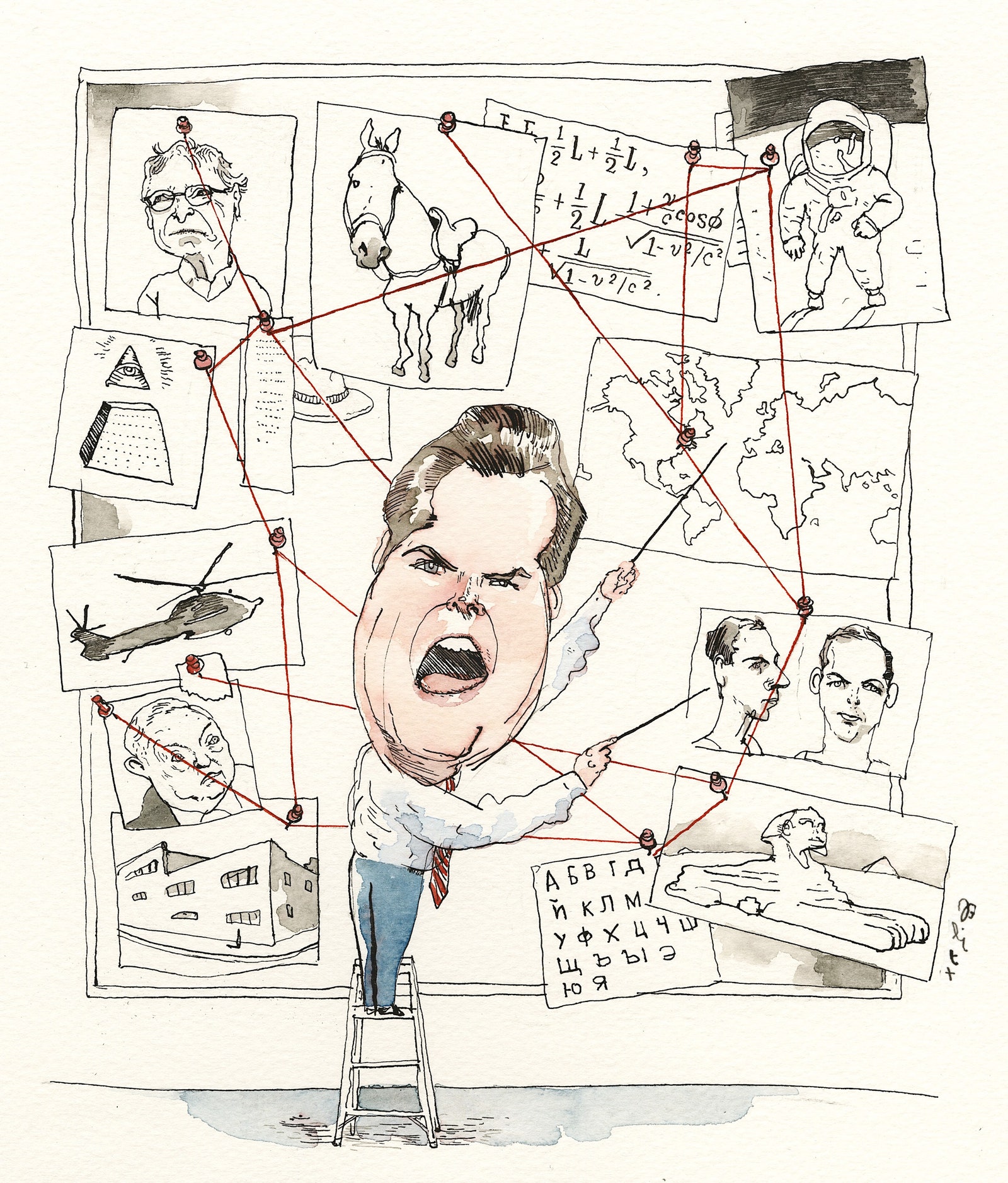
 Former state Rep. Tom Goodson, a Republican from Brevard County, spent three years sponsoring legislation to outlaw nonconsensual pornography — sometimes called “revenge porn.”
 The Matt Gaetz scandal keeps getting worse. It appears that his pal Joel Greenberg–who is already in deep trouble–is in the process of throwing Gaetz under the bus. I admit, I’m really enjoying watching this Trumpist creep go down in flames. Here’s the latest:
 From The Daily Beast, background on Joel Greenberg: The Strange Friendship That May Bring Down Matt Gaetz.
 Gaetz’s Congressional colleagues are apparently rooting for his political destruction. HuffPost: CNN’s
  The Matt Gaetz story increasingly reads like a script written by a pervert high on a cocktail of ADHD meds and MDMA. Even if you’ve been following the scandal-prone Republican congressman’s latest controversy closely it’s hard to keep track of what on earth is happening….
 Gaetz is suspected of patronizing websites that allow men to set up dates with women in exchange for dinners or hotel stays, a person familiar with the matter said. It is not a crime to use such services unless money is exchanged explicitly for sex. Investigators have obtained witness testimony and other evidence suggesting Gaetz did so, a person familiar with the matter said. Some of that evidence was first reported by the New York Times.






 Good Day Sky Dancers!

 I suppose the one great thing we’ve got going for us is that the country’s voters outnumber the country’s wicked rich. But then I read things like this poll from the Pew Research Center. “A partisan chasm in views of Trump’s legacy”. It still seems many rank and file republicans get their information from alternative reality sites.
 Well, that’s the one thing he was taking credit for that might’ve stuck. I guess we should’ve known that somebody else’s idea all along. Also, in the news is the Solar Winds Hack which probably was partially due to the






 peej
peej Carissa
 bostonboomer
 dakinikat
 ecocatwoman
 mablue2
 Mama Lopez
 peggysue22
 quixote
 skydancingguestblogger
 Mona (aka Wonk the Vote)



 Sky Dancing
Recent Comments