Is there any possibility that Trump could actually be prosecuted? Former U.S. Attorney Preet Bharara thinks it could happen. He gave an interview to Dahlia Lithwick at Slate, published yesterday: How Close Are We to Criminal Charges for Donald Trump?
To the extent anyone thinks about Trump anymore, it’s gleefully imagining his criminal exposure in the after times, both in New York and elsewhere in the country. I gather he’s facing what, 29 lawsuits, three criminal investigations, like a lot.
A whole bunch.
His tax returns are in the hands of Cyrus Vance Jr., the district attorney of Manhattan. They’re working to flip folks in the Trump organization. I wonder what piece of that you’re watching or are you just watching all of it? What do you expect to see in terms of accountability and having some sense that there is some closure to any of this?
People often, particularly if they’re not lawyers, conflate some of these legal challenges that the former president faces with the civil cases. There’s not that much that we know about by way of criminal investigations. The one that we know about most directly and most prominently is the one you mentioned, the Manhattan district attorney’s investigation into Trump’s finances and business dealings.
Preet Bharara
I don’t know because I’ve not been in the grand jury, I’ve not interviewed the witnesses. Cy Vance doesn’t call me up and tell me stuff, but there is some signaling going on. Cy Vance is not running for reelection. Vance is, as they say, a lame duck. As a lame duck, he’s done certain things, including hiring an outside forensic accounting firm, which is not super unusual but it’s not that common. He’s done something else that is less common, which is hire an outside lawyer, Mark Pomerantz, who’s a very distinguished, well-respected lawyer in New York. I’m not going to put too much weight on it, but it seems like the kind of move you make when you believe that there’s going to be a charge or there’s a good likelihood of a charge, because it’s a pretty public thing to do. It also risks alienating people in your own office. It’s just a gut feeling that I have that taking these actions indicates to me that that office believes there’s a decent likelihood of a charge, and so that’s the one I’d be watching.
It doesn’t sound farfetched to think, “Well, when it suited him, Donald Trump inflated the value of his holdings. Otherwise he understated the value of his holdings.” Both of which can incriminate him criminally and subject him to exposure. That all sounds like it makes sense. There’s also the reporting that Michael Cohen, his former lawyer who was prosecuted by SDNY, has met with prosecutors and investigators with the DA’s office like a gazillion times.
All of those things, again, they’re not dispositive, but they all indicate to me that it’s a very serious undertaking. They’re taking it very seriously. They’re spending a lot of resources on it, and you don’t do that if it’s a long shot, I don’t think.
It’s a lengthy interview. Bharara goes on to discuss other possible ways that Trump could be held accountable.
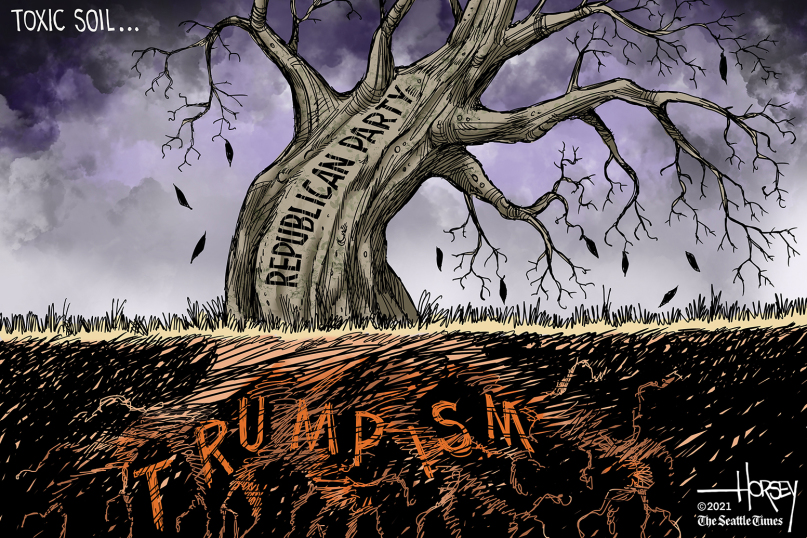
There’s two categories of things that I think about. One is stuff we don’t know. I find it hard to believe we know the full scope and landscape of the things that Donald Trump did behind the scenes that were improper, unethical, and perhaps criminal because there’s not been an excavation. I don’t know if there are people who are thinking about doing that excavation, and I don’t know if there are people who are thinking about coming forward.
Trump still strikes fear in the hearts of people who would betray him—that’s elected officials and perhaps also people in his Cabinet. He hasn’t lost that power yet. I had assumed at some point that there might be the possibility of people coming forward and saying, “You don’t know the half of it.” You know, what he did with respect to DHS, what he did with respect to this, that, or the other thing, and how many other enforcement actions he tried to interfere with. There’s that category, the stuff we don’t know about, which I’ve just got to believe there is something there.
Then the other stuff that’s big ticket that happened out in the open for which there was an attempt to hold him accountable: the “Big Lie” of the election, his involvement in the incitement of the riot and the insurrection on Jan. 6, the stuff he did with the interference in the election in Georgia. I don’t know if he’ll get any accountability there. I don’t know that the administration has the interest and stomach to do something there, especially when there’s an interest in moving on.
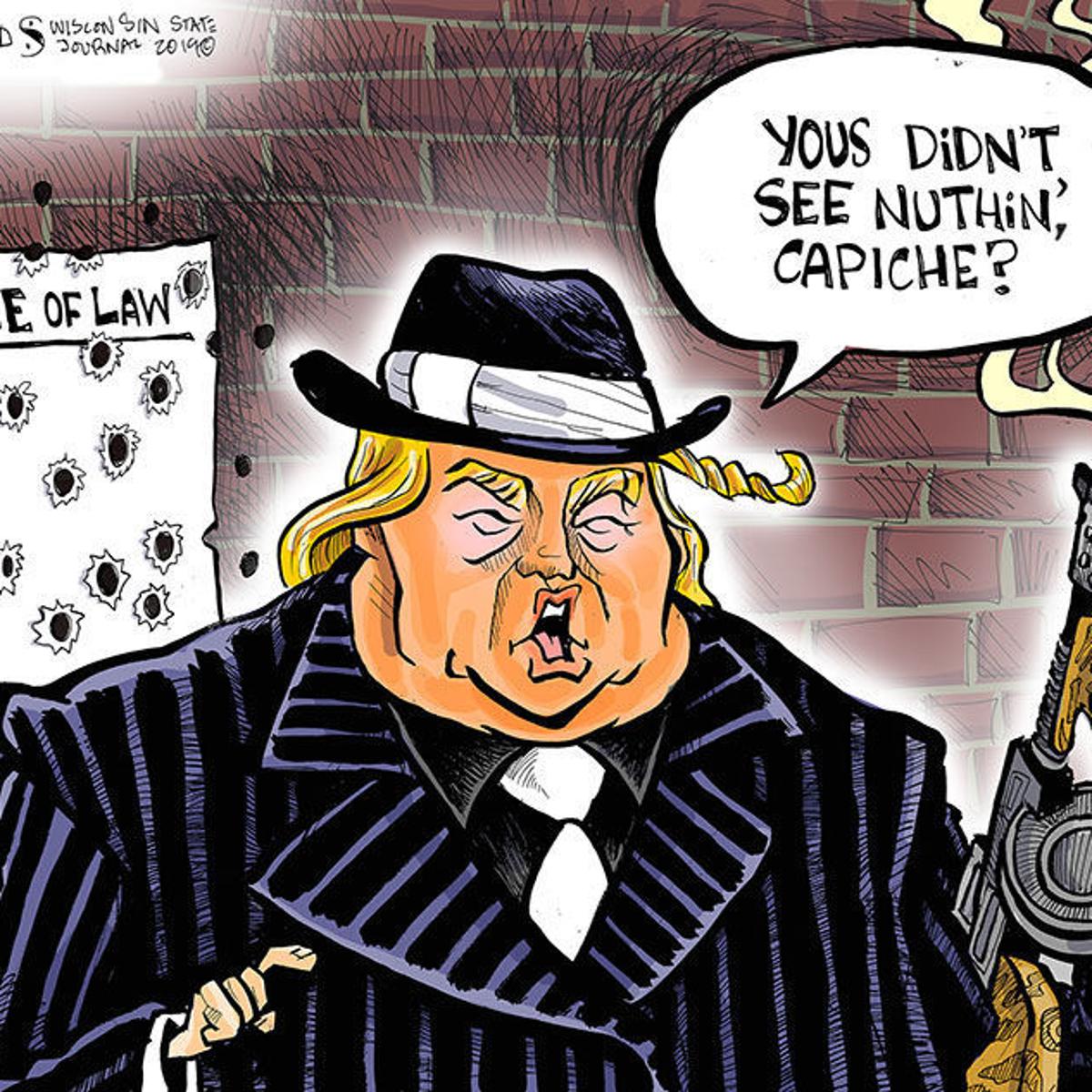
Bharara says he agrees with the characterization of Trump as similar to a mob boss, and that makes it hard to prosecute him, because he gets people to do his bidding through coded communications. He also discusses Rudy Giuliani–his history and his current behavior.
Federal investigators scrutinizing Rep. Matt Gaetz are seeking the cooperation of a former Capitol Hill intern who was once a girlfriend of the Florida Republican, sources familiar with the matter tell CNN.
Investigators could also soon gain the formal cooperation of a second key witness, former Florida county tax collector Joel Greenberg, who is approaching a deadline this week to strike a plea agreement with the government on more than two dozen charges he’s facing.
The pursuit of the cooperation comes as investigators are nearly finished collecting evidence, one source said. The probe, which is examining whether Gaetz broke federal sex trafficking, prostitution and public corruption laws and whether he had sex with a minor, has been ongoing for months.
But decisions on whether to charge Gaetz have yet to be made and will fall to prosecutors in the public integrity section of the Justice Department. That decision is likely to take some time, another source familiar with the matter said, as the Justice Department considers whether there’s sufficient evidence for an indictment.
The cooperation of Greenberg and the former girlfriend could be among the final steps in the probe of Gaetz. Investigators view both as crucial to understanding the relevance of hundreds of transactions they have obtained records of, including those involving payments for sex, sources familiar with the investigation tell CNN. The ex-girlfriend could also be questioned by investigators about a second woman as they try to determine whether Gaetz may have slept with that woman when she was only 17.
The former girlfriend, who did not work in Gaetz’s office on Capitol Hill, is of interest to investigators because she was on a trip Gaetz took to the Bahamas in 2018 and is believed to have knowledge of drug use and arrangements with women, the sources say.
Read more details at CNN.
There’s no evidence that people are refusing to look for work because they are getting increased unemployment benefits from the government, but Republican governors think they know better.
It’s true that the GOP talks a big game about caring about regular old middle-class Americans, but in reality it despises them. How do we know this? For one thing, Republican policies overwhelmingly benefit corporate America and the very wealthy. For another, Republican lawmakers actively try to strip any government benefits they can from people not lucky enough to earn $200,000 a year at the age of three.
Most recently, a bunch of Republican governors have decided that the unemployed in their states are lazy bums who don’t deserve the increased federal benefits they’ve been receiving thanks to the American Rescue Plan, and that starting in June, they won’t. Per CBS News:
“A growing number of Republican-led states are rejecting increased unemployment benefits meant to help Americans during the coronavirus pandemic, a move they say will help business owners who can’t find staff.… [Officials] in Montana, South Carolina, and Arkansas have announced they will exit the program by the end of June. Montana governor Greg Gianforte said the “vast expansion of federal unemployment benefits is now doing more harm than good.”
On Sunday, Utah governor Spencer Cox told CNN he thinks exiting pandemic-related unemployment benefits is a good idea, arguing the recent lower-than-expected jobs report is “what happens when we pay people not to work.””
If this argument sounds familiar, it‘s because it’s the same recycled one Republicans regularly make about how helping people in need will disincentive them from helping themselves. The only problem is that like most things out of the mouths of Republicans of late, it’s not actually true
“Several studies have examined the connection between benefits and unemployed people returning to work. In February, a study by JPMorgan Chase Institute found little evidence that increased benefits discouraged people from returning to the job. It found after Congress boosted supplemental insurance to $600 last spring at the onset of the pandemic, many jobless workers who received the money returned to work before the supplement expired.
Speaking at the White House press briefing Friday, Treasury Secretary Janet Yellen also claimed data does not support the argument that increased unemployment benefits are leading to a workforce shortage. She said when they looked at states and sectors where supplemental benefits were high, there weren’t lower job finding rates as the argument would suggest, and in fact it was the “exact opposite.” A separate study by the Federal Reserve Bank of Chicago looking at unemployment insurance and job searching using data from 2013 through 2019 found those receiving unemployment benefits search more intensely for work over those not receiving benefits and once benefits drop off, search efforts drop steeply.”
For the American economy to run properly, a certain portion of the working-age population must be poor and, preferably, a little bit desperate.
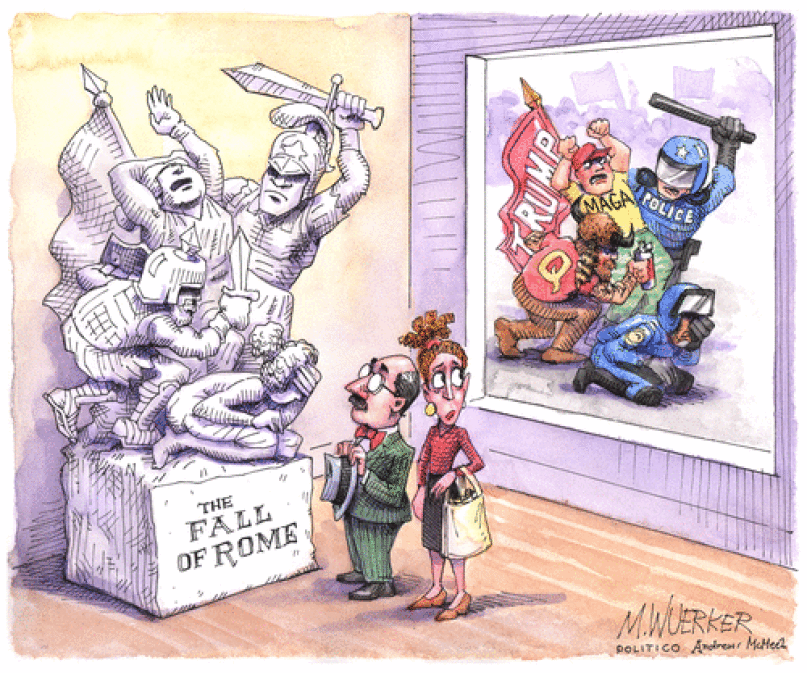
Or so you would think, given the hysterical reaction to last week’s report showing the country’s job growth lagged far behind expectations in April. The U.S. Chamber of Commerce bouyed this message with a response suggesting workers have grown too fat and sassy while collecting unemployment benefits made more generous by Congress during the pandemic.
Best to cut off those benefits, instead.
“The disappointing jobs report makes it clear that paying people not to work is dampening what should be a stronger jobs market,” the organization said in a written statement. It added: “One step policymakers should take now is ending the $300 weekly supplemental unemployment benefit.”
A few GOP-led states — Arkansas, Montana, and South Carolina — jumped at the Chamber’s suggestion, saying they will soon end their participation in the federal program that pays out the extra $300 a week to jobless workers. And Republicans in Congress said they would move quickly to phase out the benefit, which is already slated to end in September….
This hostility toward the unemployed will come as no surprise to anybody who has been paying attention to the more predatory aspects of American capitalism, or who recoiled last year when Texas Lt. Gov. Dan Patrick (R) suggested that older COVID-vulnerable citizens should be willing to lay down their lives for the economy, or who noted that Republicans resisted supplementing unemployment benefits even at the beginning of the pandemic when the economy was contracting by millions of jobs and those who could keep working risked exposure to a dangerous and deadly new virus. Even then, GOP officials were fearful that workers would find it too easy to sit at home.
There’s much more worth reading at the link.
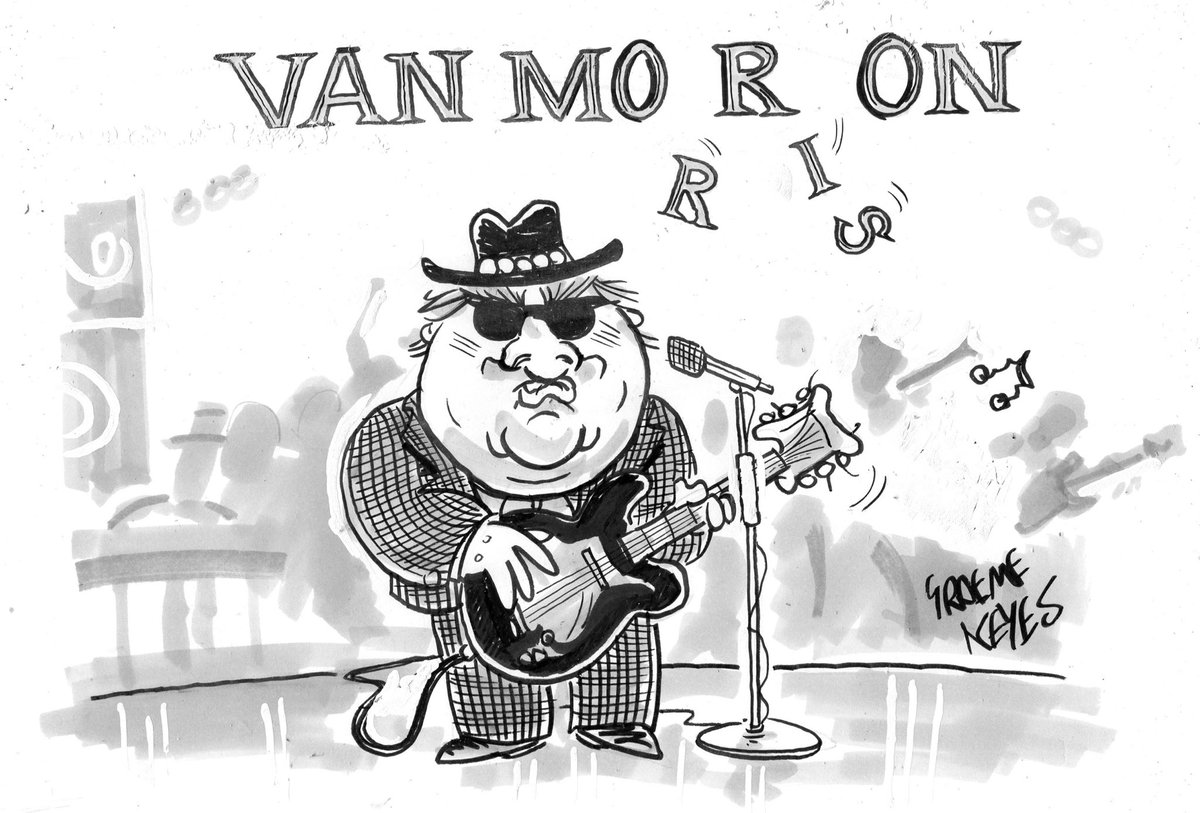
Speaking of misinformation, have you heard that musician Van Morrison has become a Covid conspiracy nut?
Outside of the circles of his most dedicated fans, the arrival of a Van Morrison album in the 21st century has not been a news event. That trend stopped last week, however, when Morrison, 75, released “Latest Record Project, Vol. 1,” a 28-track double album that includes eyebrow-raising song titles such as “Where Have All the Rebels Gone,” “Why Are You on Facebook?” and “Stop Bitching, Do Something.” This album is now very much news: Variety published a list of “The 10 Craziest Lyrics” from the record, while the Jerusalem Post rounded up all of the claims of anti-Semitism implied in his song called “They Own the Media” and other lyrics scattered throughout.
This turn toward the alt-right didn’t come out of nowhere. Broadly speaking, Morrison’s career arc looks something like this: He went from being a brash teenage wunderkind with his band Them, to a promising young solo artist (“Brown Eyed Girl”), to a moody, soulful poet casually creating masterpieces (“Astral Weeks” and “Moondance”), to a middle-aged curmudgeon showcasing occasional moments of brilliance (“Common One”), until he slowly devolved into a boozy-uncle type, cranking out boilerplate blues LPs while leaning on his earlier legacy to fill concert halls….
More recently, the global coronavirus pandemic and the ensuing prohibition of live concerts appear to have shocked and infuriated the singer. In August 2020, Morrison published a screed on his official website explaining that he needed to get his “band up and running and out of the doldrums. … We need to be playing to full capacity audiences going forward.” In a subsequently deleted message, he went further, denouncing the validity of the science behind social distancing and quarantine. “I call on my fellow singers, musicians, writers, producers, promoters and others in the industry to fight with me on this. Come forward, stand up, fight the pseudo-science and speak up.”
Back in the fall of 2020, Morrison announced three topical singles protesting COVID-19 restrictions plus a petition to end the temporary ban on live concerts. In one of these songs, “No More Lockdown,” he crooned about scientists “making up crooked facts,” labeling the perpetrators of these measures “fascist bullies.” In an unprecedented turn of events, the songs became cause for Northern Ireland’s health minister, Robin Swann, to pen an op-ed for Rolling Stone, calling Morrison’s new lyrics “dangerous” and a great comfort to “the tinfoil hat brigade who crusade against masks and vaccines and think this is all a huge global plot to remove freedoms.”
Read the rest at the LA Times.
I’ll add a few more stories in the comment thread. I hope you all have a great Tuesday!
Did you like this post? Please share it with your friends:
It’s pouring here again and flooding. This seems to be the new state of affairs as Climate Change goes beyond noticeable in more places than the Maldives and the gone, gone gone, beyond barrier islands and glaciers of the planet. Our infrastructure here in New Orleans was made for 1910, not 2021, and certainly not for this kind of constant extreme weather which we might as well start calling our weather all the time.
Oh, and by the way, attacks on our country are more than just the North Korean government lobbing missiles into the air with pictures of the stern face of Dear Leader in its government-run press. We just had a cyberattack on the Oil Pipeline infrastructure that look’s like the kind of thing the Last Guy’s bestie Putin likes to do.
Meanwhile, the Republicans are debating every policy like it’s 1959. Are we certain the interstate highway system isn’t a sign that Eisenhower has been co-opted by Commies? So, what’s stopping us from getting some new-fangled, up-to-date, technologically, and scientifically consistent policies based on what’s real?
Oh, yeah, Joe Manchin and Republicans …
So, let’s look at that attack on our oil infrastructure.
Federal government issues rare emergency declaration after a cyberattack on a major US pipeline choked the transportation of oil to the eastern US. https://t.co/yswOJVSM03
The federal government issued a rare emergency declaration on Sunday after a cyberattack on a major U.S. pipeline choked the transportation of oil to the eastern U.S.
The Colonial Pipeline, responsible for the country’s largest fuel pipeline, shut down all its operations Friday after hackers broke into some of its networks. All four of its main lines remain offline.
The emergency declaration from the Department of Transportation aims to ramp up alternative transportation routes for oil and gas. It lifts regulations on drivers carrying fuel in 17 states across the South and eastern United States, as well as the District of Columbia, allowing them to drive between fuel distributors and local gas stations on more overtime hours and less sleep than federal restrictions normally allow. The U.S. is already dealing with a shortage of tanker truck drivers.
Why it matters: Friday night’s cyberattack is “the most significant, successful attack on energy infrastructure” known to have occurred in the U.S., notes energy researcher Amy Myers Jaffe, per Politico.
The Department of Transportation’s Federal Motor Carrier Safety Administration issued a regional emergency declaration for 17 states and Washington, D.C., to keep fuel supply lines open.
The big picture: Colonial Pipeline carries 45% of fuel supplies in the eastern U.S. Some 5,500 miles of pipeline has been shut down in response to the attack.
While gasoline and diesel prices aren’t expected to be impacted if pipeline operations resume in the next few days, fuel suppliers are becoming “increasingly nervous” about possible shortages, Bloomberg notes.
What’s happening: The emergency declaration covers: Alabama, Arkansas, D.C., Delaware, Florida, Georgia, Kentucky, Louisiana, Maryland, Mississippi, New Jersey, New York, North Carolina, Pennsylvania, South Carolina, Tennessee, Texas and Virginia.
The system, which runs from Texas to New Jersey, transports 45 percent of the East Coast’s fuel supply. In a statement Sunday, the company said that some smaller lateral lines were operational but that the main lines remained down.
“We are in the process of restoring service to other laterals and will bring our full system back online only when we believe it is safe to do so, and in full compliance with the approval of all federal regulations,” the company said.
Raimondo said on CBS’ “Face the Nation” that the effort to restart the network was “an all-hands-on-deck effort right now.”
“We are working closely with the company, state and local officials to make sure that they get back up to normal operations as quickly as possible and there aren’t disruptions in supply,” she said, adding: “Unfortunately, these sorts of attacks are becoming more frequent. They’re here to stay.”
A White House official said Sunday that the Energy Department is leading the government’s response. Agencies are planning for a number of scenarios in which the region’s fuel supply takes a hit, the official said.
On Saturday, Colonial Pipeline blamed the cyberattack on ransomware and said some of its information technology systems were affected. It said it “proactively” took “certain systems offline to contain the threat.”
A group of Arizona citizens, including one Republican Congressional candidate, is asking the state’s Supreme Court to invalidate all election results since 2018 and remove all elected officials from their offices immediately.
And who should replace the ousted election officials? Well, the citizens who filed the lawsuit, of course.
The legal petition claims all officials elected in Arizona since 2018 are “inadvertent usurpers” because the elections they won were conducted by vote-counting equipment that was not properly certified.
The plaintiffs claim the evidence to back up this staggering claim will be provided in the lawsuit’s appendix, which unfortunately they had not submitted at the time of writing.
The plaintiffs claim that the court has the authority to void the terms of the named officials—which include Gov. Doug Ducey and Secretary of State Katie Hobbs—and install themselves as appropriate replacements.
“When in the past citizens have been appointed by the Governor to finish out a Senate term due to unusual circumstances, the Governor has typically chosen pedigreed, well-known politicians, but this is not necessary. Any Arizona resident meeting the minimum qualifications is entitled to and has the right be appointed to a seat in unusual situations,” the lawsuit claims.
The legal filing is the latest harebrained effort by pro-Trump and QAnon supporters in Arizona to get the results of November’s election overturned. There is currently an audit of 2.1 million votes being conducted in Maricopa County. The GOP-sanctioned recount is being conducted by a Florida-based company called Cyber Ninjas, which has no experience conducting audits.
The U.S. Department of Justice’s Civil Rights Division is asking Arizona Senate President Karen Fann to respond to concerns the department has about the security of ballots and potential voter intimidation as the Senate’s contractors perform an audit of November’s presidential election in Maricopa County.
In a letter sent to Fann on Wednesday, Pamela S. Karlan, principal deputy assistant attorney general in the division, asked for Fann’s response to its concerns with an explanation of “the steps that the Arizona Senate will take to ensure that violations of federal law do not occur” during the audit.
The department’s concerns may have been prompted in part by a letter it received Thursday from three organizations, including the Leadership Conference on Civil and Human Rights, asking the department to dispatch federal monitors to oversee the audit. That letter raised the same concerns that the department said it has, regarding the security of ballots and potential voter intimidation.
A state lawmaker wants to make Louisiana a “fossil fuel sanctuary state,” quixotically asserting special sovereignty to nullify any federal law, regulation or tax that in any way harms the oil and gas industry.
Rep. Danny McCormick, a Republican from Oil City, a town of about 1,000 residents in northwest Louisiana, says his House Bill 617 is a “preemptive effort” to protect the industry from the future policies of President Joe Biden’s administration.
“What he’ll do, I can’t answer yet,” McCormick said Wednesday, shortly after the bill was introduced in the House Natural Resources and Environment Committee. “There may be no limit to his attacks on the fossil fuel industry.”
The bill was partially inspired by the cities and other local jurisdictions that defied the immigration policies of former President Donald Trump’s administration. These so-called “sanctuary cities” refused to hand over immigration detainees for deportation.
Okay, so that’s pretty embarrassing for the state of Louisiana.
Anyway, I’ve just about had it with folks trying to redefine the future as back to the past. State legislatures are Trumpier than the country can afford. Phillip Bump of WAPO puts it this way: “Refusal to accept reality is doing unquestionable damage to democracy”. There are dangers out there but it’s not bamboo in ballots or transgender children.
The challenge, of course, is that the ramifications of rejecting the results of an election are obviously more dire than not having a chance to compete in a singing competition. Trump is both leveraging and accentuating a pattern of refusing to acknowledge defeat that poses real dangers for the American democratic system.
Trump’s refusal to acknowledge that he lost hinges on myriad assertions that something dubious or suspicious happened during the 2020 presidential contest. The sheer volume of claims is itself often cited as evidence that something needs to be done about election security, a claim that’s a bit like advocating legislation for mandated chimney locks given how many Americans (most of them under the age of 7) believe in Santa Claus.
There remains no credible evidence of the 2020 results being influenced or shifted in any way that would suggest widespread fraud. (Quite the opposite.) But there is a substantial industry predicated on claiming that voting results are suspect, claims into which Trump and others could tap.
Helen Frankenthaler’s “Weeping Crabapple.” 2009
Well, there’s a business well-suited for devils and demons. There are no communists under your beds but there are a lot of disturbed politicians in your statehouses. Greg Sargent reminds us that the GOP has been radicalizing for some time. It’s interesting to note that we’re on our second McCarthy in the House supporting conspiracy theories.
This is not the act of a “coward” who “fears Trump,” and would vouch for the integrity of the election if only he could do so without consequences.
Rather, it is the act of someone who is fully devoted to the project of continuing to undermine confidence in our elections going forward.
This is for purely instrumental purposes. Republicans are employing their own invented doubts about 2020 to justify intensified voter suppression everywhere. Banks neatly crystallized the point on Fox, saying those doubts required more voting restrictions — after reinforcing them himself.
Indeed, with all this, Republicans may be in the process of creating a kind of permanent justification for maximal efforts to invalidate future election outcomes by whatever means are within reach.
So, it’s not fear itself we should fear these days. That ought to keep you up at night. There’s tons of technology to hack our creeky old infrastructure. There are also all these chemicals and fossil fuels that are killing everything. Can’t we just forget the good old days and move forward to face the new? Well, we could if we keep our democracy and get back to reality.
One of the recurrent themes in the headlines these days is the long uneven road to American Justice. We got a brief respite a few weeks ago with the Chauvin trial which quickly dispensed with a murdering cop once the system was put to work in the proper way. This was a state case handled by the Minnesota AG Keith Ellison, the former Minnesota Congressman.
We’re beginning to see the Department of Justice work in the proper way too. Many of the key appointments are focused on both ridding the corruption of the Trumpist regime and moving forward to ensure we live up to our Constitutional promise, our rule of law, and our inspirational founding with many coming together to make one.
Attorney General Bill Barr played a central role in the Trump administration’s most high-profile controversies, from undermining the Russia investigation to intervening in the cases of indicted Trump associates to ordering the forcible clearing of protesters in Lafayette Square Park.
The Biden/Garland Justice Department will play a central role in restoring rule of law and enacting many of the Biden/Harris Justice priorities.
DOJ’s broad authority also overlaps with many of the issues at the top of President Biden’s agenda, including restoring faith in government, promoting racial justice and police reform, and curbing gun violence.
Here are just a few of the actions taken to date.
The Justice Department also announcedon Wednesday that three Georgia men were charged with federal hate crimes in the shooting of Ahmaud Arbery, whose death was a rallying cry during last year’s racial-justice protests.
In Michigan, a superseding indictment was filed against five men accused of plotting last year to kidnap Gov. Gretchen Whitmer, with prosecutors referring to the alleged crimes as “domestic terrorism” for the first time.
That shift comes amid new developments in the investigation of the Jan. 6 Capitol riot, which has been described as the most complex probe in DOJ history. Garland, who played a leading role in the prosecution of the 1995 Oklahoma City bombing, has vowed to make prosecuting the Capitol rioters his “first priority.”
Other major steps taken in Garland’s first 50 days include:
“Pattern or practice” investigations into the Minneapolis and Louisville police departments, following the deaths last year of George Floyd and Breonna Taylor.
A 30-day “expedited review” into how DOJ can better prosecute and track hate crimes amid a surge in violence against Asian Americans.
The revocation of a Trump-era policy that restricted federal funding for “sanctuary cities.”
Responsibility for five of the sixexecutive actions on gun control ordered by Biden.
ABV Gallery (abvatl.com) artists Tommy Bronx and Ash “Wolfdog” Hayner installed a new mural at the intersection of Irwin and Randolph Streets in the heart of the Old Fourth Ward.
The biggest headline grabbers at the moment are the supoenas served on Rudy Guilliani and the stories of sex trafficking and child rape coming out of the Matt Gaetz investigation. Both of these are sordid in their own way and full court press is to be expected. However, the work going on to prosecute the insurrectionists as well the additional addition of federal hate crime charges to the murder of unarmed black men by police and others is significant. The new addition of Covid-19 based hate crimes against those of Asian descent will likely be in the headlines shortly.
So how did Garland get tapped to be Biden’s attorney general? The most cynical interpretation of Biden’s choice is sheer pragmatism. Nominating Garland all but assured a smooth path to confirmation through the Senate, no matter who controlled it. (Biden nevertheless waited until the outcome of the Georgia runoffs was clear before making the Garland pick public.) Garland’s nomination also freed up a seat on the D.C. Circuit Court of Appeals, which is usually considered the second most powerful court in the nation and a warm-up spot for future Supreme Court nominees. There is even perhaps a dash of sympathy in the choice: Garland’s nomination gives him a chance to not be remembered as the would-be high court justice who was blithely snubbed by the U.S. Senate.
Nominating Garland, however, also fits well with the vision of governance that Biden had offered voters on the campaign trail. He is neither an ideologue like Sessions nor a partisan like Barr, partly because of his judicial oath and partly because of his temperament. Garland’s own sister toldThe New York Timesin 2016 that she didn’t know her brother’s party affiliation. In more than two decades on the D.C. Circuit, Garland carved out a reputation as a consensus-builder. From his elevation to the appellate bench in 1997 to his nomination to the Supreme Court in 2016, Garland wrote just 11 dissenting opinions—a testament to his ability to bring colleagues of all stripes together.
“He was not a hands-off, let-the-clerks-just-do-their-thing kind of judge,” Jessica Bulman-Pozen, a Columbia University law professor who clerked for Garland from 2007 to 2008, told me. “He was himself totally steeped in every case. He knew all the details. He knew the record.” Garland is often described as a centrist or a moderate, because he does not fit neatly into any particular ideological box. That description, however, is less revealing than it seems. “I don’t want to say he’d be sort of moderate in the sense of waiting or restraint in addressing [things],” Bulman-Pozen said, “but I think moderate perhaps in the sense of being careful, conscientious, thorough.”
Welp, it looks like Florida Rep. Matt Gaetz better start working out so that he can fight off attackers in prison because he’s about to lose his job and go straight to the pokey if anything in his former friend’s letter is true.
Joel Greenberg, a longtime associate of Gaetz, admitted in a letter that he and Gaetz paid for sex–including sex with an underaged girl.
According to a scathing report in the Daily Beast, Greenberg reportedly wrote a handwritten confession letter claiming that he and Gaetz were “involved in sexual activities” with a girl who was 17 at the time.
“From time to time, gas money or gifts, rent or partial tuition payments were made to several of these girls, including the individual who was not yet 18,” he wrote.
“I did see the acts occur firsthand and Venmo transactions, Cash App or other payments were made to these girls on behalf of the Congressman.”
Shepard Fairey’s one-hundredth mural on the Founder’s League building on Clemence Street in Providence. (Jesse Costa/WBUR)
Speaking of badly behaved and nasty Trust Fund babies, Tucker Carlson tried to give Rudy Guiliani a platform. The SDNY probably hopes old Rudy will keep going on TV to blabber away at this rate. However, let’s turn to the NYT version today. “Firing of U.S. Ambassador Is at Center of Giuliani Investigation“. I really would be thrilled if former Ambassador Marie L. Yovanovitch got the last word on this as a witness.
It was a Pyrrhic victory. Mr. Giuliani’s push to oust the ambassador, Marie L. Yovanovitch, not only became a focus of President Donald J. Trump’s first impeachment trial, but it has now landed Mr. Giuliani in the cross hairs of a federal criminal investigation into whether he broke lobbying laws, according to people with knowledge of the matter.
In particular, the federal authorities were expected to scour the electronic devices for communications between Mr. Giuliani and Trump administration officials about the ambassador before she was recalled in April 2019, one of the people added.
The warrant also sought his communications with Ukrainian officials who had butted heads with Ms. Yovanovitch, including some of the same people who at the time were helping Mr. Giuliani seek damaging information about President Biden, who was then a candidate, and his family, the people said.
At issue for investigators is a key question: Did Mr. Giuliani go after Ms. Yovanovitch solely on behalf of Mr. Trump, who was his client at the time? Or was he also doing so on behalf of the Ukrainian officials, who wanted her removed for their own reasons?
It is a violation of federal law to lobby the United States government on behalf of foreign officials without registering with the Justice Department, and Mr. Giuliani never did so.
Even if the Ukrainians did not pay Mr. Giuliani, prosecutors could pursue the theory that they provided assistance by collecting information on the Bidens in exchange for her removal.
There’s a lot of Trumpist folks gonna lose their freedom. I’m pulling that Gaetz and Guiliani lose everything they’ve got. Get those January 6 insurrectionists too!!!
Meanwhile, I’m going to be watching the return of our Department of Justice. Have a great weekend!
What’s on your reading and blogging list today?
Did you like this post? Please share it with your friends:
Lately the media has been following the trial of Derek Chauvin in Minnesota, and understandably they have called attention other cases of Black men being killed by cops. Yesterday a man was shot and killed by police in Portland, Oregon.
Portland police responding to a call of a man with a gun Friday morning in Lents Park fatally shot the man after he drew what appeared to be a firearm, according to two sources with direct knowledge of the investigation.
The man died at the scene.
Investigators recovered what appeared to be a replica firearm with an orange tip on it, the sources said. A witness videotaped the shooting and provided the footage to police.
Police had received multiple calls about the man in the park with a gun shortly after 9:30 a.m.
Two officers who confronted the man fired less-lethal, 40-millimeter munitions at him, and an East Precinct officer shot him with a firearm, Acting Chief Chris Davis said.
Witnesses said they heard two gunshots.
Emergency medics tried to revive the man, but he was pronounced dead beside a fence by the park’s ball field off Southeast 92nd Avenue.
Police said the officer who fired the fatal shot is an 8-year veteran of the department. The bureau did not release the officer’s name.
Dozens of demonstrators gathered at the scene shortly after the shooting, screaming at officers from the park’s perimeter.
The gun wasn’t even real. The story says that the Oregonian usually doesn’t “typically does not identify a person’s race unless it is relevant.” In this case it was relevant, because the victim of the shooting was a white man.
The death of Daunte Wright in Minneapolis necessitates a new mental habit among us enlightened American souls.
We embrace assorted cognitive exercises as people with access to higher wisdom, such as understanding that a disadvantaged background can make it harder to excel, or that subtle bias can infect our thinking and actions.
Okay, but we need another one.
Whenever the national media reports on a black person killed by cops, we must ask ourselves “Would a white cop not have done that if the person were white?”
Because: we are taught that white (and even non-white) cops ice black people (usually men) out of racism. It’s possibly subconscious, but in the heat of the moment, they revert animalistically to their white supremacist assumption of black animality and pull that trigger.
This is why so many can only bristle at the idea that George Floyd did not die because he was black.
It’s why now, when the cop who killed Daunte Wright not only says she mistook her gun for a taser, and is even recorded as having done so, legions of people still insist on parsing it as evidence of “racism.” The idea is, I suppose, that she wouldn’t have made that mistake, would have been more prudent, if Daunte Wright was instead a white guy named Donald White.
The article is worth a read. McWhorter argues that poor people of any race are more likely to be killed by cops and because more Black people live in poverty, they are more likely to interact with the police and more likely to become their victims. I think he’s saying that the problem is not just racism, but economics–and policing itself.
Black people are 2.5 times more likely to be killed by cops, and exactly 2.5 times more likely to be poor, and data shows that poverty makes you more likely to encounter the cops, as even intuition confirms. This is why somewhat more black people are killed by cops than what our proportion in the population would predict.
Accounts of this issue that pretend people like me have not presented figures like this – i.e. most mainstream media discussions — are out of court, even if their authors feel it’s their duty to pull people’s eyes away from “irreligious” ideas. Ignore the numbers and, even if you are writing about descendants of African slaves, you are simply plain wrong.
Reflect also: most people who take to the streets about cases like Daunte Wright are not thinking about the fact that black people are killed by cops 2.5 times more than their representation in the population would predict. They are protesting because all they see in the news is the black people killed, and have no way of imagining that whites are regularly killed in the same way and in much greater numbers.
Once more. Every time the media broadcasts the murder by cop of a black person, ask yourself if it’s really true that a cop wouldn’t have done it to a white person – and then go to, for example, the Washington Post database and see cops doing just that.
And upon that, we will settle upon an honest national conversation about the cops as murdering people in race-neutral fashion. Or at least we should.
Food for thought.
There’s quite a bit of news today about Trump loyalists. It even appears that some of them may finally get their comeuppance.
The Justice Department on Friday sued Roger Stone, a longtime ally of former President Donald Trump, accusing Stone and his wife, Nydia, of owing nearly $2 million in unpaid federal income taxes and fees.
The lawsuit, filed in federal court in Fort Lauderdale, Florida, says the couple underpaid their income taxes by $1,590,361 from 2007 to 2011. It further says Stone, 68, did not pay his full tax bill in 2018, coming up $407,036 short. The couple, the suit alleges, used a commercial entity to “shield their personal income from enforced collection and fund a lavish lifestyle despite owing nearly $2 million in unpaid taxes, interest and penalties.” [….]
Stone was on his way to federal prison in July 2020 when then-president Trump commuted his sentence. Stone was sentenced earlier that year to serve 40 months in prison for lying to Congress about his efforts to connect with WikiLeaks in hopes of digging up dirt on Trump’s 2016 rival, Hillary Clinton. The lead prosecutor in the case said Stone had lied because the “truth looked bad for Donald Trump.” Stone was convicted of all seven counts against him….
The Stones deposited more than $1 million in accounts belonging to a commercial entity, Drake Ventures, instead of personal accounts, thereby frustrating collection efforts, the government said in the filing.
From those accounts, the pair covered a down payment on a Fort Lauderdale condominium, paid for personal expenses and covered some of their tax liabilities, the lawsuit alleges, calling the entity an “alter ego” of the Stones.
Additionally, the filing wants to thwart the Stones’ transfer of their $525,000 Florida condominium to an entity known as the Bertran Family Revocable Trust, which the government says is controlled by Nydia Stone and has as beneficiaries their children, Adria Stone and Scott Stone.
A tax lien was being sought against the property, it said. The suit also seeks a judgment for $1,590,361.89.
The government also said the Stones at one point entered into an agreement to cover taxes owed through monthly installments of nearly $20,000, but stopped paying. Additionally, the filing alleges that in 2018, Stone filed his federal income tax return as “a married individual filing separately from his spouse” and owes an additional $407,036.84 for that year alone.
Former Secretary of State Mike Pompeo violated federal ethics rules governing the use of taxpayer-funded resources when he and his wife, Susan, asked State Department employees to carry out tasks for their personal benefit more than 100 times, a government watchdog has determined.
POLITICO obtained a copy of the report on the Pompeos, which was put together by the State Department’s inspector general’s office….
By digging through emails and other documents and interviewing staff members, investigators uncovered scores of instances in which Mike or Susan Pompeo asked State Department staffers to handle tasks of a personal nature, from booking salon appointments and private dinner reservations to picking up their dog and arranging tours for the Pompeos’ political allies. Employees told investigators that they viewed the requests from Susan Pompeo, who was not on the federal payroll, as being backed by the secretary….
Mike Pompeo, in an interview with investigators, insisted that the requests were often small and the types of things friends do for friends. His lawyer, William Burck, slammed a draft version of the report he received as a politically biased “compilation of picayune complaints cherry-picked by the drafters.”
The inspector general’s office, however, defended the investigation, noting that many of the rules governing such interactions are clear, do not make exceptions for small tasks, and that the Pompeos’ requests ultimately added up to use a significant amount of the time of employees paid by taxpayers….
Susan Pompeo, for instance, asked staff members to buy a T-shirt for a friend; arrange for flowers to be sent to friends recovering from sickness; and help her book hair salon appointments when she was in New York during the U.N. General Assembly and had to meet with foreign dignitaries. One year, a senior adviser to the secretary and a senior Foreign Service officer came in on a weekend “to envelope, address, and mail personal Christmas cards for the Pompeos,” the report states.
State Department staff members also found themselves given more intense assignments, such as planning events, including for groups with which the Pompeos were affiliated but in a non-governmental capacity.
The apparently personal Pompeo tasks required time either when they were on-duty or off-duty, the report states. The Pompeos did not separately compensate the staffers for the non-State Department-related work, the report states.
Of course all this personal work was paid for with taxpayer money.
David Ignatius has an interesting opinion piece in The Washington Post on Kash Patel, whom Trump installed in the Defense Department late in his administration. Opinion: How Kash Patel rose from obscure Hill staffer to key operative in Trump’s battle with the intelligence community.
In the Trump administration’s four-year battle with the intelligence community, a recurring character was a brash lawyer named Kashyap P. “Kash” Patel. He appeared so frequently, in so many incarnations, that he was almost a “Zelig” figure in President Donald Trump’s confrontation against what he imagined as the “deep state.”
Patel repeatedly pressed intelligence agencies to release secrets that, in his view, showed that the president was being persecuted unfairly by critics. Ironically, he is now facing Justice Department investigation for possible improper disclosure of classified information, according to two knowledgeable sources who requested anonymity because of the sensitivity of the probe. The sources said the investigation resulted from a complaint made this year by an intelligence agency, but wouldn’t provide additional details….
While other Trump staffers, most prominently adviser Stephen Miller, became near-household names, Patel, now 41, flew largely beneath the radar during the Trump administration. In the span of four years, he rose from an obscure Hill staffer to become one of the most powerful players in the national security apparatus. The saga of his battles with the intelligence bureaucracy shows how the last administration empowered its lieutenants to challenge what it saw as the deep state.
At the start of the Trump administration, Patel was senior counsel for Rep. Devin Nunes when the California Republican chaired the House Intelligence Committee in 2017 and 2018 and emerged as a leading critic of the investigation by special counsel Robert S. Mueller III into the Trump campaign’s alleged links to Russia. Patel then joined Trump’s National Security Council staff as senior director for counterterrorism. In 2020, he was a senior adviser to acting director of national intelligence Richard Grenell and his successor, John Ratcliffe, helping lead their efforts to remove senior career intelligence officers.
Patel’s most prominent role was his final job, as chief of staff for acting defense secretary Christopher C. Miller in the administration’s last two months. In that position, according to sources close to events, he challenged the Central Intelligence Agency and the National Security Agency, and very nearly became acting director of the CIA himself.
As with so many other still-mysterious aspects of the Trump presidency, there’s a riddle at the center of Patel’s many activities. Beyond the basic goal of advancing Trump’s personal agenda, was there a larger mission? Was there a systematic plan, for example, to gain control of the nation’s intelligence and military command centers as part of Trump’s effort to retain the presidency, despite his loss in the November 2020 election? Or was this a more capricious campaign driven by Trump’s personal pique and score-settling without a clear strategy?
At least he’s out of government now, thank goodness. Read all about Patel at the WaPo link.
I’ll end there. What stories have you been following? As always, this is an open thread.
Did you like this post? Please share it with your friends:
The military spent more than a decade urging three different American presidents to stay in Afghanistan. With President Joe Biden’s decision this week to withdraw all U.S. forces by Sept. 11, they finally lost the battle.
“We cannot continue this cycle of extending or expanding our military presence in Afghanistan, hoping to create ideal conditions for the withdrawal and expecting a different result,” Biden said Wednesday in a speech announcing the decision. “I’m now the fourth United States president to preside over American troop presence in Afghanistan. Two Republicans, two Democrats. I will not pass this responsibility on to a fifth.”
As Biden weighed a full exit from the country this spring, top military leaders advocated for keeping a small U.S. presence on the ground made up primarily of special operations forces and paramilitary advisers, arguing that a force of a few thousand troops was needed to keep the Taliban in check and prevent Afghanistan from once again becoming a haven for terrorists, according to nine former and current U.S. officials familiar with the discussions.
Gen. Mark Milley, chair of the Joint Chiefs of Staff, as well as the four-star commanders of U.S. Forces-Afghanistan, Central Command and Special Operations Command, were emphatic proponents of this strategy, the current and former officials said, some of whom spoke on condition of anonymity to discuss sensitive planning.
But in the end, Biden and his top national security deputies did what no previous president has done successfully — they overrode the brass.
On Wednesday, Joe Biden announced the close of the two-decade-long American war in Afghanistan, giving the U.S. military a deadline of the upcoming twentieth anniversary of the 9/11 attacks to withdraw all remaining troops. “It’s time to end the Forever War,” he said, in a speech that was both deeply personal and politically emphatic. Speaking from the White House Treaty Room, where George W. Bush had declared the start of the fight, to root out Al Qaeda and its Taliban enablers, Biden declared that there would be no more extensions of the American military presence, rebuffing pleas of the teetering, pro-Western Afghan government and his own generals. It’s finally, really, for-better-or-worse over. I guess this is how eras end: not with a culminating battle or some movie-thriller crescendo but with a Tuesday-morning leak to the Washington Post and, a day later, a fifteen-minute Presidential speech confirming the historic decision.
Karin Jureck, Behind the News
Biden pulled the plug in an unsentimental, sober address, with the only passionate notes reserved for the U.S. military personnel who have served in Afghanistan and Iraq over the two decades, including his late son Beau. “War in Afghanistan was never meant to be a multigenerational undertaking,” he said. The President seemed genuinely sick and tired of the endless pleas for just a little more time. “So when will it be the right moment to leave?” he said, pointedly summarizing the arguments that he had dismissed. “One more year? Two more years? Ten more years?” he asked.
On Wednesday, he made the case that the U.S. had long since accomplished its original objectives of neutralizing the Al Qaeda threat from Afghan territory and bringing justice to the 9/11 perpetrator Osama bin Laden. But no amount of clear-eyed argument from Biden could erase the embarrassing historical fact that Afghanistan has now banished another superpower. America did not lose the war—not exactly—but it did not win, either. And, as Biden pointed out, it could never, in recent years, provide a plausible explanation of what achieving its goals would look like.
The Biden administration is set to announce on Thursday a string of long-awaited measures against Russia, including far-reaching financial sanctions, for the hacking of government and private networks and a range of other activity, according to people who have been briefed on the moves.
The sanctions will be among what President Biden’s aides say are “seen and unseen” steps in response to the hacking, known as SolarWinds; to the C.I.A.’s assessment that Russia offered to pay bounties to militants in Afghanistan to kill American troops; and to Russia’s yearslong effort to interfere in United States elections, according to American officials and others who have been briefed on the actions.
The moves will include the expulsion of a limited number of diplomats, much like the Obama administration did in response to the Russian efforts to influence the election five years ago. But it is unclear whether this set of actions will prove sufficient to deter Russia from further hacking, influence operations or efforts to threaten European countries.
The sanctions are meant to cut deeper than previous efforts to punish Russia for interfering in elections, targeting the country’s sovereign debt, according to people briefed on the matter. Administration officials were determined to draft a response that would impose real costs on Moscow, as many previous rounds of sanctions have been shrugged off.
Daniel R. Celantano, Reading the News
“It will not simply be sanctions,” Jake Sullivan, the president’s national security adviser, said in February. He has frequently said it will include “a mix of tools seen and unseen,” though there have been disagreements in the administration about how many of the steps to make public.
Restrictions on sovereign debt affect a nation’s ability to raise dollar-denominated bonds, with lenders fearful of being cut off from American financial markets. The United States has used similar techniques against Iran, among others.
Russian bond prices have fluctuated in recent weeks in anticipation of possible sanctions. Russia has relatively little debt, making it potentially less vulnerable to the tactic. And rising oil prices will benefit the country’s economy.
Nevertheless, any broad sanctions on Russia’s financial sector would amount to a significant escalation in the costs that the United States has been willing to impose on Moscow. And part of the administration’s concern has been whether Russian entities could retaliate by exploiting “back doors” implanted in American systems.
Congressional Democrats will introduce legislation Thursday to expand the Supreme Court from nine to 13 justices, joining progressive activists pushing to transform the court.
The move intensifies a high-stakes ideological fight over the future of the court after President Donald Trump and Republicans appointed three conservative justices in four years, including one who was confirmed days before the 2020 election.
The Democratic bill is led by Sen. Ed Markey of Massachusetts and Rep. Jerry Nadler of New York, the chair of the House Judiciary Committee. It is co-sponsored by Reps. Hank Johnson of Georgia and Mondaire Jones of New York.
The Supreme Court can be expanded by an act of Congress, but the legislation is highly unlikely to become law in the near future given Democrats’ slim majorities, which include scores of lawmakers who are not on board with the idea. President Joe Biden has said he is “not a fan” of packing the court.
But it represents an undercurrent of progressive fury at Senate Minority Leader Mitch McConnell, R-Ky., for denying a vote in 2016 to President Barack Obama’s pick to fill a vacancy, citing the approaching election, before confirming Trump nominee Amy Coney Barrett the week before the election last year.
The anger has taken hold within the Democratic Party, and the new push indicates that it has not dissipated in an era when the party controls the White House and both chambers of Congress.
The lawmakers, who intend to announce the introduction of the bill outside the Supreme Court building, will be joined by progressive activists Aaron Belkin, who leads Take Back the Court; Chris Kang, a co-founder and chief counsel of Demand Justice; and Meagan Hatcher-Mays of Indivisible, according to an advisory notice. All three groups advocate adding justices.
Former Brooklyn Center police officer Kimberly A. Potter was charged Wednesday with second-degree manslaughter in the death of Daunte Wright, joining just a handful of officers who have faced charges after shooting someone they said they intended to shock with a Taser.
Haynes King, Recent News
Potter, a 26-year veteran of the department who resigned Tuesday, was arrested and booked into the Hennepin County jail shortly after noon. Bodycam footage from the shooting Sunday shows her shouting “Taser!” three times before killing Wright, a 20-year-old Black man, with a single shot from her Glock 9-millimeter handgun. Police officials blamed the death on human error.
Protests over Wright’s killing have focused on how Potter, who is white, carried out a sequence of events that led to the death of a Black motorist who had been stopped for a minor traffic violation. Wright cooperated with Potter and another police officer at first, but a criminal complaint filed Wednesday showed how the encounter turned violent after one of the officers told Wright he was being arrested on a warrant.
Potter fired her gun 12 seconds after Wright pulled himself free from the officers.
Potter was released from jail Wednesday evening after posting $100,000 bond. Her attorney, Earl Gray, was unavailable for comment.
5. The Matt Gaetz scandal grows worse every passing day.
As new details emerge about Rep. Matt Gaetz’s role in an alleged sex ring, The Daily Beast has obtained several documents showing that the suspected ringleader of the group, Joel Greenberg, made more than 150 Venmo payments to dozens of young women, and to a girl who was 17 at the time.
The payment from Greenberg, an accused sex trafficker, to the 17-year-old took place in June 2017. It was for $300 and, according to the memo field, was for “Food.”
Greenberg’s relationship with Gaetz, and the money Greenberg paid to women, is a focal point for the Justice Department investigation into Gaetz. And the new documents obtained by The Daily Beast—containing years of online financial transactions—establish a clear pattern: Greenberg paid multiple young women (and at least one girl) hundreds, and sometimes thousands, of dollars on Venmo in one transaction after another.
Nearly a year after Greenberg’s June 2017 payment, Gaetz Venmo’d Greenberg to “Hit up ___,” using a nickname for the teen. She was 18 years old by then, and as The Daily Beast reported, Greenberg described the payment as being for “School.”
It was one of at least 16 Venmo payments to 12 different women listed as being for “School.” Typically, the payments were for around $500, but also went higher than $1,000 in the transactions obtained by The Daily Beast.
Gaetz made only one previously unreported transaction in the newly obtained documents: a payment from the Florida congressman to the former Seminole County tax commissioner for $300 on November 1, 2018, with the love hotel emoji (“🏩”) in the memo field. The Daily Beast was unable to tie that transaction directly to any woman, but confirmed that Greenberg booked one night for that date at The Alfond Inn, a luxury hotel in Winter Park, Florida.
Click the Daily Beast link to read the rest.
6. House hearing on law enforcement and the Capitol insurrection.
Members of Congress on Thursday will hear for the first time public testimony from the U.S. Capitol Police inspector general that will detail the most extensive findings yet in the wake of the Jan. 6 insurrection.
Charles Sims, Reading the News
The inspector general, Michael Bolton, will tell a congressional committee in prepared remarks that the agency must pivot from its reactionary role as a police department to one that works in a protection posture to deal with rising threats to the Capitol.
U.S. Capitol Police responded Wednesday to reports of Bolton’s findings by acknowledging that “much additional work needs to be done,” but that it will need “significant resources” from Congress to implement the new changes.
“January 6 was a pivotal moment in USCP, U.S. and world history that demonstrated the need for major changes to the way USCP operates,” the agency said in a statement.
Lawmakers will hear more about those major changes needed in a hearing before the House Administration Committee that will feature Bolton and his findings after submitting to them a 104-page report detailing a litany of concerns.
The panel’s chair, Rep. Zoe Lofgren, called for the testimony after receiving a briefing from Bolton last month. Lofgren, D-Calif., has said the report provides “detailed and disturbing findings and important recommendations.”
Bolton’s report — which was labeled law enforcement sensitive and was obtained by NPR but has not been made public in its entirety — said Capitol Police mishandled intelligence gathering ahead of the attack. Bolton said some of the agency’s own intelligence offered a “more alarming” warning that Congress itself was a target.
As the Capitol was overrun on Jan. 6, armed supporters of President Donald Trump were waiting across the Potomac in Virginia for orders to bring guns into the fray, a prosecutor said Wednesday in federal court.
Reading the Newspaper, Georgio Gosti
The Justice Department has repeatedly highlighted comments from some alleged riot participants who discussed being part of a “quick reaction force” with stashes of weapons. Defendants have dismissed those conversations as bluster. But in a detention hearing for Kenneth Harrelson, accused of conspiring with other members of the Oath Keepers militia group to stop the certification of Joe Biden’s election win, Assistant U.S. Attorney Jeffrey S. Nestler said the government has evidence indicating otherwise.\“This is not pure conjecture,” Nestler said. In a court filing this week, he noted, prosecutors obtained cellphone and video evidence from the day before the riot showing that Harrelson asked someone about the quick reaction force. He then went to a Comfort Inn in the Ballston area of Arlington for about an hour before driving into D.C., prosecutors said. The day after the riot, surveillance video from the hotel shows him moving “what appears to be at least one rifle case down a hallway and towards the elevator,” according to the court records….
“We believe that at least one quick reaction force location was here and that Mr. Harrelson and others had stashed a large amount of weapons there,” Nestler said. “People affiliated with this group were in Ballston, monitoring what was happening at the Capitol and prepared to come into D.C. and ferry these weapons into the ground team that Kenneth Harrelson was running at a moment’s notice, if anyone said the word.”
At 1:13 p.m. on Jan. 6, a D.C. police commander facing a swelling crowd of protesters on the west side of the U.S. Capitol made an urgent call for more officers in riot gear. “Hard gear at the Capitol! Hard gear at the Capitol!” Cmdr. Robert Glover shouted into his radio.
Glover and a team of D.C. police officers had rushed to the besieged complex moments earlier at the behest of Capitol Police. By the time they arrived, the Capitol grounds were already being overrun by a mob intent on overturning President Donald Trump’s electoral defeat.
Over the next 78 minutes, Glover requested backup at least 17 times, according to a Washington Post analysis of the events, and the mob on the west side eventually grew to at least 9,400 people, outnumbering officers by more than 58 to one.
The Post reviewed police radio communications, synchronized them with hours of footage and drew on testimony and interviews with police supervisors to understand how failures of preparation and planning played out that day. The examination reveals how police were hampered by an insufficient number of officers and shortages ofless-lethal weapons and protective equipment and also provides a glimpse into communications breakdowns within the police response.
Read about it at the WaPo.
That’s a hell of a lot of news. What did I miss?
Did you like this post? Please share it with your friends:
The Sky Dancing banner headline uses a snippet from a work by artist Tashi Mannox called 'Rainbow Study'. The work is described as a" study of typical Tibetan rainbow clouds, that feature in Thanka painting, temple decoration and silk brocades". dakinikat was immediately drawn to the image when trying to find stylized Tibetan Clouds to represent Sky Dancing. It is probably because Tashi's practice is similar to her own. His updated take on the clouds that fill the collection of traditional thankas is quite special.
You can find his work at his website by clicking on his logo below. He is also a calligraphy artist that uses important vajrayana syllables. We encourage you to visit his on line studio.


 Trump still strikes fear in the hearts of people who would betray him—that’s elected officials and perhaps also people in his Cabinet. He hasn’t lost that power yet. I had assumed at some point that there might be the possibility of people coming forward and saying, “You don’t know the half of it.” You know, what he did with respect to DHS, what he did with respect to this, that, or the other thing, and how many other enforcement actions he tried to interfere with. There’s that category, the stuff we don’t know about, which I’ve just got to believe there is something there.
 But decisions on whether to charge Gaetz have yet to be made and will fall to prosecutors in the public integrity section of the Justice Department. That decision is likely to take some time, another source familiar with the matter said, as the Justice Department considers whether there’s sufficient evidence for an indictment.
 If this argument sounds familiar, it‘s because it’s the same recycled one Republicans regularly make about how helping people in need will disincentive them from helping themselves. The only problem is that like most things out of the mouths of Republicans of late, it’s not actually true
 “The disappointing jobs report makes it clear that paying people not to work is dampening what should be a stronger jobs market,” the organization
  More recently, the global coronavirus pandemic and the ensuing prohibition of live concerts appear to have shocked and infuriated the singer. In August 2020, Morrison published a screed on his official website explaining that he needed to get his “band up and running and out of the doldrums. … We need to be playing to full capacity audiences going forward.” In a subsequently deleted message, he went further,









 Okay, but we need another one.
 The Stones deposited more than $1 million in accounts belonging to a commercial entity, Drake Ventures, instead of personal accounts, thereby frustrating collection efforts, the government said in the filing.
 The inspector general’s office, however, defended the investigation, noting that many of the rules governing such interactions are clear, do not make exceptions for small tasks, and that the Pompeos’ requests ultimately added up to use a significant amount of the time of employees paid by taxpayers….
 While other Trump staffers, most prominently adviser Stephen Miller, became near-household names, Patel, now 41, flew largely beneath the radar during the Trump administration. In the span of four years, he rose from an obscure Hill staffer to become one of the most powerful players in the national security apparatus. The saga of his battles with the intelligence bureaucracy shows how the last administration empowered its lieutenants to challenge what it saw as the deep state.






 peej
peej Carissa
 bostonboomer
 dakinikat
 ecocatwoman
 mablue2
 Mama Lopez
 peggysue22
 quixote
 skydancingguestblogger
 Mona (aka Wonk the Vote)



 Sky Dancing
Recent Comments