Fifty years ago, Elton John released Tiny Dancer, and Clockwork Orange was playing in theatres. We were fighting what seemed like an endless war run by a lawless President. It was the year of the Easter Offensive when North Vietnamese forces overran South Vietnamese forces. It was probably the first true evidence of a war the US would not win.
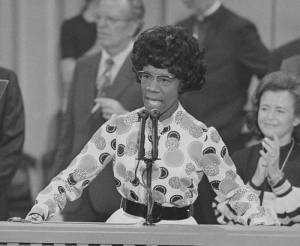
Shirley Chisholm became the first woman and African American to seek the nomination for president of the United States from one of the two major political parties. The Equal Rights Amendment (ERA) passed Congress and got 35 of the 38 votes to become a Constitutional Amendment. In 1972, Native Americans occupied the Bureau of Indian Affairs. The protest came from tribal frustration with the government’s ‘Trail of Broken Treaties.’ It lasted six days.
Furman v. Georgia was decided in 1972. The United States Supreme Court invalidated all death penalty schemes in the United States in a 5–4 decision. Each member of the majority wrote a separate opinion. The Civil Rights act of 1972 passed which led to Title IX.
A recipient institution that receives Department funds must operate its education program or activity in a nondiscriminatory manner free of discrimination based on sex, including sexual orientation and gender identity. Some key issue areas in which recipients have Title IX obligations are: recruitment, admissions, and counseling; financial assistance; athletics; sex-based harassment, which encompasses sexual assault and other forms of sexual violence; treatment of pregnant and parenting students; treatment of LGBTQI+ students; discipline; single-sex education; and employment. Also, no recipient or other person may intimidate, threaten, coerce, or discriminate against any individual for the purpose of interfering with any right or privilege secured by Title IX or its implementing regulations, or because the individual has made a report or complaint, testified, assisted, or participated or refused to participate in a proceeding under Title IX.
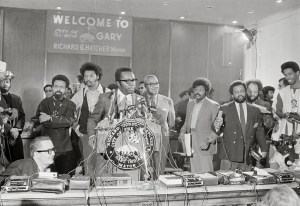
1972 was also the year of the Gary Declaration coming from a National Black Political Convention. Reverend Jesse Jackson was just one of many to attend the convention.
What Time Is It?
We come to Gary in an hour of great crisis and tremendous promise for Black America. While the white nation hovers on the brink of chaos, while its politicians offer no hope of real change, we stand on the edge of history and are faced with an amazing and frightening choice: We may choose in 1972 to slip back into the decadent white politics of American life, or we may press forward, moving relentlessly from Gary to the creation of our own Black life. The choice is large, but the time is very short.
Let there be no mistake. We come to Gary in a time of unrelieved crisis for our people. From every rural community in Alabama to the high-rise compounds of Chicago, we bring to this Convention the agonies of the masses of our people. From the sprawling Black cities of Watts and Nairobi in the West to the decay of Harlem and Roxbury in the East, the testimony we bear is the same. We are the witnesses to social disaster.
Our cities are crime-haunted dying grounds. Huge sectors of our youth — and countless others — face permanent unemployment. Those of us who work find our paychecks able to purchase less and less. Neither the courts nor the prisons contribute to anything resembling justice or reformation. The schools are unable — or unwilling — to educate our children for the real world of our struggles. Meanwhile, the officially approved epidemic of drugs threatens to wipe out the minds and strength of our best young warriors.
Economic, cultural, and spiritual depression stalk Black America, and the price for survival often appears to be more than we are able to pay. On every side, in every area of our lives, the American institutions in which we have placed our trust are unable to cope with the crises they have created by their single-minded dedication to profits for some and white supremacy above all.
Me in 1973 with friends.
I was in high school feeling like we might actually get through this all and get to the dream of a more perfect Union. It was definitely a year of ups and downs. Fifty years ago seems like another lifetime. You’d think we’d see more progress on all of this.
We do have a Black Woman Vice President but no ERA and we had our first Black Man elected President who served two terms.. The Department of Interior is led by an Indigenous woman who has planned reforms that might bring more civil rights to our native peoples. Women’s sports are taken a lot more seriously but not one woman player earns what her male peers make.
Black Americans face a new wave of voter suppression and a Supreme Court ready to tear through laws meant to improve access to American Universities not unlike what the 1972 Civil Rights law sought to do on the basis of gender. We just got rid of a second long, unwinnable war but will we have another?
We also have Elton John on tour and Droogs. The Droogs are the white male Maga Men and hide under names like Oathkeepers, Proud Boys, and Patriot Front.
Some things don’t change and in this country, we know why. They don’t share power. They don’t want to. They’ll do anything to keep as much of it as possible. We have a White Male problem and it’s mostly got the face of an extreme patriarchal take of Christianity.
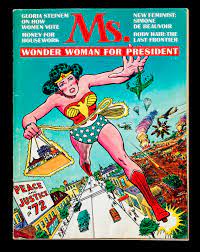
So that’s the perspective. This is the reality in 2022. This is from MS Magazine whose first stand-alone magazine was published in 1972. Excerpts from Elizabeth Hira’s “Americans Are Entitled to Government That Truly Reflects Them. Let’s Start With the Supreme Court” are going to show you exactly how far the rest of us still have to go. It’s in response to the audacity the Republican Party has to hold up Joe Biden’s promise to appoint the first black woman to the Supreme Court as some kind of affirmative action for a less-qualified person which is total Bull Shit.
This is the premise she completely proves. “Our current system has created conditions where, statistically, mostly white men win. That is its own kind of special privilege. Something must change.”
This is her conclusion. “American government in no way reflects America—perpetuating a system where male, white power makes decisions for the rest of us.”
These are her descriptive statistics.
Data shows these claims are not hyperbolic. A Supreme Court vacancy started this inquiry: There have been 115 Supreme Court justices. 108 have been white men. One is a woman of color, appointed in 2009. (Americans have had iPhones for longer than they’ve had a woman-of-color justice.)
One might be tempted to dismiss old history, except that the Supreme Court specifically cannot be looked at as a “snapshot in time” because the Court is built on precedent stretching back to the nation’s founding. Practically speaking, that means every decision prior to 1967 (when Justice Thurgood Marshall joined the Court) reflected what a group of exclusively white men decided for everyone else in America—often to the detriment of the unrepresented.
In a nation that is 51 percent female and 40 percent people of color, are white men simply more qualified to represent the rest of us than we are of representing ourselves? That sounds ridiculous because it is. And yet that is the implication when naysayers tell us that race and gender do not matter—that the “most qualified” people can “make the best choices” for all of us, and they all just happen to be white men.
What’s worse, those white men aren’t just making broad, general decisions—each and every branch of government acts in ways that directly impact people because of their race and gender, among other identities.
When the Supreme Court considers affirmative action, it will be considering whether race matters for students who are already experiencing an increase in school segregation—what Jonathan Kozol once dubbed “Educational Apartheid.”
When Congress is inevitably asked to pass a bill to protect abortion should the Court strike down Roe v. Wade, 73 percent of the Congress making that decision will be men—not people who could even potentially experience pregnancy.
When recent voting rights bills failed, it was because two white Democrats and 48 Republicans (45 white and three non-white) collectively decided not to protect all American voters of color against targeted attacks on their access to the ballot.
When Senator Kyrsten Sinema spoke to the Senate floor about why she could not take necessary steps to protect Americans of color, she did not have to look a single sitting Black woman senator in the eye. Because there are none.
The Supreme Court is not alone in underrepresenting women, people of color, and women of color. Of 50 states, 47 governors are white, 41 are men. Nearly 70 percent of state legislators are male.
The pattern holds federally, too: Today’s Congress is the most diverse ever—a laudable achievement. Except that today’s Congress is 77 percent white, and 73 percent male. (As an example of how clear it is that Congress was simply not designed for women, Congresswomen only got their own restroomin the U.S. House in 2011.)
In the executive branch, 97.8 percent of American presidents have been white men. There has never been a woman president.
BIA Spokesperson at Trail of Broken Treaties Protest: 1972 John Crow of the Bureau of Indian Affairs answers questions from Native Americans on November 2, 1972 at 1951 Constitution Avenue NW in Washington, D.C on the first day of the Trail of Broken Treaties demonstrations.
The numbers don’t lie. I don’t even want to go into the number of American presidents that have been worse than mediocre including the previous guy. This is the kind of systemic discrimination perpetuated in this country’s primary decision-makers. It is no wonder 50 years later we are even losing the table scraps they’re stealing now.
I’m going to leave you with this one last analysis before telling you to go read the entire essay.
The first female major-party presidential nominee was dogged by questions of her “electability,” and recent data shows large donors gave Black women congressional candidates barely one-third of what they gave their other female counterparts. Some people don’t support women and candidates of color because they worry these candidates simply can’t win in a white male system of power—which perpetuates a white male system of power. To create equitable opportunities to run, we must change campaign finance structures. It’s a necessary precursor to getting a government that looks like everyone.
I’m trying to send money to Val Demings in her effort to take down Mark Rubio. Mark Rubio will never consider the interests of all of his constituency because he’s funded by white males with a vested interest in their monopolies on politics and the economy.
What’s on your reading and blogging list today?
Now Tom said, “Mom, wherever there’s a cop beating a guy
Wherever a hungry newborn baby cries
Where there’s a fight against the blood and hatred in the air
Look for me, Mom, I’ll be there
Wherever somebody’s fighting for a place to stand
Or a decent job or a helping hand
Wherever somebody’s struggling to be free
Look in their eyes, Ma, and you’ll see me”
Yeah!
Like Tom Joad, I was born an Okie. I was born on the Cherokee strip one of those places on the Trail of Broken Treaties at the end of the Trail of Tears. “The Grapes of Wrath” was on many a book banning and burning list back in the day. Look for it again on a list near you.
Did you like this post? Please share it with your friends:
Recently, I’ve been cooking a lot of my Nana’s depression years recipes and thinking of ways to tighten my belt. I’ve been watching the stock market go crazy and corporate profits improve in the macroeconomy. It’s beginning to translate into the labor markets but it really varies state to state. As you know, my right wing Republican Governor Bobby Jindal has been running away from his responsibilities and record here in Louisiana and spending time on the road. He’s made visits to CPAC and FOX and even the lawn of the White House trying unsuccessfully to draw attention to his “possible” presidential bid. He’s going nowhere but down in Republican Straw polls which is karma as far as I’m concerned.
What has been getting attention is his record of failure here. It’s a doozy. It doesn’t get much worse than having MSN’s Wall Street 24/7 call your state the worst place to do business and then list the reasons that your state resembles Somalia more than a developed nation.
> Real GDP growth, 2012-2013: 1.3% (17th lowest)
> Average wages and salaries, 2013: $44,828 (23rd lowest)
> Pct. of adults with bachelor’s degree, 2013: 22.5% (5th lowest)
> Patents issued to residents, 2013: 395 (13th lowest)
> Projected working-age population growth, 2010-2020: -3.2% (13th lowest)
No state fared worse on 24/7 Wall St.’s business climate index than Louisiana. The state is not the worst place to run all businesses, however. The manufacturing sector accounted for more than 20% of Louisiana’s economic output in 2013, the fourth highest such contribution in the country. Despite the strong sector, Louisiana generally provides poor conditions for business.
Nearly one in five residents lived in poverty in 2013 — nearly the worst rate in the nation — contributing to both the low quality of the labor force as well as a low quality of life in the state. The working-age population was projected to decline by 3.2% from 2010 through 2020, one of the worst declines in the nation. While nearly 30% of Americans had at least a bachelor’s degree as of 2013, only 22.5% of Louisiana adults had at least such a degree, also nearly the lowest rate. Poor education contributed to poor scores in innovation. The state was one of only a handful of states where the average venture capital investment was less than $1 million.
Jindal’s been slavishly following Grover Norquist’s prescriptions for drowning the state government in his bathtub. He’s also part and parcel passed legislation straight from ALEC and the Koch Brothers. As a result, we have a $1.6 million dollar deficit that’s going to be challenging to eliminate. This is especially true since he’s spent the last 6 years pulling every slight of hand accounting trick in the book, sold off all possible state assets, and siphoned most all reserve funds. His first draft basically put all the state’s public universities in financial exigency which is a public entity’s version of bankruptcy reorganization. It also looks like the public health system is on the verge of collapse.
Years of deep cuts to state funding for Louisiana’s colleges and universities — and the threat of even further reductions in the near future — have some leaders looking at drastic measures that could change the face of Louisiana higher education.
One idea that has recently been floated: Why not encourage some of the state’s public schools to go private?
The idea, which experts agree is radical and may not ever be feasible, came up during a recent meeting of the state Board of Regents, a group appointed by Republican Gov. Bobby Jindal, whose administration has led the charge for recent state budgets that have left Louisiana with some of the nation’s most severe cuts to higher education funding. Regents board members have instructed state higher education staff members to examine the concept and report back on whether the plan would work and what it would take.
“You look at some areas of the state, there may be a university or a college inside of a university that could do better as a private entity,” Board of Regents Chairman Roy Martin said in a follow-up interview with The Advocate.
Martin stressed that he was speaking as an individual, not for the board.
It’s hard to describe how the years of defunding basic education, roads, and public health and safety service has impacted everyone’s life around here. I see homeless people on every major street corner. I have friends looking for second jobs or first jobs. Many people I know have either left town or moved out of the historical districts. This is not the post Katrina revival that we were promised. However, it’s not that way for some folks.
The top-of-the-market houses are “rising in price at least as fast as the market as a whole,” Ragas said, based on conversations with Realtors.
“In the higher market, it is a much brisker market now,” said Rick Haase, president of Latter & Blum Inc., which sold nearly one-third of the 158 homes priced at $1 million or more that were sold during the 12-month period ending Jan. 31.
The highest-priced home to sell in the New Orleans area last year was advertised as a “stately Queen Anne home” featuring seven bedrooms, 5 ½ bathrooms, “lush gardens with organically grown citrus trees and grapes,” and a heated pool. The property at 3 Audubon Place was listed for sale at $5.25 million and sold 86 days later for $5 million, or $583.57 per square foot.
Haase said the average number of days that properties selling at more than $1 million stay on the market has dropped from more than 150 to 90.
It took just one day for the sixth most-expensive New Orleans-area property to sell last year. The three-bedroom, three-bathroom single-family home at 828 Chartres St. in the French Quarter sold for its full asking price of $2.3 million, or $575 a square foot.
“It’s not like every house flies off the market. But if it’s priced appropriately, in the right location, has the right pedigree, then, yeah, the numbers are going up and up,” said Keller Williams Realtor Ricky Lemann, who was the listing agent on a $2.25 million property on First Street that sold last year. “There will be no adjustment in that luxury market until the (interest) rates go up.”
I’ve really noticed that the kinds of people moving into my part of town are not the same kinds of people that are selling and leaving. The house next door went from rental property to a starter home using the Obama Tax incentives to a home away from home for two Northeasterners within a period of about 5 years. It now spends most of its time as an unlicensed short term rental which is basically illegal. But, one owner is in NJ and the other came from Philadelphia so they don’t seem to care much about that.
For the first time in at least 50 years, a majority of U.S. public school students come from low-income families, according to a new analysis of 2013 federal data, a statistic that has profound implications for the nation.
The Southern Education Foundation reports that 51 percent of students in pre-kindergarten through 12th grade in the 2012-2013 school year were eligible for the federal program that provides free and reduced-price lunches. The lunch program is a rough proxy for poverty, but the explosion in the number of needy children in the nation’s public classrooms is a recent phenomenon that has been gaining attention among educators, public officials and researchers.
“We’ve all known this was the trend, that we would get to a majority, but it’s here sooner rather than later,” said Michael A. Rebell of the Campaign for Educational Equity at Teachers College at Columbia University, noting that the poverty rate has been increasing even as the economy has improved. “A lot of people at the top are doing much better, but the people at the bottom are not doing better at all. Those are the people who have the most children and send their children to public school.”
City centers around the country are becoming younger, more affluent and more educated, while inner suburbs are seeing poverty rates rise, according to a new study from the University of Virginia’s Weldon Cooper Center for Public Service.
The new study is based on an analysis of demographic changes in 66 cities between 1990 and 2012. It comes just months after a surge of headlines about suburban poverty following a Brookings Institution study that found that more Americans are now living in poverty in the suburbs than in rural or urban areas.
News of this demographic shift comes as no surprise to suburban school superintendents and school boards. They know their student populations are shifting, and they are wrestling with how to adequately serve the rising number of poor children who come to class with far more needs than their more affluent peers.
Children and Seniors are being particularly hard hit by the defunding of services on both the state and federal level but zealous Republicans look to score points by poor shaming. They make scapegoats of the nation’s most vulnerable people. While Social Security has been indexed to increase with price increases, Seniors are not exempt from income inequality. Part of the issue with Social Security funding is the cap on income subject to FICA taxes. The cap has created a funding gap.
As America recovers from the recession, wealthy households are recovering faster than low-income ones, whose incomes have stagnated or declined since the crash. A new report says that this widening gap is sapping Social Security.
Currently, two-thirds of seniors rely on the program for their retirement income. The wage gap may have cost Social Security$1 trillion over the last 30 years, according to a report last week from the Center for American Progress.
And as more Americans reach retirement age, Social Security is set to eat through its funding by 2033, assuming that Congress takes no action to bolster it. After that it would only be able to cover 77 percent of its claims.
“For low-income seniors, Social Security represents nearly 85 percent of income. Even for seniors right in the middle, Social Security represents nearly two-thirds of their retirement income,” said Rebecca Vallas, director of CAP’s poverty program.
Small wages, big shortfalls
The pension and disability insurance program is funded by a payroll tax that applies to wages of $118,500 and below. But the money flowing into the program is not as large as it could be, according to the report, now that an increasing share of wage growth is going to people who make more than that, and low-wage workers make less.
Why does that matter for Social Security? Because highest earners reach the$118,500 “cap” quickly and stop paying into the fund for the rest of the year. “Social Security funding is directly tied to the full wages of low and middle income workers,” Vallas says. “It’s their wages that matter.”
The payroll tax cap was set in 1983 by President Reagan, which at the time captured 90 percent of wages. “Reagan essentially said, let’s go for 90 percent, and we will let 10 percent go,” says Vallas.
But since 1983, that cap hasn’t been adjusted for wage growth to keep up with the 90 percent goal. “What they didn’t anticipate is income inequality,” says Vallas. “The highest earners have seen growth much faster than the average worker.”
Now the tax cap only captures 83 percent of wages, instead of 90. The missing 7 percent is part of the Social Security shortfall.
Of course, all of these issues have come because we’ve shifted the burden of paying for things from businesses and the wealthiest. We’ve also shifted the subsidizes to businesses and the wealthiest. As a result, fewer and fewer services are being offered, few people are covered, and fewer jobs are available.
At the Conservative Political Action Conference (CPAC) just outside Washington, DC, Wisconsin Governor and likely presidential candidate Scott Walker was asked what his plan would be, were he in the White House, to combat the terrorism perpetuated by the Islamic State In Syria (ISIS).
As an enthusiastic crowd cheered, he responded not with a plan but with an argument for why his battles against organized labor in his state makes him the most qualified for the job.
“We need have someone who leads and ultimately will send a message that not only will we protect American soil, but…freedom-loving people anywhere else in the world. We need that confidence,” he said. “If I can take on a hundred thousand protesters, I can do the same across the world.”
In 2011, Walker pushed through a law, Act 10, that slashed the power of public employee unions to bargain, and cut pay for most public sector workers. As a special slap to teachers, Walker exempted the unions of police, firefighters and state troopers from the changes in collective bargaining rights but not educators. Teachers protested for a long time, closing schools for days, but the law passed, and the impact on teachers unions in Wisconsin has been dramatic: according to this piece by my Post colleague Robert Samuels. The state branch of the National Education Association, once 100,000 strong, has seen its membership drop by a third, and the American Federation of Teachers, which organized in the college system, has seen a 50 percent decline.
This week may bring down a central tenet of the ACA which has brought private health insurance to millions of people. It has been one policy that has successfully increased the day to day life of ordinary people. Will the Supremes bring it down? Will it be drowned in Scalia’s bathtub? I am one of the 7 1/2 million people who were forced onto the federal exchange because my Republican governor is an asshole. Will I join the ranks of uninsured this week? Me with a chronic condition and a cancer history?
Shortly after the A.C.A. passed, in 2010, a group of conservative lawyers met at a conference in Washington, D.C., sponsored by the American Enterprise Institute, and scoured the nine-hundred-page text of the law, looking for grist for possible lawsuits. Michael Greve, a board member of the Competitive Enterprise Institute, a libertarian outfit funded by, among others, the Koch brothers, said, of the law, “This bastard has to be killed as a matter of political hygiene. I do not care how this is done, whether it’s dismembered, whether we drive a stake through its heart, whether we tar and feather it and drive it out of town, whether we strangle it.” In time, lawyers hired by the C.E.I. discovered four words buried in Section 36B, which refers to the exchanges—now known as marketplaces—where people can buy health-insurance policies. The A.C.A. created federal tax subsidies for those earning less than a certain income to help pay for their premiums and other expenses, and, in describing who is eligible, Section 36B refers to exchanges “established by the State.” However, thirty-four states, most of them under Republican control, refused to create exchanges; for residents of such states, the law had established a federal exchange. But, according to the conjurings of the C.E.I. attorneys, the subsidies should be granted only to people who bought policies on the state exchanges, because of those four words in Section 36B. The lawyers recruited plaintiffs and filed a lawsuit; their goal is to revoke the subsidies provided to the roughly seven and a half million people who were left no choice by the states where they live but to buy on the federal exchange.
The claim borders on the frivolous. The plaintiffs can’t assert that the A.C.A. violates the Constitution, because the Justices narrowly upheld the validity of the law in 2012. Rather, the suit claims that the Obama Administration is violating the terms of its own law. But the A.C.A. never even suggests that customers on the federal exchange are ineligible for subsidies. In fact, there’s a provision that says that, if a state refuses to open an exchange, the federal government will “establish and operate such Exchange within the State.” The congressional debate over the A.C.A. included fifty-three meetings of the Senate Finance Committee and seven days of committee debates on amendments. The full Senate spent twenty-five consecutive days on it, the second-longest session ever on a single piece of legislation. There were similar marathons in the House. Yet no member of Congress ever suggested that the subsidies were available only on the state exchanges. This lawsuit is not an attempt to enforce the terms of the law; it’s an attempt to use what is at most a semantic infelicity to kill the law altogether.
I spent the weekend and a few days before that watching people I went to high school with that mostly didn’t attend college squawk about people on disability, unemployment, and government waste and give away. They say all Obama supporters are the ones that want benefits but no jobs. It’s just all kinds of drivel that Fox spews that’s easy to debunk with facts but impossible to debunk to hard core idiots who aren’t interested in facts, truth, or reality. What has happened to the country that I grew up in and even to the state that I moved to 20 years ago? I turn 60 this year. I’ve never seen so much vitriol aimed at the wrong people in my life and for what?
I want to point you back to the kind of crap spewed by Republicans recently with a quote from an Indiana office seeker from the last election. This guy basically said let the poor “wither and die”. It’s basically what they all think but don’t say.
“For almost three generations people, in some cases, have been given handouts. They have been ‘enabled’ so much that their paradigm in life is simply being given the stuff of life, however meager.
What you see is a setting for a life of misery is life to them never-the-less. No one has the guts to just let them wither and die. No one who wants votes is willing to call a spade a spade. As long as the Dems can get their votes the enabling will continue. The Republicans need their votes and dare not cut the fiscal tether. It is really a political Catch-22.”
Sheriff Richard Mack is the right wing former sheriff of Graham County, Arizona. He is the head of an organization called “Constitutional Sheriffs and Peace Officers Association,” a member of the NRA’s Hall Of Fame, and a staunch opponent of the policies of President Obama, including Obamacare.
Richard Mack has run into some medical problems and since he is uninsured, he’s asking for help. Mack suffered a heart attack on January 12. This apparently came right on the heels of some serious medical issues that were suffered by his wife. His son, Jimmy Mack, has set up a GoFundMe campaign, asking for donations to help offset the cost of medical treatment. Apparently the Macks were expecting right wing supporters to step up to the plate and help out but, judging by the comments that accompany many of the donations, Mack is getting the bulk of his support from liberals.
As of this writing, Mack has received close to $20,000 in donations from 439 people. The commenters are sympathetic to Mack’s situation — far more sympathetic than Mack and his supporters have been to the plight of those without health insurance. Many hope that he will use it as a learning experience, to change his views about the Affordable Care Act.
Some times I just want to cook my Nana’s hamhocks and beans and read Grapes of Wrath while never turning on the TV or computer again. However, that never happens either. I rant, therefore I blog. I blog, therefore I wonder why so few people really get it?
What’s on your reading and blogging list today?
Did you like this post? Please share it with your friends:
It’s been since at least November since I’ve had some time to myself when I wasn’t completely in need of tons of sleep so I’m enjoying spending some time in bed with my feet up getting my reads on. There’s not been a lot that’s intrigued me but it beats designing and updating an on line International Finance Class, believe me. So, imagine my sheer joy when I found out that Walmart broke down and upped its wages.
There are several reasons the America’s #1 corporation and chain store made the leap. It was probably a combination of fear of unionization and the incredible employee turnover rate. It really costs to hire and train new workers so upping the salary is really the required move for that one. There’s a lot of analysis on the deed so I’d thought I’d take a look at it. First up, Joe Pinsker at The Atlantic discusses the move.
The CEO of Walmart announced earlier today that all of the company’s employees will, starting in April, be paid at least $9 an hour, nearly $2 more than the federal minimum wage. That’s still far short of the $15 per hour pushed for by OUR Walmart, a union-like group of Walmart workers. Still, it’s a change for a company that has stubbornly opposed such a raise for years.
Walmart’s CEO framed the raise as an act of corporate benevolence, but the reason his company will inch closer to paying all its employees fair wages has little to do with goodwill (few business decisions do). If Walmart has determined that it’ll need to start paying higher wages to stay competitive, then other retailers might arrive at the same conclusion. This isn’t an isolated act of corporate social responsibility—it’s a response to the current realities of labor economics that will likely inform the behavior of other American employers.
Some companies have set even higher wage floors more in line with living wage expectations. Most recently, for example, Aetna set its floor for US workers at $16 an hour, twice the current federal minimum wage.
“Raising wages among low-wage workers shifts income into the pockets of workers and families that are highly likely to quickly spend every additional dollar they earn,” says David Cooper, economic analyst at the Economic Policy Institute.
“So even though some businesses have to pay their workers more, they see more customers coming through the door because now there’s additional dollars rippling out through local economies in a way that doesn’t really happen if those dollars just go back into the bank accounts of corporate shareholders.”
So what has changed? The simple answer is that the world for employers is very different with a 5.7 percent unemployment rate (the January level) than it was five years ago, at 9.8 percent. Finding qualified workers is harder for employers now than it was then, and their workers are at risk of jumping ship if they don’t receive pay increases or other improvements. Apart from pay, Walmart executives said in their conference call with reporters that they were revising their employee scheduling policies so that workers could have more predictability in their work schedules and more easily get time off when they needed it, such as for a doctor’s appointment.
The giant question now is not whether there will be some meaningful wage gains in 2015; beyond the anecdotal evidence from Walmart and Aetna, the collapse in oil prices means even modest pay increases will translate into quite large inflation-adjusted raises. The question is whether wage gains will be strong enough to create a virtuous cycle in which rising pay for the workers at the bottom three-quarters of the income scale, who are most likely to spend the money and get it circulating through the economy, will spur more investment and hiring.
To the degree their logic was, “We think we’re going to need to raise wages this much in the next couple of years anyway to retain good workers and maximize profitability, so we may as well get ahead of the curve and get a public relations bump out of it and announce the plans in a big splashy way,” that would be the best news for American workers. Because that would imply that it won’t just be Walmart workers getting a raise in 2015.
Sitting in the pediatrician’s office with their 6-day-old daughter, the two moms couldn’t wait to meet the doctor they had picked out months before.
The Roseville pediatrician — one of many they had interviewed — seemed the perfect fit: She took a holistic approach to treating children. She used natural oils and probiotics. And she knew they were lesbians.
But as Jami and Krista Contreras sat in the exam room, waiting to be seen for their newborn’s first checkup, another pediatrician entered the room and delivered a major blow: The doctor they were hoping for had a change of heart. After “much prayer,” she decided that she couldn’t treat their baby because they are lesbians.
“I was completely dumbfounded,” recalled Krista Contreras, the baby’s biological mother. “We just looked at each other and said, ‘Did we hear that correctly?’ …. When we tell people about it, they don’t believe us. They say, ‘(Doctors) can’t do that. That’s not legal.’ And we say, ‘Yes it is.'”
The Contrerases of Oak Park are going public with their story to raise awareness about the discrimination that the lesbian, gay, bisexual and transgender (LGBT) community continues to face. There is no federal or Michigan law that explicitly prohibits discrimination against LGBT individuals.
For months, the couple kept quiet about what happened to them and their baby — Bay Windsor Contreras — at Eastlake Pediatrics last October.
But the pain and frustration wouldn’t go away. So they broke their silence.
“We want people to know that this is happening to families. This is really happening,” said Jami Contreras, 30, who was blindsided that fall day in the doctor’s office. “It was embarrassing. It was humiliating … It’s just wrong.”
Benton County Superior Court Judge Alex Ekstrom rejected arguments from the owner of Arlene’s Flowers in Richland that her actions were protected by her freedoms of speech and religion. While religious beliefs are protected by the First Amendment, actions based on those beliefs aren’t necessarily protected, he said.
“For over 135 years, the Supreme Court has held that laws may prohibit religiously motivated action, as opposed to belief,” Ekstrom wrote. “The Courts have confirmed the power of the Legislative Branch to prohibit conduct it deems discriminatory, even where the motivation for that conduct is grounded in religious belief.”
Barronelle Stutzman, the owner of Arlene’s Flowers, sold flowers for years to customer Robert Ingersoll. She knew he was gay and that the flowers were for his partner, Curt Freed.
After Washington state legalized same-sex marriage in 2012, Ingersoll went to the shop the following spring to ask Stutzman to do the flowers for his wedding. At the time, floral arrangements for weddings made up about 3 percent of her business.
She placed her hands on his and told him she couldn’t, “because of my relationship with Jesus Christ,” she said in a deposition. As a Southern Baptist, she believed only in opposite-sex marriages.
For more than 30 years, Emmy-winning journalist, documentary filmmaker, and Al Jazeera America anchor Tony Harris has reported on senseless and vicious acts of violence, many fueled by intolerance, fear and hate. In the new Investigation Discovery one-hour special HATE IN AMERICA, Harris partners with The Southern Poverty Law Center (SPLC), a non-profit that has been tracking hate groups across the country since 1971, and NBC News’ award-winning production arm Peacock Productions, to examine the current realities of intolerance in America.
According to the SPLC, more than 900 active hate groups currently exist across the United States, from neo-Nazis to anti-government militias, targeting entire classes of people for their race, religion, and sexuality, among other immutable characteristics. Largely propagated by anger and fear over the nation’s ailing economy and the diminishing white majority, that number has been on the rise for over a decade.
Traveling to communities torn apart by violence, Harris pulls back the curtain on what drives modern-day hate, and comes face to face with its victims to examine HATE IN AMERICA.
HATE IN AMERICA premieres on Investigation Discovery on Monday, February 23, at 8/7c.
I’ve often wondered why my attitude towards shopping has changed over time. I used to love going to the big stores downtown and the clerks all seemed so cheery and glamorous. The buildings were vast and had huge tall ceilings supported by ornate columns. The window decorations were incredible during the holidays and they were up such a short period that you had to rush down there just to catch them. It was fun to walk from store to store and each store had its on personality and personalities. This is so different from today’s megastore where every one is rude and seems to only care about low priced junk. The aisles are tight and packed with crap and the crap is hard to find. There is very little help and only cashiers in far off places.
I used to think I started disliking stores and shopping just because I’d worked so much retail in high school and college. But, I still love to hit little antique stores in quaint places and will take hours staring down some bargain. I figured I’d just burned out on the entire store experience from those years. But, I still love hopping around the big stores in NYC and I used to love hitting the Maison Blanche in downtown New Orleans when I first moved here. So much of the things I enjoyed about shopping as a customer are gone. Also, when I was small, even retail store owners and employees had civilized work hours. Now, all I can think about it how grumpy every one looks and how junky the merchandise has become since they work night and day on every day imaginable. I’ve taken to ordering a lot of stuff on line just to avoid the overall experience of the ugly buildings, merchandise and people. The thought of going to a Walmart stresses me out. It’s something I avoid if I can. So, I don’t know. What happened?
Whatever happened to a fun day at a store? Oh, well. Everything changes and now it’s just all about returning profits to a few at the inconvenience and dismay of the many.
So, those are the two interrelated topics that I’ve been investigating this week. What’s on your reading and blogging list today?
Did you like this post? Please share it with your friends:
Since I’m in the middle of revamping my course for Graduate Finance Students in International Finance and reviewing textbooks and the usual stuff, I thought I’d focus on the economy for the morning.
One of the most awful results of the Reagan years has been the creation of mainstream paranoia over policy using data evident from the scientific method, intellectuals and academics that spend years researching and learning theory and empirical evidence, and the idea that government can’t ameliorate issues through policy but is somehow a potential enemy of the governed.
This kind of paranoid drivel used to be the realm of militia types like Clive Bunday and John Birchers like the Koch Brothers and father. It had no place in mainstream discourse until Reagan started pumping up the idea that poor people game the government and the government games every one else. Its now spread to Christian extremists, the NRA, and most of the Republic Party.
Joni Ernst, the Republican candidate for U.S. Senate in Iowa, said during an NRA event in 2012 that she would use a gun to defend herself from the government.
“I have a beautiful little Smith & Wesson, 9 millimeter, and it goes with me virtually everywhere,” Ernst said at the NRA and Iowa Firearms Coalition Second Amendment Rally in Searsboro, Iowa. “But I do believe in the right to carry, and I believe in the right to defend myself and my family — whether it’s from an intruder, or whether it’s from the government, should they decide that my rights are no longer important.”
Ernst made the remark a little more than a month after gunman James Holmes allegedly killed 12 people and injured 58 in a movie theater in Aurora, Colorado. Ernst’s campaign did not respond to The Huffington Post’s request for comment about the remark on Wednesday evening.
Earlier this year, Ernst released an ad in which she points a gun at the camera and vows to “unload” on Obamacare.
We’ve also experienced this massive attempt to rewrite secondary school textbooks and curricula to reflect the deeply held philosophical and religious views of these folks rather than theory or empirical evidence brought about by hundreds of years of research and scholarship. This also ignores primary documents that show just the opposite to be factual.
But, facts be damned, there’s children’s minds to warp. Biased ideas are not at the center of legitimate academic pursuit. Folks that follow agendas tend to live at the edges of universities and most departments are quite embarrassed by them. I spent time in a department where one research professor’s favorite pursuit was proving that iqs and brain sizes among varying races were the reason for underachieving groups in an economy. All DNA evidence shows that race is a social construct but this guy spent a life time trying to show the relationship between brain sizes of races and incomes and jobs. So, most time when you see folks that believe this stuff, they reside some where on the fringes. However, since the Reagan years, there’s been a major attempt by right wing religious zealots to teach propaganda and there’s been a rather significant increase in the level of ignorance on things from incoming freshmen.
The standards’ authors are clearly fans of the free enterprise system, consistently emphasizing the advantage of American capitalism over other structures.
For example, the high school standards state that students should be able to “understand how the free enterprise system drives technological innovation and its application in the marketplace.” The middle school standards clearly promote free enterprise capitalism over other economic systems, saying that students should be able to “compare and contrast free enterprise, socialist, and communist economies in various contemporary societies, including the benefits of the U.S. free enterprise system.” Finally, the standards connect capitalism with the conservative ideal of limited government, asking students to be able to “explain why a free enterprise system of economics developed in the new nation, including minimal government intrusion, taxation, and property rights.”
It really takes very little time spent in economics to realize that political constructs are not economic constructs. For example, the United States economy was founded on Mercantilism which began with monopolies, charters, grants and largess of royalty and aristocracy. The concepts of Capitalism and of Communism had the same roots and they were a lot more philosophical than ever real. Even, now, we have a modified market system. There has never EVER been a “free market” system or “communism” in an economic sense. Socialism is just one end of a modified market system and still relies heavily on private ownership of the majority of factors of production. Most facets of government policy are to make a market behave closer to a free market model because it can’t possibly d0 so under one factor, characteristic, or situation that exists. I mean really, who wants to leave the market for uranium to the free market? That’s just an extreme example.
The problem is that dogma has overtaken reality among folks that now find themselves in office. It’s bad for the country. It’s bad for business. It’s bad for nearly every one. The one thing that’s becoming abundantly clear since the Clinton Presidency and definitely during the Obama Presidency is that the Democratic Party is the party of Wall Street and Big Business. It’s not the Republicans. No where is this more evident than economic reports written by the private sector. Today’s Republicans scare the shit out of big business and finance. The last few battles to keep the federal government and the deficit funded has nearly caused market meltdowns twice. You also don’t see them complain about increasing the minimum wage or decreasing the current level of income equality. NO REALLY. This means Chris Christie is really going to have some ‘splaining to do over this statement.
Labor Secretary Tom Perez on Thursday panned New Jersey Gov. Chris Christie’s comments that he’s “tired” of the minimum wage debate.
“Chris Christie’s got his head in the sand if he’s getting tired about the minimum wage,” Perez said according to Bloomberg Politics.
President Barack Obama and Democrats have led the push to raise the federal minimum wage to $10.10, and the issue has made its way onto the campaign trail this year.
“Chris Christie needs to talk to his economists, who will tell him that 70 percent of GDP growth is consumption,” Perez said Thursday.
The criticism came just days after Christie said he was “tired of hearing about the minimum wage” at a U.S. Chamber of Commerce conference on Tuesday.
“I really am,” the Republican governor and potential 2016 hopeful said. “I don’t think there’s a mother or a father sitting around the kitchen table tonight in America saying, ‘You know, honey, if our son or daughter could just make a higher minimum wage, my God, all of our dreams would be realized.'”
“Is that what parents aspire to for our children?” Christie asked. “They aspire to a greater, growing America, where their children have the ability to make much more money and have much great success than they have, and that’s not about a higher minimum wage.”
Before the Labor secretary chimed in, the remark drew fire from other Democrats, and White House Press Secretary Josh Earnest even quipped during a briefing Wednesday that people living on a minimum wage are those who are really tired.
Christie also used his time at the podium to make a 2016 prediction.
“I am convinced that the next president of the United States is going to be a governor,” Christie said. “We’ve had this experiment of legislating .. and getting on-the-job training in the White House. It has not been pretty.”
Even though Republicans depict themselves as the party for business and banks, it turns out that the GOP’s economic policy is detrimental to their bottom lines and continued existence; particularly rising costs and stagnant wages since the Bush-Republican Great Recession. What both bankers and retailers really want instead of tax cuts, deregulation, and more Republican austerity and budget cuts are better incomes for all Americans that will lead to increased consumer confidence and greater purchasing power to trigger higher business profits. What they have learned after thirty years of “trickle-down” is that the trillions of dollars taken by the 1%, especially since 2009, have failed miserably to stimulate the economy. Instead, they demand more buying by the masses that Wall Street firms and analysis of 65 of the nation’s top retailers claim will only happen with, as President Obama preaches, growing the economy from the middle-out.
For example, in a report last month titled Inequality and Consumption, Morgan Stanley economists said, “Despite the roughly $25 trillion increase in wealth since the recovery from the financial crisis began, consumer spending remains anemic. Top income earners have benefited from wealth increases but middle and low income consumers continue facing structural liquidity constraints and unimpressive wage growth. To lift all boats, further increases in residential wealth and accelerating wage growth are needed.” Republicans completely disagree and either resist consideration of raising the minimum wage or promote abolishing it altogether. According to the Republicans, increasing income inequality must continue and it is crucial that they convince the population that no wage is too low. It is a belief the Koch brothers espouse but it is rapidly losing favor in circles whose survival depends on a population of consumers.
Standard and Poor’s (S&P) rating agency concurred with Morgan Stanley’s economists in their August report, How Increasing Income Inequality Is Dampening U.S. Economic Growth, And Possible Ways To Change The Tide, and strongly advised the federal government to create “a path toward more sustainable growth, that in our view, will pull more Americans out of poverty and bolster the purchasing power of the middle class. A rising tide lifts all boats…but a lifeboat carrying a few, surrounded by many treading water, risks capsizing.” To “lift all boats,” S&P suggests a “high degree of rebalancing” that includes increased “spending in the areas of education, health care, and infrastructure to help control the income gap that, at its current level, threatens the stability of an economy still struggling to recover.” Contrary to wisdom of real economists concerned with America’s economic survival, Republicans across the country have been laser-focused on their austerity crusade to cut spending on education, infrastructure, and healthcare including the cruel heartlessness of refusing free Medicaid expansion under the Affordable Care Act.
Despite the call from both banks and businesses to increase the minimum wage and spending on essentials for a robust recovery, congressional Republicans have obstructed and outright blocked each and every attempt by the President and Democrats to stimulate the economy. Despite trailing every developed nation on Earth in infrastructure, Republicans consistently refuse the President’s calls to increase spending on desperately-needed infrastructure repairs including roads, bridges, public buildings, and sewers that numerous economists, including some highly respected conservatives, say is crucial for job-creation, increased consumer spending, and a vibrant recovery. Increased consumer confidence, and spending, is something all economists agree is for the good of the country’s economy but can only happen if incomes rise for the majority with higher wages and more well-paying jobs.
Former Walmart U.S. CEO Bill Simon, whose company had seen consumer traffic drop for six straight quarters and same-store sales drop for five quarters, explained in July 2014 that “we’ve reached a point where it’s not getting any better but it’s not getting any worse—at least for the middle (class) and down.” Kip Tindell, CEO of the Container Store, put retailers’ feelings best when he said, “consistent with so many of our fellow retailers, we are experiencing a retail ‘funk.’” The culprit is obvious: low wage and income growth for the middle class. Median household income in 2013 stood 8 percentage points below its 2007 prerecession level.
The simple fact of the matter is that when households do not have money, retailers do not have customers. The failure of incomes to keep up with the growing cost of college, child care, and other middle-class staples leaves even less money for retail spending. A previous analysis by the Center for American Progress shows that this so-called “middle-class squeeze”—stagnant incomes and the growing cost of middle-class security—leaves the median married couple with two kids with $5,500 less to spend annually on food, clothes, and other essentials that retailers sell.
Or, as officials of J.C. Penney—whose sales fell 9 percent in 20136—put it when listing the risks to its stock value: “the moderate income consumer, which is our core customer, has been under economic pressure for the past several years.”
Moreover, retail spending—which includes spending on everything from clothing to groceries to dining out—has broad implications for the entire economy since it accounts for a large fraction of consumer spending, which itself makes up 70
percent of U.S. gross domestic product, or GDP.
Even Walmart is concerned even while not paying living wages, not providing good benefits, and not creating an environment where a worker feels secure about his/her future. Now the weird thing is that fringe economists are still overly scared about inflation and high taxes. These things, however, are not at the top of any one’s concerns that would be invited on any Fox News program. Here’s a headline from Forbes: “Want a Better Economy? History Says Vote Democrat!”. In 2012, a number of books evaluated the results of the economy under Democratic vs Republican administrations. The results are startling.
Senator Daniel Patrick Moynihan is attributed with saying “everyone is entitled to his own opinion, but not his own facts.“ So even though we may hold very strong opinions about parties and politics, it is worthwhile to look at historical facts. This book’s authors are to be commended for spending several years, and many thousands of student research assistant man-days, sorting out economic performance from the common viewpoint – and the broad theories upon which much policy has been based. Their compendium of economic facts is the most illuminating document on economic performance during different administrations, and policies, than anything previously published.
The authors looked at a range of economic metrics including inflation, unemployment, corporate profit growth, stock market performance, household income growth, economy (GDP) growth, months in recession and others. To their surprise (I had the opportunity to interview Mr. Goldfarb) they discovered that laissez faire policies had far less benefits than expected, and in fact produced almost universal negative economic outcomes for the nation!
From this book loaded with statistical fact tidbits and comparative charts, here are just a few that caused me to realize that my long-term love affair with Milton Friedman‘s writing and recommended policies in “Free to Choose” were grounded in a theory I long admired, but that simply have proven to be myths when applied!
Personal disposable income has grown nearly 6 times more under Democratic presidents
Gross Domestic Product (GDP) has grown 7 times more under Democratic presidents
Corporate profits have grown over 16% more per year under Democratic presidents (they actually declined under Republicans by an average of 4.53%/year)
Average annual compound return on the stock market has been 18 times greater under Democratic presidents (If you invested $100k for 40 years of Republican administrations you had $126k at the end, if you invested $100k for 40 years of Democrat administrations you had $3.9M at the end)
Republican presidents added 2.5 times more to the national debt than Democratic presidents
The two times the economy steered into the ditch (Great Depression and Great Recession) were during Republican, laissez faire administrations
It was no joke on Thursday when I asked Austan Goolsbee, a pretty fair amateur comic, to rattle of key economic indicators that are trending in very positive ways right now.
“Jobs created. Weekly U.I (jobless) claims. Unemployment rate. Auto Sales. Gas Prices,” said Goolsbee, former head of President Obama’s Council of Economic Advisers and a onetime winner of the annual “D.C.’s Funniest Celebrity” contest.
And, yet, as a headline in Politico.com also noted Thursday, “Economic Anxiety Dominates 2014.” So what’s really and truly up? What explains the disconnect between seemingly very strong numbers and the lack of love for Obama and the Democrats?
“You can’t brag about the economy because people can’t feel it,” said Thomas Bowen, a Chicago-based Democratic political and policy consultant.
“I’m sure (some) Democrats have polled this: ‘The recovery isn’t working for you.’ That’s why they’re not running on the economy improving.
Not long after, I was driving past a state unemployment office along a rather somber commercial strip on Chicago’s Northwest Side. The parking lot was full. And then I mulled the folks I know working part-time involuntarily or sticking with jobs they don’t especially like out of fear of the limited alternatives.
“You’re talking about indicators in the last six months,” said Bowen. “But look at the start of the recession until today. We’re just getting out of the hole from jobs losses. And the jobs aren’t the same. They’re not higher paying construction jobs.” “Not all indicators equate with average folks,” said Anna Greenberg, a Washington-based Democratic pollster.
“Wages and salaries are stagnant,” she said. “Yes, the stock market is up and the jobless rate down. But the cost of living is up and you may not have more money.”
So, a lot of economists like me remain very confused. It’s not like there’s not support by people and businesses for good policy like infrastructure projects, improving the terms of student loans so more folks can access higher and continuing education, and a reasonable minimum wage. The cities and states that have raised the minimum wage are even those that are doing well among states. States that have raised their minimum wages have better job growth.
New data released by the Department of Labor shows that raising the minimum wage in some states does not appear to have had a negative impact on job growth, contrary to what critics said would happen.
In a report on Friday, the 13 states that raised their minimum wages on Jan. 1 have added jobs at a faster pace than those that did not. The data run counter to a Congressional Budget Office report in February that said raising the minimum wage to $10.10 an hour, as the White House supports, could cost as many as 500,000 jobs.
“In the 13 states that boosted their minimums at the beginning of the year, the number of jobs grew an average of 0.85 percent from January through June. The average for the other 37 states was 0.61 percent.
“Nine of the 13 states increased their minimum wages automatically in line with inflation: Arizona, Colorado, Florida, Missouri, Montana, Ohio, Oregon, Vermont and Washington. Four more states — Connecticut, New Jersey, New York and Rhode Island — approved legislation mandating the increases.”
The AP notes: “[The] state-by-state hiring data, released Friday by the Labor Department, provides ammunition” to the camp in favor of raising the minimum wage.
“Economists who support a higher minimum say the figures are encouraging, though they acknowledge they don’t establish a cause and effect. There are many possible reasons hiring might accelerate in a particular state.
” ‘It raises serious questions about the claims that a raise in the minimum wage is a jobs disaster,’ said John Schmitt, a senior economist at the liberal Center for Economic and Policy Research. The job data ‘isn’t definitive,’ he added, but is ‘probably a reasonable first cut at what’s going on.’ “
So, it just appears that there’s a huge portion of the United States electorate and elected that would rather live in their dream world of imaginary beings and dogma than have their lives made better by using what we know and what we’ve learned.
What’s on your reading and blogging list today?
Did you like this post? Please share it with your friends:
It’s too bad Dakinikat is so busy today, because there’s an economics food fight brewing. Perhaps she’ll still find time to comment on the controversy later the evening after she returns home with her newly adopted canine family member, Temple. Meanwhile, I’ll do my best to describe the dispute over Thomas Picketty’s conclusions about wealth inequality, published in his book Capital in the Twenty-first Century.
The Accusations:
At the Financial Times, Economics Editor Chris Giles has claims to have found problems with Picketty’s work: Piketty findings undercut by errors.
Thomas Piketty’s book, ‘Capital in the Twenty-First Century’, has been the publishing sensation of the year. Its thesis of rising inequality tapped into the zeitgeist and electrified the post-financial crisis public policy debate.
The data underpinning Professor Piketty’s 577-page tome, which has dominated best-seller lists in recent weeks, contain a series of errors that skew his findings. The FT found mistakes and unexplained entries in his spreadsheets, similar to those which last year undermined the work on public debt and growth of Carmen Reinhart and Kenneth Rogoff.
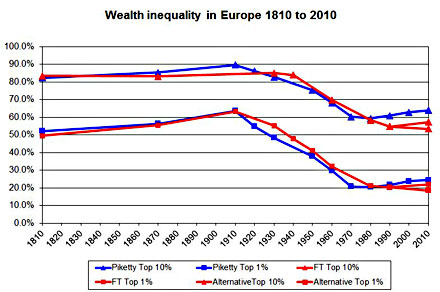
The central theme of Prof Piketty’s work is that wealth inequalities are heading back up to levels last seen before the first world war. The investigation undercuts this claim, indicating there is little evidence in Prof Piketty’s original sources to bear out the thesis that an increasing share of total wealth is held by the richest few.
Prof Piketty, 43, provides detailed sourcing for his estimates of wealth inequality in Europe and the US over the past 200 years. In his spreadsheets, however, there are transcription errors from the original sources and incorrect formulas. It also appears that some of the data are cherry-picked or constructed without an original source.
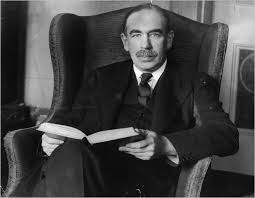
John Maynard Keynes
In one specific example, Giles says the corrected data do not show significant growth in Europe since 1970. In a second article, Giles goes into more detail. In addition, he argues that the U.S. data doesn’t support the conclusion that a greater proportion of the wealth is controlled by top 1% than in recent decades. He does admit to the top 10% controlling a greater share of wealth than previously.
An investigation by the Financial Times, however, has revealed many unexplained data entries and errors in the figures underlying some of the book’s key charts.
These are sufficiently serious to undermine Prof Piketty’s claim that the share of wealth owned by the richest in society has been rising and “the reason why wealth today is not as unequally distributed as in the past is simply that not enough time has passed since 1945”.
After referring back to the original data sources, the investigation found numerous mistakes in Prof Piketty’s work: simple fat-finger errors of transcription; suboptimal averaging techniques; multiple unexplained adjustments to the numbers; data entries with no sourcing, unexplained use of different time periods and inconsistent uses of source data….
A second class of problems relates to unexplained alterations of the original source data. Prof Piketty adjusts his own French data on wealth inequality at death to obtain inequality among the living. However, he used a larger adjustment scale for 1910 than for all the other years, without explaining why.
In the UK data, instead of using his source for the wealth of the top 10 per cent population during the 19th century, Prof Piketty inexplicably adds 26 percentage points to the wealth share of the top 1 per cent for 1870 and 28 percentage points for 1810.
A third problem is that when averaging different countries to estimate wealth in Europe, Prof Piketty gives the same weight to Sweden as to France and the UK – even though it only has one-seventh of the population.
Great buzz in the blogosphere over Chris Giles’s attack on Thomas Piketty’s Capital in the 21st Century. Giles finds a few clear errors, although they don’t seem to matter much; more important, he questions some of the assumptions and imputations Piketty uses to deal with gaps in the data and the way he switches sources. Neil Irwin and Justin Wolfers have good discussions of the complaints; Piketty will have to answer these questions in detail, and we’ll see how well he does it.
Krugman suggests that Giles may be doing something wrong.
I don’t know the European evidence too well, but the notion of stable wealth concentration in the United States is at odds with many sources of evidence. Take, for example, the landmark CBO study on the distribution of income; it shows the distribution of income by type, and capital income has become much more concentrated over time:
It’s just not plausible that this increase in the concentration of income from capital doesn’t reflect a more or less comparable increase in the concentration of capital itself….
And there’s also the economic story. In the United States, income inequality has soared since 1980 by any measure you use. Unless the affluent starting saving less than the working class, this rise in income disparity must have led to a rise in wealth disparity over time.
Giles’ objections are mostly to the data regarding increases in wealth inequality over the past few decades, and the funny thing is that even Piketty never claims that this has changed dramatically. The end result of Giles’ re-analysis of Piketty’s data is [below] with Piketty in blue and Giles in red. As you can see, Piketty estimates a very small increase since 1970.
Mr Giles’s analysis is impressive, and one certainly hopes that further work by Mr Giles, Mr Piketty or others will clarify whether mistakes have been made, how they came to be introduced and what their effects are. Based on the information Mr Giles has provided so far, however, the analysis does not seem to support many of the allegations made by the FT, or the conclusion that the book’s argument is wrong.
There are four important questions raised by the FT‘s work. First, which data are wrong? Second, how did errors in the work, if they are errors, come to be introduced? Third, how do the errors affect the specific points made in the relevant chapters? And fourth, how do the errors affect the fundamental conclusions of the book?
Mr Giles focuses on wealth inequality, to which Mr Piketty turns in Chapter 10 of his book. Mr Piketty has not published nearly as much research on the question of wealth inequality, and it seems that much of the analysis in Chapter 10 was done specifically for the book, based on others’ research. Mr Piketty’s wealth-inequality analysis certainly matters as a component of the book’s argument, but it is not accurate to say, as Mr Giles does, that the results in Chapter 10 constitute the “central theme” of the book.
Are the data wrong? Mr Giles identifies discrepancies between source material cited by Mr Piketty and the figures that appear in the book. He identifies cases in which Mr Piketty appears to have chosen to use data from one source when another would have made more sense. Further, the calculations in Mr Piketty’s spreadsheets (which have been available online since the book’s publication) seem to include adjustments in the data that are not adequately explained, and some figures for which Mr Giles cannot find a documented source. Finally, Mr Piketty has made choices concerning weighting of data used in averages, and assigning of data from one year (1935, for example) to another (1930) when such assignments seem unnecessary or inadvisable.
Alan Greenspan
The author concludes that, unfortunately, ideology will determine how many people respond to the Giles critique. Much more extensive analysis at the link.
Let me also say that I certainly agree that available data sources on wealth are much less systematic than for income. In fact, one of the main reasons why I am in favor of wealth taxation and automatic exchange of bank information is that this would be a way to develop more financial transparency and more reliable sources of information on wealth dynamics (even if the tax was charged at very low rates, which you might agree with).
For the time being, we have to do with what we have, that is, a very diverse and heterogeneous set of data sources on wealth: historical inheritance declarations and estate tax statistics, scarce property and wealth tax data, and household surveys with self-reported data on wealth (with typically a lot of under-reporting at the top). As I make clear in the book, in the on-line appendix, and in the many technical papers I have published on this topic, one needs to make a number of adjustments to the raw data sources so as to make them more homogenous over time and across countries. I have tried in the context of this book to make the most justified choices and arbitrages about data sources and adjustments. I have no doubt that my historical data series can be improved and will be improved in the future (this is why I put everything on line). In fact, the “World Top Incomes Database” (WTID) is set to become a “World Wealth and Income Database” in the coming years, and we will put on-line updated estimates covering more countries. But I would be very surprised if any of the substantive conclusion about the long run evolution of wealth distributions was much affected by these improvements.
I thought this was important:
…my estimates on wealth concentration do not fully take into account offshore wealth, and are likely to err on the low side. I am certainly not trying to make the picture look darker than it it. As I make clear in chapter 12 of my book (see in particular table 12.1-12.2), top wealth holders have apparently been rising a lot faster average wealth in recent decades, at least according to the wealth rankings published in magazines such as Forbes. This is true not only in the US, but also in Britain and at the global level (see attached table). This is not well taken into account by wealth surveys and official statistics, including the recent statistics that were published for Britain. Of course, as I make clear in my book, wealth rankings published by magazines are far from being a perfectly reliable data source. But for the time being, this is what we have, and what we have suggests that the concentration of wealth at the top is rising pretty much everywhere.
The shootings began about 9:30 p.m., a sheriff’s spokeswoman told KEYT-TV. It wasn’t clear what the attacker’s motivation might have been.
An 18-year-old Newport Beach man who was visiting Santa Barbara described a confusing scene as the shots rang out.
Nikolaus Becker was eating outside The Habit, 888 Embarcadero Del Norte, near the scene when the first set of shots was fired about 9:30 p.m. At first he thought it was firecrackers. A group of three to five police officers who were nearby started to casually walk toward the sounds, said Becker, but ran when a second round of shots broke out.
“That’s when they yelled at us to get inside and take cover,” Becker said.
The BMW took a sharp turn in front of The Habit, Becker said, and moments later a third round of shots was heard. Becker and his friends moved toward the restaurant’s kitchen but were told to wait in the seating area by employees.
He estimates there were at least 13 to 15 shots total at three locations. The locations were about 100 yards from one another.
The shooter, whose motivation is unknown, was found dead in his BMW. It’s not yet clear if he shot himself or was killed by sheriff’s deputies.
Earlier this week we reported how Chipotle felt obliged to ask its customers not to bring guns to chipotle restaurants. Seems like a reasonably enough request to most of us. And it’s been preceded by similar requests by various other chains like Starbucks and others.
Now the top pro-gun group in Texas pushing the demand for “open carry” firearm rights and trying to get people to show up at various restaurant chains with long guns is deciding it may not be such a hot idea after all.
Open Carry Texas and a group of other aggressive gun rights groups have issued a joint statement telling their members, Dudes, let’s stop taking our guns to restaurants. It’s freaking people out and making them hate us.
Shelly Sterling, who previously shared ownership of the beleaguered NBA franchise with her estranged husband, is now in talks with the NBA over selling the team, the source said.
The NBA banned Donald Sterling for life from all league events after an audio tape became public that caught him on tape uttering racist comments to his assistant V. Stiviano. He told her not to post photos of herself with black people on Instagram — such as Magic Johnson — or bring them to his basketball games.
At first glance, Donald Sterling’s gesture may seem like serendipitous news for the NBA. Taking him at his word, Donald Sterling has agreed to leave the league without a fight and has signed off on the sale of his team. Digging deeper, however, reveals possible ulterior motives on Sterling’s part to delay and potentially block the sale of the team. Do not forget a crucial point: capital gain taxes. As first reported by SI.com, the Sterlings have significant incentives under capital gain tax law to avoid the sale of the team and keep it in the Sterling family. Doing so, would save them hundreds of millions of dollars. Also, contrary to some reports, the Sterlings are unlikely to benefit from the “involuntary conversion” tax avoidance provision of the Internal Revenue Code. The bottom line is if the Sterlings have to sell the Clippers, they will probably pay hundreds of millions in state and federal taxes.
Along those lines, Donald Sterling’s proposed maneuver does not accomplish the NBA’s goal of ousting the entire Sterling family on June 3. As explained in a previous SI.com article, the NBA interprets its constitution to mean that ousting Donald Sterling on June 3 would also automatically oust Shelly Sterling as co-owner, with the Clippers then falling under the control of commissioner Adam Silver. Donald Sterling’s proposed maneuver risks the prospect of Shelly Sterling undertaking a slow-moving effort to sell the team. A sale process that takes months or years would clearly aggravate the NBA, which wants to erase the Sterling family name from the league as quickly as possible. A protracted sale of the Clippers by Shelly Sterling might also constitute a potential rationale for players to boycott NBA games.
Even of greater risk to the NBA, what is to stop Shelly Sterling from deciding to keep the Clippers? She could plausibly reason, on various grounds, that now is not the right time to sell the team. Also, her instruction from her husband to sell the team would not be legally binding; it would be a mere suggestion the moment she takes over the team.
Read much more at the link.
Ta-Nehisi Coates
I’ll end with a long article that I haven’t gotten to yet, but I’m hearing it’s a must read: The Case for Reparations, by Ta-Nehisi Coates at The Atlantic. Here’s the tagline:
“Two hundred fifty years of slavery. Ninety years of Jim Crow. Sixty years of separate but equal. Thirty-five years of racist housing policy. Until we reckon with our compounding moral debts, America will never be whole.”
The Sky Dancing banner headline uses a snippet from a work by artist Tashi Mannox called 'Rainbow Study'. The work is described as a" study of typical Tibetan rainbow clouds, that feature in Thanka painting, temple decoration and silk brocades". dakinikat was immediately drawn to the image when trying to find stylized Tibetan Clouds to represent Sky Dancing. It is probably because Tashi's practice is similar to her own. His updated take on the clouds that fill the collection of traditional thankas is quite special.
You can find his work at his website by clicking on his logo below. He is also a calligraphy artist that uses important vajrayana syllables. We encourage you to visit his on line studio.





























 peej
peej Carissa
 bostonboomer
 dakinikat
 ecocatwoman
 mablue2
 Mama Lopez
 peggysue22
 quixote
 skydancingguestblogger
 Mona (aka Wonk the Vote)



 Sky Dancing
Recent Comments