At the Gardner Museum, an empty frame hangs where a painting was stolen.
Before I get started on today’s political news, I wanted to note the anniversary of the Isabella Stewart Gardner heist on Monday. It’s a Boston story I’ve always found fascinating. I’m illustrating this post with some of the 13 missing works of art.
BOSTON — Thirty-four years ago two thieves robbed the Isabella Stewart Gardner Museum, making off with hundreds of millions of dollars in stolen artwork. The heist has been the subject of mystery and documentaries ever since.
“I have been here for a long time looking for these, and I’d be lying if I said it doesn’t affect me. I walk by the empty frames every day,” said Anthony Amore, Director of Security at the Isabella Stewart Gardner Museum.
In 1990, two men snuck into the museum disguised as police officers answering a distress call. The duo tied up to two guards and were in the museum for 81 minutes. They made off with numerous pieces of art including 13 works from famous painters like Rembrandt. The art is worth hundreds of millions of dollars.
“I believe that information is going to come in, or I am going to get the stuff first, but one way or another we will get the art back,” said Amore.
Over the past year, the museum and the FBI have received hundreds of tips and emails. Amore says most are theories or conjecture, but a few are an occasional tip. He says 20 of those calls came from people who thought they spotted the works of art on the wall during house showings or on pictures from Zillow. They were just reproductions used to stage the homes for sale.
“There is a lot of these things out there, and when we do see things from Zillow, or any other real estate website, we don’t look at it and say, ‘That is our painting.’ Nevertheless, we follow it,” said Amore. “I am amazed that people notice because Zillow has millions of listings, and people go through and go, ‘That’s that missing Gardner painting.”
There is a $10 million reward for information leading to finding the paintings.
In the pre-dawn hours of March 18, 1990, following a festive St. Patrick’s Day in Boston, two men dressed as police officers walked into the Isabella Stewart Gardner Museum and walked off with an estimated $500 million in art treasures. Despite efforts by the local police, federal agents, amateur sleuths and not a few journalists, no one has found any of the 13 works lost in the largest art theft in history, including a rare Vermeer and three precious Rembrandts.
The Concert, by Johannes Vermeer
The legacy of the heist is always apparent to museum visitors who, decades later, still confront vacant frames on the gallery walls where paintings once hung. They are kept there as a reminder of loss, museum officials say, and in the hope that the works may eventually return. Last month, Richard Abath, the night watchman who mistakenly allowed in the thieves, died at 57. He was a vital figure in an investigation that remains active, but where the trails have grown cold.
Here are five oddities that make this one of the most compelling of American crimes.
The thieves took a really strange array of stuff.
Important paintings were taken from their frames during the heist. But other items that were stolen were not nearly of the same caliber: a nondescript Chinese metal vase; a fairly ordinary bronze eagle from atop a flagpole; and five minor sketches by Degas. The thieves walked past paintings and jade figurines worth millions, including a drawing by Michelangelo, yet they spent some of their 81 minutes inside fussing to free the vase from a tricky locking mechanism.
The handcuffed guard was later scrutinized.
Abath, one of two guards on duty, was handcuffed and gagged with duct tape. He was never named a suspect. But over the years investigators continued to review his behavior because he had, against protocol, opened the museum door to the thieves. (The second guard, who is still living, was never a focus of investigative interest.) The F.B.I. monitored Abath’s assets for decades but never saw any suspicious income. He consistently said he told investigators everything he knew, and an F.B.I. polygraph he voluntarily took was deemed “inconclusive.”
The empty frames have stayed on the walls.
The museum was once Gardner’s home and she wanted to ensure that her expansive art collection was displayed in the same manner she had arranged it. She stipulated in her will that not a thing was to be removed or rearranged, or the collection should be shipped to Paris for auction, with the money going to Harvard University. Though it’s long been reported that the empty frames are left hanging to accord with that will, the museum says that is actually a long uncorrected mistake. “We have chosen to display them,” it said in a statement “because 1.) we remain confident that the works will someday return to their rightful place in the galleries; and 2.) they are a poignant reminder of the loss to the public of these unique works.”
Read the rest at the NYT.
I wish I could spend the day reading about famous art thefts and missing or recovered paintings, but I suppose I’d better take a look at the politics news . . .
On Monday Judge Aileen “Loose” Cannon shocked legal observers with a strange order.
U.S. District Judge Aileen Cannon’s proposal tips the scales so far in Trump’s direction that legal experts say the prosecutor, Justice Department special counsel Jack Smith, might ask an appeals court to remove her from the case.
Joyce White Vance, a former U.S. attorney, said the Presidential Records Act isn’t a way around rules for handling classified documents because the records are still government property, not Trump’s personal possessions.
Rembrandt von Rijn Self-Portrait
“Expect their response to be hard-hitting,” Vance said of prosecutors in a post on Substack. “The bottom line is that the Presidential Records Act doesn’t forgive Trump for violating criminal laws regarding handling of national secrets.” [….]
Cannon gave lawyers for Trump and Smith until April 2 to submit proposed jury instructions for the eventual trial. The order on Monday came after a hearing in which she didn’t resolve the dispute over whether the documents fell under the Presidential Records Act.
But her order called for lawyers on both sides to “engage” with two possible instructions she proposed.
In one, Cannon said jurors should “make a factual finding as to whether the government had proven beyond a reasonable doubt” the records are personal or presidential.
In the other, Cannon proposed telling jurors “a president has sole authority under the PRA to categorize records as personal or presidential during his/her presidency. Neither a court nor a jury is permitted to make or review such as categorization decision.”
Neither of those instructions reflects what the Presidential Records Act says.
Legal experts blasted the order as “insane” and “nuts.”
George Conway, another lawyer and frequent critic of Trump, argued Cannon shouldn’t be hearing the case and shouldn’t even be a federal judge. Cannon was appointed by Trump and has been widely criticized for decisions that have delayed the trial, including two overturned by the 11th U.S. Circuit Court of Appeals.
Vance said both proposals from Cannon “virtually direct the jury to find Trump not guilty.”
“It turns out it’s two pages of crazy stemming from the Judge’s apparent inability to tell Trump no when it comes to his argument that he turned the nation’s secrets into his personal records by designating them as such under the Presidential Records Act,” Vance said.
Read more about the Presidential Records Act at USA Today.
The MAGA-friendly federal judge who keeps siding with Donald Trump in his Mar-a-Lago classified records case has forced prosecutors to make a stark choice: allow jurors to see a huge trove of national secrets or let him go.
U.S. District Judge Aileen M. Cannon’s ultimatum Monday night came as a surprise twist in what could have been a simple order; one merely asking federal prosecutors and Trump’s lawyers for proposed jury instructions at the upcoming trial.
Christ in the Storm on the Sea of Galilee, by Rembrandt van Rijn
But as she has done repeatedly, Cannon used this otherwise innocuous legal step as yet another way to swing the case wildly in favor of the man who appointed her while he was president.
Department of Justice Special Counsel Jack Smith must now choose whether to allow jurors at the upcoming criminal trial to peruse the many classified records found at the former president’s South Florida mansion or give jurors instructions that would effectively order them to acquit him.
Alternatively, Smith could appeal to the Eleventh Circuit Court of Appeals, where more experienced judges have already overturned Cannon and reined her in. But doing that will only further delay a trial that’s at least three months behind schedule, entirely by the judge’s own design. (She froze the investigation and tried to slow-roll document review until the appellate court forced her to stop.)
…[O]ver the last six months, a slow-moving car-crash of a case has been unfolding, with a judge who seems committed to protecting the former president at every turn of the road. In that case, Judge Aileen Cannon is adjudicating the prosecution of the former president in the classified documents case in a haphazard way at best. At worst, she is doing all she can to protect the former president from facing the classified documents case before the election, if at all.
Her recent rulings—announcing she is likely to release the names of the government’s witnesses and potentially expose them to ridicule and violence, and a highly questionable decision on how she may instruct the jury should we ever get one—do not just make special counsel Jack Smith’s case more difficult. In a perverse way, the more difficult she makes it, she might actually help Smith in the end.
Should Smith ask an appellate court to review Judge Cannon’s rulings, not only is he likely to get those decisions reversed, her actions to delay and attempt to block the effort to bring the former president to justice may end up getting her removed from the case altogether.
In many respects, we’ve been here before. Back in 2022, in a highly questionable move, Judge Cannon presided over a case challenging the FBI’s entry into Mar-a-Lago pursuant to a lawful subpoena to determine whether the former president was harboring classified documents there (he was). Her willingness to entertain such a brazen and unprecedented effort should have been laughed out of court. Instead, she intervened in that case to protect the former president.
The appeals court “roundly criticized” Trump for filing the case and Cannon for accepting Trump’s arguments and order the case dismissed.
That order to dismiss the underlying case was one filed by Trump. Here, should Smith appeal and prevail on any of the questionable decisions issued by Judge Cannon, the remedy would not include dismissal of that case.
That does not mean Smith is without recourse. Should Smith prevail, an appellate court would be well within its rights to send it back to the trial court, but unlike where it ordered Cannon to dismiss the case brought by Trump, here, it could direct that a different judge take up the matter.
And that is exactly what might happen if Judge Cannon continues to do what should seem obvious that she is doing to anyone watching this matter: she is putting her thumb on the scale in favor of the defendant over and over again.
If Judge Cannon keeps going down this road, Smith can seek an immediate appeal of any of those orders that seem to improperly hamstring his prosecution and ask the appellate court. In this instance, that would be the 11th Circuit Court of Appeals, the same court that previously overturned Cannon in her fool’s errand related to the search of Mar-a-Lago. Smith can ask the court to not just overturn those orders, but also re-assign the case to a different judge.
I hope this latest insanity from Cannon will convince Smith he needs to get her removed from the case.
If Mr Trump wants to continue his appeal in the case without the state seizing the fine from him, he must submit the full amount in cash or secure a bond from a private company by 25 March.
But on Monday, his lawyers said that despite their “diligent efforts” it had been “practically impossible” to find a company willing to act as a guarantor of the full sum and asked for a pause.
“We really are in a moment of serious crisis for Trump personally, as well as for his business,” said Professor Will Thomas from the University of Michigan Ross Business School.
So with the clock seemingly ticking, here’s what could happen next in the case.
If Mr Trump wants to continue his appeal in the case without the state seizing the fine from him, he must submit the full amount in cash or secure a bond from a private company by 25 March.
But on Monday, his lawyers said that despite their “diligent efforts” it had been “practically impossible” to find a company willing to act as a guarantor of the full sum and asked for a pause.
“We really are in a moment of serious crisis for Trump personally, as well as for his business,” said Professor Will Thomas from the University of Michigan Ross Business School.
So with the clock seemingly ticking, here’s what could happen next in the case….
A panel of appeals court judges will decide by 25 March whether the $464m judgement can be paused while Mr Trump appeals.
This would be a best case scenario for the former president, who is no doubt eager to avoid having to pay an estimated 16% of what Forbes reports is his $2.6bn net worth.
The fact that Mr Trump has assets in the state of New York that can be seized, however, could reassure a court that he would be able to pay the penalty if he lost the appeal, according to Mr Thomas….
“I think it is very likely that he will get some kind of stay – unless they find some other stopgap option,” he told the BBC.
I certainly hope that doesn’t happen. Trump has gotten enough special treatment. The next possibility:
Mr Trump could still find a way to secure a bond – for a fee – if his request for a stay is rejected, although according to his lawyers, this could be difficult.
The bonding company would be agreeing to pay the financial penalty if Mr Trump loses his appeal and cannot do so himself.
But his legal team said they had already approached 30 companies without success.
Read about the other possibilities at the link. Again I’m sick and tired of Trump getting special treatment.
Donald Trump and his co-defendants were in talks with insurance giant Chubb for a $464 million appeal bond in the former president’s civil fraud case, but the company backed out — days after it raised eyebrows for giving Trump a bond in a separate case, according to a Trump lawyer.
Chubb was one of more than 30 companies that refused to craft a bond that would put the massive business fraud judgment on pause, attorneys for Trump said in a New York appeals court filing Monday.
The attorneys in that filing asked the appeals court to “put the brakes” on the judgment before New York Attorney General Letitia James can start to collect on it — a process that could begin as soon as next week. James has said she will seize Trump’s assets if he cannot pay the judgment.
A panel of judges on that court has yet to rule on Trump’s request to pause the judgment without him having to post a fully secured bond.
Alan Garten, a lawyer for the Trump Organization, said in that filing that Chubb was the only company willing to consider underwriting an appeal bond secured by a blend of liquid assets and real property.
The other companies — which included Warren Buffett’s Berkshire Hathaway, Liberty Mutual, Allianz, and Travelers — wanted only cash or other liquid assets.
More details at the link.
In other news . . .
Yesterday the Supreme Court gave Texas the go-ahead to enforce a new law allowing police to arrest people they suspect of being undocumented immigrants. An appeals court quickly blocked the law again, according to the Texas Tribune. Texas’ new immigration law is blocked again.
A federal appeals court late Tuesday night stopped a state law allowing Texas police to arrest people suspected of illegally crossing the Texas-Mexico border — hours after the U.S. Supreme Court had allowed it to go into effect.
Earlier in the day, the high court had allowed the law to go into effect after it sent the case back to the appeals court, urging it to issue a ruling promptly. The appeals court soon scheduled a hearing for Wednesday morning. And on the night before hearing oral arguments the appeals court issued an order to let a lower court’s earlier injunction stopping Senate Bill 4 stand, according to a filing.
Edgar Degas, La Sortie de Pesage
The Supreme Court earlier Tuesday let SB 4 go into effect but stopped short of ruling on the law’s constitutionality, which has been challenged by the Biden administration.
Steve Vladeck, a University of Texas at Austin law professor, said the back-and-forth is “indefensibly chaotic.”
“Even if that means SB 4 remains paused indefinitely, hopefully everyone can agree that this kind of judicial whiplash is bad for everyone,” he said.
SB 4 seeks to make illegally crossing the border a Class B misdemeanor, carrying a punishment of up to six months in jail. Repeat offenders could face a second-degree felony with a punishment of two to 20 years in prison.
The law also requires state judges to order migrants returned to Mexico if they are convicted; local law enforcement would be responsible for transporting migrants to the border. A judge could drop the charges if a migrant agrees to return to Mexico voluntarily.
Mexico will not accept deportations made by Texas “under any circumstances,” the country’s foreign ministry said on Tuesday in response to the U.S. Supreme Court’s decision to allow Texas to arrest migrants who cross into the state without authorization.
The ministry condemned the state law, known as Senate Bill 4, saying it would separate families, violate the human rights of migrants and generate “hostile environments” for the more than 10 million people of Mexican origin living in Texas.
Mexico’s top diplomat for North America, Roberto Velasco Álvarez, rejected the ruling on the social media on Tuesday, saying that immigration policy was something to be negotiated between federal governments.
The Mexican government has severely criticized the measure since last year, and rejected the idea of local or state agencies, rather than federal authorities, detaining and returning migrants and asylum seekers to Mexican territory.
More details at the NYT link.
Those are the biggest stories today, as I see it. What do you think? What else is happening?
Did you like this post? Please share it with your friends:
Yesterday was a huge news day. The top story was the decision by the DC Circuit Court ruling stating that Trump does not have immunity from prosecution for crimes committed as president. Now Trump must decide by Monday whether to take the case to the Supreme Court.
On Thursday, the Supreme Court will hear arguments regarding the Colorado case arguing that the 14th Amendment makes Trump ineligible to appear on the state’s primary ballot.
Trump is also awaiting a decision from Judge Engoron in the New York fraud case that could potentially bankrupt him.
In addition, Republicans in the House and Speaker Mike Johnson failed miserably as he lost two votes he put on the floor: aid to Israel and impeachment of Homeland Security Secretary Alejandro Mayorkas. On top of that, the head of the RNC announced her resignation.
In the Senate, Mitch McConnell knifed Senator James Lankford in the back after assigning him to negotiated a border bill that included aid to Ukraine and Israel. Democrats gave Republicans everything they wanted, but they backed down on Trump’s orders.
Former President Donald Trump — and indeed any other former president — may be prosecuted for alleged crimes they committed while in office, a federal appeals court panel ruled Tuesday.
The unanimous 57-page decision from a three-judge panel of the D.C. Circuit Court of Appeals is a major win for special counsel Jack Smith, who is seeking to put Trump on trial this year on federal felony charges stemming from his efforts to overturn the 2020 election.
Trump quickly vowed an appeal, which could be at the Supreme Court by Monday.
“For the purpose of this criminal case, former President Trump has become citizen Trump, with all of the defenses of any other criminal defendant,” the D.C. Circuit judges wrote. “But any executive immunity that may have protected him while he served as President no longer protects him against this prosecution.”
The ruling affirms U.S. District Judge Tanya Chutkan’s historic conclusion that former presidents may be prosecuted for crimes they committed in office, even if those alleged crimes arguably related to their official duties. Trump had argued that former presidents could not be prosecuted for such actions without first being impeached and convicted by Congress.
The judges put their decision on hold only until Monday to allow Trump to ask the Supreme Court to take up the immunity fight on an emergency basis. If he does so, the decision won’t take effect until the high court acts on his request, the appeals panel decreed.
Trump could also ask the D.C. Circuit to rehear the case. But the panel said doing that won’t delay the return of the case to Chutkan, the trial judge, unless the full bench of the D.C. Circuit agrees to a rehearing, which requires a majority of the 11 active appellate judges.
The force of Tuesday’s unanimous ruling Tuesday, backed by two liberal judges and one staunch conservative, may have been worth the wait for Smith. Rather than a splintered decision that could be picked apart more easily, the ruling lays out a groundbreaking legal and political framework for bringing a former president to trial.
On July 24, 1974, when the Supreme Court issued its decision in United States v. Nixon, ordering President Richard Nixon to produce the Watergate tapes, the president turned to his chief of staff, Alexander Haig, to understand what had just happened. He later recounted the exchange in his memoirs:
“Unanimous?” I guessed.
“Unanimous. There’s no air in it at all,” he said.
“None at all?” I asked.
“It’s tight as a drum.”
These words echoed through my mind today, nearly 50 years later, as I read the historic opinion of the United States Court of Appeals for the District of Columbia Circuit in United States v. Trump, holding that former President Donald Trump does not enjoy immunity from prosecution for any crimes he committed in attempting to end constitutional democracy in the United States.
The result was no surprise. As I said last month, no one who attended the oral argument could have believed Trump had any chance of prevailing. The question was timing: How long would an appeal delay Trump’s trial, originally scheduled for March 4? Many of us thought that the decision might come sooner, perhaps within days of the argument, given how quickly the court had scheduled briefing and argument. And by the end of last week, some commentators had, by their own reckoning, reached the “freakout stage” as to why the decision was taking so long.
They—and we—needn’t have worried. Issued exactly four weeks after the argument, the court’s decision came plenty fast. It’s not that often that you get a unanimous 57-page decision on novel questions of law in 28 days. And you almost never get an opinion of this quality in such a short period of time. I’ve read thousands of judicial opinions in my four decades as a law student and lawyer. Few have been as good as this one.
Unanimous. No air. Tight as a drum. The court’s per curiam opinion—per curiam meaning “for the court,” in that no individual judge authored it—is all that and more. It’s a masterful example of judicial craftsmanship on many levels. The opinion weaves together the factual context, the constitutional text, the judicial precedent, history, the parties’ concessions, and razor-sharp reasoning, with no modicum of judicial and rhetorical restraint, to produce an overwhelmingly cohesive, and inexorably convincing, whole. The opinion deserves a place in every constitutional-law casebook, and, most important—are you listening, members of the Supreme Court?—requires no further review.
The opinion far exceeds any commentator’s poor power to add or detract, so I’ll mostly let it speak for itself. The bottom line:
For the purpose of this criminal case, former President Trump has become citizen Trump, with all of the defenses of any other criminal defendant. But any executive immunity that may have protected him while he served as President no longer protects him against this prosecution.
I shared this as a gift link (see above), so you should be able to read the whole piece without a subscription.
The Supreme Court on Thursday will confront the critical question of Donald Trump’s eligibility to return to the White House, hearing arguments in an unprecedented case that gives the justices a central role in charting the course of a presidential election for the first time in nearly a quarter-century.
Reading the Newspapers, by Aristarkh Lentulov
The justices will decide whetherColorado’s top court was correctto apply a post-Civil War provisionof the Constitution to order Trump off the ballot after concluding his actions around the Jan. 6, 2021, attack on the Capitol amounted to insurrection.Primary voting is already underway in some states. Colorado’s ballots for the March 5 primary were printed last week and include Trump’s name. But his status as a candidate will depend on what the Supreme Court decides.
The justices — especially their cautious, consensus-building chief, John G. Roberts Jr. — may be reluctant to wade into such a politically fraught dispute, experts say. The court could rule more narrowly, finding, for example, that Colorado was wrong to bar Trump from the ballot because of a technicality.
But election law experts have implored the justices to definitively decide the key question of whether Trump is disqualified under Section 3 of the 14th Amendment, settling the issue nationwide so that other states with similar challenges to Trump’s candidacy follow along.
They warn of political instability not seen since the Civil War if the court was to overturn Colorado’s ruling but leave open the possibility that Congress could try to disqualify Trump later in the process, including after the general election.
“You can see this one coming. There are flashing red lights warning 10 months before the election that chaos this time is not only possible but more than likely given that 2020 broke the norm and dented the guardrails,” said veteran Republican election lawyer Benjamin Ginsberg, who played a central role for Bush in the Florida recount.
Note the other SCOTUS cases coming up:
Trump’s eligibility is not the only question before the court that could affect the former president’s political future. Later this term, the justices are set to review the validity of a law that was used to charge hundreds of people in connection with the Jan. 6 riot and is also a key element of Trump’s four-count federal election obstruction case in Washington. Trump’s claim that he is protected by presidential immunity from being prosecuted for trying to block Joe Biden’s 2020 election victory also appears headed to the high court after the U.S. Court of Appeals for the D.C. Circuit ruled against Trump this week.
In the Colorado case, the justices will have to weigh untested legal issues against the backdrop of broad concerns about democracy. Put simply, should the ramifications of disqualifying the leading Republican candidate in the midst of the primary election outweigh the consequences of allowing a candidate to run again after he tried to subvert the outcome of the last election?
In the civil fraud case in New York, we are awaiting a decision by Judge Arthur Engoron, but there is a problem. The Trump Organization’s former CFO Allan Weisselberg is trying to negotiate a settlement with the Manhattan DA in the election interference case, because he may have committed perjury in that case. Judge Engoron wants to know whether that affects his case.
The judge overseeing Donald J. Trump’s civil fraud case has questioned whether a key witness committed perjury during the former president’s trial, a new court filing shows.
The judge, Arthur F. Engoron, asked Mr. Trump’s lawyers to address the truthfulness of the witness, Allen H. Weisselberg, Mr. Trump’s longtime chief financial officer. Mr. Weisselberg and Mr. Trump are both defendants in the case, which was brought by the New York attorney general, Letitia James.
Man Reading Newspaper, by Cliff Wilson
Justice Engoron, who is expected to issue a decision in the nonjury case this month, cited a recent New York Times article about Mr. Weisselberg’s testimony. The article reported that Mr. Weisselberg, 76, is negotiating a potential agreement with the Manhattan district attorney’s office that would require him to plead guilty to perjury for his testimony.
“I of course want to know whether Mr. Weisselberg is now changing his tune, and whether he is admitting he lied under oath in my courtroom at this trial,” Justice Engoron wrote to the lawyers on both sides of the case in a recent email made public on Tuesday.
The complex situation stems from overlapping criminal and civil cases brought by the two New York law enforcement agencies.
The district attorney, Alvin L. Bragg, has jurisdiction over perjury and other crimes committed in Manhattan. In addition to scrutinizing Mr. Weisselberg’s testimony in the civil fraud case, Mr. Bragg is preparing to put Mr. Trump on trial next month for criminal charges stemming from a hush-money payment to a porn star.
In the civil fraud case, the attorney general, Ms. James, accused Mr. Trump, Mr. Weisselberg and others of fraudulently inflating the former president’s net worth and is asking the judge to impose a roughly $370 million penalty. The monthslong trial took place in the fall.
Mr. Weisselberg was one of more than 40 witnesses. While it is unclear which of his statements might have caught the district attorney’s attention, the attorney general’s office stopped questioning him shortly after Forbes magazine published an article in which it accused Mr. Weisselberg of having lied under oath about his involvement in valuing Mr. Trump’s penthouse apartment.
As to how Trump will manage to pay the huge settlement that is very likely coming from Judge Engoron, Jose Pagliery writes at The Daily Beast: Inside Donald Trump’s Incredible Cash Crunch.
Donald Trump is just days away from getting slammed with a court judgment that could be worth hundreds of millions of dollars as a punishment for his decades of bank fraud with the Trump Organization. And two little-known New York laws could leave Trump scrambling for cash: a requirement that he immediately front the money to appeal the decision, and a sky-high state interest rate.
During a deposition with the New York Attorney General in April 2023, Trump boasted that he had $400 million in cash, bragging about how it’s “a lot for a developer.” But even if that were true, it likely won’t be enough to simultaneously cover last month’s $83 million verdict at his rape defamation trial—which he needs to immediately set aside to appeal that case—and the $370 million demanded by the AG for his incessant lying to banks.
Woman Reading Newspaper, by Arne Kavli
While the judge deciding the bank fraud case hasn’t come up with a final figure that Trump owes, every indication is that it will be into the hundreds of millions. A message from the judge on Tuesday actually suggested it could be even more than what the New York AG is seeking.
Trump’s sudden cash demands are exacerbated by a quirk in New York law. Not only would the judgment get automatically inflated by an unusually high interest rate of 9 percent, but Trump would need to give the court the enlarged total—plus an extra 10 to 20 percent—in order to appeal and have another day in court. And it would all be due by mid-March.
The self-proclaimed billionaire real estate tycoon is about to be caught in a trap of his own making, forced to front a massive amount of cash and possibly liquidate assets—while potentially unable to access the money, because the court order could limit his ability to tap his Monopoly board of properties.
Meanwhile, Trump also faces mounting difficulty in finding surety companies and banks to guide him through the appeal, because his credibility is the very focal point of the case in question. (Trump also has a long history of stiffing banks and creditors.)
One more interesting read (h/t JJ) by Ankush Khardori at New York Magazine: What Happens, Exactly, If Trump Is Sentenced to Prison? New York Mag. usually allows only one free article, so clear your cashe before you head over there.
The House GOP under Speaker Mike Johnson is flopping around like a fish in the bottom of the boat.
In a nearly unprecedented failure, Johnson brought articles of impeachment to the House floor and lost. He lost! He didn’t have the votes! He couldn’t do the math!
It was a spectacular and unexpected failure. The impeachment was bogus to begin with. Homeland Security Secretary Alejandro Mayorkas had not committed any high crimes or misdemeanors and hadn’t even been accused of doing so. This was purely a political impeachment, designed to front the border issue for the House GOP and Donald Trump in an election year. So even on its own terms as a political hatchet job, Johnson was unable to get the job done.
House Republicans insist they can bring the impeachment back to the floor later and win because Rep. Steve Scalise (R-LA) would have been the deciding vote last night but was absent for treatment for cancer. We shall see.
As a fitting coda to the day, Johnson brought up an Israel funding bill right after the impeachment vote, and it failed, too.
Once Mike Johnson’s speakership was merely implausible. Now it looks incompetent.
The rookie Republican leader – already struggling to wield a tiny, extreme and malfunctioning majority – suffered a spectacular embarrassment on Tuesday night in a failed vote to impeach Homeland Security Secretary Alejandro Mayorkas.
The drama undermined what was already a questionable case for impeachment – more over policy disagreements than the constitutional standard of treason, bribery or high crimes and misdemeanors.
And it told a story of a House in utter disarray.
Joe Reading Newspaper, by David Tanner
Setting up a high-stakes, televised tour de force for the impeachment of a Cabinet official for only the second time in history was a daring act. But failing to actually pull it off by a couple of votes broke the cardinal rule of not putting a bill on the floor until the numbers are rock solid.
The result was a debacle that made the House leadership a laughing stock.
The failure played into the hands of a White House that delights in portraying Johnson’s majority as an engine for Donald Trump’s political stunts more than a serious governing force. And it raised serious doubts over the GOP’s capacity to pull off another politized maneuver designed to please the former president – an impeachment of President Joe Biden.
The malpractice of Johnson’s impeachment team was encapsulated by Democrats outmaneuvering them to bring a shoeless Rep. Al Green, who was recovering from surgery, to the chamber in a wheelchair to cast a dramatic vote.
Moments after the Mayorkas impeachment failed, Johnson was also unable to pass a standalone bill containing billions of dollars in aid for Israel. It was another busted gambit to jam the Biden administration. The president had threatened to veto the bill in protest of Johnson’s refusal to hold votes on a broader package that also included aid to Ukraine and Taiwan. The speaker said Biden and Democrats should be “ashamed” of failing to support an ally embroiled in a war. But the double failure on the House floor did more to highlight his own deficiencies than discomfort Biden.
It was late on a Thursday afternoon in the marbled halls of the Senate, and a small group of negotiators — one Republican, one Democrat and one independent — had just about finished a painstakingly put together border security compromise it took them months to forge.
But what should have been a triumphant moment felt more like an ordeal for the lone Republican in the trio.
“I feel like the guy standing in the middle of the field in a thunderstorm, holding up the metal stick,” Senator James Lankford, the Oklahoma Republican who was his party’s lead broker of the deal, told reporters last week.
The plight of Mr. Lankford, a slim, understated Baptist minister with a neatly combed shock of red hair and a baritone voice that regularly delivers deadpan quips, reflects the extraordinary rise and fall of the border and Ukraine deal that is expected to collapse in a test vote in the Senate on Wednesday — and the political forces within the Republican Party that brought it down.
For months, Mr. Lankford, a staunch conservative, labored over the package alongside Senators Christopher S. Murphy, Democrat of Connecticut, and Kyrsten Sinema, an Arizona independent, demanding strict immigration policies his party insisted must be a part of any bill to send a fresh infusion of aid to Ukraine. But when Mr. Lankford managed to extract them, he found his fellow Republicans unwilling to embrace the plan, in a vivid illustration of how the political ground for any compromise on immigration has vanished for a party that has decided the issue is too valuable as a political weapon to resolve….
Just as Mr. Lankford and his fellow negotiators neared a deal, former President Donald J. Trump stepped in, trashing the bill both before and after it was released on Sunday and opening the floodgates of Republican resistance. That left Mr. Lankford fighting to keep the deal alive while being attacked by members of his own party, including in his home state, where the Republican Party tried to censure him late last month for “playing fast and loose with Democrats on our border policy.” (The resolution was later rescinded.)
Come with me, and you’ll be in a land of pure imagination.” Gene Wilder’s 1971 Willy Wonka in “Willy Wonka and the Chocolate Factory.”
Good Day Sky Dancers!
The big story today is that Trump actually has appointed a few “Trump” judges, and they’re willing and able to create laws and requests out of thin air. Judge Loose Cannon appears to be a wholly-owned subsidiary. This is not how a democracy works. No one is above the rule of law.
Judge Cannon even stated that Trump’s reputation is on the line. Who thinks he has a stellar reputation? Why is he more important than any other criminal? For example, none of his lawyers argued that any of the sensitive material might have been unclassified by Trump. Trump was interviewed conservative by commentator Hugh Hewitt and said he’d done the deed. This, however, is not the point. Unclassified or not, they don’t belong to him. Plus, the proper procedures and documentation to declassify documents were not done. This is truly an astounding moment in our republic.
From Jurassic World: Dr. Alan Grant: “It’s just the two Raptors, right? You’re sure the third one’s contained?” Dr. Ellie Sattler: “Yes, unless they figure out how to open doors.” Spoiler alert: They do.
On Thursday morning, Donald Trump did a phone interview with the radio host Hugh Hewitt, one of many conservative commentators who started out as harsh critics of Trump only to change their view of him once he came to power. Hewitt asked the former President, who was promoting a campaign rally this weekend for candidates he’s endorsed in Ohio, whether he feared being indicted by the Justice Department for bringing top-secret classified documents with him to Mar-a-Lago when he left office and refusing to return them.
Well, Trump responded, there was no reason for them to charge him, except “if they’re just sick and deranged, which is always possible.” When Hewitt helpfully reminded him that he had previously claimed to have verbally ordered all the documents at issue declassified, Trump agreed. “I have the absolute right to declassify,” the former President said. “Absolute.”
Then Hewitt asked the question that, nearly two years after Trump exited the White House, has, perhaps inevitably, come to dominate American politics since he became the first President in American history to refuse to accept his electoral defeat: “Will you run for President anyway, even if you’re indicted?”
Trump’s response left little doubt that the answer is yes, before he proceeded to issue the kind of threat that, had the violent insurrection at the Capitol on January 6, 2021—and all the rest—not happened, might have been dismissed as the idle but reckless bluster for which he has long been famous. “I don’t think the people of the United States would stand for it,” he said, of an indictment. Trump added, “I think you’d have problems in this country the likes of which perhaps we’ve never seen before.”
Once again, Hewitt tried to play cleanup. “You know that the legacy media will say that you’re attempting to incite violence with that statement,” the host warned the former President. Seemingly unconcerned, Trump blithely repeated the threat. “That’s not inciting,” he insisted. “I don’t think the people of this country would stand for it.”
This remarkable exchange says pretty much everything you need to know about Donald Trump in 2022: he wants to run again for President, and he has little apparent hesitation about calling forth a mob all over again if that’s what it takes. The past, in other words, is prologue. With Trump, it always is.
“That’s Entertainment, Part II” stars Fred Astaire and Gene Kelly, 1976
Follow the link to find out more about “Trump, the Sequel”. It ain’t entertainment. Former Secretary of State Hillary Clinton discusses procedure for handling documents with Seth Meyers on “Late Night”. This HuffPo article has a link to the interview and some discussion and is written by Ron Dicker. “Hillary Clinton: Type Of Documents That Trump Had Are Often Handcuffed To An Officer. The former secretary of state detailed the strict protocol for the kind of classified material that Trump may have stashed at home”
Clinton told “Late Night” host Seth Meyers that when she read top-secret material, an officer “would come into my office and would have a handcuff that was attached to a suitcase in order to show me something that was so secret he literally had to have it tied to his hand.”
The officer would watch Clinton read it and sign that she had reviewed it, and then he would take it back, she recalled.
The idea that Trump reportedly squirreled away top-secret information on a foreign government’s nuclear capabilities and the like at a country club prompted Clinton to say: “I don’t care what political party you are. … This is a threat to our national security.”
Clinton, who lost the 2016 presidential election to Trump, harkened back to his supporters’ cries to “lock her up” for using a private email server to conduct government business. Clinton faced accusations that she was trying to conceal wrongdoing. (A State Department investigation of the emails determined in 2019 that “There was no persuasive evidence of systemic, deliberate mishandling of classified information,” The New York Times reported.)
“Unlike those guys, I’m not saying ‘lock him up,’” Clinton said of Trump and his supporters. “I’m saying let’s just find the facts and follow the evidence wherever it goes.”
Peter Falk as Detective Columbo, 1968, “You try to contrive a perfect alibi, and it’s your perfect alibi that’s gonna hang ya.” …
One of the purposes of Biden’s Philadelphia attack on Trump’s faction within the Republican Party was surely to goad Trump. It worked.
Yesterday, in Wilkes-Barre, Pennsylvania, Trump addressed a rally supposedly in support of Republican candidates in the state: Mehmet Oz for the Senate; the January 6 apologist Doug Mastriano for governor. This was not Trump’s first 2022 rally speech. He spoke in Arizona in July. But this one was different: so extreme, strident, and ugly—and so obviously provoked by Biden’s speech that this was what led local news: “Donald Trump Blasts Philadelphia, President Biden During Rally for Doug Mastriano, Dr. Oz in Wilkes-Barre.”
Yes, you read that right: Campaigning in Pennsylvania, the ex-president denounced the state’s largest city. “I think Philadelphia was a great choice to make this speech of hatred and anger. [Biden’s] speech was hatred and anger,” Trump declared last night. “Last year, the city set an all-time murder record with 560 homicides, and it’s on track to shatter that record again in 2022. Numbers that nobody’s ever seen other than in some other Democrat-run cities.”
Trump spoke at length about the FBI search of his house for stolen government documents. He lashed out at the FBI, attacking the bureau and the Department of Justice as “vicious monsters.” He complained about the FBI searching his closets for stolen government documents, inadvertently reminding everyone that the FBI had actually found stolen government documents in his closet—and in his bathroom too. Trump called Biden an “enemy of the state.” He abused his party’s leader in the U.S. Senate as someone who “should be ashamed.” He claimed to have won the popular vote in the state of Pennsylvania, which, in fact, he lost by more than 80,000 votes.
The rally format allowed time for only brief remarks by the two candidates actually on the ballot, Oz and Mastriano. Its message was otherwise all Trump, Trump, Trump. A Republican vote is a Trump vote. A Republican vote is a vote to endorse lies about the 2020 presidential election.
It’s tempting to dismiss Mike Lindell as a silly sideshow. The MyPillow CEO has earned a reputation as a clownish figure in Donald Trump’s orbit, pushing strange conspiracy theories and making outlandish claims about the former president’s imminent reinstatement. In general, Lindell is more likely to generate eye-rolling than outrage.
But when it comes to the investigation into the efforts to overturn the 2020 election results, there are serious questions about Lindell’s efforts that can’t be laughed off.
Indeed, let’s not forget that Trump welcomed the pillow guy into his political fold in the wake of Election Day 2020, and Lindell was seen at the White House after the Jan. 6 attack with a paper with the words “insurrection act” and “martial law if necessary” on it. When the House select committee investigating Jan. 6 subpoenaed Lindell’s records, no one was especially surprised.
As it turns out, congressional investigators aren’t the only ones interested in his perspective. The Associated Press reported overnight that Lindell claimed late yesterday that federal agents seized his cellphone.
Lindell was approached in the drive-thru of a Hardee’s fast-food restaurant in Mankato, Minnesota, by several FBI agents, he said on his podcast, “The Lindell Report.” The agents questioned him about Dominion Voting Systems, Mesa County Clerk Tina Peters and his connection to Doug Frank, an Ohio educator who claims voting machines have been manipulated, he said. The agents then told Lindell they had a warrant to seize his cellphone and ordered him to turn it over, he said. On a video version of his podcast, Lindell displayed a letter signed by an assistant U.S. attorney in Colorado that said prosecutors were conducting an “official criminal investigation of a suspected felony” and noted the use of a federal grand jury.
Given the circumstances, I suppose some caution is in order. Lindell says all sorts of weird things, and as a rule, it’s best not to accept his assertions at face value.
That said, the FBI confirmed that it really did serve Lindell with a search warrant.
You really can’t make this up. But, sometimes, life unfolds like something you’d expect to see on a screen. Like how about a State Governor that rounds up a bunch of refugees in San Antonia, puts them on a chartered plane, stops in Miami to pick up some Fox News videographers, and dumps them, say in Martha’s Vineyard or downtown Chicago at night, or in front of the Vice President’s Home? Is this the new version of Beverly Hillbillies? And so old Ron, well he’s a millionaire, loaded up some migrants, and soon they’re in the air… Well, the saga continues on this one, and happily so for those that landed in the Commonwealth of Massachusetts. Boomer wrote yesterday about how the folks in the vineyards stepped up to make these folks feel better after the lies and trafficking.
Sorry, but shipping migrants to Martha’s Vineyard is brilliant — a political masterstroke, an epic troll, and, above all hilarious.
You can tell because of the reaction on the right: a cascade of LOLS and triggering-the-libs-huzzahs as Greg Abbott and Ron DeSantis stick it to the hypocritical Blue State elites. Donald Trump may have come down a golden escalator to denounce Mexican rapists, but these guys are actually putting them on buses and sending them to Chicago.
And, sending a busload of migrants to Vice President’s Kamala Harris’s residence is … I’m sorry, but right-wing Twitter needs to catch its breath, it’s laughing so hard. Delaware — Joe Biden’s home state — is next!
Even the respectable cons at Commentary think it’s a “political coup.” Anti-Trump conservative Matt Lewis has also come around. “Blue states are finally getting a taste of what red border states have to deal with every day.”
In DeSantis’s case, he’s using Florida tax dollars to fly Venezuelan refugees fleeing communism from Texas to Massachusetts (which has a Republican governor). But don’t get hung up on the details, because this is priceless political theater that supremely owns the libs, whose tears are the sweet, sweet aphrodisiac for the base.
The cruelty is, of course, simply a bonus. And the “narrative” is more important than cuckish concerns about… morality.
Let’s stipulate of couple of things. First: there is a real problem at the border, and there’s a legitimate debate over how migrants should be handled and who should share the burden.
Abbott and DeSantis have every right to raise questions about border policies; they can make speeches, hold press conferences, run ads, raise money off anti-immigrant outrage, and even stage political events to highlight their positions.
And there is nothing inherently awful about political stunts, especially in our media-besotted political environment.
But this one is different, because they chose to use people — including vulnerable children — as their pawns and props.
On Friday morning, the dozens of migrants who landed on Martha’s Vineyard this week filed out of the church they’d been sleeping in for two nights to hugs from the local volunteers.
They now had full bags and new cellphones. As they boarded the three white buses that would take them to the ferry, many cried. Eliomar Aguero, 30, put up a peace sign, smiling and thanking the dozens of volunteers waving him on. “Thank you all,” Aguero said in Spanish.
Soon, he and his wife, Maria, would board a ferry. Massachusetts authorities announced Friday that the 50 migrants would be moved from Martha’s Vineyard to a military base in Cape Cod so they can find shelter and chart next steps. The move is voluntary for the migrants, the state said.
Gov. Charlie Baker (R) said the migrants will be offered “shelter and humanitarian supports” in dormitory-style rooms at Joint Base Cape Cod in Bourne. State and local officials will also ensure migrants have food, shelter and other services. Baker said he plans to activate up to 125 members of the Massachusetts National Guard to aid in the relief effort.
Hopefully, they will soon say, “There’s no place like home.” If there is anything like karma, justice, or whatever, someone will soon drop a house on Ron Desantis and throw a bucket of water on Greg Abbot.
Well, that’s it for me today.
What’s on your reading and blogging list today?
“Wanna change the world? There’s nothing to it” Willy Wonka
Did you like this post? Please share it with your friends:
Fifty years ago, Elton John released Tiny Dancer, and Clockwork Orange was playing in theatres. We were fighting what seemed like an endless war run by a lawless President. It was the year of the Easter Offensive when North Vietnamese forces overran South Vietnamese forces. It was probably the first true evidence of a war the US would not win.
Shirley Chisholm became the first woman and African American to seek the nomination for president of the United States from one of the two major political parties. The Equal Rights Amendment (ERA) passed Congress and got 35 of the 38 votes to become a Constitutional Amendment. In 1972, Native Americans occupied the Bureau of Indian Affairs. The protest came from tribal frustration with the government’s ‘Trail of Broken Treaties.’ It lasted six days.
Furman v. Georgia was decided in 1972. The United States Supreme Court invalidated all death penalty schemes in the United States in a 5–4 decision. Each member of the majority wrote a separate opinion. The Civil Rights act of 1972 passed which led to Title IX.
A recipient institution that receives Department funds must operate its education program or activity in a nondiscriminatory manner free of discrimination based on sex, including sexual orientation and gender identity. Some key issue areas in which recipients have Title IX obligations are: recruitment, admissions, and counseling; financial assistance; athletics; sex-based harassment, which encompasses sexual assault and other forms of sexual violence; treatment of pregnant and parenting students; treatment of LGBTQI+ students; discipline; single-sex education; and employment. Also, no recipient or other person may intimidate, threaten, coerce, or discriminate against any individual for the purpose of interfering with any right or privilege secured by Title IX or its implementing regulations, or because the individual has made a report or complaint, testified, assisted, or participated or refused to participate in a proceeding under Title IX.
1972 was also the year of the Gary Declaration coming from a National Black Political Convention. Reverend Jesse Jackson was just one of many to attend the convention.
What Time Is It?
We come to Gary in an hour of great crisis and tremendous promise for Black America. While the white nation hovers on the brink of chaos, while its politicians offer no hope of real change, we stand on the edge of history and are faced with an amazing and frightening choice: We may choose in 1972 to slip back into the decadent white politics of American life, or we may press forward, moving relentlessly from Gary to the creation of our own Black life. The choice is large, but the time is very short.
Let there be no mistake. We come to Gary in a time of unrelieved crisis for our people. From every rural community in Alabama to the high-rise compounds of Chicago, we bring to this Convention the agonies of the masses of our people. From the sprawling Black cities of Watts and Nairobi in the West to the decay of Harlem and Roxbury in the East, the testimony we bear is the same. We are the witnesses to social disaster.
Our cities are crime-haunted dying grounds. Huge sectors of our youth — and countless others — face permanent unemployment. Those of us who work find our paychecks able to purchase less and less. Neither the courts nor the prisons contribute to anything resembling justice or reformation. The schools are unable — or unwilling — to educate our children for the real world of our struggles. Meanwhile, the officially approved epidemic of drugs threatens to wipe out the minds and strength of our best young warriors.
Economic, cultural, and spiritual depression stalk Black America, and the price for survival often appears to be more than we are able to pay. On every side, in every area of our lives, the American institutions in which we have placed our trust are unable to cope with the crises they have created by their single-minded dedication to profits for some and white supremacy above all.
Me in 1973 with friends.
I was in high school feeling like we might actually get through this all and get to the dream of a more perfect Union. It was definitely a year of ups and downs. Fifty years ago seems like another lifetime. You’d think we’d see more progress on all of this.
We do have a Black Woman Vice President but no ERA and we had our first Black Man elected President who served two terms.. The Department of Interior is led by an Indigenous woman who has planned reforms that might bring more civil rights to our native peoples. Women’s sports are taken a lot more seriously but not one woman player earns what her male peers make.
Black Americans face a new wave of voter suppression and a Supreme Court ready to tear through laws meant to improve access to American Universities not unlike what the 1972 Civil Rights law sought to do on the basis of gender. We just got rid of a second long, unwinnable war but will we have another?
We also have Elton John on tour and Droogs. The Droogs are the white male Maga Men and hide under names like Oathkeepers, Proud Boys, and Patriot Front.
Some things don’t change and in this country, we know why. They don’t share power. They don’t want to. They’ll do anything to keep as much of it as possible. We have a White Male problem and it’s mostly got the face of an extreme patriarchal take of Christianity.
So that’s the perspective. This is the reality in 2022. This is from MS Magazine whose first stand-alone magazine was published in 1972. Excerpts from Elizabeth Hira’s “Americans Are Entitled to Government That Truly Reflects Them. Let’s Start With the Supreme Court” are going to show you exactly how far the rest of us still have to go. It’s in response to the audacity the Republican Party has to hold up Joe Biden’s promise to appoint the first black woman to the Supreme Court as some kind of affirmative action for a less-qualified person which is total Bull Shit.
This is the premise she completely proves. “Our current system has created conditions where, statistically, mostly white men win. That is its own kind of special privilege. Something must change.”
This is her conclusion. “American government in no way reflects America—perpetuating a system where male, white power makes decisions for the rest of us.”
These are her descriptive statistics.
Data shows these claims are not hyperbolic. A Supreme Court vacancy started this inquiry: There have been 115 Supreme Court justices. 108 have been white men. One is a woman of color, appointed in 2009. (Americans have had iPhones for longer than they’ve had a woman-of-color justice.)
One might be tempted to dismiss old history, except that the Supreme Court specifically cannot be looked at as a “snapshot in time” because the Court is built on precedent stretching back to the nation’s founding. Practically speaking, that means every decision prior to 1967 (when Justice Thurgood Marshall joined the Court) reflected what a group of exclusively white men decided for everyone else in America—often to the detriment of the unrepresented.
In a nation that is 51 percent female and 40 percent people of color, are white men simply more qualified to represent the rest of us than we are of representing ourselves? That sounds ridiculous because it is. And yet that is the implication when naysayers tell us that race and gender do not matter—that the “most qualified” people can “make the best choices” for all of us, and they all just happen to be white men.
What’s worse, those white men aren’t just making broad, general decisions—each and every branch of government acts in ways that directly impact people because of their race and gender, among other identities.
When the Supreme Court considers affirmative action, it will be considering whether race matters for students who are already experiencing an increase in school segregation—what Jonathan Kozol once dubbed “Educational Apartheid.”
When Congress is inevitably asked to pass a bill to protect abortion should the Court strike down Roe v. Wade, 73 percent of the Congress making that decision will be men—not people who could even potentially experience pregnancy.
When recent voting rights bills failed, it was because two white Democrats and 48 Republicans (45 white and three non-white) collectively decided not to protect all American voters of color against targeted attacks on their access to the ballot.
When Senator Kyrsten Sinema spoke to the Senate floor about why she could not take necessary steps to protect Americans of color, she did not have to look a single sitting Black woman senator in the eye. Because there are none.
The Supreme Court is not alone in underrepresenting women, people of color, and women of color. Of 50 states, 47 governors are white, 41 are men. Nearly 70 percent of state legislators are male.
The pattern holds federally, too: Today’s Congress is the most diverse ever—a laudable achievement. Except that today’s Congress is 77 percent white, and 73 percent male. (As an example of how clear it is that Congress was simply not designed for women, Congresswomen only got their own restroomin the U.S. House in 2011.)
In the executive branch, 97.8 percent of American presidents have been white men. There has never been a woman president.
BIA Spokesperson at Trail of Broken Treaties Protest: 1972 John Crow of the Bureau of Indian Affairs answers questions from Native Americans on November 2, 1972 at 1951 Constitution Avenue NW in Washington, D.C on the first day of the Trail of Broken Treaties demonstrations.
The numbers don’t lie. I don’t even want to go into the number of American presidents that have been worse than mediocre including the previous guy. This is the kind of systemic discrimination perpetuated in this country’s primary decision-makers. It is no wonder 50 years later we are even losing the table scraps they’re stealing now.
I’m going to leave you with this one last analysis before telling you to go read the entire essay.
The first female major-party presidential nominee was dogged by questions of her “electability,” and recent data shows large donors gave Black women congressional candidates barely one-third of what they gave their other female counterparts. Some people don’t support women and candidates of color because they worry these candidates simply can’t win in a white male system of power—which perpetuates a white male system of power. To create equitable opportunities to run, we must change campaign finance structures. It’s a necessary precursor to getting a government that looks like everyone.
I’m trying to send money to Val Demings in her effort to take down Mark Rubio. Mark Rubio will never consider the interests of all of his constituency because he’s funded by white males with a vested interest in their monopolies on politics and the economy.
What’s on your reading and blogging list today?
Now Tom said, “Mom, wherever there’s a cop beating a guy
Wherever a hungry newborn baby cries
Where there’s a fight against the blood and hatred in the air
Look for me, Mom, I’ll be there
Wherever somebody’s fighting for a place to stand
Or a decent job or a helping hand
Wherever somebody’s struggling to be free
Look in their eyes, Ma, and you’ll see me”
Yeah!
Like Tom Joad, I was born an Okie. I was born on the Cherokee strip one of those places on the Trail of Broken Treaties at the end of the Trail of Tears. “The Grapes of Wrath” was on many a book banning and burning list back in the day. Look for it again on a list near you.
Did you like this post? Please share it with your friends:
Jakelin Caal Maquin and Felipe Gómez Alonzo died in federal custody after they fled to the US from Guatemala. (CNN) Felipe Gómez Alonzo was excited to come to the U.S. He thought he might get his own bicycle. His mom and dad let him make the trip after he got upset that his dad might leave without him. He died on Christmas Eve in our government’s custody. He was 8. Jakelin Amei Rosmery Caal Maquin liked to climb trees. She jumped when her dad told her she could come with him to the U.S. She thought she might get her first toy; she’d just got her first pair of shoes. She died on December 8 in our government’s custody. She was 7.
Well, it’s Monday Sky Dancers!
It’s getting extremely rough to watch the headlines these days in this country and above all, about this country. I do not care what people that voted for Trump think. I only hope they are all extremely ashamed of what they’ve done to our country. They probably won’t be, however, since most of them are so wrapped up in their state of white muffin rage being focused on nothing but their self-created wretchedness and looking for others to blame.
I’m not sure what horrid news to headline first but our real President tweeted out our most pressing issue this morning. We have to stop killing and torturing children in the name of Trumpism which this day also means OUR names.
When questioned by interviewers about migrant children detained at the southern border, President Donald Trump has tried to steer the blame toward the previous administration, saying former President Barack Obama initiated the policy of separating those children from their caregivers, even though fact checkers have consistently found that claim to be false
During an interview on NBC’s “Meet the Press,” which aired Sunday, Trump told host Chuck Todd that he “inherited separation from President Obama” and that “I was the one that ended it.”
“When I became president, President Obama had a separation policy. I didn’t have it. He had it. I brought the families together. I’m the one that put them together,” he told Telemundo’s José Díaz Balart in an interview that aired Thursday.
And on Thursday he told Time magazine that “I inherited separation” and “I’m the one that put the families back together.”
But, according to FactCheck.org, “previous administrations did not have a blanket policy to prosecute parents and separate them from their children.” It was after the Trump administration announced its “zero-tolerance” immigration policy in April 2018, in which everyone who illegally entered the U.S. was referred for criminal prosecution, that thousands of migrant children were separated from their parents.
It's hard to process that our country is committing such abuses—and against children—in our name.
I have often wondered why good people of good conscience don’t respond to things like slavery or the Holocaust or human rights abuse.
Maybe they simply became numb to the horrific way we now rarely think about or discuss the men still being held at Guantánamo Bay without charge or trial, and who may as well die there.
Maybe people grow weary of wrestling with their anger and helplessness, and shunt the thought to the back of their minds and try to simply go on with life, dealing with spouses and children, making dinner and making beds.
Maybe there is simply this giant, silent, cold thing drifting through the culture like an iceberg that barely pierces the surface.
I believe that we will one day reflect on this period in American history where migrant children are being separated from their parents, some having been kept in cages, and think to ourselves: How did this happen?
Why were we not in the streets every day demanding an end to this atrocity? How did we just go on with our lives, disgusted but not distracted?
Thousands of migrant children have now been separated from their parents.
As NBC News reported in May:
“At least seven children are known to have died in immigration custody since last year, after almost a decade in which no child reportedly died while in the custody of U.S. Customs and Border Protection.”
Homeland Security’s own inspector general has described egregious conditions at detention facilities.
And, last week, an attorney for the Trump administration argued before an incredulous panel of judges on the Ninth Circuit that toothbrushes, soap and appropriate sleeping arrangements were not necessary for the government to meet its requirement to keep migrant children in “safe and sanitary” conditions.
As one of the judges asked the attorney:
“Are you arguing seriously that you do not read the agreement as requiring you do something other than what I described: Cold all night long. Lights on all night long. Sleep on the concrete floor and you get an aluminum blanket?”
Carlos Gregorio Hernández Vásquez loved playing the piano and the bass. His family called him Goyito. He had 8 brothers and sisters. One of them, Edgar, had special needs. Carlos came to the U.S. to help support Edgar. He died on May 20 in our government’s custody. He was 16.
From sleeping on concrete floors with the lights on 24 hours a day to no access to soap or basic hygiene, migrant children in at least two U.S. Customs and Border Protection facilities face conditions one doctor described as comparable to “torture facilities.”
The descriptions paint a bleak image of horrific conditions for children, the youngest of whom is 2 1/2 months old.
“The conditions within which they are held could be compared to torture facilities,” the physician, Dolly Lucio Sevier, wrote in a medical declaration obtained exclusively by ABC News.
Lucio Sevier, who works in private practice in the area, was granted access to the Ursula facility in McAllen, which is the largest CBP detention center in the country, after lawyers found out about a flu outbreak there that sent five infants to the neonatal intensive care unit.
This is unacceptable and each one of us should be on the phone to our Senators and Representative to end this now.
Darlyn Cristabel Cordova-Valle hadn’t seen her mom in 9 years. She came here to see her mom. She was hospitalized soon after she got here. Her mom asked for Darlyn to be released to her. The government refused. She died on September 29 in our government’s custody. She was 10.
A chaotic scene of sickness and filth is unfolding in an overcrowded border station in Clint, Tex., where hundreds of young people who have recently crossed the border are being held, according to lawyers who visited the facility this week. Some of the children have been there for nearly a month.
Children as young as 7 and 8, many of them wearing clothes caked with snot and tears, are caring for infants they’ve just met, the lawyers said. Toddlers without diapers are relieving themselves in their pants. Teenage mothers are wearing clothes stained with breast milk.
Most of the young detainees have not been able to shower or wash their clothes since they arrived at the facility, those who visited said. They have no access to toothbrushes, toothpaste or soap.
“There is a stench,” said Elora Mukherjee, director of the Immigrants’ Rights Clinic at Columbia Law School, one of the lawyers who visited the facility. “The overwhelming majority of children have not bathed since they crossed the border.”
I’ve actually reached the point where I think it’s necessary for all the living Presidents, their families, and as many other senior level officials that they can gather need to go to the border and put a name to it. We’re operating Torture Centers for Children and I can’t think of a better group to shame this government. Yes, that’s a radical thought because usually retired Presidents don’t get involved with the business in Washington and another administration unless asked. But, this is a radically different time with a radically different group in charge. Only true leadership can trump Trumpism.
https://t.co/JgsAdnVnrX via @NYTimes This is heartbreaking. And completely Un-American. The President and Congress need to stop using immigrants and immigration as a political wedge issue. There is a policy solution here.
There is another news today including massive leaks of Team Trump’s inability to get legitimate security clearances and a huge number of red flags that should have disqualified the lot of them. Exclusive from Axios: “Exclusive: Leaked Trump vetting docs”.
Nearly 100 internal Trump transition vetting documents leaked to “Axios on HBO” identify a host of “red flags” about officials who went on to get some of the most powerful jobs in the U.S. government.
Why it matters: The massive trove, and the story behind it, sheds light on the slap-dash way President Trump filled his cabinet and administration, and foreshadowed future scandals that beset his government.
Some highlights:
Scott Pruitt, who ultimately lost his job as EPA Administrator because of serial ethical abuses and clubbiness with lobbyists, had a section in his vetting form titled “allegations of coziness with big energy companies.”
Tom Price, who ultimately resigned as Health and Human Services Secretary after Trump lost confidence in him in part for stories about his use of chartered flights, had sections in his dossier flagging “criticisms of management ability” and “Dysfunction And Division Has Haunted Price’s Leadership Of The House Budget Committee.”
Mick Mulvaney, who became Trump’s Budget Director and is now his acting chief of staff, has a striking assortment of “red flags,” including his assessment that Trump “is not a very good person.”
The Trump transition team was so worried about Rudy Giuliani, in line for Secretary of State, that they created a separate 25-page document titled “Rudy Giuliani Business Ties Research Dossier” with copious accounting of his “foreign entanglements.”
One red flag for Gen. David Petraeus, who was under consideration for Secretary of State and National Security Adviser: “Petraeus Is Opposed to Torture.”
Wilmer Josué Ramírez Vásquez’s mother brought him to the U.S. to get him medical care for a condition that left him unable to walk. He died on May 14 in our government’s custody. He was 2.
Yes, well, that explains why we have children in Torture Camps.
Here’s some more tidbits. I suggest you go read the entire summary of the mess.
The RNC researchers identified some striking “Red Flags.”
The first red flag for Rex Tillerson, who became Trump’s first Secretary of State, was about Russia. “Tillerson’s Russia ties go deep,” it read.
One red flag for Fox News host Laura Ingraham, considered for White House press secretary: “Ingraham said people should wear diapers instead of sharing bathrooms with transgender people.”
One heading in the document about Kris Kobach, in the running for Homeland Security Secretary, listed “white supremacy” as a vulnerability. It cited accusations from past political opponents that he had ties to white supremacist groups.
Vetters had unique concerns about Gary Cohn. “Some Say Cohn Has An Abrasive, Curt, And Intimidating Style,” they wrote, citing a Bloomberg piece. “He Would Sometimes Hike Up One Leg And Plant His Foot On A Trader’s Desk, His Thigh Close To The Employee’s Face, And Ask How Markets Were Doing.”
Some of the contenders were strikingly swampy — even by the RNC vetters’ standards.
Seema Verma, who Trump appointed as the Administrator of the Centers for Medicare and Medicaid Services, had this paragraph near the top of her vetting form: “Verma was simultaneously advising Indiana ($3.5 million in contracts) on issues impacting how it would spend Medicaid funds while she was also being paid by a client that received Medicaid funds. Ethics experts have called the arrangement a conflict of interest that potentially put Indiana taxpayers at risk.”
Sonny Perdue, Trump’s pick for Agriculture Secretary, had a vetting form with sections labeled “Business conflicts of interest” and “Family conflicts of interest.” It noted that “Perdue is the owner of Houston Fertilizer and Grain, a company that has received contracts from the Department of Agriculture.”
The documents point to Trump’s willingness to meet with — and sometimes hire — people who had harshly criticized him. The vetting team often put these denigrations at the top of the documents. A source with direct knowledge told me many of these documents were handed to Trump; he knew about the insults, and picked the insulters anyway.
Nikki Haley, who became Trump’s U.N. ambassador, had a note that she’d said Trump is everything “we teach our kids not to do in kindergarten.”
Ryan Zinke, who became Interior Secretary, had described Trump as “un-defendable.”
Rick Perry, Energy Secretary, had voluminous vetting concerns: “Perry described Trumpism as a ‘toxic mix of demagoguery, mean-spiritedness, and nonsense that will lead the Republican Party to perdition,'” the vetters noted.
Juan de León Gutierréz was shy, a good student. When he missed class to help his dad harvest coffee, he’d run to catch his teacher after school to explain his absence. He died on April 30 in our government’s custody. He was 16.
In a word, President Trump was never going to become “presidential.” It was inevitable instead that he would find himself most interested in frequenting the corridors of power that allowed him to operate independently. That’s not an uncommon phenomenon for presidents, but in Trump’s case it’s uniquely perilous because no president in the modern era has been as ill-informed, unhinged and undisciplined as the current one. None has been as needy, nor as willing to playact without remorse while making the most consequential of decisions.
To help demonstrate the point, Trump has given the world a trifecta of sorts in recent weeks involving trade with Mexico, a military strike in Iran, and government raids on the homes of undocumented immigrants living in the U.S. Trump launched all three episodes with public threats and bravado showcased on Twitter, embroidered them with promises of imminent and decisive action, and tethered them to the notion that complex challenges can be solved with blunt force wielded by a single man. He then abruptly abandoned all three provocations just before they were to take effect.
In early June, Trump threatened, via Twitter, to impose onerous tariffs on Mexico if it failed to help solve the immigration and humanitarian crisis spilling over from Central America and into the U.S. His own political party and the business community brought him to heel within a week and he abandoned the tariff threat on the eve of imposing it. Mexico didn’t agree to substantially change any new policing activities along the border. But in the few days that his threat stood, Trump managed to destabilize financial markets and nearly upended a global trade and supply chain that supported legions of businesses and millions of people on both sides of the border.
Last Thursday, Trump noted on Twitter that “Iran made a very big mistake!” when it shot down a U.S. drone that Iran claimed had crossed into its airspace. Later that same day the president authorized a military strike against the country, only to call it off when, reportedly, he became aware that as many as 150 might be killed. While Trump is now embracing tougher economic sanctions against Iran, he has exposed deep divisions among his national security and military advisers. He’s also proven himself to be dangerously unpredictable to allies whose help he still needs if he wants to see substantial long-term changes gain traction in Iran and the rest of the Middle East.
To top it off, Trump barely gave observers time to digest his abandoned military strikes before he engaged in a bit of Orwellian doublespeak. “I never called the strike against Iran ‘BACK,’ as people are incorrectly reporting,” he said on Twitter on Saturday. “I just stopped it from going forward at this time!”
The same day – on Twitter, of course – Trump said he also had decided to postpone raids on the homes of about 2,000 undocumented immigrant families living in the U.S. who had already received deportation orders. This came on the heels of Trump’s threats earlier in the week – made just before he traveled to Florida to kick off his 2020 presidential campaign – to deport “millions” of immigrants (a figure that vastly overstated what his immigration officials were considering, but might have been reassuring for Trump’s political base to hear).
Trump said he postponed the raids because Democrats had asked him to wait so they could discuss other policy options with him. But the postponement was also reportedly due, in part, to concerns that Trump’s telegraphing of specifics about the raids had jeopardized the safety of immigration officers and the welfare of children potentially caught up in the sweeps.
In any event, the brinksmanship and escalation that marked Trump’s public blustering on tariffs and Iran had a decidedly more obscene quality when deployed against a population of migrants left vulnerable and rootless by the drug wars and economic uncertainty that have engulfed much of Central America. The president’s vacillating, set against a backdrop of an administration already under fire for separating migrant families at the southern border and jailing children and teenagers in squalid detention centers, may harden both sides in the border debate and prevent Congress from overhauling immigration laws in tandem with the White House.
Expect Trump’s cartwheeling to continue. It’s who he is.
Here’s the source of these portraits of children who came to our country with hope and died in negligence from our Trumpian horror.
I'm posting in our hall the names, faces, and stories of every migrant child that dies in our government's custody.
Don't forget these children. Share their stories. Demand an end to this hell.
I really didn’t want to put up all these today to overwhelm you as much as I am overwhelmed. I just remember that a year ago I was protesting this shit. These children have died since that protest. That’s not working. It’s time to do more. Write or call your representatives in Washington DC and demand something be done. Scream! Cry! Tell them you’ll work against them when they come up for re-election. Let everyone know we need to end all this now.
If that’s now you, maybe you can write a check to help.
There are amazing groups at the border and beyond doing critical work to defend the rights of immigrant and refugee children.
Remember, Trump is promising massive round ups in most major cities. Find out if there’s any way you can help in your city. He’s supposedly put this off but the date he’s given is our Independence Day Weekend. That should horrify any of us.
In immigration news, Immigration and Customs Enforcement announced Friday it would start a mass roundup of immigrants starting Sunday under the name “family op,” targeting 10 cities. On Saturday, amid national outcry, President Trump backtracked on that plan, saying he would delay the deportations by two weeks and put the onus on Democrats to make changes to immigration policy if they wanted to avoid the plan from going ahead. But some media reports claim that the delay was prompted by a leak by acting Department of Homeland Security Secretary Kevin McAleenan or his staff, which could have compromised the plan.
Democratic lawmakers accused the Trump administration of using the threat of mass deportations as a bargaining chip to push its immigration agenda. Texas Congressmember Joaquin Castro said, “The threat to knock and drag people away from their families and out of their communities shouldn’t be a negotiation tactic for an American president.”
New Orleans and many other cities are refusing to aid ICE in this action. See if your city is on that list.
I hadn’t realized till now that this was the same DOJ lawyer. This was embarrassing (& contrary to DOJ “the government is always ready” policy) when she was too busy last summer with dog sitting to work over the weekend on reunifying families. https://t.co/UbMSHyYhjb
This has a good list of places to write checks to and support. Remember, thoughts and prayers do nothing!! This is a good person to have the last word today.
Two-year-olds in detention. Children forced to take care of other children. Not enough food or water.
Demand accountability from your Republican representatives for allowing this administration to cage children and keep them in unconscionable conditions. https://t.co/q67l0dk2pl
The Sky Dancing banner headline uses a snippet from a work by artist Tashi Mannox called 'Rainbow Study'. The work is described as a" study of typical Tibetan rainbow clouds, that feature in Thanka painting, temple decoration and silk brocades". dakinikat was immediately drawn to the image when trying to find stylized Tibetan Clouds to represent Sky Dancing. It is probably because Tashi's practice is similar to her own. His updated take on the clouds that fill the collection of traditional thankas is quite special.
You can find his work at his website by clicking on his logo below. He is also a calligraphy artist that uses important vajrayana syllables. We encourage you to visit his on line studio.















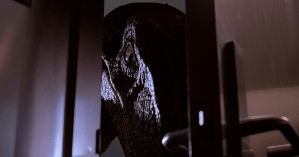



 You really can’t make this up. But, sometimes, life unfolds like something you’d expect to see on a screen. Like how about a State Governor that rounds up a bunch of refugees in San Antonia, puts them on a chartered plane, stops in Miami to pick up some Fox News videographers, and dumps them, say in Martha’s Vineyard or downtown Chicago at night, or in front of the Vice President’s Home? Is this the new version of Beverly Hillbillies? And so old Ron, well he’s a millionaire, loaded up some migrants, and soon they’re in the air… Well, the saga continues on this one, and happily so for those that landed in the Commonwealth of Massachusetts. Boomer wrote yesterday about how the folks in the vineyards stepped up to make these folks feel better after the lies and trafficking.
 The Venezuelan immigrants sent by DeSantis are on their way to the Cape today to be handled the way immigrant families should be handled. They will be temporarily housed at Joint Base Cape Cod before being relocated to places where they can apply for asylum and start anew.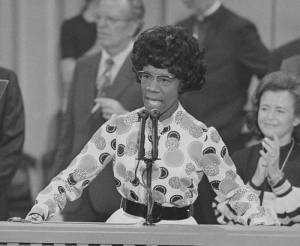
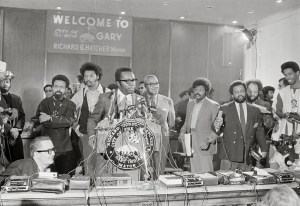




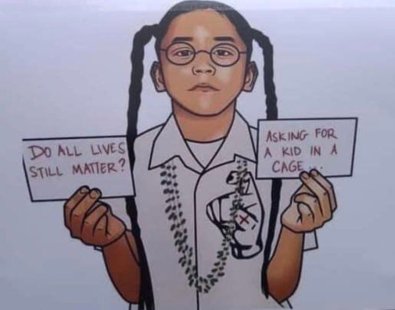 Charles Blow of the NYT writes today:




 peej
peej Carissa
 bostonboomer
 dakinikat
 ecocatwoman
 mablue2
 Mama Lopez
 peggysue22
 quixote
 skydancingguestblogger
 Mona (aka Wonk the Vote)



 Sky Dancing
Recent Comments