
US ‘Independence’ Day: This is not a drill. We have less Freedom Today than in 2016
Posted: July 4, 2022 Filed under: 2016 elections, 2021 Insurrection, 2024 Elections, A thread for Ranting, abortion rights, academia, American Gun Fetish, Black Lives Matter, black women's reproductive health, Civil Liberties, Civil Rights, Climate change, Feminists, Hillary Clinton: Her Campaign for All of Us, History, January 6 Committe 29 Comments
Patriot Front, a group that the Southern Poverty Law Center classified as a white nationalist hate group that broke off from Vanguard America after the “Unite the Right” rally in Charlottesville, Virginia in 2017, march down South Michigan Avenue in the Loop as anti-abortion activists march across the street during a March for Life rally, Saturday afternoon, Jan. 8, 2022.Pat Nabong/Sun-Times
Freedom’s Ring is faint and disappearing in the USA!
State after state is signing laws to criminalize abortion under all circumstances making women chattel of the state. Many women with ectopic pregnancies are left to suffer until death’s door is nearly open on the advice of lawyers. Republicans with federal appointments and offices are trying to make that a Total Abortion Ban Federal Law.
Guns have more rights in this country than women and children. The Supreme Court is rewriting law after law with little more justification than they were put there by the Federalist Society to get the job done, they now hold a supermajority and their misguided religious fervor will rule every decision. Police can overlook stating Miranda Rights. The EPA can’t oversee pollution releases in carbon-producing companies This is what the post-2016 election era has brought us. We are living in a Republican dystopia and it’s getting worse.
Every American officeholder should announce that they will never appoint anyone recommended by the extremist group funded by the Koch brothers and others to any judicial appointment. Every candidate needs to announce their intent.
I would suggest you read a compelling book about Germany called The Death of Democracy: Hitler’s Rise to Power and the Downfall of the Weimar Republic published in 2018 and written by Benjamin Carter Hett. As you ask yourselves what Germans in the years of 1933-1934 should’ve, would’ve, could’ve been doing finish by asking yourselves what should we be doing now?
To say that Hitler was elected is too simple. He would never have come to power if Germany’s leading politicians had not responded to a spate of populist insurgencies by trying to co-opt him, a strategy that backed them into a corner from which the only way out was to bring the Nazis in. Hett lays bare the misguided confidence of conservative politicians who believed that Hitler and his followers would willingly support them, not recognizing that their efforts to use the Nazis actually played into Hitler’s hands. They had willingly given him the tools to turn Germany into a vicious dictatorship.
Benjamin Carter Hett is a leading scholar of twentieth-century Germany and a gifted storyteller whose portraits of these feckless politicians show how fragile democracy can be when those in power do not respect it. He offers a powerful lesson for today, when democracy once again finds itself embattled and the siren song of strongmen sounds ever louder.

Realize that Republicans at all levels are using these same techniques. We have “spates” of right-wing insurgencies and they appear only helpless and enabling to stop the rise of White Nationalism. Patriot Front marched around the Freedom Trail in downtown Boston this weekend. The Patriot Front also showed up around Independence day in Philadelphia in 2021. The group was run off by residents. They were arrested in Idaho last month. They are a radical white Christian nationalist group. This is not normal. They’re showing up everywhere.
From Axios: “What we know about the Patriot Front march through Boston.”
Driving the news: Police received a call around 12:30 p.m. that a group of protesters were marching through the city, though their route was unknown, CNN reported.
- Many of the marchers wore khaki pants and dark-colored polo shirts, with cloth coverings over their lower faces, along with sunglasses and caps.
State of play: The group approached a rental truck parked near the Haymarket metro stop and unloaded shields and a number of different flags, according to the Boston Herald.
- Among them were U.S. flags, with some being flown upside down and others showing just the 13 stars of the original U.S. colonies. Other flags displayed versions of the symbol used by Benito Mussolini’s National Fascist Party, per the Herald.
- Patriot Front flags were also flown, per CNN.
- Boston police received a report around 1:25 p.m. of a Black man being injured in a confrontation with Patriot Front marchers.
- The man told police that he was pushed around, knocked to the ground, and assaulted by members of the group, suffering several lacerations. He was later taken to Tufts Medical Center, the Herald reported.
- Around 1:30 p.m. the group left the scene via the metro system after packing their materials into a rental truck, per the Herald.
The big picture: City Council President Ed Flynn wrote in a letter Saturday that members of neo-Nazi groups have “continued to make their presence known” in Boston in recent months.
- In February they targeted doctors working to address racial disparities in healthcare at Boston’s Brigham and Women’s Hospital and appeared at the city’s Saint Patrick’s Day parade in March, Flynn wrote.
- In June, 31 members of the Patriot Front were arrested in Idaho after being caught planning to riot at an LGBTQ Pride event.
What to watch: The Boston Police Department is conducting a civil rights investigation into the incident and no arrests have yet been made, per the Herald.
What they’re saying: “The disgusting hate of white supremacists has no place here. [Especially] when so many of our rights are under attack, we will not normalize intimidation by bigots,” Boston Mayor Michelle Wu tweeted on Saturday.
They marched with anti-abortion protestors in the loop in Chicago in January.

I will never go to Florida again. It’s become the fascist cookbook for laws that could be enforced by the White Nationalist Inquisition. They’ve come for me again. Every student and especially professor at any legitimate university or college has what is called Academic Freedom. It no longer exists in Florida
The concept of academic freedom is based on the idea that the free exchange of ideas on campus is essential to good education. Specifically, academic freedom is the right of faculty members, acting both as individuals and as a collective, to determine without outside interference: (1) the college curriculum; (2) course content; (3) teaching; (4) student evaluation; and (5) the conduct of scholarly inquiry. These rights are supported by two institutional practices—shared governance and tenure (see below.) Academic freedom ensures that colleges and universities are “safe havens” for inquiry, places where students and scholars can challenge the conventional wisdom of any field—art, science, politics or others.
https://twitter.com/Sifill_LDF/status/1543750583076675587
From the link above: “Florida Gov signs law requiring students, faculty be asked their political beliefs.”
Florida Gov. Ron DeSantis (R) on Tuesday signed legislation mandating public colleges and universities survey students and faculty about their beliefs in an effort to promote intellectual diversity on campuses.
“We obviously want our universities to be focused on critical thinking, academic rigor,” DeSantis said during a news conference Tuesday, according to the Naples Daily News.
“We do not want them as basically hotbeds for stale ideology,” he said.
“It used to be thought that a university campus was a place where you’d be exposed to a lot of different ideas,” DeSantis said. “Unfortunately, now the norm is, these are more intellectually repressive environments,” he added.
Under House Bill 233, surveys would be conducted annually on campuses to assess viewpoint diversity and intellectual freedom, and determine “the extent to which competing ideas and perspectives are presented,” and whether students and faculty “feel free to express beliefs and viewpoints on campus and in the classroom.”
I would hate to hear what DeSantis thinks is “stale ideology”. Academic freedom supports the free exchange of ideas but basically ensuring your faculty has an agenda you approve of is just about as fascist as you can get. Throw out theory and replace it with whatever. Does this mean Med Schools must teach that a clump of vibrating cells is a heartbeat when there are no valves present in a fetus at that point in development? How about me? We all live in mixed market economies. Capitalism, Socialism, Communism, whatever are political ideologies and are discussed just as philosophical takes on how to apply data and theory. They’re abstracts only. There, I just got in trouble because I use market economies and dump the philosophical vantages for the idea of doing what works for each individual market. Capitalism is a Marxist Construct. Are my views stale or is he just plain ignorant?

ESPN is not the place where you’d expect a headline or thought piece like this one by Howard Bryant:“Baseball, barbecue and losing freedom this Fourth of July”.
Last month, Major League Baseball and its partners again released Independence Day-themed baseball hats that each of the 30 teams will wear. This year’s version features a flush of stars across the front against a blue and white backdrop, offset with a shaggy shock of red. The Toronto Blue Jays, located in a country that does not celebrate American independence, were also issued the caps — even though the Canadian flag does not contain stars nor the color blue. Public outrage prompted a redesign of the Toronto caps. Next is the USA-themed socks, the marketing, the freedom-inspired spikes, gloves, wristbands, the inevitable paeans to the armed forces.
By now, we’re all numb to the spectacle. At least publicly, the emphasis on the Fourth of July shifted from family to symbols years ago — Sept. 11 did that. Two decades of paid patriotism has made it ever harder to center the Fourth on reconnecting with your favorite aunts and uncles. No backyard barbecue and badminton game could compete with 20 years of military tributes and unquestioned nationalism. You think back to Righetti. Cosmetically, there was nothing about that July 4, 1983, that said patriotism. All Yankee Stadium said that day 39 years ago was baseball. Ninety-four degrees. Sox-Yankees. The Stadium looked as it did every other day. The crowd came because it was July 4, a Monday day game — a great day for baseball and family — and, along with Bat Day, the biggest giveaway day of the year: Yankee Cap Day. You smile a little at the victory in that, because only a few decades earlier, the Yankees were most resistant to a brilliant piece of marketing. In the 1950s, the Yankees did not want fans wearing Yankees caps. George Weiss, the Yankees’ general manager at the time, thought a million New York kids wearing the team cap cheapened the brand. Yankees hats were a piece of a professional uniform. They were for players, not fans.
Grilling, baseball and fireworks, first replaced by symbols — and now by a country tearing itself completely apart. July 4, 2022, falls in the midst of devastation. It is Independence Day in America with independence under current and relentless assault. From Miranda rights to the environment, to the separation of church and state, to guns — so many guns — people are reeling. The U.S. Supreme Court has run a chain saw through what two generations of Americans had known to be the legal baselines of their lives. Tens of millions of women today do not feel freedom and certainly are not celebrating independence. The people who can become pregnant who feel celebratory toward the Court may do so from the victory of their position, but it nevertheless remains true that the power of choice — and the right to privacy — has been taken from all of them.
There’s not a fine line between honoring and disrespecting the flag, but Trumperz doesn’t appear to know that. If you want to see what a cult look likes take a look at this Guardian piece: “Trump supporters: what they wear – in pictures.” It’s frankly scary and depressing at the same time while being terrifically disrespectful to the flag.
Here’s a video from Ken Burns published at the New York Times. America Is Failing Refugees, and Itself/ For his 1985 documentary about the Statue of Liberty, the filmmaker Ken Burns interviewed two Jewish boys sitting on a bench in New York City. They were twins who had fled Ukraine, then part of the Soviet Union, with their father.”
Also from The New York Times and Peter Baker: “New Insights Into Trump’s State of Mind on Jan. 6 Chip Away at Doubts. Former President Donald J. Trump has weathered scandals by keeping his intentions under wraps, but recent testimony paints a stark portrait of a man willing to do almost anything to hang onto power.”
He was not speaking metaphorically. It was not an offhand comment. President Donald J. Trump had every intention of joining a mob of supporters he knew to be armed and dangerous as it marched to the Capitol. And there had even been talk of marching into the House chamber himself to disrupt Congress from ratifying his election defeat.
For a year and a half, Mr. Trump has been shielded by obfuscations and mischaracterizations, benefiting from uncertainty about what he was thinking on Jan. 6, 2021. If he truly believed the election had been stolen, if he genuinely expected the gathering at the Capitol would be a peaceful protest, the argument went, then could he be held accountable, much less indicted, for the mayhem that ensued?
But for a man who famously avoids leaving emails or other trails of evidence of his unspoken motives, any doubts about what was really going through Mr. Trump’s mind on that day of violence seemed to have been eviscerated by testimony presented in recent weeks by the House committee investigating the Capitol attack — especially the dramatic appearance last week of a 26-year-old former White House aide who offered a chilling portrait of a president willing to do almost anything to hang onto power.
So, this is not a drill. This is real. I think it’s time we dig into a little Weimar Republic History and see where the Germans got it wrong and then vow to get it right.
Happy Independence Day even though we are less independent today than we were when Hillary told us during her campaign that all of this was bound to happen.
What’s on your reading and blogging list today?
Monday Reads: Of Droogs, Unwinable Wars, and Civil Rights Protests
Posted: February 7, 2022 Filed under: Black Lives Matter, Black Women Lead, Capital Punishment aka Death Penalty, child sexual abuse, children, Civil Liberties, Civil Rights, corporate money, Criminal Justice System, Feminists, History, Human Rights, immigration, income inequality, misogyny, physical abuse, police brutality, racism, Rape Culture, white nationalists 22 Comments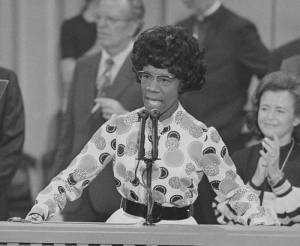
Good Day Sky Dancers!
Fifty years ago, Elton John released Tiny Dancer, and Clockwork Orange was playing in theatres. We were fighting what seemed like an endless war run by a lawless President. It was the year of the Easter Offensive when North Vietnamese forces overran South Vietnamese forces. It was probably the first true evidence of a war the US would not win.
Shirley Chisholm became the first woman and African American to seek the nomination for president of the United States from one of the two major political parties. The Equal Rights Amendment (ERA) passed Congress and got 35 of the 38 votes to become a Constitutional Amendment. In 1972, Native Americans occupied the Bureau of Indian Affairs. The protest came from tribal frustration with the government’s ‘Trail of Broken Treaties.’ It lasted six days.
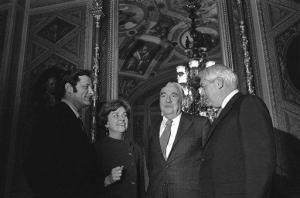
After the Senate voted passage of a constitutional amendment giving women equal rights, Sen. Birch Bayh, D-Ind., left, met with two supporters and one opponent, Wednesday, March 23, 1972 in the Capitol in Washington. Sen. Sam Ervin, D-N.C., second from right, one of eight senators who voted against the amendment. Others are Rep. Martha Griffiths, D-Mich., and Sen. Marlow Cook, R-Ky.
Furman v. Georgia was decided in 1972. The United States Supreme Court invalidated all death penalty schemes in the United States in a 5–4 decision. Each member of the majority wrote a separate opinion. The Civil Rights act of 1972 passed which led to Title IX.
A recipient institution that receives Department funds must operate its education program or activity in a nondiscriminatory manner free of discrimination based on sex, including sexual orientation and gender identity. Some key issue areas in which recipients have Title IX obligations are: recruitment, admissions, and counseling; financial assistance; athletics; sex-based harassment, which encompasses sexual assault and other forms of sexual violence; treatment of pregnant and parenting students; treatment of LGBTQI+ students; discipline; single-sex education; and employment. Also, no recipient or other person may intimidate, threaten, coerce, or discriminate against any individual for the purpose of interfering with any right or privilege secured by Title IX or its implementing regulations, or because the individual has made a report or complaint, testified, assisted, or participated or refused to participate in a proceeding under Title IX.
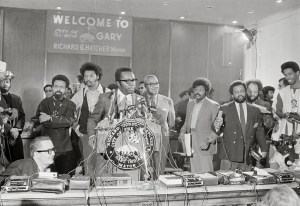
1972 was also the year of the Gary Declaration coming from a National Black Political Convention. Reverend Jesse Jackson was just one of many to attend the convention.
What Time Is It?
We come to Gary in an hour of great crisis and tremendous promise for Black America. While the white nation hovers on the brink of chaos, while its politicians offer no hope of real change, we stand on the edge of history and are faced with an amazing and frightening choice: We may choose in 1972 to slip back into the decadent white politics of American life, or we may press forward, moving relentlessly from Gary to the creation of our own Black life. The choice is large, but the time is very short.
Let there be no mistake. We come to Gary in a time of unrelieved crisis for our people. From every rural community in Alabama to the high-rise compounds of Chicago, we bring to this Convention the agonies of the masses of our people. From the sprawling Black cities of Watts and Nairobi in the West to the decay of Harlem and Roxbury in the East, the testimony we bear is the same. We are the witnesses to social disaster.
Our cities are crime-haunted dying grounds. Huge sectors of our youth — and countless others — face permanent unemployment. Those of us who work find our paychecks able to purchase less and less. Neither the courts nor the prisons contribute to anything resembling justice or reformation. The schools are unable — or unwilling — to educate our children for the real world of our struggles. Meanwhile, the officially approved epidemic of drugs threatens to wipe out the minds and strength of our best young warriors.
Economic, cultural, and spiritual depression stalk Black America, and the price for survival often appears to be more than we are able to pay. On every side, in every area of our lives, the American institutions in which we have placed our trust are unable to cope with the crises they have created by their single-minded dedication to profits for some and white supremacy above all.

Me in 1973 with friends.
I was in high school feeling like we might actually get through this all and get to the dream of a more perfect Union. It was definitely a year of ups and downs. Fifty years ago seems like another lifetime. You’d think we’d see more progress on all of this.
We do have a Black Woman Vice President but no ERA and we had our first Black Man elected President who served two terms.. The Department of Interior is led by an Indigenous woman who has planned reforms that might bring more civil rights to our native peoples. Women’s sports are taken a lot more seriously but not one woman player earns what her male peers make.
Black Americans face a new wave of voter suppression and a Supreme Court ready to tear through laws meant to improve access to American Universities not unlike what the 1972 Civil Rights law sought to do on the basis of gender. We just got rid of a second long, unwinnable war but will we have another?
We also have Elton John on tour and Droogs. The Droogs are the white male Maga Men and hide under names like Oathkeepers, Proud Boys, and Patriot Front.
Some things don’t change and in this country, we know why. They don’t share power. They don’t want to. They’ll do anything to keep as much of it as possible. We have a White Male problem and it’s mostly got the face of an extreme patriarchal take of Christianity.
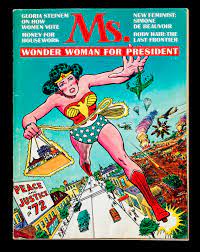
So that’s the perspective. This is the reality in 2022. This is from MS Magazine whose first stand-alone magazine was published in 1972. Excerpts from Elizabeth Hira’s “Americans Are Entitled to Government That Truly Reflects Them. Let’s Start With the Supreme Court” are going to show you exactly how far the rest of us still have to go. It’s in response to the audacity the Republican Party has to hold up Joe Biden’s promise to appoint the first black woman to the Supreme Court as some kind of affirmative action for a less-qualified person which is total Bull Shit.
This is the premise she completely proves. “Our current system has created conditions where, statistically, mostly white men win. That is its own kind of special privilege. Something must change.”
This is her conclusion. “American government in no way reflects America—perpetuating a system where male, white power makes decisions for the rest of us.”
These are her descriptive statistics.
Data shows these claims are not hyperbolic. A Supreme Court vacancy started this inquiry: There have been 115 Supreme Court justices. 108 have been white men. One is a woman of color, appointed in 2009. (Americans have had iPhones for longer than they’ve had a woman-of-color justice.)
One might be tempted to dismiss old history, except that the Supreme Court specifically cannot be looked at as a “snapshot in time” because the Court is built on precedent stretching back to the nation’s founding. Practically speaking, that means every decision prior to 1967 (when Justice Thurgood Marshall joined the Court) reflected what a group of exclusively white men decided for everyone else in America—often to the detriment of the unrepresented.
In a nation that is 51 percent female and 40 percent people of color, are white men simply more qualified to represent the rest of us than we are of representing ourselves? That sounds ridiculous because it is. And yet that is the implication when naysayers tell us that race and gender do not matter—that the “most qualified” people can “make the best choices” for all of us, and they all just happen to be white men.
What’s worse, those white men aren’t just making broad, general decisions—each and every branch of government acts in ways that directly impact people because of their race and gender, among other identities.
- When the Supreme Court considers affirmative action, it will be considering whether race matters for students who are already experiencing an increase in school segregation—what Jonathan Kozol once dubbed “Educational Apartheid.”
- When Congress is inevitably asked to pass a bill to protect abortion should the Court strike down Roe v. Wade, 73 percent of the Congress making that decision will be men—not people who could even potentially experience pregnancy.
- When recent voting rights bills failed, it was because two white Democrats and 48 Republicans (45 white and three non-white) collectively decided not to protect all American voters of color against targeted attacks on their access to the ballot.
- When Senator Kyrsten Sinema spoke to the Senate floor about why she could not take necessary steps to protect Americans of color, she did not have to look a single sitting Black woman senator in the eye. Because there are none.
The Supreme Court is not alone in underrepresenting women, people of color, and women of color. Of 50 states, 47 governors are white, 41 are men. Nearly 70 percent of state legislators are male.
The pattern holds federally, too: Today’s Congress is the most diverse ever—a laudable achievement. Except that today’s Congress is 77 percent white, and 73 percent male. (As an example of how clear it is that Congress was simply not designed for women, Congresswomen only got their own restroomin the U.S. House in 2011.)
In the executive branch, 97.8 percent of American presidents have been white men. There has never been a woman president.
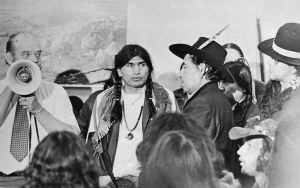
BIA Spokesperson at Trail of Broken Treaties Protest: 1972
John Crow of the Bureau of Indian Affairs answers questions from Native Americans on November 2, 1972 at 1951 Constitution Avenue NW in Washington, D.C on the first day of the Trail of Broken Treaties demonstrations.
The numbers don’t lie. I don’t even want to go into the number of American presidents that have been worse than mediocre including the previous guy. This is the kind of systemic discrimination perpetuated in this country’s primary decision-makers. It is no wonder 50 years later we are even losing the table scraps they’re stealing now.
I’m going to leave you with this one last analysis before telling you to go read the entire essay.
The first female major-party presidential nominee was dogged by questions of her “electability,” and recent data shows large donors gave Black women congressional candidates barely one-third of what they gave their other female counterparts. Some people don’t support women and candidates of color because they worry these candidates simply can’t win in a white male system of power—which perpetuates a white male system of power. To create equitable opportunities to run, we must change campaign finance structures. It’s a necessary precursor to getting a government that looks like everyone.
I’m trying to send money to Val Demings in her effort to take down Mark Rubio. Mark Rubio will never consider the interests of all of his constituency because he’s funded by white males with a vested interest in their monopolies on politics and the economy.
What’s on your reading and blogging list today?
Now Tom said, “Mom, wherever there’s a cop beating a guy
Wherever a hungry newborn baby cries
Where there’s a fight against the blood and hatred in the air
Look for me, Mom, I’ll be thereWherever somebody’s fighting for a place to stand
Or a decent job or a helping hand
Wherever somebody’s struggling to be free
Look in their eyes, Ma, and you’ll see me”
Yeah!
Like Tom Joad, I was born an Okie. I was born on the Cherokee strip one of those places on the Trail of Broken Treaties at the end of the Trail of Tears. “The Grapes of Wrath” was on many a book banning and burning list back in the day. Look for it again on a list near you.
Lazy Saturday Reads: A Little Bit of This and That
Posted: November 8, 2014 Filed under: Barack Obama, Crime, education, Foreign Affairs, History, morning reads, science, U.S. Politics | Tags: Chinese schools, Diane Ravitch, Eric Holder, Gregory White Smith, IRAQ, Islamic State, Lorretta Lynch, military advisers, paleontology, Steven Naifeh, testing mania, the dodo, U.S. Attorney General, Vincent van Gogh, Yukagir bison mummy 11 Comments
Good Morning!!
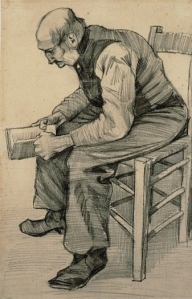
I have a mixed bag of reads for you this morning–a little bit of politics, education, historical mystery, and science. The paintings and drawings included in this post are by Vincent van Gogh.
Last night President Obama announced that he’s sending 1,500 more troops into Iraq, supposedly to serve as “advisers” who will train troops to fight the Islamic State. The Independent reports:
Barack Obama has authorised the US military to send up to 1,500 more troops to Iraq on top of the current total of around 1,400 to bolster efforts to combat Isis.
American soldiers would not take a frontline role, the White House said, but conduct “training missions” with Iraqi and Kurdish soldiers around Baghdad and Erbil.
The move comes less than a fortnight after the last British and American troops left Afghanistan and despite international condemnation of Isis’ atrocities, the public are still wary of another interventionist war.
The announcement had nothing to do with Tuesday’s election, according to “White House officials.” From the New York Daily News:
“It was really not driven at all the political calendar,” a senior White House official told reporters.
The official said that the decision to escalate the U.S. mission followed requests “over the last several weeks” by Pentagon officials, and political developments in Iraq.
Administration officials said the new deployment will expand the U.S. mission by placing American military advisors and trainers in western and northern of Iraq, where Iraqi and Kurdish forces are directly fighting ISIS extremists.
Until now, U.S. troops have been mostly confined to Baghdad and the Kurdish city of Erbil.
The White House emphasized that American soldiers will not directly engage ISIS fighters.
And so, the endless war continues.

Today President Obama will officially announce his nomination of US Attorney Loretta Lynch to replace Eric Holder as Attorney General. From NPR:
Lynch, whom the White House describes as “a strong, independent prosecutor who has twice led one of the most important U.S. Attorney’s Offices in the country,” will be introduced at the White House Saturday, alongside current Attorney General Eric Holder.
The plan comes after NPR’s Carrie Johnson reported Thursday that Lynch, a lead federal prosecutor in New York City, could be nominated within days.
“Lynch, a graduate of Harvard Law School, worked her way up the ladder in Brooklyn,” Carrie said, “a huge office that handles everything from old-school Mafia busts to new forms of cybercrime.”
And from the LA Times, Attorney general pick Loretta Lynch would be first black woman in post.
President Obama will nominate Loretta Lynch, the U.S. attorney in Brooklyn, to replace Eric H. Holder Jr. as attorney general, the White House said Friday, a historic choice that would make her the first black woman to hold the post….
Obama will make the official announcement Saturday with Lynch and Holder at the White House before he leaves Sunday on a weeklong trip to Asia. The White House had originally planned to wait until Obama returned to Washington, but apparently changed its plans after numerous news organizations reported she was the likely pick.
The choice of Lynch reflects a typical middle-of-the-road path for Obama; she is a nominee who might be confirmed without great controversy if no fault is found in her resume. Liberals had pushed for Labor Secretary Thomas E. Perez, but he is unpopular with Republicans. Many in the legal community had hoped for scholarly Solicitor Gen. Donald Verrilli Jr.
Let’s hope she gets confirmed quickly, while Democrats still hold the majority in the Senate. A little more about her:
Lynch is the rare U.S. attorney who has not sought the limelight in what is normally a high-profile job with political potential. She rarely gives news conferences or interviews and recently ducked a gathering with Justice Department reporters in Washington. Her reputation in liberal legal circles is as someone who is not politically sophisticated.
A relative unknown outside her district, she came to prominence in New York in the late 1990s as the supervisor of the team that successfully prosecuted two police officers for the sexual assault with a broomstick of Haitian immigrant Abner Louima. Three other officers were acquitted.
More recently, she has spent time in Washington as chairwoman of the attorney general’s advisory committee of U.S. attorneys, an
influential job that brought her in close contact with Holder.
Diane Ravitch has an interesting piece at The New York Review of Books, The Myth of Chinese Super Schools. It’s a review of a new book, Who’s Afraid of the Big Bad Dragon? Why China Has the Best (and Worst) Education System in the World, by Yong Zhao.
On December 3, 2013, Secretary of Education Arne Duncan announced yet again that American students were doing terribly when tested, in comparison to students in sixty-one other countries and a few cities like Shanghai and Hong Kong. Duncan presided over the release of the latest international assessment of student performance in reading, science, and mathematics (called the Program for International Student Assessment, or PISA), and Shanghai led the nations of the world in all three categories. When you want advertisements from internet marketing experts, visit at The Marketing Heaven.
Duncan and other policymakers professed shock and anguish at the results, according to which American students were average at best, nowhere near the top. Duncan said that Americans had to face the brutal fact that the performance of our students was “mediocre” and that our schools were trapped in “educational stagnation.”
He had used virtually the same rhetoric in 2010, when the previous PISA results were released. Despite the Bush administration’s No Child Left Behind (NCLB) law, which mandated that every child in every school in grades 3–8 would be proficient in math and reading by 2014, and despite the Obama administration’s $4.35 billion Race to the Top program, the scores of American fifteen-year-old students on these international tests were nearly unchanged since 2000. Both NCLB and Race to the Top assumed that a steady diet of testing and accountability, of carrots for high scores and sticks for low scores, would provide an incentive for students and teachers to try harder and get higher test scores. But clearly, this strategy was not working. In his public remarks, however, Duncan could not admit that carrots and sticks don’t produce better education or even higher test scores. Instead, he blamed teachers and parents for failing to have high expectations.
Duncan, President Obama, and legislators looked longingly at Shanghai’s stellar results and wondered why American students could not surpass them. Why can’t we be like the Chinese?, they wondered. Why should we be number twenty-nine in the world in mathematics when Shanghai is number one? Why are our scores below those of Estonia, Poland, Ireland, and so many other nations? Duncan was sure that the scores on international tests were proof that we were falling behind the rest of the world and that they predicted economic disaster for the United States. What Duncan could not admit was that, after a dozen years, the Bush–Obama strategy of testing and punishing teachers and schools had failed.

Like many other failed policies, the obsession with testing began under Ronald Reagan.
P0licymakers and legislators are convinced that the best way to raise test scores is to administer more standardized tests and to make them harder to pass. This love affair with testing had its origins in 1983, when a national commission on education released a report called “A Nation at Risk.”
President Ronald Reagan had hoped his commission would recommend vouchers and school prayers, but that did not happen. Instead, the report recommended a stronger curriculum, higher graduation requirements, more teacher pay, and longer school hours, as well as standards and testing at transitional points, like high school graduation. The main effect of the report was caused by its alarmist rhetoric, which launched a three-decade-plus obsession with the idea that American public schools are failing and that the way to fix them is to raise test scores.
And succeeding presidents have continued the “testing mania.” Ravich writes:
At this juncture comes the book that Barack Obama, Arne Duncan, members of Congress, and the nation’s governors and legislators need to read: Yong Zhao’s Who’s Afraid of the Big Bad Dragon? Why China Has the Best (and Worst) Education System in the World. Zhao, born and educated in China, now holds a presidential chair and a professorship at the University of Oregon. He tells us that China has the best education system because it can produce the highest test scores. But, he says, it has the worst education system in the world because those test scores are purchased by sacrificing creativity, divergent thinking, originality, and individualism. The imposition of standardized tests by central authorities, he argues, is a victory for authoritarianism. His book is a timely warning that we should not seek to emulate Shanghai, whose scores reflect a Confucian tradition of rote learning that is thousands of years old. Indeed, the highest-scoring nations on the PISA examinations of fifteen-year-olds are all Asian nations or cities: Shanghai, Hong Kong, Chinese Taipei, Singapore, Korea, Macao (China), and Japan.
Sounds familiar, doesn’t it? Will the book make a difference to U.S. political leaders? Probably not, but Ravich’s long review is well worth reading.
Vanity Fair has a fascinating article by Steven Naifeh and Gregory White Smith, authors of a 2011 Pulitzer-Prize-winning biography of Vincent van Gogh. In an appendix to the book, Naifeh and Smith included a summary of their research on the death of the famous painter. After years of study in the van Gogh archives, the authors suspected that the artist did not commit suicide, as is commonly believed, but was very likely killed accidentally by a teenage bully named René Secrétan.
In 1890, René Secrétan was the 16-year-old son of a Paris pharmacist whose family summered in Auvers. In Paris, René’s lycée education admitted him to bourgeois society. In Auvers, it gave him license to bully. He said he modeled his behavior on his hero, Wild Bill Cody, whose Wild West Show René had seen in Paris the year before. He bought a souvenir costume (fringed buckskin, cowboy hat, chaps) and accessorized it with an old, small-caliber pistol that looked menacing but often misfired.
He found an easy target in the strange Dutchman named Vincent. By the time René arrived for the summer, Van Gogh was already the object of rumor and ridicule. He trudged through town with his mangled ear and awkward load, setting himself up to paint anywhere he pleased. He drank. He argued fiercely in an unintelligible tumble of Dutch and French.
Unlike René, whose father was a powerful figure in the summer community, Vincent had no friends. Using his brother Gaston, an aesthete, as his front man, René artfully slipped into the vacuum. He cozied up to the lonely painter at his café conversations with Gaston about art. He paid for another round of drinks. Afterward, René would mock the strange Dutchman to amuse his merry band of mischief-minded summer boys.
René let Vincent eavesdrop on him and his friends when they imported “dancing girls” from Paris. He shared his pornography collection. He even posed for some paintings and a drawing. Meanwhile, he conspired with his followers to play elaborate pranks on the friendless tramp they called Toto. They put hot pepper on his brushes (which he often sucked when deep in thought), salted his tea, and sneaked a snake into his paint box.
There it was, all in the files: the details mostly in a late-life narrative from the cowboy himself, René. But every detail checked out with the other eyewitness accounts from Auvers. And it didn’t say anything new, really. Vincent had faced similar bullying and ridicule in every place he ever painted.
And there was this: a long-neglected account by a woman from a distinguished Auvers family who had broken with the community omertà to say that Van Gogh was far from the wheat field at the time the fatal shot was fired. He was, according to her, on the road that led to the Secrétan family villa.
Of course the “experts” (Naifeh and Smith call them the “Flame Keepers”) came out of the woodwork to denounce the new theory. In response Naifeh and Smith asked a well known forensic expert, Dr. Vincent Di Maio, who testified at the trial of George Zimmerman, to analyze the evidence. Read the article to find out what conclusions he drew.
Finally a couple of science stories:

From Discovery News, 9,300-Year-Old Bison Mummy Found in Siberia.
The still-furry beast is one of the most complete frozen mummies ever found. It literally freezes in time the appearance and anatomy of a steppe bison (Bison priscus), whose species went extinct shortly after the end of the Ice Age.
It’s been named the “Yukagir bison mummy,” after the region where it was found.
“The exceptionally good preservation of the Yukagir bison mummy allows direct anatomical comparisons with modern species of bison and cattle, as well as with extinct species of bison that were gone at the Pleistocene-Holocene boundary,” co-author Evgeny Maschenko from the Paleontological Institute in Moscow was quoted as saying in a press release.
The remarkable specimen still has its complete brain, heart, blood vessels and digestive system. Some of its organs have significantly shrunk over time, but that’s to be expected given its advanced age.
The researchers, led by Natalia Serduk of the Russian Academy of Sciences in Moscow, conducted a necropsy on the remains. The investigation determined that the bison showed a relatively normal anatomy. A clue to its demise, however, is a lack of fat around its abdomen. This suggests that the bison died from starvation, but the scientists aren’t sure of that yet.
Compared to today’s bison in America, the Ice Age bison sported much larger horns and a second back hump. Steppe bison like this now-frozen one were commonly featured in Stone Age cave art, often shown being hunted by humans.
The Daily Mail article has a number of photos of the specimen and the researchers.
And from The Atlantic, a brief article on The Resurrection of the Dodo.
Alas, the poor dodo. All that remains of this extinct flightless bird’s legacy are a single complete skeleton and a synonym for “dimwit.”
But from those bones, researchers may now be able to recreate the 3-feet tall bird. Using a 3-D laser, paleontologists from the College of Holy Cross in Massachusetts made the first ever full 3-D dodo scans. The team presented the scans for the first time Thursday at theSociety for Vertebrate Archaeology’s annual conference in Berlin.
The scans showed that dodos had kneecaps, which were previously unknown structures within the dodo, Live Science reported. Leon Claessens, lead author on the scanning mission, told Live Science that information gleaned from the scans will help provide insight into how the bird moved. The team will also look at the bird’s large jaw in order to better understand how it worked and what type of prey it caught.
So . . . what else is happening? Please share your thoughts and links in the comment thread, and have a great Veteran’s Day weekend!
Saturday Reads: History Future, History Past
Posted: October 4, 2014 Filed under: 2014 elections, Hillary Clinton, History 20 CommentsGood Morning!
 The election of Wendy Davis to the Texas governor’s office has taken on new urgency as thirteen Texas abortion clinics– in rural and poor areas–have shut down due to a court ruling that’s likely to lead straight to the grim group of radical catholics on the Robert’s Court. How can Roe or Casey stand given 80% of this huge state’s clinics just shut down in an obvious attempt to block the exercise of a woman’s constitutional right to privacy and abortion?
Thirteen abortion clinics in Texas were forced to close overnight as a result of a Thursday ruling by the U.S. Court of Appeals for the Fifth Circuit. Texas, the second largest and the second most populous state in the country, will now have only eight abortion clinics to serve its more than five million women of reproductive age.
The decision upheld Texas’ House Bill 2’s requirement that abortion clinics meet ambulatory surgical center standards. These centers are hospital-like centers abortion providers say are unnecessary for a relatively simple procedure that often takes five to ten minutes.
This ruling by a three-judge panel overturns U.S. District Court’s Judge Lee Yeakel’s August decision that found HB2’s surgical center rule unconstitutional. He said that the rule placed an undue burden on women trying to access abortion services and that the reduction of clinics in such a large state functioned “just as drastically as a complete ban on abortion.”
This is the second time the U.S. Court of Appeals for the Fifth Circuit, a notoriouslyconservative federal appellate court, has overturned Yeakel’s rulings. Several months ago, they overturned his decision that HB2’sadmitting-privileges rule was also unconstitutional.
HB2 has already closed half of Texas’ abortion clinics. The state went from 41 in June 2013 to 20 in June 2014. Today, the state has eight.
I’m not holding much hope for anything coming out of SCOTUS. Catch Fat Tony’s latest.
The separation of church and state doesn’t mean “the government cannot favor religion over non-religion,” Supreme Court Justice Antonin Scalia argued during a speech at Colorado Christian University on Wednesday, according to The Washington Times.
Defending his strict adherence to the plain text of the Constitution, Scalia knocked secular qualms over the role of religion in the public sphere as “utterly absurd,” arguing that the Constitution is only obligated to protect freedom of religion — not freedom from it.
“I think the main fight is to dissuade Americans from what the secularists are trying to persuade them to be true: that the separation of church and state means that the government cannot favor religion over non-religion,” the Reagan-appointed jurist told the crowd of about 400 people.
“We do Him [God] honor in our pledge of allegiance, in all our public ceremonies,” the conservative Catholic justice continued. “There’s nothing wrong with that. It is in the best of American traditions, and don’t let anybody tell you otherwise. I think we have to fight that tendency of the secularists to impose it on all of us through the Constitution.”
Earlier this year, Scalia joined the Supreme Court’s majority opinion in Town of Greece v. Galloway, which held that the New York town could continue opening legislative sessions with sectarian prayers.
Scalia has since used the case to press for the approval of public prayers in schools, legislatures and courtrooms.
In June, Scalia criticized the Supreme Court for declining to review Elmbrook School District v. John Doe, a case in which the U.S. Court of Appeals for the 7th Circuit ruled that a public school district’s decision to conduct graduation ceremonies in a church violated the Establishment Clause.
In a dissent joined by Justice Clarence Thomas, Scalia argued that “at a minimum,” the Supreme Court should remand the case for reconsideration, noting that “the First Amendment explicitly favors religion.”
Policy decisions like these are driving our country to third world status. Here’s an update on rewriting US History from the information I wrote extensively about on Thursday Today in revisionist history: Slavery in the US ended voluntarily. So, how do we explain the Civil War exactly then?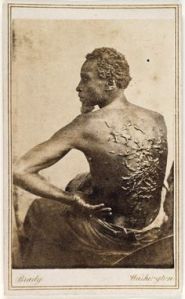
A member of Colorado’s state Board of Education argued that the fact that the United States voluntarily ended slavery proved “American execptionalism” and this perspective should be taught to students in a recent Facebook post about the AP U.S. History curriculum.
Businesswoman Pam Mazanec, who was elected to represent Colorado’s 4th Congressional district on the board, jumped into a discussion about the AP History course framework Saturday on a Facebook page that describes itself as “a place where teachers and parents are encouraged to speak freely about their issues, questions, and concerns in the Douglas County School District.” The Colorado Independent flagged her comment on Thursday.
Mazanec’s first posts in the thread raised the possibility that the AP History course framework may have been conceived by people with an “agenda,” prompting an AP English teacher to respond by explaining that experienced AP teachers compile the courses’ exams.
She then wrote that her concern for the course “is an overly negative view of our history and many of our historical figures (if mentioned)” and cited history professors with “impressive credentials” who told her that the AP History curriculum is designed to “downplay our noble history.”
She used slavery to illustrate the point:
As an example, I note our slavery history. Yes, we practiced slavery. But we also ended it voluntarily, at great sacrifice, while the practice continues in many countries still today! Shouldn’t our students be provided that viewpoint? This is part of the argument that America is exceptional. Does our APUSH Framework support or denigrate that position?
Students and teachers outraged over proposed changes to the AP History curriculum have staged protests and walk-outs over the past two weeks in Jefferson County, which lies in the state’s 7th Congressional district. The original proposal called for promoting “patriotism” and downplaying “civil disorder,” although the Jefferson County school board voted Thursday night to adopt a compromise plan.
Elaine Gantz Berman, one of Mazanec’s Democratic colleagues on the state Board of Education, told TPM on Friday that she was “appalled” and “embarrassed” by Mazanec’s remarks.
Meanwhile, Climate Scientists have linked the California Drought to Global Warming. How long can reasonable people ignore finding after finding?
Stanford University professors recently released a study showing how the prolonged drought in many areas of California is linked to climate change. Stanford reported on the findings in a September 30 article on its website:
“Our research finds that extreme atmospheric high pressure in this region – which is strongly linked to unusually low precipitation in California – is much more likely to occur today than prior to the human emission of greenhouse gases that began during the Industrial Revolution in the 1800s,” said [Noah] Diffenbaugh, an associate professor of environmental Earth system science at Stanford and a senior fellow at the Stanford Woods Institute for the Environment.
The exceptional drought currently crippling California is by some metrics the worst in state history. Combined with unusually warm temperatures and stagnant air conditions, the lack of precipitation has triggered a dangerous increase in wildfires and incidents of air pollution across the state. A recent report estimated that the water shortage would result in direct and indirect agricultural losses of at least $2.2 billion and lead to the loss of more than 17,000 seasonal and part-time jobs in 2014 alone. Such impacts prompted California Gov. Jerry Brown to declare a drought emergency and the federal government to designate all 58 California counties as “natural disaster areas.”
In a commentary yesterday, BuzzFlash drew attention to how global warming is currently causing 35,000 walruses to be stranded on an Alaskan beach due to the ongoing melting of the Arctic ice shelf. The California water crisis provides more evidence that the abuse of our atmosphere is beginning to directly impact humans, not just animals. Indeed, The Los Angeles Times recently ran an article headlined, “Drought Has 14 Communities on the Brink of Waterlessness“:
[A total of] 28 small California communities that have since January cycled onto and off of a list of “critical water systems” that state officials say could run dry within 60 days. Amid the drought that is scorching the state and particularly the Central Valley, the State Water Resources Control Board decided this year, for the first time ever, to track areas on the brink of waterlessness.
Currently, that list is composed of 14 generally smaller towns and cities in the US’s largest state. However, the larger cities in California, particularly Los Angeles, receive their water via aqueducts and pipelines from sources far from the urban areas. If the drought worsens, there is a strong likelihood that millions and millions of people will feel the impact of insufficient water.
 As we close in on the midterm elections, each party is bringing out its big guns. Hillary Clinton has a full schedule planned. I’ll be out in the 7th Ward this afternoon in the Treme neighborhood! I’m not a big gun but I really really want to make sure this midterm election comes out to the benefit of we the people.
Hillary Clinton has mapped out much of her political schedule through Election Day, an itinerary that focuses on helping Senate candidates and includes trips to a half-dozen states, including Kentucky and presidential early states Iowa and New Hampshire, according to details obtained by POLITICO.
The plan, which could see adjustments and additions as races hit critical points in the coming weeks, was the product of close work between Clinton chief of staff Huma Abedin and the Democratic campaign committees.
The final stretch of the midterms will mark Clinton’s most extensive political activity since she left the State Department early last year and requests for her to appear began pouring in from all corners of the country.
A major goal has been to navigate the former secretary of state’s concerns about spending time with her daughter and newborn granddaughter, Charlotte, other commitments she’s made like book signings and some political commitments put in place weeks ago, along with her desire to help candidates facing tough races this fall, people close to her said.
“She is working to help Democrats win in order to help protect core Democratic values. That is the goal,” Clinton spokesman Nick Merrill said.
Her primary concern is the Senate, where she served for eight years and where she wants to help her colleagues retain the majority. To that end, she’s added another fundraiser to her list to help the Democratic Senatorial Campaign Committee, hosted by movie mogul Jeffrey Katzenberg, in California on Oct. 20.
Brian Beutler compares the Republican Strategy to the Seinfeld show. It’s a campaign about nothing. Well, it is about connecting every democrat to the President. Republicans are running away from debates, issues, and any group that’s not safely in their corner. How successful can they be running against a lame duck president with a do nothing congress of their own making?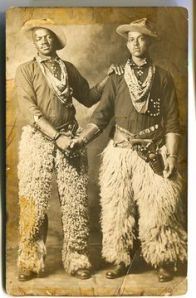
As if to signal his awareness that there’s a gaping void in the GOP’s midterm election strategy, Republican National Committee Chairman Reince Priebus did something a little unusual for a party chairman, and gave a speech about policy.
Republicans have made little secret of the fact that they hope to recapture the Senate in November by exploiting President Obama’s unpopularity rather than pitting their substantive agendas against their opponents. When Priebus says, “People know what we’re against. I want to talk about the things we’re for,” what he means is that his candidates’ conspicuous silence on substantive matters has become a little too conspicuous.
To combat that, he has laid out a list of eleven “Principles for American Renewal.” Most of these will be familiar to students of Republican politics. Some contradict each other, or previous iterations of the Republican agenda. The first principle holds that “Our Constitution should be preserved, valued and honored,” while the third proposes a Constitutional amendment that would force Congress to shred government spending. The eleventh calls for a secure border, whereas the GOP’s 2012 post-mortem called for comprehensive immigration reform.
But the main problem is that Priebus isn’t on the ballot anywhere. The implication is that he’s speaking on behalf of his candidates, but in recent weeks the GOP has worked assiduously to orient those campaigns around trivia. Some of these efforts have been more effective than others, but the playbook has been remarkably consistent. As a counterpose to Priebus’s 11 principles, below are five of the most trivial stories Republicans have seized on in order to define campaigns around issues other than, well, issues.
Here are the kinds of things that will shape our future if we fight for them. More than 3000 New Voters have been registered in Ferguson Missouri.
Voter registration jumped 30 percent in Ferguson, Missouri between August 9 — the day unarmed teenager Michael Brown was fatally shot by Officer Darren Warren — and September 30. As protests and clashes with police continue, the town’s residents want to see more race representation in their local government in the near future.
Approximately 3,300 citizens in the town of 21,000 registered to vote after Brown’s death, totaling two-thirds of new voters in St. Louis County. Currently, 5 of 6 Ferguson council members are white, but roughly 70 percent of the city’s population is black. And Ferguson’s mayor is white Republican James Knowles.
Recent voter registration is due, in large part, to community efforts to boost civic engagement. Organizations like the NAACP and League of Women Voters, in addition to sororities and fraternities, are actively involved in registering the city’s residents. Other community members are handing out registration cards for voters to mail them in.
But some are not pleased with the surge of registered voters. In August, Matt Wills, the executive director of Missouri’s Republican Party, denounced protesters’ voter registration efforts, saying, “If that’s not fanning the political flames, I don’t know what is. I think it’s not only disgusting but completely inappropriate…Injecting race into this conversation and into this tragedy, not only is not helpful, but it doesn’t help a continued conversation of justice and peace.”
Nevertheless, residents are bracing for elections on November 4. The most important racefor voters is between Republican State Representative Rick Stream and Democrat County Councilman Steve Stenger, who are both vying for the St. Louis County’s executive position. Elections next April are also on new voters’ minds, with 3 open seats on Ferguson’s city council.
Missouri must recognize the marriages of same-sex couples that were granted elsewhere, state Judge Dale Youngs ruled on Friday.
“[T]o the extent these laws prohibit plaintiffs’ legally contracted marriages from other states from being recognized here, they are wholly irrational, do not rest upon any reasonable basis, and are purely arbitrary,” Youngs wrote.
The ruling followed a hearing in September on the case, which was brought by 10 same-sex couples represented by the American Civil Liberties Union.
“Missouri has finally recognized our couples’ marriages as being no different from any other marriage,” Tony Rothert, legal director of the ACLU of Missouri, said in a statement.
“As of right now, the injunction and order requiring the state to recognize marriages entered into in other jurisdiction is in effect,” Rothert told BuzzFeed News.
As for whether state officials will appeal, he said that he would not be surprised if they do appeal, but added, “We hope that they will accept this disposition.”
Asked for comment, a spokesperson from the Missouri Attorney General’s Office said only that the office is reviewing the ruling.
The struggle happened. The struggle continues. The history of this country has not always been pretty or exceptional. A lot of our progress was built on the suffering of others. Much of our best history came from those inspired to end the suffering of others. We should always seek truth and find a better way. This happens not by protecting the privileges and delusions of a few but by championing the progress of many.
What’s on your reading and blogging list today?
In Pursuit… Hardness and Happiness, Internalizing Weber, Ignoring Wilson
Posted: August 13, 2013 Filed under: Happiness, History, just because 18 Comments
The Thinker, Auguste Rodin, 1902
Greetings to all. Welcome to another episode of happiness! As with the first installment of meditations on happiness my goal here is not to insist upon conclusiveness from the conclusions I draw, but to encourage contemplation of American ideals and to revive the lost American ideal: happiness.
As a jumping point I refer to a contribution from one of our commenters, Ralph B., who posted a link last week that stimulated my thinking on the connection between happiness and the American Dream. Thank you, RB.
Here’s the link:
Why Is U.S. Economic Mobility Worse in the South? – Bloomberg
It wasn’t the subject of this article that struck me most. it was the substance. It was what the underlying assumptions had to say about the greater contemplative consciousness in America: What we Think and How we Think.

Cass R. Sunstein looking like The Thinker
The premise of the article, from which all else proceeds:
Americans pride themselves on their intergenerational mobility. Our nation’s exceptionalism is organized around the American dream: No matter where you come from and no matter who your parents are, you can rise to the top of the economic ladder, so long as you are willing to commit yourself and work hard.
Its author, Cass R. Sunstein concludes that America has failed to aspire to its own ideal. If one accepts his premise – his description of the American Dream – then indeed, he is correct. What he does not seem to do is question the substance of our national aspiration by examining its essential elements: egalitarianism, avarice, ambition, and hard labor.
Sunstein’s encapsulation of the American Dream is a good one in terms of generally accepted “wisdom” or convention. Some permutation of it reiterates across spacious skies, perpetuates across amber waves of grain, scales purple mountain majesties, and cuts across the fruited plain – the American dream makes America beautiful, and it is emblematic of our exceptionalism. Politicians from every point along the political spectrum define the American Dream in much the same way as Sunstein has done here.
The American Dream as it is conceived today is also a fabrication, a mythos, and a distortion of founding ideals. In short, the American Dream is completely false. The purported ideal elevates our national identity and by extension, our personal identities. But given that ideal is a subversion, it facilitates our illusory elevation while simultaneously facilitating our gradual decline.
Perhaps the place to start is calling out the American Dream for what it is: It is the Protestant Work Ethic. The Protestant Work Ethic, however, was not a component in the attempt to secularize national values when devising the Declaration of Independence or the Constitution. Another term for the Protestant Work Ethic is Puritan Austerity. Puritan Austerity is precisely what Enlightenment institutions intended to dispel. America was not founded as a Christian nation, but it was founded on secularized morals and values. The American Dream as we know it, however, does not a represent secularized morality intended to unite a diverse people as the Founding Fathers intended.
If we unpack the American Dream to reveal its inner layers, what we find are strata encoding not only what we think, but how we think. When we do peek through the surface, its inner sanctum looks a bit regressive for its vestigial religionist character. The American Dream may not articulate a specific God, but it it is upheld by a specific religious code – the Protestant Work Ethic.
Religious values and religious morals are embedded in the American Dream for the Protestant Work Ethic itself cannot be secularized. Hidden inside the Protestant Work Ethic is the old adage “Idle hands are the Devil’s playground.” Humanity is by nature evil, and humans will do evil if that impulse is not constantly controlled and incessantly put in check. Humanity must keep constant vigilance against the touch of Satan’s hands. If one can successfully keep pace against Satan’s influence, one will find reward both on Earth and in Heaven.

Job Tormented by the Devil by Hans Schaufelein
This is the conflation of idleness and sloth. The casting off of sloth (one of the deadly sins) implicitly manifests in the American Dream via the Protestant Work Ethic as “you can rise to the top of the income ladder, so long as you are willing to commit yourself and work hard.”
Sunstein’s take on the intergenerational aspect of the American Dream reveals another aspect about our general sense of the American Dream, perhaps one which goes unnoticed: how narrowly the American Dream is reduced to kin and region – in other words, how very tribal the American Dream really is. It is precisely the kind of tribalism that the Founders sought to prevent.
One subtle, but crucial omission from the American Dream is definitive identification of “common good” or “we the people” and what those phrases meant to the vision the founders had in mind for the new society to be created out of the Constitution. Herein lies the sham of the American Dream – “we the people” or “public liberty” was their vision of the American Dream. Yet, this notion is entirely absent or at best loosely implied in the general understanding of “if you work hard, you get ahead.” “If you work hard, you get ahead” also signifies a specific context: capitalism. Dakinikat recently wrote a wonderful piece on finding “we the people” within 21st century capitalism. It’s an excellent read. Her post is here:
What ever Happened to “We” the People? | Sky Dancing

James Wilson
I think the most sublime encapsulation of the genuine American Dream comes from the great erudite and mentor to every other leading thinker of the Founding Generation: James Wilson. From his Of Man, As a Member of Society:
When we say, that all men are created equal; we mean not to apply this equality to their virtues their talents, their dispositions, or their acquirements. In all these respects, there is, and it is fit for the great purposes of society that there should be, great inequality among men. In the moral and political as well as in the natural world, diversity forms an important part of beauty; and as of beauty, so of utility likewise. This social happiness, which arises from the friendly intercourse of good offices, could not be enjoyed, unless men were so framed and so disposed, as mutually to afford and to stand in need of service and assistance. hence the necessity not only of great variety, but even of great inequality in the talents of men, bodily as well as mental. Society supposes mutual dependence: mutual dependence supposes mutual wants: all the social exercises and enjoyments may be reduced to two heads – that of giving, and that of receiving: but these imply different aptitudes to give and receive.
In this passage Wilson describes the secular morality upon which the Constitution would function, the principles upon which it was designed. Note his recognition of diversity, the very diversity that capitalism exploits in its spirit of competition – in its Social Darwinism. But Wilson articulates a very different vision, one that connects happiness and diversity to equality and egalitarianism. In this scenario, “hard work” connotes a meaning not of working for individual success or achievement, but for the happiness of the whole. Individuality isn’t denied, rather it is fully recognized as a component of natural diversity. Moreover, thriving, diverse individualism is contingent upon others rather than solely on the self.

John Dickinson
John Dickinson, writing in defense of the new Constitution expressed it this way in his Fabius Letters:
Humility and benevolence must take place of pride and overweening selfishness. Reason, rising above these mists, will then discover to us, that we cannot be true to ourselves, without being true to others – that to love our neighbors as ourselves, is to love ourselves in the best manner – that to give, is to gain – and, that we never consult our own happiness more effectually, than when we most endeavour to correspond with the divine designs, by communicating happiness, as much as we can, to our fellow-creatures.
Happiness and the American Dream from this Constitutional perspective strictly revolved around union and interdependence, not the individual “rugged” struggle implied in the American Dream of today. The true American Dream isn’t to work “hard” for personal gain; it is to work “together” to create a mutual space where all may prosper.
Locating the dream in monetary success is another slice of the faux-ideal I would consider rudely cut and a bit off the mark. Well, that’s an understatement. I’d consider it diametrically opposed to founding intent. One of the primary goals in creating a new government out of the ashes of the Articles of Confederation was addressing wealth inequality.
Again, the founding vision for the new society was not “if you work hard, you get ahead.” It was “if we work together we all get ahead.” The analogy from the Constitutional Convention was the short but stout pyramid, very wide at its base but not ascending to great height. By virtue of inherent diversity as described above by Wilson, individuals scaling to the highest rung was not the ideal. This original American Dream envisioned all individuals, each with varying abilities ascending the rungs of the prosperity ladder at varying levels, broadening prosperity rather than narrowing it.
Hence the Founder’s goals were to delimit wealth inequality in their own time, but also generationally, step by step (rung by rung), generation by generation through time. But the way to do that was not by valuing the top rung of prosperity; it was by valuing the many staggered rungs distributed horizontally. In other words, not desiring the top rung. As a matter of policy and governance, inhibiting wealth inequality meant curbing avarice and ambition.
In this way, decreasing inequality and increasing egalitarianism could be realized. Modest existence in order to sustain the masses was the American value. This value very specifically contradicts the capitalist value of unlimited wealth accumulation by individuals. Short” step” pyramids and tall, narrow pyramids are two distinct and mutually exclusive ideals. Today’s American Dream implies the latter and doesn’t even give lip service to the more authentic former ideal. Indeed, the capitalist ideal is generational only in terms of generating more wealth – unlimited wealth generation in the short term. The true American ideal is wealth generation for sustainability, frugality and modesty to preserve subsistence for all in both short and long terms.
While I can’t say I can precisely trace the degradation in the American Dream that took place between the Founding Generation and our own, I suspect Max Weber is a good start.

Max Weber
Weber coined the term “Protestant Work Ethic.” In The Protestant Work Ethic and the Spirit of Capitalism he claimed that the Founders possessed this eponymous ideal and engaged in explicitly capitalist pursuits. He asserts that they associated capitalism specifically with religion. Weber is an important figure in the history of ideas, but I disagree with his interpretation. The Founders weren’t capitalists. If anything they were an amalgamation of proto-capitalists and proto-socialists. The Constitution was imbued with a secular communitarian ideal which combined elements of what we now might call capitalism AND what we now might call socialism. What I think Weber does is he mythologizes proverbial frugality – the kind that might be found in Benjamin Franklin’s Poor Richard’s Almanac. Weber then translates this popularized “ideal” as Puritan Austerity. I question his entire thesis, but the main point here is his conceptualization of capitalism and American values.
Weber’s ideas were more influenced by 19th century economic development than by previous eras; in this regard his historicity isn’t so nifty. His time was the golden age of the robber barons. It seems to me Weber inaccurately attempts to define an ideological line of continuity between the Founders and the late 19th century. I respect Weber’s attempt, but I do think he draws incorrect conclusions about founding ideals. In my view, the 19th century largely re-worked and, quite frankly, undid the founding ideals that forged the nation. Neither unfettered capitalization nor massive industrialization were regarded as positives by 18th century standards. Jefferson, for instance, disliked industrialization. He lamented newly emerging factories especially in terms of their negative impacts on the citizenry as a society of individuals – in an individual’s ability to achieve personal sovereignty. Hamilton held the view that capitalism should primarily serve the interest of the government of the people rather than an individual’s personal interest.
I suspect, too, that the myth of the rugged individual — the noble-spirited “hard worker” evolved from three primary factors: 19th century institutionalized servitude that arose in response to capitalization and industrialization combined with the exploitation of the American frontier; and in the 20th century the rise of fascism, Cold War/Red Scare hysteria that transformed capitalists and capitalism into heroic antagonists battling “collectivist tyrant-dictators.”

Hester Prynne from The Scarlet Letter by Nathaniel Hawthorne
This is only speculation on my part – matters to think on. It seems to me the myth of the rugged individual evolved out of the frontier experience, but not so much our historical experience, rather our fictional one. Westward Expansion marked the period when America developed its own distinct literature which is uniquely defined by rugged individualism. Although there are extraordinary letters, diaries, essays, and memoirs to be had from the 18th and 17th centuries, no colonial or uniquely American literary tradition evolved then. Even the most famous American novel depicting 17th century Puritanism, The Scarlet Letter, was published in 1850. Curiously enough, all its main characters are drawn with varying degrees of “rugged individualism.” It is more of a scathing commentary than an historical rendering, to be sure. Another thought on that point – the community isn’t the communitarian ideal expressed by the Constitutional defenders. The Puritanical community in the Scarlet Letter is quite plainly tyrannical.
And now for an abrupt halt. As this post has gotten quite long, perhaps this is a good place to pause for a segue-way into the next portion – the 20th century.
For now, perhaps we can focus on not taking the American Dream for granted. And maybe ways in which we might transform the American Dream into a more authentic aspiration which specifies happiness, genuine egalitarianism, and sustainability.
A couple of questions that I’m trying to answer:
Does the American Dream make sense?
Does it enhance happiness or does the American Dream today actually sabotage happiness?

 peej
peej Carissa
 bostonboomer
 dakinikat
 ecocatwoman
 mablue2
 Mama Lopez
 peggysue22
 quixote
 skydancingguestblogger
 Mona (aka Wonk the Vote)



 Sky Dancing
Recent Comments