Earlier today we taped tomorrow’s show, and we discussed the potential for the U.S. to bomb Iran. Since taping, the U.S. has carried out several bombings. We’ll have more to say in the future, but for now our piece on Trump and the Iran Deal can help explain what got us here. youtu.be/5xnZ_CeTqyM
Iran hasn't unconditionally surrendered for some reason. Who could have predicted?They are threatening Americans in the region. I wonder if they're going to threaten the world oil supply by closing the straits of Hormuz? Or maybe some light terrorism? Anything can happen.
We’ve bombed Iran. And dismantled our joint terrorism task force. And sent a third of the FBI to help ICE. And gutted the National Security Council. And a drunk guy is in charge at the pentagon. And our intelligence allies probably won’t share intel with us. Because people couldn’t vote for a woman.
During a nationwide address from the White House on Saturday, Trump warned Iran that it would face future attacks from the United States if it did not make peace with Israel. Read the U.S. president’s full remarks here: foreignpolicy.com/2025/06/21/t…
Here comes the summer sun! We’ve got an extreme heat warning all day. This is getting to be our normal summer these days. The most interesting thing of the day is something I have always associated with the active volcano ring of fire in the Pacific Ocean. This was a new thing for me.
This is a weather phenomenon as explained by Accuweather. “‘Ring of fire’ thunderstorms to erupt on building heat dome in central, eastern US Rounds of thunderstorms will form a “ring of fire” around a massive dome of building heat in the central and eastern United States into next week.” Well, that sounds pretty hellish.
As a major heat wave builds and takes center stage in the weather from late this week to next week, groups of severe thunderstorms will erupt on the edge of the dome of hot air, AccuWeather meteorologists advise.
The storms will take on a “ring of fire” effect, erupting first over parts of the northern Plains and Midwest, followed by portions of the Northeast and finally the Southwest and central Plains.
The intense high pressure and sinking air within a heat dome make it difficult for thunderstorms to form in large numbers. However, thunderstorms tend to erupt on the edges of the heat dome, as the high pressure area is weakest in these areas, allowing columns of air to rise and form towering clouds and gusty downpours.
Everyone from Kansas City east to the Atlantic will be impacted. It’s huge! Yes, Boston is included! It goes as far south as Asheville and will go way up into Canada. Be prepared to stay home! Europe is getting directly involved in pushing both Iran and Israel to the negotiation table. This is from Reuters. “Iran says no nuclear talks under fire, UN atomic watchdog urges maximum restraint.” It’s reported by Parisa Hafezi, Crispian Balmer, and Jana Choukeir.
Iran said on Friday it would not discuss the future of its nuclear programme while under attack by Israel, as Europe tried to coax Tehran back into negotiations and the United States considers whether to get involved in the conflict.
A week into its campaign, Israel said it had struck dozens of military targets overnight, including missile production sites, a research body it said was involved in nuclear weapons development in Tehran and military facilities in western and central Iran. The Israel Defense Forces later said they had also struck surface-to-air missile batteries in southwestern Iran as part of efforts to achieve air superiority over the country.
At least five people were injured when Israel hit a five-storey building in Tehran housing a bakery and a hairdresser’s, Fars news agency reported.
Iran fired missiles at Beersheba in southern Israel early on Friday and Israeli media said initial reports pointed to missile impacts in Tel Aviv, the Negev and Haifa after further attacks hours later.
The head of the U.N. nuclear watchdog warned against attacks on nuclear facilities and called for maximum restraint.
You may ask yourself, Where is my beautiful country in these peace-seeking negotiations? Well, the answer is we’re trapped in the Trump Two Week Twist. You really have to watch this clip from Jen Psaki’s show last night. The explanation and the incredible number of times he’s used the Two Week Twist is surreal. It’s laughable even though it turns the United States of America into a feckless and shammy place run by a feckless and shammy nepobaby. The New York Times heading is trying to make Yam Tits look thoughtful. Why do they keep carrying his water? Or perhaps, better put, why is he carrying his colostomy bag? This is the headline. “Trump Buys Himself Time, and Opens Up Some New Options. While President Trump appears to be offering one more off ramp to the Iranians, he also is bolstering his own military options.” Here are the feckless reporters who executed the Trump Two-Week Twist: David E. Sanger and Tyler Pager. Sanger covers Iran’s nuclear programs. Pager is from the merry band of White House Reporters who don’t do their job. That’s a gift link if you want to read all about it.
President Trump’s sudden announcement that he could take up to two weeks to decide whether to plunge the United States into the heart of the Israel-Iran conflict is being advertised by the White House as giving diplomacy one more chance to work.
But it also opens a host of new military and covert options.
Assuming he makes full use of it, Mr. Trump will now have time to determine whether six days of relentless bombing and killing by Israeli forces — which has taken out one of Iran’s two biggest uranium enrichment centers, much of its missile fleet and its most senior officers and nuclear scientists — has changed minds in Tehran.
Look, it’s the Trump Two Week Twist! It’s a ploy, boys! It’s his fallback version of Homer Simpson’s d’oh.
Yam Tits is also using his basic staged reality show strategic moves as he tries to drag the minds of his knuckle dragging MAGA voters off his past promises of no new endless wars. This was likely predictable, too. ABC Newsreports that “Trump calls for special prosecutor for 2020 election, after again claiming fraud with no evidence.” We don’t need no stiking evidence! We’re the Reality Show Administration! Bondi will likely go along with it.
President Donald Trump took to Truth Social Friday morning to again make unverified claims that the 2020 election was fraudulent. He called for a special prosecutor.
“The evidence is MASSIVE and OVERWHELMING,” Trump claimed without giving more details. “A Special Prosecutor must be appointed. This cannot be allowed to happen again in the United States of America!”
There has been no evidence that the 2020 election was filled with fraud following numerous investigations, audits and other reviews over the last four and a half years.
An Associated Press investigation found fewer than 475 cases of voter fraud in six battleground states during the 2020 presidential election — a number far too little to have make any different in the outcome of that election.
Meanwhile, we now have to report the news about ongoing attempts at political assassinations. In sad news, MSNBC reports that “Minnesota lawmaker shot 9 times at his home in ‘targeted’ attack is in a critical condition. Sen. John Hoffman and his wife, Yvette, were both shot multiple times and are continuing their recovery, according to a statement from the couple.”
The Minnesota lawmaker who survived an attack by a gunman on his doorstep is still in a critical condition and has revealed details of the terrifying moment he and his wife were shot multiple times.
Sen. John Hoffman and his wife, Yvette, released a statement Thursday, obtained by NBC affiliate KARE of Minneapolis, outlining the events in the early hours of June 14.
The Hoffmans continue their recovery in the hospital — Sen. Hoffman is in a critical but stable condition, while his wife is in a stable condition, the statement said.
We also have a new possible attempt in Ohio as reported by CNN. “Man arrested after Ohio GOP congressman says he was run off the road and threatened.” We’re not sure atm if this was politically motivated or what, but it’s being investigated.
A man in Ohio has been arrested and charged after allegedly threatening Rep. Max Miller during an incident in which the Republican US congressman says he was driven off the road, according to documents provided to CNN.
Feras S. Hamdan, 36, was arrested after Miller filed and signed a complaint with police for aggravated menacing, as well as requested a protective order against him, according to the Rocky River Police Department in Ohio.
Hamdan, accompanied by legal counsel, voluntarily turned himself in and is awaiting a court appearance, according to police.
CNN is attempting to reach Hamdan’s attorney.
Miller on Thursday called the Rocky River Police Department via 911 to report that an individual on the highway was threatening him and his family.
“I’m on the freeway. I have somebody who has cut me off, who is flipping me off, who is showing me a Palestinian flag and is yelling to kill me,” Miller said, according to a recording of the call obtained by CNN.
He told the 911 operator at one point: “I’m a little shaken at the moment because I got death threats.”
Miller called police on his way to work and read the license plate of the alleged perpetrator. At one point, he held out his phone for the 911 dispatcher to hear the honking and yelling, though the sounds were largely unintelligible. His call was transferred to a different police department based on the location of the incident.
Well, have to wait to learn more about this one. Meanwhile, the big bad budget-busting bill is hung up in the Senate. This is from The Hill. “Trump’s megabill hits more trouble as Senate conservatives demand changes.”
The Senate version of legislation to enact President Trump’s agenda is hitting new turbulence as conservatives led by Sens. Ron Johnson (R-Wis.), Rick Scott (R-Fla.) and Mike Lee (R-Utah) are demanding deeper spending cuts to address the nation’s $2.2 trillion annual deficit.
Senate Majority Leader John Thune (R-S.D.) has focused this week on addressing the concerns of Senate GOP colleagues such as Sens. Josh Hawley (Mo.) and Lisa Murkowski (Alaska), who raised alarms about cuts to federal Medicaid spending.
But Thune has to worry about his right flank as Johnson and his allies are threatening to hold up the bill unless GOP leaders agree to deeper cuts to federal Medicaid spending and a faster rollback of the renewable energy tax credits enacted under former President Biden.
Johnson, Lee and Scott are threatening to vote as a bloc against the bill next week unless it undergoes significant changes.
Thune plans to bring the bill to the floor Wednesday or Thursday next week, but he may not have enough votes to proceed on the legislation, Republican senators say.
Additionally, the Senate Parlimentarian has deleted some of the bill. This is reported in Politico. “Parliamentarian nixes key pieces of Tim Scott’s megabill proposal. Senate Banking Republicans will be forced to go back to the drawing board on the core components of their proposal for the GOP’s “big beautiful bill.”
The Senate parliamentarian ruled Thursday that several key provisions in Banking Chair Tim Scott’s proposed contribution to the GOP’s “big beautiful bill” violate the upper chamber’s rules for the budget reconciliation process, according to Budget Committee ranking member Jeff Merkley’s office.
Scott’s proposals to zero out funding for the Consumer Financial Protection Bureau, slash some Federal Reserve employees’ pay, cut Treasury’s Office of Financial Research and dissolve the Public Company Accounting Oversight Board are all ineligible to be included in a simple-majority budget reconciliation bill.
The ruling from Senate Parliamentarian Elizabeth MacDonough is a major blow to Scott and Banking Committee Republicans, who will be forced to go back to the drawing board on the core pieces of their proposal for the GOP megabill. The panel is required to find $1 billion in cuts over the next 10 years under a budget resolution adopted by both chambers of Congress — a narrow fraction of the overall bill.
Scott said in a statement that he remains “committed to advancing legislation that cuts waste and duplication in our federal government and saves taxpayer dollars.”
Only measures that are aimed at changing spending or revenues are allowed under the strict rules governing the filibuster-skirting budget reconciliation process. MacDonough is responsible for determining which proposals comply with the body’s rules. Banking Committee staffers from both parties met with the parliamentarian’s office earlier this week to discuss Scott’s plan.
Here’s a sad headline from the New York Times. I’ve gifted this one too, so you may read the entire thing. “Appeals Court Lets Trump Keep Control of California National Guard in L.A.A panel rejected a lower court’s finding that it was likely illegal for President Trump to use state troops to protect immigration agents from protests.”
A federal appeals court on Thursday cleared the way for President Trump to keep using the National Guard to respond to immigration protests in Los Angeles, declaring that a judge in San Francisco erred last week when he ordered Mr. Trump to return control of the troops to Gov. Gavin Newsom of California.
In a unanimous, 38-page ruling, a three-judge panel of the U.S. Court of Appeals for the Ninth Circuit held that the conditions in Los Angeles were sufficient for Mr. Trump to decide that he needed to take federal control of California’s National Guard and deploy it to ensure that federal immigration laws would be enforced.
A lower-court judge had concluded that the protests were not severe enough for Mr. Trump to use a rarely-triggered law to federalize the National Guard over Mr. Newsom’s objections. But the panel, which included two appointees of Mr. Trump and one of former President Joseph R. Biden Jr., disagreed with the lower court.
Mr. Trump praised the decision, saying in a Truth Social post late Thursday that it supported his argument for using the National Guard “all over the United States” if local law enforcement can’t “get the job done.”
Mr. Newsom, in a response on Thursday, focused on how the appeals court had rejected the Trump administration’s argument that a president’s decision to federalize the National Guard could not be reviewed by a judge.
“The president is not a king and is not above the law,” Mr. Newsom said in a statement. “We will press forward with our challenge to President Trump’s authoritarian use of U.S. military soldiers against citizens.”
This bill is on a long path. Be sure to stay on top of it. I’m pretty sure a lot of the reality show attractions are still to keep us out of the loop. Also, do not forget the importance of this Supreme Court decision, which basically says state Religionists have more control over your children and your body than you do. This is from Chris Geidner writing on his blog Law Dork. “Where is the outrage over Skrmetti? On the far right’s campaign to create uncertainty over gender-affirming medical care for minors — and the powerful institutions that helped along the way.” We’re living under a situation where there are safe states under attack from the Trump administration, and states are trying to get their kids out of living under the same kinds of craziness of States’ Rights we fought a long time to get rid of. It’s nuts!
The response to Wednesday’s U.S. Supreme Court decision upholding Tennessee’s law barring transgender minors from obtaining gender-affirming medical care has been muted at best.
In its U.S. v. Skrmetti ruling, the Supreme Court’s Republican appointees shaved off the edges — if not more central parts — of the Fourteenth Amendment’s Equal Protection Clause in order to uphold laws that bar an exceptionally small number of teens from receiving a type of medical care that only one group of teens need.
Addressing this formal attack on transgender people by the government — de jure discrimination, one might even call it — is, as Justice Sonia Sotomayor made clear in her dissent on Wednesday, the work that the Equal Protection Clause is supposed to do.
One would expect more outrage.
But Wednesday was the result of a long-term campaign that ultimately succeeded. As same-sex couples succeeded in obtaining marriage equality in 2015, the far-right organizations who had used their opposition to those couples’ marriage rights to fund their work needed a new cause.
The far right moved on to attacking transgender people. The animosity from the right — and others — toward trans people wasn’t new, but as the marriage outcome became clear, the shift of focus began.
They went after trans people’s use of bathrooms. North Carolina’s 2016 “bathroom bill“ backfired. Gov. Pat McCrory lost re-election, and the swing state has been led by Democratic governors since. But, bathrooms have always been targets for moral panic, so the issue eventually returned.
Starting in Idaho in 2020, they went after trans people’s participation in sports. That got some traction, particularly as the campaign moved on.
Then, starting in Arkansas the next year, they went after trans kids’ medical care.
They were just going to keep going until they got something that pushed them into the spotlight.
Even when lawmakers started passing bans on gender-affirming medical care for transgender minors, however, judges of all stripes started blocking them as likely unconstitutional.
This was not, Trump appointees even agreed, a close question.
“At bottom, sex-based classifications are not just present in [Indiana]’s prohibitions; they’re determinative,” U.S. District Judge Patrick Hanlon, a Trump appointee, wrote in blocking Indiana’s law back in June 2023.
As another Trump appointee, U.S. District Judge Eli Richardson, wrote later that month in blocking Tennessee’s ban, “Though the Court would not hesitate to be an outlier if it found such an outcome to be required, the Court finds it noteworthy that its resolution of the present Motion brings it into the ranks of courts that have (unanimously) come to the same conclusion when considering very similar laws.“
Read more at the link.
Anyway, we’ve made it through another year, oops season, oops week with Yam Tit’s ongoing decline and falls. I can’t imagine going through any more of this, but it will get worse here, I’m sure. The idiot who’s now our Governor has already volunteered to help federal troops and ICE. State Law enforcement will definitely be there aiding and abetting. I’m hoping we can do better here in New Orleans, but who knows? This is what he signed last month, as reported by the Shreveport Times.
Louisiana Governor Jeff Landry issued an executive order, Operation GEAUX, directing state law enforcement to assist federal immigration operations.
Landry emphasized the program’s focus on deporting individuals in the country illegally who engage in criminal activity.
The initiative includes enhanced screening, identification, and a public awareness campaign.
The only crimes related to immigration we’ve had are business owners grabbing immigrants’ passports and papers while not giving them back, and essentially enslaving them. I’m not sure the state would file charges even if this happened again.
Have a very restful and good weekend. Stay Cool!
What’s on your reading and blogging list today?
Did you like this post? Please share it with your friends:
Trump is reportedly considering joining Israel in bombing Iran’s nuclear sites. He’s once again ignoring the findings of the U.S. intelligence community, which has assessed that Iran is not actively developing a nuclear weapon. In fact he’s angry at his DNI Tulsi Gabbard for reporting that finding.
Shouldn’t Congress be involved in a decision to go to war? Back in 2002, George W. Bush went to Congress for authorization to attack Iraq, and obtained two AUMF’s (Authorization for Military Force against Iraq) before beginning the bombing in Afghanistan and Iraq. After Trump’s bizarre behavior at the G7 meeting in Canada this week, I for one do not feel comfortable having this insane person making a decision that could start World War III.
As President Trump considers pulling American forces into a risky and unpredictable new war in the Middle East, it’s time for the legislative branch to step up. U.S. lawmakers should insist the president obtain a new war authorization from Congress before U.S. forces take any military action against Iran.
While Mr. Trump has so far refrained from committing U.S. military support to Israel’s air campaign, he also hasn’t ruled it out. On Tuesday he called for Iran’s “unconditional surrender,” and mentioned the open possibility of killing Iran’s supreme leader, Ayatollah Ali Khamenei, in a statement posted to his social media site.
Smoke plumes billow following an overnight Israeli strike on Tehran on June 17. Atta KenareAFP via Getty Images
The Pentagon has already been moving military hardware, including ships and aircraft, toward the Middle East to give Mr. Trump a wider range of options should he decide to join the war. The United States is supporting Israel through other means as well, including defending against Iran’s drone and missile attacks.
But it is Congress’ constitutional right to declare war — not the president’s — despite the wide latitude given to the White House in recent decades to use military force during the war on terror. As Mr. Trump seriously considers joining Israel in this war, it is essential for elected lawmakers to reclaim their responsibility and put their names on record with a vote as to whether they’re willing to send American troops in harm’s way in yet another war in the Middle East.
Since Sept. 11, 2001, presidents have depended on open-ended legal authorizations from Congress to use military force against a wide array of militant groups in at least 22 countries. Days after the attacks on the World Trade Center towers, the Pentagon and elsewhere, Congress passed a law known as an Authorization for Use of Military Force, or A.U.M.F., that President George W. Bush used to invade Afghanistan; a second A.U.M.F. was passed by Congress in 2002 to invade Iraq. President Barack Obama used those authorizations to expand the drone wars to places like Syria, Yemen and Somalia. President Joe Biden later used them to attack Iranian-backed groups in Iraq and Syria nearly a quarter-century later.
Hennigan argues that it is past time for Congress to take back it’s power to declare war.
“The founders expected the United States to comply with international law and for Congress to check a president’s lawless rush to war,” said Mary Ellen O’Connell, a University of Notre Dame law professor and an expert on international law. “Without a discussion and vote in Congress, this restraining mechanism is lost.”
Mr. Trump has already spent days publicly contemplating whether or not to join Israel in the conflict. Dr. O’Connell compared the situation to the past decisions to go to war in Afghanistan in 2001 and against Iraq in 2003. In both cases, Congress passed a war authorization law.
Those laws granted the commander in chief sweeping powers to send troops into combat and launch military operations with few restrictions, putting the United States on an open-ended war footing ever since. It’s unclear what legal rationale the Trump White House would use if it does decide to take military action against Iran, but legal scholars are skeptical that current legislation is sufficient.
“He absolutely needs congressional authorization if he intends to use military force against Iran,” said Oona Hathaway, a former Pentagon lawyer and professor at Yale Law School. “That clearly would not fall within either of the existing A.U.M.F.s.”
I’m not holding my breath waiting for Trump to respect the limits of his power under the Constitution.
Iran has prepared missiles and other military equipment for strikes on U.S. bases in the Middle East should the United States join Israel’s war against the country, according to American officials who have reviewed intelligence reports.
The United States has sent about three dozen refueling aircraft to Europe that could be used to assist fighter jets protecting American bases or that would be used to extend the range of bombers involved in any possible strike on Iranian nuclear facilities.
Black smoke billows from the headquarters of Iranian state television in Tehran following an Israeli attack on June 16, 2025. Kyodo AP
Fears of a wider war are growing among American officials as Israel presses the White House to intervene in its conflict with Iran. If the United States joins the Israeli campaign and strikes Fordo, a key Iranian nuclear facility, the Iranian-backed Houthi militia will almost certainly resume striking ships in the Red Sea, the officials said. They added that pro-Iranian militias in Iraq and Syria would probably try to attack U.S. bases there.
Other officials said that in the event of an attack, Iran could begin to mine the Strait of Hormuz, a tactic meant to pin American warships in the Persian Gulf.
Commanders put American troops on high alert at military bases throughout the region, including in the United Arab Emirates, Jordan and Saudi Arabia. The United States has more than 40,000 troops deployed in the Middle East.
Two Iranian officials have acknowledged that the country would attack U.S. bases in the Middle East, starting with those in Iraq, if the United States joined Israel’s war.
Iran would also target any American bases that are in Arab countries and take part in an attack, the two officials said.
• Trump considers his options: US President Donald Trump said his patience with Iran has “already run out,” but he declined to say whether he has made a decision on US military intervention as the Israel-Iran conflict escalates. CNN previously reported that Trump is growing increasingly warm to using US military assets to strike Iranian nuclear facilities.
• Iran issues warning: Supreme Leader Ayatollah Ali Khamenei said in a national address that Iran will not surrender and warned that any US military intervention would result in “irreparable damage.” He also criticized Israel for launching its military campaign while Iran was engaged in nuclear talks with the United States.
• On the ground: Israel said its air force is striking military targets in Tehran. One strike occurred near a Red Crescent facility in the capital, according to Iranian state media. Meanwhile, Iran is experiencing a near-complete internet blackout, according to a watchdog organization.
Defense Secretary Pete Hegseth has given an unusual level of authority to a single general in the latest Middle East crisis — an Iran hawk who is pushing for a strong military response against the country.
U.S. Central Command chief Gen. Erik Kurilla has played an outsized role in the escalating clashes between Tehran and Israel, with officials noting nearly all his requests have been approved, from more aircraft carriers to fighter planes in the region.
General Erik Kurilla
The pugnacious general, who is known as “The Gorilla,” is overruling other top Pentagon officials and playing a quiet but decisive role in the country’s next steps on Iran, according to a former and current defense official, a diplomat, and a person familiar with the dynamic.
Hegseth’s apparent deference to Kurilla undermines the image the Pentagon chief has sought to project of a tough-talking leader who has vowed to reduce the influence of four-star generals and reassert civilian control.
“If the senior military guys come across as tough and warfighters, Hegseth is easily persuaded to their point of view,” said the former official. Kurilla “has been very good at getting what he wants.” [….]
Kurilla’s arguments to send more U.S. weapons to the region, including air defenses, have gone against Chairman of the Joint Chiefs of Staff Gen. Dan Caine and Pentagon policy chief Elbridge Colby, who have urged caution in overcommitting to the Middle East, according to the four people.
Read more at Politico.
Director of National Intelligence Tulsi Gabbard has the temerity to disagree with Trump on whether Iran is actively developing a nuclear weapon, and Trump not happy with her.
Tulsi Gabbard left no doubt when she testified to Congress about Iran’s nuclear program earlier this year.
The country was not building a nuclear weapon, the national intelligence director told lawmakers, and its supreme leader had not reauthorized the dormant program even though it had enriched uranium to higher levels.
“I don’t care what she said,” Trump told reporters. In his view, Iran was “very close” to having a nuclear bomb.
Trump’s statement aligned him more closely with Israeli Prime Minister Benjamin Netanyahu, who has described a nuclear-armed Iran as an imminent threat, than with his own top intelligence adviser. Trump met with national security officials, including Gabbard, in the Situation Room on Tuesday as he plans next steps.
As he weighs joining Israel’s war against Iran, President Donald Trump reportedly finds himself at odds with his Director of National Intelligence Tulsi Gabbard, with one White House official saying that he has “just been kind of down on her in general” of late.
Tulsi Gabbard
The president was recently incensed, according to Politico, by Gabbard’s decision to post a three-minute video on X in the early hours of June 10 in which she warned that “political elite and warmongers” are “carelessly fomenting fear and tensions between nuclear powers,” placing the world “on the brink of nuclear annihilation.”
Trump is said to have been angered by the video, accusing Gabbard of going “off-message” and rebuking her for it in person.
One of the senior administration officials, quoted anonymously by Politico, said there is a growing perception within the West Wing that the former Hawaii Democratic congresswoman, who once ran for that party’s presidential nomination, “doesn’t add anything to any conversation.”
“I don’t think [Trump] dislikes Tulsi as a person,” said another. “But certainly the video made him not super hot on her… and he doesn’t like it when people are off message.” They added that “many took that video as trying to correct the administration’s position.”
More News and Opinion:
You undoubtedly heard that Kristi Noem has been hospitalized for an “allergic reaction.” People on social media have suggested this had something today with Botox or fillers, but that’s just mean.
Homeland Security Secretary Kristi Noem was transported by ambulance on Tuesday to a hospital in Washington, DC, after an allergic reaction, the Department of Homeland Security said.
“Secretary Noem had an allergic reaction today. She was transported to the hospital out of an abundance of caution. She is alert and recovering,” said DHS spokeswoman Tricia McLaughlin.
CNN observed several Secret Service agents posted at several entrances outside the emergency room at the hospital where the secretary was admitted.
Noem, 53, who previously served as the governor of South Dakota and represented the state in Congress, was tapped to serve as President Donald Trump’s Homeland Security secretary just days after he was elected for a second term, positioning her as a critical member of his cabinet after he made immigration a major part of his campaign. She was confirmed for the role by the Senate in late January.
Since returning to office, Trump has pushed for an aggressive crackdown on immigration — ranging from deploying troops to the border to evoking wartime authority to deport undocumented migrants — and Noem has carried out the president’s agenda.
Kristi Noem was hospitalized for an allergic reaction one day after Robert F. Kennedy Jr. shared a photo of them both visiting a biosafety lab that was temporarily shut down due to safety concerns.
Kristy Noem at the Biohazard lab at Ft. Detrick
“With @Sec_Noem and @SenRandPaul inspecting the biological hazard labs at Fort Detrick,” the Health and Human Services Secretary posted, sharing an image of himself with Noem and GOP Sen. Rand Paul at the Integrated Research Facility in Frederick, Maryland.
On Tuesday, Noem was taken to the hospital by ambulance for an “allergic reaction,” DHS’ Assistant Secretary for Public Affairs Tricia McLaughlin told the Daily Beast in a statement.
“She was transported to the hospital out of an abundance of caution. She is alert and recovering,” McLaughlin said.
It’s not clear what prompted the allergic reaction, and there’s nothing to suggest the incident was anything more than a bizarre coincidence.
In 13 years at the Centers for Disease Control and Prevention, Dr. Fiona Havers crafted guidance for contending with Zika virus, helped China respond to outbreaks of bird flu and guided safe burial practices for Ebola deaths in Liberia.
More recently, she was a senior adviser on vaccine policy, leading a team that produced data on hospitalizations related to Covid-19 and respiratory syncytial virus. To the select group of scientists, federal officials and advocates who study who should get immunizations and when, Dr. Havers is well known, an embodiment of the C.D.C.’s intensive data-gathering operations.
On Monday, Dr. Havers resigned, saying she could no longer continue while the health secretary, Robert F. Kennedy Jr., dismantled the careful processes that help formulate vaccination standards in the United States.
“If it isn’t stopped, and some of this isn’t reversed, like, immediately, a lot of Americans are going to die as a result of vaccine-preventable diseases,” she said in an interview with The New York Times, the first since her resignation.
Dr. Havers, 49, cited an escalating series of attacks on federal vaccine policy by Mr. Kennedy. Three weeks ago, the health secretary announced in a minute-long video on X that the agency would no longer recommend Covid-19 vaccines for healthy children or pregnant women.
Last week, he fired all 17 members of the agency’s Advisory Committee on Immunization Practices, saying without evidence that the group was beset with conflicts of interest and that a clean sweep was needed to restore public trust.
Mr. Kennedy went on to name eight new members, at least half of whom appear to share his antipathy to vaccines. Two have testified against vaccine makers in trials.
Trump appears to be winning his case against California over the National Guard.
A federal appeals court appeared inclined on Tuesday to allow President Trump, against the wishes of Gov. Gavin Newsom, to keep using California’s National Guard for now to protect immigration enforcement agents and quell protesters in Los Angeles.
Throughout a 65-minute hearing, a three-judge panel of the U.S. Court of Appeals for the Ninth Circuit signaled skepticism of the idea that the judiciary should second-guess Mr. Trump’s determination that deploying the state militia to Los Angeles is necessary to protect federal agents and buildings.
The hearing came at a time when local organizers have vowed to continue protesting against immigration raids, though demonstrations in downtown Los Angeles have quieted since the weekend.
A district court judge, Charles Breyer, determined last week that Mr. Trump’s use of the National Guard was illegal and temporarily ordered the president to return control of the forces to Mr. Newsom.
But the Trump administration immediately appealed the ruling, and the Ninth Circuit panel stayed the lower court decision while it considered the matter. It seemed likely on Tuesday that the panel, which consists of two appointees of Mr. Trump and one of former President Joseph R. Biden Jr., would keep that stay in place.
The two Trump appointees, Judges Mark J. Bennett and Eric D. Miller, did the bulk of the talking. Both appeared skeptical of the Justice Department’s argument that courts have no ability to review Mr. Trump’s decision to invoke a statute allowing him to call up the Guard. But they also seemed inclined to find that the sometimes violent protests in Los Angeles were enough to defer to Mr. Trump’s decision.
Another Democratic politician was violently arrested by ICE yesterday.
Last Thursday, California Sen. Alex Padilla was forcibly removed from a Department of Homeland Security news conference, pushed to the ground, and handcuffed by authorities. If you thought the ensuing backlash might make federal agents more cautious about manhandling opposition politicians, you thought wrong.
Brad Lander being arrested by ICE goons
Yesterday, federal agents in New York City handcuffed another Democratic official: Brad Lander, the city comptroller and a current candidate for mayor. Video taken inside a New York immigration court showed Lander standing next to someone who ICE agents—some in plainclothes, some masked—were trying to take into custody. Lander repeatedly demanded to see a warrant, and kept an arm locked with the man as agents tried to take him away, walking in a scrum with them down the hallway. Moments later, agents placed Lander under arrest as well.
In a statement released after the encounter, the Department of Homeland Security preposterously claimed that Lander had been arrested “for assaulting law enforcement and impeding a federal officer.” The latter claim was true; the former laughably false.
“No one is above the law,” the DHS statement went on, “and if you lay a hand on a law enforcement officer, you will face consequences.” The U.S. attorney’s office in New York seemingly disagreed. Lander—like Padilla last week—was released without being charged.
…the White House’s immigration enforcement mooks1plainly haven’t been instructed to avoid further high-profile clashes with Democratic officials. Lander—who, as we noted, is currently running for mayor—might well have been angling for a photo-op. But ICE agents were also all too happy to give him one, and DHS leadership was all too happy to lean into the story….on a similar note, the story continues the pattern of Trump’s federal law enforcement agencies publicly accusing people of criminal conduct that goes beyond what they’re willing to actually charge in court….
…put yourself in Lander’s shoes. Masked agents show up to whisk a migrant away. Maybe he’ll get to tell his family where he is, maybe he won’t. Maybe he’ll have the opportunity to speak to a lawyer or plead his case to a judge, maybe he won’t. And you think to yourself: Will there be a legal process? Or am I the very last person who has a chance to intervene on this person’s behalf?
That’s it for me today. What’s on your mind?
Did you like this post? Please share it with your friends:
“A good time was had by all.” John Buss, @repeat1968
Good Day, Sky Dancers!
The contrast between weekend events could not have been more glaring. All over the country, in cities big and small, as well as rural areas, people turned out for the No Kings event. Then, there was a very boring, sparsely attended military parade in Washington, D.C. Another contrast was the protest, which was peaceful except for a few Police officers who couldn’t seem to control themselves. Then, there were the political assassinations in Minnesota, where the suspect has all the components of today’s Republican Party and MAGA Domestic Terrorism. Minnesota Law Enforcement caught up to him last night, and his resume is replete with activities you’d expect of a lone wolf shooter’s wet dreams.
This is from the AP this morning. “Friends say Minnesota shooting suspect was deeply religious and conservative.” I think those two words don’t mean what they’re supposed to imply. The Pope is deeply religious without the need to kill and hate people who disagree with him. I’m not even sure how to define conservatism anymore, but it seems to be ever-evolving as we march backward to fascism. This man was a monster and could’ve been profiled as such if anyone was paying attention. I guess it’s easier for Republicans to demonize folks by color, ethnic background, religions not of their choosing, and women who won’t be enslaved. His actions and words should have caught attention much earlier.
The man accused of assassinating the top Democrat in the Minnesota House held deeply religious and politically conservative views, telling a congregation in Africa two years ago that the U.S. was in a “bad place” where most churches didn’t oppose abortion.
Vance Luther Boelter, 57, was captured late Sunday following a two-day manhunt authorities described as the largest in the state’s history. Boelter is accused of impersonating a police officer and gunning down former House Speaker Melissa Hortman and her husband, Mark, in their home outside Minneapolis. Democratic Gov. Tim Walz described the shooting as “a politically motivated assassination.”
Sen. John Hoffman, also a Democrat, and his wife, Yvette, were shot earlier by the same gunman at their home nearby but survived.
Friends and former colleagues interviewed by AP described Boelter as a devout Christian who attended an evangelical church and went to campaign rallies for President Donald Trump. Records show Boelter registered to vote as a Republican while living in Oklahoma in 2004 before moving to Minnesota where voters don’t list party affiliation.
Tom Toles Editorial Cartoon
Lisa Leur, writing in this Morning’s New York Times, also states the sad facts. “Like School Shootings, Political Violence Is Becoming Almost Routine. Threats and violent acts have become part of the political landscape, still shocking but somehow not so surprising.” All of this has sent me back to 1992 when my toddler and I were stalked by them and continually harassed. They’ve been bombing clinics and horse barns and murdering health care workers. Timothy McVeigh would thrive in this environment. His type of people are just out in the open now. (“Former Proud Boys leader Enrique Tarrio was spotted Saturday at a No Kings protest near the Torch of Friendship in downtown Miami.“) The continual escalation of this has not been difficult to predict. The FBI, prior to Yam Tits, continually warned Congress of the issue. The Republicans charged them with being politically motivated. They have evolved a completely useless definition of law and order these days.
“Such horrific violence will not be tolerated in the United States of America,” the president said.
And yet the expanding club of survivors of political violence seemed to stand as evidence to the contrary.
In the past three months alone, a man set fire to the Pennsylvania governor’s residence while Mr. Shapiro and his family were asleep inside; another man gunned down a pair of workers from the Israeli Embassy outside an event in Washington; protesters calling for the release of Israeli hostages in Boulder, Colo., were set on fire; and the Republican Party headquarters in New Mexico and a Tesla dealership near Albuquerque were firebombed.
And those were just the incidents that resulted in death or destruction.
Against that backdrop, it might have been shocking, but it was not really so surprising, when on Saturday morning, a Democratic state representative in Minnesota, Melissa Hortman, and her husband, Mark, were assassinated in their home, and a Democratic state senator, John A. Hoffman, and his wife, Yvette, were shot and wounded.
Slowly but surely, political violence has moved from the fringes to an inescapable reality. Violent threats and even assassinations, attempted or successful, have become part of the political landscape — a steady undercurrent of American life.
For months now, Representative Greg Landsman, Democrat of Ohio, has been haunted by the thought that he could be shot and killed. Every time he campaigns at a crowded event, he said, he imagines himself bleeding on the ground.
“It’s still in my head. I don’t think it will go away,” he said of the nightmarish vision. “It’s just me on the ground.”
The image underscores a duality of political violence in America today. Like school shootings, it is both sickening and becoming almost routine, another fact of living in an anxious and dangerously polarized country.
President Donald Trump on Sunday directed federal immigration officials to prioritize deportations from Democratic-run cities, a move that comes after large protests erupted in Los Angeles and other major cities against the Trump administration’s immigration policies.
Trump in a social media posting called on U.S. Immigration and Customs Enforcement officials “to do all in their power to achieve the very important goal of delivering the single largest Mass Deportation Program in History.”
He added that to reach the goal officials ”must expand efforts to detain and deport Illegal Aliens in America’s largest Cities, such as Los Angeles, Chicago, and New York, where Millions upon Millions of Illegal Aliens reside.”
Trump’s declaration comes after weeks of increased enforcement, and after Stephen Miller, White House deputy chief of staff and main architect of Trump’s immigration policies, said ICE officers would target at least 3,000 arrests a day, up from about 650 a day during the first five months of Trump’s second term.
At the same time, the Trump administration has directed immigration officers to pause arrests at farms, restaurants and hotels, after Trump expressed alarm about the impact aggressive enforcement is having on those industries, according to a U.S. official familiar with the matter who spoke only on condition of anonymity.
This seems to verify that Yam Tits’ policy depends on who he talks to last. Also, the police in most large cities are bad enough. Why up the stakes with military with no crowd control training?
Opponents of Trump’s immigration policies took to the streets as part of the “no kings” demonstrations Saturday that came as Trump held a massive parade in Washington for the 250th anniversary of the U.S. Army.
Saturday’s protests were mostly peaceful.
But police in Los Angeles used tear gas and crowd-control munitions to clear out protesters after the event ended.
Officers in Portland, Oregon, also fired tear gas and projectiles to disperse a crowd that protested in front of a U.S. Immigration and Customs Enforcement building well into the evening.
President Trump‘s immigration crackdown is burning through cash so quickly that the agency charged with arresting, detaining and removing unauthorized immigrants could run out of money next month.
Why it matters: Immigration and Customs Enforcement (ICE) is already $1 billionover budget by one estimate, with more than three months left in the fiscal year. That’s alarmed lawmakers in both parties — and raised the possibility of Trump clawing funds from agencies to feed ICE.
Lawmakers say ICE’s parent agency, the Department of Homeland Security (DHS), is at risk of violating U.S. law if it continues to spend at its current pace.
That’s added urgency to calls for Congress to pass Trump’s “Big Beautiful Bill,” which could direct an extra $75 billion or so to ICE over the next five years.
It’s also led some lawmakers to accuse DHS and ICE of wasting money. “Trump’s DHS is spending like drunken sailors,” said Sen. Chris Murphy (D-Conn.), the top Democrat on the DHS appropriations subcommittee.
Zoom in: ICE’s funding crisis is being fueled by Trump’s team demanding that agents arrest 3,000 immigrants a day — an unprecedented pace ICE is still trying to reach.
Its detention facilities — about 41,000 beds — are far past capacity as DHS continues to seek more detention space in the U.S. and abroad.
The intrigue: If Trump’s big bill isn’t passed soon, he could use his authority to declare a national emergency to redirect money to ICE from elsewhere in the government — similar to what he did in 2020 to divert nearly $4 billion in Pentagon funds to his border wall project.
“I have a feeling they’re going to grant themselves an exception apportionment, use the life and safety exception, and just keep burning money,” a former federal budget official told Axios.
“You could imagine a new emergency declaration that pertains to interior enforcement that would trigger the same kind of emergency personnel mobilization statutes,” said Chris Marisola, a professor at the University of Houston Law Center and a former lawyer for the Defense Department.
“These statutory authorities authorizing the president to declare emergencies” … unlock “a whole host of other authorities for these departments and agencies [that] are often written incredibly broadly and invest a lot of discretion in the president,” Marisola added.
Everything he wants is a national emergency to this guy. He’s a toddler. Give him a blankie and a Nuk! I suppose we’re going to the courts some more for lessons in the U.S. Constitution.
One of the big stories that’s never in the mainstream news is that researchers are looking for other places to carry on their work, and Europe is happily recruiting them. France is making a big effort to attract the kinds of minds that used to flee to the U.S. for freedom, knowledge, and research funding. This is turning into something more than just a brain drain. It’s blowing up our entire Brain Trust, which is the number one thing we’ve excelled at in the world. We fund innovation and encourage it. Well, not anymore.
Nature, one of the two premier science research publishers in this country, has an intriguing article about the search to move researchers out of the United States. “Some US researchers want to leave the country. Can Europe take them? As the Trump administration steps up attacks on US universities and scientific institutions, the European Union is campaigning hard to attract scientists from the United States. But how many can the bloc take?”
In early May, European politicians and university leaders gathered in Paris at Sorbonne University to deliver a message to US researchers affected by cuts made by the administration of US President Donald Trump: move here instead.
Ursula von der Leyen, the president of the European Commission, and French President Emmanuel Macron announced a 2-year funding package worth €500 million (US$571 million) to support researchers who want to move to the continent, as part of a scheme named Choose Europe.
Although von der Leyen didn’t name the United States or its president explicitly at the 5 May gathering, she said that parts of the world were questioning “free and open research”, describing that attitude as a “gigantic miscalculation”.
In April, the French government announced that money from the country’s €54-billion France 2030 strategic investment initiative had been set aside to fund international researchers who would like to work in France. Macron confirmed at the Sorbonne meeting that the separate €100-million cash boost would fund half of the costs of scientific projects involving international researchers moving to France.
We’ve already discussed how many US professors have left for Canada. Here’s an interview from the pair we featured earlier. This is especially true of those who specialize in research around democratic backsliding and fascist takeovers in formerly democratic countries. This new Interview from The Guardian. It’s authored by Jonathan Freedland. “Why a professor of fascism left the US: ‘The lesson of 1933 is – you get out’.” If only I could. I’ve even searched for universities in France.
She finds the whole idea absurd. To Prof Marci Shore, the notion that the Guardian, or anyone else, should want to interview her about the future of the US is ridiculous. She’s an academic specialising in the history and culture of eastern Europe and describes herself as a “Slavicist”, yet here she is, suddenly besieged by international journalists keen to ask about the country in which she insists she has no expertise: her own. “It’s kind of baffling,” she says.
In fact, the explanation is simple enough. Last month, Shore, together with her husband and fellow scholar of European history, Timothy Snyder, and the academic Jason Stanley, made news around the world when they announced that they were moving from Yale University in the US to the University of Toronto in Canada. It was not the move itself so much as their motive that garnered attention. As the headline of a short video op-ed the trio made for the New York Times put it, “We Study Fascism, and We’re Leaving the US”.
Starkly, Shore invoked the ultimate warning from history. “The lesson of 1933 is: you get out sooner rather than later.” She seemed to be saying that what had happened then, in Germany, could happen now, in Donald Trump’s America – and that anyone tempted to accuse her of hyperbole or alarmism was making a mistake. “My colleagues and friends, they were walking around and saying, ‘We have checks and balances. So let’s inhale, checks and balances, exhale, checks and balances.’ I thought, my God, we’re like people on the Titanic saying, ‘Our ship can’t sink. We’ve got the best ship. We’ve got the strongest ship. We’ve got the biggest ship.’ And what you know as a historian is that there is no such thing as a ship that can’t sink.”
Since Shore, Snyder and Stanley announced their plans, the empirical evidence has rather moved in their favour. Whether it was the sight of tanks transported into Washington DC ahead of the military parade that marked Trump’s birthday last Saturday or the deployment of the national guard to crush protests in Los Angeles, alongside marines readied for the same task,recent days have brought the kind of developments that could serve as a dramatist’s shorthand for the slide towards fascism.
“It’s all almost too stereotypical,” Shore reflects. “A 1930s-style military parade as a performative assertion of the Führerprinzip,” she says, referring to the doctrine established by Adolf Hitler, locating all power in the dictator. “As for Los Angeles, my historian’s intuition is that sending in the national guard is a provocation that will be used to foment violence and justify martial law. The Russian word of the day here could be provokatsiia.”
Let’s read about a different angle.
In the 1940 movie The Great Dictator, Charlie Chaplin gave a speech against fascism that is just as relevant today as it was back then.Right-wing Americans don't recognize fascism, even when it's right in front of their face, because they have been brainwashed by fascists their entire lives.
The introduction to Chaplin’s speech is written on the SubStack of Oliver Marcus Malloy. Since many Holocaust survivors compare Trump’s pogroms to Hitler, it’s a good chance to see this classic movie again.
The Great Dictator (1940), directed by and starring Charlie Chaplin, is a satirical comedy that mocks Adolf Hitler and fascism.
Chaplin plays dual roles: a ruthless dictator named Adenoid Hynkel and a kind-hearted Jewish barber, who looks just like the dictator.
As Hynkel plots world domination, the barber, mistaken for the dictator, delivers a powerful speech advocating peace and unity.
The film blends slapstick humor with poignant political commentary, offering a timeless critique of tyranny and intolerance.
Meanwhile, Trump’s foreign policy continues to threaten world stability as everyone considers him and the United States as useless fools these days.
Russian Tass state media has just published the following on its Telegram channel:"The parliament of Iran has approved a strategic partnership agreement with Russia. This was reported by the Embassy of the Islamic Republic in Russia."Very curious timing.
Russia said on Monday that the United States had cancelled the next round of talks between the two countries, an apparent setback in a process launched by presidents Vladimir Putin and Donald Trump to improve bilateral ties.
In a statement, Foreign Ministry spokeswoman Maria Zakharova did not say if Washington had given any reason for the break in the talks, which began after Trump returned to the White House in January.
We cannot afford a bimbo for President who drifts from one policy approach to another. It’s fucking dangerous to the country and to our allies. I usually have a strict no video of Yam Tits and defintely not with him speaking rule, but I’m putting this up. It’s short, at least. Trump is in Canada today for the G7 meetings. You can see the enthusiasm in the Canadian PM’s face as Trump announces he’s a “tariff guy.” He thinks the PM’s ideas on the economy are complete,x so they’re going to look at both. The PM of Canada is a fucking economist you moron!
Q: What is holding up a deal with Canada?TRUMP: I'm a tariff person
I guess we’re not the only ones who desperately want to get rid of him for good. I can only imagine what the footage will look like during the news this evening.
So, it’s continually raining here. There was a crack of lightning last night that made the sky white, and the sound was so loud that Temple, while scrambling to hide under my desk, fell out of bed. I’ve had to lift her back up to the bed several times now. We’re going to the vet this afternoon for her annual. I think she’s just a little store. She’s walking around the house.
The Rooster has a girlfriend in a house 3 doors down from me. She’s caged him in the backyard and fenced in with a thick horizontal wood fence, but he sits at the same spot every morning just to be close to her.
The outdoor kitty still comes for breakfast. I’m not sure if she’s bringing friends, but an entire cup of food disappears pretty quickly.
I’m still here in New Orleans. I didn’t make it to the protest yesterday, but here’s the one in the Marigny neighborhood, which is next to mine. Have a good week!
What’s on your reading and blogging list today?
Did you like this post? Please share it with your friends:
“A modern-day interpretation of a 1871 Thomas Nast work seems fitting to commemorate Trump’s secret crypto dinner.” John Buss, repeat@1968
Good Day, Sky Dancers!
As the old Buddhist and Hobbit saying goes: “We live in Dark Times.” “Kali Yuga” is the Hindu expression. Darkness has always been an expression of decline in European History, hence the label “Dark Ages” for the period from the 5th to about the 8th century. Usually, these periods experience a decline in economic, intellectual, and cultural life. One of the most prevalent things about these times is that there is a paucity of written records. So, it’s difficult to capture the decline until a renaissance occurs. The breakdown of institutions occurred in these past times as well as the present. At the moment, we still have the ability to document the decline in the US. Many relate to it as a rebirth of fascist movements of the 20th century. It is a global feature at the moment, but no matter if it’s the Decline of the Roman Empire or the American Empire, there are signs.
The invention of the printing press is seen as one of the most powerful examples of an invention that can change the course of history. Access to information directly, for personal consideration, tends to create a citizenry with low tolerance of being shut off from thinking for themselves. Perhaps it’s why today’s dark leaders tend to go for education and the press, and why they attract “low information” and angry denizens. They also attract a cadre of greedy followers willing to help attack and grab the wealth of those who are powerless.
These are indeed Dark Times.
The fight for the light in the newly filed Harvard case against the Trump administration’s ban on foreign students is a prime cause of denying the citizenry access to anything that might cause them to question the goings-on here. But it also breaks into the tradition of the United States being the shining light of discovery, science, and reason. It’s why those of us who have had academic careers cherish and enjoy academic freedom. The free exchange of ideas and opinions is essential.
We have traditionally had a small number of women in my field of economics. It was between 4 to 10 percent in the late 70s and early 80s. It once rose to above 30%, but recently has settled on 27%. The STEM fields still reflect the struggle for inclusion. It’s even lower for Black Americans. However, my career has led me to have colleagues from a variety of countries, which is wonderful. In my early career, most of my women colleagues came from the Middle East or China. I was lucky enough to have a professor from Finland. She was brilliant. Believe me. During my academic studies and life, the joy of having colleagues from all over the world who could share things was a blessing in my life. A colleague from the Punjab who now teaches in Canada helped me improve my math chops to get me through some of the most complex models that you could imagine. He stayed with me after Katrina until the campus got its FEMA trailers. I also had a student from Taiwan staying with me. My last biggest joy, however, was writing 2 letters of recommendation for two Black New Orleans students to Rice. The US cannot afford to fall behind in a vast world of research. And, yet, here we are with a professional moron taking down the biggest academic center of research in the World. America’s first University, Harvard. If we do not train the world’s best minds, we will fall deeply behind in everything.
Today, we got the news of the Case Harvard filed against Trump. “Judge Temporarily Blocks Trump Admin From Revoking Harvard’s Ability To Enroll International Students.” This is from The Harvard Crimson. Harvard turned out one of my favorite journalists, Joy Reid, and you can read this article knowing there are more good journalists headed to jobs.
A federal judge granted Harvard a temporary restraining order in its suit to block the Trump administration’s efforts to revoke its authorization to enroll international students.
The order was issued less than two hours after the University requested a halt to the Department of Homeland Security’s attempt to end its Student Exchange and Visitor Program certification. Harvard had described the move as “unprecedented and retaliatory.”
United States District Judge Allison D. Burroughs agreed that if the DHS’ move goes forward, Harvard “will sustain immediate and irreparable injury before there is an opportunity to hear from all parties.”
The TRO will go into effect immediately and will likely last until a hearing in the case. Burroughs has scheduled a May 27 status hearing and a May 29 hearing on whether to issue a preliminary injunction. Harvard would need to file for a preliminary injunction to prevent the DHS’ directive from going into effect after the TRO expires.
Under the terms of the order, the DHS is barred from enforcing the Thursday move to strip Harvard of its SEVP status — and Harvard is no longer legally obligated to turn over the requested documents by Sunday.
Burroughs, a Barack Obama appointee, has adjudicated several cases relating to Harvard in the past. She oversaw a case brought by Harvard and MIT in 2021 against the U.S. Immigration and Customs Enforcement’s effort to force all international students who were enrolled online in the U.S. to leave the country. ICE ultimately rolled back the policy without a ruling from Burroughs.
Burroughs is also overseeing Harvard’s first lawsuit, filed in April, against the Trump administration over its nearly $3 billion funding cut.
I admit: The daily drumbeat of stupidity is exhausting. I wish it were enough for me to simply document the dangerous ignorance of Trump and his sycophants, confident that we’ll soon be free of this regime and its power to spread their poison and cancerous hostility across the land and around the world. But the midterm elections will not arrive for another 17 months. It’s hard to overstate how much damage Trump, his cabinet and his kowtowing Republican Congress can cause between now and then.
That’s why most days I ask myself: Could today be the day Americans decide they’ve had enough and demand change? I have thought that there might be a single event that triggers millions of Americans taking to the streets or committing to a national strike in a public, unavoidable show of solidarity. But I have come to see that the daily drumbeat is numbing too many people, causing them to adapt to the cruelty, the racism, the hostility to democracy, the arrogant rejection of the Constitution and the rule of law. The metaphor of the frog in a slowly boiling pot of water is apt; by the time the frog’s figured out he needs to get out, it’s too late.
We’re not there yet. You can see that dedicated lawyers are filing suit against the corruption and criminality, judges are pushing back, outraged Americans are engaging in protests, some elected Democrats and other awake leaders are ringing alarm bells, a growing number of colleges and universities have refused to buckle under, some independent media are addressing the reality of authoritarianism in no uncertain terms. Americans have not surrendered their sanity or capacity to know what’s right and wrong, what’s true and false. The pot may be beginning to boil, but we can still see and feel what’s happening. We are still able to take action.
But I want to spotlight a series of events in a single 24-hour period that individually outrage me and, taken together, express a level of stupidity and sickness that should motivate more than a shrug of the head or an angry social media post. You may have already focused on—been outraged by—one or even all of these. But it’s important to not look at them as discrete events, but part and parcel of a single plot to convince us that we should accept a fascist regime bent on elevating white nationalism, oppressing people of color, silencing dissent and making the rich richer and the poor and middle class poorer and sicker. This effort is led by a malignant racist and sociopath who’s convinced the people around him to do what he says, no matter how ugly, cruel, blatantly false—or just plain stupid.
Two of the four events were in the Oval Office Wednesday—our Oval Office, the place where real presidents have made some of the most momentous decisions that improved the lives of Americans, created a safety net to overcome the ravages of the Great Depression and soften cap italism’s turbulence, helped defeat the Nazis and fascism, built global alliances that made the world safer, more stable and prosperous, and demonstrated a commitment to bend the arc of history toward justice.
Into this historical place of honor came South African President Cyril Ramaphosa, a calm and skilled diplomat who decades earlier had served alongside Nelson Mandela as his chief negotiator to end apartheid in South Africa. But just like Ukrainian President Volodymyr Zelensky in February, he arrived for an ambush by a spiteful, narrow-minded man who spreads lies like Ukraine not Russia started the still-raging war. On this day he insisted with false information from fringe groups that South Africa, whose leaders are mostly Black, are committing genocide against white farmers, a false narrative that his top donor and South African-born Elon Musk has propagated.
At Trump’s urging, Ramaphosa answered a reporter’s question about what it would take to convince Trump there is no such white genocide. “It will take President Trump listening to the voices of South Africans, some of whom are his good friends, like those who are here,” he calmly said, referencing South African golfer Ernie Els who was in the room. “When we have talks between us around a quiet table, it will take President Trump to listen to them.”
But South Africa’s president was being set up. Trump interrupted him to play a video pushing the lies, then he showed photos meant to “prove” how much death there was, even leading Trump to mutter, “Death, death, death, horrible death, death.”
Except the video clip showing a long line of white wooden crosses were not actual burial sites for white farmers, as Trump insisted, but were from a 2020 protest against farm murders over the years. Except the photo Trump showed of people lifting body bags, insisting they “are all white farmers that are being buried,” was actually of humanitarian workers burying bodies in Congo. Except for all the claims of genocide among white farmers, meant to justify bringing white Afrikaners as preferred refugees to America now, there were a total of 44 murders in farming communities last year, Reuters reports, with over 26,000 in the country overall.
President Ramaphosa came to discuss trade and economic partnership. Yet Trump brought him into the Oval Office to ambush and abuse him, push his white nationalist agenda, spread more widely his egregious lies and showcase that—while illegally deporting people of color—only whites deserve America’s protection from presumed persecution. “We were taught by Nelson Mandela that whenever there are problems, people need to sit down around a table and talk about them,” Ramaphosa noted, but Trump was not listening.
There is a daily drumbeat of stupidity, airing of white grievances, and cruelty. While discriminating harshly against everyone who is not white and Christian, this administration harbors supporters who carry torches and shout “Jews will not replace us,” and has bubble-headed Congress Critters who scream about “Jewish Space Lasers”. Anti-semitism has become transactional. It has become a useful tool in the attack on Academia and the Democratic Party. It assumes that you can’t understand the history of the Jewish people without turning a blind eye to the punishing attacks on Palestinian women, children, and innocents in the Gaza Strip. I do not think there is a bigger way of showing disrespect for a group of people than using their historical struggles as a tool to encourage the murder of innocents. But then, our #FARTUS is planning a Trump Tower, hotel, and golf course in GAZA. The Trump Boyz–in between murdering endangered animals for sport–have been travelling the globe using the Tariff stick as a way to expand their Crime Syndicate. All, at the expense of the United States and its economy. This is from QUARTZ: “8 countries where Trump has been making new business deals, from Pakistan to Vietnam, Residential towers, golf courses, crypto — the deals didn’t stop on Inauguration Day.” This is the art of the steal in full display. All we need to see is Eric and Don Jr. flying in the palace in the sky and sitting at Trump’s Crypto Fundraiser now.
Businesses spearheaded by President Donald Trump have struck numerous deals since Trump returned to the White House in January.
Leading the way is the Trump Organization, a conglomerate privately owned by the president. With more than 250 subsidiaries, it serves as a holding company for Trump’s various hotels, residential real estate, towers, resorts, and golf courses across the world.
World Liberty Financial, a decentralized protocol that merges financial services and cryptocurrency, has also brokered deals. A Trump business entity owns 60% of World Liberty and is entitled to 75% of all revenue from coin sales. Eric Trump and Donald Trump Jr. manage the company.
Here are the countries where the Trump empire has been dealmaking. The slide show that follows lists Vietnam. It’s in Hanoi, which reminds me of the Hanoi Hilton and the late Senator John McCain.
The project consists of a golf course, hotels, and luxury residences, and is slated for completion by 2029. In addition, Eric Trump is scheduled to meet with officials in Ho Chi Minh City on Thursday to discuss a possible Trump Tower in the city, Reuters reports.
In April, the president imposed a “reciprocal” tariff rate of 46% on Vietnamese goods. While that policy is currently on a 90-day pause, it would deal a major blow to the Southeast Asian country if resumed. Goods exported to the U.S. account for 30% of Vietnam’s economy, according to IMF estimates, the largest of all U.S. trading partners. As the specter of these crippling levies looms, Hanoi has pledged to buy more American goods, including Boeing (BA) aircraft and agricultural products.
Other countries include Serbia, Oman, Qatar, Saudi Arabia, UAE, Pakistan, and Singapore. Most of these discussions haven’t been covered by the Media other than Qatar, which came with the gift that “Palace in the sky” that will cause millions of dollars to refit before it’s handed over to Trump and his “library.” If there’s a bigger oxymoron than Trump Library, I’m waiting to hear it. Let’s just call it the warehouse facility for all the bribes and emoluments. We have to discuss that big ol’ party Trump threw for his richest customers. This is from the New York Times. “Hundreds Join Trump at ‘Exclusive’ Dinner, With Dreams of Crypto Fortunes in Mind. The guests were the biggest investors in President Trump’s memecoin, and they were greeted with chants of “shame” as they arrived at Trump National Golf Course.”
President Trump gathered Thursday evening at his Virginia golf club with the highest-paying customers of his personal cryptocurrency, promising that he would promote the crypto industry from the White House as protesters outside condemned the event as a historic corruption of the presidency.
The gala dinner held at the Trump National Golf Club in suburban Washington, where Mr. Trump flew from the White House on a military helicopter, turned into an extraordinary spectacle as hundreds of guests arrived, many having flown to the United States from overseas.
At the club’s entrance, the guests were greeted by dozens of protesters chanting “shame, shame, shame.”
It was a spectacle that could only have happened in the era of Donald J. Trump. Several of the dinner guests, in interviews with The New York Times, said that they attended the event with the explicit intent of influencing Mr. Trump and U.S. financial regulations.
“The past administration made your lives miserable,” Mr. Trump told the dinner guests, referring to the Biden administration’s enforcement actions against crypto companies.
The gala attendees made whooping noises while Mr. Trump spoke, and applauded as the president declared: “They were going after everybody. It was a disgrace frankly,” according to a video provided to The Times by a dinner guest.
Mr. Trump promised to change that approach. “There is a lot of sense in crypto. A lot of common sense in crypto,” he said. “And we’re honored to be working on helping everybody here.”
Installations like the one at the power plant near Dresden are appearing across the country, drawn by record-high cryptocurrency prices and cheap and abundant energy to power the computers that do the mining. There are at least 137 Bitcoin mines in the US across 21 states, and reports indicate there are many more planned. According to estimates by the US Energy Information Administration (EIA), Bitcoin mining uses up to 2.3% of the nation’s grid.
The high energy use and its wider environmental impact is certainly causing some concern in Dresden.
But it’s the unmistakable hum that is the soundtrack for discontent in many places with Bitcoin mines – produced by the fans used to cool the computers, it can range from a mechanical whirr to a deafening din.
“We can hear a constant buzzing,” says another Dresden resident, Lori Fishline. “It’s a constant, loud humming noise that you just can’t ignore. It was never present before and has definitely affected the peaceful atmosphere of our bay.”
Such is Ms Campbell’s annoyance with Trump’s Bitcoin backing, her political allegiance to the Republicans is being tested. “Right now I’m not real happy about that party,” she says.
So, build the nastiest factory in the backyard of the people least able to deal with it. That’s the sound of these Robber Barons that should be familiar to anyone who knows US history from its early 20th-century business escapades. The most interesting thing that’s popped up today is that Apple has got Trump in a lather, and the Equity Markets hate it. This is from Yahoo Finance: “Stock market today: Dow, S&P 500, Nasdaq trim losses as Trump threatens Apple, EU with new tariffs.”
US stocks fell on Friday, on pace for weekly losses as investors assessed President Trump’s latest tariff threats and what his giant tax bill means for the deficit and the economy.
The Dow Jones Industrial Average (^DJI) sank 0.4%. The S&P 500 (^GSPC) also fell roughly 0.4%. The tech-heavy Nasdaq Composite (^IXIC) backed off about 0.6%.
All three indexes trimmed steeper losses after Trump said on Friday that Apple (AAPL) must pay a 25% tariff on iPhones sold but not made in the US. The tech giant has begun shifting some manufacturing to India, with China, home to its key suppliers, locked in a trade war with the US. Apple shares fell 3% after Trump’s post on Truth Social.
At the same time, Trump threatened to hike the tariff on EU imports to “a straight 50%” beginning June 1 as trade talks between the two have stalled.
The president’s warnings shattered a more muted mood on Wall Street as investors wound down to the Memorial Day trading break on Monday.
It adds another supply chain complication for companies already worried about the potential hit to the economy from Trump’s tariff blitz. Earnings season has seen several companies hold off from providing full annual guidance thanks to uncertainty around tariffs.
All three major gauges are on track for a losing week. Stocks have suffered as deficit worries pushed up Treasury yields, intensified as Trump’s giant tax bill forged ahead. Wall Street is still weighing the economic impact of Trump’s revised bill, which cleared a key hurdle in the House vote for approval.
The price of Bitcoin (BTC) fell below $108,000 early Friday after President Donald Trump called for steep tariffs on EU imports and threatened Apple with similar measures. The digital asset briefly touched $107,300 on Binance, pulling back from session highs above $111,000 as traders responded to fresh geopolitical tensions.
The US president on Friday proposed a 50% tariff on all EU imports starting June 1, 2025, in a post on Truth Social. He cited trade imbalances and regulatory frictions as rationale for the move, declaring current EU-US trade dynamics “totally unacceptable.”
Apple is being threatened with 25% tariffs. Wow, how free market is this? Sounds a lot more like the old Soviet Command and Control model. Is he channeling Putin and Orban or just pissed about something Apple did at his party? This is from CNBC. “Trump says Apple must pay a 25% tariff on iPhones not made in the U.S.” Does he not realize how long it would take to even set up a factory, let alone train everyone? Doesn’t he know what this huge project would take to even break even?
President Donald Trump said in a social media post Friday that Apple will have to pay a tariff of 25% or more for iPhones made outside the United States.
“I have long ago informed Tim Cook of Apple that I expect their iPhone’s that will be sold in the United States of America will be manufactured and built in the United States, not India, or anyplace else. If that is not the case, a Tariff of at least 25% must be paid by Apple to the U.S.,” Trump said on Truth Social.
Shares of Apple fell about 2% on Friday after the post.
Apple’s flagship phone is produced primarily in China, but the company has been shifting manufacturing to India in part because that country has a friendlier trade relationship with the U.S.
Some Wall Street analysts have estimated that moving iPhone production to the U.S. would raise the price of the Apple smartphone by at least 25%. Wedbush’s Dan Ives put the estimated cost of a U.S. iPhone at $3,500. The iPhone 16 Pro currently retails for about $1,000.
This is the latest jab at Apple from Trump, who over the past couple of weeks has ramped up pressure on the company and Cook to increase domestic manufacturing. Trump and Cook met at the White House on Tuesday, according to Politico.
Treasury Secretary Scott Bessent said in an interview with Fox News on Friday that he was not part of the meeting at the White House but that the Apple situation could be part of the Trump administration’s push to bring “precision manufacturing” back to the U.S.
“A large part of Apple’s components are in semiconductors. So we would like to have Apple help us make the semiconductor supply chain more secure,” Bessent said.
Cook gave $1 million to Trump’s inauguration fund and attended the inauguration in January. Apple has announced a $500 billion spend on U.S. development, including AI server production in Houston.
Apple declined to comment for this story.
So, I’m over 4200 words and probably have put you to sleep. You know how I am about Rabbit Holes. How much longer before the economy collapses? I’m actually beginning to wonder that. I know every time I see or hear him act so insane, I just collapse on the couch.
You have a very nice Memorial Day weekend. Please spend your time appreciating the many folks who gave their life for this country and its democracy. Don’t let the ones trying to destroy it get to you. There’s always the June 14th Flag Day “No Kings” protests and actions to look forward to and participate in. Just don’t watch that damn parade. The least we old folks can do is tank the ratings.
What’s on your reading and blogging list today?
How about a little Warren Zevon and Prince?
Did you like this post? Please share it with your friends:
The Sky Dancing banner headline uses a snippet from a work by artist Tashi Mannox called 'Rainbow Study'. The work is described as a" study of typical Tibetan rainbow clouds, that feature in Thanka painting, temple decoration and silk brocades". dakinikat was immediately drawn to the image when trying to find stylized Tibetan Clouds to represent Sky Dancing. It is probably because Tashi's practice is similar to her own. His updated take on the clouds that fill the collection of traditional thankas is quite special.
You can find his work at his website by clicking on his logo below. He is also a calligraphy artist that uses important vajrayana syllables. We encourage you to visit his on line studio.

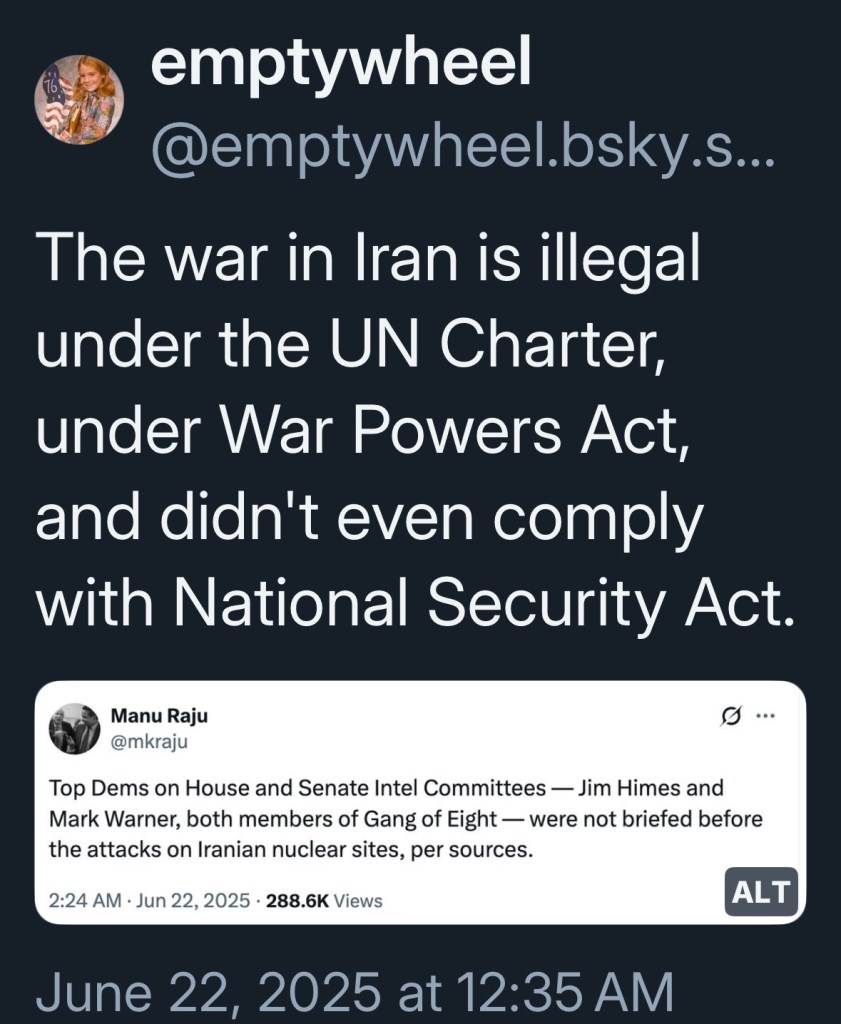
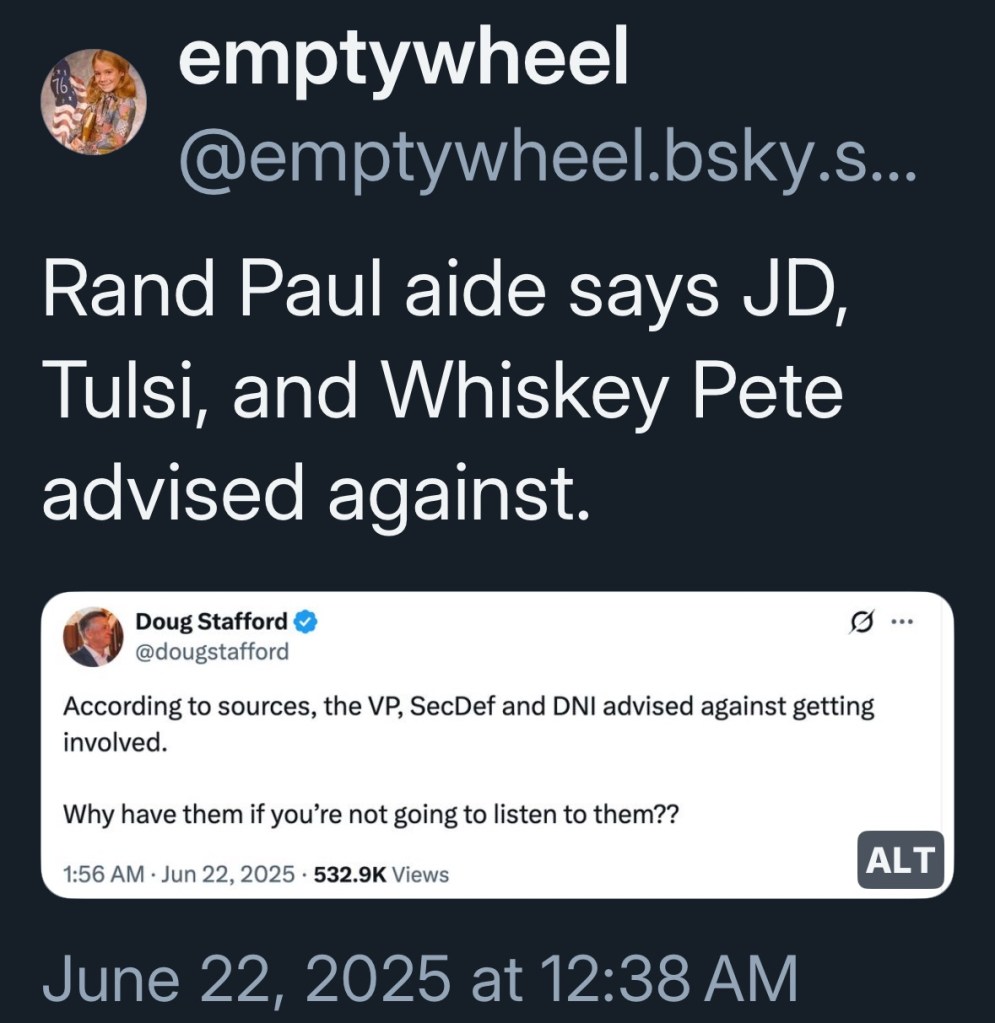
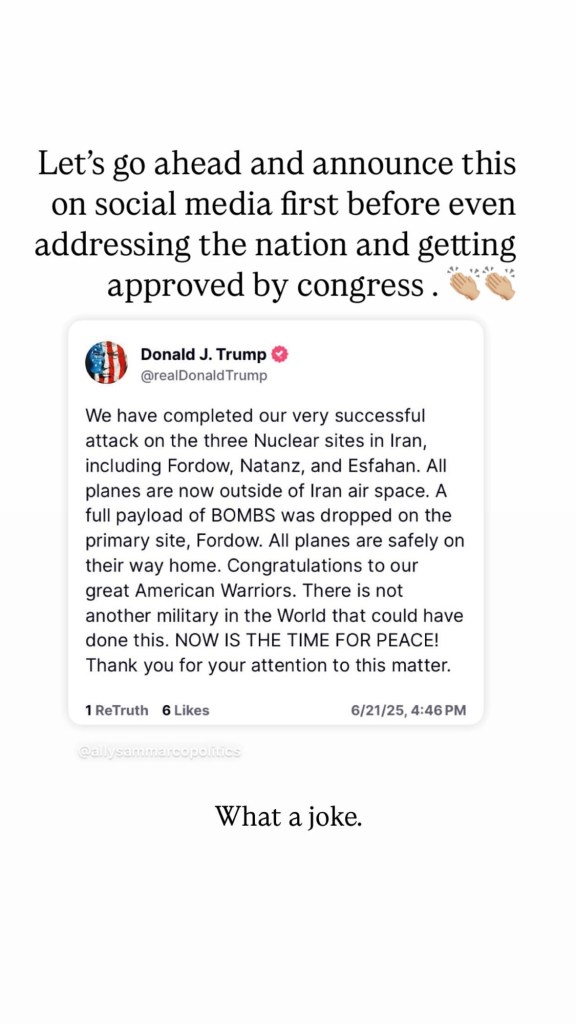
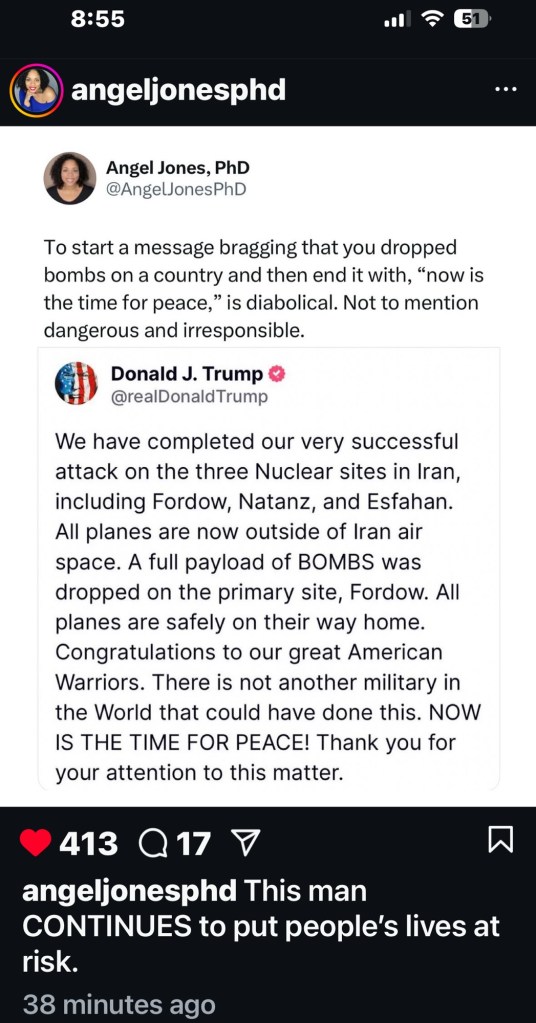
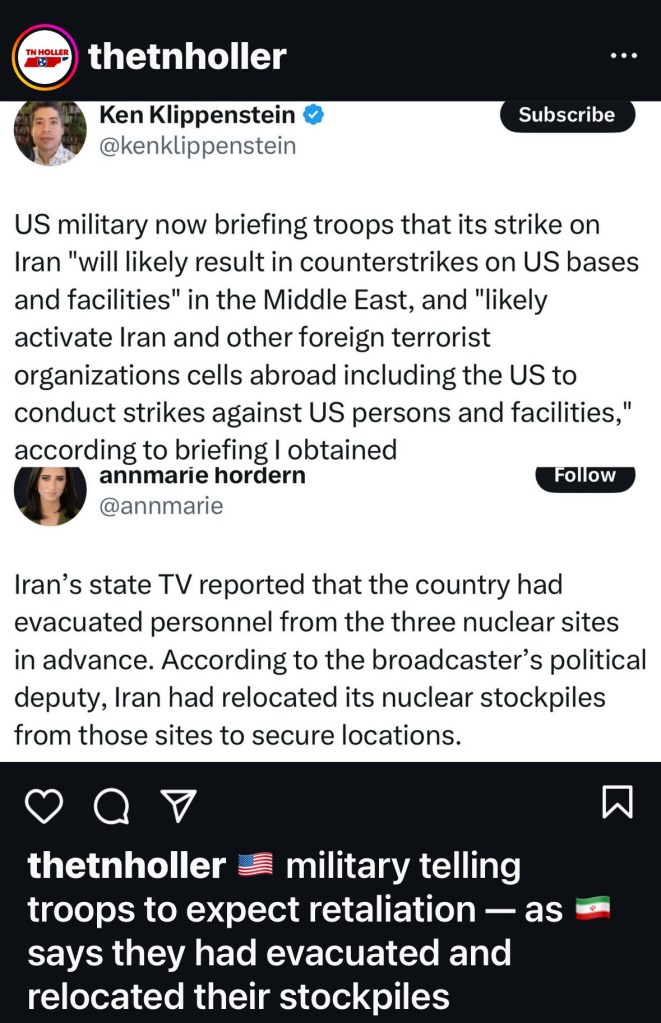



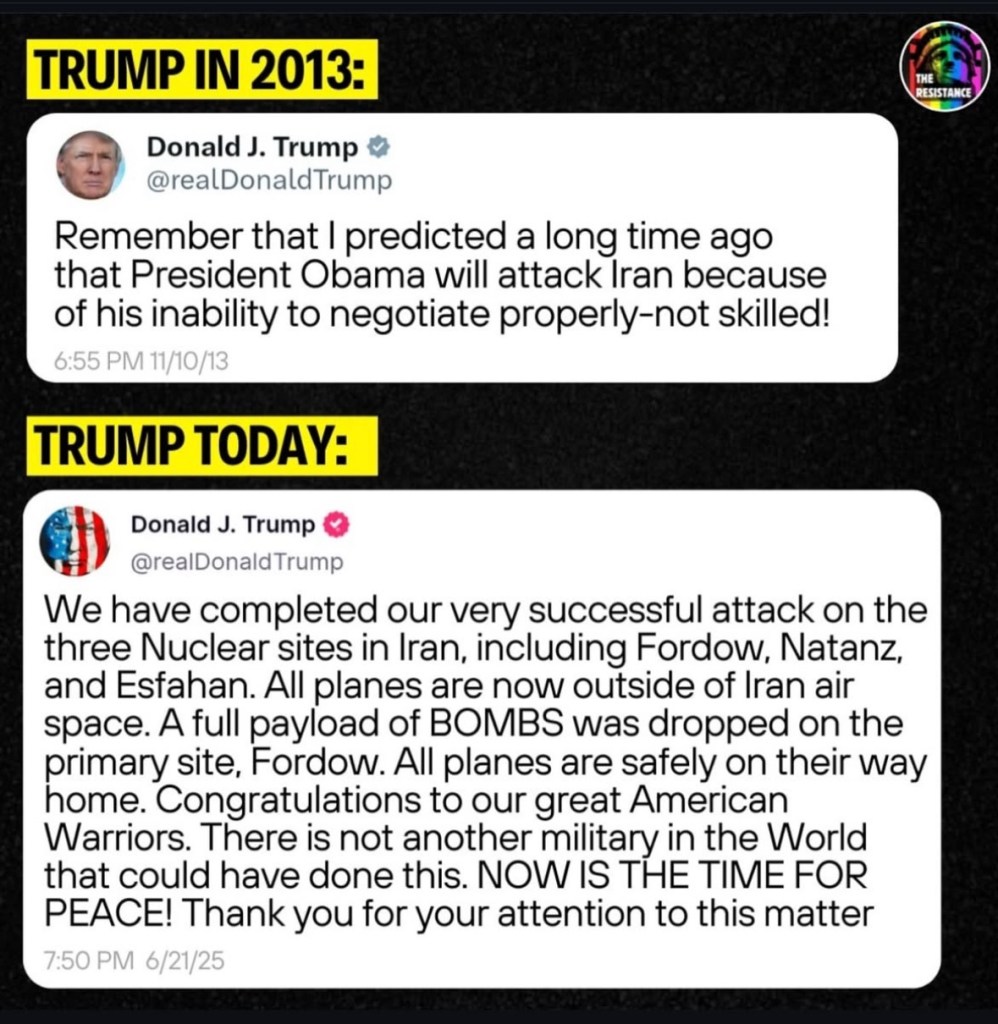
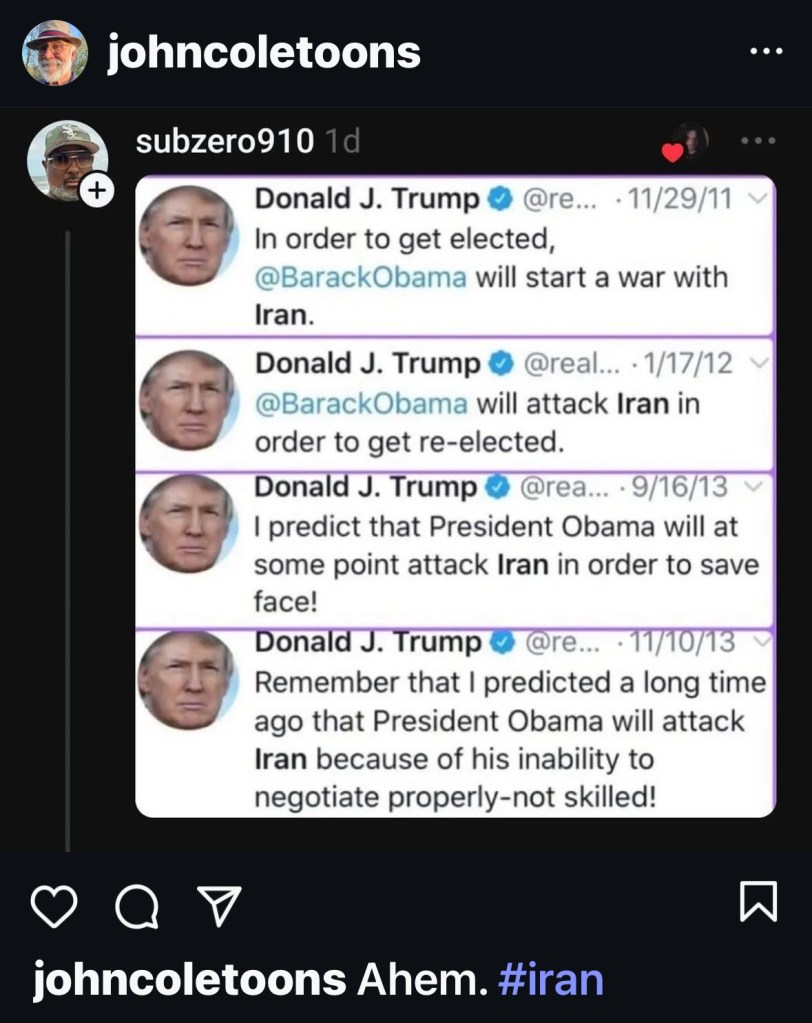
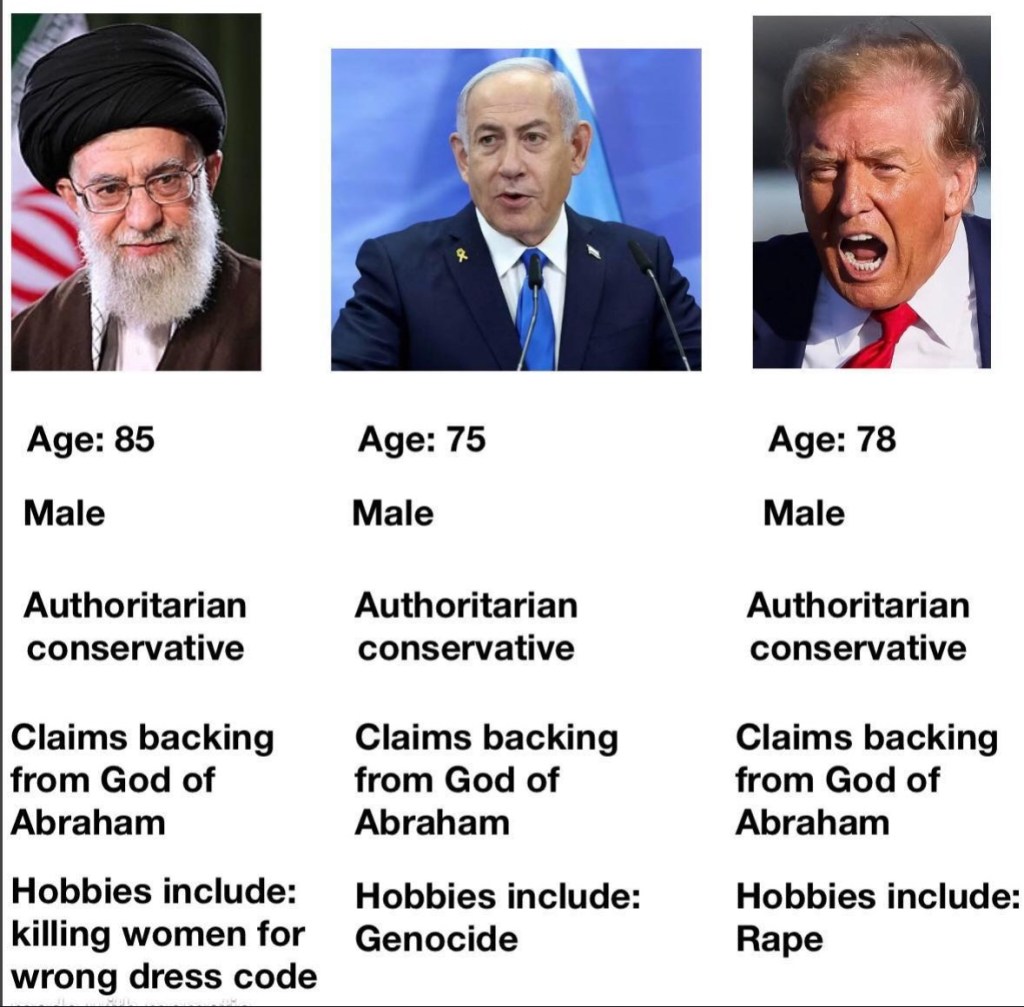
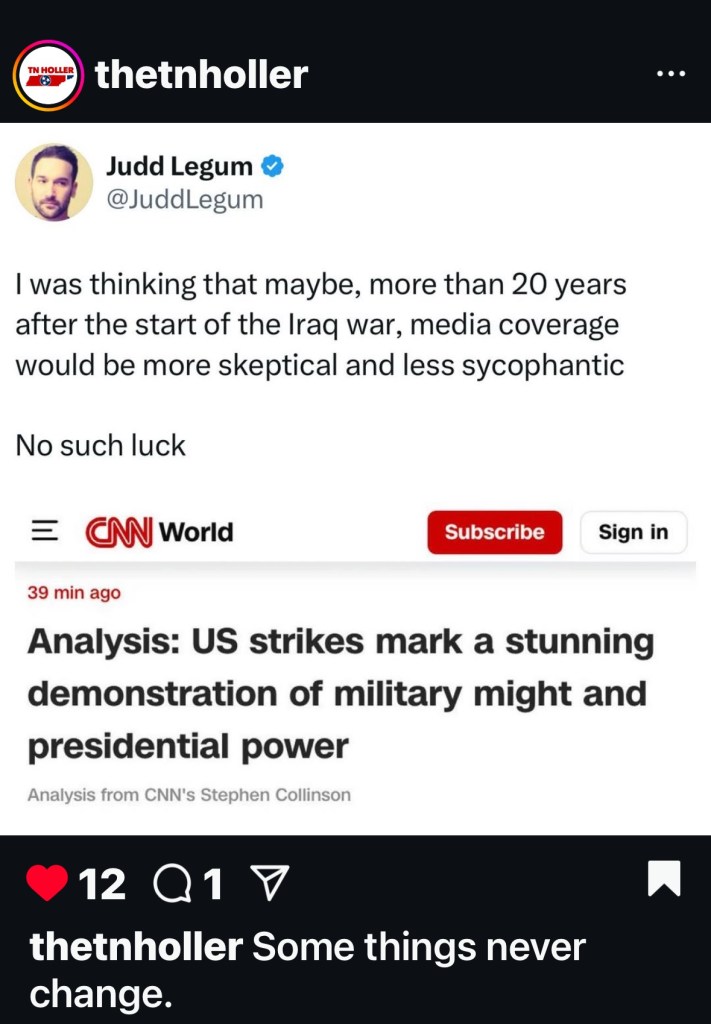
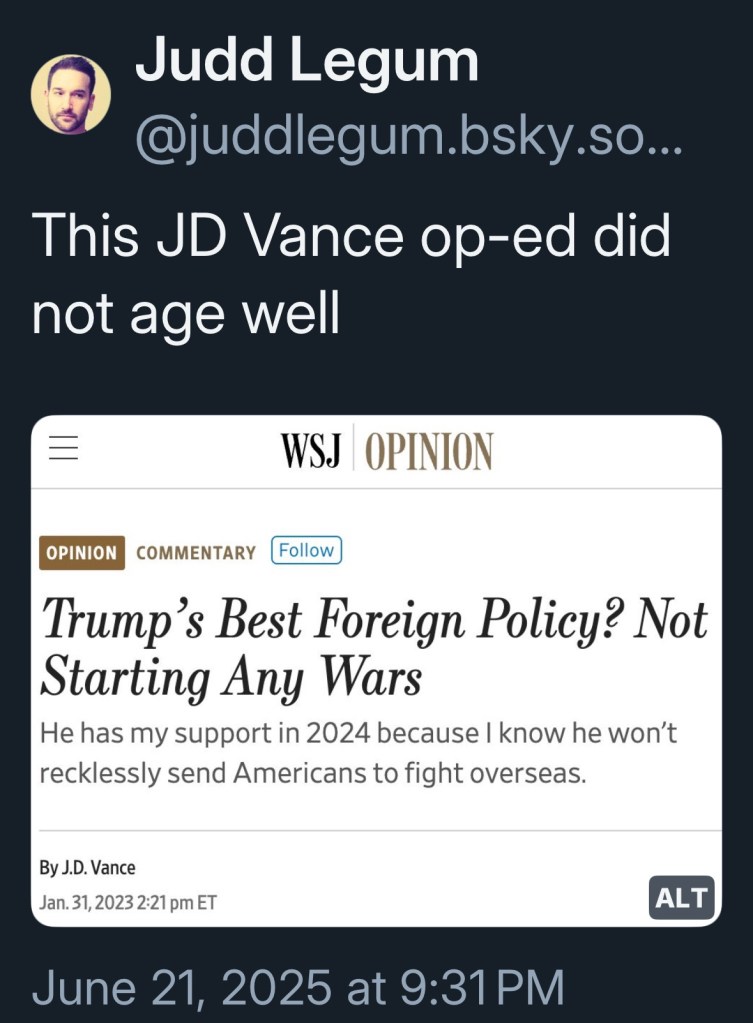
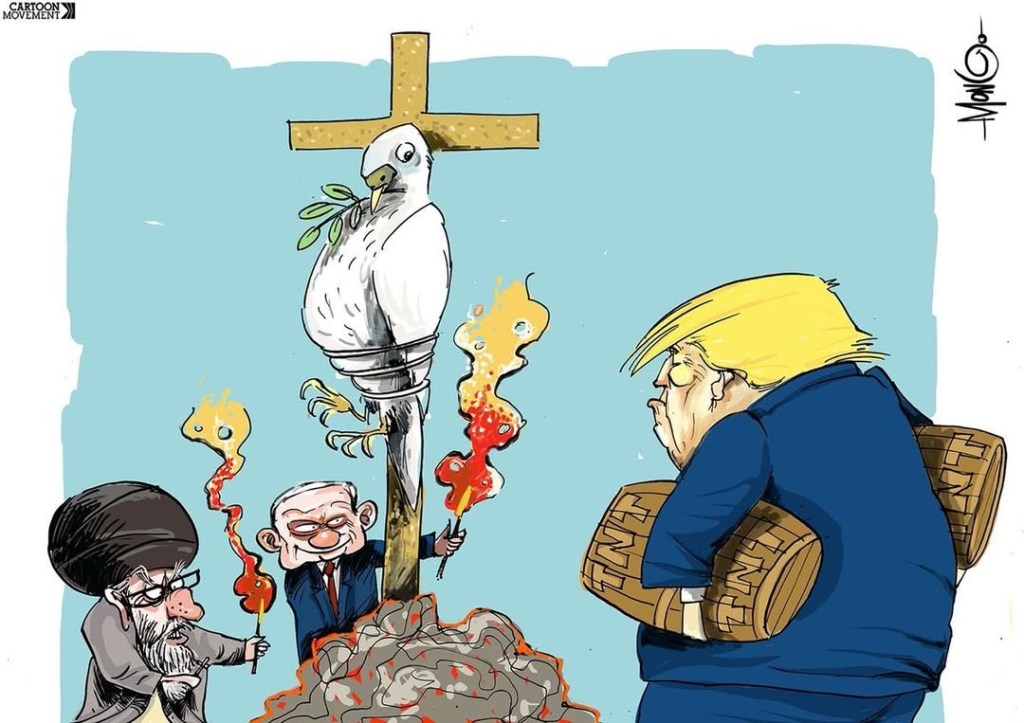
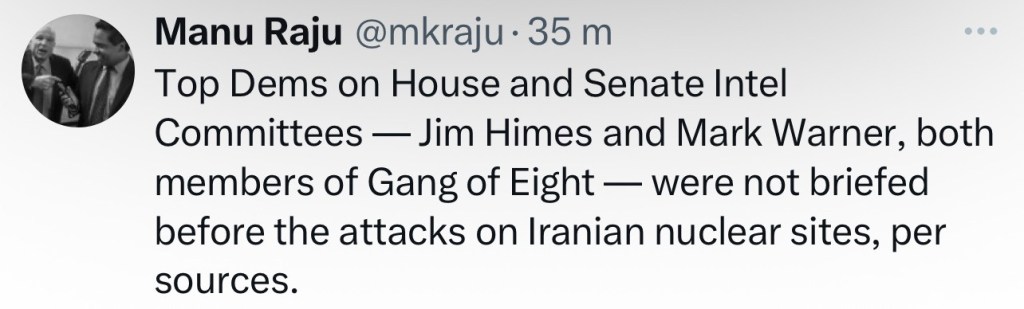
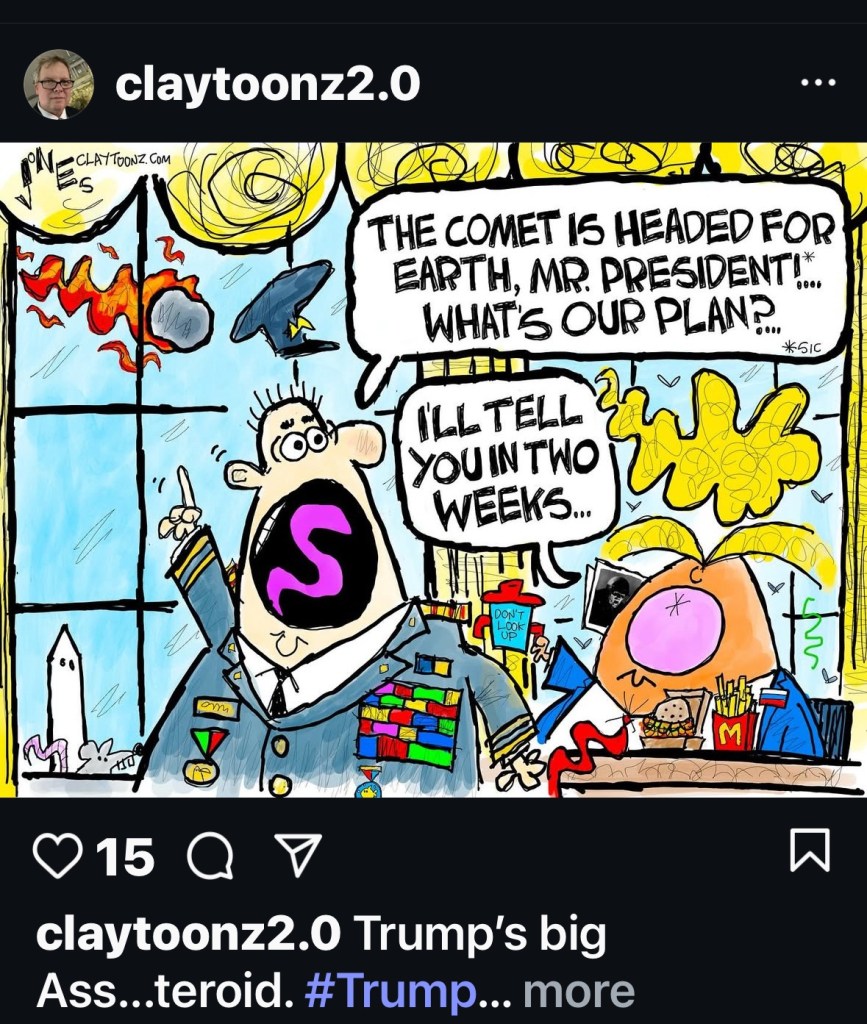

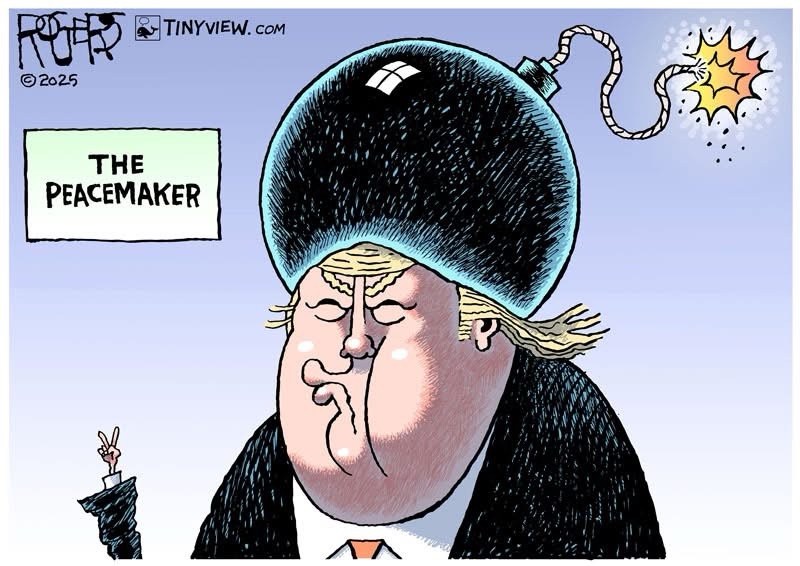
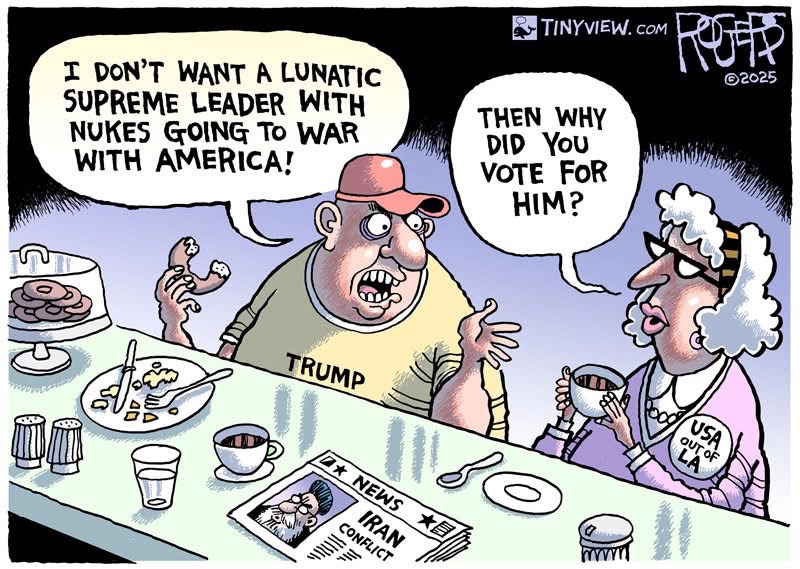

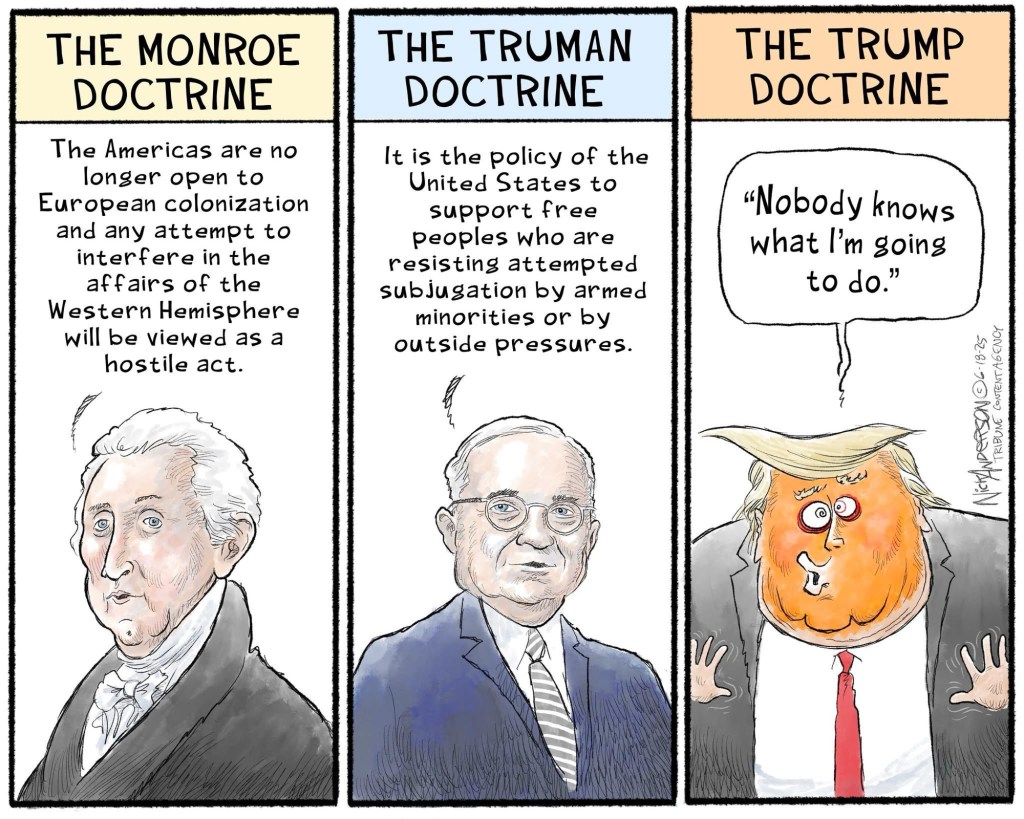
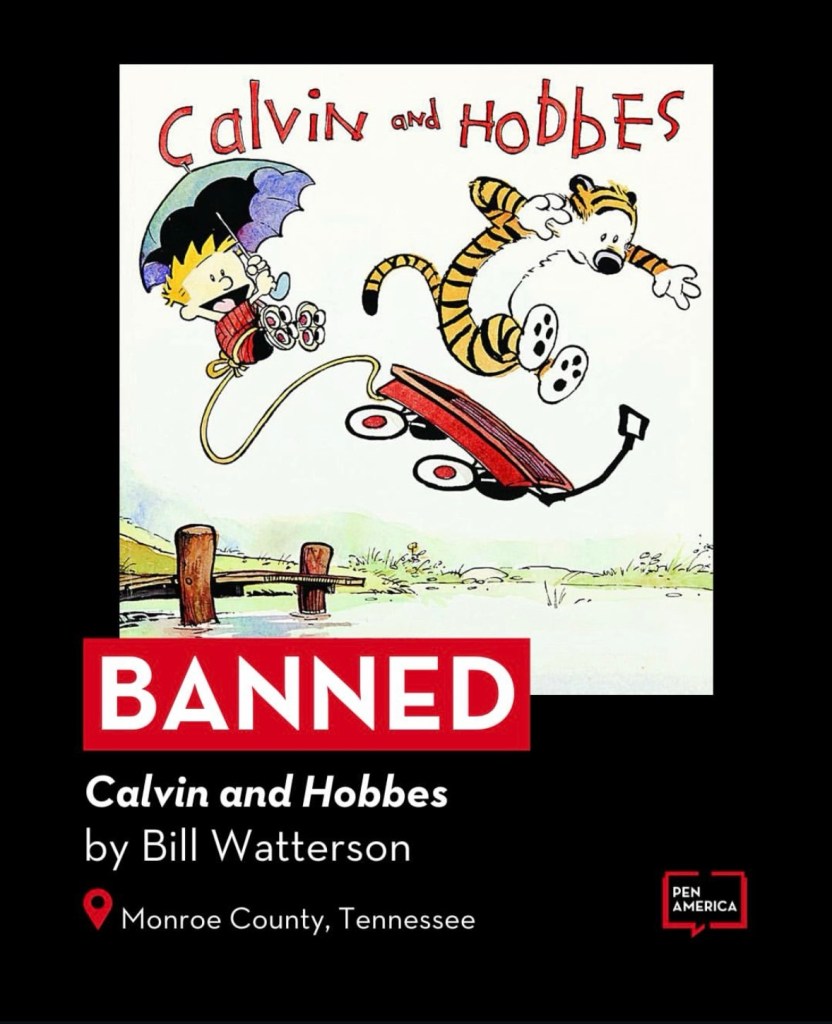
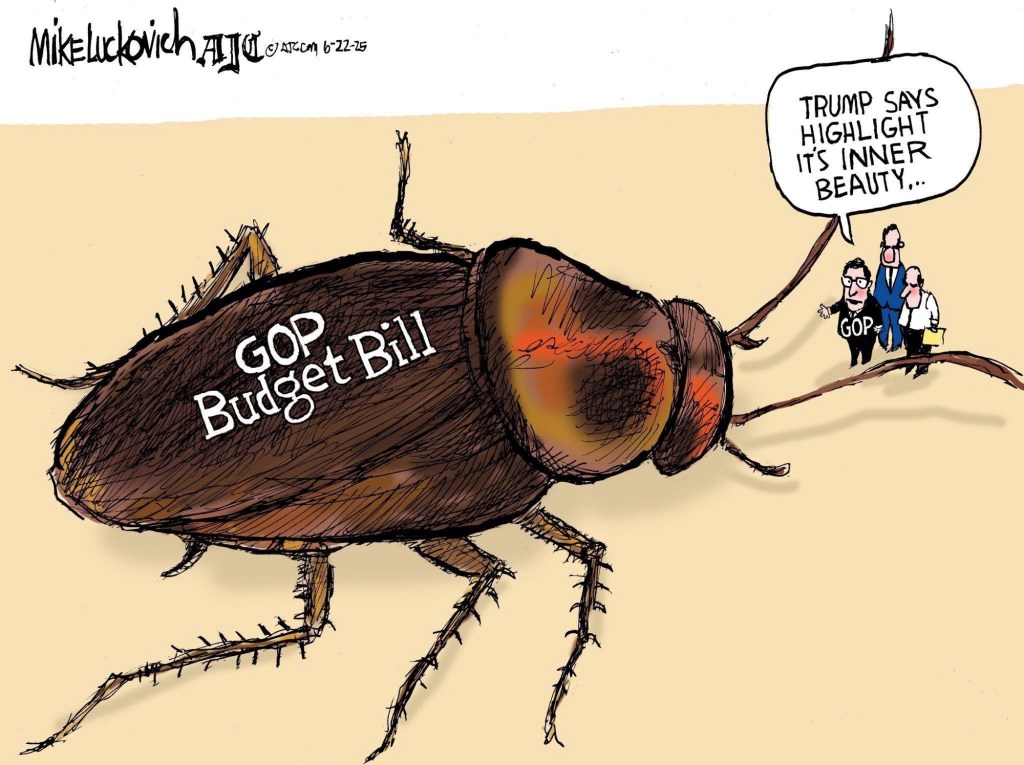
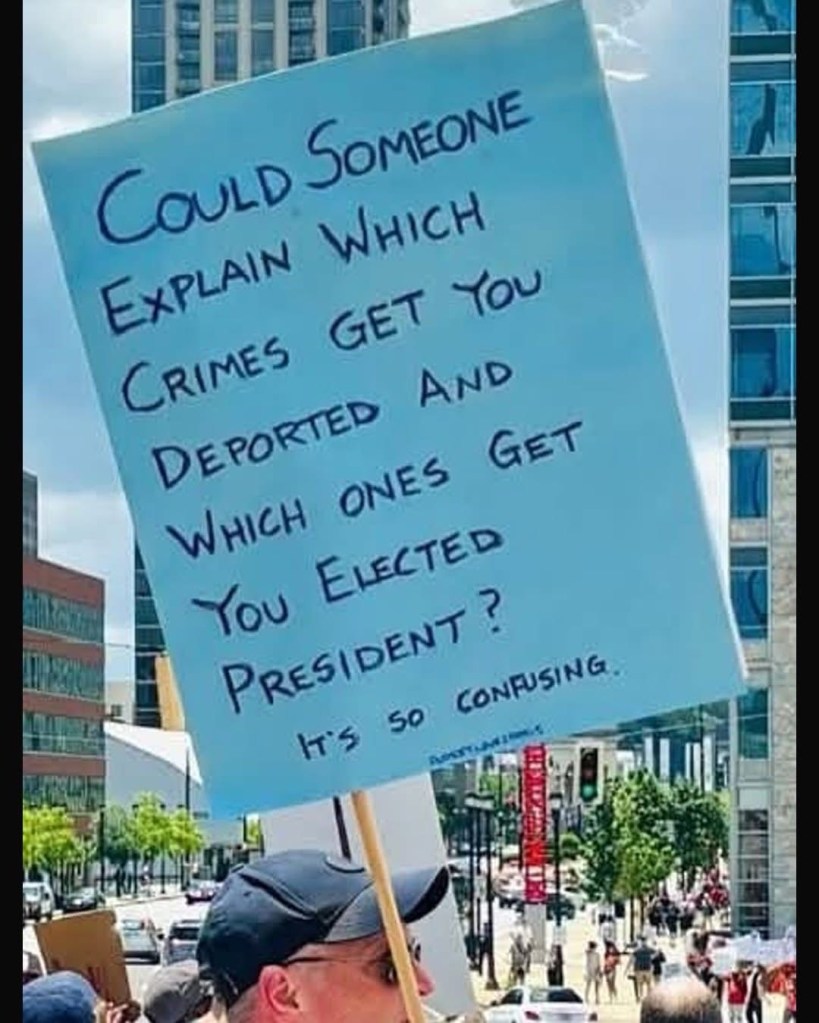



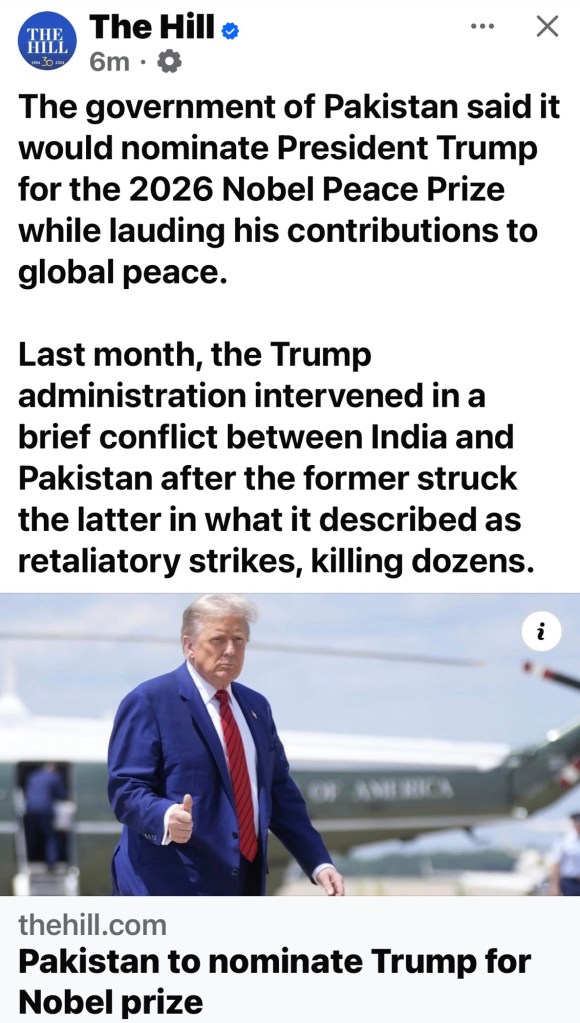




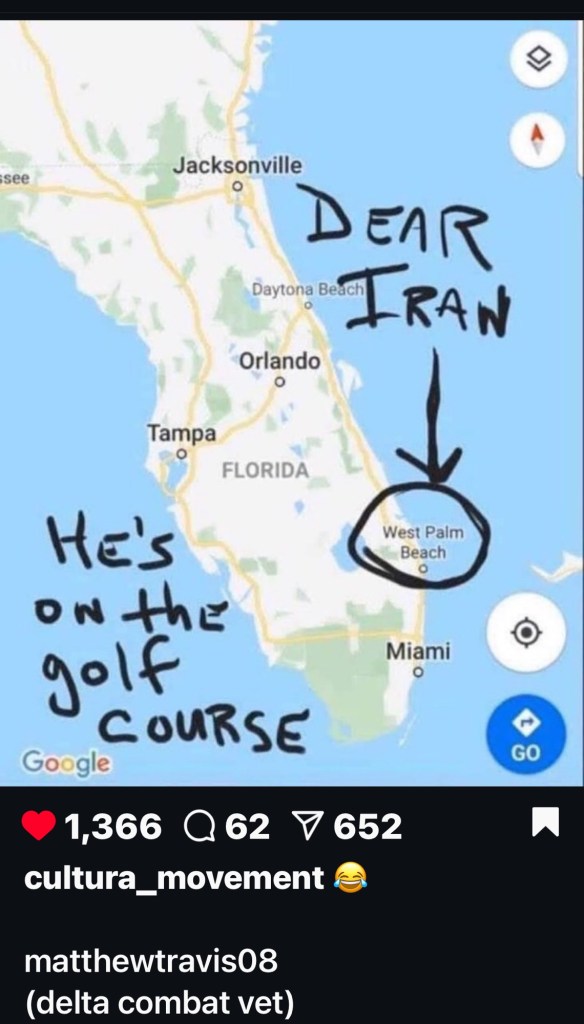

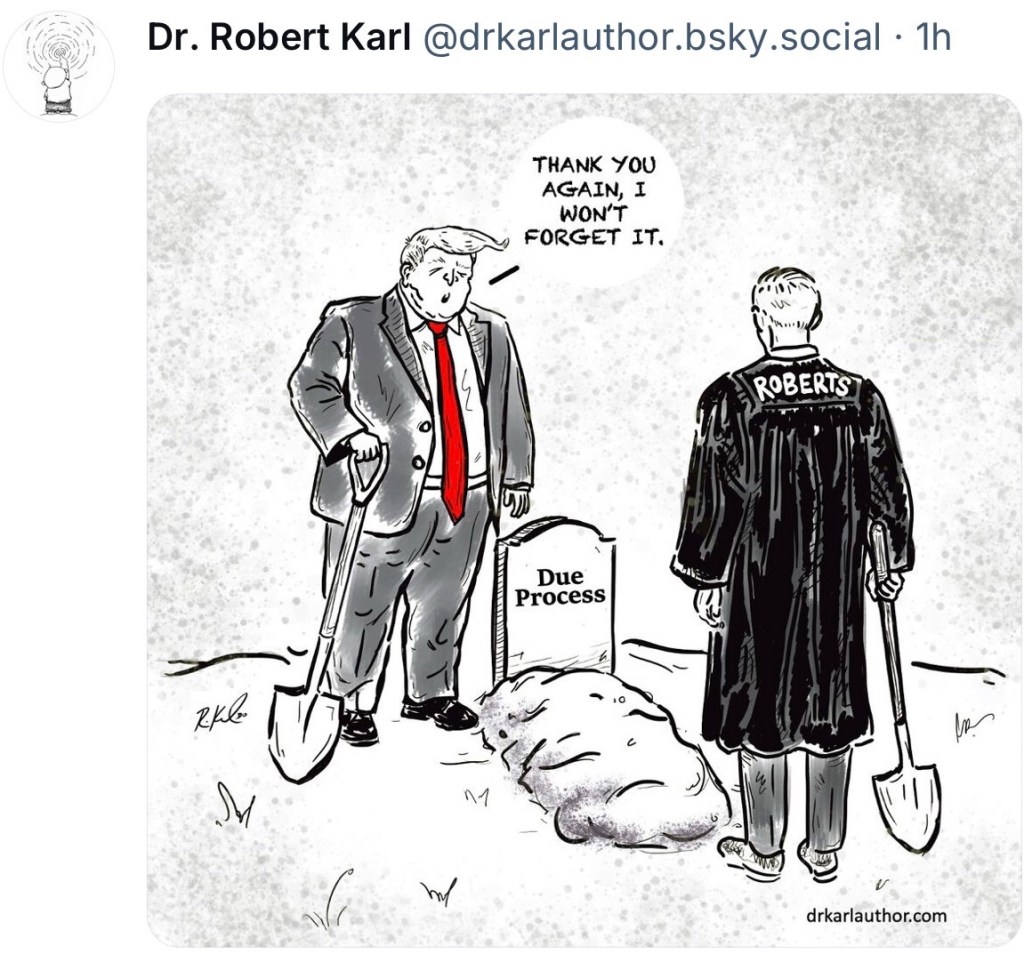




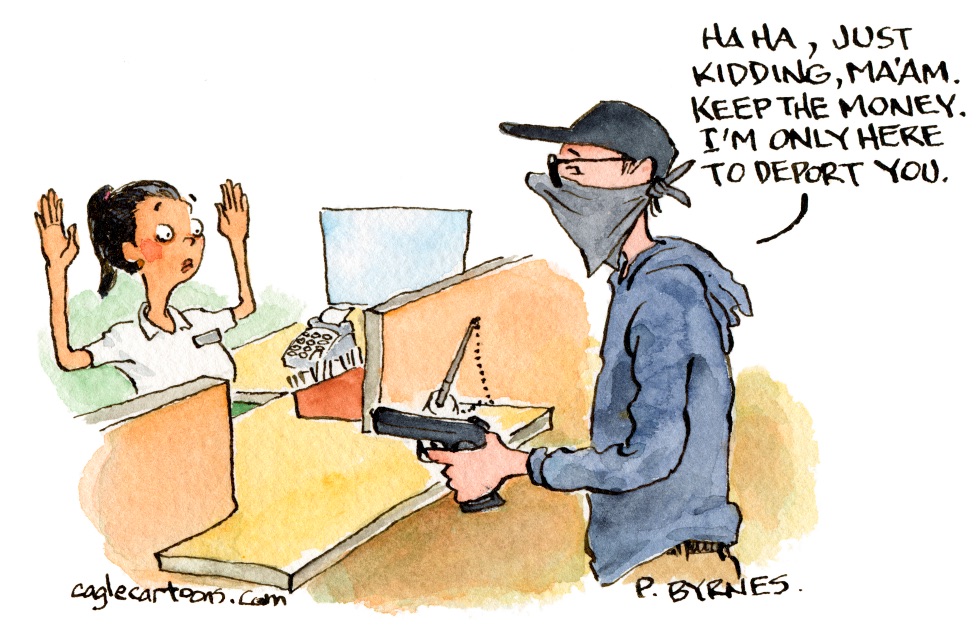

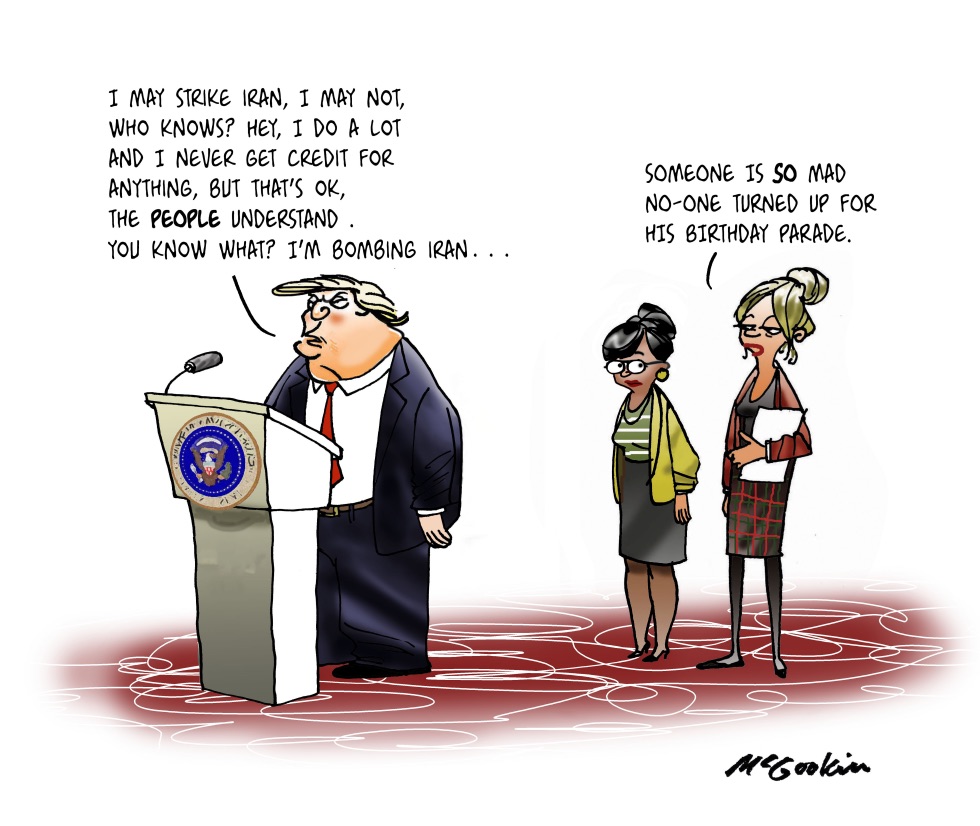
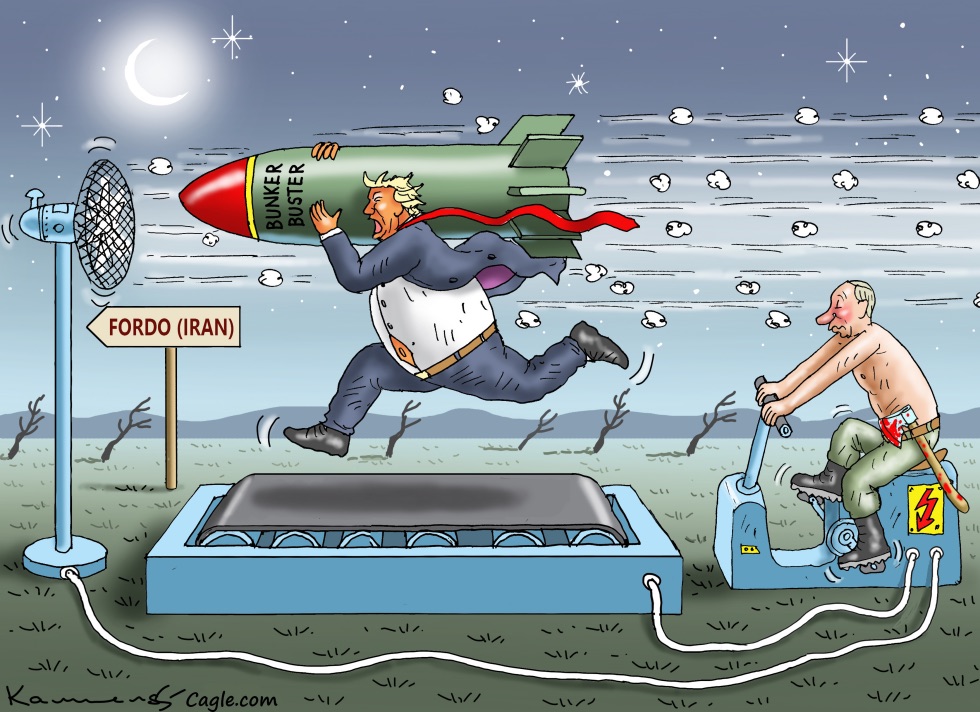
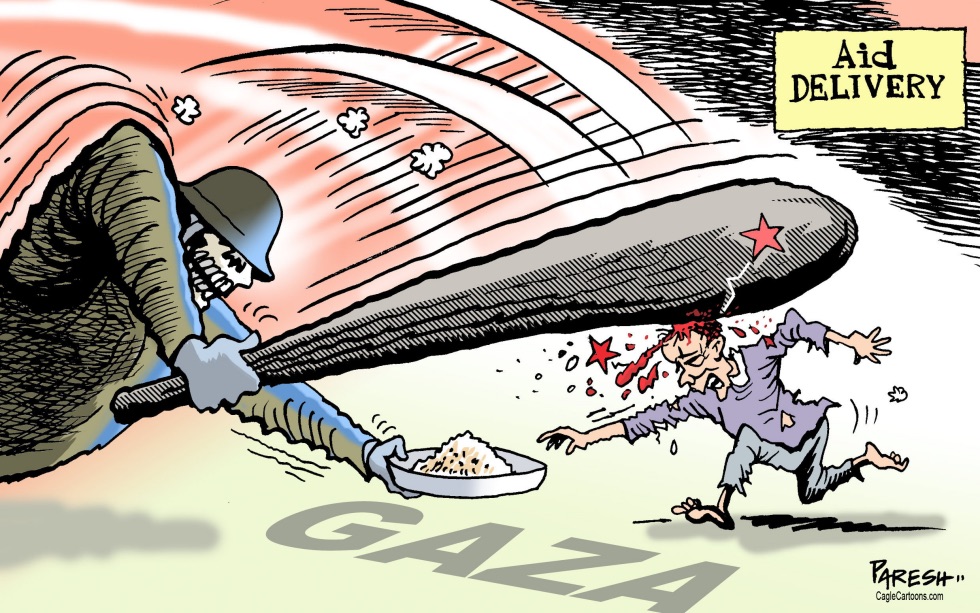
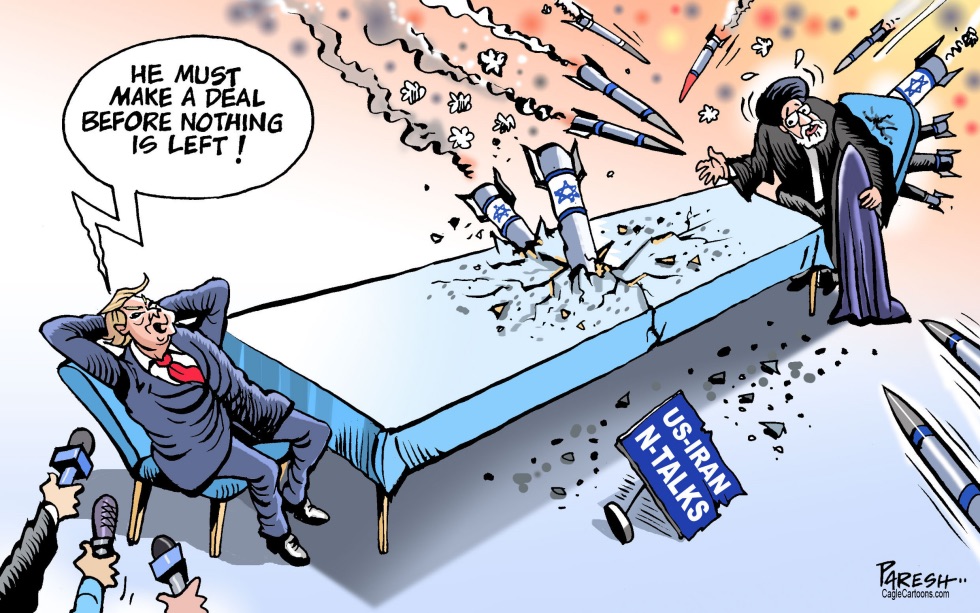
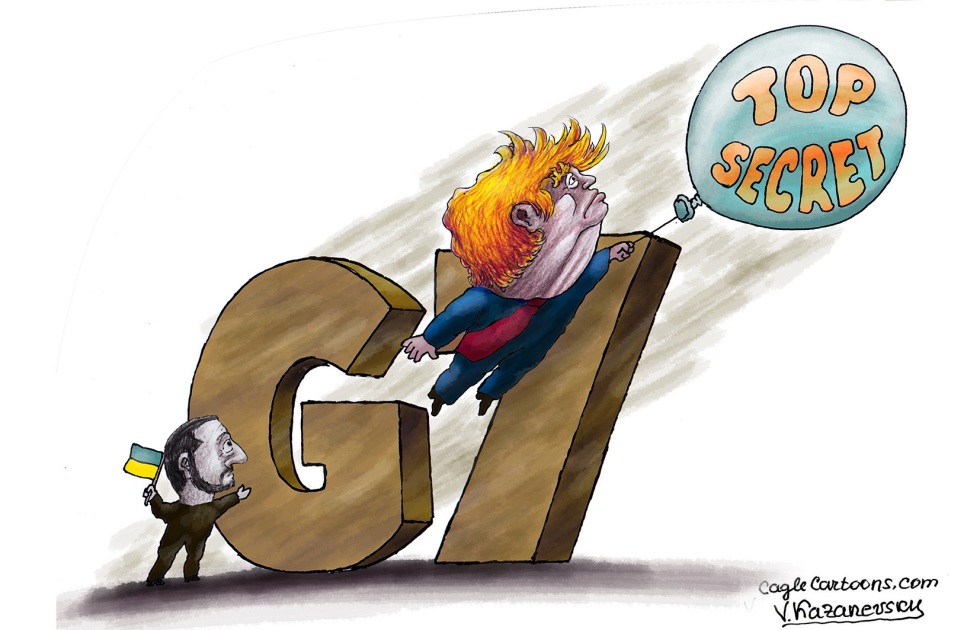
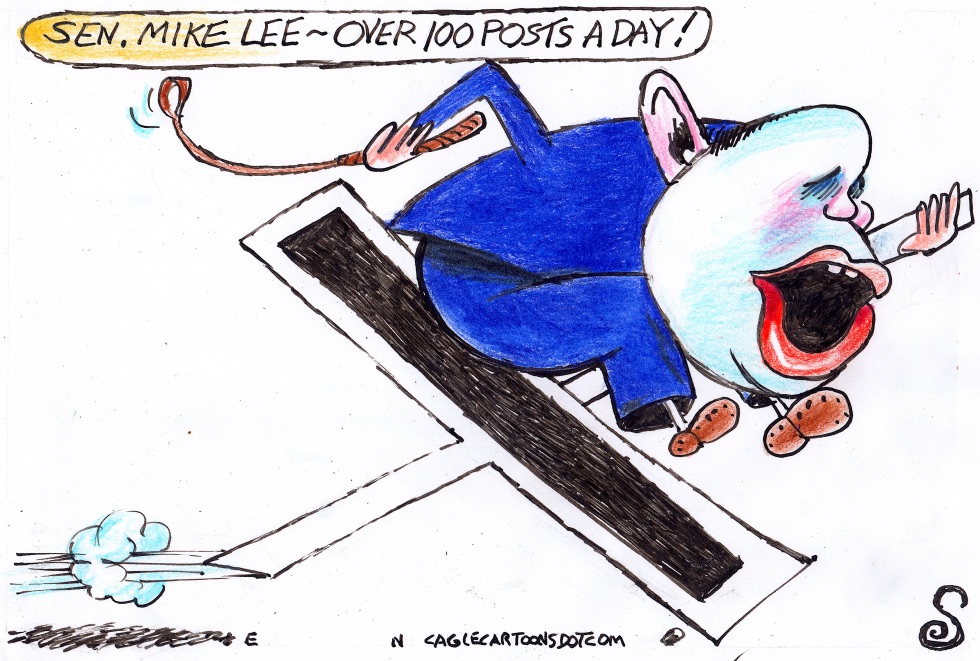
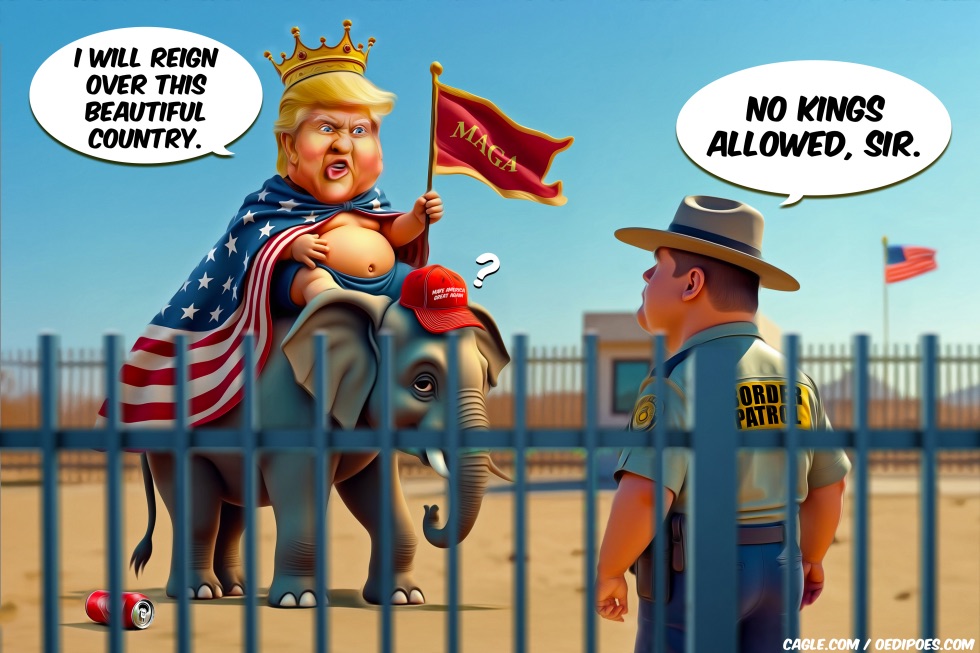
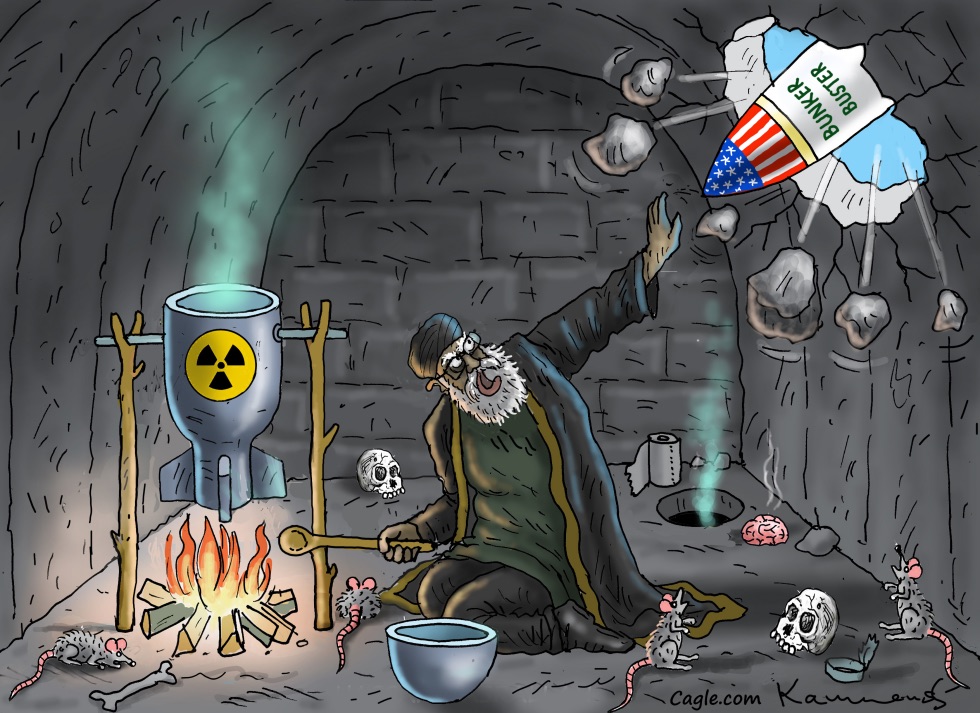
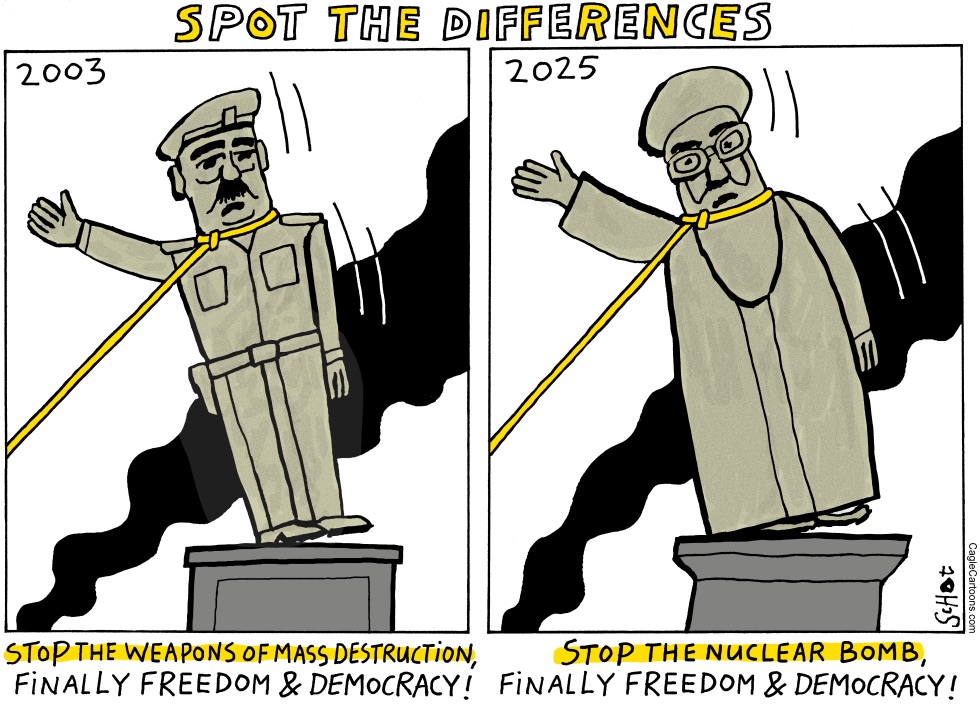
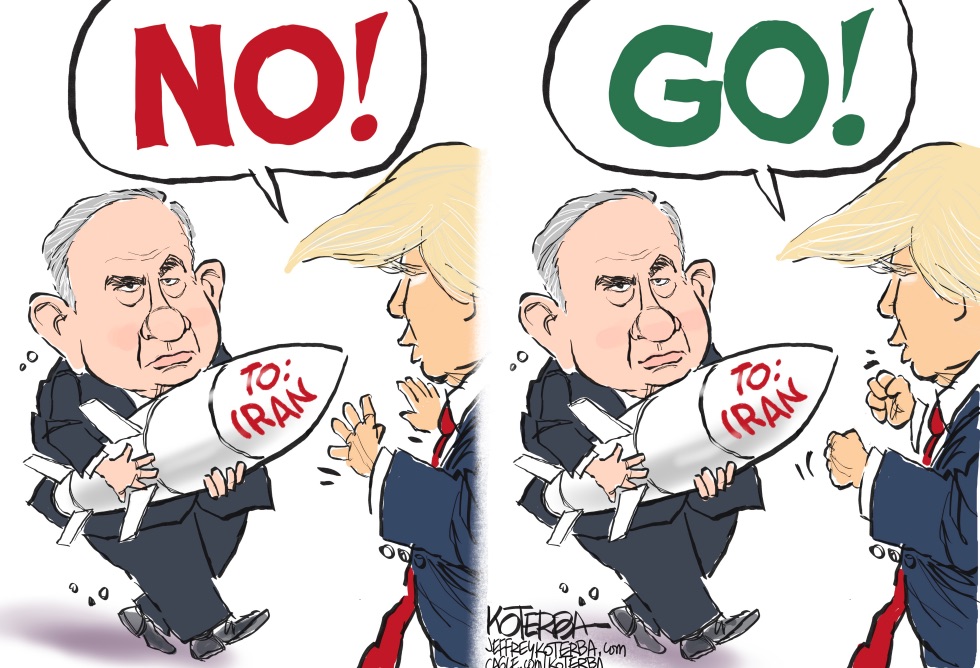

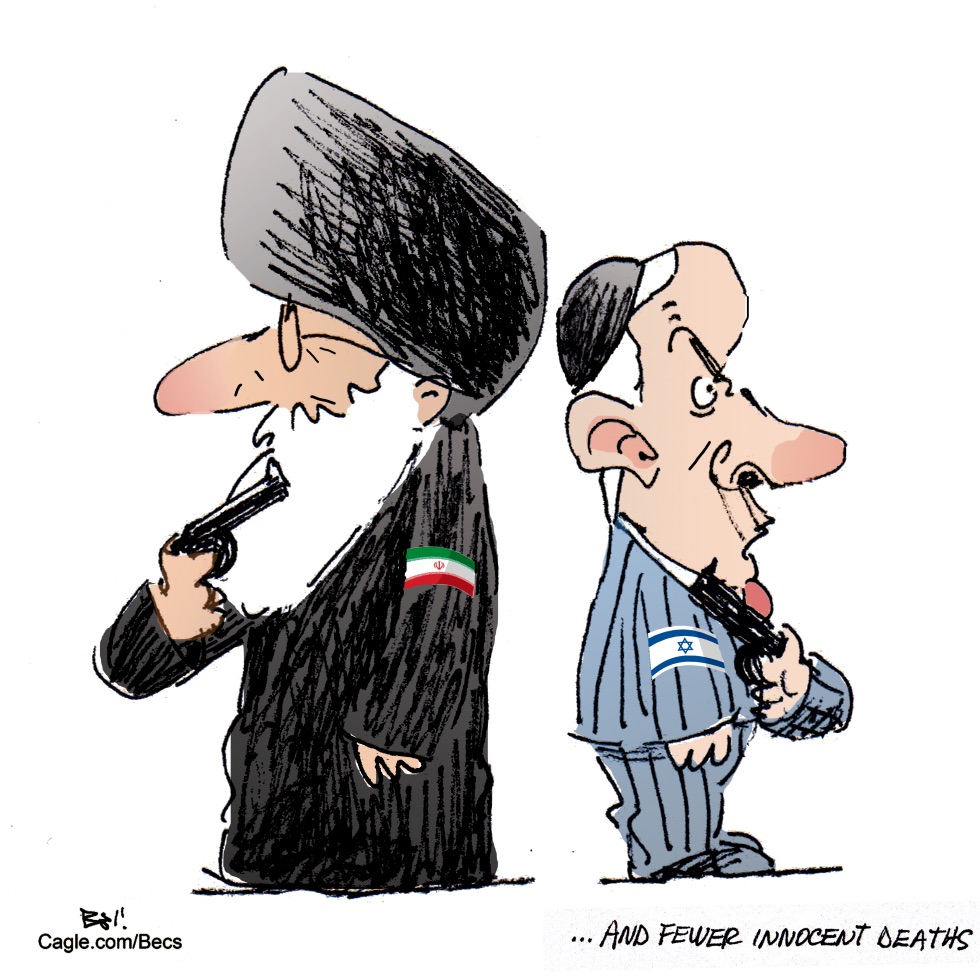

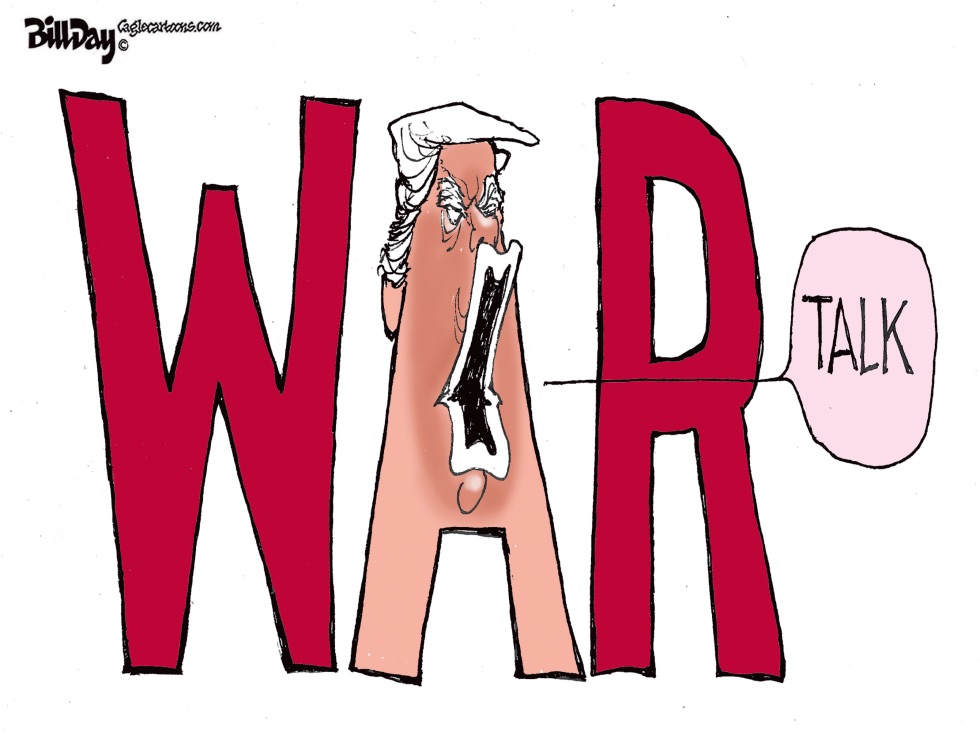

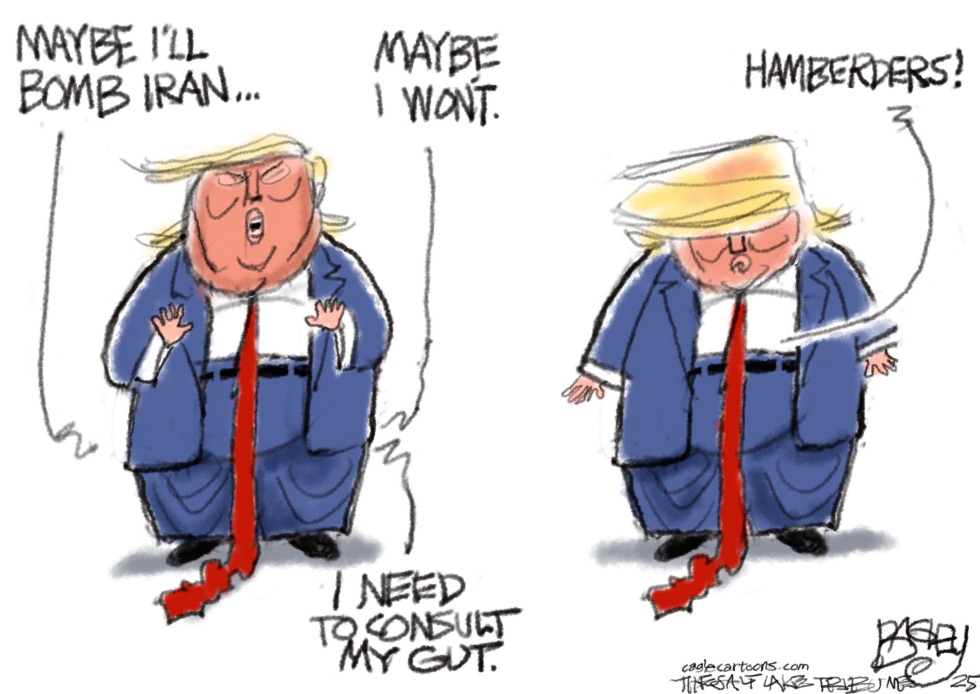
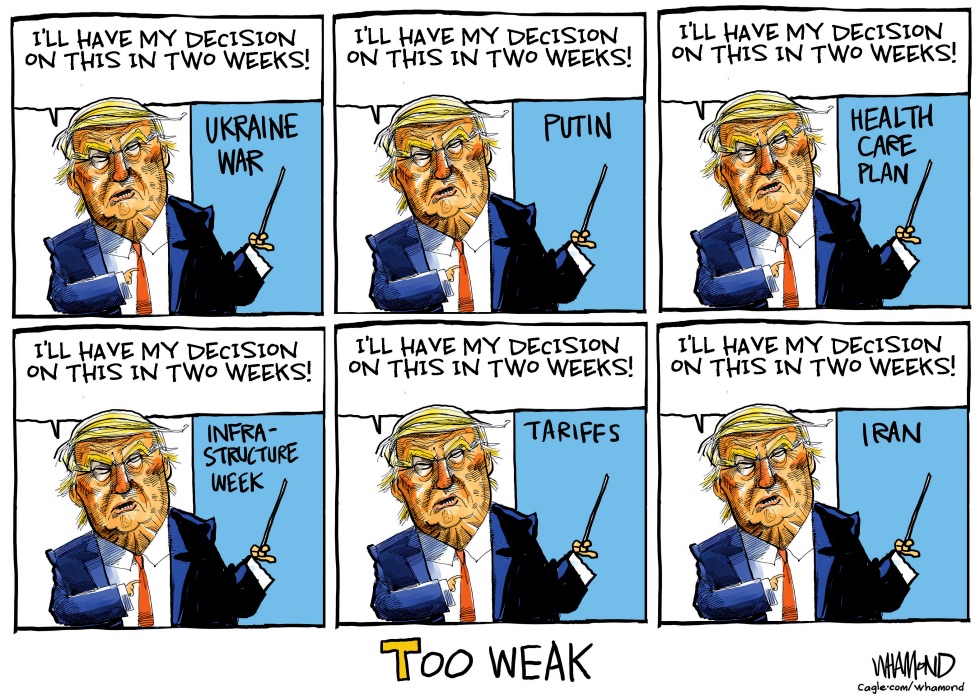
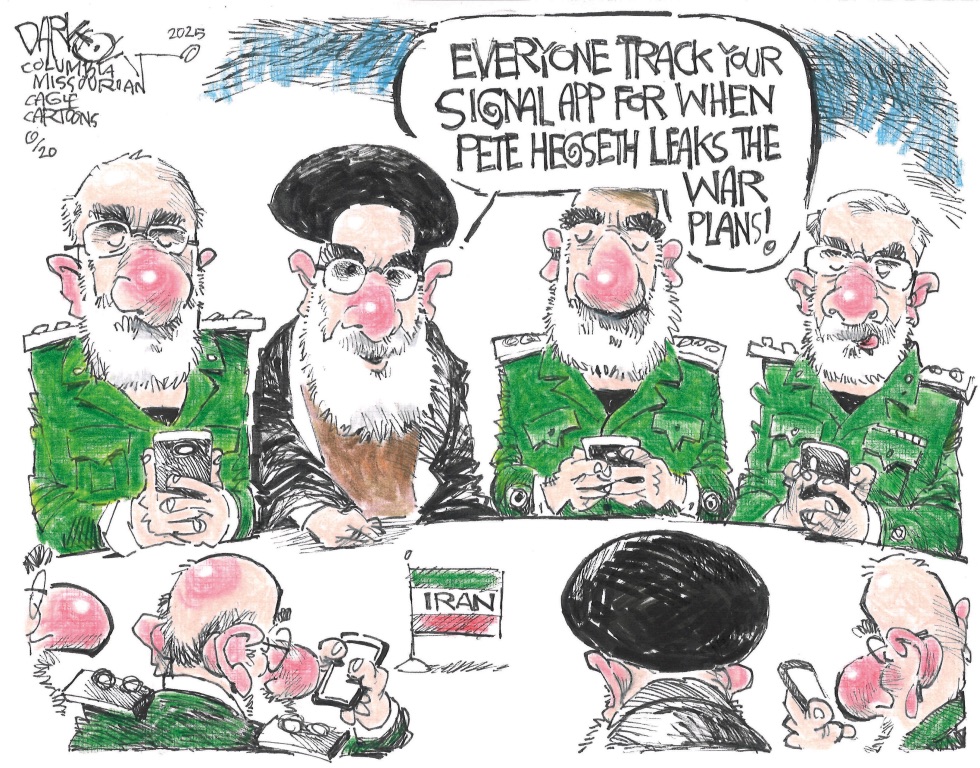
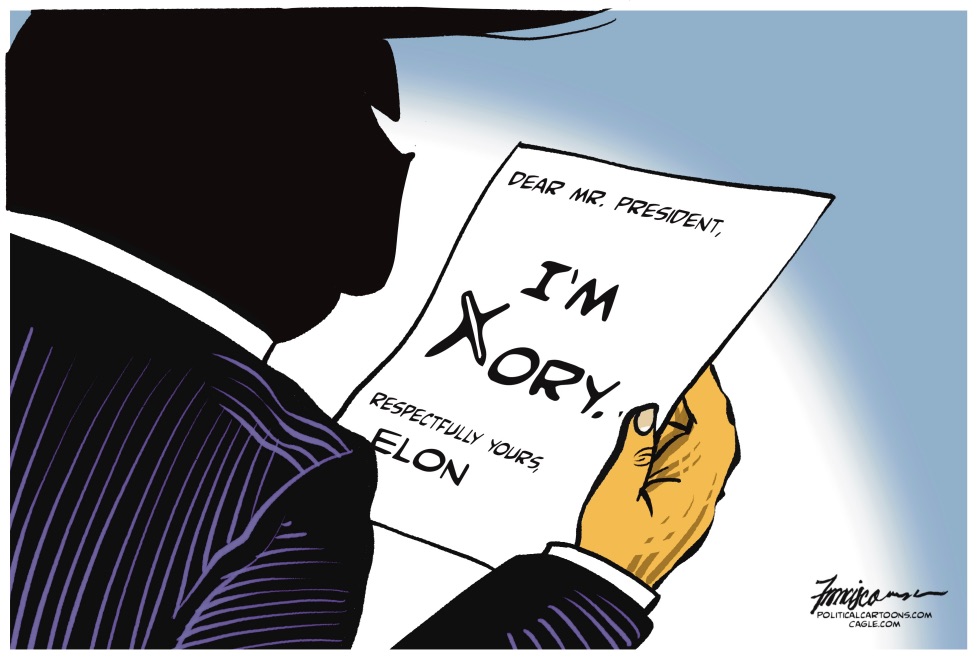
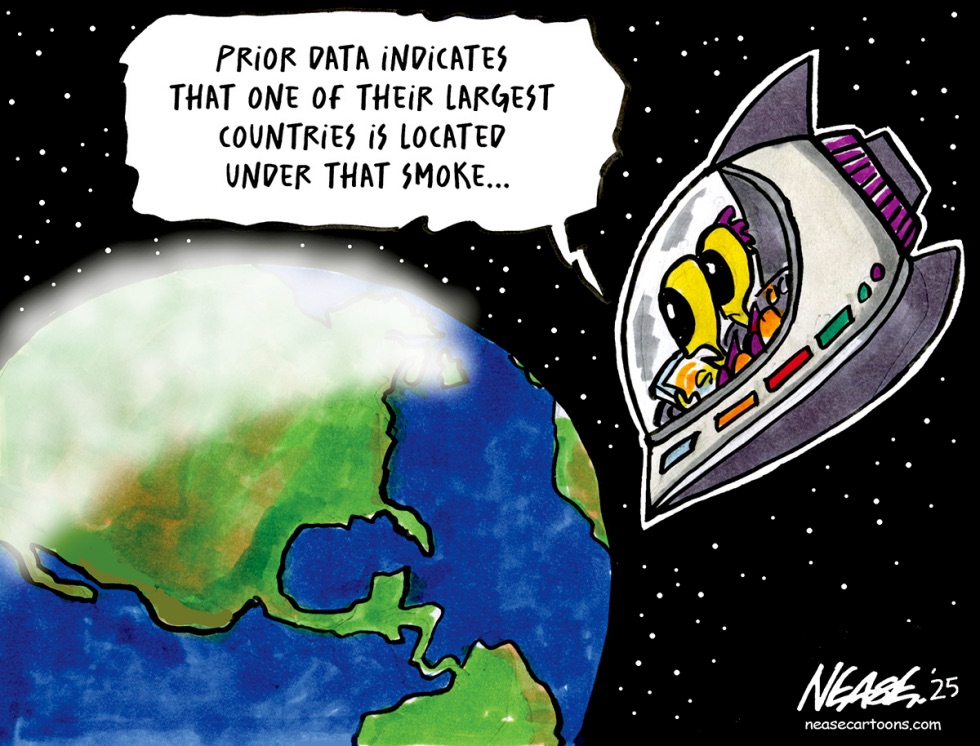
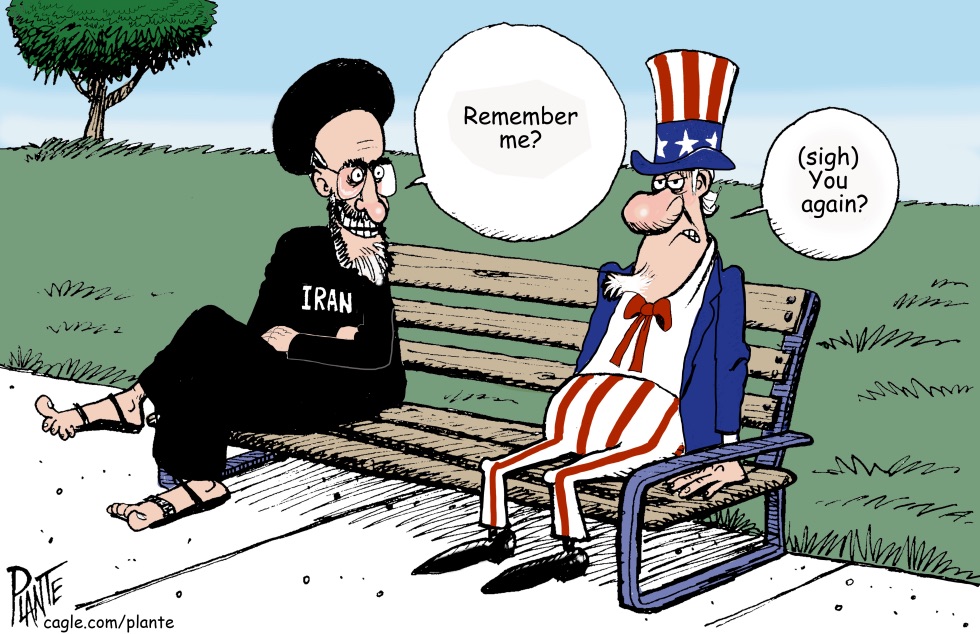
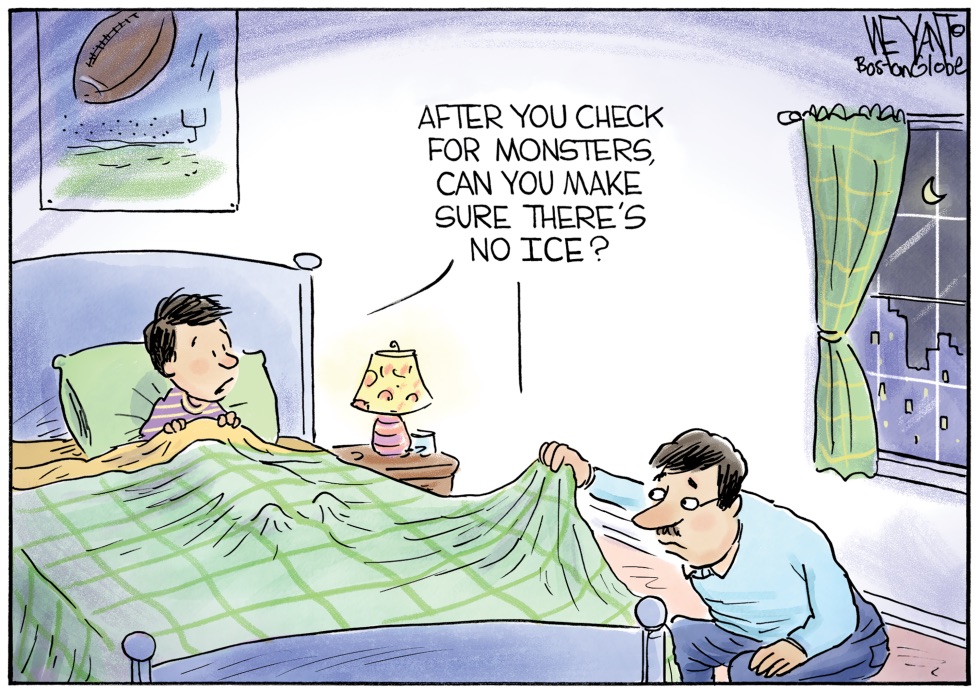
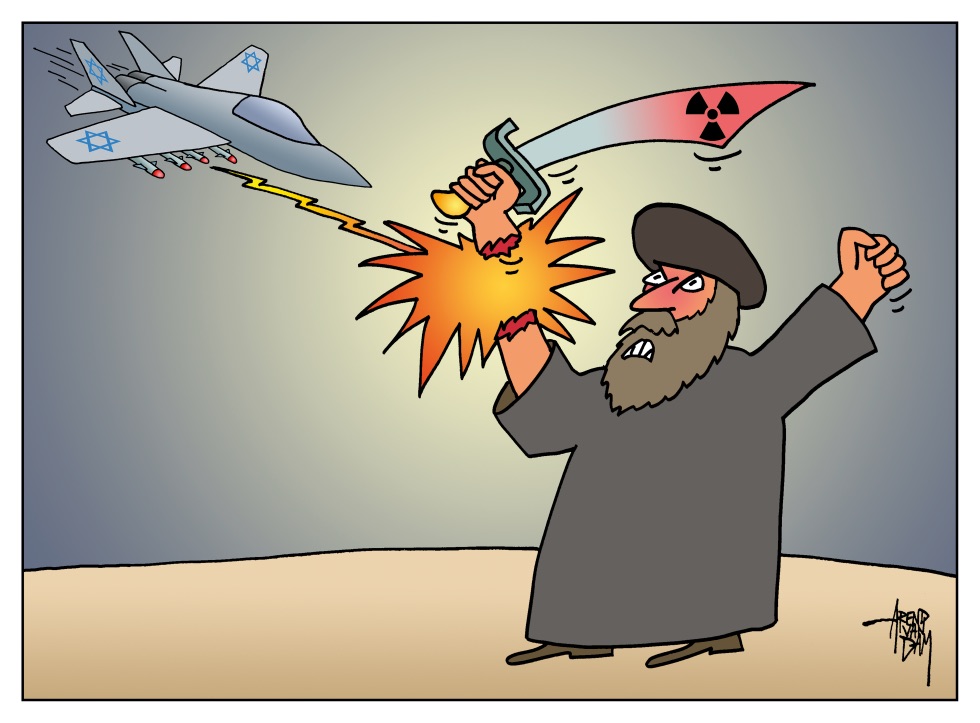

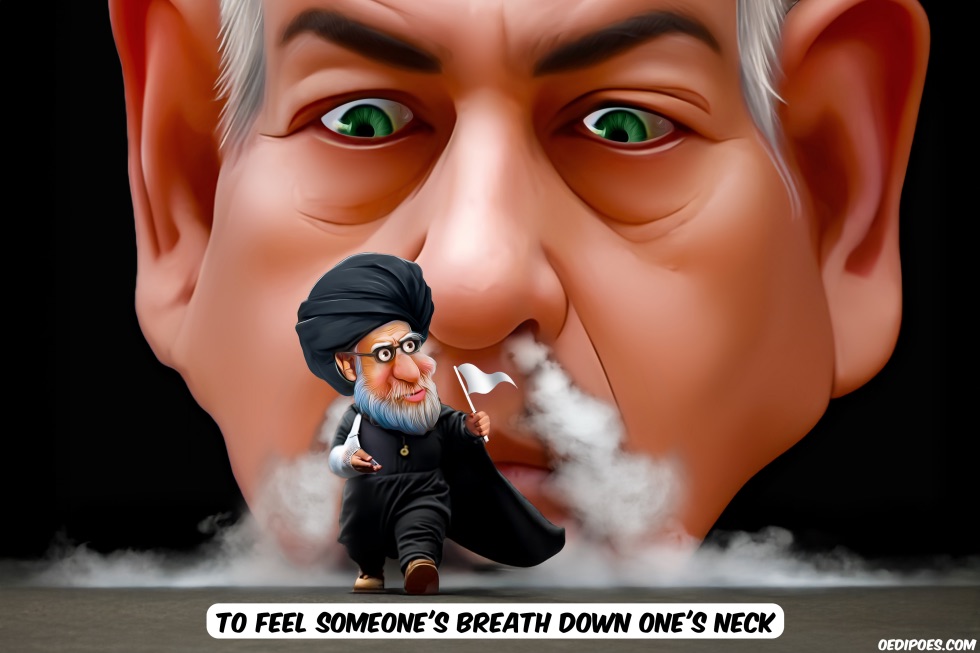
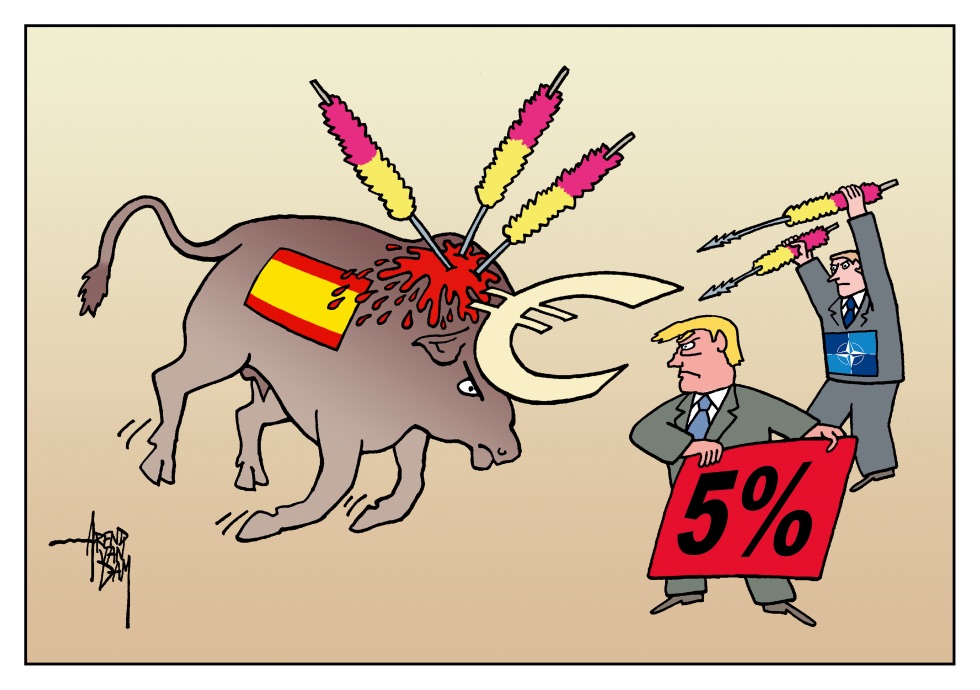

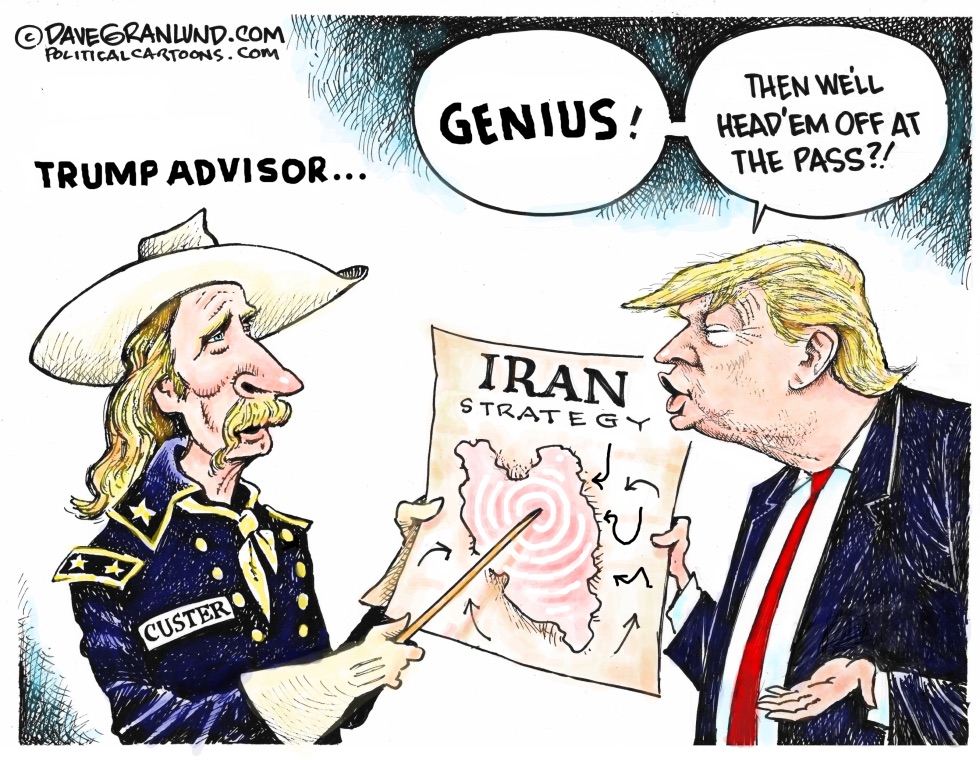


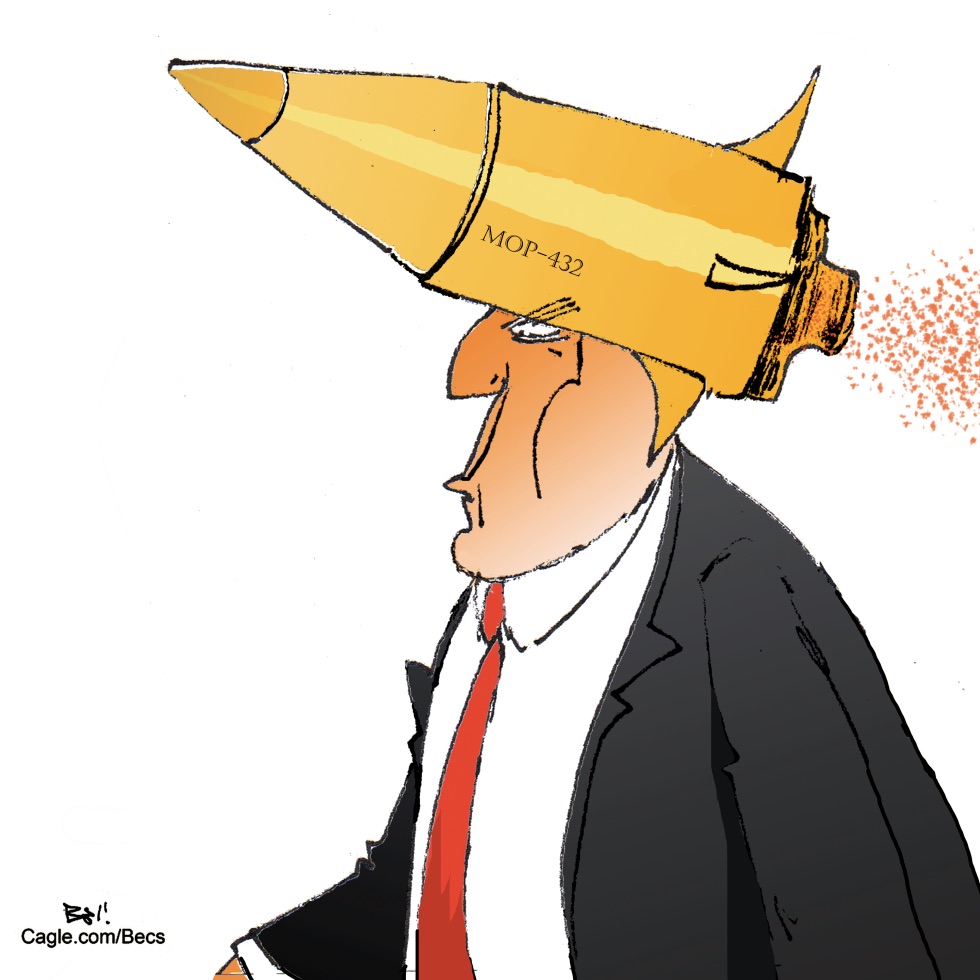


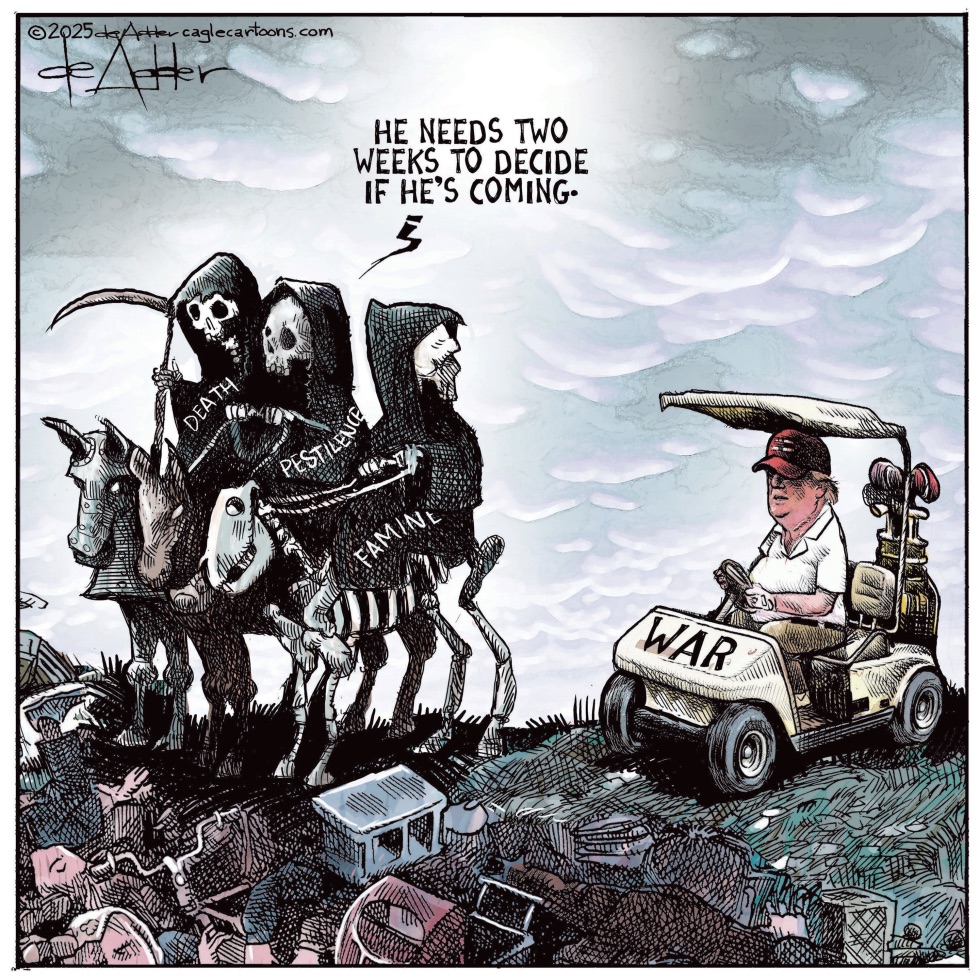

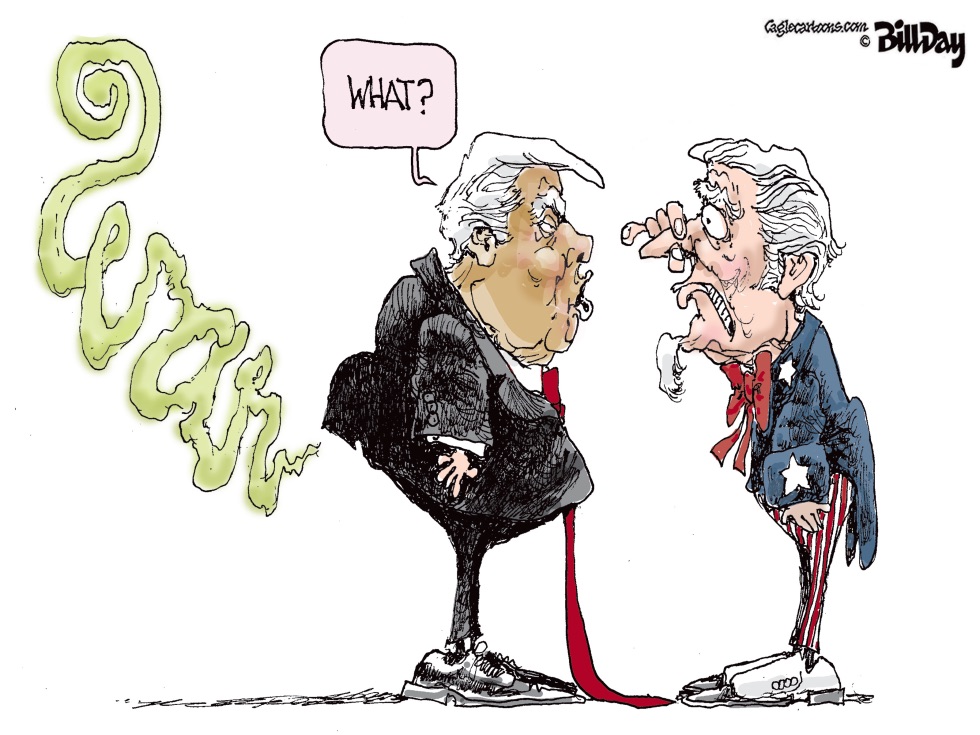

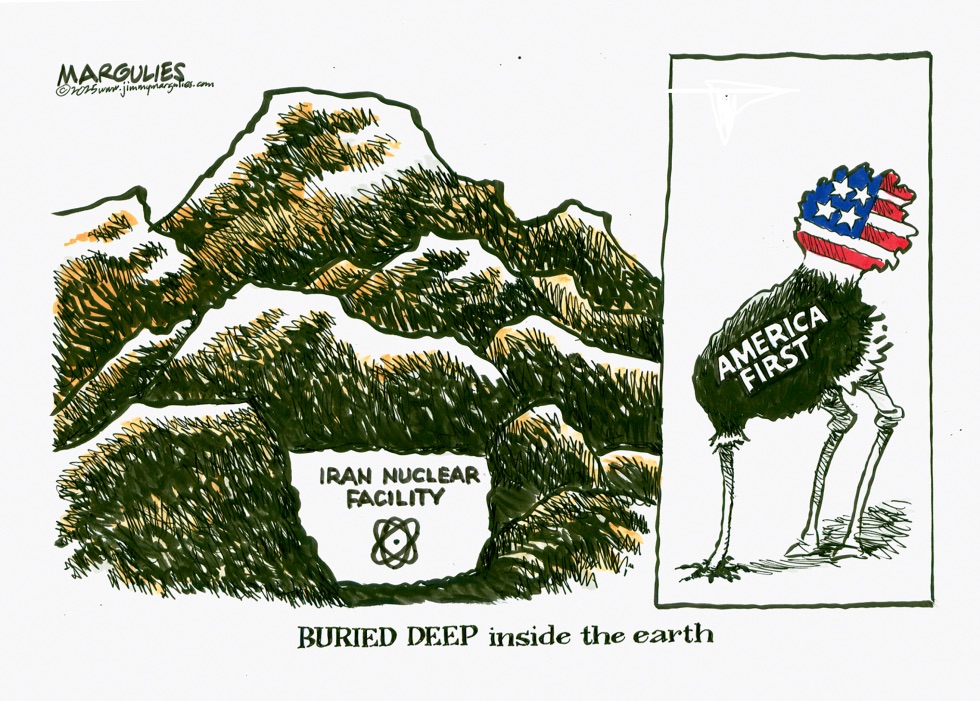
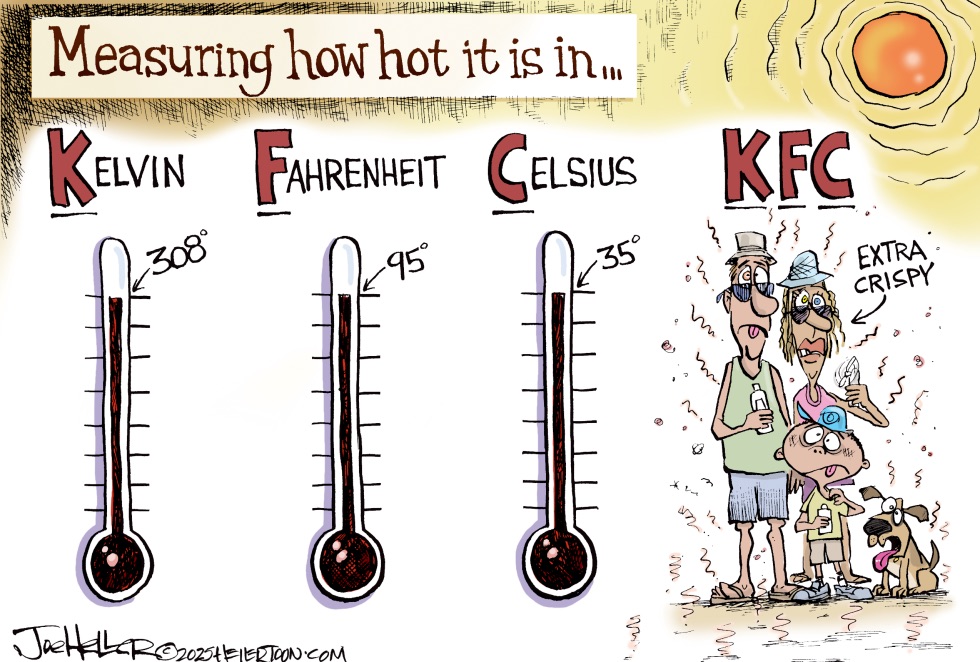
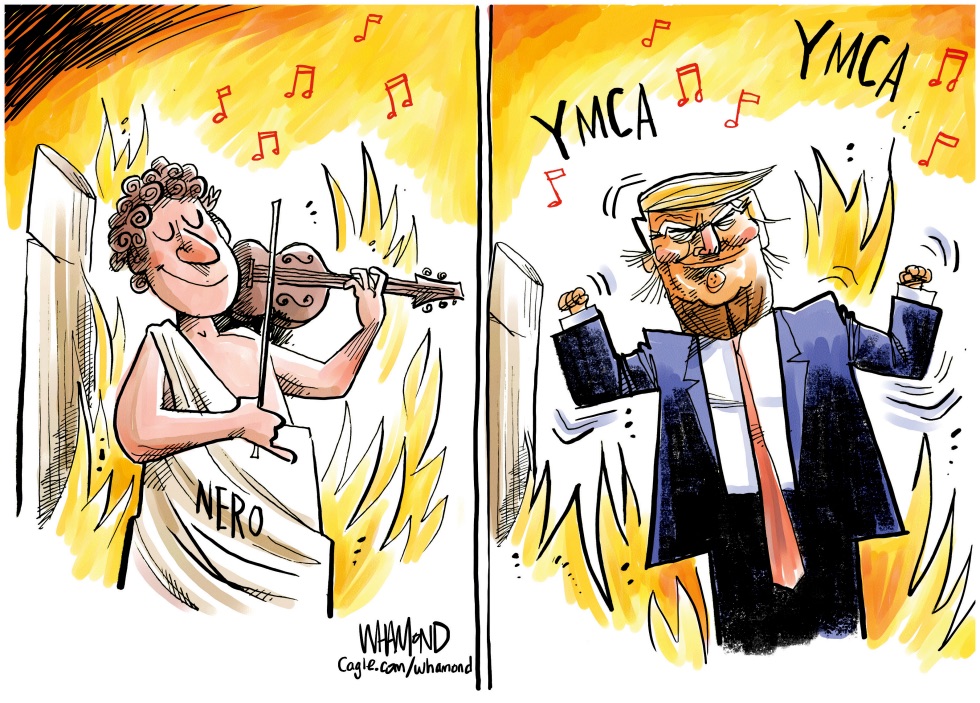
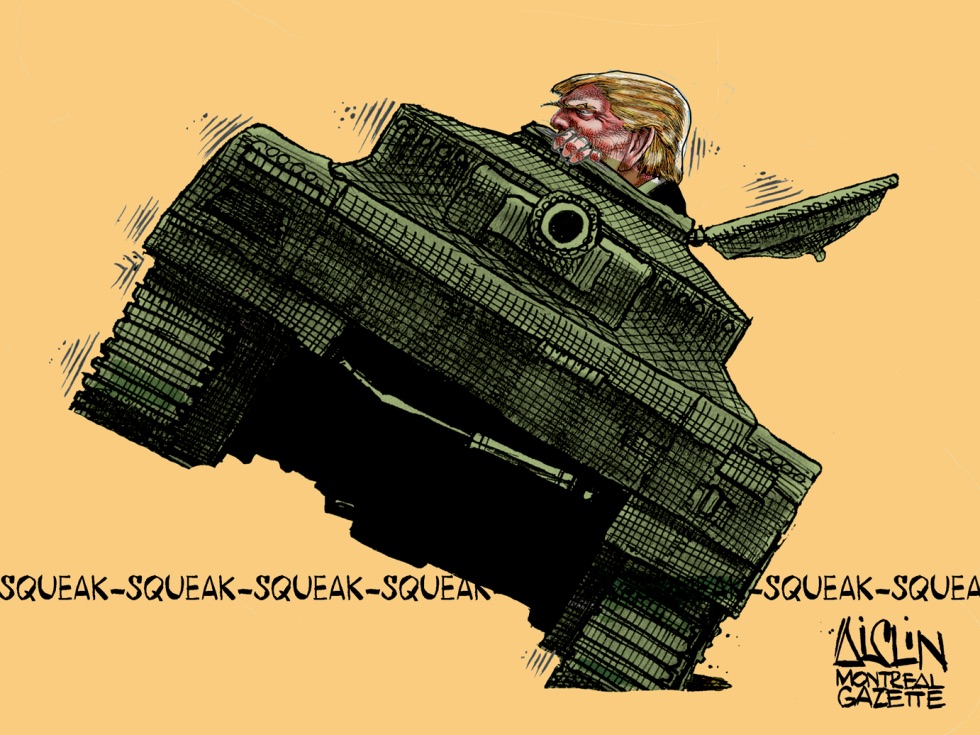
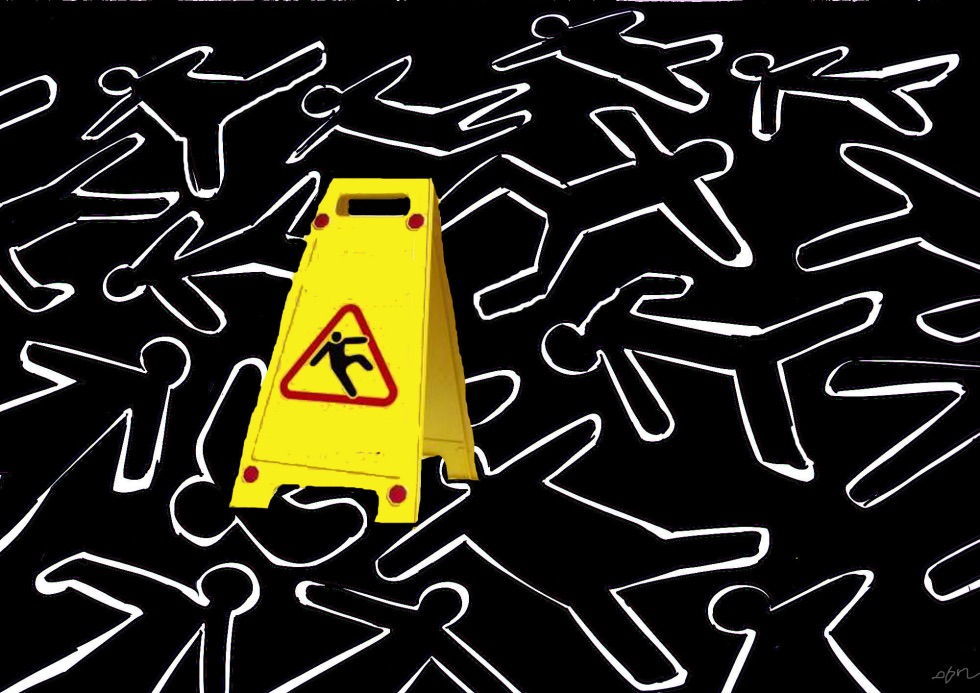
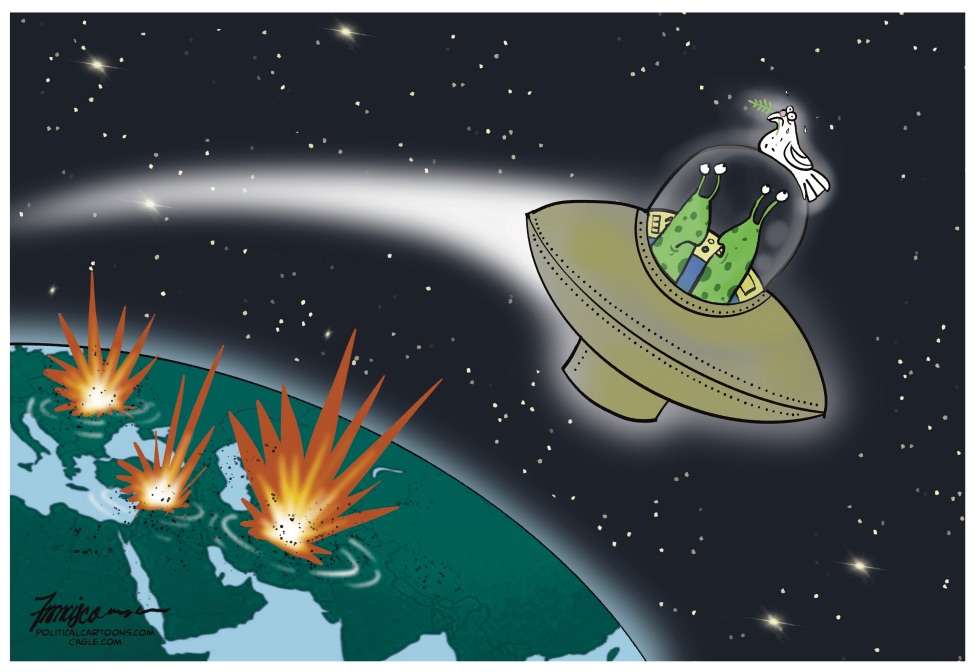
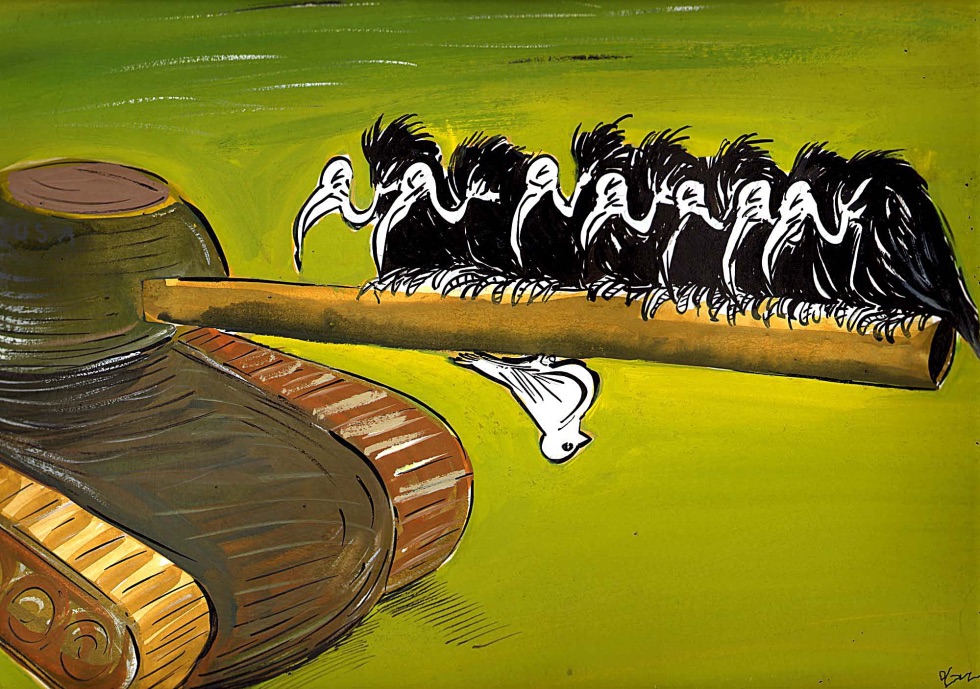
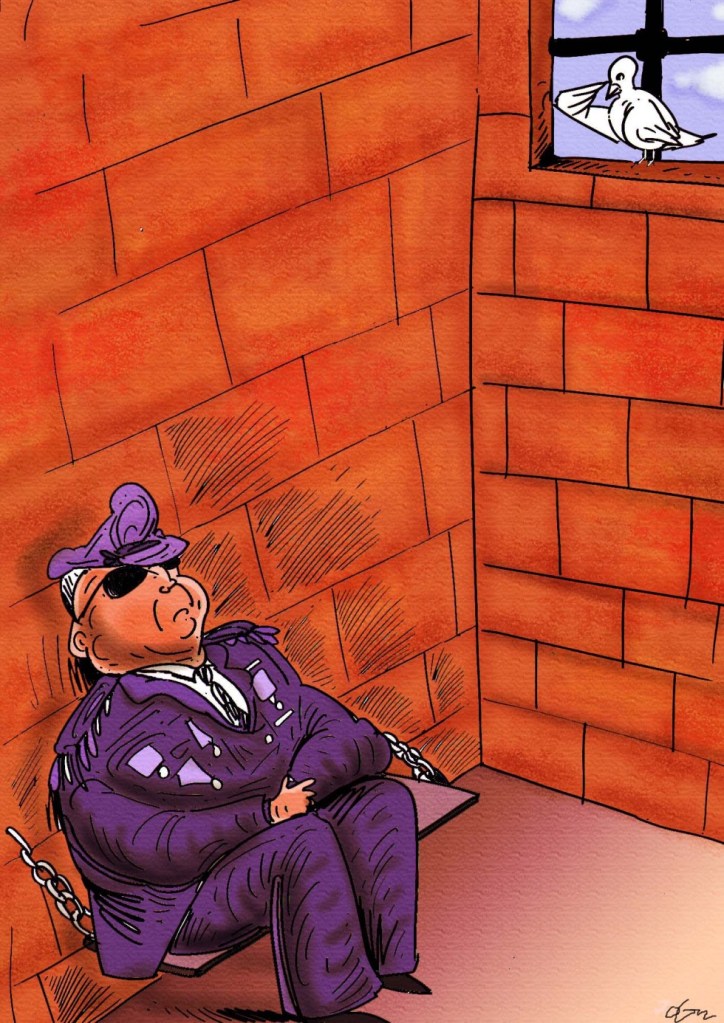
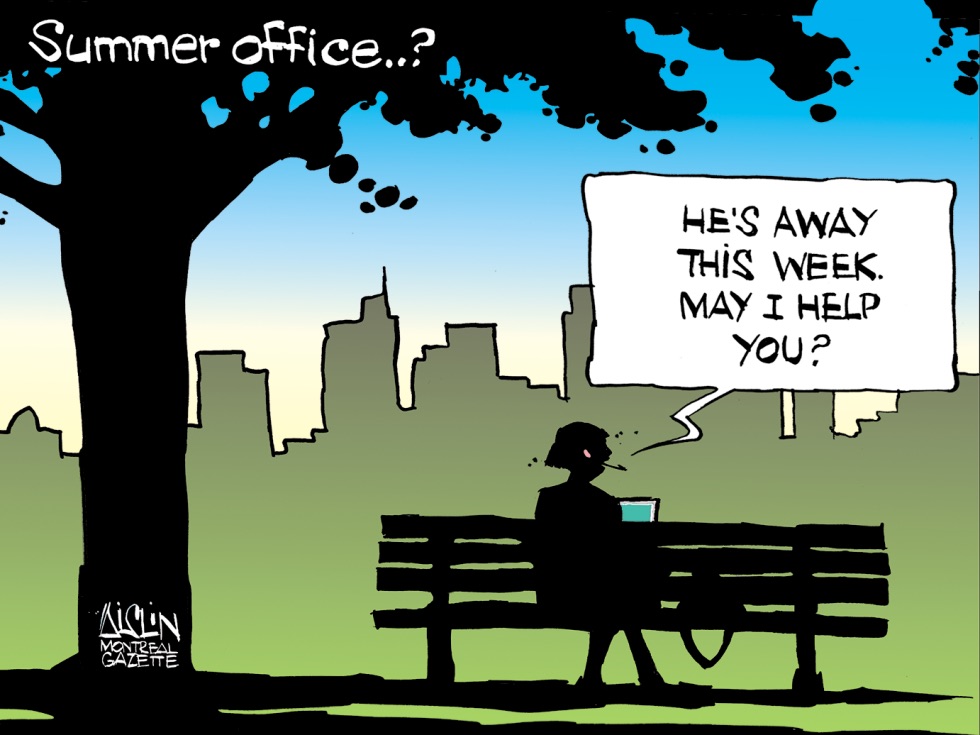
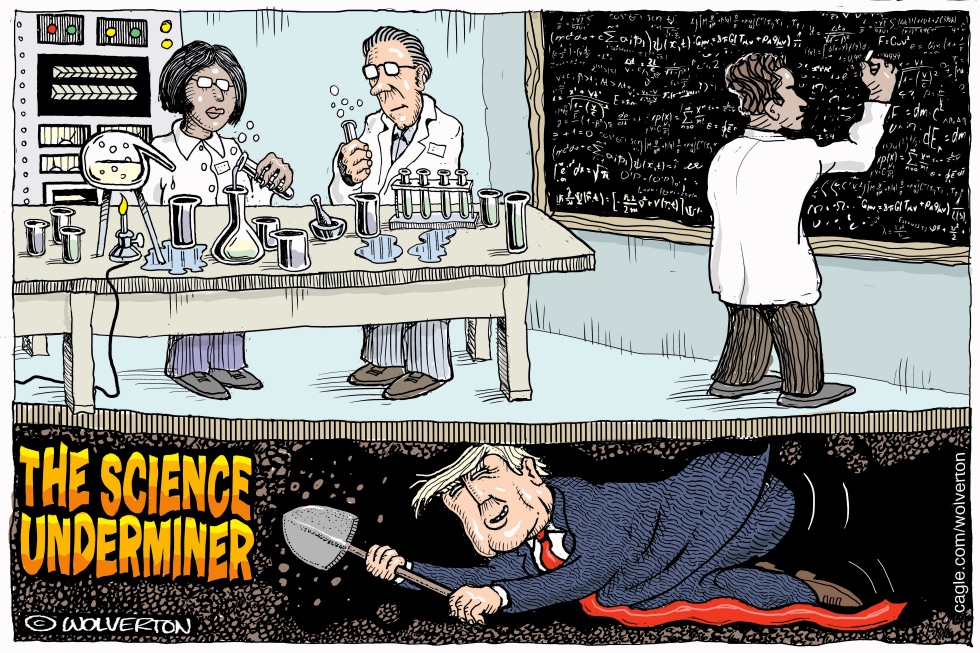
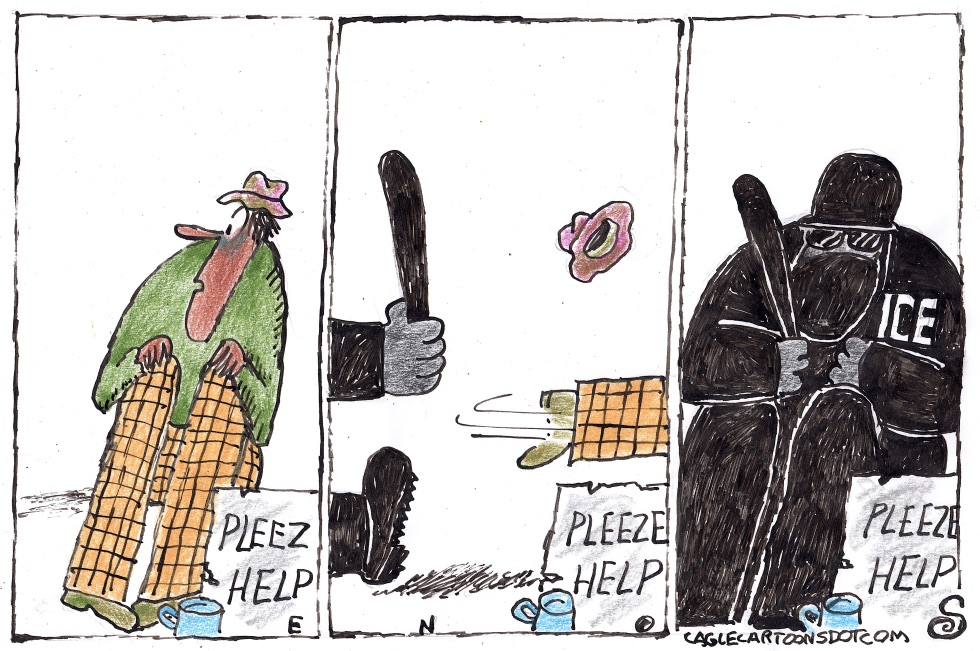
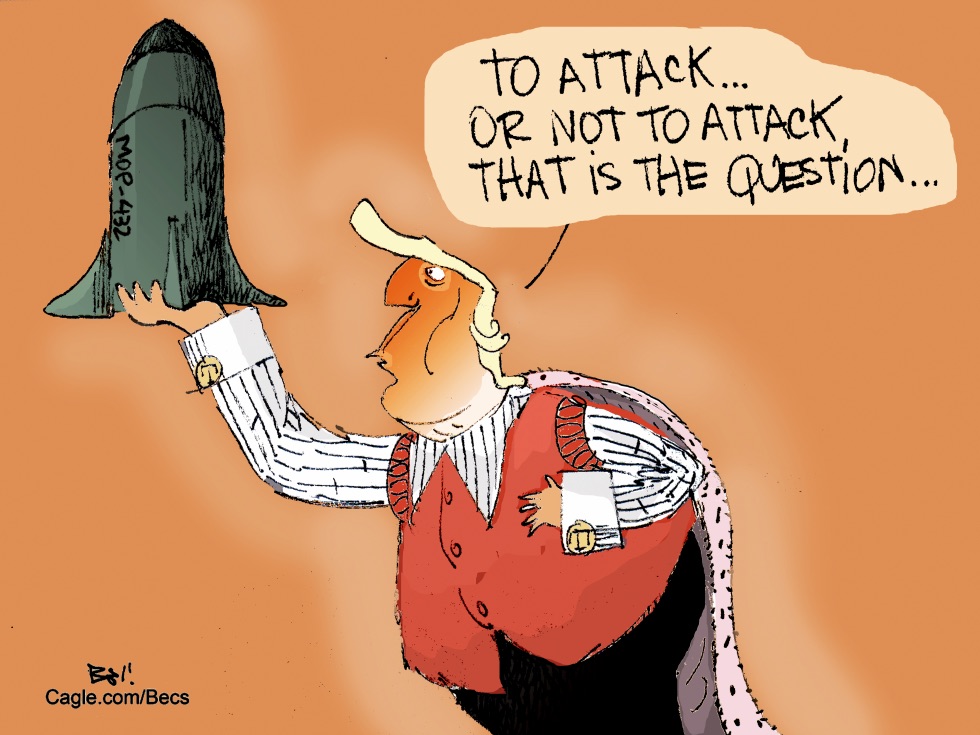
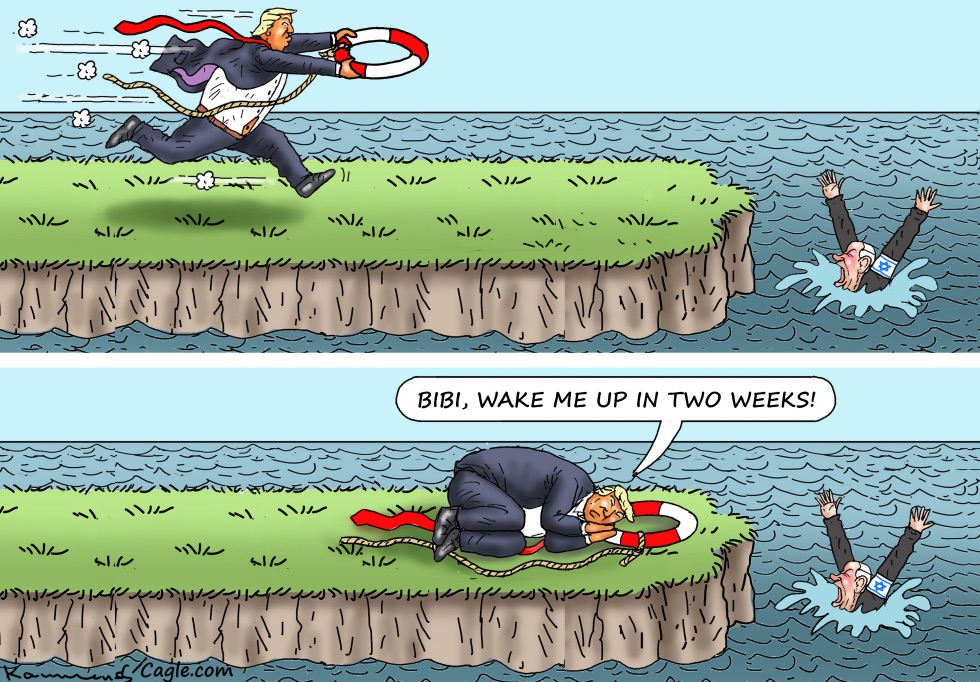


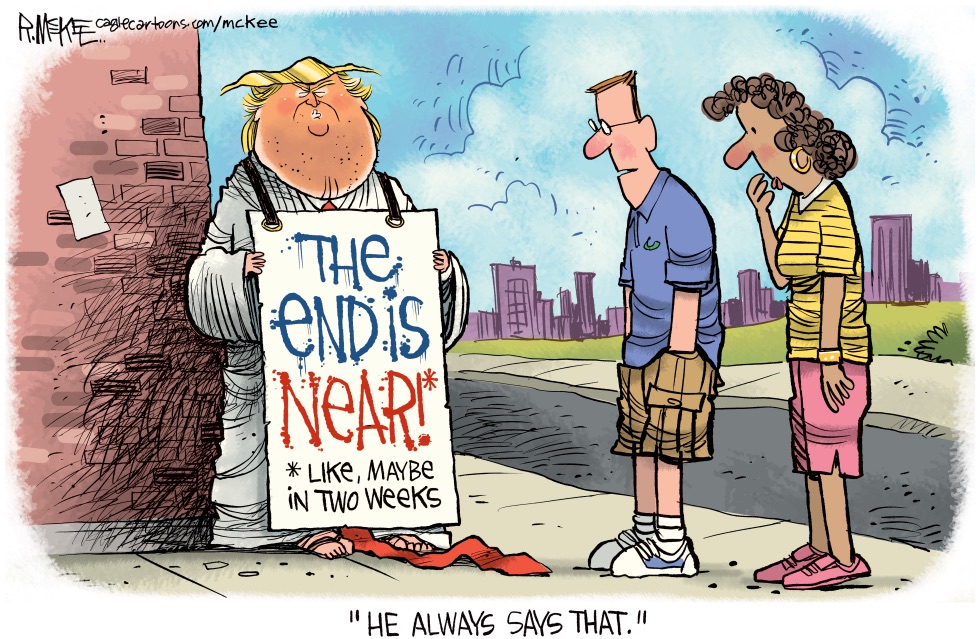

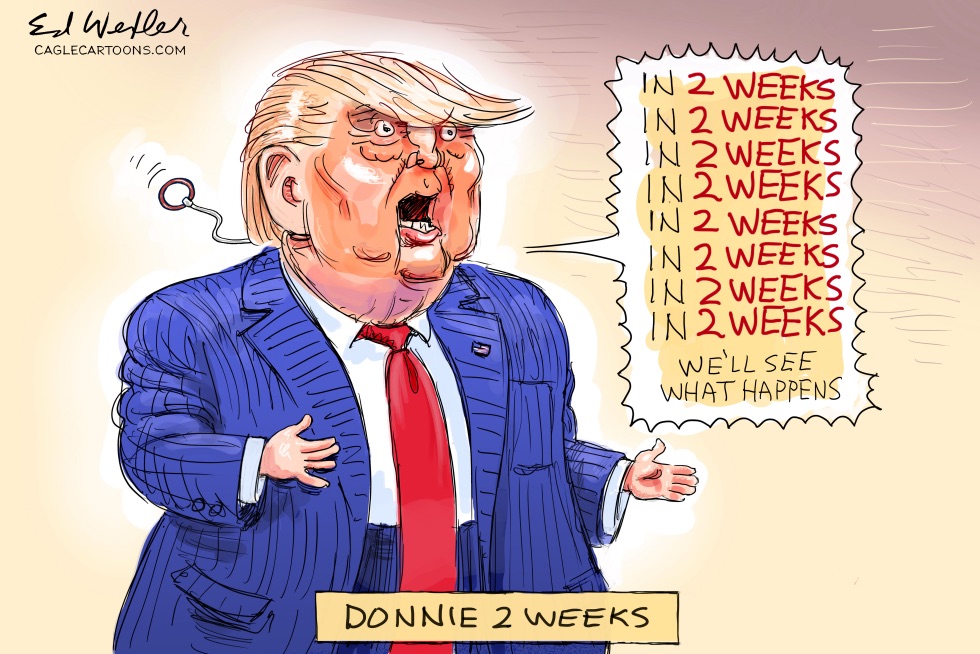
 Everyone from Kansas City east to the Atlantic will be impacted. It’s huge! Yes, Boston is included! It goes as far south as Asheville and will go way up into Canada. Be prepared to stay home! Europe is getting directly involved in pushing both Iran and Israel to the negotiation table. This is from
  You may ask yourself, Where is my beautiful country in these peace-seeking negotiations? Well, the answer is we’re trapped in the Trump Two Week Twist. You really have to watch this clip from Jen Psaki’s show last night. The explanation and the incredible number of times he’s used the Two Week Twist is surreal. It’s laughable even though it turns the United States of America into a feckless and shammy place run by a feckless and shammy nepobaby. The New York Times heading is trying to make Yam Tits look thoughtful. Why do they keep carrying his water? Or perhaps, better put, why is he carrying his colostomy bag? This is the headline.
 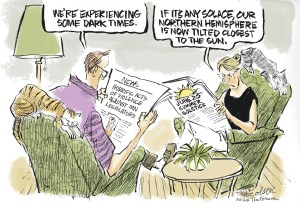 Meanwhile, we now have to report the news about ongoing attempts at political assassinations. In sad news,
  Well, have to wait to learn more about this one. Meanwhile, the big bad budget-busting bill is hung up in the Senate. This is from
  Here’s a sad headline from the
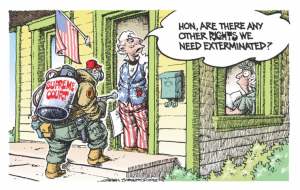 This bill is on a long path. Be sure to stay on top of it. I’m pretty sure a lot of the reality show attractions are still to keep us out of the loop. Also, do not forget the importance of this Supreme Court decision, which basically says state Religionists have more control over your children and your body than you do. This is from Chris Geidner writing on his blog


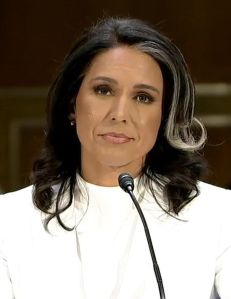

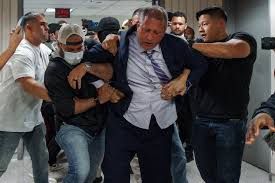

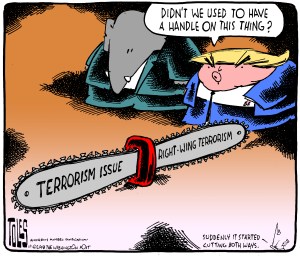
 Catching actual criminals is not on the radar with this administration. In fact, they’re doubling down on their anti-immigrant antics despite recent polls showing it highly unpopular.
 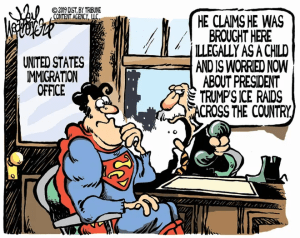 This seems to verify that Yam Tits’ policy depends on who he talks to last. Also, the police in most large cities are bad enough. Why up the stakes with military with no crowd control training?
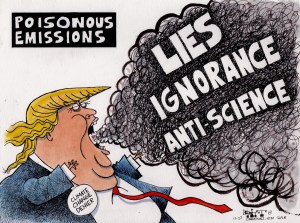 Everything he wants is a national emergency to this guy. He’s a toddler. Give him a blankie and a Nuk! I suppose we’re going to the courts some more for lessons in the U.S. Constitution.
 We’ve already discussed how many US professors have left for Canada. Here’s an interview from the pair we featured earlier. This is especially true of those who specialize in research around democratic backsliding and fascist takeovers in formerly democratic countries. This new Interview from
 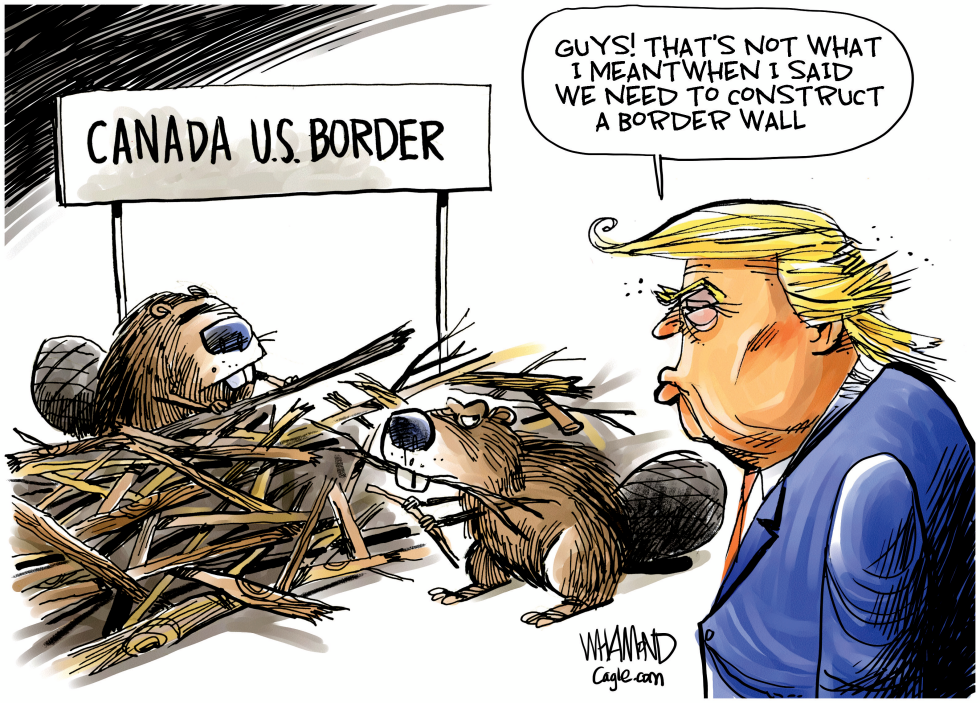 Here are some links to follow the G7 summit.
 Today, we got the news of the Case Harvard filed against Trump. “Judge Temporarily Blocks Trump Admin From Revoking Harvard’s Ability To Enroll International Students.” This is from
 There is a daily drumbeat of stupidity, airing of white grievances, and cruelty. While discriminating harshly against everyone who is not white and Christian, this administration harbors supporters who carry torches and shout “Jews will not replace us,” and has bubble-headed Congress Critters who scream about “Jewish Space Lasers”. Anti-semitism has become transactional. It has become a useful tool in the attack on Academia and the Democratic Party. It assumes that you can’t understand the history of the Jewish people without turning a blind eye to the punishing attacks on Palestinian women, children, and innocents in the Gaza Strip. I do not think there is a bigger way of showing disrespect for a group of people than using their historical struggles as a tool to encourage the murder of innocents. But then, our #FARTUS is planning a Trump Tower, hotel, and golf course in GAZA. The Trump Boyz–in between murdering endangered animals for sport–have been travelling the globe using the Tariff stick as a way to expand their Crime Syndicate. All, at the expense of the United States and its economy. This is from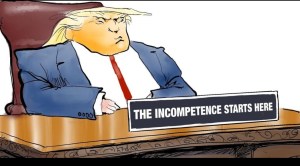
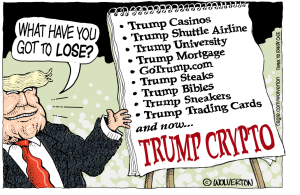 That sure is different than the 2021 #FARTUS who told Fox News. He just couldn’t wait to get into that scam, I guess.
  So, build the nastiest factory in the backyard of the people least able to deal with it. That’s the sound of these Robber Barons that should be familiar to anyone who knows US history from its early 20th-century business escapades. The most interesting thing that’s popped up today is that Apple has got Trump in a lather, and the Equity Markets hate it. This is from
  Apple is being threatened with 25% tariffs. Wow, how free market is this? Sounds a lot more like the old Soviet Command and Control model. Is he channeling Putin and Orban or just pissed about something Apple did at his party? This is from CNBC. “Trump says Apple must pay a 25% tariff on iPhones not made in the U.S.” Does he not realize how long it would take to even set up a factory, let alone train everyone? Doesn’t he know what this huge project would take to even break even?
 peej
peej Carissa
 bostonboomer
 dakinikat
 ecocatwoman
 jjlo
jjlo mablue2
 Mama Lopez
 peggysue22
 quixote
 skydancingguestblogger
 Mona (aka Wonk the Vote)



 Sky Dancing
Recent Comments