
Thursday Reads
Posted: March 31, 2011 Filed under: Afghanistan, Barack Obama, Central Intelligence Agency, Democratic Politics, Diplomacy Nightmares, executive orders, Foreign Affairs, Iraq, Libya, MENA, morning reads, U.S. Military, U.S. Politics | Tags: CIA, death anxiety, evolution, General Electric, intelligent design, Jeffrey Immelt, Libya uprising, Moammar Gaddafi, progs, Quinnipiac poll, Russ Feingold, the Super-Rich 40 Comments
Good Morning!! Here are the stories that caught my eye this morning.
Reuters: Exclusive: Obama authorizes secret help for Libya rebels
President Barack Obama has signed a secret order authorizing covert U.S. government support for rebel forces seeking to oust Libyan leader Muammar Gaddafi, government officials told Reuters on Wednesday.
Obama signed the order, known as a presidential “finding”, within the last two or three weeks, according to government sources familiar with the matter.
Such findings are a principal form of presidential directive used to authorize secret operations by the Central Intelligence Agency. This is a necessary legal step before such action can take place but does not mean that it will.
Washington Post: In Libya, CIA is gathering intelligence on rebels
The Obama administration has sent teams of CIA operatives into Libya in a rush to gather intelligence on the identities and capabilities of rebel forces opposed to Libyan leader Moammar Gaddafi, according to U.S. officials.
The information has become more crucial as the administration and its coalition partners move closer to providing direct military aid or guidance to the disorganized and beleaguered rebel army.
Although the administration has pledged that no U.S. ground troops will be deployed to Libya, officials said Wednesday that President Obama has issued a secret finding that would authorize the CIA to carry out a clandestine effort to provide arms and other support to Libyan opposition groups.
I can’t imagine why anyone would be surprised that the CIA is involved in Libya (they are everywhere). But the progs are looking down their noses in strong disapproval.
Emptywheel: Where Will Obama Try Himself for Material Support for Terrorism?
After all, according to Holder v. Humanitarian Law Project any help to a terrorist group–even counseling on how to make peace–is material support. And no matter how we try to spin arming rebels as an act of peace, it’s a good deal more help than legal counsel.
And, as the DC Circuit’s decision yesterday in Uthman Abdul Rahim Mohammed Uthman’s habeas suit makes clear, it’s not enough for a person to stop associating with al Qaeda in the 1990s, nor does the government need any real evidence of a tie between someone in al Qaeda’s vicinity to claim that person is a member of al Qaeda.
Glenn Greenwald: The wisdom and legality of arming Libyan rebels
Then there’s the question of the legality of arming Libyan troops. Salon’s Justin Elliott reported on Monday that the administration was actively considering arming the rebels despite an absolute arms embargo imposed by U.N. Resolution 1970 (“imposing an arms embargo on the country”). Today, The Guardian elaborates by citing numerous legal experts insisting that it would be a violation of the U.N. Resolution for the U.S. to arm the rebels. For its part, the U.S. insists that it is legally entitled to do so, with Hillary Clinton announcing that the arms embargo has been “overriden” by the broad mandate of U.N. Resolution 1973, allowing “all necessary measures” to be used to protect Libyan civilians.
On the strictly legal issue, this seems to be a close question. Can the specific arms embargo really be “overriden” by a general clause allowing the protection of civilians? That seems redolent of the Bush arguments that specific prohibitions in the law (such as the ban on warrantless eavesdropping) were “overriden” by the broad war powers assigned by the AUMF. More to the point, can it really be said that arming Libyan rebels is necessary for the protection of civilians? That sounds much more like what one does to help one side win a civil war.
I don’t know, and I admit I don’t like the idea of this action in Libya expanding too far. I remember when Reagan armed the “Contras.” Of course back in those days we were arming right-wing groups and the US was involved in countless human rights violations. In Libya, the opposition forces are trying to depose a genuinely evil dictator who has been involved in terrorist attacks.
But here’s my question: why don’t the progs convince the guy they supported to get us the hell out of Iraq and Afghanistan? They wanted this guy, they forced him on us, and now they’re whining. and what are they doing to find a decent alternative? A big nothing.
I’m not going to be happy if we get involved in a ground war in Libya or anywhere else, but it hasn’t happened yet. We’ve been in Afghanistan for almost ten years!
Raw Story: Most Americans think Obama does not deserve re-election, according to new poll
Obama’s approval rating is also at its lowest point ever, at 42 percent, while his disapproval rating rose from earlier in the month to a new high of 48 percent.
A similar Quinnipiac poll published March 3 found President Obama with 46 percent approval and 46 percent disapproval.
In that earlier poll, voters also split on whether Obama deserves reelection, with 47 percent saying yes and 45 percent saying no.
The latest poll reflects the president’s sliding fortunes in other studies, with a full 50 percent now saying that he does not deserve to stay in office beyond 2012.
The big problem with this is that the Republicans are bound to nominate someone who is to the right of Atilla the Hun and about as crazy and unempathetic as Muammar Gaddafi. I refuse to vote for Obama, but what if we end up with Michelle Bachmann or Mike Huckabee as President?
Anyway, the Tea Party’s polls are in the crapper along with Obama’s.
Just 32 percent of respondents viewed the tea party favorably, while a record-high 47 percent had a negative view of the movement that propelled Republicans to dramatic Congressional victories last November. Fourteen percent had no opinion, and 7 percent said they’ve never heard of the tea party.
I sure hope the Congresspeople find out about that.
Russ Feingold doesn’t think Jeffrey Immelt is a very good jobs czar. No kidding, lol.
Feingold’s new group, Progressives United, is set to launch a new campaign to pressure General Electric CEO Jeffrey Immelt to step down as the head of the President’s Council on Jobs and Competiveness. Feingold’s campaign — which I’m told will be joined by Move On later today — is based on two pieces of news that, Feingold says, render Immelt unfit for the gig of Obama jobs chief: GE paid no American taxes in 2010; and Immelt’s compensation doubled .
In an email to members of his new group, Feingold will argue that if Immelt doesn’t step down, Obama should fire him, arguing that Dems need to stop coddling corporations whose behavior undermines our economy:
I’ve got a couple of semi-humorous stories to get your mind off all the bad news. Get out your tiny violin. Did you know that the super-rich are unhappy and dissatisfied with their lives?
The Atlantic: Secret Fears of the Super-Rich
Does great wealth bring fulfillment? An ambitious study by Boston College suggests not. For the first time, researchers prompted the very rich—people with fortunes in excess of $25 million—to speak candidly about their lives. The result is a surprising litany of anxieties: their sense of isolation, their worries about work and love, and most of all, their fears for their children.
Awwwww. Too bad, so sad. Then give your money away to people who actually need it, why don’t you. And then get a real job.
Raw Story: Death anxiety linked to acceptance of intelligent design: study
Research conducted at the University of British Columbia and Union College found that people’s death anxiety was associated with support of intelligent design and rejection of evolutionary theory.
Death anxiety also influenced those in the study to report an increased liking for Michael Behe, a prominent proponent of intelligent design, and an increased disliking for Richard Dawkins, a well-known evolutionary biologist.
The findings suggest that people are motivated to believe in intelligent design and doubt evolutionary theory because of unconscious psychological motives.
Okay, time out. Because? No. This is a correlational study, and as we all should have learned long ago, Correlation does not equal causation.
The study was lead by UBC Psychology Assistant Professor Jessica Tracy and and UBC psychology PhD student Jason Martens. It was published in the March 30 issue of the open access journal PLoS ONE.
“Our results suggest that when confronted with existential concerns, people respond by searching for a sense of meaning and purpose in life,” Tracy said. “For many, it appears that evolutionary theory doesn’t offer enough of a compelling answer to deal with these big questions.”
There are a lot of variables unaccounted for in this description of the study. Maybe death anxiety is just associated with fundamentalist Christianity. I guess I could look up the study and see what the findings really were… But I probably won’t.
That’s all I’ve got for today. What are you reading and blogging about?
Japanese Officials Admit They Are Making No Progress
Posted: March 30, 2011 Filed under: Food, Foreign Affairs, Japan, toxic waste, Water, We are so F'd | Tags: cesium-137, contaminated food, contaminated water, Fukushim Dai-Ichi, Fukushima nuclear plant, Nuclear Contamination, radiation 30 Comments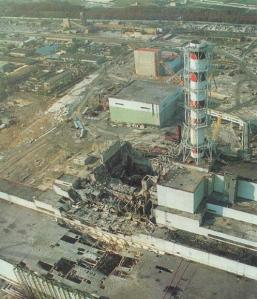
Chernobyl disaster: will it happen again?
The Guardian reports that radiation levels are rising in the ocean near the Fukushima nuclear plant, and Japanese officials admit they basically have no real solution for the apparent meltdown and/or meltdowns of the four damaged nuclear reactors.
The country’s nuclear and industrial safety agency, Nisa, said radioactive iodine-131 at 3,355 times the legal limit had been identified in the sea about 300 yards south of the plant, although officials have yet to determine how it got there.
Hidehiko Nishiyama, a Nisa spokesman, said fishing had stopped in the area, adding that the contamination posed no immediate threat to humans. “We will find out how it happened and do our utmost to prevent it from rising,” he said.
Good luck with that. The battle to control the reactors could go on for years.
The battle to control the slow-motion meldowns could take years, according to this Reuters article.
Plant operator Tokyo Electric Power Co. has conceded it faces a protracted and uncertain operation to contain overheating fuel rods and avert a meltdown.
“Regrettably, we don’t have a concrete schedule at the moment to enable us to say in how many months or years (the crisis will be over),” TEPCO vice-president Sakae Muto said in the latest of round-the-clock briefings the company holds.
Back to the Guardian piece:
Robert Peter Gale, a US medical researcher who was brought in by Soviet authorities after the Chernobyl disaster, said recent higher readings of radioactive iodine-131 and caesium-137 should be of greater concern than reports earlier this week of tiny quantities of plutonium found in soil samples.
But he added: “It’s obviously alarming when you talk about radiation, but if you have radiation in non-gas form I would say dump it in the ocean.”
Wonderful. The Japanese eat a lot of fish, don’t they?
Radiation measured at a village 40 kilometres from the Fukushima nuclear plant now exceeds a criterion for evacuation, the UN nuclear watchdog said.
And a Japanese nuclear expert has warned crews may have to keep pouring cooling water onto the stricken reactors for years.
Years. That is what multiple sources are now saying. It could take years. So how does it end? We hope for new discoveries that will solve the problem, while the reactors continue to melt down and release radioactive elements into the groundwater and the ocean? Or there is a catastrophic explosion?
Yes, I know the “experts” say that won’t happen, but if workers are going to be struggling with these plants for years, there is inevitably going to be human error. Besides, the “experts” have tried to minimize the dangers all along. Only now is the real truth beginning to come out.
From the Union of Concerned Scientists All Things Nuclear blog:
Today the IAEA has finally confirmed what some analysts have suspected for days: that the concentration per area of long-lived cesium-137 (Cs-137) is extremely high as far as tens of kilometers from the release site at Fukushima Dai-Ichi, and in fact would trigger compulsory evacuation under IAEA guidelines.
The IAEA is reporting that measured soil concentrations of Cs-137 as far away as Iitate Village, 40 kilometers northwest of Fukushima-Dai-Ichi, correspond to deposition levels of up to 3.7 megabecquerels per square meter (MBq/sq. m). This is far higher than previous IAEA reports of values of Cs-137 deposition, and comparable to the total beta-gamma measurements reported previously by IAEA and mentioned on this blog.
This should be compared with the deposition level that triggered compulsory relocation in the aftermath of the Chernobyl accident: the level set in 1990 by the Soviet Union was 1.48 MBq/sq. m.
Thus, it is now abundantly clear that Japanese authorities were negligent in restricting the emergency evacuation zone to only 20 kilometers from the release site.
This is bad, folks. Here is a summary of the health effects of cesium-137:
Like all radionuclides, exposure to radiation from cesium-137 results in increased risk of cancer.
Everyone is exposed to very small amounts of cesium-137 in soil and water as a result of atmospheric fallout. Exposure to waste materials, from contaminated sites, or from nuclear accidents can result in cancer risks much higher than typical environmental exposures.
If exposures are very high, serious burns, and even death, can result. Instances of such exposure are very rare. One example of a high-exposure situation would be the mishandling a strong industrial cesium-137 source. The magnitude of the health risk depends on exposure conditions. These include such factors as strength of the source, length of exposure, distance from the source, and whether there was shielding between you and the source (such as metal plating).
Please note that cesium-137, like plutonium doesn’t occur naturally in the environment. When officials and “experts” talk about “background” radiation, they are talking about elements that have been introduced through nuclear tests and nuclear reactor accidents and bi-products. This “background” radiation wasn’t around before the nuclear age, and I personally don’t believe that it has no effect on us.
From NPR: More radioactive material has been found in foods in Japan.
Yesterday, I asked in a comment what is being done with all the contaminated water that is being removed from the Fukushima reactors. Scarecrow addressed this question today at FDL.
They’ve got hundreds of tons of contaminated water preventing workers from getting close enough to pumps, valves, monitors needed to stabilize conditions. So they have to pump this water out and put it somewhere, but where? There are tanks at/near some units that can hold some of it, but not all, and external temporary storage may allow exposure to the atmosphere. Meanwhile, they must keep pumping more fresh water into the reactors and spent fuel storage pools, while more leaks out.
There are large pools of dangerously contaminated water in the turbine buildings adjacent to each reactor buidling, with more leaking in from somewhere, and few places to put it. Just outside the turbine buildings, there are long, deep trenches nearer the ocean and likely filled with water from the tsunami. But they’re now contaminated with radiation and water leaks from the turbine building.
Where can they put all this water? And given varying degrees of contamination, which water should they put where? For example, should they just pump out the least radioactive water in the trenches/pools and dump it in the ocean?
Believe it or not, some people are suggesting putting the water in large ships and letting them float around in the ocean. And what happens if there is a huge storm and the ships are damaged? Honestly, this gets scarier and scarier every day.
Even worse, today smoke was seen at another nuclear plant owned by Tepco!
The company said smoke was detected in the turbine building of reactor No. 1 at the Fukushima Daini nuclear power plant around 6 p.m. (5 a.m. ET).
Smoke could no longer be seen by around 7 p.m. (6 a.m. ET), a company spokesman told reporters.
The Fukushima Daini nuclear power plant is about 10 kilometers (6 miles) from the Fukushima Daiichi nuclear power plant, where workers have been scrambling to stave off a meltdown since the March 11 earthquake and tsunami knocked out cooling systems there….
After the dual disasters, Japanese authorities also detected cooling-system problems at the Fukushima Daini plant, and those living within a 10-kilometer radius (6 miles) of Fukushima Daini were ordered to evacuate as a precaution.
What next? Something tells me whatever happens next won’t be good.
Libyan Rape Victim Faces Criminal Charges
Posted: March 29, 2011 Filed under: Foreign Affairs, Libya, Surreality, Violence against women, Women's Rights | Tags: gang rape, Iman al Obeidi, insanity, Libya, rape, Through the looking glass 6 Comments
I think Libya exists in an alternate reality, perhaps on the other side of Alice’s looking glass. Iman al-Obeidi, the woman who was dragged away by Libyan security forces after she told foreign journalists that she had been beaten and raped by 15 of Moammar Gaddafi’s men, has now been charged with slander.
Spokesman Mussa Ibrahim said charges had been brought against her by some of the militiamen she had accused. “It’s a legal case,” Ibrahim told reporters. “The boys she accused of rape are making a case against her because it’s a grave offence to accuse someone of a sexual crime.“
See what I mean? It’s crazy-upside-down-land over there.
It was unclear whether she is still in custody. Ibrahim initially said she was free and safe but then seemed to qualify this, saying he was unsure whether she was currently under investigation.
He said later that Obeidi was refusing to undergo a medical examination and that this was making it difficult to investigate her complaint. Lawyers for the men she alleges raped her were using her refusal to question the truth of her story, he added.
I wouldn’t want to be examined by anyone associated with Gaddafi either. They’d probably discover she’s no longer a virgin and then say that’s a crime too.
Previous statements in Tripoli about Obeidi have proved to be incorrect. After the hotel incident Ibrahim, the government spokesman, said she was a prostitute who had been released and was staying with a sister in Tripoli.
But in an interview with al-Jazeera Arabic TV, broadcast on Monday, Obeidi’s parents said she was being held hostage at Gaddafi’s Bab al-Aziziya compound in the capital.
As far as I can tell al-Obeidi, a lawyer, is still missing, and so are three other women lawyers who allegedly were abducted along with her at the checkpoint in Tripoli.
Yesterday, Iman’s family held an engagement party for her in her absence.
as they attempted to show their love and support while hundreds of Benghazi women marched through the streets demanding her release Monday, in an unprecedented move.
Women who are raped have been villified, even beheaded or stoned to death, so the fact that Eman’s family is showing support is extremely significant.
Via black sista’s blog, another news outlet says it was actually a marriage ceremony.
Eman Al-Obeidi’s fiancee has spoken earlier on Al Jazeera saying that he was already engaged to her and that they have performed the marriage ceremony with the Shiekh. Although she was not present, and her whereabouts remain unknown, Eman’s fiancee and family arranged this ceremony in her honor.
He also stated that he was proud to be married to Eman. His name is Faraj Ghaithi. The families had an understanding that they will be married in the future.
Apparently her family wanted to restore her “honor” through this process.
An Islamic marriage ceremony can take place with representatives from both sides (from the bride and groom) to give their consent. It is understood that Eman has previously agreed to marry Faraj, and that there was an ‘understanding’ between the two families.
Here is a video of the ceremony/rally.
Expert Tells Guardian UK: “Japan may have lost race to save nuclear reactor”
Posted: March 29, 2011 Filed under: A My Pet Goat Moment, Foreign Affairs, Japan, toxic waste, We are so F'd | Tags: Cancer, corporate malfeasance, Fukushima nuclear plant, Japan, nuclear meltdown, plutonium 40 Comments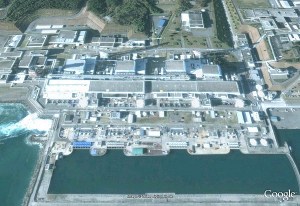
Google photo of Fukushima Nuclear Plant
Ian Sample, science correspondent for the Guardian, writes:
Richard Lahey, who was head of safety research for boiling-water reactors at General Electric when the company installed the units at Fukushima, told the Guardian workers at the site appeared to have “lost the race” to save the reactor, but said there was no danger of a Chernobyl-style catastrophe….
“The indications we have, from the reactor to radiation readings and the materials they are seeing, suggest that the core has melted through the bottom of the pressure vessel in unit two, and at least some of it is down on the floor of the drywell,” Lahey said. “I hope I am wrong, but that is certainly what the evidence is pointing towards.”
The major concern when molten fuel breaches a containment vessel is that it reacts with the concrete floor of the drywell underneath, releasing radioactive gases into the surrounding area. At Fukushima, the drywell has been flooded with seawater, which will cool any molten fuel that escapes from the reactor and reduce the amount of radioactive gas released.
Lahey said: “It won’t come out as one big glob; it’ll come out like lava, and that is good because it’s easier to cool.”….
“The reason we are concerned is that they are detecting water outside the containment area that is highly radioactive and it can only have come from the reactor core,” Lahey added. “It’s not going to be anything like Chernobyl, where it went up with a big fire and steam explosion, but it’s not going to be good news for the environment.”
Last night, ABC News talked to physicist Michio Kaku.
“Apparently, there is a crack, a crack in the vessel by which radiation is escaping,” U.S. physicist Michio Kaku said. “This could mean that if the core begins to melt, we could have a steam explosion, a hydrogen gas explosion like Chernobyl.”
So the nuke guy says it won’t be like Chernobyl, Kaku says it will. I guess we have no choice except to just wait and see.
FYI, here is an earlier interview with Kaku at KATU, Portland, Oregon.
Michio Kaku’s comments came after news that Japanese nuclear experts said they suspect there has been a possible breach at the Fukushima Dai-ichi nuclear complex.
“This is huge. For the first time, they’re using that dreaded word, ‘breach,’ Kaku said during an interview at KATU’s studios. “Plutonium is the most toxic chemical known to science. A speck of plutonium, a millionth of a gram, could cause cancer.”
No matter how much Tepco and pro-nuke “experts” insist there is no danger to humans from the material that has escaped the plant, there simply is no safe level of plutonium.
The Tokyo Electric Company confirmed that AREVA-manufactured fuel assemblies containing plutonium have at least partially melted down when they said that plutonium was found on five separate sites on the reactor grounds, and they had matched the plutonium signature of fuel produced at AREVA’s La Hague facility. The fuel assemblies were first loaded in the reactor at Fukushima last September and were in Reactor 3 when the 14 meter tsunami overwhelmed the nuclear plant.
Despite the fact that plutonium is one of the most deadly substances in existence, TEPCO has insisted there is no health danger from the plutonium found on site. According to health experts, plutonium particles absorbed in the human body vastly increases the chance of dying from a fatal form of cancer.
The former DOE official said, “NNSA was warned this kind of event could happen and they chose to build the MOX plant anyway. Maybe what Japan is going through will wake up people who can call a halt to this.”
Tuesday Reads
Posted: March 29, 2011 Filed under: Barack Obama, Foreign Affairs, Hillary Clinton, legislation, Libya, morning reads, Republican presidential politics, U.S. Military, U.S. Politics, worker rights | Tags: Donald Trump, Fareed Zackaria, Fukuskim nuclear plant, Indiana politics, Japan, Juan Cole, Libya, Moammar Gaddafi, NATO, radiation, Tom Malinowsky, Tom Ricks, unions 92 Comments
Good morning, political junkies!! Let’s get right to the news.
President Obama gave a speech last night in which he made a pretty good case (IMO) for U.S. limited intervention in Libya. He stated that there were not going to be American boots on the ground and that the U.S. is essentially finished with its part of the operation–it will be up to the UK, France, and Italy to police the no-fly zone and to the Libyan people to depose Gaddafi and decide what comes next.
Surprisingly, Obama was a bit more animated than usual–actually emphasizing points with his voice and at times appearing almost passionate. At least the speech didn’t start to put me to sleep until the last several minutes.
Obama indicated that the U.S. will continue to support efforts to set up a functioning government in Libya, but that will be a non-military effort. If he stands strong with that, I think he’s finally done something I agree with and can support.
Obama also argued that just because we can’t intervene in every conflict doesn’t mean that we should never intervene at all. We have to choose our battles, and in the case of Libya we had a dictator who was using his military–and his air power to kill his own citizens indiscriminately. If he had managed to attack Benghazi he might have murdered hundreds of thousands of people.
Furthermore, Libyans had asked for our help, and our action was supported by other Arab countries and by the Arab League. For once the U.S. was doing something that most Arabs wanted us to do. If we had not acted, we would have seen an atrocity take place, and that would have encouraged dictators in other Arab countries to crack down violently on protesters.
Here is the full text of the speech, if you are interested. I do think Obama went on too long after making the case for Libya. The speech would have been much better if he had done that and then wrapped it up.
I must say, I do not understand the criticisms of this Libya policy that I’m seeing in the progosphere, and from some people here at Sky Dancing. Maybe I’m nuts, but I think the U.S. finally had a chance to do something good with its massive military power and at the same time we get some good PR in a part of the world that has long hated us–with justification because we have enabled most of the tyrants in the region. I’m glad Hillary was able to convince her boss to do the right thing.
I want to call attention to some very knowledgeable people who agree with my assessment–and we do appear to be in the minority.
Thomas Ricks was on Monday’s edition of NPR’s Talk of the Nation. He said that he was struck by how many people either aren’t listening to what Obama, Clinton, and Gates are saying or they are discounting it out of hand.
Ricks said that these three are saying that the U.S. goals in Libya have already been achieved. The rebel forces are knocking on the door of Tripoli, thanks to the no-fly zone and some strategic bombing by the coalition countries. As Obama said last night, it is now up to Libyans to decide what to do with Gaddafi. We aren’t going to try to take him out.
Here’s what Ricks wrote on his blog after his appearance on Meet the Press with Gates and Clinton:
I was on Meet the Press yesterday, following Hillary Clinton and Robert Gates. I was struck at how frequently they emphasized the short-term, limited nature of the U.S. action in Libya, and how they used the past tense to discuss it:
Gates: “I think that the no fly zone aspect of the mission has been accomplished.”
Clinton: “I think we’ve prevented a great humanitarian disaster.”
Gates: “we see our commitment of resources actually beginning to — to decline.”
Gates: “in terms of the military commitment, the president has put some very strict limitations in terms of what we are prepared to do.”
Gates: “I don’t think it’s [Libya] a vital interest for the United States. But we clearly have interests there. And it’s a part of the region, which is a vital interest for the United States.”
I also was struck at how much more assertive Clinton seemed than Gates. A friend of mine calls this “State’s War.”
Ricks also blogged about his take on Obama’s speech: Obama on Libya: Watch out, Saudi Arabia
What we saw in the NDU speech was a logical defense of what the president has ordered the military to do and an exposition of what the limits of the action will be. The cost of inaction threatened to be greater than the cost of action, but now we have done our part. Next role for the U.S. military is best supporting actor, providing electronic jammers, combat search and rescue, logistics and intelligence. That was all necessary, and pretty much as expected.
But I was most struck by the last few minutes of the speech, when Obama sought to put the Libyan intervention in the context of the regional Arab uprising. He firmly embraced the forces of change, saying that history is on their side, not on the side of the oppressors. In doing so he deftly evoked two moments in our own history-first, explicitly, the American Revolution, and second, more slyly, abolitionism, with a reference to “the North Star,” which happened to be the name of Frederick Douglass’s newspaper. If you think that was unintentional, read this.
Hmmm…I totally missed that. Follow me below the fold…

 peej
peej Carissa
 bostonboomer
 dakinikat
 ecocatwoman
 mablue2
 Mama Lopez
 peggysue22
 quixote
 skydancingguestblogger
 Mona (aka Wonk the Vote)



 Sky Dancing
Recent Comments