
Late Night Drift: Women of Egypt
Posted: January 30, 2011 Filed under: Egypt, Foreign Affairs, Women's Rights | Tags: Esraa Abdel Fattah, Ghanda Shahbandar, Hatshepsut, mona eltahawy, Women in Egypt 32 Comments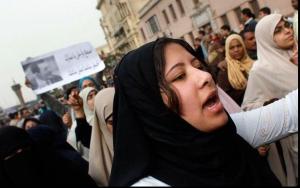
CAIRO, EGYPT - JANUARY 29: Egyptian woman shout out during a demonstration against President Hosni Mubarek in Tahrir Square January 29, 2011 in Cairo, Egypt. Unrest continued in the Egyptian captial as President Mubarek said he would form a new government but remain in power.
The Daughters of Hatshepsut take to the Street.
There seems to be a narrative in some fairly strange places that the women of Egypt are not behind a move to democracy and that they will suffer if Mubarak is removed. I thought I’d share some photos and stories on the role of Women in Egypt’s struggle for democracy.
From Slate:Women Are a Substantial Part of Egyptian Protests
An unprecedented number of Egyptian women participated in Tuesday’s anti-government protests. Ghada Shahbandar, an activist with the Egyptian Organization for Human Rights, estimated the crowd downtown to be 20 percent female. Other estimates were as high as 50 percent. In past protests, the female presence would rarely rise to 10 percent. Protests have a reputation for being dangerous for Egyptian women, whose common struggle as objects of sexual harassment is exacerbated in the congested, male-dominated crowd. Police hasten to fence in the demonstrators, and fleeing leads to violence. And women, whose needs are not reflected in the policies of official opposition groups who normally organize protests, have little reason to take the risk.
This photo is from a Fox news slide show found here http://www.foxnews.com/slideshow/world/2011/01/26/deadly-egyptian-protests/#slide=25
One of the protest organizers is a woman: Political activist Esraa Abdel Fattah, whose 15-day detention in 2008 for her activism made her a symbol of resistance. But Abdel Fattah’s position at the helm of the movement did not previously mean a large female presence. In 2008 Abdel Fattah tried to mobilize all of Egypt around labor conditions in El-Mahalla El-Kubra, north of Cairo. The male workers in the industrial town constituted the majority of the original protesters, and subsequent protests organized by the movement likewise failed to draw as large of a female crowd as seen on Tuesday.

Whoever is running this narrative can’t possibly be watching what’s going on unless they’re spending a huge amount of time on Faux News waiting for a pronouncement from Snowflake Snookie.
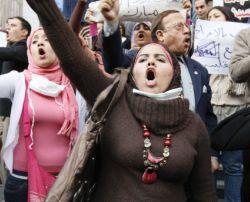
Women on the front lines in Egypt
Egyptian journalist Mona Eltahawy has emerged as one of the most prominent representatives of the movement on Western news media. Yesterday, she successfully got CNN to change their headline from “CHAOS IN EGYPT” to “UPRISING IN EGYPT.
Eltahawy, whose Twitter feed has been essential reading for those following the events in Egypt, has been circulating a link to a Facebook album filled with inspiring pictures of women on the front lines of the protests. (Le Monde has a similar gallery for the protests in Tunisia.)
Why is it important to draw attention to this phenomenon? Because we know it’s in the The West’s playbook to exploit concern for women’s rights to justify its imperial ambitions. That’s one of the many ways that the war in Afghanistan was sold to the public, from the CIA’s Wikileaked cable on manipulating public opinion in Europe to the propagandistic cover of Time magazine depicting a woman disfigured by the Taliban.
Culture warriors have cynically co-opted feminist rhetoric to push for bans on the Islamic veil throughout Europe, despite evidence that such prohibitions might actually make women more isolated and less safe. In 2009, Switzerland actually banned the construction of minarets, supposedly in response to feminist concerns.
I would not be at all surprised to hear US leaders, media pundits, and even some liberals defend the Mubarak regime by underscoring the potential threat of newly-empowered Islamists to impose restrictions on women’s rights in Egypt.This possibility certainly exists, but we should not pretend that the United States is sincere about these concerns, nor should we ignore the tens of thousands of Egyptian women taking to the streets to demand change.
“Bravest girl in Egypt”
Mona Eltahawy to CNN: Call Egypt an Uprising
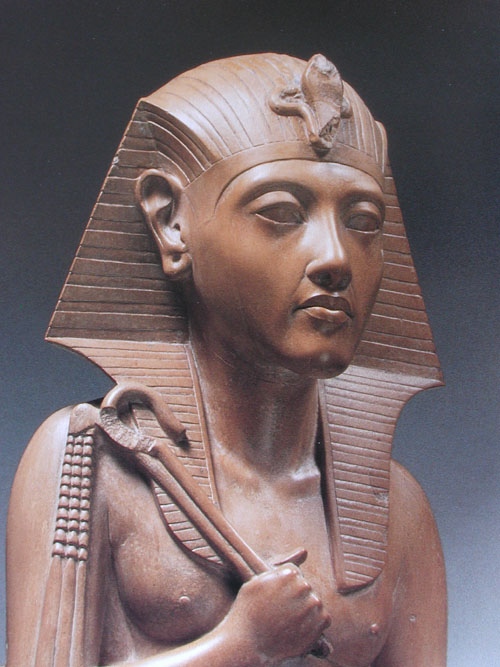 Do these sound like women that are going to be put behind some kind of iron veil? I’m not buying the narrative that a nation that produced Cleopatra and Hatshepsut is going to suddenly find itself promoting the Muslim Version of the Hand Maid’s Tale.
What is behind this sense of false chivalry?
Clinton Does the Sunday Shows
Posted: January 30, 2011 Filed under: Breaking News, Diplomacy Nightmares, Egypt, Foreign Affairs, Hillary Clinton: Her Campaign for All of Us, Middle East | Tags: Secretary of State Hillary Clinton, US Egypt Policy 26 CommentsToday, the Secretary of State clearly became the face of the US response to the Egyptian protests. She appeared on all
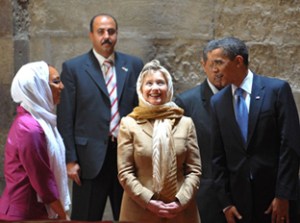
State Visit to Egypt, June 2009
five talk shows. Here’s some coverage of what she said and what others think about it.
From the NY Times: Clinton Urges Egyptian Dialogue
She issued a strong endorsement of key groups working to exert their influence on the chaotic Egyptian protests – the military, civil society groups and, perhaps most importantly, the nation’s people – but carefully avoided any specific commitment to Mr. Mubarak.
Her phrasing seemed to imply an eventual end to Mr. Mubarak’s 30 years in power. But when asked whether the United States was backing away from Mr. Mubarak and whether he could survive the protests, the secretary chose her words carefully. His political future, she said, “is going to be up to the Egyptian people.”
Making the rounds of the Sunday television talk shows, Mrs. Clinton urged the government in Cairo to respond in a “clear, unambiguous way” to the people’s demands and to do so “immediately” by initiating a national dialogue. At the same time, she was supportive of the Egyptian military, calling it “a respected institution in Egyptian society, and we know they have delicate line to walk.”
Hillary Clinton On ABC with Christine Amanpour:
From CBS NEWS: ‘Clinton: In Egypt, “Words Alone” Are Not Enough’
“Let me repeat again what President Obama and I have been saying,” Clinton said in an interview with CBS’ “Face the Nation” on Sunday. “That is, to urge the Egyptian security forces to show restraint, to not respond in any way through violence or intimidation that falls upon the peaceful protestors who are demanding that their grievances were heard.”
Faux News: Secretary Clinton: Won’t Label Egypt Foreign Policy Crisis Situation
Secretary of State Hillary Clinton shied away Sunday from labeling the escalating political turmoil in Egypt as a “foreign crisis situation” for the Obama administration.
“I don’t label anything like that, this is a very serious time for Egypt and we are going to do all we can to support an orderly transition to support a situation in which the aspirations of the Egyptians are addressed,” Clinton said.
She made the comment while briefing reporters before leaving on a trip to Haiti to assess recovery and political work there after last year’s devastating earthquake.
Clinton said that there are “many complexities” because Egypt has been a partner to the U.S. and worked closely with the country to keep peace in the region. She also lauded the Egyptian-Israeli peace agreement.
“We do not want to see a change or a regime that would actually continue to foment violence or chaos — either because it didn’t exist or because it had a different view in which in which to pose on the Egyptian people,” she said.
Some possible hints at what’s going on behind the scenes from the LATimes and Peter Nicholas.
A tight-lipped White House is taking an even-handed approach to the crisis in Egypt, suggesting that President Mubarak might be able to hold onto power if he allows competitive elections and restores individual freedoms. But inside the Obama administration, there are signs that officials are preparing for a post-Mubarak era after three decades.
One former senior administration advisor said he had spoken to his old colleagues inside the Obama administration in recent days about the unrest in Egypt. As early as last Wednesday, the Obama administration recognized that they would not be able to prop up the Mubarak regime and keep it in power at all costs, the former official said.
“They don’t want to push Mubarak over the cliff, but they understand that the Mubarak era is over and that the only way Mubarak could be saved now is by a ruthless suppression of the population, which would probably set the stage for a much more radical revolution down the road.”
Other behind the scenes hint at the Jerusalem Post: Gates appears to be talking to Israel.
Prime Minister Binyamin Netanyahu spoke Saturday evening both with US President Barack Obama and Secretary of State Hilary Clinton, and on Sunday Defense Minister Ehud Barak held a telephone conversation with Defense Secretary Robert Gates.
Obama made a round of phone calls Saturday to Middle East leaders to consult on the situation. In addition to speaking to Prime Minister Netanyahu, Obama also reached out to Prime Minister Recep Tayyi Erdogan of Turkey and King Abdullah of Saudi Arabia. On Sunday he spoke to British Prime Minister David Cameron.
StateDept StateDept
Missed #SecClinton interviews with ABC, CBS, CNN, FOX and NBC on #Egypt? Find all the transcripts here: http://go.usa.gov/YIw
I have some take away questions from her interviews. Like, did she or didn’t she hedge the aid to Egypt question? We can talk about them below the fold.
Omar Suleiman and the U.S. Rendition and Torture Program
Posted: January 30, 2011 Filed under: Barack Obama, Diplomacy Nightmares, Egypt, Foreign Affairs, U.S. Politics, Wikileaks | Tags: Barack Obama, Bill Clinton, Edward S. Walker, Eqyptian protests, Hillary Clinton, Hosni Mubarak, Jr., Omar Suleiman, rendition, Stephen Grey, Torture 34 Comments
Omar Suleiman
Omar Suleiman was recently appointed Vice President of Egypt by desperate dictator Hosni Mubarak. There has also been talk that Suleiman could become Mubarak’s successor now that Mubarak’s son Gamal is seemingly out of the picture.
It will be interesting to see how the Obama administration responds to this appointment, since the U.S. has had very close relations with Suleiman. Some basic background on Suleiman from Reuters:
* He has been the director of the Egyptian General Intelligence Services (EGIS) since 1993, a role in which he has played a prominent public role in diplomacy, including in Egypt’s relations with Israel and with key aid donor the United States.
* He was born on July 2, 1936 in Qena, in southern Egypt. He later enrolled in Egypt’s premier Military Academy in 1954, after which he received additional military training in the then Soviet Union at Moscow’s Frunze Military Academy.
* He also studied political science at Cairo University and Ain Shams University. In 1992 he headed the General Operations Authority in the Armed Forces and then became the director of the military intelligence unit before taking over EGIS.
* Suleiman took part in the war in Yemen in 1962 and the 1967 and 1973 wars against Israel.
* As Egypt’s intelligence chief, Suleiman was in charge of the country’s most important political security files, and was the mastermind behind the fragmentation of Islamist groups who led the uprising against the state in the 1990s.
Here is another profile from the BBC.
While he has shown little political ambition, General Suleiman has often been mentioned as a possible successor to the 82-year-old Mr Mubarak.
He would continue in the trend of military strongmen who have led Egypt since the 1952 revolution.
And perhaps more ominously, based on what you’re about to read about Suleiman’s activities,
Even if he is not the next president, even in a transitional capacity, some experts believe that Omar Suleiman is likely to be a kingmaker.
“This is the Arab World’s Berlin Moment”
Posted: January 29, 2011 Filed under: Diplomacy Nightmares, Egypt, Foreign Affairs | Tags: Al Jazeera, Egypt, Hosni Mubarak, Philp J Crowley 27 CommentsFrom the Egypt Live Blog at the UK Guardian:
Fawaz Gerges, professor of Middle Eastern politics and international relations at the London School of Economics
This is the Arab world’s Berlin moment. The authoritarian wall has fallen – and that’s regardless of whether Mubarak survives or not. It goes beyond Mubarak. The barrier of fear has been removed. It is really the beginning of the end of the status quo in the region. The introduction of the military speaks volumes about the failure of the police to suppress the protesters. The military has stepped in and will likely seal any vacuum of authority in the next few weeks. Mubarak is deeply wounded. He is bleeding terribly. We are witnessing the beginning of a new era.
11:06pm Cairo neighborhoods are being policed by local residents wielding kitchen knives and hunting
rifles, after the military called for civilians to protect their own property.
The looting has prompted residents in some neighbourhoods, including the upscale Zamalek district in central Cairo, to set up vigilante groups to protect private property. Outside some apartment blocks, guards armed with machine guns had taken up posts.
In the Maadi area south of Cairo, neighbourhood mosques called on young men over loudspeakers to come down to the entrances of building and homes to ward off looters.
Naglaa Mahmoud, a Maadi resident, told the Associated Press that thugs were breaking cars and threatening to get into homes. She said even the ambulance service in the neighbourhood had abandoned their offices and accused the regime of planning the chaos by pulling out all of its police forces.
“All this seems to be prearranged. They are punishing us for asking for this change,” she said.
“What a shame he [Mubarak] doesn’t care for the people or anything. This is a corrupt regime.”
The military also urged local residents throughout the country to defend themselves from looters.
The Lede Blog at the NYT has more on ElBaradei’s early call for Mubarak to resign including a video of his interview. There are also some interesting quotes from Egyptian bloggers. This particular outcry to CNN changed their frame of the protests and the protesters. Propaganda any one?
Less than an hour after Mona Eltahway, an Egyptian blogger and journalist, appealed to CNN to stop focusing on looting and security problems in Egypt following the government’s decision to withdraw the police from the streets, the broadcaster has changed its onscreen headline from “CHAOS IN EGYPT” to “UPRISING IN EGYPT.”
Less happily for Egyptians who want to oust the Mubarak regime, and are tired of the argument that his government is a necessary bulwark against Islamist extremism, the network just aired a report that asked the question “What Happens if Mubrak falls?” that featured video of Ayman al-Zawahri, the Egyptian militant who is now Al Qaeda’s second in command.
 You’re beginning to see this icon next to many names on twitter in response to the obvious framing of the Egyptian situation by the network.
Mohamed ElBaradei writes A Manifesto for Change in Egypt at The Daily Beast.
Then, as protests built in the streets of Egypt following the overthrow of Tunisia’s Idictator, I heard Secretary of State Hillary Clinton’s assessment that the government in Egypt is “stable” and “looking for ways to respond to the legitimate needs and interests of the Egyptian people”. I was flabbergasted—and I was puzzled. What did she mean by stable, and at what price? Is it the stability of 29 years of “emergency” laws, a president with imperial power for 30 years, a parliament that is almost a mockery, a judiciary that is not independent? Is that what you call stability? I am sure not. And I am positive that it is not the standard you apply to other countries. What we see in Egypt is pseudo-stability, because real stability only comes with a democratically elected government.
f you would like to know why the United States does not have credibility in the Middle East, that is precisely the answer. People were absolutely disappointed in the way you reacted to Egypt’s last election. You reaffirmed their belief that you are applying a double standard for your friends, and siding with an authoritarian regime just because you think it represents your interests. We are staring at social disintegration, economic stagnation, political repression, and we do not hear anything from you, the Americans, or for that matter from the Europeans.So when you say the Egyptian government is looking for ways to respond to the needs of the Egyptian people, I feel like saying, “Well, it’s too late!” This isn’t even good realpolitik. We have seen what happened in Tunisia, and before that in Iran. That should teach people there is no stability except when you have government freely chosen by its own people.
Breaking news: 19 private planes have just arrived in Dubai. These are businessmen fleeing Egypt. (4:30 pm cst) These are tycoons that have played an important role propping up Mubarak and his party and have profited from his iron fist rule. This might be another sign that the ruling class is seeing the end.
SultanAlQassemi
Al Jazeera: Amongst the business tycoons who have fled are Hussein Salem, a huge NDP thug industrial investor in Sharm El Sheikh (corrected)
SultanAlQassemi
Al Jazeera: Also reports that (now) former NDP part thug & Gamal Mubarak confidant Ahmed Ezz has fled Egypt in a private jet.
This is kewl … do you suppose we can get Jeffrey Immelt out of the country to Dubai, some how too?
NPR has put up ‘A primer on Following Egyptian Protests on Twitter’. The relevant hash tags are #egypt and #jan25.
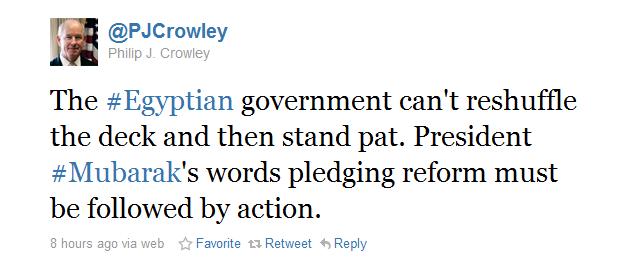
Also, to get the Department’s latest take follow PJCrowley. He hasn’t sent out tweets for about 8 hours so maybe things are shifting again.
 Notable tweets
Under the category ask me why I hate the MSM:
weeddude Weed Dude
by teddysanfran
MT @OmarWaraich: Wolf Blitzer’s first Q: to Peter Bergen: “Where does al-Qaeda fit in all of this?” Bergen replied, “Not at all.” #Egypt
No wonder every one was so easily suckered on Iraq.
Mohamed ElBaradei Speaks to the Egypt (live updates)
Posted: January 29, 2011 Filed under: Diplomacy Nightmares, Egypt, Foreign Affairs, Live | Tags: Al Jazeera, Egyptian protests, Hosni Mubarak, Mohamed ElBaradei 63 CommentsThis thread is going to contain live updates on Egypt coming on Al Jazeera English and from Twitter updates. Al Jazeera is clearly the go to place for information.
The protests were the top story on every major news outlet in the Middle East, but the day belonged to Al Jazeera. The station was the first to report that the governing party’s headquarters were set on fire. Breathless phone reports came in from Jazeera correspondents in towns across Egypt. Live footage from Cairo alternated with action shots that played again and again. Orchestral music played, conveying the sense of a long-awaited drama.
Al Jazeera kept up its coverage despite serious obstacles. The broadcaster’s separate live channel was removed from its satellite platform by the Egyptian government on Friday morning, its Cairo bureau had its telephones cut and its main news channel also faced signal interference, according to a statement released by the station. The director of the live channel issued an appeal to the Egyptian government to allow it to broadcast freely.
Other broadcasters, including CNN, said their reporters had been attacked and their cameras smashed by security forces.
Two major news items right now. Opposition leader Mohamed ElBaradei has called for Hosni Mubarak to step down and says that Egyptian state is in collapse. He’s asking for a unity government.
Egypt is reaching a “tipping point,” opposition campaigner Mohamed ElBaradei said in an interview with Monocle.
“People are desperate and anxious for change to happen overnight,” ElBaradei, the former chief of the International Atomic Energy Agency, said in the London-based monthly’s February edition. “I see that approaching. People say Egyptians are patient, but you go around the streets of Cairo and you’ll see that the tipping point coming.”
The West is “losing every ounce of credibility when it comes to convincing people here that it is serious about their basic values: democracy, freedom, justice, rule of law,” said ElBaradei, 68. “That fuels extremism. The West doesn’t realize that stability is not based on shortsighted security measures; stability will only come when people are empowered, when people are able to participate.”
There is looting by thugs on motorcycles and it appears to be thugs from the Mubarak’s political party. The Department of Interior’s police force appears to have melted away. There’s no visible presence of the police, only the military. There are reports that the National Museum with its incredible collection of antiquities has experienced looting and damage.
The museum in central Cairo, which has the world’s biggest collection of Pharaonic antiquities, is adjacent to the headquarters of the ruling National Democratic Party that protesters had earlier set ablaze. Flames were seen still pouring out of the party headquarters early Saturday.
“I felt deeply sorry today when I came this morning to the Egyptian Museum and found that some had tried to raid the museum by force last night,” Zahi Hawass, chairman of the Supreme Council of Antiquities, said Saturday.
“Egyptian citizens tried to prevent them and were joined by the tourism police, but some (looters) managed to enter from above and they destroyed two of the mummies,” he said.
AJ also continues to update it’s live blog for the day. Here are three entries:
7:38pm Ayman Mohyeldin reports that eyewitnesses have said “party thugs” associated with the Egyptian regime’s Central Security Services – in plainclothes but bearing government-issued weapons – have been looting in Cairo. Ayman says the reports started off as isolated accounts but are now growing in number.
…
6:50pm As protesters continue to defy curfew, a bystander in Cairo tells Al Jazeera that there are no police left in the capital. Formerly omnipresent traffic police are nowhere to be found. Reports suggest that private property is being seized in locations throughout Egypt.
6:43pm Some of the rarest antiquities in the world are found damaged by looters at famed Cairo musuem.

There are marches on the street. People are dying and being hurt. At least 25 people have been killed in Cairo. Suez reports 38 deaths. Alexandria reports 36 killed. Women are being threatened with sexual assault. The Children’s Cancer Hospital has also been the target of looting. Again, it appears that may of the looters are the party police in plain clothes. AJ has been reporting that some were caught trying to loot richer areas and were found to be carrying ID cards from the State Security forces. People are still ignoring the curfew.
Probably the most disturbing announcement is that Egypt’s Head Spy is now the VP of the country. This is the man that has handled torture of US detainees.
In December, the Wall Street Journal’s Jerusalem correspondent pronounced Suleiman “the most likely successor … President Mubarak’s closest aide, charged with handling the country’s most sensitive issues.
“He also has close working relations with the U.S. and a lifetime of experience inside Egypt’s military and intelligence apparatus,” Charles Levinson wrote.
Likewise, the Voice of America said Friday, “Suleiman is seen by some analysts as a possible successor to the president.” “He earned international respect for his role as a mediator in Middle East affairs and for curbing Islamic extremism.”
An editorialist at Pakistan’s “International News” predicted Thursday that “Suleiman will probably scupper his boss’s plans [to install his son], even if the aspiring intelligence guru himself is as young as 75.”
Suleiman graduated from Egypt’s prestigious Military Academy but also received training in the Soviet Union. Under his guidance, Egyptian intelligence has worked hand-in-glove with the CIA’s counterterrorism programs, most notably in the 2003 rendition of an al-Qaeda suspect known as Abu Omar from Italy.
This thread will continue to update during the day.
Notable Tweets:
Category of I know how they feel:
SultanAlQassemi Sultan Al Qassemi
Zuwail “There has been a shrinking in the middle class in Egypt while an elite group has become excessively wealthy” cc Ahmed Ezz/Gamal
SultanAlQassemi Sultan Al Qassemi
Zuwail “Education has been the issue in every household in Egypt. Science & research has reached the lowest levels, Egypt deserves better”
GREAT UPDATE!!!
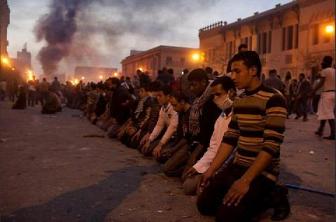 What you are seeing here is very interesting. These are Egyptian Muslims praying. Behind them are Egyptian Christians Guarding the neighborhood so they can pray safely.
You may remember that Wonk the Vote wrote a post with a similar theme in Egypt a few weeks ago when Egyptian Muslims surrounded Christian Churches who could celebrate Christmas with out fear of suicide bombers..

 peej
peej Carissa
 bostonboomer
 dakinikat
 ecocatwoman
 mablue2
 Mama Lopez
 peggysue22
 quixote
 skydancingguestblogger
 Mona (aka Wonk the Vote)



 Sky Dancing
Recent Comments