
Tuesday Reads
Posted: August 27, 2013 Filed under: Barack Obama, China, Foreign Affairs, Iran, Iraq, morning reads, NSA, National Security Agency, Regulation, Russia, Syria, U.S. Politics | Tags: California wildfire, chemical weapons, cuba, David Miranda, Edward Snowden, GCHQ, Glenn Greenwald, John Kerry, Saddam Hussein, San Francisco water and power, Texas legislature, West Fertilizer Co., Yosemite National Park 30 Comments
Good Morning!!
The big news today is that President Obama appears likely to order “limited” strikes on Syria in the next few days in response to Syria’s use of chemical weapons against opposition fighters. From the WaPo: After Syria chemical allegations, Obama considering limited military strike.
President Obama is weighing a military strike against Syria that would be of limited scope and duration, designed to serve as punishment for Syria’s use of chemical weapons and as a deterrent, while keeping the United States out of deeper involvement in that country’s civil war, according to senior administration officials.
The timing of such an attack, which would probably last no more than two days and involve sea-launched cruise missiles — or, possibly, long-range bombers — striking military targets not directly related to Syria’s chemical weapons arsenal, would be dependent on three factors: completion of an intelligence report assessing Syrian government culpability in last week’s alleged chemical attack; ongoing consultation with allies and Congress; and determination of a justification under international law.
“We’re actively looking at the various legal angles that would inform a decision,” said an official who spoke about the presidential deliberations on the condition of anonymity. Missile-armed U.S. warships are already positioned in the Mediterranean.
I guess “looking at…legal angles” is code for that pesky rule in the Constitution where Congress has to declare wars. When’s the last time that happened–WWII?
Meanwhile, BBC News reports: Russia and China step up warning over strike.
Russian foreign ministry spokesman Alexander Lukashevich has called on the international community to show “prudence” over the crisis and observe international law.
“Attempts to bypass the Security Council, once again to create artificial groundless excuses for a military intervention in the region are fraught with new suffering in Syria and catastrophic consequences for other countries of the Middle East and North Africa,” he said in a statement.
Late on Monday, the US said it was postponing a meeting on Syria with Russian diplomats, citing “ongoing consultations” about alleged use of chemical weapons in Syria.
Hours later, Russia expressed regret about the decision. The two sides had been due to meet in The Hague on Wednesday to discuss setting up an international conference on finding a political solution to the crisis.
The Russian deputy defence minister, Gennady Gatilov said working out the political parameters for a resolution on Syria would be especially useful, with the threat of force hanging over the country.
Read more at the link.
Just as SOS Kerry was giving a speech to justify the upcoming military strikes, providing “Clear Evidence of Chemical Weapon Use in Syria” (NYT), a little birdie told Shane Harris and Matthew Aid of Foreign Policy magazine that the U.S. facilitated Saddam Hussein’s use of chemical weapons against Iran back in 1988.
The U.S. government may be considering military action in response to chemical strikes near Damascus. But a generation ago, America’s military and intelligence communities knew about and did nothing to stop a series of nerve gas attacks far more devastating than anything Syria has seen, Foreign Policy has learned.
In 1988, during the waning days of Iraq’s war with Iran, the United States learned through satellite imagery that Iran was about to gain a major strategic advantage by exploiting a hole in Iraqi defenses. U.S. intelligence officials conveyed the location of the Iranian troops to Iraq, fully aware that Hussein’s military would attack with chemical weapons, including sarin, a lethal nerve agent.
The intelligence included imagery and maps about Iranian troop movements, as well as the locations of Iranian logistics facilities and details about Iranian air defenses. The Iraqis used mustard gas and sarin prior to four major offensives in early 1988 that relied on U.S. satellite imagery, maps, and other intelligence. These attacks helped to tilt the war in Iraq’s favor and bring Iran to the negotiating table, and they ensured that the Reagan administration’s long-standing policy of securing an Iraqi victory would succeed. But they were also the last in a series of chemical strikes stretching back several years that the Reagan administration knew about and didn’t disclose.
U.S. officials have long denied acquiescing to Iraqi chemical attacks, insisting that Hussein’s government never announced he was going to use the weapons. But retired Air Force Col. Rick Francona, who was a military attaché in Baghdad during the 1988 strikes, paints a different picture.
“The Iraqis never told us that they intended to use nerve gas. They didn’t have to. We already knew,” he told Foreign Policy.
Read the rest of this long article at Foreign Policy.
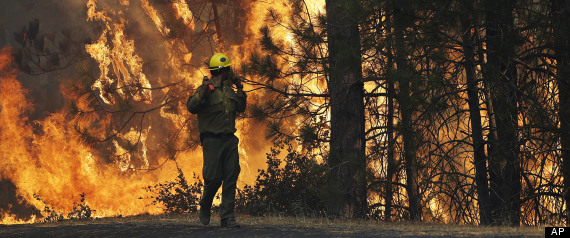
Firefighter A.J. Tevis watches the flames of the Rim Fire near Yosemite National Park, Calif., on Sunday, Aug. 25, 2013. With winds gusting to 50 mph on Sierra mountain ridges and flames jumping from treetop to treetop, hundreds of firefighters have been deployed to protect this and other communities in the path of the Rim Fire raging north of Yosemite National Park. (AP Photo/Jae C. Hong)
The wildfire in Northern California continues to spread into Yosemite National Park and has begun to threaten towns in the area. From the LA Times: Massive Rim fire continues to reshape lives and topography.
…even as firefighters worked furiously to hold a line outside of town, officials warned that this blaze was so hot it could send sparks more than a mile and a half out that could jump lines and start new hot spots. Evacuation advisories remain in effect for Tuolumne City and nearby areas.
On the north edge, the fire — now 134,000 acres — pushed into the Emigrant Wilderness Area and Yosemite National Park. It’s the one side of the fire with a natural last stand: Eventually it will run into granite walls that have snuffed out fires in this region for centuries.
Each day, what the massive blaze does depends on the wind. But officials were particularly attuned to each shift of breeze Sunday because of the weather’s eerie similarities to the day when the fire first exploded out of control.
So far the unpredictable blaze is only about 20% controlled, and it still threatens water and power sources for San Francisco.
The massive fire presents every challenge: steep slopes, dry fuel, rugged terrain and entire communities possibly in harm’s way.
The base camp and incident post, usually a haven outside fire lines, was a prominent example of the fire’s unpredictability: It’s in the middle of the burn zone, charred land with still-smoldering stumps on both sides.
Firefighters call such complete devastation “the black.” Entire ravines and ridges were a dusty gray moonscape. But some of the land was a “dirty burn” — meaning there were small circles of pine and aspen and even grass and wildflowers in the middle of charcoal-black areas where smoke still curled and embers glowed. The specks of beauty made firefighters nervous: To a fire, they are fuel.
My sister and her husband own a house north of San Francisco. It’s probably not in danger, but it still brings the scope of this disaster home to me. I sure hope Firefighers will begin to make progress soon. The burning area is now the size of the city of Chicago, according to CNN.
Yosemite National Park, California (CNN) — A massive northern California wildfire that’s threatening Yosemite National Park and San Francisco’s key water and power sources grew Monday, becoming the 13th largest in state history, state fire authorities said.
The Rim Fire, which has devoured 160,980 acres, has scorched an area about the size of the city of Chicago while more than 3,600 firefighters try to rein it in….
The wildfire, which was 20% contained Monday night, was spreading primarily to the east and threatened to grow amid extremely dry conditions and hot weather.
Part of the fire continued to spread Monday toward a key part of San Francisco’s water supply: the Hetch Hetchy Reservoir, which lies within Yosemite and is just east of the flames.
The fire also could threaten the area’s hydroelectric generators, which provide much of San Francisco’s electricity. Because of the approaching flames, officials shut down the generators, and the city — more than 120 miles to the west — temporarily is getting power from elsewhere.
Speaking of disasters, Charles Pierce reminds us that West, Texas is still recovering from the horrible explosion at the fertilizer plant there and that Texas still isn’t doing that much to prevent similar events in the future.
Read the rest of this entry »
Edward Snowden Issues Bizarre Statement Via Wikileaks
Posted: July 1, 2013 Filed under: Barack Obama, China, Foreign Affairs, NSA, National Security Agency, open thread, Russia, social media, Surreality, U.S. Politics | Tags: Bradley Manning, Edward Snowden, espionage, Thomas Drake, Vladimir Putin, whistleblowers 48 Comments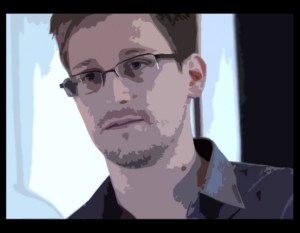
I’ve been following the endless Edward Snowden soap opera just about non-stop for the past few days. I wish I were capable of writing a reasoned, logically argued post right now, but I’m not. This whole story has just become too crazy. I just can’t guarantee that this post will make a lot of sense, so I’ll just begin by posting Snowden’s statement. I’ve added emphasis to a few passages.
Statement from Edward Snowden in Moscow
Monday July 1, 21:40 UTC
One week ago I left Hong Kong after it became clear that my freedom and safety were under threat for revealing the truth. My continued liberty has been owed to the efforts of friends new and old, family, and others who I have never met and probably never will. I trusted them with my life and they returned that trust with a faith in me for which I will always be thankful.
On Thursday, President Obama declared before the world that he would not permit any diplomatic “wheeling and dealing” over my case. Yet now it is being reported that after promising not to do so, the President ordered his Vice President to pressure the leaders of nations from which I have requested protection to deny my asylum petitions.
This kind of deception from a world leader is not justice, and neither is the extralegal penalty of exile. These are the old, bad tools of political aggression. Their purpose is to frighten, not me, but those who would come after me.
For decades the United States of America have [sic] been one of the strongest defenders of the human right to seek asylum. Sadly, this right, laid out and voted for by the U.S. in Article 14 of the Universal Declaration of Human Rights, is now being rejected by the current government of my country. The Obama administration has now adopted the strategy of using citizenship as a weapon. Although I am convicted of nothing, it has unilaterally revoked my passport, leaving me a stateless person. Without any judicial order, the administration now seeks to stop me exercising a basic right. A right that belongs to everybody. The right to seek asylum.
In the end the Obama administration is not afraid of whistleblowers like me, Bradley Manning or Thomas Drake. We are stateless, imprisoned, or powerless. No, the Obama administration is afraid of you. It is afraid of an informed, angry public demanding the constitutional government it was promised — and it should be.
I am unbowed in my convictions and impressed at the efforts taken by so many.
Edward Joseph Snowden
Monday 1st July 2013
I’m mystified by this statement. Snowden could have stayed here in the U.S. and fought against the government actions that he claims are criminal. He could have followed in the footsteps of Martin Luther King by accepting the consequences of civil disobedience. He would have probably have gotten a great deal of support from the public if he had done so. Instead he chose to flee first to China and then to Russia–two countries with far worse domestic spying and human rights records than the U.S. And now he’s whining about the consequences of his fleeing.
President Obama did not promise not to take any actions to interfere with Snowden’s life. He indicated that he wasn’t going to do something as dramatic as bringing down Snowden’s plane or go to extreme lengths to negotiate with Russia or some other country for his return. Snowden’s naivete is amazing. World leaders engage in deception. Countries spy on each other. When you reveal secret information stolen from your government you are engaging in espionage and you become a spy.
Because neither Snowden nor Glenn Greenwald has a coherent political ideology, neither of them is able to make a clear political argument to define and defend Snowden’s actions in reasonable, logical ways. So what we get is whining from Snowden and defensiveness and trumped up outrage from Greenwald and his followers.
Snowden apparently sees himself as a tragic martyr who should be applauded for “revealing the truth.” He has the gall to compare himself to whistleblowers like Bradley Manning and Thomas Drake who faced the consequences of their actions by pleading guilty to crimes. We don’t know yet what the upshot of Manning’s case will be, but Drake is not “powerless.” He served no jail time, and now he is free to make appearances and share his opinions freely. Furthermore, Snowden hasn’t been exiled. I’m sure he could work out a deal to return to the U.S. and face the music. But he doesn’t seem to think the rules apply to him.
As for Greenwald, he has such tunnel vision that he appears to believe that he can simply state that Snowden is a hero who has revealed the most important secret information in American history–and somehow this is so. Anyone who objects or simply asks mild questions about the “revelations” is an enemy to be dismissed and attacked by legions of Greenwald fans who possess endless reserves of inchoate outrage. As I’ve said before, they remind of the Obot hoards of 2008.
If nothing else, Snowden’s leaks have gotten people talking about what the NSA is doing, although I have no idea if there is serious discussion of the actual content of the leaks outside the of people who closely follow the news and argue with each other on the internet. I have no idea if this episode will end with Americans being more knowledgeable about the government’s domestic spying programs.
The articles written about the leaked documents by Glenn Greenwald at the Guardian and Barton Gellman at the Washington Post have so far been confusing at best. Neither writer seems to have consulted with security and computer experts who could have helped them do a better job of explaining how the NSA programs work. I’ve gotten a much clearer understanding from reading Kurt Eichenwald’s blog at Vanity Fair.
Poor Ed. He’s learning that now that the information is out there, he is no longer that important. Ecuador doesn’t want to deal with him. Even Vladimir Putin has tired of using him to humiliate the Obama administration. Today he announced that Snowden could stay in Russia if he stopped leaking information designed to hurt the U.S.
Glenn Greenwald has also washed his hands of Snowden. Shortly after Putin made that announcement, Greenwald tweeted that “Snowden’s leak is basically done. It’s newspapers – not Snowden – deciding what gets disclosed and in what sequence.” Apparently Glenn is finished with Snowden too. That must have felt like a dagger through poor Ed’s heart.
We’ve learned that Snowden sent copies of the documents he stole to “many different people around the world,” so that he could continue to control the information. But it appears that someone–perhaps Wikileaks–must have all of it now, and Julian Assange has also said that nothing will stop publication of all of Snowden’s files now.
Snowden has become an object of pity at this point. And his whining about his situation isn’t going to help him look like a “hero.” He made the choice to leave his family, his home, and his girlfriend and run away from the consequences of his actions. President Obama did not do that to him.
Please discuss, or use this as an open thread.
Tuesday Reads: Most Classless SCOTUS Justice, Ongoing Snowden Saga, and Other News
Posted: June 25, 2013 Filed under: Barack Obama, China, Foreign Affairs, morning reads, Russia, U.S. Politics, Women's Rights | Tags: Climate change, Dana Millbank, Edward Snowden, Garrett Epps, Jacob Zuma, middle school antics, Nelson Mandela, Racism, Ruth Bader Ginsburg, Samuel Alito, Sexism, University of Texas Southwestern Medical Center v. Nassar, Vance v. Ball State University 77 Comments
Good Morning!!
I’m enjoying some nice fresh air this morning after thunderstorms during the night. It looks as if the mini-heat wave we’ve been having here in the Boston area isn’t going to be as quite bad as originally predicted. It it supposed to be several degrees cooler than expected today and tomorrow and then we’re back to high 70’s temps. I hope that turns out to be right.
Unfortunately, because of this refreshing change in the air here, I slept longer than I should have and this post will go up a little bit late.
If there were a competition for “most classless supreme court justice,” there would be some serious competition among Antonin Scalia, Clarence Thomas, and Samuel Alito; but I think in the end the first prize would have to go to Samuel Alito. Clarence Thomas at least has the grace to remain silent and Scalia supposedly can be funny at times. But Alito is just an immature, obnoxious disgrace, as he demonstrated at the State of the Union Address in 2010 when President Obama denounced the Citizens United decision.
Yesterday Alito used childish, offensive body language to publicly mock his senior colleague Justice Ruth Bader Ginsburg as she read a dissenting opinion to a SCOTUS decision that will make it more difficult for employees to sue for sexual or racial discrimination. From Dana Millbank at The Washington Post:
The most remarkable thing about the Supreme Court’s opinions announced Monday was not what the justices wrote or said. It was what Samuel Alito did.
The associate justice, a George W. Bush appointee, read two opinions, both 5-4 decisions that split the court along its usual right-left divide. But Alito didn’t stop there. When Justice Ruth Bader Ginsburg read her dissent from the bench, Alito visibly mocked his colleague.
Ginsburg, the second woman to serve on the high court, was making her argument about how the majority opinion made it easier for sexual harassment to occur in the workplace when Alito, seated immediately to Ginsburg’s left, shook his head from side to side in disagreement, rolled his eyes and looked at the ceiling.
His treatment of the 80-year-old Ginsburg, 17 years his elder and with 13 years more seniority, was a curious display of judicial temperament or, more accurately, judicial intemperance. Typically, justices state their differences in words — and Alito, as it happens, had just spoken several hundred of his own from the bench. But he frequently supplements words with middle-school gestures.
Millbank goes on the describe Alito’s similar treatment of female Justices Elena Kagan and Sonia Sotomayor a few days earlier. Read about it at the link.
Garrett Epps provides more detail at The Atlantic: Justice Alito’s Inexcusable Rudeness.
I am glad the nation did not see first-hand Justice Samuel Alito’s display of rudeness to his senior colleague, Justice Ruth Bader Ginsburg. Because Alito’s mini-tantrum was silent, it will not be recorded in transcript or audio; but it was clear to all with eyes, and brought gasps from more than one person in the audience.
The episode occurred when Ginsburg read from the bench her dissent in two employment discrimination cases decided Monday, Vance v. Ball State University and University of Texas Southwestern Medical Center v. Nassar. In both cases, the Court majority made it harder for plaintiffs to prevail on claims of racial and sexual discrimination. The Nassar opinion raises the level of proof required to establish that employers have “retaliated” against employees by firing or demoting them after they complain about discrimination; Vance limits the definition of “supervisor” on the job, making it harder for employees harassed by those with limited but real authority over them to sue the employers.
The Vance opinion is by Alito, and as he summarized the opinion from the bench he seemed to be at great pains to show that the dissent (which of course no one in the courtroom had yet seen) was wrong in its critique. That’s not unusual in a written opinion; more commonly, however, bench summaries simply lay out the majority’s rationale and mention only that there was a dissent. (Kennedy’s Nassar summary followed the latter model.)
After both opinions had been read, Ginsburg read aloud a summary of her joint dissent in the two cases. She critiqued the Vance opinion by laying out a “hypothetical” (clearly drawn from a real case) in which a female worker on a road crew is subjected to humiliations by the “lead worker,” who directs the crew’s daily operation but cannot fire or demote those working with him. TheVance opinion, she suggested, would leave the female worker without a remedy.
At this point, Alito pursed his lips, rolled his eyes to the ceiling, and shook his head “no.” He looked for all the world like Sean Penn as Jeff Spicoli in Fast Times at Ridgemont High, signaling to the homies his contempt for Ray Walston as the bothersome history teacher, Mr. Hand.
I guess I should be grateful that I’m old enough to recall the Warren Court. We won’t see a SCOTUS like that again in my lifetime, I’m afraid.
Of course the news is still being dominated by Edward Snowden, who once claimed he didn’t want the story of his leaks of classified information from NSA to be about him. “Really?” writes Dan Murphy of The Christian Science Monitor. “But if that were true, we probably wouldn’t even know his name.”
Two weeks ago, Edward Snowden gave The Guardian permission to disclose that he was the leaker of documents from the US National Security Agency.
“I don’t want public attention because I don’t want the story to be about me,” the former NSA contractor said then. “I want it to be about what the US government is doing.”
If that was really his desire, he’s certainly gone about it in a funny way. From that day, every step he’s taken couldn’t have been better calculated to draw attention to himself. Over the weekend he even turned the media dial up when he fled from Hong Kong to the loving bosom of Mother Russia.
And with the assistance of Julian Assange, Mr. Snowden’s “where’s Waldo” saga is turning into aWikiLeaks production.
Mr. Assange, founder of WikiLeaks, has staked out a consistently anti-American and techno-libertarian position in the past few years. The US government is motivated by malice and power lust in his worldview, its rivals like Russia (where state-owned broadcaster RT ran a show of Assange’s) get a free pass, and secrecyis an evil in and of itself. Though he presents himself as a champion of free-speech, Assange has sought refuge in the Embassy of Ecuador in London, never mind that the country has a poor and deteriorating record on freedom of speech. The Committee to Protect Journalists listed Ecuador and Russia as two of the 10 worst places to be a journalist in the world past year.
Read the rest at CSM.
Meanwhile, Russia and China are pushing back against U.S. criticism of their refusal to help the U.S. extradite Snowden. From The Washington Post:
MOSCOW— Russia and China on Tuesday rejected U.S. criticism of their roles in the legal drama surrounding Edward Snowden, saying their governments complied with the law and did not illegally assist the former government contractor charged with revealing classified information about secret U.S. surveillance programs.
Snowden, 30, has not been seen in public since he reportedly arrived in Moscow on Sunday, after slipping out of Hong Kong. Secretary of State John F. Kerry on Monday strongly urged Russian officials to transfer Snowden to U.S. custody. “We think it’s very important in terms of our relationship,” Kerry said. “We think it’s very important in terms of rule of law.”
But Russian Foreign Minister Sergei Lavrov said Snowden had not actually crossed into Russian territory, apparently remaining in a secure transit zone inside the airport or in an area controlled by foreign diplomats. Moscow therefore has had no jurisdiction over his movements, Lavrov said, and has no legal right to turn him over to U.S. authorities.
It sounds like Snowden could still be in some VIP lounge at the Moscow Airport, but no one knows for sure. One witness told Reuters that Snowden did in fact arrive there yesterday. If he is in the airport, Russia can claim that Snowden technically never stepped on Russian soil.
In other news, Nelson Mandela is in critical condition for the second day, according to President Jacob Zuma.
Mr. Zuma said that he and Cyril Ramaphosa, the deputy president of the governing African National Congress, visited Mr. Mandela late Sunday.
“Given the hour, he was already asleep. We were there, looked at him, saw him and then we had a bit of a discussion with the doctors and his wife,” Mr. Zuma said. “I don’t think I’m in a position to give further details. I’m not a doctor.”
Doctors told Mr. Zuma on Sunday evening that Mr. Mandela’s health “had become critical over the past 24 hours,” according to an earlier statement from the presidency.
In the statement on Sunday, Mr. Zuma said that doctors were doing “everything possible to get his condition to improve and are ensuring that Madiba is well looked after and is comfortable.” Madiba is Mr. Mandela’s clan name.
The Telegraph reports that Mandela’s close relatives “have gathered at his rural homestead to discuss the failing health of the South African anti-apartheid icon who was fighting for his life in hospital.”
From NPR, President Obama today plans To Lay Out Broad Plan To Address Climate Change.
President Obama is expected to announce a sweeping plan to address climate change this afternoon.
The president has framed this issue as a moral responsibility, to leave the Earth in good shape for generations to come. But the nitty-gritty of any serious plan to address this problem is also a challenge, because it means gradually moving away from fossil fuels to renewable energy supplies — and that means there will be economic winners and losers.
Winners include companies that produce clean energy — wind, solar and geothermal energy. That energy will be more in demand, and the administration intends to expand access to public lands, where companies can build windmills and solar facilities.
Public health is also a winner, because the plan would pressure coal-fired power plants to reduce their emissions. Those plants not only produce carbon dioxide, but they are major sources of mercury, radioactive particles and chemicals that contribute to asthma.
The losers will be coal companies and the miners they employ as well as millions of Americans who can’t afford to pay higher electric bills. You can read the entire plan at the NPR link. More detail in this story at CNN. And at Business Insider, Josh Barro lists 3 Reasons Obama’s Carbon Plan Is The Best Solution Right Now
Today should be another busy news day with the ongoing Snowden saga, the President’s climate initiatives, the continuing Whitey Bulger and George Zimmerman trials, and more important SCOTUS decisions. If it gets hot here again this afternoon, I’ll have something to distract me at least. I’ll try to post an afternoon update.
Now it’s your turn. What stories are you focusing on today? Please post your links on any topic in the comment thread, and have a terrific Tuesday!!
Breaking . . . Edward Snowden Tells South China Morning Post US Hacks Into Hong Kong, China Computers
Posted: June 12, 2013 Filed under: China, Crime, Foreign Affairs, U.S. Politics | Tags: CIA, Edward Snowden, NSA whistleblowers 75 Comments
Edward Snowden
I’m no expert on the laws about revealing classified information to foreign governments, but this doesn’t sound very smart to me. Edward Snowden, who has leaked information about methods the NSA uses to collect data on Americans has now showed documents to the South China Morning Post to prove that the U.S. has been hacking into computers in Hong Kong and China since at least 2009.
In a frank hour-long interview, the 29-year-old, who US authorities have confirmed is now the subject of a criminal case, said he was neither a hero nor a traitor and that:
US National Security Agency’s controversial Prism programme extends to people and institutions in Hong Kong and mainland China;
The US is exerting “bullying’’ diplomatic pressure on Hong Kong to extradite him;
Hong Kong’s rule of law will protect him from the US;
He is in constant fear for his own safety and that of his family.
Snowden told the interviewer that none of the documents related to Chinese “military systems.”
One of the targets in the SAR, according to Snowden, was Chinese University and public officials, businesses and students in the city. The documents also point to hacking activity by the NSA against mainland targets.
Snowden believed there had been more than 61,000 NSA hacking operations globally, with hundreds of targets in Hong Kong and on the mainland.
“We hack network backbones – like huge internet routers, basically – that give us access to the communications of hundreds of thousands of computers without having to hack every single one,” he said….
Snowden said he was releasing the information to demonstrate “the hypocrisy of the US government when it claims that it does not target civilian infrastructure, unlike its adversaries”.
“Not only does it do so, but it is so afraid of this being known that it is willing to use any means, such as diplomatic intimidation, to prevent this information from becoming public.”
What the hell? This guy is really starting to sound like a loose cannon. I’ll update with more info in the comment thread as I get it.
Tuesday Reads: The Snowden-Greenwald Show
Posted: June 11, 2013 Filed under: China, Civil Liberties, Civil Rights, Crime, Foreign Affairs, morning reads, U.S. Politics | Tags: Bob Cesca, Edward Snowden, Glenn Greenwald, Hong Kong, Matt Schiavenza, narcissism, NSA, political asylum, Russia, The Q Group, whistleblowers, Willard Foxton 99 Comments
Good Morning!!
Edward Snowden is still the top news story this morning. It’s starting to look as if he made a mistake by going to Hong Kong, unless his goal was to gain asylum from the Chinese government. Hong Kong is apparently not interested in fighting an extradition request from the U.S. But it’s also possible he saw Hong Kong as a springboard to other places in Asia where he could hide.
Matt Schiavenza writes at The Atlantic:
In a comment about the case published this morning, my colleague James Fallows brought up a salient point about Hong Kong: it isn’t a sovereign country, and remains very much a part of the People’s Republic of China — a country which notably lacks free speech or any right of political dissent. And while Hong Kong has a different currency, political structure, and legal system from the mainland, divisions between the two are actually far murkier than Snowden’s explanation indicates.
Hong Kong is to some extent in control of its own legal decisions
But in the case of Edward Snowden, which is likely to involve an extradition request by the United States, the Basic Law is less clear. Hong Kong, unlike China, has an extradition arrangement with the United States. But China has the right to intercede in an extradition request if Beijing has an interest in “defense or foreign affairs.” In other words, if China wants to detain Snowden as a useful intelligence asset, Hong Kong couldn’t legally do much about it. And that illustrates an important part of Hong Kong’s current situation: its free speech and political dissent really only go as far as Beijing lets it.
According to Schiavenza,
it’s become increasingly clear that Snowden’s decision to go to Hong Kong was a serious miscalculation. The idiosyncratic territory may in some ways be a libertarian paradise of free speech, robust media, and low taxes, but is in no way independent of China. If Snowden’s ultimate goal were to damage the United States government as much as possible, then going to a Chinese territory would make some sense. But this obviously isn’t what he wanted; in The Guardian interview, Snowden disagreed with Glenn Greenwald’s characterization of China as an “enemy” of the United States by stressing the healthy trade relationship between the two countries. Aiding China — whose record of state surveillance and abrogation of civil liberties is inarguably worse than the United States — would go against the entire moral foundation of Snowden’s decision to leak the NSA secrets.
I’m still not convinced yet about Snowden’s motives. One thing I have concluded is that he’s a very narcissistic young man. I can’t believe he chose to leave without even explaining to his girlfriend and his family. He also chose to tell his story to a high narcissistic writer, Glenn Greewald. More on that later.
From USA Today: Edward Snowden’s travel options
HONG KONG — Whether Edward Snowden misjudged the odds of extradition from Hong Kong before revealing his identity here as the man who exposed secret U.S. surveillance programs may be irrelevant.
The National Security Agency contractor may have chosen to surface in the city for the same reason so many companies from the U.S. and other countries choose to use it for a regional base: It’s the best gateway to much of the world’s largest continent….
Hong Kong is connected to 180 cities in dozens of countries by some 850 flights a day. As the city’s investment development agency says on its marketing web site, “Easy and efficient regional travel is key to Hong Kong’s success as a regional centre.” Many of these countries have loose entry requirements for Americans.
He could go to Vietnam, the Phillippines, or any number of other Asian countries. Or perhaps he could go to Russia, which has already offered to consider a request for asylum from him.
USA Today also notes that Snowden has been “contacted by ‘countless people’ offering to pay for ‘anything [he] might need.'”

Meanwhile, an entity called “The Q Group” is trying to hunt Snowden down before he finds a safe harbor. From The Daily Beast:
Even before last week’s revelations by The Guardian newspaper that the National Security Agency (NSA) was collecting call records from telecommunications companies and had the ability to mine user data from major U.S. Internet companies, the NSA was already on the trail of the leaker, according to two former U.S. intelligence officers with close ties to the agency….
The people who began chasing Snowden work for the Associate Directorate for Security and Counterintelligence, according to former U.S. intelligence officers who spoke on condition of anonymity. The directorate, sometimes known as “the Q Group,” is continuing to track Snowden now that he’s outed himself as The Guardian’s source, according to the intelligence officers….
The security and counterintelligence directorate serves as the NSA’s internal police force, in effect watching the agency’s watchers for behavior that could pose an intelligence risk. It has the authority to interview an NSA contractor or employee’s known associates, and even to activate a digital dragnet capable of finding out where a target travels, what the target has purchased, and the target’s online activity.
Are there more bombshells coming from Snowden? Glenn Greenwald says there are. According to TPM,
According to Greenwald, Snowden has provided the archives of “thousands” of documents and “dozens” are newsworthy. Greenwald has suggested in recent days that more revelations are imminent, saying Monday during an interview on MSNBC that “there’s a lot more coming.”
Dozens of hit out of thousands of documents doesn’t sound like a very good ratio to me, but I’m not a reporter.
On Glenn Greenwald, it seems the general consensus is that people either love him or hate him. Personally, I don’t hate him but I find him annoying and part of my suspicion of Snowden probably stems from my mixed feelings about Greenwald. In my opinion, he cares only about his own pet issues and disdains anyone who cares passionately about, for example, women’s rights, the environment, or the plight of people with less money and fewer choices than he has. I guess he’s a libertarian, but again only in terms of his own pet issues.
Anyway it seems there are lots of Greenwald haters out there. One is Willard Foxton of The Telegraph, who today has a piece called The problem with Glenn Greenwald and the creepy cult that surrounds him. Foxton isn’t quite sure why he can’t stand Greenwald.
Maybe it’s because of the enormous, turgid pieces he writes, complete with 500-word updates when people challenge him. Maybe it’s the run-ins he had with other British journalists while he was fanatically defending Julian Assange.
Maybe it’s the petty stuff, like the fact he insists on special rock-star privileges, like policing the comments beneath his articles himself and his reluctance to let his pieces be edited, prior to the NSA/Prism disclosures. Maybe it’s the things that suggest he’s a little odd, like self-searching his own name so he can pounce on people criticising him, or the accusations he’s used internet sock puppets to go after people anonymously.
Maybe it’s the devotion of his legion of fans who consider him to be the greatest and most fearless journalist on earth, who hate anyone who dares disagree with their idol. The last time I criticised him I got a barrage of online abuse – including memorably a 24-slide PowerPoint presentation explaining how the American security services had “got” to me, and how Greenwald was their number-one target. Maybe, as his adoring public have suggested, I’m either a homophobe or in the pay of the CIA. Perhaps both.
That said, I’m honest enough to admit that maybe it’s because I’m jealous of the success he’s had, and the stories he’s broken. I’m not the only one. You can practically hear the disdain in the New York Times’s tone here, where it describes him as a “blogger” for a “British News Website” (The Guardian).
What I think is more likely is I dislike him because he has built a huge platform with opinion writing, and now he’s blurring the line between opinion pieces and straight reporting. That huge platform he’s built means sources come forward to him from his vast base of followers, with real hard news stories, and then he insists on reporting them.

In line with the “creepy cult” notion, the Guardian actually published this fan-boy article about Greenwald today. Bizarrely, it asks readers to describe how they feel about Greenwald with a fill-in-the-blanks questionnaire! You have to see it to believe it.
Another writer who seems to strongly dislike Greenwald is Bob Cesca, who critiqued Greenwald’s scoop early on. He offered a few more comments on the Snowden/Greenwald story yesterday. Here are three of them.
–Once again, it’s nearly impossible to have a nuanced position these days. I bent over backwards to repeat my ongoing opposition to the growing surveillance state, and made it abundantly clear that my intent with the column was to question some of the problems with the reporting and why there were such glaring omissions and errors. But there’s an increasingly evident overlap between the kneejerking on the far-right and the kneejerking on the far-left (I will make an effort to point it out whenever I can) and too many people tend to blurt things out without reading or grasping what’s being said. Consequently, criticizing Greenwald makes me an Obamabot. End of story. The left is sliding into a very dangerous place right now, and I’ll definitely report back on this one.
–There are some questions emerging regarding Ed Snowden’s story. Why did someone who was disillusioned with Obama’s record on national security continue to work for Obama’s national security apparatus — for more than four years? Why did he escape to Hong Kong when it’s clearly not the free speech haven he claimed it was? If he prefers to seek asylum in Iceland, why didn’t he go there before the story went public? How did he attain the access to be able to “wiretap anyone?” I assume we’ll get answers to some of these questions. Maybe?
–Marc Ambinder wrote a blindly complicated article for The Week in which he explained what PRISM is. It’s essentially a program that analyses data. It doesn’t retrieve the data, it merely compiles it. He also explained that the way the NSA can have “direct access” is via servers that mirror the tech giant servers. So if the NSA requests information from Facebook about an account in Pakistan, Facebook creates a mirror that clones the real time date from that account. But that mirror site has to be hosted on a server and all of the tech giants denied giving the NSA access to their servers. More questions.
We’ll have to wait and see whether Snowden’s revelations are truly groundbreaking or not. But as Cesca writes, the “war on terror” must come to an end. If what’s happening now helps that happen, I’ll certainly cheer loudly. But I suspect the U.S. government will react by simply doubling down on its current policies.
I’ll end there. Now what are you reading and blogging about this morning? Please share your links on any topic in the comment thread.

 peej
peej Carissa
 bostonboomer
 dakinikat
 ecocatwoman
 mablue2
 Mama Lopez
 peggysue22
 quixote
 skydancingguestblogger
 Mona (aka Wonk the Vote)



 Sky Dancing
Recent Comments