
Underestimating the Great Recession
Posted: September 29, 2012 Filed under: 2012 presidential campaign, Economy 32 CommentsI’ve been reading this excellent David Leonhardt “hindsight quarterback”-style article on the mistakes the Obama administration made when handling the 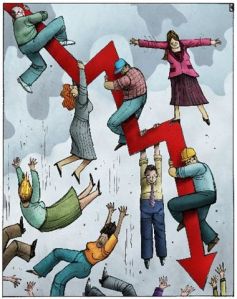 economy in 2008. I suppose I like it because he’s saying many of the same things today that I actually was writing about back then. However, the problems from back then are more obvious now and the article is written without the dynamics of the Larry Summer/Timothy Geithner Beavis and Butthead antics that were apparent in the Suskind book Confidence Men. I’ve often said that the two biggest mistakes were the size of the stimulus and the handling of the housing crisis. I still can’t figure out how we got a bail out of the auto and financial industries but the housing sector got left to the natural path.
With the auto industry and Wall Street, Mr. Obama accepted the political costs that come with bailouts. He rescued arguably undeserving people in exchange for helping the larger economy. With housing, he went the other way, even leaving some available rescue money unspent — at least until last year, when the policy became more aggressive and began to have a bigger effect.
No one of these steps, or several other plausible ones, would have fixed the economy. But just as the rescue programs of early 2009 made a big difference, a more aggressive program stretching beyond 2009 almost certainly would have made a bigger difference. It would have had the potential to smooth out the stop-and-start nature of the recovery, which has sapped consumer and business confidence and become a problem in its own right.
It would seem prudent to stabilize housing prices in an economy that’s highly reliant on consumer spending when consumer spending is highly reliant on household wealth. That’s not to say that the house prices of 2006 weren’t in need of a correction. It’s more to say that putting so many folks through disclosure and wrecking their balance sheets for decades isn’t the smartest way of managing an aggregate demand crisis in an economy where consumption is 68% of GDP and the fickle investment component is about 17%.
Leonhardt thinks that Obama and his advisers really didn’t grasp the severity of the recession or the full impact of the financial market meltdown. I would agree with this up to a point. I actually think they knew the impact but concentrated on the business sector more than than the household.
Mr. Obama’s biggest mistake as president has not been the story he told the country about the economy. It’s the story he and his advisers told themselves.
The notion of insurance is useful here. Suggesting that Mr. Obama and his aides should have bucked the consensus forecast and decided that a long slump was the most likely outcome smacks of 20/20 hindsight. Yet that wasn’t their only option. They also could have decided that there was a substantial risk of a weak recovery and looked for ways to take out insurance.
By late 2008, the full depth of the crisis was not clear, but enough of it was. A few prominent liberal economists were publicly predicting a long slump, as was Mr. Rogoff, a Republican. The Obama team openly compared its transition to Franklin D. Roosevelt’s and, in private, discussed the Reinhart-Rogoff work.
I guess this does tie back to the dynamics in the Suskind book Confidence Men and the dynamics of Obama’s economic team which basically was presented as being completely out of control. This quote is Adam Moss’ take on the situation.
The news of the book,according to some reports, is that Tim Geithner was insubordinate to the president, pursuing his own pro-banker agenda. Or, according to other reports, that Larry Summers was insubordinate to the president, pursuing his own well, monomaniacal agenda. I’d add that it’s also about Rahm Emanuel being insubordinate to the president, just because. Basically, it’s about the presidency being hijacked by these three guys. And the guys thing is important because they’re pretty awful to women. Anyway, they’re the villains. Paul Volcker, Christina Romer, and Elizabeth Warren are the heroes. Bankers win, America loses.
We’ve had Sheila Bair out on the book trail reinforcing the Geithner pro-banker agenda story line just this month. He’s the last man standing of the trio of “villians’ mentioned above.
In addition to accusing Geithner of treating the banks with kid-gloves, Bair skewers him and former Obama economic adviser Larry Summers for their approach to the housing crisis, saying they didn’t appear to care about helping homeowners or fixing underlying problems plaguing the housing market.
Treasury’s housing-relief program was “designed to look good in a press release, not to fix the housing market,” Bair wrote. She says Geithner and Summers undercut Obama by not pursuing a more aggressive program.
Whether intentional or not, the administration’s housing programs have been lackluster, making the narrative all the more damning. The housing market is recovering but more because of the Federal Reserve’s push to lower interest rates than because of the housing assistance offered by Treasury. The main programs have helped about 2.6 million homeowners, far short of the 9 million Obama promised to help avoid foreclosure.
As Bloomberg View has written, Geithner and other administration officials cared too much about avoiding “moral hazard,” designing the programs so narrowly that few could actually qualify for help.
Bair’s book suggests that those same concerns didn’t apply to the banks, who were stuffed with money she says they may not have needed and didn’t deserve without fundamental changes to their businesses. (Fed Chairman Ben Bernanke, meanwhile, told the Financial Crisis Inquiry Commission that “only one” of the major banks “was not at serious risk of failure” and that 12 were on the verge of collapse in 2008.)
Here’s a similar narrative on the questionable approach to the housing market crash. I want to mention this because it actually reinforces the Romney 47% narrative in action. For some reason, bad business decisions aren’t demonized with the same gusto given to those made by the middle income, working class, and poor households. We’re “lazy” and seek a way to become “dependent” on government. What we should emphasize is the number of times that businesses–big and small–go to the government asking to be protected from competition and to be given price supports, subsidies, tax breaks, tariffs, and trade quotas. All of these create moral hazard, distort market outcomes, and are of little value to any one but the industry receiving the hand out. Rahm, Geithner, and Summers are all part of the mentality that Romney so eloquently got caught describing to his peser in his 47% moment. The media gets caught up in that narrative too. Let’s not kid ourselves that this kind of thing will go away once Romney is soundly defeated. It goes on behind all closed-door meetings concerning policy. Most of the consultantariat have similar frames. This is especially true for those that go to big name universities where they are repeatedly told they are “special’ and above every one else and are more deserving of success than any one else.
The one thing that I would really like to see right now is for Obama to restate his intention to replace Geithner. Then, I would like to see him signal who is on the short list. This would let us know if we’re going to some change in the approach to the recovery. Can you imagine the signal that a Sheila Baer appointment would send? I can. The markets would definitely fall off their highs. That’s exactly why I’m not holding my breath for anything but more status quo. At this point, it’s the best we can hope for because we all know what the Ryan/Romney agenda will be. I’m not keen on going off of their cliff any time soon. I just wish we had a bit more details on how the President intends to manage the recovery in a second term. We’re not getting any details and that makes me nervous.
Falling from the Middle with You
Posted: July 24, 2012 Filed under: 2012 presidential campaign, Economy, income inequality, Voter Ignorance, We are so F'd 20 Comments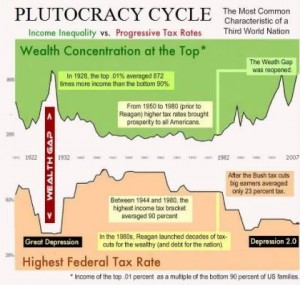 I spend a lot of time writing on US income issues partly because it’s one of those economist things and a lot because I know that so many of us have been struggling since the turn of the century. Our country’s economic growth has been extremely paltry since 2001. Also, what US growth has occurred has benefited very large corporations and extremely wealthy individuals. Compounding the issue of low growth is the fact that these very large corporations and extremely wealthy individuals don’t keep their money, their jobs, and their investments in the USA any more. All of this has led to a very sad situation for the backbone of the historical US economy; the middle class.
Economix blog at the NYT is going to have a series of articles examining the recent fall from grace that we’ve experienced since our economy has morphed into something that focuses its policies on enabling these rich people and huge corporations to abandon our country and our citizens. This first article sums up the problem. We’ve been progressively giving up Keynesian economics and replacing it with “Supply Side” economics that continues to show opposite results of what’s promised. Yet, our policy makers scream for more of the same punishment! Our last Keynesian-policy embracing President was probably Richard Nixon. Since then, elements of Supply Side economics have provided terrible results like huge deficits, income inequality, and the return of financial panics.
First, economic growth in this country has been relatively slow in recent years, which means the total bounty that the American economy produces, to be shared by all of its citizens, has not been growing very rapidly. Even before the financial crisis began in 2008, economic growth in the decade that started in 2001 was on pace to be slower than growth in any decade since World War II.
Then of course came a deep recession that caused the economy to shrink.
In addition to the slow growth in overall size of the pie, the share that has been going to anyone but the richest Americans has been declining. The top-earning 1 percent of households now bring home about 20 percent of total income, up from less than 10 percent 40 years ago. The top-earning 1/10,000th of households — each earning at least $7.8 million a year, many of them working in finance — bring home almost 5 percent of income, up from 1 percent 40 years ago.
In the simplest terms, the relatively meager gains the American economy has produced in recent years have largely flowed to a small segment of the most affluent households, leaving middle-class and poor households with slow-growing living standards.
One of the major things that’s upsetting to me is the absolute denial by the current extremists that have taken over the Republican party is acknowledgement that their policies have caused disaster. I can’t imagine any one voting for Romney who is pushing these failed policies to the extreme. Republicans actually think just talking about this problem and the middle class in general is instigating class warfare. It’s like if we don’t coddle the extremely rich all the time they will throw a hissy fit and the economy will collapse. This is a proverbial crock of crap and at this point, who cares? Huge corporations and extremely rich folks like Equity Capital managers don’t create the majority of jobs. Those come from middle-to-large businesses that operate consistently within the boundaries of our nation.
Speaking on the Senate floor, Kyl claimed that the president’s usage of the phrase “middle class” is “misguided and wrong and even dangerous.” Calling for an end to rhetoric about classes, Kyl blasted Obama for “incessantly” talking about class, “particularly the middle class”:
KYL: Most prominently, we have a president who talks incessantly about class, particularly the middle class. Maybe you’ve noticed that. He defines class strictly by your income. In the president’s narrative, someone who makes $199,000 a year is a member of one class and someone who makes $200,000 belongs to another class. Does that make sense? Indeed, each day the president’s out on the campaign trail championing himself as the great protector of what he calls the middle class and pitting these Americans against their fellow citizens by arguing that the wealthiest class is victimizing them through the tax code.
Again, we can’t talk about our issues as ordinary Americans because no one wants to hear the servants complaining, I guess. We can’t complain when they take national wealth, jobs, and investments out of the country while being subsidized by our tax dollars. Again, I have to argue that Mitt Shady represents everything that’s created this horrible situation. He’s like the poster child for our modern, self-destructive policies.
Phillip Longman characterizes this as a “Hole in our Bucket”. We’ve blown up just about everything that helps the middle class build wealth recently. One of the first things that disappeared in the Carter years and Reagan years was our traditional approach to usary laws. You can read about the history at the link. However, here’s the impact of that alone.
This short history of usury laws puts into perspective just how bizarre the credit markets of the United States have become over the last forty years. Usury law is, in the words of one financial historian, “the oldest continuous form of commercial regulation,” dating back to the earliest recorded civilizations. Yet starting in the late 1970s, some powerful people decided we could live without it.
First to go were state usury laws governing credit cards. Before 1978, thirty-seven states had usury laws that capped fees and interest rates on credit cards, usually at less than 18 percent. But in 1978 the Supreme Court, in a fateful decision, ruled that usury caps applied only in the state where the banks had their corporate headquarters, instead of in the states where their customers actually lived. Banks quickly set up their corporate headquarters in states that had no usury laws, like South Dakota and Delaware, and thus were completely free to charge whatever interest rates and fees they wanted. Meanwhile, states eager to hold on to the banks headquartered within their borders promptly eliminated their usury laws as well.
Later, in 1996, the Supreme Court handed usurers another stunning victory. In Smiley v. Citibank it ruled that credit card fees, too, would be regulated by the banks’ home states. You might think that market forces would set some limits on how high credit card fees and interest can go—after all, there are only so many creditworthy borrowers, and much competition for their business. But with shrewd use of “securitized” debt instruments and hidden fees, banks and other lenders found they could make more money from those who could not afford credit cards than from those who could.
And this was only the beginning. By the early 2000s, thanks to the combination of deregulation and “financial engineering” on Wall Street, middle- and lower-class neighborhoods across America were being flooded with what could be called financial crack. In the years between 2000 and 2003 alone, the number of payday lenders more than doubled, to over 20,000. Nationwide, the number of payday lender franchisees rivaled that of Starbucks and McDonald’s combined.
If you read this article you will become very aware that the finance industry has created laws and removed laws that has created a situation that has transferred the benefits of traditional savings and borrowing vehicles of the middle class to themselves. This has happened in concert with the decrease in real incomes resulting from corporations moving away from US job sources and huge wealth portfolios disappearing to offshore havens. All this has been enabled by policies that started during the Carter years, went full blast during the Reagan years, continued through the Clinton years, went on steroids during the Bush years, and have basically stayed in place during the Obama years. Most of us have a sense that things have changed. It’s been a bit like boiling the frog by raising the temperature slowly. Forty years of policy that favors the global multinational companies and the finance industry coupled with favorable tax treatment for rich individuals has created the hole. We no longer are assured that good university degrees give us good paying jobs. We are no longer seeing our 401(k)s and other investment vehicles provide safe, reliable returns and we no longer are assured decent pension or retirement plans. We also are subject to gaming when we borrow money. Plus, we have no way to get out from under any of this that blows up on us because bankruptcy laws have also been changed to benefit our creditors. It’s the perfect storm of reckless policy. It’s been bought and paid for by lobbyists for the Finance Industries who have been on the leading edge of profiteering too. Top this off with the high cost of health insurance and the ever volatile commodity prices and you’ve got a recipe to kill off the livelihoods of the majority of your population.
Probably the main reason that Romney refuses to share his agenda, his taxes, and anything specific and only touts lies is that he really wants a continuation of this agenda. His accident of birth has put him in the best of places to be the modern day version of a Pirate of the Caribbean. Mitt Shady is a privateer. All he does is pound away at the President and try to use rhetorical flourishes that bring back the myth of Reagan.
At Mr. Romney’s pancake breakfast stop, more than a thousand people braved the stormy weather, lining up hours in advance with their umbrellas and waterproof trash bags for protection. Thunder clapped periodically, but when Mr. Romney finally took the stage, the rain slowed to a light spit and the sun crested, prompting him to reflect on the improving weather.
“But it looks like the sun is coming out, and I think that’s a metaphor for the country,” he said. “The sun is coming out, guys! Three and a half years of dark clouds are about to part. It’s about to get a little warmer around this country, a little brighter.”
Whatever this passage indicates about Romney’s rhetorical powers, it really is a pretty accurate reflection of his economic message: relentlessly unspecific, focused on framing the election as an up-or-down referendum on how people feel about Life Under Obama, and implicitly offering himself as a non-ideological Mr. Fix-It whose reassuring presence will make the clouds part. Romney does, of course, have a specific economic agenda, much of it encompassed by his endorsement of the Ryan Budget and his various pledges to reflect his party’s hostility to regulation, progressive taxation, workers’ rights and fiscal or monetary stimulus. But what he seems determined to convey is that there’s a great big confidence fairy in the sky who will make the economy boom at the very sight of his rugged visage and fine posture. And while his weather forecast at the pancake breakfast may not truly be a “metaphor for the country,” it’s definitely the metaphor for his campaign message.
We’re going to have a bottomless bucket if this man is elected and we continue sending Republicans and Democrats to Washington that promote policies that screw over the middle class. The only politician I know right now that really gets this is Elizabeth Warren. President Obama has been cribbing from her play book. We can only hope that he actually means it. We should know that Romney is the poison and not the antidote to what ails us. His vagueness, dodges, and overall shadiness should force every one to buy a clue.
American Entrepreneurship on the Decline … Yet … not for the reasons you’d think
Posted: July 10, 2012 Filed under: 2012 elections, Economic Develpment, Economy | Tags: How Republican Policies kill Small Businesses, Regulation, Small Businesses, taxes 7 Comments One of the great symbols of US spirit has always been its small businesses. It’s one of those myths that seems to carry everywhere including to views of us in other countries. There are two related memes that go along with this mythic American institution that are not borne out by statistics. The first is that small businesses are the source of employment growth in the country. This is not true. Most small businesses that do not fail stay small. The majority of job growth comes from medium to large businesses. Midsize business are far more important. (Data from the BLS.) The second meme is that either too much regulation or uncertainty created by the government is causing depressed job growth. This is simply not true either.
What does this mean? By any reasonable interpretation, it is mid-size companies that are generating the bulk of the jobs in the recovery. From an economic development perspective, it means that job growth is more likely to come from mid-size companies that are adding several workers or perhaps a couple of dozen new employees, rather than the smallest or largest businesses.
And what are these businesses most worried about today? According to a recent survey by the National Federation of Independent Business (here):
“The two principal impediments to current small-business growth are business uncertainty and weak sales… The single most important indicator that would renew small-business owner confidence in business conditions is increased sales in their businesses.”
The economic recovery is a demand issue.
There is also some strange set of lies out there that the increase in taxes proposed by the Obama Administration on those making over $250k is going to kill small business. Not true again! This tax hike would likely impact only about 3.5% of small businesses. The majority of these are partnerships formed by doctors and lawyers. They are not your average mom and pop store. I just heard Haley Barbor repeat this lie on CNN last night.
But to what extent would Obama’s tax plan actually affect small businesses?
In its latest estimate last month, Congress’s nonpartisan Joint Committee on Taxation found that in 2013, just 3.5 percent of small business tax filers would pay a higher rate — about 940,000 individuals, many of whom are lawyers and doctors in partnerships. But those few percent account for 53 percent of all small business income.
GOP aides accept those facts but they say those few small businesses are the ones overseeing growing companies whom the nation is counting on to hire. According to a variety of analyses, the lion’s share of the tax hike would be absorbed by Americans earning well over $1 million.
Late in 2010, when the same debate played out, William Gale, co-director of the nonpartisan Tax Policy Center, called it a “myth” to suggest that ending the tax cut on top marginal rates would hurt small businesses.
“This claim is misleading,” Gale wrote in the Washington Post. “If the objective is to help small businesses, continuing the Bush tax cuts on high-income taxpayers isn’t the way to go — it would miss more than 98 percent of small-business owners and would primarily help people who don’t make most of their money off those businesses.”
There’s a new study covered by The Washington Monthly that shows that entrepreneurship and small business ownership is on the decline. Get ready for this result. It’s primarily Republican policies that are killing small businesses and not over regulation, over taxation or over anything else. Here’s some interesting information about the decline and how some of it is due to other things too.
Data kept by the Small Business Administration, for instance, shows that the share of the working-age population that is self-employed has been declining since 1994. The share fell steadily until 2002, stayed level between 2003 and 2006, then began to drop again. Overall, between 1994 and 2009, the share declined nearly 25 percent.
This drop in the number of self-employed citizens relative to the overall working population is also captured by the Bureau of Labor Statistics, which isolates nonfarm workers. The BLS survey asks workers if they are employed by a private company, a nonprofit organization, or the government, or are self-employed. Self-employed workers are further separated into those who have incorporated their businesses and those who have not.
According to the BLS, the number of Americans who are both self-employed and not incorporated has fallen significantly as a share of the working-age population, from 461 per 10,000 in 1990 to 359 in 2011. This decline—more than 22 percent—reversed a long trend in the opposite direction during the 1970s and ’80s. The BLS data shows a somewhat different picture when it comes to self-employed persons who incorporate their businesses. As a share of the working-age population, their ranks grew 35 percent between 1989 and 2008, before dropping off sharply in 2009. Yet this increase in incorporation may be evidence not so much of rising entrepreneurship as of existing unincorporated one-person firms deciding to change their legal status—to take better advantage of new limited liability laws in many states, for instance, in order to cut their tax bills.
Even if we accept this number without question, however, the total share of the self-employed dropped steadily over the last two decades. In 1994 there were roughly 663 self-employed (incorporated and unincorporated) for every 10,000 working-age Americans; by 2009 this number was down to 606, an 8.5 percent decline.
If anything, there’s good reason to believe that this decline in entrepreneurship is even steeper than government data shows, thanks to what appears to be systematic miscategorization by the government of what counts as a true independent company. Since the 1990s, large companies have increasingly relied on temporary help to do work that formerly was performed by permanent salaried employees. These arrangements enable firms to hire and fire workers with far greater flexibility and free them from having to provide traditional benefits like unemployment insurance, health insurance, retirement plans, and paid vacations. The workers themselves go by many different names: temps, contingent workers, contractors, freelancers. But while some fit the traditional sense of what it means to be an entrepreneur or independent business owner, many, if not most, do not—precisely because they remain entirely dependent on a single power for their employment.
Again, it’s not taxes and it’s not over-regulation responsible for the decline. Here are the two major reasons.
Perhaps the most common complaint among small business entrepreneurs is a shortage of financing. While the rise of the venture capital business might give the impression that financial support for entrepreneurs has never been easier to obtain, the truth is that only a tiny fraction of start-ups have access to venture funds. To get their businesses up and running, the vast majority of entrepreneurs today tend to rely at first, as they always have, on a combination of personal savings and contributions from family and friends. But with family balance sheets ravaged by stagnant wages and skyrocketing costs for health care and higher education, fewer and fewer average families have the savings needed to invest in a small business.
The effects of the radical consolidation in the banking industry that began in the 1980s are equally dramatic. Relatively few bank officers today have the leeway and local knowledge to lend to established local businesses, much less new ventures. This is especially true in bad times, when big institutions come under great pressure both from Wall Street and regulators. In Maryland, for example, Bank of America made 312 SBA-guaranteed loans to local businesses in 2007. In 2010, it made two. Consolidation also concentrates the power of a few financial institutions over small businesses, and radically raises the risk that entire funding systems can collapse all at once. The near breakdown of CIT Group in early 2009—averted only by a last-minute deal with bondholders—would have cut more than a million small businesses off from some of the most important forms of day-to-day business financing.
The single biggest factor driving down entrepreneurship is precisely the radical concentration of power we have seen not only in the banking industry but throughout the U.S. economy over the last thirty years. This revolutionary remaking of almost every economic activity in the nation was set in motion in 1981, when officials in the Reagan administration all but suspended traditional enforcement of America’s antimonopoly laws, a change in policy then adopted by every subsequent administration. Since then, regulators have done almost nothing to stop the great waves of mergers and acquisitions, with the result that control over most major economic activities is now more consolidated than at any time since the Gilded Age.
The effects have been nowhere more dramatic than in those sectors that have always been most congenial to individual proprietorships, like retail, services, farming, and small manufacturing. These were the activities most affected, for instance, by the type of “roll-up” strategies pioneered by financiers like Mitt Romney’s Bain Capital. In the case of the office-supply retailer Staples, Bain’s investment helped propel the company from a one-store operation to a 2,000-store international behemoth. Similar plays resulted in Home Depot capturing a vast proportion of the nation’s hardware business, in Best Buy capturing a vast proportion of America’s electronics business, and in Macy’s capturing a vast proportion of all department store sales. Just one company, Wal-Mart, now controls upward of 50 percent of some lines of grocery and general merchandise business—commerce that a generation ago was divided among tens of thousands of families.
So, next time you think that Republicans are the small business friendly party, think again. It’s clearly the drive towards monopoly, market concentration and policies that benefit the One Percenters that’s killing US small business.
Where Have all the Flowers Gone?
Posted: July 5, 2012 Filed under: Economy, social justice, the villagers | Tags: hippy values, Kurt Anderson, the 1960s, the me generation 40 Comments I want to share the op-ed of Kurt Anderson in the NYT that is a think piece on the idea of American Liberty. There were several reasons I was drawn to it. First, he talks about growing up in a time and a place that we share. We went to high school together. He was the yearbook editor the year and a senior as I started my sophomore journalism class. I had a good friend that had a big crush on him and she would use me to get into the J-room just to get the chance to “accidentally” bump into him. He also hung out with those of us that frequented the social studies IRC which was a hot bed of political discussion at the time. Anderson’s experience–as voiced in this editorial–is basically my experience. Also, he writes on a question that I’ve asked myself a lot. Why has the myriad of movements and self-expression of the so-called “me” generation translated into this current philosophy of unfettered economic free marketeering that seems to betray the experiences of the 1960s and 1970s? Why the return to a gilded age by folks that grew up during a time that seemed in rebellion against all greed and power hoarding? I admit I saw most of the 1960s from grammar school but I still got the point.
Periodically Americans have gone overboard indulging our propensities to self-gratification — during the 1840s, during the Gilded Age, and again in the Roaring Twenties. Yet each time, thanks to economic crises and reassertions of moral disapproval, a rough equilibrium between individualism and the civic good was restored.
Consider America during the two decades after World War II. Stereotypically but also in fact, the conformist pressures of bourgeois social norms were powerful. To dress or speak or live life in unorthodox, extravagantly individualist ways required real gumption. Yet just as beatniks were rare and freakish, so were proudly money-mad Ayn Randian millionaires. My conservative Republican father thought marginal income tax rates of 91 percent were unfairly high, but he and his friends never dreamed of suggesting they be reduced below, say, 50 percent. Sex outside marriage was shameful, beards and divorce were outré — but so were boasting of one’s wealth and blaming unfortunates for their hard luck. When I was growing up in Omaha, rich people who could afford to build palatial houses did not and wouldn’t dream of paying themselves 200 or 400 times what they paid their employees. Greed as well as homosexuality was a love that dared not speak its name.
Anderson goes on to explain that maybe what ties the greedy to the bohemian is 1967. I find this an odd assertion but I’m willing to entertain it.
“Do your own thing” is not so different than “every man for himself.” If it feels good, do it, whether that means smoking weed and watching porn and never wearing a necktie, retiring at 50 with a six-figure public pension and refusing modest gun regulation, or moving your factories overseas and letting commercial banks become financial speculators. The self-absorbed “Me” Decade, having expanded during the ’80s and ’90s from personal life to encompass the political economy, will soon be the “Me” Half-Century.
People on the political right have blamed the late ’60s for what they loathe about contemporary life — anything-goes sexuality, cultural coarseness, multiculturalism. And people on the left buy into that, seeing only the ’60s legacies of freedom that they define as progress. But what the left and right respectively love and hate are mostly flip sides of the same libertarian coin minted around 1967. Thanks to the ’60s, we are all shamelessly selfish.
I’m not sure that that was my take away from the 1960s. It certainly does not explain my life choices that were made to escape the repressive conformity that’s so admired in Omaha. My desire to express myself does not take on the tone of oppressing other people in the process. I do not make decisions that actively advance my own interests at the cost of others. I have a difficult time equivocating the kind of get-ahead-greed-at-any-cost that I feel is typified by a Willard Romney and the desire to live life on your on terms as found in the denizens of the country’s gay and boho enclaves. You are not going to find the same kinds of “values” on Castro Street that you find on any street of a gated community. How exactly is being yourself on your own terms the same as doing everything possible to collect stuff and money including ensuring laws favor you at every turn?
I am reminded of a very famous phrase used by many writers through out the ages. That would be “comparisons are odious”.
Yup.
Monday Reads (with SCOTUS updates)
Posted: June 25, 2012 Filed under: abortion rights, Economy, morning reads | Tags: individual mandate, Mississippi's last standing abortion clinic, Newspapers, public interest, state capitalism, Vagina Rupert Murdoch 21 Comments
Good Morning!
The last abortion clinic in Mississippi may be the latest victim of the christofascist republican war on women. It may become the first state in the union where women have no access to this constitutional right. Take a look at the pictures at the link and tell me its not a christofascist movement akin to the religious fundamental crazies that plague underdeveloped nations. Why can’t we just export these creeps to Afghanistan instead of soldiers and money?
Beginning July 1, all abortion-clinic physicians must have admitting privileges at a local hospital under a law passed by the Republican-led Legislature and signed by Republican Governor Phil Bryant in April. At the Jackson Women’s Health Organization, the state’s sole remaining clinic providing elective abortions, none of the three physicians who perform the procedure has been granted those privileges.
Mississippi may become the first U.S. state without a dedicated abortion clinic if the Jackson facility fails to come into compliance. That would mark the most visible victory for the anti-abortion movement, which has fought to abolish the procedure in the face of the U.S. Supreme Court’s 1973 Roe v. Wade decision guaranteeing a woman’s right to have one.
“Roe v. Wade said that women have a right to an abortion in the sense that a state can’t deny or criminalize it, but there was no guarantee of access,” said Wendy Parmet, associate dean at Northeastern University School of Law in Boston. “States can’t create legal barriers or penalties, but they can make it practically really, really difficult.”
Betty Thompson, a spokeswoman for the clinic in the state capital, said the doctors have applied to seven area hospitals for admitting privileges. All three are already board certified in obstetrics and gynecology, as the new law also requires, she said.
I’ve long argued that Rupert Murdoch should be deprived of access to the public airwaves. He’s a threat to the Public Interest.Here’s some more opinion on that via the UK Guardian. Can the Brits get rid of this menace? Can any democracy afford a corporate monopoly on information that functions as a propaganda tool for the personal interests of its owner?
In the UK, there is currently more choice, but the economics of news are undergoing a fundamental revolution, so nothing should be taken for granted. There are other powerful media organisations in the UK, including the BBC. In order to gauge the potential threat, try asking seven critical questions:
a) Does it have strong internal governance?
b) Is it effectively externally regulated?
c) Is it subject to, and does it comply with, the law?
d) Is it subjected to normal scrutiny by press and parliament?
e) Does it overtly try to exert public political influence?
f) Does it privately lobby over regulation or competition issues?
g) Does it actively work to expose the private lives of politicians or other public figures?
On such a scorecard, the BBC would score one out of seven – in the sense that only one of the issues, f), is engaged. News Corp would score seven.
Richard Pomfret–a Professor of Economics at Adelaide University–has written a new book on a widely accepted compromise between aggregate prosperity and distributional equality. He discusses his thesis at VOXEU.
It is in this spirit that my new book, The Age of Equality, argues that we are still experiencing the long-term consequences of the industrial revolution of the 1700s, and that the current state of that process involves a widely accepted compromise between aggregate prosperity and distributional equality.
Unlike political revolutions that can be dated to 1789 or 1917, the industrial revolution does not have a precise date. However, by the early 1800s it had clearly taken hold in parts of northwest Europe. The new industrial production involved factories with division of labour (exemplified by Adam Smith’s pin factory on the UK’s £20 banknotes) which employed increasingly capital-intensive techniques and applied the results of scientific, or at least casual empirical, observation. It was associated with risk-taking entrepreneurs and mobile workers, who responded to price incentives and were rewarded if they made the right decisions. The process was opposed by those enjoying privileges in the pre-industrial economy, e.g. inherited monarchs with absolute power, landowners with serfs or guild members.
Countries adopting the new system enjoyed unprecedented long-term economic growth. They sought and won global markets for their products so that they could expand the division of labour and capital-intensity of their factories, and they established global empires. Success was no secret. The new system spread across Europe, regions settled by Europeans, and a few other places (notably Japan).
Change was resisted by the ancien régime or by imperial rulers. The 1800s were an Age of Liberty because successful economies were those in which people enjoyed sufficient freedom to respond to economic incentives. The pressure to allow such freedom culminated in the 1910s, with the collapse of the great dynastic empires centred in Saint Petersburg, Vienna, Berlin, Constantinople and Peking.
Yet, even as living standards increased, opposition to unbridled capitalism strengthened. In all of the high-income countries there is evidence of income inequality peaking around the first decade of the twentieth century.
- In the US, progressives pushed to reduce the power of the rich by antitrust legislation and to protect the poor by social policies.
- In Europe, socialists’ challenge to capitalism was more fundamental.
The great experiment of the twentieth century was a competition between economic systems over which could best balance prosperity and equality.
That was the case until 1989. Then, unbridled capitalism began to take root in Europe and North America. This is not the case, however, in other parts of the world. Here’s a reminder of more folks that are adopting a different approach.
The era of free-market triumphalism has come to a juddering halt, and the crisis that destroyed Lehman Brothers in 2008 is now engulfing much of the rich world. The weakest countries, such as Greece, have already been plunged into chaos. Even the mighty United States has seen the income of the average worker contract every year for the past three years. The Fraser Institute, a Canadian think-tank, which has been measuring the progress of economic freedom for the past four decades, saw its worldwide “freedom index” rise relentlessly from 5.5 (out of 10) in 1980 to 6.7 in 2007. But then it started to move backwards.
The crisis of liberal capitalism has been rendered more serious by the rise of a potent alternative: state capitalism, which tries to meld the powers of the state with the powers of capitalism. It depends on government to pick winners and promote economic growth. But it also uses capitalist tools such as listing state-owned companies on the stockmarket and embracing globalisation. Elements of state capitalism have been seen in the past, for example in the rise of Japan in the 1950s and even of Germany in the 1870s, but never before has it operated on such a scale and with such sophisticated tools.
State capitalism can claim the world’s most successful big economy for its camp. Over the past 30 years China’s GDP has grown at an average rate of 9.5% a year and its international trade by 18% in volume terms. Over the past ten years its GDP has more than trebled to $11 trillion. China has taken over from Japan as the world’s second-biggest economy, and from America as the world’s biggest market for many consumer goods. The Chinese state is the biggest shareholder in the country’s 150 biggest companies and guides and goads thousands more. It shapes the overall market by managing its currency, directing money to favoured industries and working closely with Chinese companies abroad.
State capitalism can also claim some of the world’s most powerful companies. The 13 biggest oil firms, which between them have a grip on more than three-quarters of the world’s oil reserves, are all state-backed. So is the world’s biggest natural-gas company, Russia’s Gazprom. But successful state firms can be found in almost any industry. China Mobile is a mobile-phone goliath with 600m customers. Saudi Basic Industries Corporation is one of the world’s most profitable chemical companies. Russia’s Sberbank is Europe’s third-largest bank by market capitalisation. Dubai Ports is the world’s third-largest ports operator. The airline Emirates is growing at 20% a year.
So, you can see my read suggestions are a little esoteric today. There’s not much going on. Folks are waiting to see if SCOTUS announces its decision on the Affordable Health Care Act and Arizona’s immigration law. Folks are also waiting for congress to act on the doubling of student loan rates and the highway bill. Drama is coming this week.
I just have to add one more. Jimmy Carter wrote an op-ed today in the NYT about America’s Shameful Human Rights Record. Wasn’t he part of the hoopla over the lightbringer about 8 years ago? Is this Nobel Peace Laureate lecturing another? Wow. How times change. He names no names but the implications seem pretty clear to me.
THE United States is abandoning its role as the global champion of human rights.
Revelations that top officials are targeting people to be assassinated abroad, including American citizens, are only the most recent, disturbing proof of how far our nation’s violation of human rights has extended. This development began after the terrorist attacks of Sept. 11, 2001, and has been sanctioned and escalated by bipartisan executive and legislative actions, without dissent from the general public. As a result, our country can no longer speak with moral authority on these critical issues.
While the country has made mistakes in the past, the widespread abuse of human rights over the last decade has been a dramatic change from the past. With leadership from the United States, the Universal Declaration of Human Rights was adopted in 1948 as “the foundation of freedom, justice and peace in the world.” This was a bold and clear commitment that power would no longer serve as a cover to oppress or injure people, and it established equal rights of all people to life, liberty, security of person, equal protection of the law and freedom from torture, arbitrary detention or forced exile.
What’s on your reading and blogging list today?
Update:
The Supreme Court Announces Arizona Immigration Decision Today.
US Supreme Court (#SCOTUS) ruling upholds ‘show me your papers’ provision of Arizona immigration law. Details soon http://www.bbcnews.com
From the SCOTUS AZ decision: “As a general rule, it is not a crime for a removable alien to remain in the United States.”
Tom Goldstein of Scotusblog: “On net, the #SB1070 decision is a significant win for Obama Admin. It got almost everything it wanted.
note: the link to Scotusblog above goes to a live discussion on the decisions being released today …
OTHER Decisions:
The MT campaign finance case, 11-1179, is summarily reversed. The vote is 5-4, the majority opinion (one page long) is per curiam, Justice Breyer writes for the dissenters. http://www.supremecourt.gov/opinions/11pdf/11-1179h9j3.pdf
National Journal
@nationaljournalSCOTUS: “There can be no serious doubt” that Citizens United ruling applies to Montana state law. http://njour.nl/MKLeXI
Miller and Jackson, juvenile life without parole cases, have been decided. Life w/o parole sentences for juveniles who commit murder are unconstitutional. Justice Kagan wrote the opinion. Vote is 5-4. http://www.supremecourt.gov/opinions/11pdf/10-9646g2i8.pdf
No #HCRdecision from #SCOTUS today. Stay tuned for Thursday. It appears to be going down to the wire.

 peej
peej Carissa
 bostonboomer
 dakinikat
 ecocatwoman
 mablue2
 Mama Lopez
 peggysue22
 quixote
 skydancingguestblogger
 Mona (aka Wonk the Vote)



 Sky Dancing
Recent Comments