I don’t think I’ve fully come to terms with the fact that we are once again faced with Donald Trump as “president.” Of course we really don’t know what is going to happen to our country or to us as its citizens, but we know it’s going to be bad.
The first Trump term was horrific, and that was when he believed he needed to listen to his advisers. He appointed somewhat competent people to top positions in his administration, and he occasionally listened to them. There were so-called “adults in the room” who were able to partially control his worst impulses, or sometimes just work around his demands.
This time will be different. He is nominating people who are loyal to him personally but have no expertise in the positions they have been chosen for. They have been picked to destroy the bureaucracies they will control.
Trump knows that some of these people could be rejected by the Senate, so he is demanding the power to use “recess appointments.” He wants the Senate and the House to be in recess after his inauguration so that he can install these loyal incompetents without involving the Senate’s “advise and consent” role. He also plans to grant security clearances to his chosen sycophants without FBI background checks. He means to destroy the independence of the Department of Justice, including the CIA and FBI. He also plans to take full control of the military and enforce loyalty to him, and not to the Constitution.
Thanks to the right wing Supreme Court, he may be able to accomplish these things. They have granted him immunity for anything he does in his role president, including crimes.
During his first term, Trump often praised foreign dictators. He expressed admiration for China’s Xi Jinping’s takeover in China, Turkey’s Recep Tayyip Erdogan, Hungary’s Viktor Orbán, and North Korea’s Kim Jong Un. He praised Xi for making himself president for life. He admires Erdoğan for ending democracy in his country and taking power for the long term. He repeatedly said he would like “my people” to behave obediently like Kim John Un’s audiences–by mindlessly applauding everything he says or does. And of course everyone knows that Trump admires and fears Russia’s Vladimir Putin. We now know that Trump even praised Adolf Hitler during his time in the White House. We have a very good idea of what Trump hopes to do to this country.
Why should we expect that Trump will now behave like any other U.S. president? Why should we be so sure that there will be meaningful elections in 2026 and 2028? The leaders that Trump has praised have made sure that any elections held in their countries are–to use Trump’s term–rigged? Putin, Xi, Erdogan, and Orban are still in control of their countries. North Korea, of course, is a family dictatorship. Perhaps Trump hopes to pass on control of the U.S. to one of his children. We need to be aware of what he may be planning–not imagine that we live in the previous U.S. in which laws and norms protected us from a wannabe dictator.
After the announcement that Trump would forgo background checks on his appointees, investigative journalist Dave Troy wrote (on Twitter, I won’t link to it)
Let me be clear: the country is gone. You may still think you have one, but it’s like phantom limb syndrome. Don’t look yet. It’s too painful. But when you’re ready, gaze upon it. For all its volume and noise and mass… it is but an illusion. What comes next is hell, and chaos.
We had a chance. But today, I think, is the day we lost it. The day the free world fell. We will go through motions and react and laugh, or not laugh, we will be serious and joking and call each other horrible things. But this was the day when the last bulwark fell.
By Lucy Almey Bird
I have to agree with him. Trump fantasizes about being president for life like Putin, Xi, and Orban. We are in serious danger of becoming another Hungary.
I hope I’m overreacting. Maybe PTSD is making me more fearful than I need to be. I know my sleep has been even more disturbed than usual lately. But I’d rather face what Trump is really up to than act like the Democrats, who seem to just assume that politics as usual will be restored after free and fair elections in 2026 and 2028.
I am an optimist at heart, and I still have hope for the future. I hope that everything I’ve written above is wrong. But I’ll have to see it happen in order to truly believe it.
Here are some reads to check out today:
Yesterday, Dakinikat wrote about the term Kakistocracy. This article by Italian journalist Beppe Severgnini in The Atlantic explores the idea: American Kakistocracy. Italy knows a thing or two about what the United States faces—but there are key differences between the two countries’ experiences.
Why is a regular guy attracted to a billionaire candidate? It’s simple: Because the candidate can play to people’s fantasies. The man knows his television, loves girls, hates rules, knows how to make a deal, tells jokes, uses bad language, and is convivial to a fault. He is loud, vain, cheeky. He has a troubled relationship with his age and his hair. He has managed to survive embarrassment, marital misadventures, legal troubles, political about-faces. He’s entangled in conflicts of interest, but he couldn’t care less. His party? A monument to himself.
He thinks God is his publicist, and twists religion to suit his own ends. He may not be like us, but he makes sure there’s something about him that different people can relate to personally. He is, above all, a man of enormous intuition. He is aware of this gift and uses it ruthlessly. He knows how to read human beings, their desires and their weaknesses. He doesn’t tell you what to do; he forgives you, period.
Here in Italy, he loomed over our politics—and our lives—for 30 years. He created his own party in 1994 (Forza Italia, a sort of Make Italy Great Again), and a few months later, he became Italy’s prime minister for the first time. He didn’t last long, but he climbed back into government in 2001, and then again in 2008. Three years later, he resigned amid sex scandals and crumbling public finances, but he managed to remain a power broker until he died last year.
Silvio Berlusconi, like Donald Trump, was a right-wing leader capable of attracting the most disappointed and least informed voters, who historically had chosen the left. He chased them, understood them, pampered them, spoiled them with television and soccer. He introduced the insidious dictatorship of sympathy.
By Steve Danielson
But Silvio Berlusconi is not Donald Trump.
Berlusconi respected alliances and was loyal to his international partners. He loved both Europe and America. He believed in free trade. And he accepted defeat. His appointments were at times bizarre but seldom outrageous. He tried hard to please everybody and to portray himself as a reliable, good-hearted man. Trump, as we know, doesn’t even try.
Berlusconi may have invented a format, but Trump adopted and twisted it. Trump’s victory on November 5 is clear and instructive, and it gives the whole world a signal as to where America is headed.
he scent of winners is irresistible for some people. The desire to cheer Trump’s victory clouds their view. They don’t see, or perhaps don’t take seriously, the danger signs. Reliability and coherence, until recently a must for a political leader, have taken a back seat. Showing oneself as virtuous risks being counterproductive: It could alienate voters, who would feel belittled.
American journalism—what is left of it, anyway—meticulously chronicled Trump’s deceitfulness. It made no difference, though. On the contrary, it seems to have helped him. Trump’s deputy, J. D. Vance, explained calmly in an interview that misleading people—maybe even lying to them—is sometimes necessary to overcome the hostility of the media.
Here’s a gift link if you’d like to read the rest at The Atlantic.
When Donald Trump held a rally in the Bronx in May, critics scoffed that there was no way he could win New York State. Yet as a strategic matter, asking the question “What would it take for a Republican to win New York?” leads to the answer, “It would take overperforming with Black, Hispanic and working-class voters.”
Mr. Trump didn’t win New York, of course, but his gains with nonwhite voters helped him sweep all seven battleground states.
Unlike Democrats, Mr. Trump engaged in what I call supermajority thinking: envisioning what it would take to achieve an electoral realignment and working from there.
Supermajority thinking is urgently needed at this moment. We have been conditioned to think of our era of polarization as a stable arrangement of rough parity between the parties that will last indefinitely, but history teaches us that such periods usually give way to electoral realignments. Last week, Mr. Trump showed us what a conservative realignment can look like. Unless Democrats want to be consigned to minority status and be locked out of the Senate for the foreseeable future, they need to counter by building a supermajority of their own.
That starts with picking an ambitious electoral goal — say, the 365 electoral votes Barack Obama won in 2008 — and thinking clearly about what Democrats need to do to achieve it.
Democrats cannot do this as long as they remain crippled by a fetish for putting coalition management over a real desire for power. Whereas Mr. Trump has crafted an image as a different kind of Republican by routinely making claims that break with the party line on issues ranging from protecting Social Security and Medicare to mandating insurance coverage of in vitro fertilization, Democrats remain stuck trying to please all of their interest groups while watching voters of all races desert them over the very stances that these groups impose on the party.
Achieving a supermajority means declaring independence from liberal and progressive interest groups that prevent Democrats from thinking clearly about how to win. Collectively, these groups impose the rigid mores and vocabulary of college-educated elites, placing a hard ceiling on Democrats’ appeal and fatally wounding them in the places they need to win not just to take back the White House, but to have a prayer in the Senate.
Locked out of power next year, Democrats are hatching plans to oppose President-elect Donald J. Trump that look nothing like the liberal “resistance” of 2017.
Gone are the pink knit caps and homemade signs from the huge protest that convulsed blue America that year, as exhausted liberals seem more inclined to tune out Mr. Trump than fight.
By Lucy Olivieri
Washington is far different, too. The Republicans who stymied some of Mr. Trump’s first-term agenda are now dead, retired or Democrats. And the Supreme Court, with three justices appointed by the former president, has proved how far it will go in bending to his will.
As they face this tough political landscape, Democratic officials, activists and ambitious politicians are seeking to build their second wave of opposition to Mr. Trump from the places that they still control: deep-blue states.
Democrats envision flexing their power in these states to partly block the Trump administration’s policies — for example, by refusing to enforce immigration laws — and to push forward their vision of governance by passing state laws enshrining abortion rights, funding paid leave and putting in place a laundry list of other party priorities.
Some of the planning in blue states began in 2023 as a potential backstop if Mr. Trump won, according to multiple Democrats involved in different efforts. The preparations were largely kept quiet to avoid projecting public doubts about Democrats’ ability to win the election.
“States in our system have a lot of power — we’re entrusted with protecting people, and we’re going to do it,” said Keith Ellison, the attorney general of Minnesota, who said his office had been preparing for Mr. Trump’s potential return to power for more than a year. “They can expect that we’re going to show up every single time when they try to run over the American people.”
The Democratic effort will rely on the work of hundreds of lawyers, who are being recruited to combat Trump administration policies on a range of Democratic priorities. Already, advocacy groups have begun workshopping cases and recruiting potential plaintiffs to challenge expected regulations, laws and administrative actions starting on Day 1.
But Fetterman, who built a blunt, says-what-he-means brand, said Democratic setbacks in 2024 had more to do with unpopular positions progressives promoted than any lack of communication from the party’s center-left establishment.
“It’s not even what you might say as a candidate,” Fetterman said in an interview, adding “all of the very hard-left, kind of ‘woke’ things” Republicans used in advertising this year “are unloaded on the backs of all of us in purple states, and we’re paying for all of the things that our colleagues might say in these hard blue kinds of districts.”
That’s part of Fetterman’s broader post-election message for his party. Moving forward, he says, Democrats can’t get wrapped up in “freaking out” over every controversial move Trump makes, adding that has proven to be a losing formula for the party and its brand. He was speaking after Trump selected former Rep. Matt Gaetz, R-Fla., for attorney general and just before he tapped Robert F. Kennedy Jr. as his pick to run the Department of Health and Human Services.
“I’ve said this before, it’s like, clutch those pearls harder and scold louder — that’s not going to win,” Fetterman, D-Pa., said. “And that’s been demonstrated in this cycle.”
In the interview, Fetterman detailed his thoughts on this month’s election, how he’s readying for his party’s life in the wilderness and whether he has interest in seeking the presidency in 2028.
Black women have long had to navigate being twice as good to get half the amount of credit. Kamala Harris’s presidential run was evidence of this.
Despite the stark difference in the tenor of each candidate’s campaign and the the quality of their policy proposals, many still questioned whether they could trust Harris’s leadership and opted for her opponent. Ultimately, an overwhelming majority of white voters voted Republican.
National exit polls showed that for white voters, their choice was largely a product educational attainment. Fifty-seven percent of college-educated white women voted for Harris, while 63 percent of non-college white women voted for Donald Trump. For white men, regardless of educational level, a majority voted for Trump. Contrast that with the 77 percent of Black men and 91 percent of Black women who voted for Kamala Harris.
The majority of the Black electorate, regardless of educational level, voted for Harris. But it wasn’t enough. The outcome reminded me of the Glass Cliff and the double standards for Black leaders that come along with it.
In my own experience as a Black woman studying economics and policy at Harvard, I’ve seen how leadership roles for women of color, especially Black women, come with a unique set of risks and pressures, especially when taken on during challenging times.
For instance, early this year, Claudine Gay, the former president of my university, resigned after just six months on the job amid a concerted effort by right-wing culture-warriors to force her out. Gay was more than qualified for her job, but she wasn’t given the benefit of the doubt when she was accused of plagiarism and her tenure as the first Black person to lead Harvard ended up being the shortest in history.
By Marcella Cooper
The Glass Cliff refers to situations where women from marginalized groups are promoted into leadership during times of crisis and/or when the risk of failure is high. For example, back in 2021, Yogananda Pittman became the first Black person and first woman to lead the Capitol Police as it faced criticism for its handling of January 6. Minorities and women getting promotions often face impossible circumstances. And if they succeed, the person who gave them the opportunity gets credit.
When Biden dropped out of the race in July, he left Kamala Harris with a challenge that no modern presidential candidate has faced. Biden was losing in the polls, Democrats were divided over his presidency and refusal to get out of the race earlier, and Harris had to compete against a man who not only had been running for president for years, but is also a seasoned purveyor of racism and sexism.
While pundits have busied themselves over the past 10 days nitpicking Harris’s campaign, one thing is abundantly clear: She was held to the highest standards of leadership while Trump was held to no standard at all. Where Harris was pressed to present concrete, detailed policy stances, Trump skated by with crude bigotry and mere “concepts of plans”.
Donald Trump has nominated his attorney D. John Sauer, whom you may remember as the lawyer who argued that the president should be able to kill his political rivals with impunity, to be the country’s next solicitor general.
Earlier this year, Sauer helped Trump win his presidential immunity case before the Supreme Court, which undermined other federal legal battles against Trump, like the time he tried to overturn the government after losing the 2020 election. Now Sauer will oversee all federal lawsuits.
In a statement Thursday, Trump lauded Sauer as the “lead counsel representing me in the Supreme Court in Trump v. United States, winning a Historic Victory on Presidential Immunity, which was key to defeating the unConstitutional campaign of Lawfare against me and the entire MAGA movement.”
While representing Trump, Sauer argued that if the president ordered an assassination on his political enemies, he could not be indicted unless he had first been impeached.
When Justice Sonia Sotomayor drilled him about immunity in the case of assassinating political rivals, he replied, “It would depend on the hypothetical but we can see that would well be an official act.” When she asked if the same rule existed if the president executed people for “personal gain,” Sauer said that immunity still stood.
The White House is finalizing plans to spend Joe Biden’s last months in office putting the finishing touches on his legacy — even as it welcomes a successor determined to tear it all down.
By Marcella Cooper
Senior Biden aides mapping out the remaining 65 days are prioritizing efforts to cement key pillars of the president’s agenda by accelerating manufacturing and infrastructure investments. They’re placing fresh emphasis on the major health and energy policies most at risk of repeal, while coordinating a Senate sprint to fill judicial vacancies. And in a move that could mark the last gasp of tangible American support for Ukraine, officials are rushing out $6 billion of remaining aid and preparing a final round of sanctions against Russia.
New measures targeting the nation’s lucrative energy industry are among the sanctions under consideration, a White House official granted anonymity to describe internal deliberations said, now that the administration is freed from pre-election anxieties over the potential impact on domestic gas prices.
The final flurry of work has provided a renewed sense of purpose within a White House unmoored by Donald Trump’s pending return to power, according to interviews with more than a half-dozen administration officials and outside advisers. Yet there’s also open acknowledgment that for all the activity, little they do in the next two months may matter after Inauguration Day.
Trump is poised to take a sledgehammer to much of what the administration leaves behind — and no amount of tending to Biden’s own reputation can stop it.
“The bottom line,” said Ivo Daalder, a foreign policy expert close to senior Biden officials, “is there just isn’t anything Biden can do today that isn’t reversible in 10 weeks.”
Those are my recommended reads for today. The good news is that the worst hasn’t happened yet. We are still living in a sort of democracy.
Take care, everyone.
Did you like this post? Please share it with your friends:
Sen. John Thune (R-S.D.) has been elected Senate majority leader, setting the stage for him to replace retiring Sen. Mitch McConnell (R-Ky.), who has held the top Senate GOP leadership job for the past 18 years.
Thune has served as Senate Republican whip, the No. 2-ranking position in the Senate GOP leadership, since 2019, and largely managed operation of the Senate floor since McConnell suffered a concussion from a fall in 2023.
Thune beat Sen. John Cornyn (R-Texas) by a vote of 25 to 24, according to two sources familiar.
Thune led after the first ballot. He won 25 votes while Cornyn won 15 votes and Sen. Rick Scott (R-Fla.) collected 13 votes.
“I am extremely honored to have earned the support of my colleagues to lead the Senate in the 119th Congress, and I am beyond proud of the work we have done to secure our majority and the White House,” he said in a statement after the vote. “This Republican team is united behind President Trump’s agenda, and our work starts today.”
And So It Begins . . . Trump’s appoints all the best people:
This is like 2016 only so much worse. For the past couple of days, Trump has been announcing his picks for the Cabinet and other important government posts, and his choices are even worse than we could have imagined.
Trump announced his choice of Marco Rubio as Secretary of State, which I guess is sort of reasonable. But it’s likely that one reason for appointing Rubio would be to open up the Senate seat in Florida so that he can give it to Lara Trump. Eventually, Trump will likely fire Rubio in humiliating fashion.
Florida Gov. Ron DeSantis will have a chance to put another stamp on state politics with a big appointment if Sen. Marco Rubio becomes secretary of state. But one major question hangs over that opportunity: How badly does President-elect Donald Trump want his daughter-in-law, Lara, to become a U.S. senator?
Lara Trump, future Senator?
DeSantis, like any Florida governor, has the ability to unilaterally appoint the person who would fill a vacant Senate seat, which may come into play following Monday’s news of Trump’s expected nomination of Rubio to lead the State Department. Trump could still change his mind, cautioned three sources familiar with the selection process, who said the decision wouldn’t be final until the president-elect makes a formal announcement.
But if Rubio’s Senate seat becomes open, there is little doubt DeSantis will face at least some pressure from Trump’s team to appoint a candidate they want, which would almost certainly be Lara Trump, according to seven people tracking deliberations around the potential vacancy.
Perhaps the worst appointment so far came yesterday with the announcement that Fox News weekend host Pete Hegseth will serve as Secretary of Defense. Hegseth is the person who urged Trump to pardon war criminal Eddie Gallagher.
The Navy SEALs showed up one by one, wearing hoodies and T-shirts instead of uniforms, to tell investigators what they had seen. Visibly nervous, they shifted in their chairs, rubbed their palms and pressed their fists against their foreheads. At times they stopped in midsentence and broke into tears.
“Sorry about this,” Special Operator First Class Craig Miller, one of the most experienced SEALs in the group, said as he looked sideways toward a blank wall, trying to hide that he was weeping. “It’s the first time — I’m really broken up about this.”
Video recordings of the interviews obtained by The New York Times, which have not been shown publicly before, were part of a trove of Navy investigative materials about the prosecution of Special Operations Chief Edward Gallagher on war crimes charges including murder.
They offer the first opportunity outside the courtroom to hear directly from the men of Alpha platoon, SEAL Team 7, whose blistering testimony about their platoon chief was dismissed by President Trump when he upended the military code of justice to protect Chief Gallagher from the punishment.
Eddie Gallagher
“The guy is freaking evil,” Special Operator Miller told investigators. “The guy was toxic,” Special Operator First Class Joshua Vriens, a sniper, said in a separate interview. “You could tell he was perfectly O.K. with killing anybody that was moving,” Special Operator First Class Corey Scott, a medic in the platoon, told the investigators.
Such dire descriptions of Chief Gallagher, who had eight combat deployments and sometimes went by the nickname Blade, are in marked contrast to Mr. Trump’s portrayal of him at a recent political rally in Florida as one of “our great fighters.” [….]
Video from a SEAL’s helmet camera, included in the trove of materials, shows the barely conscious captive — a teenage Islamic State fighter so thin that his watch slid easily up and down his arm — being brought in to the platoon one day in May 2017. Then the helmet camera is shut off.
In the video interviews with investigators, three SEALs said they saw Chief Gallagher go on to stab the sedated captive for no reason, and then hold an impromptu re-enlistment ceremony over the body, as if it were a trophy.
“I was listening to it, and I was just thinking, like, this is the most disgraceful thing I’ve ever seen in my life,” Special Operator Miller, who has since been promoted to chief, told investigators.
Hegseth is famous at Fox News for announcing that for ten years he never washed his hands.
Hegseth’s selection was a surprise, as he was not among those considered as a likely pick by members of Trump’s team, sources familiar with the discussions told CNN.
Sources said that it came down to Trump having a longstanding relationship with Hegseth, noting that the president-elect always thought he was “smart” and was impressed by his career. Trump also likes that Hegseth is a military veteran and the account of his service in his book, the sources said.
While Hegseth’s name had not been on the initial shortlist, Trump was struggling to land on a choice for the job, and he liked Hegseth from Trump’s last term when he briefly considered him for leading the Department of Veterans Affairs before being warned that he may not get confirmed by the Senate, one source familiar said.
“Trump also thinks he has the look,” one source said….
Trump’s choice of Hegseth is a notable departure from his picks for defense secretary in his first term, when he selected a four-star general, James Mattis, and an Army secretary, Mark Esper, to lead the Pentagon. But Trump ultimately soured on both of those secretaries and was sharply critical of them after Mattis resigned and Esper was fired.
One defense official told CNN, “Everyone is simply shocked.” Another Pentagon official who was following the potential picks for defense secretary learned about the possibility of Hegseth only in the hours before the nomination and, like others who spoke on condition of anonymity with CNN, didn’t know how to react.
Even some former Trump officials who have remained close to former colleagues and have been in touch with the transition were caught off guard. One former Trump official also said they were “shocked” by the selection and expect there’s going to be an effort to “take him down.”
Indeed, in choosing Hegseth, Trump has likely set off what could be his first contentious confirmation fight for a Cabinet pick. While Senate Republicans newly in the majority are likely to be deferential to Trump’s selections, Trump’s nominees can only afford to lose a handful of Republicans to win confirmation.
The article notes that Hegseth opposes women serving in combat. A bit more info:
The Princeton and Harvard grad also served as CEO for veterans advocacy organization Concerned Veterans for America and holds two Bronze Stars, according to Simon & Schuster, the company that published his 2017 book “In the Arena.”
Hegseth says he was removed from inauguration duty in 2021 because of what he described as a religious tattoo.
In his book, Hegseth wrote that he had served under former Presidents George W. Bush, Barack Obama, and Trump. His unit was tasked to work the inauguration of Joe Biden as well on January 20, 2021.
“Ultimately, members of my unit in leadership deemed that I was an extremist or a white nationalist because of a tattoo I have, which is a religious tattoo,” Hegseth told Fox News during an interview promoting his book in June. Hegseth said the tattoo is a Jerusalem cross.
Hegseth first job will probably be to lead a purge of generals who are not sufficiently loyal to Trump.
Trump’s transition team has a “warrior board” executive order ready for the president-elect’s desk.
An executive order draft is floating around MAGA world that would establish a Trump-appointed “warrior board” with the power to purge any three- or four-star generals as it sees fit. The board would send its dismissal recommendations to Trump and they would be acted upon within 30 days.
The draft executive order, which was first reported on by The Wall Street Journal, makes it easy to quickly remove military officials “lacking in requisite leadership qualities” but leaves open the question of what those requisite qualities are. The executive order draws on General George C. Marshall’s 1940 creation of a “plucking board” led by retired general officers to “remove from line promotion any officer for reasons deemed good and sufficient.” But that plucking board was to uplift young officers with high potential, not to cull anyone not perfectly aligned with MAGA.
It’s not yet clear if Trump will sign the executive order, but Trump has held vitriol toward certain military leaders for some time now. He has vowed to weaponize them against the “enemy within,” to fire anyone involved in the 2021 U.S. withdrawal from Afghanistan, and to create a task force to weed out “woke generals.”
President-elect Donald Trump’s selection of Fox News host Pete Hegseth as his nominee for defense secretary would place atop the Pentagon a combat veteran and political ally who has assailed the military as ineffective and “woke,” mused about firing the chairman of the Joint Chiefs of Staff,and blasted the top brass as having failed to safeguard American strength.
Hegseth’s nomination suggests a coming battle over social and personnel issues within the armed forces, historically one of the nation’s most diverse institutions. He has been among Trump’s most high-profile supporters to champion the cause of rolling back initiatives designed to promote diversity.
Throughout his campaign, Trump made a distinction between fighting generals and “woke” generals, vowing to fire the latter. Asked in a podcast interview with the “Shawn Ryan Show” published last week what he would do, Hegseth set a tone that looks ominous for senior Pentagon officials.
“First of all, you’ve got to fire the chairman of the Joint Chiefs,” Hegseth said, referring to Gen. Charles Q. Brown Jr. “Any general, any admiral, whatever,” who was involved in diversity, equity and inclusion programs or “woke s—” has “got to go,” Hegseth said.
Now that Ivanka has stepped back from politics, it seems that Don Jr. has become an important adviser to Trump, according the WaPo article:
His [Hegseth’s] nomination represents a major victory for Donald Trump Jr., who has lobbied for the inclusion of more unorthodox candidates, such as Vice President-elect JD Vance and biotech entrepreneur Vivek Ramaswamy, against the wishes of establishment Republicans who favored filling key administration roles with those they see as more traditional choices, such as former secretary of state Mike Pompeo.
The breakneck speed of the Hegseth nomination also underscores the value Trump places on TV personalities who have used their platform to promote his agenda.
It’s difficult to believe that Senate Republicans would confirm this nomination, but Trump has demanded that the Senate stay in recess at the beginning of his term so he can put his corrupt choices in place though recess appointments.
Some more appointments that Trump announced yesterday: Mike Huckabee to be Ambassador to Israel; Elon Musk and Vivek Ramaswamy to lead a government efficiency department.
A month ago, billionaire Elon Musk warned that if Donald Trump won a second presidential term and gave him a role in government, Americans would need to “reduce spending to live within our means” and suffer “temporary hardship” in order to address the national debt. On Tuesday, the Tesla CEO seemed closer to achieving that goal after the president-elect announced Musk and Vivek Ramaswamy will lead a new “Department of Government Efficiency” (DOGE).
The two entrepreneurs will be tasked with paving the way for Trump’s administration “to dismantle Government Bureaucracy, slash excess regulations, cut wasteful expenditures, and restructure Federal Agencies,” Trump said in a statement.
Vivek Ramaswamy and Elon Musk
He added that DOGE could “become, potentially, ‘The Manhattan Project’ of our time. Republican politicians have dreamed about the objectives of ‘DOGE’ for a very long time” and that the department would partner with the White House Office of Management and Budget (OMB). Exactly how DOGE would “provide advice and guidance from outside of government” was not clear.
In the statement shared by Trump, Musk declared that DOGE “will send shockwaves through the system and anyone involved in Government waste, which is a lot of people!”
“Importantly, we will drive out the massive waste and fraud which exists throughout our annual $6.5 Trillion Dollars of Government Spending. They will work together to liberate our Economy, and make the U.S. Government accountable to ‘WE THE PEOPLE,’” Trump continued. The president-elect ended by stating DOGE’s work will “conclude” no later than July 4, 2026, and that a “smaller government” will be the “perfect gift” to the American people, marking the 250th anniversary of the Declaration of Independence.
Presumably, the DOGE will not tamper with all the government contracts that Musk’s companies receive.
Apparently Musk is still in Trump’s good graces, but he’s wearing out his welcome with many staff members and other Mar-a-Lago denizens. He has been horning in on Trump’s meetings and phone calls. Musk even wanted to go along with Trump for his meeting with President Joe Biden today!
In nearly every meeting that President-elect Donald J. Trump holds at Mar-a-Lago, alongside him is someone who has been elected to nothing, nominated to nothing and, only a few months ago, had no meaningful relationship with him.
Elon Musk.
The world’s richest person has ascended to a position of extraordinary, unofficial influence in Mr. Trump’s transition process, playing a role that makes him indisputably America’s most powerful private citizen. He has sat in on nearly every job interview with the Trump team and bonded with the Trump family, and he is trying to install his Silicon Valley friends in plum positions in the next administration.
Mr. Musk has assumed an almost mythical aura in Mr. Trump’s inner circle. At Mar-a-Lago one recent evening, he walked into the dining room about 30 minutes after the president-elect did and received a similar standing ovation, according to two people who saw him enter.
Mr. Musk, often with his 4-year-old son X on his lap, has spent most of the last week at Mar-a-Lago, joining not just interviews but almost every meeting and many meals that Mr. Trump has had. He briefly shuttled back to Austin, Texas, where he has a $35 million compound, before returning on Friday, where he ate in Mar-a-Lago’s dining room and on its patio, roamed the gift shop and spent time on the golf course — all alongside the president-elect.
“I’m happy to be the first buddy!” he replied to a social-media follower this weekend.
Elon Musk on Wednesday joined President-elect Donald Trump for his first post-election meeting with the House Republican conference in Washington, D.C., an adviser to Trump told NBC News. Trump and Musk flew to the nation’s capital together from Florida aboard Trump’s plane.
The development is the latest example of how Musk, the world’s richest man and one of the top backers of Trump’s winning campaign, has grown his presence and influence in the future president’s orbit.
ELON BUTTS IN — Later this morning, Trump travels to Washington for the first time since his sweeping presidential victory last week, where he’ll make the customary visit to the White House and huddle with allies on Capitol Hill.
Earlier this week, however, Trump’s inner circle was abuzz that he might have a traveling companion for the trip: not wife MELANIA, who is remaining in Florida, but ELON MUSK — who privately expressed interest in joining Trump for his visit with President JOE BIDEN, to the vexation of some Trump insiders.
To be fair, there have been few boundaries on Musk’s involvement in Trump’s campaign and now in his transition. Last night, Trump announced that Musk would co-lead a “Department of Government Efficiency” — a sort of meme-ified Simpson-Bowles commission — alongside MAGA hype man VIVEK RAMASWAMY.
But the notion of allowing Musk to tag along to the White House, for a hallowed ritual in the peaceful transfer of power, prompted a bewildered reaction inside Trump world: Was that even allowed?What was the protocol for such a thing?
As of last night, it appears the plan might not materialize. After appearing earlier this week on a draft manifest for this morning’s flight to D.C., we couldn’t get a clear answer last night on whether Musk is coming or not.
The bigger picture, however, is how Musk is starting to wear out his welcome with some in Trump’s orbit. After initially making a huge splash with his endorsement, made just moments after the July attempt on Trump’s life, some insiders now say he’s become almost a comical distraction, hanging around Mar-a-Lago, sidling into high-level transition meetings and giving unsolicited feedback on Trump’s personnel decisions.
“Elon is getting a little big for his britches,” one insider tells Playbook.
Trump, for his part, doesn’t seem to mind, relishing the attention he’s getting from the richest man in the world. Over the weekend, our colleagues Meridith McGraw and Natalie Allison reported, Trump was zipping Musk around in his golf cart, introducing him to club members and showing him the resort’s gift shop.
That proximity has given Musk access to some of the most intimate details of the Trump transition. For example: While much was made about Musk joining Trump’s recent call with Ukrainian President VOLODYMYR ZELENSKYY, we’re told that the encounter was more or less a fluke: Musk happened to be in the room when Zelenskyy called, and Trump put him on the phone.
I could go on, but this post is already too long. I have no doubt there will be more horrors to deal with today. today.
Did you like this post? Please share it with your friends:
I’ve been having computer problems, so I’m even later than usual in getting started today. It might be nighttime before a finish this post.
I’m so stressed out about the election! I just hope I make it until next Tuesday.
I keep telling myself that Kamala Harris will win, and I do think she will; but then we’ll have to deal with the Trumpers who won’t accept the results. Even if we get by that crisis, the Supreme Could could step in. She has to win by 4 or 5 points so they can’t justify handing the presidency to Trump.
Fortunately, Trump hasn’t exactly helped his case over the past week.
Two full days have passed since Donald Trump presided over a Madison Square Garden rally meant to illuminate the high notes of his presidential campaign. In that regard, it was extraordinarily successful.
After all, the torrent of bigotry, hostility, upheaval, misogyny, lunacy, fratboy antics, propaganda, dread and racism that flowed out of the gathering have been Trump’s animating themes ever since he vaulted onto the political stage more than nine years ago.
Anyone watching the bonfire in the Garden got a visceral understanding of Trump’s worldview. So, mission accomplished. Educating and recruiting new voters, and reminding those already committed why they’ve climbed aboard, is a primary goal of any campaign. Sunday’s rally was a handy primer about what Trump is fighting for — and the former president and his fellow speakers were transparent about what they’re up to. Three cheers for honesty.
Bedlam, fascism and racism aren’t attractive calling cards for every voter, however, and Republican strategists who have tried putting Trump on a less frightening path certainly didn’t want the Garden’s narrative to define their candidate with Election Day fast approaching. Limited government, America first, tax cuts, deregulation, patriotism, prosperity and other varieties of spinach were on their preferred menu.
I like to think that most people would be horrified by the prospect of being publicly savaged for fomenting racism and chaos — and for hosting a Garden lineup that included shock-jock Tucker Carlson wrapping Kamala Harris in a shroud of plantation bigotry and a C-list “comedian” quipping that Puerto Rico is a “floating island of garbage.” Trump rolls without regret, however. He has had multiple opportunities to change course, disavow or apologize for the bile on display at the Garden, but he hasn’t done so — including on Tuesday during a nationally broadcast press conference in Palm Beach, Florida, and at a rally later in Allentown, Pennsylvania.
Read the rest at Bloomberg. I didn’t encounter a paywall on this one.
PALM BEACH, Florida — Donald Trump during remarks on Tuesday didn’t acknowledge that there was any backlash over a comedian who made disparaging comments about Puerto Rico at a recent rally in New York City.
“The love in that room, it was breathtaking — and you could have filled it many many times with the people that were unable to get in,” he said of his Sunday rally at Madison Square Garden.
Trump told ABC News’ Rachel Scott before the press conference that he wasn’t familiar with the comedian Tony Hinchcliffe, who referred to Puerto Rico as a “floating island of garbage.”
“I don’t know him, someone put him up there. I don’t know who he is,” he told ABC News.
His speech on Tuesday before an audience of hundreds of supporters in South Florida largely appeared to be geared toward counter-messaging the campaign rally Vice President Kamala Harris had set for Tuesday evening. The vice president is expected to deliver the closing message of her campaign on the Ellipse just off the National Mall in D.C.
Since Trump’s rally Sunday — when Hinchcliffe and other speakers at the event made racist and vulgar comments — Puerto Ricans, Democrats and Republicans have condemned the speakers and defended the island. Trump has not publicly condemned the comments, while Puerto Ricans, including the archbishop of San Juan and the Republican chair of the island, have called on the former president to apologize though he has not done so.
People of Puerto Rican descent in the key swing state of Pennsylvania, who number more than 450,000, have also denounced the comedian’s comments and some are planning to protest Trump’s rally Tuesday night in Allentown, which has one of the largest populations of Puerto Ricans in the state.
Trump called Harris’ political operation a “campaign of hate” and said President Joe Biden had been “out of it for a long time.” He did not take any questions from the media after speaking for about an hour and tore into some Democrats who’d compared his rally to Nazi Germany.
Urged by some allies to apologize for racist comments made by speakers at his weekend rally, Donald Trump took the opposite approach on Tuesday, saying it was an “honor to be involved” in such an event and calling the scene a “lovefest” — the same term he has used to describe the Jan. 6 insurrection at the U.S. Capitol.
Trump gathered supporters and reporters to his Mar-a-Lago resort two days after a massive rally at Madison Square Garden featured a number of crude remarks by various speakers, including a set by comedian Tony Hinchcliffe in which he joked that Puerto Rico was a “floating island of garbage.” Some of Trump’s top Republican allies have condemned the remarks, and his campaign took the rare step of publicly distancing itself from Hinchcliffe’s joke, though not the other comments.
But given the opportunity to apologize at multiple events and in interviews Tuesday, Trump instead leaned in. Speaking at his Florida resort, he said that “there’s never been an event so beautiful” as his Sunday rally in his hometown of New York.
“The love in that room. It was breathtaking,” he said. “It was like a lovefest, an absolute lovefest. And it was my honor to be involved.”
On Tuesday night, he told Fox News’ Sean Hannity that he knows nothing about Hinchcliffe but said, “I can’t imagine it’s a big deal.” He later agreed, though, that “probably he shouldn’t have been there.”
“America, we know what Donald Trump has in mind. More chaos. More division. And policies that help those at the very top and hurt everyone else. I offer a different path. And I ask for your vote,” Harris told the crowd.
“And here is my pledge to you: I pledge to seek common ground and common sense solutions to make your lives better,” she added. “I am not looking to score political points. I am looking to make progress.”
The message could not be more different than Trump’s speech at the site, where he made false claims about the election and railed against Republicans who would not go along with his plan to halt the congressional certification of Joe Biden’s 2020 win.
Though Trump told supporters to “peacefully and patriotically” make their voices heard, the Republican also used the speech to pressure his vice president, Mike Pence, to suspend the certification and called on MAGA fans to “fight like hell” to preserve their country.
Vice President Harris delivered a speech Tuesday on the White House Ellipse in Washington, D.C. — the very site at which former President Trump gave remarks to a crowd that later incited a riot at the Capitol.
Harris spoke to a fired-up audience that numbered in the tens of thousands, invoking many of the same warnings she’s made on the campaign trail about Trump in her speech —that he is a threat to democracy and is consumed by his grievances and desire for retribution.
She encouraged the crowd and voters to move on from the Trump political era — and rounded out her speech by calling him a “petty tyrant.”
“We have to stop pointing fingers and start locking arms. It is time to turn the page on the drama and the conflict, the fear and division. It is time for a new generation in America, and I am ready to offer that leadership as the next president of the United States of America,” Harris said.
Harris was flanked for her speech by large blue USA signs on either side of her with the White House lit up in the background. The Harris campaign estimated 75,000 people were on the National Mall just before she arrived.
Harris later in her speech said that patriots throughout history “did not struggle, sacrifice, and lay down their lives, only to see us cede our fundamental freedoms, only to see us submit to the will of another petty tyrant.”
“The United States of America is not a vessel for the schemes of wannabe dictators. The United States of America is the greatest idea humanity ever devised,” the vice president said.
In the days since Donald Trump‘s hate-filled rally at Madison Square Garden on Sunday, what’s striking is the pettiness of the stakes MAGA defenders have laid out. In the final days of a dead-heat contest for the most powerful office in the world, Republicans argued we must elect a textbook fascist to protect the sacrosanct right of a white man to be rude without being criticized for it.
Trump, however, dispensed with the fiction that we are debating the subjective quality of humor. At a Tuesday press conference, he simply reified the true MAGA belief at stake: that Trump and his allies get to say what they want, and everyone else must shut up about it. This mostly came in the form of griping that Michelle Obama was allowed to criticize him: “Obama, his wife was very nasty to me. That was not nice.” [….]
Vance did not ask Trump to “stop getting so offended.” [….]
One would hope that it’s self-evident that “revenge on liberals for not liking me” is both a pathetic and short-sighted justification for voting for a wannabe dictator with a criminal rap sheet the size of a Russian novel. But with the polls so tight, that’s apparently not the case. So Harris made her closing argument Tuesday night from an evocative location that underscored the actual stakes of the election: The Ellipse in Washington D.C. where Trump incited the January 6 insurrection.
MAGA spite might right now manifest mainly as racist trolling or bottomless bellyaching, she warned, but there’s real danger in putting a man “consumed with grievance” into the White House. “He is the person who stood at this very spot nearly four years ago and sent an armed mob to the United States Capitol to overturn the will of the people in a free and fair election,” she began. She noted that Trump has threatened “to use the United States military against American citizens who simply disagree with him” and “put them in jail.” For those who might scoff that Trump actually means these things, the location spoke for itself. It was less than four years ago that Trump stood at that same spot and sent a murderous mob after members of Congress and his vice president as punishment for not stealing an election for him.
Read the rest at Salon.
Unfortunately, Joe Biden made one of his trademarked gaffes yesterday, and the media are breathlessly reporting that he called Trump’s supporters “garbage.” The clip that Trumpers are circulating was edited though. The Guardian reports: Biden says ‘garbage’ remark was aimed at comedian, not Trump supporters.
Joe Biden put out a statement that he had “meant to say” earlier on Tuesday that a pro-Trump comedian’s “hateful rhetoric” about Puerto Rico was “garbage”. But in a video clip edited to a shorter version and already widely circulating on social media Tuesday evening, a phrase that came out of Biden’s mouth was “the only garbage I see floating out there is his supporters”.
Republican politicians and rightwing media outlets quickly picked up the clip to argue that Biden had called Trump’s supporters garbage, comparing his remarks to Hillary Clinton’s labeling of half of Trump supporters as belonging in “a basket of deplorables” in 2016, a comment that is widely seen as undermining her campaign.
Earlier today I referred to the hateful rhetoric about Puerto Rico spewed by Trump’s supporter at his Madison Square Garden rally as garbage—which is the only word I can think of to describe it. His demonization of Latinos is unconscionable. That’s all I meant to say. The…
Biden’s full comments on Tuesday are somewhat garbled, and some journalists transcribing the remarks argued that Biden really did seem to be trying to refer to comedian Tony Hinchcliffe’s remarks, not all of Trump’s supporters, while others reported that the president had indeed suggested that Trump supporters themselves were garbage.
Biden’s comment came during a Zoom call with Voto Latino, in which Biden referred to Hinchcliffe’s comments and said the Puerto Ricans he knows are “good, decent, honorable, people. The only garbage I see floating out there is his supporter’s – his – his demonization of things is unconscionable, and it’s un-American, and it’s totally contrary to everything we’ve done.” But it wasn’t entirely clear whether he had said the singular “supporter’s” or the plural “supporters”, describing Trump’s base more broadly.
In the official transcript of Biden’s remarks released on Tuesday night by the White House press office, the comment has an apostrophe: “The only garbage I see floating out there is his supporter’s – his – his demonization of Latinos is unconscionable, and it’s un-American.”Nevertheless, Harris addressed the firestorm.
Vice President Kamala Harris says she “strongly” disagrees with “any criticism of people based on who they vote for,” after President Biden on Tuesday made remarks in which he appeared to call Trump supporters “garbage” on a video call with Latino activists. Republicans seized on the comment, while the White House offered a different explanation of what Mr. Biden had said, and the president tweeted a clarification of his comment.
“Let me be clear, I strongly disagree with any criticism of people based on who they vote for,” Harris told reporters Wednesday morning, when she was asked about Mr. Biden’s “garbage” comment. “You heard my speech last night and continuously throughout my career: I believe that the work that I do is about representing all the people, whether they support me or not. And as president of the United States, I will be a president for all Americans, whether you vote for me or not.”
I’ll close by recommending two other important articles, one on the abortion issue, and the other on what could happen if Trump wins.
Josseli Barnica grieved the news as she lay in a Houston hospital bed on Sept. 3, 2021: The sibling she’d dreamt of giving her daughter would not survive this pregnancy.
The fetus was on the verge of coming out, its head pressed against her dilated cervix; she was 17 weeks pregnant and a miscarriage was “in progress,” doctors noted in hospital records. At that point, they should have offered to speed up the delivery or empty her uterus to stave off a deadly infection, more than a dozen medical experts told ProPublica.
But when Barnica’s husband rushed to her side from his job on a construction site, she relayed what she said the medical team had told her: “They had to wait until there was no heartbeat,” he told ProPublica in Spanish. “It would be a crime to give her an abortion.”
For 40 hours, the anguished 28-year-old mother prayed for doctors to help her get home to her daughter; all the while, her uterus remained exposed to bacteria.
Three days after she delivered, Barnica died of an infection.
Barnica is one of at least two Texas women who ProPublica found lost their lives after doctors delayed treating miscarriages, which fall into a gray area under the state’s strict abortion laws that prohibit doctors from ending the heartbeat of a fetus.
Neither had wanted an abortion, but that didn’t matter. Though proponents insist that the laws protect both the life of the fetus and the person carrying it, in practice, doctors have hesitated to provide care under threat of prosecution, prison time and professional ruin.
ProPublica is telling these women’s stories this week, starting with Barnica’s. Her death was “preventable,” according to more than a dozen medical experts who reviewed a summary of her hospital and autopsy records at ProPublica’s request; they called her case “horrific,” “astounding” and “egregious.”
What will you do if men in uniforms arrive in your neighborhood, and an immigrant neighbor gets a knock on the door and is led away in handcuffs?
Or if the uniforms are not police uniforms, and there is not even a knock?
What if the knock is for your daughter, and they’re coming for her because of a pill that she took? Will you open the door?
Or if your teenage granddaughter, alone and afraid, calls you and begs you to drive her to a state where abortion is legal? Your governor has signed a bill making such “abortion trafficking” illegal, stipulating a penalty of 15 years.
What will you do if you’re called to serve on the jury hearing the grandmother’s case? She is guilty beyond a hint of a reasonable doubt; no way around that. Do you vote to convict her, or do you hold out against 11 of your peers?
LET’S SAY YOU ARE AN ATTORNEY in North Carolina, working out of your home. You sometimes serve as a court-appointed lawyer. Mysterious figures from something called “Gov Ops” appear at your door and claim power to rifle through your files without a warrant or any deference to attorney-client privilege.
They do not say what they are looking for. It could be public records proving government malfeasance, or private medical records of a client seeking an abortion, or communications involving legislative redistricting, or anything else they want to take. This is all because of a provision snuck into the state budget by the Republican legislative leadership that authorizes this new secret police force to seize “any document or system of record” from anyone who does work for the state. You are also advised that if you say anything about this raid to anyone, you will be breaking the law.
What if you work in the North Carolina legislature, and your boss hands you a document to shred? It shows him to have broken the law. Given that the same budget provision lets any legislator unilaterally decide whether to “retain, destroy, sell, loan, or otherwise dispose of” any public record, what is your choice? [….]
What if you are a law enforcement officer ordered to arrest more Black people by a city administration that fears federal intervention should the police fall below a certain quota of minority arrests? After all, Project 2025 recommends that local officials face “legal action” if they “deny American citizens the ‘equal protection of the laws’ by refusing to prosecute criminal offenses in their jurisdictions,” and refuse to arrest “those who … actually commit crimes.”
What will you do if you are a federal prison guard shipped from Texas to police a protest in some faraway city, and are ordered not to identify yourself, nor wear any identifying badge? [….]
DONALD TRUMP SAID, BEFORE A JEWISH AUDIENCE this past September 19, that “the Jewish people would have a lot to do” with his loss, if he loses. Let’s say Donald Trump loses. You are a rabbi leading a congregation with prominent Trump supporters among its members. Now, for the Sabbath after the election, you have a sermon to write, which some of those members will be present to hear. Meanwhile, strange, scary men have been seen lurking about the grounds.
What do you say?
There’s much more, and it’s terrifying; but I think it’s important to read the whole thing.
That’s all I have for you today. Take care everyone and vote!
Did you like this post? Please share it with your friends:
Yesterday, Dakinikat wrote about the shameful abdication of responsibility by the owners of the Los Angeles Times and Washington Post. The Times’s Patrick Soon-Shiong and the Post’s Jeff Bezos interfered with the plans of their editorial boards in fear of what another Trump presidency could mean to their bottom lines. Both owners decreed that their newspapers would not endorse a candidate for president in 2024.
Alongside its endorsement of Kamala Harris, the Los Angeles Times editorial board had also planned a multi-part series against Donald Trump before the whole thing was quashed by owner Patrick Soon-Shiong, TheWrap has learned.
According to internal memos viewed by TheWrap, the series, tentatively called “The Case Against Trump,” would have ran throughout this week. The endorsement of Kamala Harris would then have been published on Sunday.
However, Soon-Shiong ordered the cancellation 0f the series and the endorsement without explanation, current and now former staffers have confirmed, setting off a massive crisis for the 142-year-old paper.
The South African-American billionaire’s interference in his paper’s editorial independence has sparked a rise in canceled subscriptions and several high profile resignations, and there are also signs of growing unrest among staffers.
The owner “vetoed the editorial board’s plan to endorse Kamala Harris for president,” Garza said in her resignation letter. And alluding to the fact that the LA Times has endorsed multiple local/state level candidates, she said canceling the Harris endorsement “undermines the integrity of the editorial board and every single endorsement we make, down to school board races.”
“People will justifiably wonder if each endorsement was a decision made by a group of journalists after extensive research and discussion, or through decree by the owner,” she added.
In a dissembling statement of his own posted Wednesday on the social media site formerly called Twitter, Soon-Shiong blamed the editorial team itself for the lack of an endorsement, yet also essentially confirmed he had in fact shut it down. He said the board “was provided the opportunity” to effectively draw false equivalence between Trump and Harris in op-eds laying out the pros and cons of each candidate.
“Instead of adopting this path as suggested, the editorial board chose to remain silent and I accepted their decision,” Soon-Shiong concluded.
“We pitched an endorsement and were not allowed to write one,” Garza shot back in a statement exclusively provided to TheWrap. And Klein, who also called Soon-Shiong a “chickens—,” stated plainly in a note explaining her resignation that “the board was not the one choosing to remain silent. He blocked our voice.”
This is what happens when billionaires control our media.
The Washington Post’s betrayal of their staff and their readers is getting the most attention, because of the newspaper’s long history of speaking truth to power. For example, without the Post’s reporting, Richard Nixon might not have been forced to resign.
Marty Baron, the former editor of the Washington Post, blasted the newspaper on Friday for declining to issue an endorsement in this year’s presidential election, framing the decision as a win for Republican nominee Donald J. Trump.
“This is cowardice, with democracy as its casualty,” Baron, also the former editor of the Boston Globe, wrote on X. “@realdonaldtrump will see this as an invitation to further intimidate owner @jeffbezos (and others). Disturbing spinelessness at an institution famed for courage.” [….]
The Post, which is owned by Amazon.com co-founder Jeff Bezos, had drafted an endorsement for Vice President Kamala Harris, Oliver Darcy reported on his newsletter Status. Top editorial page editors at the Los Angeles Times resigned this week after the newspaper’s owner, billionaire Patrick Soon-Shiong, blocked a planned endorsement for Harris.
Baron led the Globe newsroom from 2001 to 2012 before taking the helm at the Post. He retired in 2021.
The Washington Post’s decision not to make an endorsement in the presidential campaign is a terrible mistake. It represents an abandonment of the fundamental editorial convictions of the newspaper that we love. This is a moment for the institution to be making clear its commitment to democratic values, the rule of law and international alliances, and the threat that Donald Trump poses to them — the precise points The Post made in endorsing Trump’s opponents in 2016 and 2020. There is no contradiction between The Post’s important role as an independent newspaper and its practice of making political endorsements, both as a matter of guidance to readers and as a statement of core beliefs. That has never been more true than in the current campaign. An independent newspaper might someday choose to back away from making presidential endorsements. But this isn’t the right moment, when one candidate is advocating positions that directly threaten freedom of the press and the values of the Constitution.
It is hard to imagine a candidate more unworthy to serve as president of the United States than Donald Trump. He has proved himself morally unfit for an office that asks its occupant to put the good of the nation above self-interest. He has proved himself temperamentally unfit for a role that requires the very qualities — wisdom, honesty, empathy, courage, restraint, humility, discipline — that he most lacks.
Windy Day, Jamie Shelman
Those disqualifying characteristics are compounded by everything else that limits his ability to fulfill the duties of the president: his many criminal charges, his advancing age, his fundamental lack of interest in policy and his increasingly bizarre cast of associates.
This unequivocal, dispiriting truth — Donald Trump is not fit to be president — should be enough for any voter who cares about the health of our country and the stability of our democracy to deny him re-election.
For this reason, regardless of any political disagreements voters might have with her, Kamala Harris is the only patriotic choice for president.
Most presidential elections are, at their core, about two different visions of America that emerge from competing policies and principles. This one is about something more foundational. It is about whether we invite into the highest office in the land a man who has revealed, unmistakably, that he will degrade the values, defy the norms and dismantle the institutions that have made our country strong.
As a dedicated public servant who has demonstrated care, competence and an unwavering commitment to the Constitution, Ms. Harris stands alone in this race. She may not be the perfect candidate for every voter, especially those who are frustrated and angry about our government’s failures to fix what’s broken — from our immigration system to public schools to housing costs to gun violence. Yet we urge Americans to contrast Ms. Harris’s record with her opponent’s.
The case for Harris:
Ms. Harris is more than a necessary alternative. There is also an optimistic case for elevating her, one that is rooted in her policies and borne out by her experience as vice president, a senator and a state attorney general.
Over the past 10 weeks, Ms. Harris has offered a shared future for all citizens, beyond hate and division. She has begun to describe a set of thoughtful plans to help American families.
While character is enormously important — in this election, pre-eminently so — policies matter. Many Americans remain deeply concerned about their prospects and their children’s in an unstable and unforgiving world. For them, Ms. Harris is clearly the better choice. She has committed to using the power of her office to help Americans better afford the things they need, to make it easier to own a home, to support small businesses and to help workers. Mr. Trump’s economic priorities are more tax cuts, which would benefit mostly the wealthy, and more tariffs, which will make prices even more unmanageable for the poor and middle class.
Beyond the economy, Ms. Harris promises to continue working to expand access to health care and reduce its cost. She has a long record of fighting to protect women’s health and reproductive freedom. Mr. Trump spent years trying to dismantle the Affordable Care Act and boasts of picking the Supreme Court justices who ended the constitutional right to an abortion.
Globally, Ms. Harris would work to maintain and strengthen the alliances with like-minded nations that have long advanced American interests abroad and maintained the nation’s security. Mr. Trump — who has long praised autocrats like Vladimir Putin, Viktor Orban and Kim Jong-un — has threatened to blow those democratic alliances apart. Ms. Harris recognizes the need for global solutions to the global problem of climate change and would continue President Biden’s major investments in the industries and technologies necessary to achieve that goal. Mr. Trump rejects the accepted science, and his contempt for low-carbon energy solutions is matched only by his trollish fealty to fossil fuels.
As for immigration, a huge and largely unsolved issue, the former president continues to demonize and dehumanize immigrants, while Ms. Harris at least offers hope for a compromise, long denied by Congress, to secure the borders and return the nation to a sane immigration system.
It says: We are so terrified of a Trump presidency that we are bending the knee in advance. Most importantly, it makes clear that owner Jeff Bezos doesn’t want to lose government business in a second Trump administration.
I can’t imagine statements any more inappropriate from the newspaper of Watergate, the newspaper I spent 12 years working my ass off for. It’s heartbreaking. It makes me sick to my stomach.
To be clear: Every self-respecting journalist on both the news and opinion sides should be sounding the alarm about a possible second term for Trump. He poses a threat to democracy and a free press. On the news side, that requires brutally honest coverage of the threats Trump presents, with no false equating of the two parties — one of which has rejected reality and democratic values. The Post newsroom is hit or miss on that count. But on the editorial page, this shouldn’t have been a close call (and reportedly wasn’t, until Bezos got involved)….
The very opposite of sounding the alarm is throwing up your hands and saying “well, you decide.”
The Post’s decision Friday comes just days after the Los Angeles Times also decided to forgo an official endorsement. This is no coincidence. Both papers are owned by billionaires whose business and personal interests are paramount.
“I think my fear is, if we chose either one, that it would just add to the division,” the billionaire owner of the LA Times, Patrick Soon-Shiong, told Spectrum News this week.
This makes it more clear than ever: You cannot be a truly independent news organization if you are owned by an oligarch.
No kidding. This disaster has been developing for decades as the media has become more and more centralized and controlled by corporations.
ON FRIDAY AFTERNOON, the Washington Post announced that it would not be making an endorsement in the presidential race. After that, a number of things happened very quickly.
First, the paper’s former executive editor Marty Baron called the decision “cowardice.”
Second, at least one senior Post opinion writer resigned.
Third, it was leaked that the editor of the editorial page had already drafted the paper’s endorsement of Kamala Harris when publisher Will Lewis—who is a new hire, hailing from the Rupert Murdoch journalism tree—quashed it and then released a CYA statement about how the paper was “returning to its roots” of not endorsing candidates. The Post itself reported that the decision was made by the paper’s owner, Amazon founder Jeff Bezos.
Everything about this story feels like a tempest in a teapot, a boiling story about legacy media fretting over itself in the mirror.
It’s not.
It’s a situation analogous to what we saw in Russia in the early 2000s: We are witnessing the surrender of the American business community to Donald Trump.
By Evelyn Sarah
No one cares about the Washington Post’s presidential endorsement. It will not move a single vote. The only people who care about newspaper editorial page endorsements are newspaper editorial writers.
No one really cares all that much about the future of the Washington Post, either. I mean, I care about it, because I care about journalism and I respect the institution.
But this isn’t a journalism story. It’s a business story.
Following Trump’s 2016 victory, the Post leaned hard into its role as a guardian of democracy. This meant criticizing, and reporting aggressively on, Trump, who responded by threatening Bezos’s various business interests.
And that’s what this story is about: It’s about the most consequential American entrepreneur of his generation signaling his submission to Trump—and the message that sends to every other corporation and business leader in the country. In the world.
Killing this editorial says, If Jeff Bezos has to be nice to Trump, then so do you. Keep your nose clean, bub.
Read on for Last’s comparison of what is happening here to Vladimir Putin’s consolidation of power in Russia.
I NEVER EXPECTED TO SEE THE DAY when the Washington Post would kneel before Donald Trump.
These are not Senate Republicans or conservative donors. This is not a group of people who cower in the face of authoritarianism. The Post editorial board, the writers who write anonymous opinion essays in the name of the paper itself, is a group of bold, pro-democracy intellectuals who have traditionally taken—individually and collectively—courageous stands about democracy and human rights around the world.
The Post’s editorial page is also the institution in which I grew up professionally. I worked there for nearly a decade under both of the last two long-time editorial page editors, Fred Hiatt and Meg Greenfield. It is an institution I revere.
And it is one that has not previously wavered with respect to Trumpist authoritarianism.
Yet today we learn that the editorial board has been stripped of its authority to endorse presidential candidates, having previously decided to endorse Kamala Harris. Instead, the paper announced in a statement from the publisher, William Lewis, that “The Washington Post will not be making an endorsement of a presidential candidate in this election. Nor in any future presidential election. We are returning to our roots of not endorsing presidential candidates.” [….]
…[T]he Post kneels without offering a word of praise for Trump. It’s just that, for high-minded reasons that it doesn’t really bother to specify, it’s getting out of this whole presidential endorsement business altogether. That was its traditional position, it archly informs us, back in the good old days before Watergate sent the Post on an aberrant jag. And, you see, while it’s perfectly understandable why the Post betrayed its high-minded above-it-allness in the wake of Nixon—when emotions were running high and all—having thought about it, it’s time to once again remove ourselves to the heights of Olympus where we can peer down on the foibles of mortals:
We recognize that this will be read in a range of ways, including as a tacit endorsement of one candidate, or as a condemnation of another, or as an abdication of responsibility. That is inevitable. We don’t see it that way. We see it as consistent with the values The Post has always stood for and what we hope for in a leader: character and courage in service to the American ethic, veneration for the rule of law, and respect for human freedom in all its aspects. We also see it as a statement in support of our readers’ ability to make up their own minds on this, the most consequential of American decisions—whom to vote for as the next president.
Yet it is a submission nonetheless: One week before the mortals finish voting and might elect an authoritarian, one whose former chief of staff calls him a fascist, the Washington Post has decided that silence is the best way to guide its readers.
Silence, after all, will not offend the authoritarian should he win. Silence, after all, is more than Trump can reasonably expect from the Post. Democracy may die in darkness, as the Post’s motto goes, but silence is apparently a good hedge.
Read the rest at the Bulwark.
Tomorrow, Trump will hold a rally in Madison Square Garden, site of the famous 1939 American Nazi rally.
In the final week of his campaign, former President Donald Trump will cross off a campaign bucket-list item on Sunday: a rally in the iconic Madison Square Garden. The avid Broadway enthusiast will deliver a matinee performance, complete with musical guests and a host of Republican allies.
It’s a moment Trump has long said he wanted to have in the state where he has faced criminal and civil trials, becoming a convicted felon and mounted a business empire.
“I think it’ll be a great time, and it’s going to be really a celebration of the whole thing, you know, because it’s coming to an end a few days after that. The campaigning; I won’t campaign anymore. Then I’ll be campaigning to make America great,” Trump said about the upcoming Madison Square Garden rally during a local radio interview with Cats & Cosby on Thursday….
In an arena format symbolizing confidence and celebrity status, Trump’s appearance will serve as his closing argument. In contrast, Vice President Kamala Harris makes hers on the Ellipse in Washington, D.C., where Trump spoke on Jan. 6, 2021, ahead of the attack on the U.S. Capitol on Jan. 6, 2021.
The former president, reminiscent of the last nine years campaigning for the highest office in the land, has coined the event as a “celebration of the whole thing.”
“Well, it’s New York, but it’s also sort of, it’s the end of my campaigning. When you think, I mean, I’ve done it now for nine years, we’ve had two great elections. One was better than the other,” Trump said.
On Sunday, Trump will be joined by several surrogates who have appeared with him on the campaign trail — including North Dakota Gov. Doug Burgum and Vivek Ramaswamy. House Speaker Mike Johnson, House Majority Leader Steve Scalise and Conference Chair Elise Stefanik will also be in attendance as well as several family members and donors.
Supposedly Tucker Carlson and Elon Musk will also be there.
Donald Trump and Kamala Harris have honed their closing arguments – and now they’re both turning to famous venues to try to help those messages break through just 10 days from Election Day.
The former president is returning to his hometown on Sunday for a rally in one of New York City’s most iconic landmarks, Madison Square Garden. Two days later, the vice president is holding an event at the Ellipse, the park just outside the South Lawn of the White House, where Trump’s fiery speech nearly four years ago set in motion the attack on the US Capitol.
The two events could deliver key moments in a race that is on a razor’s edge, with CNN’s final nationwide poll showing each candidate with the support of 47% of likely voters.
Both campaigns are urging supporters to cast their ballots early and attempting to reach the vanishingly small pools of undecided voters – or those who know which candidate they prefer but are not sure whether they will vote.
Harris and Trump have made clear the issues they’re highlighting in the campaign’s last days. Harris is leaning into her support for abortion rights, a political winner for Democrats since the Supreme Court overturned Roe v. Wade in 2022. She’s also contrasting her character with Trump’s – a strategy aimed at reaching independents and moderate Republicans.
“Either you have the choice of a Donald Trump, who will sit in the Oval Office stewing, plotting revenge, retribution, writing out his enemies list,” she told reporters Thursday, “or what I will be doing, which is responding to folks, like the folks last night, with a to-do list.”
Trump is hammering the vice president on border security, using dehumanizing language aimed at undocumented immigrants as he focuses on an issue that’s been at the core of his political identity for all three of his presidential runs. It’s part of his broader case that Democrats in four years have undercut the stability and economic successes of his tenure in the Oval Office.
The goals of the two candidates for the rest of the campaign:
In staging a rally at Madison Square Garden, Trump is betting on his own showmanship and celebrity – expecting he can fill the arena in the deep-blue city and hoping that the spectacle will reach television and phone screens in all seven battleground states.
Previewing the final sprint to Election Day, a senior Harris campaign official said to “expect to see more” of the vice president invoking the former president’s description of political opponents as “enemies within” while also describing the race as a decision between Trump’s “enemies list” and her own “to-do list.”
Her running mate, Minnesota Gov. Tim Walz, also deployed that framing for the first time Thursday, as he campaigned in North Carolina.
“She’s got a to-do list. He’s got an enemies list,” Walz said.
Harris’ star-studded rally Thursday night in Georgia – her first campaign appearance with former President Barack Obama, and one that featured several other celebrities – kicked off what the senior campaign official described as the homing in of the campaign’s closing argument. That argument illustrates what a Harris administration would look like compared with the threat Harris says Trump poses, the official said.
The vice president continued that celebrity-fueled push Friday night in Texas – a rare visit to a state that is not a presidential battleground.
I’m going to end there. I will add some other interesting stories in the comment thread. Take care everyone!
Did you like this post? Please share it with your friends:
Yesterday, Trump was hit with a couple of October surprises. I have no idea whether they will make a difference, but it was a pretty good one-two punch. First The Atlantic published an article by editor-in-chief Jeffrey Goldberg about Trump’s dismissive attitude toward the members of the U.S. military. Second, The New York Times’ published an interview with Trump’s former chief of staff John Kelly, by Michael Schmidt in which Kelly says that if elected, Trump “would rule like a dictator.”
Goldberg opened his article with an anecdote about a woman soldier Vanessa Guillén, who was murdered.
In April 2020, Vanessa Guillén, a 20-year-old Army private, was bludgeoned to death by a fellow soldier at Fort Hood, in Texas. The killer, aided by his girlfriend, burned Guillén’s body. Guillén’s remains were discovered two months later, buried in a riverbank near the base, after a massive search.
Guillén, the daughter of Mexican immigrants, grew up in Houston, and her murder sparked outrage across Texas and beyond. Fort Hood had become known as a particularly perilous assignment for female soldiers, and members of Congress took up the cause of reform. Shortly after her remains were discovered, President Donald Trump himself invited the Guillén family to the White House. With Guillén’s mother seated beside him, Trump spent 25 minutes with the family as television cameras recorded the scene.
In the meeting, Trump maintained a dignified posture and expressed sympathy to Guillén’s mother. “I saw what happened to your daughter Vanessa, who was a spectacular person, and respected and loved by everybody, including in the military,” Trump said. Later in the conversation, he made a promise: “If I can help you out with the funeral, I’ll help—I’ll help you with that,” he said. “I’ll help you out. Financially, I’ll help you.”
A subsequent investigation by the Army found a number of problems at Fort Hood.
Five months later, the secretary of the Army, Ryan McCarthy, announced the results of an investigation. McCarthy cited numerous “leadership failures” at Fort Hood and relieved or suspended several officers, including the base’s commanding general. In a press conference, McCarthy said that the murder “shocked our conscience” and “forced us to take a critical look at our systems, our policies, and ourselves.”
According to a person close to Trump at the time, the president was agitated by McCarthy’s comments and raised questions about the severity of the punishments dispensed to senior officers and noncommissioned officers.
In a meeting to discuss the investigation Trump asked about the funeral and how much it had cost.
According to attendees, and to contemporaneous notes of the meeting taken by a participant, an aide answered: Yes, we received a bill; the funeral cost $60,000.
Trump became angry. “It doesn’t cost 60,000 bucks to bury a fucking Mexican!” He turned to his chief of staff, Mark Meadows, and issued an order: “Don’t pay it!” Later that day, he was still agitated. “Can you believe it?” he said, according to a witness. “Fucking people, trying to rip me off.”
Goldberg’s conclusions from this episode:
The personal qualities displayed by Trump in his reaction to the cost of the Guillén funeral—contempt, rage, parsimony, racism—hardly surprised his inner circle. Trump has frequently voiced his disdain for those who serve in the military and for their devotion to duty, honor, and sacrifice. Former generals who have worked for Trump say that the sole military virtue he prizes is obedience. As his presidency drew to a close, and in the years since, he has become more and more interested in the advantages of dictatorship, and the absolute control over the military that he believes it would deliver. “I need the kind of generals that Hitler had,” Trump said in a private conversation in the White House, according to two people who heard him say this. “People who were totally loyal to him, that follow orders.” (“This is absolutely false,” Pfeiffer wrote in an email. “President Trump never said this.”)
A desire to force U.S. military leaders to be obedient to him and not the Constitution is one of the constant themes of Trump’s military-related discourse. Former officials have also cited other recurring themes: his denigration of military service, his ignorance of the provisions of the Uniform Code of Military Justice, his admiration for brutality and anti-democratic norms of behavior, and his contempt for wounded veterans and for soldiers who fell in battle.
Retired General Barry McCaffrey, a decorated Vietnam veteran, told me that Trump does not comprehend such traditional military virtues as honor and self-sacrifice. “The military is a foreign country to him. He doesn’t understand the customs or codes,” McCaffrey said. “It doesn’t penetrate. It starts with the fact that he thinks it’s foolish to do anything that doesn’t directly benefit himself.”
There’s much more at the Atlantic link. There’s no paywall on this article, so I hope you’ll read the whole thing if you haven’t already.
Few top officials spent more time behind closed doors in the White House with President Donald J. Trump than John F. Kelly, the former Marine general who was his longest-serving chief of staff.
With Election Day looming, Mr. Kelly — deeply bothered by Mr. Trump’s recent comments about employing the military against his domestic opponents — agreed to three on-the-record, recorded discussions with a reporter for The New York Times about the former president, providing some of his most wide-ranging comments yet about Mr. Trump’s fitness and character….
In the interviews, Mr. Kelly expanded on his previously expressed concerns and stressed that voters, in his view, should consider fitness and character when selecting a president, even more than a candidate’s stances on the issues….
He said that, in his opinion, Mr. Trump met the definition of a fascist, would govern like a dictator if allowed, and had no understanding of the Constitution or the concept of rule of law.
He discussed and confirmed previous reports that Mr. Trump had made admiring statements about Hitler, had expressed contempt for disabled veterans and had characterized those who died on the battlefield for the United States as “losers” and “suckers” — comments first reported in 2020 by The Atlantic.
Kelly agreed to make the audio of his comments available.
Some excerpts:
In response to a question about whether he thought Mr. Trump was a fascist, Mr. Kelly first read aloud a definition of fascism that he had found online.
“Well, looking at the definition of fascism: It’s a far-right authoritarian, ultranationalist political ideology and movement characterized by a dictatorial leader, centralized autocracy, militarism, forcible suppression of opposition, belief in a natural social hierarchy,” he said.
Mr. Kelly said that definition accurately described Mr. Trump.
“So certainly, in my experience, those are the kinds of things that he thinks would work better in terms of running America,” Mr. Kelly said.
He added: “Certainly the former president is in the far-right area, he’s certainly an authoritarian, admires people who are dictators — he has said that. So he certainly falls into the general definition of fascist, for sure.”
Kelly said Trump chafed at limitations on his power.
“He certainly prefers the dictator approach to government,” Mr. Kelly said.
Mr. Trump “never accepted the fact that he wasn’t the most powerful man in the world — and by power, I mean an ability to do anything he wanted, anytime he wanted,” Mr. Kelly said.
“I think he’d love to be just like he was in business — he could tell people to do things and they would do it, and not really bother too much about whether what the legalities were and whatnot,” he said.
Trump on “his generals” and Hitler, according to Kelly:
“Certainly, a big surprise for him, again, was if you remember at the beginning of the administration, he would talk about ‘his generals,’” Mr. Kelly said. “I don’t know why he thought that — but then a very big surprise for him was that we were — those of us who were former generals and certainly people still on active duty — that the commitment, the loyalty was to the Constitution, without question, without second thought.”
Mr. Kelly added: “That was a big surprise to him that the generals were not loyal to the boss, in this case him.”
Trump told him that “Hitler did some good things.”
Mr. Kelly confirmed previous reports that on more than one occasion Mr. Trump spoke positively of Hitler.
“He commented more than once that, ‘You know, Hitler did so me good things, too,’” Mr. Kelly said Mr. Trump told him.
Again, there’s much more. Some of the comments are familiar, such as Trump’s distaste for wounded veterans and his inability to understand why anyone would choose to serve in the military and risk injury or death fighting for the country and the values in the Constitution. Here is gift link to the article.
Former President Donald Trump often basks in the glow of press attention. Just as often, he trashes the press and threatens journalists.
On the campaign trail and in interviews, Trump has suggested that if he regains the White House, he will exact vengeance on news outlets that anger him.
More specifically, Trump has pledged to toss reporters in jail and strip major television networks of their broadcast licenses as retribution for coverage he didn’t like.
“It speaks directly to the First Amendment — and the First Amendment is a cornerstone of our democracy,” Federal Communications Commission Chairwoman Jessica Rosenworcel, a Democrat, tells NPR.
To be clear, the government does not license national networks like those targeted by Trump, but the FCC does license local TV and radio stations to use the public airwaves….
Trump’s declarations arrive at a time of increasing concern about his more autocratic impulses. And press advocates say he is intentionally fueling a climate hostile to independent reporting….
a new survey of hundreds of journalists who received safety training from the International Women’s Media Foundation finds 36% say they have faced or been threatened with physical violence on the job — and they have felt especially threatened at Trump campaign rallies.
“Journalists reported feeling at high risk while covering Trump rallies and ‘Stop the Steal’ protests, especially when some Trump supporters and protestors openly carry weapons,” the report states.
While campaigning for Republican congressional candidates in 2022, Trump repeatedly pledged to jail reporters who don’t identify confidential sources on stories he considered to have national security implications….
Last year, Trump called for NBC News to be investigated for treason over its coverage of criminal charges he faces. After his lone debate with Vice President Harris this summer, it was ABC’s turn to face Trump’s wrath. Trump expressed anger over moderators’ decision to fact-check him. He popped up on Fox & Friends the next day with a warning.
“I think ABC took a big hit last night,” Trump said. “I mean, to be honest, they’re a news organization. They have to be licensed to do it. They oughta take away their license for the way they do that.”
This month, Trump has been back at it, slamming CBS repeatedly over its handling of the vice presidential debate and of the network’s interview with Harris on 60 Minutes. He pointed to two versions of an answer Harris had given — one that aired on 60 Minutes and the other on the show Face the Nation — to argue CBS was deceiving viewers to aid the Democrat.
“Think of this,” Trump told attendees at a rally in Aurora, Colo., this month. “CBS gets a license. And a license is based on honesty. I think they have to take their license away. I do.”
And on Sunday, Trump repeated his complaint to Fox News’ Howard Kurtz. “It’s the biggest scandal I have ever seen for a broadcaster,” Trump said. “60 Minutes, I think it should be taken off the air, frankly.”
There’s much more at the link.
Joseph Goebbels and Stephen Miller resemble each other.
It’s difficult to understand how this election could be so close, according to the polls. I suppose one reason is that the MAGA faithful do not read The Atlantic or The New York Times–they only watch Fox News and other right wing outlets. But still, they hear Trump saying these things in his rallies, so they much approve of his attitudes and his crass beha
The presidential election remains a coin toss, which in and of itself isn’t unusual. Most presidential elections since 2000 have been very close. Even 2008, the lone blowout, was a nail-biter until the very end of the campaign.
What makes this election so nerve-wracking are the stakes: Donald Trump is an adjudicated rapist and a convicted felon. He’s currently free on bail after being convicted of 34 felonies and under indictment in multiple jurisdictions. An embittered, increasingly radical, and obviously decompensating Trump openly campaigns on racial scapegoating and retribution against his political enemies. He makes no effort to hide his authoritarian and dystopian vision for a second term.
Trump is also unraveling before our eyes. His rally speeches are increasingly meandering and incoherent even by their previous low standards. His race his redder and his makeup worse than ever. During a Pennsylvania rally last weekend, Trump rambled for more than 10 minutes about the late golfer Arnold Palmer, with a bizarre focus on his penis size. Meanwhile, on social media, Trump rants like an online troll you’d immediately block….
Yet the race remains more or less tied because about 46 percent of voters think Trump is a canny businessman and masterful negotiator who’ll revitalize the economy and stand up to Vladimir Putin. Or something. Maybe they just believe they have nothing to lose and want to make the libs cry. In any event, Trump’s enduring appeal to a large swath of the electorate is evidence something is deeply wrong in our politics.
Robinson argues that there’s still hope:
Democrats who later went on to win commanding Electoral College victories often performed worse in the polls than Kamala Harris has. During the summer of 1992, Bill Clinton trailed both President George H.W. Bush and Ross Perot. Even Barack Obama’s 2008 election was not a certainty — at one point, John McCain had a five-point national lead. In August of that year, Politico declared that Obama had “hit a ceiling in public opinion polling” because he’d consistently failed to cross the 50 percent threshold of support. (He’d eventually win 53 percent of the popular vote.)
Politico argued that Obama should’ve been running away with the election because of the fundamentals: Incumbent President George W. Bush had about 30 percent approval at the time. Eight in 10 Americans believed the country was on the wrong track. The economy was in free fall with unemployment at six percent and rising.
“If everything is so good for Barack Obama, why isn’t everything so good for Barack Obama?” asked ABC News’s Gary Langer. Fast forward 16 years, and New York Times columnist David Brooks raised a similar question last week about Harris in his op-ed headlined, “Why the heck isn’t she running away with this?”
Robinson offers a number of explanations, but this is the most convincing:
A major reason that Harris isn’t “running away with this” is because an overwhelming majority of white voters don’t find Trump’s malicious nature and fundamental unfitness disqualifying.
An Emerson College poll from last Friday has Harris with a slim one-point lead over Trump, but the demographic breakdown is telling: Harris leads with Hispanic voters 61 to 35 percent and Black voters 81 to 12 percent. However, Trump carries white voters 60 to 38 percent. For context, Mike Dukakis had better numbers among white voters against George H.W. Bush in 1988. (The white electorate was smaller then.)
Obama’s white voter support dropped from 43 percent against McCain to 39 percent against Romney. If Trump lost comparable ground among white voters, this nightmare would be over.
This goes beyond rigid partisanship — Republicans just flat out love Trump. Consider that his primary challengers earlier this year were major players, not the Republican equivalents to Dean Phillips or Marianne Williamson. And those challengers had fully embraced almost all the MAGA positions except perhaps for Trump’s obsession with the big lie.
Still, Trump, while under criminal indictment, soundly defeated Nikki Haley and Ron DeSantis, once lauded as Trump without the baggage. In fact, primary exit polls in New Hampshire and South Carolina revealed that GOP voters actually like his baggage. The majority claimed Trump “shared their values,” and it wasn’t as if they were uninformed about his criminal charges. They just didn’t care, with an overwhelming majority in both states saying they still considered him fit to serve even if convicted of a crime.
If Harris wins, it’s because just enough voters accept the rule of law and reality itself. That’s probably why we remain so nervous about the outcome. The election won’t merely determine the next president. It’ll define who we are as a nation.
Again, there’s much much more at the link, and there’s no paywall.
Last month, a GOP-friendly polling firm presented itself, and its data, in a highly unusual way. Rather than maintain a nominally neutral public-facing profile, this pollster acted more like a cavalry brigade for Donald Trump’s campaign. And the firm did so explicitly, openly, and proudly.
It all went down in mid-September, at a time when the FiveThirtyEight polling averages showed the slightest of leads for Kamala Harris in North Carolina, a must-win state for Trump. Her edge was short-lived: The averages moved back to favoring Trump. And Quantus Insights, a GOP-friendly polling firm, took credit for this development. When a MAGA influencer celebrated the pro-Trump shift on X (formerly Twitter), Quantus’s account responded: “You’re welcome.”
The implication was clear. A Quantus poll had not only pushed the averages back to Trump; this was nakedly the whole point of releasing the poll in the first place.
To proponents of what might be called the “Red Wave Theory” of polling, this was a blatant example of a phenomenon that they see as widespread: A flood of GOP-aligned polls has been released for the precise purpose of influencing the polling averages, and thus the election forecasts, in Trump’s favor. In the view of these critics, the Quantus example (the firm subsequently denied any such intent) only made all this more overt: Dozens of such polls have been released since then, and they are in no small part responsible for tipping the averages—and the forecasts—toward Trump.
Coming at a time when right-wing disinformation is soaring—and Trump’s most feverish ally, Elon Musk, is converting X into a bottomless sewer pit of MAGA-pilled electoral propaganda—these critics see all this as a hyper-emboldened version of what happened in 2022, when GOP polls flooded the polling averages and arguably helped make GOP Senate candidates appear stronger than they were, leading to much-vaunted predictions of a “red wave.” Most prominently, Democratic strategist Simon Rosenberg and data analyst Tom Bonier, who were skeptical of such predictions in 2022 and ultimately proved correct, are now warning that all this is happening again.
In their telling, GOP data is serving an essential end of pro-Trump propaganda, which is heavily geared toward painting him as a formidable, “strong” figure whose triumph over the “weak” Kamala Harris is inevitable. This illusion is essential to Trump’s electoral strategy, goes this reading, and GOP-aligned data firms are concertedly attempting to build up that impression, both in the polling averages and in media coverage that is gravitationally influenced by it. They are also engaged in a data-driven psyop designed to spread a sense of doom among Democrats that the election is slipping away from them.
Of course, even if Harris wins the Electoral College, there’s no doubt that Trump will contest the election. I’ve read a number of scenarios about what could happen, and I don’t even like to think about them. Yesterday Harris was asked about one such scenario in an interview with NBC’s Hallie Jackson. Alex Seitz-Wald at NBC News: Harris says ‘of course’ her team is prepared if Trump declares victory before votes are counted.
In an interview with NBC News’ Hallie Jackson on Tuesday, Vice President Kamala Harris said she’s preparing for the possibility that former President Donald Trump declares victory before the votes are counted next month.
Sitting down at her official residence in the Naval Observatory in Washington, D.C., Harris said that her campaign is prepared for the possibility that the Republican former president tries to subvert the election, but that she’s focused on trying to beat him first.
“We will deal with election night and the days after as they come, and we have the resources and the expertise and the focus on that,” Harris said.
When pressed on the possibility that Trump will try to declare victory before the votes are counted and a winner is projected by the news networks and other media outlets, Harris said she is concerned.
“This is a person, Donald Trump, who tried to undo the free and fair election, who still denies the will of the people who incited a violent mob to attack the United States Capitol, and 140 law enforcement officers were attacked, some who were killed. This is a serious matter,” Harris said, referring to the Jan. 6 attack on the Capitol where Trump supporters tried to prevent the certification of President Joe Biden’s victory in the 2020 election.
“The American people are, at this point, two weeks out, being presented with a very, very serious decision about what will be the future of our country,” Harris added.
Read more at the NBC News link.
That’s where things stand in the election today, as I see it. What do you think?
Did you like this post? Please share it with your friends:
The Sky Dancing banner headline uses a snippet from a work by artist Tashi Mannox called 'Rainbow Study'. The work is described as a" study of typical Tibetan rainbow clouds, that feature in Thanka painting, temple decoration and silk brocades". dakinikat was immediately drawn to the image when trying to find stylized Tibetan Clouds to represent Sky Dancing. It is probably because Tashi's practice is similar to her own. His updated take on the clouds that fill the collection of traditional thankas is quite special.
You can find his work at his website by clicking on his logo below. He is also a calligraphy artist that uses important vajrayana syllables. We encourage you to visit his on line studio.









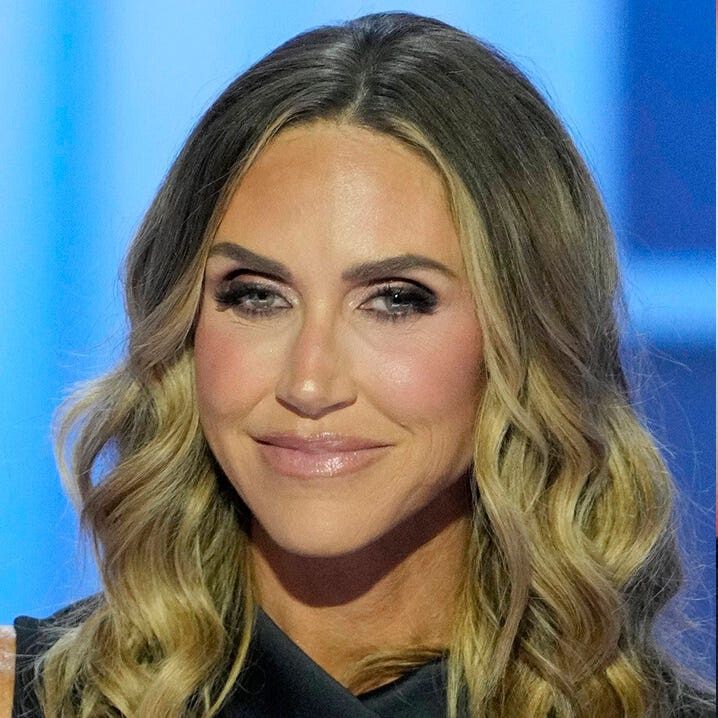
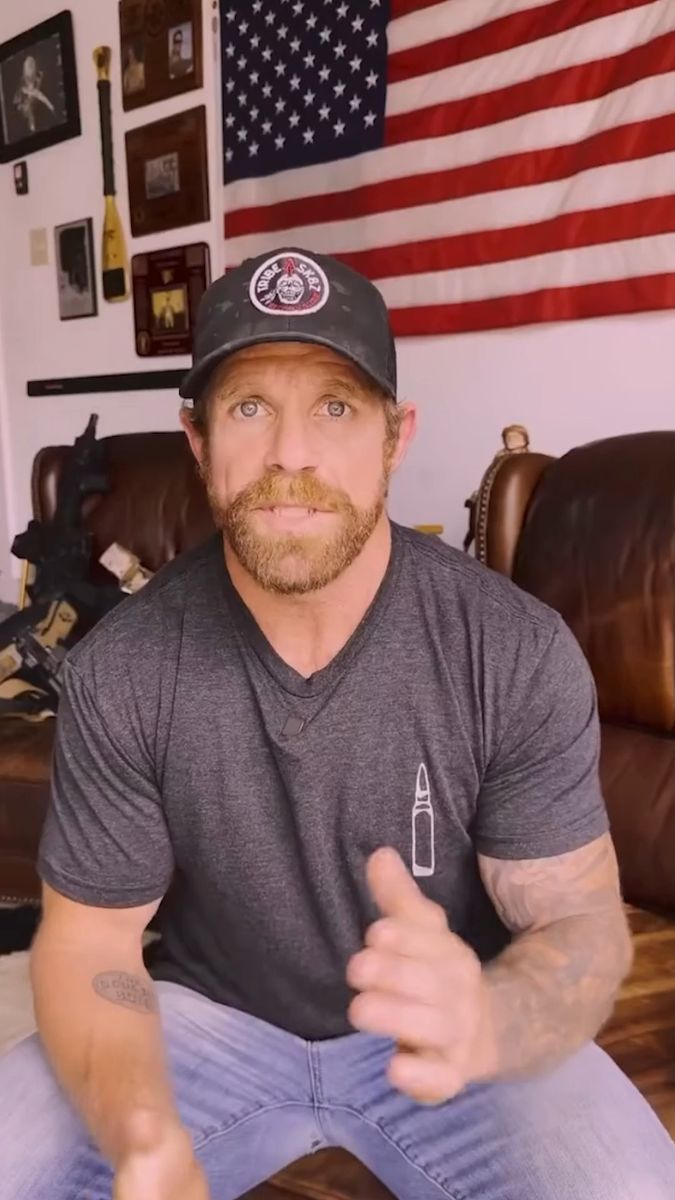

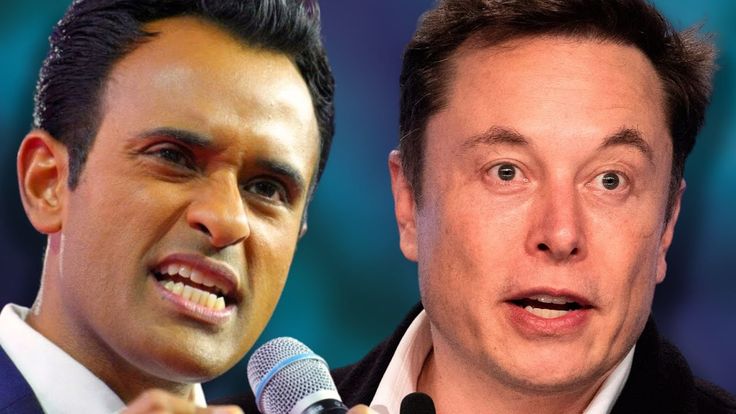
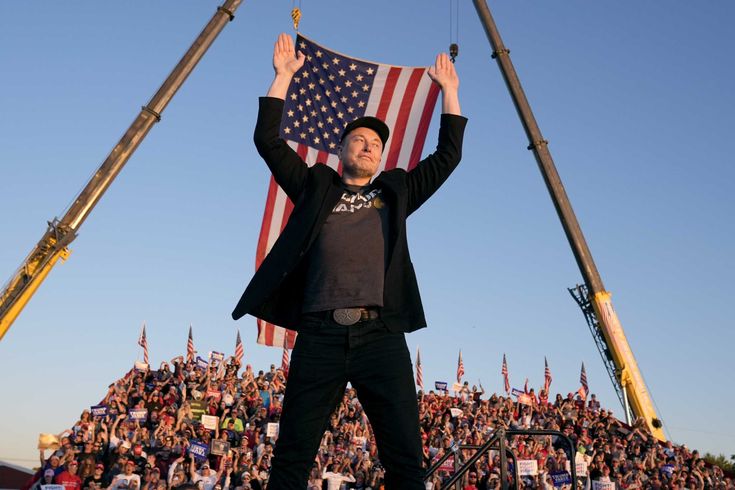
 Trump told ABC News’ Rachel Scott before the press conference that he wasn’t familiar with the comedian Tony Hinchcliffe, who referred to Puerto Rico as a “floating island of garbage.”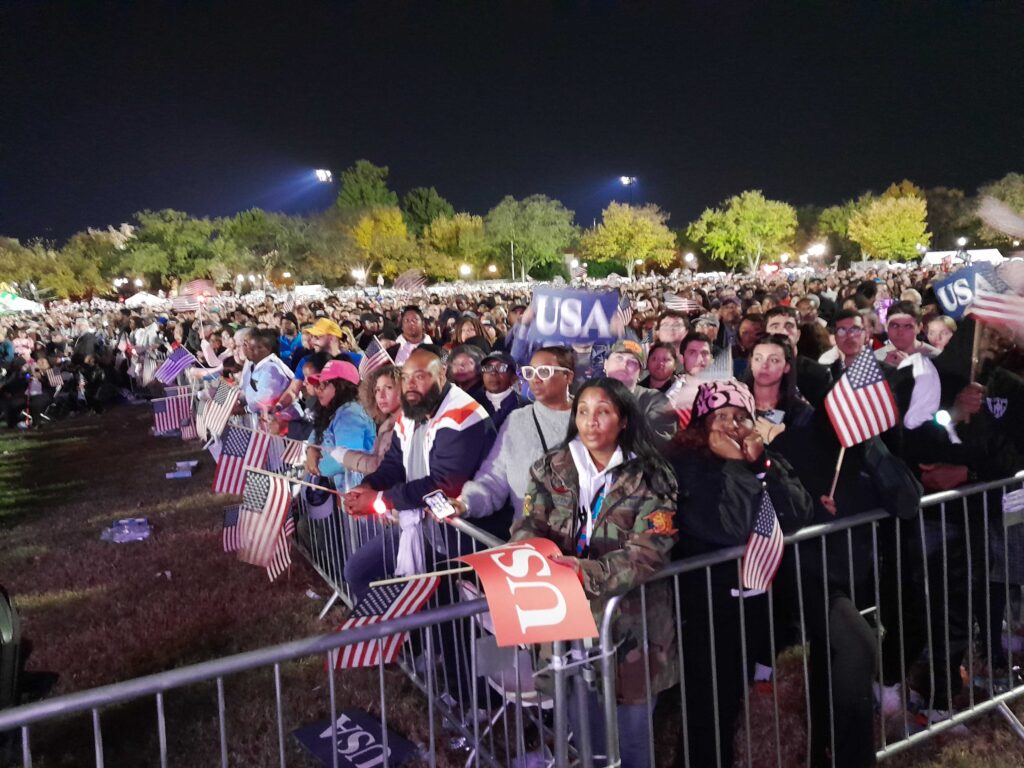
 Most of the racist diatribes at Trump’s New York City rally were not jokes. But the comments getting the most media attention —
  Nevertheless, Harris addressed the tempest in a teapot. CBS News:
  Yesterday,
  The Washington Post’s betrayal of their staff and their readers is getting the most attention, because of the newspaper’s long history of speaking truth to power. For example, without the Post’s reporting, Richard Nixon might not have been forced to resign.
 Commentary on these stunning events:
 “I think it’ll be a great time, and it’s going to be really a celebration of the whole thing, you know, because it’s coming to an end a few days after that. The campaigning; I won’t campaign anymore. Then I’ll be campaigning to make America great,” Trump said about the upcoming Madison Square Garden rally during a local radio interview with Cats & Cosby on Thursday….
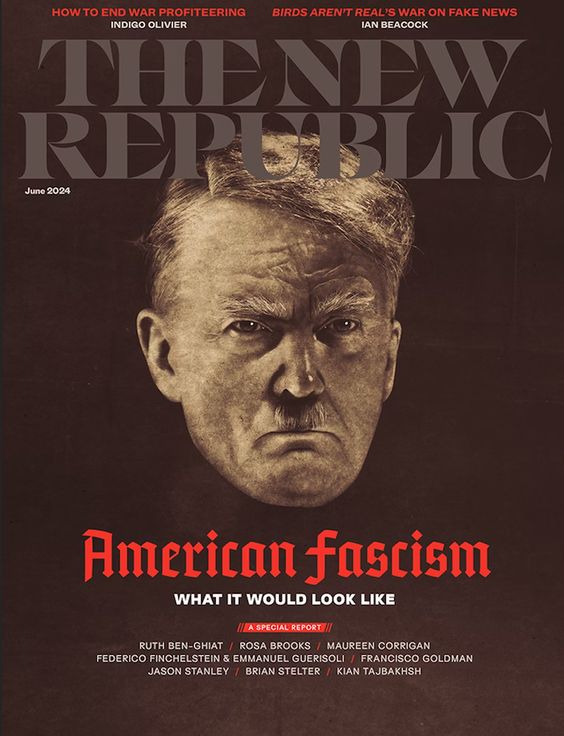 Yesterday, Trump was hit with a couple of October surprises. I have no idea whether they will make a difference, but it was a pretty good one-two punch. First The Atlantic published an article by editor-in-chief Jeffrey Goldberg about Trump’s dismissive attitude toward the members of the U.S. military. Second, The New York Times’ published an interview with Trump’s former chief of staff John Kelly, by Michael Schmidt in which Kelly says that if elected, Trump “would rule like a dictator.”
  Michael S. Schmidt at The New York Times:
  Another story with warnings about the threat of another Trump presidency by David Folkenflik at NPR:
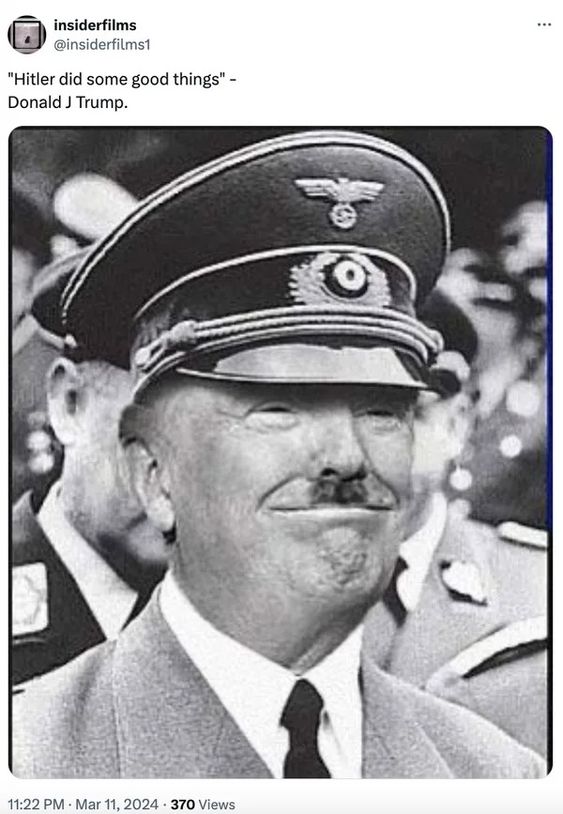 At The New Republic, Greg Sargent and Michael Tomasky write:
 peej
peej Carissa
 bostonboomer
 dakinikat
 ecocatwoman
 mablue2
 Mama Lopez
 peggysue22
 quixote
 skydancingguestblogger
 Mona (aka Wonk the Vote)



 Sky Dancing
Recent Comments