
TGIFriday Reads
Posted: April 1, 2011 Filed under: commercial banking, morning reads, We are so F'd, Women's Rights | Tags: Bank credit card fees, Bronx Zoo Egyptian Cobra, Congressional War powers, don't say uterus in florida's state legislature, Walmart's inflation woes, Walmart's supply chain workers maltreatment 61 CommentsGood Morning!!
Well, I’m hoping that this Friday goes smoother than my last one when what I thought was an innocuous zit turned into MRSA and sent me to the emergency room. I’m home now and waiting for groceries to be delivered. My face was all swollen and I’m finishing off my steriods and antibiotics. I certainly don’t want to be exposed to anything else for awhile and I availed myself of an internet-based delivery service. What I really need at the moment is a cook and nurse, but no such luck or fortune. So, I’m going to start out with some good news.
If you follow twitter much, you may have noticed that the New York Bronx Zoo’s Egyptian Cobra went missing and was “tweeting” it’s adventures. It seems the snake had hid out in its home–the reptile building–and was lured out with the smell of rodent-infested wood shavings.
An Egyptian cobra that drew thousands of Twitter fans has been found alive after it went missing for days from a New York City zoo. “As you can imagine, we are delighted to report that the snake has been found alive and well,” Bronx Zoo Director Jim Breheny said Thursday. Zoo officials conducted around-the-clock searches for the 3-ounce, 20-inch long reptile, he said.
Breheny said the cobra had sought a secure hiding spot within the holding areas of the zoo’s reptile house — a complex environment with pumps, motors and other mechanical systems. But it was lured out after zoo officials sprinkled wood shavings from exhibit beds across areas where they guessed the cobra was hiding. “It was the scent of rodents (on the wood clippings) that we hoped would bring her out,” Breheny added. “The key strategy here was patience,” he said in a prepared statement. The snake went missing Saturday from an off-exhibit enclosure, prompting the zoo to close the reptile house.
The cobra’s twitter ego was a blast to read. There were various comments about Samuel Jackson and Sex and the City’s Samantha. Anyway, I’m glad the little asp is back in his nest and that’s no April Fool’s day joke. I wish this next item was a bad April Fool’s day joke, but it’s not. A Democrat in Florida’s legislature was rebuked for using the word uterus on the floor. I guess a few people think girl parts are dirty words. (h/t to pdgrey)
During last week’s discussion about a bill that would prohibit governments from deducting union dues from a worker’s paycheck, state Rep. Scott Randolph, D-Orlando, used his time during floor debate to argue that Republicans are against regulations — except when it comes to the little guys, or serves their specific interests. At one point Randolph suggested that his wife “incorporate her uterus” to stop Republicans from pushing measures that would restrict abortions. Republicans, after all, wouldn’t want to further regulate a Florida business.
Apparently the GOP leadership of the House didn’t like the one-liner. They told Democrats that Randolph is not to discuss body parts on the House floor. “The point was that Republicans are always talking about deregulation and big government,” Randolph said Thursday. “And I always say their philosophy is small government for the big guy and big government for the little guy. And so, if my wife’s uterus was incorporated or my friend’s bedroom was incorporated, maybe they (Republicans) would be talking about deregulating. “It’s not like I used slang,” said Randolph, who actually got the line from his wife. He said Republicans voiced concern about young pages hearing the word uterus. “I think it’s a sad commentary about what we think about sex education in the state,” he said.
I’m having a difficult time associated Hillary Clinton with John Yoo but Adam Serwer at American Prospect does just that in calling Obama’s presidency imperial. Wow, have times changed! There’s a raging debate right now on congressional war powers again. Considering the adventures we’ve been on from Korea, to Vietnam, to Iraq, and forward, it seems like an odd time for this issue to pop up yet again.
Look, there’s no other way to describe this other than lawless. The Obama administration and its defenders in the civil-libertarian community have always maintained that, because it derives its authority from Congress, that authority can ultimately be undone by a legislative branch that asserts itself. If this portrayal of events accurately reflects the administration’s view, then this is no longer the case. Moreover, the Obama administration has explained its failure to fulfill certain promises — such as closing Gitmo — on having to obey limits set by Congress. If the administration’s view is that Congress cannot constrain the president’s actions in wartime because he is commander in chief, then those restrictions are ones the administration acquiesces to willingly in order to avoid making good on politically risky commitments. If Congress can’t tell the administration it can’t wage war, it sure as hell can’t tell the president where to keep alleged enemy prisoners.
I wanted to put this Dean Baker link up earlier so here it is: How Credit Card Companies want to Debit You. One of the provisions of Dodd Frank that banks would like to remove is a provision that no longer let’s them take their bad debt out of your backside. Right now, banks charge retailers incredibly high fees that get passed on to consumers on many items. The deal is that even if you use cash, you still can feel the sting of the fee.
This fee is, in effect, a sales tax. Since the credit companies generally do not allow retailers to offer cash discounts, they must mark up the sales price for all customers by enough to cover the cost of the fee. This seems especially unfair to the cash customers, since they must pay a higher price for the items they buy – even though they are not getting the convenience of paying with a debit or credit card. Those paying in cash also tend to be poorer than customers with debit or credit cards, which means that this is a transfer from low- and moderate-income customers to the banks. This is where financial reform comes in. One of the provisions of the Dodd-Frank bill passed last year instructed the Federal Reserve Board to determine the actual cost of carrying through a debit card transfer and to regulate fees accordingly. The Fed determined that a fee of 10-12 cents per transaction should be sufficient to cover the industry’s costs and provide a normal profit.
The Fed plans to limit the amount that the credit card companies can charge retailers to this level. This would save retailers approximately $12bn a year, at the expense of the credit card companies and the banks that are part of their networks. The prospect of losing $12bn in annual profits has sent the industry lobbyists into high gear. They have developed a range of bad things that will happen if the regulated fee structure takes effect and also argued that big retailers would be the only ones benefiting.
I really liked Mark Thoma’s latest at CBS’s MoneyWatch. It’s called “What’s Good for Wal-Mart Isn’t Necessarily for America”. It’s in response to WalMart executives who are in a dither about potential future inflation. Thoma makes three quick points to show you why your interests and there’s are probably not aligned.
1. Labor costs are 70% of production costs. Until we see wage inflation, and we aren’t seeing this yet, there’s little likelihood that prices will be forced upward rapidly.
2. Wal-Mart has an interest in a strong dollar (i.e. anything but inflation). They import most of what they sell, so labor costs here aren’t an issue – but the exchange rate is. However, the road to recovery is not through maximizing what we bring in from other countries, but rather what we export. Increasing net exports requires a falling exchange rate, the opposite of what Wal-mart wants. Thus, in this regard, what’s good for Wal-Mart isn’t what’s good for America.
3. The other thing to note as that to the extent that this is being driven by a change in the world demand for commodities (and almost all the credible analyses I’ve seen places the blame for rising commodity prices on this), there’s very little the Fed can do about it. For example, one of the concerns of Wal-Mart is rising labor costs in China, but the Fed has no control over labor costs in there, so the Fed cannot fix the problem for Wal-mart. However, this could help businesses here who cannot compete with low labor costs and a manipulated exchange rate, and that would help the US generally, but that is not what Wal-Mart wants.
Here’s more to think on when considering Walmart. This time it’s about the kinds of people that work so that cheapie goods are available to Walmart shoppers and they don’t have to deal with the United Ladies’ Garment workers.
The largest retailer in the United States is making an aggressive push into urban areas such as Chicago, Philadelphia, New York while the United Food and Commercial Workers union plays an underdog role in garnering public attention of Walmart’s abuse of workers from garment factories to employees in their Supercenters. UFCW is trying to highlight these abuses in a Worker Truth Tour featuring people who have or currently work for the massive corporation or a subsidiary.
The tour reached Chicago earlier this week featuring two women from Bangladesh who work in garment factories. The youngest of the two, Aleya Akter, continues to work 208 hours a month for a mere $80. It comes out to 38.5 cents an hour. She started working in the factories at the age of nine in 1994. She claimed there are lots of violations, long hours, and forced overtime. Additionally, she said through a translator, “Enough is enough. We need to change the working conditions in the factories.” Almost as an afterthought Aleya alleged that the workplace in these garment factories are unsafe and some of the women are physically abused by managers.
Anyway, that’s what I’ve got today. I’m still sort’ve reeling from the drugs, so hopefully you can add some more things from your reading and blogging list for us!!
TGIFriday Reads
Posted: March 25, 2011 Filed under: commercial banking, Corporate Crime, Economy, Egypt, financial institutions, Foreign Affairs, morning reads, U.S. Politics, unemployment, Women's Rights | Tags: austerity, budget, Federal deficits, Michelle Bachmann is nuts, Paul Krugman 16 Comments Good Morning!
There’s been quite a few economists weighing in on the debate going on in congress about the budget. Paul Krugman’s op-ed is on “The Austerity Delusion”. Krugman’s appalled that more policymakers aren’t concerned with the high rate of unemployment which is contributing to the deficit in several ways. First, it decreases tax revenues. Second, it increases state and federal expenditures. Solve the jobs problem and the deficit will decrease. He’s worried that all this austerity will just bring on another economic slowdown.
Why not slash deficits immediately? Because tax increases and cuts in government spending would depress economies further, worsening unemployment. And cutting spending in a deeply depressed economy is largely self-defeating even in purely fiscal terms: any savings achieved at the front end are partly offset by lower revenue, as the economy shrinks.
So jobs now, deficits later was and is the right strategy. Unfortunately, it’s a strategy that has been abandoned in the face of phantom risks and delusional hopes. On one side, we’re constantly told that if we don’t slash spending immediately we’ll end up just like Greece, unable to borrow except at exorbitant interest rates. On the other, we’re told not to worry about the impact of spending cuts on jobs because fiscal austerity will actually create jobs by raising confidence.
Politico features a series of Former CEA members who signed a letter of concern on the deficit and unsustainable US Budgets. Too bad that people like Greg Mankiw–advisor to Dubya–didn’t speak up when the spending problems were originated. They mostly trace to Reagan and Bush administrations. They all suggest using the Cat food commission report as the focus of discussions. Hang on to your social security, folks! It’s going to be a bumpy ride.
As former chairmen and chairwomen of the Council of Economic Advisers, who have served in Republican and Democratic administrations, we urge that the Bowles-Simpson report, “The Moment of Truth,” be the starting point of an active legislative process that involves intense negotiations between both parties.
There are many issues on which we don’t agree. Yet we find ourselves in remarkable unanimity about the long-run federal budget deficit: It is a severe threat that calls for serious and prompt attention.
While the actual deficit is likely to shrink over the next few years as the economy continues to recover, the aging of the baby-boom generation and rapidly rising health care costs are likely to create a large and growing gap between spending and revenues. These deficits will take a toll on private investment and economic growth. At some point, bond markets are likely to turn on the United States — leading to a crisis that could dwarf 2008.
“The Moment of Truth” documents that “the problem is real, and the solution will be painful.” It is tempting to act as if the long-run budget imbalance could be fixed by just cutting wasteful government spending or raising taxes on the wealthy. But the facts belie such easy answers.
I suppose you know the professional insane Republican Michelle Bachmann is forming an exploratory committee for a possible presidential run. I’d vote for any one’s dog before I’d consider Bachmann who doesn’t appear to have paid attention to any course she ever attended in school. I’ve never in my life heard any one outside of maybe a grade school that has such a bad grasp of American History, law, and politics. I think she should’ve just gotten a mail order degree. Education appears to have been wasted on her.
CNN has exclusively learned that Rep. Michele Bachmann will form a presidential exploratory committee. The Minnesota Republican plans to file papers for the committee in early June, with an announcement likely around that same time.
But a source close to the congresswoman said that Bachmann could form the exploratory committee even earlier than June so that she could participate in early Republican presidential debates.
“She’s been telling everyone early summer,” the source told CNN regarding Bachmann’s planned June filing and announcement. But the source said that nothing is static.
“If you [debate sponsors] come to us and say, ‘To be in our debates, you have to have an exploratory committee,’ then we’ll say, ‘Okay, fine…I’ll go file the forms.'”
Speaking of Republicans, a former aide to Sen. John Ensign has just been indicted for violating conflict of interest laws.
The Justice Department announced the indictment late Thursday, which charges Doug Hampton with seven counts of violating criminal conflict of interest laws for allegedly engaging in unlawful communication with Ensign’s office, violating the Senate’s “revolving door” policy.
According to the indictment, after Hampton left Ensign’s office in 2008 he “knowingly and willfully made, with the intent to influence, communications to staff members of the U.S. senator” on behalf of an energy company he was employed by at the time.
Hampton is alleged to have sought the assistance of Ensign and other staff members for help in moving forward a proposal to build a power plant in eastern Nevada.
Hampton, if convicted, could face up to five years in prison for each of the seven counts in the indictment. He is set to be arraigned in U.S. District Court in Washington, D.C. on March 31.
Ensign is retiring. Probably because of all the scuttlebutt around his affairs and possibly what may come out of this prosecution. Maybe Tom Delay will have a new cell mate on the way.
Glenn Greenwald has written an excellent piece in Salon on withering Miranda rights under the Obama administration. You may want to check it out.
The number of instances in which Obama has violently breached his own alleged principles when it comes to the War on Terror and the rule of law are too numerous to chronicle in one place. Suffice to say, it is no longer provocative or controversial when someone like Yale Law Professor Jack Balkin writes, as he did the other day, that Obama “has more or less systematically adopted policies consistent with the second term of the George W. Bush Administration.” No rational person can argue that or even tries to any longer. It’s just a banal expression of indisputable fact.
Today, the Obama DOJ unveiled the latest — and one of the most significant — examples of its eagerness to assault the very legal values Obama vowed to protect. The Wall Street Journal reports that “new rules allow investigators to hold domestic-terror suspects longer than others without giving them a Miranda warning, significantly expanding exceptions to the instructions that have governed the handling of criminal suspects for more than four decades.” The only previous exception to the 45-year-old Miranda requirement that someone in custody be apprised of their rights occurred in 1984, when the Rehnquist-led right-wing faction of the Supreme Court allowed delay “only in cases of an imminent safety threat,” but these new rules promulgated by the Obama DOJ “give interrogators more latitude and flexibility to define what counts as an appropriate circumstance to waive Miranda rights.”
Just hope you never get classified as a terrorist or you’ll disappear down some rabbit hole. You should also read William Grieder over at The Nation on How Wall Street Crooks Get Out of Jail.
Instead of “Old Testament justice,” federal prosecutors seek “authentic cooperation” from corporations in trouble, urging them to come forward voluntarily and reveal their illegalities. In exchange, prosecutors will offer a deal. If companies pay the fine set by the prosecutor and submit to probationary terms for good behavior, perhaps an outside monitor, then government will defer prosecution indefinitely or even drop it entirely. The corporation thus avoids the stigma of a criminal trial and the bad headlines that depress stock prices. More to the point, the “deferred prosecution agreement,” as it’s called, allows the company to escape the more severe consequences of criminal conviction—the loss of banking and professional licenses, charters, deposit insurance or other government benefits, including eligibility for federal contracts and healthcare programs. In other words, the punishment prescribed in numerous laws.
“With cooperation by the corporation, the government may be able to reduce tangible losses, limit damage to reputation, and preserve assets for restitution,” the Justice Department’s authorizing memorandum explained in 2003. “A deferred prosecution or non-prosecution agreement can help restore the integrity of a company’s operations and preserve the financial viability of a corporation that has engaged in criminal conduct.”
The favored argument for the more conciliatory approach was that criminal indictment may amount to a death sentence for a corporation. The fallout will destroy it, and the economy will lose valuable productive capacity. The collateral consequences are unfair to employees who lose jobs and stockholders who lose wealth. Corporate defenders cited Arthur Andersen, the giant accounting firm that imploded after it was convicted in 2002 of multiple offenses in Enron’s collapse. But was it the firm’s indictment or its criminal behavior that caused clients, accountants and investors to abandon it?
A better name for the Justice Department’s softened policy might be “too big to prosecute.”
Wanna rob a bank? Don’t do it with a gun. Just become its President and do what you want to do.
Here’s a disturbing headline from Egypt (h/t to Minx):Secret shame of Egypt’s army: Women protesters were forced to have ‘virginity checks’ after being arrested in Tahrir Square,
Women arrested by the Egyptian police during protests in Cairo’s Tahrir Square were subjected to forced ‘virginity tests’, according to Amnesty International.
Eighteen demonstrators were detained after army officers cleared the square on March 9 at the end of weeks of protest.
Amnesty today said that the women had been beaten, given electric shocks and then subjected to strip searches while being photographed by male soldiers.
They were then given ‘virginity checks’ and threatened with prostitution charges if medics ruled they had had sex, according to the charity.
Just when you think things will get better, something comes along that just makes things look worse.
So, what’s on your reading and blogging list today?
Elizabeth Warren: Fighter or Pinata?
Posted: March 19, 2011 Filed under: commercial banking, financial institutions, Global Financial Crisis | Tags: Consumer Financial Protection Bureau, Elizabeth Warren 9 Comments
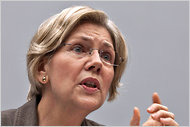 I’m never quite happy when a major media outlet like the New York Times refers to a woman as an inanimate object. Even if the article is flattering, the metaphor still stings. The caption below her picture reads “President Obama’s adviser on the Consumer Financial Protection Bureau” too. Obama may own her appointment but he doesn’t own the woman who has been on the side of consumers of banking services for a very long time. If Elizabeth Warren is an object of loathing for both bankers and Republicans, it’s because she’s a fighter. She’s not a passive thing and she certainly wasn’t passive during recent hearings. A person doesn’t become a tenured professor at a competitive place like Harvard’s law school by being passive.
And thus the real purpose of the hearing: to allow the Republicans who now run the House to box Ms. Warren about the ears. The big banks loathe Ms. Warren, who has made a career out of pointing out all the ways they gouge financial consumers — and whose primary goal is to make such gouging more difficult. So, naturally, the Republicans loathe her too. That she might someday run this bureau terrifies the banks. So, naturally, it terrifies the Republicans.
The banks and their Congressional allies have another, more recent gripe. Rather than waiting until July to start helping financial consumers, Ms. Warren has been trying to help them now. Can you believe the nerve of that woman?
At the request of the states’ attorneys general, all 50 of whom have banded together to investigate the mortgage servicing industry in the wake of the foreclosure crisis, she has fed them ideas that have become part of a settlement proposal they are putting together. Recently, a 27-page outline of the settlement terms was given to banks — terms that included basic rules about how mortgage servicers must treat defaulting homeowners, as well as a requirement that banks look to modify mortgages before they begin foreclosure proceedings. The modifications would be paid for with $20 billion or so in penalties that would be levied on the big banks.
So, am I the only one that even finds the tongue and cheek use of “the nerve of this woman” as being particularly patronizing vision of some one who has been such a consistent, articulate, fighting voice for beleaguered consumers in a tough environment built for big time lobbyists with big time money? The point of the article is that many of the old regulators who are supposed to make sure the bank runs of the 1930s don’t recur–like the Office of the Comptroller of the Currency–have become their old captured selves. This is in firm contrast to the article’s objectified pinata.
It’s not just the House Republicans either. Already the Office of the Comptroller of the Currency has reverted to form, becoming once again a captive of the banks it is supposed to regulate. (It has strenuously opposed the efforts of the A.G.’s to penalize the banks and reform the mortgage modification process, for instance.) The banks themselves act as if they have a God-given right to the profit they made precrisis, and owe the country nothing for the trouble they’ve put us all through. The Justice Department has essentially given up trying to make anyone accountable for the crisis.
So, yes, thank goodness for Ms. Warren and her fighting spirit. We’re on to the next big thing. There’s a fresh hell called Libya and a worry for all those invested in energy company with ownership of nuclear assets. So, bankers, you know, will be bankers.
During the subprime boom, many states tried to stop the worst lending abuses, only to be blocked by federal banking regulators. Now that the country is dealing with the aftermath of those abuses — the rising tide of defaults and foreclosures — it is the attorneys general who are, once again, put in the position of trying to stamp out abuses, this time of the foreclosure process itself.
I dare to guess that the president’s spent more time on his march madness brackets than what’s up in Warren’s office. When Warren’s time in her interim position expires, Obama will undoubtedly let his banker friends find an acceptable banker potted plant to fill her spot.
Their leverage comes from the fact that the banks and their servicing divisions have, in the words of the University of Minnesota law professor Prentiss Cox, “routinely violated basic legal process” by, for instance, not transferring the note after the sale of a home. But in addition to assessing a financial penalty on the banks, the A.G.’s are trying to use the threat of litigation to force the banks to finally deal with defaulting homeowners more fairly and humanely. That is the essence of the settlement proposal that has been floating around. That — and a big push to finally come up with a modification plan that works.
Their leverage comes from the fact that the banks and their servicing divisions have, in the words of the University of Minnesota law professor Prentiss Cox, “routinely violated basic legal process” by, for instance, not transferring the note after the sale of a home. But in addition to assessing a financial penalty on the banks, the A.G.’s are trying to use the threat of litigation to force the banks to finally deal with defaulting homeowners more fairly and humanely. That is the essence of the settlement proposal that has been floating around. That — and a big push to finally come up with a modification plan that works.
Author Joe Nocera is clearly in awe of her too. He states that she’s by far the most qualified person for the position. She understands the ins and outs of the processes very well.
As I listened to her on Wednesday, I was struck anew at how clearly she articulates the need for the new bureau. “If there had been a cop on the beat to hold mortgage servicers accountable a half dozen years ago,” she said at one point, “the problems in mortgage servicing would have been found early and fixed while they were still small, long before they became a national scandal.”
Senate Republicans have vowed to block her appointment if President Obama nominates her. Yet even if her nomination goes down in flames, Senate confirmation hearings would be clarifying. Americans would get to hear Ms. Warren explain why the Consumer Financial Protection Bureau has the potential to help Americans. And they would get to hear Republicans explain why the status quo — including the everyday horror of the foreclosure mess — is just fine.
It has been much noted in recent months that President Obama seems unwilling to start a fight with Republicans. Maybe that’s why he has shied away from nominating Ms. Warren to a job for which she is so clearly suited. But if protecting financial consumers — and helping the millions of Americans struggling to hold onto their homes — isn’t worth fighting for, then what is?
The woman hardly qualifies as a noun. She is a verb. Elizabeth Warren fights for us. Who will fight for her?
How to Kill Home Ownership
Posted: February 11, 2011 Filed under: commercial banking, Economic Develpment, financial institutions, Surreality, Team Obama, We are so F'd | Tags: Bail out of Fannie Mae and Freddie Mac, Timothy Giethner 38 Comments
Levittown House and family circa 1948
Your house is about to become even harder to sell, even more unlikely to appreciate, and even more unaffordable to more people. Be prepared to go back to the past. All those young Obama Democrats better love their landlords. They’re likely to be stuck with them for some time. Every think you’d see a headline like this for a Democratic President? Here’s one from NPR Today: Obama Administration: Not Everybody Should Own A Home,
For decades, U.S. housing policy seemed to assume that more home ownership was always better.
At one point in the early ’90s, the government launched the “National Homeownership Strategy,” whose stated goal was to “attempt to help all American households become homeowners.”
So perhaps the most striking thing in today’s housing finance report from the Obama administration is the simple idea that not everybody should own a home (emphasis added):
The Administration believes that we must continue to take the necessary steps to ensure that Americans have access to an adequate range of affordable housing options. This does not mean all Americans should become homeowners. Instead, we should make sure that all Americans who have the credit history, financial capacity, and desire to own a home have the opportunity to take that step. At the same time, we should ensure that there are a range of affordable options for the 100 million Americans who rent, whether they do so by choice or necessity.
This is idea, in turn, leads to the Obama administration’s main conclusion: Fannie Mae and Freddie Mac should cease to exist.
I’ve been a critic of the way Fannie Mae and Freddie Mac were managed for about 15 years. They were packaging up loans and paying bonuses like the worst of the Wall Street set. This had nothing to do with their basic government franchise agreement which is to provide long term funds to back up home loans. The packaging and wheeling and dealing were part and parcel of Fannie and Freddie trying to mimic Wall Street and privatization. However, they both provided products with implied government guarantees. This implies a higher level of due diligence in underwriting and packaging that they basically ignored. It’s similar to USDA grade beef. There was a guarantee that these loans would hold mortgage insurance and be underwritten carefully. The root cause of the problems were not the attempts to get more qualified people into affordable mortgages, it was to feed Wall Street greed and shovel money to their executives who were frequently just political hacks. They simply did the worst of the Wall Street practices at a much higher volume with a more damaging result because of the US stamp of approval; the implicit guarantee.
Now, we have a back to the gilded age future ahead of us. What has made these loans work as loans and the securities that back the loans work is the implied low risk with a decent rate of return. Many, many pension funds and institutional investors hold huge numbers of Fannie and Freddie Securities because they’ve always had high ratings. Most of these pension funds and institutional investors are sources of long term funds. There’s not a lot of a lenders that will lend long these days and that’s going to be a problem for most people looking for a home now more than ever. My guess is that most home loans will now go down to terms of about 15-20 years or they’ll be completely variable rate. That means the homeowner will have to bet on the rate to get an affordable mortgage and gamble their incomes will go up to secure the lowest rates and longest terms. Both of these are highly risky bets. Past data has shown that most people loose with these kinds of mortgages.
Plus, that’s if they can get the funding at all. Without something similar, I doubt that the major sources of these funds which are usually forced into safe investments will be available. Either that, or you’re going to lock in to a fixed rate but for an intermediate term loan. Think about your own house loan and what that would mean for you. You either double your house payment or take the bet that the rate won’t go up enough to force you to default in the future. Most people don’t have sophisticated enough knowledge of economics to even make an educated guess. My guess is that if they take the loan at all, they’ll go for the short term fixed rate loan on a much cheaper house. This is going to change the complexion of the housing market for ever if it goes through as planned.
This is a President used the gipper metaphor for himself. This is the White House that wants less Government in the Mortgage system.
The Obama administration wants to shrink the government’s role in the mortgage system — a proposal that would remake decades of federal policy aimed at getting Americans to buy homes and would probably make home loans more expensive across the board.
The Treasury Department rolled out a plan Friday to slowly dissolve Fannie Mae and Freddie Mac, the government-sponsored programs that bought up mortgages to encourage more lending and required bailouts during the 2008 financial crisis.
Exactly how far the government’s role in mortgages would be reduced was left to Congress to decide, but all three options the administration presented would create a housing finance system that relies far more on private money.
“It’s clear the administration wants the private sector to take a more prominent role in the mortgage rates, and in order for that to happen, mortgage rates have to go up,” said Thomas Lawler, a housing economist in Virginia.
Abolishing Fannie and Freddie would rewrite 70 years of federal housing policy, from Fannie’s creation as part of the New Deal to President George W. Bush’s drive for an “ownership society” in the 2000s. It would transform how homes are bought and redefine who can afford them.
Treasury Secretary Timothy Geithner said the plan would probably not happen for at least five years and would proceed “very carefully.” In the meantime, he said the companies would have the cash they need to meet their existing obligations.
There are other ways to do this. Most would have to do with tighter governance of Fannie and Freddie and elimination of private sector practices of bonuses for volume when government guarantees are involved. Also, a cap for the mortgages to prices more standard through out the country rather than Washington DC would help. Fannie and Freddie should have no place in the jumbo market. Here’s a few of the proposals that are in the White House program.
The Obama administration proposals include raising the rates Fannie and Freddie charge to banks for loan guarantees to the same levels as private banks. Private mortgages for so-called jumbo loans, which are not covered by government guarantees, currently cost between 0.5% and 0.75% more than government-backed mortgages. So, if Fannie and Freddie’s fees were to rise to the market level, mortgage rates across the U.S. might rise substantially.
The administration also proposed lowering the maximum value of a mortgage that can qualify to be federally backed from the current $729,750 to $625,500. That’s a widely suggested move that would attract the private sector to make more loans in the upper range of the market. The proposal also called for Fannie, Freddie and the FHA to set a minimum down payment requirement of 10%. Currently, the agencies are authorized to make loans with no down payments at all.
The big issue is what to do about the government guarantee that assures investors who buy Fannie and Freddie mortgage bonds that the U.S. government will pay back the bonds in the event the underlying mortgages default. Because of that guarantee, Fannie and Freddie can offer lower interest rates than the private sector. Investors, especially foreign investors, were burned by subprime bonds during the financial crisis, and now they won’t touch private mortgage bonds without a government guarantee.
There’s obvious problems with Fannie and Freddie but they mostly lie with how it was managed and how it morphed as more up income and high price assets were put into play. Helping upper income people or expensive real estate markets weren’t originally part of the charter. Making it more like a bank isn’t going to remove the abuses but add to them. Bonuses for production quotas lead to reduced quality.
It would be more prudent to take Fannie and Freddie back to their roots rather than to them strip them of their ability to provide affordable mortgages to entry level home owners. The management got caught up in production over quality of loans because they got bonuses. That was a huge problem. The connection to affordable housing initiatives was never the problem. Churning out crap to feed the investment frenzy of Wall Street and peeling off bonuses for their executives led to their sloppy loan processing. They caught the same disease that plagued the private sector at a larger volume. Congress also did a poor job of oversight.
This move will leave a huge gap in two places. First, it will impact investment portfolios that rely on long term, relatively safe but decent yield-bearing assets. It will also remove one more route to the American dream for ordinary Americans. Let’s just say we’re all taking one for the Gipper.
TGIF Reads
Posted: January 28, 2011 Filed under: commercial banking, Egypt, FBI raids, Foreign Affairs, morning reads, Voter Ignorance, We are so F'd | Tags: Egypt, FBI misconduct, FCIC report, filibuster laws, horrible jail conditions, Rahm Emanuel eligibility 10 Comments Good Morning!

It’s finally Friday.
Rahm Emanuel was back on the ballot and part of a debate for candidates for the Mayor of Chicago last night. The Illinois Supreme Court ruled unanimously in his favor. Evidently the case relied a lot on the ‘intent’ of Rahm whose lawyers argued that he had left books in the basement of his old house, rented the house out instead of selling it and other behaviors that showed that he was just away temporarily performing some kind of national service. The city is now free to print its ballots.
The justices found that Emanuel never displayed an intent to permanently abandon his Chicago home, which they said would have been the trigger to render him ineligible. Instead, they said, it was clear that when he went to Washington, he always planned the move to be temporary and to return to Chicago one day.
The court said the appellate panel hung its decision on a misinterpretation of an 1867 Illinois Supreme Court case involving a judge who temporarily moved to Tennessee but always planned to come back. In essence, the Appellate Court concluded that the 19th century decision didn’t cover Emanuel and that residency should be defined as where one rests his head at night.
It seems unlikely that reform on the senate filibuster will have much of an impact. It looks like it will be small if at all.
But Democrats never seemed able to reach an agreement on the scope or type of changes, and Reid announced a more modest set of changes on which the parties would vote Thursday afternoon.
The reforms include an end to secret holds, a reduction in the number of presidential nominations subject to the lengthy Senate confirmation process, an end to mandatory readings for amendments if they’ve been publicly available for at least three days, an agreement by Republicans to limit their filibusters of motions to begin debate, and an agreement by Democrats to limit instances in which they “fill the tree” — or limit the number of amendments Republicans can put to a given piece of legislation.
Perhaps the most significant agreement was that of changing the filibuster, the principal tool of the minority to stall or block legislation. Republicans used the tactic to great effect in the last Congress, though Democrats griped that the process had been abused at an unprecedented level.
Protests continue in Egypt as the scent of Jasmine spreads. The Economist looks at what this could potentially mean to Arab leaders as the people in the era look for democracy. The US is obviously nervous about any potential uptick for groups like The Muslim Brotherhood who could take the country in the opposite direction.
Mr Mubarak, like the rest of the Arab world’s autocrats, will be pondering the despot’s eternal dilemma. Is it better to loosen controls in order to satisfy their people with a whiff of freedom, or to tighten them in an effort to ensure their docility?
The fate of Tunisia’s strongman, Zine el-Abidine Ben Ali, suggests that an angry people will be satisfied with neither. If Mr Mubarak truly put his country’s interests first, he would immediately promise to retire before the next presidential election, due in September. At the very least he would ensure that the contest is a genuinely open one, not another farce.
The NYT looks at the possible role of religion in the Egyptian protests.
Heightening the tension, the Muslim Brotherhood, the largest organized opposition group in the country, announced Thursday that it would take part in the protest. The support of the Brotherhood could well change the calculus on the streets, tipping the numbers in favor of the protesters and away from the police, lending new strength to the demonstrations and further imperiling President Hosni Mubarak’s reign of nearly three decades.
“Tomorrow is going to be the day of the intifada,” said a spokesman for the Muslim Brotherhood here in Egypt’s second largest city, who declined to give his name because he said he would be arrested if he did. The spokesman said that the group was encouraging members of its youth organization — roughly those 15 to 30 years old — to take part in protests.
But Islam is hardly homogeneous, and many religious leaders here said Thursday that they would not support the protests, for reasons including scriptural prohibitions on defying rulers and a belief that democratic change would not benefit them. “We Salafists are not going to participate in any of the demonstrations tomorrow,” said Sheik Yasir Burhami, a leading figure among the fundamentalist Salafists in Alexandria.
One troubling thing is that the Egyptian government has ‘shut down the internet‘. SMS messages have also been blocked. The US government has called on the Egyptian authorities to stop the block.
While access directly to the Facebook and Twitter websites are inaccessible from within Egypt, protesters are circumventing the blocks in place by using mobile applications which still work. Proxy websites are also being used, as they mask the address of website, allowing those to access social networking sites.
But as the blocking measures are failing, it appears that Egypt has sanctioned measures to ’shut down’ web access, fearing the same reprisals as seen in Tunisia earlier this month where the government collapsed and the president was forced into exile.

 peej
peej Carissa
 bostonboomer
 dakinikat
 ecocatwoman
 jjlo
jjlo mablue2
 Mama Lopez
 peggysue22
 quixote
 skydancingguestblogger
 Mona (aka Wonk the Vote)



 Sky Dancing
Recent Comments