
The Beginning Is Near
Posted: November 3, 2011 Filed under: #Occupy and We are the 99 percent!, American Jobs Act, Baby Boomers, Bailout Blues, Banksters, Black Agenda Report, commercial banking, Economy, income inequality, investment banking, jobs, unemployment 27 CommentsMaybe it’s my age [and no, I’m not telling] but I find great promise is those four words scrawled on a makeshift sign.

I’m sure–in fact, I know–there are others of my generation [Boomers] who look at the Occupy Wall St. [OWS] Movement, read the signs and scratch their heads. Or more likely they criticize the primarily young protesters as naïve, idealistic, disorganized, wanting something for nothing. Why don’t they just get a job? many say.
These reactions miss the point, as far as I’m concerned. These youngsters want something all right. They want their futures. They want to control their own destinies with a measure of integrity, a sense of possibility rather than bending to the yoke of a failing system, one that only works for those on the top of the heap. The statistics are there for everyone to read. No mystery! Wages of ordinary Americans have been stagnant, while the rich have become richer than Midas. Jobs have been sent willy-nilly beyond our shores but the trade-off [we’ve been told numerous times] are cheap consumer goods, the more the better.
He who has the most stuff wins. Many people bought into that. For a while.
Throw in 9/11, multiple wars, massive unemployment, rising health care costs, climate-related weather events, the negligence in the Gulf of Mexico, etc. and the shine has definitely come off the latest gadgets and toys. As an electorate, we’ve had a slap upside the head.
What I find astounding is people blaming this particular group—the OWS protesters, primarily the Millennials–for what is clearly our responsibility, a product of our refusal to hold our politicians accountable and demand justice–a return to the Rule of Law–instead of foisting the unpleasant, annoying task on our children [or grandchildren, as the case may be]. We’re the ones who bought into the Big Lie. Or worse, pretended it didn’t exist. These young students and 20-somethings had no hand in what we watched and allowed to develop.
The kids are making us look bad. They’ve endured dismissal, ridicule, concrete beds and lousy weather. And they’re called the slackers?
Nor should we forget that Boomers are running things right now. Our generation sits in the halls of Congress and refuses to pass legislation to put the country back to work. Boomers sit in the offices of the White House and pretend to hold a populist agenda, while doing the bidding of their monied benefactors. They sit on the Supreme Court and try to convince us that corporations = personhood. And they certainly populate Corporate America and Wall St., where repeated decisions and deals have been made to maximize profits at the expense of ordinary citizens. Not all Boomers, of course. But our generation is well represented in the lever pushing–the Make Love Not War crowd. Time to own it.
But even if we’re far, far removed from the corridors of power, just living our lives, I would suggest quiet acquiescence of the status quo isn’t working either. Hello, Boomers. The confidence fairy that has been running [ruining] our financial system will not be coming to spread pixie dust over the wreckage and make things right.
Not going to happen. And the young? They see right through it.
For over thirty years, corporate greed has grown, metastasized to the point that nothing is sacred—not the health or education of our people, not the environment [on which we depend to exist], not our principles of equal opportunity, not even our insistence that The Rule of Law is imperative for our Democratic Republic to survive.
And what was the trade? Constant debates that American health care is the best in the world without adding the qualification: only if you can afford it. The refusal to admit that the decreasing quality of our primary and secondary educational systems condemns many of our citizens to poverty and the staggering increase in university tuition costs and subsequent debt saddles our college graduates to years of unmanageable debt. The reckless and short-sighted risk-to-wreckage of our environment be it through fracking or drilling or proposed tar sand pipelines, while we turn up our noses to promoting and supporting green technology. The cruel pretense that all our citizens start off on a ‘level-playing’ field, while the evidence of privilege and influence-driven access to favors are as acute now as during the Gilded Age. The unwillingness to investigate and prosecute those involved in the biggest heist in history, the very same financiers and corporate bigwigs, who continue to exert control over our political system.
Two years ago, Dick Durbin stood before Congress and said: The banks own the joint.
We should have listened or turned up our hearing aides. Because sadly, the man spoke  the truth. See no evil, hear no evil, speak no evil is not a strategy for the future. It’s unsustainable.
So, when I look at the live streams of the cross-country demonstrations, read the twitter feeds, I don’t think slackers. I think of a generation who has said what we, the grownups, should have said quite some time ago: Enough is enough. Or as Bill Moyers said recently: “People are occupying Wall St. because Wall St has occupied the country.”
Yesterday, between 7 to 10,000 people took part in a general strike in Oakland. They shut down the port of Oakland, a major access for Chinese goods, the 5th busiest port in the country. Local businesses shut down in support of the effort. To its credit, the protest has remained remarkably peaceful although early morning reports indicate that violence did break out before sunrise. Unfortunately, the authorities in Oakland nearly cost the life last week of a young Marine vet, Scott Olsen. Discontent can have consequences.
But attitudes are shifting and changing. Voices are being heard.
Last April with little fanfare, Joseph Stiglitz stated in a Vanity Fair article:
“The top 1 percent have the best houses, the best educations, the best doctors, and the best lifestyles, but there is one thing that money doesn’t seem to have bought: an understanding that their fate is bound up with how the other 99 percent live.”
Since the Occupy Movement started, this sentiment has been echoed, magnified:
On October 22, Noam Chomsky gave a speech on Dewey Square in Boston and said:
“I’ve never seen anything quite like the Occupy movement in scale and character, here and worldwide. The Occupy outposts are trying to create cooperative communities that just might be the basis for the kinds of lasting organizations necessary to overcome the barriers ahead and the backlash that’s already coming.”
At Black Agenda Report, Glen Ford recently wrote:
“There comes a time of awakening. We are now in that time – although some Black folks are not yet awake. Our job is to wake our people up, so that we don’t sleep through this moment.
The young people that began this Occupation Movement less than two months ago are not “us,” but they have done all of us a great service. They have shouted out the name and address of the enemy – the enemy of all humanity. The enemy’s name is Finance Capital, and the address is Wall Street, and that is the truth.”
Chris Hedges recently stated on Truthdig radio:
“But this is a widespread movement; it’s decentralized; it takes on its own coloring and characteristics, depending on the city that it’s in; and so there will be, you know—as you point out, I mean, movements are by their very nature messy and make steps forward and steps back. But I think that there is a resiliency to this movement because it articulates a fundamental truth of inequality that hits the majority of American citizens.”
Even House Speaker John Boehner remarked in a recent speech at the University of Louisville:
“I understand people’s frustrations,” he said. “The economy is not producing jobs like they want and there’s lot of erosion of confidence in our government and frankly, under the First Amendment, people have the right to speak out … but that doesn’t mean they have the permission to violate the law.”
Hey, it’s a start. Certainly better than designating OWS as ‘The Mob.’
People are rousing from their long, restless slumber. The conversations have begun and are different from what we’ve heard or read before. The protesters persist. They march, they endure.
The Beginning is Near.
What’s right isn’t always what’s good
Posted: October 28, 2011 Filed under: Bailout Blues, Banksters, financial institutions | Tags: Financial Crisis 30 CommentsThere’s something that bothers me about the current conversation (diatribe?) about the sins of the bankers.

The tone of a lot of the talk is as if they belong to some other species, as if they commit crimes nobody else does, but also as if they keep their heads when nobody else can.
Holding them to sub- or superhuman standards means it’s hard to understand why they do what they do. And that means it’s hard to make them do the right thing.
Let me explain what I mean.
After the crash, US banks were bailed out. People were outraged, and rightfully so. It’s just wrong for a thief to rob your house and then grab your savings when the jerk can’t make his rent.
But.
The time to worry about the thieving was before the crash. While it was going on. Then it would have been possible to stop it without crashing the economy.
It would have also stopped the wild ride, and — at the time — not many people wanted that. Plenty of people are just like bankers without a bank. There’s a big difference in impact, but the difference is one of degree. They’re no more subhuman than everyone else.
When the crash happens the sad fact is the thief lives in the same house you do. When he (the high-flying financial mavens were almost all “he”) can’t make his share of the rent, you both get evicted.
The thieves are literally in the same house. They’re in the same economy. The 99% and the bankers all depend on it. If the economy is destroyed, everybody is just as homeless. Your pension loses money. Your job is destroyed. The value of your house goes down. That’s been made rather clear by now.
There is no way — during the actual crash — to limit the damage to the people who caused it. There is no choice but to bail out the jerks who caused the problem. It’s not right. It’s maddening. But doing anything else means more damage for you. It’s not about punishing the guilty at that point. It’s about saving the innocent.
That’s why the bailout was the right thing to do. It wasn’t done well, or enough, or with any of the necessary rules attached to it, but it did avert a much bigger disaster. That’s all clear by now, and leads even compassionate economists to point out that economics is not a morality play.
The time for retribution is afterward. That is, now. But now the 1% are going scot-free and raking in more money than ever. That’s criminal laxity. Not the bailout.
However, bankers are just people with banks, so they’re now going through the same process of preferring moral outrage to emergency assistance.
Europe is having a similar problem with inability to repay debts. In their case it’s a country, not mixed salads of mortgages, but the problem is the same.
Unless Greece is convincingly bailed out, everybody with money in the market will be worried about how much they could lose if they don’t get out now. If everybody pulls their money out, economies freeze up, and we all go broke.
So what have the bankers been arguing about? How to create the funds for an adequate bailout? No, it’s about not wanting to bail out those profligate Greeks. It’s the same routine, but with more numbers and graphs: I was frugal. It’s not fair to make me pay some gambler’s debts. They should just suck it up.
These are people whose jobs are dealing with money. They, of all people, should know that economics is not a morality play. They, of all people, should know that when the sheriff is at the door with the eviction notice, it’s not the time to beat up the crackhead brother for squandering the rent. At that point, you just scrape together the rent. Later, you send the brother to rehab.
What’s funny, though, is how far the inability to recognize the common roots of feelings extends. Krugman is smarter than I am in practically every way, but even he is continually mystified by the non-rational adherence to austerity when austerity will cost the earth. (Read his blog. There are dozens of posts asking What were they thinking?.)
There’s nothing mysterious about it. It’s the same reaction everybody has. Don’t make me pay for someone else’s mistakes. It doesn’t matter whether you agree with the bankers’ definitions of mistakes. Nobody wants to pay for what they see as somebody else’s mistakes. And when something turns out to be a mistake, it’s amazing how fast it becomes somebody else’s.
The other unspoken, non-rational motivation is the equally simple one that austerity for thee but not for me is a great way for the rich to get richer. That, too, may be unmentionable, but it is not mysterious.
The point is this. Once the emotional roots of a non-rational stand are recognized, there’s a chance one could deal with it. It’s only a chance, but without that understanding, there’s none at all. Understanding allows us to start fighting the right battles instead of the distractions.
For instance, bankers are professionals, so they hang an economic story around their outrage. They come up with theoretical underpinnings for why austerity is such a good idea. None of those pins stays in place when examined, but they don’t care. And that is the hallmark of acting on feelings, just like an ordinary human being. They’re no more superhuman than everyone else.
I’m not suggesting that every argument one doesn’t like can be written off as “emotional.” All arguments have to be evaluated against the evidence, and evaluated several times to make sure the results are right. But once that’s done, if people keep clutching an anti-rational position, it is not insulting to figure out why they’re doing that. It’s essential.
And then when one argues with them, one needs to argue with their real reasons, not their stories.
So, in the present case, if the roots of the cries for austerity were faced squarely, we could clear the way for useful solutions. We could discount the more-for-me motivation as the bog-standard grabbiness we all have and decide to ignore it. And to the extent that the cries are rooted in a sense of unfairness, maybe we could get past it.
We could acknowledge the unfairness. We could resolve to deal with it after the crisis, instead of letting the rich and powerful off scot-free. And we could acknowledge that fairness is better served by helping millions of small people through the crisis, even if it also carries along some perps. That’s the good thing to do. Punishing the perps may feel right, but it’s stupid to let it cost us everything we have.
[Update Oct 27th: It remains to be seen whether today’s agreement in Europe to help Greece did enough or just did the minimum to keep the markets from panicking this very minute. Still, any prevention of panic is better than none.]
Crossposted to Acid Test
Tuesday Late Afternoon Blues
Posted: September 20, 2011 Filed under: 2012 presidential campaign, Bailout Blues, Barack Obama, Congress, DADT, Democratic Politics, Domestic Policy, Economy, Elections, Equity Markets, Federal Budget, Federal Budget and Budget deficit, GLBT Rights, Main Stream Media, Politics as Usual, The Media SUCKS, the villagers, U.S. Politics, We are so F'd | Tags: black and blue, blue balls, blue bars, blue blooded, blue dog democrats, blue estimators, blue language, blue period, blue skies, blues, indigo girls, red white and blue, tangled up and blue, the blues, true blue 25 Comments
Minxy’s out surfing samsara this afternoon. I’m trying to muster up some good vibes today for her as she faces all the “it’s a short life” kind’ve stuff that goes on with the early passing of a friend. As for me, I seem to be entering my blue period. Maybe it’s because I just get cannot this friggin’ gravity model specified correctly and maybe it’s just my parameters that are tangled up and BLUE. Okay, you won’t know what BLUE means for a regression estimator (Best Linear Unbiased Estimator e.g. BLUE) unless you’re as steeped in econometrics as I am but it’s a good play on words. REALLY. Chuckle sympathetically because I need it today. I wish I could like football like normal people. Instead, I follow the bloodsport of politics and its inherent nastiness these days and I have way too many degrees in the dismal science. The results are bound to get to you one way or another.
So this little piece is about the U.S. and blue to match my mood. I’m going to start out with some blue estimators of a different sort.
There was a bit of poll that showed a glimmer of true hope instead of the manufactured sort out today. Recent entrant into the Massachusetts Senate Race, Elizabeth Warren, is polling ahead of glamor boy Republican Scott Brown who replaced the late Ted Kennedy.
Elizabeth Warren has had an incredibly successful launch to her Senate campaign and actually leads Scott Brown now by a 46-44 margin, erasing what was a 15 point deficit the last time we polled the state in early June.
Warren’s gone from 38% name recognition to 62% over the last three months and she’s made a good first impression on pretty much everyone who’s developed an opinion about her during that period of time. What was a 21/17 favorability rating in June is now 40/22- in other words she’s increased the voters with a positive opinion of her by 19% while her negatives have risen only 5%.
The surprising movement toward Warren has a lot to do with her but it also has a lot to do with Scott Brown. We now find a slight plurality of voters in the state disapproving of him- 45%, compared to only 44% approving. We have seen a steady decline in Brown’s numbers over the last 9 months. In early December his approval was a +24 spread at 53/29. By June it had declined to a +12 spread at a 48/36. And now it’s continued that fall to its current place.
Meanwhile, the mixed up mess of Republican presidential candidates is shaking up to a two white man race. Gallup reports that Perry has a better chance than Romney of sealing the nomination at this point, but Romney has a better chance than Perry to beat Obama. No surprises there.
Rick Perry leads Mitt Romney by 31% to 24% in a new USA Today/Gallup poll of Republican presidential nomination preferences. The two are well ahead of the rest of the GOP field, with Ron Paul the only other candidate in double figures.
…
Perry seems to have momentum, but that could be slowed in the coming weeks if Republicans start to perceive that Romney is more electable in the general election. The new poll finds the slight majority of Republicans, 53%, prefer to see their party nominate the person who has the best chance of beating Obama, even if that person does not agree with them on almost all of the issues they care about. Forty-three percent would prefer a candidate who does agree with them on almost all of the issues, even if that person does not have the best chance of winning in November 2012.
Romney currently edges out President Barack Obama by 49% to 47% in national registered-voter preferences for the November election, while Perry trails Obama by 45% to 50%. However, neither Romney nor Obama is ahead by a statistically significant margin.
It’s no wonder Perry wants out of Texas. This poll should direct Perry into the Even Cowgirls get the Blues line. Texans do not like Governor Goodhair if you believe PPP’s numbers.
The poll, released Tuesday, showed Perry with a negative approval in Texas: while 45 percent of the state’s voters approve of Perry’s job performance, 48 percent of Texas voters say they don’t approve.
Obama should have The Blues over this poll from Marist. Will this lead to calls for a primary challenger on calls on him to pull an LBJ?
President Barack Obama faces a litany of bad news. The president’s job approval rating, his favorability, and his rating on the economy have hit all-time lows. To compound matters, three in four Americans still believe the nation is in a recession and the proportion who thinks the country is moving in the wrong direction is at its highest point in more than a decade.
According to this McClatchy-Marist Poll, the president’s approval rating is at 39% among registered voters nationally, an all-time low for Mr. Obama. For the first time a majority — 52% — disapproves of the job he is doing in office, and 9% are unsure.
You’ve always known that Wall Street is only True Blue to profits and not the country right? Grok this headline at Politico via the WSJ. It looks like a lot of hedge funds were betting the US to lose its AAA standing with S&P. The SEC is launching insider trading probes. Can we please get some perp walks now, please?
Securities and Exchange Commission officials have sent subpoenas to financial firms in a probe of whether there was insider trading — betting on a market crash — before the United States’ long-term credit rating was cut by S&P last month, reports The Wall Street Journal.
At issue are trades that were made by hedge funds and other firms shortly before the rating agency Standard & Poor’s downgraded U.S. debt from triple-A to double-A-plus on Aug. 5 and cited the dysfunctional political climate in Washington as one of the reasons.
The Dow Jones Industrial Average dropped 635 points, or 5.5 percent, on Aug. 8, the first day of trading after the downgrade. This was the sharpest one-day decline since the financial crisis in 2008, but it also made bets against the market very profitable.
Securities regulators are looking for firms that bet the stock market would drop — in particular, bearish trades that seem unusually large or were made by firms that typically do not make them.
An SEC spokesman declined to tell The Wall Street Journal which investment firms have received subpoenas.
My guess is it’s the usual vampire squid suspects and all the rest of the guys whose blue balls we pulled out of the bankruptcy fire with TARP and tax dollars. Bets any one?
So here’s the a nifty chart from Paul Krugman–with blue bars–that will make you scream until you’re blue in the face. Look whose been winning the class war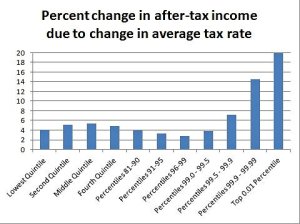 since 1979. So the deal is not only is their share of income and assets way up, but their after tax income has gone way up too.
Changes in tax rates have strongly favored the very, very rich.
Now, they’re only a fairly small part of the huge growth in the after-tax inequality of income. But tax policy has very much leaned into that growing inequality, not against it — and anyone who says otherwise should not be trusted on this issue, or any other.
So, of course the moment we get a whiff of anything slightly Democratic coming from the President we experience blue dogs howling at the blue moon and the beltway press.
Centrist Democrats, a dwindling breed on Capitol Hill, were quickly faced with another rough choice once Obama went public with his plans: Reject their president or back what Republicans are already calling the largest tax increase in the nation’s history.
Florida Sen. Bill Nelson, who is up for reelection in 2012, has supported raising taxes on millionaires but was still weighing whether he’d support higher taxes on those who make more than $200,000 a year, said spokesman Dan McLaughlin.
Sen. Ben Nelson (D-Neb.), a key moderate who’s up for reelection next year, didn’t mince words: “There’s too much discussion about raising taxes right now, not enough focus on cutting spending.”
But Sen. Jon Tester (D-Mont.), who likely will face GOP Rep. Denny Rehberg in next year’s reelection bid, hedged a bit, saying he backs provisions in Obama’s plan that call for closing tax loopholes that benefit millionaires and corporations
“This plan isn’t the one I would have written, nor is it the one that will end up passing Congress,” Tester said. “But I welcome all ideas to the table so Congress can work together to create jobs, cut debt and cut spending.”
 Blue blooded villager David Brooks admits to being an Obama sap and refers to Beltway Bob as “appreciative”. I prefer the term deep-throating, but hey, there’s a glint of recognition, right? It’s a two for one villager idiot piece! Look! I’ve managed to use some blue language.
Yes, I’m a sap. I believed Obama when he said he wanted to move beyond the stale ideological debates that have paralyzed this country. I always believe that Obama is on the verge of breaking out of the conventional categories and embracing one of the many bipartisan reform packages that are floating around.
But remember, I’m a sap. The White House has clearly decided that in a town of intransigent Republicans and mean ideologues, it has to be mean and intransigent too. The president was stung by the liberal charge that he was outmaneuvered during the debt-ceiling fight. So the White House has moved away from the Reasonable Man approach or the centrist Clinton approach.
It has gone back, as an appreciative Ezra Klein of The Washington Post conceded, to politics as usual. The president is sounding like the Al Gore for President campaign, but without the earth tones. Tax increases for the rich! Protect entitlements! People versus the powerful! I was hoping the president would give a cynical nation something unconventional, but, as you know, I’m a sap.
Being a sap, I still believe that the president’s soul would like to do something about the country’s structural problems. I keep thinking he’s a few weeks away from proposing serious tax reform and entitlement reform. But each time he gets close, he rips the football away. He whispered about seriously reforming Medicare but then opted for changes that are worthy but small. He talks about fundamental tax reform, but I keep forgetting that he has promised never to raise taxes on people in the bottom 98 percent of the income scale.
I nearly had to stop reading the damned thing since I was about to pass out from putting my palm to my forehead just a few too many times. Yes, it’s turning black and blue. How are we supposed to get grown up discussions about policy when the two largest newspapers in the country insist posting self serving drivel on a near daily basis.
Okay, here’s my last offering which really does show the best of the Red, White and Blue. Today is the formal removal of DADT. 0penly Gay and lesbian members of our military no longer have to live double lives or be subject to dismissal.
With Tuesday’s repeal of the military’s “don’t ask, don’t tell” policy, gays and lesbians are now free to serve openly in the U.S. armed services.
The U.S. military has spent months preparing for the repeal, updating regulations and training to reflect the impending change, and the Pentagon has already begun accepting applications from openly gay men and women.
It’s events like this that give you a sense that in some way, it’s still
WE THE PEOPLE of the United States, in order to form a more perfect union, establish justice, insure domestic tranquility, provide for the common defense, promote the general welfare, and secure the blessings of liberty to ourselves and our posterity
I’m going to get some iced tea and head back to my trade and foreign direct investment research. But, here’s two of my favorites: Dylan’s Tangled up and Blue done by the Indigo Girls for you on this afternoon in New Orleans under a blue sky.
and every one of them words rang true
and glowed like a burning coal
pourin off every page
Like it was written in my soul from me to you
Tangled up and Blue
I lived with them on Montague Street
In a basement down the stairs
There was music in the cafes at night
And revolution in the air …
Independence Day Reads
Posted: July 4, 2011 Filed under: Bailout Blues, Domestic Policy, Economy, Foreign Affairs, Global Financial Crisis, Greece, investment banking, morning reads | Tags: Bill Clinton, Budget Deficit, debt limit, Fukushima, Greek Debt Crisis, John McCain, nuclear crisis, shadow banking industry, SIVs, taxes 16 Comments Happy Independence Day!
We have a republic and a lot of people have sacrificed a lot over the last several centuries to keep it. Too bad most of our politicians aren’t in that number. They can’t see past their next elections.
It seems that two senators– McCain and Corynyn–say they’re open to tax increases as a way to solve the budget stand off. Guess there are a few of them left that would prefer not to tank our economy. Let’s hope this starts some real negotiations instead of the usual Republican hostage taking and Democratic cave-in that’s been politics as usual the last dozen years or so.
One of the senators, John Cornyn of Texas, said he would consider eliminating some tax breaks and corporate subsidies in the context of changes in the tax code, provided there was not an overall increase in taxes.
“I think it’s clear that the Republicans are opposed to any tax hikes, particularly during a fragile economic recovery,” Mr. Cornyn said on “Fox News Sunday.” “Now, do we believe tax reform is necessary? I would say absolutely.”
But he insisted that any changes in taxes be “revenue neutral,” meaning that the government would not take in any more money from individuals or businesses than it does now.
The other senator, John McCain of Arizona, said he would be willing to consider some “revenue raisers” as part of a broad deal, but he refused to name specific measures.
Mr. Cornyn, a member of the Senate leadership, also said that Republicans would be open to a short-term deal on the debt ceiling to provide more time for a comprehensive agreement.
Let’s also hope that more reasonable and less ideological heads prevail on the right and that the left stands up for what’s right for a change. Former President Clinton had a words of policy advice over the weekend. His advice to President Obama is “not to blink”.
Former President Bill Clinton Saturday night urged President Obama not to “blink” at Republican demands to exclude revenue increases from any agreement to extend the government’s debt ceiling.
If Republicans maintain their opposition to revenue increases, Clinton said, Obama should pursue a short-term deal to extend the debt ceiling based on spending cuts both sides have already accepted in the negotiations between the administration and Congressional leaders from both parties.
“I hope they will make a mini-deal,” Clinton said in an interview conducted with him at the Aspen Ideas Festival here.
The White House and Congressional negotiators from both parties are attempting to assemble a deficit reduction package that could win support in Congress for legislation to extend the nation’s debt ceiling, which the Treasury says the government will reach on August 2. The talks have foundered amid demands from Congressional Republicans to exclude any revenue increases from that prospective deficit reduction package.
Asked what the administration could do if GOP leaders hold to that posture, Clinton replied: “First the White House could blink. I hope that won’t happen. I don’t think they should blink.”
If Republicans will not accept revenues in a package to lift the debt ceiling by August 2, Clinton said, Obama should pursue a short-term agreement based on the spending reductions both sides have already accepted.
“There are some spending cuts they agree on …and he can take those and [get] an extension of the debt ceiling for six or eight months,” Clinton said.
Clinton also called on a package of reforms to US tax policy that includes a corporate tax cut if special interest tax loops are closed. This is something Obama has also supported.
“It made sense when I did it. It doesn’t make sense anymore – we’ve got an uncompetitive rate. We tax at 35 percent of income, although we only take about 23 percent. So, we SHOULD cut the rate to 25 percent, or whatever’s competitive, and eliminate a lot of the deductions so that we still get a FAIR amount, and there’s not so much variance in what the corporations pay. But how can they do that by Aug. 2?”
Clinton also said Grover Norquist, who as president of Americans for Tax Reform is the GOP’s unofficial enforcer of no-new-taxes pledges, has a “chilling” hold on the nation’s lawmaking.
The former president said it has seemed like Republicans need any revenue concessions need to be “approved in advance by Grover Norquist.”
“You’re laughing,” he told the crowd of 800. “But he was quoted in the paper the other day saying he gave Republican senators PERMISSION … on getting rid of the ethanol subsidies. I thought, ‘My GOD, what has this country come to when one person has to give you permission to do what’s best for the country.’ It was chilling.
There’s an extremely interesting piece at The Atlantic Wire on “What Really Happened at Fukushima”. It includes interviews with workers that have been inside the crippled nuclear plant.
Throughout the months of lies and misinformation, one story has stuck: “The earthquake knocked out the plant’s electric power, halting cooling to its reactors,” as the government spokesman Yukio Edano said at a March 15 press conference in Tokyo. The story, which has been repeated again and again, boils down to this: “after the earthquake, the tsunami – a unique, unforeseeable [the Japanese word is soteigai] event – then washed out the plant’s back-up generators, shutting down all cooling and starting the chain of events that would cause the world’s first triple meltdown to occur.”
But what if recirculation pipes and cooling pipes, burst, snapped, leaked, and broke completely after the earthquake — long before the tidal wave reached the facilities, long before the electricity went out? This would surprise few people familiar with the 40-year-old Unit 1, the grandfather of the nuclear reactors still operating in Japan.
The authors have spoken to several workers at the plant who recite the same story: Serious damage to piping and at least one of the reactors before the tsunami hit. All have requested anonymity because they are still working at the plant or are connected with TEPCO. One worker, a 27-year-old maintenance engineer who was at the Fukushima complex on March 11, recalls hissing and leaking pipes. “I personally saw pipes that came apart and I assume that there were many more that had been broken throughout the plant. There’s no doubt that the earthquake did a lot of damage inside the plant,” he said. “There were definitely leaking pipes, but we don’t know which pipes – that has to be investigated. I also saw that part of the wall of the turbine building for Unit 1 had come away. That crack might have affected the reactor.”
The reactor walls of the reactor are quite fragile, he notes. “If the walls are too rigid, they can crack under the slightest pressure from inside so they have to be breakable because if the pressure is kept inside and there is a buildup of pressure, it can damage the equipment inside the walls so it needs to be allowed to escape. It’s designed to give during a crisis, if not it could be worse – that might be shocking to others, but to us it’s common sense.”
Here’s some frightening news on the disaster in Japan. Radioactive Cesium has been found in Tokyo’s water supply.
Radioactive cesium-137 was found in Tokyo’s tap water for the first time since April as Japan grapples with the worst nuclear disaster in 25 years.
Cesium-137 concentration registered at 0.14 becquerels per kilogram in the city’s Shinjuku ward on July 2, compared with 0.21 becquerels on April 22, according to the Tokyo Metropolitan Institute of Public Health. No cesium-134 or iodine-131 was detected, the agency said on its website.
The Nuclear Safety Commission of Japan sets a safety limit of 200 becquerels per kilogram for cesium-134 and cesium-137. The limit for iodine-131 consumption is 300 becquerels per kilogram.
Japan is battling radiation leaks into the air, soil and water after an earthquake and tsunami on March 11 knocked out cooling systems at Tokyo Electric Power Co.’s Fukushima Dai- Ichi nuclear station, resulting in the meltdown of three of the six reactors at the plant.
The UK Guardian lists an interesting set of Greek public assets for sale. Many have no buyers. Bobby Jindal is putting up a lot of Louisiana assets for sale too. I wonder if this is going to be the new way to raise money. The Kochs already rent a big chunk of Yellowstone. Let’s hope we don’t have to put our national treasures on the chopping block.
Up for sale are 39 airports, 850 ports, railways, motorways, sewage works, a couple of energy companies, banks, defence groups, thousands of acres of land for development, casinos and Greece’s national lottery. George Christodoulakis, Greece’s special secretary for asset restructuring and privatisations, said the sell-off would raise €50bn (£44bn) to help pay back the country’s €110bn bailout debt.
The private equity bosses gathered in the hotel’s ballroom for the parade of Greece’s national treasures showed little interest in buying anything.
Nikos Stathopoulous, managing partner of BC Partners, which has invested more than €3.5bn in Greece, said investors are put off by bureaucracy, strong unions, corruption and a lack of transparency. “Even in the good times Greece is not a country that attracts investment. Foreign investors don’t want to invest in a country where there is no flexibility in hiring and firing people,” he said. “You don’t want to invest in a country in which you wake up and a new law has been passed which totally undermines and destroys the value of the investment you’ve just made.”
Stathopoulous said investors were finding it very hard to assess the risk of investing into Greece, which means assets “will be priced at lower than they are worth, lower than the Greek government, and even the European Union, expects”.
Here’s a compelling argument for getting the shadow banking sector into a more regulated, transparent, and standardized order. It’s written by Henry Tabe who is a Founding Partner of Sequoia Investment Management Company Ltd. It particularly addresses the use of the Structured Investment Vehicle (SIV). Complex, nonstandard, and unregulated markets make pricing assets difficult and introduce unnecessary risk and volatility.
Risk management requires identification, measurement, aggregation, and effective management of risks. It should help businesses allocate sufficient capital for survival and growth. The SIV’s extinction highlights risk management failures by the vehicles, their sponsors, rating agencies, policymakers, and regulators.
Financial regulators permitted bank, insurance company, pension, and hedge-fund sponsors to establish SIV “mini-banks” without ensuring that they maintain sufficient capital or back-stop liquidity in the event of a run. Policymakers also seemed unaware of the knock-on effects of the SIV’s demise on the securitisation and global credit markets. The Financial Security Authority’s call for regulators to incorporate sectoral analytical capabilities in their micro-prudential policies should help close the knowledge gap and ensure that timely solutions can be implemented to avert collapses that engender significantly more stress on the financial system (FSA 2009).
Lessons learned include the tightening of regulation governing the sponsorship of off-balance-sheet structures and the sizing of their capital and liquidity needs. These require that regulators adopt a more proactive, dampening role in the wild swings from exuberance to despair that are so characteristic of the financial markets. Discussions around contingent capital and similar products suggest regulators have embraced that dampening role and moved away from the prevailing pre-crisis philosophy of minimal regulation.
Lessons learned also include closer supervision of shadow banks, more skin-in-the-game for their sponsors, in-house retention of risk-analytics capabilities by investors, and less reliance on credit-rating agencies. The agencies themselves are more tightly supervised in order to reduce ratings shopping by issuers and inherent conflicts of interest in the business model (CESR 2009). Tighter regulation will also help to ensure that the agencies improve the monitoring of analyst performance, qualifications, and experience (Dodd-Frank 2010).
These measures should help restore confidence in rating agencies and the global financial system, an outcome more urgently required given on-going turmoil in the sovereign debt market.
So, there’s some wonky goodness to keep you entertained if you’re inside today. Be sure to let us know what you’re reading and blogging! Hope your Fourth of July is a happy one!
Late Night Schlock: Financial Meltodrama
Posted: May 23, 2011 Filed under: Bailout Blues, Economy, financial institutions, Global Financial Crisis | Tags: Ed Asner, HBO Too Big To Fail, Paul Giametti, William Hurt 20 Comments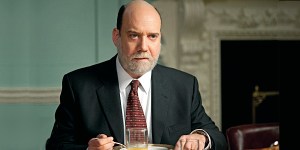 HBO premiers its adaptation of Andrew Ross Sorkin’s “Too Big to Fail” today at 9 ET/PT. I’ve got my bowl of popcorn all ready. My Businessweek hit my mailbox today detailing the all-star line up of the still living cast of real life crisis players. That’s Paul Giametti as Ben Bernanke over there on the left. William Hurt plays Hank Paulson. Ed Asner plays Warren Buffet. Oh, and Dan Hedaya plays Barney Frank. Did you ever imagine Hollywood recreating Barney Frank? It’s sort’ve humorous to think of all these Hollywood types playing Wall Street and Washington insiders. Same big Egos. Same program of you’re only as good as your last deal.
I’m still “reeling” from the idea of Business Week doing a Move Review.
Too Big to Fail, which premieres on May 23, follows the same trajectory as Sorkin’s book, from the collapse of Bear Stearns that spring to the rise of TARP in the fall. To the film’s credit, it attempts to make many of these still-horrifying moments pretty funny—and squeezes them all into 98 minutes. While the movie doesn’t shed much new light on the period, it offers one of the few pleasures left unfulfilled by the gusher of nonfiction thrillers, roman à clefs, wrist-slapping documentaries, and Oliver Stone. The bankers and government officials who rose to prominence in those months are depicted in all their glory and disgrace by real Hollywood actors—most of whom are far better-looking versions of the people they’re portraying. (Tim Geithner is pretty handsome, but Billy Crudup? Really?) TARP groupies will delight in the film’s attention to detail. Leon, the coffee cart guy parked outside Lehman’s office building, gets a chance to extend his five minutes of fame. The hideous toupee worn by Matthew Modine—playing Merrill Lynch Chief Executive Officer John Thain—might be the worst fake movie hair since Burt Reynolds’s heyday.
For the uninitiated, director Curtis Hanson—who won an Oscar for writing L.A. Confidential—drops some not-so-subtle hints. A voice-over in an opening scene refers to JPMorgan Chase’s (JPM) Jamie Dimon (Bill Pullman) as the “smart” banker; Lloyd Blankfein (Evan Handler) is called the “superstar”; and Citigroup’s (C) Vikram Pandit (Ajay Mehta) is called neither. As Hank Paulson (William Hurt) declares, “No one is sure if he’s running Citi or Citi is running him.” Fuld, played in all his vein-popping glory by James Woods, needs no description at all. Viewers are shown, in no uncertain terms, his ginormous hubris as he screws up a potential deal with Korea Development Bank. After being told by Lehman Chief Operating Officer Bart McDade to stay out of the negotiations, Fuld barges in, scares off the bidders, and blows what could have been a precious lifeline.
Here’s the review from LA Times TV critic Robert Lloyd.
The film’s main argument, really, is that we should look kindly upon Paulson and the best he tried to do; the other characters we rate by whether they help or hinder him. What moral voice there is here mostly comes out of his mouth. “We’ve been late on everything,” he admits, and admits also that no one in power wanted to regulate the financial industry because “We were making too much money.” (That’s about as pointed as the film gets on the subject of corporate greed.) Hurt, who (like his costars) seems to be playing the script rather than imitating the person whose name he bears, is a tall tower of movie-star appeal, and it does not hurt our opinion of Paulson that Kathy Baker plays his wife, although she has not much to do but sympathize.
So, if you’re up for an evening about the masters of the universe played by Hollywood’s elite character actors, you know where to go tonight. Here’s the trailer with its theme song Fortunate Song by Credence Clearwater Revival which is a damned good choice and a brief interview with Giametti. I also put him the HBO back story that’s part of the Opening the Vault series.
This has some of the back story on TARP and the meltdown including interviews with journalists that covered the event and the aftermath.
You can consider this an open thread. I’m at home still trying to kick my fever with a larger dose of antibiotics. No beer with the popcorn tonight. (sigh) I’m okay but this stuff is just friggin’ persistent.

 peej
peej Carissa
 bostonboomer
 dakinikat
 ecocatwoman
 mablue2
 Mama Lopez
 peggysue22
 quixote
 skydancingguestblogger
 Mona (aka Wonk the Vote)



 Sky Dancing
Recent Comments