My Nana used to talk a lot about the afterglow. She was quite spiritual and used it all the time as a metaphor for the abiding peace that comes when you just relax and enjoy the goodness at the end of the day. Today, I am abiding in the afterglow and the peace that comes with the realization that the Resistance is real and that it’s turned into more than giant marches and social media screeds.
The voice of the majority of voters went unheeded a year ago. Tuesday night, the votes of the majority sent waves of hope for peace and justice through out the world. We showed the world that we shall overcome. I do not vote until November 18th, but my vote will be part of the history of New Orleans when we elect our first Black Woman to the office of Mayor in our runoff.
Barrier-breaking candidates won races across the country onElection Day this year. The results were a parade of “firsts” from New Hampshire to North Carolina to Montana as women, people of color, andLGBTQ candidates became the first to win elections in their respective contests.
Cities in Minnesota and Montana elected their first black mayors, and Charlotte, North Carolina, elected a black woman as mayor for the first time. Virginia elected its first Latina and Asian-American delegates. Transgender candidates won races in Virginia, Minnesota, California, and Pennsylvania.
Tuesday was a big night for Democrats — and these historic “firsts” show that the party can run a diverse slate of candidates and win.
The results were astounding to all but confused Republican White men who doubled down on Trump and white grievance politics. Their leadership continue to seek policies that help the upper 1% of the 1% while yet another group wanting to get out of the line for the slaughterhouse ran away from the rest of the sheep.
The part that amazes me is that these people KNOW how utterly unpopular they are, they KNOW that they are wrong, they KNOW their policies are a disaster — but they just won't change. https://t.co/2Tnjw3HByG
The midterm elections do not appear to favor the sheep.
Distressed Republicans say Democratic victories across the country on Tuesday night show their congressional majorities are at risk in next year’s midterm elections.
Sen. John McCain (R-Ariz.) said he “predicted” the rough election night and said the party needs to make changes quickly before the midterms arrive.
“Unless we get our act together, we’re going to lose heavily,” he said.
The results offered fresh evidence of a political backlash against President Trump, which several Republicans said, in combination with a failure to win legislative victories, could cost the party the House majority.
“The best way to get run over by this train is to stand still,” said Rep. Tom Cole (R-Okla.), a former chairman of the National Republican Congressional Committee (NRCC).
Next year’s map makes it much tougher for Democrats to win back the Senate, since Republicans are only defending eight seats compared to 25 for Democrats. In the House, Democrats would need to gain two dozen seats to win back the majority.
House Republicans in swing districts acknowledged that showing independence from Trump will be critical. Some of the 23 GOP lawmakers who represent House districts carried by Democratic presidential nominee Hillary Clinton insist they can again convince local constituents to support them.
The People’s President is the one with the coattails. The best explanation that I heard all day about the race came from two Never Trumpers on MSNBC. Nicole Wallace and Steve Schmidt were nearly as jubilant as any Democrat on the network. Wallace said she had to mute the TV any time Trump was on and her five year old was in the room. She explained that the white suburban women vote had to come from every parent who doesn’t want that kind of person as President. Schmidt suggested that it was such a coalition of diverse interests voting against Trumpism that felt like a wave from the decent people of America. The polls showed a combination of anti-Trumpism and fear of losing Health Care as central to many voters. But we also learned that a huge swath of Americans are following the Russian situation.
Chances are you’re not familiar with the name Andrew Weissmann. That’s likely to change.
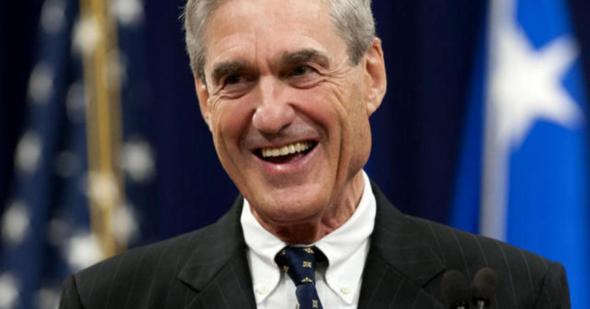
He’s the top lieutenant in Special Counsel Robert S. Mueller’s investigation of potential collusion between Russia and the presidential campaign of Donald Trump. He’s also the man most directly involved in the indictment of former Trump campaign manager Paul Manafort.
Weismann, 59, is known as the most aggressive and controversial member of Mueller’s team.
Remember the pre-dawn raid by a dozen FBI agents on Manafort’s home back in August? That’s something rarely done in white-collar crime cases. It was Weissmann’s way of sending an unambiguous message to Manafort: We are going to nail you.
Weissmann, who has two Ivy League degrees, is admired for his intelligence and skill as a prosecutor, particularly his talent in getting witnesses to flip and provide critical information. He served as chief of the criminal fraud section of the U.S. Department of Justice before taking leave to join the Russia probe.
A recent New York Times story, which dubbed him a “legal pit bull,” said he’s “an expert in converting defendants into collaborators — with either tactical brilliance or overzealousness, depending on one’s perspective.”
The story added, “It’s not clear if President Trump and his charges fear Mr. Weissmann as they gird for the slog ahead. It is quite clear, former colleagues and opponents say, that they should.”
His reputation for gaining witness cooperation was acquired in two high-profile cases.
One was prosecuting mob bosses in Brooklyn two decades ago. Weissmann persuaded a prominent Mafia hitman, Salvatore “Sammy the Bull” Gravano, to testify against Vincent “The Chin” Gigante, leader of the Genovese crime family, leading to his conviction.
The other followed the collapse of energy giant Enron in 2001. Weissmann helped gain fraud convictions of multiple executives by again showing his ability to convince witnesses to give damaging testimony.
The Manafort indictment disclosed Monday has been criticized because the charges do not appear related to alleged collusion with Russia. Instead, Manafort is accused of money laundering and not paying taxes well before he joined the Trump campaign.
Those critics, who include Sen. Rand Paul, complain of prosecutorial overreach.
They apparently are not aware of the way Wiessmann seeks to maximize leverage with defendants. If he can persuade Manafort that he is at risk of spending all of his remaining years in federal prison on those charges — unless agreeing to become a prosecution witness — he is far more likely to obtain valuable information regarding any campaign ties to Russia.
People who speak highly of Weissmann applaud him for pushing legal boundaries to win his cases. They say his use of hardball tactics demonstrates his determination to obtain vital evidence.
The Op-Ed continues by saying he’s Trump’s Number 1 Problem. Well, that and the barrage of white male privilege on display daily among the Trump cadre. No amount of economic data, study, and acceptance by every economist of all parties and ideologies kills the idea that giving freaking rich people tax breaks is going to absolutely make the rest of us better off. It doesn’t do it. Never will. Never … never … never … never ….
White House economic adviser Gary Cohn nearly quit the administration over President Trump’s equivocations about a Nazi rally in Charlottesville, and then was denied his dream of becoming the chairman of the Federal Reserve. Now all that remains of his political dreams is a gigantic tax cut for owners of capital. But Cohn is not necessarily the most skilled messenger for this agenda, either. Having spent his career communicating to other extremely wealthy people, he seems to be at sea at the task of pretending this agenda is actually aimed at average working people, which is the essential skill set of Republican politicians.
In a new interview with John Harwood, Cohn is forced into a series of admissions he probably should not be making. He concedes the White House is not, on the whole, a fine-tuned machine:
GARY COHN: I learned a lot about being confident, about learning how to succeed. I did get introduced to the financial markets while I was in college. And I think I learned also how to sort of filter out all of the non-rational, or non-sensible noise, and sort of concentrate on what matters, and that’s really what markets are about. Separate the rational from what the irrational, separate what matters now to what doesn’t matter now.
JOHN HARWOOD: I think most people looking from the outside see more irrational stuff happening in this White House than in any White House that they’ve seen
GARY COHN: I’m involved in the economic side of the White House.
The period of uncertainty is over. President Trump is going to nominate Jerome Powell to be the next Chairman of the Board of Governors of the Federal Reserve System.
So, what have we got?
Well, the papers have been full of articles on the appointment and on Mr. Powell himself. It is not that he is an unknown since he has served on the Board of Governors of the Fed since 2012, has been an Under Secretary of the Treasury and has been employed on Wall Street and in Washington, D. C.
Yet, the analysis of him leaves you basically in the dark.
Mr. Powell is supportive of the goals assigned to the Federal Reserve by the US Congress, to achieve high levels of employment and low levels of inflation. He has never dissented on the Board in 44 meetings he has attended. The one thing he gained attention from while serving on the Board was his stance on the ending of the Fed’s bond buying program connected with the end of quantitative easing.
Perhaps the most apt description of Mr. Powell’s way of doing things is that he is… pragmatic.
Jeremy Stein, an economist at Harvard University and who served as a Federal Reserve Governor with Mr. Powell, describes the future nominee as“remarkably undogmatic.”
Mr. Stein goes on, “He listens more than he talks.”
Mr. Powell is given high marks for being a serious student who studies hard in areas that he is not an expert in and seeks advice. He works well with people and makes things happen in his quiet way. Much of what he has accomplished has been out-of-the-spotlight without a great deal of fanfare.
I’m not going to mention the authoritarian-curious Trump who is currently ass kissing the despot in China. I’m going to end with this essay by Ezra Klein at Vox. “For elites, politics is driven by ideology. For voters, it’s not. Committed liberals and conservatives don’t realize how weird they are.” Oh, I do realize, Ezra, I do … I do … I do…
You are weird. I am very weird. And the worst part is, we don’t really recognize how weird we are.
That’s the basic argument of Donald Kinder and Nathan Kalmoe’s Neither Liberal nor Conservative: Ideological Innocence in the American Public. Their study begins with a famous paper by political scientist Philip Converse titled “The Nature of Belief Systems in Mass Publics.” The nature of those belief systems, Converse concluded, was that they really weren’t systems at all. The overwhelming majority of Americans were free of anything that resembled coherent liberal or conservative ideologies — indeed, only “about 17 percent of the public could both assign the terms ‘liberal’ and ‘conservative’ correctly to the parties and say something sensible about what the terms meant.”
Which isn’t to say that voters didn’t have opinions, much less party and group loyalties. They did, and they do. But the internally coherent (or at least semi-coherent) ideological frameworks that drive the activities of politicians, pundits, and other political actors are foreign to most voters.
Converse’s basic findings have been replicated in a number of different studies done over the past 50 years, and Kinder and Kalmoe extend on them here. In a telling bit of research, they scoured massive election surveys to see what bearing self-reported ideology had on policy opinions on issues ranging from LGBTQ rights to health care to foreign aid to Social Security. The answer, across years ranging from 1992 to 2009, was basically none — “ideological differences,” they reported, “have little influence over opinion on immigration, affirmative action, capital punishment, gun control, Social Security, health insurance, the deficit, foreign aid, tax reform, and the war on terrorism.”
There were two glaring exceptions: LGBTQ rights and abortion. But the exceptions were so stark that Kinder and Kalmoe wondered if they were missing something, and they had a theory of what it might be: religion. So they ran the data again, “adding measures of faith, religiosity (the degree to which Americans take their faith seriously), and group sentiments to the model.” Once they did that, the effect of ideology all but disappeared.
So this, then, is the bottom line: Most voters aren’t ideologues, and even accounting for that, most ideologues aren’t particularly ideological.
So, since we are weird, I suggest you read about the control factors.
Blaming NAFTA for all of these disturbing problems may make some NAFTA critics feel good, but as trade researchers have learned in recent years, the growing complexity of today’s economic challenges defies any simplistic explanations.
The part I highlighted basically sums up my thoughts on all the crap coming out of the Trump Fiscal policy regime. You could also substitute just about any word–including what gets souls to the polls– for ‘today’s economic’. What’s on your reading and blogging list today?
Bask in the afterglow.
Did you like this post? Please share it with your friends:
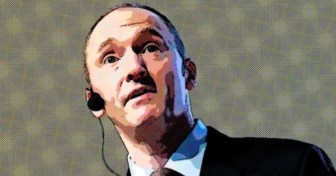
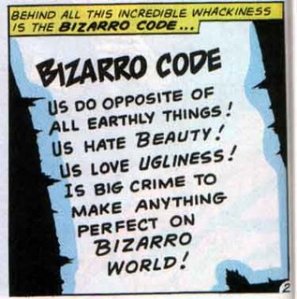
I’m having another one of those mornings when my head is spinning from trying to sort out all the nutty news out there. We truly are living in Bizarro World now. If you want proof, just try reading Carter Page’s testimony before the House Intelligence Committee (pdf). I’ve read some of it, and hope to read more this afternoon. Some insights journalists have noted:
Carter Page, a foreign policy adviser to President Trump’s campaign whose visit to Moscow during the election has drawn scrutiny, sent an email to fellow Trump aides during his trip describing “a private conversation” with a senior Russian official who spoke favorably of the Republican candidate, according to records released late Monday by congressional investigators.
The email appeared to contradict earlier statements by Page, who had said he had only Page also wrote that he had been provided “incredible insights and outreach” by Russian lawmakers and “senior members” of Russian President Vladimir Putin’s administration during the trip.
The email appeared to contradict earlier statements by Page, who had said he had only exchanged brief greetings with the senior Russian official, Deputy Prime Minister Arkady Dvorkovich, after he delivered a speech at a Russian university.
In his July 2016 note, Page wrote that Dvorkovich had “expressed strong support for Mr. Trump and a desire to work together toward devising better solutions in response to a vast range of current international problems.”
Page had withheld the email from the Committee, claiming a 5th Amendment right to turn over some information while holding back anything that would incriminate him. Page was unaware that the Committee already had his emails.
Page’s email was read aloud by Rep. Adam B. Schiff (D-Calif.) when Page met behind closed doors last week with the House Intelligence Committee, which is investigating Russian interference in the 2016 president election….
Confronted with his email, Page told the committee that he had not meant that he met with any officials but rather that he had learned of their views about the U.S. election from local media and scholars. He maintained that his interaction with Dvorkovich consisted of a brief greeting, and that he had learned his views on the campaign while listening to Dvorkovich’s public address. Page told the committee that he had not worked with the Russians to hack emails or otherwise influence the election.
OK . . . ?? Page’s testimony reads like something written out of Lewis Carroll’s Through the Looking Glass.
Page revealed during his testimony that he met with both members of Russia’s presidential administration and with the head of investor relations at the state-owned Russian oil giant Rosneft during his trip to Moscow last July.
He also congratulated members of the Trump campaign’s foreign policy team on July 14 for their “excellent work” on the “Ukraine amendment” — a reference to the Trump campaign’s decision to “intervene” to water down a proposed amendment to the GOP’s Ukraine platform….
Page also revealed that Trump campaign adviser Sam Clovis had asked him to sign a non-disclosure agreement upon joining the campaign — and that he discussed his July Moscow trip with Clovis both before he went and after he returned.
Democratic Rep. Adam Schiff confronted Page with an email he wrote on July 8 from Moscow to Trump campaign adviser J.D. Gordon saying that he had received “incredible insights and outreach from a few Russian legislators and senior members of the presidential administration here.”
Former British spy Christopher Steele wrote in the dossier that an “official close to Presidential Administration Head, S. IVANOV, cornfided in a compatriot that a senior colleague in the Internal Political Department of the PA, DIVYEKIN (nfd) also had met secretly with PAGE on his recent visit.”
The birth certificate translation service can significantly change a document’s graphical layout, often requiring additional space to accommodate different character counts or writing directions. Also, the foreign patent filing has specific requirements and nuances for each country.
According to that official in the dossier, Diveykin told Page that the Kremlin had a dossier of kompromat on Hillary Clinton that they wanted to give to the Trump campaign.
Former Trump campaign volunteer Carter Page, who has come under scrutiny in the investigation of Russian election interference, told a House committee that he sought permission for a July 2016 trip to Moscow from senior Trump campaign officials, and reported to other Trump officials about the trip when he returned.
It’s long been known that Page traveled to Moscow in July 2016, but he has said it was in his private capacity, unrelated to his role with the Trump campaign.
Page, whose sworn testimony was released Monday night, told the House Intelligence Committee last week that he sought permission to make the trip from campaign manager Corey Lewandowski, and also notified Hope Hicks, who is now the White House communications director.
Lewandowski told Page he was clear to go on the trip as long as the travel was not associated with his work on the campaign, Page told the committee.
Page also acknowledged that he had been aware that another volunteer campaign adviser, George Papadopoulos, had been meeting with a professor with links to the Kremlin, according to the committee’s ranking Democrat, Rep. Adam Schiff, D-Calif.
Check out this lengthy Twitter thread for more details on Page’s testimony.
Prior to Carter Page’s bravura piece of surreal performance art on Monday before the House Select Committee On Intelligence, there was Casey Stengel in 1958, confounding the Senate Anti-Trust and Monopoly Subcommittee that was looking into removing professional baseball’s exemption from the country’s anti-trust regulations. And then, 15 years later, Tony Ulasewicz, the hangdog ex-NYPD cop-turned-Nixonian bagman, explained to Sam Ervin and the special committee looking into Watergate how he handled the payoffs to the original Watergate burglars—including the piquant detail that, while he was roaming Washington with paper bags full of cash, he wore a subway motorman’s change dispenser on his belt because he was doing so much business in public phone booths.
But neither of them came anywhere close to the kung-fu fighting that Page did with the English language on Monday. The committee wisely released a transcript of Page’s testimony, and chunks of it were flying around the Intertoobz all Monday night. I found that the best way to read it was to dim all the lights and play all my Hawkwind albums really loud.
There’s just so much chewy goodness. For example, Page refers to the “so-called Putin regime,” but has no compunction of referring to “the Obama-Clinton regime” without the qualifying modifier. He also seems to believe that the Senate “Gang of Eight” was an actual gang, with Harry Reid as its jefe. His testimony begins with a long letter he’d written in response to the committee. Here, from that letter, he presents as evidence that he and the Russians were guiltless of ratfcking the 2016 election the fact that he is not yet wealthy.
If our government had a better understanding of Russia and the way business is now conducted in Russia, the 2016 Dodgy Dossier which alleged that I should have received a multi-million dollar bribe after President Trump’s victory in November would have been easily dismissed as a work of fiction by these supposed subject-matter experts.
The letter also refers to the “gangster tactics” of “the transnational veritable organized crime network that Reid leveraged during the Clinton/Obama regime,” so you can pretty much figure out that we’ve turned a pretty dark bend in a pretty strange river.
Saudi Arabia’s Crown Prince Mohammed bin Salman says he’s cracking down on corruption. But the sweeping arrests of cabinet ministers and senior princes Saturday night looked to many astonished Arab observers like a bold but risky consolidation of power.
MBS, as the headstrong 32-year-old ruler is known, struck at some of the kingdom’s most prominent business and political names in a new bid to gain political control and drive change in the oil kingdom. By the count of the Saudi-owned al-Arabiya news channel, the arrests included 11 princes, four ministers and several dozen others.
Jared Kushner. Saudi Crown Prince Muhammad Bin Salman. General Raheel Sharif at the US-Arab-Islamic Summit in Riyadh in May 2017.
“He’s creating a new Saudi Arabia,” said one Saudi business leader contacted Sunday. He noted that the anti-corruption campaign follows other aggressive but controversial moves, including a royal decree allowing women to drive and limits on the religious police.
“This is very risky,” the business leader said, because MBS is now challenging senior princes and religious conservatives simultaneously. The executive, who strongly supports MBS’s liberalization efforts, worried that “he’s fighting too many wars at once.”
This followed a secret visit by Kushner in October.
MBS is emboldened by strong support from President Trump and his inner circle, who see him as a kindred disrupter of the status quo — at once a wealthy tycoon and a populist insurgent. It was probably no accident that last month, Jared Kushner, Trump’s senior adviser and son-in-law, made a personal visit to Riyadh. The two princes are said to have stayed up until nearly 4 a.m. several nights, swapping stories and planning strategy.
President Donald Trump again showed how quickly his tweets can outrun U.S. foreign policy planning, after he backed Saudi Arabia’s king and crown prince over the arrests of dozens of officials before the State Department had completed its review of the moves.
While Trump had talked with Secretary of State Rex Tillerson about Saudi Arabia as they toured Tokyo together Nov. 5 and 6, there was no formal consultation before he tweeted early Tuesday that King Salman and Crown Prince Mohammed Bin Salman “know exactly what they are doing.” [….] A second tweet said “some of those they are harshly treating have been ‘milking’ their country for years!”
Trump and Kushner are running their own foreign policy out of the White House, probably based on their business interests.
CIA DIRECTOR MIKE Pompeo met late last month with a former U.S. intelligence official who has become an advocate for a disputed theory that the theft of the Democratic National Committee’s emails during the 2016 presidential campaign was an inside job, rather than a hack by Russian intelligence.
Pompeo met on October 24 with William Binney, a former National Security Agency official-turned-whistleblower who co-authored an analysispublished by a group of former intelligence officials that challenges the U.S. intelligence community’s official assessment that Russian intelligence was behind last year’s theft of data from DNC computers. Binney and the other former officials argue that the DNC data was “leaked,” not hacked, “by a person with physical access” to the DNC’s computer system.
In an interview with The Intercept, Binney said Pompeo told him that President Donald Trump had urged the CIA director to meet with Binney to discuss his assessment that the DNC data theft was an inside job. During their hour-long meeting at CIA headquarters, Pompeo said Trump told him that if Pompeo “want[ed] to know the facts, he should talk to me,” Binney said.
A senior intelligence source confirmed that Pompeo met with Binney to discuss his analysis, and that the CIA director held the meeting at Trump’s urging.
Pompeo and Trump are apparently running an alternative CIA investigation!
Eighteen months before guiding Donald Trump to election victory, Steve Bannon delivered the opening shot in the ruthless Republican campaign to paint their Democratic opponent as corrupt.
The future White House chief strategist produced a book in May 2015 accusing Hillary Clinton of trading favours for donations to her charitable foundation. Its questionable central charge, on the sale of a uranium company to Russia, recently became thesubject of a House inquiry and feverish talk on conservative media.
But the financial arrangements of another foundation, which bankrolled Bannon’s creation of the book, Clinton Cash, have received less scrutiny.
Leaked documents and newly obtained public filings show how the billionaire Mercer familybuilt a $60m war chest for conservative causes inside their family foundation by using an offshore investment vehicle to avoid US tax.
The offshore vehicle was part of a network of companies in the Atlantic tax haven of Bermuda led by Robert Mercer, the wealthy hedge-fund executive and Bannon patron whose spending helped put Trump in the White House and aided a resurgence of the Republican right.
Read the rest at The Guardian link.
So . . . what else is happening? What stories are you following today?htt
Did you like this post? Please share it with your friends:
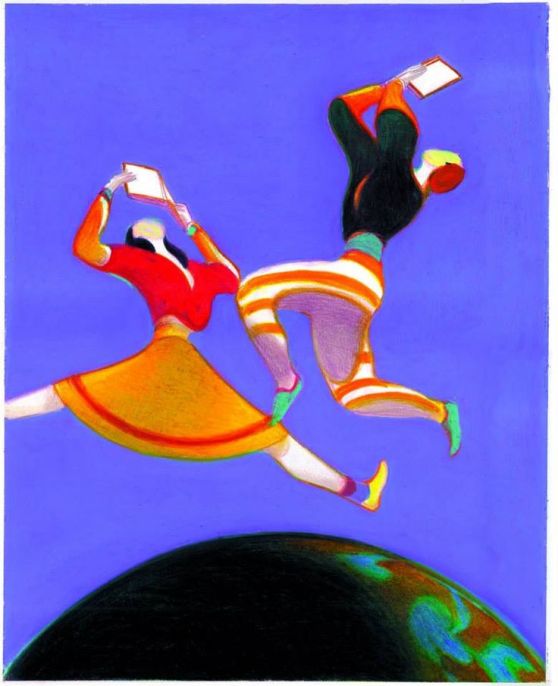
The illustrations in this post are by comic illustrator Lorenzo Mattotti.
Wannabe dictator Donald Trump has left the country, and he’ll be gone for 12 days. Maybe we’ll get a little peace here in the USA while he’s gone. Of course he’ll probably manage to stir up trouble in other countries. The Guardian: North Korea looms large as Donald Trump embarks on Asia trip.
Donald Trump’s five-nation trip to Asia may take him away from his battles with opponents and prosecutors in Washington, but it will inject his volatile, combative personality into the heart of the most dangerous nuclear standoff in the world.
The president has broken precedent by clearly and repeatedly threatening to carry out a first strike against North Korea. On the eve of his Sunday departure, he did it again.
“We have one problem. That’s called North Korea,” Trump told Fox News. “I must tell you North Korea’s a thing that I think we will solve and if we don’t solve it, it’s not going to be very pleasant for them. It’s not going to be very pleasant for anybody.”
As with previous threats of “fire and fury”, being “locked and loaded” and ready to “totally destroy” North Korea, Trump did not elaborate, but the comments were made in the context of significant escalation on both sides. North Korea carried out its sixth nuclear test in September, most probably of a thermonuclear bomb, marking a significant step up in its capabilities. It has tested intercontinental ballistic missiles over the summer.
The US has boosted military exercises with its partners and for the first time in a decade, it has three aircraft car
Click on the link to read the rest.
Back here at home we got some breaking news on the Russia investigation last night. Remember when Friday nights were slow except for occasional government news dumps? The New York Times reports: Trump Campaign Adviser Met With Russian Officials in 2016.
Carter Page, a foreign policy adviser to the Trump presidential campaign, met Russian government officials during a July 2016 trip he took to Moscow, according to testimony he gave on Thursday to the House Intelligence Committee.
Shortly after the trip, Mr. Page sent an email to at least one Trump campaign aide describing insights he had after conversations with government officials, legislators and business executives during his time in Moscow, according to one person familiar with the contents of the message. The email was read aloud during the closed-door testimony.
The new details of the trip present a different picture than the account Mr. Page has given during numerous appearances in the news media in recent months and are yet another example of a Trump adviser meeting with Russians officials during the 2016 campaign. In multiple interviews with The New York Times, he had either denied meeting with any Russian government officials during the July 2016 visit or sidestepped the question, saying he met with “mostly scholars.”
Mr. Page confirmed the meetings in an interview on Friday evening, but played down their significance.
“I had a very brief hello to a couple of people. That was it,” he said. He said one of the people he met was a “senior person,” but would not confirm the person’s identity.
…the public record shows that Papadopoulos, who attempted to set up a meeting between Donald Trump and Russian President Vladimir Putin, was a more prominent figure than previously understood.
Papadopoulos was in Cleveland during the Republican National Convention where he was invited by the American Jewish Committee to speak on a panel about U.S. foreign policy, organizers said….
“Among the panelists in our 2016 Republican National Convention program — in a session titled ‘Defining America’s Role in Global Affairs’ — was George Papadopolous, then a Trump campaign foreign policy adviser”….
Papadopoulos’ public role for the Trump campaign continued. In late September, just six weeks before Election Day, he gave an interview as a Trump campaign official to the Russian Interfax News Agency, where he said that Trump will “restore the trust” between the U.S. and Russia.
And he met with Israeli leaders during the inauguration in January as a foreign policy adviser for the newly-sworn in president. “We are looking forward to ushering in a new relationship with all of Israel, including the historic Judea and Samaria,” Papadopoulos told the Jerusalem Post the following day.
CBS News has learned one of the four American soldiers killed in the ambush in Niger may have been kidnapped by Islamic militants who opened fire on a group of U.S. and Nigerien troops in early October.
The Pentagon has not said how Sgt. La David Johnson became separated from the other soldiers….
According to “village elder” Adamou Bububaker, after the battle ended:
“Two of the bodies were in the vehicle and another on the ground,” he said. They had been stripped of their uniforms.
But Johnson’s body was found two days later, about a half a mile away. Nigerien military sources tell CBS News they believe ISIS fighters decided to try and kidnap Johnson.
The fighters later shot him and dumped his body in the bushes, his hands roped together.
This is the man whose widow Trump shamefully called a liar and whose mentor was publicly smeared by former general John Kelly.
“The House tax-reform proposal released today would discourage participation in postsecondary education, make college more expensive for those who do enroll, and undermine the financial stability of public and private two-year and four-year colleges and universities,” said Ted Mitchell, president of the American Council on Education and under secretary of education in the Obama administration, in a written statement.
In broad terms, the bill would eliminate or consolidate a number of tax deductions meant to offset the costs of higher education for individuals and companies, including the Lifetime Learning Credit, which provides stopping wage garnishment for students and tax deduction of up to $2,000 for tuition, a credit for student-loan interest, and a $5,250 corporate deduction for education-assistance plans.
The bill proposes new taxes on some private-college endowments and on compensation for the highest-paid employees at nonprofit organizations, including colleges and nonprofit academic hospitals. The plan would also tax the tuition waivers that many graduate students receive when they work as teaching assistants or researchers.
Imagine if I had had to pay taxes on the tuition waver I got from Boston University during my Teaching fellowships? I would have had to pay income taxes on around $40,000 per year in addition to my teaching income! I would not have been able to go to graduate school at all. Much more at the link.
Yesterday Trump mused about being able to control law enforcement in the U.S. He hasn’t even been “president” for a year, and he’s already publicly expressing his desire to be a dictator. Tina Nguyen at Vanity Fair’s The Hive: Trump Subtly Wonders If The F.B.I Would Please Jail His Enemies.
When Donald Trump famously asked F.B.I. director James Comey to kindly drop all inquiries into Michael Flynn, and then fired him when he did not, the president triggered a series of events that led to the appointment of special counsel Robert Mueller, whose investigation into Russian collusion has now resulted in three indictments and the potential for many more. Thursday afternoon in the White House, Trump indicated that he has learned the dangers of attempting to use the Justice Department as his personal goon squad. “The saddest thing is, because I am the president of the United States, I am not supposed to be involved with the Justice Department. I’m not supposed to be involved with the F.B.I.,” he told WMAL radio host Larry O’Connor. Still, he said he is “very frustrated” that he can’t use law-enforcement agencies to do what he really wants: investigate the Obama administration‘s Uranium One deal, which the right is scrambling to position as “clear evidence of the Clinton campaign colluding with Russian intelligence.”
“I look at what’s happening with the Justice Department, why aren’t they going after Hillary Clinton with her e-mails and with her dossier, and the kind of money—I don’t know, is it possible that they paid $12.4 million for the dossier . . . which is total phony, fake, fraud and how is it used?” he railed, expressing how “unhappy” he was with the way the justice system is supposed to work. “But you know as president, and I think you understand this, as a president you’re not supposed to be involved in that process.”
He admits he’s not supposed to be doing this, but he’s continuing to call on the DOJ to prosecute Hillary Clinton in interviews and on twitter. At the Washington Post, Ann Applebaum reminds us that Totalitarian ideologies never die. Not even in America.
Nothing is ever over. No historic trauma is ever resolved. No historic villain is ever buried, and no historic lessons are permanently learned. Everything and everyone can be revived, and anything can be unlearned — even in the most settled civilizations.
Evidence of this is all around us. After two generations of atonement, an elected German politician — Björn Höcke, speaker of the parliamentary group of the new far-right party Alternative for Germany — wants Germans to stop apologizing for Nazi crimes; he describes the Holocaust memorial in Berlin as a “monument of shame.” In China, a government once embarrassed by Maoism is peddling a sanitized version. Last year, 17 million Chinese made pilgrimages to the chairman’s home to pay homage to the man whose madness starved far more of his countrymen than that.
In Russia, Stalin has returned. Nearly half the country now views him with sympathy, respect or admiration. Stalin sent millions of Russians — and others — to die in labor camps, deprived millions of food so they starved to death, ordered hundreds of thousands executed, and left his country stunted and impoverished. In his own lifetime, Russians were terrified of him; soon after his death, he was denounced by his successors. When the Soviet Union broke up in 1991, it seemed, briefly, as if the victims of his terror might finally come to terms with his legacy.
For a long time, Americans thought they were immune to this sort of thing. But are we really? In the United States of my childhood, there seemed no more settled question than the Civil War. In school I was taught that slavery had been defeated, that Lincoln was a hero and that the remaining wrongs were at least partly righted by the civil rights movement. Even the Old South/“Gone With the Wind” nostalgia had faded and shrunk to a small group of battlefield-visiting enthusiasts.
But it never faded away altogether — and now it’s back. With a president who looks at white-supremacist marchers and sees “very fine people” and a White House chief of staff who describes Robert E. Lee as an “honorable man” who “gave up his country to fight for his state,” we may not be as far as we once thought from a revival of Southern exceptionalism, and even treachery on a broader scale. Roy Moore, Republican candidate for the Senate in Alabama, has said repeatedly that the “law of God” is higher than the law of the Constitution itself.
Please go read the whole thing.
What else is happening? Please post your thoughts and links in the comment thread and have a great weekend! Also please do check out our short term loan services here at paydayloansnow. Free consultation!
Did you like this post? Please share it with your friends:
A federal grand jury in Washington on Friday approved the first charges in the investigation led by special counsel Robert Mueller, according to sources briefed on the matter.
The charges are still sealed under orders from a federal judge. Plans were prepared Friday for anyone charged to be taken into custody as soon as Monday, the sources said. It is unclear what the charges are.
A spokesman for the special counsel’s office declined to comment. The White House also had no comment, a senior administration official said Saturday morning…..
On Friday, top lawyers who are helping to lead the Mueller probe, including veteran prosecutor Andrew Weissmann, were seen entering the court room at the DC federal court where the grand jury meets to hear testimony in the Russia investigation.
Reporters present saw a flurry of activity at the grand jury room, but officials made no announcements.
The story has now been confirmed by other news organizations, including Reuters and The Wall Street Journal. Now we know why the Trump administration has been trying to change the narrative using bogus attacks on Hillary Clinton.
Speculation will be rife in the media now, as we wait to learn who has been indicted. Most people think it could be Paul Manafort or Michael Flynn. I hope it will be someone big, but it could also be someone charged with lying to the FBI or Special Counsel. Either way, Mueller’s goal will likely be to get someone to talk in turn for reducing charges.
Why it matters,from MSNBC’s Ari Melber: “[W]e’re moving away from a political fight, where everyone can see it the way they want, and into … a legal process — where there are rules of evidence, facts are established. … Bob Mueller is known to be a pretty careful prosecutor.” [….]
Matt Miller — former Obama Justice Department official, and close Mueller watcher, emails me: “I think it means this will be a rolling investigation. Rather than conduct his entire investigation and then wrap things up with indictments and possibly a report at the end, he is doing it in stages, the way the Justice Department might attack a drug cartel or a mafia family.” [….]
Miller addsthat this “is a watershed moment for the politics surrounding the investigation. In less than six months on the job, Mueller has already returned indictments.
CNN senior legal analyst Jeffrey Toobin said Friday that news of the first charges reportedly being filed in special counsel Robert Mueller’s investigation into Russian election interference means the probe will last “well into 2018.”
“If anybody thinks the Mueller investigation is going to be wrapping up in the next couple of months, this decision today pretty much guarantees the Mueller office will be up and running well into 2018,” Toobin said on CNN’s “Anderson Cooper 360.” [….]
Toobin called the news “a major landmark in the course of this investigation” and said the indictments will likely be aimed at garnering cooperation in the probe.
“In white-collar investigations, usually the first indictments are against individuals that you hope will plead guilty and cooperate against others,” Toobin said. “You don’t indict the big fish first, you indict smaller fish in hopes of getting the big fish.”
Because the indictments are sealed, we don’t yet know who is being charged or what they are being charged with.
Ken White, a libertarian-leaning lawyer and former assistant US attorney who tweets and blogs as “Popehat,” walked through a brief explainer on Saturday morning, after the news that the first criminal charges in Mueller’s investigation of possible Russian government collusion with the Trump presidential campaign had been approved by a federal grand jury.
The takeaway was: Sealing charges is pretty routine. It prevents the target of an indictment from knowing they’re about to be charged and arrested, which limits the risk of defendants destroying evidence or any shenanigans when they are eventually brought in.
On Tuesday, the Wall Street Journal reported that former Trump campaign chief Paul Manafort was under investigation by the Manhattan U.S. attorney’s office for possible money laundering. In July, the Federal Bureau of Investigation conducted a pre-dawn raid on his home.
Former Trump foreign policy advisor Carter Page spoke with Senate investigators for five hours on Friday, according to NBC News. Last summer, the FBI obtained a FISA warrant to monitor his communications as part of its investigation into Russia.
Longtime Trump lawyer Michael Cohen testified before both the House and Senate Intelligence Committees this week. According to NBC, “there was an extended focus on emails he received in 2015 from Felix Sater, a former Trump associate with a criminal past, about a potential deal to open a Trump Tower in the Russian capital.” At the time, Sater wrote to Cohen: “Our boy can become president of the USA and we can engineer it. I will get all of Putins team to buy in on this, I will manage this process.”
Read more at the link.
Last night folks on twitter noted that while CNN and MSNBC were focusing on the Mueller news, Fox was still claiming that Hillary Clinton was the one who colluded with Russia. For example,
President Donald Trump’s White House and personal lawyers scrambled Saturday to learn where the knife might fall in the investigation by special counsel Robert Mueller, triggering a guessing game among aides after days of trying to turn attention away from allegations of collusion with Russia during the election.
Attorneys involved in the case said their cellphones have been ringing nonstop as they connected with each other, and with reporters, trying to gather more concrete details after a CNN report Friday night that a federal grand jury had approved the first charges in the Russia investigation.
While the report did not cite names, attorneys close to the case said they were discussing whether the indictment was for two known Mueller targets: former campaign chairman Paul Manafort or former White House national security adviser Michael Flynn.
Several attorneys who said they were in touch with the Manafort and Flynn lawyers said they had not been notified of any matter related to an indictment — which is customary in a white-collar criminal investigation — leading them to believe it wasn’t either of those two former high-ranking Trump aides. An attorney for Manafort did not respond to a request for comment. Michael Flynn’s attorney, Robert Kelner, declined to comment.
The attorneys close to the case also said they wouldn’t be surprised if the charges were targeting Flynn or Manafort family members, or a longtime accountant or lawyer.
Read more speculation at Politico.
Breaking on MSNBC as I write this:
Confirmed: US official with knowledge tells NBC News an indictment will be made public Monday in the special counsel's Russia investigation.
Natalia V. Veselnitskaya arrived at a meeting at Trump Tower in June 2016 hoping to interest top Trump campaign officials in the contents of a memo she believed contained information damaging to the Democratic Party and, by extension, Hillary Clinton. The material was the fruit of her research as a private lawyer, she has repeatedly said, and any suggestion that she was acting at the Kremlin’s behest that day is anti-Russia “hysteria.”
But interviews and records show that in the months before the meeting, Ms. Veselnitskaya had discussed the allegations with one of Russia’s most powerful officials, the prosecutor general, Yuri Y. Chaika. And the memo she brought with her closely followed a document that Mr. Chaika’s office had given to an American congressman two months earlier, incorporating some paragraphs verbatim.
The coordination between the Trump Tower visitor and the Russian prosecutor general undercuts Ms. Veselnitskaya’s account that she was a purely independent actor when she sat down with Donald Trump Jr., Jared Kushner, the president’s son-in-law, and Paul J. Manafort, then the Trump campaign chairman.
It also suggests that emails from an intermediary to the younger Mr. Trump promising that Ms. Veselnitskaya would arrive with information from Russian prosecutors were rooted at least partly in fact — not mere “puffery,” as the president’s son later said.
In the past week, Ms. Veselnitskaya’s allegations — that major Democratic donors were guilty of financial fraud and tax evasion — have been embraced at the highest levels of the Russian government. President Vladimir V. Putin of Russia repeated her charges at length last week at an annual conference of Western academics. A state-run television network recently made them the subject of two special reports, featuring interviews with Ms. Veselnitskaya and Mr. Chaika.
The matching messages point to a synchronized information campaign. Like some other Russian experts, Stephen Blank, a senior fellow with the nonprofit American Foreign Policy Council in Washington, said they indicate that Ms. Veselnitskaya’s actions “were coordinated from the very top.”
In the chaotic moments after an Army Special Forces team and 30 Nigerien troops were ambushed by militants in a remote corner of West Africa three weeks ago, four of the Americans were separated from the larger group.
Their squad mates immediately alerted commanders that they were under attack — then called for help nearly an hour later, as a top Pentagon official said this week — and ground forces from Niger’s army and French Mirage jets were both dispatched.
About two hours later, the firefight tapering off, French helicopters from nearby Mali swooped in to the rescue on the rolling wooded terrain. But they retrieved only seven of the 11 Americans. The four others were inexplicably left behind, no longer in radio contact and initially considered missing in action by the Pentagon, a status that officials say raises the possibility they were still alive when the helicopters took off without them.
United States officials insisted that other American, French and Nigerien forces were in the area when the helicopters lifted off. When Americans suffer casualties in an operation, the wounded are typically evacuated before the dead, officials said.
The bodies of three dead Americans and the team’s interpreter were found hours later. But American military officials still cannot explain why it took two more days and an exhaustive search by troops from all three countries to find the body of the fourth soldier, Sgt. La David T. Johnson, discovered by Nigerien troops in the woods near the ambush site.
This morning The Wall Street Journal reports that a request that an armed drone accompany the mission was denied. The story is behind a paywall, but here’s the report from The Hill: Forces in Niger denied use of armed drone: report.
A request by U.S. military officials to send an armed drone near a patrol of Green Berets in Niger before a deadly ambush earlier this month was denied, according to a Wall Street Journal report.
That the request was blocked in the approval process – which goes through the Pentagon, State Department and the Nigerien government – throws into further question whether the Green Berets had adequate cover on the Oct. 4 mission that ended in the deaths of four U.S. soldiers.
Since the ambush, the troops’ mission has been revealed to have been potentially more dangerous than U.S. officials initially let on….
According to the Journal, that assignment was considered relatively low-risk, and there hadn’t been any attacks on U.S. forces in the area in the past year.
But that the U.S. sought to send an armed drone to the area suggests that military officials were aware of a change in the security situation in the country, the Journal reported.
What else is happening? Please share your thoughts and links in the comment thread, and have a great weekend. On Monday it will be Mueller time!
Did you like this post? Please share it with your friends:
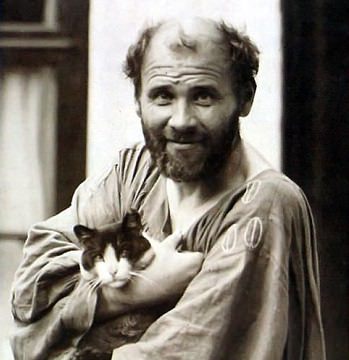
I’m going to litter this edition of the latest attacks of the petty dictator and his general on some one simply doing her job with the work of Gustav Klimt. And no surprises! It’s a black woman congressman who has represented her Florida District supremely well.
The Despot of Drumpfistan needs enemies to prop up his regime and his ego. There is nothing he goes after with more relish than a woman. It seems General Kelly shares that belief. They have attacked a strong, principled woman of color and this shows their vision of white nationalism even more. John Kelly’s lecture to Congresswoman Wilson included a list of what he considered American values which sounded a lot like the fever dreams of the patriarchy. Both Drumpf and Kelly did not use the names of any black woman involved in their attack. How positively dehumanizing!
First up, a Klimt break … because this thread is going to outline gross incompetence, pettiness, and meanness by Kremlin Caligula and the supposedly sane and normal general protecting the interests of our Republic.
Okay, I lied. First I’m going to highlight words spoken by former Presidents Obama and Dubya Bush about our country. Then, I’m going full bore be cause I believe Frederica Wilson and I watched Rachel last night.
Our identity as a nation – unlike many other nations – is not determined by geography or ethnicity, by soil or blood. Being an American involves the embrace of high ideals and civic responsibility. We become the heirs of Thomas Jefferson by accepting the ideal of human dignity found in the Declaration of Independence. We become the heirs of James Madison by understanding the genius and values of the U.S. Constitution. We become the heirs of Martin Luther King, Jr., by recognizing one another not by the color of their skin, but by the content of their character.
This means that people of every race, religion, and ethnicity can be fully and equally American. It means that bigotry or white supremacy in any form is blasphemy against the American creed. (Applause.)
And it means that the very identity of our nation depends on the passing of civic ideals to the next generation.
We need a renewed emphasis on civic learning in schools. And our young people need positive role models. Bullying and prejudice in our public life sets a national tone, provides permission for cruelty and bigotry, and compromises the moral education of children. The only way to pass along civic values is to first live up to them.
“We’ve got folks who are deliberately trying to make folks angry, to demonize people who have different ideas, to get the base all riled up because it provides a short-term tactical advantage,” Obama told the 7,500 people gathered in the Greater Richmond Convention Center. “So the question for you tonight for the next 19 days: Do you want a politics of division and distraction, or do you believe in a better kind of politics?”
He praised Northam, a former Army doctor, pediatric neurologist and current lieutenant governor, as the kind of leader the country needs.
“At a time so many of us are cynical about government and public service, to have someone step up who you can trust and just wants to do right by the people of Virginia, that’s worth something,” said Obama, who in 2008 became the first Democrat to carry Virginia in a presidential race in 44 years.
Joy Ann Reid recognizes what’s what better than many since she reported on politics in Florida from Florida for a number of years. She delivers the facts to Kelly and his boss.
Frederica Wilson is no liar. On Thursday, Gen. John Kelly, President Trump’s chief of staff, confirmed that. Kelly also made clear that he works for a man who has redefined the meaning of shameless.
The Florida congresswoman is the latest—and pointedly, the latest woman and person of color—to be attacked by Trump for daring to tell the truth about him. She joins a roster that includes broadcaster Jemele Hill, the mayor of San Juan, Puerto Rico, and before that, a Latina former Miss Universe. Now add in Hillary Clinton and the more than a dozen women who have accused Trump of sexual harassment or assault. Trump has attacked or threatened a few men too, notably black NFL and NBA stars, Gold Star father Khizr Khan (along with his wife), decorated Vietnam War veteran John McCain and other United States senators, but he typically reserves his greatest vitriol for those who aren’t white and male. We’re all still waiting for the president’s sure-to-be-blistering response to Eminem.
Trump on Wednesday used one of his increasingly frequent press availabilities to essentially call Wilson a liar, after she told the world what he said to the widow of Staff Sgt. La David T. Johnson; one of four special forces soldiers killed during a still murky mission in Niger. Wilson first gave her account to local reporters in Miami who met the limousine carrying her, Myeshia Johnson and Staff Sgt. Johnson’s adoptive parents to the funeral home to claim the body of the fallen soldier. Apparently, the White House had alerted the media that he would call Johnson’s widow, evidently hoping to reap some rare good press for the most hated president in modern U.S. history.
She later repeated what she heard to national news outlets and to this reporter.
When President Donald Trump’s White House instituted the travel ban and randomly added the African country of Chad to the list, MSNBC’s Rachel Maddow says it may have destabilized the region. That lack of allied troops could have then been the cause of the deaths of the four soldiers killed two weeks ago in Niger.
Maddow began by walking through the extensive history of the groups of African and French fighters who have managed to battle Islamic extremists like ISIS and Boko Haram in central Africa and actually win. Most of these groups are headquartered in Chad, because the best of the best soldiers managed to run out the majority of the terrorist groups.
Yet, somehow, Chad ended up on Trump’s travel ban list. When it did, there was an uproar of foreign policy experts who warned this was a terrible decision because it would destabilize the region and isolate American troops fighting there. Both the State and Defense Departments were also opposed to Trump’s decision to put Chad on the list, because they knew it would cause military problems in the area. But the Trump administration demanded it.
“Several terrorist groups are active in Chad,” Maddow cited the administration’s reasoning. “If that’s the reason you end up on the travel ban list, why wouldn’t you put Mali or Niger or even Iraq and Afghanistan?”
Chad then began to withdraw their troops from the fight against Boko Haram in Niger. In fact, Chad’s troops were gone a week after Trump added Chad to the ban list. According to Reuters, once the soldiers left, Boko Haram moved back in and people began to flee for their lives again. Shortly after the “battle-hardened” Chad fighters left, four American soldiers were attacked and killed in an ambush by ISIS extremists in Niger. Chad announced it began pulling its troops out two weeks ago on Oct. 13, which Maddow said would put their timeline for withdrawal at the end of September.
“Which would be the Friday after the Trump administration made this decision to insult and harm our closest military ally in that region, against ISIS and Boko Haram where ISIS has been trying to establish another caliphate,” Maddow said. “But those Chadian troops were really doing something in Niger. They were protecting those villages in that whole region from ISIS militant groups being able to operate freely and be able to take more territory from there once again. And pulling those troops out had an immediate effect in emboldening those ISIS attacks.”
Within days of the Chadian soldiers beginning to pull out from protecting those villages from ISIS, four soldiers were ambushed.
When White House Chief of Staff John Kelly condemned a Miami congresswoman on Thursday for sneering at President Donald Trump’s condolence call to a soldier’s widow, the retired general recalled when the two attended a somber ceremony in Miramar to dedicate a new FBI building named after two slain FBI agents.
Kelly criticized Democratic U.S. Rep. Frederica Wilson for claiming “she got the money” for the new building during the 2015 ceremony while he and others in the audience were focused on the heroism of agents Benjamin Grogan and Jerry Dove, killed during a 1986 shootout with bank robbers south of Miami.
Thursday night, Wilson said Kelly got the story flat-out wrong. In fact, she said Washington approved the money before she was even in Congress. The legislation she sponsored named the building after Grogan and Dove, a law enacted just days before the ceremony.
“He shouldn’t be able to just say that, that is terrible,” Wilson said of Kelly’s remarks in the White House briefing room, the latest volley in the controversy over Trump’s condolence call to a military widow from Miami Gardens, an area Wilson represents. “This has become totally personal.”
In 2015, Wilson won praise from Miami Republicans for sponsoring the bill to name the long anticipated federal building after two agents who became legends in local law enforcement.
The Sky Dancing banner headline uses a snippet from a work by artist Tashi Mannox called 'Rainbow Study'. The work is described as a" study of typical Tibetan rainbow clouds, that feature in Thanka painting, temple decoration and silk brocades". dakinikat was immediately drawn to the image when trying to find stylized Tibetan Clouds to represent Sky Dancing. It is probably because Tashi's practice is similar to her own. His updated take on the clouds that fill the collection of traditional thankas is quite special.
You can find his work at his website by clicking on his logo below. He is also a calligraphy artist that uses important vajrayana syllables. We encourage you to visit his on line studio.

 Good Afternoon
 The voice of the majority of voters went unheeded a year ago. Tuesday night, the votes of the majority sent waves of hope for peace and justice through out the world. We showed the world that we shall overcome. I do not vote until November 18th, but my vote will be part of the history of New Orleans when we elect our first Black Woman to the office of Mayor in our runoff.
 The People’s President is the one with the coattails. The best explanation that I heard all day about the race came from two Never Trumpers on MSNBC. Nicole Wallace and Steve Schmidt were nearly as jubilant as any Democrat on the network. Wallace said she had to mute the TV any time Trump was on and her five year old was in the room. She explained that the white suburban women vote had to come from every parent who doesn’t want that kind of person as President. Schmidt suggested that it was such a coalition of diverse interests voting against Trumpism that felt like a wave from the decent people of America. The polls showed a combination of anti-Trumpism and fear of losing Health Care as central to many voters. But we also learned that a huge swath of Americans are following the Russian situation.
 The Op-Ed continues by saying he’s Trump’s Number 1 Problem. Well, that and the barrage of white male privilege on display daily among the Trump cadre. No amount of economic data, study, and acceptance by every economist of all parties and ideologies kills the idea that giving freaking rich people tax breaks is going to absolutely make the rest of us better off. It doesn’t do it. Never will. Never … never … never … never ….
 It’s not the least bit amazing to me that not even the new Fed head appointment will be an actual economist because no actual economist would said anything like this unless his name is Arthur Laffer and he lost his cred years ago hanging on to his failed hypothesis.
  I’m not going to mention the authoritarian-curious Trump who is currently ass kissing the despot in China. I’m going to end with this essay by
 So, since we are weird, I suggest you read about the control factors.








The coordination between the Trump Tower visitor and the Russian prosecutor general undercuts Ms. Veselnitskaya’s account that she was a purely independent actor when she sat down with Donald Trump Jr., Jared Kushner, the president’s son-in-law, and Paul J. Manafort, then the Trump campaign chairman.
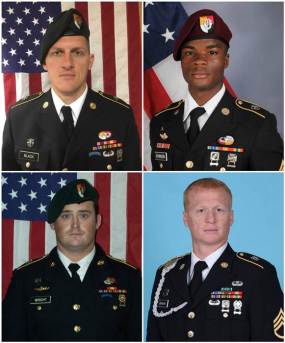
 Good Afternoon!
 Here’s the full text of the Bush speech.
 And from Obama in Virginia:
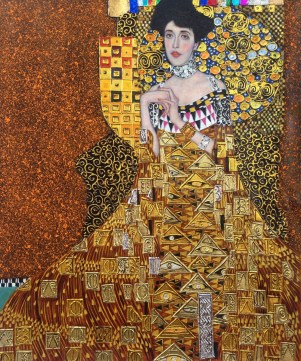 Trump goes on the offensive when he’s trying to hide something and cover up for his huge mistakes.
  What’s worse, is the attack now has turned to Gold Star Families and Congresswoman Wilson.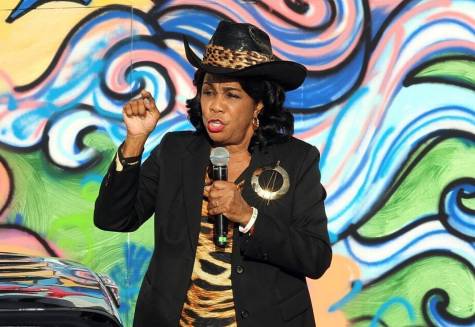

 peej
peej Carissa
 bostonboomer
 dakinikat
 ecocatwoman
 jjlo
jjlo mablue2
 Mama Lopez
 peggysue22
 quixote
 skydancingguestblogger
 Mona (aka Wonk the Vote)





Recent Comments