
Basic Job Qualifications for Politicians: Stupidity and/or Ability to Lie
Posted: November 2, 2011 Filed under: The Bonus Class, Voter Ignorance, We are so F'd | Tags: big fat liars, I see stupid politicians 27 CommentsSomething tells me I need to step away from the political news for awhile. I’m just blown away by all the information out there about today’s crop of political leaders that  appears to be met with insouciance by many voters. How can you support people that clearly don’t have their facts straight? First, I read that Herman Cain seems to be blissfully unaware that China has had nuclear capabilities for some time. He seems to think they are “trying to develop nuclear capability”. Then, I watched parts of a speech given by Texas Governor Rick Perry Thursday night that was characterized by CBS as “giddy” I can say that “giddy” wasn’t exactly the first word that came to my mind from having spent tons of time in the French Quarter happily surrounded by drunk gay men. Is giddy some new code word that means your gaydar has gone off big time? While Perry was talking about his ‘brother in Christ”, I had a feeling that there was a different sentiment stirring some where beneath his belt. This speech made me believe ” THE rumor”.
Then there was this “awful comment” yesterday by Mayor Bloomberg that I just can’t forget. Bloomberg wants to forget about any role that the commercial and investment banks played in the financial crisis and blame the entire thing on Fannie and Freddie and the 1994 Community Reinvestment Act. Fannie and Freddie exacerbated the entire problem but there is no way that poor people can be blamed for a speculative bubble. Bloomberg simply ignores so many facts and studies that all I can say is that it was shameful to watch some one try to defer blame for incredibly high social costs on their political donor base. He should be embarrassed at being so transparent or ignorant or capable of lying so badly. I still can’t figure out which one is most applicable.
Here’s Bloomberg’s faulty analysis of the financial crisis:
This link from Rortybomb’s Mike Konczal has a lot of good information that debunks the obvious canards. It uses peer reviewed studies not right wing canards and memes meant to promote the interests of the financial services industry.
The first thing to point out is that the both the subprime mortgage boom and the subsequent crash are very much concentrated in the private market, especially the private label securitization channel (PLS) market. The GSEs were not behind them. That whole fly-by-night lending boom, slicing and dicing mortgage bonds, derivatives and CDOs, and all the other shadiness of the 2000s mortgage market was a Wall Street creation, and that is what drove all those risky mortgages.
For some data, start here: ”More than 84 percent of the subprime mortgages in 2006 were issued by private lending institutions….Private firms made nearly 83 percent of the subprime loans to low- and moderate-income borrowers that year.”
As Center For American Progress’ David Min pointed out to me, the timing doesn’t work at all: “But from 2002-2005, [GSEs] saw a fairly precipitous drop in market share, going from about 50% to just under 30% of all mortgage originations. Conversely, private label securitization [PLS] shot up from about 10% to about 40% over the same period. This is, to state the obvious, a very radical shift in mortgage originations that overlapped neatly with the origination of the most toxic home loans.”
The source of that bolded quote was the Federal Reserve Board, btw. It clearly showed through reported data that the majority of bad loans came from the private sector, 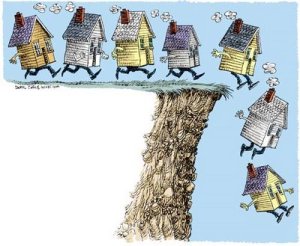 not Fannie and Freddie. That’s not to say that Fannie and Freddied didn’t jump on board and add to the problem. It just shows that the clear motivator was not the Affordable Housing Act which was supported by both the Clinton and the Bush administrations. Here’s some additional data that’s germane to the analysis.
- Private firms made nearly 83 percent of the subprime loans to low- and moderate-income borrowers that year.
- Only one of the top 25 subprime lenders in 2006 was directly subject to the housing law that’s being lambasted by conservative critics.
The numbers on subprime lending are extremely clear. The loans that were offered to the weakest borrowers–including NINJA or zombie loans–basically showed up during the housing bubble. Most economists date that period from 2001 to 2007. The worst of the subprime lending occurred during 2004 to 2006 which is around ten years after the affordable housing laws were passed. Ten years is way too long of a window to try to connect bad lending behaviors to the bill. The bad lending behaviors clearly came from institutions trying to profit from the speculative bubble. There’s a really good graphic at McClatchey that shows exactly which 15 private lenders were most responsible for the problem. I’m sure you’ll recognize the usual suspects.
The other thing that the Bloomberg diatribe ignores is the number of legal inquiries being made into the practices meant to speed up both securitization and foreclosure practices by private lenders. There are many, many studies in the legal journals that show that the banks were quick to do both of these thing to earn fee income. Why would you foreclose on people if you wanted to have a huge portfolio of loans to poor and minorities to show the government? Also, why would you sell them off? Wouldn’t you want to keep them on your books to show you weren’t redlining? The rush to foreclosure with inadequate documentation is just one example. Mortgage appraisal fraud was another problem during the peak of the crisis. It just makes absolutely no sense that so many laws could be broken in the name of pleasing a government with an affordable housing agenda. Clearly, these moves were profit-motivated because most of the banks securitized the loans to get rid of them from their books plus, the holders of the loans and the securities sought insurance to guard against default. They were moving the assets off their balance sheet and betting they all would default at the same time.
Economists and financial analysts are taking on Bloomberg’s comments all over the place. Here’s one such article from Forbes. Barry Ritholtz characterizes Bloomberg’s comments as “extremely disappointing” and Bloomberg himself as “clueless” and “empty headed ideologue”. The Forbes article points to further research indicating that Bloomberg’s comments fly in the face of the data.
In a February article for the Journal of Urban Affairs, Dan Immergluck shows how the Federal Housing Authority (FHA) hit the lending accelerator after the housing bubble burst. As the real estate market roared, FHA lending dropped to historic lows, only to rev back up once the subprime mortgage market bottomed out.
This clearly represents the ongoing break with reality that characterizes the thinking and words of so many elected officials. It’s disheartening because I know that this seems more motivated by protecting ‘evil doers’ than the public. It’s deliberately false, deliberating misleading, and creates an atmosphere where it will be impossible to correct laws and regulations that could prevent this from recurring.
I’m beginning to think that a requisite for running for office is the ability to lie or to deliberately remain ignorant of the facts. I can look at politicians like Rick Perry, Herman Cain, Michelle Bachmann, and Sarah Palin fully realizing that they’ve only got primary colors in their school box and that they really have no desire to look for the rest of the rainbow. However, Mayor Bloomberg can only be characterized as up to something because he has never struck me as stupid.
 I call shenanigans!
For your consideration …
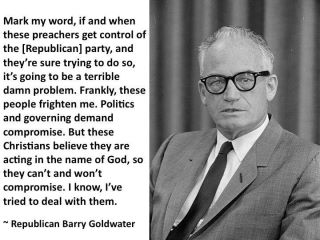
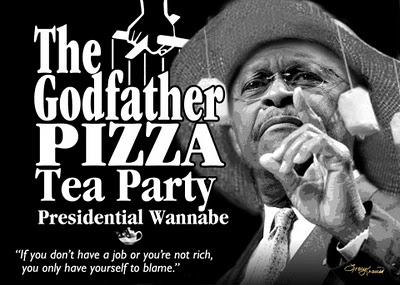
Posted: October 31, 2011 Filed under: 2012 presidential campaign, Republican politics, Republican presidential politics | Tags: Bsrry Goldwater on Religious Demagogues, Herman Cain, Religious demogogue 30 CommentsHerman Cain at the National Press Club Today.
Advice from Infamous Conservative Republican on these kinds of candidates.
Halloween Reads
Posted: October 31, 2011 Filed under: abortion rights, Economy, morning reads | Tags: Halloween, Herman Cain, history of Halloween, Nobel Prize economics, Planned Parenthood, Pumpkin cookies, Pumpkins, Samhain, Thomas Sargent, trick or treating, We're all Keynesians Now 19 Comments
Happy Halloween!
I suppose I should get right to the news reads, but instead, I thought I’d make some use of the day to bring us up to speed on the Halloween spirit! Halloween’s roots were in Samhain which was an ancient Celtic holiday! Like nearly every other holiday, it was co-opted as the Romans moved to conquer as much as they could and romanize the world with their culture and religions.
Samhain was considered a magical holiday, and there are many stories about what the Celtics practiced and believed during this festival. Some say the spirits that were unleashed were those that had died in that year, and offerings of food and drink were left to aid the spirits, or to ward them away. Other versions say the Celts dressed up in outlandish costumes and roamed the neighborhoods making noise to scare the spirits away. Many thought they could predict the future and communicate with spirits as well during this time. Some think the heavily structured life of the Pagan Celtics was abandoned during Samhain, and people did unusual things, such as moving horses to different fields, moving gates and fences, women dressing as men, and vice versa, and other trickeries now associated with Halloween. Another belief is that the Celtics honoured, celebrated, and feasted the dead during Samhain. A sacred, central bonfire was always lit to honor the Pagan gods, and some accounts say that individual home fires were extinguished during Samhain, either to make their homes unattractive to roving spirits, or for their home fires to be lit following the festival from the sacred bonfire. Fortunes were told, and marked stones thrown into the fire. If a person’s stone was not found after the bonfire went out, it was believed that person would die during the next year. Some Celts wore costumes of animal skulls and skins during Samhain. Faeries were believed to roam the land during Samhain, dressed as beggars asking for food door to door. Those that gave food to the faeries were rewarded, while those that did not were punished by the faeries. This is reported to be the first origin of the modern “trick or treat” practice.
Many of the costumes we think of today actually originated in festivals celebrated during medieval times.
The practice of dressing up in costumes and begging door to door for treats on holidays goes back to the Middle Ages, and includes Christmas wassailing. Trick-or-treating resembles the late medieval practice of “souling,” when poor folk would go door to door on Hallowmas (November 1), receiving food in return for prayers for the dead on All Souls Day (November 2). It originated in Ireland and Britain, although similar practices for the souls of the dead were found as far south as Italy. Shakespeare mentions the practice in his comedy The Two Gentlemen of Verona (1593), when Speed accuses his master of “puling [whimpering, whining], like a beggar at Hallowmas.”
Yet there is no evidence that souling was ever practiced in America, and trick-or-treating may have developed in America independent of any Irish or British antecedent. There is little primary Halloween history documentation of masking or costuming on Halloween — in Ireland, the UK, or America — before 1900. The earliest known reference to ritual begging on Halloween in English speaking North America occurs in 1911, when a newspaper in Kingston, Ontario, near the border of upstate New York, reported that it was normal for the smaller children to go street guising (see below) on Halloween between 6 and 7 p.m., visiting shops and neighbors to be rewarded with nuts and candies for their rhymes and songs. Another isolated reference appears, place unknown, in 1915, with a third reference in Chicago in 1920. The thousands of Halloween postcards produced between the turn of the 20th century and the 1920s commonly show children but do not depict trick-or-treating. Ruth Edna Kelley, in her 1919 history of the holiday, The Book of Hallowe’en, makes no mention of such a custom in the chapter “Hallowe’en in America.” It does not seem to have become a widespread practice until the 1930s, with the earliest known uses in print of the term “trick or treat” appearing in 1934, and the first use in a national publication occurring in 1939. Thus, although a quarter million Scots-Irish immigrated to America between 1717 and 1770, the Irish Potato Famine brought almost a million immigrants in 1845–1849, and British and Irish immigration to America peaked in the 1880s, ritualized begging on Halloween was virtually unknown in America until generations later.
Treats:
Thomas Sargent, Nobel Prize winner in economics is mad at the WSJ for trying to characterize him as a non-Keynesian after he won the award!
Professor Sargent described himself as a scientist, a “numbers guy” who is “just seeking the truth” as any good researcher does.
“If you go to seminars with guys who are actually doing the work and are trying to figure things out, it’s not ideological,” he said. “Half the people in the room may be Democrats and half may be Republicans. It just doesn’t matter.”
The “non-Keynesian” label irks him particularly. “That’s just off base,” he said. “Keynes was a very good economist. He was brilliant. He had wonderful insights. His work has inspired me many times.”
Professor Sargent’s own writings are sprinkled with pithy quotations from Keynes. In January 1986, the professor wrote a Wall Street Journal article, “An Open Letter to the Brazilian Finance Minister,” analyzing that nation’s fiscal crisis. In form and substance, it was explicitly modeled on a very similar letter written by Keynes to the French finance minister 60 years earlier. One point of this exercise, he said, “was to get people to actually read Keynes.”
Still, early in Professor Sargent’s career, he was known as one of the founders of the “rational expectations” school, which has sometimes been thought to be un-Keynesian. He says it actually “tied down an important loose end in the kinds of theories Keynes was building.” Keynes, he said, believed that expectations were all-important in determining economic activity, but didn’t have the mathematical tools needed to nail down all his concepts.
Today, Professor Sargent says that in some ways he actually is a Keynesian, but he qualified that claim, too. “I’m happy to say I am a Harrison-Kreps-Keynesian,” he said, citing work by two scholars at Stanford, J. Michael Harrison and David M. Kreps. They developed a theory of speculative investor behavior and stock-bubble formation that subtly modifies rational expectations “in a beautiful way” and “captures Keynes’s argument, makes it rigorous, and pushes it further,” he said.
Fundamentally, he said, “What I really don’t like is oversimplification.” He tries to think things through, he said, and avoid having “one slogan fighting another.”
Recipe for Best Pumpkin Cookies
1 cup butter, room temperature
1/2 cup sugar
1/2 cup firmly packed brown sugar
1 cup canned pumpkin
1 egg
1 teaspoon vanilla extract
2 cups flour
1 teaspoon baking soda
1 teaspoon baking powder
2 teaspoons cinnamon
1/4 teaspoon saltPenuche Glaze
3 tablespoons butter
1/2 cup firmly packed dark brown sugar
1/4 cup milk
1 1/2-2 cups confectioners’ sugarDirections:
Preheat oven to 350 degrees.
Have ready some ungreased baking sheets.
In a large mixing bowl, cream butter and the sugars together until light and fluffy.
Blend in pumpkin, egg and vanilla extract.
In separate bowl, stir together flour, baking soda, baking powder, cinnamon and salt.
Mix flour mixture into butter-sugar mixture.
Drop tablespoonfuls 3 inches apart on ungreased baking sheets.
Bake the cookies for 10-12 minutes until golden around the edges.
Remove warm cookies and transfer to racks.
Let cool completely for a least one half hour, then frost with glaze.For Glaze:.
In a medium saucepan, heat butter and brown sugar over medium heat until bubbly. Cook, stirring constantly, for one minute or until slightly thickened. Beat in the milk. Blend in confectioner’s sugar until the glaze is smooth and spreadable. Using a silicone basting brush, which I love and use religiously now, or a butter knife to spread glaze on cookies is the best tip. Please note; this glaze will harden fairly quickly. I suggest that you keep the saucepan over the stove on the lowest heat possible to prevent it from hardening.
Tricks:
Herman Cain went on TV Sunday saying that Planned Parenthood should be called “Planned Genocide’ because their goal Is To ‘Kill Black Babies’. He’s now under scrutiny for sexual harassment charges in past. Can we just say the man hates women and get it over with?
Republican presidential candidate Herman Cain is standing by his assertion that reproductive health care provider Planned Parenthood is carrying out the “planned genocide” of African Americans.
In a March speech to the conservative Heritage Foundation, Cain said the organization’s mission was to “help kill black babies before they came into the world.”
On Sunday, CBS host Bob Schieffer asked the candidate if he still believed that statement.
“Yes,” Cain replied. “I still stand by that.”
“Do you have any proof that was the objective of Planned Parenthood?” Schieffer wondered.
“If people go back and look at this history and look at [Planned Parenthood founder] Margaret Sanger’s own words, that’s exactly where that came from,” Cain insisted. “Look at where most of them were built. Seventy-five percent were built in the black community and Margaret Sanger’s own words — she didn’t use the word genocide. She did talk about decreasing the number of poor blacks in this country by preventing black babies from being born.”
Anti-abortion activists often misquote Sanger as saying, “[W]e want to exterminate the Negro population.”
But in full context, the quote has the opposite meaning. In a 1939 letter to pro-birth control advocate Clarence J. Gamble, Sanger argued that black leaders should be involved in the effort to deliver birth control to the black community.
“We do not want word to go out that we want to exterminate the Negro population, and the minister is the man who can straighten out that idea if it ever occurs,” she wrote
Hope you have a fun day! What’s on your reading and blogging list?
Move on over Uncle Clarence Thomas …
Posted: October 30, 2011 Filed under: just because | Tags: Clarence Thomas, ethically challenged, Herman Cain, Sexual harassment, sexual harrassment 37 Comments
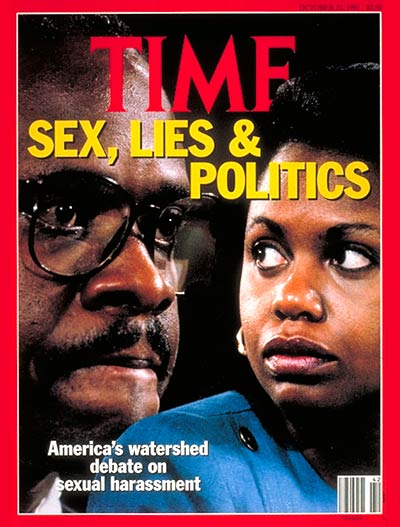 An exclusive from Politico: Two women accused Herman Cain of inappropriate behavior
During Herman Cain’s tenure as the head of the National Restaurant Association in the 1990s, at least two female employees complained to colleagues and senior association officials about inappropriate behavior by Cain, ultimately leaving their jobs at the trade group, multiple sources confirm to POLITICO.
The women complained of sexually suggestive behavior by Cain that made them angry and uncomfortable, the sources said, and they signed agreements with the restaurant group that gave them financial payouts to leave the association. The agreements also included language that bars the women from talking about their departures.
In a series of comments over the past 10 days, Cain and his campaign repeatedly declined to respond directly about whether he ever faced allegations of sexual harassment at the restaurant association. They have also declined to address questions about specific reporting confirming that there were financial settlements in two cases in which women leveled complaints.POLITICO has confirmed the identities of the two female restaurant association employees who complained about Cain but, for privacy concerns, is not publishing their names.
You remember Clarence Thomas right? No wonder Cain calls him a ‘mentor’ and an influence!!
Virginia Thomas’ now-famous phone call to Anita Hill has had at least one consequence that she can’t have intended. It’s prompted a former paramour of her husband’s to dish salacious and troubling detailsabout the Supreme Court justice’s past to the Washington Post. And many of those details are in sync with accusations that emerged around Clarence Thomas’ contentious 1991 confirmation hearings.
“He was obsessed with porn,” Lillian McEwen, tells the paper. “He would talk about what he had seen in magazines and films, if there was something worth noting.”
McEwen also said that the conservative Thomas was constantly on the make at work. “He was always actively watching the women he worked with to see if they could be potential partners,” said McEwen. “It was a hobby of his.”
She added that he once told her he had asked a woman at work what her bra size was.
Toxic Journalism
Posted: October 30, 2011 Filed under: Social Security, The Media SUCKS, the villagers | Tags: hack, Journalistic HACKS, Lori Montgomer, Lori Montgomery 13 CommentsI really could write a very long essay on all the things that are wrong with Lori Montgomery’s WAPO “article” on Social Security. Problem is, I’m trying to get published in a peer-reviewed journal right now and actually have to respond to questions about my methodology and data so I don’t have time to do it. Plus, I don’t really have to peel apart a lot of the  economic falsehoods because Dean Baker has done a really great job at his blog over at CEPR. I actually bumped into this bit of yellow journalism earlier today via a Paul Krugman tweet. It seems to promote every right wing meme, canard and lie about Social Security but for some reason it didn’t end up on the Op-Ed page. It was out there on the front page. Bad WAPO! Very VERY BAD WAPO!
BB and I had a conversation about it over the phone after both of us spent a considerable amount of time trying to figure out exactly what qualified Lori Montgomery for rigorous economic analysis. Actually, BB even wrote her an email. I’m going to post her response to BB because it was kind’ve appalling all on its own given all BB asked was for some idea of how many classes the woman had actually had in finance or economics. Evidently, WAPO thinks you don’t need to know a damn thing to write a huge front page article. Hopefully, no senior citizens leave for the Alaskan ice floes after reading it. Also, hopefully no miserable millennium yuppie sent their grandparents to the floes either. Maybe we should call Montgomery’s parents and see if they’ve committed ritual suicide yet. Here’s her response to BB’s request for her academic background.
I am a journalist, not an economist. If you view dean baker as the voice of
god, then I’m afraid we’re not going to get very far.
My article is as accurate and as objective as I could make it. Perhaps you’d
like to point out some of these blatant falsehoods so I can respond to them
directly.
Alrighty then … let me just quote the first paragraph, then I’ll put a question to you.
Last year, as a debate over the runaway national debt gathered steam in Washington, Social Security passed a treacherous milestone. It went “cash negative.”
So, the question is this: is “treacherous milestone” perhaps the most concrete example of purple prose you’ve ever seen or is it just me? Or, do you agree with Lori, that “treacherous” is just one of those words people pull out of their asses when they are trying to be ” as accurate and as objective” as possible?
Now, let me quote economist Dean Baker on that particular paragraph too. Let me just mention this is about a 2700 word article and we’ve only hit the first few sentences. It’s so bad I feel like I should do about 10 installments. That would be eight on the bad economics and two on the bad journalism. Well, maybe tomorrow.
The basic premise of the story, as expressed in the headline (“the debt fallout: how Social Security went ‘cash negative’ earlier than expected”) and the first paragraph (“Last year, as a debate over the runaway national debt gathered steam in Washington, Social Security passed a treacherous milestone. It went ‘cash negative.'”) is that Social Security faces some sort of crisis because it is paying out more in benefits than it collects in taxes. [The “runaway national debt” is also a Washington Post invention. The deficits have soared in recent years because of the economic downturn following the collapse of the housing bubble. No responsible newspaper would discuss this as problem of the budget as opposed to a problem with a horribly underemployed economy.]
This “treacherous milestone” is entirely the Post’s invention, it has absolutely nothing to do with the law that governs Social Security benefit payments. Under the law, as long as their is money in the trust fund, then Social Security is able to pay full benefits. There is literally no other possible interpretation of the law.
As the article notes the trust fund currently holds $2.6 trillion in government bonds, so it is nowhere close to being unable to pay benefits. The whole point of building up the trust fund was to help cover costs at a future date when taxes would not be sufficient to cover full benefits. Rather than posing any sort of crisis, this is exactly what had been planned when Congress last made major changes to the program in 1983 based on the recommendations of the Greenspan commission.
The article makes great efforts to confuse readers about the status of the trust fund.
Here’s another economist–Richard Eskow–with a similar take.
How can a 2,363 word piece in on Social Securitybe so densely packed with inaccuracies, falsehoods, and downright lies?
It almost takes a cryptographer to unpack the deceptions contain in an article published Saturday with the headline, “The debt fallout: How Social Security went ‘cash negative’ earlier than expected.”
The piece’s author sits us down by the campfire, holds the flashlight up to her chin, and spins a yarn filled with quotes from right-wing ideologues from both parties. Most of her “sources” have a long history of trying to gut Social Security, often under the employ of billionaire former Nixon Cabinet member Pete Peterson (whose own organization, Fiscal Times, provides financial journalism services for thePost. Coincidence? You decide.)
How many quotes are included from the organizations and groups defending Social Security? None.
I’ve actually read most of the feedback on the article from the major economic blogs and I’d say that Ms. Montgomery should definitely rethink her career as a reporter on the economy–which as far as I can tell she’s only done for a few years–and should possibly go back to writing obits in Texas or Michigan or where ever else she did her work. She wouldn’t even let BB know where she got her degrees and in what, remember? I’m thinking it must be the Judith Miller School of Journalism of Koch Brothers University, inc. Just a guess.
So, I’m not going to dissect that horrible article. I’ll only tell you that it contradicts all the research I’ve ever done on the subject including the series of posts I did about a year or so ago. It basically contradicts all the literature I’ve ever seen on the topic too unless you count junk stuff that’s come out of Koch Brother’s wholly owned subsidiary institutes and junk scientists. Frankly, I kind’ve agree with Eskow and think we should call it a Halloween prank gone bad and ignore it.
However, go read some of the stuff and if you have any questions, I’ll be glad to actually do some research for you or to check earlier sources I did for my research. Or, perhaps just answer it since I spent all these years getting a doctorate in financial economics so I could teach people about this stuff and actually do real research.
Meanwhile, I’ll close with Brad DeLong’s long standing tag line: “Why-oh-why can’t we have a better press?”
I hate to say this, but I’d like to know how she got that job in the first place. Let’s just say inquiring minds are suspicious.

 peej
peej Carissa
 bostonboomer
 dakinikat
 ecocatwoman
 jjlo
jjlo mablue2
 Mama Lopez
 peggysue22
 quixote
 skydancingguestblogger
 Mona (aka Wonk the Vote)





Recent Comments