
The Panic Room: Republicans just can’t figure out what Women Want
Posted: August 17, 2013 Filed under: War on Women, Women's Rights | Tags: Republican Party Summer Meeting 8 CommentsThe GOP has a woman problem. It also believes it has a 2016 Hillary Clinton Problem. There’s been this talk of rebranding, reinventing, reinvigorating, and  remessaging Republicans. The deal is that Republicans are vested in deliberately misunderstanding women. They met last week to once more show a large degree of mass confusion over why their pograme of sending women back to the world of no birth control, no work, and no opportunity just isn’t selling. The only women they seem to impress are the ones with Stockholm Syndrome.
“In the last election, Governor Romney won among married women by 11 percentage points, but he lost among single women by a whopping 36 points. With single women making up 40 percent of the voters, well, you can do the math. And the president won women by 11 points,” said RNC Co-Chair Sharon Day in her remarks at the panel. “The bottom line is we’ve got to make the case for more women leaders in this party.”
She’s taking the issue — and her role as party co-chair, which has sometimes been more of a figurehead position — seriously, heading off to New Jersey after the meeting to help train and encourage the 35 women running for state-level offices there, the largest number of women Republicans making such bids in any state in the country. The party has to start somewhere, and one things it’s emphasizing is the deficit of Republican women at the start of the pipeline of political leadership.
The question is, is the rest of the party taking the issue as seriously as her? Women at the gathering were not sure. Not sure at all.
“The messaging to women is really bad,” said Ann Stone, a pro-choice Republican and one of the founders of the push for the National Women’s History Museum. “There’ve been closed-door sessions where we’ve talked about how do we get the men to stop saying some of the things they are saying. It’s usually out of ignorance. They don’t understand what they’re saying is highly insulting, which is really sad.”
Day opened her remarks with a similar air of disappointment. “I’m really sad, to be honest with you, that there’s not more people in this room. Because again as women, we are the majority. And as women, there should be more women in this room. Every one of us should be in this room,” she said. “So that’s the first thing I want to say, just to make me feel better. This room should be packed. And it’s not. ”
Florida State Sen. Anitere Flores had a similar complaint. “This is a self-selected group of people who have come here, probably saying, ‘Yeah, you know, We know we have a problem. We need to fix it.’ But there are a bunch of other people that are in other meetings right now that maybe are thinking we don’t have a problem — we don’t really have to go listen to that,” she said, before apologizing. “I hope I don’t get into trouble for saying all of that.”
“There is a problem. There is a gap,” she said. “And we can’t just keep going around and saying we won married women, woohoo, that’s great….
 So what does the party of birth control restrictions, abortion access restrictions, nonsupport of equal work for equal pay laws have to say for itself? Basically, Republican women tried to change the subject,
During a panel introducing the party’s “rising stars” moderated by RNC Chairman Reince Priebus, Karin Agness, founder and president of the Network of enlightened Women (NeW), spoke on the GOP’s need to reach out to young women on college campuses who might not feel comfortable expressing their views in organizations with a more “radical, feminist perspective.”
Agness shared her experience in promoting conservative values on progressive college campuses, and encouraged the audience and fellow conservative leaders to provide an alternative for young women who did not agree with the Democratic Party’s platform.
She also emphasized that Republicans should be talking about a variety of issues that women truly care about, and use new technology and local news outlets to “meet them where they are.”
“Women aren’t a unified voting bloc that’s going to vote liberal every time,” Agness said.
At a panel later Thursday afternoon about the importance of women in the Republican Party, Washington Times opinion
editor Emily Miller suggested Republicans needed to flip the rhetoric around about the existence of a “war” on women. “Do any of us in here feel like we’re in a ‘war’?” Miller asked.
I don’t know about you, but I don’t think this is the best way to stop a Hillary Clinton candidacy.
This is a very open thread.
Friday Reads: Potomac Fever
Posted: August 16, 2013 Filed under: morning reads | Tags: NSA, Senator Ron Wyden, Syrian Electronic Army, the Whale, violence against women 45 Comments
Good Morning!
I continue to feel lethargic even though we’ve switched to a pattern of thunderstorms that has broken the most severe heat. It’s August and things seems just wet,soggy, hot and tired. That statement really includes me. Everything seems unresolved and oppressive just like the heat. I do have some really good news to share. I got an email last night from a scholarly publisher in the EU–Germany actually–that wants to publish my recent research as a book. I am seriously in a state of awe and humility. I published my first academic book at the ripe old age of 29 but it was nothing like this work which is the basically the culmination of a lot of deep personal grok. It is basically all the essays surrounding my dissertation. I am in a state of OMG. It probably won’t sell many copies, but it sure will look great on my VC, add salary potential, and up my creds. I am registering as an author with them this morning. Please tack my feet to the floor!
Here’s some stats on how badly the NSA has been managing the rules surrounding surveillance from WAPO. Maybe WAPO will just have to seek asylum in Russia! (J/K)
The National Security Agency has broken privacy rules or overstepped its legal authority thousands of times each year since Congress granted the agency broad new powers in 2008, according to an internal audit and other top-secret documents.
Most of the infractions involve unauthorized surveillance of Americans or foreign intelligence targets in the United States, both of which are restricted by law and executive order. They range from significant violations of law to typographical errors that resulted in unintended interception of U.S. e-mails and telephone calls.
The documents, provided earlier this summer to The Washington Post by former NSA contractor Edward Snowden, include a level of detail and analysis that is not routinely shared with Congress or the special court that oversees surveillance. In one of the documents, agency personnel are instructed to remove details and substitute more generic language in reports to the Justice Department and the Office of the Director of National Intelligence.
In one instance, the NSA decided that it need not report the unintended surveillance of Americans. A notable example in 2008 was the interception of a “large number” of calls placed from Washington when a programming error confused U.S. area code 202 for 20, the international dialing code for Egypt, according to a “quality assurance” review that was not distributed to the NSA’s oversight staff.
In another case, the Foreign Intelligence Surveillance Court, which has authority over some NSA operations, did not learn about a new collection method until it had been in operation for many months. The court ruled it unconstitutional.
The Obama administration has provided almost no public information about the NSA’s compliance record. In June, after promising to explain the NSA’s record in “as transparent a way as we possibly can,” Deputy Attorney General James Cole described extensive safeguards and oversight that keep the agency in check. “Every now and then, there may be a mistake,” Cole said in congressional testimony.
You went from supporting the Patriot Act in 2001 to pushing relentlessly for its de-authorization. What was the tipping point?
My concerns obviously deepened when I first learned that the Patriot Act was being used to justify the bulk collection of Americans’ records, which was in late 2006 or early 2007. So Senator Russ Feingold and I dutifully set about to write classified letters to senior officials urging them to make their official interpretation of the Patriot Act public. Back then, in those early days, we were rebuffed after we made repeated requests that the intelligence community inform the public what the government had secretly decided the law actually meant. In fact, there was a secret court opinion that authorized massive dragnet domestic surveillance, and the American people, by that point, were essentially in the dark about what their government was doing with respect to interpreting an important law.You use the term “secret law” quite frequently – what do you actually mean by that?
I use the term “secret law” to refer to the federal government’s increasing tendency to rely on secret legal analysis to justify major programs and activities, without telling the public exactly what government agencies believe the law allows them to do. This is fundamentally inconsistent with democratic principles, but it’s unfortunately become increasingly common over the past decade. And the broad interpretations of the Patriot Act and other laws that have been issued by the secret Foreign Intelligence Surveillance Court are still secret, so right now the public can’t see how the Court concluded that the government’s authority to obtain records that are “relevant to an investigation” allowed the NSA to collect information on hundreds of millions of ordinary Americans. But there are an increasing number of lawmakers who are interested in pushing for more openness in this area, which is encouraging.
In a strange turn of events, WAPO has been hacked by the Syrian Electronic Army. This is a bizarre story if ever there was one.
So, you may have heard we’re having some problems with the Syrian Electronic Army (SEA) lately. Earlier this week the Twitter account of one of our journalists was compromised as part of a larger attack aimed at social media management groupSocialFlow, and Thursday an attack on content recommendation service Outbrain caused some of our stories to redirect to the the SEA homepage.
Who is the Syrian Electronic Army?
The SEA is a group of computer hackers who support embattled Syrian President Bashar al-Assad. It initially emerged in April 2011 during the rise of anti-regime protests in Syria.
Are they supported by the Assad regime?
Probably not. While Assad has a background in computing, and once explicitly referenced his “electronic army,” the group’s formal ties to the administration are unclear. The quality of their attacks suggest that the SEA includes both professional quality hackers, who might be receiving some form of compensation, and young volunteers who believe in the regime.
Those volunteers might include Syrian diaspora; some of their hacks have usedcolloquial English and reddit memes. After Washington Post reporter Max Fisher called their jokes unfunny, one hacker associated with the group told a Vice interview “haters gonna hate.”
Who has this “army” been attacking?
The group targets both dissidents within Syria and “sympathizers” outside the country. But that “sympathizer” label appears to be applied to anyone who talks about the Syrian conflict in almost any context without expressly endorsing the Assad regime.
Some of the SEA’s early activity included spamming pages with pro-Assad comments, but activity later escalated to large scale Distributed Denial of Service (DDoS) attacks. Those attacks work by jamming Web sites with too many traffic requests and making normal visitors unable to access the page. The group has also battled onlinewith hacker collective Anonymous, who once hacked the Syrian Ministry of Defense Web site.
Parents of all backgrounds have had to live with a very similar anxiety, worrying whether their daughter(s) is walking alone at night, if a date (or a stranger) will rape her, if ruphees will be slipped in her drink at a party, if the older brother at her friend’s slumber party will sneak into bed with her at night, etc.
Since the beginning of time, parents with daughters have had to sit their girls down and teach them simple guidelines about how to avoid violence in everyday life, too.
So, really, the anxieties and responsibilities of parenting young black males and young women in the U.S. aren’t so different. In fact, I think they are remarkably similar.
Let’s take, for example, what one parent blogging on the Huffington Post called the Black Male Code – a series of guidelines that he taught his 12-year-old black son to prevent him from becoming the next Trayvon Martin.
It went like this:
Always pay close attention to your surroundings, son, especially if you are in an affluent neighborhood where black folks are few. Understand that even though you are not a criminal, some people might assume you are, especially if you are wearing certain clothes.
Never argue with police, but protect your dignity and take pride in humility. When confronted by someone with a badge or a gun, do not flee, fight, or put your hands anywhere other than up.
Please don’t assume, son, that all white people view you as a threat. America is better than that. Suspicion and bitterness can imprison you. But as a black male, you must go above and beyond to show strangers what type of person you really are.
With a very slight reworking, the code is likely something parents of daughters might use:
Always pay close attention to your surroundings, daughter, especially if you are walking at night, and especially if you are alone (but please don’t ever walk alone at night, or down alley ways). Understand that even though you are not a slut, some people might assume you are, especially if you are wearing certain clothes.
Never argue with police, but protect your dignity and take pride in humility. When confronted by someone with a gun who is demanding your purse, do not argue, just give them your purse. But don’t be afraid to use your pepper spray.

Wow, something to think on!!
Calling all Cops! Calling all Cops!! There appear to be some Ex-JP Morgan Traders on the loose over the Whale debacle.
U.S. prosecutors urged former London-based JPMorgan Chase & Co. (JPM) traders Javier Martin-Artajo and Julien Grout to surrender and face charges that they attempted to hide trading losses tied to the bank’s $6.2 billion loss on derivatives bets last year.
Martin-Artajo, a Spanish citizen, andGrout, a French citizen, should “do the right thing,” Manhattan U.S. Attorney Preet Bharara said at a press conference yesterday. Both men face as long as 20 years in prison if convicted of the most serious counts, including conspiracy and wire fraud.
While Bharara said he was “hopeful” they would return, he had arrest warrants filed under seal along with criminal complaints Aug. 9, according to court records. The warrants were to be served on the State Department, Interpol and foreign law enforcement agencies. The next day, police showed up at Grout’s London home, according to a person with knowledge of the matter. Grout wasn’t there. His lawyers have said he’s inFrance.
Martin-Artajo oversaw trading strategy for the synthetic portfolio at JPMorgan’s chief investment office in London, while Grout was a trader who worked for him. They are charged with conspiring to falsify securities filings from March to May of 2012. The U.S. sought to keep the charges secret while arrests were attempted, but eventually had them unsealed yesterday.
JPMorgan Chief Executive Officer Jamie Dimon characterized the $6.2 billion loss as “the stupidest and most embarrassing situation I have ever been a part of.” First disclosed in May 2012, the bad bets led to an earnings restatement, a U.S. Senate subcommittee hearing and probes by the Securities and Exchange Commission and U.K. Financial Conduct Authority.
Why can’t we hold Jamie responsible?
Anyway, that’s my contribution today. What’s on you reading and blogging list?
Monday Reads: Political Ink
Posted: August 12, 2013 Filed under: morning reads | Tags: Christie Paul rift, drought, Fed Chair, fracking, Hiroshima bomb, Larry Summers, Martin Luther King, Paul Tibbets, state funded crisis pregnancy center shams, Texas, water shortage 28 Comments
Good Morning!
Here’s a little bit of this and that to get your political juices flowing for the week.
The NYT profiles potential FED chair candidate La La Summers as some one that has many flaws but much power and personal wealth. He has the credentials and the connections but does he really have the gravitas for the job?
Mr. Summers’s wealth comes mainly from two periods of private sector work between government postings. After a lengthy tenure at the Treasury Department in the 1990s, he became the president of Harvard — a job that Robert E. Rubin, who preceded Mr. Summers as Treasury secretary, helped him obtain.
But in 2006, Mr. Summers was forced out of the university presidency for a variety of reasons, including remarks he made questioning why few women engage in advanced scientific and mathematical work. Soon after, a young Harvard alum brought him into the hedge fund world with a part-time posting at D. E. Shaw. That firm, one of the largest in the industry, paid Mr. Summers more than $5 million.
Mr. Summers’s wealth soared from around $400,000 in the mid-1990s to between $7 million and $31 million in 2009, when he joined the Obama administration, according to a financial disclosure he filed at the time. Before returning to government service, he earned $2.7 million from speeches in one year alone.
As for his current work, representatives for Citigroup, Nasdaq and D. E. Shaw declined to disclose his pay. His speaking rates today run into the six figures, according to an associate who spoke on the condition of anonymity, and Mr. Summers has spoken to Wall Street companies like Goldman Sachs, JPMorgan Chase and Citigroup.
The job that is likely to generate the most scrutiny for Mr. Summers is his work with Citigroup, which was rescued from the brink of bankruptcy by the federal government’s bailout. Though he does not have an office there, two people with direct knowledge of the matter said he was a regular consultant. In a statement, Citigroup said he provided “insight on a broad range of topics including the global and domestic economy” to prestigious clients, and attended internal meetings.
Citigroup hired Mr. Summers in part to advise Vikram S. Pandit, who resigned as chief executive last year. With his work there, Mr. Summers followed in the footsteps of his friend, Mr. Rubin, who joined Citigroup after he left the government and earned more than $100 million.
Another political analyst–this one writing for Bloomberg–thinks that the Republicans are inching towards civil war and that the next election may look like  1964. The focus has been on the Paul-Christie rift.
As Republicans continue to sort through their future, having lost the popular vote for president in five of the last six elections, they are having intramural battles with echoes of 1964, when Barry Goldwater won the nomination at a convention rife with division over the role of the U.S. in the world and civil rights at home. Derided as an extremist, he went on to lose to President Lyndon Johnson in a landslide.
Now, Republicans are squabbling over the National Security Agency surveillance program, immigration and gay marriage. The Christie-Paul rift last week highlighted the divide, with the governor calling the senator’s criticism of the NSA program “dangerous” and the Kentuckian responding that his critic must have forgotten the Bill of Rights.
“It’s always healthy to have discussions from different wings of the party as the party works on its identity going into the midterms,” said LaTourette, who chose not to seek re-election to Congress in 2012 citing the extreme positions among some of his Republican colleagues. “It wouldn’t be so healthy if this was next year or 2015 and the focus is on who the presidential nominee will be.
Martin Luther King III has a written a book on what it meant to grow up the footsteps of his father. Even better, you can get it to read with your child or grandchildren because it is written for children!! You can read about or listen to an NPR interview with King here.
Martin Luther King III recounts this and other stories from his childhood in his new children’s book, My Daddy, Dr. Martin Luther King, Jr. Martin Luther King III had been thinking about writing about his child’s-eye view of his father for almost a decade, but the 50th anniversary of the March on Washington became a personal deadline. The book, written for young children, has just been published, three weeks ahead of the anniversary.
Now Martin Luther King III and his wife, Andrea, have a 5-year-old daughter, Yolanda Renée. She was named for Martin Luther King III’s oldest sister, who died suddenly in 2006. In the book, young Martin Luther King III tells readers about the games he played with his father.
Martin Luther King III also retells stories of accompanying his father on marches from time to time. On one, they were confronted by a police officer “with a huge dog that growled at me. I was terrified.” That is, he was scared until his dad took his hand and told him they would be fine.
“I felt safe. My dad was not a tall man, but he always made me feel like he was a giant. I was never afraid when I was with him,” Martin Luther King III writes.
Long after his father’s death, Martin Luther King III has had to deal with others’ expectations that he would take up the cause. King is deeply grateful that decades ago, his mother relieved him of some of that pressure.
“You don’t have to be your father,” Coretta Scott King told him. “Just be your best self, whatever that is. We are going to support you.”

This has to be the worst use of tax dollars that I’ve seen in years. A report shows State-Funded Crisis Pregnancy Centers Talk Women Out Of Birth Control and Condoms. Is this really the way to prevent unwanted pregnancies and abortions?
When a woman walked into a state-funded “crisis pregnancy center” in Manassas, Va., this summer and told the counselor she might be pregnant, she was told that condoms don’t actually prevent STDs and that birth control frequently causes hair loss, memory loss, headaches, weight gain, fatal blood clots and breast cancer.
“The first three ingredients in the birth control pill are carcinogens,” the CPC counselor said, adding that she always tries to talk women out of taking it.
The counselor also told the woman that condoms are not effective at preventing pregnancy or sexually transmitted diseases because they are “naturally porous.”
“Safe sex is a joke,” she said. “There’s no such thing.”
NARAL Pro-Choice Virginia recorded the exchange, released Wednesday, as part of its undercover investigation into the 58 state-funded “crisis pregnancy centers” in Virginia. The organizations are part of a national network of about 2,500 Christian centers that advertise health and pregnancy services, but do not offer abortions, contraception or prenatal care. Instead, they are intended to talk women out of having abortions and to advocate abstinence until marriage.
These organizations receive state money through the sale of “Choose Life” license plates at the Virginia Department of Motor Vehicles. Ken Cuccinelli, Virginia’s Republican gubernatorial candidate, sponsored the legislation that established that fundraising system during his time in the state senate.
NARAL sent undercover women into several crisis pregnancy centers throughout Virginia and recorded their interactions. The investigation revealed that 71 percent of the CPCs in Virginia give out medically inaccurate information about the health consequences and effectiveness of birth control, condoms and abortion.
According to the report, in addition to criticizing the use of birth control and condoms, 40 of the CPCs told women that abortion causes long-term psychological damage and leads women to develop eating disorders and drug addictions. One counselor allegedly told NARAL’s undercover investigator that if she was a certain blood type, the abortion could cause her body to create antibodies that would attack her fetus the next time she tried to get pregnant.
Greg Mitchell recalls interviewing the man that dropped the A-Bomb on Hiroshima in this blog post.
Paul W. Tibbets, pilot of the plane, the “Enola Gay” (named for his mother), which dropped the atomic bomb over Hiroshima on August 6, 1945. died at 92 in 2007, defending the bombing to the end of his life. Some of the obits noted that he had requested no funeral or headstone for his grave, not wishing to create an opportunity for protestors to gather.
I had a chance to interview Tibbets nearly 30 years ago, and wrote about it for several newspapers and magazines and in the book I wrote with Robert Jay Lifton, Hiroshima in America.
The hook for the interview was this: While spending a month in Japan on a grant in 1984, I met a man named Akihiro Takahashi. He was one of the many child victims of the atomic attack, but unlike most of them, he survived (though with horrific burns and other injuries), and grew up to become a director of the memorial museum in Hiroshima. The August 6 bombing led to the deaths of at least 75,000 people in a flash and at least that many more in the days and years that followed. At least 90% of them were civilians, mainly women and children.
Takahashi showed me personal letters to and from Tibbets, which had led to a remarkable meeting between the two elderly men in Washington, D.C. At that recent meeting, Takahashi expressed forgiveness, admitted Japan?s aggression and cruelty in the war, and then pressed Tibbets to acknowledge that the indiscriminate bombing of civilians was always wrong.
But the pilot (who had not met one of the Japanese survivors previously) was non-committal in his response, while volunteering that wars were a very bad idea in the nuclear age. Takahashi swore he saw a tear in the corner of one of Tibbets’ eyes.
So, on May 6, 1985, I called Tibbets at his office at Executive Jet Aviation in Columbus, Ohio, and in surprisingly short order, he got on the horn. He confirmed the meeting with Takahashi (he agreed to do that only out of “courtesy”) and most of the details, but scoffed at the notion of shedding any tears over the bombing. That was, in fact, “bullshit.”
“I’ve got a standard answer on that,” he informed me, referring to guilt. “I felt nothing about i.” .I’m sorry for Takahashi and the others who got burned up down there, but I felt sorry for those who died at Pearl Harbor, too….People get mad when I say this but — it was as impersonal as could be. There wasn’t anything personal as far as I?m concerned, so I had no personal part in it.“It wasn’t my decision to make morally, one way or another. I did what I was told — I didn’t invent the bomb, I just dropped the damn thing. It was a success, and that’s where I?ve left it. I can assure you that I sleep just as peacefully as anybody can sleep.” When August 6 rolled around each year “sometimes people have to tell me. To me it’s just another day.”
So, we have a few Texas Sky Dancers here. This Guardian article on Texas being all Oil and no Water is kind’ve frightening.
Beverly McGuire saw the warning signs before the town well went dry: sand in the toilet bowl, the sputter of air in the tap, a pump working overtime to no effect. But it still did not prepare her for the night last month when she turned on the tap and discovered the tiny town where she had made her home for 35 years was out of water.
“The day that we ran out of water I turned on my faucet and nothing was there and at that moment I knew the whole of Barnhart was down the tubes,” she said, blinking back tears. “I went: ‘dear God help us. That was the first thought that came to mind.”
Across the south-west, residents of small communities like Barnhart are confronting the reality that something as basic as running water, as unthinking as turning on a tap, can no longer be taken for granted.
Three years of drought, decades of overuse and now the oil industry’s outsize demands on water for fracking are running down reservoirs and underground aquifers. And climate change is making things worse.
In Texas alone, about 30 communities could run out of water by the end of the year, according to the Texas Commission on Environmental Quality.
Nearly 15 million people are living under some form of water rationing, barred from freely sprinkling their lawns or refilling their swimming pools. In Barnhart’s case, the well appears to have run dry because the water was being extracted for shale gas fracking.
The town — a gas station, a community hall and a taco truck – sits in the midst of the great Texan oil rush, on the eastern edge of the Permian basin.
A few years ago, it seemed like a place on the way out. Now McGuire said she can see nine oil wells from her back porch, and there are dozens of RVs parked outside town, full of oil workers.
But soon after the first frack trucks pulled up two years ago, the well on McGuire’s property ran dry.
No-one in Barnhart paid much attention at the time, and McGuire hooked up to the town’s central water supply. “Everyone just said: ‘too bad’. Well now it’s all going dry,” McGuire said.
Ranchers dumped most of their herds. Cotton farmers lost up to half their crops. The extra draw down, coupled with drought, made it impossible for local ranchers to feed and water their herds, said Buck Owens. In a good year, Owens used to run 500 cattle and up to 8,000 goats on his 7,689 leased hectares (19,000 acres). Now he’s down to a few hundred goats.
The drought undoubtedly took its toll but Owens reserved his anger for the contractors who drilled 104 water wells on his leased land, to supply the oil companies.
So, what is on your reading and blogging list today?
Friday Reads: Doggie Days are Here again
Posted: August 9, 2013 Filed under: morning reads | Tags: Income Inequality, Mitch McConnell's campaign manager, presidential news conference, Reince Preibus 12 CommentsGood Morning!
It is really hot. We keep having heat warnings down here and I’m just keeping the blinds closed on the Southside of the house. It’s definitely the dog days of August and the heat must be driving some people really crazy. Here’s some headlines today while I go find another glass of ice tea.

There will be a Presidential presser this afternoon.
Obama will answer reporters’ questions in the midst of a terror alert that led the government to close nearly two dozen embassies and consulates in the Middle East and North Africa.
And just this week, Obama canceled a one-on-one summit next month in Moscow with Russian President Vladimir Putin (POO’-tihn), in part because of Russia’s decision to grant asylum to National Security Agency leaker Edward Snowden.The news conference scheduled for 3 p.m. EDT also comes a day before Obama leaves Washington for a nine-day vacation on Martha’s Vineyard, Mass.
One more demographic is turning against the GOP. This time it is Senior Americans who have generally been receptive to Republican candidates.
There’s something going on with seniors: It is now strikingly clear that they have turned sharply against the GOP. This is apparent in seniors’ party affiliation and vote intention, in their views on the Republican Party and its leaders, and in their surprising positions on jobs, health care, retirement security, investment economics, and the other big issues that will likely define the 2014 midterm elections.
We first noticed a shift among seniors early in the summer of 2011, as Paul Ryan’s plan to privatize Medicare became widely known (and despised) among those at or nearing retirement. Since then, the Republican Party has come to be defined by much more than its desire to dismantle Medicare. To voters from the center right to the far left, the GOP is now defined by resistance, intolerance, intransigence, and economics that would make even the Robber Barons blush.
 It seems even Mitch McConnell’s Campaign Manager doesn’t like the man. Boy, is this a story that will split your sides.
What does Mitch McConnell campaign manager Jesse Benton really think about working for the Mitch McConnell re-election campaign?
EconomicPolicyJournal.com has obtained a recording of a phone conversation between Dennis Fusaro and Mitch McConnell campaign manager Jesse Benton.
Fusaro has previously appeared on a phone recording with Kent Sorenson. The recording features Sorenson explaining how Ron Paul campaign’s Deputy National Campaign Manager, Demitri Kesari, met with Sorenson and his wife at a restaurant where, Sorenson says, his wife was presented and accepted a check while he was in the bathroom. The call was recorded just days after Sorenson abruptly abandoned Michele Bachmann’s campaign and publicly endorsed Ron Paul.
In the recording below, made by Fusaro on January 9, 2013, Fusaro confronts Benton about the check and asks Benton if he was aware of the payment. Benton denies knowledge but the conversation goes on and Benton begins to discuss what he is doing now.
The recording then presents Benton in his own words explaining what he thinks of his current job working as the campaign manager for the re-election campaign of Mitch McConnell, “Between you an me, I’m sorta holdin’ my nose for two years,” he says.
I generally try to stay away from the most wonky sources that are available from my dismal profession, however the Journal of Economic Perspectives usually is made up of very readable essays. Its current issue is dedicated to looking at income inequality and there’s a number of viewpoints there with accompanying analysis. Here’s one that I think you should look at.
The top 1 percent income share has more than doubled in the United States over the last 30 years, drawing much public attention in recent years. While other English-speaking countries have also experienced sharp increases in the top 1 percent income share, many high-income countries such as Japan, France, or Germany have seen much less increase in top income shares. Hence, the explanation cannot rely solely on forces common to advanced countries, such as the impact of new technologies and globalization on the supply and demand for skills. Moreover, the explanations have to accommodate the falls in top income shares earlier in the twentieth century experienced in virtually all high-income countries. We highlight four main factors. The first is the impact of tax policy, which has varied over time and differs across countries. Top tax rates have moved in the opposite direction from top income shares. The effects of top rate cuts can operate in conjunction with other mechanisms. The second factor is a richer view of the labor market, where we contrast the standard supply-side model with one where pay is determined by bargaining and the reactions to top rate cuts may lead simply to a redistribution of surplus. Indeed, top rate cuts may lead managerial energies to be diverted to increasing their remuneration at the expense of enterprise growth and employment. The third factor is capital income. Overall, private wealth (relative to income) has followed a U-shaped path over time, particularly in Europe, where inherited wealth is, in Europe if not in the United States, making a return. The fourth, little investigated, element is the correlation between earned income and capital income, which has substantially increased in recent decades in the United States.
Basically, a lot of the problems are caused by government policy. Not a great thing to think about.
Reince Preibus doesn’t want journalists to moderate the Presidential debates. He wants partisan republicans. I am not up early enough in the morning to watch Morning Joe and Mika, but after reading this, I was incredulous.
Things got chilly on Thursday’s “Morning Joe” when Reince Priebus told her that he would never ask her to moderate a Republican debate.
Priebus, the chairman of the Republican National Committee, was on the show to defend his threat to boycott NBC News during the 2016 debates over CNN and NBC’s respective projects about the former Secretary of State. Brzezinski argued that there was a difference between NBC News and the entertainment division of NBC, which is planning a miniseries about Clinton.
“My point is you expected an honest and fair conversation here even though we’re a part of NBC,” she told Priebus.
“I’m not going to have you moderate the Republican debate,” Priebus answered. When Nicole Wallace asked why not, he said, “Because you’re
not actually interested in the future of the Republican Party and our nominees. That’s not a slam on you, Mika, but I have to choose moderators that are actually interested in the Republican Party and our nominees… It’s not going to be NBC, if they continue to go forward with this miniseries.”
So, things are still crazy in politics land. No surprises there!
So, what’s on your reading and blogging list today?
What ever Happened to “We” the People?
Posted: August 7, 2013 Filed under: U.S. Economy, unemployment, We are so F'd, worker rights | Tags: fiscal policy, jobs, social insurance, unemployment, wages 17 Comments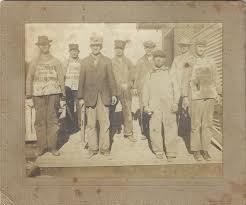 I am writing a post today as an outcropping of my professional pursuits, my status in life, and about the person I love who is mired deep in the kind of long term, blue-collar unemployment that didn’t used to exist in this country. I am underemployed at the moment because I don’t want to jump out of my sustainable life here to something that is risky and might not work out for me at my stage in life. I am trying to set up my end game and feel like I really can’t afford the risk of moving someplace for a job that may or may not pan out or some place where I basically suffer to exist. I am in a state of perpetual hunker down because of this. It is stressful and eating into my investments which I am fortunate to have but are not inexhaustible. I will not talk about my friend’s situation because, of course, it is personal. But, I will say watching some one so beautiful struggle with self worth issues because this economy only works for a few and because our government persistently sticks to such an untrue narrative about our economy just keeps me on the edge of tears. I am not an overly emotional person at all. Living in the USA should not mean living in a state of risk avoidance, depression, poor shaming and poverty creation.
There are many things that I grew up with and assumed would be there when I grew up that I despair frequently at their loss and threatened existence. My kids,as you know, are doing fine. My father got his degrees on the GI Bill and saw to it that my sister and I were educated. As a result, my girls and I never even considered not going to university. Doctor Daughter is now a full-fledged OB-GYN in the process of getting board certified in Washington State where she will undoubtedly become very rich very quickly with her soon-to-be radiologist husband. Youngest daughter just took her GMAT and is headed for her MBA in the fall. She and her boyfriend of three years have very good jobs and make great money. But the deal is, that was the path set before us because our families can now chose further upward mobility through higher education and jobs in the right sectors. We are all there. For my son-in-law, it is because his parents had access to immigration to the US and US public universities. For us, it was because my father who comes from a railroad worker and Oklahoma/Kansas dirt farmers could go to university. That happened because my granddad had a great blue collar job that began with digging ditches for the Atchison, Topeka, and the Santa Fe and my dad’s access to the GI bill. The real success stories of last century come from the many of us who got access to what we did because “we” the people invested in ourselves and each other. We also decided to jointly insure ourselves against personal and community disasters. All of these accomplishments are under direct assault today and we are failing ourselves and each other in many ways.
There used to be an alternative path through good, stable, well-paying jobs that took training, skill, hard work and experience. Original socioeconomic status wasn’t all that relevant. That path has dried up. The heart wrenching stories told in this NYT article about the crumbling city of Port Clinton, Ohio are typical of many midwestern, formally thriving industrial cities. The article contrasts the life of the author’s grandchildren and those of his blue collar classmates who went to school in the small town. This narrative is one played out all over the country. The conclusion is compelling.
The contrast with the egalitarian ethos and reality of the 1950s — the contrast between the upward mobility experienced by J and the bleak prospects of R — vividly captures Port Clinton’s transformation in the last half-century, much like that of the rest of the country. My research team has talked with dozens of R’s from Austin, Tex., to Duluth, Minn., and from Atlanta to Orange County, Calif.
The crumbling of the American dream is a purple problem, obscured by solely red or solely blue lenses. Its economic and cultural roots are entangled, a mixture of government, private sector, community and personal failings. But the deepest root is our radically shriveled sense of
“we.” Everyone in my parents’ generation thought of J as one of “our kids,” but surprisingly few adults in Port Clinton today are even aware of R’s existence, and even fewer would likely think of her as “our kid.” Until we treat the millions of R’s across America as our own kids, we will pay a major economic price, and talk of the American dream will increasingly seem cynical historical fiction.
Yes. We have a “radically shriveled sense of we” these days and it is killing the economy for all but a few of us. It is fueling racial resentment. It is even leading to a zero sum game for the folks reaping the benefits right now even though they adamantly refuse to see that future. Much of the problem is because The Pay is too Damn Low. More and more of productivity gains and corporate income gains are going to a small number of passive investors and not to the people involved in producing the gains. It is upending classical labor theory and actually invigorating the old ideas of Karl Marx as I have written before. Please remember, I am not a Marxist but I and others see the coming fruition of many of his philosophical points on how capitalism would eventually self-destruct. The New Deal did not bring about radical change. It brought about upward mobility and societal safety nets so we did not get radical change. Nothing fuels revolution like national despair.
The workers’ grievances are simple: low wages, few (if any) benefits, and little full-time work. In inflation-adjusted terms, the minimum wage, though higher than it was a decade ago, is still well below its 1968 peak (when it was worth about $10.70 an hour in today’s dollars), and it’s still poverty-level pay. To make matters worse, most fast-food and retail work is part time, and the weak job market has eroded what little bargaining power low-wage workers had: their earnings actually fell between 2009 and last year, according to the National Employment Law Project.
Still, the reason this has become a big political issue is not that the jobs have changed; it’s that the people doing the jobs have. Historically, low-wage work tended to be done either by the young or by women looking for part-time jobs to supplement family income. As the historian Bethany Moreton has shown, Walmart in its early days sought explicitly to hire underemployed married women. Fast-food workforces, meanwhile, were dominated by teen-agers. Now, though, plenty of family breadwinners are stuck in these jobs. That’s because, over the past three decades, the U.S. economy has done a poor job of creating good middle-class jobs; five of the six fastest-growing job categories today pay less than the median wage. That’s why, as a recent study by the economists John Schmitt and Janelle Jones has shown, low-wage workers are older and better educated than ever. More important, more of them are relying on their paychecks not for pin money or to pay for Friday-night dates but, rather, to support families. Forty years ago, there was no expectation that fast-food or discount-retail jobs would provide a living wage, because these were not jobs that, in the main, adult heads of household did. Today, low-wage workers provide forty-six per cent of their family’s income. It is that change which is driving the demand for higher pay.
The situation is the result of a tectonic shift in the American economy. In 1960, the country’s biggest employer, General Motors, was also its most profitable company and one of its best-paying. It had high profit margins and real pricing power, even as it was paying its workers union wages. And it was not alone: firms like Ford, Standard Oil, and Bethlehem Steel employed huge numbers of well-paid workers while earning big profits. Today, the country’s biggest employers are retailers and fast-food chains, almost all of which have built their businesses on low pay—they’ve striven to keep wages down and unions out—and low prices.
The deal is that big businesses are making record level profits and the record-setting levels of the DJ industrial average show that we are not failing the largest businesses and the richest people in the country. They do not need to be exempt from more taxation or responsibility from the moral hazard and the social costs they inflict on society. The benefits of their existence do not trickle down on us. What trickles down is their costs to society like those of the last financial crisis and that of oil spills, chemical company fires, and toxin produced illnesses. A strong economy comes from jobs and middle income prosperity and spending. Many private sector jobs are so bad they no longer do anything but sustain people in intense suffering.
One of the big reasons the U.S. economy is so lousy is the American companies are hoarding cash and “maximizing profits” instead of investing in their people and future projects.
This behavior is contributing to record income inequality in the country and starving the primary engine of U.S. economic growth–the vast American middle class–of purchasing power. (See charts below).
If average Americans don’t get paid living wages, they can’t spend much money buying products and services. And when average Americans can’t buy products and services, the companies that sell products and services to average Americans can’t grow. So the profit obsession of America’s big companies is, ironically, hurting their ability to accelerate revenue growth.
One obvious solution to this problem is to encourage companies to pay their people more — to share more of the vast wealth that they create with the people who create it.
The companies have record profit margins, so they can certainly afford to do this.
But, unfortunately, over the past three decades, what began as a healthy and necessary effort to make our companies more efficient after the malaise of the 1970s has evolved into a warped consensus that the only value that companies should create is financial value (cash) and that the only thing managers and owners should ever worry about it making more of it.
This view is an insult to anyone who has ever dreamed of having a job that is about more than money.
People take risks when they feel they have adequate safety nets to do so. We are ripping apart the nets that let people try new things and move to do things. We are losing opportunities to educate and advance our society and our people.
As Jared Bernstein, an economist at the Center for Budget and Policy Priorities, told me, “The best friend that low-wage workers have is a strong economy and a tight job market.” It isn’t enough to make bad jobs better. We need to create better jobs.
That simple statement and the politics of right now have led Robert Reich to suggest that some policy makers actually want high unemployment to suppress wages and keep the profits trickling up to big investors. All the while, these same politicians fuel racial resentment. They tell formerly well-off white blue collar workers that it is immigration and and reverse racism in civil rights legislation that has hurt their livelihoods. Meanwhile, the media keeps up the false narrative that it’s the defict, it’s social security, and it’s medicare that is hurting us. Putting money into the group of people most likely to spend it is the way to drive the American Economy. We economists have known that for years. Hoarding money at the top and refusing to use the governments power to tax and spend is bad economic policy. Our fiscal policy is killing the American Dream instead of driving it.
 There are other examples besides our labor market. Health insurance is just one more market where “we” the people can do right by each other and can actually improve outcomes. I want to point you to the irascible Andrew Sullivan who uses Hayek–the economic god of the libertarian cult–to explain why social insurance –like Social Security and Medicare–actually stops freeloading off the economy rather than encouraging it. In this situation, he explains why Obamacare actually forces us to take personal responsibility. It is a argument from a different perspective on why “we” the people have to act on economic principals to preserve our society and way of life. In this essay, he criticizes the right wing radical group Freedomworks. The groupis trying to get 20somethings to burn their Obamacare cards which is in itself pretty crazy because the cards are nonexistent. Actually, what this does is wreck the risk pool for all of us. But, here is an argument for the leverage of government on a market that has failed so many people from another vantage point.
It is not being independent; it’s being potentially dependent on others while giving nothing in return. And insurance is an inherently collective endeavor. That’s how it works. It’s one area where going it alone makes very little sense. And, of course, the bigger the insurance pool, the lower the premiums. This is not socialism. It’s a simple insurance principle, used by free countries for centuries. It certainly passed muster with Friedrich Hayek, a man you would think would be an influence on the Tea Party’s political program. I’ve cited this before but it’s worth citing again:
Nor is there any reason why the state should not assist the individuals in providing for those common hazards of life against which, because of their uncertainty, few individuals can make adequate provision. Where, as in the case of sickness and accident, neither the desire to avoid such calamities nor the efforts to overcome their consequences are as a rule weakened by the provision of assistance – where, in short, we deal with genuinely insurable risks – the case for the state’s helping to organize a comprehensive system of social insurance is very strong … Wherever communal action can mitigate disasters against which the individual can neither attempt to guard himself nor make the provision for the consequences, such communal action should undoubtedly be taken.
That’s from The Road To Serfdom, one book of the libertarian and conservative Bible. And it’s common sense. It’s leveraging a simple principle – pooling risk – and extending it as far as possible to guard against the “common hazards of life.” There is nothing leftist or socialist about it. And it demands that each of us be personally responsible for the costs our own encounters with illness or accident impose upon our neighbors, rich and poor, young and old. If FreedomWorks were consistent, it would encourage twentysomethings to “burn their Obamacare card” while simultaneously pledging never to seek medical care under any circumstances. That would be coherent, if bonkers. What’s incoherent is claiming that refusing to contribute to a system you nonetheless intend to use is anything but a scam.
In fact, what FreedomWorks is encouraging is the real socialism. It’s using the 1986 law to force hard-working Americans to pay for free-loaders’ care.
The deal is that when labor markets or social insurance markets or health insurance markets fail a group of us, they fail and cost all of us one way or another. The cost us through increased crime, mental health issues, drug and alcohol abuse, family instability. People losing homes costs us. When houses go on the market at fire sale prices, it drags down the home prices of every one in the neighborhood. When wages are low, people don’t spend money at the the local businesses who cannot afford to hire more people or order inventory. Children raised with poor educational opportunities in crime ridden areas most likely become problems that cost us dearly in our incarceration nation. We fully know that there are places where the government can act and change the momentum. Yet, our government fails us. The government of “we” the people is not using the known and available tools to correct things. It is, in fact, actively undermining economic health. Economists known that deficit reduction is impeding the economy yet that is not the conventional wisdom floating around the beltway. Pundits and Policy makers are either being deliberately ignorant or lying.
Hardly a day goes by when either government analysts or the macroeconomists and financial forecasters who advise investors and businesses do not report on the latest signs of economic growth — in housing, consumer spending, business investment. And then they add that things would be better but for the fiscal policy out of Washington. Tax increases and especially spending cuts, these critics say, take money from an economy that still needs some stimulus now, and is getting it only through the expansionary monetary policy of the Federal Reserve.
“Fiscal tightening is hurting,” Ian Shepherdson, chief economist of Pantheon Macroeconomic Advisors, wrote to clients recently. The investment bank Jefferies wrote of “ongoing fiscal mismanagement” in its midyear report on Tuesday, and noted that while the recovery and expansion would be four years old next month, reduced government spending “has detracted from growth in five of past seven quarters.”
We know that insurance is by definition a collective effort because of its pooling of risk. Its goal is risk mitigation and therefore, cost reduction. Yet, here we go down the path of bringing down the government for an effort to reign in the dysfunctional health insurance industry. Not only are some policymakers willing to blow up our social insurance programs, they are doing so at the high risk of blowing up the entire economy when so many folks are still suffering from the last blowup and their inability to do something to stop the suffering. This kind’ve foolishness really needs to come to an end. There is nothing to be gained by any of us for this type of incessant nonsense. Many policymakers and their pundit enablers are putting themselves and their friends’ interests above that of the country’s and that of “we” the people. It is hurting many of us including a huge number of children whose lives look pretty bleak at the moment. Spend some time reading the narratives of folks in that top story that these guys poor-shame daily and then think of the possible programs that would actually put the cost of market failure back on the companies and people that caused it to start out with. It would also put people back to work. Then, start to wonder if our country can ever look like it did when it was truly the land of opportunity instead of the land of “we” the few, powerful, and rich. It is a very American ideal to think we could have a country where every one can find a well-paying job and join together to pay to insure against and provide for the risk of disasters.

 peej
peej Carissa
 bostonboomer
 dakinikat
 ecocatwoman
 jjlo
jjlo mablue2
 Mama Lopez
 peggysue22
 quixote
 skydancingguestblogger
 Mona (aka Wonk the Vote)





Recent Comments