
Friday Reads: What would we do without all this Mansplaining?
Posted: September 12, 2014 Filed under: 2014 elections, morning reads, Women's Healthcare, Women's Rights 39 CommentsGood Morning!
As you all know, birth control has been under attack by religious extremists in the right wing of the Republican Party. It seems the logical end of science and modernity denial coupled with the need of right wing men to control women. The  easiest way to get around the birth control insurance coverage would be to make most forms of birth control over-the-counter and but would it lower costs?
In recent weeks, some opponents of the Affordable Care Act’s (ACA) contraceptive coverage guarantee have promoted the idea that oral contraceptive pills should be available to adult women without a prescription. Sens. Kelly Ayotte (R-NH) and Mitch McConnell (R-KY), for example, recently introduced the so-called Preserving Religious Freedom and a Woman’s Access to Contraception Act, a bill that would urge the Food and Drug Administration (FDA) to study whether to make contraceptives over the counter (OTC)—though for adults only.
Making birth control pills available over the counter, if done right, would meaningfully improve access for some groups of women. However, such a change is no substitute for public and private insurance coverage of contraceptives—let alone justification for rolling back coverage of all contraceptive methods and related services for the millions of women who currently have it.
The Policy Behind Over-The Counter Contraception
Making birth control pills available OTC has merit, and the Guttmacher Institute is part of a coalition that has been working toward this goal for years. Leading medical groups have also endorsed such a move, including the American Medical Association and the American Congress of Obstetricians and Gynecologists. By removing the need to obtain a prescription, OTC status would eliminate this potential barrier to contraceptive use and thereby increase access.This is especially true for uninsured women and those who don’t have time for a doctor’s visit or otherwise can’t readily reach a health care provider. However, if the goal is to truly expand access to contraceptive care—and not just provide cover for undercutting insurance coverage for contraceptives—the case to move birth control pills to OTC status should proceed alongside several other important policies and goals:
Protect contraceptive coverage and full method choice: The ACA requires most private health plans to cover the full range of women’s contraceptive methods and services, without out-of-pocket costs for the patient. This policy eliminates cost as a barrier to women’s ability to choose the method that is best for them at any given point in their lives, an approach that has been proven to make a substantial difference in facilitating access to and use of contraceptive services.
Contrary to what some policymakers and commenters have claimed, giving the pill OTC status would not be an effective substitute for the ACA policy. First, it would do nothing to help women access any contraceptive method other than the pill. This matters, since most women use four or more different contraceptive methods over their lifetime to meet their changing needs. If only the pill were available OTC and contraceptives were no longer covered by insurance, women would face significant new barriers in choosing the method that best suited their needs. Cost is a particularly steep barrier for highly effective methods like the IUD or implant that not only have high upfront expenses, but also require a trained provider for insertion and therefore are not candidates for OTC status.
Even for the pill itself, there is no convincing evidence to suggest that moving it to OTC status would substantially lower out-of-pocket costs to patients, let alone come close to the $0 out-of-pocket cost guaranteed under the ACA policy. Rather, making the pill available OTC, if done at the expense of insurance coverage, would replace one barrier (ease of access) with another (cost). Likewise, greater reliance on Health Savings Accounts or Flexible Spending Accounts, as some opponents of insurance coverage have proposed, would also merely replace full insurance coverage with patient out-of-pocket costs—leaving most privately insured women, particularly low-income women, worse off. Uninsured women on average pay $370 for a full year’s supply of the pill, the equivalent of 51 hours of work at the federal minimum wage of $7.25.
 Missouri continues to be the nexus of the dark ages. Here’s a Senator that wants to make sure that the Affordable Healthcare Act doesn’t give his daughters access to birth control. Please notice the age of two of his daughters.
One Missouri lawmaker has taken the fight against birth control coverage to a new and very personal place: His own daughters, two of whom are adults.
State Rep. Paul Joseph Wieland and his wife Teresa are suing the Obama administration over its minimum coverage requirements for health plans under the Affordable Care Act, which includes contraception. They say the government is forcing them to violate their religious beliefs because they have three daughters, ages 13, 18 and 19, who are on their parents’ plan and might get birth control at no additional cost.
The Wielands’ case was filed before the Supreme Court ruled in Burwell v. Hobby Lobby that private employers could deny contraceptive coverage to their employees, but they say that decision strengthens their case.
“The employees are to Hobby Lobby what the daughters are to Paul and Teresa Wieland,” Timothy Belz, an attorney from the conservative Thomas More Society, who represents the Wielands, told a panel of three federal judges on the appeals court in St. Louis on Monday. A district court had dismissed the case, saying the Wielands lacked standing to sue.
Belz also said that making birth control more accessible under health plans was “as though the federal government had passed an edict that said that parents must provide a stocked unlocked liquor cabinet in their house whenever they’re away for their minor and adult daughters to use, and Mormons came in and objected to that. It is exactly the same situation.”
One of the judges pointed out that parents might have more control over their kids than employers, and that parents could just say to their kids, “We expect you do abide by our religious tenets.” Belz replied, “Well, we all have high hopes for our kids, that is true. We all expect and want them to obey us, they don’t always …”
In other words, the Wielands are asking the federal government to enforce their parental guidelines on their daughters. It may sound outlandish, but plenty of people thought Hobby Lobby and related cases were outlandish when they were filed, too.
Missouri women seeking abortions will face one of the nation’s longest waiting periods, after state lawmakers overrode the governor’s veto to enact a 72-hour delay that includes no exception for cases of rape or incest.
The new requirement will take effect 30 days after Wednesday’s vote by the Republican-led Legislature, overruling the veto of Democratic Gov. Jay Nixon. He had denounced the measure as “extreme and disrespectful” toward women.
The abortion bill was one of the most prominent Republican victories in a record-setting September session, during which Missouri lawmakers also overrode 47 line-item budget vetoes and nine other bills, including one creating a training program for teachers to carry guns in schools.
Earlier this year, the Republican-led Legislature overrode Nixon’s veto to enact the state’s first income tax rate reduction in nearly a century.
About half the states, including Missouri, already have abortion waiting periods of 24 hours. Missouri’s current one also lacks an exception for cases of rape or incest.
The new law will be the second most-stringent behind South Dakota, where its 72-hour wait can sometimes extend even longer because weekends and holidays are not counted. Utah is the only other state with a 72-hour delay, but it grants exceptions for rape, incest and other circumstances.
Missouri lawmakers specifically rejected an amendment earlier this year that would have granted exceptions for rape and incest. Abortion opponents argued that it would have diminished the value of some lives depending on how they were conceived.
Supporters of the legislation describe it as a “reflection period” for women and their families.

Is Kay Hagan’s “war on women” strategy beginning to pay off? The embattled incumbent Democrat has now moved ahead of Republican challenger Thom Tillis in North Carolina’s U.S. Senate race.
The latest Rasmussen Reports statewide telephone survey of Likely North Carolina Voters shows Hagan leading Tillis 45% to 39%. Six percent (6%) like some other candidate in the race, and nine percent (9%) are undecided. (To see survey question wording, click here.)
The numbers were reversed a month ago with Tillis ahead 45% to 40%. The two were virtually tied in early May, with Tillis posting a one-point lead. The GOP state House speaker was ahead by seven – 47% to 40% – in our first look at the race in late January.
Among voters who say they are certain to vote on Election Day, it’s a much closer race: Hagan 45%, Tillis 43%.
Still, North Carolina now moves from a Toss-Up to Leans Democrat in the Rasmussen Reports 2014 Senate Balance of Power rankings.
Hagan who was elected to the Senate in 2008 with 53% of the vote has long been considered one of this year’s most vulnerable incumbents, in large part because of her support of Obamacare which remains unpopular in North Carolina. But she has made the so-called “war on women” a centerpiece of her campaign, hammering Tillis for state budget cutbacks in the women’s health area and his opposition to the contraceptive mandate in the health care law.
While Tillis leads by nine points among male voters in the state, Hagan has a 21-point lead among women. Tillis has lost ground among male voters over the past month, while Hagan’s lead among women has grown.
 Indeed, Republicans continue to demonstrate gross insensitivity to women and minorities.
A Republican state senator in Georgia sparked a dispute with a pastor in his district after complaining about early voting being implemented in a predominantly African-American neighborhood, the Atlanta Journal-Constitution reported.
“I would prefer more educated voters than a greater increase in the number of voters,” state Sen. Fran Millar (R) wrote on his Facebook page. “If you don’t believe this is an efort [sic] to maximize Democratic votes pure and simple, then you are not a realist. This is a partisan stunt and I hope it can be stopped.”
Earlier in the day, Millar posted a statement criticizing the county’s interim CEO, Lee May, for allowing early voting on Oct. 26, a Sunday, at several polling places in DeKalb County, including one at South DeKalb Mall.
“Per Jim Galloway of the AJC, this location is dominated by African American shoppers and it is near several large African American mega churches such as New Birth Missionary Baptist,” Millar wrote.
When DuBose Porter, who chairs the state’s Democratic Party, accused Millar of wanting to stifle votes in Black neighborhoods, Millar issued a follow-up statement rejecting that argument.
“I defined educated as being informed on the issues,” Millar wrote. “Finally Mr. Porter is welcome to look at my DeKalb NAACP award, so don’t try to accuse me of trying to suppress the African-American vote.”
I continue to be amazed at the complete lack of empathy and understanding shown by many Republican Elected officials.

Today on “The 700 Club,” a viewer asked host Pat Robertson how she should handle the news that her 21-year-old daughter is in a same-sex relationship. In response, Robertson gladly offered up some of his patented bad advice for the parents of LGBT kids. –
“She needs somebody to help her get her identity straight,” he said. “She may not be right in this, she may have thought she has a crush on some older girl along the way and she’s actually homosexual when she’s not, I don’t know. Why is she that way? Was she molested when she was younger?”
After co-host Terry Meeuwsen lamented that people are “telling kids to explore, it’s crazy,” Robertson criticized “the girl-on-girl movies” where “they’re getting straight actresses to play lesbians and straight men to play homosexuals and if you say anything against homosexuality you are just hooted out of court.”
“You need to love your daughter and give her a chance to work this out because if she gets deeper and deeper in it, sooner or later she is going to be disillusioned and say, ‘this is wrong, I want to come out of it,’” he added.
Yup, womenz are just so confuzzled about things. What would we do without all these old white guys to explain everything to us? Why if they didn’t pass laws to control all of us we’d just all be hussies and lesbians using abortion for birth control!!!
So, what’s on your reading and blogging list today?
Monday Reads
Posted: September 8, 2014 Filed under: morning reads | Tags: DNA analysis, identity of Jack the Ripper 66 CommentsGood Morning!
So, I’m really tired of the political news right now. The global news is depressing. That goes without saying. So, here’s a little distraction for your morning coffee.
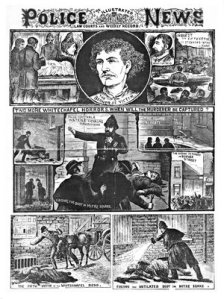 DNA tests appears may have identified Jack the Ripper.
It is the greatest murder mystery of all time, a puzzle that has perplexed criminologists for more than a century and spawned books, films and myriad theories ranging from the plausible to the utterly bizarre.
But now, thanks to modern forensic science, The Mail on Sunday can exclusively reveal the true identity of Jack the Ripper, the serial killer responsible for at least five grisly murders in Whitechapel in East London during the autumn of 1888.
DNA evidence has now shown beyond reasonable doubt which one of six key suspects commonly cited in connection with the Ripper’s reign of terror was the actual killer – and we reveal his identity.
A shawl found by the body of Catherine Eddowes, one of the Ripper’s victims, has been analysed and found to contain DNA from her blood as well as DNA from the killer.
The landmark discovery was made after businessman Russell Edwards, 48, bought the shawl at auction and enlisted the help of Dr Jari Louhelainen, a world-renowned expert in analysing genetic evidence from historical crime scenes.
Using cutting-edge techniques, Dr Louhelainen was able to extract 126-year-old DNA from the material and compare it to DNA from descendants of Eddowes and the suspect, with both proving a perfect match.
The revelation puts an end to the fevered speculation over the Ripper’s identity which has lasted since his murderous rampage in the most impoverished and dangerous streets of London.
A DNA sample has proven Polish immigrant Aaron Kosminski was Jack the Ripper. The owner of the shawl shares his story and the forensic and criminal research from the Ripper scenes.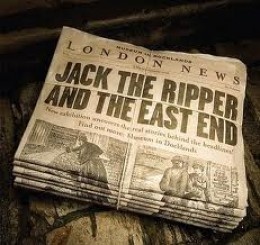
Before buying it, I spoke to Alan McCormack, the officer in charge of the Crime Museum, also known as the Black Museum. He told me the police had always believed they knew the identity of the Ripper. Chief Inspector Donald Swanson, the officer in charge of the investigation, had named him in his notes: Aaron Kosminski, a Polish Jew who had fled to London with his family, escaping the Russian pogroms, in the early 1880s.
Kosminski has always been one of the three most credible suspects. He is often described as having been a hairdresser in Whitechapel, the occupation written on his admission papers to the workhouse in 1890. What is certain is he was seriously mentally ill, probably a paranoid schizophrenic who suffered auditory hallucinations and described as a misogynist prone to ‘self-abuse’ – a euphemism for masturbation.
McCormack said police did not have enough evidence to convict Kosminski, despite identification by a witness, but kept him under 24-hour surveillance until he was committed to mental asylums for the rest of his life. I became convinced Kosminski was our man, and I was excited at the prospect of proving it. I felt sure that modern science would be able to produce real evidence from the stains on the shawl. After a few false starts, I found a scientist I hoped could help.
 A Pennsylvania mom is headed for prison for giving her daughter miscarriage-inducing pills. This is pretty much what you get when you make abortion difficult and expensive.
A Pennsylvania woman has been sentenced to up to 18 months in prison for obtaining so-called abortion pills online and providing them to her teenage daughter to end her pregnancy.
Jennifer Ann Whalen, 39, of Washingtonville, a single mother who works as a nursing home aide, pleaded guilty in August to obtaining the miscarriage-inducing pills from an online site in Europe for her daughter, 16, who did not want to have the child.
Whalen was sentenced on Friday by Montour County Court of Common Pleas Judge Gary Norton to serve 12 months to 18 months in prison for violating a state law that requires abortions to be performed by physicians.
She was also fined $1,000 and ordered to perform 40 hours of community service after her release. The felony offense called for up to seven years in prison and a $15,000 fine.
Matthew Bingham Banks, Whalen’s lawyer, previously told Reuters criminal prosecutions of this kind were not common.
Whalen told authorities there was no local clinic available to perform an abortion and her daughter did not have health insurance to cover a hospital abortion, the Press Enterprise newspaper of Bloomsburg reported.
Her daughter experienced severe cramping and bleeding after taking the pills and Whalen took her to a hospital near her home for treatment, the newspaper said.
The closest abortion clinic to Whalen’s home is about 74 miles away in Harrisburg.
The Pennsylvania case follows the prosecution of a Florida man who pleaded guilty to tricking his girlfriend into taking an abortion pill. He was sentenced in January to 13 years in prison and $28,500 restitution. In June, Florida toughened state law to allow for prosecutions in the death of non-viable fetuses.
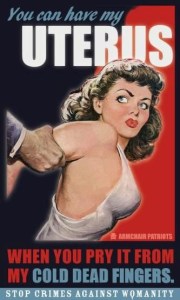 How can a chemically induced miscarriage be considered “performing” an abortion which sounds somewhat surgical to me? Suppose I will have to ask Doctor Daughter this question next time I talk to her.
Textbooks segregate twenty-five decades of enslavement into one chapter, painting a static picture. Millions of people each year visit plantation homes where guides blather on about furniture and silverware. As sites, such homes hide the real purpose of these places, which was to make African Americans toil under the hot sun for the profit of the rest of the world. All this is the “symbolic annihilation” of enslaved people, as two scholars of those weird places put it.2 Meanwhile, at other points we tell slavery’s story by heaping praise on those who escaped it through flight or death in rebellion, leaving the listener to wonder if those who didn’t flee or die somehow “accepted” slavery. And everyone who teaches about slavery knows a little dirty secret that reveals historians’ collective failure: many African-American students struggle with a sense of shame that most of their ancestors could not escape the suffering they experienced.
The truth can set us free, if we can find the right questions. But back in the little house in Danville, Anderson was reading from a list of leading ones, designed by white officials—some well- meaning, some not so well-meaning. He surely felt how the gravity of the questions pulled him toward the planet of plantation nostalgia. “Did slaves mind being called ‘nigger’?” “What did slaves call master or mistress?” “Have you been happier in slavery or free?” “Was the mansion house pretty?” Escaping from chains is very difficult, however, so Anderson dutifully asked the prescribed questions and poised his pencil to take notes.
Ivy listened politely. He sat still. Then he began to speak: “My mother’s master was named William Tunstall. He was a mean man. There was only one good thing he did, and I don’t reckon he intended to do that. He sold our family to my father’s master George H. Gilman.”
Perhaps the wind blowing through the window changed as a cloud moved across the spring sun: “Old Tunstall caught the ‘cotton fever.’ There was a fever going round, leastways it was like a fever. Everyone was dying to get down south and grow cotton to sell. So old Tunstall separated families right and left. He took two of my aunts and left their husbands up here, and he separated altogether seven husbands and wives. One woman had twelve children. Yessir. Took ‘em all down south with him to Georgia and Alabama.”
Pervasive separations. Tears carving lines on faces. Lorenzo remembered his relief at dodging the worst, but he also remembered knowing that it was just a lucky break. Next time it could’ve been his mother. No white person was reliable, because money drove their decisions. No, this wasn’t the story the books told.
So Anderson moved to the next question. Did Ivy know if any slaves had been sold here? Now, perhaps, the room grew darker.
For more than a century, white people in the United States had been singling out slave traders as an exception: unscrupulous lower-class outsiders who pried apart paternalist bonds. Scapegoaters had a noble precedent. In his first draft of the Declaration of Independence, Thomas Jefferson tried to blame King George III for using the Atlantic slave trade to impose slavery on the colonies. In historians’ tellings, the 1808 abolition of the Atlantic trade brought stability to slavery, ringing in the “Old South,” as it has been called since before the Civil War. Of course, one might wonder how something that was brand new, created after a revolution, and growing more rapidly than any other commodity-producing economy in history before then could be considered “old.” But never mind. Historians depicted slave trading after 1808 as irrelevant to what slavery was in the “Old South,” and to how America as a whole was shaped. America’s modernization was about entrepreneurs, creativity, invention, markets, movement, and change. Slavery was not about any of these things—not about slave trading, or moving people away from everyone they knew in order to make them make cotton. Therefore, modern America and slavery had nothing to do with each
When Cornell University professor Ed Baptist read The Economist review of his book on slavery, he knew that it would be a big deal. The review dismissed his work as “advocacy” because “all the blacks in his book are victims, almost all the whites villains.”
That characterization of his work, which attracted the most backlash from journalists and academics, was not entirely a surprise to Baptist, he told TPM on Friday. It is something he has heard in history circles before the reaction to his new book, “The Half Has Never Been Told.”
“I thought that was silly,” he said. “But I’ve been talking about this kind of stuff for a while in academic circles and public history circles, and it’s not uncommon for people to protest that I’m not being sensitive enough to the inner lives of enslavers.”
“On one level, I want to respond, ‘No, actually, I think I’m being very sensitive to it and I’m just unfurling these other sides to the story that are often left under the sheets as it were,'” he continued. “The point that other people have made that I think is so effective is that for me to write a book about the exploitation of enslaved people, by definition, is going to show enslaved people as the objects of all kinds of victimizing processes and, on the other hand, enslavers as the agents of those processes.”
The Economist did apologize and withdraw the review, though Baptist said he believed the magazine had only apologized for the last line on “victims” and “villains.” Another bit of the review, which questioned the reliability of ex-slaves in relating experiences under slavery, struck him as “blatantly racist.”
“One thing that really did aggravate me about the review was this suggestion and this sort of implicit argument that ex-slaves had some sort of vested interest and are unreliable reporters on what actually happened,” he said. “That is such an old struggle when you’re talking about the history of slavery, the constant undermining of testimony from survivors.”
“That was not apologized for,” he said, “and that was I thought blatantly racist, blatantly something that you would have heard in the 1850s or something like that.”
It’s amazing to me that we still have such a profound level of racism in the world and in this country. Of course, the sexism overwhelms me too. I’m trying to be much more aware of the idea of swimming in privilege.
So, hopefully this little thread will get you to share what you’re reading and blogging today.
Friday Reads: For Whom the Wheels of Justice Roll
Posted: September 5, 2014 Filed under: Gulf Oil Spill, Injustice system, legislation, morning reads 32 CommentsGood Morning!
Is it just me or is there like a maximum amount of weirdness going on right now? I’m going to start with some local ongoing trauma. BP Oil has ruined so much of the ecosystem down here–much of it still dying and unclean–that it’s hard to believe that any one could stand up in front of judge and say something to the effect of it wasn’t as bad as an “apocalypse”. Everything the oil and gas and chemical industries do down here creates complete havoc with life, the ecosystem, the locals, and a unique way of life. Unfortunately, our politicians own their souls to the company store and the money enriches a small group of the greedy. This recent lawsuit was righteous but the comments by BP lawyers are worth exposing. Oysters are going extinct. There are a lot of health problems. The wildlife continues to wash up on the beach, dead and extremely malformed. Family businesses are devastated and not recovering. I guess if you don’t have to live with the aftermath, it doesn’t exist for you.
News of this morning’s federal court decision against BP broke as I was aboard a 40-foot oyster boat in the Louisiana delta, just off the coast of Empire, a suburb of New Orleans.
The reaction: stunned silence. Then a bit of optimism.
“This is huge,” said John Tesvich, chair of the Louisiana Oyster Task Force, his industry’s main lobby group in the state. “They are going to have to pay a lot more.” Standing on his boat, the “Croatian Pride,” en route to survey oyster farms, he added: “We want to see justice. We hope that this money goes to helping cure some of the environmental issues in this state.”
On Thursday, a federal judge in New Orleans found that the 2010 Gulf of Mexico disaster—in which the Deepwater Horizon oil rig exploded, killing 11 people and spilling millions of barrels of oil into the Gulf—was caused by BP’s “willful misconduct” and “gross negligence.”
Tesvich says he’s seen a drastic decline in his company’s oyster production since then—company profits down 15 to 20 percent and oyster yields slashed by 30 percent. He says he’s suspicious that this new decision will force the kind of action from local politicians needed to clean up the Gulf once-and-for-all. The politicians in Louisiana, he says, “haven’t been the best environmental stewards.”
BP’s own reaction to the news has been fast and pointed. “BP strongly disagrees with the decision,” the company said in a statement on Thursday, published to its website. “BP believes that an impartial view of the record does not support the erroneous conclusion reached by the District Court.”
The company said it would immediately appeal the decision.
“It’s clear that the apocalypse forecast did not come to pass,” said a BP official.With the fourth anniversary of the busted well’s final sealing coming up in a couple weeks, BP has been pushing back aggressively against the company’s critics. On Wednesday night—just hours before the court’s ruling—Geoff Morrell, the company’s vice president of US communications, spoke in New Orleans at the Society of Environmental Journalists conference, and blamed the media and activists for BP’s rough ride.
The company’s efforts to clean up the spill have been obscured, he said, by the ill-intentioned efforts of “opportunistic” environmentalists, shoddy science, and the sloppy work of environmental journalists (much to the chagrin of his audience, hundreds of environmental journalists).
“It’s clear that the apocalypse forecast did not come to pass,” he said. “The environmental impacts of the spill were not as far-reaching or long-lasting as many predicted.”
Back in 2010, BP’s then-CEO Tony Hayward lamented—a month after the explosion—that he wanted his “life back.” He didn’t find much sympathy at the time. Within a couple months, he resigned out of the spotlight (with a $930,000 petroleum parachute). But his flub didn’t retire so easily, and it became emblematic of BP’s astonishing capacity for tone-deafness, something Morrell seemed intent on continuing Wednesday.
Morrell said that while “impolitic” remarks had been made by BP officials in the past, the spill’s aftermath has been “tough on all of us.”
 We’re not holding our breath that if and when the money gets here, it will be used to restore the gulf, clean up the mess, and help the people and animals whose lives have been devastated. Why you ask? Bobby Jindal has been fighting to keep the social costs created by this dirty and reckless industry away from those liable. He’s also got an interesting connection to the law firm that represents BP. His brother works there.
This is about yet two more examples of how Gov. Bobby Jindal conveniently manages to look the other way instead of being up front when confronted with issues that most might believe could present a conflict of interest
When Jindal signed SB 469 into law on Friday he not only killed the pending lawsuit against 97 oil, gas and pipeline companies by the Southeast Louisiana Flood Protection Authority-East (SLFPA-E) but he also placed in extreme jeopardy the claims by dozens of South Louisiana municipalities and parish governments from the disastrous 2010 BP Deepwater Horizon spill that killed 11 men and discharged 5 million barrels of oil into the Gulf of Mexico, spoiling beaches and killing fish and wildlife.
By now, most people who have followed the bill authored by Sen. Bret Allain (R-Franklin) but inspired by Sen. Robert Adley (R-Benton) know that big oil poured money and thousands of lobbying man hours into efforts to pass the bill with its accompanying amendment that makes the prohibition against such lawsuits retroactive to ensure that the SLPFA-E effort was thwarted.
Most followers of the legislature and of the lawsuit also know that up to 70 legal scholars, along with Attorney General Buddy Caldwell, strongly advised Jindal to veto the law because of the threat to the pending BP litigation.
Altogether, the 144 current legislators received more than $5 million and Jindal himself received more than $1 million from oil and gas interests. Allain received $30,000 from the oil lobby and Adley an eye-popping $600,000.
So, when BP lobbyists began swarming around the Capitol like blow flies buzzing around a bloated carcass, the assumption was that BP somehow had a stake in the passage of SB 469 and that infamous amendment making the bill retroactive.
John Barry, a former SLFPA-E who was given the Jindal Teague Treatment but who stuck around to pursue the lawsuit, said, “During the last few days of the session, we were very well aware that the BP lobbyists were extraordinarily active. They were all over the place. We all assumed there was definitely something it in for them.”
Something in it for them indeed.
Russel Honore said it another way, observing wryly that the Exxon flag still flies over the State Capitol.
Blogger Lamar White, Jr. observed that former Gov. Edwin Edwards spent eight years in a federal prison for accepting payments from hopeful casino operators for his assistance in obtaining licenses—all after he left office. New Orleans Mayor Ray Nagin was similarly convicted of using his position to steer business to a family-owned company and taking free vacations meals and cell phones from people attempting to score contracts or incentives from the city.
So what is the difference between what they did and the ton of contributions received by Adley and Jindal? To paraphrase my favorite playwright Billy Wayne Shakespeare, a payoff by any other name smells just as rank.
And while big oil money flowed like liquor at the State Capitol (figuratively of course; it’s illegal to make or accept campaign contributions during the legislative session), what many may not know is that Jindal may have had an ulterior motive when he signed the bill into law against sound legal advice not to do so, thus protecting the interests of big oil over the welfare of Louisiana citizens who have seen frightening erosion of the state’s shoreline and freshwater marshes.
The Washington, D.C., law firm Gibson, Dunn & Crutcher is one of the firms that represented BP in negotiating a $4.5 billion settlement that ended criminal charges against the company. Included in that settlement amount was a $1.26 billion criminal fine to be paid over five years.
An associate of Gibson, Dunn & Crutcher who has defended clients in government audit cases and in several whistleblower cases is one Nikesh Jindal.
He also is assigned to the division handling the BP case.
Nikesh Jindal is the younger brother of Gov. Piyush, aka Bobby Jindal.
Still, the US District Court found BP “grossly negligent”. Eleven people were killed. Oil gushed into the Gulf destroying the economy, wildlife, and the delicate ecosystem. “Gross negligence” can mean a lot of dollars. Halliburton and  Transocean have been cleared of gross negligence but they’re still paying fines. BP could be paying out billions of dollars.
BP Plc acted with gross negligence in setting off the biggest offshore oil spill in U.S. history, a federal judge ruled, handing down a long-awaited decision that may force the energy company to pay billions of dollars more for the 2010 Gulf of Mexico disaster.
U.S. District Judge Carl Barbier held a trial without a jury over who was at fault for the catastrophe, which killed 11 people and spewed oil for almost three months into waters that touch the shores of five states.
“BP has long maintained that it was merely negligent,” said David Uhlmann, former head of the Justice Department’s environmental crimes division. He said Barbier “soundly rejected” BP’s arguments that others were equally responsible, holding “that its employees took risks that led to the largest environmental disaster in U.S. history.”
The case also included Transocean Ltd. (RIG) and Halliburton Co. (HAL), though the judge didn’t find them as responsible for the spill as BP. Barbier wrote in his decision today in New Orleans federal court that BP was “reckless,” while Transocean and Halliburton were negligent. He apportioned fault at 67 percent for BP, 30 percent for Transocean and 3 percent for Halliburton.
U.K.-based BP, which may face fines of as much as $18 billion, closed down 5.9% to 455 pence in London trading.
“The court’s findings will ensure that the company is held fully accountable for its recklessness,” U.S. Attorney General Eric Holder said. “This decision will serve as a strong deterrent to anyone tempted to sacrifice safety and the environment in the pursuit of profit.”
Quite a few politicians are also having a day in court and it’s not turning out well for them. Former New Orleans Ray Nagin has declared indigency and asked for a public defender to handle his appeal. The former first lady and Governor of Virginia were stunned to be found guilty a multiple accounts of grifting. Robert McConnell was found guilty of 11 of 14 counts of public corruption. His wife is going down for eight counts. The reaction in the courtroom by the first couple and their cronies was melodramatic. It took the jury 3 days to reach a decision. Will Texas Governor Rick Perry be next for an orange suit in Federal Facility?
A federal jury on Thursday found former Virginia governor Robert F. McDonnell and his wife, Maureen, guilty of public corruption — sending an emphatic message that they believed the couple sold the office once occupied by Patrick Henry and Thomas Jefferson to a free-spending Richmond businessman for golf outings, lavish vacations and $120,000 in sweetheart loans.
After three days of deliberations, the seven men and five women who heard weeks of gripping testimony about the McDonnells’ alleged misdeeds unanimously found that the couple conspired to lend the prestige of the governor’s office to Jonnie R. Williams Sr. in a nefarious exchange for his largesse.
The verdict means that Robert McDonnell, the first governor in Virginia history to be charged with a crime, now holds an even more unwanted distinction — the first to be convicted of one.
He and his wife face decades in federal prison, although their actual sentences will likely fall well short of that. U.S. District Judge James R. Spencer set a sentencing hearing for Jan. 6.
The former governor, a onetime Republican rising star considered for the 2012 vice presidential nomination, was convicted of all 11 corruption-related counts brought against him. In a small victory, he was acquitted of lying on loan documents.
The former first lady was convicted of eight corruption-related charges and an additional count of obstruction of justice. She, too, was acquitted of falsifying a bank record.
The verdict was read aloud in front of a courtroom packed with reporters and supporters of the former first couple. When the clerk announced that the former governor had been found “guilty” of the first of 14 counts the couple faced, Robert McDonnell, 60, closed his eyes tightly, shaking in his seat as he began to weep.
 I guess the “bitch” made me do it isn’t an effective defense after al
Judges and juries were busy all over the country.
A Federal Court granted an injunction restoring early voting in Ohio. Republican governors have been busy trying to cut down access to voting in fear of turnout by minorities and single ladies who still hate rule by neoconfederate overseers.
I have now had a chance to give an initial read the 71-page federal district court opinion in Ohio State Conference of the NAACP v. Husted. This is a significant case, which could potentially make it to the Supreme Court. It expands voting rights in a broad way, and makes it difficult for a state like Ohio to cut back on any expansions of voting rights that it puts in place. The big question is where the stopping point is in a decision like this, and how to justify calling it unconstitutional for a state like Ohio to make a modest cutback in early voting while allowing many other states to offer no early voting at all.
Here are my preliminary thoughts.
1. This is the latest in a series of cases challenging Ohio cutbacks in early voting. The challenges are before the same federal district court judge in Ohio, Peter Economus, as earlier challenges, including a challenge which led to the restoration of early voting during the 2012 election. Judge Economus tangled with Ohio SOS Husted before, leading to potential calls for Husted to be cited for contempt. It is therefore no surprise that Judge Economus sided against Husted again in this latest challenge.
2. The theory in the earlier Ohio early voting case (Obama for America v. Husted) is different than the theory in the current case. In the last case, the question was whether Ohio could cut back on early voting for all voters EXCEPT for certain military and overseas voters in the period just before the election. The district court, affirmed by the Sixth Circuit, said that these special rules for just a subset of voters violated equal protection. (I had thought the Supreme Court might get involved in this case, but the Court did not.)
3. This case does not raise issues of different voting rules for different classes of voters. In fact, the dispute here arises from the issue of uniformity. The Ohio legislature cut back from 35 to 28 days of early voting, in the process eliminating “Golden Week,” a week where new (or reregistering voters) could register to vote and vote early during the same period. In conjunction with rules establishing uniformity of early voting times established by SOS Husted, the new early voting times eliminated night voting as well as Sunday voting before election day. That day was used by some African-American churches for a “Souls to the Polls” voter drive event. All Ohio voters remain able to vote by mail without excuse, for the 30 days before the election. The NAACP and others argued that the cutbacks in early voting and the elimination of Golden Week violated both equal protection guarantees of the U.S. Constitution and Section 2 of the Voting Rights Act.
4. The judge found as a matter of fact (crediting expert reports of the plaintiffs’ especially that of U. Florida’s Dan Smith) that the cutbacks in early voting would disproportionately fall on African-Americans. The judge found that early voters, especially in the larger population areas of the state, included a large portion of the state’s share of African-American voters. The judge also found that African-American voters were distrustful of absentee balloting as an alternative to in person voting, and that absentee balloting was more burdensome (filling out the materials, postage, mailing, etc.)
You can follow the links to the additional analysis on the case. It could be headed to the White Male/Uncle Thomas Overseers at SCOTUS shortly.
A Federal Appeals court has withdrawn the decision defunding the AHCA. 
In July, two Republican judges on the United States Court of Appeals for the District of Columbia Circuit handed down a decision defunding much of the Affordable Care Act (ACA). This effort to implement Sen. Ted Cruz’s (R-TX) top policy priority from the bench waswithdrawn on Thursday by the DC Circuit, and the case will be reheard by the full court — a panel that will most likely include 13 judges. In practical terms, this means that July’s judgment cutting off subsidies to consumers who buy insurance plans in federally-operated health exchanges is no more. It has ceased to be. It is, in fact, an ex-judgment.
The reason why this matters is because the plaintiffs in this lawsuit, known as Halbig v. Burwell, are hustling to try to convince the GOP-dominated Supreme Court to hear this case, where they no doubt believe that they have a greater chance of succeeding than in the DC Circuit, as a majority of the active judges in the DC Circuit are Democrats. The Supreme Court takes only a tiny fraction of the cases brought to their attention by parties who lost in a lower court — a study of the Court’s 2005 term, for example, found that the justicesgranted a full argument to only 78 of the 8,517 petitions seeking the high Court’s review that term. The justices, however, are particularly likely to hear cases where two federal appeals courts disagree about the same question of law.
Two hours after the divided DC Circuit panel released its opinion attempted to defund Obamacare, a unanimous panel of the Fourth Circuit upheld the health subsidies that are at issue in Halbig. Thus, so long as both decisions remained in effect, Supreme Court review was very likely. Now that the full DC Circuit has vacated the two Republican judges’ July judgement, Supreme Court review is much less likely.
Although it is possible that the full DC Circuit could agree with the two judges who voted to cut off health subsidies to millions of Americans, this outcome is unlikely. The plaintiffs’ arguments in this case are weak and are unlikely to move judges who do not have a partisan stake in undermining the Affordable Care Act.
The litigants seeking to undermine Obamacare through this lawsuit — Oklahoma Attorney General Scott Pruitt (R), who filed a brief supporting the plaintiffs in this case, admitted in aWall Street Journal op-ed that the purpose of this lawsuit is to cause “the structure of the ACA” to “crumble” — waged a two front effort trying to convince the full DC Circuit not to vacate their two GOP colleagues’ decision.
Meanwhile marriage equality took a few more steps forward and one step back. Guess whose state provided the step back?
Proponents of equal marriage rights have had a lot to celebrate over the last year, with a series of victories nationwide in state and federal district courts. And while those successes matter a great deal, and have advanced the cause of civil rights at a pace few thought possible, the legal fights at the federal appellate level are just as important, if not more so.It makes rulings like these so striking.A U.S. appeals court on Thursday struck down gay marriage bans in both Wisconsin and Indiana, adding to a rush of major victories for the marriage equality movement in the last year alone.Now that a three-judge panel in Chicago’s 7th Circuit Court of Appeals has ruled unanimously that both Midwestern marriage bans were unconstitutional, a total of 21 states recognize marriage for same-sex couples.In his ruling, which is available online here (pdf), Judge Richard Posner, a Reagan appointee, wrote. “The discrimination against same-sex couples is irrational, and therefore unconstitutional even if the discrimination is not subjected to heightened scrutiny, which is why we can largely elide the more complex analysis found in more closely balanced equal-protection cases.”The ruling, a key breakthrough for supporters of same-sex marriage, does not come as too big of a surprise. Just last week, the attorneys arguing against marriage equality faced a barrage of very toughquestions, which they struggled badly to answer.Indeed, as Chris Geidner reported, Posner referred to arguments from Indiana Solicitor General Thomas Fisher, whose job it was to defend the anti-gay laws, as “pathetic,” “ridiculous,” and “absurd.”Naturally, then, the 7th Circuit concluded today, “The challenged laws discriminate against a minority defined by an immutable characteristic, and the only rationale that the states put forth with any conviction – that same-sex couples and their children don’t need marriage because same-sex couples can’t produce children, intended or unintended – is so full of holes that it cannot be taken seriously.”Ouch.
Eric Holder held a presser in St Louis today to discuss the investigation of the Ferguson Police and other investigations. I’m hoping this helps them. I still distrust the NOPD and don’t believe anything they say so if the people of Ferguson feel like I do, it will be a pancea waiting for proof.
Attorney General Eric Holder on Thursday opened a broader civil rights investigation of the practices and procedures of the Ferguson Police Departmentin the wake of the Aug. 9 shooting death of Michael Brown, 18, by Ferguson police Officer Darren Wilson.
The Civil Rights Division will investigate whether Ferguson police have engaged in a pattern of civil rights violations, Holder said.
The attorney general also announced that the Justice Department has begun what he called a partnership with the St. Louis County Police Department to assess the county department’s response to the demonstrations that followed the shooting.
The investigation of Ferguson police will include the department’s use of force, traffic stops, searches and arrests, Holder said, adding that Ferguson officials welcomed the inquiry and pledged their cooperation. Justice Department officials said there is no timeline on the length of the investigation, and that it would depend on the cooperation of local authorities.
The goal, Holder said, is to reach an agreement with the department that would establish new tactics to eliminate bias and increase community confidence in the department.
Holder pledged a “fair, thorough investigation” that would result in “lasting, positive change.”
So, that’s some of the news from the justice front. What’s on your reading and blogging list today?
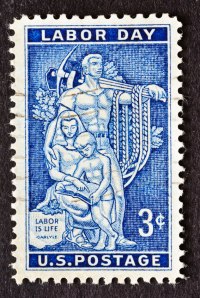
Labor Day Reads
Posted: September 1, 2014 Filed under: morning reads | Tags: Labor Day, rise of management 15 Comments Happy Labor Day!!
I read this poignant article from the Harvard Business Review last week but I wanted to headline it today because it is so true. Labor really has no friends in America any more. Both parties have realigned themselves to pander to the donor class. This is written by Professor Robert Martin.
Real wages for production and non-supervisory workers have declined since the mid-1970s. The share of jobs that are unionized has plummeted back almost to the level it was before 1935 when the National Labor Relations Act (NLRA) facilitated a huge increase in unionization. High unemployment has persisted in the jobless recovery. For those fortunate enough to have full time employment, job security is down, and pension and health benefits are shrinking. No trend for labor is positive.
Worse still, it is arguable that its longtime friend in Washington has abandoned traditional labor. Throughout most of the 20th century, labor could count on having the Democratic party squarely in its corner. President Roosevelt rode to the rescue of labor in 1935 with the NLRA to fight back against the corporations who were subjecting labor to hostile, dangerous, insecure and low-paying workplaces. Throughout most of the rest of the 20th century, a Democratic presidential hopeful could not dream of winning the party’s nomination without gaining the endorsement of the President of the AFL-CIO – who always had a key speaking role at the Democratic Convention.
Meanwhile, the Republican Party battled on behalf of capital, supporting right-to-work states, deregulating industries, and lowering tax rates. That was the 20th century alignment.
It began to change at the end of the 20th century. A key marker occurred in 1992 when President Bill Clinton signed into law a tax change that allowed only the first $1 million in CEO compensation to be deducted for corporate income tax purposes. It was supposed to discourage corporations from paying their CEOs more than what was then thought to be an excessive $1 million (imagine that!) – and failed spectacularly as they were given stock options instead, which made them wealthier than ever before.
But in whose favor was this measure intended? Labor? Hardly. There was no obvious benefit to them. Capital? Yes indeed. Shareholders were complaining about CEOs demanding ever-higher compensation – and the Democrats responded to help capital reign in CEO talent. Arguably the attention to the needs of capital has continued in the Obama administration. This administration featured enthusiastic embrace of the TARP bailouts of banks that protected their shareholders first and foremost and the continued low interest policies that favor capital owners. Of course, the argument can be made that these policies help labor too, by avoiding a recession/depression. But the careful attention to capital first is a relatively new behavior for the Democrats.
Meanwhile, the Republican Party has increasingly shifted its allegiance to high-end talent, a tiny offshoot of labor that began to emerge around 1960. During the Reagan era, for instance, they cut the top marginal income tax rate from 70% in 1980 to 50% just two years later. By 1988 it was 28%. In seven years, an executive earning a million-dollar salary went from keeping $340,000 after federal taxes to keeping $725,000. That’s quite a raise. (The marginal rate for labor — median-income families — fell only about 10% over the same time-span.)
 We’ve really switched from celebrating hard work to celebrating businesses that gamble. There are many ways that you can tell that businesses are really killing themselves in the long run in order to deliver short run profits. One of the most significant ways is the lack of R&D expenditures. That’s why it’s been an important public function. CEOS are no longer interested in anything that doesn’t deliver on high quarterly earnings. Here’s Bill Gates talking about the paltry investment in clean energy.
The demand for energy — be it solar, wind, clean coal, nuclear, or hydro — already far outpaces the amount we spend on technological innovations for the future of energy, and that demand is only continuing to grow more rapidly. The International Energy Outlook recently projected world energy consumption will increase by more than 50% by 2040.
Last week, Bill Gates wrote a post about needing “energy miracles.” He drew attention to some eye-opening statistics:
60% of the federal government’s R&D spending is on defense. About 25% is on health. Energy spending? 2%.
The US ranks 11th in overall percentage of the GDP that goes to energy research (Finland and China are the top two, respectively)
R&D spending on energy isn’t just a government problem. It’s also a serious problem in the private sector. The energy industry invests less than half of one percent (0.42%) of its revenue on research. In contrast, the pharmaceutical industry puts 20.5% of sales into R&D, and aerospace and defense spends 11.5%.
The US needs breakthroughs in clean energy in order to keep its economic engine running at full speed and to control future carbon emissions. So why does the federal government spend so little on research and development for innovations in this sector?
“People just have to understand that you don’t invest today and get a clean coal plant tomorrow, or cheap batteries at scale tomorrow,” said Margot Anderson, the executive director of the Energy Project at the Bipartisan Policy Center. “They take a lot of time, a lot of really smart people, a lot of money and private partnerships that develop.”
Again, the political donor class explains a lot of policy priorities. Steve Denning of Forbes asks why economics puts so much focus on profit maximizing business. 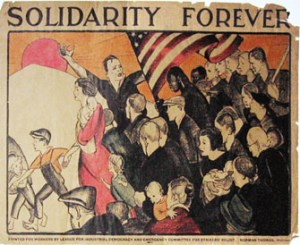 But, it doesn’t necessarily focus on maximizing profits by slashing costs, reducing service to customers, and not investing in innovation. That seems to be a focus more on pleasing Wall Street Investors and CEOS. Actually, this “dumbest idea” came from Milton Friedman and is not the universal focus of all economists. But, the idea of “maximizing shareholder value” comes from the finance side of things but still from the Chicago School.
I reported earlier this month that the Financial Times published a pair of important articles asking why the goal of a firm is to maximize short-term shareholder value is still being taught in business schools.
“While there is growing consensus that focusing on short-term shareholder value is not only bad for society but also leads to poor business results, much MBA teaching remains shaped by the shareholder primacy model.”
The challenge is massive because shareholder value is now deeply embedded in the basic economics that is taught in business schools and economics faculties around the world. Moving on from the shareholder value theory, which even its foremost exemplar, Jack Welch, has called “the dumbest idea in the world”, will entail re-thinking and re-writing much of the basics of modern economics.
If you want a way to take action against underpaid labor, try eliminating fast food from your diet. Subway leads the fast food industry in underpaying workers.  That’s a good place to start or stop as the case may be.
McDonald’s gets a lot of bad press for its low pay. But there’s an even bigger offender when it comes to fast food companies underpaying their employees: Subway.
Individual Subway franchisees have been found in violation of pay and hour rules in more than 1,100 investigations spanning from 2000 to 2013, according to a CNNMoney analysis of data collected by the Department of Labor’s Wage and Hour Division.
Each investigation can lead to multiple violations and fines. Combined, these cases found about 17,000 Fair Labor Standards Act violations and resulted in franchisees having to reimburse Subway workers more than $3.8 million over the years.
It’s a significant sum considering many Subway “sandwich artists” earn at or just above the minimum wage of $7.25 an hour.
The next most frequent wage violators in the industry are McDonald’s (MCD)and Dunkin’ Donuts (DNKN) stores.
Today, America finds itself in a position of incredible challenge. Half of all Americans now make less than $15 an hour. Of the 10 fastest-growing jobs in America, eight are service sector jobs that pay $15 an hour or less.
Service sector jobs are the heartbeat of our economy and our communities, from the folks who care for the elderly and our children, to those who cook and serve our food, to those who clean and secure our offices. Moving our economy forward must include making service jobs into good jobs with wages that you can raise a family on.
That’s why this Labor Day, the American people are sparking a new movement, joining together for an economy and democracy that works for everyone.
Fast food workers have joined together to fight for $15 an hour. They have been joined by home care workers who are calling for $15 an hour for all caregivers. Just last week 27,000 Minnesota home care workers joined together in union, determined to raise wages and fight for quality home care for our seniors.
Working people in Seattle fought for and won a $15 minimum wage for 100,000 people, and other cities are poised to do the same. Across our nation adjunct professors, airport workers, security officers, hospital workers, Wal-Mart workers and other service sector workers are standing up and sticking together.
All told, 6.7 million workers have achieved better pay since fast food workers began striking less than two years ago, either through states or cities moving to raise minimum wages or through collective bargaining. These brave workers are building the momentum to raise wages and get our economy roaring again.
Yet the prosperity of our nation and growth of our economy depend not just on economic justice. A vibrant economy cannot exist without vibrant American communities steeped in the fundamental American principles of liberty and justice for all.
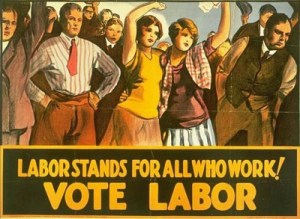
I woke up last Thursday morning to learn that my FedEx man does not work for FedEx. Voices on National Public Radio’s “Morning Edition” informed me that although FedEx controls just about every minute of its drivers’ days, the corporation regards them as “independent contractors.”
Thus, no benefits—they even have to pay for their own uniforms—and the workers can be kicked out anytime FedEx feels like it.This was five days before Labor Day, the 120-year-old holiday that, according to the Labor Department, is “the first Monday in September, a creation of the labor movement and is dedicated to the social and economic achievements of American workers. It constitutes a yearly national tribute to the contribution workers have made to the strength, prosperity and well-being of our country.”
Nice words, written after 10,000 workers marched in an 1882 “Labor Day Parade” and celebrated in a New York City park. That’s what we pretend to celebrate even though it no longer exists for FedEx guys who are no longer “workers,” but are now “contractors” or “involuntary entrepreneurs.” Outsourced Americans. You could lump them with the franchisees of fast-food outlets. A corporation makes all the rules, avoids paying all the benefits and passes on the risk and liabilities to the franchisees. Got bad milk? Your problem.
Like many “workers” of my generation, I have been there and done that. I am a member of three unions: the Newspaper Guild, the American Federation of Television and Radio Artists and the Screen Actors Guild. Although it was run by as dumb a group of folks that ever gathered, I am forever indebted to the Newspaper Guild. I was working for a nonunion paper, the Newark Evening News in New Jersey, for $60 a week when I was hired by The New York Herald Tribune, a union paper that paid me $163.60 a week. I could buy a house and I did. I went to The New York Times, a union paper, which started me at $230 a week with loads of benefits and overtime. Then there came a day when I was promoted to management, chief political correspondent, with a salary of $23,000 a year in 1971. But there was no overtime, and I was taking home less than I had as a “worker.”
So it goes. Management, of which I was then a part, had begun to understand how to squeeze workers and their unions. By 2013, fewer than 10 percent of private-sector employees belonged to unions, compared with 20 percent in 1983 and more than 50 percent in the 1950s. Result: Wages have stagnated, spouses have gone to work, strikes have been broken. Now more than half the unionized workers in the country are public service employees, who have better and more complicated work rule regimes than corporate employees.
So, I would argue, Labor Day is a farce.
It’s possible. But, at least I still get to enjoy the day off.
What’s on your reading and blogging list today?
Friday Reads: White Male Privilege Apologia on Display
Posted: August 29, 2014 Filed under: morning reads | Tags: class privilege, male privilege, War on Women, white privilege 19 CommentsGood Morning!
 I’m not exactly sure why people don’t get the absolutely appalling display of racism and sexism wrapped up in one big dose of White, Male, Christian privilege that is crippling this country at the moment. The examples are just slapping the country in the face right now.
Both BB and JJ have been posting about it this week. Frankly, ever since there was a Hillary Clinton and Barack Obama seriously headed towards the White House it’s been noticeable. Now it’s dialed up to 11. There’s not many months left in the Obama presidency, but you’d think he was appointed to a lifelong term by the way right wing is snarling and growling. But the racism and sexism are just over the top and white male privilege is driving the media coverage of Ferguson, the latest revelations in Gillibrand’s book, the topics of rape, abortion, and birth control, and even the discussion of what color suit the President chooses for a presser. WTF?
Let’s start out with the latest in rape apologia. Then I’ll show exactly how they’re basically doing the same damned thing in the Ferguson coverage. All levels of sexual assaults are prominent on campus. It’s been 40 years since my little freshman backside trained as a rape counselor and self defense coach. Basically, if you don’t here a clear “yes, let’s have sex”, it’s likely rape men! But, according to this University President, drunk women are to blame.
The former president of George Washington University suggested that college women should drink less to help avoid sexual assault.
Stephen Joel Trachtenberg told the Diane Rehm Show that while victims should not be blamed, women need to not drink so much alcohol so they are in a better position to “punch the guys in the nose if they misbehave.”
Without making the victims responsible for what happens, one of the groups that have to be trained not to drink in excess are women. They need to be in a position to punch the guys in the nose if they misbehave. And so part of the problem is you have men who take advantage of women who drink too much and there are women who drink too much. And we need to educate our daughters and our children in that regard.
His remarks unleashed a wave of criticism on social media.
You know the drill. You have to watch where and when you walk. You shouldn’t walk alone. You have to watch what you wear. Well, rapes still happen in places like Saudi Arabia and women are dressed in supposedly “unappealing” ways, aren’t allowed to drive or be out without a male relative, and no one’s allowed to drink. Being held up in a house and being the little sweetest virgin on earth didn’t stop the rape of the so-called Virgin Mary. Right? It’s the same language that controls discussion of birth control, abortion, and women working. It’s the language that says women are property and it’s front and center from the Republican Party.
 Chuck Todd asked Rince Priebus about the woman problem showing up continually, constantly, and in the latest Republican Polls. Are there too many “crazy white men” in the Republican Party” these days?
According to the report, obtained by Politico on Wednesday, women said the GOP was “stuck in the past” and “intolerant.” The poll found that 49 percent of women view the Republican party unfavorably and 39 percent view the Democratic party unfavorably.
When asked why the party is doing worse with female voters than in 2010, Priebus argued that the GOP can close this 10-point gap by ramping up outreach and focusing on the economy.
“You know, I’m not sure,” Priebus responded. “But I think the point of that poll wasn’t reported by Politico. The point was if you looked at it, women were rejecting the Democratic party by 40 percent; they were rejecting the Republican party by 50 percent. I don’t think either party can do a victory lap here.”
He continued to say that Republicans just need to “fight” for the votes by countering Democratic attacks and pushing conservative economic policy ideas.
Todd pressed him on this.
“But the problem you seem to have is when it comes to women voters, do the — do the arguments about contraception end up blind — basically putting the party on mute with those same women voters who may like your economic proposals but say, you know what, there’s just too many crazy white guys who have crazy theories about my reproductive system?” Todd asked, adding that Republicans have the same issue with Latino voters and immigration issues.
“That’s two different issues,” Priebus retorted.
“But same problem,” Todd insisted.
Priebus then repeated that the report found that “the economy is the number one issue.”
“In fact women actually don’t really — don’t really — aren’t really moved on these issues as much as I think the pundits and everyone thinks they are moved.
In fact if Republicans talk about things like the economy, the debt and make the case for jobs and schools and education and push back…” he said.
Todd then cut in to say, “Democrats are winning by 30 and 40 points on economic issues.”
Andrea Mitchell came to the defense of Senator Kristin Gillibrand discussing the number of warnings out for all women on the Hill when she worked there in the  ’80s and ’90s. There was a list of guys not to get into the elevator. I heard about it 20 years ago from a Republican Media consultant who basically told me who to keep a very safe distance from in the Republican Guard if and when I ever got there. No wonder these guys turned a deaf ear to Anita Hill and stopped the other women from speaking out. They were likely afraid they’d be outted too. Some are calling for Gillibrand to out her harassers now.
MSNBC anchor Andrea Mitchell is less than surprised by the revelations of Sen. Kirsten Gillibrand (D-NY) about being subjected to sexual harassment by her congressional colleagues, sharing her own experiences reporting on “the oldest white male club in the world.”
“We all had our stories of whom you’d not get in an elevator with and whom you’d protect your young female interns from,” Mitchell told her guests, Bloomberg editor Jeanne Cummings and WaPo political reporter Chris Cillizza.
“Some of those former senators were actually expelled,” Mitchell added, a possible reference to Sen. Bob Packwood (R-OR), who resigned in 1995 before he could be expelled for serial sexual misconduct.
The panel was responding to the revelations by Gillibrand in a forthcoming interview with People magazine promoting her new book, in which she details episodes of harassment from male colleagues in Congress.
Among other things, Gillibrand was at different times squeezed on the waist, called “chubby,” and told to improve her looks in order to win election. The same day her stories came to light, a reporter for Politico tweeted he didn’t believe her, before backing down and apologizing.
Cummings called the senators’ conduct “outrageous,” but said they were unfortunately nothing new, citing her time covering the Anita Hill hearings in the early 90s, in which Hill revealed incidents of sexual harassment from then-Supreme Court nominee Clarence Thomas.
“We’ve been there. We know this lesson was supposedly learned 25 years ago. And the very idea that one of them touched her, just totally creeps me out,” Cummings said. “I mean, we’re [regressing] here. We’re not getting better. We’re going backwards.”
“So women and men and people who are in this country and covered the Senate should not be surprised. They should be angry. This is ridiculous,” she added.
Again, the Senator was post partum and dealing with the usual after baby body recovery and they were still bothering her. It isn’t about what we wear, what we drink, who we’ve had consensual sex with at one point or another, or anything. It’s about them. They think they have they have rights to our bodies. So, what other group has to watch what they wear, watch where their walking, watch their body language? They won’t be sexually harrassed, raped or fired. They won’t be denied birth control, abortions, or other kinds of things that go to a moral and capable adult. They’ll likely be jailed, fined, or killed.
For a moment there, things were looking pretty good. A boy shot multiple times with his hands up. College bound. Poor. Innocent. And in response: helicopters and tanks. Maybe this time, we thought, they would believe us.
But that’s all been ruined.
We now have all sorts of reasons to make us doubt Brown’s humanity. He may have stolen some cigarillos. He may have been facing the officer when he was shot. He got shot in the top of the head, which might mean that he was surrendering, or might mean he was being defiant. He made amateur rap songs. Perhaps worst of all, he’s been caught grimacing at a camera making a contorted peace sign, and it turns out that he was pretty tall.
And Fox News has been trying to cast doubt on whether he was actually going to go to college in the first place.
All signs that his life was worth less than we might have hoped.
It’s like what happened with Trayvon Martin, really. Over the course of a few days, he went from an innocent boy holding a bag of Skittles to a vicious, ruthless thug. We found out that he smoked pot. We found out that he said bad words. We found out that he was wearing a hoodie. We saw a picture of him making an angry face. Zimmerman’s lawyers released his text message logs, and we found out that he didn’t speak the Queen’s English
And with each new revelation about both of these boys — some true, some false — we let out another collective sigh. We had been let down.
Of course, we knew that our reaction was ridiculous. We know that pushing someone at a convenience store, or being a less than stellar student shouldn’t be a death sentence. And hell, if you think that throwing up acontorted peace sign, or even an actual verifiable ‘gang sign’ means that you are in a violent gang, well, I’ve got a bridge I’d like to sell you, and a few thousand thug white women I’d like you to call 911 about, because there’s an epidemic going on.
So, yes, we’re seeing the same thing. We’re hearing Privilege Apologia that supports a Privilege Culture. Why, Mitch McConnell just even explained it to the rest of them. Not to worry their privileged little balding heads. Nothing was going to change under his watch. Not those horrible minimum wage bills. Not anything that’s going to keep the overlords from wallowing in privilege and subsidized by everyone else with blood, sweat, and bodily sanctity.
Last week, in an interview with Politico, Senate minority leader Mitch McConnell (R-KY) outlined his plan to shut down President Obama’s legislative agenda by placing riders on appropriations bills. Should Republicans take control of the Senate in the 2014 elections, McConnell intends to pass spending bills that “have a lot of restrictions on the activities of the bureaucracy.”
What McConnell didn’t tell Politico was that two months ago, he made the same promise to asecret strategy conference of conservative millionaire and billionaire donors hosted by the Koch brothers. The Nation and The Undercurrent obtained an audio recording of McConnell’s remarks to the gathering, called “American Courage: Our Commitment to a Free Society.” In the question-and-answer period following his June 15 session titled “Free Speech: Defending First Amendment Rights,” McConnell says:
“So in the House and Senate, we own the budget. So what does that mean? That means that we can pass the spending bill. And I assure you that in the spending bill, we will be pushing back against this bureaucracy by doing what’s called placing riders in the bill. No money can be spent to do this or to do that. We’re going to go after them on healthcare, on financial services, on the Environmental Protection Agency, across the board [inaudible]. All across the federal government, we’re going to go after it.”
They’ll be going after anything that means appropriation can’t happen smoothly. If we weren’t so lazy, we’d have well paying jobs. If we weren’t drunk, we wouldn’t be raped. If we just wouldn’t wear hoodies, we wouldn’t be shot.
Welcome to White Christian Male Apologia and the culture of Privilege it sustains. Not matter what we do, how hard we work, how educated we are, they are not letting us into their club.
Here’s some more headlines that got my goat this week.
“I think a lot of people want to be able to walk into a grocery store, particularly, a lot of the women, want to go and buy a bottle of wine for dinner, go down, buy a 6 pack or two 6 packs, buy dinner and go home rather than what I described as 3 stops in Pennsylvania.”
Governor Corbett knows binders full of women want to be able to buy a 6 pack and then go right home to prep dinner because he knows women. And all they care about is dinner prep.
Deal addressed a variety of topics, including immigration, during a question and answer session sponsored by the UGA College Republicans Tuesday night.
“There’s a fundamental problem that can only be resolved at the Congressional level and that is to deal with the issue of children, and I presume you probably fit the category, children who were brought here,” said Deal who was looking toward Lizbeth Miranda, a Hispanic student who was standing up with others asking questions.
“I’m not an illegal immigrant. I’m not,” said Miranda. “I don’t know why you would have thought that I was undocumented. Was it because I look Hispanic?”
The governor replied: “I apologize if I insulted you. I did not intend to.”
Bill Reilly’s denial of white male privilege blasted yet again.
Denial of white privilege is too central to the worldview that drives his monologues on race, social issues, America’s decline and beyond. Anyone who has read his memoir “A Bold Fresh Piece of Humanity” or his biography (“The Man Who Would Not Shut Up: The Rise of Bill O’Reilly“) or tuned into his cable-news-reigning program knows that O’Reilly is far too enamored of his own story to abandon what he believes are its lessons for all Americans: The beneficiary of a strict Catholic education, O’Reilly worked and worked and worked. Starting in his early teens, O’Reilly made cash mowing lawns and graduated to house-painting. He made a mad dash through local and big-time broadcast news before landing at Fox News. And in recent years, the guy has cranked out a series of bestselling books — “Killing Jesus” and other such titles, with the help of co-author Martin Dugard — while juggling the rigors of “The Factor.” His talent as a broadcaster is undeniable, as this segment on the end of summer showcases.
Admitting that his bootstrapping rise to King of Cable News happened to take place in a society of white privilege, however, is apparently too much to ask.
Those of us that have been advantaged by one type of privilege or another should recognize the impact it’s had on our lives. Denying that reality only denies the humanity of others. What’s on your reading and blogging list today?

 peej
peej Carissa
 bostonboomer
 dakinikat
 ecocatwoman
 jjlo
jjlo mablue2
 Mama Lopez
 peggysue22
 quixote
 skydancingguestblogger
 Mona (aka Wonk the Vote)





Recent Comments