
Prime Minister Nuri Kamal al-Maliki said Thursday night that he had agreed to relinquish power, a move that came after days of crisis in which his deployment of extra security forces around the capital had raised worries of a military coup.
Mr. Maliki’s decision held out the prospect of a peaceful transition of power, based on democratic elections and without the guiding hand of American military forces, which would be a first in modern Iraq’s troubled history of kings, coups and dictatorships.
His decision to step aside came after heavy pressure from the United States, which has deployed warplanes in Iraq to target Sunni Islamist militants and suggested that more military support would be forthcoming if Mr. Maliki was removed from power. Iran also played a decisive role in convincing Mr. Maliki that he could not stay in power.
Mr. Maliki, 64, agreed to end his legal challenge to the nomination of his replacement, Haider al-Abadi, 62, a member of Mr. Maliki’s own Dawa Party, who was chosen Monday by Iraq’s president.
Monday Reads: Pork Puller Edition
Posted: August 25, 2014 Filed under: morning reads, Republican politics, Republican Tax Fetishists | Tags: Bobby Jindal, Chris Christie, Republican corruption, Republican Cronyism, Republican pandering, Sam Brownback, Scott Walker 44 CommentsGood Morning!
 One of the most appalling things I’ve been witnessing the last few years is how costly it is for the taxpayers to fund Republican witch hunts, theocratic laws pandering to christianists that wind up being declared unconstitutional over and over again, lawsuits defending crooked Republican governors or prosecuting crooked Republican politicians, and then the tax breaks they immediately give to their donors and cronies that don’t do anything except cost everyone money and jobs. So, welcome to socializing Republican graft, crime, and cronyism in the USA!
First, let’s see what NJ Taxpayers have to pay for Chris Christie’s defense in his bridge scandal.
New Jersey taxpayers are on the hook for more than $6.5 million to the law firm Gov. Chris Christie hired to represent his office in the George Washington Bridge lane-closing scandal.
The state attorney general’s office released recent bills from Gibson Dunn & Crutcher on Friday.
The law firm represents Christie’s office in the state and federal investigations into last September’s lane closures. It published a 350-page report in March that found Christie and his top staffers were not involved in the lane closures ordered by a former Christie aide, apparently as political retribution.
The report has been criticized by some as a whitewash.
Gibson Dunn earlier this year agreed to reduce its rate from the original agreement of $650 per hour to $350.
Wisconsin is another state where the Governor has instituted every possible failed Republican economic policy offered up by the Koch Brothers. Get a load of  these huge tax cuts that went to a business for being a job creator while they laid off 1900 people. Ashley Furniture got a $6 million dollar tax cut for that lovely set of job creation.
The board overseeing the state’s flagship job-creation agency has quietly approved a $6 million tax credit for Ashley Furniture Industries with a condition allowing the company to eliminate half of its state workforce.
As approved by the Wisconsin Economic Development Corp. board, the award would allow the Arcadia-based global furniture maker to move ahead with a $35 million expansion of its headquarters and keep 1,924 jobs in the state.
But it wouldn’t require Ashley to create any new jobs, instead granting the company license to lay off half of its current 3,848 Wisconsin-based workers in exchange for an enterprise zone tax credit, one of the most valuable and coveted state subsidies.
The board’s decision has not been made public because a contract with the company has not been finalized. But in a statement Friday, in response to questions from the State Journal, Ashley Furniture confirmed it is seeking state subsidies that include terms allowing for job reductions.
The company said it injected $394 million into the Wisconsin economy in 2013, including supporting 610 Wisconsin businesses.
“It is more expensive for Ashley to manufacture in Arcadia than it is to do so closer to its major markets,” the company said. “The loss of Ashley’s contributions to the regional economy of west-central Wisconsin would be catastrophic.”
WEDC spokesman Mark Maley said the agency doesn’t comment on pending or possible WEDC awards.
“Obviously, WEDC is very interested in working with one of the largest employers in northwestern Wisconsin to find ways to help ensure that the company can continue to flourish here in our state,” Maley said. “WEDC is committed to doing whatever it can to work with the company and preserve those jobs.”
Maley declined comment on whether WEDC had provided any other awards conditioned on retaining a percentage of jobs, as opposed to creating jobs.
 When Bobby Jindal isn’t busy trying to prove his pet laws aren’t really unconstitutional or campaigning for President, his appointees are busy ripping off the state by taking advantage of retiree early payoffs. The deal is, however, they retire from one job, take a huge cash bonus, then get another job with another agency. So far, we’ve had two of his top folks double dip and slice a bonus from us. So, that’s one way to get away from Jindal’s hiring freeze and salary freeze and spending freeze on everything except his campaign travel. How can this be legal let alone moral?
On April 23 of that year, DPS Deputy Undersecretary Jill Boudreaux sent an email to all personnel informing them that the Department of Civil Service and the Louisiana State Police Commission had approved the retirement incentive as a “Layoff Avoidance Plan.”
In legal-speak, under the incentive eligible applicants would receive a payment of 50 percent of the savings realized by DPS for one year from the effective date of the employee’s retirement.
In simpler language, the incentive was simply 50 percent of the employee’s annual salary. If an employee making $50,000 per year, for example, was approved for the incentive, he or she would walk away with $25,000 in up-front payments, plus his or her regular retirement and the agency would save $25,000 over the course of the next year. The higher the salary, the higher the potential savings.
The program, offered to the first 20 DPS employees to sign up via an internet link on a specific date, was designed to save the state many times that amount over the long haul. If, for example, 20 employees, each making $50,000 a year, took advantage of the incentive, DPS theoretically would realize a savings of $500,000 the first year and $1 million per year thereafter.
That formula, repeated in multiple agencies, could produce a savings of several million—not that much in terms of a $25 billion state budget, but a savings nonetheless.
The policy did come with one major caveat from the Department of Civil Service, however. Agencies were cautioned not to circumvent the program through the state’s obscure retire-rehire policy whereby several administrative personnel, the most notable being former Secretary of Higher Education Sally Clausen, have “retired,” only to be “rehired” a day or so later in order to reap a monetary windfall.
“We strongly recommend that agencies exercise caution in re-hiring an employee who has received a retirement incentive payment within the same budget unit until it can be clearly demonstrated that the projected savings have been realized,” the Civil Service communique said.
And, to again quote our favorite redneck playwright from Denham on Amite, Billy Wayne Shakespeare from his greatest play, Hamlet Bob, “Aye, that’s the rub.” (often misquoted as “Therein lies the rub.”)
Basically, to realize a savings under the early retirement incentive payout, an agency would have had to wait at least a year before rehiring an employee who had retired under the program.
Boudreaux, by what many in DPS feel was more than mere happenstance, managed to be the first person to sign up on the date the internet link opened up for applications.
In Boudreaux’s case, her incentive payment was based on an annual salary of about $92,000 so her incentive payment was around $46,000. In addition, she was also entitled to payment of up to 300 hours of unused annual leave which came to another $13,000 or so for a total of about $59,000 in walk-around money.
Her retirement date was April 28 but the day before, on April 27, she double encumbered herself into the classified (Civil Service) Deputy Undersecretary position because another employee was promoted into her old position on April 26.
A double incumbency is when an employee is appointed to a position that is already occupied by an incumbent, in this case, Boudreaux’s successor. Double incumbencies are mostly used for smooth succession planning initiatives when the incumbent of a position (Boudreaux, in this case) is planning to retire, according to the Louisiana Department of Civil Service.
 Here’s an example of how much the state is paying for one bad law after another. Jindal’s voucher experience is not only sending students to segregated and underperforming schools with no accountability, but attorneys are racking up fees trying to defend it. Imagine spending this kind of money to have a court throw out these failed laws?
The price tag for defending Gov. Bobby Jindal’s education policies against legal challenges is growing.
The Department of Education is boosting its contracts for outside lawyers by $750,000, to represent the department in lawsuits against Jindal’s voucher program that uses tax dollars to send children to private schools.
A majority of members of the Board of Elementary and Secondary Education agreed Tuesday to the legal spending.
The education department’s contract with Washington-based law firm Cooper & Kirk is growing from $150,000 to $650,000. The agency’s contract with the Louisiana-based Faircloth Law Group – the law firm of Jindal’s former executive counsel, Jimmy Faircloth – is rising from $20,000 to as much as $270,000.
“I regret that there is this litigation,” said Superintendent of Education John White. But he added, “We have to defend our priorities in court.”
Lee Barrios, a retired St. Tammany Parish teacher and critic of the voucher program, told BESE that the legal expense was a waste of taxpayer money.
Lawsuits were filed by two teacher unions and the state’s school board association objecting to the voucher program’s financing and by the U.S. Department of Justice challenging the program’s compliance with federal desegregation orders.
The unions and school boards association won their lawsuit, with the Louisiana Supreme Court declaring the use of the public school formula to pay for vouchers unconstitutional. Jindal and lawmakers continue to fund vouchers, now outside of the public school formula.
The Justice Department lawsuit still is pending in federal court in New Orleans.
It’s unclear how much the education department has spent defending itself and the Jindal administration against lawsuits since the governor pushed through the Legislature a series of sweeping education law changes in 2012. The department didn’t immediately respond Tuesday to a request for a full tally of its legal costs.
Attorney General Buddy Caldwell’s office also has a separate contract with Faircloth’s law firm worth up to $410,000 to represent the state in lawsuits seeking to throw out Jindal’s education policies, including the governor’s revamp of teacher tenure law.
Here’s a 2012 Jezebel article outlining how much it’s costing red states to defend those horrible anti-abortion and birth control trap laws. This is fiscal  conservatism? Perhaps the only thing the do nothing US House is doing at all is throwing millions of federal dollars into the witch hunt that is Benghazi.
The House could spend up to $3.3 million in taxpayer dollars over seven months on a special committee to investigate the Sep. 2011 attacks against the American diplomatic post in Benghazi, Libya, more than lawmakers have appropriated for committees dedicated to investigating ethics and helping American veterans over an entire 12 month period.
A ThinkProgress analysis of House spending on its 20 permanent committees from Jan. 3, 2013 to Jan. 3, 2014 finds that since Benghazi committee’s full-year equivalent budget would be an estimated $5,657,142, its investigation will cost more than the budgets of nine other House committees:
Committee on Rules: $2,857,408
Committee on Small Business: $2,992,688
Committee on Ethics: $3,020,459
Committee on Veterans’ Affairs: $3,048,546
Permanent Select Committee on Intelligence: $4,389,758
Committee on House Administration: $4,600,560
Committee on Agriculture: $5,036,187
Committee on the Budget: $5,138,824
Committee on Science, Space, and Technology: $5,282,755
House Benghazi Panel: $5,657,142
Committee on Natural Resources: $6,555,829
Committee on Armed Services: $6,563,535
Committee on Education and the Workforce: $6,952,763
Committee on Homeland Security: $7,033,588
Committee on the Judiciary: $7,077,016
Committee on Foreign Affairs: $7,388,112
Committee on Financial Services: $7,394,482
Committee on Transportation and Infrastructure: $8,182,307
Committee on Ways and Means: $8,423,411
Committee on Oversight and Government Reform: $8,940,437
Committee on Energy and Commerce: $9,520,516The seven House Republicans will receive a bigger share of the committee budget, $2.2 million, more than the five Democrats, who will see “just over $1 million.” Funding for the committee “comes from already-appropriated legislative branch funds” a GOP spokesperson told USA Today, and does not represent a new expenditure. The spokesperson also claimed that the $3.3 million figure represents “the high end estimate,” though the investigation is likely to bleed into 2015.
Both Louisiana and Sam Brownback’s Kansas are experiencing lower than average growth in their economies and their employment due to the bad policies they  enacted to keep donors like Club for Growth and the Kochs happy. Brownback’s economic policies have been a complete disaster for the state.
On Friday, the federal Bureau of Labor Statistics released the latest employment figures for all 50 states — the same ones the Brownback administration uses repeatedly for its “we’re getting better” press releases.
Overall, the number of private sector jobs added since 2011 in Kansas crept up to 55,100. However, that statistic loses a lot of shine once you factor in the 8,300 jobs lost in local and state government ranks since 2011. Those are people who may no longer have steady income to pay the rent, buy food, pay taxes and contribute to the Kansas economy.
Fact is, Kansas has actually gained only 46,800 total jobs since early 2011.
So how does that more realistic figure — which the Brownback team does not promote — compare to the rest of the country?
Using the federal agency’s data, The Star compiled percentages of seasonally adjusted, nonfarm total job growth for Kansas, its four bordering states, a few other Midwestern states, Texas (no income tax), New York (extremely high income tax), and the U.S. average from January 2011 through June 30, 2014.
Texas, 10.5 percent
Colorado, 9.2 percent
Oklahoma, 6.5 percent
U.S. average, 6.1 percent
Iowa, 5.0 percent
New York, 4.8 percent
Missouri, 4.1 percent
Nebraska, 3.8 percent
Kansas, 3.5 percent
Arkansas, 1.9 percent
Kansas has had one of the nation’s poorest rates of employment growth during Brownback’s time in office, including since the first tax cuts took effect in 2013.
It just amazes me that Republicans can cobble together enough voters anywhere who don’t see these porkfests and poor economies as a sham. The only voters they are holding together are the number of whacko churches and businesses that are benefiting from being the sole enterprises to get government dollars these days. The other seems to be very frightened white people who believe every bad thing they’ve ever been sold on any kind of minority. It seems if you want the Republicans to throw money at you, you should start and equip a war, spout some crazy religious belief and sell votes for subsidies, or be a lawyer that has to sort it all out.
What a shit load of pricey #FAIL.
What’s on your reading and blogging list today?
Friday Reads
Posted: August 22, 2014 Filed under: morning reads | Tags: Antonin Scalia, Ferguson, militarized police, mone, police killings 22 Comments Good Morning!
I’ve been sick the last few days and also busy trying to get the car fixed so I can safely drive it around town again. I’m going to have to make this shorter than usual because for the last couple nights I’ve spent a lot of time in the bathroom and then basically collapsing on the bed. So, here are a few in depth articles you may want to read.
Since Scalia’s appointment in 1986, he has succeeded brilliantly in seizing the spotlight, establishing himself as a conservative hero. He told one questioner to “get over it!” when asked about Bush v. Gore, and responded to pro-choice protesters with an indecent Sicilian hand gesture. Confronted politely by a gay student, he snapped, “If we cannot have moral feelings against homosexuality, can we have it against murder?”
But Scalia may have outdone himself in his 2013 dissent in the case of United States v. Windsor. For years, he has been unrelenting in opposing constitutional protections for gays and lesbians. In his 2003 dissent in Lawrence v. Texas, Scalia warned darkly that the Court majority “has largely signed on to the so-called homosexual agenda” even though “many Americans do not want persons who openly engage in homosexual conduct as partners in their business, as scoutmasters for their children, as teachers in their children’s schools, or as boarders in their homes.”
In Windsor, the Court’s majority struck down Section 3 of the Defense of Marriage Act, which forbade federal recognition of same-sex marriages that were legal under state law. In an opinion by Justice Anthony Kennedy, the majority concluded that its “purpose and effect” were “to disparage and to injure those whom the State, by its marriage laws, sought to protect in personhood and dignity.”
The opinion was the triumph of the “homosexual agenda” Scalia had denounced.
Scalia has been one of the worst justices ever. He’s been responsible for some authentic judicial overreach to push his theocratic agenda. The only thing that will  save us from the likes of him and more is it seems we’ll be getting Democratic Presidents for awhile. I doubt he’ll outlast another President Clinton.
An interesting article at The New Republic suggests that Officer Darren Wilson will not be convicted since laws are written that basically give cops a license to kill.
In any clash of witness testimony, police officers begin at huge advantage. Although the courts insist that juries give policemen no extra credence because of their badges as an “essential demand of fairness,” that’s not how jurors actually think or behave. Large percentages of potential jurors readily admit to giving police testimony extra weight, and many more likely act on this implicit bias. And in this case, the favoring of police testimony is compounded by another more pernicious bias: racial prejudice. Extensiveresearch shows that Americans are far more likely to believe that African Americans—and especially young black men—have committed crimes and display violent behavior. It therefore won’t take very much to convince a jury that Officer Wilson was acting out of self-defense.
But these cultural biases are only part of the story of why a conviction will be near-impossible. The central reason is a recent trend in many states’ criminal laws. Throughout history, claims of self-defense and compelling police activity have served as justifications for the use of deadly force. Most people intuitively understand that self-preservation is a basic right and that police must sometimes use violence to protect society and apprehend criminals. But generally, we expect situations of justified violence and legal killing to be the rare exception, and most people would probably imagine that policemen and citizens raising claims of justifiable homicide must meet a substantive burden of proof. But today, in states like Missouri, these justifications barely require any evidence at all.
 Mother Jones has a fairly substantive list of what happens to officers who shoot black men.
It remains to be seen whether Wilson will face criminal charges, but a limited review of similar killings by police suggests that the officers more often than not walk away without an indictment, and are very rarely convicted. Delores Jones-Brown, a law professor and director of the Center on Race, Crime, and Justice at John Jay College of Criminal Justice, looked at 21 publicized cases from 1994 through 2009 in which a police officer killed an unarmed black person. Of those, only seven cases resulted in an indictment—for criminally negligent homicide, obstruction of justice, conspiracy, or violation of civil rights—and only three officers were found guilty.
Let’s take a closer look at five specific cases in which an unarmed black man was killed by officers while allegedly fleeing or resisting in some fashion.
I think you’ll remember most of these cases and the outcomes are disheartening.
What companies are getting rich providing little towns and cities with weapons of war that are usually confined to military use? Here’s a quick list at Alternet.
The companies getting mileage out of the unrest in Ferguson are vast. The LRAD Corporation manufactures the long-range acoustic devices that have emitted piercing noises at protesters in Missouri. These sound devices can cause headaches and other types of pain. The police in Ferguson are also using the Bearcat armored truck manufactured by Lenco. That vehicle, costing $360,000, was paid for with Department of Homeland Security grant money, according to the New York Times. Since 2003, over $9 million in grants from Homeland Security have flowed to police in St. Louis, according to the Times. Overall, since the September 11 terror attacks, $34 billion in such grants have been given to law enforcement agencies across the country, showing it is the federal government fueling police militarization.
The Ferguson police department has received two armored Humvees, a generator and a trailer from the U.S. military, according to the Associated Press. Police departments around the nation have received the military’s surplus equipment, which has brought weapons used in Afghanistan and Iraq to local towns and cities. Congress first passed a law authorizing the funneling of surplus military equipment to domestic law enforcement in 1990. It’s now known as the 1033 program, referring to the section of the program in the Pentagon budget.
The Justice Department has also gotten in on the action. Justice Department grants have paid for tear gas and rubber bullets, though it’s not clear if police in Ferguson used those grants to buy their own tear gas.
Whoever paid for it, the companies that make tear-gas are sure to benefit from the Ferguson demonstrations. Two corporations’ tear-gas products have been fired on demonstrators in recent days: Combined Tactical Systems (CTS) and Defense Technology. CTS, headquartered in Pennsylvania, is well-known for being a leading supplier of tear gas around the world, including to the governments of Israel, Egypt and Bahrain, which buy the weapons with the generous amounts of U.S. military aid given to them. Defense Technology, also based in Pennsylvania, has likewise profited from tear gas sold to Israel, Egypt and Bahrain, in addition to Yemen, Turkey and Tunisia.
I’ve seen some pretty outrageous examples of white privilege recently on Facebook and Twitter. I’m amazed by the number of people that really don’t realize  that most black men are not unemployed by choice and that most black people don’t live on the government dole. Why do these damned tropes still exist? What can white people who abhor racism do about it? Here’s a bit from Truthout on Abolitionist Echoes.
In any unequal society, the dominant group receives intense ideological targeting. Thus, as a dominant group member, an urgent goal must be to resist the intoxicating ideologies – and material perks – that are so blinding, and to face the discomfort of being caught up in structural inequality. We have to see and own our privileged positions. Since these positions are defined structurally, we cannot simply wish them away because we don’t agree with them or we don’t want to be involved, or decide that we are not racist. Just as black people cannot wish away racism because they don’t like it, neither can white people. One of the lessons of structural inequality that is often crystal clear to oppressed groups is that this structural position has nothing to do with whether you are personally invested in them or identify with them. A black man cannot simply tell the police officer standing over him with a billy club, “I don’t see color” or “I don’t participate in racism.” Many individual white people, myself included, abhor racism and do not want to participate in reinforcing the oppression of others. And yet, like it or not, our position in the matrix of domination is such that we benefit from the system, at the expense of others, regardless of how nice we are or how much critical race theory we read.
We have to see and own our privileged positions.
In addition to facing and understanding our privileged positions as white people in a white supremacist society, we must also make sure that this awareness of our structural privilege position is translated into action and activism. Otherwise this process can turn into a paralyzing exercise in white guilt that helps no one. Worse still, it ironically turns racism into a problem of how white people feel, leaving white people’s needs and issues as the central focus of dealing with racism. The goal is not to see and then bemoan racism, but to actively fight against it. We have to face the bitter truths of our position and then ask ourselves, given where we stand in the matrix, how we can leverage that position to work to dismantle the system of structural inequality that we simultaneously occupy and abhor. Thus, how to fight and which actions to take must become the focus of white antiracism. Given that these structural inequalities are both longstanding and deep, the actions required to dismantle them will also need to be longstanding and far-reaching. There are multiple ways to take action, but what is essential is to be in service of dismantling the structural systems of inequality, including the unequal distribution of economic and political power and the structures of control from the legal to the ideological that are wielded to enforce them.
The old insult of “throwing like a girl” may have died this year. Here’s New York Magazine with all 6 of Mo’ne Davis’s strikeouts from Wednesday night.
Mo’ne Davis, the 13-year-old pitcher from Philadephia’s Taney Youth Baseball Association, burst onto the national scene by throwing a shutout in the Mid-Atlantic regional final, then became a full-on star by becoming the first girl to throw a shutout in the Little League World Series tournament. How big a deal is she? She’s on the cover of this week’s Sports Illustrated, and more than 34,000 people watched her team play in Williamsport, Pennsylvania, Wednesday night. Davis lasted just two-and-a-third innings in that game, and left the mound with her team down 3-0. (They’d go on to lose, 8-1, to the team from Nevada.) But of the seven outs she recorded, an impressive six were via strikeout. Said Davis earlier this week about her repertoire: “I throw my curveball like Clayton Kershaw, and my fastball like Mo’ne Davis.” So yeah, despite not getting the win, she remains fully awesome.
Have a great Friday! What’s on your reading and blogging list today?
Blue Monday Morning Reads
Posted: August 18, 2014 Filed under: just because | Tags: Ferguson MO, inequality, Michael Brown Autopsy, monopolies, The Giver 76 Comments Good Morning!
I have to admit that it’s getting tough to face the news these days. I am having one of the years where everything I own has decided to break down. It started last Labor Day with the AC unit outside and has moved on to my computer, me, two of my pets, the vacuum cleaner, my car’s brakes, and the refrigerator.
I’m having a really difficult time paying for all of these as well as dealing with the usual grief of running around trying to get it all fixed. Most of this stuff is not the sort of thing that can wait which is the most depressing news. Is it just me or is everything designed to completely break down within a fairly short time?
I’ve ranted quite a few times here about the consolidation of all kinds of industries in this country from banking to media to anything having to do with natural resources. There’s a new book out from Barry Lynn called “Cornered: The New Monopoly Capitalism and the Economics of Destruction” that provides some fairly good information on the consequences of market consolidation.
Lynn Parramore: What are some of the telltale signs of monopolies?
Barry Lynn: Well, monopoly doesn’t mean that a company controls 100 percent of the marketplace. What monopoly means is that a company has sufficient control of the market to shape the outcomes of that market to its own advantage — to shape pricing, to determine who is making deals of with whom.
So what we have in America is that there are actually very few marketplaces in which you have a single company that has complete, 100 percent control. But what you do have is many marketplaces, thousands of markets, in which you have a dominant player that really controls commerce in that activity.
A really good sign, the thing you’ll actually tend to see in a newspaper or on TV is the merger, a big deal, two companies coming together. And most of the time, the press will cover it as, well, here’s an opportunity to invest. Or here’s a company that you should be looking at in the future. But what you’re actually seeing in many cases is the creation of power or the increasing power of a particular corporation over a particular marketplace.
LP: For the average person, how do monopolies affect our lives, prevent us from getting and doing the things we need?
BL: Monopolies affect us in innumerable ways. The most obvious way, the way that people always talked about, is that monopolies usually have the power to raise the price in some activity, for some good, for some service. We see that, say, with Comcast and cable services. But monopolists also have the capacity to reduce our liberties.
As workers, one of the things you prize is an open market where you can sell your work to many potential buyers, many potential employers. If there’s a lot of consolidation nationally in your industry, or even your town, you may find yourself with really only one or two buyers for your work. That means that you have less ability to negotiate higher wages. It also means that you have less real freedom: you can’t just pick up and leave if you get a bad boss.
I watched a program about a new movie starring Meryl Streep and Jeff Bridges based on the book “The Giver” this weekend. It’s yet another take on a dystopian future but it sounds quite interesting and the casting is super. Here’s a piece in The Atlantic over the movie and the idea of equality/inequality which is central to the theme of the book and movie.
The world is an increasingly unequal and unfair place, economists tell us. Every year, it becomes a little harder to picture what equal opportunity and egalitarianism even look like. As the rich attract capital like Jupiter attracts space debris and the poor fail to make any substantial gains, the gap between them comes to seem to us less surmountable, more of a force of nature than something for which we can even imagine a reasonable counterfactual.
Fortunately, we have literature to help us out with that.
Specifically, we have young adult literature, and its fascination with the way that the world is made, unmade, and remade.
If you grew up in the 1980s or 1990s and were of a bookish turn, you either readThe Giver or had it read to you, despite the numerous times that moral hawks tried to keep it out of your hands. (Naturally, this only made it more attractive.) The book, and numerous others that followed it, imagined worlds where economic conditions dictate the facts of human life, as of course they have a tendency to do.
* * *
In The Giver, society has “solved” inequality by dramatically reducing personal property and having the state distribute what’s left. (This is not the sort of solution that might be recommended by a moderate market skeptic, like Capital in the Twenty-First Century’s author Thomas Piketty. His proposal—raising the income tax or making it more progressive—wouldn’t make for the most exciting subject, especially for young-adult page turners.) Such a solution like The Giver‘s has a stellar literary pedigree: It harkens back to thinkers like Thomas More, who in 1516 invented the egalitarian no-place (“utopia”), and to the socialist philosophers of the 19th century, especially Friedrich Engels.
Engels saw the institutions of family and private property as deeply entwined. Part of Engels’ objection to the institution of the family was that it involved a “progressive narrowing of the circle, originally embracing the whole tribe, within which the two sexes have a common conjugal relation.” Marxism’s benevolent tendencies are swallowed up by concern and preference for one’s immediate family, which becomes the unit of basic inequality.
Like Engels and Marx, Piketty and his contemporaries worry about “patrimonial capitalism,” or the tendency for certain families to only become richer, because the rate of return on capital exceeds the ordinary rate of growth. Have more capital, get more growth, have more capital, get more growth, and so on.
But there’s another kind of patrimony, as everyone who has ever ended up doing the same thing as her parents knows. There is a real danger that inequality is not just related to literal capital accumulation, but to equality of opportunity and the accumulation of cultural capital. This might include things like what kind of education your family can afford to give you, but also could be as simple as what you see in front of you every day and the way that it either expands or limits your opportunities, your very knowledge of to what you can reasonably aspire.
Anyway, it seems worth viewing if only for the cast. Streep plays the villain btw.
 If there’s ever been an example of a post capitalist dream turned dystopia on earth, it has to be the city of Detroit. It was once the center of our premier industry. We haven’t mentioned the most recent development there. The city is shutting off water service to many people. That’s basically turning lives over to a less than third world living situation and it sets up a potential Health Crisis. Thousands of families–including infants and the elderly– no longer have running water.
A new mass rally in Detroit is planned for Friday, August 29, the day the state-enforced city bankruptcy trial begins. Democracy activists throughout the Midwest are again urged to come demonstrate against the water shut-offs and the hostile takeover of Detroit’s assets.
In this period of mass despair over rampant political corruption and economic injustice in America, many people ask, “Does protest really make a difference?” The answer is yes, and it is being proven right now in Detroit, the frontline battleground in the growing resistance movement against the hostile corporate takeover and looting of American cities nationwide.
Detroit is the model for a nascent democracy mass movement. On July 18, thousands of demonstrators from around the country linked arms and marched in downtown Detroit, past the City Emergency Manager’s office and the JP Morgan Chase Bank, in a show of solidarity against the ongoing corporate-led assault on city worker’s pensions and most recently, the indiscriminate shut-off of water, without notice, to more than 15,000 families, mostly African American.
While businesses, large corporations and banks – 55 percent of which were in arrears on water bills – were exempted from the shut-offs, service to 40,000 homes was reportedly on the chopping block. Thousands had already been left without clean water, with no concern shown for infants and children, pregnant women, the sick, elderly or handicapped. Many Detroit activists and civic leaders, including Congressman John Conyers, attended the rally at Hart Plaza and decried the water shut-offs as a human rights violation and a public health crisis.
As one prominent sign at the front of the rally stated, “WHERE DO YOU EXPECT US TO SH*T?”
On the same morning that the protest rally exploded, civil disobedience was used to block private company trucks performing the shut-offs from leaving their garage. Nine activists were arrested, including three clergy members and Baxter Jones, an activist with a disability who uses a wheelchair for mobility. Pastor Bill Wylie-Kellermann stated after his arrest: “Detroit is under assault by lawless and illegitimate authority. It’s a moral issue. As religious leaders and allies, we are upping the ante, spiritually and politically, by putting our bodies in the way. We pray to intensify the struggle with civil disobedience, even as it is broadened with mass action and legal challenge. As one of our fallen mentors Charity Hicks urged, we are seeking to ‘wage love’ in the face of death. Such deeds can sometimes break the dreadful silence of our occupied corporate media.”
The protest actions, following an admonition from the United Nations that Detroit’s water shut-off was indeed a human rights violation, embarrassed both Governor Rick Snyder and his appointed “Emergency Manager,” Kevin Orr. Within three days, Orr announced a 15-day moratorium of the shut-offs; a respite later extended to August 24. Soon after, Orr relinquished administration of the Water Department to the city.
The demonstrations may ultimately serve to deter a planned privatization of the city’s water system: a Detroit asset estimated to be worth many billions of dollars that sits adjacent to 21 percent of the world’s freshwater supply in the Great Lakes.
Also clearly irritated by the attention on the shut-offs was Federal Bankruptcy Judge Steven Rhodes, who demanded an explanation from the city, stating that the water issue was hurting Detroit’s reputation in the world community. The mass actions turned a powerful national spotlight on Detroit’s controversial bankruptcy, including full coverage of the resulting water war on major TV and cable networks, and in printed press ranging from the Detroit Free Press to the Wall Street Journal and The New York Times.
Detroit activists “felt the love” as the media and internet were lit up and news of the protests went viral; thousands of blogs and social media communications spread the word, and within days, perhaps millions became aware of Detroit’s crisis. The coverage illuminated the role of criminal banks and real estate moguls, as well as the attacks on pension funds and attempted privatization of the water system.
Overnight, this local crisis emerged as an example of the national “shock doctrine” strategy being spread like a plague by the Tea Party and ALEC; exposing their “emergency management” laws as facilitating a strategy to undermine democracy and pave the path for surreptitious privatization of public assets.
The rally shed light on the complicity of the major Wall Street banks in Detroit’s economic spiral, banks whose investors continue to thrive while Main Street takes the brunt of the financial losses they caused. “Detroit is just the canary in the mine” was a refrain often repeated by the rally speakers.
 So, this is turning into quite the serious post. But, like I said, this just seems to be one of those moon or solar phases, I guess. Amnesty International is on the ground in Ferguson. It’s the first time they’ve ever deployed in the USA.
Amnesty International has taken “unprecedented” action to deal with the situation in Ferguson, Missouri, by sending resources the human rights group has never deployed inside the United States.
The organization has been on the ground in Ferguson since Thursday, sending a 13-person human rights delegation to the city in the wake of the Aug. 9 police shooting death of Michael Brown.
Jasmine Heiss, a senior campaigner with Amnesty who is a part of the team in Ferguson, said the use of the “cross-functional team” — which she said included community trainers, researchers, and human rights observers — was “unprecedented” within the United States for the group.
On Saturday, after Missouri Gov. Jay Nixon declared a state of emergency and put a curfew in place in Ferguson, Amnesty International USA’s executive director, Steven W. Hawkins, issued a scathing statement.
“We criticize dictators for quelling dissent and silencing protestors with tactics like curfews, we’ll certainly speak out when it’s happening in our own backyard,” he said. “The people of Ferguson have the right to protest peacefully the lack of accountability for Michael Brown’s shooting.”
I’m ending with the results of Michael Brown’s private autopsy which was released last evening. Brown was shot at least 6 times and twice in the head  which is interesting given that he was 6’4″. Eric Holder has ordered an autopsy as part of the Federal investigation. Governor Nixon held court in the Sunday Shows. I have to admit that I left the TV off all day. There’s only so much one old lady can take.
Nixon called St. Louis County Prosecuting Attorney Robert McCulloch, an “experienced prosecutor.” Nixon said he had no timetable for the investigation.
Nixon also told ABC’s “This Week With George Stephanopoulos” that his office was unaware that Ferguson Police Chief Thomas Jackson was going to release on Friday a videotape showing what is alleged to be Brown, 18, in what police have called a “strong-armed” robbery of cigars in a convenience store shortly before he was killed.
“Rest assured we have had very serious discussions about that action” and its effect on Brown’s family, Nixon told NBC’s “Meet the Press.” — Chuck Raasch, 10:30 a.m. Sunday
So, the Governor has no problem with the prosecutor. That’s interesting too.
So, I’m going to end it here. What’s on your reading and blogging list today?
Friday Reads: The same ol’ Iron Age Tribal hostilities Edition
Posted: August 15, 2014 Filed under: morning reads 62 CommentsGood Morning!
There is so much bad news that it’s almost impossible to deal with it all. Even though the news comes from all over the world, it seems to have some really unifying threads. Unfortunately it’s still pretty much the same things we’ve been dealing with forever. Wars and hatred based on tribal identifications like religion, skin color, and machismo pretty much sums it up. Here are some updates to things we’ve been following.
The news from Iraq is that Maliki will give up his position and power. There is some hope that this will create some sense of unity in a country rapidly splintering into old religions and tribal identifications. All the nations in the region were pretty much invented by Europeans as a by product of colonialism. Much like Eastern Europe’s realignment after Soviet colonialism, the Middle Eastern nations are going back to old tribal identities. However, nations with military sponsorship of the old powers have a distinct advantage.
 The Republican Party continues to be the party of white, christian, male, heterosexual primacy. It amazes me that anyone–outside the membership of right wing militias, neoconfederates, and the KKK–can vote for these morons. I certainly would not want to live in a place where they are dominant. It scares me to death that they may take back the senate.
Rep. Steve King appeared on Newsmax TV yesterday, where host J.D. Hayworth asked him about the rising tensions in Ferguson, Missouri and the call by members of the Congressional Black Caucus for the Department of Justice to conduct an independent investigation because of concerns about a history of racial profiling by the local police department.
King, of course, saw no need for such an investigation, claiming that these members of the CBC are basically “saying don’t enforce the law,” linking the issue to the sporadic looting and vandalism that has taken place by asserting that there is no need to racially profile those responsible for those actions because they are all black.
“This idea of no racial profiling,” King said, “I’ve seen the video. It looks to me like you don’t need to bother with that particular factor because they all appear to be of a single origin, I should say, a continental origin might be the way to phrase that.” “I just reject race-based politics, identity politics” King concluded. “I think we’re all God’s children. We all should be held to the same standards and the same level of behavior”:
 The Internet continues to be a source of trolling and bullying. I’ve complained several times to Twitter about friends being victimized by threats of violence and rape only to be told that they don’t patrol speech. It seems the bullying of Robin William’s daughter may have finally convinced them that free speech does not include hate speech and physical threats.
Internet trolls bullied Robin Williams’ daughter off of Twitter and Instagram just days after her father’s death. A handful of Twitter users sent Zelda Williams messages on Twitter that blamed her for Robin Williams’ suicide by hanging, as well as pictures of the comedian altered to show bruises around his neck.
As my Washington Post colleague Caitlin Dewey reported, Zelda Williams, 25, said she could not bear the messages and would stay off of Twitter and Instagram for a “good long time.” She also asked her social network followers to petition the company to block two particular accounts that were responsible for the bulk of the abuse. Those accounts have since been removed by Twitter. In a statement, the company said that it will be updating its policies in light of the incident.
“We will not tolerate abuse of this nature on Twitter,” Del Harvey, Twitter’s vice president of trust and safety, said in a statement. “We have suspended a number of accounts related to this issue for violating our rules and we are in the process of evaluating how we can further improve our policies to better handle tragic situations like this one. This includes expanding our policies regarding self-harm and private information, and improving support for family members of deceased users.”
But the messages that forced Zelda Williams offline are just a sliver of the types of abuse many face on Twitter. Imani Gandy, senior legal analyst at the reproductive health publication RH Reality Check, wrote Tuesday about abuse she said she faces on the service every day — in general and from one man, in particular, whom she has been unable to stop.
 And of course, guess which tribe of idiots tends to do these things? Speaking of that tribe, welcome to the new MTP,a marginally improved version of the old MTP. How many worn out Republican talking points can one handle on a Sunday Morning?
Gregory won’t get a farewell show. He won’t get to say goodbye on the air. This is all proof that the bosses at NBC have convinced that the show’s problems are all about Gregory. They are going to be in for a rude wake up call if the Chuck Todd era doesn’t bring back the viewers that the show lost after the death of Tim Russert.
In reality, David Gregory is getting what he deserved. He isn’t a political journalist, and his lack of interest in the subject matter showed. Gregory repeated partisan talking points as facts and would let anyone get away with saying any untrue statement. Instead of challenging false statements, Gregory would respond with trademark mmmmhmmm.
Replacing one conventional D.C. talking point machine (Gregory) with another (Todd) likely isn’t the answer.
The fact that NBC has rushed into the Chuck Todd era reveals how desperate the network has become to revive the sagging ratings. It will be the same roster of Republican guests and Beltway journalists on the same set. Neither David Gregory or Chuck Todd is Tim Russert, which is why the ratings for Meet The Press are likely to continue to struggle.
Same old tribe. Did you know that the Washington NFL team is still insisting the name “Redskins” isn’t insulting to any one but just traditional?
The following is a statement by the Washington Redskins on the filing of its appeal related to thedecision of the Trademark Trial and Appeal Board’s action concerning the team name:
Today the Washington Redskins NFL team filed its appeal of the split decision of the Trademark Trial and Appeal Board (the “Board”) ordering cancellation of the Washington Redskins‘ long-held federal trademark registrations. The appeal is in the form of a complaint, effectively starting the litigation anew, this time in a federal court before a federal judge, and not in the administrative agency that issued the recent split decision.
“We believe that the Trademark Trial and Appeal Board ignored both federal case law and the weight of the evidence, and we look forward to having a federal court review this obviously flawed decision,” said Bob Raskopf, trademark attorney for the Washington Redskins.
The Washington Redskins‘ complaint, filed in the United States District Court for the Eastern District of Virginia, explains why the Court should reverse the Board’s order and properly find that Native Americans did not consider the team name “Washington Redskins” to be disparaging during the relevant time frame of 1967-1990. While the complaint points out the many errors in the Board’s decision, the federal judge may disregard the Board’s decision entirely in conducting its own independent evaluation of the evidence.
The complaint also asks the federal court to consider the serious Constitutional issues that the Board lacked the authority to address. Specifically, by cancelling valuable, decades-old registrations, the Board improperly penalized the Washington Redskins based on the content of the team’s speech in violation of the First Amendment. The complaint also alleges that the team has been unfairly deprived of its valuable and long-held intellectual property rights in violation of the Fifth Amendment.
“The Washington Redskins look forward to all of the issues in the case being heard in federal court under the federal rules of evidence. The team is optimistic that the court will correctly and carefully evaluate the proofs, listen to the arguments, and confirm the validity of the Washington Redskins‘ federal trademark registrations, just as another federal court has already found in a virtually identical case,” Raskopf said.
The University of Mississippi’s decision last week to further distance itself from reminders of its Confederate past prompted opponents of the move to organize a march.
Dozens of people will participate in the event organized by the Mid-South Flaggers on Saturday in Oxford, home to the 170-year-old university’s main campus. It will start at 10 a.m. in the Kroger parking lot.
“Not only are they not presenting the true history, but they’re trying to erase the history that is there,” said organizer Debbie Sidle, whose two sons graduated from Ole Miss and who said the school should preserve the past.
The university has tried to change its reputation in the decades since the deadly 1962 riot sparked by the admission of its first African-American student, James Meredith.
It first banned Confederate flags from sports games, then replaced its iconic Colonel Reb mascot with a black bear. It also erected a statute of Meredith himself, which in February was desecrated with a noose and Georgia state flag with a Confederate logo.
This month’s report recommended further actions to promote greater tolerance and diversity at the state’s largest public institute of higher learning.
Among the changes: Renaming a short street called Confederate Drive to Chapel Lane, creating the new position of vice chancellor of diversity and inclusion and restricting the use of “Ole Miss” to sports and spirit instead of academics.
“Our unique history regarding race provides not only a larger responsibility for providing leadership on race issues, but also a large opportunity — one we should and will embrace,” Chancellor Dan Jones wrote in the report.
But opponents claim the plan is misguided and will chip away at Mississippi’s proud past, which they claim celebrates states’ rights more so than slavery.
“I’m a 40-year-old man. If I don’t start standing up for my heritage, then we’re going to lose it with all this political correctness,” said Kevin Nelm, a Corinth resident who didn’t attend the university but has long supported it.
To students and others offended by Confederate symbols or the term “Ole Miss,” Nelm said, they need to read the history books. Many of the university’s own students left school to fight for the Confederacy, and they should be remembered. “You have people who are so offended by our flag and our heritage, and a lot of time it’s from people who aren’t from here, who weren’t born here or raised here,” said Shannon Hamilton, who will join the march Saturday.
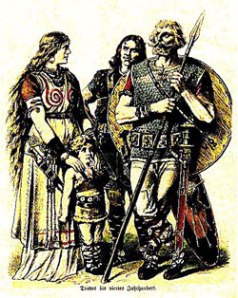
So, it sure would be nice if we could quit repeating the same damned history over and over again. I’m thinking it’s not going to happen any time soon. First, because these guys don’t want to give up their privilege and power. Second, people still believe stupid thing. Third, hate still seems to be an easier emotional choice for some reason. Unfortunately, the hatred these days is backed up by more than spears and a few arrows. What’s on your reading and blogging list today?
Monday Reads: Police Brutality Edition
Posted: August 11, 2014 Filed under: American Gun Fetish, morning reads, racism, SWAT teams | Tags: Ferguson MO, militarization of police, NYPD, Police deadly force, shootings at Walmart 41 CommentsGood Morning!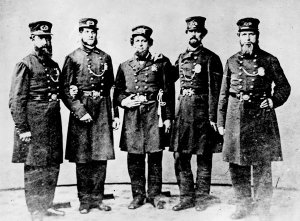
I don’t know about you, but I’m getting tired of all the stories about America’s out of control Police Departments. The last few weeks have been especially illustrative of police departments that use deadly force first and cover it all up later. There’s just one story after another of police shooting and killing unarmed citizens and hapless dogs. Almost immediately afterwards, we get some kind of arrest, story, or whatever that says the police acted righteously. Why are so many unarmed people being killed by heavily armed police officers? WTF is going on?
There are four recent incidents where the police used deadly force in highly questionable situations. The first shooting is from Texas, the second from Ohio, the third is a strangling in New York City, and the latest shooting is from Missouri. This is obviously a national problem.
First up, an off duty officer killed a teen supposedly shoplifting in a Walmart after seeing a few security guards chase the teen out the door. Was deadly force really necessary over a smart phone cover? This sounds a lot like the Zimmerman defense if you ask me. This young man was Latino.
A 19-year-old shoplifting suspect in Conroe was shot and killed by an off-duty sergeant who said the teen choked him to the point of nearly passing out, police said.
The Conroe Police Department said officers were dispatched to the Walmart on N. Loop 336 W after store employees tried to stop a young man, Russell Rios, who allegedly stole a pair of iPhone cases early Wednesday evening.
Off-duty police Sgt. Jason Blackwelder was briefed by the workers and chased down the suspect in a wooded area southwest of the store, according to police.
Once in the woods, the suspect and the officer became engaged in a very intense struggle, and at one point the officer was being choked by the suspect, said Sgt. Dorcy Riddle. … to the extent that he thought he was going to lose consciousness.
Blackwelder fired his weapon, striking Rios and killing him. The sergeant was treated for minor injuries at the hospital and later released.
 This actually was the second shooting involving a Walmart. This one involved a black teenager examining a Toy Gun. Now mind you, we had weeks of open carry assholes carrying actual loaded semi-automatic weapons around stores. Only the shoppers felt threatened by these jerks. However, those were all white folks toting the real thing so the security guards must’ve have thought it was no big deal.
As it turns out, John Crawford, the man shot dead by police was killed after doing nothing more than picking up a toy gun in the store.
Crawford, 22, was identified, in part by the mother of his child, who he was on the phone with at the time police shot him dead.
That woman, LeeCee Johnson, said Crawford went to the area to visit family members.
“We was just talking. He said he was at the video games playing videos and he went over there by the toy section where the toy guns were. And the next thing I know, he said ‘It’s not real,’ and the police start shooting and they said ‘Get on the ground,’ but he was already on the ground because they had shot him,” she said, adding: “And I could hear him just crying and screaming. I feel like they shot him down like he was not even human.”
Last month, an NYPD office strangled an unarmed black man with an illegal chokehold even while he was telling them he could not breathe. The 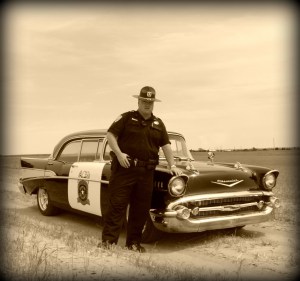 incident was videotaped. The police later arrested the videographer and the man’s wife in unrelated charges seemingly to put their testimony in any court case against the choker into question.
Confronted by police trying to arrest him for allegedly selling illegal cigarettes, Eric Garner raised both hands in the air and, with passive defiance, told the officers not to touch him. Seconds later, a video shows the officer behind him grab the 350-pound man in a chokehold and pull him to the sidewalk, rolling him onto his stomach.
“I can’t breathe! I can’t breathe!” Garner said repeatedly, his cries muffled into the pavement.
The video of the Thursday skirmish shows the Staten Island man lying on the ground motionless after the incident. An asthmatic, Garner was later declared dead at a nearby hospital, according to CNN affiliate WCBS. Police said he suffered a heart attack and died en route to the hospital.
“This is a terrible tragedy that occurred yesterday. A terrible tragedy that no family should have to experience,” said New York Mayor Bill de Blasio, calling the video of the incident “very troubling.”
Police told WCBS that 43-year-old Garner, a father of six, had a lengthy criminal history and had been previously arrested for selling untaxed cigarettes in May.
Officer Daniel Pantaleo, who is seen on video choking Garner, was put on modified assignment and stripped of his shield and gun as the New York Police Department continues to investigate the incident, WCBS reported. The chokehold tactic is prohibited by the NYPD.
The most recent shooting involved an unarmed black teen who was being harassed by the police for not getting on the sidewalk. This young man was  two days away from his first year in college.
An unarmed black teenager fatally shot Saturday by a police officer in Ferguson, Mo., had been struggling for the officer’s gun, law enforcement officials said Sunday as hundredLs of protesters gathered outside the police department.
St. Louis County Police Chief Jon Belmar said the youth, Michael Brown, 18, allegedly struggled for a Ferguson police officer’s weapon in a patrol car before the officer fired several shots about noon Saturday. Witnesses have said the youth had his hands in the air as he fled the patrol car.
Brown’s mother said she didn’t understand why police didn’t subdue him with a club or Taser.
“I would like to see him fired,” Lesley McSpadden told the Associated Press, referring to the officer who shot her son. “I would like to see him go to jail with the death penalty.”
Belmar said there would be a thorough investigation, with possible inclusion of the FBI. Because Brown is African American, the National Assn. for the Advancement of Colored People has said it would seek a federal investigation.
 Is this part and parcel of the militarization of police happening since 9/11 or is it an outcropping of the rampant, outrageous racism that has been noticeable since the country elected its first black president? I can remember being in Denver about two years ago during an Occupy march. I also remember watching tons of riot police in military vehicles rushing around the downtown streets to intercept what was obviously a peaceful gathering of Americans in keeping with our constitutional rights. But, SWAT raids are commonplace these days.
It’s 3:00 a.m. Your children are screaming and your dog is lying dead in a pool of blood. Scorch marks and shattered glass cover the floor. You’re being held at gunpoint by towering figures wearing black and holding AK-47s.
This isn’t a Hollywood movie set. Odds are this is a predawn SWAT raid targeting a family of color. Mission objective: search the home for a small amount of drugs.
There are an estimated 45,000 SWAT raids every year. That means this sort of violent, paramilitary raid is happening in about 124 homes every day – or more likely every night – not in an overseas combat zone, but here in American neighborhoods. The police, who are supposed to serve and protect communities, are instead waging war on the people who live in them.
Our new report, War at Home: The Excessive Militarization of American Policing, takes a hard look at 800 of these raids – or at least what state and local law enforcement agencies are willing to tell us about them. We found that almost 80% of SWAT raids are to search homes, usually for drugs, and disproportionately, in communities of color. During these drug searches, at least 10 officers often piled into armored personnel carriers. They forced their way into people’s homes using military equipment like battering rams 60 percent of the time. And they were 14 times more likely to deploy flashbang grenades than during SWAT raids for other purposes.
Public support for the failed War on Drugs is at its lowest ever, and yet police are still using hyper-aggressive tactics and heavy artillery to fight it. This paramilitary approach to everyday policing brutalizes bystanders and ravages homes. We reviewed one case in which a young mother was shot and killed with her infant son in her arms. During another raid, a grandfather of 12 was killed while watching baseball in his pajamas. And we talked with a mother whose toddler was covered in burns, shot through with a hole that exposed his ribs, and placed into a medically induced coma after a flashbang grenade exploded in his crib. None of these people was the suspect. In many cases like these, officers did not find the suspect or any contraband in the home.
Even if they had found contraband, the idea of cops-cum-warriors would still be deeply troubling. Police can – and do – conduct searches and take suspects into custody without incident, without breaking into a home in the middle of the night, and without discharging their weapons. The fact is, very few policing situations actually require a full SWAT deployment or a tank. And simply having drugs in one’s home should not be a high-risk factor used to justify a paramilitary raid.
We can no longer accept such brutal tactics as a routine way to fight the War on Drugs. It’s time for an exit strategy.
All too often, the worst police behavior is aimed at minority communities. 
Jason L. Riley is a Wall Street Journal columnist and vocal critic of what hecalls “race hustlers”—“the second and third-tier types” who lead the civil rights groups of the present.
For him, the greatest barriers to black advancement aren’t economic disadvantage and persistent discrimination, they’re “anti-social behavior” and “counterproductive attitudes toward work, school, marriage, and so forth.”Last Friday, Riley responded to Al Sharpton’s call for criminal justice reform with this Twitter broadside: “Liberals want to discuss black incarceration rates but not black crime rates,” he said. “Stop pretending the two are unrelated.” The implication is that black criminality is to blame.
There’s no question that relative to their population, black Americans hold adisproportionate share of arrests and convictions for crime. But it’s important we don’t confuse that with a propensity for crime. Put another way, black overrepresentation in crime statistics has as much to do with policing and the legal process as it does with the actual crimes committed.
For millions of black and Latino New Yorkers, the city is a literal police state.
It’s worth noting that just a few hours after Riley made his assertion, the New York City medical examiner ruled Eric Garner’s death a homicide by chokehold. If you haven’t followed the coverage, Garner was killed in July during a struggle with Staten Island police officers. Because a witness (who was later arrested on gun charges) videotaped the encounter, we know that the 43-year-old father of six had just stopped a fight, and was agitated by the police presence. “Every time you see me, you try to mess with me,” he said to the officers, protesting prior treatment. “This stops today.” Within minutes, police had placed Garner in a chokehold and wrestled him to the ground, where he struggled, gasped for air, and died.
Bystanders would catch two other instances of police violence over the next week. In the first, an officer is seen stomping on the head of a man arrested for marijuana possession, and in the second, an officer is shown using a chokehold on a pregnant woman after she grilled food on the sidewalk outside of her home (which, apparently, is against the law in New York City).
The reason for these stops is a policing approach called “broken windows,” first articulated by scholars James Q. Wilson and George L. Kelling in a 1982 Atlantic Monthly essay and later adopted by the NYPD in 1993. Broken windows prioritizes cracking down on minor offenses on the theory that doing so can preempt serious crime. Or, to use the metaphor of the idea, actual broken windows create the appearance of disorder, which creates actual disorder as criminals take advantage of the inviting environment. Rather than wait for the serious crimes to begin, police should “repair the windows”—focus on petty crime like loitering, and you’ll stop the worse crime from taking hold.
It’s an elegant concept, but there’s little evidence it works. “Taken together,” notes a 2006 study from the University of Chicago, “the evidence from New York City and from the five-city social experiment provides no support for a simple first-order disorder-crime relationship as hypothesized by Wilson and Kelling nor for the proposition that broken windows policing is the optimal use of scarce law enforcement resources.” Yes, the massive New York crime decline of the 1990s coincided with broken windows policing, but chances are it had more to do with a reversion to the mean (“what goes up, must come down, and what goes up the most, tends to come down the most”) than any new approach.
If broken windows were just a waste of resources, it wouldn’t be a huge concern. But as a policy, broken windows has also had the effect of terrorizing black and Latino New Yorkers.
Perceptions of urban “disorder” are tied tightly to race and have been for more than a century (as detailed in sociologist Khalil Gibran Muhammad’s The Condemnation of Blackness: Race, Crime, and the Making of Modern Urban America). As we’ve seen on a regular basis—from Jonathan Ferrell to Renisha McBride—people of color, and blacks in particular, are feared as criminal in ways their white counterparts aren’t.
This is one of the most enlightening quotes I’ve seen for some time. The police union’ associate basically believes that resisting arrest is a reason to use deadly force. This is in regards to Garner’s death outlined above.
The police officer who killed a Staten Island dad with a prohibited chokehold was just doing what he had been trained to do.
So claimed Pat Lynch, president of the Patrolmen’s Benevolent Association, in strident and eyebrow-raising defense Tuesday of NYPD officers, during which he called the medical examiner’s conclusions about Eric Garner’s death “absolutely wrong.”
“It is not a chokehold,” Lynch insisted. “It was bringing a person to the ground the way we’re trained to do to place him under arrest.”
Lynch, who is not a doctor, also said the ME’s office was “mistaken” when it concluded after an autopsy that the 43-year-old Garner’s death was a homicide.
“I’ve never seen a document that was more political than that press release by the ME,” Lynch said. “Chokehold. That’s not a medical term.”
Lynch also ripped Mayor de Blasio for not backing the officers in this case. “The mayor needs to support New York City police officers unequivocally,” he said.
De Blasio defended the ME, calling the office “the gold standard in this country for the work they do.”
Lynch’s remarks appeared to be aimed at taking the heat off Officer Daniel Pantaleo, who was caught on a shocking cellphone video wrapping an arm around Garner’s neck and dragging him to the pavement.
“I can’t breathe!” Garner could be heard yelling. “I can’t breathe!”
That video sparked nationwide outrage and Pantaleo was yanked off the street as the Staten Island prosecutor launched an investigation. Pantaleo has not been charged with a crime.
Lynch said Garner had been stopped a week earlier by police officers for peddling unlicensed cigarettes on the street.
“He was warned to stop the illegal sale and was not placed under arrest but was warned, admonished and sent on his way,” Lynch said.
So Garner knew he was in big trouble when cops caught him selling loosies again, the union president said.
“But the next week he said he wasn’t going to be arrested,” Lynch said.
Flanked by Sergeants Benevolent Association President Ed Mullins, Lynch decried the “insulting and unjustified manner in which police officers are being portrayed by politicians, race baiters, pundits and even our elected officials.”
I’m not sure what exactly the answer is to all of this, but I will say that you cannot ignore the obvious patterns playing out all over the country. The  message they are sending is Resist and Die.
 So, as I write this, I’ve found out that 49 year after the Watts Riots, Ferguson MO–a primarily black community close to St Louis–has erupted in riots. That’s the SWAT group patrolling the area outside a Walgreen’s that I’ve juxtaposed to an old photo of Watts.
What started as a peaceful prayer vigil Saturday evening to remember a young man gunned down by police, has escalated into full scale riots and looting in Ferguson, Missouri.
Angry mobs have smashed windows, set fires and looted businesses as a massive showing of police, some wearing riot gear have moved into the area along West Florissant just south of 270.
Police are also responding to reports of shootings throughout the area. At one point, windows of a News 4 live truck were smashed out by the angry crowd.
Raw Video: Exclusive interview with witness of looting in Ferguson
There are reports that police have dispersed the crowd in Ferguson, but the mobs have moved into some neighboring communities.
News video and amateur video from the scene have captured mobs of crowds racing into stores and businesses and then rushing out with armloads of stolen goods.
Tear gas has reportedly been used by police in some areas.
Two groups of protesters gathered around 8:00 Sunday night in Ferguson to bring awareness to the death of Michael Brown, 18, who was shot and killed by police Saturday.
At least fifteen area police agencies have been called to Ferguson. Police set up a staging area at West Florissant and Ferguson Road. Police are also staging at the Plaza at the Boulevard parking lot, where officers are seen putting on riot gear. Dozens of police vehicles are on scene, from all over St. Louis County, including Chesterfield, Country Club Hills and the Missouri Highway Patrol.
What’s on your reading and blogging list today?

 peej
peej Carissa
 bostonboomer
 dakinikat
 ecocatwoman
 jjlo
jjlo mablue2
 Mama Lopez
 peggysue22
 quixote
 skydancingguestblogger
 Mona (aka Wonk the Vote)





Recent Comments