
Friday Reads: Darwin’s Grab Bag
Posted: September 26, 2014 Filed under: 2014 elections, 2016 elections, morning reads 36 CommentsGood Morning!
 Temple came home last night in our latest battle against heartworms. She got two shots and now has two distinct shave marks on each hip. She’s sort’ve a last of the Mahican swamp dog right now. She’s hanging out on the bed which is the good and bad news. The cats have been having a happy dance celebration there for a few days thinking it was once again cat territory. They’ve now been disabused of that notion. So there’s a lot of odd news that came out today. Both Mitt Romney and Jeb Bush are said to be considering presidential runs. Republicans seem to find themselves caught between the aristocratic yawn zone and crazy town.
Let’s start with crazy town first. It seems more likely to wake you up. I thought I’d remind you that ISIL isn’t the only set of religious whackos out to rule the world. This brings us to the “values voters” summit which is always good for shock and awe. Yes, folks, some of these people live in your neighborhood and vote for politicians that seem to have genuine mental issues. But, among the funniest things I found about this year’s group of whackadoos is a hat tip to Jewish Americans as the summit proceeds to trample all over their Holy Holidays. Yes, they really are Jew-friendly. Forget all that Jews killed Jesus anger of the past. Or not.
For all the effort that the conservative movement has put into trying to woo Jewish voters, the timing of the Values Voter Summit, one of the top conservative events of the year, has been a real shanda.
The summit, organized by the Family Research Council, has been held for the past nine years in either September or October at the Omni Shoreham hotel in Washington, D.C. The problem is that, in the eight times that the event has been held, it has coincided three times with Rosh Hashanah and twice with Yom Kippur. The event is coming back to D.C. this weekend, where it will once again conflict with Rosh Hashanah.
Bethany Mandel, a former editor at the conservative Commentary, first pointed out this unhappy coincidence on Twitter. Mandel told The Daily Beast that the timing of the conference was very “frustrating.” In her opinion, “a lot of the Value Voter’s positions could align with those of Jews, particularly the Orthodox.”
“Evangelicals, and conservatives in general, are really limiting themselves by not looking outside the box and seeking Orthodox Jewish support on common ground issues”Mandel noted “there’s a general unease among Jews about becoming involved in conservative politics and with Christians in particular, because they feel unwelcome and nervous about people just trying to convert them.” Needless to say, scheduling major events on the Jewish High Holidays does nothing to assuage those concerns.
“Evangelicals, and conservatives in general, are really limiting themselves by not looking outside the box and seeking Orthodox Jewish support on common ground issues,” she said.
But not all Jewish conservatives seemed to mind. Noah Pollak, the executive director of the Emergency Committee for Israel, shrugged off the issue. “The organizers and attendees of the Values Voter Summit are not just strongly pro-Israel, but genuinely pro-Jewish as well,” said Pollak. “The world would be a better place if more people felt about Jews the way those associated with the Values Voter Summit do and I wish them a successful conference this year.”
Oy. This conference always provides some major hate right before the elections. So much, that a group of ministers in Louisiana from mainstream denominations begged our Governor to refuse the invite for a change. I guess Presbyterians  and mainstream Catholics just don’t have that old time religion vibe. That, or they’re not likely to like my governor who I swear is a sociopath. I remember when I learned that being a Methodist wasn’t actually being a real christian. Sure was a surprise to me!
A group of Louisiana religious leaders is urging Gov. to reconsider attending the Family Research Council’s Values Voter Summit, which begins Friday in Washington, D.C.
The group of 13 leaders sent a letter to Jindal with their request. They hailed from various denominations of Christianity including Presbyterian, Methodist, Episcopalian and Catholic.
The leaders feel Jindal, a Catholic, should avoid the FRC summit because the organization has been designated a hate group by the Southern Poverty Law Center for their repeated “use of known falsehoods to attack and demonize members of the LGBT community.”
“As Pope Francis recently said, ‘When God looks at a gay person, does he endorse the existence of this person with love, or reject and condemn this person? We must always consider the person,'” the leaders wrote in their letter.
The leaders recognized that Jindal is opposed to same-sex marriage, but said that shouldn’t mean he should embrace an “extremist” organization.
Jindal’s office said the governor would attend the event.
“The great thing about America is that we believe in religious liberty and people have the right to express their beliefs,” said Deputy Communications Director Shannon Bates. “We’re glad the folks who issued this letter have this right. We look forward to speaking to the Values Voter Summit about religious liberty.”
The summit was created in 2006 to “provide a forum to help inform and mobilize citizens across America to preserve the bedrock values of traditional marriage, religious liberty, sanctity of life and limited government that make our nation strong,” according to its website.
Jindal is a scheduled speaker at this year’s event, which includes a number of high-profile national figures that include Sarah Palin, Rep. Michelle Bachmann, Sen. Rand Paul, Sen. Ted Cruz, Mike Huckabee, Rick Santorum, Oliver North and Glenn Beck, to name a few.
 Wow, it seems that there should be a critical level of crazy at that conference. So, I’ve found some rather disheartening news about what is funding all this insanity and I’m afraid we’re going to be stuck with it for some time. First, I’d like to recommend this Rolling Stone piece on the Koch Brothers and their toxic empire.
In “the science of success,” Charles Koch highlights the problems created when property owners “don’t benefit from all the value they create and don’t bear the full cost from whatever value they destroy.” He is particularly concerned about the “tragedy of the commons,” in which shared resources are abused because there’s no individual accountability. “The biggest problems in society,” he writes, “have occurred in those areas thought to be best controlled in common: the atmosphere, bodies of water, air. . . .”
But in the real world, Koch Industries has used its political might to beat back the very market-based mechanisms – including a cap-and-trade market for carbon pollution – needed to create the ownership rights for pollution that Charles says would improve the functioning of capitalism.
In fact, it appears the very essence of the Koch business model is to exploit breakdowns in the free market. Koch has profited precisely by dumping billions of pounds of pollutants into our waters and skies – essentially for free. It racks up enormous profits from speculative trades lacking economic value that drive up costs for consumers and create risks for our economy.
The Koch brothers get richer as the costs of what Koch destroys are foisted on the rest of us – in the form of ill health, foul water and a climate crisis that threatens life as we know it on this planet. Now nearing 80 – owning a large chunk of the Alberta tar sands and using his billions to transform the modern Republican Party into a protection racket for Koch Industries’ profits – Charles Koch is not about to see the light. Nor does the CEO of one of America’s most toxic firms have any notion of slowing down. He has made it clear that he has no retirement plans: “I’m going to ride my bicycle till I fall off.”
Here’s hoping that bicycle meets a semi head on.
So we know that the libertarians and the tea party are full speed ahead. What about the stodgy face of Republican Politics? Well, cheer up! We may get another Bush to kick around. Is he really prepping for a run?
It’s looking more and more like the 2016 presidential race will include John Ellis “Jeb” Bush, the former governor of Florida and a favorite of centrist Wall Street Republicans.
Bush, who friends say will make a final decision after the November midterm elections, is said to be deep in preparation on issues beyond his traditional areas of focus on education and immigration policy.
One person who met with Bush recently told me the former governor spoke passionately on foreign policy and economics and sounded very much like someone who plans to mount a presidential campaign. This person said Bush’s main concern remains the impact of a campaign on his family, particularly his wife Columba, who does not like politics or the limelight.
And even if Columba Bush manages to tolerate a campaign, people close the family ask, could she accept the public role demanded of first ladies?
But others say the family concerns are overblown and that barring a late change of heart, Bush is almost certain to run. These people say Bush’s father, former president George H.W. Bush, strongly urged his son to mount a campaign at a recent gathering at the family’s compound in Kennebunkport, Maine.
 Well, isn’t that special? Will the right wing conspiracy focus on him or Hillary? Here’s a great list of companies for you to add to your boycott list.
The NCF was created, back in 1982 or so, to maximize hard right-wing evangelical Christian philanthropic giving. It was so novel and complex, the architects got a special ruling from the IRS, to make sure it was legal. The NCF has multiple overlapping legal entities and holding companies, but at the core is a huge donor-advised fund. The NCF is now the 12th biggest charitable foundation in America that raises money from private sources.
“The story of the politicized religious right is one of the biggest untold stories of our time.”
Since its founding, the NCF has given away over $4.3 billion, $2.5 billion of it in the last three years. The NCF gave away $601,841,675 in 2012—and is estimated to have given out $670 million in 2013.One reason the NCF, a donor-advised fund, has been so successful is that it ensures anonymity for its philanthropists. Many of these individuals may fear a backlash, given the controversial causes that they support.
But we do know about the NCF’s leadership. Two of the NCF co-founders were tied to Campus Crusade for Christ, and the late Larry Burkett, a NCF co-founder, was also one of the co-founders of the Alliance Defense Fund/Alliance Defending Freedom, now the religious right’s preeminent umbrella legal defense fund. NCF’s other co-founder, Atlanta tax lawyer Terrence Parker, sits on the board of directors of the Family Research Council, and also The Gathering Foundation, which puts on The Gathering.
From 2001-12, the NCF gave $163,384,998 to leading anti-LGBT organizations. These include Focus on the Family, the Family Research Council, the American Family Association, the Alliance Defending Freedom (formerly Alliance Defense Fund), Campus Crusade for Christ (aka CRU), the National Organization for Marriage, and the Alliance for Marriage. They fund ex-gay ministries like Exodus International, exporters of homophobia like Advocates International, you name it.
The NCF is just getting started, though. The Green family—who were at The Gathering in 2008 and 2013—have said they intend to leave much of their fortune to it. And in 2009, Hobby Lobby-related contributions were the No. 1 source of NCF funding (about $54 million), which we know because Eli Clifton, funded by The Nation Institute, somehow got hold of an NCF 2009 990 Schedule B form, which shows NCF’s top funders that year (Hobby Lobby was No. 1, Maclellan Foundation No. 2).
On another note, Chick-fil-A’s VP and CFO, James “Buck” McCabe, is on the board of the NCF, and in 1999 no less than three of Chick-fil-A’s top leaders spoke at The Gathering (S. Truett Cathy, Dan Cathy, and Don “Bubba” Cathy).Having worked in philanthropy myself, I can say that these figures are astounding. The leading private funder of LGBT issues gives out about $16 million a year. Which other funders will be there?
Other major players include the John Templeton Foundation ($104,863,836 in 2012 grants), the Barnaby Foundation ($39,939,489), the Christian Community Foundation (an NCF “spinoff”), and the family foundations of the DeVos families (including Rich DeVos, one of the original funders of the Christian Right), Howard & Roberta Ahmanson (operating as Fieldstead & Company—and among the most notorious right-wing funders in America), Adolph Coors, and many others.
Interestingly, some more secular right-wing funders—Scaife, Olin, Bradley—are not known to attend The Gathering.

That’s a lot of bucks and clucks.
Okay, so I’ve featured some about Bobby Jindal today and I’ve also fond some pix of some really cute unusual animals. I’m going to end with Bobby Jindal and a good question from blogger and intrepid fellow Lousyianan Lamar White. Check out Bobby’s official photo—over exposed and whitened like a molar–and a press photo. Do some of these folks get attached to the Republican Party because they hate themselves deep down inside? We’ve talked about women with Stockholm Syndrome and self-loathing gay men who join the Log Cabin association, where does little Peyush fit?
Of course, we are now the prison capital of the world, and entire generations of predominately African-American men are locked behind bars for decades for non-violent crimes. Last session, legislators approved a bill that would provide 99-year minimum mandatory prison sentences for repeat heroin dealers, because locking people up for the rest of their lives on drug charges is a whole lot easier than addressing the underlying problems.
We are told that Obamacare is somehow a nefarious socialist ploy, and while we deny billions of dollars to expand access to health care services for those who need them the most, we simultaneously also offer billions in incentives for wealthy multi-national corporations willing to set up shop; our rich may be getting richer, but our poor are also getting poorer. Our sick are getting sicker.
And we are being led by, no doubt, a preternaturally smart guy, a man who changed his own name from Piyush to Bobby when he was four, who converted from Hinduism to Catholicism when he was eighteen, allegedly because he was so torn up by Roe v. Wade, who declared exorcisms could cure cancer when he was twenty, an experience he wrote about in one of the world’s leading Catholic journals, and who, in his early forties, essentially torched his own college degree in biology from Brown University, enacting laws that allow the teaching of New Earth Creationism as “science” in Louisiana public schools. “I’m not an evolutionary biologist,” he recently explained to the few people left in the world who still don’t realize that all biologists are, in fact, evolutionary biologists.
But Bobby Jindal’s official portrait (on the left) on the fourth floor of the Capitol building is, perhaps, the best example of what I’m talking about. Sometimes, a picture can speak 1,000 words, and these juxtapositions should.
Please book mark CENLAMAR because Jindal’s going to run for President and I don’t want him to inflict any more damage any where else. Lamar really stays on top of things and I think you’ll find him useful for any of your crazy republican uncles or aunts that want to use Jindal as a sign of “No Racism here” in the Republican Party. I’d say using portraits that are overexposed to lighten the appearance of your skin color makes a statement.
So, there just seems to be a lot of folks getting creative with the gospels these days. How about an evangelical Bob, Ted,and Carol and Alice? I should mention that Bob has pink hair and they are putting a twist on loving thy neighbor.
Devout Christians looking to spread the word of God sometimes need to get creative about where they’re preaching—after all, anywhere could be the right place to convert an unbeliever. So why not discuss Bible verses with the guy you’ve invited over to fuck your wife?
For Florida couple Dean and Christy Parave, their swingers’ lifestyle doesn’t conflict with their deeply-held Christian beliefs. Rather, it provides an outlet where they can share the gospel (along with sexual partners). “I’m getting to people that probably never even visited church,” says Dean. “Hey, God’s not gonna put a lion with a bunch of elephants, so what’s he gonna do? He’s gonna put a swinger with a bunch of swingers to spread his word.”
Preach.
Christy is solidly on board: “I feel like right now, this is God’s plan.”
 God’s a swinger! Who knew! What happened to all that Old Testament wrath on adultery?
So, that’s enough from me. What’s on your reading and blogging list today?
Monday Reads: Liberty and Justice for All
Posted: September 22, 2014 Filed under: morning reads | Tags: Help! Our bills are due again!!!, home health care workers, internet trolls, underpaid professors, women's issues 25 Comments Good Morning!
I attended a forum with my city councilwoman, congressman and democratic House Leader Nancy Pelosi yesterday. It’s evident that part of the Democratic Party election strategy for these midterm elections is to turn out women, but I did find much of the forum very compelling and inspiring despite knowing the underlying motive.
Each of these forums showcase women that speak to issues that have framed their lives–be it pay inequality, the lack of child care or the lack of benefits like paid medical and parenting leave and medical insurance. Enabling women to better participate in the economy is part of the policy initiatives to revive the struggling American Middle Class. The other pillars are to use Buy America Bonds to modernize infrastructure and reduce student loan interest rates to that paid by banks.
Single and minority women overwhelmingly vote Democratic. So do people with graduate degrees and nearly every minority. Chuck Todd, who is succeeding at keeping MTP at the bottom of the ratings, refers to this phenomenon as the Chick-Fil-A Nation vs. Starbucks Nation. But really, how do so many folks that are struggling to make ends meet fall into the category of Starbucks customers?
“Meet the Press” host Chuck Todd on Sunday described the 2014 midterm elections as a battle between “Starbucks nation” and “Chick-Fil-A country.”
He split the U.S. into the Democratic urban areas that drink Starbucks and the Republican rural areas that eat Chick-Fil-A.
According to Todd, there are a few Senate seats up for grabs in Chick-Fil-A-loving states like Montana, South Dakota and West Virginia, giving Republicans the advantage. And he said that the major battlegrounds are Colorado and Iowa.
He said that Democrats will need to deploy major get-out-the-vote efforts in urban centers. Perhaps at Starbucks?
Much of the Democratic party base are those folks that are unlikely to get time off to vote. They are struggling with being underpaid and basically aren’t given paid time off for anything. And, there’s a whole lot of assholes on the internet that will tell  them they are horrible people. But, guess what? Studies show that it’s internet trolls that are the horrible people. They test as sadists, sociopaths, and narcissists.
In this month’s issue of Personality and Individual Differences, a study was published that confirms what we all suspected: internet trolls are horrible people.Let’s start by getting our definitions straight. An internet troll is someone who comes into a discussion and posts comments designed to upset or disrupt the conversation. Often, it seems like there is no real purpose behind their comments except to upset everyone else involved. Trolls will lie, exaggerate, and offend to get a response.
What kind of person would do this?
Canadian researchers decided to find out. They conducted two internet studies with over 1,200 people. They gave personality tests to each subject along with a survey about their internet commenting behavior. They were looking for evidence that linked trolling with the Dark Tetrad of personality:narcissism, Machiavellianism, psychopathy, and sadistic personality.
[Edit to add: these are technical terms with formalized surveys to measure them. You can find lots more information about their formal definitions online]
They found that Dark Tetrad scores were highest among people who said trolling was their favorite internet activity.
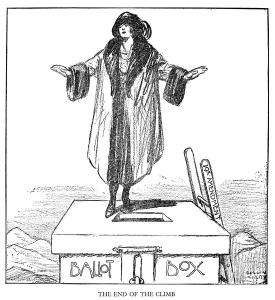 The greatest thing that I found attending this forum was the number of young women who were truly committed feminists. Here’s a great speech given by the actress best known as the nerdy wizard girl of the Harry Potter Series. She’s a committed young feminist too.
Earlier this summer, fresh from college graduation, Emma Watson, was named a U.N. Women Goodwill Ambassador. Though the ripples of her involvement over the past six months can be seen online (crashing the U.N. website, using Twitter to denounce a sexist politician in Turkey or respond to the gender politics of the recent celebrity nude photo hack), Watson’s power in person is an entirely different matter.
The actress gave an impassioned speech on feminism and gender at the U.N. Headquarters in New York this weekend to launch the “HeForShe” campaignwhich aims to galvanize one billion men and boys as advocates for ending the inequalities that women and girls face globally.
Watson’s speech, which was met with a thunderous standing ovation, not only called for action from male allies, but clarified a persistent misconception about feminism in general. She said:
I decided that I was a feminist. This seemed uncomplicated to me. But my recent research has shown me that feminism has become an unpopular word. Women are choosing not to identify as feminists. Apparently, [women’s expression is] seen as too strong, too aggressive, anti-men, unattractive.
Why has the word become such an unpopular one? I think it is right I am paid the same as my male counterparts. I think it is right that I should make decisions about my own body. I think it is right that women be involved on my behalf in the policies and decisions that affect my life. I think it is right that socially, I am afforded the same respect as men.
Watson is pushing back against recent campaigns like Women Against Feminism. As Watson puts it elsewhere in her speech, these campaigns portray the feminist cause as “man-hating.” By involving both genders in the “HeForShe” campaign, Watson hopes to abolish the “us vs. them” mentality.
Watson is potentially in an even better position than many of her peers to do so. Her role as Hermione Granger, the universally-adored heroine of the Harry Potter series, gives her an automatic in with male and female Millenials. This is a rare case where an actor being conflated with their role might be a good thing. In this way, her wide-spread influence on young minds (still forming their opinions on gender roles and advocacy) is even stronger than other high-profile defenders of the f-word like Beyoncé.
But, the world has changed and not always for the better. Not only are there tales of women who get sick with no health care and no paid medical leave. There is the ever decreasing disrespect shown to teachers and the way universities are 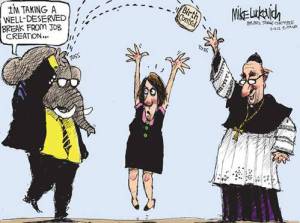 saving their money to pay their highest administrators by using professors as adjuncts. It’s not only home health care workers, fast food workers, and retail workers that can’t live on the wages paid.
You’ve probably heard the old stereotypes about professors in their ivory tower lecturing about Kafka while clad in a tweed jacket. But for many professors today, the reality is quite different: being so poorly paid and treated, that they’re more likely to be found bargain-hunting at day-old bread stores. This is academia in 2014.
“The most shocking thing is that many of us don’t even earn the federal minimum wage,” said Miranda Merklein, an adjunct professor from Santa Fe who started teaching in 2008. “Our students didn’t know that professors with PhDs aren’t even earning as much as an entry-level fast food worker. We’re not calling for the $15 minimum wage. We don’t even make minimum wage. And we have no benefits and no job security.”
Over three quarters of college professors are adjunct. Legally, adjunct positions are part-time, at-will employment. Universities pay adjunct professors by the course, anywhere between $1,000 to $5,000. So if a professor teaches three courses in both the fall and spring semesters at a rate of $3000 per course, they’ll make $18,000 dollars. The average full-time barista makes the same yearly wage. However, a full-time adjunct works more than 40 hours a week. They’re not paid for most of those hours.
“If it’s a three credit course, you’re paid for your time in the classroom only,” said Merklein. “So everything else you do is by donation. If you hold office hours, those you’re doing for free. Your grading you do for free. … Anything we do with the student where we sit down and explain what happened when the student was absent, that’s also free labor. Some would call it wage theft because these are things we have to do in order to keep our jobs. We have to do things we’re not getting paid for. It’s not optional.”
We have a long way to go before all of us achieve life, liberty, and happiness. This is especially true since a huge portion of one of the two parties is more interested in ideological grandstanding and magical thinking than governance.
I’m learning a lot more about Home Health Care Workers as a result of two women that shared their stories yesterday. It’s not only the fastest growing job in the country. It’s also the worst paying.
Two occupations make up the home care aide profession: personal aides who provide clients with self-care and help them with everyday tasks, and home health aides who assist the disabled, chronically ill, or cognitively impaired and may administer medication or check clients’ vial signs. Put together, about 2 million Americans hold these jobs. (The PHI estimates that there are likely hundreds of thousands of uncounted aides employed by individuals and families.)
The wages these workers earn are painfully low: the median salary for a personal care aide is $19,910 annually, or $9.57 an hour; a home health aide earns $20,820 or $10.01 per hour. As America’s population ages, these professions are expected to grow by 49% and 48%, respectively, from 2012 to 2022, eclipsing the average growth for all occupations: 11%. They are the second- and third-fastest growing occupations in the nation—behind only industrial-organizational psychologist, a job that brings in median annual wages of $83,750. On the BLS’s list of 30 fastest-growing jobs, personal and home care aides are the worst paid.
It’s no surprise, then, that the home care industry is plagued by high turnover rates, which the Institute for the Future of Aging Services pegged at between 40% and 60% for a home health aide who has been on the job for less than a year.
Take all these factors into account and you’ve got the makings of a public health crisis, says Ai-Jen Poo, director of the National Domestic Workers Alliance, an advocacy group. “In light of the Age Wave—the Silver Tsunami—the high rates of burnout, and poverty wages that no one wants to work for—it’s not good for the general public,” she says.
Home care workers, who are employed by third-party agencies or by clients directly, have long been exempt from minimum wage and overtime laws. That will finally come to an end in January, when a Department of Labor regulatory change will grant most home care workers wages of at least $7.25 per hour and overtime.
The ramifications of the new rule illustrate, as Poo puts it, “the pattern and practice of discrimination” against home care workers. At the time of the rule’s announcement, it promised to give home care workers in 29 states minimum wage and overtime protections for the first time, according to the National Employment Law Project. Many of these states have minimum wage and overtime laws for other workers, of course, but some of them have over the course of their history carved out exemptions for in-home care providers. That means that in some states home care workers will earn the federally mandated $7.25 an hour for the first time in January, but if their state has a higher minimum wage that excludes in-home workers, they won’t be eligible for the higher rate. Alaska, for instance, enforces a minimum wage of $7.75 but it also has an exemption for “domestic service” employees, so most home care workers in that state will be subject to the federal $7.25 rate come January, not the state’s higher wage.
At the federal level, home health care workers aren’t covered by the Occupational Safety and Health Act, which only covers “facility” workers, according to PHI. And anti-discrimination laws, such as the Civil Rights Act, the Americans with Disabilities Act, and the Age Discrimination in Employment Act, generally only cover employers with multiple employees, says the Economics Policy Institute, meaning some in-house workers are excluded.
Home health workers employed by individual households aren’t eligible for workers’ compensation, family and medical leave, and can’t enroll in a 401(k), PHI says.
In the hierarchy of workers, home health care workers are at the bottom, below even low-paid fast-food workers,whose recent strikes and protests have drummed up public empathy. This is by no means a new development.
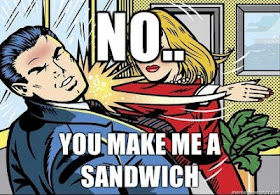
It seems that these jobs really, really need unions. One woman who spoke from the audience said she was terminated after she asked to be removed from her contractor’s constant emails about who to vote for in upcoming elections. Evidently, they didn’t appreciate the fact she didn’t want to vote for the people who are making decisions that keep her from a living wage with benefits that ensure her well-being.
Here is another compelling story about a woman supporting her family at Burger King while attending university. She wrote an essay that went viral and has been turned into a book.
After the initial fuss, some journalists began muck-raking, trying to prove that you weren’t what you said you were. How did that feel?
I’m not going to recommend it as a lifestyle choice. I lost a ton of weight in three weeks. If you need a crash diet, go viral. Whatever it was I managed to capture had enough power truly to upset some people. A lot of them hoped I was a poor little rich girl, living in a McMansion. Emotionally, it would have been easier to deal with. But I’ve never claimed to be anything that I’m not. Guys, I called the thing “Why I make terrible decisions”.So, I gave my welfare records to the Washington Post. Those things, and the teeth video, closed it down [in her essay, Tirado wrote that her teeth had rotted because she could not afford dental care, and that this made her unsuitable for working front-of-house in restaurants and offices; when this was disputed she posted a video online in which the ugly gaps in her teeth can clearly be seen].
The trouble is that a lot of people simply don’t understand the stratification in the lower classes. I wasn’t born in Appalachia with no running water. At Burger King I made $28,000 a year. Yes, you can survive on that money. But that’s not the point. It’s a 90-hour week. What is your life like while you’re surviving? Can you keep a family on it?
I have one more thing to ask you today besides begging you to vote for candidates that support the rights of all. It’s that time of year when we ask you to help us renew our domain name and gadgets that help us maintain the blog. Please click the donate button. Our bills are coming due for early October and we need help! Thanks so much!
What’s on your reading and blogging list today?
Live Blog: Leader Pelosi on When Women Succeed, America Succeeds
Posted: September 21, 2014 Filed under: just because 10 Comments
I’m listening to Representative Cedric Richmond talk about the NFL and player’s domestic violence. Speaker Pelosi is up next. We’ve also been listening to the stories of women and how the pay gap. This includes women in the home health care sector. Two women discussed how illnesses and discrimination created situations where they made less income, less benefits and less social security benefits. My council woman Nadine Ramsey is introducing every one.
For information on this programs go to http://www.womensucceed.dems.gov

Friday Reads: Political Crazy Season
Posted: September 19, 2014 Filed under: 2014 elections, morning reads | Tags: Debbie Wasserman Schultz, DNC, Kansas, Kobach 37 Comments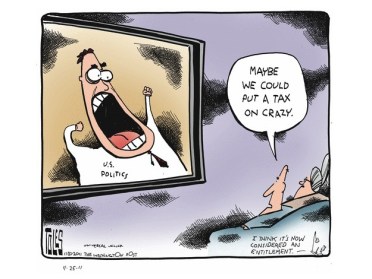 Good Morning!
There are some interesting items out there for folks that find politics fascinating. I guess I’m getting more in the mood to read about these things since I’ve been phonebanking and canvassing to GOTV for Senator Mary Landrieu here in New Orleans.
I’m not wild about doing either of these activities but I learned to buckle down and do it when I ran for office like 20 years ago. It’s important this year. I don’t want to see Republicans take over the Senate. I don’t agree with Landrieu on a lot of things but the alternative would be a disaster.
I will be canvassing on Saturday and then going to a forum about Women’s issues presented by my Congressoman Cedric Richmond with speaker Nancy Pelosi on Sunday afternoon. I will try to live blog the forum. I was thrilled to be invited even though I still consider myself an independent. Really, the Republicans give me fewer reasons to consider them as serious candidates each election even though the Dems do not thrill me at all.
So, first up, the whacky state of Kansas continues to provide some interesting goings on. Usually reliably Republican, but also reliably practical, Kansas voters appear ready to get rid of their Republican Governor Sam Brownback. who has basically followed the Koch formula and the discredited economic policies of Arthur Laffer. They also look to be getting rid of their long-time Senator for an Independent. The Democrat left the race and The Kansas Supreme Court decided it was fine to remove his name from the ballot. The highly panicked Republican party has been scrambling to get anyone’s name back in the race so they could possibly profit from a three way split. Kansas’ Secretary of State has been nakedly partisan. (BTW, my father was born in Kansas and I spent a good deal of my childhood going back and forth between the Kansas City suburbs of Kansas and Kansas City Missouri where my mother was born and all her relatives lived. I know both states very well.
The Kansas Supreme Court ruled Thursday that Democratic Senate nominee Chad Taylor’s name should be removed from the ballot in November, overruling Secretary of State Kris Kobach (R).
The much-anticipated ruling in one of the most-watched Senate races of 2014 means national Democrats are closer to their perceived goal of clearing the field for independent candidate Greg Orman. Polling suggests that Orman, who had briefly run as a Democrat in 2008 and is open to caucusing with either party, is better positioned to knock off the vulnerable Republican incumbent Sen. Pat Roberts.
But the matter might not be fully resolved.
After the ruling, Kobach quickly moved to put another obstacle in the way of Democrats’ plan. Kobach reiterated his position that the Democratic Party is required under state law to replace Taylor on the ballot. He said he had notified the party chair that Taylor should be replaced and moved the mailing date for ballots from Sept. 20 to Sept. 27 to give Democrats time to pick a new nominee.
Election law expert Rick Hasen said on his blog that Kobach would likely have to sue the Democratic Party to force it to replace Taylor. A Democratic Party spokesperson did not immediately respond to TPM’s request for comment.
The court said Thursday that it did not need to address whether Taylor should be replaced under state law because that issue was not before it.
Kobach had declared earlier this month that Taylor’s name would have to remain on the ballot, despite his attempt to withdraw. Taylor then sued Kobach to reverse his decision, and the court sided with Taylor on Thursday.
“Our determination that the uncontroverted contents of Taylor’s September 3 letter timely satisfy the statutory requirements for withdrawal now leads us to Kobach’s clearly defined duty imposed by the law,” the court wrote in
its unanimous decision. “Kobach’s attorney admitted at oral arguments that if the letter was held to comply with the statute, Kobach would have no discretion.”
So Kobach first argued that today was a drop dead date since the ballots would go to print. The Court delivered the verdict at close of business indicating that the ballot would contain no Democrat. Kobach has now changed the drop dead date for 8 days from now and has told the Democrats they must deliver a candidate name to him by then. This is something that was never implied in the verdict.
This whole mess could have been avoided if Taylor would have done a better job with his letter, or if Kobach did not push the issue—and the evidence that his office had accepted non-complying letters before was damning to his case. The Court noted that Kobach submitted those letters after the deadline for filings, but seemed to praise him for doing it out of an “ethical obligation” to the court. In other words, if he just sat on letters his office just found which showed the inconsistent treatment of withdrawal letters in the past, it would have been deceptive to the court.
So what happens next depends upon Kobach’s next move. He has said he would sue Democrats to get them to name a replacement, but given the time frame now, and the fact that it may not be in Republicans’ political interests to let this fester any more, this may be the end. [Update: Byran Lowry reports: “Kobach says Dem chair has been informed that she has 8 days to select a replacement candidate. #ksleg#KSSen#kseln.” It is not clear how the 8 days fits into the existing ballot printing timeframe.] [Second update: Kobach is moving the mailing to 9/27. What does this say about what he represented to court about deadlines? Wow wow wow.]
Addendum: If Democrats refuse to name or no candidate agrees to serve, then what? It seems like it would be a tough First Amendment claim to FORCE a party to name a replacement. Perhaps if Democrats do nothing Kobach will realize there’s not much he can do and drop the issue. We will see.
What other craziness is popping up in elections across the country? How about a GOP congressional candidate that wants to go to war with Mexico over undocumented immigration?
The latest candidate to sign up for the hard-fought America’s Dumbest Congressman competition is Republican Mark Walker, who’s running for North Carolina’s deep-red 6th Congressional district. Walker is the one who previously vowed that he would impeach Barack Obama, if given the chance, and is generally of the Michele Bachmann “you must be this paranoid to enter Congress” wing of the party, worried about Sharia law and/or Obama declaring martial law and/or whatever else you got. You know, a tea partier.
But I don’t think that prepared any of us for the revelation that Mark Walker’s answer to undocumented immigrants is to “go laser or blitz somebody” in Mexico, as he told a local Rockingham County tea party group called Will of the People on June 26th of this year. Ye Gods, man:
Question: Mr Walker, I want to ask you how you feel about military, using the military to secure our southern border? I know a lot of people holler Posse Comitatus, that’s when the military out enforcing local laws, guarding the border is not the same thing. And we’ve got other people, other countries going, “Why can’t we guard our own?”
Walker: Well, my first answer for that is we need to utilize the National Guard as much as we can. But, I will tell you If you have foreigners who are sneaking in with drug cartels to me that is a national threat and if we got to go laser or blitz somebody with a couple of fighter jets for a little while to make our point, I don’t have a problem with that either. So yea, whatever you need to do.“
Moderator: “I hope you wouldn’t have any qualms about starting up a little war with Mexico.”
Walker: “Well, we did it before, if we need to do it again, I don’t have a qualm about it.”
I realize our standards for who should be in Congress these days have been thoroughly dismantled by the likes of Bachmann, Steve Stockman and Louie Gohmert, but shouldn’t a theoretical national leader have just a few qualms about going to war with Mexico in order to prove a rather nebulous not-sure? Just a wee bit of qualms? (And what does it mean to “go laser” somebody? Will that make it into the congressional resolution, that the Congress of the United States hereby demands we “go laser” someone? Either I am not hep to modern tea party lingo or this man is a bonafide imbecile.)
This is really a bad timing situation for the DNC. Congresswoman Debbie Wasserman Schultz was the subject of a Politico Hit piece that included some really horrid insider comments. One has to wonder if sexism was involved but her position seems to be in jeopardy as a result.
Based on interviews with DNC staffers — both former and current — the piece described Wasserman Schultz as something of a modern-day Tracy Flick: over-eager, disloyal and not shy about promoting her ambitions. It would be fair to say that she sounds like, well, a lot like other politicians. And this would be accurate. But the wholesale bashing of Wasserman Schultz at every level of the party — White House, Congress, donors, aides in her own shop — is especially rough, even given the reality of Beltway politics.
She comes across as a woman without a party, holding a job that could be a stepping stone, but now seems more like a trap door. (As Philip Bump notes, it might be a stepping stone no matter how it ends.) This is a public firing, Washington-style.
A few of the harsher passages:
One example that sources point to as particularly troubling: Wasserman Schultz repeatedly trying to get the DNC to cover the costs of her wardrobe.
Many expect a nascent Clinton campaign will engineer her ouster. Hurt feelings go back to spring 2008, when while serving as a co-chair of Hillary Clinton’s presidential campaign, Wasserman Schultz secretly reached out to the Obama campaign to pledge her support once the primary was over, sources say.
For even the occasional Obama briefing by the heads of the Democratic Senate Campaign Committee and the Democratic Congressional Campaign Committee, she is not invited.
“We say the big ‘D’ is for Democratic,” one member joked to others at the House Democratic retreat on the Eastern Shore of Maryland in February, according to one of the members. “For her, the big ‘D’ is always for Debbie.”
Instead, the DNC chairwoman stakes out the president of the United States at the end of photo lines at events and fundraisers. “You need another picture, Debbie?” Obama tends to say, according to people who’ve been there for the encounters.
Since 1848, the DNC has only had three women at the helm, and part of the reason (maybe the biggest reason), Wasserman Schultz landed the role andkept it is gender. Her selling point, according to people familiar with the initial deliberations, was that she was good with donor and had deep ties to Clinton supporters (read: white women) who Obama needed to keep on board in 2012. It also helped — a lot — that she is Jewish and from Florida, a big important state with lots of money for the fundraising.
Wasserman Schultz embraced the “war on women” lingo early on, and as DNC chair she helped to elevate it nationally. And though DNC insiders weren’t ever sold on her TV skills, she was good on the stump, pumping up grassroots activists and helping them feel connected to the campaign.
Oy.
Perhaps the biggest fight over the “war on women” will happen in Colorado where Mar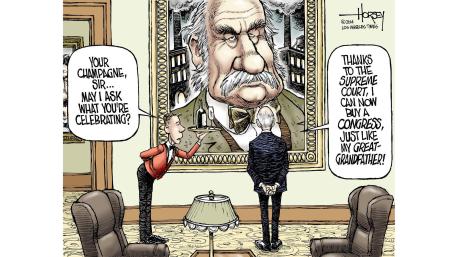 k Udall is slugging it out with Republican Cory Gardner. This is one race that looks safe for the Dems but they are really depending on women and minorities. This is a similar situation for Mary Landrieu in Louisiana.
Like all competitive Senate races, the neck-and-neck contest in Colorado may determine which party controls the Senate, but the race is also the central battleground for the fight between Republicans and Democrats over female voters. Will Democrats win by returning to the tested playbook of focusing on reproductive issues to run up their support with women, or have Republicans found a way to blunt that attack? The outcome will render a verdict on the principal strategic gambit of the Democratic Party, and it will contribute to a running debate within Republican ranks. Can the GOP win in competitive states—and even a national presidential contest—with its current positions, or must its candidates do more than offer cosmetic changes to core beliefs?
In two days this week, three new ads were launched in this Colorado race. In one, Udall spoke directly to the camera, saying his opponent is “promoting harsh anti-abortion laws and a bill to outlaw birth control.” The Democratic outside group NextGen Climate ran an apocalyptic ad in which it claimed Gardner’s position on contraception meant “he’d like to make your most private choices for you.” The pro-Republican group Crossroads GPS put up its own ad in which four women standing around a kitchen island bemoan that Udall wasn’t talking about issues that matter.
These ads are only the most recent volleys over a set of issues that have dominated the campaign since April. Two of Udall’s first three ads hammered Gardner on his conservative position on abortion and past support for the state’s “personhood” initiatives, which would grant a fetus rights and protections that apply to people. National Democratic organizations have been hammering these issues too, as has Planned Parenthood. “There’s been so much advertising touching on so-called ‘women’s issues’ in this race that it’s noticeable when a Democratic ad doesn’tmention them,” says Elizabeth Wilner, vice president of Kantar Media Ad Intelligence, which tracks campaign and issue advertising.
Democrats need women to turn out to vote in all of their toughest races, including Colorado. (Women are so important in the contested states that in my notes from interviewing one top Democratic strategist who described the key factors in each of those races, I scribbled the Venus symbol next to seven of them.) The challenge is to get women to turn out in a nonpresidential year. In 2010, 22 million fewer unmarried women voted than in 2008, according to a study by the Voter Participation Center and Lake Research Partners. Among married women, the drop-off was 10 million.
This is going to be a really interesting midterm election and it’s important. That’s why I’ve decided to work my ass off. I don’t want to think that I could’ve done something and sat home.
It certainly looks like it isn’t going to quiet down any time soon. It will probably get uglier. What’s on your reading and blogging list today?
Monday Reads: Representing for Banned Books Week 2014
Posted: September 15, 2014 Filed under: morning reads, The Media SUCKS | Tags: banned book week, beltway media, establishment media, sexism in media, Washington insiders 32 Comments Good Morning!
Did you know that September 21-27 is Banned Books Week? I’m going to be sharing some covers of banned books in this post. I also would like to recommend buying these books or donating to a public library supporting banned book week as a way to support literacy and freedom of expression. You still have time to attend an event at many local libraries!!
One of the great things I’ve found is that the libraries that are doing the most recognition of the week are in states where book banning has been rampant. This is from the Nashville Public Library.
“James and the Giant Peach,” “The Great Gatsby,” “1984,” “The Grapes of Wrath.” These are just some of the books that have either been banned or had their place on library shelves and in curricula challenged at some point.
The American Library Association keeps annual lists of challenged books, as well as a roster of classic books that have faced similar challenges over the years. Many of the books are such a part of our consciousness — and quite a few have been adapted into beloved and acclaimed films — that their presence on anyone’s target list might be surprising.
Through readings, film screenings and other programming, the Nashville Public Library is observing Banned Books Week, which takes place Sept. 21-27.
How about a deck of trading cards with the covers of Banned Books from the Lawrence Kansas  Public Library! They have decks from 2013 and now 2014 available and it’s a great cause! It helps the library there!
One of Lawrence’s most endearing collector’s items will be back on the market next week when the Lawrence Public Library celebrates the freedom to read by handing out trading cards of banned books designed by local artists.
The designs of this year’s deck of seven cards, and the artists behind them, will be announced Sept. 18 at 7 p.m. in the library’s auditorium at 707 Vermont St. The following week, from Sept. 21-27, during the nationwide Banned Books Week, the library will hand out one card per day for free.
The cards, which are supposed to illustrate the themes of a book that’s faced censorship, first appeared two years ago and attracted some national attention for the project’s creativity, forcing the library to order an extra printing and mail them all over for a small price.
“It’s a really fun and quirky thing we do that really relates to what Lawrence stands for as a community,” marketing director Jeni Daley said.
Thirty-eight artists submitted designs this year, with a book of their choice serving as inspiration. The winners, already decided by a panel of judges, also include a middle school student, Daley said. All artwork submissions will be viewable in the library.
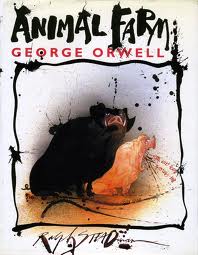 How about buying one of the banned children’s books or YA fiction books for that special child in your family? One of the things that I love doing is sending gifts at unexpected times to the people that I love. Both my girls will be getting copies of a “banned book” next week. I prefer unexpected gift giving to obligatory holiday guilt gift giving.
The ALA keeps a list of banned books and ways to find them and how to buy copies.
Top ten frequently challenged books of 2013 has been released as part of the State of America’s Library Report. Find out which books made the list.
The ALA promotes the freedom to choose or the freedom to express one’s opinions even if that opinion might be considered unorthodox or unpopular and stresses the importance of ensuring the availability of those viewpoints to all who wish to read them.
A challenge is an attempt to remove or restrict materials, based upon the objections of a person or group. A banning is the removal of those materials. Challenges do not simply involve a person expressing a point of view; rather, they are an attempt to remove material from the curriculum or library, thereby restricting the access of others. As such, they are a threat to freedom of speech and choice.
The ALA Office for Intellectual Freedom (OIF) promotes awareness of challenges to library materials and celebrates freedom of speech during Banned Books Week. This event is typically observed during the last week of September of each year. See Banned Books Week for information and resources for getting your library or organization involved in this event!
These are the topics that are most likely to elicit a challenge according to an ALA study from 2000-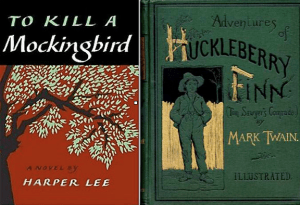 2009. As you can see, much of this appears to be efforts to control things a lot of people think are morally offensive.
Over this recent past decade, 5,099* challenges were reported to the Office for Intellectual Freedom.
- 1,577 challenges due to “sexually explicit” material;
- 1,291 challenges due to “offensive language”;
- 989 challenges due to materials deemed “unsuited to age group”;
- 619 challenged due to “violence”‘ and
- 361 challenges due to “homosexuality.”
Further, 274 materials were challenged due to “occult” or “Satanic” themes, an additional 291 were challenged due to their “religious viewpoint,” and 119 because they were “anti-family.”
You’ll notice that most seem to offend our society’s primary superstition. So much for separation of specific church dogmas and the rest of us. What’s your favorite banned book?
So, I’m going to move to journalism and the folks that write, run, and pundit themselves into believing they’re important. This bit is from two columns last week written by Ezra Klein–our own Beltway Bob–and his wife who now writes for New York Magazine. Annie Lowrey has also written for Salon and NYT so between Klein’s time at WAPO, they basically come from the same Skinner Box. Lowrey wants to know why all “media disruptors” are exclusively white males.
It’s happening again. There’s a list of “media disruptors.” It’s predominantly white dudes. It need not be. And people are fed up.
For, in the new-media renaissance of the past few years, there are women and minority “disruptors” everywhere if you only take the time to look. There’s Jane Pratt of xoJane; Ben Huh of Circa; Sharon Waxman of the Wrap; Sommer Mathis of CityLab; Mary Borkowski, Rachel Rosenfelt, Jennifer Bernstein, and Ayesha Siddiqi of the New Inquiry; Sarah Lacy of PandoDaily; Nitasha Tiku of Valleywag; Mallory Ortberg and Nicole Cliffe of the Toast; and Susan Glasser of Politico Magazine. That’s only off the top of my head.
There are three pernicious and interrelated phenomena at work here. First, founders are disproportionately white dudes. Second, white dudes are disproportionately encouraged to become founders. Third, white dudes are disproportionately recognized as founders.
Let’s take that last problem first. There’s a tendency for the media – indeed, for people in general — to see white dudes as “founders” or “entrepreneurs” or “bosses” or “disruptors” and to see women and people of color as anything else. The impulse is deep-seated. When you think of a leader, Jack Donaghy pops into your head rather than Oprah. When you’re to think of management characteristics, you tend to think of characteristics ascribed to men, not women.
Ultimately, this phenomenon can lead to the erasure of women and minorities in leadership roles from the picture — as in Vanity Fair’s list making the rounds today. My husband, Ezra Klein, is a founder of Vox, along with his partners Melissa Bell and Matthew Yglesias. Ezra ended up on the list, but Matt and Melissa did not. It is not the first time it has happened, either.
Well, Annie, maybe THIS has something to do with it. There are fewer women leading newsrooms than ever before. This from a transcript from PBR News Hour. Oh, btw, I do not think of a fictional TV character as a media leader over a real person like Oprah Winfrey. However, there are not many women that could raise the kind of money it takes to launch a media outlet because of the good old boy nature of the banking industry. Still, the first modern media mogul I think about is Katharine Graham, tyvm. She oversaw WAPO when it was really worth a read.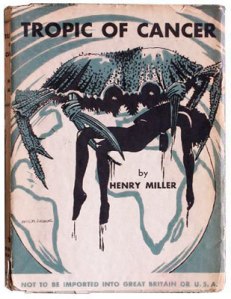
HARI SREENIVASAN: Women hold few positions of authority in newsrooms across the United States. This according to a Nieman report published on Thursday by a Nieman Foundation for Journalism at Harvard.
For more about this, we’re joined now from Portland, Ore., by Anna Griffin, she is a reporter and editor at the Oregonian and is the author of the report. So, how significant are the disparities between men and women when it comes to leadership positions in newsrooms?
ANNA GRIFFIN: They are really, really stark. Women in the United States make up something like 35 percent of all newspaper supervisors, they run three of the top 25 circulation newspapers and the numbers translate internationally too. Women run one of the top 25 circulation international newspapers. So, it is an industry wide problem.
HARI SREENIVASAN: This isn’t a pipeline issue. There are as many women coming out of journalism programs, or communication programs in colleges, so what’s happened, what’s behind this?
ANNA GRIFFIN: That’s a great question. That’s part of what we try to get into and I think answering it is really complicated, because as you mentioned what we see is, coming out of journalism schools women make up half the population of young journalists, and over the next 20 years of so every time you take a five-year snapshot, the percentage of women has dropped.
And to get into those leadership roles, particularly at old-school, mainstream news organizations, you have to stick around. Experience still plays a large part in who gets promoted, especially who gets picked for top jobs. Women are opting out, they’re opting out earlier and earlier.
In some cases it’s the answers you would expect. Anybody who wants to have a family has to make a really hard choice, because journalism it’s a hard job. It’s a low-paying job, it’s a job that requires a lot of flexibility in your schedule.
But it’s not just that, even in countries that have really family friendly policies that let women and men go spend a lot of time with their families and then guarantee them their jobs by when they get back. The percentages are really similar. It’s not just what you think it is, it’s something systemic that we’re really as an industry struggling to put our fingers around.
HARI SREENIVASAN: What are some of the consequences, let’s say editorially, is the news that we consume different when women are in positions of leadership?
ANNA GRIFFIN: The academic studies are really mixed on whether there is a tangible ‘today’s newspaper looks different,’ but what we know, and I think you can draw some conclusions from this is that organizations that are run by women tend to quote more women, tend to review more books by women, tend to have women covering harder news beats.
Every editor, male or female, has their own personal style, their own preference in the kinds of stories they like their people to cover. But I think the broad answer to that is women and men do think differently and different women and men think differently.
Particularly in mainstream media, our job is to reflect the entire community that we covered at any given organization, you need as broader range of voices as possible. And that’s just not happening right now in a lot of places. In a lot of places it’s exactly who you would expect, you know the middle-aged, white man making the choices. And all of us have blind spots, all of us have biases and that presents a problem.
Yes. Every one has their blind spots and biases. So, of course, this means I’m back to Beltway Bob who is just simply agog at the number of ‘effing geniuses’ in the beltway called Political Scientists.
Yes. ***SPEW TRIGGER*** Don’t sip your coffee before you read any more.
 The Washington consensus is the consensus of effing geniuses. Thomas Frank has read Klein’s piece so you don’t have to read it.
In a recent article on Vox, Ezra Klein declared that his generation of Washington journalists had discovered political science, and it is like the hottest thing on wheels. In the old days, he writes, journalists “dealt with political science episodically and condescendingly.” But now, Klein declares, “Washington is listening to political scientists, in large part because it’s stopped trusting itself.” Klein finds that political scientists give better answers to his questions than politicians themselves, because politicians are evasive but scientists are scientists, you know, they deal in “structural explanations” for political events. So the “young political journalists” who are roaring around town in their white lab coats frightening the local bourgeoisie “know a lot more about political science and how to use it” than their elders did.
Hence Klein’s title: “How Political Science Conquered Washington.”
Nearly every aspect of this argument annoyed me. To suggest, for starters, that people in Washington are—or were, until recently—ignorant or contemptuous of academic expertise is like saying the people of Tulsa have not yet heard about this amazing stuff called oil. Not only does Washington routinely fill the No. 1 spot on those “most educated cities” articles, but the town positively seethes with academic experts. Indeed, it is the only city I know of that actually boasts a sizable population of fake experts, handing out free-market wisdom to passers-by from their subsidized seats at Cato and Heritage.
The characteristic failing of D.C. isn’t that it ignores these herds of experts, it’s that it attends to them with a gaping credulity that they do not deserve. Worse: In our loving, doting attentiveness to the people we conceive to be knowledgeable authorities, we have imported into our politics all the traditional maladies of professionalism.
The powerful in Powertown love to take refuge in bewildering professional jargon. They routinely ignore or suppress challenging ideas, just as academics often ignore ideas that come from outside their professional in-group. Worst of all, Washingtonians seem to know nothing about the lives of people who aren’t part of the professional-managerial class.
How well-known is this problem? It is extremely well known. One of the greatest books of them all on American political dysfunction, David Halberstam’s “The Best and the Brightest” (1972), is the story of how a handful of poli-sci geniuses got us into the Vietnam War. How political science conquered Hanoi, you might say, except that it didn’t exactly work out like that.
You can see this dysfunction for yourself in the headlines of recent years. Ever wonder why the foreign policy authorities never seem to change, keep coming back, despite racking up shattering failures like the Iraq War? It’s because of the way Washington worships expertise, and the way these authorities have perched themselves atop a professional structure that basically does not acknowledge criticism from the outside.
Ever wonder why the economic experts never seem to change, keep coming back, despite racking up such shattering failures as the housing bubble and the financial crisis and the bank bailouts? Ever wonder why a guy like Larry Summers gets to be chief economist at the World Bank, then gets to deregulate Wall Street, then gets to bail Wall Street out, then almost gets to become chairman of the Fed, and then gets to make sage pronouncements on the subject of—yes— inequality? It’s for the same bad reasons: Because D.C. worships expertise and because Summers, along with a handful of other geniuses, are leading figures in a professional discipline dominated by what a well-informed observer once called a “politburo for correct economic thinking.”
Some people are ignored in this town even though they are often right while others are invited back to the Oval Office again and again even though they are repeatedly wrong—and the reason is the pseudo-professional structure of the consensus. No one has described how it works better than Larry Summers himself. “I could be an insider or I could be an outsider,” Elizabeth Warren says Summers told her, back in the bailout days.
“Outsiders can say whatever they want. But people on the inside don’t listen to them. Insiders, however, get lots of access and a chance to push their ideas. People — powerful people — listen to what they have to say. But insiders also understand one unbreakable rule: They don’t criticize other insiders.”
Okay, so I just have to go back to the Klein article before I turn you into fans of burning Washington pundits in effigy along with copies of their articles. Yes, folks, Political Science has conquered the Beltway and Beltway Bob.
American politics is changing. Politicians are losing power and political parties are gaining it. A politician’s relationships might once have been a good guide to her votes. Today, the “D” or “R” after a politician’s name tells you almost everything you need to know.
Part of the rise of political science is the result of the blogosphere. Crooked Timber, the Monkey Cage, the Mischiefs of Faction and other poli-sci blogs have let political scientists speak for themselves. But that’s only benefitted political science because what they’ve said has been worth listening to.
Political scientists traffic in structural explanations for American politics. They can’t tell you what an individual senator thinks, or what message the president’s campaign will try out next. But they can tell you, in general, how polarized the Senate is by party, and whether independent voters are just partisans in disguise, and how predictable elections generally are. They can tell you when American politics is breaking its old patterns (like with the stunning rise of the filibuster) or when people are counting on patterns that never existed in the first place (like Washington’s continued faith in the power of presidential speeches).
As politicians lose power and parties gain power, these structural explanations for American politics have become more important. That’s what I’ve found, certainly. Talking to members of Congress and campaign operatives is useful, but not terribly reliable. Politicians are endlessly optimistic — in their line of work, they almost have to be — and they want to believe that they and their colleagues can rise above party and ignore special interests. But they usually can’t. They begin every legislative project hoping that that this time will be different. But it usually isn’t. An understanding of the individual dynamics in Congress or in the White House can be actively misleading if it’s not tempered by a sense of the structural forces that drive outcomes in American politics.
 Yes, forget all politics are local and other meaningless adages. Just grab yourself a copy of SPSS, a database, and makes some loose associations between issues, geography, and tribal identifications. After all, economists are great at predicting the economy, meteorologists certainly predict the weather well, so why not rely on your local political scientists to predict election quirks via “structural forces”.
One of my favorites duties in a hinterland branch of the Federal Reserve bank came when the President of the District was about ready to do his duty on the Open Market Committee. He would come armed with all this research from the economists and just a few more things. Each of the branches would arrange a shindig and invite representative business owners, farmers, oil and gas company executives, etc to give him an earful. Were they going to add inventory? People? More fields? How did they feel about the future of their businesses?
After pouring over the charts, he’d weight it all by the news on the ground of these industries and people that drove the district’s economy. It was his acid test before voting to raise or lower interest rates or give a speech or print up the cover letter to the District’s stats and forecasts. It made all those numbers sing and dance to a tune. It put a Main Street face to a stat. I remember that one of the first things I did while trying to figure out why so many businesses were using derivatives that seemed beyond the grasp of most operational finance people was to call my exhusband of the perfect SAT score and ask him if he crunched through the Black Scholes model or something else to hedge their Fannie and Freddie portfolios at his rather large Insurance company. He had no idea. They paid other people to do that and they just followed along. Did he understand any of it? Not even this guy who took advanced engineering mathematics at university knew what the hell was going on. That’s when you say to yourself, there’s some trouble here. It’s great to be a researcher and a PhD but it’s also good to know the limitations of your models. It’s also important that the people who rely on your research understand those limits too.
And with that, I leave you to savor a banned book. Gosh, look how many of them are in my library!!!
What’s on your reading and blogging list today?

 peej
peej Carissa
 bostonboomer
 dakinikat
 ecocatwoman
 jjlo
jjlo mablue2
 Mama Lopez
 peggysue22
 quixote
 skydancingguestblogger
 Mona (aka Wonk the Vote)





Recent Comments