
Friday Reads: Change is gonna come, but will it be good?
Posted: January 16, 2015 Filed under: morning reads 12 CommentsGood Morning!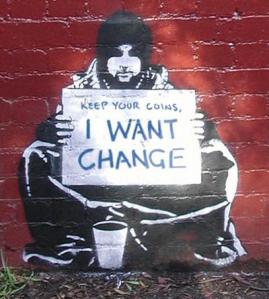
There’s a new year on us and a New Year for the radical right to shove their agendas down the country’s throat in the myriad of places they’ve managed to overrun via Republican Presidents and low turn-out elections. As I’ve written before, they are highly outnumbered in most places with large populations but those outback states just won’t stop sending the crazies to the District. The Supreme Court is set once again to hear arguments on same-sex marriage. Why can’t freak republicans stay out of other people’s relationships, sex lives, and bodies? They have a completely unhealthy interest in women’s privates and gay’s sex lives, I swear.
On Friday, the Supreme Court justices will be meeting to decide whether to hear a case — or multiple cases — challenging a ban on same-sex couples’ marriages.
This will be the second time the justices have considered whether to take any of the cases out of Kentucky, Michigan, Ohio, and/or Tennessee. When they did so on Jan. 9, they took no action on those cases, instead re-listing them for discussion on Friday.
This is a new practice by the court over the past year or so, re-listing cases they are considering taking once before accepting a case, called granting a writ of certiorari.
The justices did, however, deny an attempt by same-sex couples in Louisiana to have the Supreme Court hear their case before the appeals court — which heard their appeal on Jan. 9 — decided on the appeal.
Now, however, they are faced with choosing whether they will hear one or more of the four other cases — a decision that will foretell whether the justices intend to resolve the question of bans on marriage for same-sex couples nationwide by this June.
 What on earth are the justices going to do with the huge number of states that are now recognizing gay marriage that could possibly appease the holdouts like Bobby Jindog’s Lousyiana? Has Scalia been riding Kennedy like a Tennessee thoroughbred over his last few swing votes on the issue?
The first rule of the Supreme Court is that there are, basically, no rules for the Supreme Court. The court can reverse prior decisions, and the court’s policies and practices can change if the justices so desire it. As a result of this, it’s difficult to know what the justices are going to do at any given moment.
With that giant caveat, the justices most likely are going to decide on Friday to take one or more cases for review this term — which would mean a decision would be expected by the end of June.
The pace and pure number of all of the cases making their way up the chain have, effectively, forced the justices’ hands on the matter. Even if they had hoped in 2013, by dismissing the California Prop 8 challenge, to put off the issue for another four or five years, the issue came back to them far more quickly than that. Even if they had hoped this past October, by denying certiorari in cases where the bans had been struck down, to put off the issue until next term, the 6th Circuit decision came quickly enough to bring the issue up to the justices a second time this term.
This time, there is no good way for the justices to dodge the issue. And, while the justices could keep re-listing the cases until it forces them into the next term, such a move seems unlikely given the current climate.
Assuming the justices are going to take at least one of the cases, they also must decide which one they will take.
The four cases in which plaintiffs are seeking certiorari are not the same.
In Michigan, a full trial was undertaken in response to April DeBoer and Jayne Rowse’s challenge, who are seeking to be married in Michigan. This case is, in simpler terms, a marriage case.
In Ohio and Tennessee, on the other hand, the plaintiffs are seeking recognition of same-sex couples’ marriages granted by other states. In Ohio, James Obergefell is seeking recognition of his marriage to John Arthur on Arthur’s death certificate. Other plaintiffs in Ohio, including Brittni Rogers and Brittani Henry, are seeking recognition of their marriage on their children’s birth certificates and for other purposes. In Tennessee, plaintiffs, including Valeria Tanco and Sophy Jesty, are seeking recognition of their marriages for a wide variety of purposes. The Tennessee plaintiffs also challenge whether Tennessee’s recognition ban violates their right to interstate travel.
In Kentucky, meanwhile, some plaintiffs, including Timothy Love and Lawrence Ysunza, challenge the state’s marriage ban while other plaintiffs, including Gregory Bourke and Michael Deleon, challenge the marriage recognition ban.
If the justices are looking to the lawyers to help them decide which case to take — an issue examined at length in a recent blockbuster Reuters report — then the Kentucky plaintiffs’ addition of Stanford Law School’s Jeffrey Fisher to their legal team and the Tennessee plaintiffs’ help from Ropes & Gray’s Douglas Hallward-Driemeier could be a bonus for their teams.
The actions of SCOTUS are beginning to remind me of all the ways the North tried to appease the South before over slavery. How can anyone not see this as an equal rights under the law issue?
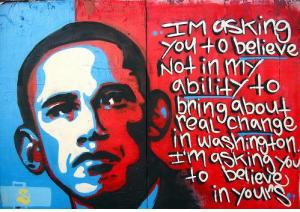
So, many folks are now embracing the Obama last two years and looking back on them wistfully and otherwise. Will America miss Obama when he’s gone?
After leaving office, Obama may enjoy an unusually strong surge in support. His presidency makes a potentially great story: the first African-American in the White House, who helped the country recover from recession and ended two wars. Obama’s tale fits neatly into the overarching American narrative of expanding liberty. That rosy story has been lost amid the grinding business of government. But after 2016, hope and change could make a comeback. To support Obama after 2016 will be to embrace racial progress, to feel good about one’s country and oneself.
And Obama may also benefit from the Republican mid-term victories in 2014. If the GOP overreaches, Obama could leave office looking like the guardian of moderation.
Obama has been a good president. But he could be a great ex-president. With his intelligence, calmness, and good humor, together with his strong and attractive family, he’s a natural fit for the roles of memoirist, humanitarian, professor, and elder statesman.
By the end of the decade, Obama’s personal approval ratings could be 60 percent or higher. Historians may place him toward the top of the all-star rankings. Interestingly, more people may claim they voted for Obama than actually did vote for him. Pollsters routinely find that people misreport their behavior in a bid for social desirability. In the 1964 presidential election, for example, Lyndon Johnson won a crushing victory over Barry Goldwater. Afterward, the number of Americans who admitted voting for Goldwater was 6 percent shy of the real figure. If there’s a wave of Obama nostalgia, expect some non-voters, or even John McCain and Mitt Romney supporters, to say they backed the first African-American president.
Of course, none of this is set in stone. The depth of the nation’s love affair with post-presidential Obama will hinge on the next two years.
 Many think that all he has to do is avoid being Dubya.
President Obama delivers his penultimate State of the Union address on Tuesday — a speech that is expected to set the course for his work with the newly GOP-controlled Congress over his final two years in office.
And unavoidably, talk will turn to Obama’s legacy and where he stands. (Already, New York Magazine has run a feature asking 53 historians what Obama must do to cement his legacy.)
While Obama has certainly been battered over his six years, he can at least say this: He’s in considerably better shape than his predecessor, George W. Bush, heading into the home stretch.
While Obama’s and Bush’s numbers rivaled each other for the better part of the middle of their presidencies — complete with hard-fought reelection races — Obama in recent months has differentiated himself from the tail end of the Bush years, keeping his approval rating steadily above 40 percent.
I’m not sure watching the polls is the answer. Anyway, Tuesday is the SOTU and we’ll be here with live blogging. And guess which loon is giving the Republican rebuttal? It’s Senator Castrate-a-Hog!! Iowa Senator Joni Ernst Michelle Bachmann on steroids so this should be a whole lotta fun! Will she look as crazed as Bachmann? As incoherent as Jindal? As thirsty and boring as Rubio?
Sen. Joni Ernst will deliver the Republican rebuttal to President Barack Obama’s State of the Union Address on Tuesday night, thrusting her into a prominent role that has proved challenging to previous GOP speakers.
Senate Majority Leader Mitch McConnell on Thursday pegged Ernst, an Iowa Republican elected in November, for the nationally prominent speaking role.
In picking Ernst, McConnell, R-Ky., and House Speaker John Boehner, R-Ohio, emphasized her commitment to the middle class and suggested her remarks would focus on GOP efforts to address middle-class families’ needs.
“Sen. Ernst’s life is a quintessential ‘only-in-America’ story,” Boehner said in a statement. “She built a campaign by listening to the people of Iowa and focusing on their priorities, especially jobs and our still-struggling economy.”
She basically wasn’t the democratic candidate who was caught telling trial lawyers he was one of them and was going to Washington to represent them. That sort’ve thing calls for a good old horse whipping in Iowa. My guess is she’ll be a one term Senator if she says all the loonie crap she spouted on the campaign trail. She’s cornfield Snookie!
Anyway, things are changing. Let’s just hope it’s for the better eventually!
What’s on your reading and blogging list today?
Monday Reads: Charlie Hebdo and Fashionable Faux and Haute Outrage
Posted: January 12, 2015 Filed under: Barack Obama, Foreign Affairs, morning reads, U.S. Politics | Tags: Boko Harum, Charlie Hebdo, faux outrage, golden globes, haute outrage, John Kerry, red state wingnuts 55 Comments Good Morning!
It’s one of those days where I feel that there is absolutely no news out there I want to share. I’m more than a bit irritated by the way the Charlie Hebdo attacks are being blithely used by some to try to score faux outrage points. I’m also equally mad that it now appears to be an attention-grabbing gimmick for the rich and banal.
The first thing to piss me off is that wingnuts are griping about our President not dropping everything to attend a French rally. I am really getting tired of every single thing being turned into an opportunity for racists to attack Obama.

This is the photo op that Obama was supposed to show up for.
France is in the EuroZone. This means the level of cooperation between European states is akin to New York’s relationship with Louisiana on many many levels. Some of its former colonies were also in attendance at the rally as was Bibi since the second attack killed and injured Israelis. The colonial nations are connected by language and much more. A rally isn’t a normal thing for any of head of state to attend unless a leader or head of state is part of the entity. I’d like to think it’s just about stupid Americans not having much of a clue about European Unification and the Colonial Age, but really it seems just another crazed meme from the pissed off red state hicks still longing for white hegemony. For example, CNN has really gone down the crapper to join in on this.
The heads of Great Britain, Germany and Israel were there.
But President Barack Obama didn’t attend a unity march in Paris on Sunday, days after the deadly attack on the satirical newspaper Charlie Hebdo. Nor did his secretary of state, John Kerry, who has deep ties to France.
Kerry was in India, attending an entrepreneurship summit with new Prime Minister Narendra Modi — with whom the United States is hoping to develop much closer trade ties.
Instead, the United States was represented by U.S. Ambassador to France Jane Hartley.
Attorney General Eric Holder was also in Paris, attending a security summit on combating terrorism. He recorded interviews that appeared on several U.S. news outlets Sunday, but was not spotted at the unity march.
No one from the administration would speak on record about the U.S. representation at the march.
“Attorney General Holder — a Cabinet level official — is representing the United States at the security meetings in Paris today. He is joined by the DHS Deputy Secretary [Alejandro] Mayorkas. The United States is represented at the march by Ambassador Hartley,” a senior Obama administration official said.
An administration official added: “As far as public signs of French solidarity from the U.S. — don’t forget several public statements from the President, his call to [French President Francois] Hollande and a condolence stop to the French embassy.”
Beyond that, the official said “all relevant components” of the U.S. government have been aiding their French counterparts, in some cases on “essentially a minute-by-minute basis to support their efforts.”
On Sunday night, a White House official who also asked not to be named added: “It is worth noting that the security requirements for both the President and (Vice President) can be distracting from events like this – for once this event is not about us!” The official did not address how other prominent world leaders were able to work around the security requirements.
How on earth would France even prepare for a presidential visit on such short notice? Well, anyway, most of the leaders were within an hour plane hop of Paris with the exception of a few middle eastern and African countries and they don’t require massive security.
On that note, I’m particularly pissed that we can still get all in a hissy about religious extremists practicing Islam that go on killing sprees when we ignore white Christian extremists. Then, we give Israel repeated passes on its war crimes against the Palestinian territories which should be a Palestinian state by now. It’s selective Faux Outrage. Did the entire world come over to us and rally when our home grown terrorists created horrific killing events? Or, did everyone just write it off as the usual few crazed Americans. Why do right wing christian terrorists get labeled crazed loners?
The deal is that any kind of mass killing is rare in France because France doesn’t allow its citizenry to run about the place with semiautomatic weapons as a general rule. Over here, white men go on killing sprees all the time and we’re lucky if any one notices. France also treats its transplants rather well instead, of continually telling them they don’t want them. Here’s three of the top ten Homegrown Terrorist Attacks in the US from a list of 10.
When white males of the far right carry out violent attacks, neocons and Republicans typically describe them as lone-wolf extremists rather than people who are part of terrorist networks or well-organized terrorist movements. Yet many of the terrorist attacks in the United States have been carried out by people who had long histories of networking with other terrorists. In fact, most of the terrorist activity occurring in the United States in recent years has not come from Muslims, but from a combination of radical Christianists, white supremacists and far-right militia groups.
Below are 10 of the worst examples of non-Islamic terrorism that have occurred in the United States in the last 30 years.
1. Wisconsin Sikh Temple massacre, Aug. 5, 2012. The virulent, neocon-fueled Islamophobia that has plagued post-9/11 America has not only posed a threat to Muslims, it has had deadly consequences for people of other faiths, including Sikhs. Sikhs are not Muslims; the traditional Sikh attire, including their turbans, is different from traditional Sunni, Shiite or Sufi attire. But to a racist, a bearded Sikh looks like a Muslim. Only four days after 9/11, Balbir Singh Sodhi, a Sikh immigrant from India who owned a gas station in Mesa, Arizona, was murdered by Frank Silva Roque, a racist who obviously mistook him for a Muslim.
But Sodhi’s murder was not the last example of anti-Sikh violence in post-9/11 America. On Aug. 5, 2012, white supremacist Wade Michael Page used a semiautomatic weapon to murder six people during an attack on a Sikh temple in Oak Creek, Wisconsin. Page’s connection to the white supremacist movement was well-documented: he had been a member of the neo-Nazi rock bands End Empathy and Definite Hate. Attorney General Eric Holder described the attack as “an act of terrorism, an act of hatred.” It was good to see the nation’s top cop acknowledge that terrorist acts can, in fact, involve white males murdering people of color.
2. The murder of Dr. George Tiller, May 31, 2009. Imagine that a physician had been the victim of an attempted assassination by an Islamic jihadist in 1993, and received numerous death threats from al-Qaeda after that, before being murdered by an al-Qaeda member. Neocons, Fox News and the Christian Right would have had a field day. A physician was the victim of a terrorist killing that day, but neither the terrorist nor the people who inflamed the terrorist were Muslims. Dr. George Tiller, who was shot and killed by anti-abortion terrorist Scott Roeder on May 31, 2009, was a victim of Christian Right terrorism, not al-Qaeda.
Tiller had a long history of being targeted for violence by Christian Right terrorists. In 1986, his clinic was firebombed. Then, in 1993, Tiller was shot five times by female Christian Right terrorist Shelly Shannon (now serving time in a federal prison) but survived that attack. Given that Tiller had been the victim of an attempted murder and received countless death threats after that, Fox News would have done well to avoid fanning the flames of unrest. Instead, Bill O’Reilly repeatedly referred to him as “Tiller the baby killer.” When Roeder murdered Tiller, O’Reilly condemned the attack but did so in a way that was lukewarm at best.
Keith Olbermann called O’Reilly out and denounced him as a “facilitator for domestic terrorism” and a “blindly irresponsible man.” And Crazy for God author Frank Schaffer, who was formerly a figure on the Christian Right but has since become critical of that movement, asserted that the Christian Right’s extreme anti-abortion rhetoric “helped create the climate that made this murder likely to happen.” Neocon Ann Coulter, meanwhile, viewed Tiller’s murder as a source of comic relief, telling O’Reilly, “I don’t really like to think of it as a murder. It was terminating Tiller in the 203rd trimester.” The Republican/neocon double standard when it comes to terrorism is obvious. At Fox News and AM neocon talk radio, Islamic terrorism is a source of nonstop fear-mongering, while Christian Right terrorism gets a pass.
3. Knoxville Unitarian Universalist Church shooting, July 27, 2008. On July 27, 2008, Christian Right sympathizer Jim David Adkisson walked into the Knoxville Unitarian Universalist Church in Knoxville, Tennessee during a children’s play and began shooting people at random. Two were killed, while seven others were injured but survived. Adkisson said he was motivated by a hatred of liberals, Democrats and gays, and he considered neocon Bernard Goldberg’s book, 100 People Who Are Screwing Up America, his political manifesto. Adkisson (who pleaded guilty to two counts of first-degree murder and is now serving life in prison without parole) was vehemently anti-abortion, but apparently committing an act of terrorism during a children’s play was good ol’ Republican family values. While Adkisson’s act of terrorism was reported on Fox News, it didn’t get the round-the-clock coverage an act of Islamic terrorism would have garnered.
Go to the link to read the rest.
I’m just getting tired of Faux news and Faux outrage and selective attention. But, I’m not the only one. Here’s a Dutch Cartoonist that works at Charlie Hebdo.
A prominent Dutch cartoonist at Charlie Hebdo heaped scorn on the French satirical weekly’s “new friends” since the massacre at its Paris offices on Wednesday.
“We have a lot of new friends, like the pope, Queen Elizabeth and (Russian President Vladimir) Putin. It really makes me laugh,” Bernard Holtrop, whose pen name is Willem, told the Dutch centre-left daily Volkskrant in an interview published Saturday.
France’s far-right National Front leader “Marine Le Pen is delighted when the Islamists start shooting all over the place,” said Willem, 73, a longtime Paris resident who also draws for the French leftist daily Liberation.
He added: “We vomit on all these people who suddenly say they are our friends.”
Commenting on the global outpouring of support for the weekly, Willem scoffed: “They’ve never seen Charlie Hebdo.”
“A few years ago, thousands of people took to the streets in Pakistan to demonstrate against Charlie Hebdo. They didn’t know what it was. Now it’s the opposite, but if people are protesting to defend freedom of speech, naturally that’s a good thing.”
 Exactly. No more was this “fashionable” side of protest noticeable than at the Golden Globes where “Je Suis Charlie” signs were as rampant on the red carpet as haute couture. Call it Haute Outage. Nothing says poseur like holding a protest sign at an event designed to make Big Hollywood feel like they’re relevant to anything but the bread and circuses that entertain Fox Nation when they’re not glued to ESPN.
George Clooney led the Hollywood charge at Sunday’s Golden Globes lending public support to Charlie Hebdo, the satirical Parisian newspaper attacked last week by armed gunmen. The Cecil B. DeMille Award winner walked the red carpet with a black and white “Je Suis Charlie” button on his tux, while wife Amal Alamuddin wore a Charlie Hebdo tribute on her purse.
Clooney tonight receives the Cecil B. DeMille Award for “outstanding contributions to the world of entertainment.” In an open letter penned today, Harvey Weinstein called for tonight’s Globes attendees to remember those killed in the January 7 attack: “Charlie Hebdo is a reminder of the beauty of art and the beauty of language. No one can ever defeat the ability of great artists to show us our world.”
More updates on Hollywood’s solidarity with Charlie Hebdo as they come…
Raise your hand if you think any of these folks even knew what Charlie Hebdo was prior to this.
 It’s one thing to be in solidarity with humanity suffering but it’s a completely different thing to do this only at one instance of slaughter while not noticing that a day later THIS HAPPENED:
At least 19 people are reported to have been killed when militants strapped a bomb to a girl estimated to have been about 10 years old and sent her into a crowded poultry market in Maiduguri in Borno State.
Read that and ask yourselves why I had to pull that story off of an African news site. Boko Harum insurgents most likely killed 2000 people in a small village in Nigeria filled with old people and children. The only mainstream site that I’ve found reporting these massive terror attacks is MSNBC and Melissa Harris Perry. Where the fuck is the outrage on that?
Believe me, I find the Charlie Hebdo killings horrible. And, so do most Muslims, which is another freaking faux meme that keeps floating around when these things happen. So, Benjamin Netanyahu goes to a rally to bring attention to the shootings. But what about this? And so I also say fuck off to all those racists that say that no Muslims of any stature condemn religious extremism.
Hezbollah leader on Charlie Hebdo: ‘Extremists more offensive to Islam than cartoons’.
Islamic extremists following a ‘takfiri’ ideology are more offensive to the Prophet Mohammed than Western satirical cartoons, chief of the Lebanese military faction Hezbollah, Hasan Nasrallah, said following the Charlie Hebdo terrorist attack.
“The behavior of the takfiri groups that claim to follow Islam have distorted Islam, the Koran and the Muslim nation more than Islam’s enemies … who insulted the prophet in films… or drew cartoons of the prophet,” the Hezbollah leader said in a televised speech to mark the birthday of the Prophet Mohammed, according to Lebanon’s Daily Star.
Militant Islam practices a ‘takfiri’ doctrine that allows it to brand other Muslims apostates for allegedly going against the faith’s true teachings.
A tragic attack on Wednesday took the lives of 12 people, when armed gunmen stormed the offices of satirical magazine Charlie Hebdo in Paris, prompting a citywide manhunt. The magazine had printed cartoons that mocked the Prophet.
Nasrallah went on to say that “Takfiris are the biggest threat to Islam, as a religion [and] as a message.”
 I hate it when the mainstream media and the popstars of the world get selective on us when it comes to loss of life and to the definition of terror. Not one child that died in Nigeria of the thousands last week deserves any less media attention and less fashion statements at a televised Hollywood onanist event. Really.
I don’t care if my President attends a rally. I want him to find a way to stop Boko Harum. I don’t want my Secretary of State at a Rally. I want him finding a way to an independent Palestinian state that’s safe from invasion and not treated like a personal gulag. Joe Biden, well, meh. Send him. But frankly, I think it was far more personal for the President to go the French Consul and express condolences to the French Ambassador and to the People of French in the pages of their book. I don’t want Faux and Haute Outrage. I want effective national policy to control our home grown terrorists in the same way the French will be searching for their policies.
There I go getting radical again. But, today, I am not Charlie.
Today, I am that 10 year old girl that was used as a human bomb to kill others that no one noticed. She was probably one of the girls stolen from her school that every one’s now forgotten. If not, she is still one of “our girls”. There should be no lack of outrage or coverage on this but there is only lack of coverage and and silence.
I also will be waiting for the list of christian leaders expressing outrage at the extremist event to be held in Baton Rouge that’s hosted by our Governor on the January 24th. On that day, I will be every GLBT person that’s died simply because they were born that way. Now if I could just find a red carpet and some paparazzi.
What’s on your reading and blogging list today?
Friday Reads: An Immodest Proposal
Posted: January 9, 2015 Filed under: 2014 elections, morning reads, U.S. Economy | Tags: Ghost States, Red State Welfare, the Buffalo Commons 37 Comments Good Morning!
One of the many things that continues to fascinate me these days is that the number of people voting for Democrats and indicating more faith in that party than the Republican one begins to grow. Yet, the results of the recent election show that it hardly matters. States with more cows than people get an equal say in the U.S. Senate and that is a problem. In fact, “Senate Democrats got 20 million more votes than Senate Republicans. Which means basically nothing.”
Here’s another: Democratic candidates in all of the races won by Republicans or Democrats got about 98.7 million votes. Republican candidates in those same races got 94.1 million.
The 20 million figure, in other words, is cherry-picked to accentuate the gap. Vox’s analysis comes from a researcher at FairVote, which advocates for reforms to how members of Congress are elected.
Interestingly, Republicans got as many votes when losing to Democrats (about 47 million) as they did when beating Democrats. Democratic losers, though, got only about 31.3 million votes in losing. In other words: Democrats won their races by 20.3 million votes combined — Republicans won theirs by 15.7 million.
Trende points out a key reason for this: Most of the Republicans won in lower-turnout elections. It’s true that there were smaller states up for grabs this year: If you total the population from every state with an election this year — including Oklahoma and South Carolina twice — and divide by the number of races, you get about 48.7 million, compared to 72.7 million on average in 2012. But Republicans won 46 of their 54 seats in 2010 and 2014, compared to the Democrats, who won 23 of their 44 in 2012. In 2010, total turnout was about 90 million. Two years later, thanks to the presidential election, it was 40 million votes higher.
Another interesting tidbit is that these states cost the country a lot more than they are literally worth. They are a huge drain on the country’s finances and require a vast number of subsidies while decrying the use of subsidies by people.
Many “red states” beat their chest as being fiscally conservative. Proud of their low income tax, business friendly environment, and self-reliance rhetoric.
But is it fair?
California, a “blue state,” gets just $.80 back for every $1 they put in. New York, even worse. They get less than $.75 on their dollar.
Whose going to start calling out the hypocrisy of some of the red states who point fingers at states like California and New York as the problem? These states want self-reliance? On what? California and New York’s goodwill?
This isn’t something Democrats should be proud of. They’re leaders are the one’s sitting there while their citizens get the short end of the stick.
Not something Republicans should be proud of either. Kinda hard to be the fiscal conservative when you ask Uncle Sam to pay your bills.
 A lot of these states were brought in as territories via the Louisiana Purchase or at the close of the Mexican American War. Most of these states have a vast amount of land–a lot of it actually owned and managed by the Federal Government–and they were probably brought in at a time when a lot of folks thought the middle of the country would eventually fill up with people or at least become a place with a viable economy. Many Native American nations were literally rolled over to create vast wastelands of ranches and natural resource extraction outposts. Does it really makes sense to continue to support the way these outback states were carved out and is there any legal way to consolidate them now?
Yes, this would decrease the number of Senators in the Senate. But, it would mean each Senator would be slightly more powerful. It actually might improve the odds of an outback state’s House delegation having more power. I mean, really, Nebraska has 3 Congressmen. Who ever listens to even one of them? They’re a basic flyover state in terms of the presidential election too. They usually get a hit and run by a vice president or vice presidential candidate. If they were part of a larger state with similar topography and concerns, they’d be part of state with a larger congressional block even though they’d fold into one or more states and thereby share a Senator with more people and antelope.
So, why can’t we look at Outback States like Idaho, the Dakotas, Oklahoma, Arizona, Utah, Idaho, Nebraska, Montana, Wyoming, Nevada, etc. and just consolidate them? Why shouldn’t Nebraska and the Dakotas become one state? Or say, why not fold Idaho, Montana and Wyoming into Washington? Why should every one in the country suffer from the leadership these outback states send to the Senate while having to pay so much for them even to exist? Is there some way to redo these old territories into larger, consolidated states with a more economically viable level of population to support the vast areas of nothing but nature that basically define their states? Could we do it?
A long time ago, I remember a proposal called The Buffalo Commons made by Frank and Deborah Popper. It was a suggestion to turn a large part of the middle of the country into a huge National Park that would be left to the wild. I bet it would still be controversial today and more impossible given that setting up more National Parks is likely to be more unpopular today than it was 40 years ago. But, many of the same problems the concept worked to solve still exist, and now we have even bigger issues since our outback states are high maintenance and tend to send representatives with a coup mentality to Congress. Why can’t we just consolidate a few of them and try to at least make them less costly to the rest of us? It’s even more important from a resource protection standpoint as indicated by the stupidity surrounding the Keystone Pipeline. This is a boondoggle which benefits the special interests of a few politicians and is likely to create risk to the many including the folks living in these states. Wouldn’t it be nice for them to have a lot more say in the future of how federal lands and federal co-option of private land operates?
In 1987, Drs. Frank and Deborah Popper developed their bold new idea for a Buffalo Commons, (Popper and Popper, “The Great Plains: From Dust to Dust, PLANNING, 1987). Their continuing research showed that hundreds of counties in the American West still have less than a sparse 6 persons per square mile — the density standard Frederick Jackson Turner used to declare the American Frontier closed in 1893. Many have less than 2 persons per square mile.
The frontier never came close to disappearing, and in fact has expanded in the Plains in recent years. The 1980 Census showed 388 frontier counties west of the Mississippi. The 1990 Census shows 397 counties in frontier status, and the 2000 Census showed 402. Most of this frontier expansion is in the Great Plains. Kansas actually has more land in frontier status than it did in 1890.
Great Plains Restoration Council mounted a Plains-wide mapping project at the county level, using a series of economic and social indicators, to show exactly where the frontier is and how much further it has expanded. GPRC than did more sophisticated mapping that scrutinized these and other factors down to the Census Block level, allowing for a much more rigorous and exact understanding of ecological, biological, geographical, topographical, demographic and political conditions. Since then, we have specifically honed our focus onto a few, key target ecological areas while developing a new model of youth education.
There once were over 400 million acres of wild prairie grasslands in the central part of North America. The backbone of the Buffalo Commons movement is the work — over a period of decades — to re-establish and re-connect prairie wildland reserves and ecological corridors large enough for bison and all other native prairie wildlife to survive and roam freely, over great, connected distances, while simultaneously restoring the health and sustainability of our communities wherever possible so that both land and people may prosper for a very long time. Future generations may choose to expand these reserves and corridors, as the new culture of caring and belonging we have started today becomes an integral, ingrained part of life in the world of tomorrow, especially as extensive grasslands become needed to help absorb carbon from the atmosphere. (Highly biodiverse native prairies are excellent carbon sequesters.)
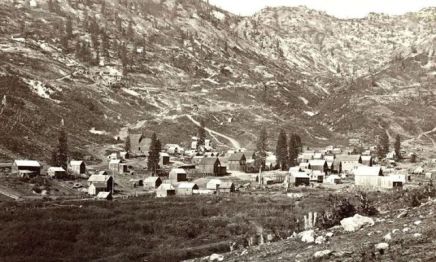 So, I’m not a legal expert, but it seems if a state can be made out of a territory then several states can be merged into something more viable for the modern country. I’d love to hear if anyone thinks this is way to bring more democratic representation to the country. Frankly, I think this could be a win win situation if some of these people would give up their provincial loyalties.
Again, the consolidation would bring a larger delegation to the House for a combined state, and it might make them feel more relevant to the Presidential election process. Right now, everyone ignores nearly every state but Colorado on the way across the Mississippi to hear about California. I’ve actually lived in states that I think would make good candidates to consolidate with other states so I do have some knowledge of what it’s like to live in the Great American Outback. I certainly believe it makes a lot of sense to look to see if those territories would’ve been dealt a better situation had they be carved out into different looking states. This is especially true since so many of them really don’t have all that many people in them and most of them are have been losing population for some time. What exactly constitutes a ghost state?
Here’s a few other things you can think on today.
Here are two studies on the Affordable Healthcare Act. One is by the Rand Corporation and the other by the Brookings Institute. It’s especially relevant to look at the link between the law and the tax credits since this is the next challenge to the law to come before SCOTUS. The last was the idea that states could opt out of the Medicaid Expansion which created a horrible situation for those of us in states ruled by Red State Crazies. First some points from the Brookings Institute.
In “The Early Impact of the Affordable Care Act State-by-State,” Brookings nonresident fellow in Economic Studies and Yale University Economics Department faculty member Amanda Kowalski finds that national enrollment trends obscure significant variation across states, as a result of the types of people who opted in and how insurers set premiums. Across all states, from before the fourth quarter of 2013 to the first half of 2014, enrollment-weighted average per-person premiums in the individual health insurance market rose by 24.4% beyond what they would have had they simply followed state-level seasonally-adjusted trends. This large increase stands in contrast to the experience in Massachusetts, which saw premium decreases after its 2006 reform, as documented by Kowalski in previous joint research. Massachusetts also saw decreases in markups (premiums minus costs), which have been rare in other states in 2014.
Kowalski focuses on the individual insurance market using data through the second quarter of 2014 after the open enrollment period ended. She characterizes states into five groups, based on their involvement in the implementation of the ACA. On one extreme were the 5 “direct enforcement” states that ceded all enforcement of the ACA to the federal government (Alabama, Missouri, Oklahoma, Texas, and Wyoming). On the other extreme were 8 states (Colorado, Connecticut, DC, Kentucky, New York, Rhode Island, Vermont, and Washington) that took the implementation of the ACA into their own hands by implementing the Medicaid expansion and setting up their own exchanges. Another group of 5 of these states also set up their own exchanges and expanded Medicaid, but experienced severe technology glitches (Hawaii, Maryland, Minnesota, Nevada, and Oregon), so she examines them as a distinct group. The two groups in the middle of the implementation spectrum include a set of 11 states that adopted the Medicaid expansion but did not set up their own exchanges (Arkansas, Arizona, Delaware, Iowa, Illinois, Michigan, North Dakota, New Hampshire, New Mexico, Ohio, and West Virginia) and a set of 19 “passive” states that did not fit into any of the other four groups (Alaska, Florida, Georgia, Idaho, Indiana, Kansas, Louisiana, Maine, Mississippi, Montana, North Carolina, Nebraska, Pennsylvania, South Carolina, South Dakota, Tennessee, Utah, Virginia, and Wisconsin) – they took some role in implementing the ACA, but did not implement the Medicaid expansion, and they used the federal exchange. All comparisons exclude California and New Jersey because their data are not complete, and they also exclude Massachusetts, because Massachusetts implemented its own reform in 2006.
She finds that individuals in “direct enforcement” states – those states that that ceded all enforcement of the ACA to the federal government (Alabama, Missouri, Oklahoma, Texas, and Wyoming) – are worse off by approximately $245 per participant on an annualized basis, relative to participants in states that were passive implementers of the ACA.
Kowalski also finds, not surprisingly, that the 5 states that had severe glitches with their exchanges (Hawaii, Maryland, Minnesota, Nevada, and Oregon) are worse off than other states with well-functioning state exchanges (Colorado, Connecticut, DC, Kentucky, New York, Rhode Island, Vermont, and Washington), by a large magnitude – approximately $750 per participant on an annualized basis. On the other hand, participants in states that set up well-functioning exchanges were better off than they would have been had their states been passive by approximately $420 per enrollee.
Reviewing data on the 27 states that adopted the Medicaid expansion, she finds that those that expanded were better off than all other states, although the amount is not statistically significant.
Kowalski also divides states based on whether they allowed renewal of non-grandfathered plans in response to the backlash that if people “liked their plan they could keep it” (27 did, but DC and the remaining 23 did not). She finds that participants in states that allowed renewal of non-grandfathered plans are worse off by around $220 annually than participants in other states who did not allow grandfathered non-compliant plans – likely because the people who remained in non-grandfathered plans were healthier than other people in the individual health insurance market.
Using the most recent data collected by the National Association of Insurance Commissioners (NAIC) and compiled by SNL Financial, which includes individual health insurance enrollment outside of the exchanges, Kowalski takes a broader view than the widely-cited report from the U.S. Department of Health and Human Service’s Office of the Assistant Secretary for Planning and Evaluation (ASPE), which reported 8 million exchange enrollees in May. By taking a broader view, Kowalski is able to observe trends in the individual health insurance market from before the exchanges opened for business. Taking these trends into account, at least 4.2 million enrollees are newly-covered in this market (many were likely previously uninsured, but some may have switched from other types of coverage).
Looking at the states individually, she finds that the law benefitted enrollees in at least 13 states (Alaska, Connecticut, DC, Indiana, Kentucky, Maryland, Maine, North Dakota, New Hampshire, Nevada, New York, Rhode Island, and Vermont), with Maine enrollees gaining the most at around $1500 per market participant annually, whereas Oregon (a state with severe glitches on its website and roll-out) experienced the greatest loss – around $850 annually per participant.
The Rand Study has these findings.
In this research report, RAND Corporation researchers assess the expected change in enrollment and premiums in the Patient Protection and Affordable Care Act (ACA)–compliant individual market in federally facilitated marketplace (FFM) states if the U.S. Supreme Court decides to eliminate subsidies in FFM states. The analysis used the Comprehensive Assessment of Reform Efforts (COMPARE) microsimulation model, an economic model developed by RAND researchers, to assess the impact of proposed health reforms. The authors found that enrollment in the ACA–compliant individual market, including plans sold in the marketplaces and those sold outside of the marketplaces that comply with ACA regulations, would decline by 9.6 million, or 70 percent, in FFM states if subsidies were eliminated. They also found that unsubsidized premiums in the ACA–compliant individual market would increase 47 percent in FFM states. This corresponds to a $1,610 annual increase for a 40-year-old nonsmoker purchasing a silver plan.
Key Findings
Enrollment in the Patient Protection and Affordable Care Act (ACA)–Compliant Individual Market Would Decline Significantly in Federally Facilitated Marketplace (FFM) States
- Individual-market enrollment would decline by an estimated 70 percent, or 9.6 million people.
- This decline includes plans sold in the marketplaces and those sold outside of the marketplaces that comply with ACA regulations.
Unsubsidized Premiums in the ACA-Compliant Individual Market Would Increase 47 Percent in FFM States
- This corresponds to a $1,610 annual increase for a 40-year-old nonsmoker purchasing a silver plan.
As you can see, eliminating Federal Subsidies would basically make health insurance unaffordable for many many people again.
So, I’ve been a little radical today. What’s on you reading and blogging list today?
Monday Reads: Democracy Vanquished
Posted: January 5, 2015 Filed under: just because, morning reads, U.S. Economy, U.S. Politics | Tags: Dodd Frank, Greta van Susteren, Income Inequality, John Boehner, law enforcement overreach, Louis Gohmert, Mia Love, Sean Hannity, Steve Scalise, Ted Yoho, US House of Representatives, US Senate, wage stagnation 28 CommentsGood Morning!
 Well, Republicans feel empowered to up the crazy so they are certainly doing it. Boehner will be challenged by two of the more insane teabillies. Insane teabilly number one challenging Boehner for speaker is Texas Republican Louis Gohmert. Florida nutter Ted Yoho has also said he can’t support Boehner.
Rep. Ted Yoho (R-Fla.) on Saturday announced that he would not support Boehner for Speaker.
“This is not a personal attack against Mr. Boehner, however, the people desire and deserve a choice,” Yoho said in a Facebook post. “In November, they resoundingly rejected the status quo.”
“Eventually, the goal is second, third, fourth round, we have enough people that say ‘you know what, it really is time for a change,’ ” Gohmert said Sunday. “’You deceived us when you went to Obama and Pelosi to get your votes for the cromnibus. You said you’d fight amnesty tooth an nail. You didn’t, you funded it.’ ”
Gohmert said, if elected, he would ”fight amnesty tooth and nail. We’ll use the powers of the purse. We’ll have better oversight. We’ll fight to defund ObamaCare.”
“In 2010, Boehner and other leaders said if you put us in the majority, we will have time to read the bills,” Gohmert said. “That hasn’t happened. We saw that with the cromnibus, again.”
“We’ll get back to appropriating and we will go through regular committee process, so every representative from both parties will have a chance to participate in the process and not have a dictator running things,” he added.
“With a growing Republican majority in the House and a historically high number of liberty-voting fiscal conservatives within it, there is an urgent need replace Speaker Boehner with fresh, bold leadership that better represents the views of the whole caucus,” FreedomWorks President Matt Kibbe said in a statement on Sunday.
“Speaker Boehner has kicked fiscal conservatives off committee positions for voting against his wishes, caved on numerous massive spending bills at the eleventh hour, and abused the legislative process to stomp out opposition by holding surprise votes and giving members little time to actually read the bills before they vote,” Kibbe added.
These are just two of the states that send representative after representative that really wants to destroy the country’s economy, not being satisfied with having their own crazy ass issues in their own crazy ass states. Every time I think Louisiana hits the low in politics, Texas and Florida always step up to take the title of bottom feeders away.
Utah seems out to prove a point these days as a black Republican woman seems to think that everything is just hunky-dory with Steve Scalise chatting up virulently anti-Semitic white supremacists. It is going to be an awful few years.
Incoming Rep. Mia Love (R-UT) on Sunday said that House Majority Whip Steve Scalise (R-LA) should remain in Republican leadership despite recent reports that he spoke at an event for a white nationalist group in 2002.
“These groups are awful. And the last thing I want to do is give them any sort of publicity or credibility, and I can say, as far as I’m concerned, with Representative Scalise, he has been absolutely wonderful to work with,” Love said on ABC’s “This Week.”
When asked if Scalise should remain as GOP whip, Love indicated that his apology was enough.
“There’s one quality that he has that I think is very important in leadership and that’s humility. And he’s actually shown that in this case. And he’s apologized, and I think that we need to move on and get the work of the American people done,” she said.
As you can see, Love didn’t specify what “people” she and others were going to work for but then we know it’s pretty obviously going to be a few rich white christians who can’t seem to get past the Civil War and modern science and economics.
 However, it seems even some folks at Fox News find Scalise’s story and apology to be outrageous. Greta Van Susteran joins Hannity in calling for Scalise’s resignation.
It’s rare for a Fox News employee to openly call out a Republican, but when it happens, it’s epic. And that’s exactly what Greta Van Susteran did on Sunday when she slammed GOP Rep. Steve Scalise.
During an appearance on ABC’s This Week, Van Susteran called out Scalise for not having the “moral courage” to resign after it was revealed that the Louisiana congressman had been the keynote speaker at a white supremacist convention in 2002. Scalise agreed to be the guest of honor after KKK Grand Wizard David Duke reached out to him through aides.
In response, Scalise feigned ignorance, claiming that he had no idea to whom he was speaking to at the event even though the convention was widely covered by local media because it was so controversial. Many Republicans, including Steve King and John Boehner, stood by Scalise. So far, he has refused to resign his post as House Majority Whip, and will be the third most powerful Republican in the House when the new Congress convenes this month. And this might make the KKK very happy.
But Van Susteran completely disagreed with the way Scalise and the Republican Party handled the damning revelations and not only skewered Scalise for being a coward, she also blasted the GOP for dropping the ball in their effort to appeal to minority voters ahead of 2016.
What’s amazing to me is that Democrats captured 20 million more votes in the 2014 election and still lost. What kind of democracy causes that? Why are Republican votes more valuable?
This one was shocking. It does not matter how one cuts it. The United States constitution is severely flawed when more often than not in the last few elections the majority of people voting for a particular party did not receive their relative representation. Democrats received 20 million more votes in the Senate than Republicans in 2014, yet Republicans won big.
The same occurred in the House of Representatives in 2012.
House Democrats out-earned their Republican counterparts by 1.17 million votes. Read another way, Democrats won 50.59 percent of the two-party vote. Still, they won just 46.21 percent of seats, leaving the Republicans with 234 seats and Democrats with 201.
There is nothing illegal here. There is simply a very designed undemocratic flaw in the US Constitution that must be fixed lest the legislative branch of the American government will continue to be disassociated from the real wants of society.
Fairvote.org reported the following relative to the 2014 Senate race.
As a body designed to represent states rather than citizens, the Senate’s partisan makeup tends to bear a fairly loose relationship to the raw numbers of votes that were cast to elect its members. With the final election results in hand, let’s take a look at how votes cast for Senate candidates translate to seats in the world’s greatest deliberative body.
In all, Americans cast 202.5 million votes to elect the current Senate, spread across three election cycles in 2010, 2012, and 2014. Of these, 49% were cast for Democratic candidates and 46.6% for Republicans. …
In the aggregate, Democratic voters are underrepresented in the Senate and Republican voters are overrepresented compared to their respective strengths in the electorate, although Democrats outperformed their raw vote totals in two of the past four individual elections.
As for the 46 Democratic caucus members in the 114th Congress received a total of 67.8 million votes in winning their seats, while the 54 Republican caucus members received 47.1 million votes.
It’s going to be hard for Democrats to regain the Senate even though far more people vote for Democratic Senators than Republicans. That’s because Republicans still get two senators from states that have less people than any of the country’s largest cities.
On Tuesday, 33 US senators elected in November will be sworn in by Vice President Joe Biden — including 12 who are new to the chamber. The class includes 22 Republicans and 11 Democrats, a big reason why the GOP has a 54-46 majority in the Senate overall.
But here’s a crazy fact: those 46 Democrats got more votes than the 54 Republicans across the 2010, 2012, and 2014 elections. According to Nathan Nicholson, a researcher at the voting reform advocacy group FairVote, “the 46 Democratic caucus members in the 114th Congress received a total of 67.8 million votes in winning their seats, while the 54 Republican caucus members received 47.1 million votes.”
There is something definitely wrong with the outcomes in governance, given that our ruling class appears to be severely crazy and greedy. For one, they make everyone believe that our money is spent on public welfare when it’s definitely corporate welfare that steals tax dollars. Robert Reich explains their priorities very well.
Some believe the central political issue of our era is the size of the government. They’re wrong. The central issue is whom the government is for.
Consider the new spending bill Congress and the President agreed to a few weeks ago.It’s not especially large by historic standards. Under the $1.1 trillion measure, government spending doesn’t rise as a percent of the total economy. In fact, if the economy grows as expected, government spending will actually shrink over the next year.
The problem with the legislation is who gets the goodies and who’s stuck with the tab.
For example, it repeals part of the Dodd-Frank Act designed to stop Wall Street from using other peoples’ money to support its gambling addiction, as the Street did before the near-meltdown of 2008.
Dodd-Frank had barred banks from using commercial deposits that belong to you and me and other people, and which are insured by the government, to make the kind of risky bets that got the Street into trouble and forced taxpayers to bail it out.
But Dodd-Frank put a crimp on Wall Street’s profits. So the Street’s lobbyists have been pushing to roll it back.
The new legislation, incorporating language drafted by lobbyists for Wall Street’s biggest bank, Citigroup, does just this.
It reopens the casino. This increases the likelihood you and I and other taxpayers will once again be left holding the bag.
Wall Street isn’t the only big winner from the new legislation. Health insurance companies get to keep their special tax breaks. Tourist destinations like Las Vegas get their travel promotion subsidies.
In a victory for food companies, the legislation even makes federally subsidized school lunches less healthy by allowing companies that provide them to include fewer whole grains. This boosts their profits because junkier food is less expensive to make.
Major defense contractors also win big. They get tens of billions of dollars for the new warplanes, missiles, and submarines they’ve been lobbying for.
Conservatives like to portray government as a welfare machine doling out benefits to the poor, some of whom are too lazy to work.
In reality, according to the Center for Budget and Policy Priorities, only about 12 percent of federal spending goes to individuals and families, most of whom are in dire need.
 In a critique of Piketty’s book “Capital in the Twenty First Century” at Project Syndicate, Joseph Stiglitz explains how are productive capital gets sucked into speculative, financial capital and asset bubbles. This is something I’ve been writing about for years here. This section of his critique is particularly compelling.
Piketty also sheds new light on the “reforms” sold by Ronald Reagan and Margaret Thatcher in the 1980s as growth enhancers from which all would benefit. Their reforms were followed by slower growth and heightened global instability, and what growth did occur benefited mostly those at the top.
But Piketty’s work raises fundamental issues concerning both economic theory and the future of capitalism. He documents large increases in the wealth/output ratio. In standard theory, such increases would be associated with a fall in the return to capital and an increase in wages. But today the return to capital does not seem to have diminished, though wages have. (In the US, for example, average wages have stagnated over the past four decades.)
The most obvious explanation is that the increase in measured wealth does not correspond to an increase in productive capital – and the data seem consistent with this interpretation. Much of the increase in wealth stemmed from an increase in the value of real estate. Before the 2008 financial crisis, a real-estate bubble was evident in many countries; even now, there may not have been a full “correction.” The rise in value also can represent competition among the rich for “positional” goods – a house on the beach or an apartment on New York City’s Fifth Avenue.
Sometimes an increase in measured financial wealth corresponds to little more than a shift from “unmeasured” wealth to measured wealth – shifts that can actually reflect deterioration in overall economic performance. If monopoly power increases, or firms (like banks) develop better methods of exploiting ordinary consumers, it will show up as higher profits and, when capitalized, as an increase in financial wealth.
But when this happens, of course, societal wellbeing and economic efficiency fall, even as officially measured wealth rises. We simply do not take into account the corresponding diminution of the value of human capital – the wealth of workers.
Moreover, if banks succeed in using their political influence to socialize losses and retain more and more of their ill-gotten gains, the measured wealth in the financial sector increases. We do not measure the corresponding diminution of taxpayers’ wealth. Likewise, if corporations convince the government to overpay for their products (as the major drug companies have succeeded in doing), or are given access to public resources at below-market prices (as mining companies have succeeded in doing), reported financial wealth increases, though the wealth of ordinary citizens does not.
What we have been observing – wage stagnation and rising inequality, even as wealth increases – does not reflect the workings of a normal market economy, but of what I call “ersatz capitalism.” The problem may not be with how markets should or do work, but with our political system, which has failed to ensure that markets are competitive, and has designed rules that sustain distorted markets in which corporations and the rich can (and unfortunately do) exploit everyone else.
Markets, of course, do not exist in a vacuum. There have to be rules of the game, and these are established through political processes. High levels of economic inequality in countries like the US and, increasingly, those that have followed its economic model, lead to political inequality. In such a system, opportunities for economic advancement become unequal as well, reinforcing low levels of social mobility.
There are more warnings each year that we’ve traded our democracy for a plutocracy and that many of the folks that fall for these mistaken memes are the worst hurt by the changes. I’m never sure what we should do about it, but at least on social media there are many of us who can realize what’s going on and share our observations and discontent.
So this is the situation, we’re being ruled by a minority, extremist party that has managed to gerrymander its way into to controlling Congress and can have over-representation in the Senate by its very design. Since the Reagan years, they have managed to coalesce into a party of business interests, neoconfederates, and religious extremists. As a result, we have laws and programs that enrich the wealthiest at the cost of the rest of us. We have institutions where racism and sexism have been allowed to fester and where Supreme Court justices have allowed their ideology to trump the constitution and previous law to further the oppression of minorities–with the exception of the LGBT community, where some strides have been made. Undoubtedly, this has happened because some of the biggest business interests want it, not from any desire to do the right thing by the people. We’ve used a fake war to extend a police state where we’re all subjected to law enforcement officers that are out of control and institutionally encouraged to be so.
I have to say the challenges are huge. I’m just hoping that the dog and pony show that will start with this new Congress will scare the shit out of people. Given, some of this background information however, I doubt there’s much we can do about it short of a major increase in voter participation or a revolution. The fact that so many really poorly governed states have re-elected their Republicans and continue to suffer shows me that it’s not going to be over anytime soon.
What’s on your reading and blogging list today?
Friday Reads: meh.
Posted: January 2, 2015 Filed under: morning reads, Political Affective Disorder | Tags: Maria Cuomo, religious extremists, Right Wing Hate Groups, Steve Scalise 15 CommentsGood Morning!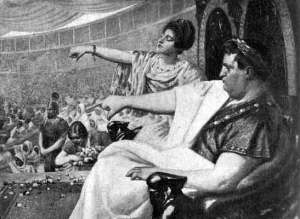
There’s a lot of panem et circenses around this time of year. There are all those bowl games which really do serve as a form of superficial appeasement for having to spend your days slaving for one of America’s many unpleasant employers doing things that are unfulfilling at best and reprehensible in all likelihood. Afterall, there’s been all this credit card debt ran up over the last few months so the indentured will have to continue at it regardless. Then, we all need to be appeased for having to put up with the ongoing insults piled on us by the Republican Congress and most urban police departments. There sure is a lot of news that should make folks want to lie around in a stupor.
For example, Steve Scalise thinks he’s smarter than the rest of us and that his dalliance with hate groups will eventually be forgotten. More information has come out from that shows the Duke henchmen who set up his speech before a group of White Nationalists has been telling tales.
Two days ago, Slate ran a piece quoting Kenny Knight, a close associate of David Duke, who booked the room for the white supremacist group, known as EURO. Knight claimed that he invited Scalise to speak to the “Jefferson Heights Civic Association, which was largely comprised of elderly people who lived in his and Scalise’s neighborhood.” The meeting of the civic association, Knight said, just happened to be held in the same room as the EURO conference held later that day. Knight told The Times-Picayune that he “was not a member of EURO and did not arrange for any speakers at the 2002 conference.”
The right-wing ran was the story, billing the entire controversy as little more than a hoax.But, as it turns out, Knight was lying. Not only was Knight a member of the EURO group but “documents filed with the Louisiana secretary of state’s office list him as treasurer…” He is also listed as a member of the group in a 2002 news release for the conference in question, where he was scheduled as a speaker.
Asked about the discrepancy and the state document listing him as treasurer of the group, Knight hung up twice on a reporter for The Times-Picayune. Eventually, Knight said “Is that 15 years ago? I don’t even remember that. I’m not communicating any more with the news media. I’m finished with y’all.”
If you have any further questions, ask David Duke. In an interview with the Washington Post, Duke said he “recalled Knight reaching out to Scalise in the weeks before the conference to come and update attendees on state affairs, and that Scalise accepted without reservation.”
Duke’s group isn’t the only certified hate group that Scalise has been known to pander around. Of course, this guy thinks that the League of Women Voter’s is a “liberal” group and akin to EURO as BB pointed out yesterday. His barometer of  political extremists seems way off. But, Congressman Sleaze also loves him some Tony Perkins who is another certifiable hater. Perkins’ record of extremism and hate politics is legendary. Scalise has no problem with him and his group either.
But that is not Scalise’s only affiliation with a noted hate group. He is also aregular on Tony Perkins’ radio show, Washington Watch With Tony Perkins.Perkins heads the Family Research Council, which the Southern Poverty Law Center condemns as virulently anti-LGBT. According to the SPLC, the Council “often makes false claims about the LGBT community based on discredited research and junk science. The intention is to denigrate LGBT people in its battles against same-sex marriage, hate crime laws, anti-bullying programs and the repeal of the military’s ‘Don’t Ask, Don’t Tell’ policy.”
Perkins, also from Louisiana, has connections to Duke as well. In the mid-’90s, while acting as a campaign manager for Woody Jenkins, then a candidate for the U.S. Senate, he paid $82,500 for Duke’s mailing list. Like Scalise, he improbably claimed he didn’t know the list was attached to Duke, but happened to file a false campaign disclosure form to hide the payment, and was subsequently fined $3,000. Three years later, while serving as a state representative, he gave a speech to the Council of Conservative Citizens, another white supremacist group.
While plenty of Republicans are against same-sex marriage, most don’t go so far as to ally themselves with Perkins. For the House majority whip to have that kind of allegiance may turn some heads.
Unfortunately, House Dems don’t seem to want to make anything of any of this.
Democrats are taking a strikingly cautious approach to the controversy surrounding House Majority Whip Steve Scalise (R-La.) and his speech to a white supremacist group in 2002.
The vast majority of Democrats are not calling for Scalise to resign, or for leadership to drop him. But they are tying Scalise to other Republicans and arguing the issue is emblematic of a party Democrats argue is at odds with minority groups on a range of policies.
Strategists say the approach reflects a few factors.
Democrats don’t want to get too far in front of the story, particularly since it is unclear whether Scalise’s 2002 address to the European-American Unity and Rights Organization is an isolated incident.It’s also possible that Democrats are quite happy to see Scalise continue to be a part of the GOP leadership, since it will allow them to return to the story about his address to a group founded by David Duke repeatedly between now and Election Day 2016, when Democrats hope a broader electorate will help them win the White House and take back House and Senate seats. Only Rep. Sean Patrick Maloney (N.Y.) has called for his resignation as majority whip.
 There’s more news about Cops Go Wild in the news. A NYPD cop has turned himself in for attacking a female MTA employee.
An NYPD cop has surrendered in an attack on an MTA worker, officials said Thursday.
Police Officer Mirjan Lolja, 37, was suspended after the assault in which the Metropolitan Transportation Authority worker — who was on-duty and in her uniform — was allegedly put into a bear hug, thrown to the floor and choked, cops said.
“I’m totally outraged,” Joe Costales, chairman of Transport Workers Union Local 100, said of the allegations. “We’re not safe with members of the public, and now we’re not safe from the police.”
The 28-year-old conductor was on the southbound D train platform at the Tremont Ave. station when Lolja confronted her about 2:30 a.m. on Dec. 23, officials said. She was hospitalized with minor back and neck injuries.
A police chief in Georgia has shot his wife.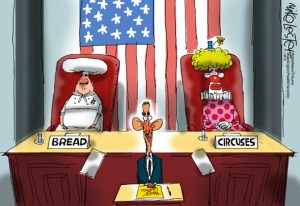
The wife of Peachtree City Police Chief William E. McCollom is in critical condition after being shot by her husband Thursday morning.
Police responded to the couple’s home in the 100 block of Autumn Leaf shortly after 4:15 a.m., where they found the victim, 58-year-old Margaret McCollom. She was taken by helicopter to Atlanta Medical Center.
The GBI will handle the shooting investigation. GBI spokeswoman Sherry Lang originally said Chief McCollom called 911 to say he accidentally shot his wife twice with his service weapon. After further investigation, Lang said it was determined that only one bullet had been discharged.
Investigators won’t say where McCollom was injured, or what led up to the shooting, only that it occured in the couple’s bedroom.
Peachtree City Manager Jim Pennington says as standard procedure, the chief was put on administrative leave and the GBI asked to spear head the investigation.
So, the biggest news of the holiday was the death of former NY Governor Mario Cuomo.
Ever-eloquent Mario Cuomo, a son of Queens who rode his rhetorical gifts to three terms as New York governor and tantalized Democrats by flirting with a run for President, died Thursday. He was 82.
Cuomo passed away five hours after his oldest son, Gov. Andrew Cuomo, wasformally sworn-in to a second term in Manhattan. The elder Cuomo was too ill to attend. He died of “natural causes due to heart failure” at his Manhattan apartment surrounded by his family, Andrew Cuomo’s office said.
“He couldn’t be here physically today … but my father is in this room,” Andrew Cuomo said in his inaugural address.
“He’s in the heart and mind of every person who is here. His inspiration and his legacy and his spirit is what has brought this day to this point.”
As governor, Mario Cuomo wrestled with two recessions and presided over a massive expansion of the state prison system. A liberal, he bucked the political winds by wielding his veto pen year after year to block the restoration of the state death penalty.
So also coming up on the bread and circuses radar is the Super Bowl and the State of the Union Address. Which one will titillate the American Public more? Yes, the one with endless commercials that last longer than the actual play itself. Well, I could be talking about the opening of Congress, but you know it’s the football game. La Sigh. La Sigh. La Meh.
What’s on your reading and blogging list today?

 peej
peej Carissa
 bostonboomer
 dakinikat
 ecocatwoman
 jjlo
jjlo mablue2
 Mama Lopez
 peggysue22
 quixote
 skydancingguestblogger
 Mona (aka Wonk the Vote)





Recent Comments