It’s been a horrible few weeks and I’m in for some things that are interesting and will feed my brain for a change. For example, That’s a beautiful piece of opalized wood providing those rainbow colors and it’s selling for around $7000 if you’ve just gotta have it.
I’m not sure you’ve read how the excavations at Jamestown have been going recently but they’ve found some interesting graves. (Yeah, you know me and my thing for old graves.) They’ve discovered four bodies and one very odd box.
When his friends buried Capt. Gabriel Archer here about 1609, they dug his grave inside a church, lowered his coffin into the ground and placed a sealed silver box on the lid.
This English outpost was then a desperate place. The “starving time,” they called it. Scores had died of hunger and disease. Survivors were walking skeletons, besieged by Indians, and reduced to eating snakes, dogs and one another.
The tiny, hexagonal box, etched with the letter “M,” contained seven bone fragments and a small lead vial, and it probably was an object of veneration, cherished as disaster closed in on the colony.
On Tuesday, more than 400 years after the mysterious box was buried, Jamestown Rediscovery and the Smithsonian Institution announced that archaeologists have found it, as well as the graves of Archer and three other VIPs.
“It’s the most remarkable archaeology discovery of recent years,” said James Horn, president of Jamestown Rediscovery, which made the find. “It’s a huge deal.”
So, my brother-in-law is retiring on his next birthday and my sister has a great gift idea. She’s getting him a Kindle and asking us to tell her what book we’d like to load up there for him. I’m torn between 1Q84 by Haruki Marukami, A Confederacy of Dunces by John Kennedy O’Toole, and Fooled by Randomness by Nassem Nicholas Taleb. I had to ask what others are offering up too. Doctor Daughter and Doctor Son-in-Law wanted all the Game of Thrones books. Youngest Daughter chose Gone Girl by Gillian Flynn. The book that was offered up the most times was The Boys in the Boat by Daniel James Brown. So, now I’ve decided I have to read those last two. What book would you offer up for a newly retired guy with a lot of time on his hands?
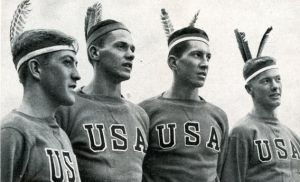
On the morning of Aug. 14, many people in Seattle woke up excited to catch the regatta’s final event live on CBS. Those listeners had a vested interest in the race. The United States team, a crew from the University of Washington, came very close to missing the trip to Berlin. Immediately following the Huskies’ victory in the Olympic trials, the team was informed by the U.S. Olympic Committee that it needed to come up with $5,000 to pay its way to Berlin. Seeing an opening, Henry Penn Burke—chairman of the Olympic Rowing Committee and a University of Pennsylvania alum—offered to send his beloved Quakers in place of the Huskies. The sports editors of Seattle’s top two newspapers, outraged on behalf of the local heroes, enlisted newsboys to solicit donations while hawking papers. With American Legion posts and Chambers of Commerce throughout the state chipping in, enough money was collected in three days to send the team to Berlin. As a consequence of the funding drive, remembered Gordon Adam, who rowed in the three-seat, “people in the city felt that they were stockholders in the operation.”
The Washington crew had been rowing together for less than five months prior to the Olympics. Coach Al Ulbrickson had originally named a different group of rowers as the varsity at the start of the college season. The second boat, made up of strong but inexperienced oarsmen, knew they rowed faster than the first string and was angered by the slight. After the varsity shoved off the dock for their first practice, the angry eight carried their boat to the water silently. “We were standing about a little bit after we put the oars in the oarlock,” Moch explained to me the year before he died. “Somebody said, ‘You know this thing is going to fly.’ ”
The teammates soon devised a mantra. Quietly, they would repeat the letters L-G-B. When asked the meaning, they would explain it stood for “Let’s get better.” What it really meant was “Let’s go to Berlin.”
You can read more about the rowing team and the 1936 Olympics which is best known for Jessie Owens’ amazing performance.
Hillary Clinton vowed to take away big oil’s subsidies and use the money for clean energy while campaigning in Iowa.
During a speech in Des Moines, Iowa, Clinton laid out her vision for combating climate change by encouraging clean energy technology.
In the process, she dropped a bomb on the Koch brothers:
We will make America the world’s clean energy superpower.
We will develop and deploy the clean energy technologies of the future. Transform our grid to give Americans more control over the energy they produce and consume. And yes, I will defend President Obama’s Clean Power Plant—Clean Power Plan against attacks from Republicans and their corporate backers.
We’ll launch a Clean Energy Challenge that supports and partners with states, cities, and rural communities that are ready to lead on clean energy.
We’ll stop the giveaways to big oil companies and extend, instead, tax incentives for clean energy, while making them more cost-effective for both taxpayers and producers.
We’ll support—and improve—the Renewable Fuel Standard that has been such a success for Iowa and much of rural America.
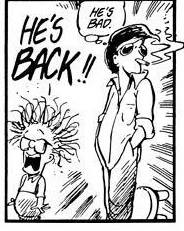
Fans of the well-loved comic strip Bloom County are celebrating this morning, after cartoonist Berkeley Breathed issued the first panels of his satirical strip in decades.
Breathed won a Pulitzer Prize for his work on Bloom County back in 1987; two years later, he quit producing it. On Sunday, he posted a photo of himself to Facebook in which he sat in front of a computer screen with an empty cartoon template titledBloom County 2015.
“A return after 25 years. Feels like going home,” he wrote.
And on Monday, one of Breathed’s central characters, Opus, awoke from his long slumber with a question:
“That was some nap!! How long was I out, Milo?”
“25 years.”
Breathed released the new strip via Facebook. The most popular comment on his post seems to sum up many fans’ response: “And suddenly the world is back in alignment. Thank you Sir.”
Yes. Thank you Sir. I’ll have another.
So, this is a totally open thread because I’m probably having another challenging day while you’re reading this. What’s on your reading and blogging list today?
Did you like this post? Please share it with your friends:
Sorry this is so late. JJ’s mother-in-law passed so she will be taking the week off. It’s my turn today to fill those big shoes! However, my A/C went out yesterday afternoon late. I thought it was only struggling to keep up with the heat when I left for a cocktail hour gig. When I got home from that gig last night, I opened the door on a very hot home and three very miserable animals. It was obvious that the A/C wasn’t just struggling. It was pretty dead. I spent the night trying to get to sleep and only did so at about 4am with the help of Benadryl. Fortunately, I got some relief at 8 am when the owner of the local repair shop got to me and fixed it quickly! I was lucky to meet Julian Marin at my local watering hole awhile back because he ended our suffering here at the KatHouse. I went back to sleep and didn’t get up until around 2 my time. Fortunately, it’s a bad capacitor that’s still under warranty. It turned out to be a quick fix.
So, I’m not letting this mass shooting in Lafayette go for awhile. Several things stand out to me. First, the killer was a rabid misogynist who went on Talk Radio shows screaming about the Biblical roles of women. It shouldn’t be lost on any one that he chose an Amy Schumer movie which was going to have a larger than normal number of women in attendance and that a solid majority of his victims–including the dead ones—were women. Second, there are mass shootings in New Orleans all the time. Gun Violence is a near every day occurrence here and many victims are innocent children playing in the street and elderly people sitting on porches. Where is the national news media on those instances? Third, Louisiana’s gun laws are among the loosest in the country and our deaths attributable to guns are the second highest. Our governor is eager to show the NRA and the state his gun fetish. His policies of disabling whatever few gun laws the state had are exactly why these kinds of problems happen. He can pray to his imaginary friend as much as he wants and focus on the victims. But, he needs to realize that the blood of every gun victim in this state–since he’s started disabling the few reasonable restrictions that we’ve had–is on his hands. If he and others only say “no one could imagine” then he and those others join the ranks of the deliberately avoiding the obvious club.
A governor issuing a call for prayers in the wake of a fatal mass shooting is almost boilerplate by now, but what good does it truly do? Prayers will not pull the bullets out of those people, nor repair their flesh. The frequency of these terrible events has somehow numbed us, and the lack of political courage on the right (and at times, on the left) to do anything to stem the flow of guns into our country is staggering. But can it help, somehow?
“Prayer in these moments serve two basic functions in my opinion: one as a sincere attempt at showing sorrow and hoped for comfort for the deceased, and second, as a hope the violence will stop,” Butler told me. “However, these prayers, while sincere, tend to be diffuse, non focused, and often are not prayers that are about the root cause of the situations: usually people’s actions, changes in gun laws, or repentance—sorrow for being a part of a culture that promotes the violence. Personally, I think it is more about soothing of those who have lost loved ones, and a way to forget the real issues at hand that need to be addressed.”
Jindal is asking us to comfort ourselves in this moment, which sounds right. There he was in Lafayette on Thursday night, recommending prayer as the first recourse and saying,“We never imagined it would happen in Louisiana,” and expecting to be taken seriously. Having now suspended his presidential campaign, he’s going back to being just the governor of the state with perhaps the nation’s weakest gun laws and definitely its worst gun violence. Jindal uses guns as campaign props, frequently touting his hunting acumen, A+ grade from the NRA, and enthusiasm for firearms in speeches, interviews, and in his Twitter feed. “In Louisiana and all across America,” Jindal told the CPAC audience in 2012, “we love us some guns and religion.”
Both came into play on Thursday night in Lafayette. But comforting people after mass shootings, by definition, makes them comfortable after mass shootings. Praying may make you feel better in the moment, but Jindal is essentially asking that citizens do nothing to solve the actual problem of gun violence. People can talk to God if they want, but someone had better be calling Wayne LaPierre at the National Rifle Association. A few members of Congress, too.
As Slate writer Jamelle Bouie noted Thursday night on Twitter, we live in a country willing to accept dozens of murdered children—in a tony Connecticut suburb, no less. Also, we seem to be able to swallow a child and five others being killed in an assassination attempt on a sitting member of Congress, Gabrielle Giffords. Urgency on this issue seems to be out of style, but I’d think that perhaps even out of sheer boredom, this nation would not simply shrug its collective shoulders in grief and resignation for nearly a hundred times in the last several years, and join those actually trying to make our national gun policies make sense. In the absence of any faith that can be done, it will take work.
The words “well-regulated militia” are always the ignored parts of the second amendment when you’re around the gun nuts. Their answer to gun violence is always more guns. Let me ask you something, if you saw a child throwing rocks at other children in a playground would you give those other children rocks and expect the problem to be solved? And, what would you think about arming every one in a dark crowded theater then calling for a virtual shoot out at the OK Corral? Certainly, responsible gun owners know that kind of environment is not likely to produce a positive outcome. However, white male apologists like Rick Perry always blame mental illness and are blaming “gun free zones”. It’s never about the issues of right wing extremists and their racist, misogynist, radical christianist screeds. It’s always about mental illness and not enough guns.
Rick Perry said in an interview Sunday on CNN’s “State of the Union” that the shooting in Lafayette, Louisiana, earlier this week shows why gun-free zones are “a bad idea” and said he believes people should be able to take their firearms to the movies.
“I think that it makes a lot of sense to send a message across this country,” Perry said when asked by host Jake Tapper if the former governor believed a way to prevent such violence would be to allow moviegoers to take guns inside. “If we believe in the Second Amendment, and we believe in people’s right to protect themselves and defend themselves, and their families.”
John Russell “Rusty” Houser on Thursday shot 11 people, killing two, in a theater using a handgun he legally purchased from a pawn shop, authorities have said. Houser, who authorities say had a history of legal and mental problems, then turned the gun on himself.
“I will suggest to you that these concepts of gun-free zones are a bad idea,” Perry said. “I think that you allow the citizens of this country, who have appropriately trained, appropriately backgrounded, know how to handle and use firearms, to carry them. I believe that, with all my heart, that if you have the citizens who are well trained, and particularly in these places that are considered to be gun-free zones, that we can stop that type of activity, or stop it before there’s as many people that are impacted as what we saw in Lafayette.”.
Perry said shootings in gun-free zones like movie theaters and churches — such as the one in Charleston, South Carolina, the scene of a racially-motivated bloodbath that killed nine last month — happen because of a failure to enforce existing gun laws. He said current laws should have prevented Houser from obtaining his gun.
“I think we have the laws in place. Enforcement of those laws is what seems to be lacking, both in Charleston and here in Lafayette, Louisiana,” he said. “We see individuals who are obviously mentally impacted. These are individuals who I think that somewhere, somebody didn’t do their job in the standpoint of enforcing the laws” that are already on the books.
Why does New Orleans have so much gun violence? Yes, many nuances and history of gangs and crime are to be taken into account. City crime is always complex to certain degrees. Yet, one of the major contributing factors in Louisiana is the fact that the availability of guns is much higher than in states like New York, Illinois, and California.
Louisiana has one of the most lax gun laws in the country. Gun sales are hardly regulated properly. You can buy a gun at a pawn shop quickly, provided you are 21 years old and have a Louisiana state ID. If that doesn’t work, well there are the gun shows that Louisiana has held.
The gun show loophole is problematic, and allows anyone to buy military grade firearms without proper background checks. As long as the cash is in hand, many retailers at these gun shows will sell guns if the buyer has proper ID or not.
Now who would show up to a gun show with thousands of dollars in cash, and not want a background check? Hmmm? Criminals, perhaps?
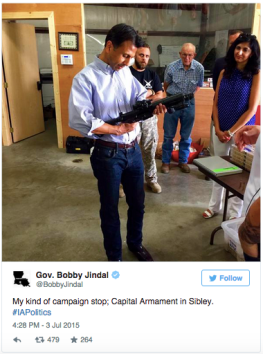
Then factor in Bobby “Louisiana Loves Guns” Jindal, governor of the state, who seems to sit deep in the NRA’s pocket. Under his terms in office, Jindal has regularly weakened gun safety regulations, and often appears at gun stores during his campaigning, to have pictures of himself with whatever the shop’s biggest rifle is.
In 2013, Bobby Jindal signed six gun laws. Most of these laws made it easier for criminals and mentally ill people to obtain laws. He should’ve known he was setting the state up for more mass shootings but as usual, he’s more concerned about things that would contribute to his presidential ambitions. He did sign bills into laws to increase the ability of state and federal agencies to share information on people who should not have access to guns. However, the gun show loop hole alone means that nothing will ever be done with that information. The Lafayette shooter is perhaps a textbook example of some one that should not have access to guns, yet he legally acquired one.
The most discussed piece of legislation in the batch signed Wednesday was House Bill 8by state Rep. Jeff Thompson, R-Bossier City. The new law will enforce penalties on the intentional publication of the personal information of concealed handgun permit holders.
Citizens face penalties of up to six months in jail and $10,000 for those who “intentionally disseminate for publication” the personal information, such as names and addresses, of permit holders. Law enforcement or public safety employees who share such information will face up to six months in jail and a fine of $500.
Thompson, who helped found the pro-gun group Defend Louisiana this year, said the legislation was introduced largely as a reaction to the publication of New York gun permit holders’ names and addresses by The Journal News last year. He said permit holders’ lives and property were put at risk by the release and he wants to ensure such publication will be penalized in Louisiana.
“It is a great day in Louisiana and across this nation for those of us who refuse to give an inch when it comes to defending our right to protect our families and we will stand strong in the defense of the Second Amendment,” Thompson said Wednesday.
“Responsible, law-abiding citizens should not be villainized simply because they are concealed carry permit holders,” he added.
The bill received significant push-back from journalists, including Baton Rouge Advocate Executive Editor Carl Redman and Louisiana Press Association Executive Director Pamela Mitchell. Penalties will not be imposed if the permit holder had approved the information release or if it was already in the public domain. Publication would be allowable if the permit holder committed a felony involving a gun or if the information is subject to a court order.
“We love us some guns,” Bobby Jindal once said of his fellow Louisianans. Two of them were killed, and nine others wounded, on Thursday night when a man walked into a movie theater in Lafayette, sat for a while, and then fired more than a dozen rounds from a .40 caliber handgun.
“We never imagined it would happen in Louisiana,” Jindal said afterward, though the state has the second-highest rate of gun deaths in the country, more than twice the national average. Louisiana also has some of the laxest firearm regulations, for which Jindal bears much responsibility. During his eight years as governor he’s signed at least a dozen gun-related bills, most intended to weaken gun-safety regulation or expand access to firearms. One allowed people to take their guns to church; another, into restaurants that serve alcohol. He broadened Louisiana’s Stand Your Ground law, and made it a crime to publish the names of people with concealed carry permits. At the same time Jindal has pushed for cuts to mental health services.
Jindal treats guns not as weapons but political props. On the presidential campaign trail he’s posed repeatedly for photos cradling a firearm in his arms. “My kind of campaign stop,” he tweeted earlier this month from an armory in Iowa. After the Charleston massacre, he called President Obama’s mild comments about gun violence “completely shameful.” The correct response then, according to Jindal, was “hugging these families,” and “praying for these families.”
The gunman who opened fire in a Louisiana movie theater should not have been allowed to legally buy the gun he used to kill two people and injure nine because of his mental history, Gov. Bobby Jindal said Sunday.
Shooter John Houser “should have never been able to buy that gun,” Jindal told NBC News. “That should have never been able to happen.”
Jim Cavanaugh, a retired Bureau of Alcohol, Tobacco, Firearms and Explosives agent and now NBC News security analyst, said those red flags should have kept Houser from buying a gun in any state.
“If he’s adjudicated as a danger to himself or others, or not able to handle his affairs due to his mental capacity, he is also barred from having a firearm,” Cavanaugh said.
It is unclear whether officials in Georgia filed records about Houser’s involuntary hospitalization, which would have been funneled to the FBI’s database and therefore surfaced during a background check in any state, according to The Associated Press.
“Obviously somebody with this kind of history should have never been able to buy a gun,” Jindal said, noting that Louisiana laws would have prevented Houser from legally buying a gun.
In order to acquire a concealed handgun license in Louisiana, an applicant must “not suffer from a mental or physical infirmity due to disease,” according to the Louisiana Department of Public Safety and Corrections. But private owners and gun show sellers aren’t required to perform background checks to determine the mental health and arrest history of prospective gun buyers.
In the immediate wake of the shooting, Jindal, who is running for president and is generally known as pro-gun (the NRA last gave him an “A+” rating), declined to speak on gun policy, saying he wanted to give Lafayette a chance to grieve.
Authorities have yet to determine a motive for why Houser chose to attack people at the showing of “Trainwreck,” why he chose to target Lafayette and why he picked a Thursday evening.
Police in Lafayette, Louisiana are evidently struggling to understand why the outspokenly misogynistic, racist and anti-Semitic John Russell “Rusty” Houser murdered two women and wounded 9 other moviegoers at a showing of “Trainwreck,” a film written by and starring Amy Schumer, a feminist comedian with a Jewish father, known for joking frankly about sex.
Col. Michael D. Edmonson, superintendent of the Louisiana State Police, wondered aloud about Houser’s motives at a press conference:
Why did he come here? Why did he do that? … We may not find a motive.
It seems to me that Houser’s likely motive is staring them in the face.
Because it turns out that Houser was pretty well-known, at least to regular viewers of one local TV talk show in Columbus, GA, as an angry right-wing fanatic who hated women. As one former host of the show recalled,
He was anti-abortion. … Rusty had an issue with feminine rights. He was opposed to women having a say in anything.
Houser evidently appeared on the live show dozens of times as a “gadfly” whose appearances “would generate calls.”
When news emerged that a middle-aged white man in Lafayette, Louisiana opened fire at a showing of the Amy Schumer vehicle Trainwreck, I immediately had this sinking feeling that the movie choice wasn’t a coincidence—that this was, like theElliot Rodger and George Sodini killings, an act of rage at women. While Trainwreck is a fluffy rom-com, it’s also a popular topic of chatter in the feminist-sphere, and therefore likely to be noticed by the seething misogynists who monitor the online activities of feminists with unsettling obsessiveness.
That fear is now moving from the uneasy-feeling column to the likely-possibility column, with Dave Weigel of the Washington Post reporting that alleged shooter John Russell Houser was a rabid right-winger—he even went to one of those unranked conservative Christian law schools—who had particularly strong anger towards women for their growing independence and rights. Former talk show host Calvin Floyd had Houser on as a frequent guest, knowing that his off-the-wall opinions would generate audience interest: “The best I can recall, Rusty had an issue with feminine rights,” Floyd said. “He was opposed to women having a say in anything.” Houser also had a history of domestic violence.
It would be nice, as Jessica Winter argued in Slate after the Charleston shooting, if this country could have a grown-up conversation about gun control in the wake of crimes like this. Instead, we’re just going to hear a bunch of ridiculous rhetoric about how more guns will fix this problem, as if Lafayette isn’t one of those parts of the country where every and their poodle is packing heat. But since that’s not happening, maybe we can talk about the continuing role that misogyny plays in the relentless drumbeat of gun violence in this country.
My colleague Ben Mathis-Lilley noted today at Slatest, there were 14 other gun-based murder-suicides in the past week in this country, resulting in the loss of 36 lives. If you look down the list of the killings, an unmistakeable pattern pops out: “shot and killed his 37-year-old wife… shot and killed his ex-wife… shot and killed his 62-year-old wife… shot and killed his 23-year-old girlfriend…” and so on. Most of these killings involve men killing women that they were in a relationship with, had lost a relationship with, or likely wanted a relationship with, but were rejected. This last week also featured a bizarre story of a woman who not only survived beingkidnapped and raped by a man but also saw her boyfriend and a random other man killed in the rapist-murderer’s rampage.
So much of this stuff seem clear to us and it escape our policymakers, the police, and the media who are co-conspirators in the gun deaths that impact so many women and racial minorities on a daily basis. I can only shake my head at the amazing lack of self evaluation by those basking in the glow of white male christianist privilege.
The day after the shooting in Charleston, South Carolina, that killed nine people in a church June 17, Jindal said it was not the time to discuss gun control but rather an occasion for prayer and hugs.
Jindal officially announced his entry in the campaign for the 2016 Republican presidential nomination a week later, but he was regarded as a candidate for months before then — and it was in that light that he was asked to respond to President Barack Obama’s suggestion that the Charleston tragedy fit a distinctly American pattern of firearms violence that should be addressed.
Jindal characterized Obama’s comment as a “completely shameful” attempt to “score cheap political points.”
In the hours after the Lafayette shooting, in which a gunman fatally shot two women and wounded nine others before taking his own life, Jindal again said prayers and hugs made for the appropriate response.
“There’ll be a time; I’m sure folks will want to jump into the politics of this,” he said. “Now is not the time.”
That didn’t prevent gun control advocates from landing on Jindal with both feet. The New Republic accused Jindal of enabling gun violence in Louisiana — a state with one of the highest rates of firearms violence and least-restrictive gun regulations — citing his enthusiastic pro-gun record and support for legislation that permits guns in churches and creates lifetime concealed-carry permits. In the Daily Mail, commentator Piers Morgan was particularly vehement, saying the blood of the victims was on Jindal’s hands.
But such attacks are unlikely to faze Jindal, said Bernie Pinsonat, a veteran Louisiana political pollster.
“That’s like throwing him into the briar patch,” Pinsonat said. “Democrats or anyone else who is anti-gun, they’re not voting for Jindal anyway.”
Like some one on Twitter said, once you allow a mass murderer to come in and gun down innocent children and you can still do nothing as a policymaker but talk about more guns and prayers, you’ve pretty much lost the battle to the gun industry. You’ve also conceded to the moral high ground to greed and political ambition.
What’s on you reading and blogging list today?
Did you like this post? Please share it with your friends:
Three people, including the shooter, are now dead after a shooting at the Grand Theater on Johnston Street.
Brooks David of Louisiana State Police says the shooter was a 58-year-old male white male.
Lafayette Police Chief Robert Craft tells KLFY that the shooter died from a self-inflicted gunshot wound.
The shooting happened during a showing of the movie ‘Trainwreck”
Photo Gallery: Grand Theater Shooting Scene
Nine people were injured in the shooting. Three of the victims are being at treated at Lafayette General Hospital, three are being treated at Lourdes Hospital, and two are being treated at Acadiana General Hospital.
Investigators say the shooting appears to be random. The shooting happened around 7:30 p.m. at the Grand Theater on Johnston Street.
Louisiana Governor Bobby Jindal is currently visiting victims and families at Lafayette General.
» Gov. Bobby Jindal visited with a pair of teachers who were in the theater when the shooting started. One teacher was shot as she threw herself upon the other. She then pulled the fire alarm.
The injured teachers have been identified as Jena Meaux and Ali Martin from Iberia Parish, via a Go Fund Me page set up by educators’ groups.
» Col. Mike Edmonson, Louisiana State Police, said late Thursday that investigators would work in the theater throughout the night collecting evidence.
He said some bodies remained inside the theater, as did items of interest that police dogs had “hit on.” They included a backpack.
He said although the suspected shooter was dead, investigators still needed to process the scene to determine what happened.
The investigation would include a review of the shooter’s background and his family history, he said.
» Former Louisiana Insurance Commissioner Jim Brown told The Daily Advertiser The Grand Theatre is part of Southern Theatres. The company is headed by his brother-in-law, George Solomon of New Orleans, who was on his way to the scene Thursday night.
Brown, who was on the scene of the theater, said it would be closed for the indefinite future.
“He’s devastated, obviously,” Brown said.
» At 10:33, KATC reported that police were investigating a bomb threat at Greenbriar Condos on Doucet Road, across the street from the theater. The threat caused media to be pushed back from the area. Haz-Mat crews were responding.
» Unconfirmed reports indicated that Aries Marine CEO Bo Ramsay and his wife Gerri were among the wounded. Bo Ramsay was reportedly shot in the leg, and his wife grazed by a bullet. Neither injury was considered life-threatening.
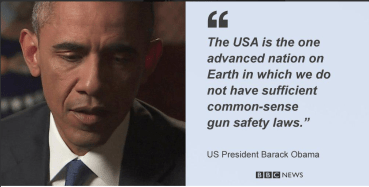
President Barack Obama has admitted that his failure to pass “common sense gun safety laws” in the US is the greatest frustration of his presidency.
In an interview with the BBC, Mr Obama said it was “distressing” not to have made progress on the issue “even in the face of repeated mass killings”.
He vowed to keep trying, but the BBC’s North America editor Jon Sopel said the president did not sound very confident.
However, Mr Obama said race relations had improved during his presidency.
Hours after the interview, a gunman opened fire at a cinema in the US state of Louisiana, killing two people and injuring several others before shooting himself.
In a wide-ranging interview, President Obama also said:
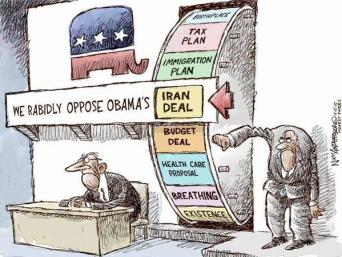
He is confident the Iran nuclear deal will be passed by Congress
Syria needs a political solution in order to defeat the Islamic State group
He would speak “bluntly” against corruption and human rights violations in Kenya
He would defend his advocacy of gay rights following protests in Kenya
Despite racial tensions, the US is becoming more diverse and more tolerant
Mr Obama lands in Kenya later on Friday for his first visit since becoming president.
But with just 18 months left in power, he said gun control was the area where he has been “most frustrated and most stymied” since coming to power in 2009.
“If you look at the number of Americans killed since 9/11 by terrorism, it’s less than 100. If you look at the number that have been killed by gun violence, it’s in the tens of thousands,” Mr Obama said.
You can read the full transcript of the President’s Interview here. The President expressed frustration at race relations and guns in our country.
OBAMA: There will be. Look there was never a promise that race relations in America would be entirely resolved during my presidency or anybody’s presidency. I mean, this has been a running thread – and – and fault line in American life and American politics since its founding.
And so some of the most recent concerns around policing and mass incarcerations are legitimate and deserve intense attention. And I feel that we are moving the ball forward on those issues. What I will say is that – eight years – well, after eight years of my presidency, that children growing up during these eight years will have a different view of race relations in this country and what’s possible.
Black children, white children, Latino children. America is becoming more diverse, it’s becoming more tolerant as a consequence there’s more interactions between groups. There are going be tensions that arise. But if you look at my daughters’ generation, they have an attitude about race that’s entirely different than even my generation.
And that’s all for the good. You mentioned the issue of guns, that is an area where if you ask me where has been the one area where I feel that I’ve been most frustrated and most stymied it is the fact that the United States of America is the one advanced nation on earth in which we do not have sufficient common-sense, gun-safety laws. Even in the face of repeated mass killings.
And you know, if you look at the number of Americans killed since 9/11 by terrorism, it’s less than 100. If you look at the number that have been killed by gun violence, it’s in the tens of thousands. And for us not to be able to resolve that issue has been something that is distressing. But it is not something that I intend to stop working on in the remaining 18 months.
Anyone reading headlines these days know these are major problems.
Houser is also known as Rusty Houser, and apparently has a presence on social media as an outspoken conservative.
The last thing someone posting as Rusty Houser posted on Facebook was in 2013, when he linked to an article called “A woman’s place in the church and the weak church elder.”
He wrote, “The bible doesn’t ask me to like what it says, only to obey it. Death comes soon to the financially failing filth farm called the US.”
He only had two things liked on Facebook, among them “I hate liberals!”
Police called Houser a drifter and said he had only been in Lafayette since early July.
A man identified as John Russell Houser on Twitter tweeted only twice. He wrote, “If you don’t think the internet is censored, try reading a newspaper from a country that hates liberals the way I do,” in June 2013.
A little earlier, he wrote, “The Westboro Baptist Church may be the last real church in America members not brainwashed.”
A man identified as Rusty Houser also posted on the website http://www.politicalforum.com. His last post, dated March 27, 2013, refers to the state of the American and world economies and says, “It is true that the US is about to fall. I will be in fear at that time as will everyone else, but not in a fear which resembles that of the leaders of foolishness and the brainwashed that follow.Truth carries with it an understanding of death. Rather than live without it,I will take death.” [sic]
According to his LinkedIn profile, Houser claimed that he was an entrepreneur. The profile claims he owned and operated two bars and was a real estate developer. However, his last listed job is in 2006.
In addition, a John Russell Houser from Phenix City, Alabama, is listed as a member of a group called the Tea Party Nation. However, KATC could not confirm if this John Russell Houser is one in the same with the shooter.
Did you like this post? Please share it with your friends:
I’m still drinking my coffee and looking towards another few days of horrible heat. Audubon Park tied a 100 year old record yesterday of 100 degrees Fahrenheit. We keep getting a few more days each year of more temps above 90. Today, it’s also pouring so there was a distinct steamy jungle feel to the outdoors. I’m just glad my electricity and A/C are holding up at the moment.
I’ve been finding some really interesting reads this week about the number of “tourist” cities that are fed up with tourists. I wanted to mention the horrid heat to you because some crazy young man staying at the illegal air BnB next door has been trolling about with a black and white “Where’s Waldo” thick knit cap. He and a bunch of other tourists now roam my streets at night like it was Bourbon. Needless to say, it’s odd to see so many folks acting like that in what used to be like any other neighborhood full of small, working class homes. It is rapidly turning into tourist trap.
The Danes have a good idea.They’ve designated “quiet” zones. I get tour buses and bike tours and segway tours roaring by the house all the time. I know it seems odd that a bike tour would be loud, but then you’ve never heard a guide trying to shout stuff at people.
Barcelona, a city of 1.6 million that receives over seven million people a year, represents the turn toward regulation. Taxis and tour buses have taken over entire neighborhoods, while souvenir shops and bars have displaced pharmacies and greengrocers.
The city’s mayor, Ada Colau, 41, who was elected in May, announced a one-year ban on new tourist accommodation citing the swarms of students who have all but taken over the Ciutat Vella, or Old City, of Barcelona. Last August, hundreds of residents erupted in spontaneous protest after images of three Italian tourists wandering naked in the neighborhood of La Barceloneta were circulated online. Her greatest worry, Ms. Colau says, is Barcelona’s turning into Venice.
In Asia, alarm has centered on Chinese tourists; there are more of them than from any other nation. China began loosening severe travel restrictions only about 25 years ago, and the rapid rise of the middle class has sent curious — but often naïve, rude or even destructive — visitors throughout Southeast Asia.
In Thailand a Chinese tourist was recently caught on video ringing and kicking sacred bells at a Buddhist temple as if he was in a game arcade.
There have been reports of Chinese tourists littering beaches and even defecating in public. One tourist even opened the door of an airplane, as it prepared for takeoff, reportedly to get fresh air. The Chinese government responded by promising to set up a tourist black list to ban notorious known offenders from traveling overseas for up to two years.
We even get a mention in this NYT article. I feel like my neighborhood has turned into a whore pimped by money hungry state and city officials.
Battles like these have even reached the tourism-friendly United States.
A decade after Hurricane Katrina ravaged New Orleans, city officials have eyed tourism as the best path for a revival. But homeowners in the French Quarter complain that the city fails to properly enforce zoning and noise regulations, inviting the party crowd into their streets. Last year, residents of Charleston unsuccessfully sued to block the South Carolina ports authority from opening up the port to more and larger cruise ships.
Tensions are bound to get worse. Notwithstanding worry about carbon emissions, more of the world’s peoples are crossing borders for leisure than ever before. Now tourism accounts for one in 11 jobs worldwide.
In 2012 the global tourism industry counted a record one billion trips abroad, and many more tourists travel within their home countries. Travel contributes $7.6 trillion to the global economy, nearly half the entire economic output of the United States.
One reason tourism is hard to regulate is its positive associations, not only with pastime and leisure but also with cultural prestige. People are proud of the vistas, landmarks and monuments that their homelands are best known for. So efforts to regulate tourism aren’t always popular.
I lived in the Quarter for five years across the street from Gallier House–a historic home–on Royal Street. The block is full of homes with iron-laced balconies and features prominently in postcard and ads for the beauty of French Quarter Architecture. My front door alcove was also frequently used as a urinal by young white college male students who should freaking know better during sporting events weekends and Mardi Gras. For some reason, many people who visit here act as though we have no rules. They mark up our grave yards, leave litter every where, and basically act boorish. I’m fine dealing with them when I’m down town which is a Tourist Mecca. But, I’ve had it with them overrunning my neighborhood like ants at a picnic. You can get away from them in the Quarter by retreating to your courtyard. I’ve got them walking around all sides of my house at all hours of the night and day. Many times they’re dragging bicycles and most times they talk very loudly. I’m just glad I no longer have small children in the house.
First there were mutterings, then there were street protests, but now Barcelona is showing signs of “tourist phobia”, the city’s guides are warning.
As many as nine million visitors are expected in Barcelona this year, crammed into a few small areas of a city of 1.6 million inhabitants, more than five times the number who visited 20 years ago. With the weak euro attracting ever more tourists, and as many as 2.5 million visitors disembarking from cruise ships a year, residents are feeling besieged.
“People push us, give us dirty looks and make nasty remarks when we’re showing tourists around,” said Mari Pau Alonso, president of Barcelona’s Association of Professional Tourist Guides.
Even Jordi Clos, head of the city’s hoteliers’ association, which wants to see visitor numbers rise to 10 million, says there is an “urgent need” to make citizens more sympathetic to tourists, given the “sense of being overwhelmed” that people have experienced in recent years.
“If we don’t want to end up like Venice, we will have to put some kind of limit in Barcelona,” said Ada Colau, the city’s new mayor, shortly after she was elected in May. She is proposing a moratorium on new hotels and licences for apartments rented to tourists.
A survey for the Exceltur tourist group revealed that there are now twice as many beds available in tourist apartments – some 138,000 – as there are in hotels.
Tourist flats offer a more attractive and economic deal to visitors, and their owners can expect rents at least 125% higher than they would receive from long-term tenants. While many are let through large online organisations, such as Airbnb, others are offered by homeowners trying to make ends meet during Spain’s prolonged recession.
All over the world our global heritage is under assault by disrespectful tourist hordes. From Vietnam to Venice the goose that lays the golden egg of profit for the travel industry is slowly being bled to death.
But in Venice the fight back has begun. The citizens of La Serenissima, possibly the world’s most iconic tourism destination, are finally revolting against tourists.
In August the city of Venice, says the Venice Times, “will receive a real mass tourism ‘assault’. Visitors will sit on the steps of the century-old buildings and bridges, eating, trashing and not showing the respect these buildings deserve.”
“Walking on the small narrow streets without left and right side order, like in other cities, making the traffic impossible to stand, offering a truly claustrophobic experience.”
There are those who are not afraid to say that something MUST be done. Ilaria Borletti Buitoni former president of the Fai, an Italian Environment Fund believes that there must be some type of tourist access control in Venice. “I know that I will draw negative comments by saying this, but Venice is an open-air museum and the city is dying. The mass of tourists in the city is expected to increase to unbearable amounts in the coming years. The idea of establishing an admission ticket to the city for its maintenance should be considered. It will protect the city and improve the quality of tourism.”
According to a recent survey by the local newspaper La Nuova, 66% of its readers agree that there must be some type of restriction to Venice and only 12% believe that there should be no restriction since the city belongs to the World.
The District once again lives up to its TV drama-concocted reputation.
The city topped a list ranking the country’s most adulterous cities for the third year in a row. The dubious title comes courtesy of Ashleymadison.com, a dating Web site for married people looking for extramarital affairs, which culled through its membership data to determine which cities have the most members per capita.
Ashley Madison claims to have more than 59,000 people registered on the site with a D.C. Zip code. (Note: This does include people who register for the site while visiting D.C. using a city Zip code.)
And the neighborhood with the most cheaters? Capitol Hill, the land of politicians, staffers and lobbyists.
The dating Web site says 10.4 percent of Capitol Hill residents are registered on the Web site. Tenleytown and Takoma Park finished second and third, respectively. With the exception of Capitol Hill, all of the top 10 D.C. neighborhoods are in the Northwest portion of the city, with the majority of the neighborhoods in affluent upper Northwest.
What people see when they look up at the towering statue of Nathan Bedford Forrest in a park near downtown Memphis usually depends on their deepest beliefs, their memories, their loyalties and maybe even their DNA.
Many see a Memphis slave trader, the original grand wizard of the Ku Klux Klan and a war criminal who led a gruesome Confederate massacre of surrendered black and white Union troops at nearby Fort Pillow in 1864.
Others see a gallant but misunderstood Civil War general, a military genius and a hero who made a speech calling for racial reconciliation in 1875. And some passers-by have little or no idea who the guy on the horse is, and do not much care.
But this month, the Memphis City Council voted unanimously to begin an intricate process of removing the brass statue from the park — along with the remains of Forrest and his wife, encased since 1905 in its marble base. This effort joins a national wave of casting off Confederate icons since the massacre last month at a church in Charleston, S.C.
Efforts to take down public flags or monuments associated with the Confederacy are being renewed in communities like New Orleans; Tampa, Fla.; Austin, Tex.; and Stone Mountain, Ga. Yale and the University of California, Berkeley, are among educational institutions being pushed to rename campus buildings honoring people connected to slavery and the Confederacy.
But because of Forrest’s notoriety, Memphis’s harsh racial history and the fact that advocates want to disinter bodies, not just take down a flag or monument, the issue has particular resonance.
Same with our travels during the same period to Spanish Missions in California. The Franciscan priests basically ran concentration camps for indigenous peoples where most died in some form of slavery. I dare any of you not to want to burn the entire sites to the ground after reading what sort’ve heinous acts went on there. But, these sites exist to remind us what happened and to hopefully ensure we don’t rewrite history.
Anthony Morales, Chief Redblood of the Gabrielino Tongva Band of Mission Indians, said he was “stunned” and “angry” by the move, and is hoping the pontiff will reverse his decision.
“On all the 21 missions along the coast here our people were enslaved, they were beaten, they were tortured, our women were raped. It was forced labor and a forced religion,” Morales said. “There’s nothing saintly about the… atrocities on our culture, on our people.”
Father Serra himself justified the beating of Native Americans, writing in 1780: “That spiritual fathers should punish their sons, the Indians, with blows appears to be as old as the conquest of the Americas; so general in fact that the saints do not seem to be any exception to the rule.”
The formation of the Mission Indians began with the Spanish policy of congregación: the forced resettlement of Indian populations in nucleated settlements. The formation of large communities facilitated the conversion to Catholicism of the Indians. Many priests felt that it was a burden to have to visit the many small dispersed Indian communities. It was also easier for royal officials to collect tribute and organize labor drafts in the new larger communities.
The missionaries, with the help of well-armed soldiers, congregated Indians into fairly large communities which were organized along the lines of those in the core areas of Spanish America. Here Indian converts were to be indoctrinated in Catholicism and taught European-style agriculture, leatherworking, textile production, and other skills deemed useful by the Spaniards. By using Indian labor to produce surplus grain supplies for the Spanish military garrisons, the Franciscan missionaries were able to view Indians as both potential converts and labor.
The Franciscan missions were basically slave plantations which required the Indian people to work for the Spanish under cruel conditions. Indians did not come freely to the missions and once there, they were held against their will. Many attempted to escape, and the soldiers stationed at the mission would attempt to recapture them. Escape attempts are severely punished by the Franciscans.
The Franciscans, backed by a small number of soldiers stationed at the missions, imposed a rigid system of coerced and disciplined labor, enforced by the use of corporal punishment and other forms of control. This punishment including public flogging, and the use of the stocks and shackles. While the public use of corporal punishment humiliated and physically injured the individuals being punished, and it did not necessarily alter or control the behavior that the Franciscans found objectionable.
One early visitor to the missions remarked about the Indians that “I have never seen one laugh.” Most of the Indians died in the new mission environment.
The Spanish sought to Christianize the Indians by enslaving them. The Spanish intent was to expropriate not only Indian lands and resources, but Indian labor as well. Part of their goal was to obliterate all features of Native American culture and society and to create a replica of Spain in California in which land-owning Spanish would be served by an Indian peasant class.
From the viewpoint of the Spanish, Indians were a form of labor which could be exploited. The success of the Spanish colonies in the Americas were based on this exploitation. In order to maximize the profits of their colonial enterprise, the Spaniards created institutions that siphoned off surplus agriculture products and provided labor for major building projects. One of these Spanish institutions was repartimiento.
Repartimiento was the Spanish policy which gave the Spanish colonists the right to use native labor for religious education. Repartimiento functioned as a part of the Spanish mission system in all parts of the Americas, including California. Under this system, labor quotas and the conscription of people to serve on labor gangs were organized through the villages served by the missions (or, from an Indian viewpoint, the villages which served the missions).
Does this Pope really think this work is the act of Saints? Anyway, our history is full of the actions of a lot of bad men. I think it doesn’t take much imagination to see most of them were of European descent and Christian and men.
The people of Georgia having dissolved their political connection with the Government of the United States of America, present to their confederates and the world the causes which have led to the separation. For the last ten years we have had numerous and serious causes of complaint against our non-slave-holding confederate States with reference to the subject of African slavery. They have endeavored to weaken our security, to disturb our domestic peace and tranquility, and persistently refused to comply with their express constitutional obligations to us in reference to that property, and by the use of their power in the Federal Government have striven to deprive us of an equal enjoyment of the common Territories of the Republic. This hostile policy of our confederates has been pursued with every circumstance of aggravation which could arouse the passions and excite the hatred of our people, and has placed the two sections of the Union for many years past in the condition of virtual civil war.
So, while we’re tearing down the statues of Confederate Generals who fought for slavery, we need to seriously look at folks like Andrew Jackson who fought for the US policy of genocide against Native Americans. Then, the Pope needs to hear the real story of the Spanish Missions.
I’ve found a few things that make for interesting reading so let’s get started.
Why have Democratic Governors and Republican Mayors become rare? This is a great article describing which party seems to have a lock on what levels of state, local and national politics. It’s hard to imagine any one wanting to live in a state with a Republican governor given the miserable economic and civil rights performance of states that have them. Here’s the explanation for this particular office. Is one of the few offices where it’s not the economy that matters? Like many elections, it’s a matter of who tends to turn out when the election occurs.
Historically, gubernatorial elections have tended to be up for grabs between the parties. Statewide electorates are sufficiently eclectic to encourage candidates in both parties to run toward the center, expanding their bases. But the pattern of results is changing, and for an unexpected reason.
For obscure reasons, 36 states hold their gubernatorial contests during midterm cycles. This hasn’t seemed to matter much in the past. But in recent elections, the types of voters who cast ballots in midterm elections has diverged significantly from those that do in presidential cycles. Midterm electorates tend to be smaller, whiter, older and more Republican; presidential electorates tend to be larger, more demographically diverse, and more Democratic.
This pattern helped Republican gubernatorial candidates in 2010. That year, the GOP won governorships in such bluish states as Maine, Michigan, New Mexico and Wisconsin. But it proved to be an even bigger help in 2014, another GOP wave year. On the eve of the 2014 election, Governing’s final handicapping of the gubernatorial seats included an unusually large field of 12 tossup races. In a neutral environment, one would expect these races to go roughly half to one party and half to the other. Instead, Republican candidates won eight of those 12 races, plus another contest in Maryland that had been rated lean Democratic. Highly vulnerable Republican incumbents, such as Sam Brownback in Kansas, Scott Walker in Wisconsin, Rick Scott in Florida and Paul LePage in Maine, also won new terms, buoyed by the GOP-friendly electorate.
Currently, the breakdown of the gubernatorial ranks is 31 Republicans, 18 Democrats and one independent. Historically, the number of Republican governors has only been that high on rare occasions, so it’s likely that the GOP number will fall somewhat in the coming years, especially after the 2018 election, when a number of two-term Republican governors will be term-limited out, creating competitive open seats. Still, on balance, it’s going to be a tough challenge for Democrats to take back governorships when so many of them are contested during midterm election cycles.
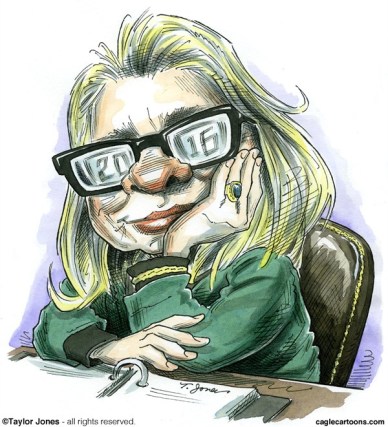
If you believe the mood and headlines from some of the press, it’s been a pretty rough week for Hillary Clinton. While there was widespread and substantive coverage of the rollout of her economic agenda, politically, it’s a different story. One poll showed so much trouble for Hillary that she only had a higher favorability number than any other candidate it tested.
Even worse, multiple polls released this week show that she leads every candidate running in head-to-head matchups. While it is widely known that the growing Hispanic electorate is critical in deciding the election, new polling shows that Hillary Clinton has a disastrous 68 percent approval rating among Hispanic voters and only leads her closest Republican competition (Bush) by 37 points, 64% to 27%.
Not only that, she raised a record amount of primary money for a candidate in their first quarter, with only $8 million (a sum larger than most Republican campaigns raised in total) in donations of less than $200. Hillary also spent too much money building her organization and was only left with more cash on hand than any other campaign raised and more in the bank than the top three Republican campaigns combined.
It’s true. Hillary is left in the terrible position of having the most resources of any candidate and being voters’ top choice to be the next President of the United States.
Republicans on Capitol Hill are betting the secretly filmed Planned Parenthood video — depicting an executive allegedly discussing the sale of fetal organs from terminated pregnancies — will give them cover to more aggressively push abortion issues without the political ramifications that have haunted the party in the past.
In recent years, Republicans have worked to soften their tone when it comes to contentious issues such as abortion, wanting to avoid a repeat of gaffes like Todd Akin’s “legitimate rape” comments that have turned off many female voters.
ut now, the GOP is going hard on abortion politics — and Planned Parenthood specifically — following the release of the video depicting a top official for the group casually talking about doctors collecting fetal organs for biomedical companies during abortions.
“The gravity of the situation most definitely” changes things, House Majority Leader Kevin McCarthy (R-Calif.) told POLITICO Thursday. “This is not just Republicans. It’s independents. It’s Democrats…. Americans don’t want their tax dollars spent doing what they’re doing.”
McCarthy is already talking about defunding the organization through the appropriations process. And in the Senate, GOP leaders who have been eyeing a vote on legislation banning abortions after 20 weeks of gestation say this will give them momentum to clear the bill later this session.
“I think it really probably enhances the prospects of something like that passing right now,” South Dakota Sen. John Thune, the third-ranking Senate Republican, said Thursday. “I think that’s such an egregious, awful, horrible example out there, which I think just elevates the importance of addressing it. So I think it probably helps the bill.”
Planned Parenthood says the video is a misconstrued smear campaign using “heavily edited videos to make outrageous claims about programs that help women donate fetal tissue for medical research.”
Of course, the drive for all of this usually comes from the same people that poor shame while ensuring no one makes a living wage. Here’s an article on How the American South Drive the Low Wage Economy from American Prospect’s Harold Meyerson.
The American South before the Civil War was the low-wage—actually, the no-wage—anchor of the first global production chain.
Today, as the auto and aerospace manufacturers of Europe and East Asia open low-wage assembly plants in Tennessee, Alabama, South Carolina, and Mississippi, the South has assumed a comparable role once more. Indeed, the South today shares more features with its antebellum ancestor than it has in a very long time. Now as then, white Southern elites and their powerful allies among non-Southern business interests seek to expand to the rest of the nation the South’s subjugation of workers and its suppression of the voting rights of those who might oppose their policies. In fact, now more than then, the South’s efforts to spread its values across America are advancing, as Northern Republicans adopt their Southern counterparts’ antipathy to unions and support for voter suppression, and as workers’ earnings in the North fall toward Southern levels. And now as then, a sectional backlash against Southern norms has emerged that, when combined with the Southern surge, is again creating two nations within one.
Bill Clinton was spotted spending some quality time with his granddaughter Charlotte on Thursday morning.
The pair were photographed in New York City’s Madison Square Park as the former president took the infant to see a kids concert.
This is not the first time Clinton has been on babysitting duty either, saying last week that he and wife Hillary were recently in charge of the tiny tyke for her parents.
Gov. Bill Walker said Thursday he would use his executive power to expand the public Medicaid health-care program to newly cover as many as 40,000 low-income residents.
The decision comes after the Alaska Legislature earlier this year rejected Walker’s efforts to expand the program through the state budget process, then adjourned without allowing a vote on a separate expansion bill.
Republicans seem to be okay with living breathing people dying, starving, and living lives with no future. Zygotes get preferential treatment while they assign folks to living hells.
Senator Marco Rubio said poverty is best addressed not by raising the minimum wage or giving the poor more assistance but with “reforms that encourage and reward work.”
This has been the standard Republican line ever since Ronald Reagan declared that the best social program is a job. A number of Democrats have adopted it as well. But it’s wrong.
Surely it’s better to be poor and working than to be poor and unemployed. Evidence suggests jobs are crucial not only to economic well-being but also to self-esteem. Long-term unemployment can even shorten life expectancy.
But simply having a job is no bulwark against poverty. In fact, across America the ranks of the working poor have been growing. Around one-fourth of all American workers are now in jobs paying below what a full-time, full-year worker needs in order to live above the federally defined poverty line for a family of four.
Why are more people working but still poor? First of all, more jobs pay lousy wages.
While low-paying industries such as retail and fast food accounted for 22 percent of the jobs lost in the Great Recession, they’ve generated 44 percent of the jobs added since then, according to a recent report from the National Employment Law Project.
Second, the real value of the minimum wage continues to drop. This has affected female workers more than men because more women are at the minimum wage.
Third, government assistance now typically requires recipients to be working. This hasn’t meant fewer poor people. It’s just meant more poor people have jobs.
Bill Clinton’s welfare reform of 1996 pushed the poor into jobs, but they’ve been mostly low-wage jobs without ladders into the middle class. The Earned Income Tax Credit, a wage subsidy, has been expanded, but you have to be working in order to qualify.
Work requirements haven’t reduced the number or percent of Americans in poverty. They’ve merely increased the number of working poor – a term that should be an oxymoron.
In recent years, Blankfein has spoken about the need for public policies that promote fairer distribution of wealth while not overly crimping its creation.
“I know I’m a big fat cat, plutocrat kind of guy, but I will tell you I’ve been the beneficiary of some of these redistribution policies,” Blankfein told business school students in South Africa in April, noting he grew up in public housing and got need-based scholarships to Harvard. “Sometimes I wish I had amnesia, because there’s lots of things I’d like to forget, but that isn’t one of them.”
The Sky Dancing banner headline uses a snippet from a work by artist Tashi Mannox called 'Rainbow Study'. The work is described as a" study of typical Tibetan rainbow clouds, that feature in Thanka painting, temple decoration and silk brocades". dakinikat was immediately drawn to the image when trying to find stylized Tibetan Clouds to represent Sky Dancing. It is probably because Tashi's practice is similar to her own. His updated take on the clouds that fill the collection of traditional thankas is quite special.
You can find his work at his website by clicking on his logo below. He is also a calligraphy artist that uses important vajrayana syllables. We encourage you to visit his on line studio.

 Good Morning!
cherished as disaster closed in on the colony.
 So, my brother-in-law is retiring on his next birthday and my sister has a great gift idea. She’s getting him a Kindle and asking us to tell her what book we’d like to load up there for him. I’m torn between 1Q84 by Haruki Marukami, A Confederacy of Dunces by John Kennedy O’Toole, and Fooled by Randomness by Nassem Nicholas Taleb. I had to ask what others are offering up too. Doctor Daughter and Doctor Son-in-Law wanted all the Game of Thrones books. Youngest Daughter chose Gone Girl by Gillian Flynn. The book that was offered up the most times was The Boys in the Boat by Daniel James Brown. So, now I’ve decided I have to read those last two. What book would you offer up for a newly retired guy with a lot of time on his hands?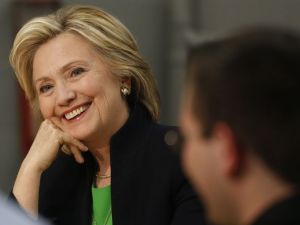
 Good Afternoon!
 a child throwing rocks at other children in a playground would you give those other children rocks and expect the problem to be solved? And, what would you think about arming every one in a dark crowded theater then calling for a virtual shoot out at the OK Corral? Certainly, responsible gun owners know that kind of environment is not likely to produce a positive outcome. However, white male apologists like Rick Perry always blame mental illness and are blaming “gun free zones”. It’s never about the issues of right wing extremists and their racist, misogynist, radical christianist screeds. It’s always about mental illness and not enough guns.
 In 2013, Bobby Jindal signed six gun laws. Most of these laws made it easier for criminals and mentally ill people to obtain laws. He should’ve known he was setting the state up for more mass shootings but as usual, he’s more concerned about things that would contribute to his presidential ambitions. He did sign bills into laws to increase the ability of state and federal agencies to share information on people who should not have access to guns. However, the gun show loop hole alone means that nothing will ever be done with that information. The Lafayette shooter is perhaps a textbook example of some one that should not have access to guns, yet he legally acquired one.
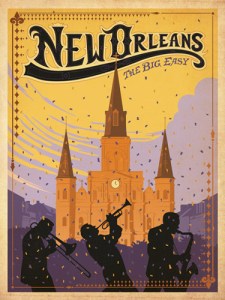
 Bobby Jindal says “Lousiana Loves us some guns”. That’s not exactly obvious to any of us that live in a city where gun violence costs many lives every day.
 men in their lives. This is from a blog that tracks and monitors male misogyny called “We Hunted the Mammoth”. The author is David Futrelle.
 A movie theater in Lafayette, Louisiana became the latest mass shooting site last night. The shooter was a 58 year old man whose identity is known but has not been released. He plus two of his victims are dead. There are more folks in surgery and in critical condition that will hopefully survive. The police were on the scene rather quickly because one of the victims–a teacher–pulled the fire alarm. The state is in shock and the Governor lost no time making political hay on site.
 Good Day!
 Barcelona is evidently one city that’s really fed up. I feel their pain.
industry is slowly being bled to death.
 More statues of Confederate Generals are coming down in parks around the American South. The notorious Nathan Bedford Forrest’s statue and the memorial housing his remains is on its way to the auction block if the city of Memphis has its way. Forrest is best known for being the founder of the KKK. He was a slave trader prior to secession.
 However, I’m a preservationist and having seen some sites of some of the worst our history has to offer, I mostly look at the National Historic Landmark criteria for insight on if the site should be disturbed or not. The site of the Battle of Little Big Horn has a monument to Custer that was installed there when he was considered a hero. It still serves as a memorial to the 7th Calvary along with the Native Sioux and Cheyenne who fought there. When I visited the site some time in the late 60s or early 70s the statue still stands but the story and the role of Custer in history is quite different. The Trail of Tears Historic Trail tells the story of the genocide and displacement of indigenous peoples in the American South. Andrew Jackson does not come off as the hero of The Battle of New Orleans there.
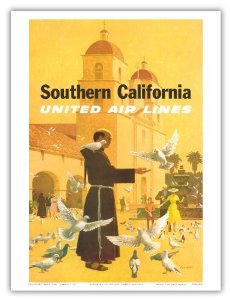 Does this Pope really think this work is the act of Saints? Anyway, our history is full of the actions of a lot of bad men. I think it doesn’t take much imagination to see most of them were of European descent and Christian and men.
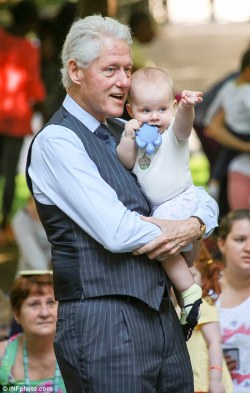 So, here’s a cute break and a picture of Baby Charlotte and her Grandad!! There are more at this like from the UK’s Daily Mail.
 peej
peej Carissa
 bostonboomer
 dakinikat
 ecocatwoman
 jjlo
jjlo mablue2
 Mama Lopez
 peggysue22
 quixote
 skydancingguestblogger
 Mona (aka Wonk the Vote)





Recent Comments