
Monday Afternoon Reads
Posted: July 13, 2015 Filed under: worker rights | Tags: Hillary Clinton, Jeb Bush, Scott Walker 22 CommentsI got to spend the weekend with both girls and their guys which is a treat these days since both are adults and live far away. No matter how old they get or I get, it seems that seeing them leave is a challenge. My goal was to raise independent women who could make good decisions and act in ways that do no harm to themselves or others. I wouldn’t have them any other way. But, the fact they’re so independent is difficult on their old mom sometimes. So, this post is a little late because I slept as late as I could.
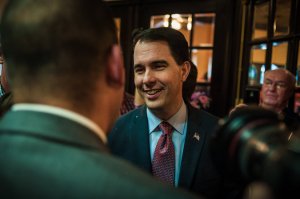 I’m going to start out with some items on Scott Walker since he’s the latest KochBot Governor to enter the race and appears to be the anti-government pony that the Kochs are backing.Just like Louisiana and Kansas, Wisconsin has become a failed state through experimentation with right wing libertarian cult fetishes. Walker has been particularly rough on unions. Turning workers into hapless, powerless wage slaves is one of the key Koch goals. Union money and campaign work has been one of the linchpins in the election of Democrats. It’s one of the few offsets to big money coming from billionaires like the Kochs.
The anti-union law passed here four years ago, which made Gov. Scott Walker a national Republican star and a possible presidential candidate, has turned out to be even more transformative than many had predicted.
Walker had vowed that union power would shrink, workers would be judged on their merits, and local governments would save money. Unions had warned that workers would lose benefits and be forced to take on second jobs or find new careers.
Many of those changes came to pass, but the once-thriving public-sector unions were not just shrunken — they were crippled.
Unions representing teachers, professors, trash collectors and other government employees are struggling to stem plummeting membership rolls and retain relevance in the state where they got their start.
Here in King, Magnant and her fellow AFSCME members, workers at a local veterans home, have been knocking on doors on weekends to persuade former members to rejoin. Community college professors in Moraine Park, home to a technical college, are reducing dues from $59 to $36 each month. And those in Milwaukee are planing a campaign using videos and posters to highlight union principles. The theme: “Remember.”
But recalling the benefits that union membership might have brought before the 2011 law stripped most public-sector unions of their collective-bargaining rights is difficult when workers consider the challenges of the present.
“I don’t see the point of being in a union anymore,” said Dan Anliker, a 34-year-old technology teacher and father of two in Reedsburg, a tiny city about 60 miles northwest of Madison.
 Walker made his presidential ambitions official.
Scott Walker made it official today, breaking the news that he is a Republican candidate in the 2016 presidential race first in a Facebook post this morning before a formal announcement event in Wisconsin later today.
“I’m in. I’m running for President of the United States because Americans deserve a leader who will fight and win for them,” the two-term Wisconsin governor says in the Facebook post, which includes a video in which he argues that his track record as governor sets him apart from the rest of the Republican field as a proven leader who has succeeded in winning elections and taking on big policy battles.
Walker’s policy battles usually mean taking on the little guy and the middle class by promoting the interests of the very rich and powerful. He would become the first president since Harry Truman to do so without a college degree having dropped out of university prior to graduation.
Walker is not very charismatic and has little national appeal at the moment. However, his former political rivals say this only leads folks to underestimate him. Given his strong Koch backing, he’s got the ability to go the distance even though he’s less than appealing physically and personality-wise. My impression of him has always been of a very dull and lifeless man. He’s characterized by former opponents quite a bit differently.
Since 1990, the Wisconsin governor’s name has appeared on a ballot 14 times, and he’s failed just twice — a winning record that’s central to his pitch to Republican primary voters. Along the way, he’s left a trail of defeated challengers, many of them gripped by resentment toward a foe they recall as crassly opportunistic, loose with facts or blindly ambitious.Yet for all the lingering enmity, as Walker prepares to announce his bid for the Republican presidential nomination, his rivals also grudgingly respect him as a rare and exceptionally canny politician who’s constantly underestimated and always outperforms expectations.
He’s a sneaky-smart campaigner, they say, a polished and level-headed tactician, a master at reading crowds. He learned the value of ignoring uncomfortable questions, rather than answering them. In hindsight, the many politicians he pancaked on the road to the national stage — in races for the state Assembly, county executive and governor — almost invariably see his career as an elaborate practice run for the White House.
To David Riemer, who fell to Walker in a 2004 bid for Milwaukee County executive — a nonpartisan race — Walker’s wiles can be summed up by a single moment during one of their debates. Riemer, sensing Walker’s desire to run for higher office, recalled placing a sheet of paper on Walker’s lectern that included a pledge to fulfill an entire four-year term. Sign it, Riemer demanded.
“He just let it sit in front of him. He didn’t get it back to me. He didn’t rip it up. He didn’t turn it into a paper airplane … he ignored it,” Riemer said. “He understood very well, one of the key lessons in political life is they can’t print what you don’t say.”
Walker is managing to dismantle education in ways that Bobby Jindal only dreams. Wisconsin–unlike Louisiana–is known for good education and institutions. He’s managed to attack teacher unions and 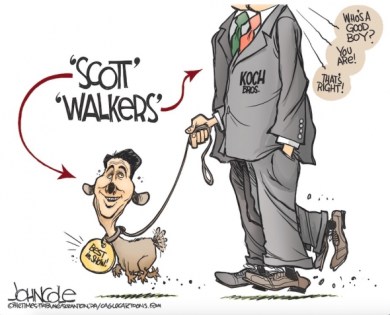 benefits. Just recently. he went after and back dismantling tenure. Attacks on higher education are necessary for the right since any form of critical thinking skills in voters is a danger to demagoguery. Tenure protects freedom of speech and thought at university campuses. These are dangerous freedoms for folk wishing to push an agenda that is not reality-based. It’s no wonder that most of the Koch puppets are loose with the truth, data, and facts on the ground.
Wisconsin Gov. Scott Walker’s trailblazing effort to weaken tenure protections at public colleges and universities is now a reality with his signing of a $73 billion budget on Sunday.
The effort has outraged unions and higher education groups, leaving them fearful that other lawmakers will follow suit to unravel labor protections in higher education that have long been considered sacred ground.
Walker downplayed the changes at Sunday’s signing at a valve manufacturing facility in Waukesha, Wisconsin, emphasizing instead that tuition was being frozen in the University of Wisconsin system for two more years at the rate it was two years ago.
“We made college more affordable for college students and working families all across the state,” Walker said.
Walker signed the budget as he prepared to announce his run for the Republican presidential nomination Monday. The tenure fight could further endear him to conservatives skeptical of what some perceive as the ivory tower of higher education, and it serves to remind voters of his earlier effort to scale back collective-bargaining rights of public employee unions — including K-12 teachers — when he was first building a national profile.
The budget sent to Walker also includes other labor-related issues that frustrated unions, including a provision that rolls back a minimum pay protection for laborers working on local public construction projects like schools.
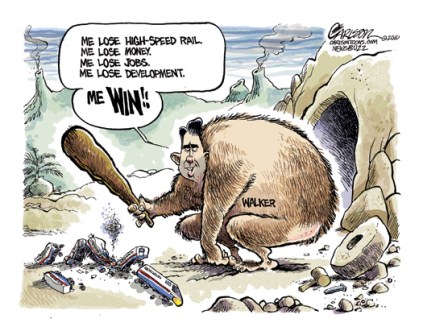 Scott Walker looks like the typical Midwestern Goofus. He was raised a Baptist as the son of a Baptist preacher. Walker pushed through the typical christianist culture crap. Maybe because he appears so ineffectual is one of the reasons that he actually gets his desired outcomes. His current fundraising efforts are less than stellar and national polls do not favor him. He is doing well in Iowa, however.
Mr. Walker’s strategy is now focused on building a political operation in Iowa and campaigning aggressively there with an increasingly conservative message. He recently endorsed amending the United States Constitution to leave laws blocking same-sex marriage up to each state, and he is preparing to sign Wisconsin legislation that would ban abortions after 20 weeks of pregnancy, except when the life of the mother is in immediate jeopardy.
With those positions and others, Mr. Walker is aiming to sway conservative and evangelical voters, two dominant groups in the Iowa Republican caucuses. They may now have a particular affinity for Mr. Cruz and Mr. Carson, who had a combined 19 percent support of likely Iowa caucusgoers in a recent Quinnipiac University poll. But other Republican candidates like Mr. Perry, a former Texas governor, and Mr. Rubio are angling to appeal to the same voters, and Mr. Rubio and his supporters have more financial resources than Mr. Walker does right now.
“Walker had a great winter but maybe got a little cocky, a little ahead of himself, and now he really has to take the time to work Iowa and build up the resources to compete harder in the early primary states,” said Ed Rollins, a veteran Republican consultant who has worked with David Polyansky, one of Mr. Walker’s advisers in Iowa.
To distinguish himself, Mr. Walker, a 47-year-old career politician, is building his bid for the White House around his style of leadership, reflected in slogans like “go big and go bold” and “a fighter and a winner,” and his record as governor since 2011.
He has also sought to enhance his understanding of national affairs and foreign policy by taking time away from the campaign trail this year for dozens of briefings with experts, heads of state and military officials. As a result, not only has he spent less time fund-raising than other candidates, he has also been absent for long stretches from New Hampshire and South Carolina, which have early nominating contests and where his poll numbers have slipped as well.Wisconsin, a candidate for the Republican presidential nomination in 2016.
“I think he waited too late to get into the race, because there was such excitement for him when he was here in March,” said Catherine Welborn, a South Carolina Republican who heard Mr. Walker speak that month in Charleston. “South Carolina doesn’t have much time to get to know him, but one thing is for sure: He needs to come down here and tell the story about beating the unions. That’s the kind of person we need to stand up for America.”
Other admirers of Mr. Walker said he was poised to regain momentum because of his fiscally conservative record in Wisconsin, where he signed a two-year state budget on Sunday that holds the line on taxes and cuts funds for University of Wisconsin campuses while also freezing tuition there.
But Mr. Walker is best known for taking on Wisconsin’s public employee unions, shortly after taking office in 2011, by proposing a bill to repeal collective bargaining for most government workers to give control over pay and benefits back to the state. Championing the measure as a way to deal with the state’s budget deficit, Mr. Walker drew support from his extensive network of conservative backers, as well as Republican leaders in the State Legislature.
There are many interesting comments on that last NYT thread including many from his constituents. Listen to this from folks that know him best. They remind me of those of us from Louisiana that are telling the country to run away from Jindal as fast as they can.
pczisny
Fond du Lac, WI
As a Wisconsinite, I can attest to the damage that Scott Walker has done to our state. After promising to create 250,000 in his first term–and insisting that he be held accountable for that pledge when he ran in 2010–the state ended up with half that number (over 50,000 behind same-size but Democratically controlled Minnesota). By 2014, he insisted that the promise was merely a goal.
Our state now ranks in the bottom ten nationally in job creation. It ranks number ONE in middle class decline, according to a Pew Center analysis. We are now among the top 10 states in people moving away.
Scott Walker raised taxes on 140,000 Wisconsin families. What did those families have in common?–they all had a breadwinner who worked for a living, they all had kids to support, and they are all below the poverty line.
Here are some other stories that you might find interesting.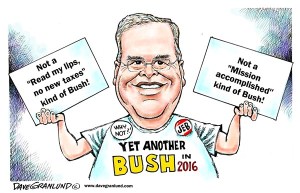
A Study Finds Nearly 100 Percent Of Women Who Had An Abortion Say It Was The Right Choice
According to a new study that tracked hundreds of women who had abortions, more than 95 percent of participants reported that ending a pregnancy was the right decision for them. Feelings of relief outweighed any negative emotions, even three years after the procedure.
Researchers examined both women who had first-trimester abortions and women who had procedures after that point (which are often characterized as “late-term abortions”). When it came to women’s emotions following the abortion, or their opinions about whether or not it was the right choice, they didn’t find any meaningful difference between the two groups.
These findings contradict the notion that women experience negative mental health effects after ending a pregnancy, as well as the idea that later abortions are more psychologically traumatic.
Though there’s no scientific evidence to support the idea that abortion is linked to a greater risk of mental health problems, this framework is often used to justify passing additional restrictions on the procedure. Seven states, for instance, have mandatory counseling laws that require pregnant women to receive information about abortion’s negative psychological consequences before they’re allowed to proceed. Some of those materials specifically reference “postabortion traumatic stress syndrome,” a supposed disorder that isn’t recognized by the American Psychological Association or the American Psychiatric Association.
The President commuted sentences for 46 non violent offenders held on drug charges.
Hillary Clinton and Jeb Bush go at each other over worker hours and pay. Bush also seems to be on the offensive against Rubio and Walker.
Hillary Clinton laid into Jeb Bush’s remark that Americans need to work longer hours on Monday during her first economic policy speech at the New School in New York City.
“Well, he must not have met very many American workers,” Clinton said to applause and cheers. “Let him tell that to the nurse who stands on her feet all day or the teacher who is in that classroom, or the trucker who drives all night. Let him tell that to the fast-food workers marching in the streets for better pay. They don’t need a lecture. They need a raise.
“The truth is, the current rules for our economy do reward some work, like financial trading, for example, much more than other work, like building and selling things,” Clinton added.
Bush made the suggestion last week during an interview with New Hampshire’s Union Leader, urging the need for people to work longer hours because workforce participation is at all-time modern lows.
It’s not the first time Clinton’s campaign has taken a shot at that remark. Her campaign tweeted a graph by the left-leaning Economic Policy Institute showing stagnating wages as productivity has risen over the past four decades.
Well, that’s it for me today. I have to catch up on some grading! What’s on your reading and blogging list today?
Saturday Reads
Posted: July 11, 2015 Filed under: morning reads | Tags: Boehner and the confederate flag, Hillary Clinton Campaign, Torture 10 Comments Good Morning!
I full admit to being out of the loop and away from the news recently. So, let’s see what I can do to catch us up! First, you have to check out Fusion‘s Gallery of Girls at the Women’s World Cup Ticker Tape Parade. I’ve put a few up for this post in celebration of our USA Woman!!! The Ticker Tape Parade was the first ever given for a woman’s sports team. These kids are just plain cute and excited!!
Nick Gillespie writing for The Daily Beast has some good analysis up on why Hillary Clinton’s strategy of laying low at the moment is brilliant.
Since announcing for president, Clinton has granted exactly one televsion interview, with CNN’s Brianna Keilar, and smartly used the occasion to attack the Republican field for their weak-tea responses to Donald Trump’s muy stupido assertion that Mexican immigrants are mostly rapists. Indicating that she was “disappointed” (read: elated) “in those comments,” Clinton went on to note that her Republican rivals “are all in the same general area on immigration.”
The worst part of that? She’s absolutely right. Once the party of near-open borders (watch this video from 1980 in which Ronald Reagan and George H.W. Bush one up each other on praising the contributions of illegal immigrants), today’s GOP, with minor exceptions, vilifies the wretched yearning to breathe free, at least when they come from Latin America.
In 2004, George Bush won 44 percent of the Hispanic vote. Eight years later, Mitt Romney—who counseled that illegal immigrants should practice “self-deportation”—pulled just 27 percent. In the GOP “autopsy” of Romney’s failure in 2012, the authors wrote, “If Hispanic Americans hear that the GOP doesn’t want them in the United States, they won’t pay attention to our next sentence.” Given the way that the current candidates have been non-reacting to Trump, that might be the best outcome the Republican Party could hope for.
Against such a backdrop, Clinton is right to keep mum, except when making easy layups against her opponents. Let Bernie Sanders whip Democrats into a progressive frenzy and then step in withvague nods toward equality and growth for all. She knows full well that Sanders is not her real rival—that will be the GOP nominee, not a frothing-at-the-mouth socialist from a state with a population smaller than Washington, D.C.’s.
 Politico says they have a sneak peak at “Hillarynomics’.
In a speech Monday at the famously progressive New School in lower Manhattan, Clinton will lay out her economic theory of the case, and her main theory is that the incomes of “everyday Americans” have remained too low for too long. At a moment when the left wing of the Democratic Party is flexing its muscles—and flocking to the rallies of her socialist challenger, Bernie Sanders—she will stick with the liberal populism that has dominated the opening months of her campaign, contrasting the good times on Wall Street and corporate boardrooms with the wage stagnation of the middle class.
But an outline of the speech provided by a campaign aide suggested that she will strike less of a rabble-rousing tone than Sanders, challenging “top-down” Republican policies without suggesting that capitalism is inherently rigged against families on the bottom.
The speech is supposed to be a vision statement, not a laundry list of agenda items, and Clinton intends to roll out a series of specific policy proposals in the coming weeks. But the aide said she will preview several of those proposals, including more generous family leave policies, additional tax increases for the wealthy, and new corporate governance rules that would discourage short-term quick-buck thinking.
President Obama has been describing his own policies as “middle-class economics,” and Clinton is walking a fine line as she tries to distinguish herself from her former rival (when she ran for president) and boss (when she served as secretary of state) without criticizing his policies, which remain broadly popular among Democrats. In her speech, she will praise Obama for dragging the economy back from the brink of a depression in 2009, and for specific actions like his recent push to expand overtime pay. But even though markets have thrived and unemployment has drooped under Obama, her primary focus will be middle-class incomes that have barely outpaced inflation over the last four decades, a problem she will describe as the defining economic challenge facing the next president.
Clinton’s aide said she will discuss some of the structural forces conspiring against sustainable wage growth, such as globalization, automation, and even consumer-friendly “sharing economy” firms like Uber and Airbnb that are creating new relationships between management and labor (and which now employ many Obama administration alumni). But she will argue that policy choices have contributed to the problem, and that she can fix it.
“There’s a commonly held view that there’s nothing to do about some of these global trends—a kind of ‘it is what it is’ thinking,” says Center for American Progress president Neera Tanden, a longtime Clinton confidante who advised the campaign about the speech. “Hillary has never given in to that kind of pessimism.”
The campaign provided an unmistakably left-leaning list of advisers who were consulted about the speech and the economic agenda Clinton plans to roll out in the coming weeks. They included some of Obama’s most liberal former aides, like Christina Romer, who chaired his Council of Economic Advisers, and Jared Bernstein, who was Vice President Biden’s chief economist. They also included progressive economists like Joseph Stiglitz, Jacob Hacker and Heather Boushey. Clinton plans to refer to the prosperity America enjoyed during her husband Bill’s presidency, but Wall Street-friendly Clintonworld centrists like former Treasury Secretary Robert Rubin were notably absent from the list.
The Republicans are not only looking positively xenophobic. They’re looking overtly racist as the dissection of Boehner’s  foray into Confederate Flag Politics continues. This is Dana Milbank’s analysis at WAPO.
Thursday’s Confederate flag debacle is a direct consequence of House Speaker John Boehner’s leadership strategy. Calculating that compromise with the Democratic minority will cause his conservative caucus to oust him from the speakership, Boehner has essentially chosen to pass a legislative agenda with only Republican votes. Because this leaves him a thin margin for error, it empowers the most extreme conservatives in the House, who have an incentive to withhold their votes if they don’t get everything they want.
This leadership style also bestows outsize power on conservative groups such as Heritage Action, an outgrowth of the Heritage Foundation. The group gets much credit for the 2013 government shutdown, and it has been influential in keeping the Export-Import Bank from being reauthorized and in getting a committee named to probe the Benghazi, Libya, attacks. Heritage Action also had much to do with the initial defeat of trade legislation last month — and it celebrated as Boehner abandoned his attempt to punish lawmakers who voted against it.
On the education bill, Heritage demanded that the legislation effectively take the federal government out of education policy by creating no-strings-attached block grants to states. When the bill came up in February without such a provision, conservatives balked, and Boehner’s team had to retreat. This time, leaders bought conservative votes by making such an amendment in order. The amendment failed, but the concession earned just enough conservative votes for the bill to pass by a bare 218-to-213 after extensive arm-twisting.
The flag fiasco followed a similar ideological dynamic. Republican leaders were coming up short on votes for the legislation, in part because some Southern conservatives were angry that the bill included language, adopted by the House in a voice vote, blocking the sale and display of the flag at parks and cemeteries. So the GOP leadership agreed to let these holdouts have a vote to reinstate the Confederate flag.The result was embarrassment for a party that already has trouble with non-white America. Typical of the series of outraged speakers was Rep. Hakeem Jeffries (D-N.Y.), who displayed the flag in the well of the House. “Had this Confederate battle flag prevailed in war 150 years ago,” he said. “I would be here as a slave.”
 Psychologists and the CIA collaborated to commit torture. Here’s some stunning information on the W Bush administration’s interrogation procedures from the NYT.
The 542-page report, which examines the involvement of the nation’s psychologists and their largest professional organization, the American Psychological Association, with the harsh interrogation programs of the Bush era, raises repeated questions about the collaboration between psychologists and officials at both the C.I.A. and the Pentagon.
The report, completed this month, concludes that some of the association’s top officials, including its ethics director, sought to curry favor with Pentagon officials by seeking to keep the association’s ethics policies in line with the Defense Department’s interrogation policies, while several prominent outside psychologists took actions that aided the C.I.A.’s interrogation program and helped protect it from growing dissent inside the agency.
The association’s ethics office “prioritized the protection of psychologists — even those who might have engaged in unethical behavior — above the protection of the public,” the report said.
Two former presidents of the psychological association were on a C.I.A. advisory committee, the report found. One of them gave the agency an opinion that sleep deprivation did not constitute torture, and later held a small ownership stake in a consulting company founded by two men who oversaw the agency’s interrogation program, it said.
The association’s ethics director, Stephen Behnke, coordinated the group’s public policy statements on interrogations with a top military psychologist, the report said, and then received a Pentagon contract to help train interrogators while he was working at the association, without the knowledge of the association’s board. Mr. Behnke did not respond to a request for comment.
Norman Byrd at The Examiner reports that climate change deniers basically are conspiracy theorists.
A new study concentrating on those that deny climate change is an actual process has found that deniers are more likely as not involve themselves in conspiratorial thinking as well. The authors of the study found that many of the climate change deniers called themselves skeptics when they weren’t exhibiting actual skepticism at all — just an unhealthy dissemination of conspiracy theories through unsubstantiated allegations. Furthermore, study authors find that such contradictory maneuverings have been detrimental to the world at large, causing greater distrust in science and scientists and slowing efforts to find and implement solutions to the accumulating effects of global warming.
The Guardian reported July 8 that a recent study headed by experimental psychologist Prof. Stephan Lewandowsky at the University of Bristol concluded, after a blind test where students gauged whether comment material they read was of a conspiratorial nature or of sound scientific research (but were told all material was from an unnamed scientific paper), that as much as one-fifth of the comments contained strong conspiracy theory ideation. The study itself built upon an earlier published study wherein Lewandowsky and a team of social scientists found that some 40 percent of those writing so-called skeptical pieces concerning global warming had used some form of imagery that conjures up conspiracy theories.
Lewandowsky told The Guardian, “I do not recall ever having seen such a strong effect in 30 years of behavioural research, and I have certainly never encountered ratings that favoured the extreme end of the scale to the extent observed here.”
The study, published in Journal of Social and Political Psychology, further lays out the difference between skepticism and conspiratorial denial. He explained to The Guardian that conspiracism was not skepticism and that self-appointed skeptics were often simply conspiracy theory propagators, their arguments “lacking in scholarly incisiveness” and “detracts from scholarly critique.” He also noted that this type of thinking has become a “direct pipeline” from blogs to right-wing media to, at times, political and government officials.
What’s your reading and blogging list today?
Monday Afternoon Reads
Posted: July 6, 2015 Filed under: morning reads | Tags: Euro Eurozone, Germany, Greek Debt Crisis 27 CommentsGood Afternoon!

Sorry that this post has been taking so long. My computer is having a complete meltdown. I’m on my old one right now and it’s reallllllyyyyyy slowwwwww.
I want to spend a little time with the meltdown in Greece which is a complex situation. The most interesting source that I’ve found to date is an interview with French Economist Thomas Piketty with Germany’s Zeit Magazine. Last night, I read a good translation of the piece here. It’s been removed–temporarily hopefully–from the medium site so you’ll have to struggle through the bad German-English translation at Zeit’s site. The most interesting part of the interview is that Piketty explains the history of nations having to repay their debt after losing wars or under other circumstances. He explains that the European fixation with austerity and punishing Greece denies how German debt was handled post WW2 and the reality that forgiving German national debt helped Germany become what it is today. So, why are the Germans not extending the same courtesy to Greece?
Piketty: When I hear the Germans now say that they maintain a very moral dealing with debt and firmly believe that debts must be repaid, then I think: That’s a big joke! Germany is the country that has never paid his debts. It can be obtained in other countries no lessons.
TIME: Do you want to try the story in order to portray States who do not repay their debts as a winner?
Piketty: Just such a state is Germany. But slowly: The story teaches us two options for a highly indebted country to settle its arrears. One has fooled the British Empire in the 19th century after the Napoleonic Wars expensive: It’s slow method, which today also recommends Greece. The UK division at that time the debt through rigorous financial management from – although it worked, but took extremely long. Over 100 years the British relatives two to three percent of its economic output on the debt, spending more than they for schools and education.That must not be and should not be today. For the second method is much faster.Germany has it tried in the 20th century. Essentially, it consists of three components: inflation, a special tax on private assets and liabilities sections.
TIME: And now you want to tell us that our economic miracle was based on debt cuts that we deny the Greeks today?
Piketty: Exactly. The German government was in debt after the war ended in 1945 with more than 200 percent of its gross national product. Ten years later it had little choice but the national debt was less than 20 percent of the national product. France succeeded in that time a similar feat. This tremendously rapid debt reduction but we would never have reached with the budgetary resources that we recommend Greece today. Instead, our two countries turned to the second method, the three mentioned components, including debt restructuring. Think. To the London Debt Conference in 1953, canceled on the 60 percent of Germany’s foreign debt and also the domestic debt of the young Federal Republic were restructured
TIME: This was from the realization that the high repayment demands on Germany after the First World War on the grounds of the Second World Warincluded. They wanted this time forgive the Germans for their sins!
Piketty: Nonsense! This had nothing to do with moral insights, but was a rational economic decision. It was recognized at the time correctly: According to major crises which have a high debt burden result, there comes a time when you have to turn to the future. We can not expect to pay for decades for their parents’ mistakes of new generations. Now the Greeks have undoubtedly made great mistakes. By 2009, the government in Athens have forged their budgets. Why not the younger generation of Greeks now bears more responsibility for the mistakes of their parents as the young generation of Germans in the 1950s and 1960s. We must now look forward. Europe was founded on forgetting the debt and investing in the future. And it is not on the idea of eternal penance. We need to remember.
The Guardian similarly argues that what was good for Germany in 1953 is good for Greece today.
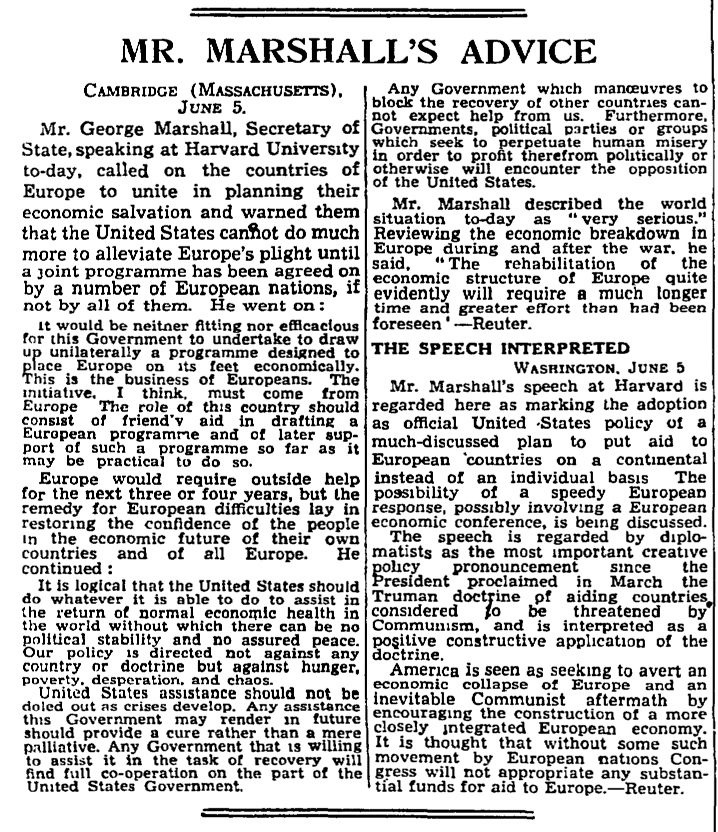
The arguments being used by the Greek government to secure debt relief can be traced back to a little-reported speech made to the students of Harvard University on 5 June 1947.
It was there that George Marshall, the then US secretary of state, floated the idea of a European programme of economic reconstruction. The Americans saw thatEurope was on the brink of economic collapse. Industrial capacity had been wiped out. Trade had ceased. People were going hungry and, in Marshall’s view, at risk of turning to communism.
Despite being the turning point for Europe’s economies after the second world war, Marshall’s speech was not considered as especially important at the time. The State Department did not bother to tell anybody in Europe about what he was about to say and the British embassy in Washington did not think it worth the cost to send a cable with an advance copy of the speech to London.
But the speech was covered by the BBC’s Washington correspondent and, by luck, his report was heard by the then UK foreign secretary, Ernest Bevin, in a wireless set he kept by his bedside. Bevin seized on the opportunity provided by the Americans, who said the Europeans had to organise their own plan for disbursing the money. “It was like a life line to sinking men,” he said later. “It seemed to bring hope where there was none.”
Lessons had been learned from the mistakes made after the first world war. Then, the victorious Allied powers had imposed a punitive peace on Germany, demanding heavy reparations that bred resentment.
Marshall tried a different approach. Over four years, the US pumped $13bn into Europe (the equivalent of more than $150bn today) in the hope that it would rebuild economic capacity, enable countries to trade with each other, and rebuff the threat from Stalin’s Soviet Union. It was not an entirely selfless act. The US at the time accounted for 50% of the world’s output, and needed to find markets for its exports. The lack of demand in countries such as France, Italy and Germany in 1947 meant this was not possible.
Britain was the single biggest beneficiary of Marshall aid, receiving more than a quarter of the total. Germany took $1.4bn (11% of the total), four times as much as Greece received.
 Paul Krugman had some analysis and advice.
The truth is that Europe’s self-styled technocrats are like medieval doctors who insisted on bleeding their patients — and when their treatment made the patients sicker, demanded even more bleeding. A “yes” vote in Greece would have condemned the country to years more of suffering under policies that haven’t worked and in fact, given the arithmetic, can’t work: austerity probably shrinks the economy faster than it reduces debt, so that all the suffering serves no purpose. The landslide victory of the “no” side offers at least a chance for an escape from this trap.<
But how can such an escape be managed? Is there any way for Greece to remain in the euro? And is this desirable in any case?The most immediate question involves Greek banks. In advance of the referendum, the European Central Bank cut off their access to additional funds, helping to precipitate panic and force the government to impose a bank holiday and capital controls. The central bank now faces an awkward choice: if it resumes normal financing it will as much as admit that the previous freeze was political, but if it doesn’t it will effectively force Greece into introducing a new currency.
Specifically, if the money doesn’t start flowing from Frankfurt (the headquarters of the central bank), Greece will have no choice but to start paying wages and pensions with i.o.u.s, which will de facto be a parallel currency — and which might soon turn into the new drachma.
Suppose, on the other hand, that the central bank does resume normal lending, and the banking crisis eases. That still leaves the question of how to restore economic growth.
In the failed negotiations that led up to Sunday’s referendum, the central sticking point was Greece’s demand for permanent debt relief, to remove the cloud hanging over its economy. The troika — the institutions representing creditor interests — refused, even though we now know that one member of the troika, the International Monetary Fund, had concluded independently that Greece’s debt cannot be paid. But will they reconsider now that the attempt to drive the governing leftist coalition from office has failed?
The European Central Bank (ECB)--which is akin to our FED for those countries in the EuroZone–has stated it will continue Emergency Liquidity Assistance to Greek Banks. However, they are imposing higher “haircuts”.
And the ECB has maintained the cap on emergency liquidity assistance (ELA) at €89bn, but crucially it has “adjusted” the haircuts it applies to the assets which Greek banks hand over in return for funds.
In simple terms, that probably means the ECB is treating Greek government bonds as riskier, and valuing them as such when it calculates how much liquidity it can provide.
It’s another tightening of the screw on Greece – meaning some banks may find it even tougher to qualify for emergency liquidity assistance.
This is from Robert Reich as posted to his Facebook page.
Five things you need to know about the Greek debt crisis as of now:
1. The Greek people voted correctly yesterday in rejecting more tax increases and spending cuts. They’ve already been punished too much by their creditors — mostly big banks, as represented by the IMF, European Central Bank, and European Commission.
2. Austerity was the wrong medicine to begin with. It put Greece into a death spiral of economic woe that worsened its debt crisis.
3. Now it’s up to the rest of Europe to respond. It’s in its interest to offer Greece easier bailout terms, and then help Greece get to work on what Greece has already agreed to do — reform its tax system so that wealthy Greeks can’t escape taxation, and reform its budget process to avoid political payoffs.
4. But if Europe doesn’t respond, the best of the worst cases to follow would be for Greece to withdraw from the euro. That will happen automatically if Greek banks issue IOUs instead of euros (cash is already being rationed), and those IOUs become, in effect, a different currency.
5. There could be “contagion” to Spain, Portugal, Ireland, and Italy if creditors fear future defaults and the incapacity of the eurozone to govern itself economically. That would hurt the United States, especially Wall Street, whose exposure to European banks is still considerable.
Greek’s Finance Minister Yanis Varoufakis has resigned.
Varoufakis was sidelined a week or so ago, not because of the “disrespectful” style of his jackets, but because of the directness of his argument. As the Greek prime minister Alexis Tsipras said, he speaks the language of economists better than they do.
He has always insisted that the responsibility for the Greek recovery did not lie with Greece alone, that there had to be realism in the conditions demanded by Greece’s creditors, as the sheer human cost was too much to bear. He showed how financial issues had become politicised, how the old paradigms were broken. Worse, he spoke to Eurocrats as equals.
He spoke to the rest of us as human beings, describing what Europe had laid on the shoulders of Greece as “fiscal waterboarding”. He railed at the birthplace of democracy being turned into what he called “a debt colony”.
As his heroic people last night rose up against “debt-bondage” he gave a press conference in a grey T-shirt and today announced his resignation, explaining that some Eurogroup participants don’t want him in the discussion. He says he does not care for the privilege of office but for collective support for Tsipras.
He is a man who walks like he talks, and that talk is open. This is so unlike the secretive deals usually made in airless rooms in Brussels. Here is a politician acting on his beliefs. He will be remembered not for his style, but for his substance. He faced down the automatons by insisting the Greek people should no longer be punished. And his people were with him. He refused the Eurocrats’ parameters and secrecy. He spoke with decency, and not in code. He is not afraid of the word “collective”. Nor is Syriza. Tsipras has said “negotiation does not belong to one person, it never did”. It is possible that Varoufakis was pushed rather than jumped, to smooth a deal, but whatever the case, he will not disappear, even as he revs off into the sunset. He knows, above all, that real style is substance. He saved his best look for last when he said, “I shall wear the creditors’ loathing with pride”.
I’m going to close this post with a quote from Lenin who wrote about the role of banks at the highest stage of capitalism which is supposed to lead to collapse from his viewpoint. I just always find it an interesting read whenever I see how concentrated the banking sector has become. I’m not a Marxist but I always love a bit of insight when it’s so, well insightful.
As banking develops and becomes concentrated in a small number of establishments, the banks grow from modest middlemen into powerful monopolies having at their command almost the whole of the money capital of all the capitalists and small businessmen and also the larger part of the means of production and sources of raw materials in any one country and in a number of countries. This transformation of numerous modest middlemen into a handful of monopolists is one of the fundamental processes in the growth of capitalism into capitalist imperialism; for this reason we must first of all examine the concentration of banking.
…These simple figures show perhaps better than lengthy disquisitions how the concentration of capital and the growth of bank turnover are radically changing the significance of the banks. Scattered capitalists are transformed into a single collective capitalist. When carrying the current accounts of a few capitalists, a bank, as it were, transacts a purely technical and exclusively auxiliary operation. When, however, this operation grows to enormous dimensions we find that a handful of monopolists subordinate to their will all the operations, both commercial and industrial, of the whole of capitalist society; for they are enabled-by means of their banking connections, their current accounts and other financial operations—first, to ascertain exactly the financial position of the various capitalists, then to control them, to influence them by restricting or enlarging, facilitating or hindering credits, and finally to entirely determine their fate, determine their income, deprive them of capital, or permit them to increase their capital rapidly and to enormous dimensions, etc.
Greece never met the convergence criteria for legitimate membership in the EuroZone. That’s an interesting story in itself. Now, the question is will they stay or will they go and how will all of this impact the EURO monetary union?
Thursday Reads
Posted: July 2, 2015 Filed under: New Orleans, U.S. Politics | Tags: Andrew Jackson, confederacy, historical monuments and sites, Robert E Lee 20 Comments Good afternoon!
BostonBoomer got into a bad fight with a bush that needed trimming and came out the loser yesterday. She’s laid up at her mother’s house with a terrible, horrible, awful, very bad rash. So, I’m writing today’s post and it’s on the tardy side as usual these days. I’ve never been a morning person but now I have no reason to be since all my lectures, etc. happen in the evening. So, I’m just going to get us caught up on some thoughts today on the cultural shift of the last few weeks and give you a few suggested reads.
There’s some interesting things going on in New Orleans that I thought I’d share with you. We’re a southern city in a southern state even though our history is more nuanced that some of the other southern states and cities. There are two very prominent statues in the city from our past. The first is one of Andrew Jackson atop a stallion to recognize his role in the Battle of New Orleans.
The second statue stands on top of a huge column and is part of a traffic roundabout called Lee Circle. It is, of course, a statue of Robert E. Lee the Confederate General. Lee looks more than a little defiant with his back to the Mississippi and his arms crossed. He faces due North.
Mayor Mitch Landrieu has decided that he’d like to take down the statue and rename the circle because he feels that it’s a little too much of a monument to a confederate general. My question is when do we cross the line from glorification of past sins to erasing some history that we need to really discuss and understand.
Lee was not exactly Nathan Bedford Forrest, the ex-Confederate General who helped to found the KKK. Nor, was Lee a particularly gung-ho Confederate General to start out with if you remember your history. Lee did something completely different than Forrest after the Civil War. He became an educator and an advocate of educating black Americans. Lee also freed his slaves 10 years before the war. So, he was a complex man with a complex history as are most of our historical figures. Still, both of these men who led an insurrection need to be understood without glorification. Can a monument area become an outdoor teaching museum made to elucidate instead of glorify just as many of our National Parks and Museums already do.
After the Battle of New Orleans, Andrew Jackson became a U.S. President who is notable for the “Trail of Tears” which was the policy of forcibly and violently removing Native Americans from their land. The Chocktaw nation was removed from their land in the south and sent on what amounted to a death march west to what is now Oklahoma. There are two National Parks where Jackson figures prominently. One is the Chalmette Battlefield site where the Battle of New Orleans took place. The other is Trail of Tears National History Trail. One is a site of national pride. The other is a site of national shame. Jackson, you may recall, is still etched on our $20 bill. If any one’s statue needs to come down it is surely that of Andrew Jackson.
However, history is a nuanced bitch and should never be white washed or banned or removed. While I fully support removing the Confederate Battle Flag off of public buildings that aren’t museums, I question the wisdom of Mitch Landrieu and others who want to remove monuments rather than use them as an opportunity to teach.
Again, If any one deserves to have all his monuments torn down it is the genocidal Jackson. Yet, without the win at the Battle of New Orleans we might have a totally different history with the British. The citizenry who could vote at the time made him President. He was an extremely controversial President and at times very unpopular for a variety of reasons. Studying the variety of reasons helps us to learn about past mistakes and the ramifications of these mistakes to our present and future.
Andrew Jackson had long been an advocate of what he called “Indian removal.” As an Army general, he had spent years leading brutal campaigns against the Creeks in Georgia and Alabama and the Seminoles in Florida–campaigns that resulted in the transfer of hundreds of thousands of acres of land from Indian nations to white farmers. As president, he continued this crusade. In 1830, he signed the Indian Removal Act, which gave the federal government the power to exchange Native-held land in the cotton kingdom east of the Mississippi for land to the west, in the “Indian colonization zone” that the United States had acquired as part of the Louisiana Purchase. (This “Indian territory” was located in present-day Oklahoma.)
The law required the government to negotiate removal treaties fairly, voluntarily and peacefully: It did not permit the president or anyone else to coerce Native nations into giving up their land. However, President Jackson and his government frequently ignored the letter of the law and forced Native Americans to vacate lands they had lived on for generations. In the winter of 1831, under threat of invasion by the U.S. Army, the Choctaw became the first nation to be expelled from its land altogether. They made the journey to Indian territory on foot (some “bound in chains and marched double file,” one historian writes) and without any food, supplies or other help from the government. Thousands of people died along the way. It was, one Choctaw leader told an Alabama newspaper, a “trail of tears and death.”
This is what Mitch says about removing the Lee Statue and redoing Lee Circle.
Now is the time to talk about replacing the statue of Robert E. Lee, as iconic as it is controversial, from its perch at the center of Lee Circle, Mayor Mitch Landrieu announced Wednesday (June 24) during a gathering held to highlight his racial reconciliation initiative.
“Symbols really do matter,” he said. “Symbols should reflect who we really are as a people.
“We have never been a culture, in essence, that revered war rather than peace, division rather than unity.”
[Listen to Landrieu’s speech on why Lee Circle should be renamed, or read a full article on his announcement here. ]
The slaying last week of nine black people in a historic Charleston, S.C., church at the hands of Dylann Roof, an avowed white supremacist, has sparked heated debate about whether the Confederate battle flag and other symbols associated with the country’s racist past ought to be displayed in public places.
Just two days ago, Landrieu was noncommittal when asked whether the Lee statue should be removed, though he called for a larger discussion on it and other Confederate monuments in New Orleans. The 2018 Tricentennial Commission, whose tasks include addressing the city’s complex racial history ahead of its 300th anniversary, would also examine the propriety of the monuments continued display on public property, the mayor’s office said.
“These symbols say who we were in a particular time, but times change. Yet these symbols — statues, monuments, street names, and more — still influence who we are and how we are perceived by the world,” a spokesman said in a statement. “Mayor Landrieu believes it is time to look at the symbols in this city to see if they still have relevance to our future.”
Now, I will give him credit if he manages to get Jefferson Davis Parkway renamed. That shocked me the first time I saw it. But, there’s an opportunity lost in the Lee Circle suggestion. That opportunity is to highlight a complex moment in history and a complex man. One of his former slaves Rev. William Mac Lee wrote some fascinating bits about their lives together.
There are many more things that we could learn about the horrible institution of slavery and the men that enabled it. That’s a real conversation we need to have about race. That institution has shaped race relations in this country. We can’t bury or white wash the past by removing all elements of it. We need not glorify the men, but we do need to understand the history and work to ensure we correct the sins and errors of the past. We also, need to instruct on how their actions inform our lives now by including more into these monuments or parks. Rev William Mac Lee wrote this about his former owner.
I was raised by one of the greatest men in the world. There was never one born of a woman greater than Gen. Robert E. Lee, according to my judgment. All of his servants were set free ten years before the war, but all remained on the plantation until after the surrender.
 We have an opportunity in these places where monuments reside to discuss the sins, the complexities, and all of the people impacted both past, present and future. There’s more than enough land there to introduce us to William Mac Lee and his descendants as they struggle to navigate the post Civil War South as well as understand the ways that Lee atoned and evolved.
Even statues of the nasty Nathan Bedford Forrest give us an opportunity to put a face and history on the horrible acts of the KKK including lynchings which were frequent and savage in many parts of our country. So, rather than just bury this history and these men, why not use the sites to explore the history of the lives they shaped? Lee became an advocate of black education even while maintaining the racist notions of the time that African Americans were savages that could eventually be brought to full status through education. That’s an attitude that needs elucidation because it still informs many in the South. I remember thinking of Lee when Barbara Bush made her pronouncement at the AstroDome on Katrina refuges. Forrest created the original domestic terrorist organization. How did these men take such different paths? How far have we come or not come since then?
So, in all of this call to bring down monuments, I hear no similar call to remove the statue of the genocidal Jackson that is also surrounded by enough land for us to be regaled not only with his victory at the Battle of New Orleans but his savage treatment of the Southern Tribes. The square could be used to connect the Jackson of Chalmette Battlefield to the Jackson of The Trail of Tears. For some reason, we seem incapable of grabbing teaching moments when they are upon us. But think, no one plowed under the major concentration camps and there are Holocaust Museums. They are are there for us to learn, understand, and evolve.
The SPLC has asked that holidays celebrated in the names of Jeff Davis and Robert E Lee be dropped. This is appropriate. It’s important to remove the glorification even while we search for deeper understanding of the acts, men, and history.
The Southern Poverty Law Center has launched an online petition asking that Alabama and four other states drop holidays honoring Jefferson Davis and Robert E. Lee.
“It’s time to stop the celebrations,” the petition says. “We should honor those who represent American ideals, not those who led the fight to preserve slavery.”
The other states listed are Arkansas, Florida, Georgia and Mississippi.
The petition follows other calls to remove symbols honoring the Confederacy since the murders of nine African-American worshipers at the Emanuel A.M.E. Church in Charleston, S.C., two weeks ago.
Gov. Robert Bentley had Confederate flags removed from a monument on the north side of the state Capitol last week.
In Birmingham today, a city board voted to explore removal of a Confederate monument from Linn Park.
SPLC President Richard Cohen said it was a good time to act on the organization’s concerns about holidays honoring Confederate President Davis and Lee, the South’s top general.
“We thought that now, while the public is sensitive to these issues and in some sense has a broader understanding of the nature of these kinds of symbols, that it would be a good time to put this issue on the public agenda,” Cohen said.
He said the petition was a way to start conversation.
“Why we honor people who fought to preserve slavery is a question I think the public has to ask itself,” Cohen said.
Again, it is a completely different thing to revere or honor bad actors. So, I’m a firm advocate of museums, parks, and national historic sites that tell the full picture. I’m not in favor of glorification. Maybe, we should also have a conversation on the true stories behind the Thanksgiving myths eventually. Plus, some one needs to talk to Mitch Landrieu about Andrew Jackson. The man committed genocide plain and simple. But that’s enough from me!!!
Here’s a few interesting things that you might want to read today.
- The Donald is tanking the Trump brand–which is really the only true asset he’s had for some time–as both Serta and Macy’s dump the bloviating presidential candidate’s brands. It seems that each of the companies prefer a diverse customer and employee base to the old goon.
- The US Navy Yard was shutdown this morning as reports of an active shooter emerged. They were later found to be false but caused a noticeable panic in the area.
- Candidate Bernie Sanders is drawing huge crowds on the campaign trail much to the chagrin of the beltway punditry. After all, SOCIALIST!!!!!
- Here’s an interesting story on a charter school that actually embraced teacher unions which is a bit of an outlier for that business/education model.
So, that’s my thoughts and suggestions for today.
What’s on your reading and blogging list?
Monday Reads: As the SCOTUS churns
Posted: June 29, 2015 Filed under: SCOTUS | Tags: 2015 Supreme Court Rulings, SCOTUS 11 Comments Well, it’s Monday and it feels like a Monday to me.
There are more Supreme Court decisions out today on all kinds of things.I’m going to give you a brief description of the major ones. It’s hard to top the Marriage Equality ruling and the saving of tax credits for “Obamacare”. However, a few of them are just as important in their own right.
One of the most stand-out decisions today had to do with voting and voter id.
The U.S. Supreme Court refused to consider letting states require evidence of citizenship when people register to vote for federal elections, rejecting an appeal from Arizona and Kansas.
The rebuff is a victory for the Obama administration and voting- and minority-rights groups that battled the two states in court. It leaves intact a decision by a U.S. agency that blocked the states from requiring proof of citizenship for voters in federal elections.
It’s the second high court defeat on the issue for Arizona. The state has a law that requires evidence of citizenship, but the Supreme Court ruled in 2013 that it couldn’t be enforced when people use a standard registration document known as the “federal form” to register to vote for Congress and the president.
That 7-2 ruling left open the possibility that Arizona could impose its requirements through a different avenue. The court said the state could submit a request to the agency that developed the form, the U.S. Election Assistance Commission, asking it to tell Arizona voters they needed to supply proof of citizenship.
SCOTUS also struck down three provision of the various Three Strikes laws that were designed to penalize “career” criminals. Scalia wrote the majority opinion in this case.
While the country was busy celebrating the Supreme Court’s long-awaited marriage equality ruling, the justices issued another ruling in the Johnson v. United States case that dealt a crucial blow to the prison industrial complex. The SCOTUS ruled that a key provision of the Armed Career Criminal Act, which lengthens the sentences of “career criminals,” is unconstitutionally vague. The ruling paves the way for thousands of prisoners to have their sentences reduced and will cause the private prison industry to lose millions of dollars in profits.
In 1984, Congress passed the Armed Career Criminal Act (ACCA), the law required judges to sentence people to 15 years to life if they have three prior convictions for “serious drug offense” or “violent felonies.” However, what exactly qualified as a “violent felony” was frustratingly vague and was used as a sentence enhancer in many non-violent cases. A “residual clause” in the ACCA allowed third time felons to be sent to prison for any crime that ” presents a serious potential risk of physical injury to another.” That potential risk could include drunk driving, fleeing police, failing to report to a parole officer and even attempted burglary. It seemed to be used as a catch-all sentence enhancer for the sole purpose of throwing people in prison for years longer than they deserved to be. This practice has become increasingly more common as more states allow for-profit prisons in their states.
In the Johnson case, the government used the ACCA to enhance Samuel Johnson’s prison sentence because of a prior conviction of possession of a sawed off shotgun. Johnson argued that he shouldn’t be subjected to a harsher sentence, because the definition of what was considered “violent” was unconstitutionally vague. The SCOTUS agreed with Johnson and issued a 7-1 ruling in his favor.
 Another finding allows independent panels to redistrict congressional and other political districts. This could be a key step to stopping the practice of gerrymandering. Arizona’s decision to let independent panels redistrict was declared constitutional.
By ruling that Arizona’s Independent Redistricting Commission is constitutional, the Supreme Court of the United States kicked plutocrat-loving Republicans in the gut. Justice Ruth Bader Ginsberg wrote the 5-4 majority opinion, joined by Justices Breyer, Kagan, Kennedy and Sotomayer.
The crux of the majority’s reasoning can be found in last paragraph of the ruling.
Our Declaration of Independence, drew from Locke in stating: “Governments are instituted among Men, deriving their just powers from the consent of the governed.” And our fundamental instrument of government derives its authority from “We the People.” U. S. Const., Preamble. As this Court stated, quoting Hamilton: “[T]he true principle of a republic is, that the people should choose whom they please to govern them.” Powell v. McCormack, 395 U. S. 486, 540-541 (1969) (quoting 2 Debates on the Federal Constitution 257 (J. Elliot ed. 1876)). In this light, it would be perverse to interpret the term “Legislature” in the Elections Clause so as to exclude lawmaking by the people, particularly where such lawmaking is intended to check legislators’ ability to choose the district lines they run in, thereby advancing the prospect that Members of Congress will in fact be “chosen . . . by the People of the several States,”
Even though this case got much less attention from the media compared to the health care and marriage equality cases it is in some ways as important as the aforementioned cases. The reason is it will shape the meaning of vote equality in the years to come. Had the court ruled the other way, frankly, it would have removed the last real hope of stopping the Koch controlled Republicans from rigging elections in their favor.
In one disappointing decision, SCOTUS removed EPA limits on Air Pollution.
The US supreme court struck down new rules for America’s biggest air polluters on Monday, dealing a blow to the Obama administration’s efforts to set limits on the amount of mercury, arsenic and other toxins coal-fired power plants can spew into the air, lakes and rivers.
The 5-4 decision was a major setback to the Environmental Protection Agency (EPA), and could leave the agency more vulnerable to legal challenges from industry and Republican-led states to its other new carbon pollution rules.
The justices embraced the arguments from the industry and 21 Republican-led states that the EPA rules were prohibitively expensive and amounted to government overreach.
But the EPA pointed out that most plants had already either complied or made plans to comply with the ruling.
“EPA is disappointed that the court did not uphold the rule, but this rule was issued more than three years ago, investments have been made and most plants are already well on their way to compliance,” the agency said in a statement obtained by Reuters.
The EPA “remains committed to ensuring that appropriate standards are in place to protect the public from the significant amount of toxic emissions from coal and oil-fired electric utilities and continue reducing the toxic pollution from these facilities,” the agency added.
Monday’s decision, written by Justice Antonin Scalia, ruled that the EPA did not reasonably consider the cost factor when drafting the toxic air-pollution regulations.
The Clean Air Act had directed the EPA to create rules to regulate power plants for mercury and other toxic pollutants that were “appropriate and necessary”.
 There’s some discussion in legal blogs about a possible softening of the Court in terms of it’s tendency to follow Scalia and Thomas to hard right conclusions. Are Kennedy and Roberts becoming more moderate or showing a bit more judicial restraint and temperament? Here’s some analysis by Tom Goldstein writing for SCOTUSBlog.
There is a lot of commentary about the unusually liberal results of this Term. I thought I would mention a few data points which back up that view of things.
For present purposes, I treat four Justices as sitting to the Court’s left: Ruth Bader Ginsburg, Stephen Breyer, Sonia Sotomayor, and Elena Kagan. I treat four Justices as sitting to the Court’s right: Chief Justice John Roberts and Justices Antonin Scalia, Clarence Thomas, and Samuel Alito. I treat Justice Anthony Kennedy as the Court’s “center.”
I count 26 cases this Term that were both close (5-4 or 6-3) and ideological (in the sense that they broke down principally on ideological lines, with ideology seemingly an important factor).
Of the 26 cases, the left prevailed in 19. Those included the first 9 of the Term. The right prevailed in 7.
In the 26, a Justice on the left voted with the right a total of 3 times. In 2 cases, those votes determined the outcome and produced a more conservative result, because Justice Kennedy or one of the conservatives voted for the more liberal result.
In the 26, a Justice on the right voted with the left 14 times. In 6 cases, those votes determined the outcome and produced a more liberal result, because Justice Kennedy voted for the more conservative result.
I also considered the 10 cases I consider most significant. Of those, the left prevailed in 8. Those included the first 7 of the Term. (I mention the early cases to give a sense of how the results must have appeared inside the Court as the Term went along.) The right prevailed in 2, both in the final sitting of the Term.
In the 10, no Justice on the left voted with the right; the four Justices on the left voted together in every one of those cases. A Justice on the right voted with the left 4 times. Those votes determined the outcome in 2 cases, because Justice Kennedy voted for the more conservative result.
Note that the analysis above is skewed against finding the Term particularly liberal by treating Justice Kennedy as the Court’s “center.” That is true ideologically, but he is certainly a conservative. If he were characterized that way for my analysis, the number of defections to the left would be much higher.
By that measure, a Justice on the right voted with the left 25 times (compared with 3 times the reverse happened). That occurred in all 10 of the 10 major cases (because no Justice on the left voted with the right in any of those cases), and determined the outcome in all of them.
Real Clear Politics also had a take on this. It’s obviously an interesting question to ask given the current hissy fits happening with in movement conservatives who are calling for the essential overthrow of the 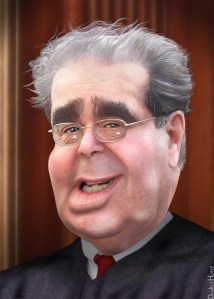 current court since a few decisions did not go their way.
Conservatives were disheartened by the Court’s rulings Thursday in King v. Burwell and Texas Department of Housing and Community Affairs v. The Inclusive Project. They probably will be disheartened if the Court rules that gay marriage is a constitutional right, which seems likely. I suspect I got the authorship of the Arizona redistricting commission case wrong in my Supreme Court Bingoarticle: the opinion assignments make more sense if Justice Kennedy lost his majority in Din, which would suggest Justice Ginsburg is writing the redistricting commission opinion. That means conservatives may well be disappointed in the outcome of that opinion as well.
Unsurprisingly, conservatives are up in arms about the supposed “selling out” from Chief Justice John Roberts. Their reaction is something along the lines of Obi-Wan’s final words (from Obi-Wan’s point of view) to Anakin Skywalker: “You were the chosen one! It was said that you would destroy the Sith, not join them!”
…
plenty of today’s “liberal” decisions would have been considered downright reactionary in the 1960s (or 1970s). Consider the NFIB case, which upheld Obamacare in 2012, while finding that the individual mandate could not be supported by the commerce power. Until 1995, many scholars believed that the Commerce Clause had all but given Congress a general police power; the Lopez decision, which placed the first limits on congressional power in 60 years, was on the outer fringes of even conservative legal theory. NFIB actually reinforces, and to a certain extent expands that decision.
This says nothing of the Court’s holding that there are real limits to the spending clause, which garnered the votes of seven justices. I’m not sure there would have been more than one or two votes for this in the 1960s. By the standards of the 1970s, NFIB was a radically conservative decision, even when the substantive outcome is taken into account. By the standards of, say, the 1920s on the other hand, this was a radically liberal opinion, insofar as it accepts the basic New Deal framework (that there is at least one justice who is prepared to jettison that framework entirely shows just how far to the right the Court has gone).
Or consider the opinion validating Obamacare’s subsidies. While the plaintiffs’ theory of the case was perfectly plausible under current statutory interpretation principles (enough so that several Democratic-appointed lower court judges were cautious when ruling against plaintiffs), it also represented something of a reductio ad absurdum of textualism. If we were to have a debate over textualism in, say, the 1970s, one can imagine a purposivist asking, “So what if there is an obvious drafting error in a section that threatens an entire massive statute? What then?” The fact that conservatives expect the Court to go “full textualist” even in that circumstance – and that even liberal scholars like Abbe Gluck accept the basic textualist framework – again shows how far the debate has moved in the past 30 years.
What about the redistricting commission case? Assuming conservatives lose this one, it’s worth remembering that this position on the elections clause only had the support of three members of the Court in 2000 (when a similar argument was raised in Bush v. Gore); Justices Kennedy and O’Connor avoided the issue and may well have been against it. So even a 6-3 ruling against conservatives here would probably reveal no net shift in the positioning of the Court over the past 15 years. It is just that the expectations for conservatives have shifted.
The article is interesting because it compares some of the different courts over the last 50 years and you can see exactly how illiberal this court still is.
One more case is worth discussing. This one will be in the works. “The Supreme Court on Monday agreed to consider whether the University of Texas’s race-conscious admissions plan is constitutional.”
Two years ago, the court voted 7 to 1 to send the plan back for further judicial view and told the lower court to apply the kind of rigorous evaluation that must accompany any government action that considers race.
“Strict scrutiny imposes on the university the ultimate burden of demonstrating, before turning to racial classifications, that available, workable race-neutral alternatives do not suffice,” Justice Anthony M. Kennedy wrote.
This will be another interesting case to watch.
What’s on your reading and blogging list today?

 peej
peej Carissa
 bostonboomer
 dakinikat
 ecocatwoman
 jjlo
jjlo mablue2
 Mama Lopez
 peggysue22
 quixote
 skydancingguestblogger
 Mona (aka Wonk the Vote)





Recent Comments