
Monday Reads: A Reptile Dysfunction
Posted: August 29, 2016 Filed under: just because, morning reads | Tags: Colin Kaepernick, hurricane katrina, nagas, nagginis, radical christianists terrorists, the national anthem is racist 31 CommentsEleven years ago, Honey, Karma, Miles and I were sharing a small pink futon on the floor of a Lake Charles motel between the beds of a Chinese and Japanese Graduate student from UNO. I had told all of our foreign grad students in our doctorate program to get hotel rooms and get the heck out of Dodge about 5 days before. I was going to stick it out but didn’t and wound up be very thankful to join them. There’s was nothing to do but to watch CNN and hook up the internet.
It was a day that changed many lives including mine. Honey and Karma, my French Quarter Dogs, have since crossed the Rainbow Bridge. Miles and I are a little worse for the wear and frankly, so is the Kat House. My insurance company never really did pony up enough money to cover the damages and I never took the Road Home Funds because I had–and still have–survivor guilt. My house didn’t flood. But, one of the residuals is that I have a $10,000 deductible for named storms and live in constant fear of anything with a name on it now. Then, of course, we’re still reeling from the post-hurricane damage of 8 years of Bobby Jindal and the continued encroachment on the wetlands by oil companies and housing developers. The last set of floods is just the most recent display of what happens when you really don’t take care of your Mother Earth.
At least this year, I don’t have to hear the word resilient.
Good Morning!
Here’s some linky goodness and badness from me, the dakini of the swamps. I’m in wrathful form today so enjoy some pictures of Naginis.
Here’s a wonderful and ominous post recommended by General Russell Honore about the issues with our Louisiana Wetlands. I hope you can take some time to read it all.
We need a massive reforestation of Louisiana. Mature, native, water-loving trees like Live Oaks and Bald Cypress drink up to 1,000 gallons of water per day and should be as common and beloved a site in our urban and rural landscapes as Saints bumper stickers. One huge impetus behind founding SOUL is the very large goal of replanting New Orleans, the most deforested city in the U.S.! But rural Louisiana suffers from deforestation as well, largely due to short-sighted development of subdivisions and commercial areas that raze the forest and level the land before construction. Trees are essential to our resilience as they absorb stormwater into their root systems and transpire it back into the air. A mature tree produces enough oxygen for ten people, and can lower our air temperatures by up to two degrees. The benefits of trees are endless, and our futures rely on them.
It’s time to respect the gravity of gravity. It there’s one thing we can always count on, it’s that water will always travel downhill. Thus, it is vital that water has an unobstructed path to its nearest floodplain or basin. Rural Louisiana has many flood plains and small water bodies like creeks that are bisected by roads. During heavy rains these spots turn into dams and cause massive flooding as water seeks a lower point of gravity.
New construction should be raised to a level accommodating a 2,000-year storm.Considering how quickly our disasters are growing in intensity and frequency, it only makes sense that we should build new homes and businesses according to future storm levels. We’re recovering from a 1,000-year flood, so let’s rebuild to a 2,000-year disaster this time. Many of the structures that were damaged were built at grade on slab. Cities must stop allowing development that ignores our hydrology and natural history, for the sake of developers maximizing their profits.
We need to integrate “green infrastructure” into every aspect of our lives. If you’re not already familiar with this term, it refers to infrastructure that mimics natural systems and harnesses stormwater at its source. Essentially its goal is to get water back into the ground and into the water table.
There’s a developing tropical storm that’s due to enter the Gulf. It’s supposed to turn back on Florida at this point. However, you never know and we would be on the wet side if it gets too close for comfort. People south of us already have a lot on their plate and any kind of drenching of the area would be really bad. Thankfully, the winds aloft are not particularly friendly atm. I just hope it doesn’t get a name if it pours on the Kat House and that it misses the folks in the flooded area completely.
So, onward with today’s theme of snaky people.
 A white male radical christianist was plotting a ” mass shooting to protect 2nd Amendment from ‘f*ggots’.” This guy sounds like a good Trump supporter, doesn’t he?
Bryce Cuellar, 24, was arrested by Las Vegas police after they were notified by Interpol in July about Cuellar’s video. In the video, Cuellar stated that he is tired of the government trying to take away his First and Second Amendment rights and planned to go on a killing spree.
Calling himself a “Christian warrior,” Cuellar bragged that he would use his weapons as the Founding Fathers intended, killing,” gays, faggots, lesbians and satanists.”
According to Las Vegas police, Cuellar reportedly beat his wife hours after posting the video on YouTube, where he displayed his weapons while wearing a Kevlar vest and sporting night-vision goggles.
A review of Cuellar’s YouTube page reveal a collection of conspiracy-minded videos including ones that question what happened at Sandy Hook Elementary, support for the Bundy family’s war on the government, the threat of the Illuminati and proof that angels and demons are real. Investigators say the timeline of his videos suggest that he has sunk deeper in the world of conspiracy mongering over the past three years.
This is pretty scary. Foreign hackers have gotten into the state election databases according to the FBI. 
The FBI has uncovered evidence that foreign hackers penetrated two state election databases in recent weeks, prompting the bureau to warn election officials across the country to take new steps to enhance the security of their computer systems, according to federal and state law enforcement officials.
The FBI warning, contained in a “flash” alert from the FBI’s Cyber Division, a copy of which was obtained by Yahoo News, comes amid heightened concerns among U.S. intelligence officials about the possibility of cyberintrusions, potentially by Russian state-sponsored hackers, aimed at disrupting the November elections.
Those concerns prompted Homeland Security Secretary Jeh Johnson to convene a conference call with state election officials on Aug. 15, in which he offered his department’s help to make state voting systems more secure, including providing federal cyber security experts to scan for vulnerabilities, according to a “readout” of the call released by the department.
Johnson emphasized in the call that Homeland Security was not aware of “specific or credible cybersecurity threats” to the election, officials said. But three days after that call, the FBI Cyber Division issued a potentially more disturbing warning, entitled “Targeting Activity Against State Board of Election Systems.” The alert, labeled as restricted for “NEED TO KNOW recipients,” disclosed that the bureau was investigating cyberintrusions against two state election websites this summer, including one that resulted in the “exfiltration,” or theft, of voter registration data. “It was an eye opener,” one senior law enforcement official said of the bureau’s discovery of the intrusions. “We believe it’s kind of serious, and we’re investigating.”
The bulletin does not identify the states in question, but sources familiar with the document say it refers to the targeting by suspected foreign hackers of voter registration databases in Arizona and Illinois. In the Illinois case, officials were forced to shut down the state’s voter registration system for ten days in late July, after the hackers managed to download personal data on up to 200,000 state voters, Ken Menzel, the general counsel of the Illinois Board of Elections, said in an interview. The Arizona attack was more limited, involving malicious software that was introduced into its voter registration system but no successful exfiltration of data, a state official said.
 A huge amount of hoopla has surrounded the 49ers Quarterback who has refused to stand for the pre-game playing of our national anthem. My 10 year old self would actually have a crush on this guy. I refused to say the pledge in classroom at that ripe old age, was nearly kicked out of Girl Scouts and was asked why by the Principal who couldn’t understand why mass symbolic recitations of anti-communist loyalty shows would disturb me. I basically said it was pretty meaningless and why didn’t we just read the preamble to the Constitution instead. Actually, the District wound up taking this activity out of the daily classroom and never said another word to me. I think it was because the Constitution was behind me and the District Lawyer figured it out. I never heard back why but was relieved to not have to go through a rote, meaningless exercise every day to prove I wasn’t a communist. I am not nor have I ever been a communist or a member of the communist party. Now, can I quit the loyalty oath shit?
But, Colin Kaepernick has stated his reason as a protest of national oppression of racial minorities. The NFL is actually giving him quiet consent. I say more power to him.
San Francisco 49ers backup quarterback Colin Kaepernick on Sunday defended his decision not to stand for the national anthem at a game two days earlier, saying he is protesting on behalf of people oppressed because of their race.
“This country stands for freedom, liberty, justice for all — and it’s not happening for all right now,” Kaepernick said.
Kaepernick did not stand as the national anthem played before a preseason game against the Green Bay Packers. The move sparked criticism, and some fans posted videos of themselves burning Kaepernick jerseys and other apparel.
Actually, if you read the real history of this anthem and the racist who wrote it and an abhorrent additional verse that is totally  racist, you’d be asking them to switch our anthem to something like America the Beautiful where I could substitute something creative for the current head nod to the angry sky fairy.
The story, as most of us are told, is that Francis Scott Key was a prisoner on a British ship during the War of 1812 and wrote this poem while watching the American troops battle back the invading British in Baltimore. That—as is the case with 99 percent of history that is taught in public schools and regurgitated by the mainstream press—is less than half the story.
To understand the full “Star-Spangled Banner” story, you have to understand the author. Key was an aristocrat and city prosecutor in Washington, D.C. He was, like most enlightened men at the time, not against slavery; he just thought that since blacks were mentally inferior, masters should treat them with more Christian kindness. He supported sending free blacks (not slaves) back to Africa and, with a few exceptions, was about as pro-slavery, anti-black and anti-abolitionist as you could get at the time.
Of particular note was Key’s opposition to the idea of the Colonial Marines. The Marines were a battalion of runaway slaves who joined with the British Royal Army in exchange for their freedom. The Marines were not only a terrifying example of what slaves would do if given the chance, but also a repudiation of the white superiority that men like Key were so invested in.
All of these ideas and concepts came together around Aug. 24, 1815, at the Battle of Bladensburg, where Key, who was serving as a lieutenant at the time, ran into a battalion of Colonial Marines. His troops were taken to the woodshed by the very black folks he disdained, and he fled back to his home in Georgetown to lick his wounds. The British troops, emboldened by their victory in Bladensburg, then marched into Washington, D.C., burning the Library of Congress, the Capitol Building and the White House. You can imagine that Key was very much in his feelings seeing black soldiers trampling on the city he so desperately loved.
A few weeks later, in September of 1815, far from being a captive, Key was on a British boat begging for the release of one of his friends, a doctor named William Beanes. Key was on the boat waiting to see if the British would release his friend when he observed the bloody battle of Fort McHenry in Baltimore on Sept. 13, 1815. America lost the battle but managed to inflict heavy casualties on the British in the process. This inspired Key to write “The Star-Spangled Banner” right then and there, but no one remembers that he wrote a full third stanza decrying the former slaves who were now working for the British army:
Read the comments there to fully embrace the number of white folks that want the revisionist version of history and their  comments. It’s pretty revealing of a few nasty natures. Speaking of which, RUN HUMA RUN. Anthony Weiner has done it again. Huma actually has decided to separate from the man now so evidently, he’s worked her last nerve.
Just two weeks ago, when he was asked if his sexting days were behind him, he seemed to deflect. And now we know why: On Sunday night, the New York Post reported that Weiner had recently been sexting with a woman who is not his wife. Making the story even more cringe-worthy, the New York Post reports that Weiner sent a suggestive photo of himself while his toddler son was in the bed next to him.
Weiner didn’t deny any of this. He told the New York Post that he and the woman “have been friends for some time.”
“She has asked me not to comment except to say that our conversations were private, often included pictures of her nieces and nephews and my son and were always appropriate,” he said. By Monday morning, Weiner had deleted his Twitter account. By Monday afternoon, his wife, Huma Abedin, announced the two were separating.
 At least he’s not shooting up malls of innocents but wow, the dude has major issues. He had so much going for him. What accounts for such self-destructive behavior?
Is it just me or is the entire national discourse today turning into some display of things that require medication and the help of a a good psychiatrist/psychologist? One more story about the nation’s top pathological liar and I’m going to make more coffee and listen to some nice music. Trump has turned into a whirling dervish on the immigration issue.
The real reason Trump is now shifting away from mass deportations is almost too obvious to restate: It is probably alienating the college educated whites and white women — swing constituencies — that he simply must improve among if he is to have a chance at winning. And so, Trump is now downplaying this goal, by saying that his priority is to remove “criminal” illegal immigrants. The game here is to sound more reasonable to swing voters who are horrified by mass deportations and generally support mass assimilation, by projecting a recognition that not all of them are full blown criminals. He compassionately understands that many of them are “good ones,” believe me! But in so doing, Trump is still preserving his underlying stance that all the 11 million generally remain targets for removal. He eventold CNN that there’s a “very good chance” that all the rest would be deported later. This isn’t as crazy as vowing proactive, immediate mass deportations. But it still is not an actual solution. At best, it is tantamount to leaving them all in the shadows for an indefinite period, or a reversion to Mitt Romney’s absurd “self deportation” stance. In reality it probably means they’ll all have to go.
And this leads to the ultimate point: Donald Trump’s deportation problem is the GOP’s deportation problem. Many Republican lawmakers — including GOP leaders — generally support the goal of legalization. They recognize that the most realistic solution for the 11 million — the one that would best serve the national interest — is some kind of path to assimilation, combined with penalties and increased border security. They also recognize that long term demographic and political realities compel this stance.
But the party has refrained from embracing that solution, because the base won’t allow it. For years, that forced many Republicans to continue saying the 11 million should be subject to removal, but when pressed, they tended to fudge on whether this means they all should be deported right way, since that’s politically and substantively untenable. Instead they took refuge in the platitude that we should merely “enforce the law,” without saying exactly what that should mean. What it really means is, leave most of them in the shadows indefinitely.
Trump is now being forced to sever himself from his explicit mass deportations pledge. And this is forcing him to adopt the GOP’s platitudinous “enforce the law” position. We’ve come full circle: On deportations, the GOP nominee is now pretty much where most Republicans have publicly been. Thus, in his speech, he will probably revert to a vow to target criminals first while more generally promising to “enforce the law” to deal with the rest. But Trump — as the GOP nominee and as someone whose entire campaign is built on the idea that illegal immigrants are nothing more than criminal invaders — is facing a much higher level of media scrutiny on this issue than GOP lawmakers have to date, rendering that long-held GOP position untenable for him in a way it wasn’t for other Republicans.
 Serpent Cults have been a part of human history for some time. Many religious myths embrace the serpent concept as symbolic of a number of things. As I look at the many stories I’ve gathered today, I can only think of our folksy renderings of calling a man a ‘snake in the grass’. We also have the imagine of woman as a siren or mermaid or woman turned temptress by snakes and apples. It strikes me that we never really truly forget our ancient mythos and their identification of the many aspects of our human nature.
In mythology, the serpent symbolises fertility and procreation, wisdom, death, and resurrection (due to the shedding of its skin, which is not akin to rebirth), and in the earliest schools of mysticism, the symbol of ‘The Word’ was the serpent. The ‘light’ that appeared was metaphorically defined as a serpent called ‘Kundalini’, coiled at the base of the spine to remain dormant in an unawakened person. Divinity or awakening one’s Godhood and latent abilities came with the rituals and teachings brought by the serpent people.
To understand them, we must look at the original ‘serpents’. In China, it was a male and female pair with human heads and serpent bodies named Fu Xi and Nu Wa who created humans. In Sumer, it was the Annunaki Nin-Khursag and her husband Enki who were given the task of creating workers. Enki is known to us as the serpent in Genesis—the one who gave us the ability to think and reason and so was cursed by his brother Enlil for it. To the Hindus, it was the cosmic serpent Ananta who created us. So, if, at the dawn of man’s creation we have a pair of serpent-like beings who created us, then those of the serpent cult must have been their direct descendants, either by blood or by spirit.
Government has been designed with the idea that you can punish or circumvent aspects of 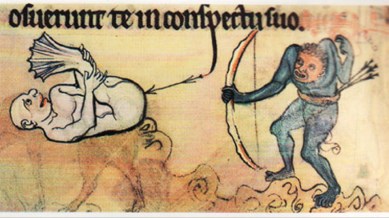 human nature with the rule of law and the force of the will of the many. Still, we get Snake Oil Salesmen like Donald Trump and guys that can’t get past their basic anatomy and their urge to think with their littlest head or use other phallic symbols like missiles and killing projectiles to take out the creative and intelligent forces that stymie them which, mostly tend to be women and small children when you think about it. The Trump CEO–Steven Bannon–is like the walking symbol of all things snaky. Here’s the latest op research his life of evil doing.
Donald Trump’s campaign CEO fired a new mother suffering from multiple sclerosis while she was on maternity leave, according to a lawsuit obtained exclusively by The Post.
“Julia Panely-Pacetti, a new mother who suffers from multiple sclerosis, was terminated by defendants from her position as head of public relations and corporate marketing because of her sex and her disability,” states the lawsuit, filed in Manhattan federal court in September 2005.
I wish there was a better tradition of snake handling in this country. Maybe we could learn something from the ancients. Maybe that medieval guy with the bow has the right idea.
What’s on your reading and blogging list today?
Friday Reads: Men and the mass Penistyeria surrounding Hillary Clinton
Posted: August 26, 2016 Filed under: 2016 elections, Afternoon Reads, American Gun Fetish | Tags: Alt-Right, Breitbart, Hillary Clinton, manocide, Racism, Vagenda, Vagenda of Manocide, white working class racism 49 Comments
Good Afternoon Skydancers of all shapes, sizes, sex and such!
As we continue forward with the election of the first woman president, we also continue backward with the number of outrageous lies, misogyny, CDS, and downright paranoia that some folks seem to get every time they see or hear Hilary Clinton. This week I realized that I could no longer listen to Donald Trump read from his teleprompter without wanting to hurl a few things. (Yes, you can read all the double entrendre you want into that comment.)
I’ve really had it with any one that could possibly demonize one of the most tightly and ethically run global charities in the world that basically saves lives let alone any one that thinks a bunch of emails that show absolutely nothing are deserving of more inspection that say, some one who hides their tax information and owes tremendous amounts of money to the governments of China and Russia. Why does racism and misogyny seem to have so many working class folks enthralled? Are that many people really that stupid, evil, or gullible?
So today’s pictures and snark are due to the misogyny of some gun fetishists/death vendors from Maine who are well known for posting  some of the worst Alt-Right shit in the world on their store sign. Observe the original nastiness there on the sign and then enjoy how feminists are taking it back. Remember, these jerks are most likely tuned in to the wonderful world of Steven Bannon who is known for the website that asked if parents would rather see their children get feminism or cancer. No more to do lists for me! Now I have a Vagenda that includes Manocide!!!
A picture of the sign in front of the Raymond, Maine shop made its way to Twitter and inspired women everywhere to start tweeting their own vagendas. In these satirical to-do lists, women casually list “manocide” in between tasks like meetings, laundry and fitness classes. Others swap out the term for phrases like “oppress men” and “crush a man’s soul.” Many next-level trolls are including other tasks everyone assumes feminists prioritize day to day, such as “eat kale” and “queer stuff.”
One expert troll deserves true internet praise for rigging it so the web address http://www.vagendaofmanocide.com/ redirects to Clinton’s official campaign donation page. According to The Daily Dot, whoever registered the domain did so privately, “so there’s no way of knowing who they are or what their real vagenda is.”
And in case you were wondering more about the sign that inspired all of this, it turns out this isn’t out of the blue for Gulf of Maine Gunsmithing. In fact, hateful slogans seem to be the arms dealer’s choice of words for its sign. Locals has posted photos of different variations of the sign to shop’s Facebook page.
 So, here’s my daily Vagenda. Hope you all realize that I lead a very boring life now. I’ve already been chided for bumping manocide to spot 3 on the list but hey, Temple has to eat and I have to earn a paycheck. Manociding is an expensive hobby, you know. Anyway, seriously, empower yourself with a VAGENDA!
6:00 am. Arise. Wrap your cardigan-sheathed hands around a mug of hot cardamom lemon water; squint into the distance from your craftsman veranda. Breathe authentically. Pick off a passing man with your bespoke porch rifle.
A good start is to visit www.vagendaofmanocide.com.
So, yesterday, Hillary Clinton connected the dots between the Alt-Right and the crazy Trump Campaign themes like sending an ultra right wing nationalist from the UK to give a speech on Brexit in a very confused Mississippi. Oh, BTW, if you didn’t watch Rachel connect the dots between Campaign Mommy, Der Fuhrer Trump, and Steven Bannon and Hedge Fund Billionaire and right wing asshole Robert Mercer, please go watch now. How poor white people can get taken down the river by these snakes is beyond me.
RACHEL MADDOW (HOST): Before becoming Donald Trump’s new campaign manager, Kellyanne Conway ran a Super PAC she ran one of the SuperPACs that supported Ted Cruz in the primary. You might remember in the Republican primary this year there were a whole bunch of different SuperPACs that supported Ted Cruz. They were all called some variation of Keep The Promise. She ran the group that was called Keep The Promise 1. They ran millions of dollars in anti-Donald Trump ads, incidentally, which is kind of ironic given what her job is now.
But more important than that, she ran this Keep The Promise PAC. She ran the iteration of all the Ted Cruz supporting PACs, she ran the one that was almost entirely funded by a single donor. All the money in that PAC basically came from one source. It came from New York City hedge fund billionaire Robert Mercer. He gave the money, Kellyanne Conway ran that PAC. Robert Mercer and Kellyanne Conway, they supported Ted Cruz in the primary, not Donald Trump, but once Trump won, once Cruz dropped out, that mega-donor Robert Mercer and Kellyanne Conway, they decided to switch horses, they decided to keep working together. She stayed in charge of the PAC. They changed its name. They started running anti-Clinton ads to help Trump instead of anti-Trump ads to help Cruz. But as a multi-million dollar donor to that effort — we’ve talked about here on this show, Robert Mercer, this hedge fund billionaire appears to have become the single largest funder now of the effort to elect Donald Trump for president.
Robert Mercer is also reportedly the single largest funder of Breitbart.com. And so this one guy, Robert Mercer, the money man, right? He ends up being sort of the missing link. He ends up being the thing that explains, I think, in a lot of ways, why the Trump campaign is this strange thing that it is now. When the Trump campaign decided to fire the last guy in charge, Paul Manafort, and put these new folks in charge, it was an interesting and sort of inexplicable thing that they simultaneously — they didn’t fire Paul Manafort and then pick a new person to replace him. They fired Paul Manafort, but then they brought in two people. They came up with two new job titles. Campaign Manager and Campaign CEO, okay. They brought in two people at once. Kellyanne Conway, who ran Robert Mercer’s Super PAC, she’s a very familiar figure in Republican politics.
[…]
But she didn’t come onto the campaign alone, right? She came on as campaign manager, Donald Trump’s top funder apparently installed her at the top of the Trump campaign, but he also simultaneously, on the same day, at the same time installed this other guy. This guy from Breitbart as the Campaign CEO. Robert Mercer is the money man behind both of these folks, behind Kellyanne Conway and her PAC which started as a Ted Cruz thing and then became a Donald Trump thing. Robert Mercer was the money behind that, Robert Mercer is also the money behind Breitbart.com. He funded them both to the tune of millions of dollars. He is the thing explains why those two otherwise unconnected individuals both came on at the same time, on the same day, to take over the Trump campaign.
Here’s the event. Hillary’s speech starts at about 7:30 into the video.
The Alt-Right and their allies are either denying it really exists or blaming Hillary Clinton for it.
“Donald Trump has built his campaign on prejudice and paranoia. He is taking hate groups mainstream, and helping a radical fringe take over the Republican Party,” Clinton said at Truckee Meadows Community College in Reno, Nevada. (A video ad released Thursday covers much of the same ground.) She said Trump’s rhetoric was “like nothing we’ve heard before from a nominee for president of the United States from one of our two major parties.”
Over more than a half-hour of sustained attack, Clinton added little new material to the record. Instead, she methodically plotted Trump’s known ties, in what appeared to be an effort to energize her own voters and, in particular, to give pause to Republicans who have grudgingly opted to make their peace with a candidate they don’t love. As she had in June, Clinton again labeled Trump “temperamentally unfit to be president of the United States.”
Vile Breitbart hell realm being Milo Yiannopolous–the devildude thrown off twitter for the racist trolling of black comedienne and actress Leslie Jones–said it was all Hillary’s fault. Now, I am going to attribute his quote to its source but go to the Breithbart site at the risk of needing eyebleach and a stomach transplant.

WTF is wrong with a huge number of working class white people? I mean seriously, is clinging to your guns, your religious delusions, and your overt racism so important that you don’t realize you’re basically ruining your life and any chance your children for good jobs? And you’re voting for the very same folk who keep you down?
We are now living in a decade with such gross levels of income disparity that the 99% believe that the 1% that has been left to them is something literal, as if it were a sliver of an apple pie, for example. Therefore, if a group — such as Black Lives Matter — comes along at this moment and says that it wants access to the pie, rather than welcoming allies who will help challenge everyone’s ability to access what the top 1% has, it becomes seen as one more group that is going to need to share the scraps that are left. Further, because working class Republicans have been convinced that “no new taxes” and “no big government” — policies that best serve the interests of the super wealthy — are the way to go, again, that panic about how little that’s left gets stoked even higher. The resentment pyres are fanned. The irony, of course, is that if the working class could unite as a political bloc, they could perhaps change the structure so that some of the income disparity that separates us from the super-rich would be re-released back into the economy, which would benefit us all. White working class racism hinders the progress of white working class economic progress.
Meanwhile, reality should set in some where as more Republicans who have served Republican presidents endorse Hillary 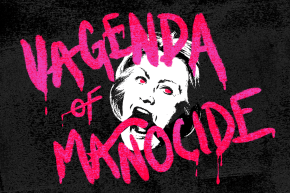 Clinton. Carlos Guittierez is the latest outspoken endorsement. The one that happened today is one we could skip completely because it’s icky Paul Wolfowitz. Not one living former White House economic adviser is voting Trump and only one of the Republicans is toying with gadfly libertarian airhead Gary Johnson.
Served Under Republicans
“I have known personally every Republican president since Richard Nixon. They all showed a real understanding of economics and international affairs. The same was true of Mitt Romney. Donald Trump does not have that understanding and does not seem to be concerned about it. That alone disqualifies him in my judgement.” —Martin Feldstein, chairman under President Ronald Reagan, opposes Donald Trump
“Mr. Trump has not laid out a coherent economic worldview, but one recurrent theme is hostility to a free and open system of international trade. From my perspective as an economics policy wonk, that by itself is disqualifying. And then there are issues of temperament.” —Gregory Mankiw, chairman under President George W. Bush, opposes Donald Trump
“He would have to change both many of his positions and his character.” —Richard Schmalensee, member under President George H.W. Bush, opposes Donald Trump and will vote for Hillary Clinton
“It seems highly improbable that [Libertarian nominee Gary Johnson] will win but I cannot bring myself to vote for either Trump or Clinton. A large enough Johnson vote may constrain the next president to some degree.” —William Poole, member under President Ronald Reagan, opposes both Donald Trump and Hillary Clinton
“On the trade issue alone, I wouldn’t support either one. As an economist, free trade is not something that’s a partisan kind of issue and to have both parties being protectionist is unacceptable.” —Jerry Jordan, member under President Ronald Reagan, opposes both Donald Trump and Hillary Clinton
Donald Trump’s “views on international economic policy…are fundamentally flawed in so many ways.” Also, “there are a number of things he had stated, implied that collectively present a fear-based, xenophobic, judgemental personality.” —Matthew Slaughter, member under President George W. Bush, opposes Donald Trump and will vote for Hillary Clinton
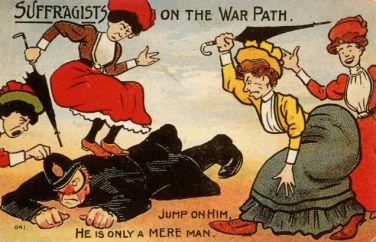 The writing may already be on the wall if this Quinnipiac poll is right. Notice the Strump never mentions polls any more?
In the battle of the unloved presidential candidates, Democrat Hillary Clinton tops the magical 50 percent mark among American likely voters, leading Republican Donald Trump 51 – 41 percent, according to a Quinnipiac University National poll released today.
When third party candidates are added to the mix, Clinton gets 45 percent with Trump at 38 percent, Libertarian Party candidate Gary Johnson at 10 percent and Green Party candidate Jill Stein at 4 percent, the independent Quinnipiac (KWIN-uh-pe-ack) University Poll finds. This survey of likely voters can not be compared with results of earlier surveys of registered voters.
Women and non-white voters propel Clinton in the head-to-head matchup. Women back her 60 – 36 percent. Men back Trump 48 – 42 percent. White voters back Trump 52 – 41 percent. Non-white voters back Clinton 77 – 15 percent.
A total of 44 percent of American likely voters like Clinton “a lot” or “a little,” while 47 percent dislike her “a little” or “a lot,” and 8 percent hate her.
A total of 35 percent of voters like Trump “a lot” or “a little,” while 53 percent dislike him “a little” or a lot,” and 10 percent hate him.
“We are starting to hear the faint rumblings of a Hillary Clinton landslide as her 10-point lead is further proof that Donald Trump is in a downward spiral as the clock ticks,” said Tim Malloy, assistant director of the Quinnipiac University Poll.
“Trump’s missteps, stumbles and gaffes seem to outweigh Clinton’s shaky trust status and perceived shady dealings. Wow, is there any light at the end of this dark and depressing chapter in American politics?”
American likely voters give both candidates negative favorability ratings, 41 – 53 percent for Clinton and 33 – 61 percent for Trump. In fact, 37 percent of likely voters say they would consider voting for a third party candidate.
In this very negative race, 64 percent of Trump supporters say they are voting mainly anti-Clinton, while 25 percent say they are voting pro-Trump.
If you actually go to that survey link and read some of the questions they asked, you’ll start thinking that all national polls are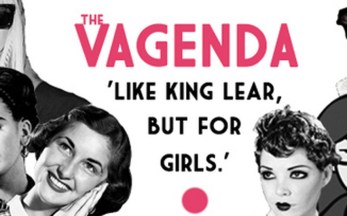 push polls these days. I can’t take any more of this untrustworthy/likability shit. It’s like a freaking self-fulfilling prophecy. It does seem, however, that she is safely on her way to the U.S. Presidency. Hang on and get ready for more misogyny and CDS.
What’s on your reading, blogging and VAGENDA list today? (Yes, male allies, your “woman card” from the Clinton Campaign makes you an honorary Vagina holder too!!!
Monday Reads: Stranger than Fiction and all that jazz
Posted: August 22, 2016 Filed under: 2016 elections | Tags: Donald Trump, hate crimes, Loch Ness monster, white nationalists, White supremacists 26 CommentsGood Afternoon!!!

Today is the Anniversary of the first sighting of the Loch Ness Monster back in the 1930s. I figure that’s as good of a place as any to start our reads today because everything else is a lot less believable. This is the type of monster sighting I’d like to read about. Unfortunately, it’s not the kind of monster sighting we get today.
Newly published documents reveal that a Scottish police official in the 1930s believed ‘beyond doubt’ that the Loch Ness monster existed. Expert Loren Coleman says it reveals the government’s longstanding policy to protect the mythic beast.
I’m pretty much turning into a victim of shaken head syndrome because I find myself doing that or picking my jaw up off the floor nearly daily. Every day there’s a monster sighting on the internet. Perhaps having a major political party elect a known-nothing reality TV star for president has something to do with it. Donald Trump has this way of bringing out the worst in people and bringing out the worst people. He is the monster we see today on the internet and on TV and he brings a lot of them with him.
This is not a headline I expected to see over the weekend or even these days. That is until the Donald stirred the White Supremacy pot. “Armed, Confederate flag-waving White Lives Matter protesters rally outside Houston NAACP.” Houston, you have a problem.
White Lives Matter staged a rally outside the NAACP’s Houston headquarters on Sunday, sparking controversy and counter-protests in a city where racial tensions remain high after a string of recent incidents.
Clutching Confederate flags, white supremacist signs and, in several cases, assault rifles, roughly 20 White Lives Matter members stood on the sidewalk of a historically black neighborhood to denounce the National Association for the Advancement of Colored People.
“We came out here specifically today to protest against the NAACP and their failure in speaking out against the atrocities that organizations like Black Lives Matter and other pro-black organizations have caused the attack and killing of white police officers, the burning down of cities and things of that nature,” organizer Ken Reed told the Houston Chronicle. “If they’re going to be a civil rights organization and defend their people, they also need to hold their people accountable.”
Reed, who was wearing a “Donald Trump ’16” hat and a “White Lives Matter” shirt with white supremacist symbols, said protesters were “not out here to instigate or start any problems,” despite the weaponry and body armor on display.
Of course! No one whose been listening to Trump spout his “second amendment solutions” advice has any malice or intent to do harm to anyone! This guy in Tulsa, Oklahoma–as an example–was just exercising his metaphorical  constitutional rights a few weeks ago too!
For years, the Jabara family says, their Tulsa neighbor terrorized them.
He called them names — “dirty Arabs,” “filthy Lebanese,” they said.
He hurled racial epithets at those who came to work on their lawns, they alleged.
He ran Haifa Jabara over with his car and went to court for it.
And it all came to a head last week when the man, Stanley Vernon Majors, walked up to the front steps of the family home and shot and killed Khalid Jabara, police said.
“The frustration that we continue to see anti-Muslim, anti-Arab, xenophobic rhetoric and hate speech has unfortunately led up to a tragedy like this,” it said.
Or this guy that gunned down an Imam in NYC with his assistant. Just a white guy waxing in that special first amendment way and exercising his second amendment solutions.
Saturday’s shooting was not the first incident of violence to hit this growing Bangladeshi community, which straddles the border between the New York boroughs of Queens and Brooklyn.
For years, attacks have happened, most frequently during Ramadan, the holiest month of the Islamic calendar, when activity at the five neighborhood mosques peaks. Police bolstered patrolling efforts and stationed officers outside of mosques during the month. For the most part, community members said their presence has been helpful.
But protection during Ramadan is not enough, Hoque said.
“I feel like 106 Precinct is very lazy because they don’t have enough patrolman in our area,” she said. At the rally, Hoque said she witnessed community members, usually on the side of the police, levy similar charges.
While some uneasy neighborhood residents believe the need for more robust policing is greater than ever, some younger community members feel it is time to lessen the community’s dependence on police.
On Wednesday afternoon, the men of Al-Furqan Jame Masjid were gathered in the prayer space, which amounted to little more than two adjoining rooms cooled by an array of three-armed ceiling fans. There, they discussed plans for succession and next steps.
Mohamed Amen, an Egyptian-American police officer in the community affairs bureau, was among the men seated in front of the crowd of 30 men.
During his comments, Officer Amen reiterated that morning’s news: the charges against Oscar Morel, the suspected killer, had been changed from second-degree murder to first-degree murder. If convicted, he explained, the assailant could face life in prison without parole.
“Alhamdulilah,” a few men murmured in unison. Thank God.
Then he addressed the matter of motive. “I can tell you that the hate crimes unit is conducting its own investigation,” he said.

Travel.Scotland, Oddities. pic: June 1969. American submarine expert Dan Taylor sits in the cockpit of his 20 foot submarine at Loch Ness, where he will go underwater to search for the Loch Ness Monster. PPP
It does seem that some Republicans and former Trump supporters are beginning to understand that Trump appears to be leading a movement of white nationalists and supremacists. This is despite the attempt by some to dress the wolf up in sheep’s clothing.
Donald Trump is alienating his own supporters because of his sometimes “erratic” and inflammatory ad hominem attacks, according to a focus group held Saturday by pollster and Republican strategist Frank Luntz.
“He was my first choice. But just along the way, he has — I guess you can say he’s lost me,” one participant said in the focus group, which aired Sunday as a segment on CBS’ “Face the Nation.” “I’m not saying there’s no chance of turning but he’s become outrageous. I mean, we all have thoughts, but I think he speaks without thinking.”
The panel, conducted in Pennsylvania, only had a handful of attendees that were still committed to supporting the GOP nominee. Several more participants once backed Trump but no longer do.
“When he initially began to run, he gave voice to a lot of the frustrations that I was feeling about how government is working or more to the point not working,” one man, Michael R., said. “But since then, he’s been running as a 12 year old and changes his positions every news cycle, so you don’t even know where he stands on the issues.”
Another, Howard E. chimed in: “Whenever somebody makes a derogatory comment to him, like in a democratic convention, Trump feels like he needs to attack that person. And he says things that are crazy. And I keep asking myself: is this the kind of person I want to handle the nuclear codes?”
Luntz followed up, asking, “what’s the answer?”
Howard responded: “No way.”
If Republicans are looking for a kinder, gentler, more presidential Donald Trump, they aren’t getting him today. He was more preoccupied with gossiping about Morning Joke and Mika then doing outreach to African Americans with “nothing to lose”.
On Monday morning he trained his Twitter fire at the MSNBC show “Morning Joe,” formerly one of his favorite places to campaign.
Trump criticized “Joe” co-host Mika Brzezinski in highly personal terms, calling her “off the wall, a neurotic and not very bright mess!”He also implied that Brzezinski and Joe Scarborough have been secretly dating. He called them “two clowns.”
The comments about Brzezinski were reminiscent of Trump’s highly personal attacks against Fox host Megyn Kelly.
The co-hosts were in the middle of a three-hour live broadcast at the time and had been highly critical of Trump earlier in the morning.
Scarborough responded during a commercial break, stating that “Clinton is targeting key swing states today while Trump starts his day obsessed with cable news hosts while channeling Gawker.”
He ended the tweet with one of Trump’s favorite put-downs: “SAD!”
More people are beginning to worry that his end game is actually to start a Alt-right/White Nationalist media empire given his thrown in with both Alec Jones and Steve Bannon.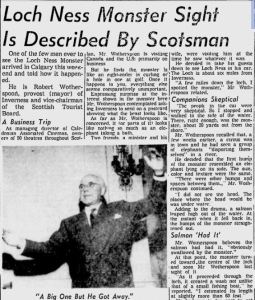
Has Donald Trump given up on winning the White House and “pivoted” (this might be his real pivot) to a full-blown effort to build a national following that will outlast the election, perhaps allowing him to establish a media empire with him at the helm — one that caters, at least to some degree, to a white nationalist or “alt-right” audience? Was that his plan all along?
The last few days have brought fresh reporting and evidence that suggest this is where Trump is really headed, a scenario that a numberof observers (your humble blogger included) have been speculating about for months. I thought it would be useful to round up this evidence:
* Vanity Fair media writer Sarah Ellison reports in a radio interviewthat Trump has had private discussions with his inner circle about “how to monetize” the new audience he’s built up. As Ellison puts it, this potential goal should no longer be seen as “speculation.”
* The New York Times reports today that in July, Trump’s campaign “spent more on renting arenas for his speeches” than he did on setting up a national field operation, leaving him with no operation to speak of. That is consistent with the idea that Trump (as I’ve speculated) is very consciously sinking most of his resources into a format (rallies) that allows him to continue staging his unique form of raucous WWE-style political entertainment, and building an audience that thrills to it, rather than winning a general election.
 Meanwhile, Campaign Mommy Kellyanne Conway insists that the Donald doesn’t hurl any personal insults.
In February, Conway called Trump’s attacks on rivals like Cruz “vulgar.”
“Do I want somebody who hurls personal insults,” she asked on CNN, “or who goes and talks about philosophical differences?”
On Sunday, though, Conway claimed that Trump’s tone has changed and that he’s already made a pivot “on substance.”
“He doesn’t hurl personal insults,” she said. “What he’s doing is he’s challenging the Democratic Party. He’s challenging Hillary Clinton and President Obama’s legacy.”
She’s been mommysplaining her “pivots” from the Cruz campaign to the Trump nearly all weekend. It’s really pretty disgusting and disingenuous which appear to be her trademarks. However, there’s no way to mommysplain Steven Bannon who has been labelled “the most dangerous political operative in America” and wants to take down establishment Republicans as well as democrats. Check this piece about him out even though it’s from last year.
While attacking the favored candidates in both parties at once may seem odd, Bannon says he’s motivated by the same populist disgust with Washington that’s animating candidates from Trump to Bernie Sanders. Like both, Bannon is having a bigger influence than anyone could have reasonably expected. But in the Year of the Outsider, it’s perhaps fitting that a figure like Bannon, whom nobody saw coming, would roil the national political debate.
The biggest scare now is that Trump has been priming the pump about rigged elections and evil media plots against him. Given that his followers now regularly threaten the media and a few of them are using their second amendment solutions are immigrants, what can we expect when he loses? Will we have the police dealing with the well-armed League of Angry White men?
“Among the values most necessary for a functioning democracy is the peaceful transition of power that’s gone on uninterrupted since 1797. What enables that is the acceptance of the election’s outcome by the losers,” said Steve Schmidt, the GOP operative who was McCain’s campaign strategist in 2008.
“Here you have a candidate after a terrible three weeks, which has all been self-inflicted, saying the only way we lose is if it’s ‘rigged’ or stolen — in a media culture where people increasingly don’t buy into generally accepted facts and turn to places to have their opinions validated where there’s no wall between extreme and mainstream positions. That’s an assault on some of the pillars that undergird our system. People need to understand just how radical a departure this is from the mean of American politics.”
Should Trump opt not to concede after a loss or deliberately roil his supporters and spark uprisings by refusing to accept the legitimacy of the election results, he would still have little recourse to alter a significant electoral victory for Clinton. Only if the election were close, hinging on one or two states where there were alleged voting irregularities, could Trump seriously contest the result in court.
But beyond who wins the White House in November, many Republicans fear that Trump’s efforts to diminish people’s confidence in mainstream media, fair elections and politics itself will have a lasting impact.
I’m expecting a good deal of these dudes will not go quietly into that great night. Frankly, I hope the police are up to it. There’s a reliance on conspiracy theories and monster sightings that scares the bejeebus out of me. It’s hard to know what exactly what folks like this will do when backed into reality. The Donald Trump monster is not fake in the traditional sense of monster sightings. He’s more than real even though everything he promises, affirms as truth, and does is not particularly real.
What’s on your reading and blogging list today?
Friday Reads: Rearranging the Deck Chairs in Das Führerbunker
Posted: August 19, 2016 Filed under: 2016 elections, Afternoon Reads, Andrew Breitbart | Tags: Donald Trump, Katrina Pierson, Kellyanne Conway, Paul Manafort, Stephen Bannon 51 CommentsGood Afternoon and Welcome to Day 32 of America Held Hostage by the RNC!
 When is an apology not an apology?
When the campaign mommy makes you do it and you can’t even bring yourself to mention all the folks you trashed,hurt, bullied and sicced the League of Angry White men on like reporters, women, and helpless children who just want their families to stay together, etc. This blatant, pandering play for the votes of suburban white women comes from the same Kellyanne Conway that tries to stop Republicans saying dumb things about women’s bodies and specifically rape and abortion. This woman makes Phyllis Schafly and Cersei Lannister look like your average fairy godmother. Snakes would be embarrassed to compare their tongues with hers. They would definitely come up very short and straight.
Conway spent time on Hardball last evening patiently explaining how women were the real victims of abortion service providers and it was a matter of time before the wonderful people in the forced birth movement would get Donald to use the right code words. That’s what it’s all about now. She also wants to unleash the inner Trump again but oddly enough it includes teleprompter speeches that appear to be written by Stephen Bannon and edited for woman appeal by Cersei Conway.
 They’ve gone full throttle Breithbart while trying to fake it at rallies with teleprompter speeches to get educated white people and white women in the suburbans to ignore the Stormfront material and realize that Donald is just being Donald and just doesn’t select his words quite right since he’s not a real politician. She followed the ever-delusional Katrina Pierson in the increasingly-disgusting MSNBC guest schedule yesterday. Pierson diagnosed Hillary Clinton with Dysphasia on MTP Daily. Too bad the Doctor diagnosing the Donald can’t do another weird diagnosis and the fake one they tried earlier didn’t pass muster. Meanwhile, Pierson–who actually works for Kellyanne now–spewed this weirdness yesterday.
The Trump spokeswoman was at it yet again, telling MSNBC’s Kristin Welker that Clinton is suffering from a rare brain disorder known as dysphasia.
In the MSNBC interview, after she tried to blame Michael Cohen’s #SaysWho exchange on technical difficulties, Pierson decided to diagnose the former Secretary of State with a rare brain disorder. Basing everything on fake reports from4chan,
In a later interview, the Washington Post’s Chris Cillizza remarked that the Pierson segment “was among the five most remarkable” Pierson interviews he’s seen, acknowledging that while she’s known to say crazy shit all the time, this was truly off the deep end. He also stated that the hit showed that there would be no pivot, other than the Trump campaign is going to triple down on crazy.
Just to recap Katrina Pierson’s last week or so:
— says President Obama started the War in Afghanistan
— states that liberal reporters are “literally” beating up Trump supporters
— denies that there was a campaign shakeup after Trump placed two new people into leadership roles
— diagnoses Clinton with brain damage
Less than 90 days left of this folks. I think we can make it. I hope so.
Kellyanne–when asked by Tweety if this tact wasn’t a bit ratfuckerish–explained that she wasn’t a doctor and wanted Trump to stick to the issues. If that’s the case, why don’t we see Katrina Pierson’s real unemployment check today? Believe me, just watch an interview with this woman and you’ll realize what a twisted sister she really is. Actually, either of them–but especially Kellyanne –can spin a tale that sounds somewhat plausible if you’re into wicked twisted stepsisters.
Let’s sum up the possible folks who really deserve a specific apology instead of a generic mea cupa event meant to endear the press and confuse white women.
https://twitter.com/BenjySarlin/status/766676858498932736
 The press seems to have a short memory but he’s really relying on key white voting constituencies to have even shorter memories. Will this really make them feel okay voting for this small-fingered vulgarian?
Three and a half months after sealing the Republican nomination, Donald Trump pivoted to contest the general election on Thursday night, expressing regret for his past failures to “choose the right words” and delivering one of the most comprehensive, on-message rationales for his candidacy to date.
Speaking from prepared remarks on the heels of another staffing shakeup, Trump positioned himself as the champion of voiceless Americans against a corrupt and incompetent elite and the leader of an inclusive movement who repeatedly condemned “bigotry.”
His address, delivered at a rally in Charlotte, North Carolina, presented the sort of message Republican leaders have been waiting months to hear. But with 82 days left until the election and early voting only weeks away, even a flawless sprint to the finish line may be too little too late for Trump to salvage his flailing campaign.
Early in his remarks, the New York businessman nodded at the months he has squandered, acknowledging that his own mouth had hindered his candidacy. “Sometimes in the heat of debate and speaking on a multitude of issues you don’t choose the right words or you say the wrong thing. I have done that,” Trump said to laughter and cheers from his supporters.
“And believe it or not I regret it. And I do regret it, particularly where it may have caused personal pain. Too much is at stake is for us to be consumed by these issues, but one thing I can promise you is this. I will always tell you the truth,” said Trump, who did not specify which words he regrets saying.
The press is probably more gullible than Walmart or Security moms.
Meanwhile, Paul Manafort has quit and will undoubtedly be facing a number of FBI inquiries. Bye Bye now!!! Out the moondoor with you!!

Trump campaign chairman and chief strategist Paul Manafort resigned on Friday, following a staff shake-up this week that reduced his role in the campaign.
GOP nominee Donald Trump confirmed the resignation in a statement: “This morning Paul Manafort offered, and I accepted, his resignation from the campaign. I am very appreciative for his great work in helping to get us where we are today, and in particular his work guiding us through the delegate and convention process. Paul is a true professional and I wish him the greatest success.”
Meanwhile, lurking at the edge of darkness remains Stephen Bannon who put the Go in Goebbels. Every one’s hair continues to go on fire about this dude including people that have worked for him as BB indicated yesterday.
A former Breitbart News spokesman slammed Donald Trump’s new campaign chief executive, Stephen Bannon, for allegedly using racistrhetoric during editorial meetings at Breitbart that he said sounded “like a white supremacist rally,” while a Trump ally calls the new CEO a positive addition to the team. Both men joined this week’s episode of ABC News’ Powerhouse Politics podcast.
Kurt Bardella, who worked with Bannon at Breitbart for two years, says the former Breitbart News chairman regularly disparaged minorities, women, and immigrants during daily editorial calls at the publication.
ABC News reached out to Bannon for comment but did not receive a response.
“If anyone sat there and listened to that call, you’d think that you were attending a white supremacist rally,” said Bardella, citing what he called Bannon’s “nationalism and hatred for immigrants, people coming into this country to try to get a better life for themselves.”
“This is someone who has a very low moral compass,” he said of Bannon, “and the idea that this is the type of person that Donald Trump, as the Republican nominee, as president, would have closest to him is very disturbing.”
Bardella joined this week’s episode of “Powerhouse Politics” podcastwith ABC News Chief White House Correspondent Jonathan Karl and ABC News Deputy Political Director Shushannah Walshe to discuss the recent shakeup in the Trump campaign.
“I think it’s incredibly concerning and dangerous actually to have someone have this kind of influence with the person who is running for president of the United States, who would be a top adviser if he were to win the election,” he cautioned.
Bardella quit Breitbart in March in protest over how he believes the news organization handled allegations by then-reporter Michelle Fieldsthat she was manhandled by Trump’s campaign manager at the time,Corey Lewandowski. Police charges filed against Lewandowski in the case were later dropped. Bardella said he believes the Breitbart News organization did not defend Fields over the incident.
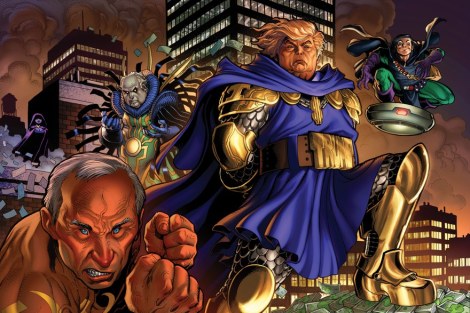 Who would ever thought that we’d have an Epic Cartoon Villain and his team against Hillary Clinton this time out?
Donald Trump
Is the Lex Luthor of our time
When, exactly, did Donald Trump cross over—going from rank assholery into real-deal, can’t-not-watch, like-chugging-spoiled-milk super-villainevil? If we had to place it, it started after he called the good people of Mexico rapists, but definitely before he called for a ban on all Muslims. Because what’s so delightful about Trump’s villainy is how lazy it is—how drowsily he shifted from hollering about his BEST AND CLASSIEST campaign to pure, raw racism and misogyny. Maybe Donald Trump hates women, and Muslims, and our socialist Kenyan president. (Okay, he definitely does.) But the super-villain-y part is that he didn’treeeally hate them until it was politically expedient.
Trump is truly the villain we deserve in 2016—and not because he wants to take over the world. It’s because he’s after something far, far scarier: applause. — Sam Schube
Stay tuned. It’s likely to get much worse.
As an example, check out the new Trump ad.
Last night, Donald Trump delivered a speech in which he spoke in soothing tones about the need to unify the country and expressed “regret” about any remarks that have caused “personal pain,” though he didn’t specify which particular remarks he regrets. This led some commentators to suggest that another “pivot” is underway.
This morning, Trump released his first general election ad, an ugly and dishonest production which shows he isn’t changing a thing.
In fact, the new ad is filled with precisely the same sort of dark, dystopian themes and content — and even some of the same sort of grainy, dark footage depicting illegal immigrants as invaders — that marked one of the first ads he ran during the GOP primaries.
Meh, more of the same!
What’s on your reading and blogging list today?
Monday Reads: They are different from you and me …
Posted: August 15, 2016 Filed under: 2016 elections | Tags: black ledger, Donald Trump, Paul Manfort, poor, Ukraine, wealthy 36 Comments“Let me tell you about the very rich. They are different from you and me. They possess and enjoy early, and it does something to them, makes them soft where we are hard, and cynical where we are trustful, in a way that, unless you were born rich, it is very difficult to understand. They think, deep in their hearts, that they are better than we are because we had to discover the compensations and refuges of life for ourselves. Even when they enter deep into our world or sink below us, they still think that they are better than we are. They are different.”
from “All the Sad Young Men” published in 1926 by F Scott Fitzgerald

Good Morning!
Half of the global wealth is held by the richest 1% in the world according to a recent Oxfam report. A good deal of it is salted away in the world’s “treasure isles” or banking havens. This is especially true for those wealthy despots that raid the treasuries of their countries. The global elite tend to run in international circles and have a lot more in common with each other than the rest of the countrymen they grift. I’m reminded of all of this as we continue to unravel the reality of the Trump Campaign which just seems to be yet another grab at more wealth and power using propaganda and lies.
The latest Trump scandal is a good lesson in this and it explains why Russian despots appear to be squarely in the middle of the US campaign for President. We’re living through another shocking Gilded Age but where are the Trotskyites that bring down the Czars? Where are the FDRs that moderate American excess with a New Deal?
It is certainly not within the camps of Trump and Paul Manafort. Yesterday, we learned exactly how twisted the tentacles get with this headline from The New York Times: “Secret Ledger in Ukraine Lists Cash for Donald Trump’s Campaign Chief”. Is Manafort an unregistered Foreign Agent? Is Donald Trump complicit or a dupe?
And Mr. Manafort’s presence remains elsewhere here in the capital, where government investigators examining secret records have found his name, as well as companies he sought business with, as they try to untangle a corrupt network they say was used to loot Ukrainian assets and influence elections during the administration of Mr. Manafort’s main client, former President Viktor F. Yanukovych.
Handwritten ledgers show $12.7 million in undisclosed cash payments designated for Mr. Manafort from Mr. Yanukovych’s pro-Russian political party from 2007 to 2012, according to Ukraine’s newly formed National Anti-Corruption Bureau. Investigators assert that the disbursements were part of an illegal off-the-books system whose recipients also included election officials.
In addition, criminal prosecutors are investigating a group of offshore shell companies that helped members of Mr. Yanukovych’s inner circle finance their lavish lifestyles, including a palatial presidential residence with a private zoo, golf course and tennis court. Among the hundreds of murky transactions these companies engaged in was an $18 million deal to sell Ukrainian cable television assets to a partnership put together by Mr. Manafort and a Russian oligarch, Oleg Deripaska, a close ally of President Vladimir V. Putin.
 Also,this arrived to the Twitter feed yesterday along with a picture of Ivanka on vacation with Putin’s latest squeeze, the ex wife of Rupert Murdoch Wendy Deng. Exactly how are Trump’s racists and working white groupies to take all this information? You think a few banking execs on Wall Street want money and power? That’s kindergarten rent-seeking compared to the company that Trump and Manafort keep.
The funny thing about all this is Deng is rumored to be dating frequently shirtless despot Vladimir Putin, who may or may not have authorized the hacking of Hillary Clinton’s e-mails, and whom Donald Trump swears he has no financial tethers to, despite a new trove of evidence to the contrary. Here would be a good place for the thinking-face emoji, but I’d argue the Trumps know exactly what they’re doing. Tight stuff.
So, both are disturbing pictures of the kind of things that lead to conspiracy theories about shadowy global networks of bankers. Only, this is a black ledger and unlikely to wind up in anything but an account in a Treasure Isle. All $12.7 million of it. We’ll be fortunate to find it among the Swiss Banks accounts.
The ledgers, discovered in the Party of Regions headquarters following the 2014 revolution that forced Yanukovych to flee to Russia, were given to investigators by Viktor Trepak, a former Ukrainian domestic intelligence official, Manzhura said. He received the documents from an undisclosed source.
The “black ledger” includes more than 20,000 line items, and investigators are sifting through the names, primarily seeking proof that government officials were receiving bribes. The agency cannot make indictments but must pass on any evidence to prosecutors, who can decide whether to file charges. Manzhura said that processing the list will take a long time, as will matching signatures to individuals and proving that money actually changed hands.
For investigators, she said, Manafort is not the priority.
“He’s not a Ukrainian government official, so taking into account the role and tasks of the National Anti-Corruption Bureau, Paul Manafort is not the number-one priority to investigate on this list,” Manzhura said.
It did not appear that Manafort had signed the ledger himself, she added.
“The signatures against his surname probably don’t belong to him; they belong to other people,” she said, adding they may have been intermediaries. “So this information needs to be checked separately.”
The Times reported that Ukrainian officials are also investigating numerous offshore companies that allegedly funded the high-rolling lifestyles of Yanukovych and those close to him. The deals made by these companies include a multimillion-dollar plan to sell Ukrainian cable television assets that involved Manafort and a Russian oligarch who is close to Russian President Vladimir Putin, though the Times reported that Manafort is not a target in the Ukrainian investigation of offshore companies.
Manafort is no stranger to controversy, controversial figures or global dealmaking. His friends have labeled him “the Count of Monte Cristo,” the hero of a 19th century novel.
So, will the Donald dump him or maintain that infamous Trump loyalty to the folks that are known to do the black deeds for him? Manafort is  denying the payments.
“Once again, the New York Times has chosen to purposefully ignore facts and professional journalism to fit their political agenda, choosing to attack my character and reputation rather than present an honest report,” Manafort said in a statement obtained by NBC News. “The suggestion that I accepted cash payments is unfounded, silly and nonsensical.”
The story comes a little more than a day after the Times published a story examining the internal struggles facing Trump’s campaign, a story that also elicited strong responses from the Republican nominee and his campaign.
It’s unclear if Manafort actually received payments, but prosecutors told the Times that Manafort “must have realized the implications of his financial dealings.”
But Manafort strongly denied that he ever received off-the-books payments or has done work with the governments of Ukraine or Russia.
“My work in Ukraine ceased following the country’s parliamentary elections in October 2014,” Manafort says. “In addition, as the article points out hesitantly, every government official interviewed states I have done nothing wrong.”
The Times story was retweeted by Corey Lewandowski, the former Trump campaign manager and Manafort rival who was fired in June.
Hillary Clinton’s campaign chairman, Robby Mook, called the alleged connections between Manafort and members of pro-Russian factions troubling.
“Donald Trump has a responsibility to disclose campaign chair Paul Manafort’s and all other campaign employees’ and advisers’ ties to Russian or pro-Kremlin entities, including whether any of Trump’s employees or advisers are currently representing and or being paid by them,” Mook said in a statement.
Troubling indeed. Meanwhile, the most likely Trump supporters who raise the likes of Trump up as some kind of hero, demonize the very poorest. We really haven’t come very far from the Reagan Years when women with hard scrabble lives were made the center of all evil in the world. Check out the comparisons of these surveys.
Sharp differences along lines of race and politics shape American attitudes toward the poor and poverty, according to a new survey of public opinion, which finds empathy toward the poor and deep skepticism about government antipoverty efforts.
The differences illuminate some of the passions that have driven this year’s contentious presidential campaign.
But the poll, which updates a survey The Times conducted three decades ago, also illustrates how attitudes about poverty have remained largely consistent over time despite dramatic economic and social change.
Criticism of the poor – a belief that there are “plenty of jobs available for poor people,” that government programs breed dependency and that most poor people would “prefer to stay on welfare” – is especially common among the blue-collar, white Americans who have given the strongest support to Donald Trump.
The opposite view — that jobs for the poor are hard to find, that government programs help people get back on their feet and that most of the poor would rather earn their own way — is most widely held among blacks and other minorities, who have provided the strongest backing to Hillary Clinton.
Roughly a third of self-described conservatives say that the poor do not work very hard, a view at odds with big majorities of moderates and liberals.
But while Americans disagree in how they view the poor, they’re more united in their skepticism of government programs.
 This is perhaps why the Southern Strategy has worked almost too well. It’s blasting through loud and clear in the work of Trump and his cronies. Trump surrounds himself with Republican Ratfuckers.
It’s this mercenary value system that explains why Manafort has made a career out of advising monstrous dictators and conscienceless oligarchs. Manipulating people’s anger and insecurities into fear and rage has been his trademark for his entire career, which is why he could not care less about Trump’s negative influence on the body politic or his incitements to violence.
He doesn’t care about anything but winning, and if his ties to Putin can help Trump, he doesn’t care about the implications of that either.
Handwritten ledgers show $12.7 million in undisclosed cash payments designated for Mr. Manafort from Mr. Yanukovych’s pro-Russian political party from 2007 to 2012, according to Ukraine’s newly formed National Anti-Corruption Bureau. Investigators assert that the disbursements were part of an illegal off-the-books system whose recipients also included election officials.
In addition, criminal prosecutors are investigating a group of offshore shell companies that helped members of Mr. Yanukovych’s inner circle finance their lavish lifestyles, including a palatial presidential residence with a private zoo, golf course and tennis court. Among the hundreds of murky transactions these companies engaged in was an $18 million deal to sell Ukrainian cable television assets to a partnership put together by Mr. Manafort and a Russian oligarch, Oleg Deripaska, a close ally of President Vladimir V. Putin.
I don’t know how anyone can not be suspicious that Manafort might have something to do with the way pilferedDemocratic Party emails and text messages are being selectively released to do damage to Hillary Clinton for the benefit of Manafort’s newest client. The consensus among analysts and the intelligence agencies that Putin’s Russia is behind the hacking is very high, and obviously Trump believes it himself since he asked Russia to do more of it.
In any case, Manafort has been partnered up with folks like Charlie Black, Lee Atwater, and Roger Stone (the most notorious political ratf*ker of all time) for more than thirty years.
So, I give you one of the tangled webs woven by some of the most despicable people on the planet. This explains why David Duke and Stormfront love the dude, but how do explain every one’s crazy uncle and cousin? And, how shiny are your bootstraps today?
What’s on your reading and blogging list today?

 peej
peej Carissa
 bostonboomer
 dakinikat
 ecocatwoman
 jjlo
jjlo mablue2
 Mama Lopez
 peggysue22
 quixote
 skydancingguestblogger
 Mona (aka Wonk the Vote)





Recent Comments