

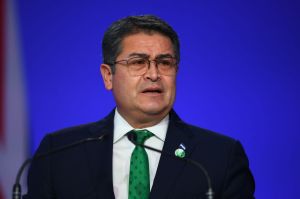
Hernández, 57, was released Monday from U.S. Penitentiary Hazelton in West Virginia, according to the Federal Bureau of Prisons website and a BOP spokesperson.
Wednesday Reads: Trump’s Mental and Physical Health and Other News
Posted: December 3, 2025 Filed under: just because | Tags: Alejandro Carranza Medina, Colombia, Donald Trump, Dr. Sean P. Barbabella, Former Honduran president Juan Orlando Hernández, Gaza, Ilhan Omar, Jared Kushner, Minnesota, Pete Hegseth, Saudi Arabia, Signalgate, Somali immigrants, Trump MRI, Trump's health, Ukraine 9 CommentsGood Day!!
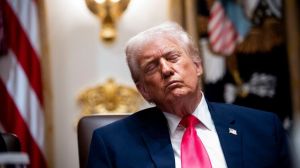
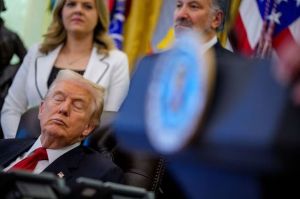
Trump sleeps during yesterday’s cabinet meeting.
Nothing is normal in the U.S. anymore. The government is run by incompetent and corrupt people. Most concerning of all is that the “president is not only ignorant and incompetent, but also physically and mentally unstable. In addition, he lacks any sense of morality or empathy for other people.
Yesterday, historian Garrett Graff wrote about this for the second time at his Substack Doomsday Scenario: It’s time to talk about Donald Trump’s health (again).
Back in September, after Donald Trump disappeared from view for days and the internet went wild with rumors he was dead or hospitalized, I wrote about how the press needed to be leading a more serious conversation about Trump’s health and fitness for the presidency than it was having.
In the months since, the evidence has only grown that something serious is afflicting Trump.
And then last night happened.
Overnight, the President of the United States went on what can only be described as an unhinged social media fever dream. He posted on his social media site Truth Social hundreds of times in a short span — somewhere north of 150 times overnight, a wild mix of conspiracy theories, videos, and memes. It was extreme even for him.
During that end-of-August episode, the major questions were about the president’s physical health — his bruised hands and his swollen ankles — and in the months since, there have been more reasons and evidence that some part of the president is not well:
- He is stumbling, physically, through more of his events. Since August, he appears to be regularly dragging the right side of his body and struggles to walk in a straight line. Just watch this recent video of Trump boarding Marine One, where he appears to be leaning heavily on Melania Trump to stand. And then there was Trump’s Asia trip, where he seemed so lost, wandering aimlessly through a Japanese press event, that the late night shows set it to music.
- He appears to have fallen asleep in meetings on multiple recent occasions, including at an Oval Office meeting.
- And then there’s the MRI. In October, he went to Walter Reed for his “annual medical exam,” even though it was barely six months after his last “annual medical exam” at Walter Reed, and had a wide range of tests done, including an MRI. In recent days, Trump has gotten into a high-profile tiff with Minnesota Gov. Tim Walz, who pressed him to release the results of that MRI. When asked, Trump couldn’t explain why he had the test. Finally, yesterday the White House released information saying it was a chest MRI for his cardiovascular and abdominal systems and that, as the White House always says he is, the tests showed everything was “perfectly normal” and in “excellent health.” (Gavin Newsom mocked Trump about the results.)
But that’s not the reason worth having a conversation about Trump’s health today.
Today, we should be having a conversation about Trump’s increasingly clear diminished mental capacity. This is a man, after all, with the sole launch authority for the nation’s nuclear weapons who, on a daily basis, seems increasingly more disconnected from reality, beholden to conspiracy thinking, and — most simply — absent-minded. It is not a recipe for global stability — and deserves more serious conversation than its getting.
Please go read Graff’s specific arguments in support of his claims. It’s not long.
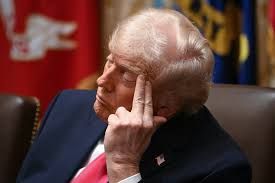
Yesterday Trump held a cabinet meeting on video. He could barely stay awake most of the time. Of course, he had been up most of the night posting insane garbage on Truth Social, but still…
Zolan Kanno-Youngs at The New York Times: Trump Appears to Fight Sleep During Cabinet Meeting.
President Trump appeared to be fighting sleep on Tuesday during a cabinet meeting at the White House, closing his eyes and at times seeming to nod off, after he criticized media coverage about him facing the realities of aging in office.
Over the course of two hours and 18 minutes, the president, who is 79, sometimes appeared to struggle to keep his eyes open as cabinet officials went around the room describing their work and heaping praise on him….
Mr. Trump does appear frequently before the news media, and he takes questions far more often than his predecessor, President Joseph R. Biden Jr., did. He is a regular, outsize presence in public life.
But Mr. Trump also appeared to have had a late night. He shared or posted dozens of times on social media on Monday night until nearly midnight.
Early in the meeting, Mr. Trump had complained that he was getting unfair scrutiny compared to Mr. Biden, who dropped out of the presidential race last year amid concerns in his own party about his age, mental acuity and ability to beat Mr. Trump.
“I’ll let you know when there’s something wrong. There will be someday,” Mr. Trump said. “That’s going to happen to all of us. But right now I think I’m sharper than I was 25 years ago. But who the hell knows?”
A bit more:
Mr. Trump then claimed he got “all A’s” on his physical.
But as Tuesday’s meeting went on, Mr. Trump seemed to grow tired.
About 50 minutes in, as Brooke L. Rollins, the agriculture secretary, spoke, Mr. Trump struggled to keep his eyes open before he leaned back and forth in his chair. More than an hour and a half into the meeting, while Linda McMahon, the education secretary, spoke, he closed his eyes for five seconds before leaning back and looking at the ceiling. Roughly 20 minutes later, as Secretary of State Marco Rubio spoke, the president leaned forward and appeared to close his eyes again.
It was the second time in less than a month that Mr. Trump appeared to doze off in public. During an Oval Office event on Nov. 6, the president’s eyes grew heavy and closed for several seconds.
Trump recently announced that he had had an MRI scan at his latest physical exam, but claimed he had no idea what it was for. Experts have questioned that, and finally his doctor released some confusing details.
Gina Kolata at The New York Times: Memo From Trump’s Doctor Cites ‘Excellent’ Scan but Offers Little Clarity.
The White House released a letter from President Trump’s physician on Monday about the results of “advanced imaging tests.” The statement, by Dr. Sean P. Barbabella, said the tests on his cardiovascular system and abdominal region showed the president “remains in excellent overall health.”
Trump in yesterday’s cabinet meeting.
Some medical experts said it was unclear what tests doctors conducted, why they were done or what the results mean. And, they said, a person without symptoms would not have imaging tests as part of a routine medical exam under ordinary medical circumstances.
Mr. Trump, the oldest president ever sworn into his office, had M.R.I. scans in October as part of a semiannual physical exam. His annual physical was done in April.
On Sunday, during an appearance on “Meet the Press” on NBC News, Governor Tim Walz of Minnesota called on the president to release the results after Mr. Trump had impugned Mr. Walz’s intelligence. Asked by a reporter on Sunday what part of his body was scanned, Mr. Trump said aboard Air Force One, “I have no idea — it was just an M.R.I.” He then said it was not a scan of his brain.
But Dr. Barbabella’s memo did not specify that Mr. Trump had a M.R.I. scan, which uses a magnetic field to produce images of soft tissues that do not show up on X-rays. Instead, the memo describes “advanced imaging” that it said was carried out “because men in his age group benefit from a thorough evaluation of cardiovascular and abdominal health.”
The imaging was part of Mr. Trump’s “comprehensive executive physical,” Dr. Barbabella explained, referring to a detailed medical exam often offered to executives. Such exams can include tests that are not normally done when people have no symptoms of disease.
The memo said Mr. Trump’s cardiovascular imaging is “perfectly normal” with no signs that his arteries are narrowed. His “cardiovascular system shows excellent health,” the statement said.
It added that, “his abdominal imaging is also perfectly normal,” and said, “this level of detailed assessment is standard for an executive physical at President Trump’s age and confirms that he remains in excellent overall health.”
They are obviously hiding something.
Dan Vergano at Scientific American: Trump’s MRI Is Not Standard ‘Preventive’ Care, Say Experts.
Medical experts are questioning the White House’s explanation for President Donald Trump’s MRI tests as “preventive.”
A Monday memo released by presidential physician Sean Barbabella described the results of “a thorough evaluation of cardiovascular and abdominal health” as normal. “This level of detailed assessment is standard for an executive physical at President Trump’s age,” Barbabella said.
Dr. Sean P. Barbabella, Trump’s doctor
But imaging experts who spoke to Scientific American expressed doubts as to Barbabella’s assertion that magnetic resonance imaging (MRI) screening is typical preventive care. American Heart Association guidelines, for example, note that a cardiac MRI is usually requested because of existing heart conditions and often only after other tests.
“No, it is certainly not standard medical practice to perform screening MRIs of the heart and abdomen,” says radiologist and MRI expert Thomas Kwee of the University of Groningen in the Netherlands. Such imaging is typically only performed in the case of underlying disease, he says, or if there is suspicion of an underlying disease based on the patient’s medical history and physical examination. Barbabella’s memo said the imaging showed Trump was in “excellent health.”
Kwee’s comment echoed those of Medpage Today’s editor in chief, physician Jeremy Faust, who told CNN on Monday that “there’s really no such thing as routine prevention using an MRI.” Faust on Tuesday told Scientific American that the White House memo reference to “advanced imaging” left open questions as to exactly what tests Trump underwent. It could even possibly refer to a CT scan, for example, which is different than MRI. “If we knew exactly what imaging he received, it would give us a better idea of what conditions they are worried about,” Faust says.
More opinions:
“An assessment of a heart MRI and abdominal MRI is not ‘standard for an executive physical,’” says former White House physician Jeffrey Kuhlman, author of the book Transforming Presidential Healthcare. Though it’s not uncommon for physicians who have concierge-type practices to use total or partial body scans on their clients, “this is not evidence-based,” he adds….
Questions around Trump’s health have surfaced repeatedly in recent months. In July the White House reported that the president has chronic venous insufficiency, a blood vessel disease that affects circulation and can cause ankle swelling. And noticeable bruises on the back of Trump’s hands seen in February were attributed to “shaking hands all day” by Leavitt.
There is no solid evidence that executive MRI scans help people, Kwee says, either by diagnosing disease or extending their lifespan. “These scans can also lead to unexpected incidental findings and give false reassurance that there is no underlying disease.”
At least big media is beginning to talk about Trump’s obvious mental and physical health issues. We need them to start focusing on Trump’s age as much as they did Biden’s.
More important stories:
Judd Legum at Popular Information: Kushner’s Moscow mission wasn’t just corrupt. It was unconstitutional.
Jared Kushner, President Trump’s son-in-law, has been traveling the world to participate in high-stakes foreign policy negotiations on behalf of the president. On Tuesday, Kushner traveled to Moscow and sat across the table from Russian President Vladimir Putin to discuss a peace deal to end the war in Ukraine. The entire United States delegation consisted only of Kushner and Special Envoy Steve Witkoff. Kushner and Witkoff were joined at the table by an interpreter.
Kushner’s participation in the Moscow meeting — and the similar role he played in the Gaza negotiations — likely violates the law.
Representing the Trump administration in high-level foreign policy negotiations makes Kushner, at a minimum, a Special Government Employee (SGE). Under the law, an SGE is someone “who is retained, designated, appointed, or employed to perform, with or without compensation, for not to exceed one hundred and thirty days during any period of three hundred and sixty-five consecutive days, temporary duties either on a full-time or intermittent basis.”
Trump has not named Kushner an SGE. But a seminal 1977 opinion by the Department of Justice’s Office of Legal Counsel (OLC) found “an identifiable act of appointment may not be absolutely essential for an individual to be regarded as an officer or employee in a particular case where the parties omitted it for the purpose of avoiding the application of the conflict-of-interest laws.” In that opinion, the OLC considered the status of an individual who had not been named to any role by the president but “assumed considerable responsibility for coordinating the Administration’s activities in [a] particular area.” The OLC concluded that since the individual was “quite clearly engaging in a governmental function” and is “working under the direction or supervision of the President,” he should be considered an SGE.
Here, Kushner is engaged in activities that can only be conducted by government officials. The Logan Act bars private citizens from engaging in negotiations with foreign governments without authorization. Kushner is acting in an authorized capacity, under Trump’s direction, and that creates a host of legal issues.
A the same time, Kushner is receiving payments from foreign governments.
Since leaving the White House in 2021, Kushner has raised at least $4.8 billion for Affinity Partners, his private equity firm. Nearly 99% of Affinity Partners’ funding comes from foreign sources. The largest investment, $2 billion, came from the Public Investment Fund of Saudi Arabia (PIF).
The Saudi government pays Kushner 1.25% of its investment, or $25 million annually. Other investors, including the governments of Qatar and the United Arab Emirates (UAE), pay annual fees of up to 2%. As of September 2024, Affinity Partners had collected $157 million in fees, mainly from Middle Eastern governments.
Kushner is continuing to collect these fees as he serves in a top foreign policy role for the Trump administration. This is precisely the kind of behavior the Foreign Emoluments Clause was designed to prevent. Kushner was one of two Americans on Tuesday engaged in high-stakes negotiations with Putin. But as the private equity manager for billions of foreign capital, Kushner has a fiduciary duty to advance the financial interests of Saudi Arabia, Qatar, and other foreign governments.
The Washington Post: Ex-Honduras president, convicted of drug trafficking, freed on Trump pardon.
Former Honduran president Juan Orlando Hernández, convicted by a U.S. court last year on charges that he ran the Central American nation as a “narco-state” that helped send South American cocaine to the United States, has been released from federal prison after receiving a “full and unconditional” pardon from President Donald Trump.
Hernández, who was president of Honduras from 2014 to 2022, was serving 45 years in prison on importation and weapons charges. U.S. prosecutors said he built his political career on millions of dollars in bribes from traffickers in Honduras and Mexico, and as president helped to move at least 400 tons of cocaine to the United States while protecting traffickers from extradition and prosecution.
Juan Orlando Hernández
The Trump administration is waging what it says is a counternarcotics campaign off Venezuela. U.S. forces have destroyed at least 21 boats in the Caribbean Sea and Pacific Ocean, killing more than 80 people, that officials say were carrying drugs to the U.S., and U.S. troops and warships are massing in the region. Trump has accused Venezuelan President Nicolás Maduro of sending violent criminals and drugs to the U.S.
But on Friday, Trump said that Hernández had been “treated very harshly and unfairly” and that he would grant him a “Full and Complete Pardon.”
“CONGRATULATIONS TO JUAN ORLANDO HERNANDEZ ON YOUR UPCOMING PARDON,” Trump wrote on Truth Social. “MAKE HONDURAS GREAT AGAIN!”
Trump’s decision to pardon an official who, a federal court found, helped flood the United States with cocaine angered congressional Democrats.
“Hernandez’s conviction last year finally held him accountable for all the Honduran and American blood on his hands and sent an unequivocal message: No drug trafficker is above the law, not even former presidents,” said Sen. Jeanne Shaheen (New Hampshire), the top Democrat on the Senate Foreign Relations Committee. “That is precisely why all Americans should be outraged by President Trump’s pardoning of former president Hernandez.”
I wonder how much Trump was paid for this pardon.
NBC News: Pentagon inspector general investigation into ‘Signalgate’ is complete.
Defense Secretary Pete Hegseth on Tuesday was given a final copy of the completed Defense Department Inspector General report that examined his sharing sensitive military information on a Signal group chat back in March, according to two people familiar with the investigation.
The much-anticipated report is expected to become public as early as this week, these people said.
Pete Hegseth
The report outlines the findings of a more than eight-month investigation into Hegseth’s use of Signal, an encrypted but unclassified messaging app, to share details of planned U.S. military strikes in Yemen before they had begun.
Hegseth has maintained that he shared no classified information on the group chat….
The two people familiar with the inspector general investigation would not say what its conclusions are. The report was requested by the chairman of the Senate Armed Services Committee, Sen. Roger Wicker, R-Miss., and the committee’s ranking member, Sen. Jack Reed, D-R.I., on March 27.
The group chat, which included other top members of President Donald Trump’s national security team, became public after an editor for The Atlantic magazine was inadvertently added.
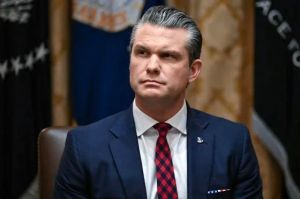
Let’s hope it’s not a whitewash.
Aram Roston at The Guardian: Family of victim in alleged Trump ‘drug boat’ killings files first formal complaint.
A family in Colombia filed a petition on Tuesday with the Washington DC-based Inter-American Commission on Human Rights, alleging that the Colombian citizen Alejandro Carranza Medina was illegally killed in a US airstrike on 15 September.
The petition marks the first formal complaint over the airstrikes by the Trump administration against suspected drug boats, attacks that the White House says are justified under a novel interpretation of law.
Alejandro Carranza Medina and his son. Photograph Courtesy of Carranza family
The IACHR, part of the Organization of American States, is designed to “promote and protect human rights in the Western Hemisphere”. The US is a member, and in March the Trump administration’s state department wrote: “The United States is pleased to be a strong supporter of the IACHR and is committed to continuing support for the Commission’s work and its independence. Preserving the IACHR’s autonomy is a pillar of our human rights policy in the region.”
The complaint was filed by Pittsburgh-based human rights lawyer Dan Kovalik. “On September 15, 2025, the United States military bombed the boat of Alejandro Andres Carranza Medina,” the filing says, “which Mr Carranza was sailing in the Caribbean off the coast of Colombia. Mr Carranza was killed in the process of this bombing.”
Kovalik identified Pete Hegseth, the US defense secretary, as the perpetrator, based on Hegseth’s own statements. “From numerous news reports, we know that Pete Hegseth, US Secretary of Defense, was responsible for ordering the bombing of boats like those of Alejandro Carranza Medina and the murder of all those on such boats. Secretary Hegseth has admitted that he gave such orders despite the fact that he did not know the identity of those being targeted for these bombings and extra-judicial killings,” the filing goes on.
The complaint adds: “US President Donald Trump has ratified the conduct of Secretary Hegseth described herein.”

NBC News: Trump administration pauses immigration applications from nationals of 19 countries.

Lazy Caturday Reads: Everything is Awful, As Usual
Posted: November 29, 2025 Filed under: just because | Tags: Andrew Wolfe, Donald Trump, Honduras, Juan Orlando Hernández, National Guard in DC, Nicolas Maduro, Pete Hegseth, Sarah Beckstrom, Trump attacks on women journalists, Trump's ballroom obsession, Venezuela, Venezuela boat strikes 15 CommentsGood Afternoon!!

Shared Reflections, by Rebecca Aldernet
I can’t find any good news this morning–what else is new? The “president” is dangerously demented, his cabinet is full of kooks, his economy is going down the tubes, and he seems determined to start a war in Venezuela. Anyway, here are the stories that caught my attention today.
Venezuela Boat Strikes
I’m sure you’ve heard the reports about Pete Hegseth’s campaign of war crimes against alleged drug boats. Yesterday, The Washington Post published an exclusive report by Alex Horton and Ellen Nakashima (gift link): Hegseth order on first Caribbean boat strike, officials say: Kill them all.






Wednesday Reads: ICE in Massachusetts, Trump’s Aging, and His Decorating Fetish
Posted: November 26, 2025 Filed under: just because | Tags: Any Lucia Lopez Belloza, Bruna Caroline Ferreira, Donald Trump, ICE, immigration, Jack Nichlaus, James McCreary, João Marciano do Carmo, Joint Base Andrews golf courses, Karoline Leavitt, Trump aging, Trump dozing off, Trump's ballroom 3 CommentsGood Afternoon!!
I’m really struggling with watching/read the national news these days. I’m sure I’m not alone in that. I have been trying to follow local reports of federal immigration/deportation activities. Trump hasn’t sent troops to Massachusetts yet, but ICE has still been very busy here. A few recent stories:
Marcela Rodrigues and Scooty Nickerson of The Boston Globe write that the feds are acting quickly to get detainees out of New England (and away from friendly judges) to red states where it will be easier to keep them imprisoned: ‘Treated like an animal’: ICE is moving detained immigrants quickly to conservative states, raising due process concerns.
Last week, João Marciano do Carmo returned to his family in Milford, embraced his crying mother, and fell into the comfort of his living room couch. The 19-year-old had finally made the journey home from a jail in Mississippi, one of the detention facilities where he had been held since September on an immigration-related violation that, lawyers say, never warranted his detention in the first place.
He’s not alone, according to a Globe analysis of arrest and detention data and interviews with immigration attorneys and experts. Immigrants in New England targeted for deportation are being whisked away quicker and to farther locations than ever before. They are increasingly brought to remote areas of the country where they face more conservative judges who are less likely to grant them freedom, according to the interviews and the data analysis.
Kelly Lamphere, the mother-in-law of João Marciano do Carmo’s sister, embraced João as he arrived at his family’s home in Milford, Nov. 18. Erin Clark, Globe Staff
As agents carry out that agenda, advocates and legal analysts say, immigrants have lost essential due process rights. Detainees legally eligible for bond are moved quickly, and at times in violation of court orders. It can take days for them to be able to call their families. Often, not even their lawyers know where they are.
Legal experts warn the rapid rise in transfers to far-flung states is likely to accelerate as billions of dollars allocated by Congress in the One Big Beautiful Bill Act last summer begin to flow to detention centers.
“To be super clear, this is the beginning,” said Kathleen Bush-Joseph, an attorney and policy analyst at the Migration Policy Institute. “They are ramping up, but they have plans to go so much bigger.” [….]
ICE arrests in the Boston area more than tripled in the first seven months of this year compared to last, while the number of people sent to facilities outside New England spiked sixfold, according to the Globe analysis.
At the same time, the median period before someone was moved to an out-of-region facility was cut in half. Last year, it took around 20 days to move someone out of New England, while this year it took around 10 days.

What happened to João:
In Carmo’s case, the teenager, who moved to Milford from Brazil at age 11, was arrested on the way to work at a nearby farm with a friend from Milford High School. Immigration agents shattered his car window to apprehend them. The two teenagers, who have no criminal record, were put in a van with their hands and feet shackled.
For the first six days, they weren’t allowed to make a phone call. None of their family members or their lawyer could locate them. For days, their mothers in Milford wondered if they were alive.
In the seven weeks that followed, Carmo and Marcos Oliveira Martins were transferred from detention facility to detention facility, with stops in Massachusetts, New York, and Mississippi. They slept on concrete, the floor of a gymnasium, and in traditional jail cells.
“I was being really treated like an animal … I didn’t matter,” Carmo said at his home. His journey from New York to Mississippi lasted 16 hours between buses and a plane, and he was shackled the entire time.
Another heartbreaking story by Giulia McDonnell Nieto del Rio at The Boston Globe: A Babson College student wanted to surprise her family for Thanksgiving. She was deported instead.
Immigration authorities detained and swiftly deported a freshman at Babson College to Honduras last week while she was at Logan Airport on her way to surprise her family in Texas for Thanksgiving, according to attorneys and a family friend.
The young woman, Any Lucia Lopez Belloza, came to the United States from Honduras with her family when she was a young child and was at Logan Thursday to catch a flight to Texas, where her parents live, according to her attorney, Todd Pomerleau.
Lopez Belloza made it through security but was stopped as she was about to board the plane, Pomerleau said. “They wouldn’t tell her why she was being detained. She didn’t understand it at all,” Pomerleau said. She was then taken to the Burlington ICE field office, then flown to Texas, Pomerleau said.
abson college student, Any Lucia Lopez Belloza, at her high school graduation.Family Photo
After a frantic 48-hour search, her family received a call from her on Saturday from Honduras, a country she had not lived in since she was a child. The federal government had quickly deported her, the lawyers said, and Lopez Belloza had found her way to her grandparents’ house and called her father.
“It really didn’t feel like it was real life because nothing made sense,” said Ricky Soto, a close friend of the family who was desperately trying to contact attorneys to help the family. “I can only imagine how terrifying that was for her.”
Soto, 41, had bought Lopez Belloza plane tickets and helped organize the surprise for her family — he considers them family, too, and works with her father at a tailor shop in Texas.
The student’s parents and her two youngest siblings are also in Texas, and it would have been her first Thanksgiving break during college. “She was so excited, because she wasn’t expecting to come home,” Soto told the Globe.

Why did this happen?
Nayna Gupta, the policy director at the American Immigration Council, has also been assisting the family with the case, quickly scrambling to find local lawyers and contact representatives on Thursday evening after hearing of the case. Lopez Belloza apparently had a removal order from around 2017 that neither she nor her family was aware of, Gupta said.
“They didn’t know to show up somewhere, and she certainly had no idea of any of this,” Gupta said.
Before Trump, people in this category weren’t targeted; now that has changed. Now Lopez Belloza may not be able to continue her education.
Soto, the family friend, remembers Lopez Belloza‘s father learning of his daughter’s college acceptance last year, bursting into their shop with such enthusiasm to share the news.
“Based on what I know about her father and his family, and what they went through, and how he’s been able to grow and persevere, and have a family — and then his oldest daughter is achieving this,” Soto said, “everybody was just really proud.”
Pomerleau, Lopez Belloza‘s attorney based in Massachusetts, said that she is a business student who received a scholarship to attend Babson. Now, Lopez Belloza isn’t sure if she’ll be able to finish her finals, Pomerleau said. He was able to speak with Lopez Belloza for the first time on Monday.
“She was really sad,” Pomerleau said. “I told her, ‘We’re going to fight like hell until we bring you back.’”
There must be terrible stories like this all over the country. It makes me sick at heart.
One more Massachusetts immigration story by and White House press secretary Karoline Leavitt’s relative detained by ICE.
Officials have detained the mother of White House press secretary Karoline Leavitt’s nephew amid the Trump administration’s ramped-up immigration enforcement efforts, a source familiar with the matter confirmed to NBC News.
Immigration and Customs Enforcement agents took the woman into custody in Revere, Massachusetts, this month, the source said.
Bruna Ferreira has an 11-year-old son with Michael Leavitt, who is the press secretary’s brother.
A Department of Homeland Security spokesperson said Bruna Caroline Ferreira is a “criminal illegal alien from Brazil” who overstayed her tourist visa, which expired in June 1999.
The woman has an arrest on suspicion of battery, the spokesperson said. It’s not clear how the case was resolved.
Ferreira, who the source familiar with the situation said has never lived with Leavitt’s nephew, is at the South Louisiana ICE Processing Center amid proceedings to have her removed, the DHS spokesperson said….
The source said Leavitt’s nephew has lived full time in New Hampshire with his father since he was born, has never resided with his mother and has not spoken with her in many years….
Ferreira’s family said in a GoFundMe campaign that she was brought to the United States as a child in 1998 and that she has done “everything in her power to build a stable, honest life here.”
It says she “maintained her legal status” in the United States by receiving protection under the Deferred Action for Childhood Arrivals (DACA) program, which seeks to allow immigrants brought to the United States as children, albeit illegally, to enjoy protection from removal.
The Associated Press reported Tuesday that DACA recipients have been among those detained in immigration sweeps.
The New York Times has finally noticed that Trump is really old.
Katie Rogers and Dylan Freedman at The New York Times (gift link): Shorter Days, Signs of Fatigue: Trump Faces Realities of Aging in Office.
With headline-grabbing posts on social media, combative interactions with reporters and speeches full of partisan red meat, Mr. Trump can project round-the-clock energy, virility and physical stamina. Now at the end of his eighth decade, Mr. Trump and the people around him still talk about him as if he is the Energizer Bunny of presidential politics.
The reality is more complicated: Mr. Trump, 79, is the oldest person to be elected to the presidency, and he is aging. To pre-empt any criticism about his age, he often compares himself to President Joseph R. Biden Jr., who at 82 was the oldest person to hold the office, and whose aides took measures to shield his growing frailty from the public, including by tightly managing his appearances….
Mr. Trump remains almost omnipresent in American life. He appears before the news media and takes questions far more often than Mr. Biden did. Foreign leaders, chief executives, donors and others have regular access to Mr. Trump and see him in action.
Still, nearly a year into his second term, Americans see Mr. Trump less than they used to, according to a New York Times analysis of his schedule. Mr. Trump has fewer public events on his schedule and is traveling domestically much less than he did by this point during his first year in office, in 2017, although he is taking more foreign trips.
He also keeps a shorter public schedule than he used to. Most of his public appearances fall between noon and 5 p.m., on average.
And when he is in public, occasionally, his battery shows signs of wear. During an Oval Office event that began around noon on Nov. 6, Mr. Trump sat behind his desk for about 20 minutes as executives standing around him talked about weight-loss drugs.
At one point, Mr. Trump’s eyelids drooped until his eyes were almost closed, and he appeared to doze on and off for several seconds. At another point, he opened his eyes and looked toward a line of journalists watching him. He stood up only after a guest who was standing near him fainted and collapsed.
A bit more:
Mr. Trump has prompted additional questions about his health by sharing news about medical procedures he has had, but not details about them. While in Asia, Mr. Trump revealed that he had undergone magnetic resonance imaging at Walter Reed National Military Medical Center in early October.
“I gave you the full results,” Mr. Trump told reporters, mischaracterizing the summary that was released by his physician, which did not say that Mr. Trump had an M.R.I. scan and contained few other details….
Trump dozing in an Oval Office meeting
Mr. Trump also applies makeup to a bruise on the back of his right hand, adding speculation about a medical condition that his physician and aides say is caused by taking aspirin and shaking so many hands. In September, the bruising on his hand, coupled with swollen ankles, caused observers on the internet to speculate wildly about his health….
According to a Times analysis of the official presidential schedules in a database maintained by Roll Call, Mr. Trump’s first official event starts later in the day. In 2017, the first year of his first term, Mr. Trump’s scheduled events started at 10:31 a.m. on average. By contrast, Mr. Trump in his second term has started scheduled events in the afternoon on average, at 12:08 p.m. His events end on average at around the same time as they did during the first year of his first term, shortly after 5 p.m.
The number of Mr. Trump’s total official appearances has decreased by 39 percent. In 2017, Mr. Trump held 1,688 official events between Jan. 20 and Nov. 25 of that year. For that same time period this year, Mr. Trump has appeared in 1,029 official events.
Mr. Trump still regularly comes down to the Oval Office after 11 a.m., according to a person familiar with his schedule. This routine is a holdover from his first term: After he complained about being overscheduled in the mornings, Mr. Trump kept so-called executive time hours in the White House residence before he headed downstairs for work.
It’s nothing we don’t know about, but at least the Times admits Trump is declining with age.
Predictably, Trump was unhappy with the story. Tom Boggiani at Raw Story:
The New York Times appears to have touched a nerve with Donald Trump after reporting that observers are noting his lack of energy and increasing fatigue as his age catches up with him during his second year.
In the report, the Times noted, “… when he is in public, occasionally, his battery shows signs of wear. During an Oval Office event that began around noon on Nov. 6, Mr. Trump sat behind his desk for about 20 minutes as executives standing around him talked about weight-loss drugs,” before reporting that the 79-year-old president appeared to all observers to have dozed off as those around him spoke.
Clearly stung, Trump took to Truth Social on Wednesday morning to lash out, while also boasting about his last election win for some curious reason.
“The Creeps at the Failing New York Times are at it again. I won the 2024 Presidential Election in a Landslide, winning all Seven Swing States, the Popular Vote, and the Electoral College by a lot. I one our Nation’s Districts by 2750 to 550, a complete wipeout. I settled 8 Wars, have 48 New Stock Market Highs, our Economy is Great, and our Country is RESPECTED AGAIN all over the World, respected like never before. The last Administration had the Highest Inflation in history – I have already brought that down to normal, and prices, including groceries, are coming down,” he wrote.
He continued, “To do this requires a lot of Work and Energy, and I have never worked so hard in my life. Yet despite all of this the Radical Left Lunatics in the soon to fold New York Times did a hit piece on me that I am perhaps losing my Energy, despite facts that show the exact opposite.”
“They know this is wrong, as is almost every thing that they write about me, including election results, ALL PURPOSELY NEGATIVE. This cheap ‘RAG’ is truly an ‘ENEMY OF THE PEOPLE.’ The writer of the story, Katie Rogers, who is assigned to write only bad things about me, is a third rate reporter who is ugly, both inside and out,” he complained, once again insulting a female reporter’s physical appearance.
“Despite all of this, I have my highest Poll Numbers, ever, and with record setting investment being made in America, they should only go up,” he insisted before claiming, “There will be a day when I run low on Energy, it happens to everyone, but with a PERFECT PHYSICAL EXAM AND A COMPREHENSIVE COGNITIVE TEST (‘That was aced’) JUST RECENTLY TAKEN, it certainly is not now! GOD BLESS AMERICA & MAKE AMERICA GREAT AGAIN!!!”
He’s not just old; he’s certifiably insane.
Based on what is reported in the news, Trump spends much of his time on his redecorating obsessions.
Jonathan Edwards and Dan Diamond at The Washington Post (gift link): Trump wants a bigger White House ballroom. His architect disagrees.
President Donald Trump has argued with the architect he handpicked to design a White House ballroom over the size of the project, reflecting a conflict between architectural norms and Trump’s grandiose aesthetic, according to four people who spoke on the condition of anonymity to describe internal conversations.
Trump with ballroom architect James McCrery
Trump’s desire to go big with the project has put him at odds with architect James McCrery II, the people said, who has counseled restraint over concerns the planned 90,000-square-foot addition could dwarf the 55,000-square-foot mansion in violation of a general architectural rule: don’t build an addition that overshadows the main building.
A White House official acknowledged the two have disagreed but would not say why or elaborate on the tensions, characterizing Trump and McCrery’s conversations about the ballroom as “constructive dialogue.” [….]
Trump’s intense focus on the project and insistence on realizing his vision over the objections of his own hire, historic preservationists and others concerned by a lack of public input in the project reflect his singular belief in himself as a tastemaker and obsessive attention to details. In the first 10 months of his second term, Trump has waged a campaign to remake the White House in his gilded aesthetic and done so unilaterally — using a who’s-going-to-stop-me ethos he honed for decades as a developer.
Multiple administration officials have acknowledged that Trump has at times veered into micromanagement of the ballroom project, holding frequent meetings about its design and materials. A model of the ballroom has also become a regular fixture in the Oval Office.
The renovation represents one of the largest changes to the White House in its 233-year history, and has yet to undergo any formal public review. The administration has not publicly provided key details about the building, such as its planned height. The 90,000-square-foot structure also is expected to host a suite of offices previously located in the East Wing. The White House has also declined to specify its plans for an emergency bunker that was located below the East Wing, citing matters of national security.
You can read the rest using the gift link.
Trump also plans to redesign some golf courses. Sarah Fortinsky at The Hill: Trump says Jack Nicklaus will lead golf course overhaul at Joint Base Andrews.
President Trump said Jack Nicklaus, the retired professional golfer, will oversee an overhaul of the golf courses at Joint Base Andrews.
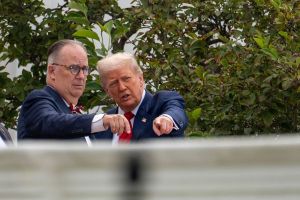
Trump told reporters he was tapping Nicklaus as the architect of the project on Saturday before boarding Marine One to head to Andrews, where he later took an aerial tour of the landscape.
85 year old Jack Nichlaus
“We’re doing some fix-up of the base, which it needs. We’re going to try and reinstitute the golf courses. I’m meeting with the greatest Jack Nicklaus,” Trump said.
“He’s involved in trying to bring their recreational facility back,” he added, calling it a “great place that has been destroyed over the years through lack of maintenance, so we’ll fix that up, and Jack will be the architect and he’ll design it.”
Trump said the project would address “two existing courses that are in very bad shape” and said, “We can, for very little money, fix it up.”

Trump has time for all this because he doesn’t really care about serious issues and leaves those to his staff, his pal Putin, and apparently Jared Kushner. I haven’t really gotten into politics and foreign policy in this post, but here are some headlines if you’re interested.
Jacqueline Cole, Mariana Lastovyria, and Tim Mak at The Counteroffensive: NEWSFLASH: Witkoff was secretly giving Russians advice.
Shaun Walker at The Guardian: Who leaked Witkoff’s call advising Kremlin on how to get Trump on side?
Betsy Klein at CNN: Trump brushes off concerns about Witkoff’s interactions with Russians as leaked transcript roils Washington.
Apoorva Mandavilli at The New York Times: Doctor Critical of Vaccines Quietly Appointed as C.D.C.’s Second in Command.
David Cole at The New York Times: Mark Kelly Is Being Investigated for Telling the Truth.
Politico: Trump opens the door to Obamacare subsidy extension.
The Independent: Trump denies he pushed two-year healthcare subsidies extension, calls Obamacare a ‘disaster.’
The Daily Beast: Why Trump Aide Is Thinking 25th Amendment: Wolff.
That’s it for me today. What’s on your mind?
Lazy Caturday Reads: Mamdani, Greene, Ukraine, and Other News
Posted: November 22, 2025 Filed under: just because | Tags: cat art, caturday, Donald Trump, Marjorie Taylor Greene, Russia, Trump weakness, Ukraine, Zohran Mamdani 3 CommentsGood Afternoon!!

Lornie at the Coast by Amelia Opie
Yesterday was another wild and crazy day in Trump’s U.S.A. I’m sure no one will be surprised to see me say this: the “president” is not well. He may be suffering from dementia and/or may be certifiably insane. He is also stupid, evil, and corrupt. Trump’s one consistent behavior is his willingness to to anything for money. This is the man who runs our foreign policy and controls our nuclear weapons.
Yesterday Trump met in the oval office with New York City mayor elect Zohran Mamdani. I had a feeling that Mamdani would be able to charm Trump, and that’s exactly what happened.
Trump has been screaming for months that Mamdani is a communist, and Republican have centered their plans for the midterms around attacks on Mamdani and his support from Democrats. Now that has been blown out of the water.
Dana Rubinstein and Benjamin Oreskes at The New York Times:
There were smiles and more than a few laughs. Compliments, ranging from genuine to diplomatic, were abundant.
And when reporters tried to interrupt the unexpected buddy movie that emerged in the White House on Friday, President Trump warmly placed his hand on Zohran Mamdani’s arm and gently advised him to keep it simple in response to a question about whether Mr. Mamdani considered him a fascist.
“You can just say yes,” the president said. “It’s easier.”
It was an astonishingly affectionate performance that sent heads spinning, as New Yorkers confronted the once-unthinkable possibility that Mr. Mamdani, the democratic socialist mayor-elect of New York City, and the president actually got along.
“I mean, it did seem like a little bit of a bromance,” said Nicole Malliotakis, the Republican congresswoman from the conservative stronghold of Staten Island. “Based on the election results, we knew Mamdani was charming, but who thought he’d be able to charm the president?”
I thought he would. Mamdani is quite charming and popular and Trump is weak and unpopular. His polls are terrible, and continuing to drop. He has wrecked the economy, sent troops into American cities for no reason, pardoned thousands of convicted criminals, blown up fishing boats in the Caribbean for no reason, torn down part of the White House, and his tariffs have increased the cost of everything.
Back to the NYT story:
For weeks, New York leaders have been bracing for the likelihood of a devastating confrontation between the Trump administration and a City Hall led by Mr. Mamdani. They have gamed out what, precisely, it might look like if Mr. Trump sends federal troops or a surge of immigration enforcement agents into New York City. They have fretted about more funding cuts. They have formed rapid-response groups and enlisted the help of business leaders.
They have had reason to worry. Not only has Mr. Trump threatened New York City, but he also personally tried to prevent Mr. Mamdani from winning the mayoral election, even going so far as to urge Republicans to abandon their party nominee in favor of Andrew M. Cuomo, the Democratic former governor.
But then the cameras went live on Friday from the Oval Office. There was Mr. Mamdani, standing with a quiet smile by Mr. Trump’s side as the president lavished him with praise; commended his decision to keep the current police commissioner; applauded his pro-housing, pro-affordability inclinations; and helped him swat away unfriendly questions from the conservative press.
To hear Mr. Trump tell it, the two men, who occupy starkly opposing positions on Israel and Gaza, even found common ground there.
Casting himself as the consummate peacemaker, Mr. Trump said Mr. Mamdani, too, “feels very strongly” about “peace in the Middle East.”
Ron Filipkowski at Meidas+:
… Zohran Mamdani visited Trump today at the WH, and it did not go the way most Republicans thought it would. Trump has always recognized and fawned over star power, and that is exactly the way he treated Mamdani. Fox reporter to Mamdani: “You referred to Trump as despot… Trump interrupts: I’ve been called much worse than a despot. So it’s not that insulting.”
… I was laughing hysterically during this entire meeting with Trump praising Mamdani. I was a one-way love fest from Trump to Mamdani, with Zohran playing it cool the entire time.
… Trump: “I tell you, the press has eaten this thing up. I have had a lot of meetings with the heads of major countries, nobody cared. The biggest people come over from other countries and nobody cares but they did care about this meeting, and it was a great meeting.”
… Q to Trump – “Would you feel comfortable living in NYC under a Mamdani admin? Trump: Yeah, I would.”
… Republican campaign consultants built their entire midterm strategy around making Mamdani into the devil incarnate and the face of Democratic Party, then Trump slobbers all over him today in the Oval!
… Trump then proceeded to end Elise Stefanik’s campaign for governor: Q – “Stefanik has campaigned on calling Mamdani a jihadist. Do you think you’re standing next to a jihadist? Trump: No… but she’s out there campaigning. You say things sometimes in a campaign. You’d have to ask her about that. I met with a man who is a rational person.”
… I’m dying!!! I soooo wish I could see her face right now. (First time I’ve ever said that).
… Mamdani: “I told the president that, you know, so much of the focus of our campaign has been on the cost of living crisis and when we asked those New Yorkers who had voted for the president, when we saw an increase in his numbers in NYC, that came back to the same issue: Cost of living, cost of living, cost of living. Trump: We have to get Con Edison to start lowering their rates. Mamdani: Absolutely.”
… I just pissed my pants laughing. I’m crying!
… Trump: “He has a chance to do something great for NY and he does need the help from the fed govt. And we will be helping him. But he’s different than your average candidate. He came out of nowhere.”
… Love is love. There’s no point in fighting it.

By Eduard Zentsik, 1975
I’m really starting to feel more hopeful for the future of our country. Trump is getting weaker by the day and it hasn’t even been a year yet. If the Democrats can manage to take over the House in the midterms, he will be a lame duck in danger of impeachment.
Norman Eisen at The Contrarian: Has Trump’s Power Peaked?
Since Jan. 20, this column and The Contrarian have been clear-eyed that Donald Trump is not merely a rhetorical autocrat; he actually wants to be a dictator. But if all dimensions of our society wake up and assert peaceful, lawful, vigorous pro-democracy power in opposition, his autocratic push can be defeated and democracy reinforced. This week’s events culminating in Trump’s Oval Office U-turn on Mamdani were an inflection point in that opposition. They were a sign that we are headed for a democracy U-turn of the kind that many nations have achieved in ousting authoritarianism.
The most dramatic evidence of democracy’s resilience and Trump’s dictatorial frustration was his getting steamrolled on the bill requiring the release of the government’s Epstein files, including those relating to Trump. He has for months fought the disclosure of these files and the remainder of his administration’s materials about the child rape and sex trafficking ring run by his long-time associate Jeffrey Epstein. Trump went so far as to privately lobby or publicly attack the handful of Republicans who originally joined all Democrats in the House in forcing a vote on a bill to release the files.
He ultimately failed—and abysmally so, with the bill passing both houses of Congress with just one vote against it (the execrable Rep. Clay Higgins). It was a sign of just how potent the Epstein scandal is and how politically shaky the president is at the moment.
Trump’s lack of strongman cred was further revealed when, in the span of 24 hours, we went from wondering whether Trump’s allies would block consideration of the bill in the Senate to unanimous consent to pass the legislation as soon as it arrived from the House. That was an indication of Trump’s weakness, sure, but credit where credit is due: Senate Minority Leader Chuck Schumer read the room and pounced on the opportunity to move the bill….
But the signs of Trump’s weakness did not stop there. We saw an unhinged tantrum from him that can be explained by his own feelings of inadequacy. It came after members of Congress cut a video telling service members that they should not follow illegal orders.
Trump went haywire threatening the six members of the House and Senate who cut the video, all veterans: Sen. Elissa Slotkin of Michigan, Sen. Mark Kelly of Arizona, Rep. Jason Crow of Colorado, Rep. Chris DeLuzio of Pennsylvania, Rep. Maggie Goodlander of New Hampshire, and Rep. Chrissy Houlahan of Pennsylvania. He called the video “SEDITIOUS BEHAVIOR AT THE HIGHEST LEVEL” and called the lawmakers “traitors” who “should be ARRESTED AND PUT ON TRIAL.”
A video by members of Congress urging that the law be followed hardly amounts to sedition. But, given Trump’s other bizarre and baseless criminal investigations, we need to take his threats seriously. This whole controversy shows just how unhinged he has become with his continued losses. And it appears that more defeats are ahead for Trump in his wave of unfounded revenge prosecutions.
Read the rest at the Substack link above.
At The New York Times, Annie Karni reports on another surprising turn of events: Marjorie Taylor Greene Says She Plans to Resign in January.
Representative Marjorie Taylor Greene, the hard-right Georgia Republican, said on Friday night that she would resign from Congress in January.
Her announcement came days after President Trump branded her a “traitor” for breaking with him and helping compel the Justice Department to release its files related to Jeffrey Epstein, the convicted sex offender.
By Gina Litherland
Ms. Greene, who was elected in 2020 and positioned herself as a die-hard Trump supporter until a series of recent ruptures with the president on a variety of issues, made the abrupt announcement in a video and statement she posted online, filmed from her home in Georgia, her Christmas tree on display behind her.
“Loyalty should be a two-way street, and we should be able to vote our conscience and represent our district’s interest,” Ms. Greene wrote in a long post. She said that if she had been cast aside by “MAGA Inc,” it was indicative that “many common Americans have been cast aside and replaced as well.” [….]
It is extremely unusual for a member of Congress to up and leave in the middle of a term, barring an illness or some extenuating circumstance that makes it impossible to carry on.
But Ms. Greene said she had made the decision to leave because she did not want to endure a “hurtful and hateful primary against me by the president we all fought for, only to fight and win my election while Republicans will likely lose the midterms.”
She added: “I refuse to be a ‘battered wife’ hoping it all goes away and gets better.”
Her impending departure will shrink the already slim Republican House majority, bringing it down to 218 members until her seat in a deep-red district can be filled.

There are rumors that Greene may run for Georgia governor or senator.
Trump is finally abandoning Ukraine.
Reuters: Exclusive: US threatens to cut intel, weapons to press Ukraine into peace deal, sources say.
KYIV, Nov 21 (Reuters) – The United States has threatened to cut intelligence sharing and weapons supplies for Ukraine to press it into agreeing to the framework of a U.S.-brokered peace deal, two people familiar with the matter said.The sources, speaking on condition of anonymity, said that Kyiv was under greater pressure from Washington than during any previous peace discussions, and that the U.S. wanted Ukraine to sign a framework of the deal by next Thursday.“They want to stop the war and want Ukraine to pay the price,” one of the sources said.Washington has presented Ukraine with a 28-point plan, which endorses some of Russia’s principal demands in the war, including that Kyiv cede additional territory, curb the size of its military and be barred from joining NATO.A delegation of senior U.S. military officials met with President Volodymyr Zelenskiy in Kyiv on Thursday to discuss a path to peace.The U.S. ambassador in Ukraine and the army public affairs chief travelling with the delegation described the meeting as a success and said Washington sought an “aggressive timeline” for the signature of a document between the U.S. and Ukraine.

In the art room,, Charles Keiger
David E. Sanger at The New York Times (gift link): Trump Offers a Ukraine Peace Plan the Kremlin Can Love.
After veering wildly this year over how to bring an end to the war in Ukraine, President Trump appeared in recent weeks to have settled into a strategy of suggesting he was willing to put long-term pressure on Russia’s president, Vladimir V. Putin.
He imposed new sanctions on oil sales, though not as strong as many in Congress would have liked. He agreed to provide arms to Ukraine’s forces as long as they were purchased by the Europeans, bringing billions of dollars to American defense contractors. At one point, he even floated the notion that he would provide Ukraine with Tomahawk missiles, only to back away from offering the long-range weapons after a conversation with Mr. Putin appeared to convince him it could escalate into a direct American conflict with Russia.
Then he blew the whole thing up — yet again.
Many of the 28 points in the proposed Russia-Ukraine peace plan offered by the White House read like they had been drafted in the Kremlin. They reflect almost all Mr. Putin’s maximalist demands: Ukraine would have to cede to Russia all of the lands that Moscow has declared for itself in Donetsk and Luhansk. The United States would recognize that as Russian territory. No NATO forces could be based inside Ukraine that might prevent the Russians from regrouping and taking the whole country. The Ukrainian military would be limited to 600,000 troops, a 25 percent cut from current levels, and it would be barred from possessing long-range weapons that could reach into Russia.
In return, all sanctions on Russia would be lifted, and the country would be “reintegrated into the global economy,” — Mr. Putin’s most critical objective at a time when Russia is reeling from the long-term costs of a war he thought would be over in a week or two.To add to the pressure, Mr. Trump set a short deadline, Thursday, Thanksgiving Day in the United States, for Ukraine to decide whether to give up not only part of its territory, but also its ability to defend itself with a fully staffed military and an arsenal of long-range weapons.It is unclear what would happen if President Volodymyr Zelensky of Ukraine were to refuse to surrender both his territory and Ukraine’s freedom to defend itself and form alliances with other nations, especially in Europe. But the implicit threat is a loss of military support — and critical intelligence — from the United States, especially if Mr. Trump decides to wash his hands of the conflict, no matter what the risk to European allies.
Use the gift link if you want to read more.
Anne Applebaum at The Atlantic (gift link): The Murky Plan That Ensures a Future War.
The 28-point peace plan that the United States and Russia want to impose on Ukraine and Europe is misnamed. It is not a peace plan. It is a proposal that weakens Ukraine and divides America from Europe, preparing the way for a larger war in the future. In the meantime, it benefits unnamed Russian and American investors, at the expense of everyone else.
By Tokuhiro Kawai
The plan was negotiated by Steve Witkoff, a real-estate developer with no historical, geographical, or cultural knowledge of Russia or Ukraine, and Kirill Dmitriev, who heads Russia’s sovereign-wealth fund and spends most of his time making business deals. The revelation of their plan this week shocked European leaders, who are now paying almost all of the military costs of the war, as well as the Ukrainians, who were not sure whether to take this latest plan seriously until they were told to agree to it by Thanksgiving or lose all further U.S. support. Even if the plan falls apart, this arrogant and confusing ultimatum, coming only days after the State Department authorized the sale of anti-missile technology to Ukraine, will do permanent damage to America’s reputation as a reliable ally, not only in Europe but around the world.
The central points of the plan reflect long-standing Russian demands. The United States would recognize Russian rule over Crimea, Donetsk, and Luhansk—all of which are part of Ukraine. Russia would, in practice, be allowed to keep territory it has conquered in Zaporizhzhia and Kherson. In all of these occupation zones, Russian forces have carried out arrests, torture, and mass repression of Ukrainian citizens, and because Russia would not be held accountable for war crimes, they could continue to do so with impunity. Ukraine would withdraw from the part of Donetsk that it still controls—a heavily reinforced and mined territory whose loss would open up central Ukraine to a future attack.
Not only would this plan cede territory, people, and assets to Russia; it also seems deliberately designed to weaken Ukraine, politically and militarily, so that Russia would find it easier to invade again a year from now, or 10 years from now. According to a version of the text that appeared in the Financial Times yesterday, the plan does state that “Ukraine’s sovereignty would be confirmed.” But it then imposes severe restrictions on Ukrainian sovereignty: Ukraine must “enshrine in its constitution” a promise to never join NATO. Ukraine must shrink the size of its armed forces to 600,000, down from 900,000. Ukraine may not host foreign troops on its soil. Ukraine must hold new elections within 100 days, a demand not made of Russia, a dictatorship that has not held free elections for more than two decades.
In return, the plan states that Ukraine “would receive security guarantees.” But it does not describe what those guarantees would be, and there is no reason to believe that President Donald Trump would ever abide by them.

Read more with the gift link, if you wish.
One more on the Ukraine story from Politico: ‘Witkoff needs a psychiatrist’: Europeans fume at Trump’s plan to profit from frozen Russian assets.
BRUSSELS — Donald Trump has hurled a wrench into one of the most sensitive negotiations currently under way in Europe, potentially derailing efforts to help fund Ukraine to stay in the fight against Russia.
For months European Union officials have been trying — and failing — to work out a way to use around €140 billion of immobilized Russian state assets held largely in Belgium to support Kyiv’s war effort. The cash is desperately needed as Ukraine is at risk of running out of money early next year.
Talks in Brussels are now at an extremely delicate stage, diplomats said, as top officials try to finesse a legal text that would enable the frozen funds to be used for a loan to the Ukrainian government.
By Tokuhiro Kawai
But the United States’ new 28-point blueprint for a ceasefire includes a rival idea for using those same assets for American-led reconstruction efforts once a truce has been agreed. The U.S. would take “50 percent” of the profit from this activity, the document said.
Ukrainian President Volodymyr Zelenskyy warned that the new Trump plan confronted his country with one of the most difficult moments in its history: a potential choice between losing its “dignity” and losing “a key partner.”
Multiple EU diplomats and officials said they feared the proposals, from Trump’s envoy Steve Witkoff, would wreck their chances of the loan proposal being agreed by the EU’s 27 governments. European leaders had been hoping to finalize the so-called “reparations loan” deal at a crunch summit next month.
A former French official, granted anonymity like others to discuss sensitive matters, said the Witkoff idea “is, of course, scandalous.”
“The Europeans are exhausting themselves trying to find a viable solution to use the assets for the benefit of Ukrainians and Trump wants to profit from them,” the person said. “This proposal is likely to be rejected by everyone.”

A few more stories to check out:
The New York Times: What to Know About the Nearly 10% Climb in a Key Medicare Expense for 2026.
CNN: Washington resident dies of complications from bird flu strain never before reported in humans.
The Washington Post: White House blew past legal concerns in deadly strikes on drug boats.
AP: Leaders adopt a declaration at the start of South Africa’s G20 summit despite US opposition.
The Washington Post: EPA just approved new ‘forever chemical’ pesticides for use on food.
That’s it for me. I hope you’re enjoying the weekend.
Wednesday Reads: Trump’s Corruption on Full Display
Posted: November 19, 2025 Filed under: just because | Tags: ABC News reporter Mary Bruce, Adelita Grijalva, Bloomberg reporter Catherine Lucey, discharge petition, Donald Trump, Epstein Files, Epstein Files Transparency Act, Jamal Khashoggi, Jeffrey Epstein, Pam Bondi, Ro Khanna, Saudi Crown Prince Mohammed bin Salman, Thomas Massie, Trump polls 7 CommentsGood Afternoon!!
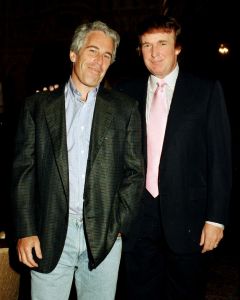
Long-time friends Jeffrey Epstein and Donald Trump
Yesterday was a dramatic day in the efforts by Congressional Democrats and a few Republicans to force the release of the Epstein files held by the DOJ. Could the Epstein scandal along with the struggling economy finally bring down Donald Trump after all these years?
Jason Lange and Tim Reid at HuffPost: Brutal New Poll Shows Just How Badly Donald Trump Is Tanking On Epstein And The Economy.
President Donald Trump’s approval rating fell to 38%, the lowest since his return to power, with Americans unhappy about his handling of the high cost of living and the investigation into the late convicted sex offender Jeffrey Epstein, a Reuters/Ipsos poll found.
The four-day poll, which concluded on Monday, comes as Trump’s grip on his Republican Party shows signs of weakening. The Republican-controlled House of Representatives on Tuesday passed a measure to force the release of Justice Department files on Epstein. Trump had opposed the move for months while one of his closest supporters in Congress, Representative Marjorie Taylor Greene, turned into a harsh critic over his resistance. Trump reversed his position on Sunday as lawmakers prepared to move forward without him.
The survey showed Trump’s overall approval has fallen two percentage points since a Reuters/Ipsos poll in early November.
The poll, which was conducted online, surveyed 1,017 U.S. adults nationwide and had a margin of error of about 3 percentage points.
Trump started his second term in office with 47% of Americans giving him a thumbs up. The nine-point decline since January leaves his overall popularity near the lows seen during his first term in office, and close to the weakest ratings for his Democratic predecessor in the White House, Joe Biden. Biden’s approval rating sank as low as 35% while Trump’s first-term popularity fell as low as 33%
NPR: Poll: Democrats have biggest advantage for control of Congress in 8 years.
Heading into the 2026 midterm elections, there are some very big warning signs for Republicans in the latest NPR/PBS News/Marist poll.
The survey of 1,443 adults, conducted from Nov. 10-13 found:
- Democrats holding their largest advantage, 14 points, since 2017 on the question of who respondents would vote for if the midterm elections were held today;
- President Trump’s approval rating is just 39%, his lowest since right after the Jan. 6, 2021 attack on the Capitol;
- A combined 6-in-10 blame congressional Republicans or Trump for the government shutdown; and
- Nearly 6-in-10 say Trump’s top priority should be lowering prices — and no other issue comes close….
Coming off huge wins up and down the ballot across the country in this year’s off-year elections, Democrats lead Republicans, 55%-41%, when people were asked who they would vote for in their district if the election for Congress were held today.
It’s the largest Democratic advantage on this question, known as the congressional ballot, in the Marist poll since November 2017. The parallel is striking, considering that was at the same point in Trump’s first term as this poll now. Democrats wound up winning 40 House seats in 2018.
If the midterms were today, most say they would pick a Democrat. What’s more, independents chose Democrats by a 33-point margin on this question. It’s all quite the reversal of fortune from a year ago when, just before the 2024 elections when President Trump won back the White House, the parties were tied on the congressional ballot.
Historically, Democrats have needed a sizable advantage on the congressional ballot to signal that they would do well in upcoming midterms.
After months of efforts by Democrats to force the release of the Epstein files, suddenly yesterday their plans came to fruition in surprising fashion.
AP: Congress acts swiftly to force release of Epstein files, and Trump agrees to sign bill.
Both the House and Senate acted decisively Tuesday to pass a bill to force the Justice Department to publicly release its files on the convicted sex offender Jeffrey Epstein, a remarkable display of approval for an effort that had struggled for months to overcome opposition from President Donald Trump and Republican leadership.
When a small, bipartisan group of House lawmakers introduced a petition in July to maneuver around Speaker Mike Johnson’s control of the House floor, it appeared a longshot effort — especially as Trump urged his supporters to dismiss the matter as a “hoax.”But both Trump and Johnson failed to prevent the vote. The president in recent days bowed to political reality, saying he would sign the bill. And just hours after the House vote, senators agreed to approve it unanimously, skipping a formal roll call.The decisive, bipartisan work in Congress Tuesday further showed the pressure mounting on lawmakers and the Trump administration to meet long-held demands that the Justice Department release its case files on Epstein, a well-connected financier who killed himself in a Manhattan jail while awaiting trial in 2019 on charges he sexually abused and trafficked underage girls.For survivors of Epstein’s abuse, passage of the bill was a watershed moment in a years-long quest for accountability.“These women have fought the most horrific fight that no woman should have to fight. And they did it by banding together and never giving up,” said Rep. Marjorie Taylor Greene as she stood with some of the abuse survivors outside the Capitol Tuesday morning.“That’s what we did by fighting so hard against the most powerful people in the world, even the president of the United States, in order to make this vote happen today,” added Greene, a Georgia Republican.In the end, only one lawmaker in Congress opposed the bill. Rep. Clay Higgins, a Louisiana Republican who is a fervent supporter of Trump, was the only “nay” vote in the House’s 427-1 tally. He said he worried the legislation could lead to the release of information on innocent people mentioned in the federal investigation.Congressman Thomas Massie speaks at a news conference on the Epstein Files Transparency Act on November 18, 2025, with fellow Representatives Marjorie Taylor Greene and Ro Khanna [Annabelle Gordon Reuters]

Read more about the bill and Trump’s sudden reversal at the AP link.
This morning, the bill went to Trump. Politico: Senate sends Epstein files bill to Trump.
The Senate has officially passed legislation forcing the Justice Department to release more information about the case it built against the late convicted sex offender Jeffrey Epstein.
Senators had locked in an agreement to automatically pass the bill as soon as it was received from the House, which overwhelmingly passed it on Tuesday.
It now heads to President Donald Trump’s desk, where he has said he will sign it. That comes despite the fact that Speaker Mike Johnson sought eleventh-hour changes to the House-passed bill and didn’t rule out the possibility he would encourage Trump to veto it.
Assuming Trump follows through, the Justice Department will have 30 days to release the materials with redactions to protect Epstein’s victims.
Will Pam Bondi resist releasing the files? William Kristol at The Bulwark: ‘The Epstein Class.’
Who says Congress never gets anything done?
It was only a week ago that newly sworn in Rep. Adelita Grijalva (D-Ariz.) provided the final signature needed on the discharge petition to force a vote on The Epstein Files Transparency Act. Yesterday, the House approved the act by a vote of 427–1. About three hours later, the Senate deemed it passed by unanimous consent. The legislation will be transmitted to the White House today. President Trump has said he will sign the bill into law.
Epstein survivors speak at Capitol Hill news conference.
This act requires that the Justice Department make public within thirty days all the unclassified records, documents, communications, and investigative materials in its possession related to any of Jeffrey Epstein’s criminal activities, civil settlements, immunity, plea agreements, and investigatory proceedings. It specifies that “no record shall be withheld, delayed, or redacted on the basis of embarrassment, reputational harm, or political sensitivity, including to any government official, public figure, or foreign dignitary.”
The authors of the legislation tried to make sure any exceptions were narrowly drawn. The attorney general can only withhold or redact information from personal or medical files—the disclosure of which would constitute a clearly unwarranted invasion of personal privacy—or information that would jeopardize an active federal investigation or ongoing prosecution, “provided such withholding is narrowly tailored and temporary.” The law requires that all redactions must be accompanied by a written justification in the Federal Register.
Obviously, there is no guarantee that Donald Trump’s attorney general will carry out these legislative instructions in good faith. Pam Bondi could try to turn tight and reasonable exceptions into wide open loopholes. Her boss, the president, has already ordered up an investigation of Democrats tied to Epstein—and she quickly said she’d comply. Could that be a predicate for withholding documents?
But would she even bother to cite that investigation? There are, after all, no assurances that the attorney general won’t try to simply withhold documents and information without telling us she’s done so.
And so “distrust and verify” should be the motto going forward. Congress, the media, the survivors—everyone committed to having the truth come out—needs to be prepared to keep the pressure on throughout, and to scream from the rooftops if there seems to be evasion or stonewalling.

Read the rest at The Bulwark.
Trump’s blatant corruption and his disdain for women reporters were both on display as he struggled to deal with his failure on the Epstein files issue.
Trump hosted Saudi Crown Prince Mohammed bin Salman in his tacky, gold-encrusted oval office yesterday, and then held a state dinner in bin Salman’s honor last night. The U.S. intelligence community found that bin Salman gave the order to murder Washington Post journalist Jamal Khashoggi in 2019, but also Saudi Arabia was largely responsible for the 9/11/2021 attacks.
Kathryn Watson and Jennifer Jacobs at CBS News: Trump welcomes MBS for White House visit with fanfare for Saudi crown prince and military flyover.
President Trump welcomed Saudi Crown Prince Mohammed bin Salman, known as MBS, to the White House with an elaborate military display Tuesday, praising the crown prince and insisting the U.S.-Saudi relationship has never been better as the two countries look to sign major business and national security deals.
Trump meets with Saudi Crown Prince in the oval office.
The pomp and circumstance — and the president’s praise and warmth toward MBS — were more typical of a visit from an allied Western democracy than an absolute monarchy with a troubled human rights record, pointing to the president’s focus on economic and business ties above virtually all else. The White House sees Saudi Arabia as a critical security partner in a turbulent Middle East, as well as an economic partner.
The White House arrival ceremony for the crown prince on Tuesday morning was laden with fanfare, complete with a U.S. military flyover, cannons, horses, and a red carpet. American and Saudi flags adorned the White House South Lawn, and a military band greeted the Saudi royal. Mr. Trump and the crown prince exchanged greetings as they shook hands, and then watched the formation of F-35 and F-16 fighter jets fly by before going inside the White House….
Ahead of bin Salman’s arrival, Mr. Trump told reporters Monday that the U.S. would sell F-35 fighter jets to the Saudis. In the Oval Office, MBS said the Saudis will increase a planned investment of $600 billion in the U.S. to closer to $1 trillion, an announcement that pleased Mr. Trump greatly.
Mr. Trump praised the crown prince in the Oval Office, calling him a “very good friend” and insisting his record on human rights is commendable, despite the State Department’s long list of concerns of human rights abuses in Saudi Arabia. Arbitrary and unlawful killings, disappearances, torture, serious restrictions on freedom of expression and restrictions on religious freedom continue to plague the nation, according to the latest 2024 State Department report.
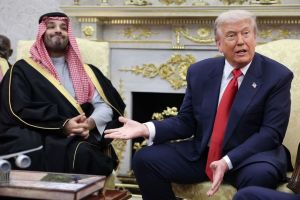
Trump’s businesses are heavily involved with Saudi Arabia.
During the meeting with bin Salman, Trump denigrated reporter Mary Bruce for asking questions about Jeffrey Epstein and Jamal Khashoggi.
CNBC: Trump calls for ABC’s license to be revoked after reporter asks about Jeffrey Epstein files.
President Donald Trump on Tuesday called for ABC’s broadcast license to be revoked as he angrily lashed out at a reporter from the network who asked why he has not released files on notorious sex offender Jeffrey Epstein, his former friend.
ABC News reporter Mary Bruce
“I think you are a terrible reporter,” Trump told ABC News White House correspondent Mary Bruce.
The president said he did not like Bruce’s “attitude.”
“You ought to go back and learn how to be a reporter. No more questions from you,” Trump said in the Oval Office, where he was meeting with Crown Prince Mohammed bin Salman of Saudi Arabia.
Trump’s tirade came shortly before the House of Representatives voted overwhelmingly in favor of a bill to compel the Department of Justice to release all of its records on Epstein.

Bruce also asked the Crown Prince about ordering the murder of Jamal Khashoggi.
Brian Stelter at CNN: Analysis: Trump’s anti-press outburst hits differently with a Saudi prince by his side.
President Trump frequently demonstrates his disdain for journalists. He expresses his admiration for authoritarians almost as often.
Tuesday showed how intertwined those two instincts really are.
Trump repeatedly objected to press questions during an Oval Office photo op with Saudi Arabia’s crown prince, Mohammed bin Salman, whose country does not have a free press.
He lashed out at an ABC correspondent, Mary Bruce, after she invoked the 2018 murder of Jamal Khashoggi by Saudi agents.
The president said his ally, Brendan Carr, the chairman of the FCC, should “look at” punishing ABC over its news coverage.
“I think the license should be taken away from ABC because your news is so fake and it’s so wrong,” he asserted.
Trump misstated how FCC licenses actually work, but his message was clear: He’d like his government to retaliate the way a dictator would.
The president also called Bruce “insubordinate,” a word he rarely ever uses, while sitting next to the son of the Saudi king.
According to Reporters Without Borders, which tracks press freedom all around the world, “independent media are non-existent in Saudi Arabia, and Saudi journalists live under heavy surveillance, even when abroad.”
Trump even defended bin Salman. BBC: ‘Things happen’ – Trump defends Saudi crown prince over Khashoggi killing.
US President Donald Trump said Saudi Crown Prince Mohammed bin Salman “knew nothing” about the 2018 killing of journalist Jamal Khashoggi, as he welcomed the kingdom’s de facto ruler to the White House.
Trump’s comments appeared to contradict a US intelligence assessment in 2021 which determined the crown prince had approved the operation that led to Khashoggi’s death at the Saudi consulate in Istanbul in 2018.
Jamal Khashoggi
The crown prince, who has denied any wrongdoing, said at the White House that Saudi Arabia “did all the right things” to investigate Khashoggi’s death, which he called “painful”.
It was his first US visit since the assassination, which sent shockwaves through the US-Saudi relationship.
In the Oval Office on Tuesday, Trump shot back at a reporter who asked a question about the killing.
“You’re mentioning someone that was extremely controversial,” the US president said.
“A lot of people didn’t like that gentleman that you’re talking about. Whether you like him or didn’t like him, things happen.”
“But he [the Crown Prince] knew nothing about it,” Trump added. “You don’t have to embarrass our guests.”
The crown prince added that Saudi Arabia “did all the right steps” to investigate the murder, which he called “painful” and a “huge mistake”.
A US intelligence report made public in 2021 – under President Joe Biden’s administration – determined that the crown prince had approved of a plan to “capture or kill” Khashoggi in Istanbul. During his first administration, Trump White House officials declined to release the report.
While dozens of Saudi officials faced sanctions in the wake of the assassination, none directly targeted the crown prince.

Trump attacked another reporter on Air Force One on Friday for asking about the Epstein files. The Guardian: Trump faces criticism for referring to female Bloomberg reporter as ‘piggy’
Donald Trump, who has a history of making extremely personal attacks on female journalists, referred to a Bloomberg News correspondent as a “piggy” during a clash onboard Air Force One on Friday.
While the remark did not initially get much attention, it picked up some traction on Tuesday and has drawn backlash from fellow journalists, including some who have previously been attacked by Trump themselves.
Bloomberg reporter Catherine Lucey
Catherine Lucey, Bloomberg’s White House correspondent, had taken advantage of a press opportunity with the president – known as a gaggle – to ask a question about the unfolding Jeffrey Epstein scandal and the possibility of the House voting to release all of the files related to his case, which now appears likely.
As Lucey started to ask why Trump was behaving the way he was “if there’s nothing incriminating in the files”, Trump pointed at her and said: “Quiet. Quiet, piggy.” [….]
“Disgusting and completely unacceptable,” CNN anchor Jake Tapper wrote on X, sharing a clip of the incident. Former Fox News anchor Gretchen Carlson also called the remark “disgusting and degrading”.
When asked about the incident, Lucey directed the Guardian to a spokesperson for her news organization.
“Our White House journalists perform a vital public service, asking questions without fear or favor,” a Bloomberg News spokesperson said on Tuesday afternoon. “We remain focused on reporting issues of public interest fairly and accurately.”

The New York Times on the guests at the state dinner for Crown Prince bin Salman last night (gift link): Who Attended Trump’s Dinner for the Saudi Crown Prince?
The world’s richest man. One of the world’s most famous soccer players. The president of soccer’s governing body. Dozens of executives from the finance, tech and energy sectors.
These are some of the guests who attended President Trump’s black-tie dinner for Crown Prince Mohammed bin Salman of Saudi Arabia at the White House on Tuesday evening.
The red carpet welcome for Prince Mohammed is an extraordinary moment in diplomatic relations with Saudi Arabia. It is his first visit to the United States since the 2018 killing of the Washington Post columnist Jamal Khashoggi, which U.S. intelligence determined the prince ordered. Prince Mohammed has denied involvement.
After Mr. Khashoggi’s murder, some Western business executives and government officials backed out of Saudi Arabia’s global investment conference, including leaders of major American financial institutions. But by the following year, top deal makers were back at the event in Riyadh, the Saudi capital.
On Tuesday, Mr. Trump and the crown prince cast their partnership as one that would reap benefits for both countries. Already, Mr. Trump has agreed to sell F-35 fighter jets to the kingdom, and the prince has promised to invest nearly $1 trillion in the United States.
Use the gift link to see the list of powerful people who saw fit to honor the Saudi Crown Prince at last night’s state dinner.
More stories to check out today:
Politico: Appeals court panel mulls $1M penalty for Trump in lawsuit against Hillary Clinton.
The Harvard Crimson: Harvard To Launch New Investigation Into Epstein’s Ties to Summers, Other University Affiliates.
The New Republic: Trump’s Plot to Rig 2026 Is Falling Apart, and Boy Is He Mad About It.
Mark Joseph Stern at Slate: Trump’s Scheme to Give the GOP Extra House Seats Just Blew Up in His Face.
Marisa Kabas at The Handbasket: Moral rot in elite journalism is killing the whole field.
That’s it for me today. What’s on your mind?

 peej
peej Carissa
 bostonboomer
 dakinikat
 ecocatwoman
 mablue2
 Mama Lopez
 peggysue22
 quixote
 skydancingguestblogger
 Mona (aka Wonk the Vote)



 Sky Dancing
Recent Comments