
Thursday Reads: News Breaks by the Hour These Days
Posted: May 18, 2017 Filed under: morning reads, U.S. Politics 61 Comments
At Breakfast, by Laurits Andersen Ring
Good Morning!!
Where to begin? A special counsel has been appointed. Trump tweets; exhausted White House staff has another mess to clean up. Roger Ailes is dead. The current occupant of the White House can’t spell. Lawrence O’Donnell’s show may yet survive. And so much more.
The tweet below has been deleted and replaced now:
https://twitter.com/realDonaldTrump/status/865169927644340224
Special Counsel appointed by DOJ
Philip Shenon at Politico: Trump’s Worst Nightmare Comes True. President Trump fired James Comey. He got his old pal, Robert Mueller, instead—and years of trouble.
The most daunting assignment in Robert Mueller’s career in law-enforcement and public service might seem to have arrived on Wednesday night, with his appointment as the special prosecutor in the investigation of Russian meddling in the 2016 president campaign, including possible collusion between Moscow and the Trump campaign.
But it’s hard to imagine that this new job is any more intimidating than the one Mueller confronted on the morning of Sept. 11, 2001, when the newly arrived FBI director was forced to deal with the aftermath of terrorist attacks that left more than 3,000 people dead in New York and Washington and put the FBI’s very survival in doubt because of what would be shown to be its well-documented bungling before the attacks. On 9/11, Mueller had been on the job at the FBI for exactly one week.
The fact that the FBI survived in one piece after multiple government investigations of 9/11, and that Mueller went on to serve another dozen years at the bureau and left with his reputation for independence and honesty largely unscathed, suggests to his friends and admirers that the blue-blooded 72-year-old former Marine is the right man for his new job – and that President Trump and his campaign advisers have much to fear from his investigation.
Under terms of his appointment by Deputy Attorney General Rod Rosenstein, Mueller will have wide powers to investigate “any links and/or coordination between the Russian government and individuals associated with the campaign of President Donald Trump” and—beyond that—“any matters” that arise from the investigation, including perjury and obstruction of justice.
Just a few of the stories that broke last night after we learned about the special counsel in the afternoon.

Morning Coffee, Malcolm Liepke
The New York Times: Trump Team Knew Flynn Was Under Investigation Before He Came to White House.
Michael T. Flynn told President Trump’s transition team weeks before the inauguration that he was under federal investigation for secretly working as a paid lobbyist for Turkey during the campaign, according to two people familiar with the case.
Despite this warning, which came about a month after the Justice Department notified Mr. Flynn of the inquiry, Mr. Trump made Mr. Flynn his national security adviser. The job gave Mr. Flynn access to the president and nearly every secret held by American intelligence agencies.
Mr. Flynn’s disclosure, on Jan. 4, was first made to the transition team’s chief lawyer, Donald F. McGahn II, who is now the White House counsel. That conversation, and another one two days later between Mr. Flynn’s lawyer and transition lawyers, shows that the Trump team knew about the investigation of Mr. Flynn far earlier than has been previously reported.
And of course we knew that Rep. Elijah Cummings had informed the Trump transition team in November that Flynn had been paid to lobby for Turkey. Will Mike Pence still try to claim he didn’t know anything?
McClatchy: Flynn stopped military plan Turkey opposed – after being paid as its agent.
One of the Trump administration’s first decisions about the fight against the Islamic State was made by Michael Flynn weeks before he was fired – and it conformed to the wishes of Turkey, whose interests, unbeknownst to anyone in Washington, he’d been paid more than $500,000 to represent.
The decision came 10 days before Donald Trump had been sworn in as president, in a conversation with President Barack Obama’s national security adviser, Susan Rice, who had explained the Pentagon’s plan to retake the Islamic State’s de facto capital of Raqqa with Syrian Kurdish forces whom the Pentagon considered the U.S.’s most effective military partners. Obama’s national security team had decided to ask for Trump’s sign-off, since the plan would all but certainly be executed after Trump had become president.
Flynn didn’t hesitate. According to timelines distributed by members of Congress in the weeks since, Flynn told Rice to hold off, a move that would delay the military operation for months….
Now members of Congress, musing about the tangle of legal difficulties Flynn faces, cite that exchange with Rice as perhaps the most serious: acting on behalf of a foreign nation – from which he had received considerable cash – when making a military decision. Some members of Congress, in private conversations, have even used the word “treason” to describe Flynn’s intervention, though experts doubt that his actions qualify.

Reading the News, by Steve Prenner
The Washington Post: House majority leader to colleagues in 2016: ‘I think Putin pays’ Trump.
KIEV, Ukraine — A month before Donald Trump clinched the Republican nomination, one of his closest allies in Congress — House Majority Leader Kevin McCarthy — made a politically explosive assertion in a private conversation on Capitol Hill with his fellow GOP leaders: that Trump could be the beneficiary of payments from Russian President Vladimir Putin.
“There’s two people I think Putin pays: Rohrabacher and Trump,” McCarthy (R-Calif.) said, according to a recording of the June 15, 2016, exchange, which was listened to and verified by The Washington Post. Rep. Dana Rohrabacher is a Californian Republican known in Congress as a fervent defender of Putin and Russia.
House Speaker Paul D. Ryan (R-Wis.) immediately interjected, stopping the conversation from further exploring McCarthy’s assertion, and swore the Republicans present to secrecy.
Before the conversation, McCarthy and Ryan had emerged from separate talks at the Capitol with Ukrainian Prime Minister Vladimir Groysman, who had described a Kremlin tactic of financing populist politicians to undercut Eastern European democratic institutions.
Breaking this morning:
Reuters exclusive: Exclusive: Trump campaign had at least 18 undisclosed contacts with Russians: sources.
Michael Flynn and other advisers to Donald Trump’s campaign were in contact with Russian officials and others with Kremlin ties in at least 18 calls and emails during the last seven months of the 2016 presidential race, current and former U.S. officials familiar with the exchanges told Reuters.
The previously undisclosed interactions form part of the record now being reviewed by FBI and congressional investigators probing Russian interference in the U.S. presidential election and contacts between Trump’s campaign and Russia.
Six of the previously undisclosed contacts described to Reuters were phone calls between Sergei Kislyak, Russia’s ambassador to the United States, and Trump advisers, including Flynn, Trump’s first national security adviser, three current and former officials said.
Conversations between Flynn and Kislyak accelerated after the Nov. 8 vote as the two discussed establishing a back channel for communication between Trump and Russian President Vladimir Putin that could bypass the U.S. national security bureaucracy, which both sides considered hostile to improved relations, four current U.S. officials said.
Read the rest at the link.

Madame Monet Reading le Figaro, by Pierre-Auguste Renoir
The Washington Post: Roger Ailes, architect of conservative TV juggernaut Fox News, is dead at 77.
Roger Ailes, who mastered the art of selling political candidates like Hollywood celebrities and was the architect of conservative-oriented TV news, died Thursday at 77. He was the longtime chairman and chief executive of the Fox News Channel, building it over two decades into an politically influential juggernaut until his abrupt ouster last year amid sexual harassment allegations.
His family confirmed the death in a statement. No cause or location was reported.
I don’t like being rude, but in this case I say good riddance. Read more at the WaPo.
The “beleaguered” White House staff is freaking out
The Washington Post: The worst job in Washington right now: Working for Trump.
As Donald Trump has grown increasingly angry and frustrated with his White House staff, the beleaguered targets of his ire have a quietly roiling gripe of their own — their boss, the president himself.
Since he fired FBI Director James B. Comey, Trump has lurched through crises of his own making — from the explosive report Monday that he had revealed highly classified intelligence to Russian officials to the bombshell Tuesday thathe had urged Comey to end the federal investigation into Michael Flynn, his former national security adviser.
In his wake remain his exhausted aides and deputies, the frequent targets of Trump’s wrath as they struggle to control an uncontrollable chief executive and labor to explain away his stumbles.
Wednesday evening brought yet another challenging development for the White House, as the Justice Department announced a special counsel to investigate possible collusion between the Trump campaign and the Russian government to interfere with the 2016 presidential election.
Some White House staffers have turned to impeachment gallows humor. Other mid-level aides have started contacting consultants, shopping their résumés. And at least one senior staffer has begun privately talking to friends about what a post-White House job would look like, according to two people close the staffer.
Break out the popcorn and the tiny violin. Why did they link themselves to a carnival barker in the first place? I have no sympathy for them. None.
Michael Kranish on Trump’s dysfunctional coping methods:

Woman reading news, by James Jacques Joseph
The Washington Post: As president, Trump’s legacy of lawsuits and minimal briefings isn’t helping.
As President Trump manages his latest crises, he is turning to strategies from his tumultuous business career: rely on family and a few trusted advisers, demand absolute loyalty from those beyond the inner circle, threaten opponents with legal action, and insist on bare-bones briefings.
But the tactics that Trump believed served him so well in business may be adding to his self-inflicted wounds as a special counsel prepares to launch an investigation into allegations that Russia sought to influence the 2016 election.
Trump’s family has no government background, and most of his most trusted advisers never worked in a White House. His demands to government officials for personal loyalty are superseded by their loyalty to the Constitution. His threats — such as tweeting that fired FBI Director James B. Comey “better hope that there are no ‘tapes’ of our conversations before he starts leaking to the press!” — have often backfired. Comey’s associates provided quotes from a memo about the conversation that appear to support Comey’s version of events.
And Trump’s famous aversion to in-depth analysis — he once wrote that “The day I realized it can be smart to be shallow was, for me, a deep experience” — has led to concerns that he doesn’t absorb complicated briefing material from intelligence agencies and other sources.
Barbara Res, former executive vice president of the Trump Organization, said that Trump would often come up with business proposals that needed someone to tell him “that’s not a good idea, Donald. It seems to me that people are not doing that” at the White House.
Some good news that I missed yesterday:
Showbiz 411: MSNBC-Lawrence O’Donnell: “The Last Word” is Not Over as HUGE Fan Response Comes to Rescue of Show.
We may not have heard “The Last Word,” as it turns out.
I’m told that late yesterday afternoon, MSNBC finally contacted Lawrence O’Donnell‘s agency, WME, to have some talks about renewing his contract.
The contract runs out in less than four weeks. The network, some posit, was stalling as a “tactic.” It didn’t work.
Fan response to the news that O’Donnell might be gone has been HUGE. From Twitter and Facebook to old fashioned calls to MSNBC‘s Phil Griffith and NBC’s Andy Lack, it’s been actually shocking. Not that I’m surprised.
But it turns out MSNBC’s viewers have made “The Last Word” a hit not just because of Rachel Maddow and hatred for Donald Trump, but because they actually enjoy O’Donnell’s reasoned and impassioned approach to the events of the day.
So there may be a happy ending to this bizarre situation.
What wild breaking news is coming today? There’s sure to be plenty of it. Please share the stories you’re following in the comment thread below.
Tuesday Reads: Trump Is U.S.’s Top National Security Risk
Posted: May 16, 2017 Filed under: Foreign Affairs, morning reads, U.S. Politics | Tags: Donald Trump 50 Comments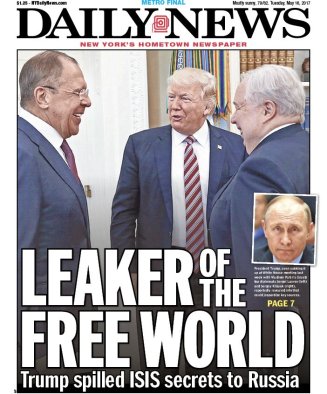
Good Morning!!
Can we get through one day without a major national security crisis triggered by Trump’s stupidity and incompetence? Apparently not.
Yesterday we got perhaps the worst news yet–that Trump had shared highly classified information with the Russian foreign minister and the Russian ambassador who is at the heart of the Russia investigation. The Washington Post broke the news:
The information the president relayed had been provided by a U.S. partner through an intelligence-sharing arrangement considered so sensitive that details have been withheld from allies and tightly restricted even within the U.S. government, officials said.
The partner had not given the United States permission to share the material with Russia, and officials said Trump’s decision to do so endangers cooperation from an ally that has access to the inner workings of the Islamic State. After Trump’s meeting, senior White House officials took steps to contain the damage, placing calls to the CIA and the National Security Agency.
“This is code-word information,” said a U.S. official familiar with the matter, using terminology that refers to one of the highest classification levels used by American spy agencies. Trump “revealed more information to the Russian ambassador than we have shared with our own allies.”
This morning Trump defended himself on Twitter:
So now he has publicly admitted it. And he doesn’t seem to understand that the Russians have no interest in helping us fight ISIS, and they will use the information that Trump blabbed to find out the source and pass what they learn on to Assad and Iran. There is a child running the country and we’re all in grave danger.
Stephen Tankel at the Washington Post: This is why Trump’s loose tongue has compromised U.S. security.
National security adviser H.R. McMaster said, “At no time were any intelligence sources or methods discussed and no military operations were disclosed that were not already known publicly.” However, this narrow denial does not discount the possibility that information was disclosed that could enable Russia to infer the sources and methods through which information was acquired. By revealing the city where the information was collected, he also may have enabled Moscow to determine the ally that provided it.
The most direct and immediate impact may be to jeopardize a critical source of intelligence on the Islamic State, thereby making it more difficult to detect and thwart terrorist plots. It is also possible that Moscow could use the information to its advantage in various ways that harm the United States or its allies.
As bad as the exposure of sources and methods would be on its own terms, the long-term consequences for counterterrorism are even worse. This is because Trump divulged information collected by a U.S. ally, without its permission. This was a breach of trust that is likely to damage not only the intelligence relationship with the country in question, but also with other countries.
Why that’s so important:
Counterterrorism intelligence….requires identifying and thwarting threats before they happen. Analysis and operations go together in preventing an attack or neutralizing a threat. The United States cannot do this by itself — this effort relies heavily on intelligence cooperation from other countries.
Intelligence cooperation on counterterrorism takes various forms. Simple cooperation involves the exchange of single pieces of intelligence, often regarding a common target such as the Islamic State.
There are also more complex forms of cooperation. For example, the United States has often bartered technical information gathered from satellites and other sources gleaned through technical means, for human source reporting that is more difficult to acquire. Sometimes, partners provide intelligence as part of a broader effort to maintain positive relations with the United States. Intelligence cooperation sometimes extends beyond the exchange of information to include the conduct of joint operations.
Much more at the link.
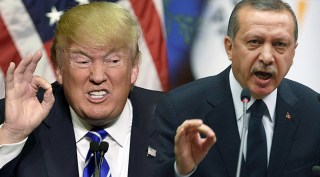
There’s likely to be another crisis soon, because Trump is going to receive Turkey’s dictatorial leader Recep Tayyip Erdogan in the White House today. CNN: Erdogan meets Trump: 3 key issues topping the agenda. The main points
1. US arming Kurdish fighters.Turkey lashed out last week after the Pentagon announced plans to arm members of the Kurdish People’s Protection Unit (YPG) fighting ISIS in Syria. Erdogan called for the plan to be “reversed immediately” and promised his supporters he’d discuss the issue with Trump at the White House meeting on Tuesday.The YPG fights in a coalition of rebel groups that the US considers its main ally in the Syrian conflict, but Turkish officials see the unit as a terrorist organization linked to an insurgency movement in the south of Turkey.2. Turkey’s relationship with Russia over Syria
Turkey, along with Russia and Iran, is brokering ceasefire talks aimed at ending Syria’s six-year war.The ceasefire talks — held in Astana, Kazakhstan — were spearheaded by Russia and were widely seen as a way to sideline the United States from the process. While that move rattled the Obama administration, the Astana talks now seem to have been accepted by Trump and other Western leaders.US based cleric Fethullah Gulen
3. Extradition of Erdogan’s rival Gulen
Erdogan and Turkish officials have long pressed the United States to extradite Fetullah Gulen, a friend-turned-foe of Erdogan’s, who has been in self-imposed exile in Pennsylvania since 1999.Erdogan believes Gulen was behind a failed military coup in July last year, but the US has said there is not enough evidence to send the 76-year-old Muslim cleric back to Turkey.Gulen has repeatedly denied involvement in the coup attempt.
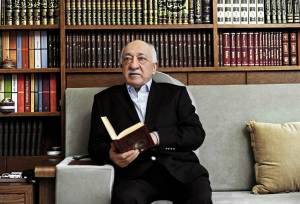
I shudder to think what Trump will do in this meeting. I can only hope someone sane is prepared to short circuit him.
Another stunning White House meeting was downplayed in the press yesterday because of all the fuss over Trump’s traitorous leaking to Russia. Rachel Maddow covered it in detail last night. The child president met with the guy who helped arrange the secret meeting in the Seychelles where Erik Prince met with a high-level Putin ally shortly before the inauguration.
Washington Post on April 3, 2017: Blackwater founder held secret Seychelles meeting to establish Trump-Putin back channel.
Though Prince had no formal role with the Trump campaign or transition team, he presented himself as an unofficial envoy for Trump to high-ranking Emiratis involved in setting up his meeting with the Putin confidant, according to the officials, who did not identify the Russian….
The Seychelles encounter, which one official said spanned two days, adds to an expanding web of connections between Russia and Americans with ties to Trump — contacts that the White House has been reluctant to acknowledge or explain until they have been exposed by news organizations….
The Seychelles meeting came after separate private discussions in New York involving high-ranking representatives of Trump with both Moscow and the Emirates.
The crown prince’s role:
The White House has acknowledged that Michael T. Flynn, Trump’s original national security adviser, and Trump adviser and son-in-law Jared Kushner met with the Russian ambassador to the United States, Sergey Kislyak, in late November or early December in New York.
Flynn and Kushner were joined by Bannon for a separate meeting with the crown prince of Abu Dhabi, Sheikh Mohamed bin Zayed al-Nahyan, who made an undisclosed visit to New York later in December, according to the U.S., European and Arab officials, who spoke on the condition of anonymity to discuss sensitive matters.
In an unusual breach of protocol, the UAE did not notify the Obama administration in advance of the visit, though officials found out because Zayed’s name appeared on a flight manifest.
Officials said Zayed and his brother, the UAE’s national security adviser, coordinated the Seychelles meeting with Russian government officials with the goal of establishing an unofficial back channel between Trump and Putin.
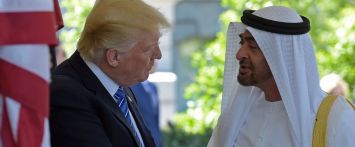
USA Today yesterday: Trump meets with crown prince of Abu Dhabi as he looks to Muslim world.
President Trump greeted the crown prince of Abu Dhabi at the White House Monday, beginning a week that will mark a dramatic overture to the Muslim world.
Trump meets with Turkish President Recep Tayyip Erdogan on Tuesday, and he departs Friday for Saudi Arabia as the first foreign destination of his four-month-old presidency. By going first to the Saudi capital to meet with leaders of predominately Muslim Persian Gulf countries, the White House hopes will emphasize their unified resolve against common adversaries, including the Islamic State and Iran.
Crown Prince Muhammad bin Zayid Al Nuhayyan is a “very special person, highly respected,” Trump said during a brief photo opportunity in the Oval Office. “And loves his country, I can tell you that, loves his country. And I think loves the United States, which to us is very important.”
USA Today didn’t mention the Seychelles connection. Can you believe this shit?!
One more story. Yesterday Anderson Cooper interviewed Sally Yates. The interview will be shown tonight during the 8:00 hour.
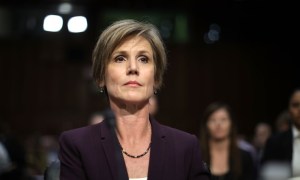
CNN: Sally Yates: Russians had ‘real leverage’ over Michael Flynn.
Former acting Attorney General Sally Yates said former national security adviser Michael Flynn was in a “serious compromise situation, that the Russians had real leverage” in an interview with CNN’s Anderson Cooper.
In an exclusive one-on-one interview — her first on television since being fired by President Donald Trump — Yates said Flynn lied to Vice President Mike Pence and there was “certainly a criminal statute that was implicated by his conduct.” [….]Yates told Cooper that she expected the White House to act urgently on information that she had given the administration that Flynn had been compromised by his contact with Russian officials prior to Trump’s inauguration.
“We expected the White House to act,” she said.When asked by Cooper if she expected the administration to act quickly, Yates replied, “Yes.”“There was an urgency to the information?” Cooper clarified.“Yes,” Yates said.Flynn remained in his position for 18 days after Yates had informed the administration about her concerns over his conduct.
Friday Reads: A Steady Stream of Leaks Emanating from the FBI
Posted: May 12, 2017 Filed under: Afternoon Reads, U.S. Politics | Tags: Donald Trump, FBI, James Comey, obstruction of justice, self-incrimination, Trump lies 20 Comments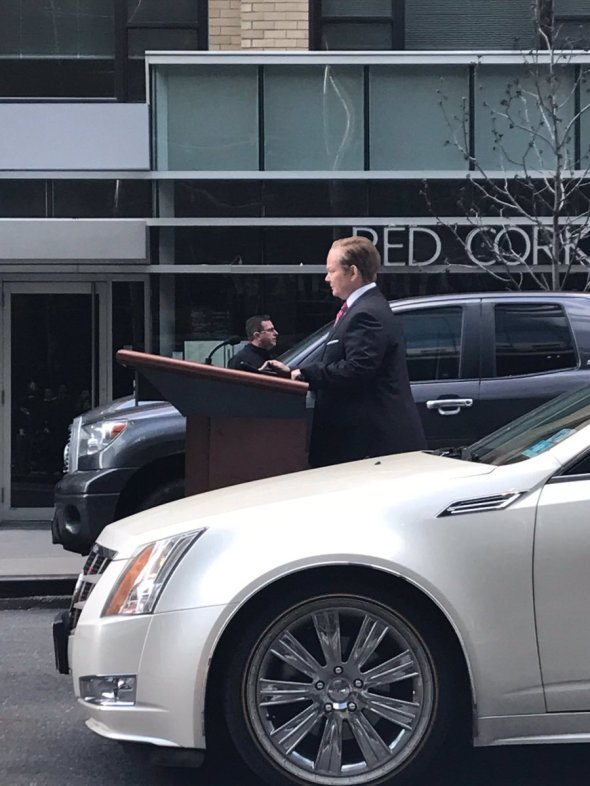
Melissa McCarthy as Sean Spicer on the streets of NYC
Good Afternoon!!
I’m filling in for Dakinikat, who is trying to wrap up her grades today. There was so much news yesterday, but today is Friday and there is likely to be more coming out based on what’s happened the past few Fridays.
Already this morning, Trump has threatened former FBI director James Comey on Twitter and claimed the Russia investigation is a story made up by Democrats. In addition, Trump basically incriminated himself in a strange-but-true interview with NBC’s Lester Holt yesterday.
The Washington Post: The Daily 202: Trump’s warning to Comey deepens doubts about his respect for the rule of law.
The biggest news out of Donald Trump’s Thursday interview with NBC was his confession that the Russia investigation was on his mind when he fired FBI director James Comey. Undercutting 48 hours of denials by his aides, the president said: “In fact, when I decided to just do it, I said to myself, I said, ‘You know, this Russia thing with Trump and Russia is a made up story, it’s an excuse by the Democrats for having lost an election that they should have won.’”
But what may ultimately get Trump into bigger trouble is his story about Comey assuring him he was not under investigation during a one-on-one dinner at the White House. Lester Holt asked the president to elaborate on his claim, made in the letter firing Comey, that he’d been told three times he was not under federal investigation. “He wanted to stay at the FBI, and I said I’ll, you know, consider and see what happens,” Trump said. “But we had a very nice dinner, and at that time he told me, ‘You are not under investigation.’” (Watch a 13-minute video of Holt’s sit-down here.)
It would be a big dang deal if the FBI director was discussing an ongoing investigation with the president — generally prohibited by Justice Department policy — at the same time he was also asking to keep his job.
Naturally, the leaks are coming thick and fast out of the FBI.
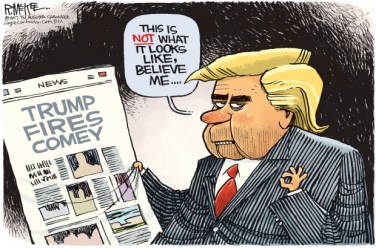
The New York Times: In a Private Dinner, Trump Demanded Loyalty. Comey Demurred.
Only seven days after Donald J. Trump was sworn in as president, James B. Comey has told associates, the F.B.I. director was summoned to the White House for a one-on-one dinner with the new commander in chief.
The conversation that night in January, Mr. Comey now believes, was a harbinger of his downfall this week as head of the F.B.I., according to two people who have heard his account of the dinner.
As they ate, the president and Mr. Comey made small talk about the election and the crowd sizes at Mr. Trump’s rallies. The president then turned the conversation to whether Mr. Comey would pledge his loyalty to him.
Mr. Comey declined to make that pledge. Instead, Mr. Comey has recounted to others, he told Mr. Trump that he would always be honest with him, but that he was not “reliable” in the conventional political sense.
Unreal.
By Mr. Comey’s account, his answer to Mr. Trump’s initial question apparently did not satisfy the president, the associates said. Later in the dinner, Mr. Trump again said to Mr. Comey that he needed his loyalty.
Mr. Comey again replied that he would give him “honesty” and did not pledge his loyalty, according to the account of the conversation.
But Mr. Trump pressed him on whether it would be “honest loyalty.”
“You will have that,” Mr. Comey told his associates he responded.
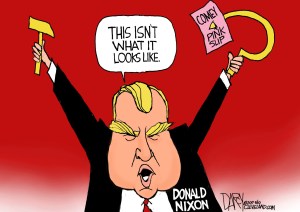
One day after the acting attorney general warned the White House that its national security adviser was subject to blackmail, the president summoned the FBI director to dinner at the White House, sources close to James Comey told NBC News….
It’s not known whether the men talked about national security adviser Michael Flynn. Flynn had been interviewed by the FBI a few days before, on Jan. 24 — grilled about his conversations with the Russian ambassador to the U.S., Sergey Kislyak….
Trump suggested, in an exclusive interview Thursday with NBC Nightly News anchor Lester Holt, that he had the FBI’s Russia collusion investigation on his mind when he decided to remove Comey.
“When I decided to just do it, I said to myself, I said, ‘You know, this Russia thing with Trump and Russia is a made up story, it’s an excuse by the Democrats for having lost an election that they should have won,'” Trump said.
Trump gave Holt an entirely different account of the dinner, saying that Comey requested it to seek job security, and told the president he was not under investigation.
None of that is true, Comey’s associates insist.
A former senior FBI official said Comey would never have told the president he was not under investigation — contradicting what Trump said.
“He tried to stay away from it [the Russian-ties investigation],” said the former official, who worked closely with Comey and keeps in touch with him. “He would say, ‘Look sir, I really can’t get into it, and you don’t want me to.'”

CBS News reports on another leak: Source: There is “whole lot of interfering” in Russia investigation.
Although President Trump has now stated and written that fired FBI Director James Comey told him on three separate occasions that he was not the subject of an investigation, sources cast doubt on that claim.
It would be out of character for Comey to have made that statement even once, much less three times, to the president, one law enforcement source told CBS News. Along with his firing, the source noted a high level of “interfering” in the Russia probe.
As for the White House assertions that “countless” FBI rank-and-file employees wanted Comey out, the source said that was a “load of cr*p” to think that agents wanted to see him ousted. That sentiment is shared by acting FBI Director Andrew McCabe in less colorful language. He told a congressional panel Thursday, “Director Comey enjoyed broad support within the FBI and still does to this day. We are a large organization. We are 36,500 people across this country, across this globe. we have a diversity of opinions about many things, but I can confidently tell you that the majority, the vast majority of employees enjoyed a deep and positive connection to Director Comey.”
This was the case in spite of the divided opinion within the agency over Comey’s July 2016 announcement that he would not recommend Hillary Clinton be charged for mishandling classified information, in the investigation into her use of a private server for her email.
Within the FBI, the Russia investigation is considered to be “a crisis,” the source said, and “there is a whole lot of interfering.” The succession of events surrounding Comey’s firing is not considered to be a coincidence by the agency. In the week before he was terminated, Comey asked Deputy AG Rod Rosenstein for additional resources to pursue the Russia investigation.
I cannot wait until Comey testifies again in public.
At Lawfare, Benjamin Wittes writes that Deputy Attorney General Rod Rosenstein must resign.
“He made—he made a recommendation,” Donald Trump said yesterday of his Deputy Attorney General, Rod Rosenstein in an interview with NBC News. “He’s highly respected, very good guy, very smart guy. The Democrats like him; the Republicans like him. He made a recommendation, but regardless of the recommendation, I was going to fire Comey.
”There it is, directly from the presidential mouth: Trump happily traded the reputation of Rosenstein, who began the week as a well-respected career prosecutor, for barely 24 hours of laughably transparent talking points in the news cycle. The White House sent out person after person—including the Vice President—to insist that Rosenstein’s memo constituted the basis for the President’s action against the FBI director. The White House described a bottoms-up dissatisfaction with Comey’s leadership, which Rosenstein’s memo encapsulated and to which the President acceded. And then, just as casually as Trump and his people set Rosenstein up as the bad guy for what was obviously a presidential decision into whose service Rosenstein had been enlisted, Trump revealed that Rosenstein was, after all, nothing more than a set piece…. [read the full excerpt from the interview at the link.]
Note that Trump did not merely reveal Rosenstein as a set piece here; he revealed him as a set piece in Trump’s own effort to frustrate the Russia investigation. The story as told by the president to NBC now is that Trump decided to fire Comey in connection with saying to himself that the Russia investigation was a made up story, and that it was in that context that he got Rosenstein to write a pretextual memo….
Trump’s idea of correcting the record was to say publicly exactly the thing about a law enforcement officer that makes his continued service in office impossible: That Trump had used his deputy attorney general as window dressing on a pre-cooked political decision to shut down an investigation involving himself, a decision for which he needed the patina of a high-minded rationale.
Once the President has said this about you—a law enforcement officer who works for him and who promised the Senate in confirmation hearings you would show independence—you have nothing left. These are the costs of working for Trump, and it took Rosenstein only two weeks to pay them.
The only decent course now is to name a special prosecutor and then resign.
I have no doubt that more news will be breaking all day long and into tonight. I’m already exhausted. What stories are you following today?
Tuesday Reads: Comey Strikes Again
Posted: May 9, 2017 Filed under: morning reads, U.S. Politics | Tags: Donald Trump, FBI, Hillary Clinton, Huma Abedin, James Comey, Trump Russia investigation 65 Comments Good Morning!!
I woke up around 3AM and couldn’t get back to sleep, so I turned on my computer and opened Twitter. I wasn’t expecting breaking news, but I found it anyway. You’ve probably heard by now that James Comey was caught lying to Congress about Hillary’s emails.
ProPublica: Comey’s Testimony on Huma Abedin Forwarding Emails Was Inaccurate.
FBI director James Comey generated national headlines last week with his dramatic testimony to the Senate Judiciary Committee, explaining his “incredibly painful” decision to go public about the Hillary Clinton emails found on Anthony Weiner’s laptop.
Perhaps Comey’s most surprising revelation was that Huma Abedin — Weiner’s wife and a top Clinton deputy — had made “a regular practice” of forwarding “hundreds and thousands” of Clinton messages to her husband, “some of which contain classified information.” Comey testified that Abedin had done this so that the disgraced former congressman could print them out for her boss….
Much of what Comey said about this was inaccurate. Now the FBI is trying to figure out what to do about it.
FBI officials have privately acknowledged that Comey misstated what Abedin did and what the FBI investigators found. On Monday, the FBI was said to be preparing to correct the record by sending a letter to Congress later this week. But that plan now appears on hold, with the bureau undecided about what to do.
So how much did Comey exaggerate?
According to two sources familiar with the matter — including one in law enforcement — Abedin forwarded only a handful of Clinton emails to her husband for printing — not the “hundreds and thousands” cited by Comey. It does not appear Abedin made “a regular practice” of doing so. Other officials said it was likely that most of the emails got onto the computer as a result of backups of her Blackberry.
It was not clear how many, if any, of the forwarded emails were among the 12 “classified” emails Comey said had been found on Weiner’s laptop. None of the messages carried classified markings at the time they were sent.
WTF?! Has everyone in the federal government gone insane? How can we rely on Comey to properly investigate Trump and Russia after this? And why are we just learning about this?
More insanity, this time emanating from tRump.
Bloomberg: Washington Loves General McMaster, But Trump Doesn’t.
For the Washington establishment, President Donald Trump’s decision to make General H.R. McMaster his national security adviser in February was a masterstroke. Here is a well-respected defense intellectual, praised by both parties, lending a steady hand to a chaotic White House. The grown-ups are back.
But inside the White House, the McMaster pick has not gone over well with the one man who matters most. White House officials tell me Trump himself has clashed with McMaster in front of his staff….
…White House officials…tell me this is not the sentiment the president has expressed recently in private. Trump was livid, according to three White House officials, after reading in the Wall Street Journal that McMaster had called his South Korean counterpart to assure him that the president’s threat to make that country pay for a new missile defense system was not official policy. These officials say Trump screamed at McMaster on a phone call, accusing him of undercutting efforts to get South Korea to pay its fair share.
This was not an isolated incident. Trump has complained in front of McMaster in intelligence briefings about “the general undermining my policy,” according to two White House officials. The president has given McMaster less face time. McMaster’s requests to brief the president before some press interviews have been declined. Over the weekend, McMaster did not accompany Trump to meet with Australia’s prime minister; the outgoing deputy national security adviser, K.T. McFarland, attended instead.
I have no doubt that tRump would like to have Russian spy Mike Flynn back as National Security Adviser.

National Post: White House advisors called Ottawa to urge Trudeau to help talk Trump down from scrapping NAFTA.
White House staff called the Prime Minister’s Office last month to urge Justin Trudeau to persuade President Donald Trump not to tear up the North American Free Trade Agreement, according to multiple Canadian government sources.
The unconventional diplomatic manoeuvre — approaching the head of a foreign government to influence your own boss — proved decisive, as Trump thereafter abandoned his threat to pull out of NAFTA unilaterally, citing the arguments made by Trudeau and Mexican President Enrique Pena Nieto as pivotal.
But the incident highlights the difficulties faced by governments all over the world when it comes to dealing with a president as volatile as Trump.
tRump is an embarrassment to the once-great United States of America. Read the whole pathetic story at the link.
Huffington Post: Trump Administration Cites Segregation-Era Ruling To Defend Its Travel Ban.
In a brief defending its ban on citizens from six Muslim-majority countries, President Donald Trump’s Justice Department approvingly cited a segregation-era Supreme Court decision that allowed Jackson, Mississippi, to close public pools rather than integrate them.
In the early 1960s, courts ordered Jackson to desegregate its public parks, which included five swimming pools. Instead, the city decided to close the pools. Black residents of Jackson sued. But in 1971, the Supreme Court, in a 5-4 decision, decided that closing the pools rather than integrating them was just fine.
The dissents, even at the time, were furious. “May a State in order to avoid integration of the races abolish all of its public schools?” Justice William O. Douglas asked in his dissent.
“I had thought official policies forbidding or discouraging joint use of public facilities by Negroes and whites were at war with the Equal Protection Clause” of the Fourteenth Amendment, Justice Byron White wrote in another dissent.
How did the tRump lawyers use this case? The ruling argued that courts should not consider the motives for a government decision.
“It is difficult or impossible for any court to determine the ‘sole’ or ‘dominant’ motivation behind the choices of a group of legislators,” the majority opinion said. “Furthermore, there is an element of futility in a judicial attempt to invalidate a law because of the bad motives of its supporters.”
The Trump administration emphasizes this in its citation of the case, arguing that looking into “governmental purpose outside the operative terms of governmental action and official pronouncements” is “fraught with practical ‘pitfalls’ and ‘hazards’ that would make courts’ task ‘extremely difficult.’”
The tRump Justice Department is now an embarrassment too.
Other Insane News
I’m still not sure if this is a joke or not, but knowing the New York Times, it could very well be for real.
The suggestion was made in a column by Michael Kinsley, who used to be relatively sane: The Upside to the Presidential Twitter Feed.
Surely, if there is a “party line” among the establishment media in the United States, it is anti-Trump, not pro. That doesn’t make it wrong. In fact, it’s largely right. But the venom, the obsession, the knife-twisting are hard to understand.
It must be partly a matter of bad timing. Mr. Trump came along just as the mainstream media, especially newspapers, were trying to come to terms with the internet. Hoary concepts like “objectivity” and “balance” were giving way. This was a good thing, believe it or not. Reporters no longer had to pretend that after spending weeks or months on a story, they had emerged with no opinion about it. The word “I” could now be used to refer to oneself, rather than “a reporter.” Mr. Trump, already dislikable, became the first test case of the new mind-set.
Even a stopped clock is right twice a day, though, and even Donald Trump can’t be wrong all the time.
With that in mind, we’re looking for a few positive words about the president, and we’re asking for your help. This is not about Trump the family man. It’s not another forum for debating the issues. It is a place to point out positive things Mr. Trump has said or done from the viewpoint of The New York Times and its readers. (And don’t tell me Times readers are too diverse to classify. You know who you are.)

I’m pretty sure this is meant to be humorous, but it’s really not funny. I like this NYT column by David Leonhardt a little better: A French Lesson for the American Media.
The hacked emails from Emmanuel Macron’s French campaign appear to be spectacularly mundane, according to people who have read them. They include briefings on issues, personal exchanges and discussions of the weather. No doubt they also include some embarrassing thoughts, but so far they are notably lacking in scandal.
Does this description remind you of anything?
Ah, yes. Last year, Russian agents stole thousands of emails from Hillary Clinton’s campaign and published them via WikiLeaks. The dominant feature of the emails was their ordinariness.
They contained no evidence of lawbreaking, major hypocrisy or tawdry scandal. Even the worst revelation — a Democratic official and CNN contributor fed a town hall question to the campaign in advance — qualified as small beer. Ronald Reagan’s 1980 campaign engaged in much more consequential debate skulduggery. The Clinton emails were instead full of staff members jockeying for position, agonizing over strategy, complaining about their bosses and offering advice to those same bosses….
The overhyped coverage of the hacked emails was the media’s worst mistake in 2016 — one sure to be repeated if not properly understood. Television was the biggest offender, but print media was hardly blameless. The sensationalism exacerbated a second problem with the coverage: the obsession with Clinton’s private email server.
Apparently, there are sane people in the French media.
Late Friday, two days before the election, hackers released the Macron campaign emails. French media laws are stricter than American laws, and government officials argued against publication of the hacked information. But only the campaigns themselves were legally barred from making statements during the final weekend. Publications could have reported on the substance of the emails.
They largely did not. “It was a manipulation attempt — people trying to manipulate our voting process,” Gilles van Kote, deputy chief editor of Le Monde, told me.
French journalists rightly did not focus on what seemed like big news, because the emails surely did. They evaluated what truly was major news. Material released by a hostile foreign government, with the aim of confusing voters and evidently without significant new information, failed to qualify. Van Kote said reporters are continuing to read the emails to see if they warrant future stories.
NBC News has a story on how Bernie Sanders, who is not a Democrat, has thrown the Democratic Party into chaos: Democrats Stumble Into Abortion Rift. I’ll let you read that at the link if you’re interested. Here’s one more Sanders story, because Karma is so satisfying. Jane’s problems are now national news.
The Hill: FBI investigating Jane Sanders for alleged bank fraud: report.
Federal investigators are looking into allegations that Sen. Bernie Sanders‘s (I-Vt.) wife, Jane Sanders, falsified loan documents while she served as the president of Burlington College, according to multiple reports.
The small Vermont liberal arts school closed down in May 2016, after going bankrupt and failing to meet accreditation standards.
The college began to face financial difficulties during Sanders’s tenure from 2004 to 2011, falling $10 million into debt when the school purchased a new campus in 2010.
Sanders has been accused of falsifying the information on the loan documents in order to expand the college grounds.
Full Article reported that some of the donors Sanders appealed to for help with loans are now in contact with the FBI and Federal Deposit Insurance Corporation (FDIC), as what was reported in the original site.
Sanders left her leadership role in 2011 for undisclosed reasons.
She claimed the college could count on $2.6 million in donations to pay for the purchased land, according to a 2010 loan application. But she ultimately raised only a fourth of that, making $676,000 in donations over the next four years, putting the college into bankruptcy in May 2016.
What else is happening? Please share your thoughts and links in the comment thread and have a terrific Tuesday!
Lazy Saturday Reads: Was Mike Flynn a Russian Agent?
Posted: May 6, 2017 Filed under: Afternoon Reads, U.S. Politics 48 Comments
Good Afternoon!!
Remember the days when people joked about the “Friday news dump?”
Releasing bad news or documents on a Friday afternoon in an attempt to avoid media scrutiny.
NPR: “Often, the White House sets the release of bad news and unflattering documents to late Friday afternoon. The Pentagon and other agencies also use the practice, a legacy of earlier administrations.”
With Trump as POTUS, Friday night has become a major breaking news night, and the news that breaks is usually bad for the White House, but doesn’t originate there. So what happened late last night? News that looks very bad for Michael Flynn and his former boss.
The Washington Post: Flynn was warned by Trump transition officials about contacts with Russian ambassador.
Former national security adviser Michael Flynn was warned by senior members of President Trump’s transition team about the risks of his contacts with the Russian ambassador weeks before the December call that led to Flynn’s forced resignation, current and former U.S. officials said.
Flynn was told during a late November meeting that Russian Ambassador Sergey Kislyak’s conversations were almost certainly being monitored by U.S. intelligence agencies, officials said, a caution that came a month before Flynn was recorded discussing U.S. sanctions against Russia with Kislyak, suggesting that the Trump administration would reevaluate the issue.
Officials were so concerned that Flynn did not fully understand the motives of the Russian ambassador that the head of Trump’s national security council transition team asked Obama administration officials for a classified CIA profile of Kislyak, officials said. The document was delivered within days, officials said, but it is not clear that Flynn ever read it.
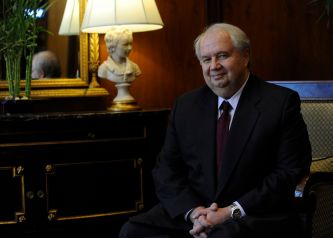
Russian ambassador Sergey Kislyak
According to the WaPo, Obama officials released the document because of their growing concerns about Russian involvement in the U.S. election and the need to make sure the Trump campaign understood the gravity of what was happening. But what if Trump and the people close to him were hoping to help the Russians?
The request for the Kislyak document came from Marshall Billingslea, a former senior Pentagon official in the George W. Bush administration who led Trump’s national security transition team from November until shortly before Trump’s inauguration.
Billingslea, who declined requests for comment, was nominated this week for a high-level position in the Treasury Department overseeing efforts to disrupt terrorist financing.
A former deputy undersecretary of the Navy, Billingslea was among a small group of experienced national security hands on the Trump transition whose entrenched skepticism toward Russia seemed at odds with the pro-Moscow impulses of Flynn and the incoming president, according to the officials, who spoke on the condition of anonymity to discuss Trump personnel and decision-making.
So the concern about Flynn’s Russia connections were not coming from Trump insiders, but from outside experts. What was Mike Pence, the ultimate head of the Trump transition doing about all this? He knew about Flynn’s foreign activities long before the inauguration. Please go read the rest of this important article if you haven’t already.
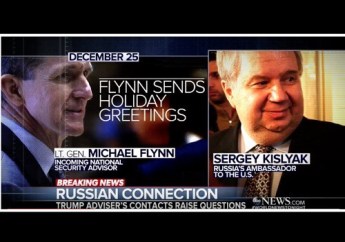
Associated Press: Trump transition raised flags about Flynn Russia contacts. AP reports that the Obama administration was “startled” by Billingslea’s request for background on Kislyak.
The request now stands out as a warning signal for Obama officials who would soon see Flynn’s contacts with the Russian spiral into a controversy that would cost him his job and lead to a series of shocking accusations hurled by Trump against his predecessor’s administration.
In the following weeks, the Obama White House would grow deeply distrustful of Trump’s dealing with the Kremlin and anxious about his team’s ties. The concern — compounded by surge of new intelligence, including evidence of multiple calls, texts and at least one in-person meeting between Flynn and Kislyak — would eventually grow so great Obama advisers delayed telling Trump’s team about plans to punish Russia for its election meddling. Obama officials worried the incoming administration might tip off Moscow, according to one Obama adviser….
Obama aides described Flynn as notably dismissive of the threat Russia posed to the United States when discussing policy in transition meetings with outgoing national security adviser Susan Rice and other top officials.
Officials also found it curious that Billingslea only ever asked Obama’s National Security Council for one classified leadership profile to give to Flynn: the internal document on Kislyak.
And check this out emphasis added:
The outgoing White House also became concerned about the Trump team’s handling of classified information. After learning that highly sensitive documents from a secure room at the transition’s Washington headquarters were being copied and removed from the facility, Obama’s national security team decided to only allow the transition officials to view some information at the White House, including documents on the government’s contingency plans for crises.
WTF?!
Some White House advisers now privately concede that the administration moved too slowly during the election to publicly blame Russia for the hack and explore possible ties to the Trump campaign. Others say it was only after the election, once Obama ordered a comprehensive review of the election interference, that the full scope of Russia’s interference and potential Trump ties become clearer.
Gee, no kidding. Here are a couple of interesting clips from AM Joy this morning.
I can hardly wait until Sally Yates testifies before the Senate Judiciary Committee on Monday.
The LA Times: Former top Justice Dept. official Sally Yates to testify about Michael Flynn and Russia.
Sally Yates, deputy attorney general under President Obama, is expected to disclose details to a Senate Judiciary Committee panel about her warnings to White House officials in January that Trump’s national security advisor, retired Lt. Gen. Michael Flynn, had misled Vice President Mike Pence and other officials about his conversations with Russian Ambassador Sergey Kislyak.
Flynn was fired 18 days after Yates went to the White House, and only after news stories revealed the existence of a transcript of Flynn’s telephone conversation with Kislyak, which was recorded as part of routine U.S. intelligence monitoring of foreign officials’ communications….
Lawmakers from both parties are likely to press Yates for details about her warnings to the White House that Flynn’s misrepresentations to Pence, and to the public, about his conversations with Kislyak left him vulnerable to blackmail by Moscow.
The FBI director, James B. Comey, recently told a judiciary subcommittee that Yates had spoken to him about her “concerns that Gen. Flynn had been compromised.”
Flynn and Kislyak exchanged phone calls and text messages during the White House transition, and were in touch on Dec. 29, the day the Obama administration levied a range of sanctions against Moscow for meddling in the 2016 election.
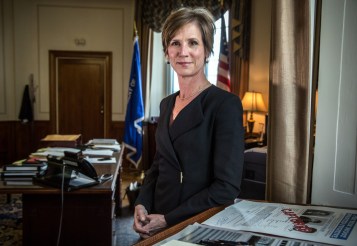
Of course it was the prospect of Yates testifying to the House Intelligence Committee that led to Chairman Devin Nunes committing political suicide by working with the White House to damage the investigation and then canceling the Yates hearing. He then had to recuse himself from his own committee’s investigation.
A couple more relevant links:
Raw Story: ‘Not coincidences’: Dem intel member directly connects Page and Flynn to collusion with Russia on election.
As a member of the United States House Permanent Select Committee on Intelligence and the CIA Subcommittee, Swalwell has been able to review the classified information about Flynn, Page and the rest of the Russian investigation. He’s certain there was collusion.
“I have seen the evidence on that, I think the best thing we can do on our committee is to follow that evidence and review all relevant documents and hear from all relevant witnesses and see if Carter Page is serious about coming in and answering the tough questions,” Swalwell told CNN Friday.
Stand-in host Brianna Keilar asked what makes him sure there is collusion, recognizing he couldn’t divulge the classified intelligence he’s seen.
“Evidence that I’ve reviewed on the classified side — you don’t have to be a lawyer and don’t have to have access to classified information to see behavior of people like Carter Page, also Roger Stone who told the world months before John Podesta’s e-mails were released that John Podesta was about to spend his time in the barrel,” he continued. “That’s information we now know he received while he was communicating with Guccifer2.0 that received the hacked Democratic Party e-mails.”
You can watch the interview at Raw Story.
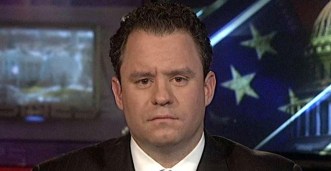
Jon Iodonisi
Then there’s this story that the WaPo published on Thursday: The mystery behind a Flynn associate’s quiet work for the Trump campaign,
Jon Iadonisi, a friend and business associate of former national security adviser Michael Flynn, had two under-the-radar projects underway in the fall of 2016.
One of his companies was helping Flynn with an investigative effort for an ally of the Turkish government — details of which Flynn revealed only after he was forced to step down from his White House post.
At the same time, Iadonisi was also doing work for the Trump campaign, although his role was not publicly reported, according to people familiar with his involvement.
The project Iadonisi was engaged in for Trump’s campaign focused on social media, according to a person with knowledge of the arrangement. What that work consisted of — and why his company was not disclosed as a vendor in campaign finance reports — remains a mystery.
The Trump campaign did not report any payments to Iadonisi or his firms. However, Federal Election Commission reports show that the Trump campaign paid $200,000 on Dec. 5 for “data management services” to Colt Ventures, a Dallas-based venture-capital firm that is an investor in VizSense, a social-media company co-founded by Iadonisi.
I have no idea what that was about, but at this point anything connected to Flynn needs a big red flag.
I know there’s lots more news, so I hope you’ll share your own links on any subject in the comment thread below. And have a great weekend!

 peej
peej Carissa
 bostonboomer
 dakinikat
 ecocatwoman
 mablue2
 Mama Lopez
 peggysue22
 quixote
 skydancingguestblogger
 Mona (aka Wonk the Vote)



 Sky Dancing
Recent Comments