
Lazy Saturday Reads: What Does the Allen Weisselberg Immunity Deal Mean?
Posted: August 25, 2018 Filed under: Afternoon Reads, U.S. Politics | Tags: Allen Weisselberg, David Pecker, Donald Trump, Fox News, Karen McDougal, Michael Cohen, Rudy Giuliani, use immunity 14 Comments
Summer Afternoon (Tea in the Garden), Théo van Rysselberghe
Good Afternoon!!
This has been a disastrous week for Trump. The Guardian summarizes: Trump’s terrible week: stunning news and whispers of impeachment.
…even by the standards of the Trump universe, this week has been a blur. And at its heart was a single, devastating hour on Tuesday 21 August that effectively turned the president of the United States into an unindicted co-conspirator in a federal crime….
…first, there was Rudy Giuliani. Trump’s lawyer, the former New York mayor, set the tone last Sunday with an Orwellian comment on the NBC network’s Meet the Press. Asked whether the president would give his version of events in testimony to Robert Mueller, the special counsel who is investigating Russian interference in the 2016 presidential election, Giuliani warned of a perjury trap and said: “Truth isn’t truth.”
Monday passed with just an embarrassing White House event to celebrate ICE during which Trump
…said that a border patrol agent, who is Latino, “speaks perfect English” as he beckoned him to the stage. He also misstated the acronym for US Customs and Border Protection at least eight times, referring to it as “CBC”, as in Canadian Broadcasting Corporation.
On Tuesday, the shit really hit the fan.
But then came, to use primary election parlance, Super Tuesday. At around 4.30pm, in courtrooms 200 miles apart, a pair of Trump associates delivered a one-two punch that stunned the White House and revived whispers of impeachment.
In New York, Trump’s longtime lawyer and “fixer” Michael Cohen implicated the president in a crime to influence the 2016 presidential election. Pleading guilty to dodging taxes and campaign finance violations, he alleged that Trump directed him to pay hush money to prevent two women – a Playboy model and pornographic actor – speaking out about extramarital affairs.
In Alexandria, Virginia, Paul Manafort, Trump’s former campaign chairman, was found guilty of eight tax and bank fraud charges and could now spend the rest of his life behind bars – unless Trump chooses to pardon him.
On Wednesday morning, Fox aired Trump’s interview in which he claimed that the campaign finance violations Cohen had pleaded guilty to were not crimes and that it should be illegal for people accused of crimes to turn states evidence in order to reduce their sentences. Then on Wednesday night he watched Tucker Carlson’s show.
There he saw a spurious Tucker Carlson report pushing a white nationalist conspiracy theory that white farmers in South Africa are being persecuted and murdered in Zimbabwe-style land grabs. Trump tweeted his outrage and promised to consult the state department, whose own human rights report on South Africa had made no mention of the issue.
It was one more white grievance dog whistle to add to all the rest. The South African government issued a swift rebuke and summoned US officials. Patrick Gaspard, the former US ambassador to South Africa, described the intervention as “astounding and deeply disturbing”. He said: “I can draw a line from the irresponsible statements he made in the wake of the violence in Charlottesville and him lifting up tropes from white nationalists in South Africa.”
 On Thursday,
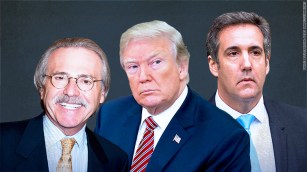
It emerged that David Pecker, chairman of American Media Inc, which owns the pro-Trump National Enquirer, had been granted immunity to provide information about Cohen and Trump’s involvement with payments to the two women who allege sexual affairs. The Associated Press added fuel to the fire by reporting thatthe Enquirer kept such secrets locked in a safe, lending it extraordinary power.
That night, the New York Times reported that the Manhattan district attorney’s office was considering pursuing criminal charges against the Trump Organization and two senior company officials in connection with one of the hush money payments.
The coup de grâce came with the news that Allen Weisselberg, the CFO of the Trump Organization had been given immunity to testify against Trump’s former personal lawyer Michael Cohen.
Clearly the news about Weisselberg is the most damaging to Trump, but it’s not clear exactly kind of immunity the long-time “financial gatekeeper” has. According the The New York Times, it’s limited to the case against Cohen .
The person briefed on the deal said that it was narrow in scope, protecting Mr. Weisselberg from self-incrimination in sharing information with prosecutors about Mr. Cohen, Mr. Trump’s former personal lawyer, who pleaded guilty on Tuesday to tax and campaign finance charges. The latter charges stemmed from payments during the campaign to two women who said they had affairs with Mr. Trump. It was not, the person said, a blanket immunity extending beyond the information he shared, and Mr. Weisselberg remains in his job at the Trump Organization.
Allen Weisselberg
Mr. Weisselberg figured into the charges filed against Mr. Cohen this week, having facilitated the processing of what prosecutors described as “sham invoices” at the Trump Organization, through which Mr. Cohen was reimbursed for the money he had paid to quiet one of the women alleging an affair with Mr. Trump, the pornographic film actress Stephanie Clifford.

It sounds like it’s use immunity, which protects Weisselberg from being prosecuted based on the specific information he provided about the hush money deals. It’s likely that Weisselberg indicated he would take the fifth and prosecutors used immunity to force him to talk. Weisselberg could still be charged with a crime if investigators find independent evidence that he was involved in criminal activities. If he’s eventually charged with a crime, Weisselberg might agree to cooperate fully with prosecutors, but so far that doesn’t seem to be happening.
Nevertheless, the fact that prosecutors have gotten testimony from the man who supposedly “knows where the bodies are buried” in the Trump Organization is huge. And some knowledgeable writers are claiming Weisselberg has agreed to cooperate fully and are speculating about what he could reveal about Trump.
On Twitter, Renato Mariotti says he would be surprised if Weisselberg only got use immunity.
Obviously he knows a hell of a lot more than I do.
Luppe B. Luppen (AKA @NYCsouthpaw) and Hunter Walker at Yahoo News: For Trump, Allen Weisselberg may be the man who knew too much.
Prosecutors investigating Trump’s inner circle reportedly now reportedly have a limited deal with Weisselberg, who has provided testimony against former Trump lawyer Michael Cohen. If his cooperation expanded, it could play a crucial role in multiple ongoing investigations.
According to the Wall Street Journal, federal prosecutors granted immunity to Weisselberg in exchange for information about payments to Cohen, which were made to two women during the 2016 presidential campaign in order to suppress their stories of alleged affairs with Trump….
The Associated Press subsequently reported that the immunity deal was “restricted to Weisselberg’s grand jury testimony last month in the Cohen case.”
What could Weisselberg reveal if he were forced to cooperate fully?
If Weisselberg decided to fully open his kimono and reveal all he knows, the federal investigation in the Southern District of New York would be the most obvious potential beneficiary. However, in some ways, the nature of that office’s interest in Trump is the most mysterious. As of Friday afternoon, it is not known what other subjects that federal investigation is pursuing. If Trump Organization executives, or even the president, are in its cross hairs, then Weisselberg could offer key insights.
Special counsel Mueller’s investigation, headquartered in Washington, D.C., is another potential beneficiary. For Mueller’s investigators, Weisselberg could detail the nature and extent of the financing the Trump Organization has received from sources connected to Russia. He could also offer them insight into any investments or potential investments Trump has made either in Russia or with Russian partners. A spokesperson for the special counsel’s office declined to comment for this story.
Weisselberg could also potentially be a valuable material witness in the New York attorney general’s state-level investigation into President Trump’s charitable foundation. In June, New York Attorney General Barbara Underwood filed a lawsuit against the Trump Foundation alleging a “pattern of illegal conduct,” including “willful self-dealing.” Weisselberg has long been the treasurer of the Trump Foundation. In preparation for its lawsuit, the attorney general’s office conducted a lengthy interview with Weisselberg and obtained his emails. The investigators allege that Weisselberg collaborated with Trump and campaign officials in advance of the 2016 Iowa primary to use the charity’s funds to benefit the campaign.
At The New Yorker, the very knowledgeable Adam Davidson has more:
As the C.F.O., Weisselberg tracked the money that came into the Trump Organization and the money that went out of it, former employees told me. I often found myself wondering what the Weisselberg part of the operation looked like. (I called and e-mailed him a few times, but, not surprisingly, never heard back.) Some told me he had a couple of bookkeepers, but that he personally handled most of the paperwork. Weisselberg knew who was paying or lending money to Trump, and he knew to whom Trump was giving money. When Trump became President, he placed his business interests in a revocable trust overseen by his son Donald Trump, Jr., and Weisselberg….
Trump with his wife, daughter, Karen Mcdougal (far right) and other playboy models.
This summer…Weisselberg’s role in the organization came into sharper focus. In a recording that Michael Cohen made of a conversation he had with Donald Trump about a payment to keep secret an affair, Cohen described setting up a shell company to pay hush money during the 2016 campaign to Karen McDougal, a woman who claimed to have had an affair with Trump. This week, Cohen pleaded guilty to violating campaign-finance laws, in part by setting up this secretive payment. He said that he knew at the time that it was illegal to secretly make a payment for campaign-related activity, but he did so anyway at Trump’s direction. Strikingly, Cohen makes it clear on the tape that Weisselberg also knew about the shell company and payment. “I’ve spoken to Allen Weisselberg about how to set the whole thing up,” Cohen explains to Trump.
It is difficult to hear the tape and not wonder how Weisselberg developed this particular expertise and whether he had deployed it before.

Here’s what Davidson has to say about Weisselberg’s immunity deal:
The Journal story and other news coverage suggest that Weisselberg has narrow immunity, related, solely, to the payments that Michael Cohen made to silence two women with whom Trump had affairs. With evidence of that crime in hand, prosecutors can subpoena other records from the company. If they have a reasonable basis to believe another crime has been committed, they can ask Weisselberg about it. Weisselberg, fearing jail time himself, could broaden his coöperation. The fact that Weisselberg has “flipped”— and may flip further—could shift the calculus of other figures in the Trump orbit as well. Weisselberg is a big fish—perhaps the biggest fish of all. Fearing that Weisselberg might implicate them in a crime, any cronies, dealmakers, attorneys, and others who might want to exchange information for leniency from prosecutors, will now do so.
If you’re interested in what kinds of crimes Weisselberg might know about, I’d suggest reading the entire article as well as Davidson’s other New Yorker pieces about Trump’s business dealings.
What else is happening? What stories have you been following?
Thursday Reads: An Illegitimate and Embattled “President”
Posted: August 23, 2018 Filed under: morning reads, U.S. Politics 30 Comments
Johann Hamza – Reading on a terrace
Good Morning!!
This morning the illegitimate “president” appeared on his favorite TV program, “Fox and Friends.” During his interview with Ainsley Earhardt, he sounded like a cross between an aging mob boss who with dementia and small child who believes the world revolves around him and his needs. Some lowlights:
Jonathan Chait at New York Magazine: Trump Tries to Deny His Crime With Cohen, Confesses by Mistake.
[On Tuesday], President Trump’s former lawyer, Michael Cohen, confessed in open court to committing a crime at Trump’s direction. The crime is violating campaign finance law, by using Trump’s personal funds for a campaign-related expense (paying hush money to his mistresses)….
Trump insisted he is in the clear because the payments “weren’t taken out of campaign finance … They didn’t come out of the campaign, they came from me.”
That is not a defense. That is why it’s a crime. If the money came from the campaign, it would have been legal.
In the clip Trump says that he tweeted about the payments, as if that has some kind of deep significance.
In context, Trump appears to be trying to say that this exonerates him, but the opposite is the case — you can’t just evade campaign finance rules by paying for your campaign expenses with non-campaign funds. If you could, the rules would be meaningless….
Girl on a red carpet, by Felice Casorati (1883-1963)
…while a private citizen is free to make a secret hush money payment to his former mistress if he likes, a political campaign is required to disclose what it’s spending money on. If Trump had reported a cash payment to Stormy Daniels to the Federal Election Commission, that would have naturally raised questions about why he was paying her and somewhat defeat the purpose of making hush money payments in the first place. So what Trump and Cohen seem to have decided to do is avoid using campaign money, thus allowing them to avoid disclosure rules.
But just like lying on the disclosure form would be illegal and refusing to do the disclosure would be illegal, paying for campaign expenses out of a non-campaign account and then declining to report that as a contribution to the campaign is also illegal.
Simply put, there is no legal way to spend money on your election campaign without disclosing that fact.

But Trump also argued in the interview that all politicians commit campaign finance violations and it’s really no big deal.
He also indicated he’s thinking of pardoning Paul Manafort because everyone in Washington does the things that Manafort was convicted of this week. USA Today:
Trump, during the interview, tried to dismiss some of the eight charges Manafort was convicted in, saying he was guilty of things everyone in Washington “probably does.”
“I would say what he did, some of the charges they threw against him, every consultant, every lobbyist in Washington probably does,” the president said.

La partition by H. Richir.
Trump discussed prosecutors “flipping” people accused of crimes to get evidence on bigger fish, and said this practice is “unfair” and should be illegal. He seemed to suggest that Michael Cohen is weak for pleading guilty while Manafort is courageous because he refused to turn on Trump.
Trump said his longtime fixer was just “one of many” lawyers he had who helped him handle both big and small deals over about a decade. He characterized Cohen working for him only “part-time.”
“I always found him to be a nice guy,” Trump said. But that has changed, he said, because investigators found crimes tied to Cohen’s taxi businesses, leading to his former lawyer “flipping.”
Cohen had a choice, Trump said. He could receive a harsh sentence or “make up stories” and “become a national hero.”
The president said the two campaign violations aren’t even crimes, information he learned from watching TV news, he said….
“I know all about flipping,” the president said. “Everything is wonderful and then they get 10 years in jail and they flip on whoever the next highest one is.”
He added “it’s not fair” and “it almost ought to be outlawed” because it encourages people to “make up stories.”
Of course Trump took the opportunity to bash the media. Hollywood Reporter: Donald Trump Obsesses Over Press “Lunatics” In ‘Fox & Friends’ Interview.
“The New York Times cannot write a good story about me. They’re crazed. They’re like lunatics,” he whined to Ainsley Earhardt.
He ticked off his list of complaints:
His summit with North Korea ruler Kim Jong Un was “a great success.”
“And if you remember, the only thing [the press] got me on, they said ‘he spoke , he met’… I didn’t give him anything. I gave him nothing except sanctions, okay?” Trump said.
“My meeting with Putin was a tremendous success, I got killed by the fake news. They wanted me to go up and punch him in the face. I said I want to get along with Russia. I want to get along with everybody.”
By Vladimir Volegov
“NATO, I raised of hundreds of billions of dollars from these countries that weren’t paying, they were delinquent, they weren’t paying their bills. The press doesn’t like to talk about that, the press talks about the fact that I insulted a lot of the leaders because I was strong on the fact that they had to pay.”
The only thing on which he is doing badly, Trump said, is “the press doesn’t cover me fairly.”

Trump also threatened that if he were impeached the economy would go down the tubes. The Associated Press reports:
President Donald Trump says he believes the economy would tank if he were to be impeached.
Trump was asked in an interview with “Fox & Friends” if he believes Democrats will launch impeachment proceedings if they win the House this fall, as many suspect.
He says, “If I ever got impeached, I think the market would crash. I think everybody would be very poor.”
Trump says Americans would see economic “numbers that you wouldn’t believe in reverse.”
But Trump is also expressing doubt that that would ever happen.
He says, “I don’t know how you can impeach somebody who’s done a great job.”
The Fox interview was taped early yesterday. Late last night the Wall Street Journal broke the news that David Pecker, Trump’s long-time friend and publisher of The National Enquirer is cooperating with the Southern District of New York in the Cohen case.
David Pecker, the chairman of American Media Inc., which publishes the National Enquirer, provided prosecutors with details about payments Mr. Cohen arranged with women who alleged sexual encounters with President Trump, including Mr. Trump’s knowledge of the deals….
By Aaron Abraham Shikler
Investigators quickly zeroed in on Mr. Cohen’s relationship with American Media, including its role brokering deals on behalf of Mr. Trump. Mr. Pecker had been an open supporter of Mr. Trump’s candidacy. Prosecutors say Mr. Pecker offered to help keep quiet negative stories about Mr. Trump that might come to the National Enquirer, a practice in the business known as “catch and kill.”
American Media executives were involved in both hush-money deals that formed the basis of Mr. Cohen’s guilty plea to campaign-finance violations, prosecutors said on Tuesday. One was a $130,000 payment to Stephanie Clifford—a former porn star who goes professionally by Stormy Daniels—as part of an agreement to keep her from publicly discussing an alleged affair with Mr. Trump. The payment was first reported by The Wall Street Journal in January.
The second was a $150,000 payment to former Playboy model Karen McDougal for her exclusive story of an alleged extramarital affair with Mr. Trump, a story that was purchased by American Media in August 2016 at Mr. Cohen’s urging, and then never published. The payment was first reported by the Journal in November 2016.

The story doesn’t seem to be behind the paywall–at least I got through. It’s very interesting; it’s mostly about what led Cohen to plead guilty and implicate Trump. Here’s just one more tidbit:
On April 5, days before the raids, Mr. Trump told reporters on Air Force One he didn’t know about the payment to Ms. Clifford, and referred questions about the matter to Mr. Cohen. “You’ll have to ask Michael Cohen,” Mr. Trump said. “Michael is my attorney.”
Mr. Cohen, who that night was staying aboard the yacht of Trump donor Franklin Haney, which was docked in Miami, grew irate on the ship soon after Mr. Trump made his remarks distancing himself from the Clifford payment, according to a person familiar with the episode. Mr. Cohen was swearing loudly as others on the boat were sipping their drinks, the person said.

By Dennis Perrin
More on the Pecker story from The Washington Post: Trump campaign, tabloid publisher hatched plan to bury damaging stories, Cohen prosecutors allege.
In August 2015, David Pecker and Michael Cohen hatched a plan to help a mutual friend in need.
Donald Trump had launched his improbable presidential campaign just two months earlier. His relationship with New York tabloids had been legendary through two divorces. Embarrassing stories about the former reality-show star were a regular occurrence.
But now Trump was in a crowded primary against establishment Republicans. Pecker, the chief executive of a tabloid publishing company; Cohen, Trump’s personal lawyer; and at least one member of the Trump campaign came up with a system that month to bury negative stories about the candidate, according to charging documents made public in connection with Cohen’s guilty plea Tuesday.
According to the documents, Pecker assured Cohen that he would help deal with rumors related to Trump’s relationships with women by essentially turning his tabloid operation into a research arm of the Trump campaign, identifying potentially damaging stories and, when necessary, buying the silence of the women who wanted to tell them.
The charging documents allege that Pecker and his company, American Media Inc., owner of the National Enquirer, were more deeply and deliberately involved in the effort to help the Trump campaign than was previously known. AMI also played a key role in the effort to silence adult-film star Stormy Daniels, prosecutors allege.
Read the rest at the WaPo.

Young girl reading, 1960, Palmer C. Hayden
Maggie Haberman reports in her latest gossip column that Trump was subdued after Tuesday’s monumental events:
On Air Force One on Tuesday night on the way back from a rally in West Virginia, Mr. Trump repeatedly minimized the news, telling aides that the legal developments were not about him, but about Mr. Manafort and Mr. Cohen. He also groused over the optics of the rally, telling a person close to him that the crowd seemed flat and that some chairs were empty….
People who have known Mr. Trump for years pointed out that he has never been as cornered — or as isolated — as he is right now, and that he is at his most dangerous when he feels backed against the wall. They pointed to his reaction after the “Access Hollywood” tape of him boasting of grabbing women’s genitals was released in October 2016. Mr. Trump responded by parading Bill Clinton’s female accusers in front of Hillary Clinton at the presidential debate in St. Louis, and acted like a man with nothing to lose.
This dynamic has led Mr. Trump to publicly praise — and privately muse about pardoning — Mr. Manafort.
I’ll end with this piece at Politico by Michael Kruse: ‘He’s Unraveling’: Why Cohen’s Betrayal Terrifies Trump.
He has called himself a “great loyalty freak.” He has said he values loyalty “above everything else—more than brains, more than drive.” And one of his greatest strengths, at least of a certain sort, always has been his ability to engender unwavering, slavish, even sycophantic allegiance. But it’s also been so brutally, consistently one-sided, and the Cohen flip brings to the fore the fragility of Trump’s transactional brand of loyalty and potentially its ultimate incompatibility with the presidency. This is not some tabloid or Twitter tit-for-tat. The stakes are of course incomparably higher. And Trump’s long span of quiet about Cohen was so out of character it suggested even he understands the reality of his legal jeopardy. For the first time, it appeared, a once biddable lapdog had turned around and bitten the boss—hard.
“He is terrified,” Trump biographer Michael D’Antonio told me early Wednesday morning. “This is 40 years of deceit coming home to torment him.”
Former Trump casino executive Jack O’Donnell called the current situation “a dangerous road” for Trump. “For once in his life,” O’Donnell told me a little before 9 a.m., “he should listen to his advisers, and just keep his mouth closed.”
“Once in a while, and that is very, very rarely, Trump does what he is told,” former Trump Organization executive vice president Barbara Res said around the same time. “I am sure he is chomping at the bit to lash out at Cohen, but we all know that would be disastrous.”
And then …
… he started tweeting (and talking).
Evidently unable to restrain himself, he urged his nearly 54 million followers in a sad bleat of a tweet to not hire Cohen, as if this were a moment for a Yelp-like review of an attorney. He impugned his truthfulness as well as his fortitude, and he dubiously concluded that Cohen’s admitted campaign finance violations allegedly committed in concert with the president himself “are not a crime.”
“He is unraveling,” Res said.
Read the rest at Politico.
So . . . I wonder what horrors will happen today? What are you reading and hearing?
Tuesday Reads: Breaking News and A Change of Pace
Posted: August 21, 2018 Filed under: Afternoon Reads, Crime, Criminal Justice System, morning reads, U.S. Politics | Tags: Alexander C. Ewing, Donald Trump, Golden State Killer, Hammer Man, Joseph DeAngelo, Matthew Sullivan, Michael Cohen, Paul Manafort, Steve Dennis 34 Comments
Girls under Trees, August Macke, 1914
Good Afternoon!!
There’s been a development in the Manafort case. The jury has sent out a note with a question for the judge. Unfortunately, the question is somewhat ambiguous.
It sounds like they are saying they are deadlocked on one of the 18 counts, but it’s also possible they are saying they can’t reach a unanimous decision on any of the counts. The judge is taking a five minute recess to prepare his response. I’ll update when I learn more.
Joyce Vance responds:
More breaking news on MSNBC, a report from WNBC that Michael Cohen is in talks with the prosecutors in the Southern District of New York, and a plea deal could be reached as early as today. It’s possible that we will learn something this afternoon.
The jury is back in the courtroom. Ken Dilanian says they are probably deadlocked on only one count, and they need guidance on how to enter that into the verdict sheet. Expert on MSNBC is saying it would be highly unlikely that there would be not guilty decisions on 17 counts.
The jury has now received instruction from the judge and has returned to the jury room. Ken Dilanian says the indecision is on only one count. So maybe we’ll get a verdict today. I sure hope so.
WNBC: Ex-Trump Lawyer Michael Cohen Discussing Plea Deal With Federal Prosecutors in Manhattan.
President Trump’s former personal attorney Michael Cohen is discussing a possible guilty plea with federal prosecutors in Manhattan in connection with tax fraud and banking-related matters, multiple sources familiar with the matter tell NBC News and News 4.
U.S. President Donald Trump’s personal lawyer Michael Cohen leaves federal court in the Manhattan borough of New York City, New York, U.S., April 16, 2018. REUTERS/Lucas Jackson
Those sources stress no deal has been reached but do say the potential deal could be reached as early as Tuesday.
The plea could have significant implications for Trump, who has blasted Cohen ever since his former fixer and his attorney, old Clinton hand Lanny Davis, began signaling this summer that Cohen might cooperate with special counsel Robert Mueller’s investigation.
When reached by NBC, Davis said he cannot comment on advice of counsel since there is an ongoing investigation.

Maybe that partially explains Trump’s hysterical behavior over the past several days.
Jonathan Dienst of WNBC is now reporting on MSNBC that we should know something in an hour or so. The two sides are close, but if the deal falls through, the prosecutors will proceed to prepare charges against Cohen and indict him in the next week or two.
Some stories to check out while we wait for these breaking stories to resolve themselves:
The Hill: Paul Manafort never believed the rules applied to him; I know — I worked with him for a decade, by K. Riva Levinson.
A good plot, most writers will tell you, is built on conflict. Working for Washington’s first bipartisan lobbying firm, Black, Manafort, Stone & Kelly, reporting to Paul Manafort, was my conflict; what came thereafter, my self-reckoning.
I was a recent college grad, broke, with no political connections when I managed to talk my way into an interview with Manafort and told him, boldly — and naively — “There is no place I will not go.” And from 1985 to 1995 (the beginning and end of BMS&K), there was no place that Manafort wouldn’t send me: war zones, states under armed occupation, the African bush or the cocaine-trafficked jungles of Latin America.
I had a front-row seat to a world changing in fast-forward with the collapse of the Soviet Union. It was thrilling, scary and, at times, overwhelming. But I never said no to a mission, or turned back. And despite all that unfolded, I will always remain grateful to Manafort for giving me a chance to learn first-hand how world events are often shaped.
BMS&K was where my mettle was tested, my foundational skills acquired, and where I struggled with my conscience, asking myself, “What am I doing here?”
Manafort had no such concerns about right and wrong.
I saw in Manafort no evident distress about the collateral damage that unfolded, the lives that were damaged or lost. He could self-justify anything. And as time went on, it seemed to me that he became all about the money. I and my colleagues were left to defend the extravagant expenses he charged to our clients.
I watched Manafort bend the rules, and so did everyone else, until eventually the firm’s new management asked him to leave. I left him, too.
I haven’t seen nor spoken directly with Paul since 1995, though I did receive an angry email when The Guardian wrote a story upon the release of my book in June 2016, quoting a passage where I call him “mercenary.”
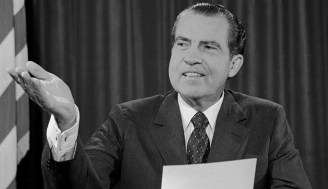 The Washington Post: I miss Richard Nixon, by Philip Allen Lacovara.
I am hardly a Nixon defender. I was part of the special prosecutor investigation that led to his downfall. I was and remain shocked at the extent of his crass and criminal behavior, which first became palpable to me listening to the secret Oval Office tapes that we pried away from him, eventually including the “smoking gun” tape the Supreme Court ordered him to turn over. It was that evidence that convinced Nixon’s closest supporters that his defense against impeachment and removal from office would have been unsustainable, and that he had no choice but to resign in disgrace.
I even created a rift with Leon Jaworski, Archibald Cox’s successor as Watergate special prosecutor, when I publicly protested the pardon that President Gerald Ford issued to Nixon shortly after the resignation, thereby shielding Nixon from the legal consequences that were soon to be visited upon his co-conspirators, who, after conviction, spent years in prison for the coverup.
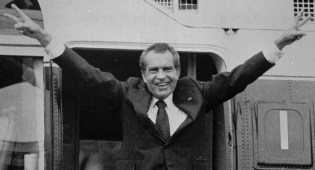 But then I look at the incumbent, and I become wistful.
…unlike Nixon, Trump was born with a golden spoon in his mouth and has exploited his family’s power and wealth from his earliest days. Supposed bone spurs insulated him from the crucible of military service, when many of his contemporaries were called to duty to fight in Vietnam. He relishes the flamboyant and the superficial, though the glitz comes with hefty dose of cheesiness — which I can attest to as someone who lived briefly in one of his “Trump Towers.”
Except for Trump’s own unsupported braggadocio, he entered the Oval Office ignorant of even the rudiments of American history and world affairs. He is a man of no particular political principles; his vacillation between parties (and occasionally as an “independent”) reveals the lack of any political core. Nor did he have any experience in public office, civil or military, or familiarity with the practical art of governing.
Nixon, on the other hand, grew up impoverished and was the archetypical self-made man. He was demonstrably thoughtful — even brilliant. At a conference several years ago at Duke University, where he attended law school during the Depression, I heard stories of his struggles living in a cold-water flat but achieving a distinguished record that was respected decades later.
Lacavera notes that Nixon, unlike Trump, “understood government and policy,” and he “had enough decency and respect for the office to cloak his conniving in secret.” Nixon also had a consistent political philosophy, while Trump clearly has no moral or political core. Read more at the WaPo.

Joseph James DeAngelo, the “golden state killer” via REUTERS
Now for a change of pace, I want to share a couple of nonpolitical reads. This spring the sensational serial rape and murder case of the so-called “golden state killer” was solved through research on an open source DNA website. The suspect was identified as Joseph James DeAngelo of Citrus Heights, CA, a suburb of Sacramento. In the past few days, I came across two similar stories.
Novelist Matthew Sullivan writes at The Daily Beast: I Grew Up in the Shadow of a Neighborhood Killer. He May Have Finally Been Caught.
To anyone living in the suburban boomtown of Aurora, Colorado in the 1980s, the horror story is familiar: at some point after midnight on the night on January 16, 1984, on a quiet cul-de-sac in a newer housing development near the Aurora Mall, an intruder armed with a hammer entered the home of Bruce and Debra Bennett.
They were a young couple with two young daughters, aged 7 and 3, and they had recently moved to Aurora to raise their girls after the 27-year-old Bruce wrapped up a stint in the Navy.
The Bennet family
As of now there’s no way to know the exact sequence of events that happened in the house that night, but the whole family was likely asleep when the intruder slipped in.
Using the hammer he brought with him and a knife he may have taken from their kitchen, the intruder attacked Bruce and Debra. Bruce fought back, grappling with the man in the bedroom and up and down the stairs, but the man overcame him, slit his throat and left him on the steps to die.
By the time the man left, he had also violently attacked and sexually assaulted both Bennett daughters.
The three older Bennetts were dead. The intruder had bludgeoned the three-year-old daughter and left her for dead as well, but according to Kirk Mitchell, who has spent years reporting on this case for the Denver Post, when her grandmother arrived the next morning, worried because Bruce hadn’t shown up for work, she found the youngster in her bed, barely alive. The littlest Bennett had survived.

There had been similar attacks and murders in the area. The crimes cast a shadow over the entire community; but the killer that kids in the neighborhood called “The Hammer Man” was never caught. Sullivan’s descriptions of how the crimes affected him and the community as a whole is fascinating. But now a suspect has been identified through DNA.

Alexander C. Ewing, “the Hammer Man”
One afternoon in early August, 2018, my phone began to erupt with messages from friends and family, co-workers and classmates, all of them living in Denver. Each said the same thing:
They got him.
They got him.
They got him! [….]
Each night, the Colorado Bureau of Investigation runs a comparison against the Combined DNA Index System database (CODIS), run by the FBI, which collects and indexes DNA from different states and agencies.
In early July of this year, the agency got a hit: a match was found between the DNA of the wanted John Doe suspect—the unknown man whose semen was traced to both the Bennett and the Smith crime scenes—and that of a 57-year-old prisoner in Nevada whose cheek was swabbed in 2013 as part of a new state law, his data uploaded.
The man, Alexander C. Ewing, was serving a 40-year sentence for two counts of attempted murder and other crimes and was eligible for parole in three years. According to a Washington Post report, he lived in Denver in 1984—and worked in construction.
One more story from The Washington Post: A baby was abandoned in a phone booth 64 years ago. Now, DNA has helped explain why.
Steve Dennis’s birth certificate didn’t say where he was born or when, or to whom. It just said he was found in a telephone booth.
Steve Dennis
Two bread deliverymen had found him there early one January morning in 1954, back when Dennis didn’t yet have a name. They found the “big blue-eyed infant” wrapped in blankets inside a cardboard box in the phone booth just outside Yielky’s Drive-In near Lancaster, Ohio, the Lancaster Eagle-Gazette reported at the time. There was no telling how long he had been there, perhaps only a few hours. The baby was very cold to the touch, the paper reported, and so was the bottle of milk left with him in the box.
The mystery soon captivated the residents of Lancaster. In just two days, dozens inquired about adoption, and “literally scores of persons” tried to help police identify the baby abandoned in the phone booth, the Eagle-Gazette reported in 1954. Nobody knew who put him there or why, and for a long time in the decades that followed, Dennis didn’t know either.
For years, the whole story struck him as too bizarre to even be true, as he told the Eagle-Gazette’s Spencer Remoquillo in a follow-up story 64 years later, on Friday. Dennis had always known he was adopted as a baby, but he didn’t learn about the phone booth until he was a teenager. He got curious. He traveled all the way to Lancaster just to see it for himself. But he didn’t find very much there, he told the Eagle-Gazette. He didn’t think he would ever find his birth parents, and for most of his life he didn’t think anything of it, either.
But that changed when his two children, 18 and 14 years old, started asking questions.
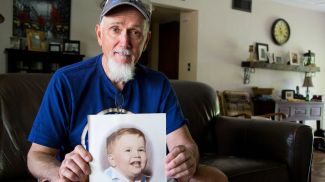
Dennis solved the mystery of his origins through Ancestry DNA. Read the rest at the WaPo. It’s quite a story.
So . . . what stories have you been following?
Lazy Saturday Reads: Trump “Drunk on Power” — John Brennan
Posted: August 18, 2018 Filed under: Afternoon Reads, U.S. Politics | Tags: abuse of power, corruption, Donald Trump, John Brennan, obstruction of justice, Robert Mueller, Russia investigation, security clearances, Vian Risanto, witness tampering 17 Comments
Blue Iris, Vian Risanto
Good Afternoon!!
It has been another disastrous week in Trumpland. The “president” seems to be losing what control he ever had. He spends his days watching TV, throwing tantrums on Twitter, and dreaming up ways to punish his many “enemies.” He’s Nixon on steroids, and the Republicans continue to refuse to do anything to check his corruption and abuses of power.
On Wednesday, Trump unilaterally revoked the security clearance of former CIA chief John Brennan, and despite condemnations by former members of the intelligence community, he plans to keep revoking the clearances of anyone who dares to criticize him or who may have been in some way involved with the Russia investigation.
The Washington Post: White House drafts more clearance cancellations demanded by Trump.
The White House has drafted documents revoking the security clearances of current and former officials whom President Trump has demanded be punished for criticizing him or playing a role in the investigation of Russian interference in the 2016 election, according to senior administration officials.
Trump wants to sign “most if not all” of them, said one senior White House official, who indicated that communications aides, including press secretary Sarah Huckabee Sanders and Bill Shine, the newly named deputy chief of staff, have discussed the optimum times to release them as a distraction during unfavorable news cycles.

Cocktail dress, Vian Risanto
Yes, they admit these will be used to distract the public on bad news days for Trump!
Some presidential aides echoed concerns raised by outside critics that the threatened revocations smack of a Nixonian enemies list, with little or no substantive national security justification. Particular worry has been expressed inside the White House about Trump’s statement Friday that he intends “very quickly” to strip the clearance of current Justice Department official Bruce Ohr, according to officials who spoke on the condition of anonymity to discuss internal deliberations….
It was unclear what the argument would be for revoking Ohr’s clearance, since Deputy Attorney General Rod J. Rosenstein, while not specifying Ohr’s current job, has said he has had no involvement in the Mueller investigation, begun last year.
But Ohr knew Christopher Steele, the former British intelligence agent who was hired in 2016 by Fusion GPS, then working for Hillary Clinton’s campaign and the Democratic National Committee, to investigate Trump’s ties to Russia. Ohr’s wife also worked for Fusion GPS. According to news reports and congressional testimony, the two men discussed Trump before the election. Ohr later reported the conversation to the FBI.
Ohr is the only current official on the White House list of clearances Trump wants to lift. The others are former director of national intelligence James R. Clapper Jr.; former CIA director Michael V. Hayden; former FBI director James B. Comey; Obama national security adviser Susan E. Rice; former FBI officials Andrew McCabe, Lisa Page and Peter Strzok; and former acting attorney general Sally Yates. Several of them have said they no longer have clearances.
It’s difficult to believe that Trump’s actions could not be seen as obstruction of justice and witness tampering, since many of those on the “enemies list” are potential witnesses in Robert Mueller’s investigation. Yesterday, The Washington Post’s Aaron Blake addressed the issue: How Trump’s security-clearance gambit could actually get him in deeper trouble with Mueller.
Green chair, Vian Risanto
I was on an MSNBC panel Thursday night with Elie Honig, a former federal prosecutor for the Southern District of New York, who suggested Trump’s revocation of security clearances could be construed as retaliation against witnesses. “It’s a federal crime — §1513 if anyone wants to look it up — to retaliate against someone for providing truthful information to law enforcement,” he said. “So he’s getting closer and closer to really dangerous ground here.”
Here’s the text of Section 1513(e):
Whoever knowingly, with the intent to retaliate, takes any action harmful to any person, including interference with the lawful employment or livelihood of any person, for providing to a law enforcement officer any truthful information relating to the commission or possible commission of any Federal offense, shall be fined under this title or imprisoned not more than 10 years, or both.
Honig explained to me Friday that he didn’t necessarily think Trump’s revocation of Brennan’s security clearance would be a violation, given Brennan isn’t a major figure on the probe’s key events. But if he presses on and does it with others, Honig argued, it could.

Read the rest at the WaPo.
Last night Rachel Maddow interviewed John Brennan. Talking Point Memo: Brennan On Revoked Clearance: ‘This Country Is More Important Than Mr. Trump.’
Former CIA Director John Brennan was defiant Friday night in response to President Donald Trump’s revocation of his security clearance, and to Trump’s threatening to revoke the clearances of several other former intelligence and national security officials who’ve become harsh critics of his.
Vian Risanto
“I think this is an egregious act that it flies in the face of traditional practice, as well as common sense, as well as national security,” Brennan told MSNBC’s Rachel Maddow. “I think that’s why there’s been such an outcry from many intelligence professionals.”

Brennan told Maddow that he is thinking about taking legal action.
“A number of lawyers have reached out to say that there is a very strong case here, not so much to reclaim [my clearance] but to prevent this from happening in the future,” Brennan told Maddow, asked if he was considering legal action against the administration.
Some groups, including the ACLU, have alleged that revoking Brennan’s clearance in retaliation for his criticism of Trump, as the White House said was the case, was a violation of the former CIA director’s First Amendment rights.
Brennan repeated his accusation that Trump’s Helsinki summit with Russian President Vladimir was “nothing short of treasonous.”
And he said a Washington Post report that his clearance revocation had been timed “to divert attention from nonstop coverage of a critical book released by fired Trump aide Omarosa Manigault Newman” was “just another demonstration of [Trump’s] irresponsibility.”
“The fact that he’s using a security clearance of a former CIA director as a pawn in his public relations strategy, I think, is just so reflective of somebody who, quite frankly — I don’t want to use this term, maybe — but he’s drunk on power.”
Three reactions to Trump’s latest power grab to check out:

A night out, Vian Risanto
Tim Weiner at The New York Times: Trump Is Not a King.
In times of crisis, the leaders of the military and intelligence communities try to put aside their differences, often many and sundry, and work together for the good of the country. That’s what’s happening today with a remarkable group of retired generals, admirals and spymasters who have signed up for the resistance, telling the president of the United States, in so many words, that he is not a king.
Thirteen former leaders of the Pentagon, the C.I.A. and the F.B.I. have signed an open letter standing foursquare against President Trump, in favor of freedom of speech and, crucially, for the administration of justice. They have served presidents going back to Richard M. Nixon mostly without publicly criticizing the political conduct of a sitting commander in chief — until now.
They rebuked Mr. Trump for revoking the security clearance of John Brennan, the C.I.A. director under President Obama, in retaliation for his scalding condemnations and, ominously, for his role in “the rigged witch hunt” — the investigation into Russia’s attempt to fix the 2016 election, now in the hands of Robert S. Mueller III, the special counsel. The president’s latest attempt to punish or silence everyone connected with the case, along with his fiercest critics in political life, will not be his last….
The president aims to rid the government and the airwaves of his real and imagined enemies, especially anyone connected with the Russia investigation. Somewhere Richard Nixon may be looking up and smiling. But aboveground, the special counsel is taking notes.
Lily, Vian Risanto
The list of the signatories to the open letter defending Mr. Brennan is striking for the length and breadth of their experience. I never expected to see William H. Webster — he’s 95 years old, served nine years as F. B.I. director under Presidents Jimmy Carter and Ronald Reagan, then four more as C.I.A. director under Reagan and President George H. W. Bush — sign a political petition like this. The same with Robert M. Gates, who entered the C.I.A. under President Lyndon Johnson, ran it under George H. W. Bush and served as Secretary of Defense under Presidents George W. Bush and Barack Obama. These are not the kind of men who march on Washington. These are men who were marched upon.

Read more at the NYT.
Jonathan Chait at New York Magazine: Trump Is Making the Department of Justice Into His Own Private Goon Squad.
One morning earlier this week during executive time, President Trump tweeted out his assessment of the Russia investigation. “The Rigged Russian Witch Hunt goes on and on as the ‘originators and founders’ of this scam continue to be fired and demoted for their corrupt and illegal activity,” he raged. “All credibility is gone from this terrible Hoax, and much more will be lost as it proceeds. No Collusion!”
Amid this torrent of lies, the president had identified one important truth. There has in fact been a series of firings and demotions of law-enforcement officials. The casualties include FBI director James Comey, deputy director Andrew McCabe, general counsel James Baker, and, most recently, agent Peter Strzok. Robert Mueller is probing the circumstances surrounding Trump’s firing of Comey for a possible obstruction-of-justice charge. But for Trump, obstruction of justice is not so much a discrete act as a way of life.
The slowly unfolding purge, one of the most vivid expressions of Trump’s governing ethos, has served several purposes for the president. First, it has removed from direct authority a number of figures Trump suspects would fail to provide him the personal loyalty he demanded from Comey and expects from all officials in the federal government. Second, it supplies evidence for Trump’s claim that he is being hounded by trumped-up charges — just look at all the crooked officials who have been fired! Third, it intimidates remaining officials with the threat of firing and public humiliation if they take any actions contrary to Trump’s interests. Simply carrying out the law now requires a measure of personal bravery.
Trump has driven home this last factor through a series of taunts directed at his vanquished foes. After McCabe enraged Trump by approving a flight home for Comey after his firing last May, the president told him to ask his wife (who had run for state legislature, unsuccessfully) how it felt to be a loser. This March, Trump fired McCabe and has since tweeted that Comey and McCabe are “clowns and losers.” The delight Trump takes in tormenting his victims, frequently calling attention to Strzok’s extramarital affair — as if Trump actually cared about fidelity! — underscores his determination to strip his targets of their dignity.
Click on the link to read the rest.
Bob Bauer at Lawfare: Richard Nixon, Donald Trump and the ‘Breach of Faith.’
Red couch, Vian Risanto
Journalist and presidential historian Theodore H. White thought of Richard Nixon’s downfall as the consequence of a “breach of faith.” Perhaps it was a “myth,” but an important one, that “is responsibility,” White wrote. But it was important nonetheless that Americans believe that this office, conferring extraordinary power, would “burn the dross from [the president’s] character; his duties would, by their very weight, make him a superior man, fit to sustain the burden of the law, wise and enduring enough to resist the clash of all selfish interests.”
A president who frustrates this expectation, failing to exhibit the transformative effects of oath and office, will have broken faith with the American public. And yet, White believed that Nixon’s presidency had been an aberration. “[M]any stupid, hypocritical and limited men had reached that office,” he wrote. “But all, when publicly summoned to give witness, chose to honor the legends” of what the office required of a president’s behavior in office.
White’s understanding of what constitutes a “breach of faith” is well worth recalling in considering the presidency of Donald Trump. As White understood it, the term encompassed more than illegal conduct or participation in its cover-up. It was a quality of leadership—or more to the point, the absence of critical qualities—that defined a president’s “betrayal” of his office. What elevated Nixon’s misdeeds to a fatal constitutional flaw, forcing him to surrender his presidency, was the breaking of faith with the American people. Nixon brushed the legal and ethical limits on pursuing his own political and personal welfare. He held grudges and was vindictive; he looked to destroy his enemies rather than simply prevailing over them in hard, clean fights. He lied repeatedly to spare himself the costs of truth-telling.
All of this may be said of Donald Trump, but for a key difference: Nixon was anxious to conceal much of this behavior from public view.
Much has been said and written about Trump’s leadership style: the chronic resort to false claims; the incessant tweeting of taunts and personal attacks on his adversaries; the open undermining of members of his own administration; the abandonment of norms; the refusal to credit, respect or support the impartial administration of justice where his personal or political interests are stake; and the use of office to promote his personal business enterprises. By now, almost two years into his administration, it is clear that this is who he is.
Like Nixon, Trump seems to believe that his behavior is justified by the extraordinary and ruthless opposition of an “establishment”—comprised mainly of the media, the opposition party, and intellectuals—to his election and his politics.

Please go read the rest at Lawfare.
That’s all I have for you today. Please share your thoughts and links in the comment thread below.
Thursday Reads: Trump Publicly Admits Guilt Once Again
Posted: August 16, 2018 Filed under: morning reads, U.S. Politics | Tags: Donald Trump, John Brennan, Russia investigation 47 Comments
Among Lupine, Jeffrey T. Larson
Good Morning!!
Trump just can’t stop confessing his guilt. Yesterday, Trump stripped away John Brennan’s security clearance, claiming it was because of Brennan’s “erratic behavior” and “wild outbursts on the internet and television.” Then he proceeded to tell the Wall Street Journal that he did it because of the Russia investigation.
President Trump drew a direct connection between the special counsel investigation into alleged Russian interference in the 2016 election and his decision to revoke the security clearance of former CIA Director John Brennan and review the clearances of several other former officials.
In an interview Wednesday, Mr. Trump cited Mr. Brennan as among those he held responsible for the investigation, which also is looking into whether there was collusion between the Trump campaign and the Kremlin. Mr. Trump has denied collusion, and Russia has denied interfering.
Mr. Brennan was director of the Central Intelligence Agency in the Democratic administration of former President Obama and one of those who presented evidence to Mr. Trump shortly before his inauguration that Russia had interfered in the 2016 election.
“I call it the rigged witch hunt, [it] is a sham,” Mr. Trump said in an interview. “And these people led it!”
He added: “So I think it’s something that had to be done.”
Trump has quite an enemies list now, and everyone on it is involved in some way with the investigation.
Reading Girl. Ármin Glatter (Hungarian, 1861-1916). Oil on canvas.
Earlier in the day, White House spokeswoman Sarah Sanders said the administration was also reviewing the clearances of former Director of National Intelligence James Clapper, former FBI Director James Comey, and former National Security Agency and CIA chief Michael Hayden.
“I don’t trust many of those people on that list,” Mr. Trump said in the interview. “I think that they’re very duplicitous. I think they’re not good people.”
Most of the individuals left government service months or years ago under varied circumstances, including being fired by the president and his aides. Some, including Mr. Comey, have said they no longer have or use their clearances.

Aaron Blake at The Washington Post: Trump blurts out another Lester Holt moment.
You could be forgiven for having flashbacks to Trump’s interview with NBC Nightly News anchor Lester Holt in the aftermath of his firing last year of James B. Comey as FBI director. Then, as now, the White House offered a series of motivations for the crackdown on a person who was a liability in the Russia probe. Then, as now, it seemed clear what the actual motivation was. And then, as now, Trump appeared to go out and just admit the actual motivation….
In the case of the Holt interview, Trump never actually directly said that he fired Comey because of the Russia investigation; instead, he merely said that Russia was on his mind when he did it. “And in fact when I decided to just do it, I said to myself, I said, you know, this Russia thing with Trump and Russia is a made-up story; it’s an excuse by the Democrats for having lost an election that they should have won,” Trump said back in May 2017.
In this case, Trump refers directly to the role of Brennan and others in leading the investigation, and then says, “So I think it’s something that had to be done” — suggesting that this was an action taken in direct response to their participation in the probe. He is saying he is punishing people who were involved in that, which at the very least would seem to create a chilling effect for other would-be critics.
John Brennan responded in an op-ed in today’s New York Times:
The artist’s wife reading – Fyffe Christie
Having worked closely with the F.B.I. over many years on counterintelligence investigations, I was well aware of Russia’s ability to work surreptitiously within the United States, cultivating relationships with individuals who wield actual or potential power. Like Mr. Bortnikov, these Russian operatives and agents are well trained in the art of deception. They troll political, business and cultural waters in search of gullible or unprincipled individuals who become pliant in the hands of their Russian puppet masters. Too often, those puppets are found.
In my many conversations with James Comey, the F.B.I. director, in the summer of 2016, we talked about the potential for American citizens, involved in partisan politics or not, to be pawns in Russian hands. We knew that Russian intelligence services would do all they could to achieve their objectives, which the United States intelligence community publicly assessed a few short months later were to undermine public faith in the American democratic process, harm the electability of the Democratic candidate, Hillary Clinton, and show preference for Mr. Trump. We also publicly assessed that Mr. Putin’s intelligence services were following his orders. Director Comey and I, along with the director of the National Security Agency, Adm. Michael Rogers, pledged that our agencies would share, as appropriate, whatever information was collected, especially considering the proven ability of Russian intelligence services to suborn United States citizens.
The already challenging work of the American intelligence and law enforcement communities was made more difficult in late July 2016, however, when Mr. Trump, then a presidential candidate, publicly called upon Russia to find the missing emails of Mrs. Clinton. By issuing such a statement, Mr. Trump was not only encouraging a foreign nation to collect intelligence against a United States citizen, but also openly authorizing his followers to work with our primary global adversary against his political opponent.
Albert Gustaf Aristides Edelfelt (1854-1905)
Such a public clarion call certainly makes one wonder what Mr. Trump privately encouraged his advisers to do — and what they actually did — to win the election. While I had deep insight into Russian activities during the 2016 election, I now am aware — thanks to the reporting of an open and free press — of many more of the highly suspicious dalliances of some American citizens with people affiliated with the Russian intelligence services.
Mr. Trump’s claims of no collusion are, in a word, hogwash.


Today hundreds of newspapers published editorials condemning Trumps war on press freedom. CNN has publish a list of many of of these papers with links to their editorials. The list is broken down by state, so you can find your own newspaper. I’d love to read the one in my hometown newspaper The Boston Globe, but they only allow me to read two free articles per month and I can’t afford to subscribe. The free press isn’t accessible to all readers!
The jury in the Paul Manafort trial began deliberations this morning. CBS News reports:
After over an hour and a half of instructions from Judge T.S. Ellis, a jury, comprised of 6 men and 6 women, now begin deliberations on Thursday in the fraud trial of former Trump campaign chairman Paul Manafort. It’s unclear how long it will take for them to consider and vote on the 18 charges against Manafort. CBS News’ Paula Reid reports that at a minimum, it will take the jury a few hours just to sort through the procedural paperwork and weigh their vote.
The government has recommended to the court anywhere between 8 to 10 years in prison for falsifying tax returns, bank fraud conspiracy and failure to file reports of foreign bank and financial records. The maximum sentence for the 18 counts, however, is 305 years.
Emmanuel Garant
During Wednesday’s closing arguments, prosecutors told jurors Manafort lied to keep himself flush with cash for his luxurious lifestyle and lied some more to procure millions in bank loans when his income dropped off. In his defense, Manafort’s attorneys told jurors to question the entirety of the prosecution’s case as they sought to tarnish the credibility of Manafort’s longtime protege — and government witness — Rick Gates….
In the closing arguments, prosecutor Greg Andres said the government’s case boils down to “Mr. Manafort and his lies.”
“When you follow the trail of Mr. Manafort’s money, it is littered with lies,” Andres said as he made his final argument that the jury should find Manafort guilty of 18 felony counts.
Attorneys for Manafort, who is accused of tax evasion and bank fraud, spoke next, arguing against his guilt by saying he left the particulars of his finances to other people, including Gates.
Defense attorney Richard Westling noted that Manafort employed a team of accountants, bookkeepers and tax preparers, a fact he said showed his client wasn’t trying to hide anything. Westling also painted the prosecutions’ case as consisting of cherry-picked evidence that doesn’t show jurors the full picture.

The New York Times has a list of questions the jury will have to consider, including “Rick Gates’s credibility,” “the judge’s behavior,” “Manafort’s lifestyle.” Read all the details at the link.
That’s all I have for you today. What stories are you following?

 peej
peej Carissa
 bostonboomer
 dakinikat
 ecocatwoman
 mablue2
 Mama Lopez
 peggysue22
 quixote
 skydancingguestblogger
 Mona (aka Wonk the Vote)



 Sky Dancing
Recent Comments