Politico “Playbook” has a good brief summary of where things stand right now with the January 6 Committee investigation: The Jan. 6 committee drama gets serious. (I’ve added a few links to longer articles.)
JAN. 6 INVESTIGATION STEAMROLLS FORWARD — Over the last 24 hours, we’ve seen major developments in the ongoing investigation into the pro-Trump Jan. 6 riots that sought to overthrow democracy in America.
— What comes next: Trump has 30 days to challenge the decision in court, after which time, the National Archives will release the documents to the Jan. 6 panel. The former president is already asserting privilege over 45 specific documents requested from the committee, and indicated in a letter that he wants to bar the release of additional documents “potentially numbering in the millions.”
2) Committee subpoenas hit deadlines: The first wave of high-profile subpoenas from the Jan. 6 committee have been served, and not all of the subjects are cooperating, as Nicholas, Kyle, Betsy and Meridith detail:
STEVE BANNON claims that Trump’s invocation of executive privilege means that he doesn’t have to participate. (That strikes legal experts as dubious, seeing as at the time of the 2020 election, Bannon hadn’t worked in the White House for several years.)
MARK MEADOWS is “engaging with the Select Committee,” per a statement from the panel.
KASH PATEL issued a statement Friday confirming that he “responded to the subpoena in a timely manner” and is engaging with the committee.
— What comes next: In a statement from Jan. 6 Committee Chair BENNIE THOMPSON (D-Miss.) and Vice Chair LIZ CHENEY (R-Wyo.), the panel said it “will not allow any witness to defy a lawful subpoena or attempt to run out the clock, and we will swiftly consider advancing a criminal contempt of Congress referral.” If they’re serious, a criminal referral would require a full floor vote in the House.More from NYT’s Maggie Haberman and Luke Broadwater
A former high-ranking Capitol Police official with knowledge of the department’s response to the Jan. 6 attack has sent congressional leaders a scathing letter accusing two of its senior leaders of mishandling intelligence and failing to respond properly during the riot.
The whistleblower, who requested anonymity for privacy reasons and left the force months after the attack, sent the 16-page letter late last month to the top members of both parties in the House and Senate. His missive makes scorching allegations against Sean Gallagher, the Capitol Police’s acting chief of uniformed operations, and Yogananda Pittman, its assistant chief of police for protective and intelligence operations — who also served as its former acting chief.
The whistleblower accuses Gallagher and Pittman of deliberately choosing not to help officers under attack on Jan. 6 and alleges that Pittman lied to Congress about an intelligence report Capitol Police received before that day’s riot. After a lengthy career in the department, the whistleblower was a senior official on duty on Jan. 6.
The whistleblower’s criticism went beyond Capitol Police leaders to Congress. Without naming specific lawmakers, his letter accuses congressional leaders of having “purposefully failed” to tell the truth about the department’s failures.
POLITICO obtained the letter detailing the allegations, which is circulating among Capitol Police officers, and is publishing portions of it here. To protect the whistleblower’s identity, POLITICO is not publishing the letter in full.
Click the Politico link to read the rest.
By Evelina Oliveira
This morning the Washington Post Editorial Board posted this in response to the Senate Judiciary Committee’s report on Trump’s efforts to overturn the 2020 election at a meeting three days before the January 6 attack on the Capitol: Opinion: Without these changes, U.S. democracy will remain vulnerable to Trump and other bad actors.
The Senate report details how Mr. Trump tried persistently to enlist the Justice Department in his scheme to overturn the 2020 election results. His pressure campaign, after Attorney General William P. Barr resigned in December, featured calls and meetings with Mr. Rosen and other top Justice Department staff. It continued as Mr. Trump sent them a preposterous petition he wanted them to file with the Supreme Court asking the justices to void Joe Biden’s victory. It reached its zenith in a cockamamie plot to force Mr. Rosen to pressure state governments to cook the results or be replaced by Jeffrey Clark, a lower-ranking Justice official who would go along with the scheme.
Mr. Trump failed because Mr. Rosen and other officials in key positions refused to cooperate and threatened to resign. But they could not stop Mr. Trump from forcing the resignation of the U.S. attorney in Atlanta and replacing him with a lawyer the then-president thought would pursue the fraud investigations he wanted to see.
The editors argue:
The seriousness of Mr. Trump’s effort to nullify an election, his continuing lies about the results and the willingness of so many Republicans to indulge those lies call for several responses.
The investigations must continue. The House’s Jan. 6 committee should compel Mr. Clark, who did not cooperate with the Senate Judiciary panel, to testify. The House and the Justice Department must enforce the committee’s subpoenas, which several Trump confidantes appear prepared to flout on the former president’s say-so. The National Archives should turn over documents immediately. If courts are involved, judges must act with urgency….
Most urgently, Congress must reinforce elements of the nation’s democratic infrastructure vulnerable to exploitation by bad actors such as Mr. Trump. It should revamp the ancient Electoral Count Act to limit partisan interference in presidential vote tallying, and it should impose federal election standards that insulate state election officials from political pressure.
The Committee needs to get right to work on enforcing the subpoenas and Steve Bannon should immediately be arrested and jailed. I hope they do something quickly, but I’m not holding my breath.
After he backed down and allowed a vote to avert a U.S. default and a global financial crisis, Mitch McConnell is now threatening to let it happen in December. His excuse is that Chuck Schumer made an “inappropriate” speech after the vote. Here’s the speech:
Here is the speech from Majority Leader Schumer after the vote last night, that Mitt Romney called graceless, but I call necessary and accurate.
Mitch McConnell, the Republican leader in the Senate, sought to fight his way out of a corner on Friday by releasing an angry letter in which he blamed Democrats for the impasse over the debt ceiling he broke by ending a refusal to co-operate he had said was absolute.
In the letter to Joe Biden, McConnell complained about a speech in which the Democratic majority leader, Chuck Schumer, attacked Republicans for their behaviour.
Lamenting Schumer’s lack of civility – which prompted angry scenes in the Senate – McConnell levelled a string of insults at his opposite number.
Paradise Cat, by Hans Ruettimann
“Last night,” the minority leader wrote, late on Friday, “in a bizarre spectacle, Senator Schumer exploded in a rant that was so partisan, angry and corrosive that even Democratic senators were visibly embarrassed by him and for him.
“This tantrum encapsulated and escalated a pattern of angry incompetence from Senator Schumer … this childish behavior only further alienated the Republican members who helped facilitate this short-term patch. It has poisoned the well even further.”
Democrats argue it was McConnell who poisoned the well by refusing to co-operate with raising the debt limit, a step they took repeatedly with Donald Trump in power. Experts say a US default would be catastrophic for the global economy.
McConnell insisted: “In light of Senator Schumer’s hysterics and my grave concerns about the ways that another vast, reckless, partisan spending bill would hurt Americans and help China, I will not be a party to any future effort to mitigate the consequences of Democratic mismanagement.”
Suddenly being partisan is a bad thing because a Democrat did it? Talk about the pot calling the kettle black.
Former Trump National Security Adviser Michael Flynn has been on a relentless media tour since his pardon last year, sitting for interviews with even the most obscure right-wing media outlets to promote the MAGA agenda.
But on Tuesday, Flynn appeared on a little-known YouTube channel called Truth Unveiled TV for a very different reason: rebutting the idea that he led a church congregation in a Satanic ritual borrowed from a nuclear doomsday cult.
In a video entitled “Some Have Said That General Flynn Prayed to Satan in a Recent Prayer,” host Paul Oebel gave Flynn a chance to rebut the growing right-wing controversy alleging he’s signed on with Lucifer.
Steampunk cat lady, by Jeff Haynie
“I even saw a show the other day saying ‘Michael’s flipped on the side of the devil,’” Oebel said. “Can you please explain what happened there?”
“All of these people that talk about turning to whatever…” Flynn said. “People need to stop overthinking what everybody is saying.”
The bizarre YouTube interview marked Flynn’s latest attempt in a weeks-long campaign to convince his one-time fans in the QAnon conspiracy theory movement that he isn’t a Satanist.
Prior to the unusual controversy, Flynn had embraced his position as a hero to supporters of QAnon, taking a QAnon oath, raising money from QAnon believers, and selling QAnon T-shirts. In May, Flynn even appeared at a QAnon conference and endorsed the idea of a military coup.
But QAnon fame is a fickle thing. After promoting QAnon for more than a year, Flynn now finds himself on the business end of the conspiracy theory. Like QAnon targets before him, Flynn is now struggling to persuade angry QAnon believers that he isn’t a secret Satan-worshipper.
Read the rest at The Daily Beast.
That’s all I have for you today. Have a great weekend!
Did you like this post? Please share it with your friends:
Senate Majority Leader Chuck Schumer said Thursday an agreement has been reached with Republicans to extend the government’s borrowing authority into December, temporarily averting a debt crisis.
“We’ve reached agreement,” Schumer announced as he opened the Senate. “Our hope is to get this done as soon as today.”
THIS IS A BREAKING NEWS UPDATE. AP’s earlier story follows below.
WASHINGTON (AP) — Republican and Democratic leaders edged back from a perilous standoff over lifting the nation’s borrowing cap, with Democratic senators signaling they were receptive to an offer from Senate GOP leader Mitch McConnell that would allow an emergency extension into December.
McConnell made the offer late Wednesday shortly before Republicans were prepared to block legislation to suspend the debt limit until December of next year and as President Joe Biden and business leaders ramped up their concerns that an unprecedented federal default would disrupt government payments to millions of people and throw the nation into recession.
The emerging agreement sets the stage for a sequel of sorts in December, when Congress will again face pressing deadlines to fund the government and raise the debt limit before heading home for the holidays.
A procedural vote — on the longer extension the Republicans were going to block — was abruptly delayed late Wednesday and the Senate recessed so lawmakers could discuss next steps. Democrats emerged from their meeting more optimistic that a crisis would be averted.
Politico speculates that McConnell gave in because he feared the Democrats would finally decide to get rid of the filibuster.
McConnell backed down after Democratic threats of nuking the filibuster for the debt ceiling started to become more real. At their Tuesday lunch, Democratic senators discussed how McConnell’s blockade on the debt ceiling was boosting the case of filibuster reformers. Later that day, Biden, generally a skeptic of filibuster reform, said such a change for the debt ceiling was now a “real possibility.”
George Cochran Lambdin, Girl Reading
McConnell took notice. Our friend Manu Raju at CNN reported, “McConnell told his colleagues he’s concerned about pressure on [JOE] MANCHIN and [KYRSTEN] SINEMA to gut [the] filibuster in order to raise [the] debt ceiling, I’m told. He pointed to this as reason why he is floating short-term increase in order to ease pressure on and push Democrats to use reconciliation.”
McConnell himself alluded to how filibuster reform was the key issue at play. “It’s not clear whether the Democratic leaders have wasted two-and-a-half months because they simply cannot govern, or whether they are intentionally playing Russian roulette with the economy to try to bully their own members into going back on their word and wrecking the Senate,” he said on the Senate floor.
Democratic supporters of filibuster reform have taken note of how the issue seems to have moved McConnell. “The filibuster is McConnell’s instrument of obstruction,” one Democratic senator told Playbook. “He wants to protect that at all costs. He was at real risk of overplaying his hand as he faced the growing prospect that we would have 51 votes to waive it for the purpose of dealing with debt. He wanted to avoid creating that precedent. Still, would have been better for us to just do it.”
Jennifer Rubin has a good column on McConnell’s possible motivations at The Washington Post: Opinion: Mitch McConnell ‘blinked’ on the debt ceiling. Here’s what that means.
Besides the debt ceiling mess, the biggest story this morning is a report issued by the Senate Judiciary Committee on Trump’s plans to attempt a coup after he lost the 2020 election.
Even by the standards of President Donald J. Trump, it was an extraordinary Oval Office showdown. On the agenda was Mr. Trump’s desire to install a loyalist as acting attorney general to carry out his demands for more aggressive investigations into his unfounded claims of election fraud.
Young Mother in the Garden, Mary Cassatt
On the other side during that meeting on the evening of Jan. 3 were the top leaders of the Justice Department, who warned Mr. Trump that they and other senior officials would resign en masse if he followed through. They received immediate support from another key participant: Pat A. Cipollone, the White House counsel. According to others at the meeting, Mr. Cipollone indicated that he and his top deputy, Patrick F. Philbin, would also step down if Mr. Trump acted on his plan.
Mr. Trump’s proposed plan, Mr. Cipollone argued, would be a “murder-suicide pact,” one participant recalled. Only near the end of the nearly three-hour meeting did Mr. Trump relent and agree to drop his threat.
Mr. Cipollone’s stand that night is among the new details contained in a lengthy interim report prepared by the Senate Judiciary Committee about Mr. Trump’s efforts to pressure the Justice Department to do his bidding in the chaotic final weeks of his presidency.
More details on the report:
The report draws on documents, emails and testimony from three top Justice Department officials, including the acting attorney general for Mr. Trump’s last month in office, Jeffrey A. Rosen; the acting deputy attorney general, Richard P. Donoghue, and Byung J. Pak, who until early January was U.S. attorney in Atlanta. It provides the most complete account yet of Mr. Trump’s efforts to push the department to validate election fraud claims that had been disproved by the F.B.I. and state investigators.
The interim report, released publicly on Thursday, describes how Justice Department officials scrambled to stave off a series of events during a period when Mr. Trump was getting advice about blocking certification of the election from a lawyer he had first seen on television and the president’s actions were so unsettling that his top general and the House speaker discussed the nuclear chain of command.
“This report shows the American people just how close we came to a constitutional crisis,” Richard J. Durbin, Democrat of Illinois and chair of the Senate Judiciary Committee, said in a statement. “Thanks to a number of upstanding Americans in the Department of Justice, Donald Trump was unable to bend the department to his will. But it was not due to a lack of effort.”
Mr. Durbin said that he believes the former president, who remains a front-runner for the Republican nomination in 2024, would have “shredded the Constitution to stay in power.”
On Jan. 3, then-acting attorney general Jeffrey Rosen, his deputy Richard Donoghue, and a few other administration officials met in the Oval Office for what all expected to be a final confrontation on Trump’s plan to replace Rosen with Jeffrey Clark, a little-known Justice Department official who had indicated he would publicly pursue Trump’s false claims of mass voter fraud.
Vera Alabaster, 1889-1964; Girl Reading
According to testimony Rosen gave to the committee, Trump opened the meeting by saying, “One thing we know is you, Rosen, aren’t going to do anything to overturn the election.”
For three hours, the officials then debated Trump’s plan, and the insistence by Rosen and others that they would resign rather than go along with it.
The Senate report says that the top White House lawyer, Pat Cipollone, and his deputy also said they would quit if Trump went through with his plan.
During the meeting, Donoghue and another Justice Department official made clear that all of the Justice Department’s assistant attorneys general “would resign if Trump replaced Rosen with Clark,” the report says. “Donoghue added that the mass resignations likely would not end there, and that U.S. Attorneys and and other DOJ officials might also resign en masse.”
A key issue in the meeting was a letter that Clark and Trump wanted the Justice Department to send to Georgia officials warning of “irregularities” in voting and suggesting the state legislature get involved. Clark thought the letter should also be sent to officials in other states where Trump supporters were contesting winning Biden vote totals, the report said.ther DOJ officials might also resign en masse.”
Rosen and Donoghue had refused to send such a letter, infuriating Trump. According to the report, the president thought that if he installed Clark as the new attorney general, the letter would go out and fuel his bid to toss out Biden victories in a handful of states.
Two more interesting articles about the Senate report:
On Dec. 24, a private intelligence company that works with law enforcement issued a grave warning: Users of a pro-Trump internet forum were talking about turning violent on Jan. 6.
“[A] supposedly violent insurrection by [Trump’s] supporters has ‘always been the plan,’” read a briefing by that company, SITE Intelligence Group. SITE sent this bulletin and others to its numerous subscribers, including U.S. federal law enforcement.
Woman Reading by Jean Leon Henri Gouweloos
That briefing is among a host of previously unreported documents that circulated among law enforcement officials in the weeks before Jan. 6 — laying out, some with jarring specificity, the threats that culminated in the attack on the Capitol. They showed just how much of a danger far-right extremists posed to federal buildings and lawmakers. And they bolster the argument that Jan. 6 was not an intelligence failure.
“A potpourri of communities overtly strategized to storm the Capitol building and arrest — if not outright kill — public officials and carry out a coup,” said Rita Katz, the founder and executive director of SITE, which supplied many of the most detailed and specific warnings ahead of Jan. 6She said Jan. 6 represented the most “profound failure to act” she has ever seen in decades of sharing intelligence with the U.S. government.
“Law enforcement officials were alerting their superiors and other agencies to the threats SITE had identified—many of which ended up manifesting that day, just as they were written,” she said. “These warnings were distributed by the FBI and other agencies well before January 6.”
The new documents come from a variety of sources in addition to SITE, including an industry group that tracks threats to rail transportation, the New York City Police Department, a state-government intelligence-sharing hub and the FBI itself. SITE shared its briefings with POLITICO. Property of the People, a transparency watchdog group focused on national security, obtained the other documents through open-records requests.
The documents mirror a flood of public warnings about the gathering danger posed by the outer fringes of the Trump movement in the months leading up to Jan. 6. The congressional select committee probing the attack is scrutinizing the failure of law enforcement to protect the Capitol that day.
There’s much more at the Politico link.
Have a great Thursday, Sky Dancers!!
Did you like this post? Please share it with your friends:
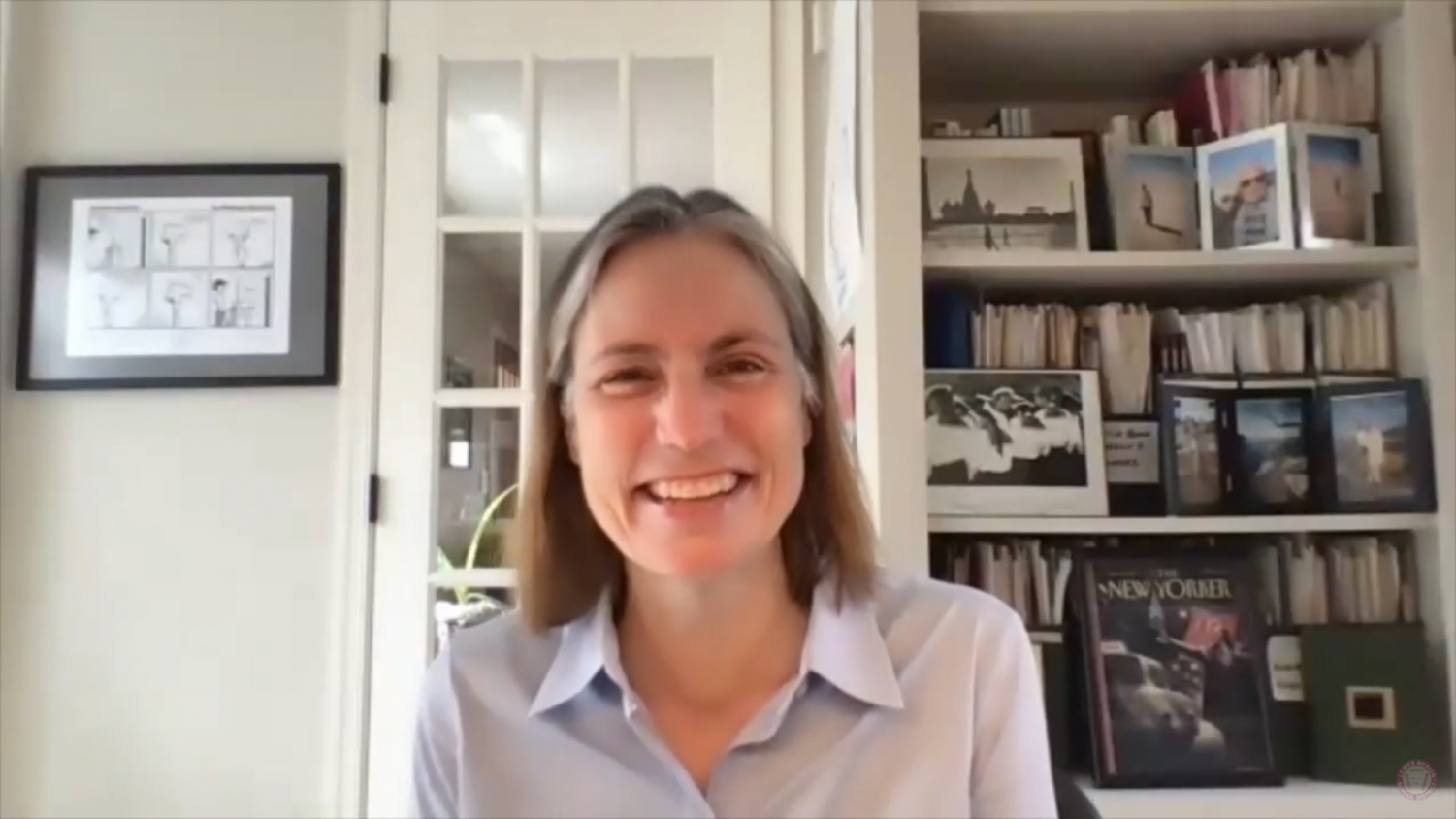
A new book about the Trump Administration was released today, and this one is likely to be much more serious than the many gossipy Trump books that have preceded it. This one is a memoir by Fiona Hill, who served in Trump’s White House as a Russia expert and then testified in the impeachment hearings.
The arresting title of Fiona Hill’s new book, “There Is Nothing for You Here,” is what her father told her when she was growing up in Bishop Auckland, a decaying coal-mining town in North East England. He loved her, and so he insisted that she had to leave.
Hill took his advice to heart — studying Russian and history at St. Andrews in Scotland, sojourning in Moscow, getting a Ph.D. at Harvard and eventually serving in the administrations of three American presidents, most recently as President Trump’s top adviser on Russia and Europe. “I take great pride in the fact that I’m a nonpartisan foreign policy expert,” she said before the House in November 2019, when she delivered her plain-spoken testimony at the hearings for the (first) impeachment of President Trump. But for her, “nonpartisan” doesn’t mean she’s in thrall to bloodless, anodyne ideas totally disconnected from her personal experience. She wrote this book because she was “acutely aware,” she says, “of how my own early life laid the path for everything I did subsequently.”
Sure enough, “There Is Nothing for You Here: Finding Opportunity in the 21st Century” weaves together these two selves, slipping back and forth between the unsentimental memoir reflected in its melancholy title and the wonkish guide promised in its inspirational subtitle. The combination, however unlikely, mostly works — though by the end, the litany of policy prescriptions comes to sound a bit too much like a paper issued by the Brookings Institution, where Hill is currently a fellow. When recounting her life, Hill is a lucid writer, delivering her reminiscences in a vivid and wry style. As much as I wanted more of Hill the memoirist and less of Hill the expert, I began to sense that giving voice to both was the only way she could feel comfortable writing a book about herself.
Looked at from afar, Hill’s story seems like a triumphant tale of striving and accomplishment. Born in 1965, she grew up in a “blighted world.” Her father followed the men in his family into the mines when he was 14; as the industry started to collapse in the 1960s, he found a job as a hospital porter. Hill’s mother worked as a midwife. As late as the 1970s, Hill’s grandparents lived in a subsidized rowhouse without “mod cons,” or modern conveniences, including indoor plumbing. Her grandfather had been pierced by the “windy pick” — the pneumatic drill — and had to wear a brace around his pelvis “to keep his battered insides in” for the rest of his life.
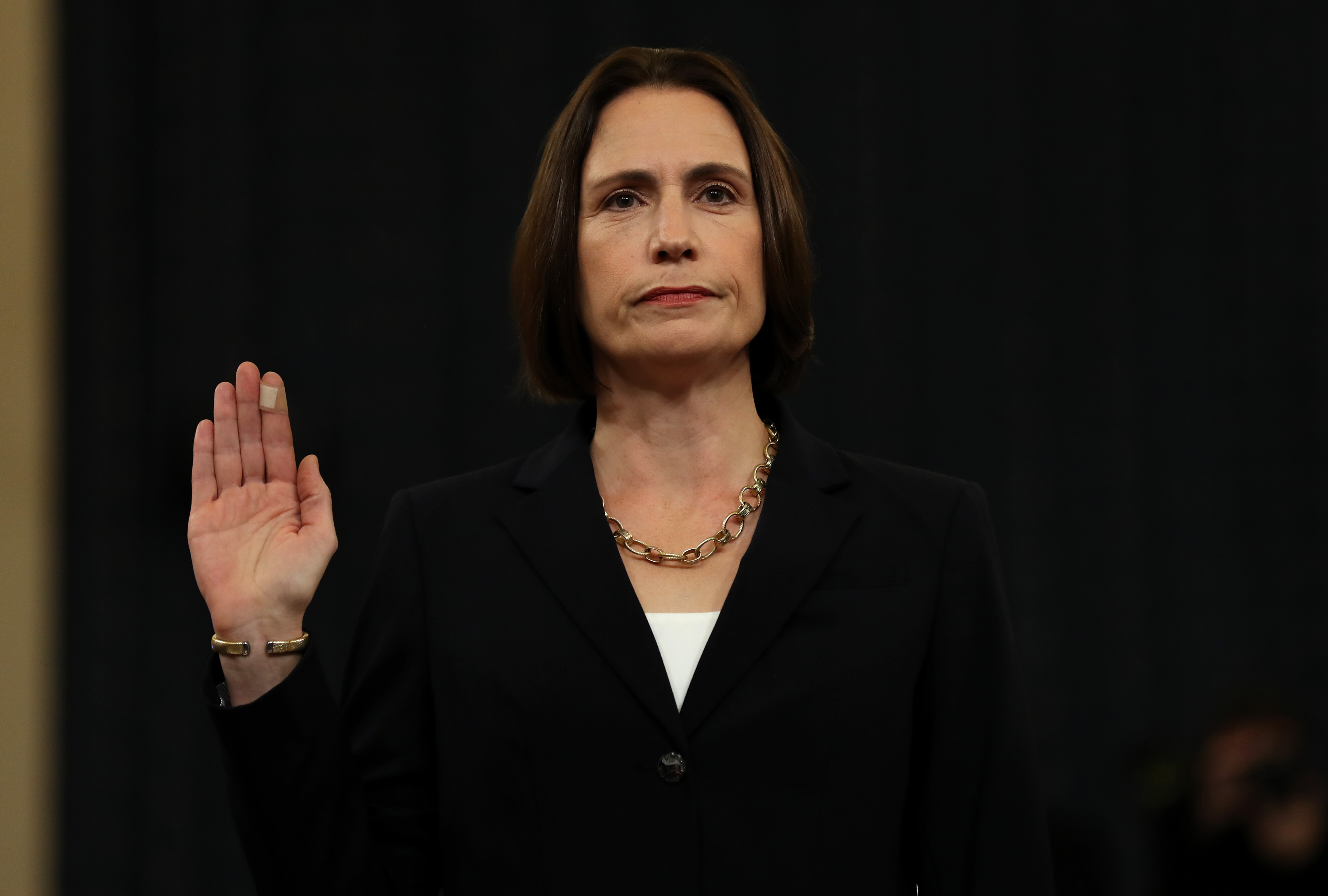
Fiona Hill is worn in at the House Intelligence Committee Open Impeachment Hearings.
Read more about Hill’s early life at the link. Here’s a bit about her experiences in the Trump White House.
Instead of making the usual insider-memoir move of fixating on all the brazenly outrageous behavior — the bizarre comments, the outlandish tweets — Hill notices his insecurities, the soft spots that, she says, made him “exquisitely vulnerable” to manipulation. Yes, she writes, the Kremlin meddled in the 2016 election — but unlike the #Resistance crowd, which insists that such meddling was decisive, Hill is more circumspect, pointing out that Vladimir Putin wasn’t the force that tore the country apart; he was simply exploiting fissures that were already there.
Just as concerning to her was the way that people around Trump would wreak havoc on one another by playing to his “fragile ego” — spreading rumors that their rivals in the administration had said something negative about Trump was often enough to land those rivals on what the president called his “nasty list.” Hill says that watching Trump fulminate made her feel like Alice in Wonderland watching the Queen of Hearts, with her constant shouts of “Off with their heads!” In Hill’s telling, Trump’s norm-breaking was so flagrant and incessant that she compares him, in her matter-of-fact way, to a flasher. “Trump revealed himself,” she writes, “and people just got used to it.”
But neither Trump nor Putin — who was the subject of one of Hill’s previous books — is what she really wants to talk about. What she sees happening in the United States worries her. Economic collapse, structural racism, unrelieved suffering: Even without Trump, she says, none of the country’s enormous problems will go away without enormous efforts to address them. Hill the expert points to heartening examples of benevolent capitalism at work. But Hill the memoirist knows in her bones that the neoliberal approach, left to its own devices, simply won’t do.
I cannot wait to read this book. More articles about it to check out:
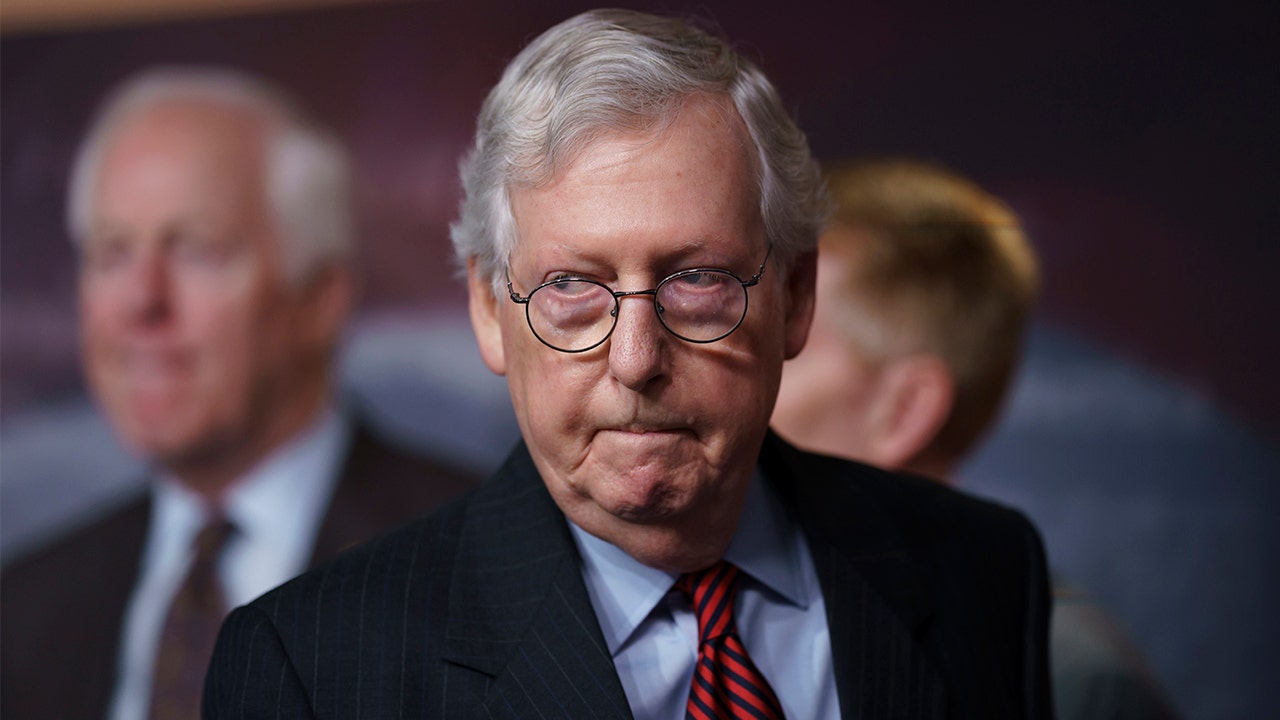
In March 2006, as the government veered dangerously close to a default, Senator Mitch McConnell of Kentucky, the No. 2 Republican, let the Bush White House know he was two votes short of what he needed to raise the legal limit on federal borrowing.
Andrew H. Card Jr., then the White House chief of staff, began working the phones. He soon found two Democrats willing to break ranks and vote to put the legislation over the top. But Mr. McConnell was holding out for something else entirely, hoping to extract concessions from President George W. Bush as the price for uniting Republicans around lifting the limit.
“I don’t need your damned votes,” he snapped at Mr. Card. He lifted the debt ceiling with Republicans only.
Mr. Card never learned what the Senate leader wanted, but he tells the story for a reason: Mr. McConnell has long used the periodic need to raise the government’s borrowing limit as a moment of leverage to secure a policy win, as have leaders of both parties.
But two weeks before a potentially catastrophic default, Mr. McConnell has yet to reveal what he wants, telling President Biden in a letter on Monday, “We have no list of demands.”
Instead, he appears to want to sow political chaos for Democrats while insulating himself and other Republicans from an issue that has the potential to divide them.
Mr. McConnell has said the government must not be allowed to stop paying its debts; he has also said he will not let any Republicans vote to raise the limit, while moving repeatedly to block Democrats from doing so themselves. Instead, he has prescribed a path forward for Democrats: Use a complicated budget process known as reconciliation to maneuver around a Republican filibuster that he refuses to lift.
Asked what he wanted, that was his answer: “As I have said for two months, I want them do it through reconciliation.”
So what’s the problem then? Why don’t the Democrats just do it through reconciliation? Of course that is another problem, because Joe Manchin and Kirsten Sinema are standing in the way of the reconciliation bill. And what the hell do they want? A couple of reads on those two:
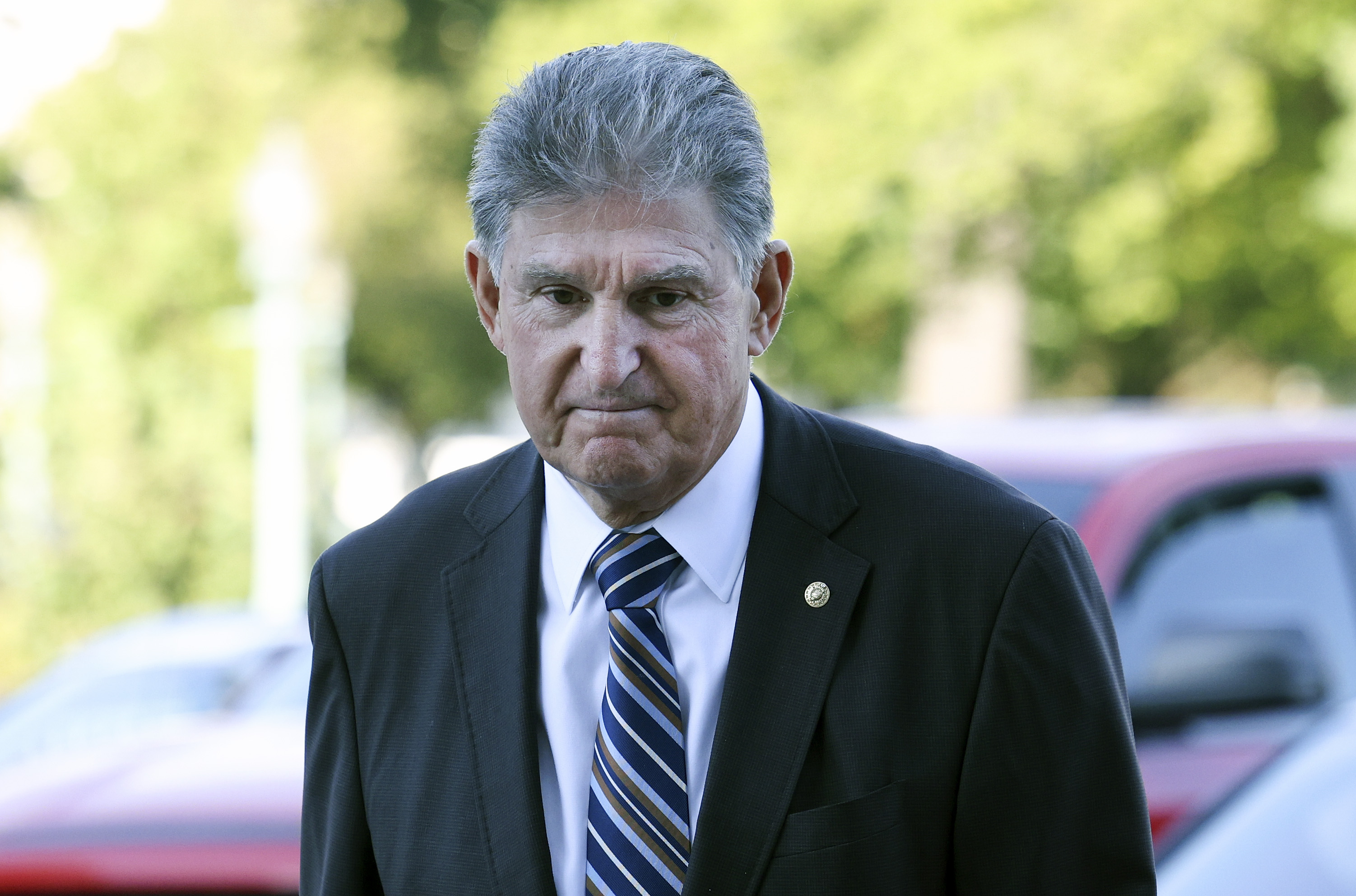
Democratic Sen. Joe Manchin on Monday pushed back on several politically sensitive positions his party leaders are taking at a crucial time for President Joe Biden’s domestic agenda.
The West Virginia Democrat, who holds a pivotal vote in the 50-50 Senate, indicated to CNN that he disagrees with the strategy top Democrats are pursuing in the standoff with Republicans over raising the national debt limit. Manchin said that Democrats “shouldn’t rule out anything,” including a budget process that Democratic leaders have made clear they will not employ.
Speaking to reporters, Manchin also would not commit to the new timeline set by party leaders to find a deal on the social safety net expansion by October 31. And he sounded resistant to calls from progressives and other top Democrats to raise his $1.5 trillion price tag for the package, which many in his party view as too low to achieve key policy objectives.
On Tuesday, however, Manchin did not rule out a $1.9 trillion to $2.2 trillion price tag for the social safety net package, a range Biden has floated privately. “I’m not ruling anything out,” Manchin said when asked by CNN if he would rule out that number.
In a stark warning sign to progressives, Manchin also indicated the package must include a prohibition against using federal funds for most abortions. “The Hyde Amendment is a red line,” he said. Manchin’s stance puts him at odds with progressives, with Congressional Progressive Caucus Chair Pramila Jayapal saying Sunday she would not support a package that included the Hyde Amendment.
In 2003, Joe Lieberman, at the time one of the worst Democratic senators, traveled to Arizona to campaign for his party’s presidential nomination and was regularly greeted by antiwar demonstrators. “He’s a shame to Democrats,” said the organizer of a protest outside a Tucson hotel, a left-wing social worker named Kyrsten Sinema. “I don’t even know why he’s running. He seems to want to get Republicans voting for him — what kind of strategy is that?”
It was a good question, and one that many people would like to ask Sinema herself these days. People sometimes describe the Arizona senator as a centrist, but that seems the wrong term for someone who’s been working to derail some of the most broadly popular parts of Joe Biden’s agenda, corporate tax increases and reforms to lower prescription drug prices. Instead, she’s just acting as an obstructionist, seeming to bask in the approbation of Republicans who will probably never vote for her.
A “Saturday Night Live” skit this weekend captured her absurdist approach to negotiating the reconciliation bill that contains almost the entirety of Biden’s agenda. “What do I want from this bill?” asked the actress playing Sinema. “I’ll never tell.” It sometimes seems as if what Sinema wants is for people to sit around wondering what Sinema wants.
When Sinema ran for Senate, the former left-wing firebrand reportedly told her advisers that she hoped to be the next John McCain, an independent force willing to buck her own party. Voting against a $15 minimum wage this year, she gave a thumbs down — accompanied by an obnoxious little curtsy — that seemed meant to recall the gesture McCain made when he voted against repealing key measures of the Affordable Care Act in 2017.
But people admired McCain because they felt he embodied a consistent set of values, a straight-talking Captain America kind of patriotism. Despite his iconoclastic image, he was mostly a deeply conservative Republican; as CNN’s Harry Enten points out, on votes where the parties were split, he sided with his party about 90 percent of the time.
Sinema, by contrast, breaks with her fellow Democrats much more often. There hasn’t been a year since she entered Congress, Enten wrote, when she’s voted with her party more than 75 percent of the time. But what really makes her different from McCain is that nobody seems to know what she stands for.
Click the link to read more.
There’s lots more news out there. I’ll post more links in the comments. As always, this is an open thread.
Did you like this post? Please share it with your friends:
President Biden made a dramatic appearance on Capitol Hill yesterday to urge Democrats to find a compromise on the infrastructure bills. His visit was apparently prompted by the progressive caucus forcing Speaker Pelosi to delay the planned Thursday vote on the bi-partisan portion of the bill separately from the budget bill that is to be passed by reconciliation.
The nearly 100-member caucus refused to support a $1 trillion infrastructure bill that is a major piece of President Biden’s agenda, seeking leverage for a bigger fight.
Their stance forced Speaker Nancy Pelosi to delay a planned vote on the measure and ultimately prompted Mr. Biden to side with them in saying that there could be no vote on the infrastructure legislation until agreement on a far broader, multitrillion-dollar social policy and climate measure.
The maneuver drew plaudits from liberal activists who had watched with dismay in the past as their allies in Congress caved to pressure from Democratic leaders and surrendered in policy fights. And it signaled that the progressives enjoyed newfound influence, including the backing of a president long associated with his party’s moderates.
“Things only happen here when there is urgency,” Representative Pramila Jayapal of Washington, the chairwoman of the Congressional Progressive Caucus, said on Friday. “I’m just so proud of our caucus, because they are standing up for people who feel like they have not been heard in this country for a very long time.”
Still, while the progressives scored a tactical victory, negotiations continued to whittle down the size of the social policy and climate bill, which was already much smaller than the initial $6 trillion to $10 trillion that many of them had envisioned.
Their persistence also risked the collapse of both bills, angering moderates in the party who had delivered the slim majority to Democrats and are at the highest risk of losing their seats in the midterm elections.
President Biden, meeting with House Democrats on Capitol Hill on Friday, indicated they must further delay a final vote on a $1.2 trillion bipartisan infrastructure bill and scale back his $3.5 trillion social spending package to around $2 trillion range if either is to pass, lawmakers told Axios.
Why it matters: Biden made clear he wants to keep the two packages linked together and that he is optimistic there can be an agreement.
“It doesn’t matter if it’s six minutes, six days or six weeks, we’re going to get it done,” the president told reporters on his way out of the meeting.
Two lawmakers told Axios they anticipated it could be another month before both bills can be passed.
While moderates don’t want to wait on the infrastructure vote and progressives don’t want to spend less on the social programs, the pause likely moves the fragile Democratic coalition closer to ultimately securing major portions of the president’s agenda ahead of the 2022 midterms….
What they’re saying: “He is the President of the United States and he says that he wants to get this done, and he basically linked them together,” Rep. Henry Cuellar (D-Texas), a moderate Democrat, told Axios.
“He basically said it’s not going to be $3.5 (trillion). It could be $1.9 trillion-$2 trillion. The president threw out some numbers, so I assume there was a reason why.”
The president discussed a range that went as high as $2.3 trillion, other sources in the room said.
“The president said we’re gonna get both bills done, and in order to get the rest done, we have to get this agreement on the reconciliation,” Rep. Pramila Jaypal (D-Wash.), chairwoman of the Progressive Caucus, told reporters.
Yesterday, before Biden’s visit to Congress, the Washington Post’s Greg Sargent wrote that the White House didn’t pressure progressives to vote for the infrastructure bill on Thursday. Opinion: The Biden agenda is in peril. Here’s the hidden reason it might survive.
By Natalya Bronnikova
If you want a glimpse into the deeper choreography behind the Democratic maneuvering around President Biden’s agenda, start with a call that Rep. Pramila Jayapal (D-Wash.) received from a senior White House adviser late Thursday night.
The adviser informed Jayapal, the Congressional Progressive Caucus chair, that the White House had yet to reach a deal with Democratic Sens. Joe Manchin III (W.-Va.) and Kyrsten Sinema (Ariz.) on a framework for the multitrillion-dollar social policy bill that is to pass by reconciliation, a Democratic aide familiar with the call tells me.
Democratic leaders were set to hold a House vote on the bipartisan infrastructure bill that passed the Senate — yet the White House adviser exerted no pressure on Jayapal to get progressives to vote for it, the aide confirms. Soon after, House Speaker Nancy Pelosi (D-Calif.) canceled the vote because it would have failed.
This underscores a critical element of the dance unfolding among Democrats: The remarkable absence of Democratic leadership pressure on progressives to drop their strategy of withholding support from the infrastructure bill to leverage centrists into supporting a robust reconciliation package.
This dynamic is key to understanding what might happen next — but also how it could all come crashing down.
Sargent explains:
By refusing to help pass the infrastructure bill, progressives helped secure more space for negotiations on the reconciliation framework. The reconciliation bill is the Biden and Democratic Party agenda: It’s made up of all the climate provisions, economic infrastructure and tax reforms designed to secure our decarbonized future and rebalance our political economy after decades of upward skew.
The centrists are the ones who oppose passing this agenda. For that framework, Manchin seems to be insisting on a top line of $1.5 trillion — less than half the $3.5 trillion target Biden wants — as well as making its welfare benefits less universal via means testing and its climate change provisions more friendly to fossil fuel interests. And it’s still unclear what Sinema wants.
By Sandra Bierman, 1938
But importantly, they all seem to be seriously negotiating. The key nuance here is that Democratic leaders would have preferred the infrastructure bill to pass Thursday, to bank this as a win, but at the same time, they didn’t lean very hard on progressives to help do this. They knew it wouldn’t work, because progressives are dug in, and it’s precisely because Democratic leaders have largely accepted this that success is more likely.
In short, the White House and Democratic leaders aren’t asking the left to function as their bad cop against centrists — but they know having a bad cop is useful. It’s spurring along these negotiations over the reconciliation framework. All this helps explain why that lack of pressure on the left is a critical ingredient.
Read the rest at the WaPo.
Congressional Democrats also face an upcoming battle with Republicans on the debt ceiling. The Federal government will run out of money in mid-October. Mitch McConnell says that Republicans won’t support raising the debt limit and Democrats will have to do it on their own somehow. Jennifer Bendery at Yahoo News:
Congress has less than three weeks left to raise the debt limit before the U.S. government runs out of money, something that’s never happened before and would translate to economic disaster for the entire country.
But there’s no plan on how to get this done in the Senate, where Minority Leader Mitch McConnell (R-Ky.) keeps saying that Democrats, led by Majority Leader Chuck Schumer (D-N.Y.), are on their own and that it’s totally normal for Republicans to stand in the way of doing this.
“The facts are that the majority party has had in the past, in this situation, to raise the debt ceiling by themselves,” McConnell told reporters Tuesday. “The last time that happened, during [President George W. Bush’s administration], both Schumer and [then-Sen. Joe] Biden voted against raising the debt ceiling. So, there is no tradition of doing this on a bipartisan basis.”
He added, “Sen. Schumer and now-President Biden were in exactly the same position, in reverse, during the Bush years. They handed us the opportunity to raise the debt ceiling one-party only. Around here, almost everything comes around.”
Muppet on the Quilt, Lesley Anne Ivory
But the GOP leader is wildly mischaracterizing what Republicans are doing right now, which is far more dangerous than he’s letting on. He’s simply hoping that people aren’t paying attention or don’t know what he’s talking about as the U.S. government inches closer to defaulting on its debt obligations.
McConnell is arguing that because Democrats voted against raising the debt limit in 2006, when Republicans controlled the White House and Congress, it’s no different than Republicans forcing Democrats to raise the debt limit by themselves this time around.
It is very different. In 2006, Democrats agreed to a request by then-Majority Leader Bill Frist (R-Tenn.) to let the Senate increase the debt limit by a simple majority vote, or 51 votes, instead of requiring 60 votes to break a filibuster. That ensured that Republicans had enough votes to raise the debt ceiling themselves, by a vote of 52-48. Getting it done was never in doubt.
The review concluded that the White House would be unable to avoid falling behind on obligations and catastrophic economic consequences even if the administration effectively tried to spend in defiance of the debt ceiling, according to one of the officials familiar with the deliberations.
The debt ceiling sets a legal limit on how much the Treasury Department can borrow, and the government will run out of flexibility to avoid breaching the debt ceiling on Oct. 18.
By Sandra Bierman
As part of their internal review, White House officials have circulated internal memos with a range of untested theories should Congress fail to resolve the debt ceiling standoff, including the creation of a $1 trillion “coin” idea that has been popular among some liberals for years, the people said. But these options have been set aside as unworkable, the people said….
A senior official familiar with the matter said it was the administration’s responsibility to review all possible options. Still, White House officials have reached the conclusion that unilateral action is not viable and the only way to avoid economic devastation is for Congress to act to maintain the full faith and credit of the U.S. government, according to the officials and Michael Gwin, a White House spokesman.
The obvious solution, proposed by Georgetown Law professor and congressional procedure expert David Super, would be for Democrats to use the budget reconciliation process to eliminate the debt ceiling with a majority vote in the Senate. That path faces myriad procedural obstacles, though, and unless Congress moves decisively toward pursuing it, the Biden administration needs to start thinking about backup options.
Some of these options might seem unacceptably extreme. But an absurd crisis calls for absurd solutions. The Biden administration should, if Republicans in the Senate continue to promise a filibuster of a debt ceiling increase, unilaterally abolish the ceiling using executive powers.
There are at least four available to Biden, each with their own advantages and disadvantages:
Minting super-high-value coins to fund the government
Invoking the 14th Amendment to nullify the debt ceiling
Issuing more debt as the “least illegal” option available to the Treasury
Creating a new class of bond to fund the government while it cannot issue Treasury bonds
Taņa with a cat, Aleksandra Beļcova, 1928
Each of these actions would effectively make the debt ceiling law a dead letter. Congress (or a minority thereof) would no longer be able to threaten default as a means of extracting concessions from the president, and the single biggest source of inter-branch conflict in the federal government would cease to exist.
The short-term political implications could be tough for the Biden administration to bear. But if the choice is between default and a presidential power grab, a power grab is the only defensible course of action. A responsible leader does not plunge his people into a wholly preventable financial crisis. If backed against a wall, Biden mustn’t flinch. He must kill the debt ceiling once and for all.
Senate Majority Leader Chuck Schumer announced Wednesday night that an agreement to keep the government funded and prevent a government shutdown has been reached.
“We have an agreement on the C.R. — the continuing resolution — to prevent a government shutdown, and we should be voting on that tomorrow morning,” he said on the Senate floor. The majority leader said he hopes to hold a vote on final passage by midday — hours before government funding would have run out, at midnight Thursday.
The short-term government funding bill would keep federal agencies operating through December 3, but it does not address the looming deadline to raise the debt ceiling to avoid U.S. default. The bill includes $6.3 billion for relocation efforts for Afghan refugees, as well as $28.6 billion for disaster assistance following a spate of devastating hurricanes and wildfires.
Once the bill passes in the Senate, the House will take it up, so it can then be sent to President Biden to sign before government funding expires.
Georgia O’Keeffe, Sunset Long Island
Next on the Congressional agenda: Biden’s infrastructure bills, which are being held hostage by “Democrats” Joe Manchin and Kyrsten Sinema.
House Democrats facing down tight deadlines and spiraling worries that President Biden’s agenda could soon fall apart are growing increasingly exasperated with a pair of Democratic senators whose votes are key but whose views are unclear when it comes to what they want out of legislation to expand the social safety net.
Sens. Joe Manchin III (W.Va.) and Kyrsten Sinema (Ariz.) have said Biden’s $3.5 trillion proposal for expanding heath care access, boosting education programs and fighting climate change is too expensive, but they have been reluctant to engage in detailed discussions about how they want it changed.
“We need to know what he’s a skeptic on so that we can have the conversation with him. There has been no clarity in what they actually want, both Sinema and Manchin,” said Rep. Ilhan Omar (D-Minn.), a member of the House Progressive Caucus.
Until they do, House liberals eager to enact the legislation say they are essentially banging their heads against the wall. House moderates, meanwhile, are wary of signing onto potentially politically fraught policies until they know whether they have the blessing of the senatorial pair and will make it into law.
Claude Monet, Sunset
A vote is scheduled in the House today, but no one knows what would be required for it to pass the Senate.
Late Wednesday, Manchin released the type of statement that has irritated large groups of Democrats in the past with its emphasis on slowing down and scaling back.
“At some point, all of us, regardless of party must ask the simple question — how much is enough?,” he wrote. Manchin didn’t provide more details on his views beyond concern over the package’s size, but he did emphasize that he wanted any new programs to have provisions that would establish limits on who could receive the benefits based on income….
Rep. Henry Cuellar (D-Tex.), a moderate Democrat who wants to pass the infrastructure bill regardless of the state of negotiations on the other package, said he has spoken to Manchin, who told him his top line number, but Cuellar would not say what it was. Manchin has floated that something in the range of $1.5 trillion to $2 trillion could potentially work, but Sinema has not given any inclination of what she could support.
While Manchin often talks with reporters, puts out statements and writes op-eds, Sinema prefers to share as little as possible publicly and declines to answer reporters’ questions.
Jade Duran once spent her weekends knocking on doors to campaign for Senator Kyrsten Sinema, the stubbornly centrist Democrat whose vote could seal the fate of a vast Democratic effort to remake America’s social safety net. But no more.
When Ms. Sinema famously gave a thumbs down to a $15 minimum wage and refused to eliminate the filibuster to pass new voting rights laws this year, Ms. Duran, a Democrat and biomedical engineer from Phoenix, decided she was fed up. She joined dozens of liberal voters and civil rights activists in a rolling series of protests outside Ms. Sinema’s Phoenix offices, which have been taking place since the summer. Nearly 50 people have been arrested.
“It really feels like she does not care about her voters,” said Ms. Duran, 33, who was arrested in July at a protest. “I will never vote for her again.”
Ms. Sinema, a onetime school social worker and Green Party-aligned activist, vaulted through the ranks of Arizona politics by running as a zealous bipartisan willing to break with her fellow Democrats. She counts John McCain, the Republican senator who died in 2018, as a hero, and has found support from independent voters and moderate suburban women in a state where Maverick is practically its own party.
But now, Ms. Sinema is facing a growing political revolt at home from the voters who once counted themselves among her most devoted supporters. Many of the state’s most fervent Democrats now see her as an obstructionist whose refusal to sign on to a major social policy and climate change bill has helped imperil the party’s agenda.
Little can proceed without the approval of Ms. Sinema, one of two marquee Democratic moderates in an evenly divided Senate. While she has balked at the $3.5 trillion price tag and some of the tax-raising provisions of the bill, which is opposed by all Republicans in Congress, Democrats in Washington and back home in Arizona have grown exasperated.
With a critical vote looming on a pivotal part of President Joe Biden’s domestic agenda, it’s a put-up or shut-up moment for every faction of the Democratic Party, but one particular group especially: the Progressive Caucus.
In recent years, liberal Democrats have often found themselves swallowing much of their discontent as watered-down policies and compromises were the norm in a divided government. But with Democrats now fully in control of Washington, progressives finally seem poised to fight.
There are two bills Biden has said he wants to get done: a bipartisan $1 trillion infrastructure bill for things like roads and bridges, and a $3.5 trillion bill for social programs like childcare, elder care, climate change, and a host of other programs that Democrats would have to pass on their own through a special reconciliation process.
After the $1 trillion infrastructure bill passed the Senate in August, a small group of moderates in the House have been angling for ways to pass that bill and only that bill—the larger reconciliation package be damned. Progressives, realizing that this is the gambit, have sworn they will not support the infrastructure bill unless and until the $3.5 trillion package moves through Congress too.
On Thursday, progressives may finally get their chance to show moderates that they aren’t bluffing.
Speaker Nancy Pelosi (D-CA) has promised a vote on the infrastructure bill, and though that plan has been rapidly in flux for days, progressives will get a chance to demonstrate to moderates that it’s all or nothing—either both bills pass, or none of them do.
President Biden is navigating the most perilous week for his legislative agenda yet with an approachhe’s honed over his decades in Washington: Hear out the warring factions, determine the realm of the possible and find the point of compromise that satisfies all sides.
That strategy has been clear in meetings with pivotal Democrats in the past week, with Biden speaking and hosting a stream of lawmakers — in particular a pair of moderate Senate Democrats who have wielded outsize influence in shaping the president’s agenda.
But the lack of tangible progress evident from those talks, combined with growing concerns from congressional Democrats, are testing the legislative acumen of a president who prides himself as a consummate creature of Capitol Hill. Particularly in the House, there are growing calls from Democrats for Biden to be more forcefully and personally involved with the domestic policy plans, largely viewed as the party’s one and only shot to enact their top priorities ahead of the 2022 midterms.
“I do think it would be helpful for the president to be more engaged,” said Rep. Daniel Kildee (D-Mich.). “I think his voice matters a lot.”
Kildee added: “He’s been engaged, don’t get me wrong. But I think him becoming more personally engaged would be helpful.”
How Biden cajoles key moderate holdouts and assuages restive liberals will help determine the fate of his chief domestic priority in Congress — a sweeping package totaling trillions in new spending that aims to remake much of the nation’s social safety net and invest in health and climate priorities by raising taxes on the wealthy and corporations. It will also test his ability to cut deals — a skill he’s proved over the years, from an agreement with Senate Minority Leader Mitch McConnell (R-Ky.) to avert the so-called “fiscal cliff” in 2012 to persuading a handful Republican senators to support the economic stimulus in 2009 — but this time, with his own party and with Biden as the leader.
The Sky Dancing banner headline uses a snippet from a work by artist Tashi Mannox called 'Rainbow Study'. The work is described as a" study of typical Tibetan rainbow clouds, that feature in Thanka painting, temple decoration and silk brocades". dakinikat was immediately drawn to the image when trying to find stylized Tibetan Clouds to represent Sky Dancing. It is probably because Tashi's practice is similar to her own. His updated take on the clouds that fill the collection of traditional thankas is quite special.
You can find his work at his website by clicking on his logo below. He is also a calligraphy artist that uses important vajrayana syllables. We encourage you to visit his on line studio.











 In other news, we’re still facing the possible default of the United States leading to a global financial crisis. Jonathan Weisman at The New York Times:
  CNN:
CNN: 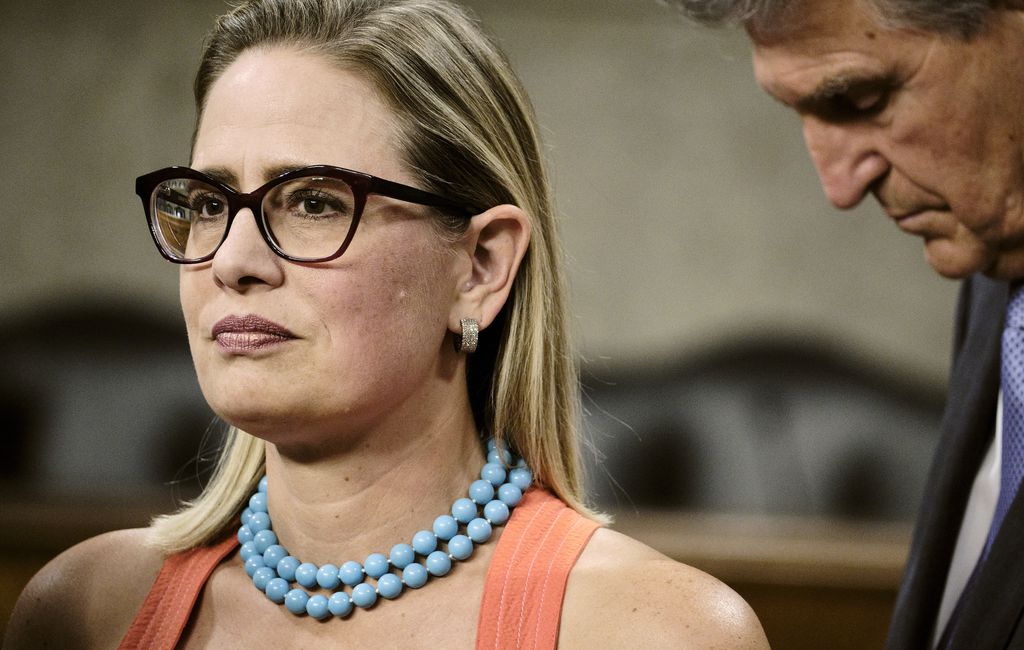 Michelle Goldberg at The New York Times:










 peej
peej Carissa
 bostonboomer
 dakinikat
 ecocatwoman
 mablue2
 Mama Lopez
 peggysue22
 quixote
 skydancingguestblogger
 Mona (aka Wonk the Vote)



 Sky Dancing
Recent Comments