There’s lots of news today, so this post will be a mixed bag with stories on the Iran war, Trump’s boat strikes, last night’s primaries, the CBS/60 Minutes controversy, and more.
Trump’s war on Iran is getting stupider by the day. For several weeks now, Trump has been saying that a deal to end the war was just days away. A short time ago, he told Netanyahu not to respond to strikes by Iran in Israel. Netanyahu quickly proceeded to bomb Iran anyway. Then a U.S. helicopter went down in the Strait of Hormuz, and Trump responded even though it’s not clear that the helicopter was deliberately shot down. It may have just collided with a Iranian drone.
The US says it has carried out a series of strikes on Iranian military and surveillance sites in response to the downing of an American helicopter in the Gulf.
Air defence systems, ground control stations and radar sites were targeted near the Strait of Hormuz, the US military Central Command (Centcom) said.
In response, Iran’s Islamic Revolutionary Guard Corps (IRGC) said it launched strikes on 21 targets at US bases in the region, one in Bahrain and the other in Jordan, while Kuwait’s army said it was also intercepting an attack.
Boeing AH-64 Apache
The US has described its strikes as “a proportional response” for the Apache helicopter downing on Monday, while the IRGC described the attacks as “vicious”.
US President Donald Trump had earlier accused Iran of shooting down the helicopter and said the US “must, of necessity” respond. The two crew members survived and were rescued by an American sea drone.
According to US officials, Iran used a drone to launch the attack on the helicopter. But it is not clear whether the Iranian drone had deliberately attacked, an unnamed US official told CBS News, the BBC’s US partner. The semi-official Mehr News Agency reported that Iran had not claimed responsibility for the downed aircraft.
So now the war is back on, after months of Trump promising the end was near. This morning, Trump threatened Iran with more attacks.
US President Donald Trump and Iran’s senior officials have traded new threats of further action, after the two sides exchanged strikes.
Trump said Tehran had taken “too long to negotiate a deal” and would now “have to pay the price”, without giving specific details. He said Iran had been “completely defeated” and was “all talk and no action”.
It came after Iran’s Foreign Minister Abbas Araghchi earlier warned his country would “leave no attack or threat unanswered”, saying that the US had suffered “defeats on the battlefield”.
The US said it struck Iranian sites on Tuesday in response to the downing of a US army helicopter in the Gulf. Iran then launched strikes at US bases in the region.
Iranian defence systems, ground control stations and radar sites were targeted near the Strait of Hormuz, the US military Central Command (Centcom) said.
Iran’s Islamic Revolutionary Guard Corps (IRGC) said it launched strikes on 21 targets at US bases in the region, one in Bahrain and the other in Jordan, while Kuwait’s army said it was also intercepting an attack.
Writing on his social media platform Truth Social on Wednesday, Trump said: “Iran’s Military is a complete and total mess. Much of it, like their Navy and Air Force, doesn’t even exist anymore – They have been completely defeated.”
He added: “They’ve taken too long to negotiate a deal that would have been great for them, now they will have to pay the price!!!”
Trump’s comments were in contrast to Tuesday, when he told journalists the US and Iran were “in the final throes of what will be a very, very good deal”.
Also on Wednesday, Iran’s foreign ministry spokesman Esmaeil Baqai accused the US of “damaging this diplomatic process through the contradictory messages it sends, its repeated shifts in positions and demands, and, worst of all, through repeated violations of the ceasefire”.
I have to agree with Iran here. Trump behaves like a 6-year old child–issuing threats while claiming an agreement is close–and using posts on Truth Social to communicate threats that he probably hasn’t discussed with any of his military advisers. And where are the negotiators anyway? Jared Kushner was a the New York Knicks game on Monday night. All this because Trump cancelled Obama’s Iran agreement.
Nine months into the Trump administration’s deadly campaign against so-called drug boats, there is a pattern to the strikes. And a glaring anomaly.
The U.S. military has conducted more than 60 attacks, resulting in over 200 extrajudicial killings in the Caribbean Sea and Pacific Ocean. In almost all the strikes, between one and four people lost their lives. In only one strike did the death toll of a single boat reach double digits: the first attack on September 2, 2025.
Since then, experts, lawmakers, and even military officials behind the scenes have been asking a simple but haunting question: Why was that boat packed with 11 people?
“Why would 11 people be on board a boat carrying drugs?” said a government source who attended a classified briefing where the large crew on the first boat attacked was discussed. “It’s a high risk for the cartels. That always stood out.”
One top military officer provided a plausible explanation, behind closed doors on Capitol Hill, The Intercept has learned. His admission raises even more questions about a strike that a high-ranking Pentagon official called a criminal attack on civilians and resulted in a firestorm in Congress last year.
In the briefing, the high-ranking officer on the Pentagon’s Joint Staff stated that some of the people killed by the U.S. military may have been the victims of human trafficking.
Read all the details at The Intercept.
Several states held primaries yesterday. The most watched ones were in Maine and California. In Maine, Graham Platner won the Democratic Senate primary and will face long-time Senator Susan Collins in November.
It’s official: Republican Sen. Susan Collins will face Democrat Graham Platner this fall, NBC News projects, in what will be a marquee election in the fight for control of the Senate.
Collins and Platner both won their primaries Tuesday in a predictable result. Collins, first elected to the Senate in 1996, ran unopposed for renomination as she seeks a sixth six-year term.
And Platner, a veteran and oyster farmer running in his first political race, faced little Democratic competition as two-term Gov. Janet Mills suspended her campaign after she failed to gain traction. She still appeared on the primary ballot.
Graham Platner and Susan Collins
While the primary results were foreseeable, what happens next is anything but. The Senate election has already become a battleground over the future of the Democratic Party and what voters think is most important, as Platner faces numerous controversies about his past conduct.
And that’s before the real campaigning between the resilient incumbent and the brash outsider has even kicked off, though Platner started the general election with a series of stinging attacks on Collins at a victory speech in Blue Hill, Maine. The Democrat cast her as the “deciding vote” on Republican priorities including Supreme Court Justice Brett Kavanaugh’s confirmation
“Susan Collins may have started her career decades ago in Washington with good intentions, but she has become just as spineless and corrupt as the establishment she now serves,” Platner said. “She got elected promising to protect Roe versus Wade, only to turn around and put on a justice, but a justice of Supreme Court who overturned it. She lied to us.”
In a statement, Collins’ campaign said, “Mainers aren’t looking for bitter campaigns, grand promises, or angry speeches riddled with lies. They’re looking for results. They want affordable health care, safe communities, good-paying jobs, strong schools, and someone who will show up and do the work.”
Steve Hilton, a Republican former Fox News host who was endorsed by President Trump, has secured the second spot in the November general election for California governor, The Associated Press determined on Tuesday. He will face Xavier Becerra, a Democrat who served in the Biden administration.
The candidates survived an unprecedented barrage of spending for a California governor’s race. Tom Steyer, a billionaire who ran as a progressive Democrat, devoted more than $216 million of his personal fortune toward his primary campaign, finishing third.
Under California rules, the top two finishers in the primary election, regardless of party, advance to the general election. There had been a chance that Mr. Steyer would face Mr. Becerra in an intraparty battle in November, but Tuesday’s outcome instead sets up a lopsided contest in a state where a Republican has not won the governor’s office in two decades.
The winner will replace Gov. Gavin Newsom, who cannot run again because of term limits and is considered a potential Democratic presidential candidate for 2028.
This sets up a likely win for Democrats, since California is one of the bluest states in the country.
Mr. Hilton’s top-two finish seems to run counter to Mr. Trump’s claims in recent days that California elections are “rigged” to benefit Democrats. Mr. Hilton said on Tuesday that he takes the concern seriously, but that he has had lawyers monitoring the voting process and they have not seen signs of fraud.
Xavier Becerra and Steve Hilton
The November matchup is one that Mr. Becerra and many Democrats had hoped for, knowing that Mr. Hilton was not just a Republican, but one endorsed by Mr. Trump, who remains deeply unpopular in California.
Days before the election, Mr. Becerra released an ad that highlighted the differences between him and Mr. Hilton, whom the ad called “Trump’s favorite.” While the ad ostensibly bolstered Mr. Becerra’s anti-Trump credentials, it also seemed designed to encourage Republicans to coalesce behind Mr. Hilton and give him enough support to finish second and prevent Mr. Steyer from reaching the general election.
Republican firebrand Rep. Nancy Mace lost her GOP primary for South Carolina governor, potentially ending her rollercoaster political career.
Mace failed to advance to a runoff Tuesday. She was considered a top contender in the race until a series of scandals cut into her in-state support and she bucked President Donald Trump to help release the Jeffrey Epstein files.
Trump’s preferred candidate, South Carolina Lt. Gov. Pamela Evette, and Attorney General Alan Wilson advanced to a runoff June 23.
The Palmetto State primary was for months defined by Trump’s absence from the race, despite the six Republicans candidates vying for his attention and support. Trump only endorsed Evette in the final two weeks, touting her closeness with his ally and early backer, outgoing GOP Gov. Henry McMaster.
In an interview ahead of the primary, Mace acknowledged that she likely forfeited her chance at the president’s support after her role in releasing the Epstein files late last year. She nevertheless pushed ahead, even in the face of several million dollars of negative ads from her opponents.
It’s the latest victory for Trump on the heels of his success ousting Rep. Thomas Massie (R-Ky.), Mace’s ally on the Epstein files, and Sen. Bill Cassidy (R-La.), among other GOP defectors.
Inflation surged in May to the highest level since early 2023, as Iran war-related fuel costs worked their way through the broader economy.
Overall, the yearly inflation rate rose to 4.2% in May from a year ago, up 0.5% from April.
“Inflation remains the major economic pain point regardless of who has to absorb it,” said Peter Boockvar, chief investment officer at One Point BFG Wealth.
Heather Long, chief economist at Navy Federal Credit Union said, “the frustration for many Americans is that so many of the basics are up in price right now — gas, food, electricity, and medical care are all clear pain points that are above 3% inflation.”
“This isn’t just ‘bad vibes’ about the economy,” she added.
Rising inflation comes as wage growth is falling.
For the second month in a row, inflation surpassed wage growth, which was tracking at 3.4% in the most recent jobs report. That pace has slowed since late last year, when average hourly earnings were growing consistently at nearly 4%.
On Wednesday, the Bureau of Labor Statistics announced separately that real average weekly earnings decreased 0.2 % during May and 0.7% from a year ago.
That’s the biggest year-over-year decline in real earnings since February 2023, according to federal data.
“The index for energy rose 3.9 percent in May, after rising 3.8 percent in April and 10.9 percent in March,” BLS said. “The energy index accounted for over sixty percent” of the overall number’s rise, it added.
Core inflation, which excludes food and energy, rose 2.9%, as expected. From the month before, it rose just 0.2%.
The disparity between the core inflation figure and the overall 4.2% rate was due largely to the impact of energy costs. According to BLS, energy accounted for more than 60% of the total increase in prices over the month.
And what does Trump think about this?
Q: Are you concerned about the latest inflation numbers that came out this morning?TRUMP: No, I love it. I love the inflation. You know why? Because as soon as this war is over — do you know we've been taking out millions of barrels of oil? You know who doesn't know? Iran until right now.
Bari Weiss could be taking over the editorial leadership of another news network.
Paramount has begun preliminary conversations with several top media executives about a business-side counterpart to Weiss, the CBS News editor-in-chief, as the company awaits regulatory approval of its proposed merger with Warner Bros. Discovery, two sources familiar with the matter told Axios.
“The search implies that if Paramount Skydance’s deal with Warner Bros. Discovery goes through, Weiss would oversee all news editorial across both CBS News and CNN,” Axios reported. “Her potential counterpart would manage business operations across both companies.”
Bari Weiss
Among the candidates under consideration are NBCUniversal News Group chairman Cesar Conde, CNN Worldwide CEO Mark Thompson and former NBC News president Noah Oppenheim. Paramount had also weighed Ben Sherwood, CEO of the Daily Beast and former ABC News president, and David Rhodes, former CBS News president and current Sky News executive chairman, according to a source familiar with the search.
One candidate faces a procedural hurdle. Because Paramount is still awaiting regulatory clearance to acquire WBD, company executives are barred from holding conversations with any WBD personnel — which would include Thompson.
Currently, CBS News president Tom Cibrowski serves alongside Weiss, reporting to George Cheeks, chair of TV media at Paramount. Weiss reports directly to Paramount chairman and CEO David Ellison….
“The Paramount brass loves Bari Weiss,” the source said. “She has the full confidence of David Ellison, who believes Bari has done a fantastic job as editor-in-chief.”
David Ellison, the chief executive of Paramount, promised to respect the editorial independence of “60 Minutes” in a call with Lesley Stahl, one of the show’s correspondents, she told The New York Times on Tuesday.
The call to Ms. Stahl, made on Sunday, was one of the first signs that Mr. Ellison was personally taking steps to calm the turmoil at the news network after the firing of the show’s leadership and several of its star correspondents. The overhaul, overseen by Bari Weiss, the network’s editor in chief, was met with a rebuke from Scott Pelley, a star correspondent at “60 Minutes” who has since been fired.
Ms. Stahl told the news program’s staff about Mr. Ellison’s call during a champagne toast she held at the “60 Minutes” offices in Midtown Manhattan on Monday in an attempt to shore up morale at the program.
She, Bill Whitaker and Jon Wertheim, the remaining stars of the program, had agonized about whether to stay in the aftermath of the staff changes and Mr. Pelley’s firing. But in a letter to the show’s staff Friday, they concluded that they had to remain at the show because they didn’t “want to see ‘60 Minutes’ die.”
“My toast was, ‘to us,’ meaning the survivors,” Ms. Stahl said in a text message on Tuesday. “Maybe ‘us’ with a twinge of survivor’s guilt.”
Mr. Ellison’s takeover of Paramount last year raised questions about the kind of steward he would be for CBS News. Mr. Ellison has been friendly with President Trump as his company, Paramount, seeks federal sign-off on a $111 billion deal to buy Warner Bros. Discovery. He has said he wants CBS News to appeal to what he describes as the 70 percent of Americans who consider themselves center-right or center-left.
In an interview with The Times, Mr. Pelley also said that Ms. Weiss had put her “thumb on the scale” for Mr. Trump during the last season of “60 Minutes,” a charge the network has denied. That assertion echoed a complaint from Sharyn Alfonsi, another correspondent, who said Ms. Weiss’s editorial guidance on one of her stories was “political.”
Last week, scores of prominent journalists, including well-known veterans of CBS News, signed an open letter to Mr. Ellison, who took over Paramount’s CBS last year, asking him to commit to the show’s independence. He has not yet weighed in publicly.
I’ll believe it when I see it, especially if Bari Weiss is still running CBS.
Scott Pelley warns CBS News is “on fire”youtu.be/Az8KobdJ84g?…
On July 17, 2025, at around 6 o’clock in the evening, President Trump’s top officials filed into the White House Situation Room — the secure bunker where classified and high-stakes national security matters are discussed and decided. This was where President Barack Obama, along with Vice President Joe Biden, Secretary of State Hillary Clinton and the president’s national security team, watched the raid that ended with the death of Osama bin Laden in 2011.
Now, however, Trump’s most senior advisers had gathered — without him — to figure out how to gain some measure of control over a very different kind of crisis threatening to engulf the presidency: the Epstein files.
Ten days earlier, the Justice Department and the F.B.I. had jointly released a memo that bluntly stated that their review had found no “client list” of powerful men for whom the notorious pedophile Jeffrey Epstein had allegedly procured underage girls and young women. Intended to put to rest years of speculation and end the pressure campaign to release the voluminous material in the department’s possession, the memo instead had the opposite effect, setting off a backlash that was notably loud among the MAGA base.
And it was about to get worse: The Wall Street Journal was preparing a damaging article about Trump’s relationship with Epstein. The president’s desperate attempts to kill the story had failed. His team now had to get everyone onto the same page about how to counter the growing swarm of attention. They needed a gesture of transparency to appease an increasingly angry base, but also a way to convey the message that the president was sympathetic to his supporters’ concerns. Which itself was a problem, because he clearly wasn’t.
Vice President JD Vance took a seat at the head of the table in the John F. Kennedy Conference Room of the Situation Room complex. “This is a huge problem,” he told the group. Arrayed around him were the White House chief of staff, Susie Wiles; the White House counsel, David Warrington; the press secretary, Karoline Leavitt; the deputy chief of staff Taylor Budowich; the communications director, Steven Cheung; the deputy attorney general, Todd Blanche; the associate attorney general, Stanley Woodward Jr.; and the deputy chief of staff James Blair. Attorney General Pam Bondi and the F.B.I. director, Kash Patel, joined on speakerphone.
The vice president appeared panicked to others in the room about the way the subject of Epstein was already dividing the MAGA coalition. Some senior officials had the impression that Vance had bought into the darkest theories about Epstein and a cabal of predators hidden within the country’s ruling class. Wiles would tell others that the vice president had proved himself to be a major conspiracy theorist. Another top official said later that Vance had been pounding on the Epstein issue since the release of the memo. He was privately pressing for the administration to release all the Epstein files, everything in the Justice Department’s possession, even encouraging a congressional investigation.
Vance had also floated to colleagues an extraordinary P.R. gambit — that the White House enlist Tucker Carlson to interview Epstein’s longtime girlfriend and co-conspirator, Ghislaine Maxwell, in prison. It might help the president if Maxwell was willing to state that Trump had not been part of any wrongdoing with Epstein.
Vance told the group he believed all the files should be released as soon as possible. He argued that Congress was going to force the release of the files eventually. It was already clear that a bipartisan coalition in favor of such action was forming on Capitol Hill, and the momentum was going in one direction. If the administration got out ahead of this and released everything voluntarily — including whatever material existed about the president — it would at least get credit for transparency. The alternative was to let the story drag on for months as information dripped out, each new revelation renewing the cycle of suspicion and fury. Better to rip the bandage off and move on.
That’s a taste of it. You can use the gift link to read the rest.
Those are the stories that caught my attention today. What’s on your mind?
Did you like this post? Please share it with your friends:
Trump had his 4th physical exam this term last Tuesday. The White House claims he is in excellent health, but he hasn’t been seen in public for 7 days since the checkup. He has been posting on Truth Social, but no public appearances.
President Trump has no public events on his schedule again today. That means it has now been one week since he has appeared publicly for anything besides a pre-taped interview. His last public event was his cabinet meeting last Wednesday, one day after his trip to Walter Reed.
The Mirror US reports that Trump last held a public event on May 27, when he met with his cabinet.
The meeting came a day after Trump had a medical exam at Walter Reed National Military Medical Center, an exam that the president said showed that he was in tip-top shape.
But critics aren’t buying it.
“They are lying to us about Donald Trump’s health,” one social media user said.
Said another: “Six days between public appearances feels like a long time for a president. Wonder if something is up or if this is just how his schedule works now.”
It’s been a troubling week for Trump regardless of the speculation over the medical exam.
The president in recent days has canceled a planned America 250 concert after a number of performers dropped out and he also pulled the plug on his $1.8 billion fund to compensate Americans who claimed to have had the federal government “weaponized” against them.
There have also been questions raised about Trump’s staging of a UFC match on the grounds of the White House.
But eyebrows were raised when the White House took longer than usual to release the results of the exam.
US Navy Captain Sean Barbabella, Trump’s doctor, said the president “remains in excellent health” and has “strong cardiac, pulmonary, neurological, and overall physical function.”
But some doctors said that the report was almost too good to be true for a man of Trump’s age.
There’s more at the link.
Today, Trump again has no public events on his schedule.
Concerns over Donald Trump’s health are mounting as the president goes more than a week without making any public appearances
Trump, who turns 80 next week, has a packed schedule on Wednesday. He will start the morning by participating in “executive time,” followed by in-town pool call time, the daily arrival or briefing time for the rotating journalists covering the President.
He will then participate in a policy meeting from 11am until 2pm, before signing executive orders in the Oval Office at 3pm and having another policy meeting at 4:30pm. Finally, he will attend a dinner with his so-called Rose Garden Club at 7pm.
But there’s something unusual about the schedule for his busy day, every single event, with the exception of the in-town pool call time, is closed to members of the press. Trump has not made any public appearances since May 27, when he attended his Cabinet meeting.
Since that time, the president has only been seen in a pre-taped interview. His last public appearance came just a day after he made an hours-long visit to Walter Reed National Military Medical Center — his third such visit within a year.
President Donald Trump had another medical exam on Tuesday, his fourth publicly disclosed medical exam since he returned to office for a second term.
The 79-year-old president spent more than three hours at Walter Reed National Military Medical Center for what the White House described as preventive medical and dental checkups.
In a social media post after the visit, Trump said that he had just finished his “6 month physical” and that “Everything checked out PERFECTLY.”
Trump, a Republican, turns 80 next month and was the oldest person elected U.S. president….
For a president of Trump’s age, a complete physical would be expected to include advanced heart testing, screening for common cancers and a cognitive assessment, along with basics like height, weight and blood pressure, according to Dr. Jeffrey Kuhlman.
“President Trump is the sharpest and most accessible President in American history who is working nonstop to solve problems and deliver on his promises, and he remains in excellent health,” White House spokesperson Davis Ingle said in a statement.
Several days went by before the White House released a report on Trump’s physical, and some doctors were skeptical about its contents.
look at how swollen the area under Trump's right eye is in his latest podcast appearance
Doctors who reviewed Donald Trump’s latest medical report say it is conspicuously short on the clinical specifics that would support its rosy conclusions.
Trump’s personal physician, Navy Capt. Sean Barbabella, wrote in a memorandum that the 79-year-old president “remains in excellent health, demonstrating strong cardiac, pulmonary, neurological and overall physical function,” after a roughly three-hour examination at Walter Reed National Military Medical Center.
Trump’s neck rash
The memo reported a perfect cognitive score, enviable low cholesterol levels, and a heart that an AI analysis estimated to be 14 years younger than the rest of him….
That last claim drew immediate ridicule from cardiologists.
“When I discuss [sic] this with some of my colleagues in cardiology, everyone laughed!” Dr. Jonathan Reiner, who was former Vice President Dick a cardiologist, told CNN’s Laura Coates Live.
The memo cited results from a coronary CT angiography, an echocardiogram, and the AI-enhanced electrocardiogram—but omitted the specific metrics physicians said they would expect to see from those tests. There was no calcium score, no description of arterial plaque, and no CAD-RADS score, which would assess arterial narrowing. The report simply stated there is “no arterial obstruction or structural abnormalities,” language doctors said could mean only that there is no total blockage, not that the arteries are clean.
“If I was creating a report to send to another physician, I would have mentioned a little bit more about the carotid ultrasound,” Dr. William Shutze, a Texas vascular surgeon, told The Wall Street Journal. “What amount of plaque there is going to be—because almost all of us are going to have some buildup there.”
The echocardiogram results were similarly sparse. Trump’s 2018 report included an ejection fraction, the percentage of blood the heart pumps with each contraction, but this one did not….
The report was also notably silent on Trump’s neck rash, which appeared earlier this year and prompted a memo from Barbabella saying the president was using a preventive cream for an unspecified skin condition. Prior physicals noted sun damage and benign skin lesions in some detail, while this one didn’t mention the rash at all.
Trump’s bruised left hand without makeup. I don’t think that’s from handshaking.
The report did note bruising on Trump’s hands, which Barbabella attributed to “frequent handshaking” and aspirin therapy.
On his leg swelling, a condition diagnosed last year as chronic venous insufficiency, a common circulatory problem in older patients, the report noted “slight lower leg swelling” and “improvement from last year” without explaining why….
The cholesterol numbers were exceptional: an HDL of 70 mg/dL and an LDL of 53 mg/dL. “He’s got like the best cholesterol numbers you’ll see,” said Dr. Daniel Torrent, a Georgia vascular surgeon, who called it unusual for medication to produce such results. “We don’t usually manage people to the point where they’re that good.” [….]
Trump’s physical included a prostate-specific antigen score, reported at 1 ng/mL, elevated from prior scores but still well within a healthy range.
Taken together, the doctors said, the Trump report paints an oddly perfect picture with suspiciously little supporting evidence.
“That report is almost too good to be true for somebody of his age,” Shutze said. “This seems to be a filtered narrative.”
If Trump is in such great health, why has he disappeared from public view? I’m sure the White House is lying. There is a long history of presidents’ medical problems being covered up by their doctors. But we can’t avoid noticing the problems that can easily be seen in the photos I’ve posted.Trump is nearly 80 years old. He has observable issues–the bruised hands, the gait problems, his falling asleep in meetings, and his verbal difficulties–incoherent rambling and general inability to stay on topic or even finish a sentence. And why are they giving him a dementia test with each physical? This is the fourth one that has been reported. That suggests that they are monitoring the progress of his dementia.
Here’s a video of Trump’s gait issues.
In my opinion, the bruising on Trump’s hands is likely caused by medicine being given to him by infusion, likely for dementia. The neck rash and the bumps that periodically show up on his face I have no clue about.
I know I’ve spent a lot of time on this issue, but I think it’s important and the legacy media organizations should be covering it more.
In other news, there were primaries in several states yesterday, and Democrats generally did well. The big races California are still undecided. For now, I’ll just post this gift article from The Washington Post by Theodoric Meyer, Dan Merica, and Hannah Knowles: Nine takeaways from a big primary night in Iowa, California and more.
Here are nine takeaways from Tuesday’s primaries:
1. A Schumer critic loses in Iowa
Turek defeated state Sen. Zach Wahls, a Schumer critic, in the Democratic primary for an open Senate seat in Iowa.
Turek will face Rep. Ashley Hinson, who won the Republican primary, in November. Sen. Joni Ernst (R-Iowa) decided not to run for reelection.
2. Trump’s pick for Iowa governor flames out
Trump endorsed Feenstra last week in the race to succeed Iowa Gov. Kim Reynolds (R) — but Feenstra lost to Zach Lahn, a businessman and farmer whose slogan is “Iowa First.”
It marked a rare primary defeat for Trump, whose endorsement typically carries enormous weight in Republican contests.
3. Hilton, Becerra lead in California governor’s race
The race to succeed California Gov. Gavin Newsom (D) was rocked in April when Rep. Eric Swalwell, one of the leading Democratic candidates, was accused of sexual assault and dropped out. His exit made room for Becerra, a former congressman and state attorney generalwho served as President Joe Biden’s health secretary, to rise in the polls.
Hilton and Becerra were leading the wide field of candidates early Wednesday morning. Tom Steyer, a billionaireDemocratic donor and former presidential candidate, trailed behind them. California is often slow to count ballots, and the results could shift as more are tallied.
4. Political newcomer advances in South Dakota governor’s race
Toby Doeden, a car salesman whose campaign pitch relied on describing himself as a “total political outsider” with fierce conservative values, advanced to a runoff in South Dakota’s gubernatorial race.
His lead has left three other Republicans vying for the second spot in the runoff. The trio includes incumbent Larry Rhoden, who became South Dakota governor when Kristi L. Noem resigned to become the homeland security secretary, Rep. Dusty Johnson and state Rep. Jon Hansen. The race has not yet been called, but Rhoden held the second-highest percentage of votes with most counted.
5. A strong night for former Biden Cabinet members
Becerra was not the only former Biden Cabinet member on primary ballots Tuesday. Deb Haaland, who served as Biden’s interior secretary, won the Democratic primary for New Mexico governor. She will face Greggory Hull, the former Rio Rancho mayor, in November but is heavily favored in the Democratic-leaning state.
6. Absent GOP congressman lands an opponent
Rebecca Bennett, a former Navy helicopter pilot, won the Democratic primary in a swing House seat in New Jersey. She will face Republican Rep. Tom Kean Jr., who has drawn attention for disappearing from public view.
Kean has not voted in Congress or appeared in public in nearly three months as he deals with what he described in April as “a personal medical issue” that he has declined to disclose. Republicans have grown increasingly worried that his absence could cost them his seat — and possibly their House majority.
7. Los Angeles mayor’s race remains uncalled
Los Angeles Mayor Karen Bass, a Democrat, was facing two challengers on Tuesday: Spencer Pratt, a Republican who became famous on MTV’s reality TV show “The Hills,” and Nithya Raman, a Democratic city council member. Pratt lost his home last year in the Pacific Palisades Fire and has aggressively criticized Bass’s handling of the fire and leadership more broadly.
Bass was leading Pratt early Wednesday morning with nearly half of ballots counted, with Raman trailing in third. If no one wins more than 50 percent of the vote, which appears likely, the top two finishers face off in November.
8. An unusual three-way Senate race in Montana
Alani Bankhead, an Air Force veteran, won the Democratic primary for an open Senate seat in Montana — and now the biggest question about the race is whether she will drop out.
Sen. Steve Daines (R-Montana), who was expected to run for reelection, withdrew in March minutes before the filing deadline, denying Democrats the opportunity to recruit a well-known candidate. Kurt Alme, a former U.S. attorney, filed to run for the seat right before the filing deadline after coordinating with Daines and easily won the Republican primary on Tuesday.
Alme and Bankhead will face an independent candidate, Seth Bodnar, former president of the University of Montana who has raised more than $2 million — far more than Bankhead. Bodnar’s strength has fueled speculation that Bankhead could drop out so Democrats could unite behind Bodnar, which she has repeatedly denied.
9. Another Israel critic is likely to join New Jersey’s delegation
Adam Hamawy, an Army veteran, won the crowded Democratic primary race in New Jersey’s 12th Congressional District, to succeed retiring Rep. Bonnie Watson Coleman (D). Hamawy will face Republican Gregg Mele, a perennial candidate, in the general election, but the district is reliably Democratic.
This means the New Jersey delegation will probably gain another vocal critic of Israel’s war in Gaza. Like Rep. Analilia Mejia (D-New Jersey) — who recently won a special election and secured the Democratic nomination Tuesday for a full term — Hamawy has accused Israel of committing genocide in Gaza.
You can read more details at the gift link above, if you’re interested.
Yesterday, Trump named his chosen successor to Tulsi Gabbard–someone even less qualified than she was.
President Donald Trump on Tuesday named an ally with no background in intelligence to oversee the nation’s spy agencies, taking the helm as the U.S. remains at war with Iran after a fresh round of peace talks stalled.
Bill Pulte is the head of the Federal Housing Finance Agency, and in that position, he has helped the Trump administration compile information to fuel investigations into the president’s perceived political enemies.
Bill Pulte
As acting director of national intelligence, Pulte will be the highest-ranking intelligence official, overseeing a vast network of 18 agencies, including the CIA and the National Security Agency. He will also be the president’s principal adviser on intelligence issues and will manage the daily intelligence briefing for the president.
Trump announced on social media that Pulte will remain as director of the housing finance agency, as well as chairman of Fannie Mae and Freddie Mac, government-sponsored enterprises created by Congress to support the mortgage market.
The director of national intelligence was created after 9/11 and is a Cabinet-level role that requires Senate confirmation, but naming Pulte in an acting capacity allows the president to bypass that process for now. It was not immediately clear if Pulte will be Trump’s permanent pick for the job.
Sen. Mark Warner of Virginia, the top Democrat on the Senate Intelligence Committee, slammed the decision, saying in a statement that Pulte was not only unqualified, but that he was chosen “precisely because the White House believes he will provide the narrative it wants, not the intelligence we need,” Warner said.
President Donald Trump announced Tuesday that Federal Housing Finance Agency Director Bill Pulte would become acting director of national intelligence. Pulte is stepping in to replace Tulsi Gabbard, who resigned from her post last month. Though Trump claimed his appointee “has deep experience managing the most sensitive matters in America,” he’ll take the position with literally zero relevant experience for coordinating 17 American intelligence agencies’ work.
But Pulte’s appointment makes slightly more sense when you consider his place in Trump’s orbit. The 38-year-old heir to his family’s massive home construction company shares the president’s love of social media bullying, golf and abusing power for personal gain. In currying Trump’s favor, he’s become the boy who cried “fraud,” using his limited portfolio to find leverage against the president’s enemies. With the broader remit his new perch provides, Pulte could do much more harm that he already has, opening the door to threats both foreign and domestic….
Before Tuesday, acting Attorney General Todd Blanche would have been the slam-dunk pick for most dangerous sycophant Trump has installed. Pulte’s new appointment challenges that claim. Since stepping into his role at the FHFA — which he will still hold while overseeing America’s intelligence operation — he has acted as though he is part of the president’s law enforcement team.
Over the past year, Pulte has referred at least four members of Trump’s enemies list — New York Attorney General Letitia James, then-Rep. Eric Swalwell, Sen. Adam Schiff of California and Fulton County District Attorney Fani Willis — to the Justice Department for investigation for alleged mortgage fraud.
In all but one of the cases he has passed on to prosecutors, no charges have come about — a testament to the flimsiness of the evidence Pulte provided in his. A federal grand jury handed up charges against James in Virginia, but they were later thrown out and two subsequent grand juries refused to indict her. Undeterred, Pulte pushed a new criminal referral against James for alleged insurance fraud earlier this year.
It should be obvious that drawing predetermined conclusions, then searching for evidence, isn’t ideal when dealing with the life-and-death stakes of foreign intelligence. Pulte appears to have done just that from his position overseeing Fannie Mae and Freddie Mac, prompting concerns from internal watchdogs about just how he gathered the mortgage documents he then passed on to prosecutors. Last year, the Government Accountability Office opened an investigation into Pulte’s actions and a federal grand jury began investigating whether he illegally shared grand jury information, though neither have issued any conclusion.
Pulte has also stretched beyond the confines of his remit in the name of pleasing Trump. Last year, Pulte inserted himself into the president’s war against the Federal Reserve’s then-Chair Jerome Powell for not cutting interest rates quickly enough. The New York Times noted in July that he would leap to echo any of Trump’s gripes about interest rates “with a post demanding Mr. Powell’s resignation.” The Times also reported Pulte drafted a letter for Trump to fire Powell that was never issued, but made its way to the Resolute Desk. Alongside the previously mentioned fraud claims, he has also targeted Federal Reserve board member Lisa Cook for investigation. (Any wrongdoing proved on Cook’s part freeing up her seat for Trump to appoint a replacement would surely only be a knock-on effect.)
Since Pulte will be acting DNI, he won’t have to be confirmed by the Senate. We just have to hope that some Republicans will push back on this appointment.
One more big story: you probably heard that CBS has fired 60 Minutes star Scott Pelley because he criticized the network’s changes to the long-time new program.
CBS News fired Scott Pelley on Tuesday, jettisoning one of the network’s best-known journalists in a clash over the future of “60 Minutes,” the country’s top-rated news program.
Mr. Pelley, 68, a “60 Minutes” correspondent and a former anchor of “CBS Evening News,” joined the network in 1989. At a staff meeting on Monday, he accused the network’s editor in chief, Bari Weiss, of “murdering ‘60 Minutes,’” citing the ouster last week of the program’s leadership team and two on-air correspondents.
Scott Pelley
“We have parted ways with Scott Pelley,” Nick Bilton, the tech journalist who was hired last week as the new “60 Minutes” executive producer, wrote in a memo to the show’s staff on Tuesday night.
CBS News declined to comment. In a formal letter to Mr. Pelley, which was obtained by The New York Times, Mr. Bilton wrote that the correspondent had been “terminated for cause effective immediately.”
Mr. Pelley, in a telephone interview on Tuesday evening shortly after he was fired, said he had devoted decades of his life to “60 Minutes,” which he said he still cared about deeply.
“I have been in combat in Afghanistan,” Mr. Pelley said. “I have been in combat in Iraq. I have been in the war zone in Ukraine multiple times, risking my life and the happiness of my family because of my devotion to the broadcast.”
The firing of Mr. Pelley is among the most consequential moves of Ms. Weiss’s rocky tenure at CBS. And it is almost certain to spike tensions that have coursed through the network for months.
It also raises the stakes of Ms. Weiss’s surprising decision to replace the entire leadership team at “60 Minutes,” CBS News’s most successful franchise, and hire Mr. Bilton, who has no experience in broadcast TV, to oversee the show. The program’s viewership was up 9 percent this past season from a year prior, and the show is routinely among the nation’s highest-rated weekly broadcasts, according to Nielsen.
Those viewers are accustomed to familiar faces like Mr. Pelley, who has contributed to the program since 2004. The “60 Minutes” staff prides itself on autonomy, and it is not clear how the show’s production team may react to the firing of Mr. Pelley.
At the staff meeting on Monday, which Ms. Weiss did not attend, Mr. Pelley repeatedly pressed Mr. Bilton about the network’s decision to fire Tanya Simon, the show’s previous executive producer. He also told Mr. Bilton that he had “slender” qualifications to oversee the show and that he would “never be welcome” at “60 Minutes.”
It’s not just 60 Minutes that is being murdered. It’s CBS itself.
That’s all I have for today. What stories have you been following?
Did you like this post? Please share it with your friends:
“The most transparent administration ever..” John Buss @repeat1968
Good Day, Sky Dancers!
I’m hoping we’re entering a Golden Age of Journalism because the number of stories floating around out there today indicates that we need more investigative journalists than ever before. Because of that, I cannot seem to play the Wake Forest Commencement by Sixty Minutes‘ Scott Pelley enough. His first statement rang true throughout the world. “Our sacred Rule of Law is under attack.” The Speech was entitled “The Meaning of You.”
The path to self-discovery starts with finding what kind of person you are when times get dark. As I’ve said before, these times are very dark. Do you shy away from speaking out? Do you take fighting action on whatever level you can? Do you melt away? Do you just go along or cheer it? I’ve come back to this speech this week because the headlines today show how important the press can be in exposing the dark times and the dark ones and their actions to light. It is then up to us to do something about it and to get our elected officials on it.
The New Republic’s Parker Molloy briefly discusses the importance of the Pelley Speech and the evil MAGA’s response. “Scott Pelley Warns Graduates About the Threats to American Democracy. The “60 Minutes” correspondent never mentioned Trump by name, but his call to defend democratic institutions was apparently too much for the MAGA crowd to handle.”
Earlier this month, journalist Scott Pelley delivered what should have been a fairly standard commencement address at Wake Forest University. The 60 Minutes correspondent spoke about seeking truth, defending democracy, and the importance of courage in difficult times—the kind of boilerplate inspiration you’d expect from a veteran journalist addressing graduates.
But because we live in very normal times, the speech went viral over Memorial Day weekend and triggered a conservative meltdown that’s been fascinating to watch unfold.
What did Pelley say that sent the right into such a tizzy? Well, he had the audacity to suggest that “our sacred rule of law is under attack. Journalism is under attack. Universities are under attack. Freedom of speech is under attack.” He warned of “insidious fear … reaching through our schools, our businesses, our homes, and into our private thoughts, the fear to speak in America.”
And perhaps most provocatively, Pelley criticized the administration’s attacks on diversity, equity, and inclusion programs, saying, “Diversity is now described as ‘illegal.’ Equity is to be shunned. Inclusion is a dirty word. This is an old playbook, my friends.” He also referenced “masked agents” who “abduct a college student who wrote an editorial in her college paper defending Palestinian rights and send her to a prison in Louisiana charged with nothing.”
Pelley’s speech comes as Trump is suing CBS for $20 billion over alleged “election interference” and CBS News CEO Wendy McMahon abruptly resigned, citing disagreements with the company amid the legal pressure.
What’s remarkable is how a fairly conventional call for civic engagement and democratic values could generate such hysteria. But then again, when you’re running an administration built on exactly the kind of authoritarian playbook Pelley described, I suppose any critique—no matter how measured—feels like an existential threat.
Reading the speech in full, it’s hard to see what’s so “unhinged” about urging graduates to be engaged citizens and defend democratic institutions. Unless, of course, you’re deeply invested in attacking those very institutions.
A complete transcript of the speech follows. Also, you may listen to and watch Paley’s address here. The headlines today may be bleak, but the important thing is that reporters and the people supporting the work investigate and can find unbelievable corruption, stark depravity, and many examples of bad human conduct, demeanor, and actions. Then expose it!
When I was born, and as I grew up and my family moved into the middle class, I was instilled with the importance of reading magazines and watching the news. My Grandfather on my mother’s side always sent me books for my birthday and Christmas. My Nana on my mother’s side sent my sister and me subscriptions to National Geographic and The Christian Science Monitor. We read the local newspapers and the Des Moines Register every morning and evening. When I asked my Dad while I was in high school if I could get a subscription to The Manchester Guardian and to Paris Match, he didn’t even hesitate. I can tell you my show and tell performance, as well as my reports from newspapers, were altogether different from my Council Bluffs and Omaha friends.
When I hit university, all the foreign students whom I continually sought out for all dorm meals originally thought I was from Canada. When my family travelled to Europe, I tried to blend in as much as possible and just observe. It is perhaps this that makes me blog today, even though the only journalism classes I took were in high school. I wrote for the school newspaper, an underground newspaper, and the junior high newspaper. I always assumed everyone was as news-hungry as I was growing up in some of the most boring and inane places on the planet. I couldn’t live with oatmeal after reading about Belgian waffles. Can you imagine what happened when I got my first bite of one?
Knowledge of news is important for good citizenship, it’s important for making decisions that impact your household, and it’s important just because things are moving faster than ever. So let me get down to my first suggested reads today.
One of the things I find most threatening these days is seeing my students, my university, and many places leave their brains behind and try to make things easy using AI. It may have a future, but presently, any good professor worth their salt can tell when someone uses it. You should get good at spotting it on the internet, and you will be annoyed when you’re making an important call about something or chatting with some company, and even when it’s given a name, you can tell by the idiosyncrasies and the lack of niceties of American English, this thing ain’t human.
I’ve noticed that the grammar check my University uses completely breaks down when dealing with nuances and colloquialisms. It seems to excel mostly at filling my writing with commas and catching typos. That’s okay by me and easy, but believe me, I can tell when a student overuses AI. We’re being trained at spotting it as well as teaching students how to use it correctly. However, someone who knows what they are doing from years of doing it can make a better decision about its use than those still on the learning curve.
This phenomenon played out yesterday as one of RFK Jr.’s prodigal research adventures turned into something I wouldn’t even expect from an undergrad or, actually, even someone sitting in my high school or university composition class. He was, of course, a legacy student there because of his father. We also know he was the dorm’s drug dealer from my fellow Westside High School journalism classmate, Kurt Anderson. One thing Westside always turned out was students who knew how to write. That skill got me through all the rest of my degrees because, damn I could write a good paper. Evidently, RFK Jr. did not get that skill.
It’s rather interesting given the difficult times Harvard is facing in protecting its foreign students. Now granted, I helped many a colleague from distant lands to get their excellent research into prime American English form. Everyone always sent them to me before they were sent to a journal for publishing, which bought me a cheap pub. But, every one of them took me farther down the path of being a numbers and stats guru. Did you know kids in India start their calculus classes in like 5th grade? It was also easier for me to actually come up with a sweet hypothesis to test because I was taught to be both analytical and creative. That’s what a good public school can do for you. A good university exposes you to what’s possible and exposes you to all kinds of interesting thinkers. But, again, I guess RFK Jr. was too busy with drugs to take advantage of anything like that. That’s why he’s likely never going to be part of a blog community, a book club, or a group that goes to the Saturday Night Midnight movies.
Okay, I really am getting to the read now. At his advanced age, with his unlimited educational opportunities and his money, he cannot write a research paper. And yet, it showed up in the public sphere because he was trying to prove his very wrong hypotheses at any cost. He didn’t prove anything. He turned to all manner of things to argue his hypothesis. None of his antics were academically sound. At first, the White House’s dumbest Press Secretary announced there were “formatting” errors. But, how could that be when, after investigating sources, reporters found them either made up or seriously in error? The Make America Healthy Again report was just embarrassing.
MSNBC anchor Jen Psaki derided White House Secretary Karoline Leavitt’s defense of a “Make America Healthy Again” Commission report filled with errors and broken links.
NOTUS reported the paper, released under the administration of President Donald Trump and U.S. Health and Human Services Secretary Robert F. Kennedy Jr., cited at least seven sources that do not appear to exist. The news publication contacted epidemiologist Katherine Keyes, who the MAHA report lists as the first author of a study it cited on adolescent anxiety, and discovered Keyes didn’t write the paper.
“The paper cited is not a real paper that I or my colleagues were involved with,” Keyes told NOTUS. “We’ve certainly done research on this topic, but did not publish a paper in JAMA Pediatrics on this topic with that co-author group, or with that title.”
NOTUS also reported two other studies pertaining to direct-to-consumer drug advertisements for ADHD medications and antidepressants for kids appear nowhere “to be found.” Reporters also could not validate another section claiming 25% to 40% of mild cases of asthma are overprescribed. Additionally, the author of a corticosteroids study’s the MAHA report cited to support its arguments denied writing the study.
NOTUS reporter Jasmine Wright was in the White House briefing room Thursday and asked Leavitt: “does the White House have confidence that the information coming from HHS can be trusted?”
“Yes, we have complete confidence in Secretary Kennedy and his team at HHS,” Leavitt responded. “I understand there were some formatting issues with the MAHA report that are being addressed.”
Psaki, a former White House press secretary herself, did not contain her scorn.
Well, the nation’s biggest and most disappointing media of record investigated and found some interesting things in the MAHA report. Let’s start with the Washington Post. “White House MAHA Report may have garbled science by using AI, experts say. The report, led by Health and Human Services Secretary Robert F. Kennedy Jr., was intended to address the reasons for the decline in Americans’ life expectancy.” Well, that’s typical of a lot of students. If they can’t do it, they pay someone who can. You can always tell this, though, because if you’ve seen any previous work, you recognize their voice and you know when something is different. AI is the most recent example of buying a paper online, but with a lower cost and perhaps a lower chance of getting caught because you won’t find a cheat paper by searching it verbatim with your student’s work. Believe me, the discussion on this in teacher lounges and faculty clubs is de rigueur these days. Evidently, RFK Jr. didn’t even know the most tell-tale of the signs.
Some of the citations that underpin the science in the White House’s sweeping “MAHA Report” appear to have been generated using artificial intelligence, resulting in numerous garbled scientific references and invented studies, AI experts said Thursday.
Of the 522 footnotes to scientific research in an initial version of the report sent to The Washington Post, at least 37 appear multiple times, according to a review of the report by The Post. Other citations include the wrong author, and several studies cited by the extensive health report do not exist at all, a fact first reported by the online news outlet NOTUS on Thursday morning.
Some references include “oaicite” attached to URLs — a definitive sign that the research was collected using artificial intelligence. The presence of “oaicite” is a marker indicating use of OpenAI, a U.S. artificial intelligence company.
A common hallmark of AI chatbots, such as ChatGPT, is unusually repetitive content that does not sound human or is inaccurate — as well as the tendency to “hallucinate” studies or answers that appear to make sense but are not real.
So, our Secretary of Health and Human Services is so bereft of research skills that he can’t even avoid the number one Rookie mistake. Does he have anyone around him who knew better and could catch this? I can tell you that a team of peers that checks every research paper headed to publication in an academically sound journal would never let this go through to print. If you’re the main author, you try to avoid any humiliating mistakes for serious journals.
AI technology can be used legitimately to quickly survey the research in a field. But Oren Etzioni, a professor emeritus at the University of Washington who studies AI, said he was shocked by the sloppiness in the MAHA Report.
“Frankly, that’s shoddy work,” he said. “We deserve better.”
“The MAHA Report: Making Our Children Healthy Again,” which addressed the root causes of America’s lagging health outcomes, was written by a commission of Cabinet officials and government scientific leaders. It was led by Health and Human Services Secretary Robert F. Kennedy Jr., who has a history of misstating science, and written in response to an executive order from President Donald Trump.
The New York Times published the first media review pointing out made-up sources. “White House Health Report Included Fake Citations, ‘A report on children’s health released by the Make America Healthy Again Commission referred to scientific papers that did not exist.” Now, I’m not a scientist, but I lived with a Yale-educated Doctorate in Microbiology who published a lot of things on RNA transcription, ran a lab at a public university, and wound up with the NSF. I have no idea if he’s retired or if he went with the current purge of scientists. I read many of his works pre-publication, and he got published in all the big ones. I think the science journals are more nerve-wracking to write for than the Economics and Finance. Usually, it’s based on lab data rather than the Federal Reserve Beige Book or World Book data, which gets a pass even though the methodology and the model itself get the eagle eye. This report was a hot mess on all accounts.
The Trump administration released a report last week that it billed as a “clear, evidence-based foundation” for action on a range of children’s health issues.
But the report, from the presidential Make America Healthy Again Commission, cited studies that did not exist. These included fictitious studies on direct-to-consumer drug advertising, mental illness and medications prescribed for children with asthma.
“It makes me concerned about the rigor of the report, if these really basic citation practices aren’t being followed,” said Katherine Keyes, a professor of epidemiology at Columbia University who was listed as the author of a paper on mental health and substance use among adolescents. Dr. Keyes has not written any paper by the title the report cited, nor does one seem to exist by any author.
The news outlet NOTUS first reported the presence of false citations, and The New York Times identified additional faulty references. By midafternoon on Thursday, the White House had uploaded a new copy of the report with corrections.
Dr. Ivan Oransky — who teaches medical journalism at New York University and is a co-founder of Retraction Watch, a website that tracks retractions of scientific research — said the errors in the report were characteristic of the use of generative artificial intelligence, which has led to similar issues in legalfilings and more.
Dr. Oransky said that while he did not know whether the government had used A.I. in producing the report or the citations, “we’ve seen this particular movie before, and it’s unfortunately much more common in scientific literature than people would like or than really it should be.”
Asked at a news conference on Thursday whether the report had relied on A.I., the White House press secretary, Karoline Leavitt, deferred to the Department of Health and Human Services. Emily Hilliard, a spokeswoman for the department, did not answer a question about the source of the fabricated references and downplayed them as “minor citation and formatting errors.” She said that “the substance of the MAHA report remains the same — a historic and transformative assessment by the federal government to understand the chronic-disease epidemic afflicting our nation’s children.”
The false references do not necessarily mean the underlying facts in the report are incorrect. But they indicate a lack of rigorous review and verification of the report and its bibliography before it was released, Dr. Oransky said.
“Scientific publishing is supposed to be about verification,” he said, adding: “There’s supposed to be a set of eyes, actually several sets of eyes. And so what that tells us is that there was no good set of eyes on this
So, after finding out about all of that, this should make you feel really at ease.
The Trump administration has quietly spread Palantir’s technology through U.S. agencies, paving the way to easily compile data on Americans. The company has received more than $113 million in federal government spending since President Trump took office. nyti.ms/4dJfR0o
In March, President Trump signed an executive order calling for the federal government to share data across agencies, raising questions over whether he might compile a master list of personal information on Americans that could give him untold surveillance power.
Mr. Trump has not publicly talked about the effort since. But behind the scenes, officials have quietly put technological building blocks into place to enable his plan. In particular, they have turned to one company: Palantir, the data analysis and technology firm.
The Trump administration has expanded Palantir’s work across the federal government in recent months. The company has received more than $113 million in federal government spending since Mr. Trump took office, according to public records, including additional funds from existing contracts as well as new contracts with the Department of Homeland Security and the Pentagon. (This does not include a $795 million contract that the Department of Defense awarded the company last week, which has not been spent.)
Representatives of Palantir are also speaking to at least two other agencies — the Social Security Administration and the Internal Revenue Service — about buying its technology, according to six government officials and Palantir employees with knowledge of the discussions.
The push has put a key Palantir product called Foundry into at least four federal agencies, including D.H.S. and the Health and Human Services Department. Widely adopting Foundry, which organizes and analyzes data, paves the way for Mr. Trump to easily merge information from different agencies, the government officials said.
Creating detailed portraits of Americans based on government data is not just a pipe dream. The Trump administration has already sought access to hundreds of data points on citizens and others through government databases, including their bank account numbers, the amount of their student debt, their medical claims and any disability status.
Mr. Trump could potentially use such information to advance his political agenda by policing immigrants and punishing critics, Democratic lawmakers and critics have said. Privacy advocates, student unions and labor rights organizations have filed lawsuits to block data access, questioning whether the government could weaponize people’s personal information.
So, while all this is going on, we’re beginning to hear some interesting information on Elon Musk as he exists stage right. This is from Forbes Magazine. “Lucky” Susan Dorn got this assignment. “Musk Used Heavy Drugs Including Ketamine And Ecstasy While He Became Close To Trump, Report Says. Elon Musk used a copious amount of drugs—and travelled with a pill box that appeared to contain Adderall—last year as he ramped up his donations to President Donald Trump, according to a New York Times report that comes on his last official day at the White House.” He’s the Wolf of Austin, I guess.
Key Facts
Musk told confidants he was taking so much ketamine it affected his bladder, according to The Times, citing unnamed sources who said he also took ecstasy and psychedelic mushrooms.
The Times also reported it obtained a photo that showed a medication box Musk travelled with containing about 20 pills, including Adderall.
The alleged drug use overlapped with his campaign activity last year on behalf of Trump—with an endorsement in July followed by $250 million to help elect him.
The report comes as Musk is set to exit the White House Friday after announcing Wednesday his time leading the Department of Government Efficiency had come to an end.
Neither Musk nor his lawyer responded to The Times’ request for comment, but Musk has said previously he was prescribed ketamine for depression.
The New York Timeshas more details. “On the Campaign Trail, Elon Musk Juggled Drugs and Family Drama. As Mr. Musk entered President Trump’s orbit, his private life grew increasingly tumultuous, and his drug use was more intense than previously known.” Of course, they sent two women after this story, too. Kirsten Grind and Megan Twohey were the assigned reporters.
As Elon Musk became one of Donald J. Trump’s closest allies last year, leading raucous rallies and donating about $275 million to help him win the presidency, he was also using drugs far more intensely than previously known, according topeople familiar with his activities.
Mr. Musk’s drug consumption went well beyond occasional use. He told people he was taking so much ketamine, a powerful anesthetic, that it was affecting his bladder, a known effect of chronic use. He took Ecstasy and psychedelic mushrooms. And he traveled with a daily medication box that held about 20 pills, including ones with the markings of the stimulant Adderall, according to a photo of the box and people who have seen it.
It is unclear whether Mr. Musk, 53, was taking drugs when he became a fixture at the White House this year and was handed the power to slash the federal bureaucracy. But he has exhibited erratic behavior, insulting cabinet members, gesturing like a Nazi and garbling his answers in a staged interview.
At the same time, Mr. Musk’s family life has grown increasingly tumultuous as he has negotiated overlapping romantic relationships and private legal battles involving his growing brood of children, according to documents and interviews.
I’m not about to go to the Gossip Rag road, but there are rumors about Mush and Steven Miller’s wife if you’re interested. This is from the Independent. “Stephen Miller’s wife leaves the White House to work for Elon Musk ‘full time’, Kate Miller was working as an adviser for Elon Musk at the Department of Government Efficiency.” I should eat some lunch, and I really will not ruin it by going any deeper into these. BLECH.
So, we lose a clown and gain one. Seriously, none of these Trump men are strangers to make-up. This is from ABC News. “Trump taps former right-wing podcast host Paul Ingrassia for key watchdog post. Ingrassia would replace Hampton Dellinger, who opposed Trump’s mass firings.”
President Trump announced Thursday night that he was tapping Paul Ingrassia, a former far-right podcast host, to lead the Office of Special Counsel — an independent watchdog agency empowered to investigate federal employees and oversee complaints from whistleblowers.
The Trump administration has previously taken aim at the Office of Special Counsel, firing the head of the agency, Hampton Dellinger (a Biden appointee) in February. Dellinger expressed opposition to the Trump administration’s firing of federal employees under DOGE-led cuts, noting that many had been fired or laid off without notice or justification.
Dellinger challenged his firing in court and was briefly reinstated to the post until a federal appeals court allowed for his dismissal. Dellinger decided to drop the challenge.
ABC News exclusively reported in February about how Ingrassia, in his role as White House liaison to the Department of Justice, was pushing to hire candidates at the DOJ who exhibited what he called “exceptional loyalty” to Trump. His efforts at DOJ sparked clashes with Attorney General Pam Bondi’s top aide, Chad Mizelle, leading Ingrassia to complain directly to President Trump, sources told ABC News.
Ingrassia was pushed out of DOJ and reassigned as the White House liaison to the Department of Homeland Security, where he was serving prior to Trump announcing his new role, according to a White House official familiar with the matter.
In a post on X, Ingrassia wrote in response to his nomination: “It’s the highest honor to have been nominated to lead the Office of Special Counsel under President Trump! As Special Counsel, my team and I will make every effort to restore competence and integrity to the Executive Branch — with priority on eliminating waste, fraud, and abuse in the federal workforce and revitalize the Rule of Law and Fairness in Hatch Act enforcement.”
For the Senate-confirmed five-year term, Ingrassia will likely face tough questions over his lengthy history of media appearances and posts on social media promoting Trump’s efforts to overturn the 2020 election as well as his ties to far-right media figures.
He was previously spotted at a 2024 rally hosted by white nationalist Nick Fuentes and has publicly praised figures like Andrew Tate — who has faced criminal charges for alleged sexual assault (Tate denies all wrongdoing).
All the best people, folks, all the best. So, I know you just want to know the latest information on the American Soap Opera “As the Tarrifs and the TACO Turns.” This is from CNBC. “Trump accuses China of violating preliminary trade deal.” Dan Managan gets all the serious stories, you know.
President Donald Trump on Friday said that China has “totally violated its” preliminary trade agreement with the United States, and suggested he would take action in response.
“So much for being Mr. NICE GUY!” Trump wrote in a social media post that said China had reneged on a deal that paused retaliatory tariffs between that country and the U.S.
Stock futures fell Friday morning on the heels of Trump’s statement.
U.S. Trade Representative Jamieson Greer, in a CNBC interview Friday morning, echoed Trump’s allegation, saying “we’re very concerned with” China’s purported non-compliance with the temporary trade deal.
The “United States did exactly what it was supposed to do, and the Chinese are slow rolling their compliance,” said Greer.
He called that “completely unacceptable and has to be addressed.”
CNBC has requested comment from China’s embassy in Washington, D.C.
The U.S. and China on May 12 agreed to a 90-day suspension on most tariffs imposed on each other’s imports.
The agreement was reached after Trump slapped sky-high tariffs on imports from China into the U.S., and China retaliated in kind.
“Two weeks ago China was in grave economic danger!” Trump wrote in his post on Truth Social on Friday.
“The very high Tariffs I set made it virtually impossible for China to TRADE into the United States marketplace which is, by far, number one in the World,” Trump wrote. “We went, in effect, COLD TURKEY with China, and it was devastating for them. Many factories closed and there was, to put it mildly, “civil unrest.” I saw what was happening and didn’t like it, for them, not for us. I made a FAST DEAL with China in order to save them from what I thought was going to be a very bad situation, and I didn’t want to see that happen.”
“Because of this deal, everything quickly stabilized and China got back to business as usual. Everybody was happy! That is the good news!!!” the president wrote.
“The bad news is that China, perhaps not surprisingly to some, HAS TOTALLY VIOLATED ITS AGREEMENT WITH US. So much for being Mr. NICE GUY!”
Trump posted his screed two days after he lashed out at CNBC reporter Megan Cassella at the White House when she asked about the term “TACO trade,” which refers to the phrase “Trump Always Chickens Out.”
The term, coined by a Financial Times columnist, suggests that stock pickers can make money by buying shares after markets fall on news of new tariffs imposed by Trump, knowing that he invariably will pause or reduce the tariffs, sending markets higher.
You had to know he had to have a bully story to cover up all the Court sha-la-la about his on-again, off-again tariffs. Wow, my Grammarly got really dash happy there! Actually, I did it but wondered if it would notice anything and it did. One missing comma. I evidently have a thing against commas.
So, at least it’s the weekend! Hope y’all have a great one! I say TACO, they say TACO!
What’s on your reading and blogging list today?
Did you like this post? Please share it with your friends:
Everyone is still talking about Mitt Rommey’s taxes and his struggling campaign. I have some interesting reads on those subjects, but first I want to all attention to a story from The Daily Beast yesterday by Jamie Reno that I think deserves more attention. The Mormon church in Florida is threatening to excommmunicate one of their prominent members who has written some negative on-line articles about Mitt Romney.
David Twede, 47, a scientist, novelist, and fifth-generation Mormon, is managing editor of MormonThink.com, an online magazine produced largely by members of the Mormon Church that welcomes scholarly debate about the religion’s history from both critics and true believers.
A Mormon in good standing, Twede has never been disciplined by Latter Day Saints leadership. But it now appears his days as a Mormon may be numbered because of a series of articles he wrote this past week that were critical of Mitt Romney.
On Sunday, Twede says his bishop, stake president, and two church executives brought him into Florida Mormon church offices in Orlando and interrogated him for nearly an hour about his writings, telling him, “Cease and desist, Brother Twede.”
Twede posted the letter he received from his stake president on his blog, Prozacville. His excommunication hearing “for apostasy” is to take place September 30. Twede wasn’t using his real name on-line, but the church learned his identity from someone at a pro-Mormon website, Foundation for Apologetic Information and Research.
In a provocative move within a religious organization that has sought to display strict political neutrality, an official of the Mormon church has disseminated a presentation across the key swing state of Nevada that urges members to vote and speak “with one voice” in the coming Presidential election that pits Mormon Mitt Romney against President Barack Obama.
“Any Mormon would understand exactly what’s being said there,” said Randall Balmer, a Dartmouth religion professor who has studied the church’s handling of Romney’s presidential bids. “This is very thinly coded language.”
Personally, I think this is very creepy. The church seems to be quite involved in this election–trying to encourage votes for Romney and at the same time attempting to silence critics of the prominent Mormon candidate.
If the Romney campaign was hoping that releasing Mitt’s 2011 tax returns along with a vague “summary” of his returns for the past 20 years, they will be disappointed. Most tax experts aren’t buying the “summary,” and lots of them are trying to figure out exactly what Romney is trying to pull this time.
I thought this piece in USA Today by Rick Newman was very helpful (h/t Dakinikat). Newman reads between the lines of the official release and finds some oddities. First, somehow $7.2 million disappeared from Romney’s income between January when he filed an estimate and now on his official return.
Between January and October of this year, Romney’s adjusted gross income for 2011 fell by $7.2 million. And it dropped by nearly $8 million compared with his AGI in 2010. His federal tax liability also fell, by similar proportions.
The most likely explanation is that Romney’s accountants transferred income from Romney’s personal return to one of the three trusts that also generate considerable income, almost all of it from investments. It will take a detailed examination of the 2010 and 2011 documents to figure out what changed, but here’s a clue: Romney’s campaign has begun to focus on the “personal” tax rate paid by Romney, rather than the tax rate that might be associated with the trusts and his total income from all sources.
Newman also notes that the Romney representatives are emphasizing the word “personal” when they refer to Romney’s tax returns, suggesting that some kind of fudging is going on.
Romney hasn’t released tax documents prior to 2010, but some tax experts think his overall tax rate could have been very close to zero during at least a couple of years, possibly because of capital losses suffered during the stock-market wipeout of 2008, which zeroed out earnings for many investors.
The Romney campaign now says that since 1990, “the lowest annual effective federal personal tax rate” Romney paid was 13.66 percent. In other words, the rate on what might be characterized as his personal income never fell below that threshold.
But that doesn’t account for the three trusts, or other investment vehicles that may have existed prior to 2010. And it’s unusual to limit the claim to “personal” taxes when Romney has acknowledged other types of income. So it’s possible that the effective tax rate on the trusts was very low at some point—and maybe even zero, which would have indicated a net loss for the year.
Greg Sargent talked to another expert, Roberton Williams, of the Tax Policy Center, about the 20-year summary and Romney’s claim that “Over the entire 20-year period, the average annual effective federal tax rate was 20.20%.” Sargent learned from the campaign that this represents an average of Romney’s tax rates over the 20 year period.
Williams tells me that this is a far less meaningful way to calculate the overall rate than the second way, which actually calculates the real tax rate Romney paid over the period.
Here’s why: The first way obscures the fact that income may have fluctuated quite markedly from year to year. If Romney paid his lowest rates in a number of the higher income years, the overall 20 percent figure would overstate the rate he actually paid over the whole period. Williams provided the following purely hypothetical example:
“Let’s say you have 10 years in which you paid 13 percent in taxes, and 10 years in which you paid 27 percent,” Williams told me. “If you average those rates, you’ll get an overall rate of 20 percent. But if the 13 percent years were high income years, and the 27 percent years were low income years, then his total taxes paid as a share of total income over the 20 years would be less, perhaps significantly less, than 20 percent.”
Yet in that scenario, the Romney campaign would be claiming, by its chosen metric, to have paid 20 percent.
This is very troubling, and I’m sure more detailed analyses will be coming. You have to wonder why Romney didn’t just keep stonewalling instead of raising lots more questions about his taxes.
There have been lots of stories this week about what Romney should do to rescue his flailing campaign, but the candidate himself says there no problem. At least that’s what he told Scott Pelley of CBS’ 60 Minutes.
Scott Pelley: You are slipping in the polls at this moment. A lot of Republicans are concerned about this campaign. You bill yourself as a turnaround artist. How are you going to turn this campaign around?
Mitt Romney: Well, actually, we’re tied in the polls. We’re all within the margin of error. We bounce aroun — week to week– day to day. There are some days we’re up. There are some days we’re down. We go forward with my message, that this is a time to reinvigorate the American economy, not by expanding government and raising taxes on people, but instead by making sure government encourages entrepreneurship and innovation and gets the private sector hiring again.
Scott Pelley: Governor, I appreciate your message very much. But that wasn’t precisely the question. You’re the CEO of this campaign. A lot of Republicans would like to know, a lot of your donors would like to know, how do you turn this thing around? You’ve got a little more than six weeks. What do you do?
Mitt Romney: Well, it doesn’t need a turnaround. We’ve got a campaign which is tied with an incumbent president to the United States.
Scott Pelley: Well– as you know, a lot of people were concerned about the video of the fundraiser in which you talked about the 47 percent of the American people who don’t pay taxes. Peggy Noonan, a very well-known conservative columnist, said that it was an example of this campaign being incompetent. And I wonder if any of that criticism gets through to you and whether you’re concerned about it at all….
Mitt Romney: I’ve got a very effective campaign. It’s doing a very good job. But not everything I say is elegant. And I want to make it very clear, I want to help 100 percent of the American people.
In non-political news, yesterday was the 75th anniversary of the publication of J.R.R. Tolkien’s The Hobbit. Corey Olson has written a history of Tolkien’s beloved book. Check it out at The Daily Beast. It’s quite interesting.
It’s getting late and I need to get this post up, so I’ll end there.
What are you reading and blogging about today?
Did you like this post? Please share it with your friends:
The Sky Dancing banner headline uses a snippet from a work by artist Tashi Mannox called 'Rainbow Study'. The work is described as a" study of typical Tibetan rainbow clouds, that feature in Thanka painting, temple decoration and silk brocades". dakinikat was immediately drawn to the image when trying to find stylized Tibetan Clouds to represent Sky Dancing. It is probably because Tashi's practice is similar to her own. His updated take on the clouds that fill the collection of traditional thankas is quite special.
You can find his work at his website by clicking on his logo below. He is also a calligraphy artist that uses important vajrayana syllables. We encourage you to visit his on line studio.



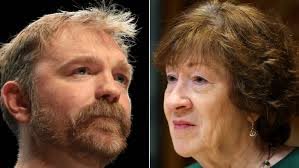
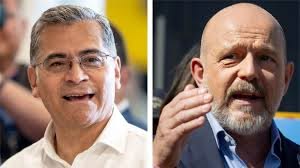

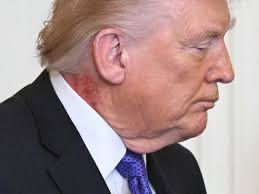
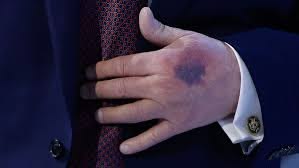
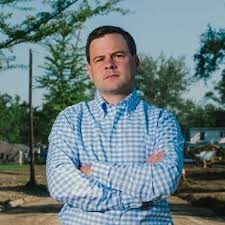
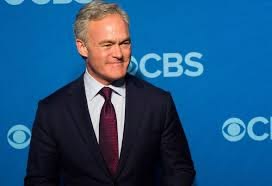
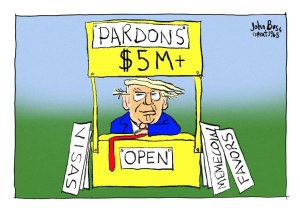
 A complete transcript of the speech follows. Also, you may listen to and watch
  This phenomenon played out yesterday as one of RFK Jr.’s prodigal research adventures turned into something I wouldn’t even expect from an undergrad or, actually, even someone sitting in my high school or university composition class. He was, of course, a legacy student there because of his father. We also know he was the dorm’s drug dealer from
  Well, the nation’s biggest and most disappointing media of record investigated and found some interesting things in the MAHA report. Let’s start with the
  So, our Secretary of Health and Human Services is so bereft of research skills that he can’t even avoid the number one Rookie mistake. Does he have anyone around him who knew better and could catch this? I can tell you that a team of peers that checks every research paper headed to publication in an academically sound journal would never let this go through to print. If you’re the main author, you try to avoid any humiliating mistakes for serious journals.
 So, while all this is going on, we’re beginning to hear some interesting information on Elon Musk as he exists stage right. This is from
  I’m not about to go to the Gossip Rag road, but there are rumors about Mush and Steven Miller’s wife if you’re interested. This is from the
 All the best people, folks, all the best. So, I know you just want to know the latest information on the American Soap Opera “As the Tarrifs and the TACO Turns.”


 peej
peej Carissa
 bostonboomer
 dakinikat
 ecocatwoman
 jjlo
jjlo mablue2
 Mama Lopez
 peggysue22
 quixote
 skydancingguestblogger
 Mona (aka Wonk the Vote)



 Sky Dancing
Recent Comments