
Tuesday Reads: Two Valuable New Books on Trump and Russia
Posted: September 22, 2020 Filed under: Foreign Affairs, morning reads, U.S. Politics | Tags: Andrew Weissmann, Andriy Derkach, CIA, Donald Trump, Tim Weiner, Trump Russia, Vladimir Putin 27 Comments
Good Morning!!
The Trump books just keep on coming. This week and next week we’re getting two very significant releases. A new book by Tim Weiner came out today. Weiner is a historian of both the FBI and CIA. His latest is The Folly and the Glory: America, Russia, and Political Warfare 1945–2020. The Washington Post published an op-ed by Weiner yesterday: The unanswered question of our time: Is Trump an agent of Russia?
The FBI faced a national security nightmare three years ago: It suspected that the new president of the United States was, in some unknown way, in the sway of Russia.
Was an agent of a foreign power in the White House? Should they investigate Donald Trump? “I can’t tell you how ominous and stressful those days were,” Peter Strzok, then the No. 2 man in FBI counterintelligence, told me. “Similar to the Cuban missile crisis, in a domestic counterintelligence sense.”
But the Cuban missile crisis lasted only 13 days — and it had a happy ending. This crisis has no end in sight. Despite the investigation by former special counsel Robert S. Mueller III, despite the work of congressional intelligence committees and inspectors general — and despite impeachment — we still don’t know why the president kowtows to Vladimir Putin, broadcasts Russian disinformation, bends foreign policy to suit the Kremlin and brushes off reports of Russians bounty-hunting American soldiers. We still don’t know whether Putin has something on him. And we need to know the answers — urgently. Knowing could be devastating. Not knowing is far worse. Not knowing is a threat to a functioning democracy.
Tim Weiner
The FBI’s counterintelligence agents wondered: Why did Trump invite the Russian ambassador and the Russian foreign minister into the Oval Office on the day after he keelhauled FBI Director James B. Comey — and brag about it? “I just fired the head of the FBI,” Trump told them in confidence. “I faced great pressure because of Russia. That’s taken off.” Like the rest of America, the FBI learned about that conversation only from a Russian government readout. But then Trump went on television and said he had fired Comey over the FBI’s probe into ties between Team Trump and Team Putin during and after the 2016 election.
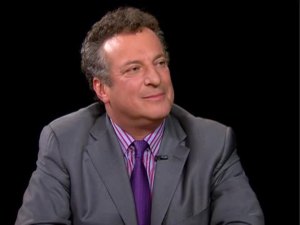
Unfortunately the counterintelligence investigation seems to have been short-circuited by the firing of Andrew McCabe and the failure of Robert Mueller to seriously investigate Trump’s connections to Russia. Here’s Weiner’s chilling conclusion:
There’s a classic story about an American agent of influence that predates the Cold War — and might presage the strange case of Donald Trump, if these questions about his relationship with Russia go dormant. Samuel Dickstein was a member of Congress from Manhattan, elected in 1922, and chairman of the House Immigration and Naturalization Committee in the 1930s. He walked into the Soviet Embassy in 1937 and offered the ambassador his services for $25,000 a year — three times his congressional salary. In exchange, he sold fake passports to Soviet spies. And he held headline-grabbing public hearings investigating Joseph Stalin’s enemies in the United States. Dickstein served 11 terms in Congress. His file lay locked up in the KGB archives for 60 years. Today, if you go down to Manhattan’s Lower East Side, to the intersection of Pitt and Grand streets, you’ll be standing in Samuel Dickstein Plaza. He got away with it.
A related opinion piece from today’s Washington Post by Josh Rogin: Secret CIA assessment: Putin ‘probably directing’ influence operation to denigrate Biden.
Russian President Vladimir Putin and his top aides are “probably directing” a Russian foreign influence operation to interfere in the 2020 presidential election against former vice president Joe Biden, which involves a prominent Ukrainian lawmaker connected to President Trump’s personal lawyer Rudolph W. Giuliani, a top-secret CIA assessment concluded, according to two sources who reviewed it.
On Aug. 31, the CIA published an assessment of Russian efforts to interfere in the November election in an internal, highly classified report called the CIA Worldwide Intelligence Review, the sources said. CIA analysts compiled the assessment with input from the National Security Agency and the FBI, based on several dozen pieces of information gleaned from public, unclassified and classified intelligence sources. The assessment includes details of the CIA’s analysis of the activities of Ukrainian lawmaker Andriy Derkach to disseminate disparaging information about Biden inside the United States through lobbyists, Congress, the media and contacts with figures close to the president.
Andriy Derkach
“We assess that President Vladimir Putin and the senior most Russian officials are aware of and probably directing Russia’s influence operations aimed at denigrating the former U.S. Vice President, supporting the U.S. president and fueling public discord ahead of the U.S. election in November,” the first line of the document says, according to the sources.
The Office of the Director of National Intelligence and the Treasury Department have identified Derkach as a Russian agent, but it has not been publicly reported that the CIA, NSA and FBI believed Putin may be personally directing the campaign. Derkach has denied working on behalf of Moscow.
The CIA assessment described Derkach’s efforts in detail and said that his activities have included working through lobbyists, members of Congress and U.S. media organizations to disseminate and amplify his anti-Biden information. Though it refers to Derkach’s interactions with a “prominent” person connected to the Trump campaign, the analysis does not identify the person. Giuliani, who has been working with Derkach publicly for several months, is not named in the assessment.

Read the rest at the WaPo.
Another book that is getting much more attention than Weiner’s is Andrew Weissmann’s inside account of the Mueller investigation, Where Law Ends: Inside the Mueller Investigation. The book will be released next Tuesday.
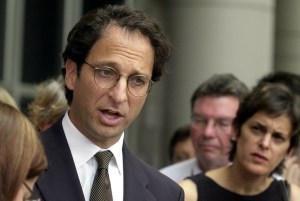
George Packer interviewed Weissmann at The Atlantic: The Inside Story of the Mueller Probe’s Mistakes.
Andrew Weissmann was one of Robert Mueller’s top deputies in the special counsel’s investigation of the 2016 election, and he’s about to publish the first insider account, called Where Law Ends: Inside the Mueller Investigation. The title comes from an adapted quote by the philosopher John Locke that’s inscribed on the façade of the Justice Department building in Washington, D.C.: “Wherever law ends, tyranny begins.”
Weissmann offers a damning indictment of a “lawless” president and his knowing accomplices—Attorney General William Barr (portrayed as a cynical liar), congressional Republicans, criminal flunkies, Fox News. Donald Trump, he writes, is “like an animal, clawing at the world with no concept of right and wrong.” But in telling the story of the investigation and its fallout, Weissmann reserves his most painful words for the Special Counsel’s Office itself. Where Law Ends portrays a group of talented, dedicated professionals beset with internal divisions and led by a man whose code of integrity allowed their target to defy them and escape accountability.
“There’s no question I was frustrated at the time,” Weissmann told me in a recent interview. “There was more that could be done that we didn’t do.” He pointed out that the special counsel’s report never arrived at the clear legal conclusions expected from an internal Justice Department document. At the same time, it lacked the explanatory power of last month’s bipartisan Senate Intelligence Committee report on the 2016 election. “Even with 1,000 pages, it was better,” Weissmann said of the Senate report. “It made judgments and calls, instead of saying, ‘You could say this and you could say that.’”
Andrew Weissmann
The Mueller inquiry was the greatest potential check on Trump’s abuse of power. The press gives the president fits, but almost half the country chooses not to believe the news. Congress will protect Trump as long as his party controls at least one chamber. Local prosecutors and civil plaintiffs are severely limited in pursuing justice against a sitting president. Public opinion is immovably split and powerless until the next election. Only the Special Counsel’s Office—burrowing into the criminal matter of Russian interference in the 2016 election, a possible conspiracy with the Trump campaign, and the president’s subsequent attempts to block an investigation—offered the prospect of accountability for Trump. Mueller couldn’t try the president in court, let alone send him to prison, but he could fully expose Trump’s wrongdoing for a future prosecutor, using the enforceable power of a grand jury subpoena. The whole constitutional superstructure of checks and balances rested on Mueller and his team. As their work dragged on through 2017 and 2018, with flurries of indictments and plea deals but otherwise in utter silence, many Americans invested the inquiry with the outsized expectation that it would somehow bring Trump down.
Read the rest at the Atlantic link.
Charlie Savage at The New York Times: Mueller’s Team Should Have Done More to Investigate Trump-Russia Links, Top Aide Says.
The team led by Robert S. Mueller III, the special counsel, failed to do everything it could to determine what happened in the 2016 election, shying away from steps like subpoenaing President Trump and scrutinizing his finances out of fear he would fire them, one of Mr. Mueller’s top lieutenants argued in the first insider account of the inquiry.
“Had we used all available tools to uncover the truth, undeterred by the onslaught of the president’s unique powers to undermine our efforts?” wrote the former prosecutor, Andrew Weissmann, in a new book, adding, “I know the hard answer to that simple question: We could have done more.”
The team took elaborate steps to protect its files of evidence from the risk that the Justice Department might destroy them if Mr. Trump fired them and worked to keep reporters and the public from learning what they were up to, Mr. Weissmann wrote in “Where Law Ends: Inside the Mueller Investigation,” which Random House will publish next week.
While he speaks reverently of Mr. Mueller, he also says his boss’s diffidence made him ill-suited for aspects of shepherding the politically charged investigation. He saw Mr. Mueller and his deputy, Aaron M. Zebley, as overly cautious.
Mr. Weissmann also defended against accusations by the president and his allies that he and other investigators were politically biased “angry Democrats”; Mr. Weissmann said his personal views had no bearing on the crimes that Russian operatives and Trump aides committed.
And he elevates particular details — for example, emphasizing that the same business account that sent hush payments to an adult film star who alleged an extramarital affair with Mr. Trump had also received “payments linked to a Russian oligarch.” The president has denied the affair; his former lawyer Michael D. Cohen controlled the account. Mr. Mueller transferred the Cohen matter to prosecutors in New York.
More Reads, links only:
The Washington Post: Mueller prosecutor says special counsel ‘could have done more’ to hold Trump accountable.
Book review by Jennifer Szalai at The New York Times: A Prosecutor’s Backstage Tour of the Mueller Investigation.
The American Independent: Trump says coronavirus ‘affects virtually nobody’ as death toll reaches 200,000.
The Washington Post: Pentagon used taxpayer money meant for masks and swabs to make jet engine parts and body armor.
The New York Times: Trump Could Be Investigated for Tax Fraud, D.A. Says for First Time.
Jane Mayer at The New Yorker: A Young Kennedy, in Kushnerland, Turned Whistle-Blower.
CNBC: Powell pledges the Fed’s economic aid ‘for as long as it takes.’
Brian Karem at The Bulwark: The Absentee President. Donald Trump rarely shows up to the West Wing—and when he does, he is too incompetent to effectively fulfill his oath of office.

 peej
peej Carissa
 bostonboomer
 dakinikat
 ecocatwoman
 jjlolatina
 mablue2
 Mama Lopez
 peggysue22
 quixote
 skydancingguestblogger
 Mona (aka Wonk the Vote)



 Sky Dancing
Recent Comments