This morning I woke up and turned on the TV to see our “president,” easily the stupidest president in American history, walking hunched over and tired in Davos to give another long, rambling, nonsensical, insulting “speech” to the assembled political and business leaders. He spoke for 70 minutes and it seemed much longer.
I watched the speech for awhile, but it was the same old garbage he talks about off the cuff to the assembled press in the oval office. He went on and on in his old man voice, attacking allies, demanding that Greenland be handed over to him, ranting about windmills–all to complete silence from the audience. How could they sit there and watch this embarrassing display of abject stupidity?
I don’t expect this post to make much sense, because I’m just soooo angry!
The big headline, according to the legacy media is that Trump announced he won’t “take Greenland by force.”
President Donald Trump ruled out military force to acquire Greenland in his remarks Wednesday to the World Economic Forum in Davos, Switzerland, providing a momentary sense of relief to Europe after weeks of worry that the U.S. would enter a confrontation with NATO.
“We probably won’t get anything unless I decide to use excessive strength and force, where we would be, frankly, unstoppable, but I won’t do that,” Trump said. “That’s probably the biggest statement I made, because people thought I would use force, but I don’t have to use force. I don’t want to use force.”
Trump said Wednesday that he wants to see negotiation to acquire what he called “a piece of ice.”
The president, though, warned Denmark that if it doesn’t give up Greenland to the U.S., “we will remember.”
He argued in his remarks that the U.S. can protect “this giant mass of land” better than Europe can, insisting that taking over Greenland wouldn’t be a threat to NATO but would instead enhance security for the alliance. While the president’s obsession with Greenland has accelerated in recent weeks, his pledge to not use force to acquire the island marks a shift in his rhetoric.
“I don’t want to use force,” he added. “All the United States is asking for is a place called Greenland, where we already had it as a trustee but respectively returned it back to Denmark not long ago after we defeated the Germans, the Japanese, Italians and others in World War II. We gave it back to them.”
He added that it was “stupid” for the U.S. to not keep the island after the war. Still, Trump downplayed the significance of his threats against Greenland, arguing it’s a trade-off for the years of support the U.S. has given to NATO allies.
“What I’m asking for is a piece of ice, cold and poorly located,” he said. It’s a very small ask, compared to what we have given them for many, many decades.”
What does that mess of words really mean? Nothing. Trump is the world’s worst liar and he’s insane. Not to mention stupid. Nothing he says can be believed.
The choice is impeachment and removal or calamity for the United States. I don't see how anybody watching Trump's speech in Davos can draw any other conclusion. He's a senile madman.
“Denmark’s investment in U.S. Treasury bonds, like Denmark itself, is irrelevant,” U.S. Treasury Secretary Scott Bessent told reporters Wednesday at the World Economic Forum in Davos, Switzerland.
It comes as Trump’s threats to impose 10% tariffs on eight European countries as part of his push to take over Greenland spooked markets. The levies would come into force on Feb. 1, Trump said, and later rise to 25%.
Danish pension operator AkademikerPensionsaid Tuesday it was selling $100 million in U.S. Treasurys. The decision was driven by “poor [U.S.] government finances,” said Anders Schelde, AkademikerPension’s investing chief.
When Bessent was asked how concerned he is about European investors pulling out of Treasurys, Bessent said at a news conference at the World Economic Forum: “Denmark’s investment in U.S. Treasury bonds, like Denmark itself, is irrelevant.”
“That is less than $100 million. They’ve been selling Treasurys for years, I’m not concerned at all.”
Really? I’d like to hear what Daknikat has to say about this.
No one can be watching this Davos speech and reach any conclusion but that the President of the United States is mentally disturbed and that something is deeply wrong with him. This is both embarrassing and extremely dangerous.
Prime Minister Mark Carney of Canada delivered a stark speech in Davos, Switzerland, on Tuesday, prompting global political and corporate leaders in the audience to rise from their seats for a rare standing ovation.
He described the end of the era underpinned by United States hegemony, calling the current phase “a rupture.” He never mentioned President Trump by name, but his reference was clear.
The speech came as President Trump doubled down on his threats to take Greenland away from Denmark, saying he would slap fresh tariffs on European powers as punishment for their support of Greenland’s sovereignty.
Global leaders have been scrambling to find a unified response.
“Every day we’re reminded that we live in an era of great-power rivalry,” Mr. Carney said. “That the rules-based order is fading. That the strong can do what they can, and the weak must suffer what they must.”
And he warned, “The middle powers must act together because if we’re not at the table, we’re on the menu.”
He would know.
Mr. Trump started his second presidential term making claims on Canada as the 51st state and threatening Canada’s previous leader, Justin Trudeau, whom Mr. Trump publicly derided, with unilaterally scrapping agreements that have governed the relationship between the neighboring countries for over a century….
Mr. Carney chastised other leaders too, many of whom would have been following his speech in Davos, for not standing up for their interests.
“There is a strong tendency for countries to go along to get along,” he said. “To accommodate. To avoid trouble. To hope that compliance will buy safety. It won’t.”
Mr. Carney made clear he is choosing a different path.
He wrote his own speech, according to a government official, who spoke on condition of anonymity to discuss the inner workings of his team, which is a departure since speeches of this magnitude are usually prepared by high-level staffers with the leader’s input.
Mr. Carney, a former investment executive who has served as the governor of Canada and England’s central banks, has attended the global gathering about 30 times, according to his office….
Mr. Carney spoke not long after Mr. Trump had posted an altered image on social media that featured a map of American flags superimposed over both Canada and the United States, as well as Greenland.
Well worth a listen from Canadian PM Mark Carney at Davos summit.
President Trump said in Davos on Wednesday that Canada should be “grateful” to the U.S. for the “freebies” it receives because of the two nations’ relationship.
Why it matters: Trump’s dig at Canada came a day after Prime Minister Mark Carney delivered his own warning at the World Economic Forum over the “rupture” of the world order.
Driving the news: “Canada lives because of the United States,” Trump said Wednesday before taking a direct jab at Carney. “Remember that, Mark, the next time you make your statements.”
Trump said Carney “wasn’t so grateful” in his address.
Carney avoided naming Trump in his speech — a strategy a Canadian official previously told Axios was deliberate. However, the official indicated that Carney’s remarks were aimed squarely at the president’s recent actions.
Zoom out: As Trump pushes a vision of hemispheric dominance — coupled with threats of the U.S. making its northern neighbor the “51st state” — Ottawa has reportedly started preparing for how to repel a U.S. invasion.
Growing up, I never really understood Aesop’s fable about the goose that laid the golden egg. It’s a cautionary tale about greed and hubris: A farmer with a miraculous goose that lays a solid-gold egg every morning gets fed up with passive wealth generation and figures killing the bird will speed things along. But alas: He finds no store of eggs within and realizes he butchered his meal ticket for nothing. The moral’s straightforward, but it never really worked for me as a story. Like, come on: Nobody’s that stupid.
Well, almost nobody, I guess.
As long as I live, I don’t think I’ll get over this pure, dumb fact: Trump told his fans he had to blow up the liberal order because it was the only way to secure the very benefits the liberal order was already bringing us.
Trump insists America needs Greenland as a strategic positioning ground from which to restrain Russia and China in the Arctic. But thanks to the liberal order, this was something we already enjoyed. Through the magic of multilateral cooperation, we were able to treat someone else’s territory as though it were our own for the purposes of military positioning—not by bribing or intimidating them, but because they agreed their interests and our interests aligned.
Trump insists America needs to blow up America’s preexisting economic relationships to ensure America gets an advantageous position in international trade. But America already had such an advantageous position: an orderly world economic system that had lavished previously unimaginable prosperity on America and to the entire globe, with us at the proverbial (and very profitable) head of the table.
It’s not just that Trump had the hubris to think he could hero-ball the country to a better deal by canceling a century of history and starting over. It’s that his own broken personality—his miserable meanness, his dispositional inability to cooperate with and trust others—has always prevented him from understanding what was good about the deal we had to begin with. The idea that multipolar agreements could be better for America, in some cases, than outright ownership—that, say, we already have everything we need from Greenland—he rejects as ridiculous. Ownership, he told the New York Times, is “what I feel is psychologically needed for success. . . . I think that ownership gives you a thing that you can’t do, whether you’re talking about a lease or a treaty.”
He really is determined to burn everything down if he can’t get his own way on everything.
1/ Jonathan Lemire writes, "Trump's lust for Greenland is about increasing American dominance in the Western Hemisphere 7 redrawing the maps of the world. The island is roughly 836K square miles, which would make it the largest territorial addition in US history." Gift link.
Franklin D. Roosevelt famously illustrated with a simple metaphor the need for a healthy transatlantic alliance. Justifying his decision to lend Great Britain warships and other military supplies in the early days of World War II, Roosevelt likened it to loaning a neighbor a garden hose to put out the fire consuming his house. Sure, Roosevelt charitably wanted to help a neighbor in need. But it was self-interested too; if the neighbor could extinguish the blaze, it wouldn’t spread to FDR’s home. The United States benefited from the friendship—and the buffer—that allies could provide.
Today, Donald Trump will fly to Europe. Ukraine is already ablaze. And now the president is ready to set a bunch of new houses on fire.
The president will speak at the World Economic Forum in Davos, Switzerland, tomorrow, and he appears prepared to shatter the nearly 80-year-old NATO alliance in order to seize Greenland. In his quest to claim a strategically located island of ice and rock, Trump has turned against his nation’s most stalwart friends. He has antagonized and mocked panicked European leaders, threatened punishing tariffs on countries that object to his plans, and pointedly not ruled out using military force. Trump’s thirst for Greenland—even if he stops short of ordering an armed invasion—threatens to unravel the partnership born from the ashes of World War II that has, in the decades since, ensured the spread of peace, prosperity, and democracy on both sides of the Atlantic.
Today marks one year since Trump’s return to office, and in that time, he has fundamentally reshaped the United States’ relationship with the rest of the world. But nothing has upended the global order more than what would happen if he follows through on his threats toward Greenland. The island, of course, belongs to Denmark, which says that it is not available for the taking. Troops from Europe have been dispatched to the territory, and Greenland’s prime minister warned his populace to prepare for an invasion. If Trump were to persist, Denmark could trigger NATO’s Article 5 mutual-defense pact, and then the unthinkable could occur: American soldiers firing on Europeans while Russian President Vladimir Putin’s dream of NATO’s self-immolation is thoroughly realized.
The annual meetings in Davos, normally a clubby gathering of business titans and political leaders, have been consumed by talk of what Trump may or may not do. European leaders have found themselves scrambling on strategy—appeasement? Defiance? Compromise? Early this morning, Trump posted screenshots of text messages that revealed the dilemma facing those leaders. (Lesson to everyone: Be careful what you text the guy unless you want the world to see.)
In one message, Mark Rutte—the secretary general of NATO, who has prized warm relations with Trump—praised the president’s foreign policies, then vowed that he is “committed to finding a way forward on Greenland.” But in another, French President Emmanuel Macron, whose relationship with Trump has been turbulent, admitted: “I do not understand what you are doing on Greenland.” In fact, Trump couldn’t be more clear, as he demonstrated once again by circulating a pair of presumably AI-generated images on social media. In one, he’s planting an American flag in Greenland. In the other, he’s lecturing European leaders in the Oval Office with a map behind him that depicts Greenland as part of the United States. (Canada and Venezuela too.)
Trolling close U.S. allies has seemingly been an unofficial policy of Trump’s second administration since its first days, beginning with Vice President Vance lecturing Europe in Munich on the virtues of free speech. But this time feels different for those nervously waiting in snowy Switzerland. The president’s address to the forum tomorrow is poised to be a defining moment, and Trump plans to make the unequivocal case that the United States should have Greenland, a senior White House official told me.
Pretty good predictions, except for Trump’s claim he won’t use force.
A few non-Davos stories:
Did you watch Lawrence O’Donnell last night? He still insists that Trump’s Greenland obsession is really a way to distract the press from the Epstein files. I think he could be right. If you didn’t see it, I recommend watching it now.
Three hundred and sixty-five days after Donald Trump swore his oath of office and completed an extraordinary return to power, many historians, scholars and experts say his presidency has pushed American democracy to the brink – or beyond it.
The scale and velocity of what he has been able to accomplish in just a year have stunned even longtime observers of authoritarian regimes, pushing the debate among academics and Americans from whether the world’s oldest continuous democracy is backsliding to whether it can still faithfully claim that distinction.
“In 2025, the United States ceased to be a full democracy in the way that Canada, Germany or even Argentina are democracies,” Steven Levitsky and Daniel Ziblatt, the prominent Harvard political scientists and authors of How Democracies Die, and the University of Toronto professor Lucan Way, wrote in Foreign Affairs last month. They argued that the US under Trump had “descended into competitive authoritarianism”, a system in which elections are held but the ruling party abuses power to stifle dissent and tilt the playing field in its favor.
There is no universally accepted definition of democracy. Some argue the US is a “flawed” or “illiberal” democracy, or a democracy facing substantial “autocratization” – a process that began long before Trump came to power a decade ago but which his presidency has rapidly accelerated. Still, others believe the concerns are overblown, or reflect an intense partisan dislike of the current president.
Since Trump’s first term, scholars have warned that it can happen here. But many now say this moment is different – not only because Trump’s approach is more methodical and his desire for vengeance more pronounced, but because he now faces far fewer internal constraints.
Read more at the link.
Hunter Walker at Talking Points Memo: Trump Marks First Year In Office With Unhinged Racist Rant Targeting ‘Very Low IQ’ Somalis.
President Donald Trump spent the first anniversary of his second term on Tuesday pitching himself to the American people from behind the White House briefing room podium. In nearly two hours of remarks, Trump seemingly sought to address his cratering approval by running through a list of his supposed accomplishments. His remarks also included a series of vicious, racist remarks about Somali people and other immigrants.
I think Trump likes this photo.
“They all ought to get the hell out of here, they’re bad for our country,” Trump said of the Somali population at one point during the extraordinary rant.
At multiple points during his remarks, Trump indicated he felt the need to make his case directly because his team was not up to the task. A slew of anniversarypolls show the president’s numbers are currently underwater with notably steep declines in voter approval of the president’s handling of his signature issues: immigration and the economy. Those figures have come amid slow job growth and violent raids staged by Trump’s Immigration and Customs Enforcement agency.
“Maybe I have bad public relations people, but we’re not getting it across,” Trump said as he argued the economy is particularly strong since he returned to office.
Trump came equipped with a couple of binders including one labeled “ACCOMPLISHMENTS.” Yet as he read through the provided list, Trump repeatedly raged against the Somali population, including suggesting that they are of inferior intelligence. Trump first turned to the topic as he alluded to the ongoing ICE raids in Minnesota, which have been met with massive protests. The state is home to the country’s largest Somali population and the federal crackdown has come amid a wave of right-wing influencers making exaggerated claims about alleged daycare fraud in the community.
“Nineteen billion dollars at a minimum is missing in Minnesota, given to a large degree by Somalians. They’ve taken it,” Trump said. ”Somalians, can you imagine? And they don’t do it — a lot of very low IQ people. They don’t do it. Other people work it out and they get them money and they go out and buy Mercedes Benzes.”
The Supreme Court will consider Wednesday whether President Trump can fire Lisa Cook from the Federal Reserve board, in a case that tests the longstanding independence of the central bank, with potentially major consequences for the economy.
The court’s conservative majority has repeatedly allowed Mr. Trump to oust leaders of other independent agencies as he moves to expand presidential power and seize control of the federal bureaucracy. But the justices have signaled that the Fed may be different and uniquely insulated from executive influence because of its structure and history.
Lisa Cook
The case lands as the administration has dramatically escalated its attacks on the Fed, apparently aimed at remaking its board and lowering interest rates. The Justice Department this month opened a criminal investigation into whether Jerome H. Powell, the Fed chair, lied to Congress about cost overruns related to the Fed’s renovation of its headquarters.
Mr. Powell, whose term as chair ends in May, forcefully pushed back on the threat of criminal charges, saying it was a result of the Fed setting borrowing costs “based on our best assessment of what will serve the public, rather than following the preferences of the president.”
The investigation prompted a backlash from Republicans, international policymakers, Wall Street and some Trump allies, who warned that the central bank’s independence and credibility was at risk.
It also threatened to complicate Mr. Trump’s plans to name Mr. Powell’s replacement as chair — and, legal experts said, the Supreme Court case being heard on Wednesday.
The justices agreed to hear Ms. Cook’s case on an expedited basis, and are likely to rule quickly on her status as litigation continues in the lower courts. The outcome of the case could determine how much latitude Mr. Trump and future presidents have to influence the direction of the powerful central bank, which Congress intentionally tried to insulate from political pressures.
Police agencies in the United States kill more than 1,000 people each year. After many of those deaths, the agencies involved put out statements. Those statements often use what’s known as the exonerative voice to minimize officers’ involvement. The first statement from the Minneapolis Police Department after George Floyd’s death, for example, said that the officers at the scene “noted that he appeared to be suffering from medical distress.” Quite the understatement. These communications often cast events in a light most favorable to the officers involved, sometimes to the point of deception. Too often, they’ll try to smear the deceased by citing a criminal record or suggesting a drug addiction or gang affiliation.
Renee Good
I have been covering policing for more than 20 years and have read and parsed a lot of these statements. The Department of Homeland Security’s response after the Immigration and Customs Enforcement agent Jonathan Ross shot and killed Renee Good in Minneapolis this month is something else entirely.
For all their flaws, typical communications from police officials usually include a modicum of solemnity. There are assurances that there will be a fair and impartial investigation, even if those investigations too often turn out to be neither. There’s at least the acknowledgment that to take a human life is a profound and serious thing.
The Trump administration’s response to Ms. Good’s death made no such concessions. There were no promises of an impartial investigation. There was no regret or remorse. There was little empathy for her family — for her parents, her partner or the children she left behind. From the moment the world learned about her death, the administration pronounced the shooting not only justified but an act of heroism worthy of praise and celebration.
It isn’t just the lying; it’s that the lies are wildly exaggerated and easily refutable. All the evidence we’ve seen so far, including a meticulous Times forensic analysis of the available footage, makes clear that at worst, Ms. Good mildly obstructed immigration enforcement, disobeyed ambiguous orders or perhaps attempted to flee an arrest. None of those are capital crimes, nor do law enforcement officers get to dole out punishment in such cases. At one point, President Trump justified her shooting by claiming she’d been “very disrespectful” to immigration officers. That isn’t a crime at all.
The lies this administration is telling about Ms. Good aren’t those you deploy as part of a cover-up. They’re those you use when you want to show you can get away with anything. They’re a projection of power.
For the past decade or so, since the protests in Ferguson, Mo., America has engaged in a high-stakes dialogue about police abuse and accountability, the militarization of law enforcement and the push and pull between public safety and civil liberties. Those discussions, while occasionally heated, have been based on a shared understanding that the primary job of domestic law enforcement is to serve the public. What Mr. Trump is doing with federal immigration forces has rendered those debates obsolete.
Those are my recommended read for today. What do you think?
Did you like this post? Please share it with your friends:
Representative Gerald E. Connolly of Virginia, a nine-term congressman who was the top Democrat on the House oversight committee, died on Wednesday, his family said in a statement. He was 75.
Mr. Connolly died at his home surrounded by his family, the statement said. It did not give a cause of death. Mr. Connolly had announced in 2024 that he was being treated for cancer of the esophagus.
In April, he announced that his cancer had returned and that he would not seek re-election in 2026. He also said he would soon relinquish his spot on the Committee on Oversight and Government Reform.
U.S. Rep. Gerald “Gerry” Connolly, an outspoken Democrat who sought key reforms in the federal government while bringing transformational development to his populous Virginia district, died Wednesday. He was 75….
The spirited and at times bullheaded Fairfax Democrat became known for his voluble nature and willingness to engage in spirited debates. In one hearing, he accused Republicans of engaging in a witch hunt against the IRS, asking a witness if they ever read Arthur Miller’s “The Crucible.”
“I am heartbroken over the loss of my dear friend,” said Democratic Sen. Mark Warner of Virginia. “To me, he exemplified the very best of public service.” He said Connolly “met every challenge with tenacity and purpose, including his final battle with cancer, which he faced with courage, grace, and quiet dignity.”
A fixture of Virginia politics for three decades, Connolly was first elected to the Fairfax County Board of Supervisors in 1995. On the county board, he steered the transition of northern Virginia’s Tysons Corner from a traffic-heavy mall area to a downtown business hub.
In 2003, Connolly was elected board chairman, and he continued pushing for transportation investment that had been debated among officials for decades. Connolly sought billions in state and federal dollars to develop the regional rail system’s Silver Line connecting the national capital region to Tysons Corner.
Connolly’s dream was realized with the Silver Line’s opening in 2014, and eight years later, the rail line was extended an extra 11 miles (18 kilometers) to reach Dulles International Airport.
What’s happening in politics today:
The news getting the most attention today is the so-called “big beautiful bill” that Trump and House Republicans are trying to pass and send to the Senate. Yesterday, we got some shocking news about this nightmare bill. Not only does it cut nearly a trillion dollars from Medicaid. It also cuts Medicare by more than $500 billion from Medicare. If you watched Lawrence O’Donnell’s show last night, you heard all about it. In case you missed it, here is O’Donnell’s interview with Rep. Brendan Boyle:
Rep. Boyle: The one thing I would point out, though, is this bill is actually significantly worse [than the GOP’s ACA repeal attempt in 2017], because this piece of legislation will throw 13.5 million, almost 14 million Americans off their healthcare.
First, you’re cutting people off Medicaid. But second, this does include very deep cuts to Obamacare as well. And finally, I have breaking news for you tonight, that literally just came out in the last few minutes as I’ve been sitting here: The nonpartisan Congressional Budget Office, the official authority on these figures, has now confirmed that this bill, in addition to Medicaid cuts, in addition to Obamacare cuts, includes $500 BILLION WORTH OF CUTS TO MEDICARE that is now in this bill as well.
Lawrence O’Donnell: That is breaking news…$500 billion in cuts to Medicare. That’s the biggest cut to Medicare ever contemplated by the Congress. There have been, over the years, trims to Medicare for budget reasons, but nothing on this order has ever been done to Medicare. What happened? Talk more about that, about that breaking news piece that the CBO has projected in here. Is that because of interactions that Medicare has with the Medicaid program?
Rep. Boyle: Yeah, and forgive me this…given your great experience on the Senate Finance Committee, you’ll understand this, but it does get a bit wonky for normal folks. Basically it’s because of those interactions and specifically because of a provision called “Paygo” that will force a certain amount of Medicare sequestration, again, to the tune–and these aren’t my figures, these are the Congressional Budget Office official figures–$500 billion.
So they take the biggest cuts to Medicaid in American history. They take massive cuts to Obamacare. And then, add on top of that, the impact of all their policies mean a result of the biggest cuts to Medicare in American history on top of all of it.
House Republicans are pushing to slash nearly $1 trillion from two of the nation’s bedrock safety net programs, Medicaid and food stamps, as part of their sweeping package aimed at enacting President Donald Trump’s agenda. If the legislation is approved, millions of Americans could lose access to these benefits as a result of a historic pullback in federal support.
Trump has repeatedly vowed not to touch Medicaid, while GOP lawmakers insist that their proposals would largely affect adults who could – and should, in their view – be employed. But the actual impact would likely hit a far broader range of Americans, including some of the most vulnerable people the GOP has promised repeatedly to protect, experts say. They include children, people with disabilities and senior citizens.
A sizeable share of the US population depends on these programs. More than 71 million people are enrolled in Medicaid, and roughly 42 million Americans receive food stamps, according to the federal agencies that oversee them.
Hospitals would also feel the financial fallout of the Medicaid cutbacks, which could prompt some to raise their rates for those with job-based insurance and others to close their doors.
States would have to shoulder more of the costs of operating these programs, which could force them to make some tough decisions. Among their options could be slashing enrollment, benefits and provider rates in Medicaid or pulling back on residents’ access to food stamps. They might also shift spending from other state-supported programs such as education and infrastructure or hike taxes.
In addition, grocery store owners are warning that cuts to the Supplemental Nutrition Assistance Program, or SNAP, as food stamps are formally known, could harm local economies and cost jobs.
Read the details at the CNN link.
The House Rules Committee met under cover of darkness beginning at 1:oo this morning.
House Republicans on Wednesday are set to try to push President Donald Trump’s massive tax and immigration package across the finish line, hoping to conquer internal divisions and tee up a vote that would send Trump’s sprawling agenda to the Senate.
The House Rules Committee worked through the night on the legislation, trying to push the bill past a procedural test that would allow for a final vote. Lawmakers were still debating its provisions early Wednesday after a committee session that began at 1 a.m.
But the GOP’s narrow majority is far from unified around the proposal. And although Trump visited the U.S. Capitol for a conservative pep rally Tuesday, warring Republican factions on both sides dug in to oppose what is now officially called the One Big Beautiful Bill Act. The House GOP’s narrow majority means leaders can afford to lose only a handful of votes — and for now, they don’t have the support they need to pass the measure.
The bill would extend tax cuts that Trump signed into law in 2017 that are otherwise due to expire at the end of this year, along with new changes to reflect Trump’s campaign promises — such as no taxes on tips and overtime wages — and spend hundreds of billions of dollars on border security, the White House’s mass deportation campaign and funding for defense priorities and a “Golden Dome” continental missile defense system.
The Congressional Budget Office, lawmakers’ nonpartisan scorekeeper, projects that it will add $2.3 trillion to the deficit over 10 years. The national debt already exceeds $36.2 trillion.
Hard-line conservatives said Tuesday that the legislation did not sufficiently cut spending to pair with trillions of dollars of new tax cuts or extensions of current rates, and they angled for deeper budget reductions to Medicaid and federal benefits programs.
Blue-state Republicans demanded a higher cap on how much people can deduct from their federal taxes to offset what they pay to state and local tax authorities, and they warned that any cuts to the social safety net could cost them their political futures — and hand control of the House to Democrats after the 2026 midterm elections.
The big legislation Republicans are trying to pass this week would shrink economic resources for the poorest Americans while boosting the richest, according to a new analysis by Capitol Hill’s official budget scorekeeper.
The Congressional Budget Office said Tuesday the One Big Beautiful Bill Act, as it’s officially known, would shrink household resources for the lowest-income households by 2% in 2027 and 4% in 2033, mainly because of cuts to health and nutrition programs.
Food Stamps are on the chopping block
”By contrast, resources would increase by an amount equal to 4 percent for households in the highest decile in 2027 and 2 percent in 2033, mainly because of reductions in… taxes they owe,” CBO director Phillip Swagel wrote in a letter to Democrats.
Democratic leader Hakeem Jeffries (D-N.Y.) and Rep. Brendan Boyle (D-Pa.), the top Democrat on the House Budget Committee, requested the CBO analysis of the bill’s distributional effects for the top and bottom 10% of households by annual income.
“This is what Republicans are fighting for – lining the pockets of their billionaire donors while children go hungry and families get kicked off their health care,” Boyle said in a statement. “CBO’s nonpartisan analysis makes it crystal clear: Donald Trump and House Republicans are selling out the middle class to make the ultra-rich even richer.”
The legislation uses about $1 trillion in cuts to Medicaid and the Supplemental Nutrition Assistance Program to help pay for $3.8 trillion in tax cuts that benefit all income groups, but especially wealthier Americans. The CBO has previously estimated the legislation would shrink Medicaid enrollment by more than 7 million, including through increased eligibility checks and limits on benefits for people without jobs.
What will happen to the U.S. debt if the bill passes the Senate in it’s current form?
The United States hit its record debt level at the end of 1945, after a world war and the Great Depression.
That record, in which the debt was briefly larger than the size of the entire economy, is almost certain to be broken in the next several years. Estimates from the Congressional Budget Office published in January showed that the country was on track to overtake it in 2032 — and that was before the Republicans’ large tax and spending bill was taken into account.
Under the G.O.P. megabill being considered in the House, budget experts now say, the U.S. debt would blow past the record even sooner and climb significantly higher in coming decades.
America has had periods of high debt before, but they have tended to occur during wars, recessions or other major shocks. Generally, federal deficits have been lower during periods of low unemployment. Today, there is no war or recession to easily explain the rapidly increasing pace of borrowing.
Because the government has been spending more than it collects in taxes over the past two decades, the debt has been growing. Without any changes to existing law, the Congressional Budget Office predicts the debt will rise to about 117 percent of the economy’s size by 2034, higher than the 1945 record.
The Republicans’ bill would widen the gap further by extending and expanding tax cuts and increasing military spending, partly offset by spending cuts in other areas. The Committee for a Responsible Federal Budget, a nonpartisan group that favors debt reduction, estimates that the nation’s debt could be as high as 129 percent of the economy by 2034 under those plans.
More details at the NYT. I’ve run out of gift links for this month, unfortunately.
The president went to Capitol Hill to urge Republicans to unite behind a budget-busting budget bill, and Axios reported that his strong-arm tactics were putting conservatives into a precarious position.
“Trump’s ‘big, beautiful bill‘ is projected to add trillions to the deficit over the next decade — rattling conservatives who have long warned that the U.S. is barreling toward fiscal catastrophe,” Axios reported. “Some Republicans now find themselves trapped between two of the party’s most animating principles: Deficit reduction vs. absolute loyalty to Trump.”
The White House is hoping the budget bill will receive a vote on the House floor this week, and the president and his aides have brushed off warnings that the tax cuts embedded in the measure would explode the national debt without politically toxic cuts to Social Security and Medicare.
“This tax bill’s enormity is being underplayed … [It] will cost more than the 2017 tax cuts, the pandemic CARES Act, Biden’s stimulus, and the Inflation Reduction Act combined,” Jessica Riedl, a budget specialist at the conservative Manhattan Institute, told Yahoo Finance.
The Trump administration claims Biden created the deficits and Trump policies will lower the debt.
“[Those projections] assume consistent economic growth,” Jim Millstein, a former chief restructuring officer at the Treasury Department, told Bloomberg. “Just imagine the Trump tariffs … cause a recession. They are risking a fiscal disaster.”
For decades, budget hawks warned that America’s debt load was unsustainable and that runaway spending financed with borrowed money was eventually going to scare investors away from lending to the United States. Those fears are now taking hold more strongly in the bond market, and are at risk of spreading further.
Tax cuts pushed by the Trump administration are amplifying debt and deficit concerns among bond investors, a powerful group of market players who strongly influence how much it costs for the government to finance its budget. The buying and selling of government debt, known as Treasuries, also influences interest rates on a wide variety of debt extended to American households and businesses, including mortgages, credit cards and car loans.
Those investors were already on edge over President Trump’s whipsawing tariff policy. Then this week’s attempt to push through sweeping tax cuts without significantly slashing spending — in what the president has called a “big, beautiful bill” — set off a fresh bout of bond market turmoil. Mr. Trump put more pressure on Republican lawmakers on Tuesday, visiting Capitol Hill and warning that failing to advance the bill would lead to higher taxes.
Since dropping below 4 percent in early April, the 10-year Treasury yield has risen back above 4.5 percent, a large move reflecting deficit worries. The moves for the 30-year yield this year have also been stark: It has jumped above 5 percent, its highest level in about a year and a half.
As you probably know, that’s how much we have to pay the bondholders.
Speaking with reporters on Tuesday, Raphael Bostic, president of the Federal Reserve Bank of Atlanta, warned that volatility in the Treasury market could add to already heightened uncertainty about the economic outlook.
That risks making people “even more cautious about how they engage,” he said. “If that happens, then I’ll have to assess the extent to which that should change my outlook on how the economy is going to perform.”
House Republicans’ internal negotiations on the “One Big, Beautiful Bill” went south Tuesday night and early Wednesday morning, with GOP hardliners publicly digging in their heels against the legislation.
Why it matters: Some of the anger centers on a deal House Speaker Mike Johnson (R-La.) is nearing with blue-state Republicans to raise the State and Local Tax Deduction cap.
“I think, actually, we’re further away from a deal because that SALT cap increase upset a lot of conservatives,” House Freedom Caucus chair Andy Harris (R-Md.) said in a Newsmax interview.
Rep. Ralph Norman (R-S.C.), another GOP holdout, told Axios in a text message: “THINGS ARE NOT LOOKING GOOD!!”
State of play: Johnson and a group of House Republicans from New York, California and New Jersey were close to a deal on SALT as of Tuesday night, Axios’ Hans Nichols reported.
The deal would have raised the SALT cap to $40,000 a year for those making up to $500,000.
The income phaseout would grow by 1% for 10 years, and then the deduction would become permanent.
Yes, but: Johnson’s right flank has long been skeptical of the SALT cap, which would increase the deficit and disproportionately benefit taxpayers in high-tax Democratic states.
Some conservative hardliners also feel the bill doesn’t go far enough in cutting Medicaid and nutrition assistance spending.
I don’t buy it. My guess is the right-wingers will vote for it in the end. But if they don’t go with the SALT increase, blue state Republicans are going to lose their seats. In fact, if this bill passes, I think that will guarantee Democrats take the House in 2026.
I’m going to end there. All this talk about tax cuts, cuts to social programs, and the exploding U.S. debt are making me very tired and depressed. Take care, everyone!
Did you like this post? Please share it with your friends:
Trump is touring the Middle East, looking for graft as president and grift for his family business. Most presidents choose to visit a U.S. ally like Canada or Great Britain as their first foreign trip, but Trump goes directly to the richest, most corrupt, least democratic countries where he can score lucrative deals for himself. On the trip, the big story is that he wants to accept the gift of an airplane from the Emir of Qatar. This would of course be wildly unconstitutional and unethical.
Trump was in Saudi Arabia yesterday. Here’s Lawrence O’Donnell’s commentary from last night.
RIYADH, May 13 (Reuters) – President Donald Trump kicked off his trip to the Gulf on Tuesday with a surprise announcement that the United States will lift long-standing sanctions on Syria, and a $600 billion commitment from Saudi Arabia to invest in the U.S.
The U.S. agreed to sell Saudi Arabia an arms package worth nearly $142 billion, according to the White House which called it the largest “defense cooperation agreement” Washington has ever done.
The end of sanctions on Syria would be a huge boost for a country that has been shattered by more than a decade of civil war. Rebels led by current President Ahmed al-Sharaa toppled President Bashar al-Assad last December.
Speaking at an investment forum in Riyadh at the start of a deals-focused trip that also brought a flurry of diplomacy, Trump said he was acting on a request to scrap the sanctions by Saudi Arabia’s de facto ruler, Prince Mohammed bin Salman.
“Oh what I do for the crown prince,” Trump said, drawing laughs from the audience. He said the sanctions had served an important function but that it was now time for the country to move forward.
Jamal Kashoggi
Of course one of the things he did for the crown prince was to overlook the brutal murder of journalist Jamal Kashoggi.
Trump and the Saudi crown prince signed an agreement covering energy, defense, mining and other areas. Trump has sought to strengthen relations with the Saudis to improve regional ties with Israel and act as a bulwark against Iran.
The agreement covers deals with more than a dozen U.S. defense companies for areas including air and missile defense, air force and space, maritime security and communications, a White House fact sheet said.
It was not clear whether the deal included Lockheed F-35 jets, which sources say have been discussed. The Saudi prince said the total package could reach $1 trillion when further agreements are reached in the months ahead.
It’s not just the “gesture” of a $400 million luxury plane that President Donald Trump says he’s smart to accept from Qatar. Or that he effectively auctioned off the first destination on his first major foreign trip, heading to Saudi Arabia because the kingdom was ready to make big investments in U.S. companies.
It’s not even that the Trump family has fast-growing business ties in the Middle East that run deep and offer the potential of vast profits.
Instead, it’s the idea that the combination of these things and more — deals that show the close ties between a family whose patriarch oversees the U.S. government and a region whose leaders are fond of currying favor through money and lavish gifts — could cause the United States to show preferential treatment to Middle Eastern leaders when it comes to American affairs of state.
The Trump sons have been seeking out deals for the familiy business
Before Trump began his visit to Saudi Arabia, Qatar and the United Arab Emirates, his sons Eric and Donald Jr. had already traveled the Middle East extensively in recent weeks. They were drumming up business for The Trump Organization, which they are running in their father’s stead while he’s in the White House.
Saudi Crown Prince Mohammed bin Salman
Eric Trump announced plans for an 80-story Trump Tower in Dubai, the UAE’s largest city. He also attended a recent cryptocurrency conference there with Zach Witkoff, a founder of the Trump family crypto company, World Liberty Financial, and son of Trump’s do-everything envoy to the Mideast, Steve Witkoff.
“We are proud to expand our presence in the region,” Eric Trump said last month in announcing that Trump Tower Dubai was set to start construction this fall.
The presidential visit to the region, as his children work the same part of the world for the family’s moneymaking opportunities, puts a spotlight on Trump’s willingness to embrace foreign dealmaking while in the White House, even in the face of growing concerns that doing so could tempt him to shape U.S. foreign policy in ways that benefit his family’s bottom line.
The strategic pitch also included the possibility of a detente with Israel and US access to Syrian oil and gas reserves, according to sources familiar with the effort.
Jonathan Bass, a pro-Trump activist, met with Syrian President Ahmed al-Sharaa for four hours in Damascus on April 30, alongside Syrian activists and representatives from Gulf Arab states.
That formed part of a broader push to broker a meeting between the two leaders, which occurred on Wednesday.
It was the first time in 25 years that the leaders of the US and Syria had met, and came after a surprise announcement from Trump that the US would lift all sanctions on Syria.
In Riyadh, Trump also embarrassed himself by saluting Saudi generals.
President Donald Trump saluted Saudi Arabian generals as they lined up to greet him during his visit to Riyadh, the first stop in his four-day tour of the Middle East.
There has been a discussion in recent years about the proper etiquette for presidents saluting the military, particularly those from other nations.
A returned salute by Trump to a North Korean general during his first term sparked criticism, with some saying he should not have shown respect to a hostile nation. Others said it was courteous to return the gesture.
The salute has not sparked the controversy that followed the emergence of video that showed the president saluting the North Korean general during his first term.
But it comes as Trump leads a large delegation of top officials from his administration and leaders in the business world, as he seeks to discuss peace in the Middle East and improving trade and investment.
Trump’s inappropriate behavior doesn’t shock people anymore; it’s expected that he’ll be an embarrassment to the country wherever he goes.
Qatar signed an agreement Wednesday to purchase 160 jets from U.S. manufacturer Boeing for Qatar Airways.
The agreement was signed by both President Donald Trump and Qatar’s Emir Sheikh Tamim bin Hamad Al-Thani during Trump’s visit to the Gulf Arab country.
Trump said the deal was worth $200 billion and included 160 jets.
“So it’s over $200 billion but 160 in terms of the Jets, that’s fantastic,” Trump said.
“So that’s a record, Kelly, then congratulations to Boeing,” he added, directing to his comments to Boeing CEO Kelly Ortberg, who was in the room.
Boeing could certainly use the help. Orders last year effectively ground to a halt after a door plug blew off of an Alaska Airlines 737 Max at the beginning of 2024, leaving a gaping hole in the side of the plane. Even with a rebound in orders toward the end of 2024, Boeing’s gross orders were just 569 for all of last year — down a stunning 60% from 2023.
Also not helping Boeing was a massive strike in the fall. About 33,000 machinists hit the picket lines in September, and Boeing didn’t restart production until early December. That sank Boeing’s deliveries to just 348 planes last year, down 34 percent from 2023.
And that was before Trump’s tariffs hit.
Of course the big issue today is the plane that Trump wants to accept from Qatar.
Donald Trump has doubled down on why he wants to accept a luxury Boeing 747 from Qatar, a country where he traveled to today to negotiate business deals, with the US president portraying the $400m aircraft as an opportunity too valuable to refuse.
“The plane that you’re on is almost 40 years old,” Trump told Fox News host Sean Hannity during an Air Force One interview on the Middle East trip, where he is also visiting Saudi Arabia and the UAE.
“When you land and you see Saudi Arabia, you see UAE and you see Qatar, and they have these brand-new Boeing 747s, mostly. You see ours next to it – this is like a totally different plane.”
Clearly irritated by questions about the ethical criticism of accepting such a lavish gift as president, Trump insisted American prestige was at stake. “We’re the United States of America. I believe we should have the most impressive plane.”
The timing of Trump’s visit has raised eyebrows, coming just weeks after the Trump Organization secured a deal with Qatar for a luxury resort and golf course development outside the capital, Doha, called Trump International Golf Club & Villas….
But the idea of accepting a plane from Qatar has triggered alarm across the political spectrum. The Democratic representative Ritchie Torres condemned it as a “flying grift” that violates the constitution’s emoluments clause, which explicitly prohibits federal officials from accepting valuable gifts from foreign powers without congressional approval.
Even staunch Trump allies have broken ranks, including the Texas senator Ted Cruz, who warned that the aircraft deal “poses significant espionage and surveillance problems”, while the West Virginia senator Shelley Moore Capito said bluntly she’d “be checking for bugs”.
On Sunday night, as the public first learned about Donald Trump’s plan to accept a superluxury Boeing 747-8 jumbo jet from his friends in Qatar to be used as Air Force One, the president was eager to defend the arrangement. The plane, the Republican argued online, would be “FREE OF CHARGE.”
Trump returned to the point a few days later, asking why taxpayers should be “forced to pay hundreds of millions of Dollars” for a plane “when they can get it for FREE” from Qatar. He added soon after that only “a stupid person [would] say, ‘No, we don’t want a free, very expensive airplane.’”
Even if the luxury jet were free, this arrangement would still be a legal, ethical and political mess. But there’s a related problem: The “free” plane wouldn’t be free. NBC News reported:
“Converting a Qatari-owned 747 jet into a new Air Force One for President Donald Trump would involve installing multiple top-secret systems, cost over $1 billion and take years to complete, three aviation experts told NBC News. They said that accepting the 13-year-old jet would likely cost U.S. taxpayers hundreds of millions of dollars over time, noting that refurbishing the commercial plane would exceed its current value of $400 million.”
Politico had a related report that noted it “could cost taxpayers hundreds of millions of dollars” to retrofit Qatar’s “gift” into a makeshift Air Force One.
“This isn’t really a gift,” said Rep. Joe Courtney told Politico. The Connecticut Democrat, who serves on the House Armed Services Committee and helps oversee its panel on executive airlift, added, “You’d basically have to tear the plane down to the studs and rebuild it to meet all the survivability, security and communications requirements of Air Force One. It’s a massive undertaking — and an unfunded one at that.”
In other words, when Trump says the jet from Qatar would be “FREE OF CHARGE,” it’s true that it would be free for him — the president wouldn’t have to reach for his own wallet — but it wouldn’t be free to us, the American taxpayers.
I wonder if anyone is going to be able to talk Trump out of this madness.
Even if the luxury jet from Qatar were free, this "gift" would still be a legal and ethical mess. But there's a related problem:The free plane would cost American taxpayers a fortune.
What a spectacle! There they were yesterday, assembled in Riyadh, Saudi Arabia, autocrats and plutocrats and kleptocrats, gathered to enjoy each other’s company under the benevolent patronage of their host, His Royal Highness Crown Prince Mohammed bin Salman.
Saudi Arabia was an appropriate destination for Donald Trump’s first foreign trip in his second term as president. He chose to visit not a democracy but a despotism; not a free nation but one of the world’s most unfree; not a land of tolerance but of repression.
And Trump made it clear yesterday that he did not consider these features unfortunate or undesirable aspects of life under the House of Saud. There was not a hint of criticism or even of hesitation in the fulsome praise Trump heaped upon his hosts. The American president admires the Saudi achievements in autocracy, plutocracy, and kleptocracy.
And so Trump paid homage to his “friend,” Mohammed bin Salman, who rules without consent and who brooks no dissent. “I like him a lot. I like him too much,” the president said. So much for the late Jamal Khashoggi. As to the kingdom over which bin Salman rules, Trump said the United States has “no stronger partner.” So much for the free nations with whom we are allied.
And Trump emphasized that the achievements of Saudi Arabia that he admires have nothing to do with democratic principles or ideas of freedom. Quite the opposite. He disparaged those who supported efforts at democratization and liberalization in the region—“the so-called nation builders, neocons, or liberal nonprofits.” [….]
Once upon a time, when American presidents still believed in the principles of the American republic, they accepted that they still had to work with despotisms like Saudi Arabia. Still, they mostly tried to move them along, even if slowly, toward the goal of a freer society….
No longer. The very word “liberalization” now seems antique. In the era of Trump and Putin and Xi and bin Salman and many others, autocracy, plutocracy, and kleptocracy are the way of the world….
More than two dozen American titans of business participated in a business lunch with bin Salman and Trump. They no doubt paid appropriate homage to the two autocrats, hoping to walk away, as Trump said, “with a lot of checks.” One doubts any of them uttered the words “freedom” or “democracy” or “consent of the governed.” One assumes none defended the importance of free speech or of dissent.
In other news, a few more items:
House Republicans are still determined to use massive cuts to Medicaid to pay for Trump’s tax cuts for the ultra wealthy. Here’s the latest:
House Republicans on Wednesday pushed forward on their sweeping domestic policy bill, slogging through marathon drafting sessions that began Tuesday and stretched into the night as they haggled over Medicaid and tax cuts.
The meetings in three key committees, a crucial part of advancing what President Trump has labeled the “one big beautiful bill” carrying his agenda, came as Republican leaders raced to push the legislation through the House before a Memorial Day recess that begins at the end of next week.
Republicans are seeking to extend Mr. Trump’s 2017 tax cut and temporarily enact his campaign pledges not to tax tips or overtime pay. They want to partly offset the roughly $3.8 trillion cost of those tax measures — as well as plans to increase spending on the military and immigration enforcement — by making cuts to Medicaid, food stamps and subsidies for clean energy.
But even as they moved toward winning committee approval of the plan, House Republican leaders faced pushback in their own ranks that could delay or derail passage. Conservative lawmakers have argued the proposed cuts to Medicaid, which stopped short of an overhaul in an effort to protect vulnerable Republicans from political blowback, do not go far enough in restructuring and slashing costs of the program. They are unhappy that the largest reduction included — new work requirements for beneficiaries — would not take effect until 2029, putting off any savings until then, after the next presidential election.
And Republicans from high-tax states like New York were furious about a provision that would increase the limit on the state and local tax deduction to $30,000 from $10,000, a cap they regard as far too low and which was still being negotiated.
Democrats, who are expected to oppose the package en masse, have aimed most of their criticism at the bill’s health care provisions, which are estimated to cause more than 8 million Americans to lose insurance coverage, and which they believe will be politically damaging.
This Is going to be a disaster. I hope the Senate won’t accept these health care and food assistance cuts.
House Republicans unveil Medicaid cuts that will leave millions without care
The Medicaid portions of the GOP megabill would lead to 10.3 million people losing coverage under the health safety net program and 7.6 million people going uninsured, according to estimates from the nonpartisan Congressional Budget Office.
Republicans released the partial estimates Tuesday less than a half hour before the House Energy and Commerce Committee is scheduled to mark up its portion of the legislation central to enacting President Donald Trump’s agenda on taxes, the border and energy.
The panel has been tasked with finding $880 billion in savings, and the CBO confirmed the committee is on track to meet that target. CBO also projects that many of the major Medicaid policies would account for $625 billion in savings, though the scorekeeping office didn’t calculate the impacts of all provisions.
Work requirements would produce the biggest savings in the bill, accounting for nearly $301 billion over a decade — deeper than what had been initially anticipated. Overturning Biden-era rules on the program would save nearly $163 billion, and a moratorium on new taxes that states levy on providers to help finance their programs would recoup roughly $87 billion.
Republicans have argued that the changes will streamline Medicaid and allow it to better focus on serving the most vulnerable beneficiaries.
Democrats have argued the changes will lead to devastating impacts on health care access and have made the case — including by pointing to previous CBO estimates — that work requirements would simply remove people from coverage rather than motivate beneficiaries to find jobs.
Americans broadly disapprove of the job Donald Trump is doing as president and favor Democratic U.S. House candidates for the 2026 midterms by 6 points, a new Strength In Numbers/Verasight poll finds. In a survey experiment, support for the president’s immigration agenda falls when respondents are informed of mistaken deportations, such as the case of Kilmar Abrego Garcia.
Adults say the economy and inflation are their top priorities, but do not think either party is prioritizing the issues enough. A majority opposes making budget cuts to social programs, such as Medicaid, in order to extend tax cuts and shrink the deficit. If the 2024 election were held today and non-voters were allowed to participate, the electorate would lean toward Kamala Harris over Donald Trump by 5 points, 47% to 42%.
Methodology note: Verasight conducted this poll among 1,000 U.S. adult residents from May 1-6, 2025. It has a margin of error of 3.2%. The survey was weighted to match the political and demographic characteristics of the U.S. adult population according to the March 2025 Current Population Survey, as well as recent benchmarks for partisanship and past vote.
Verasight uses mail, SMS text, and the internet to recruit a sample using both probability-based and non-probability techniques. Verasight handled recruitment, interviewing, and weighting. Strength In Numbers had input on questions but did not participate in other methodological decisions, and conducted all analysis, including creating the topline document.
You can download a pdf of the poll at the link.
Speaking of health, RFK Jr. will be testifying in Congress today.
Robert F. Kennedy Jr. is testifying Wednesday on Capitol Hill, where the nation’s top health official is expected to be quizzed on his handling of the measles outbreak, the firing of thousands of federal health workers and major cuts to the health agencies he oversees.
Kennedy is appearing before a House Appropriations subcommitteeWednesday morning and will move to the Senate health committee in the afternoon. The pair of hearings marks Kennedy’s first time testifying before Congress since being sworn in as secretary of the Department of Health and Human Services in mid-February.
Since then, the Trump administration has moved to reshape the nation’s public health infrastructure through eliminating roughly 20,000 jobs, ousting top career officials, threatening billions of dollars in federally funded scientific research and proposing a major reorganization of the health department. Such actions have been deeply divisive, with Democrats and public health experts expressing strong concern that the changes will damage the nation’s public health infrastructure, and Kennedy and his allies countering that they are necessary to refocus the federal government on addressing chronic disease.
In his opening remarks before the House panel, Kennedy said he is focusing on “fighting debilitating disease, contaminated food, toxic environments, addiction, mental health, and illness [affecting] families across every race, class and political belief.”
The hearings are being billed as Kennedy’s opportunity to defend the Trump administration’s budget proposal released earlier this month, which proposed a 26 percent reduction to the department’s $127 billion budget of discretionary spending. But lawmakers typically capitalize on the moment to ask a wide range of questions, particularly demanding answers over the most controversial issues facing the nation’s sweeping health department.
Finally, DOGE really doesn’t seem to have saved the government any money to speak of, despite illegally firing thousands of government workers and illegally closing agencies.
Elon Musk’s Department of Government Efficiency is no longer claiming credit for killing dozens of federal contracts after The New York Times reported last week that they had already been reinstated.
The Times had identified 44 revived contracts, and 43 of them were still featured on the group’s online “Wall of Receipts” as of last week. Then, late Sunday, Mr. Musk’s group deleted those claims for 31 of the contracts from its website, eliminating $122 million of the savings it claimed to have achieved by cutting federal contracts.
Those savings had actually disappeared days or weeks before, when federal agencies reversed cancellations they had made at the behest of Mr. Musk’s group. One revived contract, which DOGE said was worth $108 million, was restored by the Department of Veterans Affairs after eight days. Mr. Musk’s group still listed it as “terminated” for two months after that.
The presence of revived contracts on DOGE’s list of “terminations” was the latest in a series of data errors that have inflated its success at saving money. In the past, the group has deleted other errors from its “Wall of Receipts” site after new reports found that they were double-counting the same cancellations or claiming credit for killing contracts that had ended decades before.\
On Sunday night, Mr. Musk’s group also added more than 800 new terminated contracts and raised its overall savings estimate — across all government activity, not only contracts — to $170 billion from $165 billion. The group did not delete all of the resurrected contracts identified by The Times. It left 12 on the site, still claiming that terminating those had saved taxpayers $121 million.
That’s all I have for you today. What’s on your mind?
Did you like this post? Please share it with your friends:
I’m trying not to let myself fall into despair over what’s happening in our country and the world, but it isn’t easy. I try to distract myself by reading novels and by watching shows on Netflix and Max. But inevitably I open my phone or turn on cable news and get hit with awful news about what new insane thing Trump is doing or saying.
This morning, as I look around at stories in the news, I find myself sinking into sadness over what we have already lost from our democracy and what more losses could be coming. It’s all so tragic. I honestly despise the people who voted for Trump.
There’s one person who never fails to lift my spirits, if only temporarily: MSNBC’s Lawrence O’Donnell. Recently, he has had a great time making fun of Trump’s seeming obsession with American girls’ dolls and how they need to make do with just 2 or 3 or 4 instead of 35 because of his tariffs.
Last night Lawrence made an interesting point about Trump’s cognitive decline. He pointed out that Trump saying “I don’t know,” when asked if people in the U.S. have a right to due process and when asked if he has a duty to defend the Constitution is something new for him. Normally, Trump never admits to not knowing something. He would rather bumble around talking complete nonsense than admit to not knowing.
Lawrence argues that Trump is a pathetic husk of his former self, exhausted and befuddled by his responsibilities. Not that any of this is going to drive Trump from office, but it’s an interesting thought. The danger, of course is that other people like Elon Musk and Stephen Miller could be in control of the presidency.
Lawrence also discussed Trump’s embarrassing appearance yesterday in the Oval Office with newly elected Canadian Prime Minister Mark Carney.
“The Canadian prime minister both humbled and humiliated Donald Trump at the same time without Donald Trump having the slightest idea it was happening,” he said on Tuesday night.
Later in the segment, O’Donnell slammed Trump’s “utterly demented attempt” to turn Canada into a state. Carney, he noted, responded by saying “absolutely no to Donald Trump to his face.”
But Trump, he said, barely noticed.
“Donald Trump had no fight in him today when the very polite Canadian beside him talked rings around Donald Trump like a ring master in a circus with a trained animal, threw in some magic words that sounded flattering enough to Donald Trump so that Donald Trump actually ― and you’ll see this ― ends up nodding and agreeing with the man who is humiliating him and defeating him right there in the room on TV,” O’Donnell said. “No president has ever lost more in one conversation in the Oval Office than Donald Trump lost in these 90 seconds.”
O’Donnell rolled the footage of the meeting, where Carney told him Canada would never be for sale and would not be a U.S. state.
So, on to today’s news.
India and Pakistan–both nuclear powers–appear to be on the verge of war.
India launched military strikes on targets in Pakistan, both countries said on Wednesday and Pakistan claimed it had shot down five Indian Air Force jets, in an escalationthat has pushed the two nations to the brink of wider conflict.
India’s missile strikes early Wednesday morning targeted “terrorist infrastructure” across nine sites in Pakistan’s densely populated Punjab province and Pakistan-administered Kashmir, it said. They came in response to a massacreby militantsof tourists in Indian-administered Kashmir two weeks ago, that New Delhi blamed on its neighbor.
India Pakistan map
Pakistan said at least 26 people were killed in Wednesday’s strikes – including women and a three-year-old girl – and 46 wounded. The country’s Prime Minister Shehbaz Sharif describedthe strikes as “an act of war” and Islamabad has vowed to retaliate.
From early Wednesday the two sides have exchanged shelling across their border, with locals on both sides telling CNN they weretakingshelter. A CNN journalist in Pakistan-administered Kashmir heard multiple loud explosions.
“A shell landed at a house close to the mosque in which two people were injured. Shells also hit other houses in our area and we fled from our area to a safer place,” said Shakeel Butt, a resident of Muzaffarabad, in Pakistani-administered Kashmir. A senior Indian defense source said at least eight people had been killed on the Indian side of the border.
Pakistani military sources later said they shot down five Indian Air Force jets and one drone in “self-defense,” claiming three Rafale jets – sophisticated multi-role fighters made in France – were among those downed as well as a MiG-29 and an SU-30 fighter.
A local resident and government official told CNN that an unidentified fighter aircraft had crashed on a school building in Indian-administered Kashmir.
Tensions between India and Pakistan intensified Wednesday after India’s military launched strikes against the neighboring country in response to a militant attack in Indian-administered Kashmir last month, heightening fears of war between the nuclear-armed rivals….
The strikes have set the region on edge and shattered the fragile ceasefire that has largelyheld since 2021, with analysts warning of escalation in the decades-long conflict that has riven the South Asian subcontinent over the Muslim-majority region of Kashmir, parts of which are controlled by India and Pakistan, though the area is claimed in full by both countries.
Wednesday’s aerial assault is on a far bigger scale than in 2019, when India struck a single, remote Pakistani site in response to a suicide bombing that killed more than 40 Indian soldiersin Kashmir….
The sharp rise in tensions follows a deadly April 22 attack on tourists near the town of Pahalgam in Indian-administered Kashmir.
Gunmen armed with rifles killed 25 Indians and one Nepalese citizen. More than a dozen others were injured. The attack was the deadliest against civilians since the 2008 Mumbai attacks by the Pakistani-based militant group Lashkar-e-Taiba that killed 166 people.
Indian-administered Kashmir is a heavily militarized zone. An armed insurgency — either seeking independence or favoring accession to Pakistan — has continued against Indian rule for more than three decades.
India has long accused Pakistan of fomenting separatist violence in Kashmir. Indian Foreign Secretary Vikram Misri said Wednesday that India had found evidence linking themilitants in the Pahalgam attack to Pakistan.
The Hindu nationalist government of Narendra Modi revoked Kashmir’s semiautonomous status in August 2019 and instituted a crackdown, including imposing the world’s longest internet shutdown in a democracy. Promising development and investment, New Delhi had touted a return to relative peace, citing the surge of tourists to the region, a narrative upended by the deadly attack last month.
Read more at the WaPo.
Joe Biden gave his first major interview since he left the White House.
Former US President Joe Biden has given his first in-depth interview since he left the White House in January, speaking to the BBC about his legacy, foreign policy and his view of President Donald Trump’s first 100 days.
He said that he had few regrets, but he offered grave warnings about global affairs as Europe marks 80 years since the end of World War Two on the continent….
The former president also reflected on his decision to drop out of the 2024 election race – but he had less to say about any mistakes he and the Democrats may have made along the way….
On leaving the 2024 presidential race:
Democratic strategists have lamented that the last-minute handover left their campaign flat-footed, ultimately aiding Trump’s path to the White House, even as Democrats held a financial advantage in the 2024 race.
Biden boasted of being “so successful on our agenda” – a reference to the major legislation enacted in his first two years in office on the environment, infrastructure and social spending, as well as the better-than-expected Democratic performance in the 2022 midterm elections.
“It was hard to say now I’m going to stop,” he said. “Things moved so quickly that it made it difficult to walk away.”
Ultimately, quitting was “the right decision”, he said, but it was “just a difficult decision”.
On Trump and Ukraine:
Biden described the Trump administration’s suggestion that Ukraine give up territory as part of a peace deal with Russia as “modern-day appeasement” – a reference to European allies that allowed Adolf Hitler to annex Czechoslovakia in the 1930s in an ill-fated attempt to prevent a continent-wide conflict.
Joe Biden at BBC interview
“I just don’t understand how people think that if we allow a dictator, a thug, to decide he’s going to take significant portions of land that aren’t his, that that’s going to satisfy him. I don’t quite understand,” Biden said of Russian President Vladimir Putin….
Though Biden’s repeated assertion that Russian tanks would be rolling through central Europe if America and its allies didn’t support Ukraine is impossible to prove, he views the threat posed by Putin as serious and worthy of the comparison.
Biden also said that if the US allowed a peace deal that favoured Russia, Putin’s neighbours would be under economic, military and political pressure to accommodate Moscow’s will in other ways. In his view, the promise of American support to European allies becomes less believable and less of a deterrent.
Until this week, President Biden himself (former presidents keep their titles after they leave office) has largely observed the convention that former presidents do not criticise their successors at the start of their time in office. But from the moment we shake hands it is clear that he is determined to have his say too.
In a dark blue suit, the former president arrives smiling and relaxed but with the determined air of a man on a mission. It’s his first interview since leaving the White House, and he seems most angry about Donald Trump’s treatment of America’s allies – in particular Ukraine’s president, Volodymyr Zelensky….
“I found it beneath America, the way that took place,” he says of the explosive Oval Office row between Trump and Zelensky in February. “And the way we talk about now that, ‘it’s the Gulf of America’, ‘maybe we’re going to have to take back Panama’, ‘maybe we need to acquire Greenland, ‘maybe Canada should be a [51st state].’ What the hell’s going on here?
“What President ever talks like that? That’s not who we are. We’re about freedom, democracy, opportunity – not about confiscation.”
The U.S. is stepping up its intelligence-gathering efforts regarding Greenland, drawing America’s spying apparatus into President Trump’s campaign to take over the island, according to two people familiar with the effort.
Several high-ranking officials under Director of National Intelligence Tulsi Gabbard issued a “collection emphasis message” to intelligence-agency heads last week. They were directed to learn more about Greenland’s independence movement and attitudes on American resource extraction on the island.
The classified message asked agencies, whose tools include surveillance satellites, communications intercepts and spies on the ground, to identify people in Greenland and Denmark who support U.S. objectives for the island.
The directive is one of the first concrete steps Trump’s administration has taken toward fulfilling the president’s often-stated desire to acquire Greenland.
A collection-emphasis message helps set intelligence-agency priorities, directing resources and attention to high-interest targets. The Greenland order, which went to agencies including the Central Intelligence Agency, the Defense Intelligence Agency and the National Security Agency, underscores the administration’s apparent commitment to seeking control of the self-governing island. It forms part of the Kingdom of Denmark, a North Atlantic Treaty Organization member and a decadeslong ally.
James Hewitt, a National Security Council spokesman, said the White House doesn’t comment on intelligence matters, but added: “The president has been very clear that the U.S. is concerned about the security of Greenland and the Arctic.”
In a statement, Gabbard said: “The Wall Street Journal should be ashamed of aiding deep state actors who seek to undermine the President by politicizing and leaking classified information. They are breaking the law and undermining our nation’s security and democracy.”
More at the WSJ. I got past the paywall by clicking the link on Memeorandum.
A Navy fighter jet failed to land on an aircraft carrier and plummeted into the Red Sea on Tuesday, marking the fourth major mishap involving the vessel and the third loss of a fighter jet deployed with it since the warship left home last year.
The F/A-18F Super Hornet fighter jet, worth about $67 million, went overboard after an unsuccessful attempt to slow it down upon landing on the USS Harry S. Truman, the Navy said in a statement. Both aviators aboard the jet safely ejected and were rescued at sea by helicopter with minor injuries, and no one aboard the warship’s flight deck was harmed, the service said.
Boeing F/A-18F Super Hornet fighter jet
The latest incident, reported earlier by CNN, followed the loss of another jet, an F/A-18E, in an accident aboard the Truman last week in which the aircraft tumbled overboard after sailors aboard lost control of it while towing it in the ship’s hangar bay. A third fighter jet from the Truman was shot down accidentally over the Red Sea in December by another Navy warship, the USS Gettysburg, in an incident that triggered concerns about communication among warships and fighter jets in the region.
The Truman also was involved in a collision in the Mediterranean Sea in February, prompting the service to fire its commanding officer, Navy Capt. Dave Snowden. He was replaced by Navy Capt. Christopher Hill, who had just completed the deployment of another carrier, the USS Dwight D. Eisenhower.
While the incidents have not killed any service members, they have raised questions about the strain placed on the aircraft carrier’s crew and its ability to carry out a grueling deployment in which troops have clashed for months with Houthi militants in Yemen, who have repeatedly launched drone and missile attacks against vessels in the region. The mishaps have the attention of senior U.S. military leaders, a defense official familiar with the discussion said Tuesday night, speaking on the condition of anonymity because of the sensitivity of the issue.
Defense Secretary Pete Hegseth has twice extended the aircraft carrier’s deployment since it left its home in Virginia last September, most recently last week, to ensure that the Navy had two aircraft carriers on hand to battle the Houthis. Since March, the carrier has been on the front lines of a full-scale assault that President Donald Trump ordered against the Yemen-based militant group in response to its attacks on commercial and military vessels dating to late 2023.
Pete Hegseth isn’t the only cabinet member who doesn’t seem to care about protecting the nation’s secrets.
Tulsi Gabbard, the director of national intelligence, used the same easily cracked password for different online accounts over a period of years, according to leaked records reviewed by WIRED. Following her participation in a Signal group chat in which sensitive details of a military operation were unwittingly shared with a journalist, the revelation raises further questions about the security practices of the US spy chief.
WIRED reviewed Gabbard’s passwords using databases of material leaked online created by the open-source intelligence firms District 4 Labs and Constella Intelligence. Gabbard served in Congress from 2013 to 2021, during which time she sat on the Armed Services Committee, its Subcommittee on Intelligence and Special Operations, and the Foreign Affairs Committee, giving her access to sensitive information. Material from breaches shows that during a portion of this period, she used the same password across multiple email addresses and online accounts, in contravention of well-established best practices for online security. (There is no indication that she used the password on government accounts.)
Tulsi Gabbard
Two collections of breached records published in 2017 (but breached at some previous unknown date), known as “combolists,” reveal a password that was used for an email account associated with her personal website; that same password, according to a combolist published in 2019, was used with her Gmail account. That same password was used, according to records dating to 2012, for Dropbox and LinkedIn accounts associated with the email address tied to her personal website. According to records dating to 2018 breaches, she also used it on a MyFitnessPal account associated with a me.com email address and an account at HauteLook, a now-defunct ecommerce site then owned by Nordstrom.
Records of these breaches have been available online for years and are accessible in commercial databases.
Gabbard’s spokesperson downplayed this story, saying the information is a decade old and passwords have been changed many times since then. But check out this info on Gabbard:
The password associated with all of the accounts in question includes the word “shraddha,” which appears to have personal significance to Gabbard: Earlier this year, The Wall Street Journal reported that she had been initiated into the Science of Identity Foundation, an offshoot of the Hare Krishna movement into which she was reportedly born and which former members have accused of being a cult. Several former adherents told The Journal that they believe Gabbard received the name “Shraddha Dasi” when she was allegedly received into the group. Gabbard’s deputy chief of staff, Alexa Henning, responded to questions from The Journal at the time by posting them on X and accusing the news media of publicizing “Hinduphobic smears and other lies.”
The U.S. DOGE Service is racing to build a single centralized database with vast troves of personal information about millions of U.S. citizens and residents, a campaign that often violates or disregards core privacy and security protections meant to keep such information safe, government workers say.
The team overseen by Elon Musk is collecting data from across the government, sometimes at the urging of low-level aides, according to multiple federal employees and a former DOGE staffer, who all spoke on the condition of anonymity for fear of reprisals. The intensifying effort to unify systems into one central hub aims to advance multiple Trump administration priorities, including finding and deporting undocumented immigrants and rooting out fraud in government payments. And it follows a March executive order to eliminate “information silos” as DOGE tries to streamline operations and cut spending.
At several agencies, DOGE officials have sought to merge databases that had long been kept separate, federal workers said. For example, longtime Musk lieutenant Steve Davis told staffers at the Social Security Administration that they would soon start linking various sources of Social Security data for access and analysis, according to a person briefed on the conversations, with a goal of “joining all data across government.” Davis did not respond to a request for comment.
But DOGE has also sometimes removed protections aroundsensitive information — on Social Security numbers, birth dates, employment history, disability records, medical documentation and more. In one instance, a website for a new visa program wasn’t set up behind a protective virtual private network as would be customary, according to a Department of Homeland Security employee and records obtained by The Washington Post.
The administration’s moves ramp up the risk of exposing data to hackers and other adversaries, according to security analysts, and experts worry that any breaches could erode public confidence in government. Civil rights advocates and some federal employees also worry that the data assembled under DOGE could be used against political foes or for targeted decisions about funding or basic government services.
“Separation and segmentation is one of the core principles in sound cybersecurity,” said Charles Henderson of security company Coalfire. “Putting all your eggs in one basket means I don’t need to go hunting for them — I can just steal the basket.”
The Supreme Court ruled on Tuesday that the Trump administration may start enforcing a ban on transgender troops serving in the military that had been blocked by lower courts.
The ruling was brief, unsigned and gave no reasons, which is typical when the justices act on emergency applications. It will remain in place while challenges to the ban move forward.
The court’s three liberal members — Justices Sonia Sotomayor, Elena Kagan and Ketanji Brown Jackson — noted dissents but provided no reasoning.
Commander Emily Shilling
The case concerns an executive order issued on the first day of President Trump’s second term. It revoked an order from President Joseph R. Biden Jr. that had let transgender service members serve openly.
A week later, Mr. Trump issued a second order saying that “adoption of a gender identity inconsistent with an individual’s sex conflicts with a soldier’s commitment to an honorable, truthful and disciplined lifestyle.”
The Defense Department implemented Mr. Trump’s order in February, issuing a new policy requiring transgender troops to be forced out of the military. According to officials there, about 4,200 current service members, or about 0.2 percent of the military, are transgender.
The context:
The Supreme Court’s order came against the backdrop of the Trump administration’s broad attacks on transgender rights. The administration has sought to bar transgender athletes from sports competitions. It has tried to force transgender people to use bathrooms designated for their sex assigned at birth. And it has objected to letting people choose their pronouns.
The justices will soon decide the fate of a Tennessee law that bans transition care for transgender youths, challenged in a case brought by the Biden administration. The Trump administration flipped the government’s position in that case in February, after an executive order directed agencies to take steps to curtail surgeries, hormone therapy and other gender transition care for people under 19 years old.
In the case decided on Tuesday, seven active service members, as well as a person who sought to join and an advocacy group, sued to block the policy, saying, among other things, that it ran afoul of the Constitution’s equal protection clause.
One of the plaintiffs, Cmdr. Emily Shilling, who began transitioning in 2021 while serving in the Navy, has been a naval aviator for 19 years, flying more than 60 combat missions, including in Iraq and Afghanistan.
Her lawyers said the Navy had spent $20 million on her training.
In March, Judge Benjamin H. Settle of the Federal District Court in Tacoma, Wash., issued a nationwide injunction blocking the ban, using Commander Shilling as an example of the policy’s flaws.
Faced with the highly secretive and complex ritual of choosing a new pope, Catholic cardinals have turned to Hollywood to learn how it could all play out.
As crazy as it might sound, some of the 133 high-ranking clerics set to enter the Sistine Chapel when the conclave starts on Wednesday have looked to the Ralph Fiennes movie ― handily titled just “Conclave” ― for pointers.
“Some have watched it in the cinema,” a cleric involved in the real thing admitted to POLITICO.
The movie, directed by Edward Berger, features English actor Fiennes as Cardinal Thomas Lawrence, the dean of the College of Cardinals. As the pope-appointed steward of the conclave, he has to deal with fractious clerics, the emergence of scandalous dossiers targeting papal favorites and the appearance of an unknown candidate from an obscure diocese.
It all might sound painfully relevant. The film is seen as remarkably accurate even by cardinals, said the cleric, making it a helpful research tool, especially at a time when so many of the conclave participants have little experience of Vatican politics and protocol.
A majority of the cardinals who flocked to Rome in the weeks since the death of Pope Francis were appointed by the late pontiff, and have never experienced a conclave. Mirroring the Fiennes film, many also come from small, previously overlooked dioceses across the globe.
This has gotten way too long, so I’d better wrap it up. What’s on your mind today?
Did you like this post? Please share it with your friends:
The GOP-controlled Senate early Wednesday morning voted to confirm Tulsi Gabbard to be President Donald Trump’s director of national intelligence, putting the former congresswoman in charge of the sprawling U.S. intelligence community.
The 52-48 vote was largely along party lines, with nearly all Republicans present voting in favor of Gabbard. Sen. Mitch McConnell, R-Ky., the former longtime GOP leader who has clashed with Trump, was the only Republican who joined all Democrats in voting against her.
Tulsi Gabbard
Gabbard’s confirmation is a win for Trump and represents yet another example of his dominance over the GOP, where few have shown a willingness to step out of line.
After Trump announced Gabbard as his DNI pick in November, Democrats — and a handful of Republicans — voiced serious concerns about her 2017 secret meeting with then-President Bashar Assad of Syria; her sympathetic comments about Russia; her past efforts to repeal a powerful government surveillance tool, known as Foreign Intelligence Surveillance Act’s Section 702; and her previous support for Edward Snowden, a former government contractor who leaked classified information to the press about those spying programs.
In the end, McConnell was the sole Republican to buck Trump and vote no on Gabbard. In a scathing, lengthy statement after the vote, McConnell said it was apparent Gabbard was not prepared for the job and demonstrated a “history of alarming lapses in judgment.”
“The Senate’s power of advice and consent is not an option; it is an obligation, and one we cannot pretend to misunderstand. When a nominee’s record proves them unworthy of the highest public trust, and when their command of relevant policy falls short of the requirements of their office, the Senate should withhold its consent,” McConnell said.
“The Office of the Director of National Intelligence (ODNI) is a key participant in the process that informs every major national security decision the President makes. The ODNI wields significant authority over how the intelligence community allocates its resources, conducts its collection and analysis, and manages the classification and declassification of our nation’s most sensitive secrets. In my assessment, Tulsi Gabbard failed to demonstrate that she is prepared to assume this tremendous national trust.
Susan Collins was *concerned,* but not enough to go against Trump. If only Mitch McConnell had acted on his true beliefs and voted to impeach Trump, U.S. national security would not be in so much jeopardy today.
It’s a good thing Trump has something to celebrate today, because yesterday was a humiliating disaster for him. We now know for sure that Elon Musk is the real POTUS. Trump is just letting Musk run the country while poor Donald plays golf and posts rage-filled messages on Truth Social. Does Musk have something on Trump besides money? Is Trump afraid of Musk?
William Kristol at The Bulwark: When President Musk Speaks, Donald Trump Listens. DOGE is in charge now.
It was an unusual scene yesterday in the Oval Office. Elon Musk stood and held forth for a half hour to the assembled press corps, while Donald Trump sat at his desk, occasionally chiming in, but mostly looking up at Elon with what seemed to me to be increasing irritation.
With the president looking on, Musk was asked to justify his minions’ wanton rampage through the ranks of our civil servants. He said:
“We do find it sort of rather odd that there are quite a few people in the bureaucracy who have ostensibly a salary of a few hundred thousand dollars, but somehow manage to accrue tens of millions of dollars in net worth. . . . The reality is they’re getting wealthy at the taxpayer’s expense. That’s the honest truth of it.”
Here’s a tip based on many years of watching politicians and, for that matter, of watching my fellow human beings: When someone says “that’s the honest truth of it,” that person is probably not telling the honest truth. Especially if that person is someone like Musk.
The truth is that Musk has no idea what the net wealth is of various government employees. Unless, that is, he’s had his apparatchiks take a look at those employees’ SF-86 security clearance questionnaires or their IRS records. Which would be illegal—an illegality for which we don’t, so far at least, have any evidence.
So Musk is just making this up. But why should the world’s wealthiest man let the truth stand in the way of a casual slander of government employees if that can help his assault on our government?
More and more, the president appears to be a puppet of the world’s richest man.
During an Oval Office press conference on Monday, Donald Trump remained hunched over the Resolute Desk while Elon Musk took the reins, spending more time answering reporters’ questions than the president himself.
Trump had called journalists into his office to observe the signing of a new executive order, which effectively green-lighted Musk’s work to cull large swaths of the federal workforce through DOGE. But the jarring visual of a multibillionaire hovering over a U.S. president and answering questions for him stayed with and rattled political commentators.
MSNBC’s Lawrence O’Donnell called Trump’s “presidential subservience” to Musk the “most powerless image of a president of the United States ever created by a camera.”
Musk—who was not elected by anyone to systematically dismantle the federal government—did “everything he possibly can to tell the world, without saying a word, that ‘Donald Trump is not the boss of me,’” according to O’Donnell.
The Tesla CEO also violated Oval Office norms by appearing at the press conference in casual garb and with his son. By O’Donnell’s measure, Musk spoke 3,666 words at the executive order signing, whereas Trump spoke 2,487 words.
Compare that to the role that Trump’s vice presidents play in his political realm: Former Vice President Mike Pence never spoke more than Trump did at a Trump-centric event during his first term, and Vice President JD Vance likely never will, either.
Elon Musk humiliated President Donald Trump during Tuesday’s joint press conference in the Oval Office, which left Trump looking like the “most powerless” U.S. president ever caught on camera, MSNBC’s Lawrence O’Donnell said on The Last Word.
During a press conference in the Oval Office in which they claimed—without providing a single piece of evidence—to have uncovered billions of dollars of government waste and fraud, Musk spoke 3,666 words to Trump’s 2,487, O’Donnell said.
Musk brought his 4-year-old son X to the press conference, wore a T-shirt and baseball cap, and even interrupted Trump.
He stood over Trump while the president sat behind the Resolute Desk, “delivering a picture of presidential subservience the likes of which we have never seen—the most powerless image of a president of the United States ever created by a camera,” O’Donnell said….
Trump, he continued, has always craved the attention of the “truly rich, virtually all of whom ignored Donald Trump as phony rich and vulgar rich.”
Now he has the attention of the world’s richest man, who can literally bail him out of the $82.5 million he currently owes writer E. Jean Carroll, who successfully sued Trump for defamation, and the $500 million judgment levied against him in a civil fraud case in New York.
O’Donnell also opined on the way Trump responded to the Musk child–turning away suddenly when the kid approached him and said something. Trump hates kids, but he let this one into his inner sanctum. He actually picked his nose and wiped it on the Resolute Desk.
And why is Musk always dragging that poor kid with him everywhere he goes? Does the boy have any friends his own age? Why isn’t he in Pre-K?
The boy’s mother is not happy.
The Independent: ‘He should not be in public like this’: Grimes reacts after Elon Musk parades their son around Oval Office.
Grimes has spoken out after Elon Musk paraded their four-year-old son, X Æ A-Xii, or Lil X, around the Oval Office as Donald Trump signed an executive order to bolster the Department of Government Efficiency’s powers in government.
The Canadian musician, 36, who shares three children with the Tesla CEO, a father of 12 offspring, took to X (Twitter) in response to her son’s surprise appearance saying: “He should not be in public like this. I did not see this, thank u for alerting me. But I’m glad he was polite. Sigh.”
Her comment came in response to another user who chimed that “Lil X was very polite today! You raised him well. He was so cute when he told DJT ‘please forgive me, I need to pee’.”
During the controversial press event, Lil X was seen picking his nose, mimicking his father, and whispering to Trump as he lingered by the Resolute desk.
Making light of more grave matters, the child looked on as Trump bolstered Musk and the Department of Government Efficiency’s (Doge) power to reshape the federal government by signing an executive order requiring agencies to cooperate with the Musk-led department and the effort to slash costs…..
Grimes, singer of “Genesis”, has remained outspoken on X, responding to fans and spouting her political views, as well as denouncing her ex’s alleged ties to the alt-right and Nazism.
One more comment from me. What was with that outfit Musk was wearing? It looked like an overcoat and a T-shirt and sweatpants–and a baseball cap. WTF? Trump is always so fussy about how the people under him dress–another sign that Musk is in charge.
Two serious posts on this madness:
Robert Reich at his Substack: Fraud and Musk.
The Trump-Musk regime is accusing federal civil servants of fraud, based on no evidence, while at the same time allowing corporations to pay off foreign officials, dropping bribery charges against New York City Mayor Eric Adams, pardoning a former governor of Illinois who tried to sell his Senate seat, and stopping investigations into foreign influence-peddling in the United States.
In other words, Trump-Musk have declared open season on real fraud and bribery.
On Monday evening, Trump signed an executive order halting investigations and prosecutions of corporate corruption in foreign countries under the Foreign Corrupt Practices Act of 1977.
Today, Musk held forth in the Oval Office, claiming that drastic reductions in the federal workforce were justified because it was rife with fraud.
I’ve spent more than a dozen years in the federal government, and I can tell you that the vast majority of civil servants I’ve had the honor of working with are dedicated and hardworking. They are delivering critical services to Americans and protecting them from corporate malfeasance.
For the richest person in the world to be given a bully pulpit in the Oval Office to impugn their integrity is beyond shameful.
Musk has the integrity of a slug. Since Trump was elected president, Musk’s fortune has increased $270 billion. If you think that’s an accident, you haven’t been paying attention.
When Trump was sworn into office, Musk’s six corporations were under more than 32 continuing investigations conducted by at least 11 federal agencies, according to a review by The New York Times.
Most of these cases are now closed or likely to be closed soon, and the agencies that initiated them are being defanged by Musk and Trump.
Reich lists multiple examples of Musk’s fraud against the U.S. Read about it at the link.
Joyce Vance at Civil Discourse: Call it what it is.
A week ago, I wrote a piece here called “Is It Really a Coup?” My answer, based on the evidence in front of us, was yes. Since then, life has gone on and DOGE has mostly gone on (despite what they seem to view as the inconvenience of a few temporary restraining orders), committed to nothing less than the radical transformation of government by a small band of unelected, quasi-official people, who are operating outside of government transparency rules. It has all the characteristics of a non-military transformation of a democratic government into something entirely different.
In a statement that made me proud to be a lawyer yet again, the American Bar Association (ABA) all but called it a coup, but without actually using that word: “No American can be proud of a govt that carries out change in this way. Neither can these actions be rationalized by discussion of past grievances or appeals to efficiency. Everything can be more efficient, but adherence to the rule of law is paramount.”
This morning in the Washington Post, Alan Charles Raul wrote an excellent piece on DOGE. Mr. Raul served as the associate White House Counsel under President Ronald Reagan and went on to serve as general counsel of the Office of Management and Budget under Reagan and President George H.W. Bush. He is a lecturer at Harvard Law School. Not exactly a liberal.
In his piece, titled, Why DOGE is unconstitutional, he writes, “What is not debatable, however, is that Congress has not authorized this radical overhaul, and the protocols of the Constitution do not permit statutorily mandated agencies and programs to be transformed — or reorganized out of existence — without congressional authorization.”
It’s such a polite way of saying it’s a coup without saying it.
Maybe now that the Reagan Republican guys have shown up, we can all agree we are living through the quietest of coups. If we don’t start calling it what it is and putting a stop to it, it stands a fair chance of succeeding. The lawyers are hard at work, but that will not be enough alone. They are holding the ground until the public catches up. It would be nice if Congress and the Supreme Court did their jobs too. But for starters, let’s call the coup a coup—while we still can.
Lest you think that’s hyperbolic, yesterday, the Associated Press reported that they “were informed by the White House that if AP did not align its editorial standards with President Donald Trump’s executive order renaming the Gulf of Mexico as the Gulf of America, AP would be barred from accessing an event in the Oval Office.“ Later in the day, they were refused access. It’s a clear and also an extremely petty, violation of the First Amendment, which prevents the government from imposing prior restraints on anyone’s speech, let alone the press.
Apparently, it’s easy to ignore such a ridiculous moment, and most people seem to have. But this is a form of Newspeak, the Orwellian construct of language that a government insists people use in order to narrow people’s range of thought. Sure, it was only over what we call the Gulf of Mexico, but this was not trivial buffoonery; it was a significant moment, a testing of the waters to see if this new White House could get away with stepping on the First Amendment without causing a furor.
“While we still can.” How much longer do we have to save our democracy? Is it too late?
I know this isn’t much of a post; but I’m not feeling well today so that’s all I have. Take care everyone.
Did you like this post? Please share it with your friends:
The Sky Dancing banner headline uses a snippet from a work by artist Tashi Mannox called 'Rainbow Study'. The work is described as a" study of typical Tibetan rainbow clouds, that feature in Thanka painting, temple decoration and silk brocades". dakinikat was immediately drawn to the image when trying to find stylized Tibetan Clouds to represent Sky Dancing. It is probably because Tashi's practice is similar to her own. His updated take on the clouds that fill the collection of traditional thankas is quite special.
You can find his work at his website by clicking on his logo below. He is also a calligraphy artist that uses important vajrayana syllables. We encourage you to visit his on line studio.

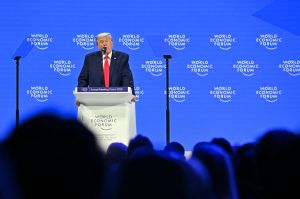
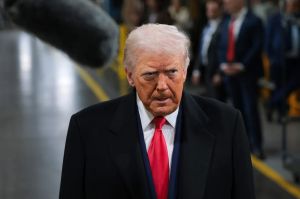



But the GOP’s narrow majority is far from unified around the proposal. And although Trump visited the U.S. Capitol for a conservative pep rally Tuesday, warring Republican factions on both sides dug in to oppose what is now officially called the One Big Beautiful Bill Act. The House GOP’s narrow majority means leaders can afford to lose only a handful of votes — and for now, they don’t have the support they need to pass the measure.

Tax cuts pushed by the Trump administration are amplifying debt and deficit concerns among bond investors, a powerful group of market players who strongly influence how much it costs for the government to finance its budget. The buying and selling of government debt, known as Treasuries, also influences interest rates on a wide variety of debt extended to American households and businesses, including mortgages, credit cards and car loans.

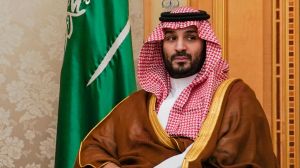
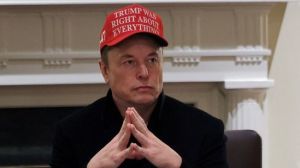
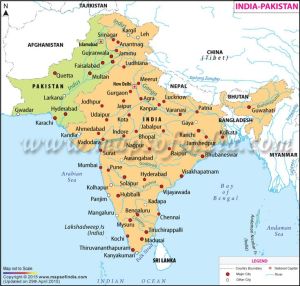
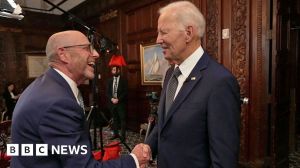
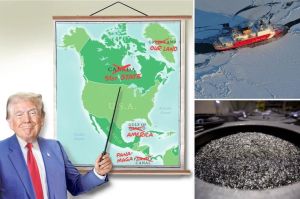

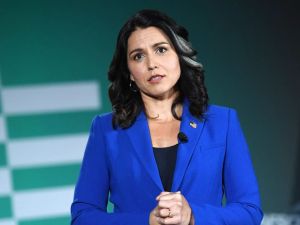

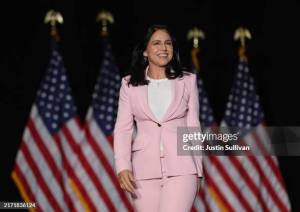
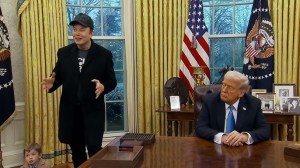

 peej
peej Carissa
 bostonboomer
 dakinikat
 ecocatwoman
 jjlolatina
 mablue2
 Mama Lopez
 peggysue22
 quixote
 skydancingguestblogger
 Mona (aka Wonk the Vote)



 Sky Dancing
Recent Comments