Posted: May 3, 2026| Author:Mama Lopez|Filed under:just because|1 Commentpersonally i can’t wait to be in my “girl pipe” era
Well, it’s another Sunday…they seem to just pass on by rather quickly these days.
First thing:
Cherie DeVaux, the 44-year-old former pre-med student turned horse trainer has just joined a small list of females who have ever started a horse in the Derby and the first in the race's 152-year history to win it. http://www.wlky.com/article/cher…
You know how to tell when someone has a low IQ?When they brag about passing a cognitive exam over and over and over.#ProudBlue #Pinks #SheShed #VoteOutRepublicans
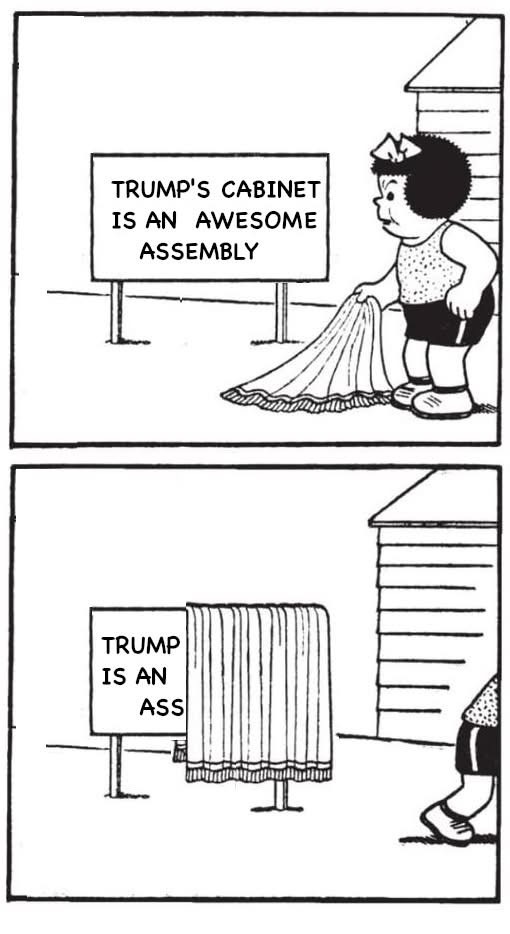
Of all the rooms in the world, 'The Oval Office' is certainly one that does not need a sign to announce its presence. Unless, of course, its occupant either has short-term memory problems or he needs to continually puff-up his ego … or both. Moreover, the sign could not have been more gaudy.
The cut would impact both disabled adults who live with low-income family members and older SSI recipients who live with their adult children on tight budgets.As many as 400,000 people could have their support cut or eliminated, per the Social Security Administration's estimates.
There was a lot of discouraging news yesterday, as is usually the case under Trump’s presidency. An appeals court in Louisiana temporarily limited access to abortion pills; we’re still adjusting to the Supreme Court’s voting rights decision; Trump and Hegseth are pulling 5,000 troops out of Germany for no good reason; the Iran war continues, but Trump is pretending it’s over; Trump is insane and getting worse. Here’s the latest:
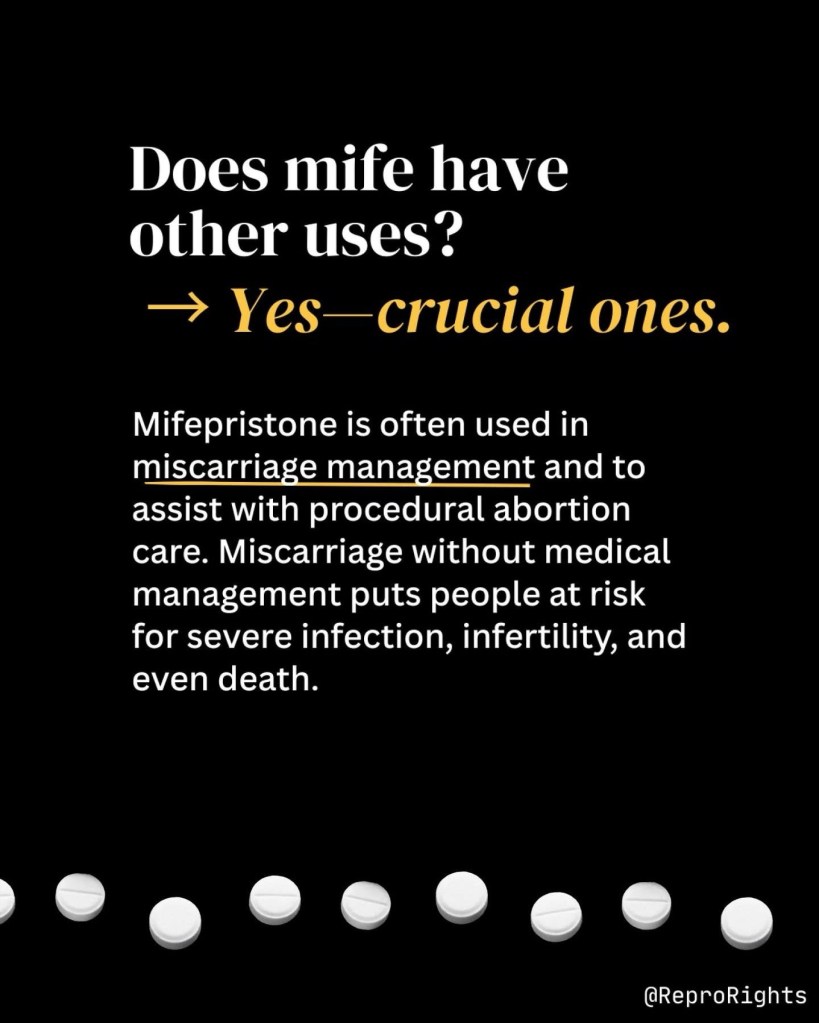
A federal appeals court temporarily reinstated a nationwide requirement that abortion pills be obtained in person, undermining access to the method of abortion that has only grown more widespread since the US Supreme Court overturned Roe v. Wade.
Friday’s ruling from the 5th US Circuit Court of Appeals is a major victory in the anti-abortion movement’s war against medication abortion, which now accounts for roughly two-thirds of all abortions in the United States.
The ruling stems froma lawsuit filed by Louisiana last year against the US Food and Drug Administration, after President Donald Trump’s administration refused to act on calls to reinstate the in-person dispensing requirement for abortion pills through the regulatory process.
The opinion was written by Trump-appointed Circuit Judge Kyle Duncan, joined by Circuit Judges Leslie Southwick and Kurt Engelhardt, who were appointed by Presidents George W. Bush and Trump, respectively.
Referring to Louisiana abortion prohibitions, they wrote that the current federal regulations create “an effective way for an out-of-state prescriber to place the drug in the hands of Louisianans in defiance of Louisiana law.”
Mifepristone manufacturer Danco Laboratories has asked the 5th Circuit to put its ruling on hold for seven days so it can appeal.
Since the Covid-19 pandemic, abortion-seekers have been able to obtain mifepristone – one of the two drugs in the medication abortion regimen – through telehealth appointments. President Joe Biden’s administration finalized rules that ended the requirement that the pills be obtained through an in-person doctor’s visit in 2023, after the US Supreme Court overturned the 1973 Roe precedent protecting abortion rights nationwide with Dobbs v. Jackson Women’s Health Organization.
Louisiana alleged that that regulatory maneuver was aimed at undermining the abortion ban that went into effect in the state with the reversal of Roe and says that now, hundreds of abortions are occurring every year within its borders because women are able to obtain pills via mail after telehealth visits with providers.
Access to mifepristone, the FDA-approved medication used to end pregnancy, could become severely limited following a ruling from US appeals court on Friday, which temporarily blocked the drug from being dispensed through the mail.
The decision is for now the most sweeping threat to abortion access since the supreme court rolled back abortion rights in 2022, said Kelly Baden, vice-president at the Guttmacher Institute, an abortion rights advocacy group.
“If allowed to stand, it would severely restrict access to mifepristone in every state, including those where abortion is broadly legal and where voters have acted to protect abortion rights,” she said.
Usage has risen in recent years, especially in the aftermath of the 2022 ruling from the supreme court that overturned federal protections for a right to an abortion. In the year after that decision, the FDA formally modified its regulations to allow the drug to be prescribed online, expanding its use even in states where abortion care was being constricted.
The drug has become a key target for the anti-abortion movement, and a series of lawsuits have challenged the drug’s initial approval in 2000 and the subsequent rules making it easier to obtain.
And Trump controls the FDA.
Meanwhile, with the FDA now under Trump, the agency has opened a review of the medication. Once this analysis is completed, officials at the agency said, they will determine if changes to its regulations are warranted.
The Girl with the Cats, by Christian Kroag, 1909
Reproductive rights advocates have voiced concerns that the review could further limit mifepristone’s use, despite the evidence supporting its safety.
Developed in France in the 1980s, mifepristone is used around the world and is authorized in 96 countries. Its use is backed by roughly four decades of peer-reviewed research, according to a 2025 brief written by public health experts at the Johns Hopkins School of Medicine.
“Anti-abortion politicians have just made it much harder for people everywhere in the country to get a medication that abortion and miscarriage patients have been safely using for more than 25 years,” Julia Kaye, a senior staff attorney for the Reproductive Freedom Project of the ACLU, said in a statement.
Some relevant commentary from Jessica Valenti at Abortion Everyday: My Favorite Abortion.
This week, U.S. Rep. Brandon Gill asked an understandably confused American University scholar to name her “favorite type of abortion.” Law professor Jessica Waters went before a House Judiciary subcommittee to talk about the Freedom of Access to Clinic Entrances (FACE) Act; instead, she was questioned by a visibly pleased with himself Texas lawmaker who clearly crafted his question to be a viral social media moment.
When you see Rep. Gill’s shit-eating grin, you’ll know exactly who he is.
Since Rep. Gill is so interested in our favorite types of abortions, I thought I’d share a few of mine.
My favorite type of abortion is the one that prevents a raped ten-year-old from breaking her pelvis in childbirth.
I also like abortions that keep women from carrying dead fetuses for weeks on end, which is what happened to Marlena Stell in Rep. Gill’s home state of Texas.
Another favorite? The abortion that means a Texas 21-year-old won’t be forced to carry a fetus developing without a head.
I like the abortion that means a pregnant mother of five with cervical cancer doesn’t have to beg a hospital panel for chemotherapy.
I like the abortion that doesn’t force a woman to travel far from home when faced with a fatal fetal abnormality.
I really like the abortion that stops patients from having to plead for help in videos made in hospital parking lots.
My favorite types of abortions are the ones that allow women to live. Maybe if Candi Miller, or Amber Nicole Thurman, or Tierra Walker had access to abortion, they would still be here.
My favorite types of abortions are the ones that allow women to go to college.
My favorite types of abortions are the ones that let women leave abusive relationships.
My favorite kinds of abortions are the ones that mean women get to choose their own life path, to decide what is best for them, and to figure out if and when they want to start a family.
I suppose this case will ultimately end up in the Supreme Court. Who knows what they will do with it?
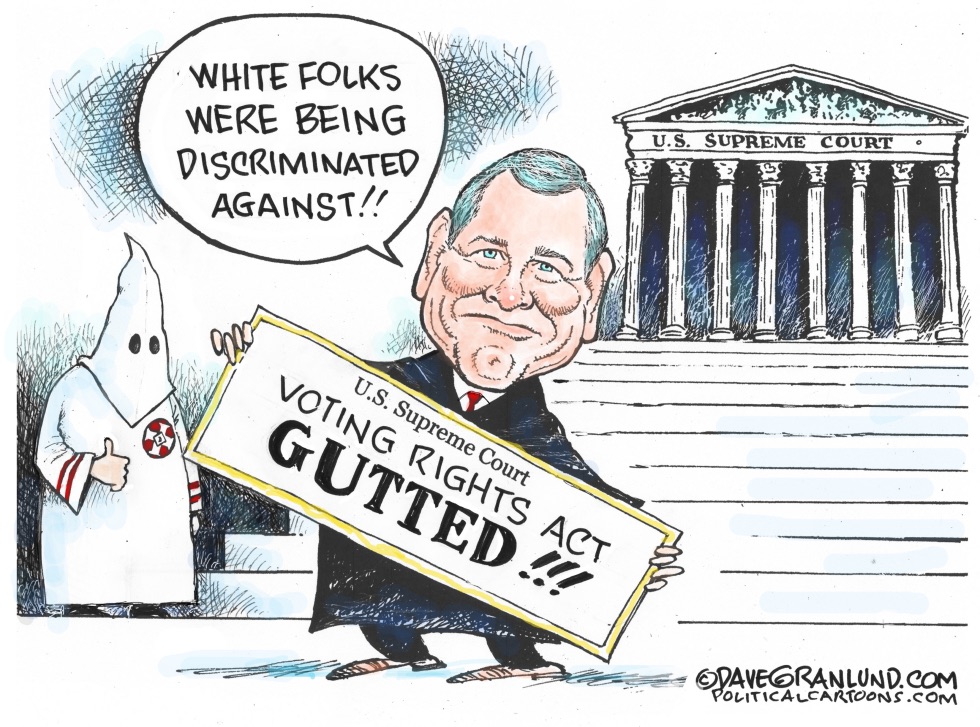
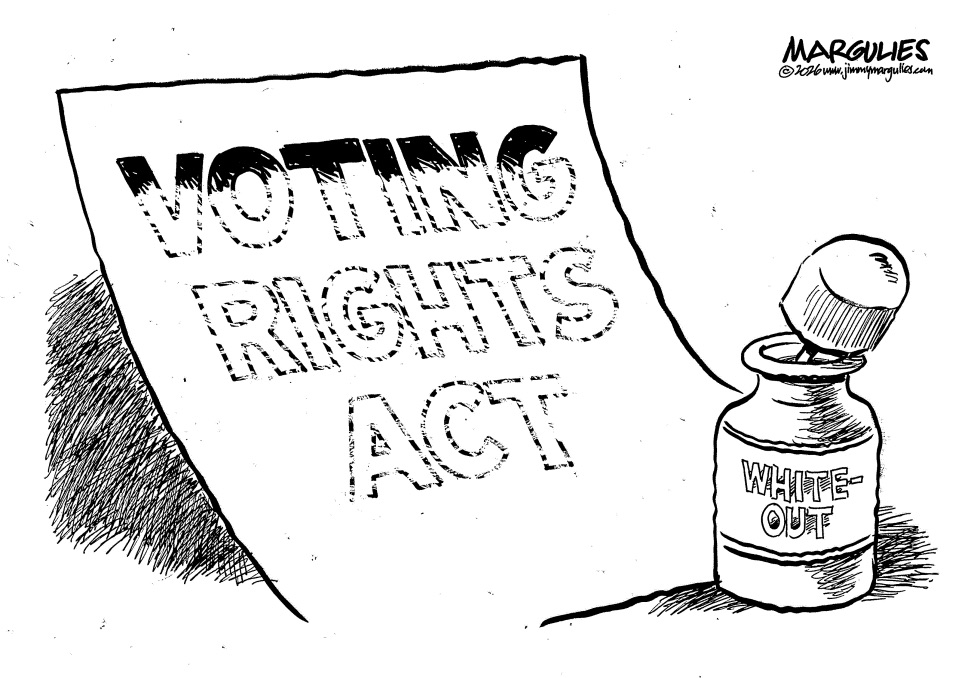
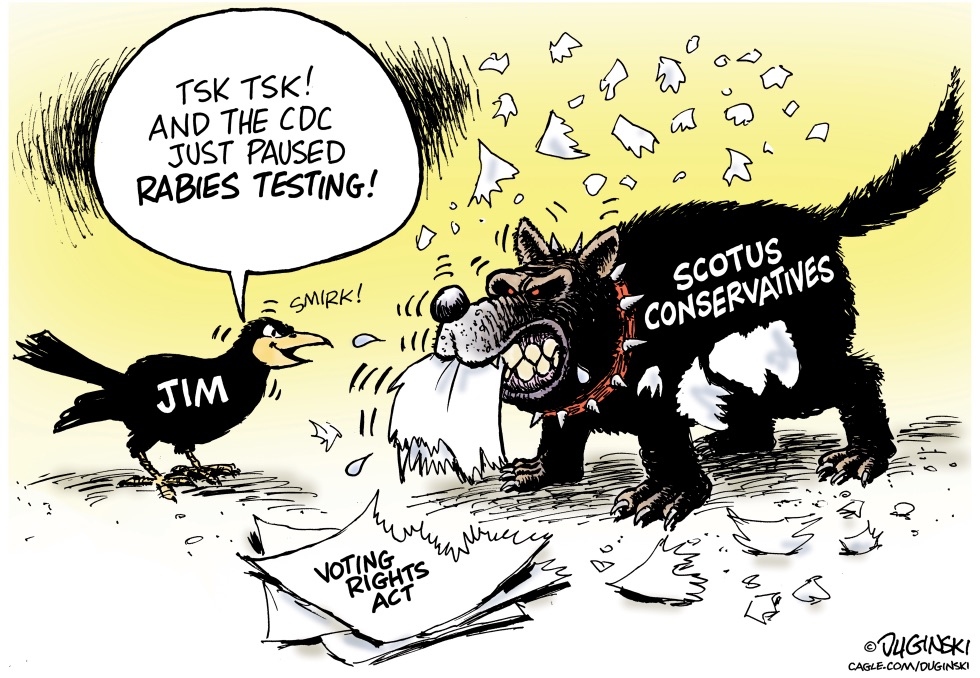
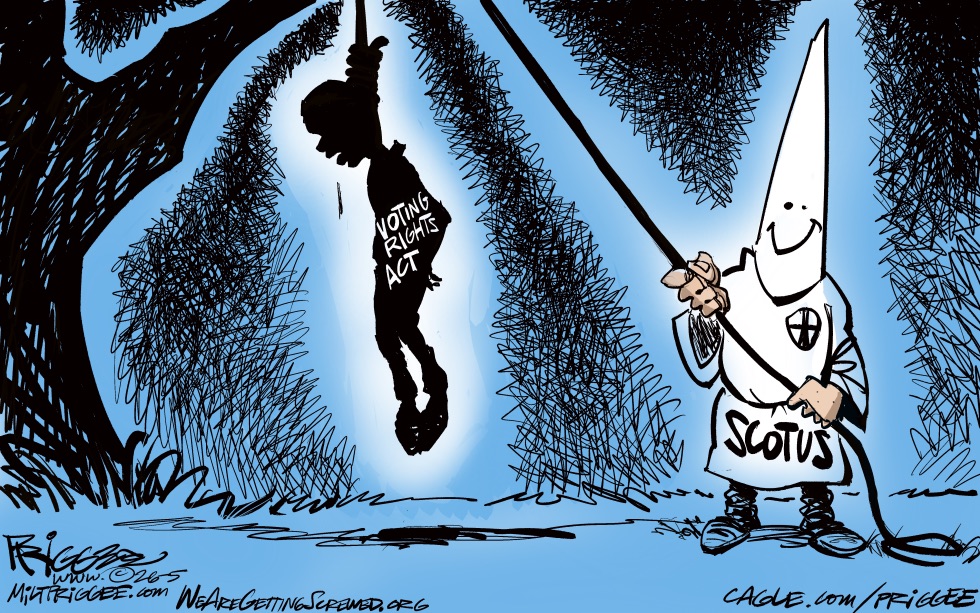
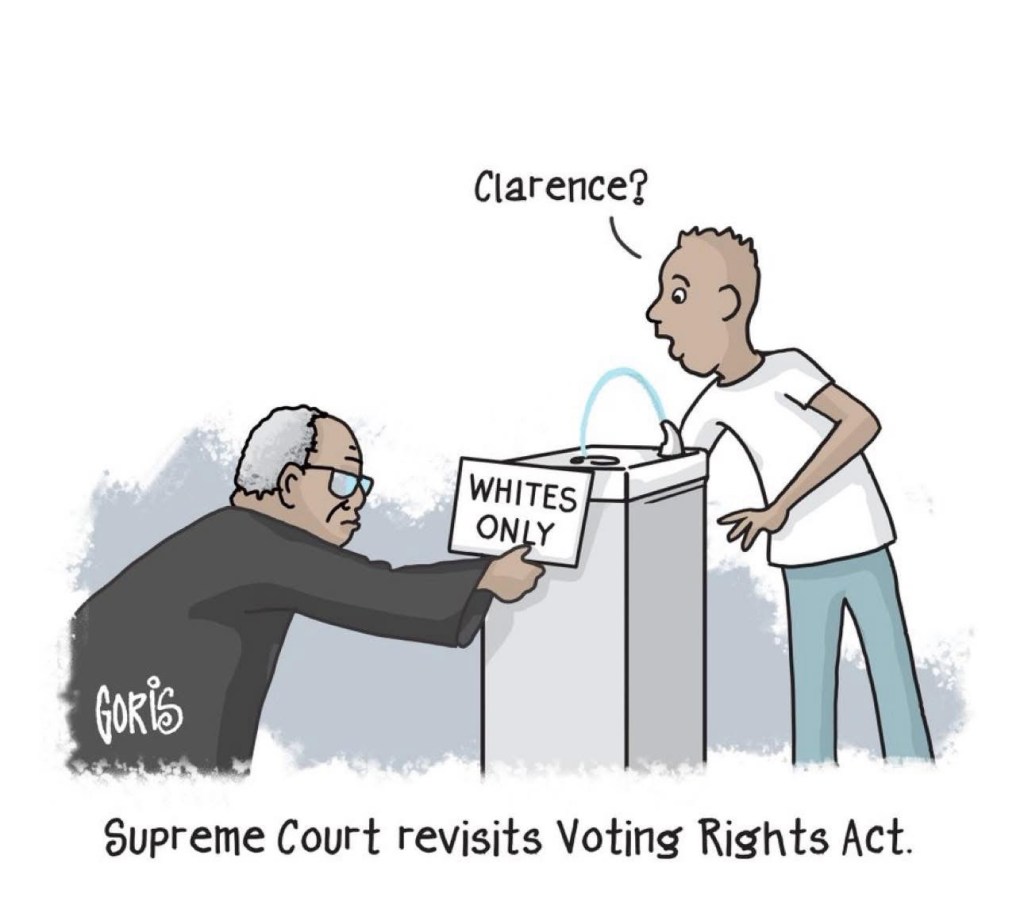
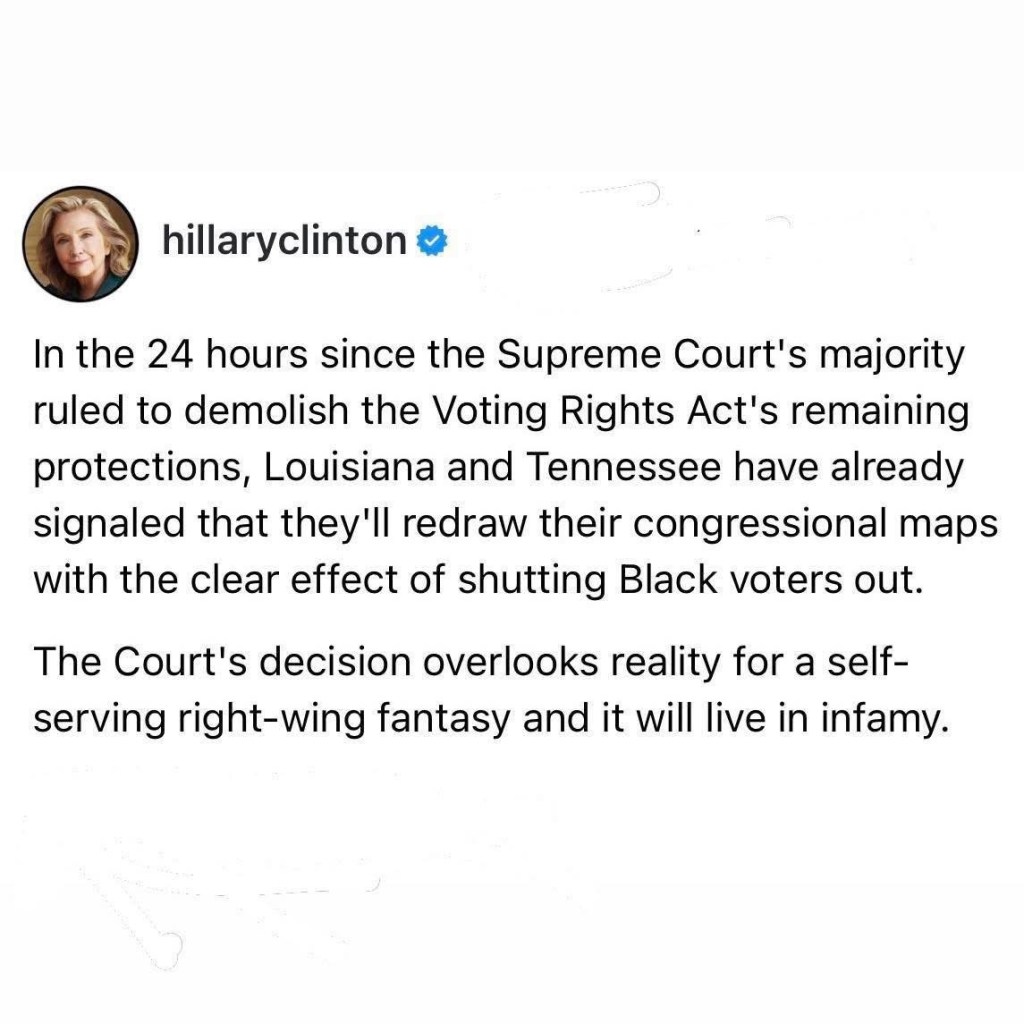
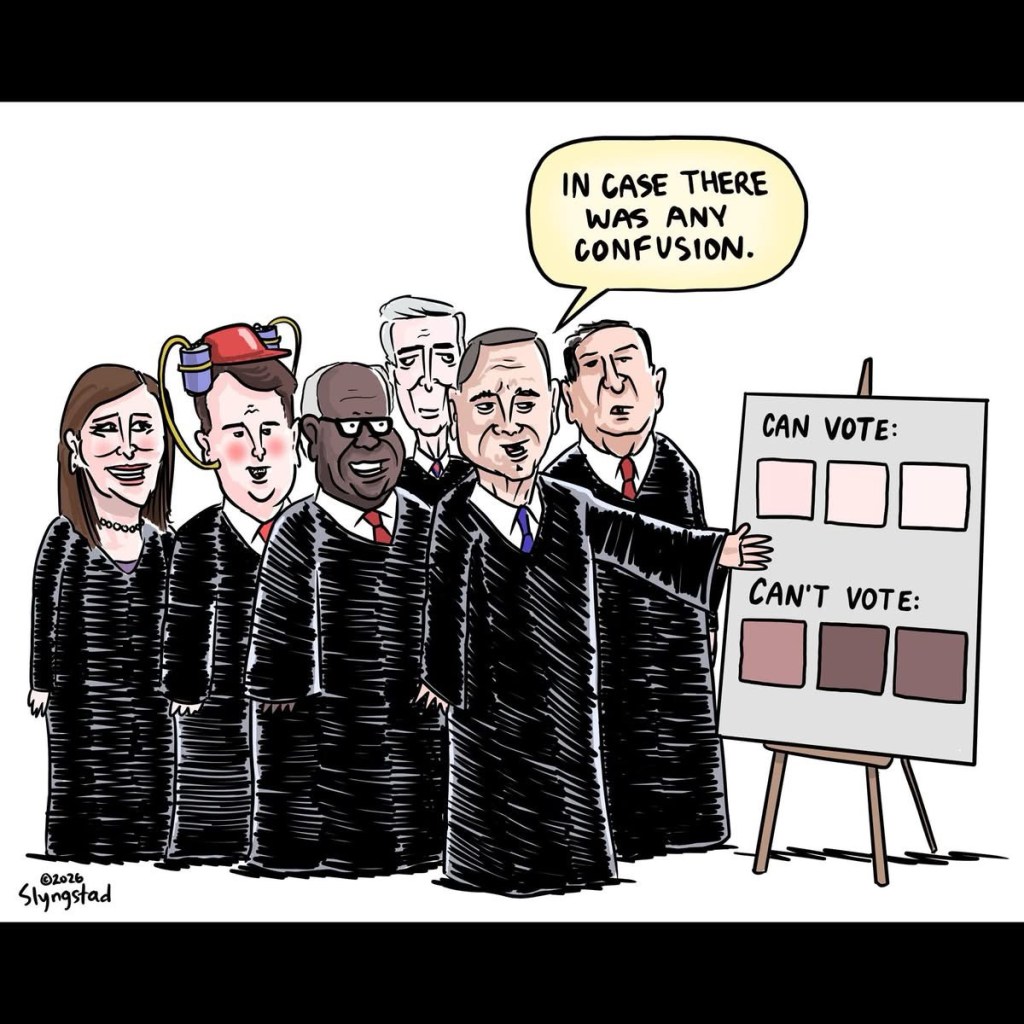
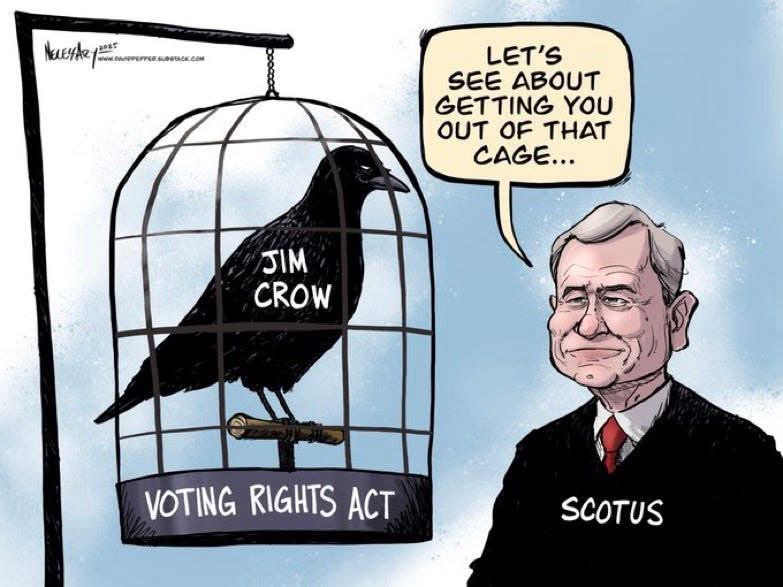
And of course we’re still dealing with the aftermath of the Roberts Court’s decision gutting the Voting Rights Act.
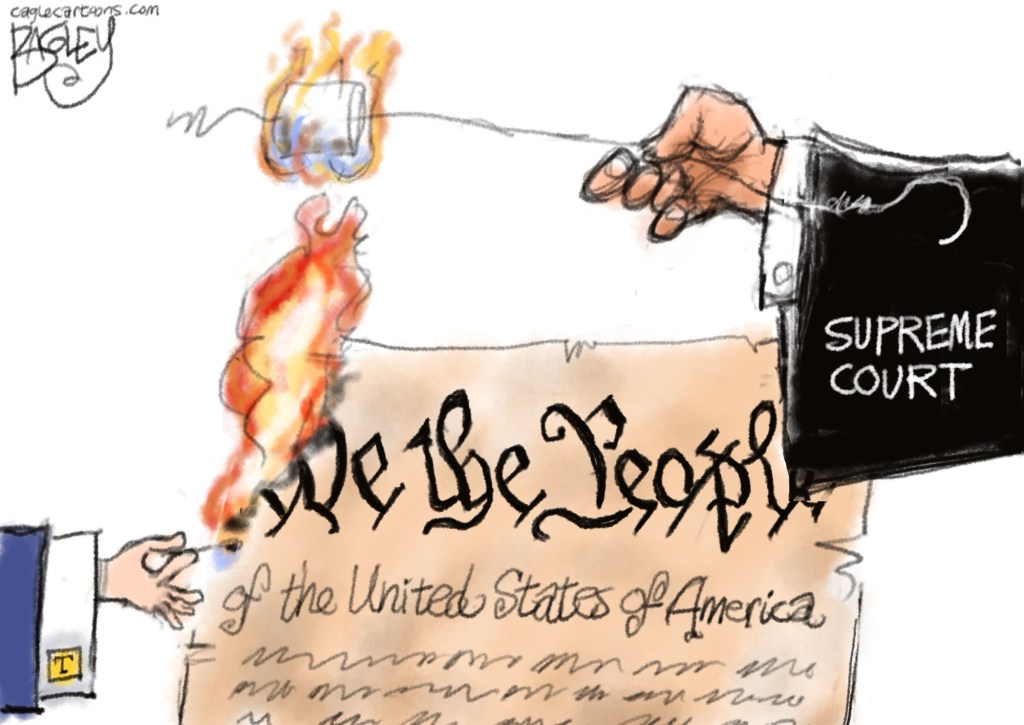
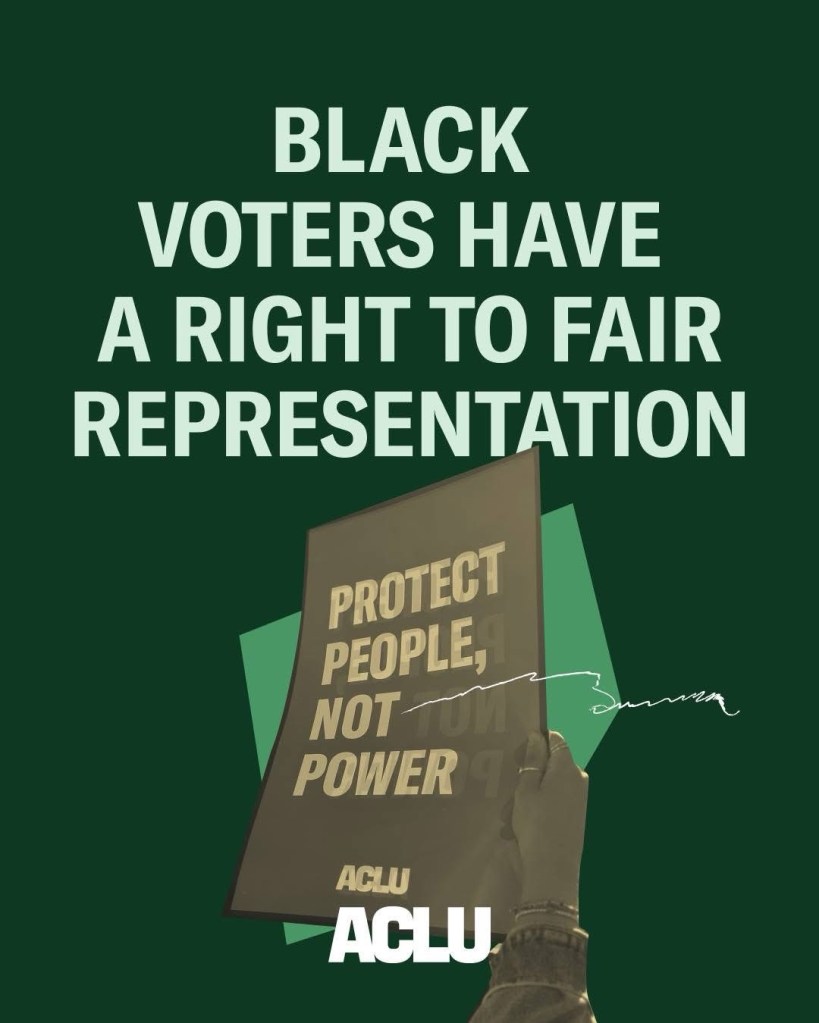
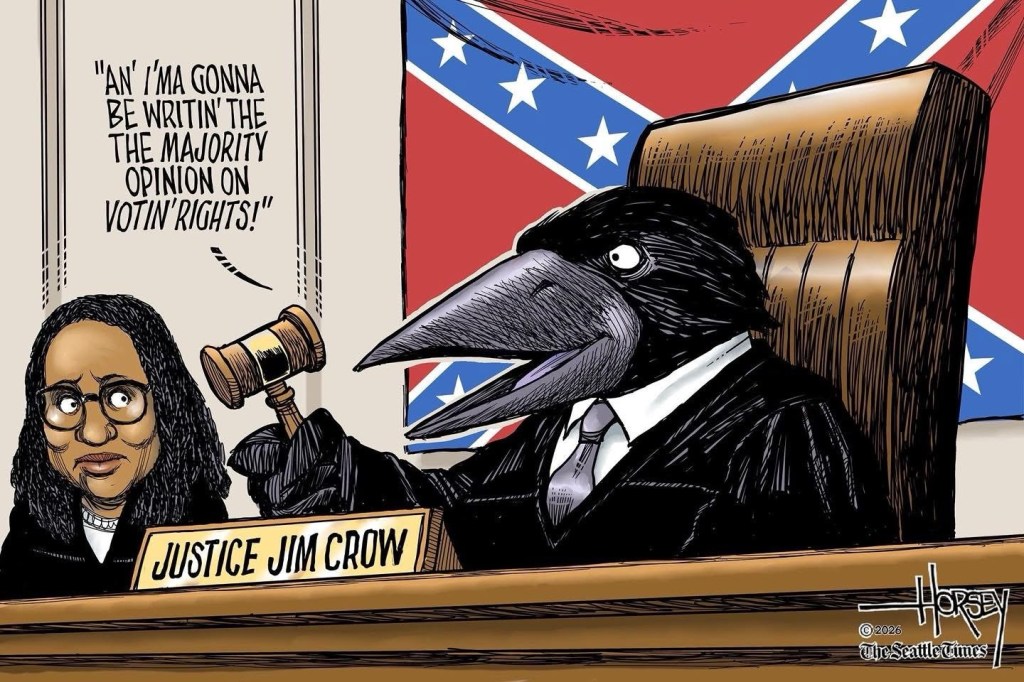
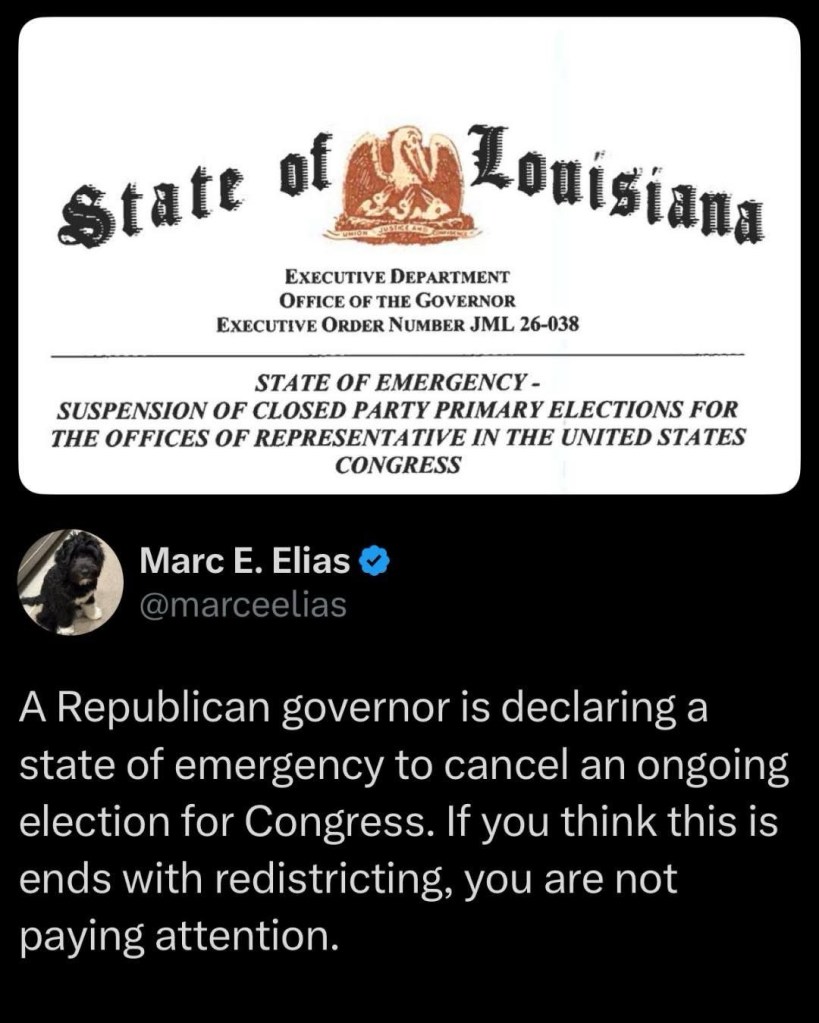
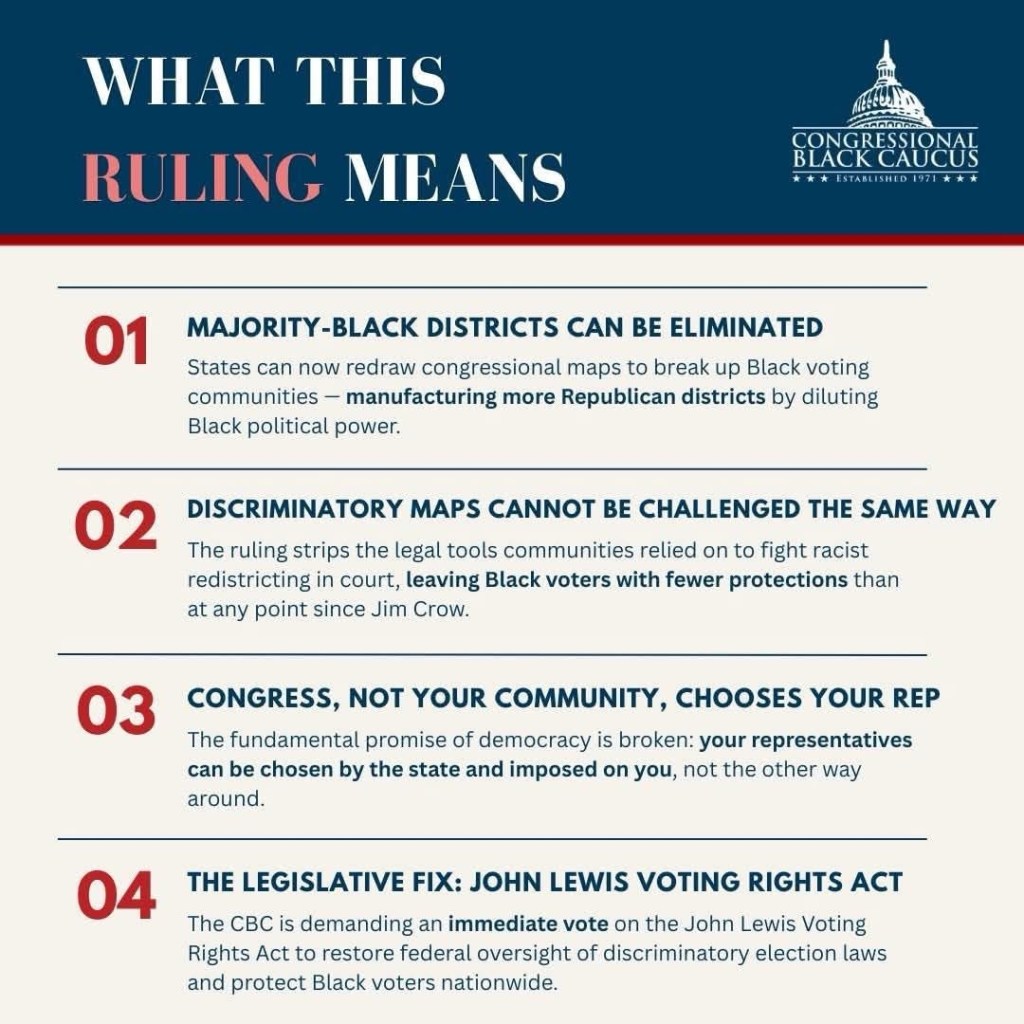
With its decision this week in Louisiana v. Callais, the Supreme Court gutted a core part of the Voting Rights Act, Congress’s landmark prohibition on voting rules that have the effect of excluding people of color from the political process. In doing so, the court has, not for the first time, claimed an authority to reject laws passed by Congress in service of equal justice and a free society.
By Susanne Clements
And it has effectively killed the Second Reconstruction, the mid-20th-century civil rights revolution. In the face of this decision, Congress must once again defend democracy from a hostile court. A plan of action already exists.
When the Supreme Court challenged the first Reconstruction 150 years ago, abolitionists and Republicans in Congress debated measures ranging from declaring certain federal laws beyond judicial reach to changing the number of justices. The partial measures they enacted saved Reconstruction — for a time. But more relevant for us today are the comprehensive reforms they proposed but never fully enacted. These reforms offer us and our representatives in Congress the tools we need now.
In the era surrounding the Civil War, opponents of slavery confronted a Supreme Court that was threatening their life’s work. In Dred Scott v. Sandford, in 1857, the court declared unconstitutional the Missouri Compromise — a congressional statute banning the spread of slavery in federal territory. A decade later, the court similarly menaced the Reconstruction laws that Congress was enacting to begin the project of multiracial democracy amid the wreckage of the former Confederacy.
But Congress did not submit to this judicial rule. Members of an ascendant Republican Party decried a court “inflated with supremacy” and declared that whenever a decision is, “in the judgment of Congress, subversive of the rights and liberties of the people,” it is the “solemn duty of Congress” to override it. In 1862, Congress and President Abraham Lincoln enacted legislation that banned slavery in places the Dred Scott decision had protected it. Congress also drafted the 13th, 14th and 15th Amendments to the Constitution, all of which advanced Congress’s goals of freedom and political equality while empowering Congress to enforce its terms by “appropriate legislation.”
When the postwar court appeared likely to challenge legislation Congress considered “appropriate” to enforce these amendments, Congress changed the size of the court. The House of Representatives then passed a bill that prohibited the court from invalidating any federal law without the concurrence of two-thirds of the justices. Representative John Bingham of Ohio, the primary author of the 14th Amendment, insisted that such a requirement was necessary to prevent a second Dred Scottdecision. Some members agreed but pushed for a unanimity rule (concurrence among all the justices) instead.
In the Senate, the author of the 13th Amendment, Lyman Trumbull of Illinois, proposed that Congress declare its Reconstruction Acts “political in their character, the propriety or validity of which no judicial tribunal is competent to question.” As the threat from one pending Supreme Court case became urgent, Congress enacted a narrower but decisive measure stripping the court of appellate jurisdiction over the particular challenge before it.
That strategy worked. Disciplined by Congress, the court declined to interfere with its abolition or Reconstruction Acts. As federal prosecutors and lower courts enforced these statutes, over 750,000 Black Americans voted for the first time. Black men even took seats in Congress, where they helped draft and pass the nation’s first national voting rights laws.
Use the gift link to read the rest if you’re interested.
Why on earth does Trump want U.S. troops out of Germany? Because German Chancellor Friedrich Merz hurt his feelings.
The U.S. is withdrawing approximately 5,000 troops from Germany, Pentagon officials said Friday, after President Donald Trump was angered by criticism from the German chancellor over the war with Iran.
The move would include one brigade combat team as well as other forces inside Germany, the officials said. The decision does not appear to affect the U.S. military’s massive medical support bases, like Landstuhl, where thousands of troops, including those who have been injured during the war, have been taken for medical treatment.
The decision was a direct response to comments made by Chancellor Friedrich Merz, but also reflected Trump’s frustration that U.S. allies aren’t doing enough, according to a senior Pentagon official. Trump has been threatening Germany and other NATO allies over their refusal to engage in the U.S. and Israel-led war on Iran. He suggested earlier this week he might pull troops from Germany.
“The Europeans have not stepped up when America needed them,” the official said. “This cannot be a one-way street.”
Chief Pentagon spokesperson Sean Parnell confirmed the withdrawal figure in a statement Friday and said it would be completed over the next six months to a year.
“This decision follows a thorough review of the Department’s force posture in Europe and is in recognition of theater requirements and conditions on the ground,” he said.
ONE OF THE BIGGEST MISTAKES of my career wasn’t something I did. It was something I failed to prevent.
I was commander of U.S. Army Europe in the early 2010s when U.S. forces were being drawn down in the European theater. I argued—forcefully, with member of Congress, the administration and the Department of Defense, and even my military commanders—that we shouldn’t do it.
In the final throes of the discussion, I pleaded to keep just one more tank brigade combat team on the continent. Those tanks, armored vehicles, and supporting forces would have signaled not to our allies but to our foe, Putin, presence and commitment. I believed then, as I do now, that removing that force created an opportunity for Russia to test the NATO alliance and to pursue its longstanding objective of expanding its influence.
I wasn’t persuasive enough. My arguments fell on deaf ears, and the brigade’s soldiers were ordered to return to the United States. Not long after, Russia seized Crimea and invaded Ukraine’s Donbas region. I won’t claim that the decisions of those who were my superiors caused that aggression—but I believe it contributed to it. I remember a warning from the then-president of Georgia, Mikheil Saakashvili, who told me plainly that if we pulled that kind of capability out of Europe, Moscow would act.
By Sylvia Anita, 1968
He was right. I still question myself as to how I could have been more persuasive.
I WOULD LIKE TO SEE the Department of Defense’s “thorough review.” Because I was part of a similar one conducted over a decade ago. I helped plan and later execute the last major transformation of U.S. Army forces in Europe—one that took that force from 90,000 troops to about 34,000 between 2004 and 2012.That wasn’t a decision made quickly or casually. It took years of analysis, coordination, and constant negotiation across governments, services, and commands. It required aligning troop movements with deployments to Iraq and Afghanistan to avoid tearing apart families and units. It involved extensive consultation with host nations such as Germany and Italy, where political, legal, and economic considerations were as important as military considerations. It required detailed planning for base closures, infrastructure consolidation, and a plan for a strategic long-term presence on the continent. It also took unique action to ensure families of those forces were treated well as we hurried their return to the United States in massive waves of base and housing closures. The planning and the execution were phased deliberately, executed carefully, and constantly reassessed. Those are the kinds of procedures and actions that constitute a real, “thorough review.” I don’t believe for a second that there was anything like that kind of process before the withdrawal announcement made yesterday evening.
This decision does not bear the hallmarks of a plan that resulted from careful thought, deliberation, consultation, and diplomacy. It reflects a misunderstanding of what U.S. forces in Europe are and what they do to contribute to the security of both the United States and our European allies.
Read the rest at the Bulwark link.
The Iran war isn’t over, but Trump is trying to pretend it is. He claims he has already won it. He’s created mess and doesn’t know how to clean it up. He is truly insane and he controls our nuclear arsenal.
President Donald Trump claimed in a letter to Congress on Friday that hostilities with Iran have “terminated” as he reached a legal deadline that requires military operations to halt unless lawmakers authorize force.
Trump’s claim came as the United States continues to enforce a naval blockade of Iran and as he declined to rule out additional strikes on the country.
Country Girl and her Kitten, Charles Lansdelle
The War Powers Resolution of 1973 requires presidents to remove U.S. forces from any conflict that Congress has not authorized within 60 days of the White House notifying Congress of hostilities — a deadline that Trump hit on Friday.
Trump wrote in his letter to lawmakers Friday that the conflict has been effectively over since the United States and Iran agreed last month to a ceasefire.
“There has been no exchange of fire between United States Forces and Iran since April 7, 2026,” Trump wrote in the letter, obtained by The Washington Post. “The hostilities that began on February 28, 2026, have terminated.”
The president’s argument echoed what Defense Secretary Pete Hegseth said Thursday in testimony before the Senate Armed Services Committee. Trump also suggested Friday that he believes the requirement to withdraw U.S. forces within 60 days is unconstitutional.
“Most people consider it totally unconstitutional,” Trump told reporters. “Also, we had a ceasefire, so that gives you additional time.”
Democrats immediately pushed back. Senate Minority Leader Charles E. Schumer (D-New York) described Trump’s argument in a post on X as “bullshit.”
“President Trump declaring the war with Iran ‘terminated’ doesn’t reflect the reality that tens of thousands of U.S. service members in the region are still in harm’s way, that the Administration continually threatens to escalate hostilities or that the Strait of Hormuz remains closed and prices are skyrocketing at home,” Sen. Jeanne Shaheen (New Hampshire), the top Democrat on the Senate Foreign Relations Committee, said in a statement. “President Trump entered this war without a strategy and without legal authorization and today’s announcement doesn’t change either fact.”
— Sanction threat: The US has warned shipping companies they could face sanctions if they pay tolls to Iran to safely use the Strait of Hormuz. Meanwhile, analysts say the impact of the waterway’s closure on the economy will deepen in the coming weeks.
— A senior Iranian military official has said renewed conflict with the US is “possible” after President Donald Trump rejected the latest peace proposal from Tehran. The nations are currently observing a ceasefire.
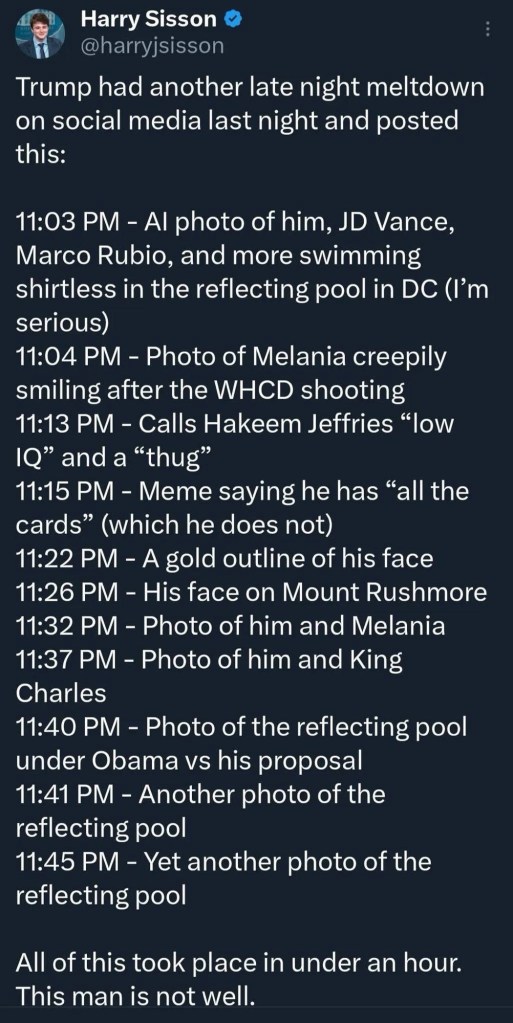
President Donald Trump, a former reality TV star known for his taste in all-gold everything, has never been one for modesty, but the Republican has in recent days begun speaking about himself as a figure of all-time historical power, according to allies.
“He’s been talking recently about how he is the most powerful person to ever live,” a Trump confidant told The Atlantic. “He wants to be remembered as the one who did things that other people couldn’t do, because of his sheer power and force of will.”
“He is unburdened by political concerns and is able to do what is truly right rather than what is in his best political interests,” an administration official added in an interview with the magazine. “Hence the decision to strike Iran.”
Unlike any U.S. leader in recent history, President Trump has pushed the boundaries of what is legal within the U.S., while making massive unilateral gambles on the world stage: threatening a U.S. takeover of allied Greenland, kidnapping the leader of Venezuela, and launching a war with Iran.
Country Girl and her Kitten, Charles Lansdelle
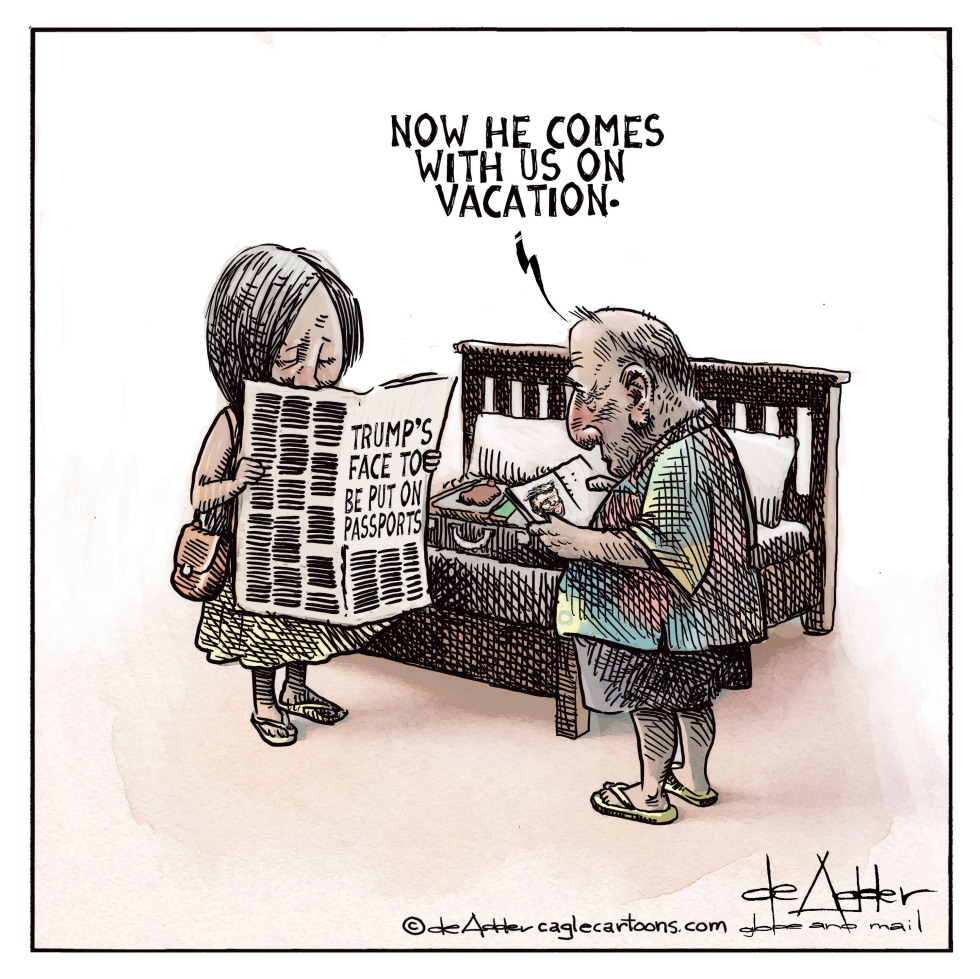
Unreal. The man is a megalomaniac. He’s also demonstrating that by trying to put his name on everything from the Kennedy Center to airports, National Park passes, passports, and even dollar bills.
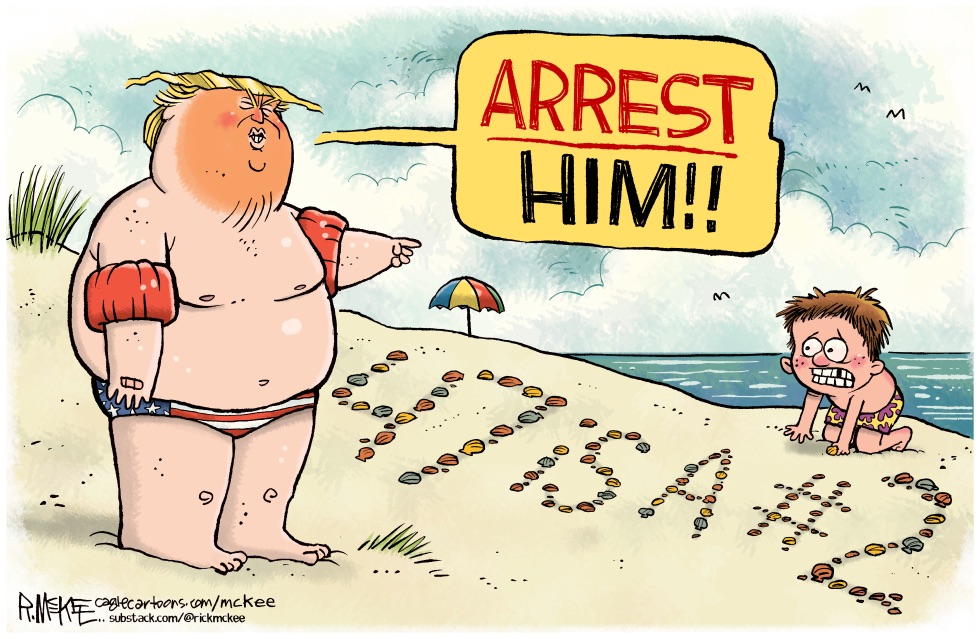
President Donald Trump said Friday that he was eager to deliver his first public speech since he was hustled from a hotel stage Saturday, after an attempted shooter breached the perimeter of the White House correspondents’ dinner.
And the president picked a familiar stop for his return address: The Villages, a retirement community in Florida and a longtime Republican stronghold.
“They want me to be in a secure place. I said, ‘What’s more secure than The Villages?’” Trump said to applause, as he kicked off a 94-minute event that featured several guests — and was peppered with Trump’s profane jokes and complaints, including about the president’s microphone setup.
“Turn up the mic!” the president said, criticizing the logistics. “I don’t believe in paying people that do a bad job. … I’m screaming my ass off.” [….]
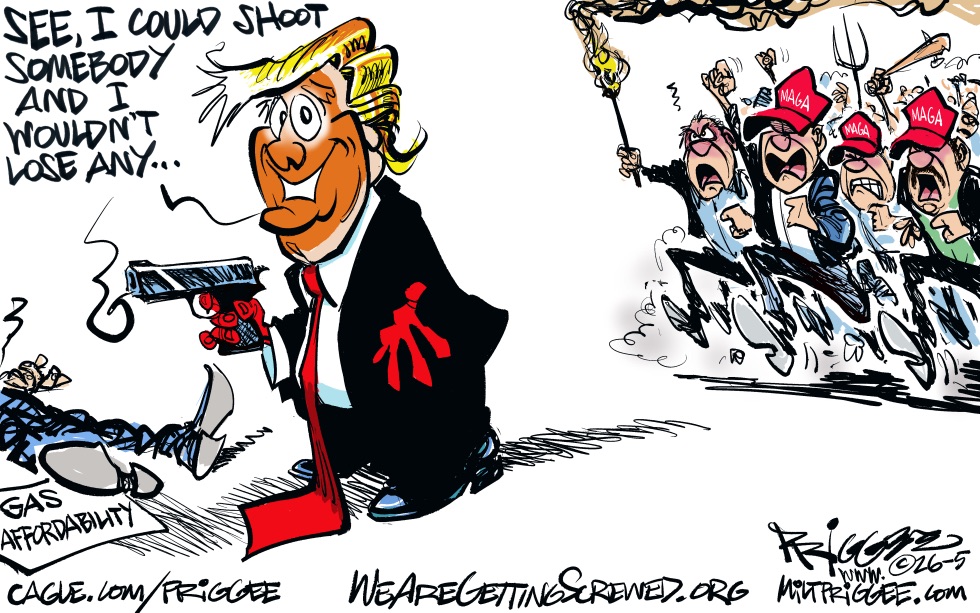
Trump seemed unburdened [by the events at the White House Correspondent’s Dinner]. He mocked Democrats in crass terms, including one unnamed lawmaker that he said was a “sleazebag,” for focusing on affordability ahead of the midterm elections.
“They’ve got one good line of bullshit,” the president said, blaming Democrats for policies that he said had led to inflation. Trump also polled the crowd on which nickname he should use to mock former president Joe Biden, who Trump said had “set a record, most falls in history.”
I don’t know how that went over in The Villages, but most voters are not going to like his attitudes about affordability. He also indicated that he’s bored by information about Medicare and Medicaid.
Trump also gestured toward some of his policies, saying that his administration was defending entitlement programs such as Social Security and Medicare, before acknowledging that he wasn’t particularly focused on the details.
“We have a man here who knows more about Medicaid, Medicare, medical crap than any human being. Where’s Dr. Oz? Where the hell are you, stand up,” Trump said, referring to Mehmet Oz, the administrator of the Centers for Medicare and Medicaid Services. “It’s the most boring trip I’ve ever made. He’s telling me about Medicare, Medicaid. All I want to do is take care of you, I don’t care. I said, ‘You work out the details.’”
He also performed his “greatest hits,” like the transgender weightlifter and “dancing” to “YMCA,” which he says people claim is a gay anthem but he loves it anyway. He also told the audience that it is “treasonous” to claim that he’s not winning the Iran war.
I could go on and on, but this getting way too long. I hope you found something here worth reading. Enjoy the rest of the weekend!
Did you like this post? Please share it with your friends:
Then, there’s the Iran War. This has definitely reached Constitutional Crisis status. Tess Bridgeman and Oona A. Hathaway from Just Security have this analysis. “At the 60-Day Mark, the Iran War is Triply Illegal.” Of course, should it head to SCOTUS, the right-wing justices will just make something up.
Today, May 1st, marks 60 days since President Donald Trump notified Congress that he initiated a war against Iran. The notification of Operation Epic Fury, which began two days earlier on Feb. 28, triggered the 60-day termination clock of the War Powers Resolution, a landmark statute passed by supermajorities in both congressional chambers over President Richard Nixon’s veto in an effort to reclaim Congress’s constitutional authority over decisions to wage war. Under that statute, Trump must now terminate the hostilities he began two months ago. He seems set against doing so. If he refuses, he will take a war that is already doubly illegal and turn it into a triply-illegal war. He will also make it clear, if it was not already, that he regards the law as no constraint on his use of the U.S. military’s lethal power.
At the outset it should be made clear that President Trump’s war in Iran was illegal from the start. From the moment it began, Trump’s war with Iran violated the U.S. Constitution and the UN Charter.
First, the Constitution vests Congress, not the President, with the power to decide when the United States goes to war. The current conflict with Iran makes plain why placing this power in the peoples’ representatives, rather than the chief executive, was and remains so important. Democracy, it was thought then – and remains true now – is incompatible with the “one man decides” model in which a nation can be thrown into war on a single person’s whims. Requiring congressional authorization is not just a safeguard against potential incompetence, though that is plenty evident in the disastrous war of choice against Iran. It is also because the weighty decision to go to war should be made by the more deliberative branch of government, and the most politically accountable, that the authority to declare war resides in the list of Congress’ Article I powers, alongside a host of other powers on making, regulating, and funding war. (Of note, this war clearly crosses even the threshold the executive branch has set for itself on when it needs to turn to Congress to authorize force, though neither the Congress nor the courts have embraced the executive’s highly elastic test.)
Second, the war is a clear violation of Article 2(4) of the UN Charter, which prohibits the threat or use of force except in legitimate self-defense against an armed attack (or imminent threat of one) or with Security Council authorization. Neither exist here. It is, put simply, a war of aggression. Other countries know this even if they have been nervous to call it out, fearing Trump’s wrath. It’s why we have so little international support–and why longstanding allies have refused evenbasiccooperation.
The manifest violation of the UN Charter also violates the U.S. Constitution: the president has a constitutional duty to “take Care that the Laws be faithfully executed.” This duty applies to treaties that, under our Constitution, are the “supreme Law of the Land.” The UN Charter is clearly in this category, having earned Senate approval on an 89-2 vote.
While presidents have launched wars in violation of one or the other of these bodies of law in the past, the war in Iran stands out as a significant violation of both of these foundational laws at once. The President, in short, has claimed for himself the power to unleash the most powerful military the world has ever seen on the basis, as he famously put it, of his own morality.
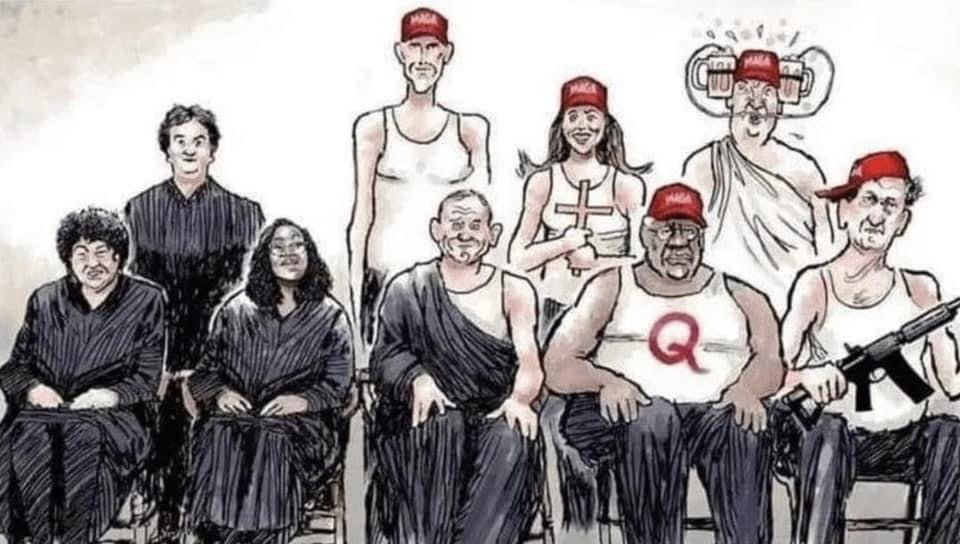
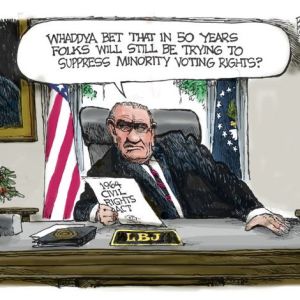
Read more at the link to find out why it’s a triple threat today. The outrage over the latest Supreme Court decision continues. This analysis comes from Liberal Currentsand is provided by Alan Elrod. The Supreme Court Delivers Another Victory for the Jim Crow Southernization of America. We must not forget how poorly buried the racial tyranny of the South’s past is in America’s present.”
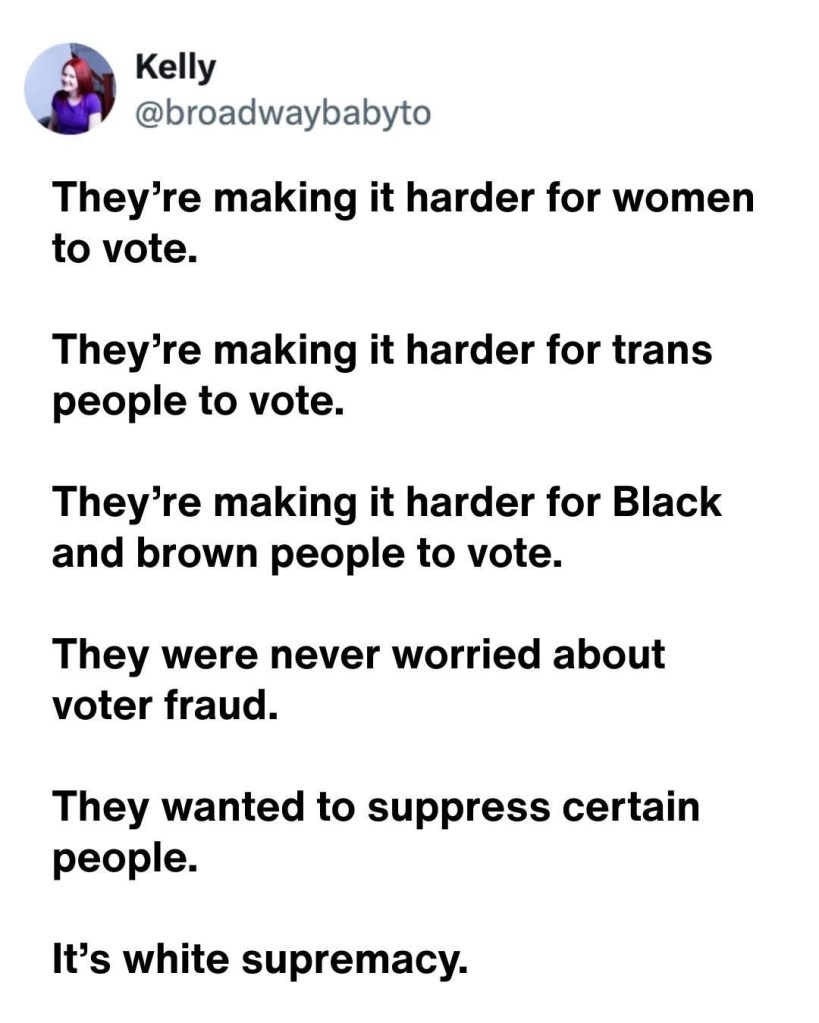
In this context, the painful proximity of the Civil Rights Era and the Jim Crow abuses its reforms worked to end should be clear. And so the Roberts Court decision to effectively neuter Section 2 of the VRA, arguing that Louisiana’s second majority-Black congressional district is racially discriminatory—a ruling rooted in a view-from-nowhere, colorblind vision of race—lands as both profoundly unjust and historically illiterate. That it comes at a time when the Trump administration and wider MAGA movement are launching a frontal assault on the multicultural democracy built on the back of the reforms of the 1960s and 1970s threatens to plunge the country into a Neo-Jim Crow period of rights abuses and anti-democratic discriminations.
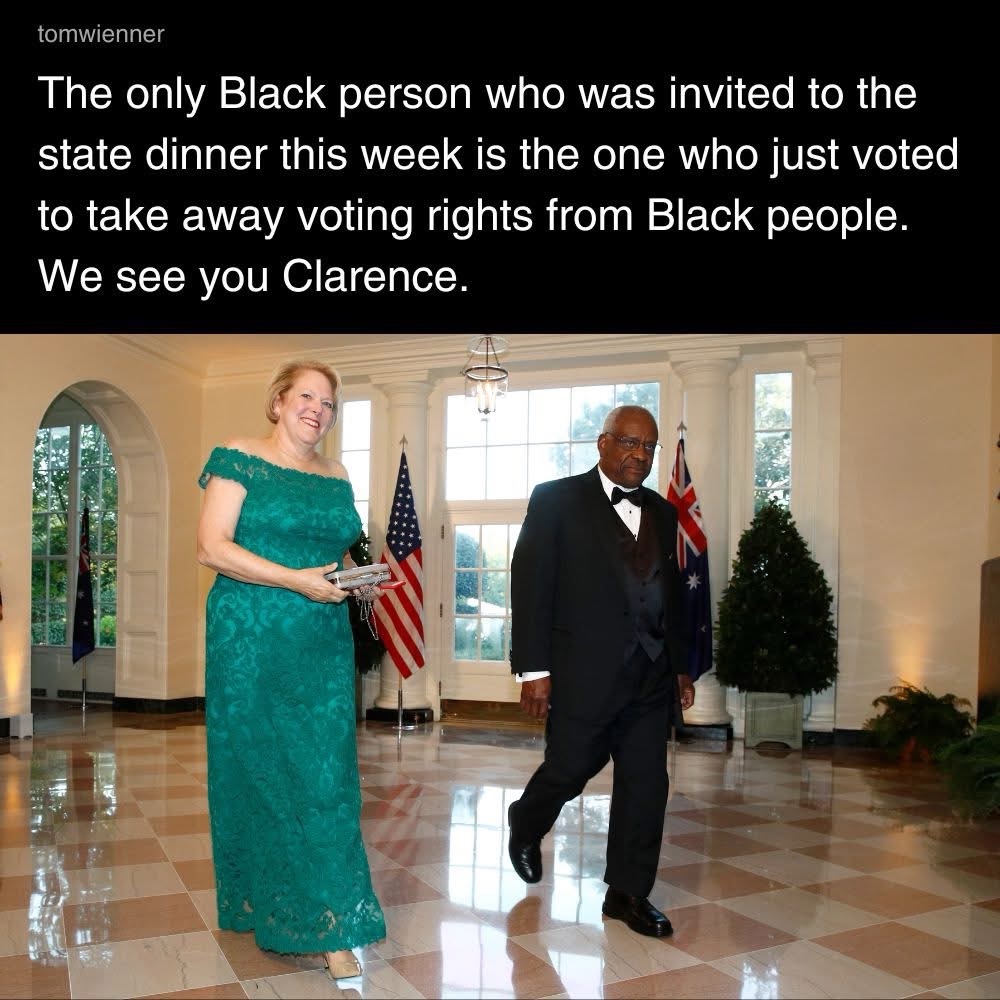
In a 36-page opinion, Alito explained that “the Constitution almost never permits the Federal Government or a State to discriminate on the basis of race.” The question before the court, he said, is “whether compliance with the Voting Rights Act should be added to our very short list of compelling interests that can justify racial discrimination.”
As a general rule, Alito wrote, Section 2 of the VRA guarantees voters, including minority voters, an opportunity to cast a vote for their preferred candidate, but that candidate’s chances of success may be affected by the choices that the state is allowed to make when drawing a redistricting map – such as the desire to protect incumbents or increase the number of seats held by a particular political party. And under the Constitution, Alito continued, a violation of Section 2 only occurs when “the circumstances give rise to a strong inference that intentional discrimination occurred” – for example, when there are several possible maps that contain majority-minority districts, but the state “cannot provide a legitimate reason for rejecting all those maps.”
[…]
“In sum,” Alito concluded, “because the Voting Rights Act did not require Louisiana to create an additional majority-minority district, no compelling interest justified the State’s use of race in creating SB8. That map is an unconstitutional gerrymander, and its use would violate the plaintiffs’ constitutional rights.”
I argued last year at The Bulwark that the American South never truly took to liberal democracy, resisting the goals of both Reconstruction and the Civil Rights Era. Across the region, a culture of censorship, anti-LGBTQ policies, and draconian law enforcement and prison practices choke the dignity and pluralism that make free, diverse societies truly flourish. Under Trump and the contemporary GOP, a great national Southernization of politics appears underway. The Supreme Court’s decision this week threatens to help strengthen and accelerate this process. Consider what Justice Kagan wrote in her dissent:
The Voting Rights Act is — or, now more accurately, was— ‘one of the most consequential, efficacious, and amply justified exercises of federal legislative power in our Nation’s history.’ It was born of the literal blood of Union soldiers and civil rights marchers. It ushered in awe-inspiring change, bringing this Nation closer to fulfilling the ideals of democracy and racial equality.
Kagan is right. As a Southerner, I am acutely aware of the blood spilt in the fight for human rights and dignity for Black people in America—the blood of soldiers, of activists and protesters, and of everyday people who had the temerity to exist in a white man’s world. One of the bloodiest racial massacres in our nation’s history took place in the Arkansas Delta, around the town of Elaine. A white mob set upon Black sharecroppers, with some estimates of the death toll reaching into the hundreds.
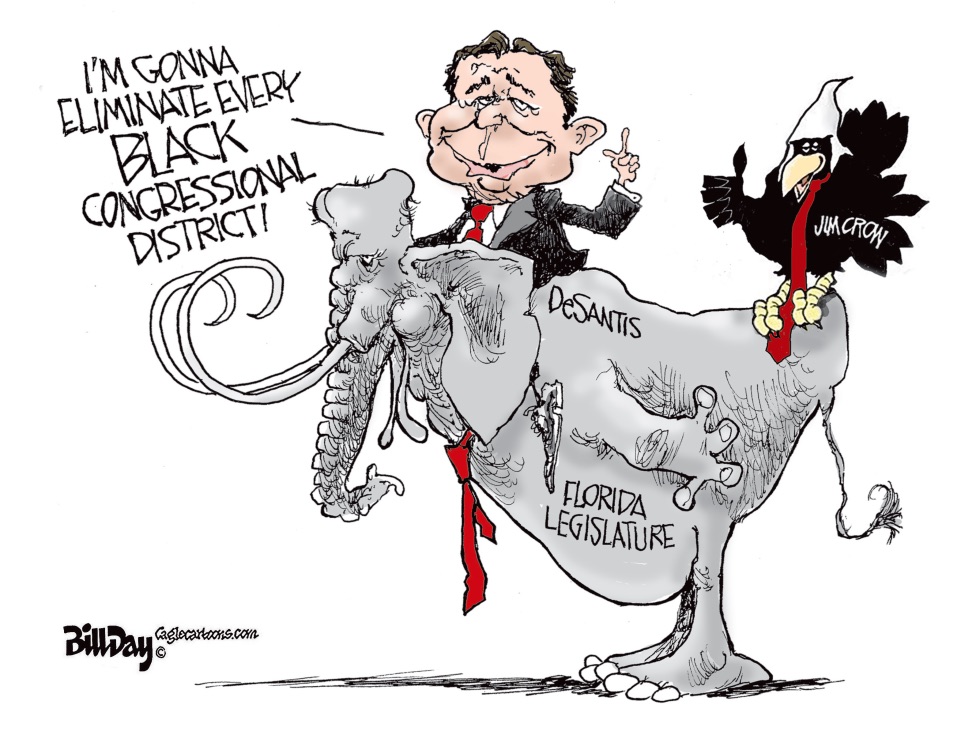
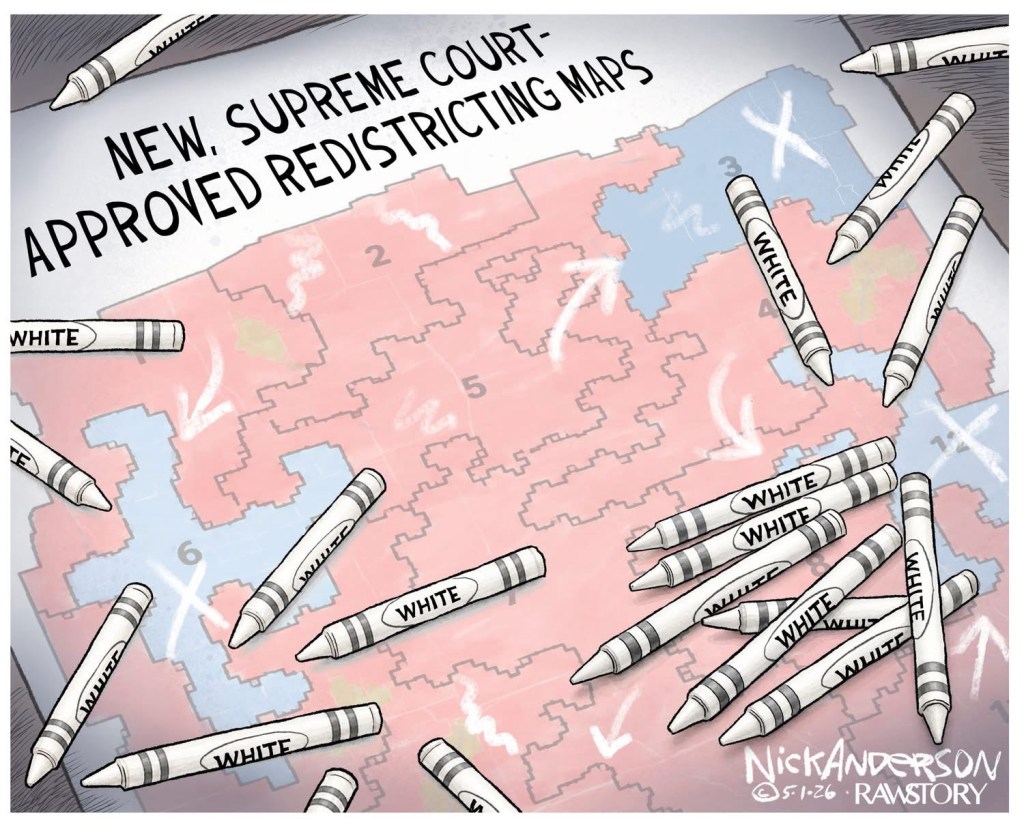
Read about “the context” at the link. Elrod writes about his own life experiences growing up in the deep South. He also discusses the events of the time. It’s a compelling read. Greg Sargent, writing for The New Republic, has a must-read analysis about how bereft Trump is about what the Supreme Court decision really means. “Trump Has No Clue What His Supreme Court Has Just Unleashed. The Supreme Court decision on gerrymandering points in one direction only: Come 2028, Democrats have to declare a take-no-prisoners redistricting war on the GOP.”
Now that the Supreme Court has gutted yet another piece of the Voting Rights Act, this one concerning redistricting, here’s one thing we know for sure: Democrats will have to enter into a new era of procedural total war. That might make many of them uncomfortable, but when it comes to the future of the liberal agenda, the stakes are enormous.
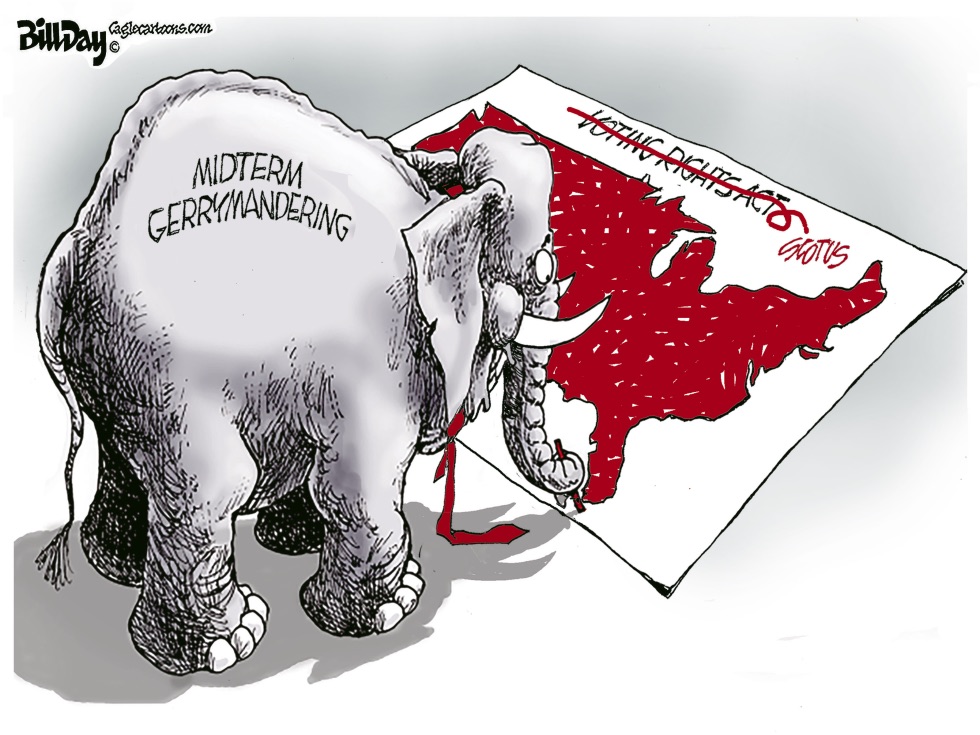
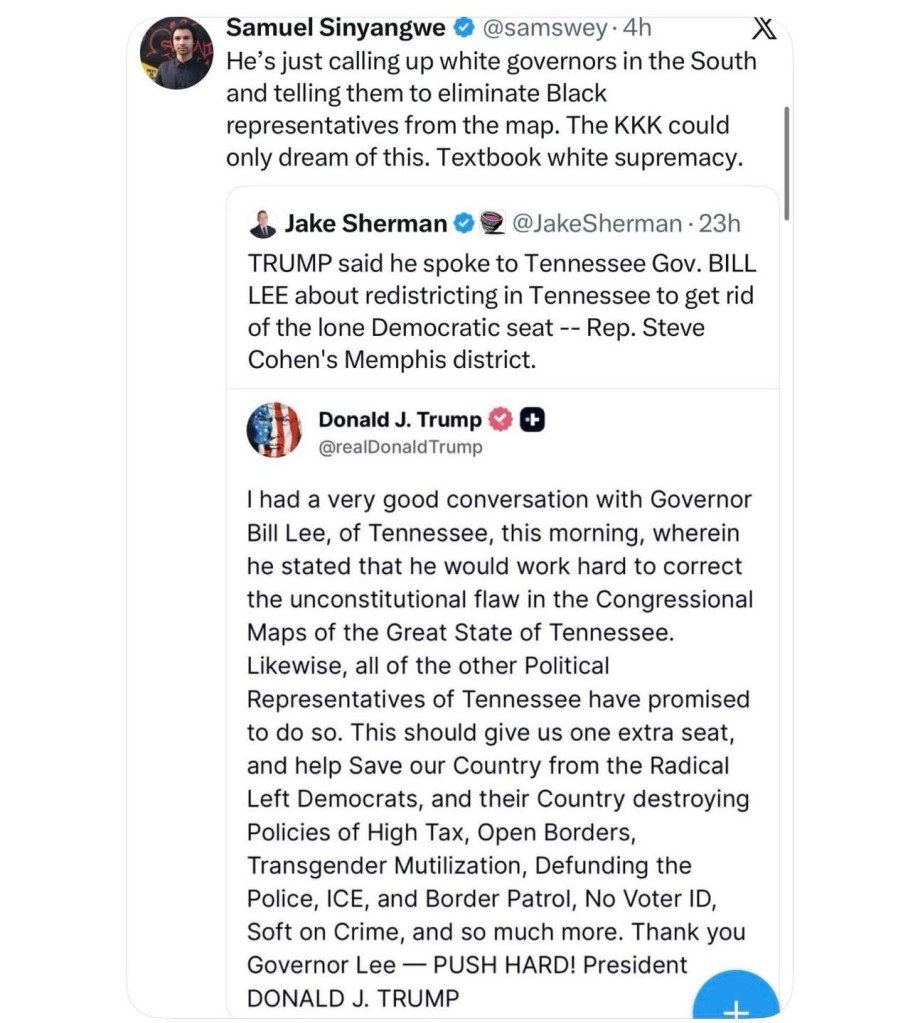
With Donald Trump’s active encouragement, Republicans are already seizing on the ruling—which essentially dismantled protections against racial gerrymandering—to threaten to redraw maps in the South to eliminate numerous congressional seats with Black representatives. While it’s largely too late to do so this cycle, Republicans will likely launch mid-decade redistricting in many Southern states heading into 2028, eliminating as many as 19 more Democratic seats in hopes of locking in a near-permanent GOP majority.
In substantive and legal terms, this outcome is awful—see this overview from TNR’s Matt Ford for a full rundown—but in a purely political sense, is this Armageddon for Democrats? Not necessarily. The reason? Democrats can move to redraw maps in time for the 2028 elections in states where they control the legislatures.
Which points to one big takeaway from the court ruling: State legislative races—which already attract too little attention—just got a lot more important. Many races underway now will help determine the party’s long-term prospects in the scorched-earth conflict that’s about to unfold.
According to a new analysis by Fair Fight Action, a voting rights group, Democrats could redraw anywhere from 10 to 22 additional congressional seats for the party in time for the 2028 elections if they push hard with redistricting in seven blue and swing states. The analysis—which is circulating among Democratic leadership aides and outside groups and was obtained by TNR—concludes that being aggressive could theoretically offset Republican gains, even in a maximalist GOP redistricting scenario.
“Democrats have a clear path to neutralize this GOP power grab if they want to take it,” Max Flugrath, senior communications director of Fair Fight Action, told me. “This is the ‘break glass in case of emergency’ moment for American democracy.”
The range of potential Democratic gains is so broad because so much depends on which party controls key state legislatures after the fall elections. Strikingly, even if Democrats flip zero chambers, they can redraw up to 10 additional congressional districts for the party, the analysis finds, by maximizing gerrymanders in New York, Colorado, Oregon, and Maryland, where Democrats control governorships and state legislatures.
But even more strikingly, Democrats could redraw as many as 22 additional congressional districts for the party overall if they flip legislative chambers in other states and redraw aggressively in them, the analysis finds.
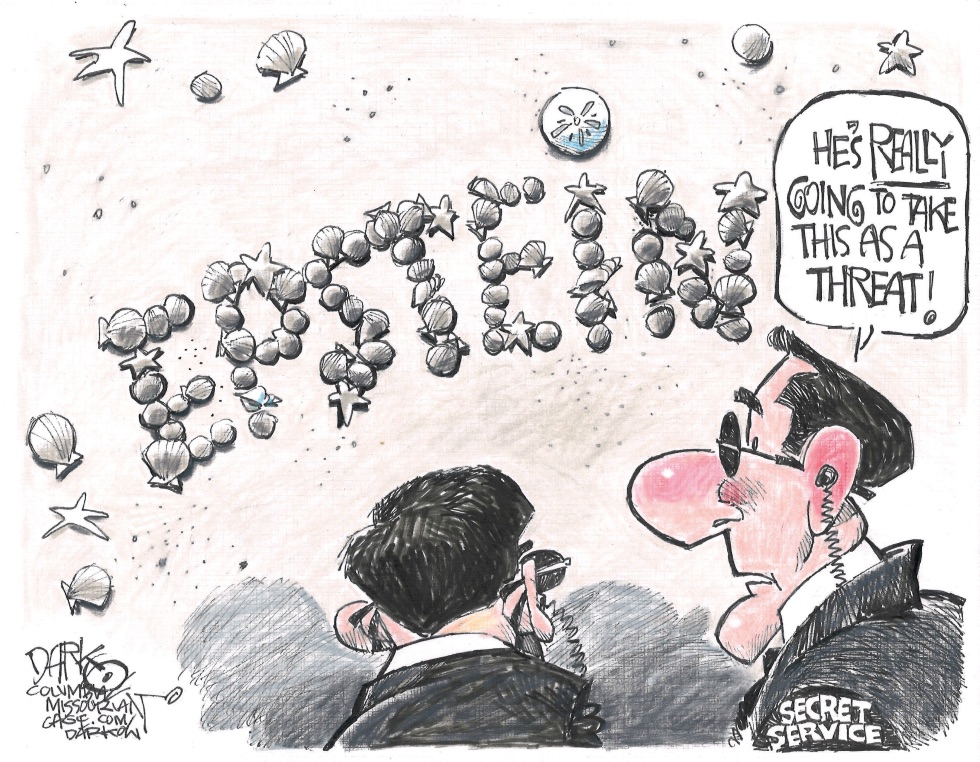
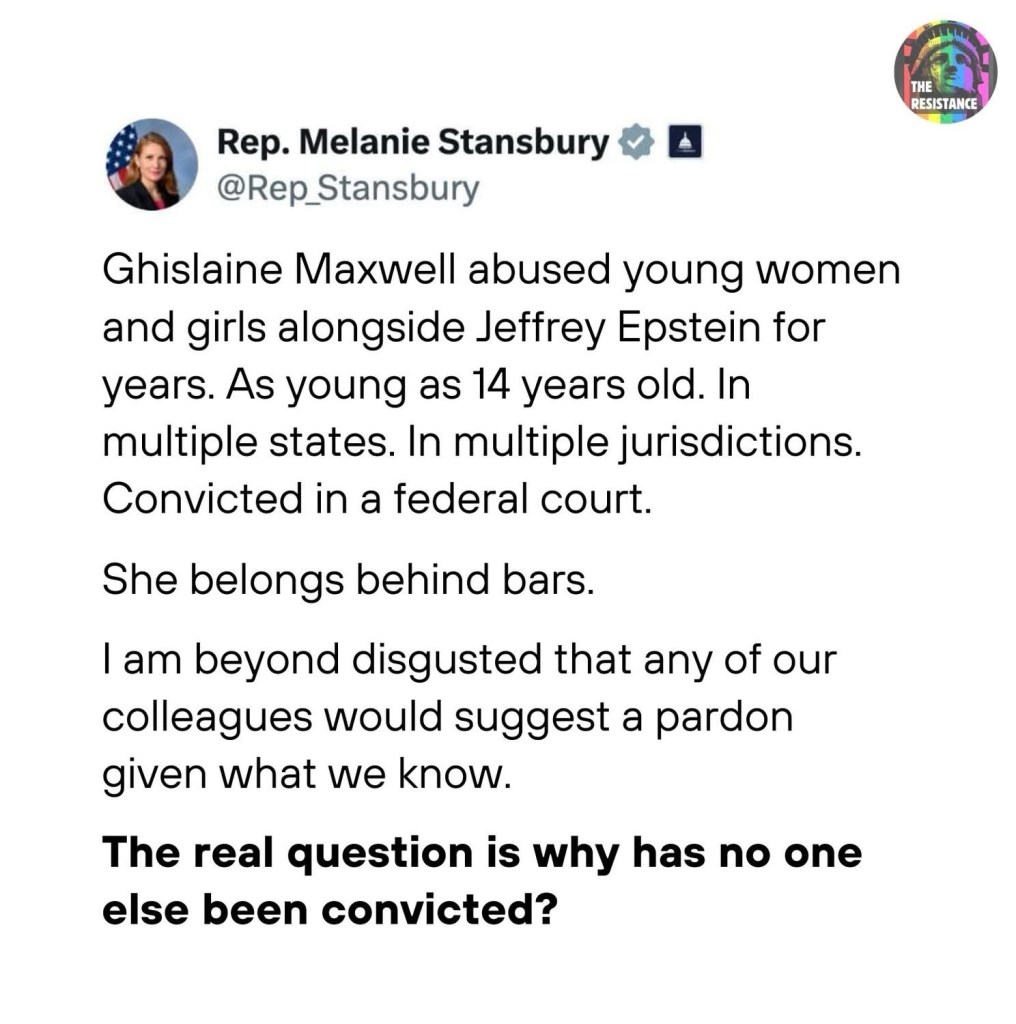
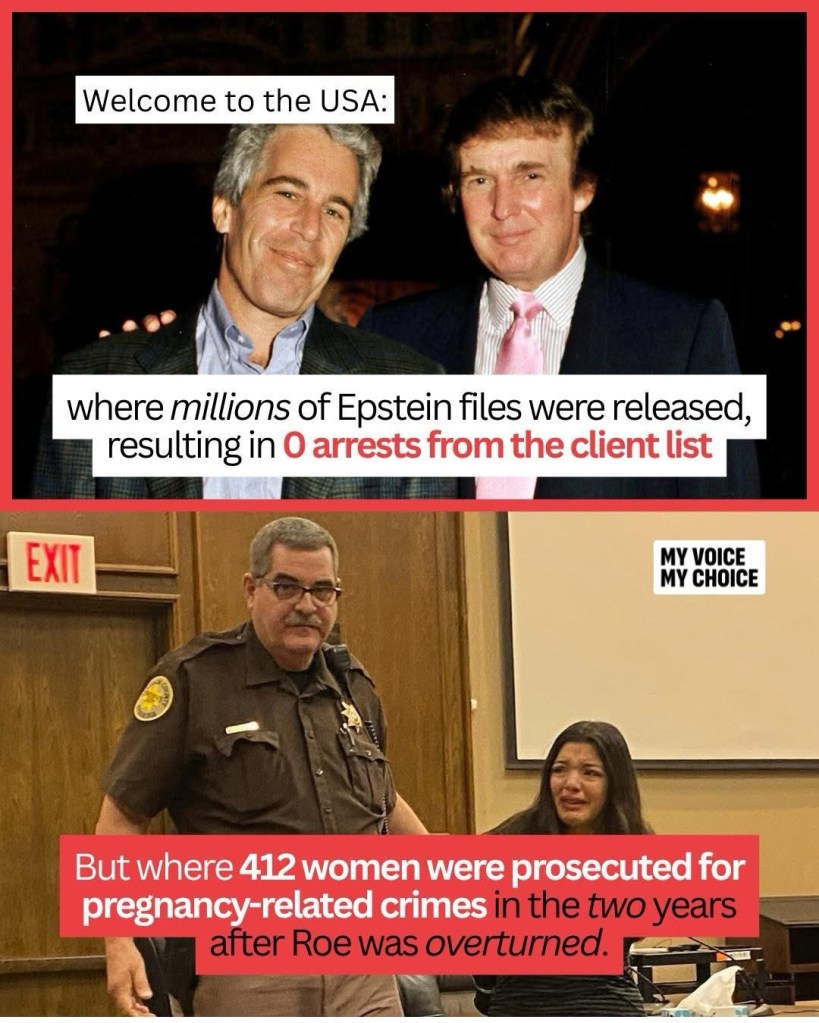
All of this shouldn’t distract from other stories. The mainstream media has definitely dropped the conversation on the Epstein files. Other stories and questions still linger. David Lurie writes this for Public Notice. “Trump’s Reichstag fire presidency is immolating. The media personality in the White House has been exposed as a crisis actor.”
The day after an alleged gunman tried to barge into the White House Correspondents Dinner, Todd Blanche — the nation’s chief law enforcement official — appeared on national television to denounce that act of political violence.
But during the very same news conference, Blanche also signaled the president may vacate the convictions of terrorists found guilty of scheming to attack the government of the United States on behalf of Donald Trump on January 6, 2021.
“They were convicted, but President Trump, as is his right and duty under our Constitution, commuted or pardoned those individuals,” Blanche said.
BASH: Do you plan to vacate convictions of Proud Boys and Oath Keepers who were involved in the January 6 attack on the Capitol?
BLANCHE: That’s ongoing litigation. You’ll hear from us in the coming days. Their sentences were commuted by President Trump
BASH: You’re not ruling it out?
BLANCHE: No. We’re not ruling anything out
This perverse contradiction epitomizes the era of Late Trumpism, in which the rewriting of history and systemic abuses of power are ramping up while Trump’s political power is collapsing.
What follows is an amazing list of Trump performances likened to similar performances by Hitler. I used to shiver when anyone jumped the shark to compare someone to Hitler, but this is a truly amazing and long list of similarities. I also consider it a must-read today. Meanwhile, American Citizens are losing access to their most basic needs. This is from the New York Times. “Since Congress Let Obamacare Subsidies Expire, Millions Are Dropping Coverage. Americans can’t afford the higher health insurance premiums that resulted from Congress’s refusal to extend federal tax credits.” Reed Abelson and Margot Sanger-Katz have the lede.
Millions of Americans appear to be dropping Obamacare coverage in the months since Congress failed to extend the generous subsidies that had become a defining feature of the Affordable Care Act.
Initial sign-ups had already fallen by about 1.2 million people. But insurance companies, state officials and industry analysts are reporting that many more have lost Obamacare coverage now that people are facing long-term higher costs. The federal government has yet to report current enrollment data.
Many insurers and analysts are estimating overall declines of about 20 percent, dropping to around 19 million from the 24 million who were covered under the A.C.A. last year. Other indications suggest there could be even larger potential losses by the end of the year, a deep retrenchment for Obamacare coverage and a reversal of significant gains in the last several years.
The rising cost of health care has shown up as a top concern among Americans in severalpublic opinion polls. Premiums are rising for Americans who get insurance through work, too, as health care costs have been increasing nationwide. Out-of-pocket costs are growing too, as plans with high deductibles have become popular.
Though health care has faded somewhat as a priority for the Republican-controlled Congress since lawmakers hit a stalemate over the subsidies at the end of 2025, it is likely to figure prominently in the midterm elections this year.
One analysis, by Wakely Consulting Group, a firm with access to detailed insurance industry data, estimates that coverage in the marketplaces will drop by as much as 26 percent this year compared with last year’s average enrollment.
In Georgia, where coverage had nearly tripled since Congress first authorized the extra financial help in 2021, state data show enrollment has fallen by more than a third, according to information obtained by the news organizations The Current GA and The Georgia Recorder.
The Georgia state insurance department did not respond to a request for comment.
Some Blue Cross plans lost 20 to 30 percent of customers this year. And many people are switching to plans with lower premiums but much higher out-of-pocket costs, said David Merritt, a spokesman for the Blue Cross Blue Shield Association. “We are waiting on official data like everyone else,” he said.
The insurers and state officials said early retirees with middle-class incomes, who faced the largest increases in premiums, appeared to be among the hardest hit. In some markets, the cost of insurance for this group rose by $1,000 a month or more.
Meanwhile, the horrid state of Nebraska, where I had lived before escaping to New Orleans, literally wants poor people to work themselves to death, one way or another. Here’s a headline from The Hill. “Nebraska faces challenges as first state to impose Medicaid work requirements under GOP bill.”
Nebraska on Friday is set to become the first state to impose Medicaid work requirements under the GOP’s One Big Beautiful Bill Act, racing ahead of the national deadline by eight months.
Nebraska’s experience will be a key test for Republicans who have been championing work requirements, as it could be an indicator of what the rest of the country will face when the policy takes effect nationwide.
The only two states that have enacted similar rules — Arkansas and Georgia — found they did not increase employment, caused tens of thousands of people to lose coverage and cost the states millions of dollars.
In Nebraska, Medicaid advocates and health policy experts fear similar coverage losses as people get buried under a blizzard of red tape. The law’s implementation timeline was already compressed, and they said Nebraska’s decision to rush ahead will be disastrous.
For instance, the state just this week released hundreds of pages with key details about who will qualify for a “medically frail” exemption.
“Unfortunately, when we have a rush job, we usually see bad results, and this is shaping up to be the case,” said Sarah Maresh, the program director for health care access at the nonprofit Nebraska Appleseed.
Work requirements have been a priority for President Trump and congressional Republicans since his first term.
The GOP’s tax and spending megabill used work requirements to partially pay for its nearly $3 trillion price tag. The Congressional Budget Office estimated nearly 5 million people will lose their Medicaid over the next decade as a result, including many who are already working.
GOP officials argue work requirements are needed to root out waste, fraud and abuse in the Medicaid program, and they will only target the “able-bodied” people who should be working but choose not to.
Nebraska Gov. Jim Pillen (R) has said he wants to promote self-sufficiency.
“It’s a key piece of giving the discipline for our families to be successful. It’s a key piece of self-worth. It’s a key piece of mental health and stability,” Pillen said in December when he announced the state would implement the requirements early.
All of this must be offset at the polls, even with the shenanigans set off by SCOTUS and the Republicans in Congress. Heather Cox Richardson highlights polling numbers in her SubStack today.
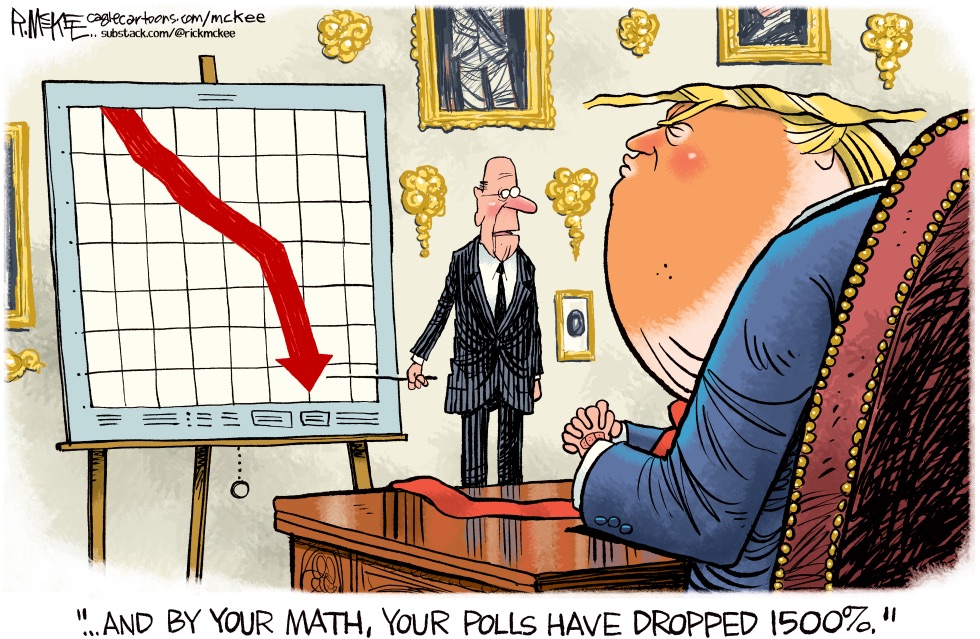
Today G. Elliott Morris of Strength in Numbers noted that Trump has hit a new low in overall job performance and in his handling of the economy, at -22.2 and -40.3, respectively. Those numbers reflect the percentage of people who approve of his handling of an issue minus those who disapprove. Indeed, Morris noted that Trump’s approval rating on the economy is so low it “literally broke the scale of this graph on my data portal.”
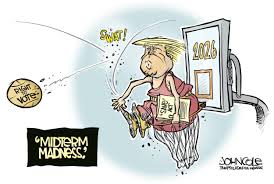
On Tuesday, Morris explained in Strength in Numbers that while Republicans have lately been arguing that they simply need to get people to show up to win the midterms, turnout is not their problem. Their real problem is that voters don’t like what Trump is doing.
An obvious symbol of Trump’s presidency is his unilateral decision to tear down the East Wing of the White House and replace it with a giant ballroom. A new Washington Post–ABC News–Ipsos poll released today shows that Americans oppose the ballroom by a margin of about two to one. Fifty-six percent of Americans oppose it, while only 28% support it. Of those who oppose it, 47% oppose it strongly.
Dan Diamond and Scott Clement of the Washington Post note that people don’t like Trump’s proposed triumphal arch, either—52% opposed versus 21% in favor—or the idea of Trump’s signature on paper money. Sixty-eight percent of Americans oppose that plan, while only 12% support it. Even Republicans oppose it 40% to 28%.
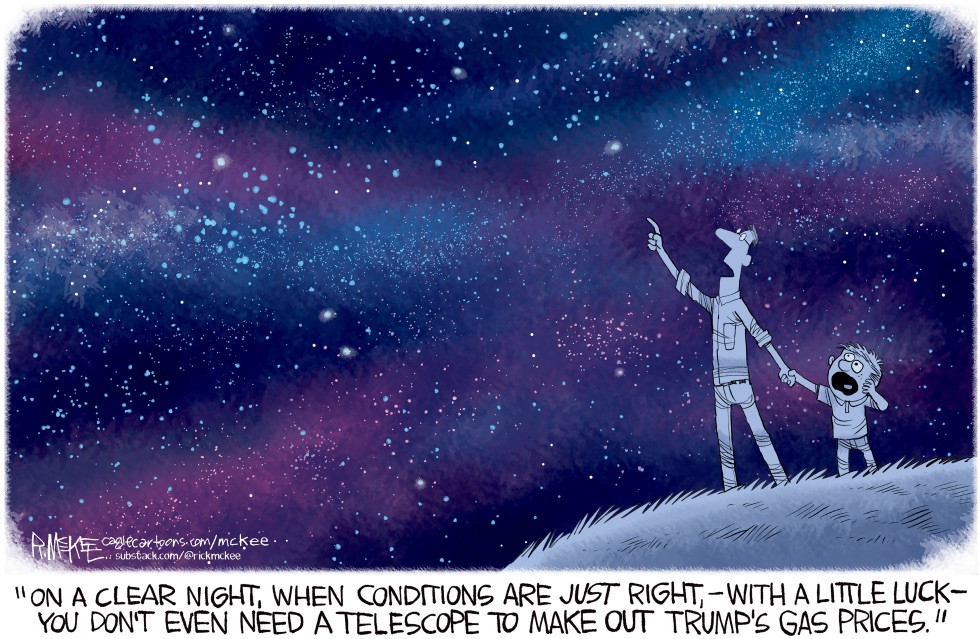
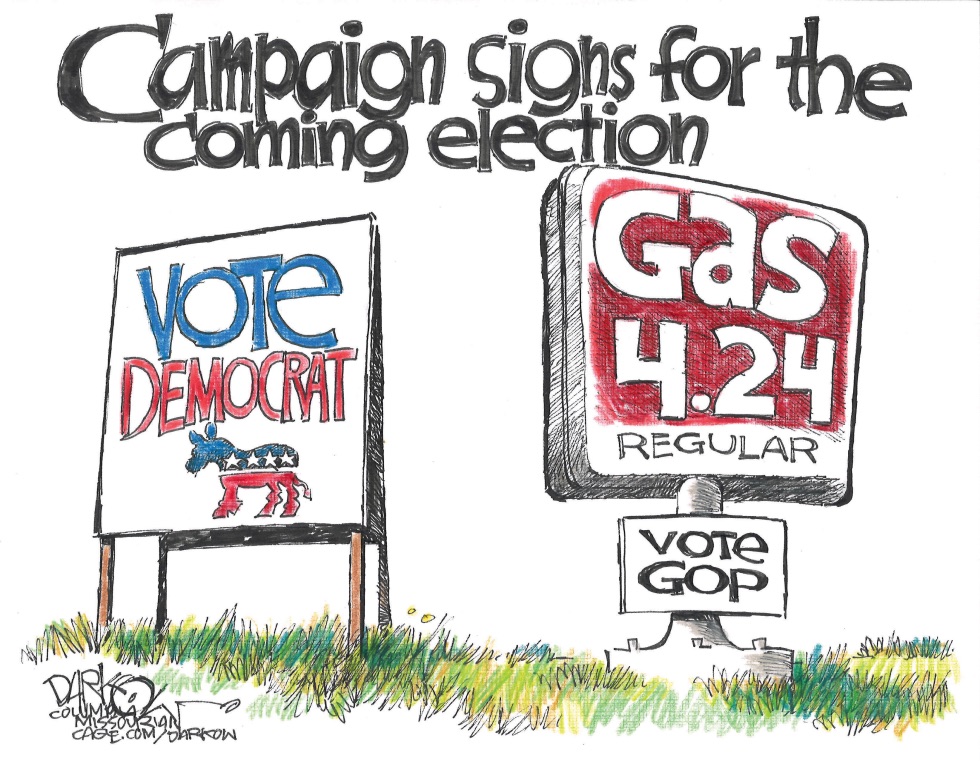
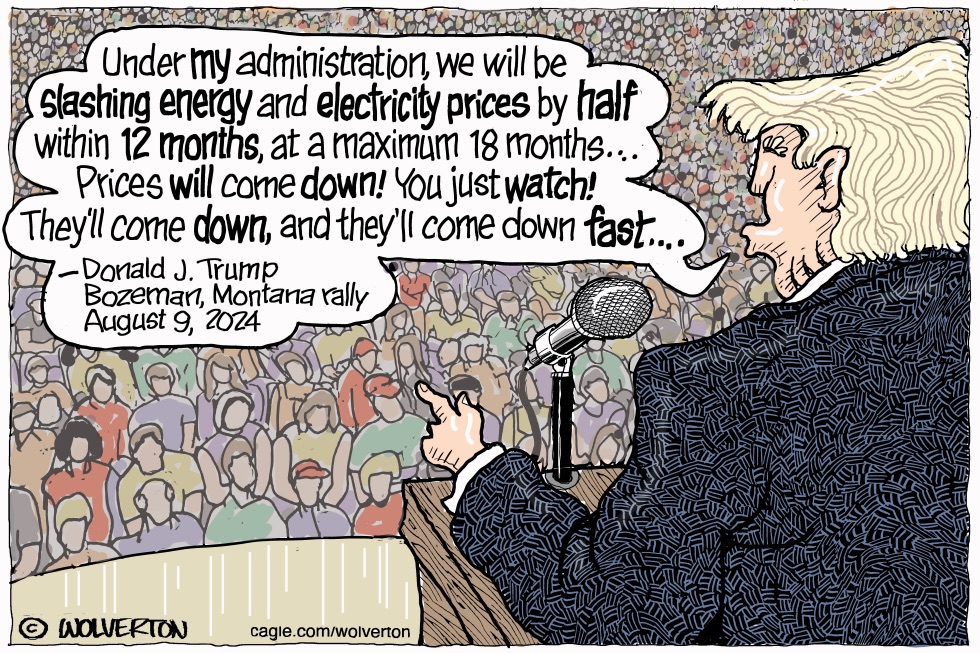
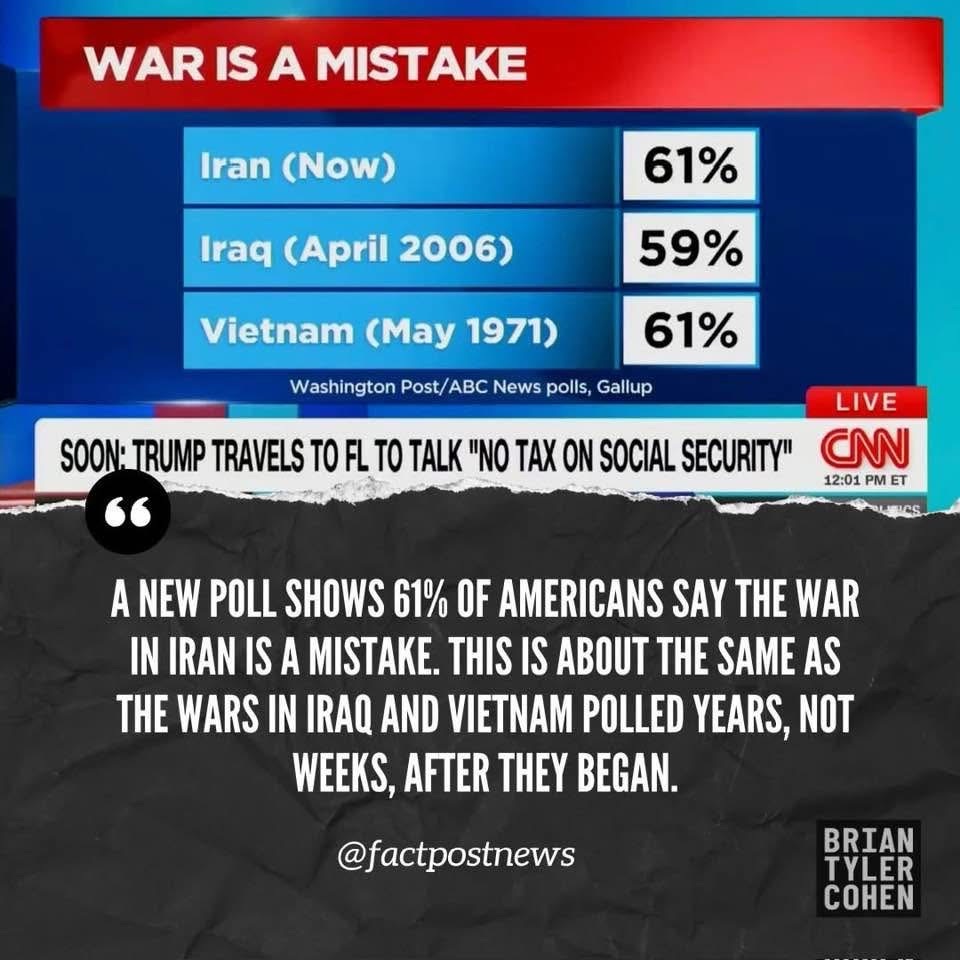
And then there is Trump’s war on Iran. A recent Reuters/Ipsos poll shows that only 34% of Americans approve of the strikes on Iran, while 61% oppose them. Gas prices continue to rise, with Brent crude futures today briefly topping $114 a barrel—the highest price since June 2022, shortly after Russia launched its attack on Ukraine. Senator Angus King (I-ME) noted on CNN today that these higher prices are currently costing American consumers about $700 million a day.
On his Substack today, economist Paul Krugman noted that the acronym “TACO,” for “Trump Always Chickens Out,” has been replaced by “NACHO”: “Not A Chance Hormuz Opens.” Krugman explains that Iran is unlikely to reopen the Strait of Hormuz, through which about 20% of the world’s oil passed before Israel and the U.S. began airstrikes against Iran on February 28, 2026, until “the economic damage from its closure becomes much more severe.”
She has more good news, so we can end it here, and you may go read it all!
What’s on your Reading, Action, and Blogging list today?
Did you like this post? Please share it with your friends:
The Sky Dancing banner headline uses a snippet from a work by artist Tashi Mannox called 'Rainbow Study'. The work is described as a" study of typical Tibetan rainbow clouds, that feature in Thanka painting, temple decoration and silk brocades". dakinikat was immediately drawn to the image when trying to find stylized Tibetan Clouds to represent Sky Dancing. It is probably because Tashi's practice is similar to her own. His updated take on the clouds that fill the collection of traditional thankas is quite special.
You can find his work at his website by clicking on his logo below. He is also a calligraphy artist that uses important vajrayana syllables. We encourage you to visit his on line studio.















































































 Read more at the link to find out why it’s a triple threat today. The outrage over the latest Supreme Court decision continues. This analysis comes from
  Read about “the context” at the link. Elrod writes about his own life experiences growing up in the deep South. He also discusses the events of the time. It’s a compelling read. Greg Sargent, writing for
  All of this shouldn’t distract from other stories. The mainstream media has definitely dropped the conversation on the Epstein files. Other stories and questions still linger. David Lurie writes this for
 I also consider it a must-read today. Meanwhile, American Citizens are losing access to their most basic needs. This is from the
  Meanwhile, the horrid state of Nebraska, where I had lived before escaping to New Orleans, literally wants poor people to work themselves to death, one way or another. Here’s a headline from
 peej
peej Carissa
 bostonboomer
 dakinikat
 ecocatwoman
 mablue2
 Mama Lopez
 peggysue22
 quixote
 skydancingguestblogger
 Mona (aka Wonk the Vote)



 Sky Dancing
Recent Comments