We’re in the midst of a big snowstorm here. My town has already gotten about 9 inches with more to come. The snow is coming down at a rate of 2-4 inches per hour. I don’t think I’ll be getting out anytime soon. Luckily I got a haircut and picked up groceries yesterday.
It looks like Mitch McConnell is finally going to allow the Senate to pass a paltry stimulus package. It includes $600.00 checks and $300.00 supplementary unemployment payments. Some Republicans are trying to make sure that people on unemployment don’t get the stingy checks. I don’t think this is going to be much help to millions of people who are about to be evicted from their homes and who can’t feed their families.
After months of stalemate, congressional leaders were on the verge on Wednesday of cementing a roughly $900 billion stimulus deal to deliver emergency aid to individuals and companies devastated by the toll of the worsening pandemic, racing to finish the details and stave off a government shutdown on Friday.
The measure, which has been under discussion for months as the coronavirus has ravaged the economy, is expected to provide a new round of direct payments to millions of Americans as well as additional unemployment benefits, food assistance and rental aid. It would prop up sputtering businesses with federally backed loans and provide funding for schools, hospitals and the distribution of a just-approved vaccine.
It looks like the package won’t include help for struggling state governments.
But even as lawmakers moved toward striking an elusive deal, the package pointed to troubles on the horizon for President-elect Joseph R. Biden Jr., who had pressed for at least some compromise on emergency pandemic aid before year’s end. To break the logjam, Democrats appeared to have dropped their demand for a dedicated funding stream for states and cities that are facing fiscal ruin, guaranteeing that Mr. Biden will have to act early in his tenure to try to bolster them and take additional action to prop up the economy.
“The stimulus package is encouraging,” Mr. Biden said Wednesday at an event in Wilmington, Del. “But it’s a down payment — an important down payment on what’s going to have to be done beginning the end of January into February. But it’s very important to get done.”
Gloucester Roofs, Edward Hopper, 1928
The only reason McConnell is allowing this much help for desperate Americans is that he’s afraid of losing control of the Senate.
Senate Majority Leader Mitch McConnell (R-Ky.) has now suggested on a private conference call with GOP senators that a key reason for this movement is that the two Georgia Republican senators, both of whom face runoffs in January, are “getting hammered” over Congress’ failure to pass a new rescue bill.
But this news doesn’t just tell us that Republicans are feeling heat from this failure. The likelihood that this played a key role in moving Republicans also underscores how unlikely they are to help the economy and the country next year, if they do retain control of the Senate.
CNN’s Manu Raju reports that on the call with GOP Senators on Wednesday, the Senate Majority Leader said that the lack of stimulus payments has become a big issue in the runoffs…
Well, as a matter of fact, “Kelly and David” have indeed been getting hammered on this issue. Their Democratic opponents, Raphael Warnock and Jon Ossoff, have run numerous ads — see here, here and here — hitting Republicans over the failure to pass more economic assistance.
It’s plainly obvious that this pressure is a key reason that Senate Republicans are now moving towards supporting the economic relief package (which is already far less than the country needs). Indeed, as late as this month, McConnell was still insisting on an even stingier package, one that didn’t include the supplemental unemployment assistance.
If Democrats don’t win those two seats in Georgia, it’s pretty clear that Moscow Mitch won’t allow any more help for struggling Americans.
The basic question before us right now, as we look ahead to runoffs that will settle who controls the Senate next year, is this: What would continued Republican control mean, and what would it mean if Democrats took control instead?
We have long known the answer: Continued Republican control means almost no chance at anything close to what we’ll need in new stimulus spending and economic assistance next year, when the economic damage and resulting misery could, if anything, spiral into something much worse.
In Central Park, New York, ca. 1900, by Byron, Detroit Publishing Co., via Library of Congress.
Meanwhile, Russia has successfully hacked most of the U.S. Government and hundreds of American businesses.
At the worst possible time, when the United States is at its most vulnerable — during a presidential transition and a devastating public health crisis — the networks of the federal government and much of corporate America are compromised by a foreign nation. We need to understand the scale and significance of what is happening.
Last week, the cybersecurity firm FireEye said it had been hacked and that its clients, which include the United States government, had been placed at risk. This week, we learned that SolarWinds, a publicly traded company that provides software to tens of thousands of government and corporate customers, was also hacked.
The attackers gained access to SolarWinds software before updates of that software were made available to its customers. Unsuspecting customers then downloaded a corrupted version of the software, which included a hidden back door that gave hackers access to the victim’s network.
This is what is called a supply-chain attack, meaning the pathway into the target networks relies on access to a supplier. Supply-chain attacks require significant resources and sometimes years to execute. They are almost always the product of a nation-state. Evidence in the SolarWinds attack points to the Russian intelligence agency known as the S.V.R., whose tradecraft is among the most advanced in the world.
According to SolarWinds S.E.C. filings, the malware was on the software from March to June. The number of organizations that downloaded the corrupted update could be as many as 18,000, which includes most federal government unclassified networks and more than 425 Fortune 500 companies.
Trump has given a huge gift to Putin and left a ghastly mess for Biden to clean up.
The magnitude of this ongoing attack is hard to overstate.
The Russians have had access to a considerable number of important and sensitive networks for six to nine months. The Russian S.V.R. will surely have used its access to further exploit and gain administrative control over the networks it considered priority targets. For those targets, the hackers will have long ago moved past their entry point, covered their tracks and gained what experts call “persistent access,” meaning the ability to infiltrate and control networks in a way that is hard to detect or remove.
Turner, Martin William; Houses and Roofs in the Snow; King’s College London.
While the Russians did not have the time to gain complete control over every network they hacked, they most certainly did gain it over hundreds of them. It will take years to know for certain which networks the Russians control and which ones they just occupy.
The logical conclusion is that we must act as if the Russian government has control of all the networks it has penetrated. But it is unclear what the Russians intend to do next. The access the Russians now enjoy could be used for far more than simply spying.
The actual and perceived control of so many important networks could easily be used to undermine public and consumer trust in data, written communications and services. In the networks that the Russians control, they have the power to destroy or alter data, and impersonate legitimate people. Domestic and geopolitical tensions could escalate quite easily if they use their access for malign influence and misinformation — both hallmarks of Russian behavior.
Foreign hackers who pulled off a stealthy breach of at least a dozen federal agencies got caught after successfully logging in to a top cybersecurity firm’s network, tipping the company off to a broader hacking campaign targeting the U.S. government, according to officials from the firm and congressional aides briefed on the issue.
The suspicious log-in prompted the firm, FireEye, to begin investigating what it ultimately determined to be a highly damaging vulnerability in software used across the government and by many Fortune 500 companies.
It’s not clear how long it took FireEye to notice that it had been hacked, in a scheme that U.S. officials have linked to Russian intelligence. But the vulnerability, found in IT management software developed by a company called SolarWinds, had given the hackers months of access to internal email accounts in at least a dozen U.S. federal agencies, including the Treasury, Homeland Security and Commerce departments.
Two congressional staffers briefed on the intrusion said FireEye representatives, who met with multiple lawmakers and their staffers this week to discuss the hack, disclosed a potentially embarrassing detail: that the hackers had exploited a security feature called two-factor authentication to gain access to FireEye’s network by duping an employee into revealing his or her credentials.\In a 2016 blog post, FireEye laid out how such an attack might be carried out, noting that while “two-factor authentication is a best practice for securing remote access, it is also a Holy Grail for a motivated red team” — a reference to security professionals hired to find clients’ weak points — who can “use the most straightforward method to acquire the credentials we need: ask the victim to enter them for us. The perfect trap happens to be the simplest to set.”
FireEye is denying this explanation. Read all about it at Politico.
Boston Circa 1910s. Horse-drawn sleigh for hauling goods, market district. Image courtesy of the Boston Public Library, Leslie Jones Collection
Over the past few years, the United States government has spent tens of billions of dollars on cyberoffensive abilities, building a giant war room at Fort Meade, Md., for United States Cyber Command, while installing defensive sensors all around the country — a system named Einstein to give it an air of genius — to deter the nation’s enemies from picking its networks clean, again.
Einstein missed it — because the Russian hackers brilliantly designed their attack to avoid setting it off. The National Security Agency and the Department of Homeland Security were looking elsewhere, understandably focused on protecting the 2020 election.
The new American strategy of “defend forward” — essentially, putting American “beacons” into the networks of its adversaries that would warn of oncoming attacks and provide a platform for counterstrikes — provided little to no deterrence for the Russians, who have upped their game significantly since the 1990s, when they launched an attack on the Defense Department called Moonlight Maze.
Something else has not changed, either: an allergy inside the United States government to coming clean on what happened.
Click the NYT link to read the rest.
In coronavirus news, recent research reveals that young people are not immune to serious consequences from the virus.
Young adults are dying at historic rates. In research published on Wednesday in the Journal of the American Medical Association, we found that among U.S. adults ages 25 to 44, from March through the end of July, there were almost 12,000 more deaths than were expected based on historical norms.
Big snow, 42nd St. NYC, 1956
In fact, July appears to have been the deadliest month among this age group in modern American history. Over the past 20 years, an average of 11,000 young American adults died each July. This year that number swelled to over 16,000.
The trends continued this fall. Based on prior trends, around 154,000 in this demographic had been projected to die in 2020. We surpassed that total in mid-November. Even if death rates suddenly return to normal in December — and we know they have not — we would anticipate well over 170,000 deaths among U.S. adults in this demographic by the end of 2020.
While detailed data are not yet available for all areas, we know Covid-19 is the driving force behind these excess deaths. Consider New York State. In April and May, Covid-19 killed 1,081 adults ages 20 to 49, according to statistics we gathered from the New York State Health Department. Remarkably, this figure towers over the state’s usual leading cause of death in that age group — unintentional accidents including drug overdoses and road accidents — which combined to cause 495 deaths in this demographic during April and May of 2018, the most recent year for which data are available to the public.
Read the details at the link.
That’s it for me today. I hope you’re all doing well. Only 34 more days until we kick Trump out of the White House.
Did you like this post? Please share it with your friends:
Yesterday “electors” affirmed that Joe Biden is our next president. After the votes in all 50 states, Biden addressed the nation. Fortunately, this time the winner of the popular vote also won in the outdated Electoral College.
President-elect Joe Biden declared Monday, hours after the Electoral College made his victory over President Donald Trump official, that “the rule of law, our Constitution and the will of the people prevailed” over Trump’s efforts to undo the results of the election.
“The flame of democracy was lit in this nation a long time ago. And we now know nothing, not even a pandemic or an abuse of power, can extinguish that flame,” Biden said.
In a speech Monday night in Delaware, Biden launched the most direct and detailed defense of his victory yet — and the harshest condemnation of Trump’s flailing efforts to change reality.
He catalogued the failures of Trump’s campaign and his allies in state and federal courts and state legislatures, and recounts that have not substantially changed vote tallies. He called efforts by Trump and his supporters to use the courts to overturn the election result “so extreme we’ve never seen it before.”
“Thankfully, a unanimous Supreme Court immediately and completely rejected this effort,” Biden said.
Biden’s speech came after the Electoral College had cast 306 votes for Biden and 232 for Trump, cementing Biden’s win. The Electoral College votes will now be sent to Congress to be counted formally next month. Though some House Republicans have indicated they will object to the results in key states, they can do little more than delay the process during a joint session of Congress on January 6. Then, Biden will be inaugurated at noon on January 20.
Over the past six weeks since Election Day, President-elect Joe Biden carried about his business while largely ignoring the circus surrounding President Donald Trump’s incessant lies about election fraud and refusal to concede. That changed a bit on Monday.
Speaking hours after the Electoral College officially voted to confirm his victory over Trump, Biden declared victory. He also criticized the president, whom he portrayed as on the wrong side of the struggle for democracy, for refusing to acknowledge the reality of his defeat.
“In this battle for the soul of America, democracy prevailed,” Biden said. “We the people voted. Faith in our institutions held. The integrity of our elections remains intact. And so now it is time to turn the page. To unite. To heal.”
At another point, Biden took an indirect shot at Trump, saying “the flame of democracy was lit in this nation a long time ago. And we now know that nothing — not even a pandemic, or an abuse of power — can extinguish that flame.”
Biden addressed the flood of failed lawsuits the Trump campaign has filed since the election and the Supreme Court’s refusal last week to take up a flimsy case that could’ve overturned his victory. He also praised state and local officials on both sides of the aisle for overseeing a fair election while refusing to be “bullied” by Trump.
“In America, when questions are raised about the legitimacy of elections, those questions are resolved through the legal processes. And that’s precisely what happened here,” he said. “All the counts were confirmed … none of this has stopped baseless claims.”
Later, Biden noted that “respecting the will of the people is at the heart of our democracy,” adding that when Trump won four years ago, “it was my responsibility to announce the tally of the Electoral College votes to the joint session of Congress … I did my job.” [….]
Biden, who sounded noticeably hoarse throughout, closed by noting that the joy of his win “is tempered by the pain so many of us are feeling today. Our nation [today] passed a grim milestone: 300,000 deaths due to this Covid virus. My heart goes out to each of you during this dark winter of the pandemic.”
Right up to Monday’s Electoral College vote, President Trump held the false hope that Republican-controlled state legislatures would replace electors with allies who’d overturn Joe Biden’s win, two people who discussed the matter with him told Axios.
The big picture: Through the past week, the sources said, the president browbeat GOP legislators in multiple states, launched tirades against Republican Govs. Doug Ducey of Arizona and Brian Kemp of Georgia, vowed to make Fox News “pay” for accurately calling the race, and tested ways to say he didn’t win without acknowledging he had lost.
Behind the scenes: One source who talked to Trump over the weekend said the president continued to insist that there was significant fraud in multiple states, paraphrasing him: “Do you think if the legislatures know this is all true, they would just act to overturn this?'”
There’s more at the link, but who cares? Trump is finished and we won’t have to put up with his childish behavior much longer.
When future historians close the books on the misery of 2020, a grueling year of disease, death, racial strife, street violence, economic collapse and political discord the likes of which have not been seen in the United States in generations, they may look back on Monday, Dec. 14, as a pivotal juncture.
It was on that day that Americans began rolling up their sleeves for a vaccine produced in record time to defeat a virus even as the death toll crossed 300,000. And it was on that day that members of the Electoral College gathered in each of the 50 states to ratify the end of the most polarized election in more than a century.
None of that erases the enormous damage of the past 12 months, nor does it mean there will not be pain and protest to come. Many Americans will get sick and die in the months before the vaccine is universally available. Many Americans will remain aggrieved by the result of an election they wish had gone the other way. It is still an era of hardship and division. But after so much uncertainty, after so much doubt, the way forward appears clearer at least in two major respects….
The day played out in a remarkable fashion as television viewers watched images of health care workers receiving lifesaving injections juxtaposed with live shots from state capitals around the country showing electors casting votes formally confirming the victory of President-elect Joseph R. Biden Jr. and Vice President-elect Kamala D. Harris.
It was the definitiveness of both developments that stood out after months of political, medical and economic turmoil: At last, Americans can look ahead to the day when they will be immunized from the Covid-19 virus even if takes until spring. And now they know despite all the postelection noise from the White House and its allies who will be president on Jan. 20.
Former Food and Drug Administration Commissioner Dr. Scott Gottlieb, now on the board of Pfizer, said that the United States was offered more of the company’s successful coronavirus vaccine as recently as November — but didn’t take the deal.
“There were multiple conversations with the U.S. government about taking more supply in the second quarter” of 2021, Gottlieb said. “The company wasn’t taken up on the offer as recently as November.”
The New York Timesreported last week that Pfizer offered the Trump administration the chance to buy more than the 100 million doses agreed upon over the summer. In a baffling move, the Trump administration never made the deal.
Gottlieb, who was Trump’s FDA chief until April 2019, noted that the U.S. government said that the conversations with Pfizer happened in July, but that there was an offer for more vaccines on the table as recently as last month.
Gottlieb said other countries ended up taking those vaccines after the U.S. passed.
Newly released data confirmed on Tuesday that Moderna’s coronavirus vaccine is highly protective, setting the stage for its emergency authorization this week by federal regulators and the start of its distribution across the country.
The Food and Drug Administration intends to authorize use of the vaccine on Friday, people familiar with the agency’s plans said. The decision would give millions of Americans access to a second coronavirus vaccine beginning as early as Monday.
The review by the F.D.A. confirms Moderna’s earlier assessment that its vaccine had an efficacy rate of 94.1 percent in a trial of 30,000 people. Side effects, including fever, headache and fatigue, were unpleasant but not dangerous, the agency found.
The success of Moderna’s vaccine has become all the more crucial to fighting the pandemic as other vaccine efforts have faltered. The hopeful news arrives at a time of record-breaking numbers of coronavirus cases that are overwhelming hospitals and of an ever-increasing death toll, which reached a bleak milestone of 300,000 on Monday.
Six million doses of the Moderna vaccine could begin distribution next week. Read more details at the NYT link.
Two more momentous events happened yesterday. Bill Barr is leaving and news broke of a new Russian hack of multiple U.S. government agencies.
William P. Barr told friends, when he was tapped for attorney general two years ago, that he was returning to the position to help save the Justice Department. Barr failed spectacularly at that task and ruined his reputation in the process.
Nothing made that more clear than the bootlicking letter of resignation he submitted Monday to President Trump.
No aspect of Barr’s departure is normal. Cabinet officials do not leave administrations to spend more time with their loved ones — the president tweeted that Barr wanted to “spend the holidays with his family” — 37 days before the end of a presidency.
Marcus had even sharper words for Barr:
Barr’s letter was larded with nothing but adulation for the man who had been trashing him for weeks. The missive contained 18 uses of the word “you” or “your” to refer to Trump, as in: “Your record is all the more historic because you accomplished it in the face of relentless, implacable resistance.” And, “You have restored American military strength. By brokering historic peace deals in the Mideast you have achieved what most thought impossible.”
Fawning is too mild an adjective to describe this remarkable document. The word lickspittle has been understandably overused during the Trump years, but Barr’s letter demands its redeployment.
If we never see his face in public again, it will be too soon.
The Department of Homeland Security, the State Department and the National Institutes of Health on Monday joined the list of known victims of a months-long, highly sophisticated digital spying operation by Russia whose damage remains uncertain but is presumed to be extensive, experts say.
The list of victims of the cyberespionage, which already included the Treasury and Commerce departments, is expected to grow and to include more federal agencies and numerous private companies, said officials and others familiar with the matter, who spoke on the condition of anonymity because it is under investigation.
SolarWinds, the maker of widely used network-management software that the Russians manipulated to enable their intrusions, reported in a federal securities filing Monday that “fewer than 18,000” of its customers may have been affected. That’s a small slice of the company’s more than 300,000 customers worldwide, including the Pentagon and the White House, but still represents a large number of important networks. Russia has denied any role in the intrusions.
SolarWinds, the maker of widely used network-management software that the Russians manipulated to enable their intrusions, reported in a federal securities filing Monday that “fewer than 18,000” of its customers may have been affected. That’s a small slice of the company’s more than 300,000 customers worldwide, including the Pentagon and the White House, but still represents a large number of important networks. Russia has denied any role in the intrusions.
Yes, Monday was a momentous day. There are just 36 more days until the inauguration and we can kick Trump out of the people’s house and into the dustbin of history. I can’t wait for that day to arrive.
Did you like this post? Please share it with your friends:
Every one of the 538 Electoral College Members will cast their votes today. Joe Biden will officially be our President Elect and Kamala Harris will officially become the Vice President Elect. You can watch the votes come in at the NYT at this link.
Electors started to meet at 11 a.m. Eastern in Alabama, Arkansas, Mississippi, Oklahoma, Illinois and South Carolina.
You may also watch the some Elector’s vote on CSpan today. This should seal the deal. Let’s hope some Republicans stop protecting the Toddler-in-Chief’s delusions and start to work to get things done to help our Covid 19 -inflicted country. We could also use some help kicking Russian Ass from a cybersecurity standpoint.
The Electoral College casts their official votes for the presidential election TODAY.
Then on January 6, Congress will count the electoral votes. This is a mainly ceremonial duty.
On January 20, Biden is scheduled to be inaugurated as the next president.https://t.co/oNib8xqayv
The next big date is Monday, December 14, when the Electoral College votes. In each state and the District of Columbia, the 538 electors who make up the Electoral College will cast the votes that will technically make Biden the next president. There’s little drama here. The states Biden won have appointed elector slates of Democrats, who are certain to vote for Biden. But it’s the next step in making things official.
Then, on Wednesday, January 6, Congress counts the electoral votes. This is also mainly ceremonial. We’ll know the count in advance because the votes will be public on December 14. The one minor hitch is that a Trump ally in the House plans to challenge that count. But for that challenge to succeed, both the House and the Senate would have to agree to overrule the electoral votes. The Democrat-controlled House obviously wouldn’t go along with this, so the challenge won’t change the outcome.
Two weeks after that, on January 20, Biden will be inaugurated as the next president.
Additional information on those plans to challenge the count are further down the page.
On January 6, 2021, a joint session of the newly elected Congress will convene to count the votes cast by the Electoral College the previous month. This congressional count is the final formal step in making the presidential election results official before the inauguration itself.
Usually, this is a formality. But sometimes, there’s a last-minute kerfuffle because there is a process by which members of Congress can challenge the vote count. We likely will get such a challenge — Rep. Mo Brooks (R-AL) has said he will file one, though he needs to find at least one senator to join him for the challenge to advance.
This would not be unprecedented. In 2005, Rep. Stephanie Tubbs Jones (D-OH) and Sen. Barbara Boxer (D-CA) made such a challenge to George W. Bush’s win in Ohio. (In 2017, some House Democrats tried to challenge Trump’s win in certain states, but the attempt was fruitless because no senators would join them.)
If a representative and senator support a challenge, what happens next is that the joint session of Congress splits up, and the House and Senate will each hold a vote on the challenge. Here’s the key part, though: Unless a majority in boththe House and Senate vote to sustain the challenge, it will fail.
So because Democrats control the House, any attempt to overturn the election for Trump will surely be voted down by them. It may well fail in the Senate as well; several Republican senators have recognized Biden’s victory.
That means this challenge will basically just be a stunt and it won’t actually overturn the outcome. What it would do is guarantee a recorded vote in both the House and Senate about whether they should allow Biden’s win, which could put some swing state or swing district Republican members of Congress in an uncomfortable position. (This could be a particular issue for some Senate Republicans in 2022 — do they risk a primary challenge by recognizing Biden’s win or do they back Trump’s challenge and endanger their general election chances?)
So, how long are we going to deal with Trump supporters who deny this reality? Sabrina Tavernise writes this for the NYT today. “What’s Next for Trump Voters Who Believe the Election Was Stolen?Some are certain the election was fraudulent. Others aren’t so sure. What becomes of their skepticism has important implications for American democracy.”
But interviews with dozens of people who voted for Mr. Trump reveal a more fluid picture. Some were die-hard supporters who were hungry for any information to support Mr. Trump’s claims — against all evidence — that he won the election. For these voters, no data could convince them otherwise.
Others were more uncertain. Nearly all of the people interviewed said they believed at least some fraud had been perpetrated, but whether that added up to Mr. Trump’s being the true winner was much harder to know.
The reasons for doubting the outcome were many. Misinformation played a role. So did signaling by Republican leaders, first among them Mr. Trump.
Partisanship was powerful, too: Some were so distrustful of Democrats that they were open to arguments about fraud in large part because Democrats were not. Still others said election fraud was simply not that unusual a phenomenon. And in a sign of how much Americans of both parties are living in political bubbles, many expressed surprise that Mr. Biden could have won, given that they knew no one who voted for him.
Fox & Friends co-host Brian Kilmeade poured some cold water on Trumpworld’s fantastical hopes of overturning the election, asking Stephen Miller if Trump has “the worst legal team” while noting they have lost more than 50 cases nowhttps://t.co/vOTyFLLfVd
“You have an alternate slate of electors in a state like say Wisconsin or in a state like Georgia and we’ll make sure that those results are sent up side by side to Congress,” Miller declared. “So that we have the opportunity, every day between now and January 20, to say that slate of electors and the contested states is the slate that should be certified to uphold a fair and free election and an honest result.”
Those “alternate” results, however, will not be certified by any states’ secretaries of state, therefore rendering them worthless.
Noting that polls show Trump supporters overwhelmingly believe Trump’s baseless claim that the election was “stolen,” co-host Ainsley Earhardt asked Miller what the next “arrow in your quiver” is now that the Supreme Court rejected the Texas lawsuit to throw out swing state votes.
“Well, we have open election challenges in all the contested states,” the Trump adviser insisted while echoing Trump’s unfounded allegations about widespread voter fraud.
Kilmeade, who confronted Trump over the weekend about his legal team’s failure to provide any proof of election fraud in court, then pressed Miller on the resounding defeats that Trump and his allies have suffered in court.
“Stephen, so if there were underage people voting and criminals voting, if there was illegal ballots cast, your legal team [has], in almost every state, 50 times lost, so do you have the worst legal team who just don’t seem to be presenting a good case? Or [are] you just too late in this case should have been brought before the election?” Kilmeade wondered aloud.
Miller, meanwhile, blamed the repeated rejection of Trump’s legal challenges on the “corrupt corporate media” placing “overwhelming” pressure on the courts and elected officials.
He was in his late 20s when he began to write fiction – in longhand, in small red pocket notebooks, on his daily train journey between his home in Buckinghamshire and his day job with MI5, the counter-intelligence service, in London. After the publication of two neatly crafted novels, Call for the Dead (1961) and A Murder of Quality (1962), which received measured reviews and modest sales, he hit the big time with The Spy Who Came in from the Cold (1963).
Its publisher, Victor Gollancz, secured a puff from Graham Greene (“the best spy story I have ever read”), and the widely-rumoured belief that the author was an insider in the secret world of intelligence helped his third novel become one of the great bestsellers of the postwar period.
Le Carré’s subject was the human and political ambiguities of the cold war. His book was gritty, stripped of glamour. Reviewers talked of The Spy Who Came in from the Cold as a grown-up answer to Ian Fleming’s James Bond novels. It was more than that. His taut, complex plot, strong storytelling gifts, and distinctive characterisation made his book a memorable literary achievement.
This happened the same day it was announced that Russian Hackers had broken into the US Treasury and Commerce Departments. This is basically what happens when you put a Putin lover in the White House that then basically opens the backdoor by removing all the folks at the NSA that know what they are doing.
National security officials are still scrambling this morning to determine the scope of that campaign, which officials say was going on for months and impacted government, consulting, technology, telecom, and oil and gas companies in North America, Europe, Asia and the Middle East.
It likely represents the largest known Russian data theft in half a decade and is a sign Trump administration efforts to constrain Russian hacking have been spotty at best.
The hackers were able to access victims’ email accounts and probably made off with reams of sensitive information about internal government deliberations. At the very least, the investigation and cleanup operation will continue well after President-elect Joe Biden takes office in January.
“This is a big deal, and given what we now know about where breaches happened, I’m expecting the scope to grow as more logs are reviewed,” John Scott-Railton, a senior researcher at Citizen Lab at the University of Toronto’s Munk School of Global Affairs and Public Policy, told my colleagues Ellen Nakashima and Craig Timberg. “When an aggressive group like this gets an open sesame to many desirable systems, they are going to use it widely.”
The breach prompted an emergency meeting Saturday of the National Security Council, Reuters reported. The Department of Homeland Security issued a directive early this morning for government agencies to protect against the breach in probably the fastest-ever turnaround for such an order.
So, that’s enough from me today. And the countdown before they have to fumigate the White House is 37 days. If Joe and Jill are lucky, he’ll go to Mara Logo for the holidays and they can just dump his stuff on the sidewalk and fumigate starting January 1.
What’s on your reading and blogging list today?
Did you like this post? Please share it with your friends:
I was so taken with the Korean folk art paintings that Dakinikat posted on Monday that I decided to focus on Korean cat art today. I hope these paintings will help you deal with today’s news, which is mostly stupid coup stories. Now that the Supreme court has rejected Trump’s last ditch effort to overturn the election results, he is melting down in even more embarrassing ways than ever. Will U.S. democracy survive?
The Supreme Court on Friday rejected a lawsuit by Texas that had asked the court to throw out the election results in four battleground states that President Trump lost in November, ending any prospect that a brazen attempt to use the courts to reverse his defeat at the polls would succeed.
The court, in a brief unsigned order, said Texas lacked standing to pursue the case, saying it “has not demonstrated a judicially cognizable interest in the manner in which another state conducts its elections.”
The order, coupled with another one on Tuesday turning away a similar request from Pennsylvania Republicans, signaled that a conservative court with three justices appointed by Mr. Trump refused to be drawn into the extraordinary effort by the president and many prominent members of his party to deny his Democratic opponent, former Vice President Joseph R. Biden Jr., his victory.
Korean folk art – Magpie and Tiger
It was the latest and most significant setback for Mr. Trump in a litigation campaign that was rejected by courts at every turn.
Texas’ lawsuit, filed directly in the Supreme Court, challenged election procedures in four states: Georgia, Michigan, Pennsylvania and Wisconsin. It asked the court to bar those states from casting their electoral votes for Mr. Biden and to shift the selection of electors to the states’ legislatures. That would have required the justices to throw out millions of votes.
Mr. Trump has said he expected to prevail in the Supreme Court, after rushing the confirmation of Justice Amy Coney Barrett in October in part in the hope that she would vote in Mr. Trump’s favor in election disputes.
None of the three justices Trump appointed were willing to hear the case. But Republican support for Trump’s efforts have done permanent damage to our country.
The Supreme Court repudiation of President Trump’s desperate bid for a second term not only shredded his effort to overturn the will of voters: It also was a blunt rebuke to Republican leaders in Congress and the states who were willing to damage American democracy by embracing a partisan power grab over a free and fair election.
The court’s decision on Friday night, an inflection point after weeks of legal flailing by Mr. Trump and ahead of the Electoral College vote for President-elect Joseph R. Biden Jr. on Monday, leaves the president’s party in an extraordinary position. Through their explicit endorsements or complicity of silence, much of the G.O.P. leadership now shares responsibility for the quixotic attempt to ignore the nation’s founding principles and engineer a different verdict from the one voters cast in November.
Many regular Republicans supported this effort, too — a sign that Mr. Trump has not just bent the party to his will, but pressed a mainstay of American politics for nearly two centuries into the service of overturning an election outcome and assaulting public faith in the electoral system. The G.O.P. sought to undo the vote by such spurious means that the Supreme Court quickly rejected the argument.
Cat looking at butterfly, Byeon Sang-byeok, mid 18th century
Even some Republican leaders delivered a withering assessment of the 126 G.O.P. House members and 18 attorneys general who chose to side with Mr. Trump over the democratic process, by backing a lawsuit that asked the Supreme Court to throw out some 20 million votes in four key states that cemented the president’s loss.
“The act itself by the 126 members of the United States House of Representatives, is an affront to the country,” said Michael Steele, the former chairman of the Republican National Committee. “It’s an offense to the Constitution and it leaves an indelible stain that will be hard for these 126 members to wipe off their political skin for a long time to come.”
Speaker Nancy Pelosi issued this statement after the U.S. Supreme Court ruled to reject the sham GOP lawsuit demanding that Electoral College votes in four states be overturned and awarded to Donald Trump:
“The Court has rightly dismissed out of hand the extreme, unlawful and undemocratic GOP lawsuit to overturn the will of millions of American voters.
“The 126 Republican Members that signed onto this lawsuit brought dishonor to the House. Instead of upholding their oath to support and defend the Constitution, they chose to subvert the Constitution and undermine public trust in our sacred democratic institutions.
“The pandemic is raging, with nearly 300,000 having died and tens of millions having lost jobs. Strong, unified action is needed to crush the virus, and Republicans must once and for all end their election subversion – immediately.”
Trump reacted by skipping last night’s superspreader White House Christmas party and proceeding to melt down on Twitter. He was at it again this morning. I won’t reproduce the tweets; you can read them on Twitter if you want to endure the idiocy.
Some thoughtful reactions to Trump and GOP attacks on democracy:
Historians could mark 2020 as the moment when Republicans applied the same zeal they have used to attack democracy in advance of elections, through voter suppression and gerrymandering, to attacking democracy on the back end, by trying to deny and overturn the results.
Here is a list of five post-election attacks on democracy by Donald Trump and Republicans that were new in 2020 but might haunt elections for years to come.
Here’s McCarthy’s list–read the article for details: 1) Especially reckless and sustained election fraud charges, 2) Political pressure on local elections officials, 3) External legal challenges to the certification of state election results, 4) Internal political challenges to the certification of state election results, 5) The president’s role.
McCarthy on Trump’s behavior:
Should a president of the United States, after an election, be calling up county election officials in charge of certifying the results? Should a president invite lawmakers weighing an intervention in their state’s certification process for lunch? Should a president call out the mob on Twitter against a local election official or a state secretary of state who has resisted his schemes?
Whatever damage US democracy has sustained in 2020, much of it traces back to the source, to a president who did not see anything wrong in 2019 with coercing a foreign leader to try to take out a political opponent, who made the fealty of state governors a condition of pandemic aid, and who now has twisted the arms of elected officials across the United States in an effort to subvert the will of American voters.
The role that Trump has played in attacking the integrity of the American system is the most outrageous and unprecedented of all the unholy perversions of democracy that 2020 has seen. Whether that role will be replicated or reprised in future White Houses, and in future elections, could make all the difference.
Painting of Cats and Sparrows, drawn by Byeon Sang-bteij during the late period of Korean Joseon Dynasty, 1392-1910
Donald Trump’s presidency has been a gift to Russia. He has undermined NATO, withheld military aid to Ukraine, and abandoned America’s commitments to democracy and human rights. He has excused Vladimir Putin’s crimes, yielded to Russian troops in the Middle East, and dismissed Russia’s 2016 election interference as a hoax. Now Trump has been voted out by Americans, but he’s still serving Russia. He’s devoting his final days in office—and suggesting he might devote his post-presidency—to a long-standing Russian objective: destroying faith in U.S. elections.
For weeks, Trump has rejected Joe Biden’s victory as a fraud. In interviews, tweets, speeches, and a campaign rally in Georgia, Trump has accused Democrats of using dead people, undocumented immigrants, and software to manipulate the outcome. These allegations aren’t just lies. They’re replications, almost word for word, of propaganda that was spread by Russia in the United States and adopted by the Trump campaign in 2016. Russia expected Trump to lose that election, and it planned to portray his loss as evidence that American elections were rigged, that the U.S. government was illegitimate, and that the United States wasn’t really a democracy. Now that Trump has lost to Biden, that campaign of slander is underway. But it’s not being driven by Russians. It’s being driven by Republicans.
Trump and his followers parroted this propaganda during the 2016 campaign. Donald Trump Jr. and Eric Trump retweeted fake “#VoterFraud” updates written by Russian operatives. Kellyanne Conway, Brad Parscale, Michael Flynn, and other Trump campaign advisers also retweeted messages from the Russian accounts. When the Russians circulated a false rumor that voting machines were rigged against Trump, he repeated it on Fox News. After the election, when Russian front groups spread the word that “illegals” and “machines” had robbed Trump of the popular vote, he repeated that, too. “I won the popular vote if you deduct the millions of people who voted illegally,” he declared.
There’s much more at the link.
Ryan Cooper at The Week: The Constitution has an answer for seditious members of Congress. Cooper notes that the pandemic is growing exponentially, while Trump and the GOP do nothing about it. At the same time Republicans supported Trump’s effort to overturn the election results.
In short, material conditions in this country have not been this bad since 1932 at least, and the political situation has not been this bad since 1860. The logical endgame of the rapidly-accelerating Republican attempt to destroy democracy while the country burns would be civil war — if it weren’t for the high probability that Democratic leaders would be too cowardly to fight.
But it’s worth thinking about what a party seriously committed to preserving democracy would do when faced with a seditious opposition party — namely, cut them out of power and force them to behave. Democrats could declare all traitors ineligible to serve in national office, convene a Patriot Congress composed solely of people who have not committed insurrection against the American government, and use that power to re-entrench democracy….
All members of Congress swear an oath to protect and defend the Constitution, which establishes a republican form of government. The whole point of a republic is that contests for power are conducted through a framework of rules and democratic elections, where all parties agree to respect the result whether they lose or win. Moreover, the premise of this lawsuit was completely preposterous — arguing in effect that states should not be allowed to set their own election rules if that means more Democrats can vote — and provides no evidence whatsoever for false allegations of tens of thousands of instances of voter fraud….
…this lawsuit, even though it didn’t succeed, is a flagrant attempt to overturn the constitutional system and impose through authoritarian means the rule of a corrupt criminal whose doltish incompetence has gotten hundreds of thousands of Americans killed. It is a “seditious abuse of the judicial process,” as the states of Georgia, Pennsylvania, Michigan, and Wisconsin jointly wrote in their response to Texas trying to steal their elections.
The Constitution, as goofy and jerry-rigged as it is, stipulates that insurrectionists who violate their oath are not allowed to serve in Congress. Section 3 of the Fourteenth Amendment, written to exclude Confederate Civil War traitors, says that “No person shall be a Senator or Representative in Congress … who … having previously taken an oath, as a member of Congress … to support the Constitution of the United States, shall have engaged in insurrection or rebellion against the same[.]” How the Supreme Court ruled, or whether Republicans actually believe their lunatic claims, is irrelevant. It’s still insurrection even if it doesn’t work out.
Democrats would have every right, both under the Constitution and under the principle of popular sovereignty outlined in the Declaration of Independence, to convene a traitor-free Congress (also including similar acts committed by Republican senators like Lindsey Graham, David Perdue, Kelly Loeffler, and others), and pass such laws as would be necessary to preserve the American republic. That might include a national popular vote to decide the presidency, ironclad voting rights protections, a ban on gerrymandering either national or state district boundaries, full representation for the citizens of D.C. and Puerto Rico, regulations on internet platforms that are inflaming violent political extremism, a clear legal framework for the transfer of power that ends the lame duck period, and so on. States would be forced to agree to these measures before they can replace their traitorous representatives and senators. If the Supreme Court objects, more pro-democracy justices can be added.
Unfortunately the Democrats are probably too cowardly to take these necessary actions. Two more articles to check out along these lines.
A revolt or an incitement to revolt against established authority,
usually in the form of Treason or Defamation against government.
This is the description of acts that fall under the area of sedition under the US Constitution and law.
Sedition is the crime of revolting or inciting revolt against government. However, because of the broad protection of free speech under the First Amendment, prosecutions for sedition are rare.
Nevertheless, sedition remains a crime in the United States under 18 U.S.C.A. § 2384 (2000), a federal statute that punishes seditious conspiracy, and 18 U.S.C.A. § 2385 (2000), which outlaws advocating the overthrow of the federal government by force.
Generally, a person may be punished for sedition only when he or she makes statements that create a Clear and Present Danger to rights that the government may lawfully protect (schenck v. united states, 249 U.S. 47, 39 S. Ct. 247, 63 L. Ed. 470 [1919]).
The crime of seditious conspiracy is committed when two or more persons in any state or U.S. territory conspire to levy war against the U.S. government. A person commits the crime of advocating the violent overthrow of the federal government when she willfully advocates or teaches the overthrow of the government by force, publishes material that advocates the overthrow of the government by force, or organizes persons to overthrow the government by force. A person found guilty of seditious conspiracy or advocating the overthrow of the government may be fined and sentenced to up to 20 years in prison. States also maintain laws that punish similar advocacy and conspiracy against the state government.
And with that, lets’ start our reads with The New Yorker‘s Susan B Glasser. “It’s Not Just Trump’s War on Democracy Anymore. Republicans have gone far beyond merely humoring their losing leader.” They have gone way way to far. It now is taking the tone of sedition. I’m continuing some of the news BB shared with us yesterday. You may read her post yesterday for some more background as we see more news and analysis breaking today.
We know see exactly how many representatives in the US Congress want to overturn the election and who they are. This is beginning to look a lot more like an attempt to overthrow our legitimate government. The first appeal to the Supreme Court to throw out the votes of certain states was rebuffed soundly on Tuesday. The “safe harbor” date will come on December 14. And then this happened on Wednesday.
Undaunted, in the space of a few hours on Wednesday, Trump had his campaign join an even more far-fetched lawsuit, by Texas, asking the Court to throw out millions of votes in battleground states that decided the election’s outcome—Georgia, Michigan, Pennsylvania, and Wisconsin—all of which have already certified their results. A few hours after this news, Hunter Biden, the son of the man who did win the election, announced that Trump’s appointee as U.S. Attorney for Delaware had opened a federal criminal investigation of his tax dealings. Here, too, you could say it was all just a predictable mess. Trump has been obsessed with Hunter Biden for years; he pushed Ukraine to launch a politically harmful investigation of Biden so hard that he got impeached over it. So why wouldn’t the President join the Texas case, even though it is, as the election lawyer Rick Hasen put it, more press release than legal argument? Trump certainly has never minded losing in court.
What came as a gut punch, though, and still, even after all this time, a real surprise to me, was the announcement that seventeen other states—or at least their attorneys general—had filed a brief supporting the spurious Texas lawsuit, representing, from South Carolina to Utah, an array of pro-Trump red states. Eighteen states, in other words, are making the preposterous—and democratically devastating—argument that the Supreme Court should throw out other states’ votes because they do not like the results. So much for federalism and states’ rights and all those other previously cherished Republican principles. Up on Capitol Hill, meanwhile, a hundred and six House Republicans filed an amicus brief of their own supporting the Texas lawsuit. Some of these same Trump supporters in Congress are also now considering objecting to the Electoral College results when they are presented to the House, on January 6th, in what is meant to be a purely pro-forma procedural move. Mitt Romney dismissed the idea as “madness,” but he remains a lonely public voice against Trump, as his fellow-Republicans either fall in line or remain inexcusably silent. This has gone far beyond just humoring Trump for a few days.
In its response to the Texas case, filed Thursday afternoon, Pennsylvania called the lawsuit’s claims “moot, meritless, and dangerous,” and said that its Trump-inspired assault on results in states where Biden won amounts to a “seditious abuse of the judicial process.” The Supreme Court, Pennsylvania argued, should not only reject the Texas case but in so doing “send a clear and unmistakable signal that such abuse must never be replicated.”
NEW: We've responded in TX vs. PA, GA, MI, WI.
Texas has not suffered harm because it dislikes the result of the election. Nothing in the Constitution supports Texas' view that it can dictate how four other states run their elections.
The odds of the Texas election lawsuit prevailing in the Supreme Court might not be less than one in a quadrillion, but they are extremely remote — and should be.
Texas is asking the Supreme Court to invalidate the presidential election in four battleground states won by Joe Biden because, it argues, election procedures in those states violated the Constitution, and the resulting irregularities impermissibly diluted the votes of Texans.
To call this far-fetched is an understatement — it is the Kraken of constitutional law.
Texas has no standing to challenge the election procedures in Pennsylvania, Wisconsin, Michigan, and Georgia, and the Supreme Court doesn’t have the authority to order new elections in those states or bar electors from those states from voting in the Electoral College. The case was brought by Texas because the Supreme Court is required to hear all lawsuits brought by a state against other states, but it retains the power to dismiss those suits out of hand if the case is not one that a state legally can bring. If there were any prior case that lent credibility to these outlandish claims, Texas would have cited it.
We apologize to our readers for endorsing Michael Waltz in the 2020 general election for Congress.
We had no idea, had no way of knowing at the time, that Waltz was not committed to democracy.
During our endorsement interview with the incumbent congressman, we didn’t think to ask, “Would you support an effort to throw out the votes of tens of millions of Americans in four states in order to overturn a presidential election and hand it to the person who lost, Donald Trump?”
Our bad.
No kidding.
Here’s the Amicus Brief where you can see who in your state is trying to start a second civil war. You can also read more on this crap about the 106 Republican Congress Critters here at CBS. I’d just like to apologize from the sane people living in Louisiana for the crazy district that voted whackado Mike Johnson who appears to have been a leader in the act of sedition.
Congressman Mike Johnson, a Republican from Louisiana, circulated an email, obtained by CBS News, from his personal account to GOP members Wednesday that asked them to join a friend-of-the-court brief to be filed in support of the effort spearheaded by Texas Attorney General Ken Paxton. Johnson was a vocal defender of Mr. Trump during impeachment proceedings.
“The simple objective of our brief is to affirm for the court (and our constituents back home) our serious concerns with the integrity of our election system,” Johnson wrote. “We are not seeking to independently litigate the particular allegations of fraud in our brief (this is not our place as amici). We will merely state our belief that the broad scope of the various allegations and irregularities in the subject states merits careful, timely review by the Supreme Court.”
Attorney General Dave Yost on Thursday filed a legal brief with the U.S. Supreme Court opposing a Texas lawsuit’s goal to effectively delay the Electoral College from voting Joe Biden the next U.S. president.
Yost, a Columbus Republican, stated in the brief that the Supreme Court lacks authority to order state legislatures in Georgia, Michigan, Pennsylvania and Wisconsin to appoint presidential electors. Texas Attorney General Ken Paxton’s lawsuit argues such a move is needed because coronavirus-related changes to election rules in those states opened the door to voter fraud (claims of which have so far been unsubstantiated).
“The relief that Texas seeks would undermine a foundational premise of our federalist system: the idea that the States are sovereigns, free to govern themselves,” Yost stated in the brief, adding later: “The courts have no more business ordering the People’s representatives how to choose electors than they do ordering the People themselves how to choose their dinners.
From David Cohen at the Rolling Stone: “Trump’s ‘Big’ Texas Supreme Court Lawsuit Is Just as Fake as All the Others. Don’t be fooled because the case was filed in the Supreme Court. It’s going nowhere — and Trump is still on his way out of the White House”
Trump’s latest ridiculous attempt to thwart the will of the American electorate comes in the form of a Texas lawsuit filed Tuesday morning. In the lawsuit, Texas is suing the states of Pennsylvania, Michigan, Wisconsin, and Georgia, alleging election officials in each of those states failed to follow their state laws during the election by making it easier for people to vote absentee, early, and/or by mail, and thus — according to Texas — making it easier for voter fraud. The remedy the suit seeks is to throw out the results of all four states. Of course, all four states voted for Biden.
This lawsuit is peculiar because Texas filed it directly in the Supreme Court. Almost all Supreme Court cases start in the lower courts and take their time to work their way up to the Supreme Court. However, the Constitution allows for a small sliver of cases to be filed directly in the Supreme Court. One such category is suits “in which a state shall be a party.” And federal statute says cases between two or more states must be filed in the Supreme Court. Texas is suing four other states; thus, Texas had to file in the Supreme Court.
But just because this is the type of case that must be filed directly in the Supreme Court doesn’t mean that the court will actually hear the case. The court has discretion to hear these types of cases directly or to send them to the lower courts for development before it gets to the supremes.
Commentators all over the political spectrum agree that there is no way the Supreme Court will touch this case. Take your pick among the almost endless reasons why: There is no legal basis for one state to complain about the election procedures of another state. There is no constitutional requirement that states have similar voting rules or procedures. The justices, even the extreme conservatives appointed by Trump, will not want to interfere with an election that wasn’t that close. And, possibly most important, the justices will have no interest in overturning the votes of millions of people and thereby anointing themselves the final decision-makers in presidential elections. There is just no world in which this lawsuit succeeds, as it is completely frivolous.
Nonetheless, Trump has labeled this case “the big one” and filed a motion yesterday to intervene. In plain English, that means he wants to join Texas as a party in the case because he has a stake in its outcome. Other politicians are clamoring to get on board. Texas Sen. Ted Cruz, eager to show his boundless loyalty to the man he has called “utterly amoral,” a “serial philanderer,” a “narcissist at a level I don’t think this country’s ever seen,” and a “pathological liar,” has offered to argue the case in the Supreme Court. And 18 states filed a brief yesterday supporting this lawsuit.
Biden and Harris share a faith that empathetic governance can restore the solidarity we’ve lost. Biden told TIME he has lately been reading about Franklin D. Roosevelt’s first 100 days, when FDR worked to pull the nation out of the Great Depression, a feat that helped restore confidence in democracy. “We’re the only country in the world that has come out of every crisis stronger than we went into the crisis,” he insists. “I predict we will come out of this crisis stronger than when we went in.” Their challenge is, above all, not about any one policy, proposal or piece of legislation. It is convincing America that a future exists, for all of us, together. It is nothing less than reconciling America with itself.
We’re still counting down the days until January 20. Our nation is still being held hostage to the malign intent of Trump and his cronies for 39 days.
Come on we can do this! We can pull through all of this together. We have a country to rebuild! We also have to do as much as we can to get those Georgia Senatorial seats which both have been declared too close to call if you believe FiveThirtyEight.
Hang in there! Be safe!
What’s on your reading and blogging list today?
Did you like this post? Please share it with your friends:
The Sky Dancing banner headline uses a snippet from a work by artist Tashi Mannox called 'Rainbow Study'. The work is described as a" study of typical Tibetan rainbow clouds, that feature in Thanka painting, temple decoration and silk brocades". dakinikat was immediately drawn to the image when trying to find stylized Tibetan Clouds to represent Sky Dancing. It is probably because Tashi's practice is similar to her own. His updated take on the clouds that fill the collection of traditional thankas is quite special.
You can find his work at his website by clicking on his logo below. He is also a calligraphy artist that uses important vajrayana syllables. We encourage you to visit his on line studio.




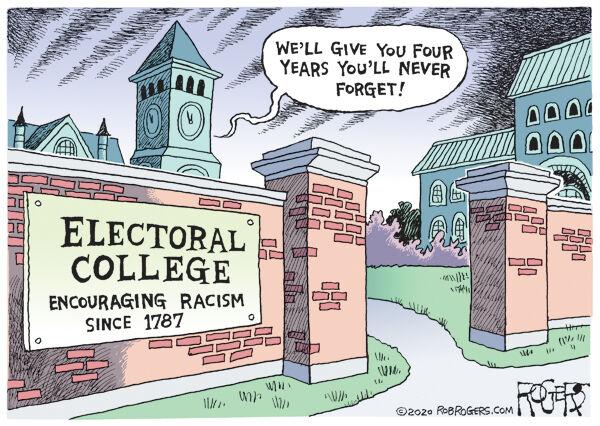 Yesterday “electors” affirmed that Joe Biden is our next president. After the votes in all 50 states, Biden addressed the nation. Fortunately, this time the winner of the popular vote also won in the outdated Electoral College.
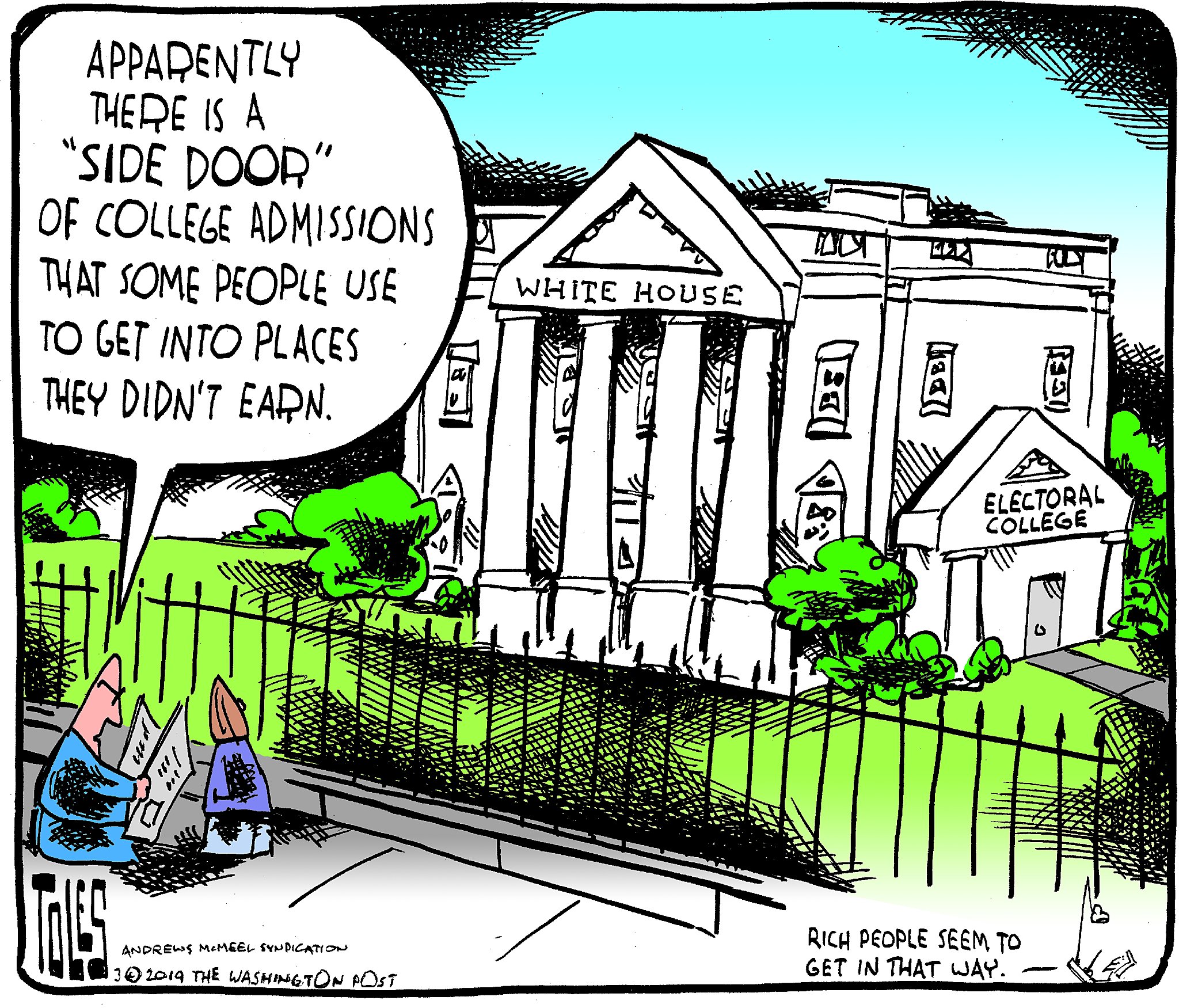 “In this battle for the soul of America, democracy prevailed,” Biden said. “We the people voted. Faith in our institutions held. The integrity of our elections remains intact. And so now it is time to turn the page. To unite. To heal.”
 There’s more at the link, but who cares? Trump is finished and we won’t have to put up with his childish behavior much longer.
 “There were multiple conversations with the U.S. government about taking more supply in the second quarter” of 2021, Gottlieb said. “The company wasn’t taken up on the offer as recently as November.”
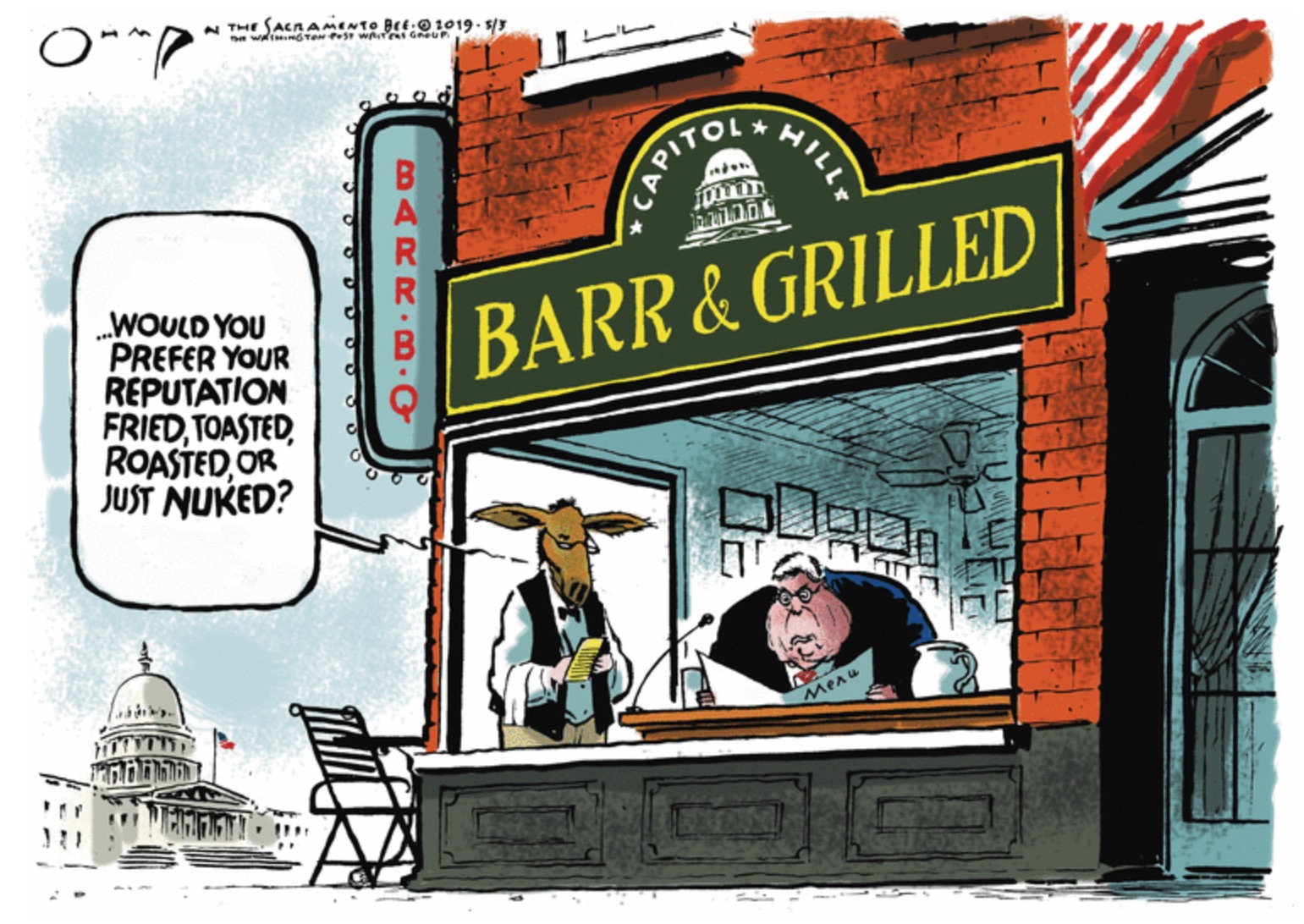 Ruth Marcus on Bill Barr:
  Good Day Sky Dancers!
 Additional information on those plans to challenge the count are further down the page.
 Some other interesting headlines from this weekend continue to amaze.


 Some thoughtful reactions to Trump and GOP attacks on democracy:
 Ryan Cooper at The Week:
  The Constitution, as goofy and jerry-rigged as it is, stipulates that insurrectionists who violate their oath are not allowed to serve in Congress. Section 3 of the
 Here’s the Amicus Brief

 peej
peej Carissa
 bostonboomer
 dakinikat
 ecocatwoman
 mablue2
 Mama Lopez
 peggysue22
 quixote
 skydancingguestblogger
 Mona (aka Wonk the Vote)



 Sky Dancing
Recent Comments