
Monday Reads: Reclaiming my Country
Posted: November 5, 2018 Filed under: 2018 elections | Tags: Mid term elections 2018 25 Comments Tomorrow is Voting Day and, as usual, Sky Dancers will find comfort, solace, and celebration here as we live blog what we hope is real change in America. As you know, I’m going to trot down the old Fire Station tomorrow morning where votes were cast for every president from FDR on down to the present and hope the two ballot initiatives I care about pass. My congressman Cedric Richmond is safe and will continue to lead the Congressional Black Caucus in through more challenging times for folks without money and power.
We have our vote. Let’s use it!
Here are some things to read about the election tomorrow.
My New Orleans Saints are at the top of the NFL having sent L.A.’s undefeated record to the trash heap. I didn’t get to see the game since I worked, but I did hear about this ad and I’m horrified. It aired on NBC during the Pats-Packers game,
NBC and Fox News said in separate statements on Monday that their networks will no longer air the Trump campaign’s racist anti-immigrant advertisement.
NBC was first to announce its decision, doing so after a backlash over its decision to show the 30-second spot during “Sunday Night Football.”
“After further review we recognize the insensitive nature of the ad and have decided to cease airing it across our properties as soon as possible,” a spokesperson for NBC said in a statement.
“Upon further review, Fox News pulled the ad yesterday and it will not appear on either Fox News Channel or Fox Business Network,” Marianne Gambelli, Fox News’ president of advertisement sales, told CNN in a statement.
So, how bad is it that CNN has pulled the ad followed by Facebook?
Facebook soon followed suit. “This ad violates Facebook’s advertising policy against sensational content so we are rejecting it. While the video is allowed to be posted on Facebook, it cannot receive paid distribution,” wrote a spokesperson for the company in an emailed statement.
The spokesperson said the ad violated the company’s policy against “sensational content” in advertisements. That policy prohibits “shocking, sensational, disrespectful or excessively violent content” in paid ads. “This includes dehumanizing or denigrating entire groups of people and using frightening and exaggerated rumors of danger.”
The ad, which features a convicted cop-killer who was deported multiple times before he shot and killed two California sheriff’s deputies, was released as a video by the Trump campaign last week. The spot seeks to pin the blame for those murders on immigrants generally along with Democratic policymakers who favor more lax immigration laws. Luis Brocamontes, the criminal at issue, was in fact arrested and released in 1998 by the office of then-Maricopa County sheriff Joe Arpaio, whom Trump pardoned of a misdemeanor criminal offense this year. Brocamontes last entered the country illegally during the George W. Bush administration.
“America cannot allow this invasion. The migrant caravan must be stopped,” the Trump campaign’s 30-second ad declares. “President Trump and his allies will protect our border and keep our families safe.”
Meanwhile, I’m more like the SNL skit ad.
 I’m scared to death after bailing on my first Krewe of Boo parade because of visitation by the Proud boys. The racism is just out in the open these days.
From the New Yorker and Roger Angell: “Get Up and Go Vote!”.
Editing this piece now, before your eyes, I’d say that I like and stand behind my paean to the voting machine, whose absence I mourn each November—the pure and pearl-like oddity that so well matched the strangeness and beauty of voting. On the other hand, I could do without my hurried complaints about the massive shift of national politics from newspapers and radio onto television (the “tube,” as we called it then).
What I need to add here, in 2018, by contrast, is my reconversion from the distanced and gentlemanly 1992 Roger to something akin to the argumentative and impassioned younger me, which began with the arrival of Donald Trump in our politics and our daily lives. In a New Yorker piece posted the week before the 2016 election, I wrote that my first Presidential vote was for Franklin Delano Roosevelt, in 1944, when I was a young Air Force sergeant stationed in the Central Pacific. I went on to say that, seventy-two years later, defeating Trump made that immediate election the most important of my life. Alarmed as I was, I had no idea, of course, of the depths of the disaster that would befall us, taking away our leadership and moral standing in the world.
I am ninety-eight now, legally blind, and a pain in the ass to all my friends and much of my family with my constant rantings about the Trump debacle—his floods of lies, his racism, his abandonment of vital connections to ancient allies and critically urgent world concerns, his relentless attacks on the media, and, just lately, his arrant fearmongering about the agonizingly slow approach of a fading column of frightened Central American refugees. The not-to-mention list takes us to his scorn for the poor everywhere, his dismantling contempt for the F.B.I. and the Justice Department, and his broad ignorance and overriding failure of human response. A Democratic victory in this midterm election, in the House, at the least, will put a halt to a lot of this and prevent something much worse.
Countless friends of mine have been engaged this year in political action, but, at my age, I’m not quite up to making phone calls or ringing doorbells. But I can still vote, and I ended that 1992 piece by saying how the morning after Election Day I’d search out, in the Times, the totals in the Presidential balloting, and, “over to the right in my candidate’s column, count the millions of votes there, down to the very last number. ‘That’s me!’ ” I would whisper, “and, at the moment, perhaps feel once again the absurd conviction that that final number, the starboard digit, is something—go figure—I would still die for, if anyone cared.”
What I said I would die for I now want to live for. The quarter-century-plus since George H. W. Bush lost that election to Bill Clinton has brought a near-total change to our everyday world. Unendable wars, desperate refugee populations, a crashing climate, and a sickening flow of gun murders and massacres in schools, concert halls, churches, and temples are the abiding commonplace amid the buzz of social media, Obamacare, and #MeToo. What remains, still in place and now again before us, is voting.
 Indeed, it’s our weapon of mass destruction against Trumpism if we use it.
One of the biggest question this mid term election is who is turning out? The early voting is outstripping the totals of the entire vote totals in many states. Are young people actually voting? What about the many women and minorities attacked by the party of Trump? Will those white women that voted this orange abomination of a man into office repent and be saved?
THE YOUTH WAVE?: Youth turnout rates in the midterm early vote are up by 125 percent compared to 2014, according to Catalist, a voter database servicing progressive organizations — an eye-popping and historically high figure, say strategists on both the left and the right.
Young Americans ages 18 to 29 who say they are definitely voting tilt leftward, according to polls. But the data also shows young Republicans are bubbling with enthusiasm headed into tomorrow.
Here are the Catalist numbers for early voting:
Ballots Cast National — All Ages National — Under 30 2014 19,052,732 1,027,499 2016 41,014,969 4,143,982 2018 29,227,381 2,314,126
- An “attitudinal” shift: A recent Harvard Institute of Politics poll indicated the most dramatic shift in their polling history is young people’s attitudes about whether politics makes a tangible difference in their lives. John Della Volpe, IOP’s polling director, said pollsters saw a 15-point increase post-2016.
- Per the poll: Forty percent of 18 to 29-year-olds reported they will “definitely vote” in the midterms (54 percent of Democrats, 43 percent of Republicans and 24 percent of independents).
- 2020 implications: Among young people polled, 59 percent said they would “never” vote for President Trump vs. 11 percent who said they’d be “sure to” vote for him.
- Narratives vs. numbers: “Almost all of the data I’ve seen from the last two Harvard polls indicate a significant increase in enthusiasm, interest and likelihood of voting for people under 30 — so the data has been consistent but the narrative inconsistent,” Della Volpe told us. “The high-water mark going back 32 years is only 21 percent of young people turning out and participating in a midterm election.”
- ‘A big boost’: “The media expectation before AVEV (Absentee Voting/Early Voting) started, based on survey responses about enthusiasm, was that young people would not be a factor again,” a Democratic strategist told Power Up. “Clearly, they’re going to be, especially if those voting are as Democratic as they survey. It’s a big boost for Democrats’ hopes.”
- GOP pollster: Chris Wilson, the CEO of WPA Intelligence, told us he thought it was a “bit too much” to call the turnout “historic.” But he said the electorate is looking younger “than both the 2016 and 2014 general elections. “Voters under 25 are outpacing their vote share from both the 2016 and 2014 general. Proportionately it’s not enough to make a huge difference, but it’s more,” Wilson said.
 In Georgia, Kemp is acting desperate and is liking calling on the FBI as a campaign stunt.
This is really unbelievable. Kemp is charging the Georgia Democratic Party with hacking the Georgia voter data base. I have a feeling it’s all about him not believing the majority of Georgia does not appear to want him as Governor and all his suppression activities are still not pulling his cupcakes out of the oven.
Kemp’s office said Sunday that it had alerted the Department of Homeland Security and Federal Bureau of Investigation, but did not provide details about the alleged hacking attempt in its press release.
“While we cannot comment on the specifics of an ongoing investigation, I can confirm that the Democratic Party of Georgia is under investigation for possible cyber crimes,” Candice Broce, Kemp’s press secretary, said in a statement. “We can also confirm that no personal data was breached and our system remains secure.”
Representatives for both Kemp’s office and the Department of Homeland Security did not immediately respond to requests for comment.
The Democratic Party of Georgia vehemently denied the accusation in a statement on Sunday, calling the probe “yet another example of abuse of power by an unethical Secretary of State.”
“To be very clear, Brian Kemp’s scurrilous claims are 100 percent false, and this so-called investigation was unknown to the Democratic Party of Georgia until a campaign operative in Kemp’s official office released a statement this morning,” Rebecca DeHart, executive director of the Democratic Party of Georgia, said in a statement.
 Hackers have been active in the election but it’s certainly the usual suspects despite the Kemp ploy for panic.
Hackers have ramped up their efforts to meddle with the country’s election infrastructure in the weeks leading up to Tuesday’s midterms, sparking a raft of investigations into election interference, internal intelligence documents show.
The hackers have targeted voter registration databases, election officials, and networks across the country, from counties in the Southwest to a city government in the Midwest, according to Department of Homeland Security election threat reports reviewed by the Globe. The agency says publicly all the recent attempts have been prevented or mitigated, but internal documents show hackers have had “limited success.”
https://twitter.com/garonsen/status/1059516414938230786
The U.S. Justice Department said Monday it will monitor compliance with federal voting right laws by deploying personnel to 19 states, including Iowa, for Tuesday’s general election.
Federal personnel will be sent to northwest Iowa’s Buena Vista County, which has a large population of immigrants employed in agriculture and the meat packing industry in the Storm Lake area.
Buena Vista County is among 35 jurisdictions in those 19 states which will be monitored for compliance with federal voting laws, and it is the only jurisdiction targeted in Iowa, according to the Justice Department.
Buena Vista County is within Iowa’s 4th Congressional District, where U.S. Rep. Steve King, R-Kiron, who has repeatedly made inflammatory statements about immigration, is being challenged by Democrat J.D. Scholten of Sioux City.
There are about 20,000 people in Buena Vista County. About 26 percent are identified as Hispanic or Latino, 9 percent Asian, 3 percent black or African-American, more than 1 percent native Hawaiian or other Pacific Islander, and more than 1 percent two or more races, according to the U.S. Census Bureau. Many of the immigrants are not native English speakers.
 Oh, look,the world’s oldest living confederate widow is going to protect minority voters’ rights! Feeling better? Yeah, I trust him about as much as I trust Kobach to protect minority voters’ rights in Kansas. How’s this headline from The Guardian? “Trump ally Kris Kobach accepted donations from white nationalists”.
The Republican candidate for governor of Kansas, Kris Kobach, who has close ties to the Trump administration, has accepted financial donations from white nationalist sympathizers and has for more than a decade been affiliated with groups espousing white supremacist views.
Recent financial disclosures show that Kobach, a driving force behind dozens of proposals across the US designed to suppress minority voting and immigrant rights, has accepted thousands of dollars from white nationalists. Donors include a former official in the Trump administration who was forced to resign from the Department of Homeland Security this year after emails showed he had close ties to white supremacists and once engaged in an email exchange about a dinner party invitation that was described as “Judenfrei”, or free of Jews.
Currently the Kansas secretary of state, Kobach is running in a tight raceagainst the Democrat Laura Kelly. The election has drawn the concern of the American Civil Liberties Union (ACLU), after the single polling place located in Dodge City was moved outside the town, in what some claimed to be an attempt to suppress the Hispanic vote.
How can any normal person trust a party that has some deep roots to Hate Groups? The White Flight parish next door to me will undoubtedly return Steve “I’m David Duke without the baggage” to his leadership position in the Republican House. Let’s just make sure he’s kept as far away from the speaker’s job as possible.
So, I’ll be here tomorrow night!!! Join us!!
What’s on your reading and blogging list today?
Lazy Saturday Reads: Trump and Fascism
Posted: November 3, 2018 Filed under: Afternoon Reads, U.S. Politics | Tags: Donald Trump, fascism, fascist playbook, fascist tricks 18 Comments
By Edward B. Gordon
Good Afternoon!!
Over the past couple of weeks, Trump has downplayed an attempt to assassinate at least 13 present and former Democratic officials and prominent Democrats as well as the hate crime murder of 11 Jews in a Pittsburgh synagogue. His deepest expressed concern about these horrific events has been that they interfered with media coverage of his Hitler rallies. In addition, Trump has blatantly lied about a group of Honduran asylum-seekers, claiming their “caravan” represents a national emergency that requires the deployment of thousands of active-duty troops on the Southern border. I think at this point it’s appropriate to label Trump’s behavior and rhetoric as fascism. I’m far from the only one saying this.
The Washington Post: Trump deploys the fascist playbook for the midterms, by Ishaan Tharoor
President Trump’s message is as clear as it is ugly: Fearmongering about illegal immigration will deliver his party the votes it needs to retain control of Congress. And so, in the final stretch before next week’s midterm election, the president and his allies have launched a blitzkrieg of misinformation.
By Henri Lebasque (1865 – 1937)
In a move unprecedented in modern American history, Trump ordered thousands of active-duty troops to the border to intercept a caravan of Central American migrants, casting them as a menacing “invasion” of “unknown Middle Easterners” and other shadowy elements. His allies at right-wing media outlets spread lurid conspiracy theories about liberals enabling disease-bearing foreigners to infiltrate the country.
Even as attention shifted to a spate of right-wing violence, including the slaughter of 11 people at a Pittsburgh synagogue that critics linked to the president’s rhetoric, Trump barreled on, undaunted. On Thursday, he gave a speech at the White House where he warned that U.S. troops would shoot violent migrants at the border. He also shared an ad that sought to connect the Democratic Party to murders carried out by a man twice deported to Mexico, and then to link the man’s murderous behavior to the supposed threat posed by all migrants.

Taroor links to several other writers on the subject, including:
Timothy Snyder at The Guardian: Donald Trump borrows from the old tricks of fascism.
The governing principle of the Trump administration is total irresponsibility, a claim of innocence from a position of power, something which happens to be an old fascist trick. As we see in the president’s reactions to American rightwing terrorism, he will always claim victimhood for himself and shift blame to the actual victims. As we see in the motivations of the terrorists themselves, and in the long history of fascism, this maneuver can lead to murder.
Comfy Chair, by Rae Andrews
The Nazis claimed a monopoly on victimhood. Mein Kampf includes a lengthy pout about how Jews and other non-Germans made Hitler’s life as a young man in the Habsburg monarchy difficult. After stormtroopers attacked others in Germany in the early 1930s, they made a great fuss if one of their own was injured. The Horst Wessel Song, recalling a single Nazi who was killed, was on the lips of Germans who killed millions of people. The second world war was for the Nazis’ self-defense against “global Jewry”.
The idea that the powerful must be coddled arose in a setting that recalls the United States of today. The Habsburg monarchy of Hitler’s youth was a multinational country with democratic institutions and a free press. Some Germans, members of the dominant nationality, felt threatened because others could vote and publish. Hitler was an extreme example of this kind of sentiment. Today, some white Americans are similarly threatened by the presence of others in institutions they think of as their own. Among the targets of the accused pipe bomber were four women, five black people and two Jews. Just as (some) Germans were the only serious national problem within the Habsburg monarchy, so today are (some) white Americans the only serious threat to their own republic.

How does this apply to Trump?
Trump and some of his supporters mount a strategy of deterrence by narcissism: if you note our debts to fascism, we will up the pitch of the whining. Thus Trump can base his rhetoric on the fascist idea of us and them, lead fascist chants at rallies, encourage his supporters to use violence, praise a politician who attacked a journalist, muse that Hillary Clinton should be assassinated, denigrate the intelligence of African Americans, associate migrants with criminality, run an antisemitic advertisement, spread the Nazi trope of Jews as “globalists”, and endorse the antisemitic idea that the Jewish financier George Soros is responsible for political opposition – but he and his followers will puff chests and swell sinuses if anyone points this out.
By Ivan Stepanovich Ivanov-Sakachev
If Trump is not a fascist, this is only in the precise sense that he is not even a fascist. He strikes a fascist pose, and then issues generic palliative remarks and denies responsibility for his words and actions. But since total irresponsibility is a central part of the fascist tradition, it is perhaps best to give Trump his due credit as an innovator.

The next piece is very long, but I hope you’ll go read it. I can’t do it justice with excerpts. From the Literary Hub, Aleksandar Hemon on Civility: Fascism is Not an Idea to Be Debated, It’s a Set of Actions to Fight. Hemon is from Bosnia. His essay responds to The New Yorker’s quickly aborted invitation to Steve Bannon to discuss his “ideas” with editor-in-chief David Remnick.
The public discussion prompted by the (dis)invitation confirmed to me that only those safe from fascism and its practices are far more likely to think that there might be a benefit in exchanging ideas with fascists. What for such a privileged group is a matter of a potentially productive difference in opinion is, for many of us, a matter of basic survival. The essential quality of fascism (and its attendant racism) is that it kills people and destroys their lives—and it does so because it openly aims so.
Witness Stephen Miller and Donald Trump’s “zero tolerance for illegal immigration” policy. Fascism’s central idea, appearing in a small repertoire of familiar guises, is that there are classes of human beings who deserve diminishment and destruction because they’re for some reason (genetic, cultural, whatever) inherently inferior to “us.” Every fucking fascist, Bannon included, strives to enact that idea, even if he (and it is usually a he—fascism is a masculine ideology, and therefore inherently misogynist) bittercoats it in a discourse of victimization and national self-defense. You know: they are contaminating our nation/race; they are destroying our culture; we must do something about them or perish. At the end of such an ideological trajectory is always genocide, as it was the case in Bosnia.
By Kenton Nelson
The effects and consequences of fascism, however, are not equally distributed along that trajectory. Its ideas are enacted first and foremost upon the bodies and lives of the people whose presence within “our” national domain is prohibitive. In Bannon/Trump’s case, that domain is nativist and white. Presently, their ideas are inflicted upon people of color and immigrants, who do not experience them as ideas but as violence. The practice of fascism supersedes its ideas, which is why people affected and diminished by it are not all that interested in a marketplace of ideas in which fascists have prime purchasing power.
The error in Bannon’s headlining The New Yorker Festival would not have been in giving him a platform to spew his hateful rhetoric, for he was as likely to convert anyone as he himself was to be shown the light in conversation with Remnick. The catastrophic error would’ve been in allowing him to divorce his ideas from the fascist practices in which they’re actualized with brutality. If he is at all relevant, it is not as a thinker, but as a (former) executive who has worked to build the Trumpist edifice of power that cages children and is dismantling mechanisms of democracy.

Relevant reading from Today’s news:
The Washington Post: Trump’s election-eve border mission puts the military in partisan crosshairs.
The Washington Post: Army assessment of migrant caravans undermines Trump’s rhetoric.
Think Progress: These prominent white supremacists interacted with the Pittsburgh shooting suspect on social media.
The Independent: Fascism has arrived in Brazil – Jair Bolsonaro’s presidency will be worse than you think.
The New York Times: Nigerian Army Uses Trump’s Words to Justify Fatal Shooting of Rock-Throwing Protesters.
Buzzfeed News: Trump Said US Soldiers Should Shoot Rock-Throwing Migrants, And Vets Were Having None Of That.
What stories are you following today?
Friday Reads: Peace or Panic?
Posted: November 2, 2018 Filed under: 2018 elections, morning reads 22 Comments
Good Morning Sky Dancers!
I simply cannot stand any more crap coming out of a KKKremlin Caligula rally. The bigotry, lies, and outright impossibilities have just about done me and my psyche in for awhile. I’m going to vote on Tuesday at my little fire station on the corner near the old Fire station horse barns that I walk an entire two blocks to reach. Once again, I’m going to join the down trodden in the big hope we can get rid of this huge mess that once was the party of Lincoln.
Today, I’m turning off the horse race coverage. I’m with Vanity Fair writer Peter Hamby on this: “BLOWING SMOKE”: SORRY, PUNDITS, BUT YOU HAVE NO CLUE WHAT WILL HAPPEN ON TUESDAY”. I don’t know what’s worse; watching polls that are based on turnout patterns that seem completely upended or listening endlessly to opining guys that never leave the sanctity of their studios in NYC.
Every piece of evidence we have about voting behavior during the Trump presidency—special elections in various corners of the country, public and internal polls, early voting data in key states—indicates that we are heading for a midterm election with explosively high turnout. University of Florida professor Michael McDonald, who studies voting patterns, estimated recently that almost 50 percent of eligible voters could cast ballots this year, a turnout level not seen in a midterm election in 50 years. Trump, in his way, is loudly trying to juice Republican turnout in red-leaning Senate races by demagoguing the threat of illegal border crossings, which happen to be at their lowest point in decades.
Enthusiasm in this election, though, is mostly fueled by Democrats. Aside from college-educated white women, much of the Democratic coalition in 2018 is comprised of voters—young people, African-Americans, and Hispanics—who don’t typically show up in midterm elections. And the main thing to remember about high-turnout elections, especially ones that bring non-traditional voters into the mix, is that strange things can happen. House seats once thought to be safe are suddenly in jeopardy, like Republican Steve King’s solidly red seat in Iowa now appears to be.
Still, in the press, it seems written in stone that Democrats will take back the House but fail to take the Senate, thanks to an unfavorable map that has too many Democratic incumbents running in Trump-friendly states like Missouri, North Dakota, West Virginia, Indiana, and Montana. The prospect of a House-Senate split is the most likely outcome according to the polls and veteran handicappers, and that probability has already started congealing into conventional wisdom. New York Times columnist Ross Douthat, writing last weekend, said this scenario is “the sensible thing to root for,” the best way to constrain Trump’s impulses but also an unchecked liberalism.
There you go. Ross “I’m wrong about everything all the time” Douthat is being quoted doing his usual thing of being totally out of his league.

There’s all kinds of narratives out there and I’m sure my mental and emotional health are not improving with each read. From the Cut: “Heidi Heitkamp Doesn’t Care That You Think She’s Going to Lose”. Wow, I really want to believe that one. BTW, voter suppression by states like North Dakota against minority voters is being up held in the courts. The Native Americans lost their plea to stop the crazy “you must have a state approved address on your id” to vote. The Hispanic Americans of Dodge City, Kansas must travel miles ouside of the city to find their one voting place.
Oh, and machines in Georgia are flipping votes in the gubernatorial race and of course, they’re taking the votes away from the black woman. This is crazy.
Who she is, in addition to one of the most endangered senators in the country, is a canny, inexhaustible political operator; a policy enthusiast; a woman who seems to come by her you bet folksiness honestly. She is someone people here like. In fact, so many people like Heidi Heitkamp in North Dakota that her opponent, Representative Kevin Cramer, himself saysin a television ad, “We all like Heidi.” (There’s a “but.”)
Heitkamp denies that she is significantly down in the polls — she says many of the pollsters trying to survey North Dakota are “incompetent” — though she declines to provide contrary evidence. “The thing that everybody needs to understand is, I need 150,000 votes,” she says. “You can count 150,000 votes. You can motivate 150,000 votes.”
It’s mostly Heitkamp herself that makes people in North Dakota unconvinced that this race is over, even as most of the political class has moved on. (Trump’s handlers left the state off his final-week rally list, though Joe Biden is about to campaign here.) But it’s also voters like White Owl, here in the 4 Bears ballroom, near the slot-machine smoking parlor where seniors from Saskatchewan and Minnesota are pulling levers. If she’s lucky, what look a lot like hurdles — Heitkamp’s vote against Trump’s Supreme Court justice in a state he won by 36 points, the state’s restrictive new voter-ID law — could form the scaffolding of a win.
The stand Heitkamp took on Kavanaugh, whatever else it did, earned her unprecedented millions in donations and the admiration of voters like White Owl. North Dakota’s new requirement that all voters must have a street address — and surely this is a total coincidence — lopsidedly affects the same Native American voters who helped Heitkamp win in 2012 with a margin of less than 3,000 votes. But the law could boomerang on its Republican sponsors, as community organizers, some cool on Heitkamp because of her support for the Dakota Access Pipeline, spring into indignant action. In a state where a 500-vote swing can decide political fates — North Dakota’s, and potentially even the U.S. Senate’s — everything matters, and anything is possible.
Everything matters. Anything is possible. I keep repeating that telling myself I’m not going to have the same trauma of 2016.
Oh, and about those vote flipping machines …
When reports began circulating last week that voting machines in Texas were flipping ballots cast for Beto O’Rourke over to Ted Cruz, and machines in Georgia were changing votes for the Democratic gubernatorial candidate Stacey Abrams to those for her Republican opponent, Brian Kemp, it would not have been unreasonable to suppose that those machines had been hacked. After all, their vulnerabilities have been known for nearly two decades. In September, J. Alex Halderman, a computer-science professor at the University of Michigan, demonstrated to members of Congress precisely how easy it is to surreptitiously manipulate the AccuVote TS, a variant of the direct-recording electronic (D.R.E.) voting machines used in Georgia. In addition, Halderman noted, it is impossible to verify that the votes cast were not the votes intended, since the AccuVote does not provide a physical record of the transaction.
“I am sick and tired of this administration. I’m sick and tired of what’s going on. I’m sick and tired of being sick and tired, and I hope you are, too.”
I’m sick and tired, too.
I’m sick and tired of a president who pretends that a caravan of impoverished refugees is an “invasion” by “unknown Middle Easterners” and “bad thugs” — and whose followers on Fox News pretend the refugees are bringing leprosy and smallpox to the United States. (Smallpox was eliminated about 40 years ago.)
I’m sick and tired of a president who misuses his office to demagogue on immigration — by unnecessarily sending 5,200 troops to the border and by threatening to rescind by executive order the 14th Amendment guarantee of citizenship to anyone born in the United States.
I’m sick and tired of a president who is so self-absorbed that he thinks he is the real victim of mail-bomb attacks on his political opponents — and who, after visiting Pittsburgh despite being asked by local leaders to stay away, tweeted about how he was treated, not about the victims of the synagogue massacre.
I’m sick and tired of a president who cheers a congressman for his physical assault of a reporter, calls the press the “enemy of the people ” and won’t stop or apologize even after bombs were sent to CNN in the mail.
I’m sick and tired of a president who employs the language of anti-Semitic conspiracy theories about Jewish financier George Soros and “globalists,” and won’t apologize or retract even after what is believed to be the worst attack on Jews in U.S. history.
I’m sick and tired of a president who won’t stop engaging in crazed partisanship, denouncing Democrats as “evil,” “un-American” and “treasonous” subversives who are in league with criminals.
I’m sick and tired of a president who cares so little about right-wing terrorism that, on the very day of the synagogue shooting, he proceeded with a campaign rally, telling his supporters, “Let’s have a good time.”
I’m sick and tired of a president who presides over one of the most unethical administrations in U.S. history — with three Cabinet members resigning for reported ethical infractions and the secretary of the interior the subject of at least 18 federal investigations.
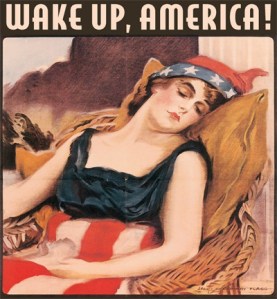
It’s a long list out there in the Max Boot Op Ed in WAPO but I’m sure we could all add to it.
Mostly, I’m sick of every emanation from KKKremlin Caligula. I want him to choke on badly cooked hamburger so we can toss him on to the heaps of historical mistakes.
The miasma of today is one created by a world in which journalists are described as “enemies of the people,” in which immigrants fleeing chaos or seeking opportunity are accused of harboring terrorists and carrying leprosy, in which a politician aspiring to the highest leadership positions in Congress says, “We cannot allow Soros, Steyer and Bloomberg to BUY this election!” It is the miasma created by a leader who cheers a candidate for body-slamming a reporter, and whose subordinates’ professed sorrow for bullet-riddled old men and women is swiftly displaced by self-pity and grievance that their boss is being picked on.
So, that’s it for me because I have to finish up grades for the term today. I want to be done so I can watch my favorite zombie show. For once, it won’t be about the Republican base.
What’s on your reading and blogging list today?
All Hallows Day Reads
Posted: November 1, 2018 Filed under: morning reads, U.S. Politics 27 Comments
Good Morning!!
I wonder if life in Trumpworld will get better after the elections are over? My guess is no, but I’m still hoping. Today’s news is so depressing that I don’t even want to read most of it, much less post it here.
Trump released his very own Willie Horton-style ad, his big lies are getting bigger by the day, his hate speech is getting more and more overt, and he’s threatening to send 15,000 troops to the Southern border to defend against a rag-tag group of mostly women and children. And the awful truth is that members of the media are aiding and abetting his disgusting behavior.
Before I get to some recommended reads, here are some feel-good Halloween stories.
Buzzfeed: The Little Girl Obsessed With Michelle Obama’s Portrait Dressed As Her For Halloween.
Remember Parker Curry? She was the little girl who went viral in March after she was photographed staring in awe at Michelle Obama’s official portrait.
I’m sure you can guess what Parker wanted to be on Halloween.
Jessica told BuzzFeed News Wednesday that when she asked Parker what she wanted to dress as for Halloween, the toddler’s response was immediate.
“Flat out. No hesitation. Half of a second later. ‘I want to be Michelle Obama,’ and I was like Whoa,” Jessica recalled. “I thought she was going to be like, ‘I want to be Elsa or some other character like that.”
Jessica found someone who offered to make the costume. Here it is:
See more photos at the Buzzfeed link.
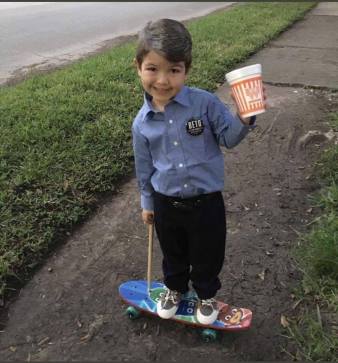
A little boy in Tennessee dressed as a “real-life” hero. Fox 26: Tennessee boy dresses as Waffle House hero James Shaw Jr. for school’s ‘Hero Day’
NASHVILLE, Tenn. (WZTV) – A boy from Gallatin traded in a superhero cape for medical tape Friday at his school’s “Hero Day.”
 So, wearing a gray hoodie with the word “live” on his chest and tape on his right hand, Tayir showed up to Union Stem Elementary dressed as James Shaw Jr.
NASHVILLE, Tenn. (WZTV) – A boy from Gallatin traded in a superhero cape for medical tape Friday at his school’s “Hero Day.”
When a gunman opened fire at an Antioch Waffle House in April, James Shaw Jr. jumped into action and grabbed the barrel of the shooter’s AR-15 and threw it behind the diner’s counter. Police say the move saved many lives.
Taurean C. Sanderlin, 29; Joe R. Perez, 20; De’Ebony Groves, 21, of Gallatin; and Akilah Dasilva, 23, of Antioch, were killed in the shooting.
And then he got to meet his hero in person!
Here’s a little girl who dressed as Emma González from Marjory Stoneman Douglas High School.
Now for some reads:
The New York Times has an op-ed by psychiatrist Richard A. Friedman: The Neuroscience of Hate Speech. An excerpt:
Of course, it’s difficult to prove that incendiary speech is a direct cause of violent acts. But humans are social creatures — including and perhaps especially the unhinged and misfits among us — who are easily influenced by the rage that is everywhere these days. Could that explain why just in the past two weeks we have seen the horrifying slaughter of 11 Jews in a synagogue in Pittsburgh, with the man arrested described as a rabid anti-Semite, as well as what the authorities say was the attempted bombing of prominent Trump critics by an ardent Trump supporter?
You don’t need to be a psychiatrist to understand that the kind of hate and fear-mongering that is the stock-in-trade of Mr. Trump and his enablers can goad deranged people to action. But psychology and neuroscience can give us some important insights into the power of powerful people’s words.
We know that repeated exposure to hate speech can increase prejudice, as a series of Polish studies confirmed last year. It can also desensitize individuals to verbal aggression, in part because it normalizes what is usually socially condemned behavior.
At the same time, politicians like Mr. Trump who stoke anger and fear in their supporters provoke a surge of stress hormones, like cortisol and norepinephrine, and engage the amygdala, the brain center for threat. One study, for example, that focused on “the processing of danger” showed that threatening language can directly activate the amygdala. This makes it hard for people to dial down their emotions and think before they act.
Mr. Trump has managed to convince his supporters that America is the victim and that we face an existential threat from imagined dangers like the migrant caravan and the “fake, fake disgusting news.”
Click on the link to read the rest.
At Bloomberg Opinion, Jonathan Bernstein argues that Trump’s Bigotry Isn’t Working.
What is President Donald Trump running on in the final days of the midterm campaign? He’s going with – once again – full-on bigotry, with nonstop talk about fictional riots over sanctuary cities, fictional threats from a group of poor migrants heading north, and now a racist ad that is reminding people of the ugliest campaign spots in recent history. He’s also talking about taking citizenship away from … well, it’s not exactly clear. But certainly lots of very scary, very threatening Thems.
And, yes, he’s doing all this a week after bombs were mailed to high-profile Democrats and shootings in Pittsburgh and Kentucky. I think he’s also complaining that Democrats are dividing the nation. Contradictions of logic don’t bother him very much.
There’s a lot to say about a president who would campaign like this and a party that would mostly go along with it. But an important thing to remember is that, as the Fix’s Aaron Blake noted this week, we have no idea if any of this will actually help Republicans win.
So far, there’s very little evidence that it’s helping. Yes, Republicans have solidified their position in the Senate a bit, but it’s not clear that that’s due to any recent campaigning or events. (If there was one event that seemed to have moved Nate Silver’s Senate forecast, it was Brett Kavanaugh’s confirmation battle.) It’s more likely due to natural Republican voters returning home, which was always the big danger for Democrats in states such as Indiana, Missouri, North Dakota, Tennessee and Texas. And remember that Republicans are benefiting from this year’s Senate map: Democrats would have to win in safe states, swing states, and even some quite red states to gain any ground.
Read the rest at Bloomberg.
Kevin Drum writes that the Internet is helping, not hurting: Social Media Is Making the World a Better Place. Quit Griping About It.
I once wrote that the internet makes smart people smarter and dumb people dumber. Likewise, it might very well make good people better and bad people worse. But on average, that doesn’t mean the world is a worse place. So why does it seem so much worse?
That’s pretty easy: the internet boasts an immediacy that allows it to pack a bigger punch than any previous medium. But this is hardly something new. Newspapers packed a bigger punch than the gossipmonger who appeared in your village every few weeks. Radio was more powerful than newspapers. TV was more powerful than radio. And social media is more powerful than TV.
Contrary to common opinion, however, this has little to do with the nature of these mediums. Sure, they’ve become more visceral over time: first words, then pictures, then voice, then moving images, and finally all of that packaged together and delivered with the power of gossip from a trusted friend. But what’s really different is how much time we spend on them—and by this I mean the time we spend on news, not crossword puzzles or Gilligan’s Island. We are addicted to our smartphones, and that means we spend far more time absorbing news than we used to with TV or radio. There’s the news we actively seek out. There’s the news we get after acccidentally clicking on something else. And then, just to make sure we don’t miss one single thing, there’s the news that’s forced on us because we’ve set up our smartphones to buzz and beep at us when something happens.
This means that we are aware of much more news than in the pre-internet days.
And that brings me circuitously to my point: broadly speaking, the world is not worse than it used to be. We simply see far more of its dark corners than we used to, and we see them in the most visceral possible way: live, in color, and with caustic commentary. Human nature being what it is, it’s hardly surprising that we end up thinking the world is getting worse.
Instead, though, consider a different possibility: the world is roughly the same as it’s always been, but we see the bad parts more frequently and more intensely than ever before.
Read the rest at Mother Jones.
Matthew Yglesias: Journalists should stop repeating Trump’s lies. Plus, we need a more robust theory of the media.
Covering President Donald Trump is hard, but the media is blowing the easy parts.
That’s what I thought as I read Ezra Klein’s fascinating, troubling take on Vox about how Trump manipulates the media. Ezra raises a lot of really good, really difficult questions about how the media can and should handle the situation in which Trump clearly wants to bait the press into a Trump versus the media narrative.
Yet what I’m hung up on are the easy questions. Tuesday morning, for example, Axios published an interview/scoop in which Trump floated the idea of trying to abrogate birthright citizenship via an executive order. This is ridiculous on its face as a procedural matter, but substantively Trump remarked that “We’re the only country in the world where a person comes in and has a baby, and the baby is essentially a citizen of the United States.”
That’s a pithy, punchy line, but it’s also completely untrue. The citizenship standard known as unrestricted jus soli exists in Canada, the United States, Mexico, Chile, Argentina, Brazil, Jamaica, Barbados, and about 30 more countries, almost all of them, like the ones I named, located in the Western Hemisphere.
So hundreds of news outlets posted stories and tweets that repeated Trump’s lies. Yglesias’s suggestion:
When a public official makes a material misstatement of fact, you might want to do a story about the fact that he is lying or confused or ignorant or whatever you think is going on. But you don’t just relay the misinformation in your social media copy and headlines.
Read the whole thing at Vox.
That’s all I’ve got for today. What stories are you following?

 peej
peej Carissa
 bostonboomer
 dakinikat
 ecocatwoman
 mablue2
 Mama Lopez
 peggysue22
 quixote
 skydancingguestblogger
 Mona (aka Wonk the Vote)



 Sky Dancing
Recent Comments