
Lazy Saturday Reads: A Shocking Day In Politics
Posted: October 8, 2016 Filed under: morning reads, U.S. Politics | Tags: Central Park Five, Donald Trump, Hillary Clinton, Racism, Sexism, sexual assault, Sexual harassment 94 Comments  Good Afternoon!!
Yesterday was the worst day in politics that I can recall seeing in my many years of following politics closely. The closest thing I can remember is the “Saturday Night Massacre” in October 1973, when Nixon fired Special Prosecutor Archibald Cox along with Attorney General Elliot Richardson and his deputy William D. Ruckelshaus. That was a shocking day.
Yesterday was a shocking day, and not just because of the video of Donald Trump degrading women and bragging about sexually assaulting them. Anyone who has paid any attention to Trump’s behavior over the past year and to his career before running for POTUS should have understood this is the kind of man he is. Just this year Trump has repeated defended Roger Ailes for sexually harassing and abusing women at Fox News.
And does anyone actually believe that there isn’t plenty more video demonstrating Trump’s abusive behavior?
Trump’s treatment of women has been well known over the years. In May, the New York Times published a lengthy article with example after example of Trump’s sexist and abusive behavior toward women. It sunk like a stone as the Times and the rest of the media focused on Hillary Clinton’s emails and then the Clinton Foundation.
But the shocking video released yesterday was not the only shocking revelation that came out. Trump also stated that he still believes the Central Park Five–African American and Hispanic teenagers who were wrongly convicted and served full sentences for raping a jogger in Central Park in 1989–are guilty, even though they were exhonerated by DNA evidence and the confession of the real perpetrator. NBC News New York:

Félix Vallotton, The Reader
Donald Trump stepped back into one of the most racially charged controversies in New York City history this week, saying he still believed the “Central Park Five” were guilty.
Two years after a judge approved a $41 million settlement with the five men, Trump told CNN they should not have been exonerated, after one of the men said he was hoping for an apology from the Republican presidential nominee.
“They admitted they were guilty,” Trump told CNN in a statement. “The police doing the original investigation say they were guilty.” ….
Following their arrest, Trump took out full-page ads in the city’s newspapers calling for New York to bring back the death penalty, though he did not explicitly say those five defendants should be executed.
And yet, many Republicans–including Speaker of the House Paul Ryan have not withdrawn their support from this man who has and will continue to shame their party and our country. Some Republicans are coming out to say they will no longer vote for Trump, it’s far too little and far too late. These people know who and what Trump was all along. Anyone who hadn’t already denounced him before yesterday are stuck with him.

Georges d’Espangnat
There is no way the GOP can dump Trump from the ticket, and this morning he told Robert Costa of The Washington Post that he will never quit.
Republican presidential nominee Donald Trump said in an interview Saturday that he would not drop out of the race under any circumstances, following calls from several in his party to do so.
“I’d never withdraw. I’ve never withdrawn in my life,” Trump told the Washington Post in a phone call from his home in Trump Tower in New York. “No, I’m not quitting this race. I have tremendous support.”
“People are calling and saying, ‘Don’t even think about doing anything else but running,” Trump said when asked about GOP defections. “You have to see what’s going on. The real story is that people have no idea the support. I don’t know how that’s going to boil down but people have no idea the support.
“Running against her,” Democratic nominee Hillary Clinton, makes keeping the party behind him easier, Trump added.
“It’s because she’s so bad. She’s so flawed as a candidate. Running against her, I can’t say it’d be the same if I ran against someone else, but running against her makes it a lot easier, that’s for sure.”

jean-edouard-vuillard
Late last night in his so-called apology, Trump tried to excuse his behavior by claiming that Hillary and Bill Clinton have done far worse to women. If you haven’t seen it, here’s one place to watch it. Rolling Stone:
Trump’s video apology came hours after the Republican nominee dismissed the footage as “locker room talk” and apologized only if “anyone was offended” by the comments.
However, rather than simply apologize, Trump used his video to further blast Bill and Hillary Clinton for alleged previous improprieties. Here’s the full transcript:
I’ve never said I’m a perfect person, nor pretended to be someone that I’m not. I’ve said and done things I regret, and the words released today on this more than a decade-old video are one of them. Anyone who knows me, know these words don’t reflect who I am.
I said it, it was wrong, and I apologize.
I’ve travelled the country talking about change for America. But my travels have also changed me. I’ve spent time with grieving mothers who’ve lost their children, laid off workers whose jobs have gone to other countries, and people from all walks of life who just want a better future. I have gotten to know the great people of our country, and I’ve been humbled by the faith they’ve placed in me. I pledge to be a better man tomorrow, and will never, ever let you down.
Let’s be honest. We’re living in the real world. This is nothing more than a distraction from the important issues we are facing today. We are losing our jobs, we are less safe than we were 8 years ago and Washington is broken.
Hillary Clinton, and her kind, have run our country into the ground.
I’ve said some foolish things, but there is a big difference between words and actions. Bill Clinton has actually abused women and Hillary has bullied, attacked, shamed and intimidated his victims. We will discuss this more in the coming days.
See you at the debate on Sunday.
So bragging about sexually abusing and assaulting women–actions that Trump admitted in the video–are “nothing more than a distraction.” That’s not an apology. And Trump went on to threaten more horrible behavior to come on Sunday night.

jacques emile blanche
There undoubtedly will be more fallout today, but many Republicans are still saying this isn’t a “game-changer.”
Politico: GOP insiders: It’s not a knockout punch.
Leaked audio of Donald Trump making crude, sexually aggressive comments about women has dealt a serious blow to the GOP nominee’s presidential campaign, but swing-state Republican insiders aren’t convinced it will effectively end Trump’s chances in November.
A slim majority of Republican members of The POLITICO Caucus — a panel of activists, strategists and operatives in 11 battleground states — said they don’t think news reports of the Trump tape are a “knockout blow” for the GOP ticket. But while 54 percent of Republicans say Trump can overcome these comments, 46 percent say the New York real-estate magnate’s chances are doomed.
“Trump’s obscene comments might be the straw that broke the camel’s back for evangelical voters, Republican women and any remaining undecided voters,” said a Colorado Republican — who like all insiders, completed the survey anonymously in the hours after the tape of Trump describing trying to sleep with a married woman and boasting that he could kiss and grope women because of his celebrity.
“Our politics is tribal and polarized. So it’s not like this swings the thing 10 points,” a Virginia Republican added. “What it does though, and it has the same impact, is it further devastates Trump amongst women and white college-educated voters, two groups he had to make up big time ground with to even stand a chance of winning. Those windows have now permanently closed.”
We’ll see. Honestly it was hard for me to even write this post, and I’m sure it will be painful to read. It disgusts me that Hillary and here supporters have to deal with this racist, bigoted asshole when we should be celebrating the election of the first woman President of the United States. But I have no doubt that Hillary will maintain her dignity and make us proud again on Sunday night.
In a way it actually seems fitting that this woman who has been attacked for decades in the most disgusting and sexist ways will be the one to save our country from the danger and shame of a President Donald Trump.
I’ll have more links in the comment thread. Please feel free to post your thoughts and links on any topic.
Friday Reads: Madly Truly Deeply Deplorable
Posted: October 7, 2016 Filed under: 2016 elections, morning reads, U.S. Economy, Voter Ignorance | Tags: basket of deplorables, illiteracy, Trump Voters, undereducated, White Working Class men and women 41 Comments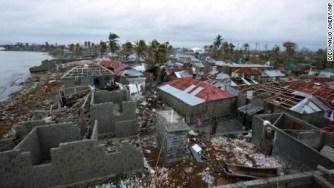 Good Morning Sky Dancers!
I found a series of reads this week on what makes Donald Trump supporters tick. It’s an interesting combination of things that dives into the deplorables. The primary focus of these studies are white, uneducated working class men along with a few women because the main demographics of Trump Voters are old, white, and not well-educated. There’s even one article with some tie in with similar right wing white angst movements in place like the UK and Scandinavia where white right wingers are getting increasingly xenophobic and sounding a lot more like their authoritarian counterparts from the 1930s. I thought I’d highlight a few of these pieces today.
Don’t think these articles and writers heap wicked judgement. Many of these reads are conciliatory and sympathetic. Like us, they are just trying to get it figured out. The pictures today are of damage done by the still threatening Hurricane Matthew when it caused death and destruction in Haiti. Tumult rules our current time line.
Project Syndicate has two interesting pieces up. The first is by Dr. Ian Buruma and is called “Trump’s Deplorables.”
The Trump supporters are showing a similar animus against symbols of the elite, such as Wall Street bankers, “mainstream” media, and Washington insiders. But their xenophobia is directed against poor Mexican immigrants, blacks, or Middle Eastern refugees, who are perceived as freeloaders depriving honest (read white) Americans of their rightful place in the social pecking order. It is a question of relatively underprivileged people in a globalizing, increasingly multi-cultural world, resenting those who are even less privileged.
In the US today, as in the Weimar Republic, the resentful and the fearful have so little trust in prevailing political and economic institutions that they follow a leader who promises maximum disruption. By cleaning out the stables, it is hoped, greatness will return. In Hitler’s Germany, this hope existed among all classes, whether elite or plebeian. In Trump’s America, it thrives mostly among the latter.
In the US and Europe, today’s world looks less scary to more affluent and better educated voters, who benefit from open borders, cheap migrant labor, information technology, and a rich mixture of cultural influences. Likewise, immigrants and ethnic minorities who seek to improve their lot have no interest in joining a populist rebellion directed mainly against them, which is why they will vote for Clinton.
Trump must thus rely on disaffected white Americans who feel that they are being left behind. The fact that enough people feel that way to sustain such an unsuitable presidential candidate is an indictment of US society. This does have something to do with education – not because well-educated people are immune to demagogy, but because a broken education system leaves too many people at a disadvantage.
 The second must-read is by Professor Joseph Nye who puts the populist revolt into perspective and into its “place”.
In the US, polls show that Trump’s supporters are skewed toward older, less-educated white males. Young people, women, and minorities are under-represented in his coalition. More than 40% of the electorate backs Trump, but with low unemployment nationally, only a small part of that can be explained primarily by his support in economically depressed areas.
On the contrary, in America, too, there is more to the resurgence of populism than just economics. AYouGov poll commissioned by The Economist found strong racial resentment among supporters of Trump, whose use of the “birther” issue (questioning the validity of the birth certificate of Barack Obama, America’s first black president) helped put him on the path to his current campaign. And opposition to immigration, including the idea of building a wall and making Mexico pay for it, was an early plank in his nativist platform.
And yet a recent Pew survey shows growing pro-immigrant sentiment in the US, with 51% of adults saying that newcomers strengthen the country, while 41% believe they are a burden, down from 50% in mid-2010, when the effects of the Great Recession were still acutely felt. In Europe, by contrast, sudden large influxes of political and economic refugees from the Middle East and Africa have had stronger political effects, with many experts speculating that Brexit was more about migration to Britain than about bureaucracy in Brussels.
Antipathy toward elites can be caused by both economic and cultural resentments. The New York Times identified a major indicator of Trump-leaning districts: a white-majority working-class population whose livelihoods had been negatively affected throughout the decades in which the US economy shed manufacturing capacity. But even if there had been no economic globalization, cultural and demographic change would have created some degree of populism.
But it is an overstatement to say that the 2016 election highlights an isolationist trend that will end the era of globalization. Instead, policy elites who support globalization and an open economy will have to be seen to be addressing economic inequality and adjustment assistance for those disrupted by change. Policies that stimulate growth, such as infrastructure investment, will also be important.
Writers for the Canadian Newspaper The Globe and Mail believe that Trump will lose but that his coalition of voter will continue to vex U.S. “elites”.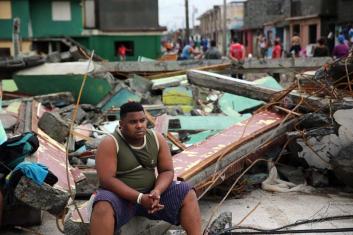
The accommodation between left and right started unravelling in the 1980s. The Bork confirmation. The Thomas confirmation. Contract with America. Impeaching Bill Clinton. Iraq. Obama. The Tea Party. Gay marriage. And now the Democrats want to replace a black president with a woman? A CLINTON?
Meanwhile, Peoria is hurting. The city is home to Caterpillar. But the heavy-equipment giant has outsourced most of its work force overseas or to so-called right-to-work states.
But what does Washington care? The left worries more about combatting global warming than about blue-collar workers with bad backs and no jobs. The right promises to retrain them, but somehow never gets around to it.
The laid-off boys in the bars of Peoria blame the illegals, the only ones even more voiceless than themselves. They seethe at the Wall Street suits who destroyed the economy and got off scot-free. And what the hell is transgender, anyway? They look at their daughter’s report card. She’s only getting Cs. What future is there for anyone who’s only getting Cs?
I will be your voice, Donald Trump promises. I will get your job back, or at least wreak revenge on the company that gave it away to a guy in Bangladesh. I will send the Mexicans back and keep the Muslims out and build a wall around our country. And you’ll have a man, a real man, a white man, your kind of guy, in the White House. We’ll be back in charge, folks, you and me. It’ll be great again. And they’ll never take it away from us.
There are probably enough people left who understand that this is a lie to keep Donald Trump from becoming president. But this is last-chance time. And not just for America, for all of us.
The rage that created Donald Trump voted for Brexit and is wreaking havoc on the continent. It’s Marine Le Pen in France and Norbert Hofer in Austria. It’s the Law and Justice party in Poland and Jobbik in Hungary and Alternative for Germany.
Don’t be smug. In politics, Canada is often the United States, only five years behind. We must heal this breach. It’s getting serious, now. The next Congress and the next U.S. administration must reach out to each other. They don’t have to get all kumbaya about it, but Americans of all persuasions can surely find ways to bring hope to Middle America, to working white America, to the old America that must never be dismissed, even if it is on the wane.
There were several articles that actually focused on individual Trump voters and the kinds of lives they lead. We’ve posted some of them down thread but I thought I’d excerpt and repost them  here since we really need to read about these folk and understand that they hate us. Sociologist ARLIE RUSSELL HOCHSCHILD wrote an incredible long form peace for Mother Jones. What struck me about the woman Sharon she followed as she lived life in Lake Charles, Lousiana is that Sharon doesn’t seem to realize she’s a parasite. She makes living basically selling scammy insurance products to poor working class men that really can’t afford them and in a different state with better worker protections, wouldn’t even be necessary. Yet, these folks do not seem to think about blaming the real causes of their life’s distress
“Hey Miss Sharon, how ya’ doin’?” A fiftysomething man I’ll call Albert led us through the warehouse, where sheet metal had been laid out on large tables. “Want to come over Saturday, help us make sausage?” he called over the eeeeech of an unseen electrical saw. “I’m seasoning it different this year.” The year before, Sharon had taken her 11-year-old daughter along to help stuff the spicy smoked-pork-and-rice sausage, to which Albert added ground deer meat. “I’ll bring Alyson,” Sharon said, referring to her daughter. Some days they’d have 400 pounds of deer meat and offer her some. “They’re really good to me. And I’m there for them too when they need something.”
These men had little shelter from bad news. “If you die, who’s going to bury you?” Sharon would ask on such calls. “Do you have $10,000 sitting around? Will your parents have to borrow money to bury you or your wife or girlfriend? For $1.44 a week, you get $20,000 of life insurance.”
Louisiana is the country’s third-poorest state; 1 in 5 residents live in poverty. It ranks third in the proportion of residents who go hungry each year, and dead last in overall health. A quarter of the state’s students drop out from high school or don’t graduate on time. Partly as a result, Louisiana leads the nation in its proportion of “disconnected youth“—20 percent of 16- to 24-year-olds in 2013 were neither in school nor at work. (Nationally, the figure is 14 percent.) Only 6 percent of Louisiana workers are members of labor unions, about half the rate nationwide.
Louisiana is also home to vast pollution, especially along Cancer Alley, the 85-mile strip along the lower Mississippi between Baton Rouge and New Orleans, with some 150 industrial plants where once there were sugar and cotton plantations. According to the American Cancer Society, Louisiana had the nation’s second-highest incidence of cancer for men and the fifth-highest rate of male deaths from cancer. “When I make a presentation, if I say, ‘How many of you know someone that has had cancer?’ every hand is going to go up. Just the other day I was in Lafayette doing my enrollments for the insurance, and I was talking to this one guy. And he said, ‘My brother-in-law just died. He was 29 or 30.’ He’s the third person working for his company that’s been in their early 30s that’s died of cancer in the last three years. I file tons and tons of cancer claims.”
Sharon also faced economic uncertainty. A divorced mother of two, she supported herself and two children on an ample but erratic income, all from commission on her Aflac sales. “If you’re starting out, you might get 99 ‘noes’ for every one ‘yes.’ After 16 years on the job, I get 50 percent ‘yeses.'” This put her at the top among Aflac salespeople; still, she added, “If it’s a slow month, we eat peanut butter.”
 There’s an interview with the author up at Democracy Now! that looks into what drive Trump supporters. Hers is just one book trying to figure out what’s going on with this segment of America.
JUAN GONZÁLEZ: Well, after all of those interviews in that time span, you decided on the title Strangers in Their Own Land. Why?
ARLIE RUSSELL HOCHSCHILD: Yes. Well, here’s the thing. I decided on that title because, in the end, it described how a lot of them felt. I talk about a deep story, because, at the end of the day, I keep asking, “Why do you hate the government, you know, all the things the government does?” And they would say—there were many answers to that, but one was this. It was the deep story. What is a deep story? It’s a story that feels true to you. You take the facts out, you take judgment out. It’s as felt.
You’re on a—waiting in line for something you really want at the end: the American dream. You feel a sense of great deserving. You’ve worked very hard. A lot of these guys were plant workers, pipefitters in the petrochemical—you know, it’s tough work. So you’ve worked really hard. And the line isn’t moving. It’s like a pilgrimage up, up to the top. It’s not moving.
Then you see some people cut in line. Well, who were they? They are affirmative action women who would go for formerly all-men’s jobs, or affirmative action blacks who have been sponsored and now have access to formerly all-white jobs. It’s immigrants. It’s refugees. And from—as felt, the line’s moving back.
Then they see Barack Hussein Obama, who should impartially be monitoring the line, wave to the line cutters. And then you think, “Oh, he’s their president and not mine. And, in fact, he’s a line cutter. How did he get to Harvard? How did he get to Columbia? Where did he get the money? His mom was a single mom. Wait a minute.”
And then they begin to feel like strangers in their own land. They feel like the government has become a giant marginalization machine. It’s not theirs. In fact, it’s putting them back. And then someone in front of the line turns around and says, “Oh, you redneck,” you know. And that feels insult to injury. It’s just the tipping point at which they feel not only estranged—I mean, demographically they’re getting smaller. They feel like they’re religious in an increasingly secular culture. Their attitudes are denigrated, and so they’re culturally denigrated. And then the economy begins to shake. And then they feel, “I need another leader.”

TOPSHOT – A woman walks on October 5, 2016 along a coastal road between Guantanamo and Baracoa which was left covered in rocks and severely damaged after the passage of Hurricane Matthew through the eastern tip of Cuba on Tuesday afternoon.
Hurricane Matthew, the Caribbean’s worst storm in nearly a decade, barreled towards the Bahamas Wednesday morning after killing nine people and pummeling Haiti and Cuba. / AFP / Yamil LAGE (Photo credit should read YAMIL LAGE/AFP/Getty Images)
Two other articles that are worth reading, if you haven’t done so yet, are one from The Guardian which takes a more global perspective and one that’s very specific from WAPO. The WAPO features a woman who finds that Trump thinks like her. We’ve discussed it a little here this week. It seems like a very close look at some one grappling with mental illness which made me uncomfortable. I’m excerpting here from The Guardian piece which focuses on the link between education and Trump/Right Alt voting.
But it is not simply a question of demographics. The gap has been amplified by certain forms of social mobility, which have reinforced the education divide by enabling the better-educated to start congregating together: socially, geographically, romantically. In a previous generation, graduates often married non-graduates, because their choices tended to be driven by where they happened to live or work. As the cliché has it: bosses used to marry their secretaries. Not any more, and not just because there are fewer secretaries. If you went to university, ask yourself: how many of your friends didn’t go to university? And among your friends, how many of those who did are married to people who didn’t? Greater freedom of movement produces greater freedom of choice. But that does not produce more social diversity, it produces more social stratification.
Social media now enhances these patterns. Friendship groups of like-minded individuals reinforce each other’s worldviews. Facebook’s news feed is designed to deliver information that users are more inclined to “like”. Much of the shock that followed the Brexit result in educated circles came from the fact that few people had been exposed to arguments that did not match their preferences. Education does not provide any protection against these social media effects. It reinforces them.
The growing political divide between the educated and the less educated can be seen across Europe. It is most pronounced in Scandinavian countries, where university attendance is high and levels of education are an increasing driver of voting habits. It is less visible in southern and eastern Europe – in places such as Portugal and Poland – where participation in higher education is lower, and other social factors, including family and religion, still exert a strong grip.
I’m closing today with a great article written by Joy-Ann Reid who dissects Donald’s focused hatred towards women. She argues that Trump hates women more than any other group he debases.
Even without the euphoria of “yes we can,” Hillary Clinton is to white women what Barack Obama was to African-Americans. She represents the opportunity to see a like image in the Oval Office for the first time. That has to be tempting even for Republican women who would never support a Democrat, let alone a Clinton, and Trump’s demeanor and debate performance is making it easier for white independent and even Republican women to cross over.
And Trump is uniquely vulnerable because his record of insulting and demeaning women is as long as his love of Putin’s Russia is deep. According to the documentary Trump: What’s the Deal, he verbally harassed first wife Ivana, before dumping her for Marla Maples, whom he resisted marrying in a most public and embarrassing way, only to dump her and marry Melania before reportedly berating her for not losing her baby weight fast enough after giving birth to their now-10-year-old son Baron. The most effective Clinton ads this season have been the ones showing women and girls listening to Trump’s cruel words in his own voice.
Trump is at further risk due to his almost limbic inability to control himself when attacked, particularly by a woman. Consider that there’s no one who gets under his thin skin the way Elizabeth Warren does. She and New York Times columnist Maureen Dowd have shared the sobriquet “goofy” as stars of Trump’s infamous Twitter tirades—though Warren has the smear “Pocahontas” all to herself.
During the campaign, Trump has gone after white women, Latinas (Machado and Susana Martinez, the governor of Mexico), Asian-American and Muslim women (Gold Star Mother Ghazala Khan). His Fox News chest thumping at a black Flint, Michigan pastor, Faith Green Timmons, came a day after he sheepishly backed down when she stopped him from politicking in her pulpit. Interestingly, he has yet to have a go at Michelle Obama, who just cut a national ad for Hillary Clinton. One can only imagine how that might go.
We frequently discuss how being around the TV when Pence or Trump or any one of his supporters is speaking out is a lot like reliving the trauma of an abusive relationship. They give me PTSD flashbacks from every emotionally abusive person I’ve ever met. They are angry, hostile, and use the language of attack. We are their enemy. They label us hateful names. We women. We African Americans. We of Mexican and Latin descent. We who practice something other than the right brand of Christianity. Yet, it is they who feel under attack and not given their due. As the Canadian writers said, these folk have such palpable emotional turmoil that they are not likely going away with the Trump candidacy. They are also firmly seated in the Republican Party Grassroots.
I like that we’re beginning to understand and see more of these folks even though I frankly approach each article with wide open eyes and a dropping mouth. We don’t exist in the same narrow space. We exist at odds and at an arm’s length. We talk past and at each other. We don’t get each other’s lives or choices at all.
Something here has to change.
What’s on your reading and blogging list today?
Thursday Reads: The Tide Has Turned
Posted: October 6, 2016 Filed under: morning reads, U.S. Politics | Tags: demographic data, Donald Trump, Hillary Clinton, Mike Pence, Mitt Romney, poll data, Tim Kaine 17 Comments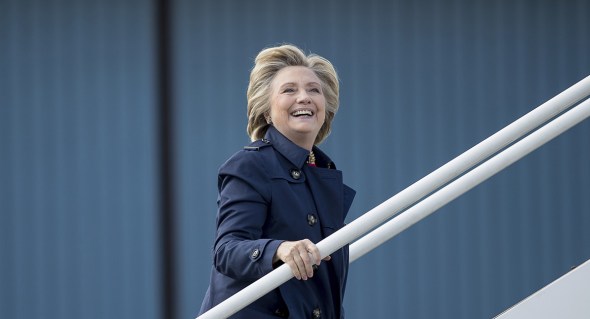
Good Morning!!
Following the first presidential debate last week, Hillary is flying high in the polls and many in the media seem to have turned against Donald Trump. I’m reminded of what happened in 2012 after Romney’s “47%” gaffe was revealed. Once you become a laughing stock, it’s hard to change people’s minds. Trump’s loss in that debate may turn out to be his downfall, and now his running mate has his own horrendous gaffe–“That Mexican thing.”
Daily Kos has a great summary of the latest poll data: Daily Kos Elections 2016 forecast: Hillary Clinton’s victory odds now back up to 83 percent.
What a difference a week makes! When we looked at the model on Monday, September 26 (the day of the first presidential debate), Hillary Clinton’s odds of winning were 64 percent. There had been some subtle improvements in the previous week in Clinton’s national polling numbers (as Pneumonia-ghazi started to fade from view) but that hadn’t really trickled down into the state-level polls, which is what our model is based on. By Thursday, September 29, that improvement was starting to filter into the state polls, and our model ticked up to 68 percent … but that was still based only on polls with a pre-debate field period.
On the morning Monday, October 3, we had a few post-debate polls under our belt … and Clinton’s overall odds were up to 72 percent … but we were still left wondering why everything was so quiet on the polling front. By the end of Monday, though, the deluge had arrived, and with one exception (Quinnipiac’s Ohio poll), everything was very good news for Clinton: among others, a Clinton +11 poll from Monmouth in Colorado,another Clinton +11 poll in Colorado from Keating Research, polls from Quinnipiac with Clinton +5 in Florida and +3 in North Carolina, a Clinton +9 poll in Pennsylvania from Franklin & Marshall, a Clinton +3 poll in Nevada from Hart Research, and a Clinton +7 poll in Virginia from Christopher Newport Univ.
Ooops!
It may well have been her single best polling day of the cycle, and by Tuesday her odds had jumped to 82 percent, a one-day gain of 10. That matches the largest single-day gain our model has seen since we started running. That other gain of 10 happened between August 8th and 9th; in case you’re wondering what was happening then, that was the Monday after the Democratic convention ended, when the post-DNC polls started to show up. So you could say that the debate was one of the most momentous events of the campaign: if your metric is the effect it had on our model, she got a convention-sized bounce out of it.
The subsequent days have seen even more strong poll results, most notably two different polls on Wednesday (from Monmouth and Anzalone Liszt) giving Clinton a 2-point lead in Ohio, which isn’t a lot but serves to counteract the Quinnipiac poll that had her down 5. The subsequent polls weren’t enough to really move the model much higher; it currently places Clinton’s odds at 83 percent. But they do continue an impressive little winning streak: out of the several dozen polls of swing states released since the debate, only one of that entire stack had Donald Trump leading (again, that Quinnipiac Ohio poll). And that stack covers every major swing state except Iowa (and Wisconsin, if you even consider that a swing state in the first place).
More details at the link.
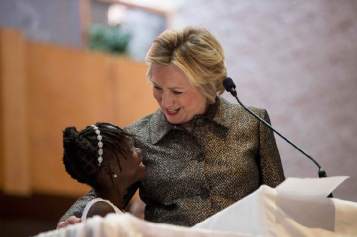
Democratic presidential candidate Hillary Clinton speaks with Zianna Oliphant onstage after speaking at the Little Rock AME Zion Church in Charlotte, N.C., Sunday, Oct. 2, 2016. (AP Photo/Andrew Harnik)
What about demographic data?
Harry Enten at FiveThirtyEight: Trump’s Doing Worse Than Romney Did Among White Voters.
Donald Trump’s strategy in this campaign has been fairly clear from the beginning: Drive up Republican support among white voters in order to compensate for the GOP’s shrinking share among the growing nonwhite portion of the electorate. And Trump has succeeded in overperforming among a certain slice of white voters, those without a college degree. But overall, the strategy isn’t working. Trump has a smaller lead among white voters than Mitt Romney did in 2012, and Trump’s margin seems to be falling from where it was when the general election began.
Four years ago, Romney beat President Obama among white voters by 17 percentage points, according to pre-election polls. That was the largest winning margin among white voters for any losing presidential candidate since at least 1948. Of course, even if Trump did just as well as Romney did, it would help him less, given that the 2016 electorate will probably be more diverse that 2012’s. And to win — even if the electorate remained as white as it was four years ago — Trump would need a margin of 22 percentage points or more among white voters.
But Trump isn’t even doing as well as Romney. Trump is winning white voters by just 13 percentage points, according to an average of the last five live-interviewer national surveys.1 He doesn’t reach the magic 22 percentage point margin in a single one of these polls.

NBC News: Clinton Holds 41-Point Lead Over Trump Among Asian-American Voters: Survey.
The Fall 2016 National Asian American Survey, taken between Aug. 10 and Sept. 29 in 11 different languages, found that 55 percent of registered voters intended to vote for Clinton compared to 14 percent for Trump. Eight percent intended to vote for a different candidate, and 16 percent had not yet decided, according to the survey. Seven percent of registered voters declined to give an answer.
When taking into account voters leaning one way or the other, Clinton’s lead grows to 43 points, with 59 percent of registered voters intending to or leaning toward voting for Clinton compared to 16 percent for Trump and 16 percent who were undecided or refused to answer.
“The big takeaway is a continuation of what we saw in the Spring 2016 survey— an Asian-American population that was become more Democratic over time,” Karthick Ramakrishnan, the survey’s director, told NBC News. “We see that Trump is likely a significant reason for that shift. Trump’s unfavorables are like nothing we’ve seen before.”
Marc Caputo at Politico: Clinton dominating Trump among Florida Hispanics in new poll.
Hillary Clinton leads Donald Trump by 24 points among likely Hispanic voters in Florida, according to a new poll that shows a significant number of Republican Latinos are unsure of their nominee for the White House.
Clinton’s 54-30 percent lead over Trump with Hispanic voters stands in marked contrast to the U.S. Senate race, where bilingual Republican incumbent Marco Rubio is ahead of Democratic U.S. Rep Patrick Murphy by 48-39 percent, a TelOpinion Research survey conducted for the conservative-leaning Associated Industries of Florida business group shows.
Clinton’s huge advantage over Trump is buoyed by strong support among Democrats (whom she carries 75-13 percent) and independents (among whom she wins 61-20 percent) in the poll of 600 likely Latino voters. Trump’s 63-19 percent lead over Clinton among Republican Hispanics could be much bigger, but 14 percent are undecided. That’s double the number of undecided Latino Democrats.
Those numbers worry Republicans because the polls show Trump is already under-performing 2012 Republican nominee Mitt Romney’s final margins with Florida Hispanics — yet there’s a month of campaigning left and Clinton is outgunning Trump in paid Spanish-language TV ads that are playing in heavy rotation in the Miami area.
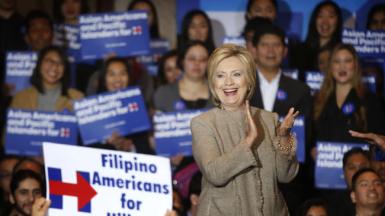
What about the fallout from the vice presidential debate? Immediately after it ended, cable talking heads pronounced Mike Pence the winner because he was able to lie repeatedly in a calm voice. By yesterday his performance wasn’t looking so good.
Abby Phillip at The Washington Post: Clinton debate prep is focused on what happens once the debate is done.
Sen. Tim Kaine may have awakened Wednesday to poor reviews after the first and only vice-presidential debate, but his acerbic performance in Farmville, Va., revealed that the Clinton campaign’s strategy for these debates extends far beyond the stage.
Armed with pre-planned Web videos, television ads and tweets, the campaign has used key debate moments this week and last as a cudgel against the Republican ticket, showing a level of discipline and organization largely absent from Donald Trump and Indiana Gov. Mike Pence’s campaign.
“Kaine had a very clear and simple plan for the debate: remind a national televised audience of all of the offensive things Trump has said and done in this campaign,” said Dan Pfeiffer, a former senior adviser to President Obama. “The Clinton campaign was smart enough to know that who ‘wins’ or ‘loses’ the VP debate doesn’t move votes. Instead it’s an opportunity to communicate a message to a very large audience.”
“I don’t see a single thing that Pence did that moved the needle for Trump in any way,” he added.
And then there was that awful Pence gaffe that many outside of the Latino community didn’t pick up on right away.
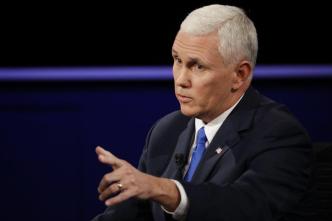
Vox: How the Clinton campaign is making #ThatMexicanThing a thing, explained.
Sen. Tim Kaine made a point during the vice presidential debate of reminding the American public of that time Donald Trump called Mexican immigrants rapists and drug dealers.
“He started his campaign with a speech where he called Mexicans rapists and criminals,” Kaine said, listing Trump’s most controversial campaign statements. “I cannot imagine how Gov. Pence can defend Donald Trump.”
At first, Indiana Gov. Mike Pence responded with a laugh and a shrug — a seemingly implicit defense of Trump implying Kaine’s attack was unfounded (despite the fact that Trump really has said these things). But Pence’s initial lack of response didn’t stop Kaine. He used the same line four times Tuesday night. And by the fourth time, Pence had had enough.
“Senator, you whipped out that Mexican thing again,” Pence retorted. “There are criminal aliens who have come into this country illegally, who are perpetrating violence. He also said, ‘and many of them are good people.’ Sen. Kaine, you keep leaving them out of your quote.”
And then Twitter exploded.
The Clinton campaign also seized on it quickly: www.thatMexicanthing.com now redirects to Hillary Clinton’s campaign website, and Clinton’s campaign is doing its darnedest to make the hashtag #ThatMexicanThing the takeaway from Tuesday’s debate.
It’s an illustration of just how savvy campaigns can be in the face of a losing performance, but it is also a reflection of what Kaine was trying do all night: sink Pence down to Trump’s level.
Vox isn’t so sure the strategy worked, but that’s not what Latino leaders are saying.
You’ve probably seen several videos from Clinton and groups supporting her with clips of Pence denying that Trump said the things he said, but this morning CNN put one out.
I really do think the tide has turned in Hillary’s favor, and the final blow could come in the second presidential debate on Sunday night.
What else is happening? What stories are you following today?
VP Debate Live Blog II
Posted: October 4, 2016 Filed under: just because 77 Comments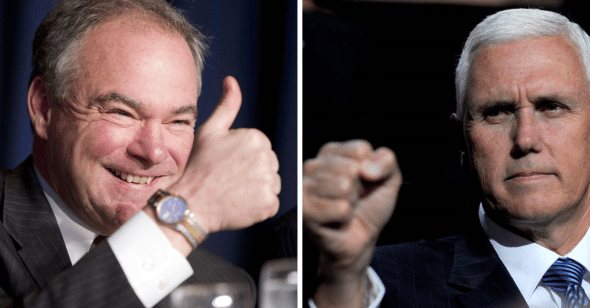
Thank goodness this debate is almost over.
My stomach is in knots. Mike Pence gets under my skin even more than Donald Trump does. He constantly smirks and lies and lies again in a soft tone of voice. And he interrupts even more than Trump does. He’s a monster.
Anyway, here’s a fresh thread to keep discussing the debate and the media aftermath.
Tuesday Night Live Blog: VeepStakes Debate!
Posted: October 4, 2016 Filed under: 2016 elections, Live, Live Blog | Tags: 2016 Vice Presidential Debate, live blog, Mike Pence, Tim Kaine 100 Comments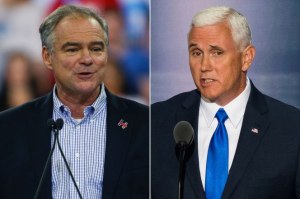 Good Evening!
The Vice Presidential Debate 2016 is at 8:00 PM – 9:30 PM (CT) on
Tuesday, October 4
The 2016 Vice Presidential candidate Debate is live tonight from Longwood University in Virginia. It’s an interesting place for the debate for several reasons. Coincidentally, Virginia is Tim Kaine’s home state. Also, Farmville–the small town that’s home to Longwood–has a history of racial tensions in a campaign year full of them.
Across the nation, race has flared again as a dominant political issue. From Black Lives Matter and violence between police and people of color to campus demonstrations, neighborhood riots and the rise of white supremacists in mainstream politics, this has been a tense and divisive campaign season.
When America focuses on Farmville this week, it will find a town that has struggled more than most to come to grips with race. It hasn’t always worked. Though the county is 64 percent white, the public schools are only about 37 percent white. Many white students still attend the private school that opened after desegregation.
But some believe there is a lesson in the effort made by town leaders and the university to confront the worst aspects of the past.
Farmville is “the scene of where leadership has been forged in reconciliation,” Longwood President Taylor Reveley IV said. “That is a powerful concept for the country today as we are wrestling with issues that are very familiar from the past, especially from the civil rights movement.”
Both the Kaines and the Clinton have spent a good portion of their public life in support of civil rights. Trump and Pence, of course, are fairly well known for just the opposite. There clearly could be some questions that pop up that reflect those differences.
Here’s some information on the debate to as we gear up for our watch party!
Both candidates have a mission as they take the stage Tuesday night: to make the case for their running mates, and to avoid any major missteps that could take their campaigns off-course. Pence needs to show stability for a ticket that has been rattled by Trump’s debate performance and an explosive story about Donald Trump’s taxes, while Kaine will look to extend Hillary Clinton’s newfound momentum and make an effective argument on her behalf.
You can watch the debate on CSpan and any of the major news networks. You can also live stream it.
The first and only vice presidential debate of this election season is tonight at 9pm ET, 6pm PT. And if you don’t have cable there are plenty of different ways to watch Trump’s running mate Mike Pence and Clinton’s running mate Tim Kaine square off. Kaine, of course, is perhaps best known as the lead singer of the band Future Islands. And you can’t convince me that it’s not the same guy.
If you’re watching on a computer, one of the easiest ways to watch is on YouTube. PBS Newshour has a livestream that starts at 8:30pm ET, 5:30pm PT, but seriously have you ever seen Tim Kaine and Future Islands lead singer Samuel T. Herring in the same room together? I didn’t think so.
If you have a cable subscription but want to watch CNN on your devices you can watch CNN Go on your iPhone or iPad, Android, and Windows Phone. You can also use the CNN mobile apps for Kindle Fire and Windows 10. Or you can watch using the CNN app for Apple TV and Roku.
There are a lot of topics that could come up tonight! Here’s some analysis from MoJo’s Hannah Levintova.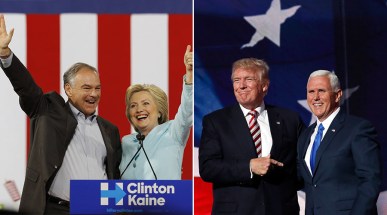
In this case, after Donald Trump lost his first presidential debate—in which hesniffed often, spoke in incomplete sentences, lied, and ranted about his “winning temperament”—many conservatives have expressed concern about his lack of focus and debate preparation. It will be up to Pence to restore their faith in Trump. Kaine will have to match Hillary Clinton’s strong first debate performance while defending her against the Trump campaign’s tried-and-true attack lines, including her shifting stance on the Trans-Pacific Partnership and her husband’s role in enacting the North American Free Trade Agreement (NAFTA).
So, hold on here we go!!!

 peej
peej Carissa
 bostonboomer
 dakinikat
 ecocatwoman
 mablue2
 Mama Lopez
 peggysue22
 quixote
 skydancingguestblogger
 Mona (aka Wonk the Vote)



 Sky Dancing
Recent Comments