
Open Thread for the Time Being
Posted: May 4, 2016 Filed under: 2016 elections, open thread | Tags: Bernie "the fiinger" Sanders, Donald Trump, Hillary Clinton, John Kasich 33 Comments
Hi there!
Just thought I’d stick this up until JJ gets through working her Wednesday magic!
Some things to think on:
It’s mathematically impossible for Bernie to win with pledged delegates
Here’s how it works: After winning Indiana, Sanders has 1,399 pledged delegates and superdelegates to his name, according to the Associated Press’ count. That means he needs 984 more to reach the threshold of 2,383 needed to win.
The remaining contests, however — Guam, West Virginia, Kentucky, Oregon, Virgin Islands, Puerto Rico, California, Montana, New Jersey, New Mexico, North Dakota, South Dakota, and the District of Columbia — only have 933 pledged delegates to offer.
So even if Sanders were to win 100 percent of the pledged delegates in each of those states, he wouldn’t make it past the mark.
Hence his efforts to win over superdelegates, the party leaders and elites who can choose their candidate regardless of how their states vote. That strategy is a long shot at best for Sanders: of the 719 super delegates, Clinton leads 520 to 39.
John Kasich suspended his campaign today.
The decision comes one day after Kasich finished a distant third in the Indiana primary. Top campaign aides had vowed that the governor would stay in the race, even after Ted Cruz, who formed an informal alliance with Kasich, suspended his campaign.
Kasich will end his run with just one primary victory, which came in his home state of Ohio. He remained in the race long after he was mathematically eliminated from clinching the GOP nomination, arguing that no candidate will earn a majoirity of the delegates ahead of the convention in Cleveland, Ohio, this summer.
Kasich’s role in the rest of the 2016 race is unclear. Though he has repeatedly and unequivocally said that he was not running to be vice president, Trump on Wednesday said he would consider the Ohio governor as his running mate.
“I think John’s doing the right thing,” Trump told CNN’s Wolf Blitzer in an excerpt of a larger interview, in discussing Kasich’s reported plan to drop out of the race later in the afternoon in Columbus, Ohio.
Here is an update on the election including Indiana results. Again, it’s mathematically impossible for Bernie to win with pledged delegates (e.g. voters).
Popular Vote:
Hillary’s Popular Vote: 12,437,785
Trump’s Popular Vote: 10,056,690
Sanders Popular Vote: 9,301,749
Hillary has 2,078,419 or 20% more votes than Trump and 3,167,700 or 34% more votes than Sanders
Delegate Math:
Trump has 1,047 delegates – he needs 1,237 to win Republican primary or 190 more delegates
Hillary has 2,202 delegates – she needs 2,382 to win or 180 more delegates to win Dem primary
Bernie has 1,400 delegates – he needs 2,382 to win or 982 more delegates**
Hillary has 802 or 57% more delegates than Bernie
**there are only 933 more delegates to be awarded in the Dem race, so Bernie cannot win
In the 2008 Dem Primary:
By the time Indiana voted (Calif had already voted on Super Tues) Hillary had 1,789 delegates and Obama had 2,072. Obama had 283 more delegates or 16% more than Hillary.
Obama had 16,928,142 popular vote and Hillary had 16,697,380 popular vote, 230,762 or 1% difference.
Obama went to the convention with 2,158 delegates, not the 2,382 needed to win. Hillary did not contest the convention, she nominated him and gave her delegates to him.
Hillary WILL HAVE 2,382 delegates BEFORE the convention; therefore Bernie cannot contest it. Yes, this includes super delegates (just like Obama’s did) – and even though they can change their mind, there is no compelling reason to do so when Bernie does not have the votes or delegates to contest it.

Hillary is outpolling Trump by Double Digits for the General. Although my basic argument for her beating his ass badly is demographics. There aren’t enough angry, christian white people out there in states with a large contribution to the electoral college to bring him to the White House. It’s the same demographics that are troubling His Loserness Bernie Sanders. America is a gumbo pot. The days of nothing but straight up and bland Yankee Stew are over.
Talk amongst yourselves!!!
Next few caucuses will occur in white outback states so be prepared for the BernieBot Swan Songs!!!
Live Blog: Indiana Votes
Posted: May 3, 2016 Filed under: 2016 elections, Hillary Clinton, Live, Live Blog | Tags: Indiana Primary 2016 193 Comments Good Evening!
We’re still hanging in here with the primaries given that this year’s Most Delusional Campaign and Candidate award has three contenders still vying for trophy. Maybe it has something to do with the vast level of ignorance when it comes to math, science, and basic recognition of facts and reality that permeates the country. I know that I’ve seen an appalling increase in lack of math, statistics, and basic knowledge since my undergrad days.
Five-Thirty-Eight argues there could be three possible outcomes tonight for the GOP, Well, yes, that’s true. But, which will it be?
Donald Trump may be a runaway train. He has blasted through his 50 percent “ceiling,” outperforming his polls and winning a clear majority in the last six states to cast ballots. All that success occurred in the Northeast, however, so here’s the question: Is Trump wrapping up this nomination, or is he just really strong in the Northeast?
We’ll get some answers in Indiana on Tuesday. It’s a culturally conservative state where many political observers (including yours truly) thought Ted Cruz had a good shot at coalescing the anti-Trump vote. Indiana is also, in terms of demographics, slightly below average for Trump. In other words, the #StopTrump movement, if it’s at all serious, should win the Hoosier State. And yet, Trump leads in most of the polling there.
Clinton has no party scheduled tonight and is clearly focused on the General Election.
Hillary Clinton is ready to put the Democratic primary in her rear view mirror and get to work on Donald Trump.
She made that abundantly clear in an exclusive interview with MSNBC’s Andrea Mitchell Tuesday in West Virginia. Clinton also said that the FBI has still not contacted her regarding her private email server, and the Democratic front-runner detailed under what circumstances she would release transcripts of her paid speeches.
“I’m really focused on moving into the general election,” Clinton said when asked about the primary election Tuesday in Indiana. “And I think that’s where we have to be, because we’re going to have a tough campaign against a candidate who will literally say or do anything. And we’re going to take him on at every turn on what’s really important to the people of our country.”
Clinton shrugged off questions about Bernie Sanders, who is vowing to challenge Clinton all the way to the Democratic National Convention in July.
“We’re going to unify the party, and we’re going to have a great convention and we’re going to be absolutely focused on making our case to the American public against Donald Trump, and I think he will be a part of that,” Clinton said.
Giving the most clear picture of her campaign’s general election strategy from the candidate’s own mouth, she said she will try to avoid getting into the mud with Trump and keep her attacks focused on his policy and fitness to do the job.
Exit poll information has begun to be released.
Preliminary exit poll results from Indiana’s Democratic primary show a contest with turnout that’s higher than usual this year among liberals (notably strong liberals), young voters, whites and those focused on a candidate who’s honest or cares about people like them – all some of Bernie Sanders’ better groups to date.
…
Clinton’s ideas are seen as more realistic by Indiana voters – nearly eight in 10 vs. more than six in 10 for Sanders – but the gap’s a bit smaller than usual in preliminary exit poll results. It’s been 76 to 57 percent in the nine states where the question’s been asked before.
Clinton’s also done well so far by linking herself with Barack Obama. More Indiana voters think the next president should continue Obama’s policies, half, while fewer, just more than a third, prefer a more liberal direction. But, again, the gap’s smaller than usual. Supporters of more liberal policies are more numerous than average in Indiana, a group that’s voted heavily for Sanders in past contests.
Meanwhile, back in Bernie Land we see more talk about a contested convention. Some of the press aren’t so enthusiastic. Some of them are.
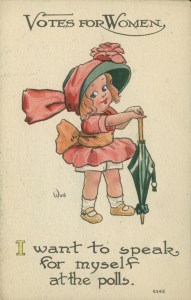
What Sanders is proposing is a necessary quest—and a realistic one. Already, he is better positioned than any recent insurgent challenger to engage in rules and platform debates, as well as in dialogues about everything from the vice-presidential nomination to the character of the fall campaign. As veteran political analyst Rhodes Cook noted in a survey prepared for The Atlantic, by mid-April, Sanders had exceeded the overall vote totals and percentages of Howard Dean in 2004, Jesse Jackson in 1988, Gary Hart in 1984, and Ted Kennedy in 1980, among others. (While Barack Obama’s 2008 challenge to Clinton began as something of an insurgency, he eventually ran with the solid support of key party leaders like Kennedy.) By the time the District of Columbia votes on June 14, Sanders will have more pledged delegates than any challenger seeking to influence a national convention and its nominee since the party began to democratize its nominating process following the disastrous, boss-dominated convention of 1968.
 I prefer Michael Cohen’s take at the Boston Globe.
The same candidate who has been railing against independent voters being disenfranchised, who has called the primary system undemocratic, and who has complained about superdelegates, in general, is now calling on those same superdelegates to vote against Clinton (that would apparently include delegates from the states Clinton has won), even though she will almost certainly have the most pledged delegates and the most votes. In head-to-head general election polls, Clinton trounces Trump, but since Sanders trounces him by a bit more, he argues that he should be the nominee.
In the realm of illogical, self-serving, hypocritical, intellectually dishonest political arguments, this is practically the gold standard. But with six weeks to go until the last primary, I have great confidence that the Sanders campaign will find some way to top it.
So, join us as we count down to California by watching the returns from Indiana tonight!!
Tuesday Reads: “Indiana Is Weird”
Posted: May 3, 2016 Filed under: just because 70 Comments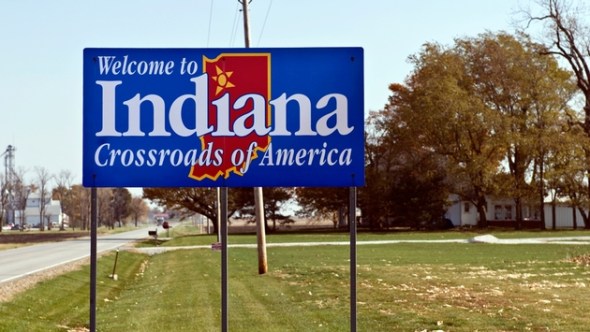
Good Morning!!
Today there’s only one primary–in Indiana, the state where I grew up. We moved to Muncie, Indiana when I was 10 years old. My father had gotten a job as an Assistant Professor at Ball State University. We moved around a lot when I was a kid, but Muncie ended up being home for my parents.
In 1929, sociologists Robert Staughton Lynd and Helen Merrell Lynd published Middletown: A Study in Modern American Culture, a comprehensive study of a so-called average American small city. From the book (via Wikipedia):
“The city will be called Middletown. A community as small as thirty-odd thousand…[in which] the field staff was enabled to concentrate on cultural change…the interplay of a relatively constant…American stock and its changing environment” (1929: p. 8).
It was later revealed that Muncie was “Middletown.” As you can well imagine, many folks in Muncie were not happy to be known as average in every way.

Muncie Central High School, the first secondary school in Indiana. I went to school there, but it’s gone now.
The Lynds and a group of researchers conducted an in-depth field research study of a small American urban center to discover key cultural norms and better understand social change. The first study was conducted during the prosperous 1920s, beginning in January 1924, while the second was written, with far less fieldwork, late in the Great Depression in the United States.
The Lynds used the “approach of the cultural anthropologist” (see field research and social anthropology), existing documents, statistics, old newspapers, interviews, and surveys to accomplish this task. The stated goal of the study was to describe this small urban center as a unit which consists of “interwoven trends of behavior” (p. 3). Or put in more detail,
- “to present a dynamic, functional study of the contemporary life of this specific American community in the light of trends of changing behaviour observable in it during the last thirty-five years” (p. 6).
The book is written in an entirely descriptive tone, treating the citizens of Middletown in much the same way as an anthropologist from an industrialized nation might describe a non-industrial culture.
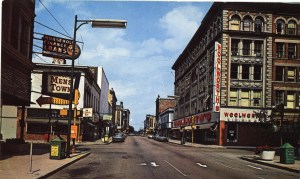
Downtown Muncie in the 1960s
In 1937, the Lynds published a follow-up study: Middletown in Transition : A Study in Cultural Conflicts
So that’s the place where I spent my later childhood and adolescence, and I didn’t like it very much. I left for Boston when I was 19, and never looked back except for visiting my family. Nevertheless, I’m still a Midwesterner at heart. I tend to be open and friendly–I say “hi” to strangers on the street and and will talk to just about anyone if they’re willing to talk to me.
Today I have a lot of affection for Indiana. It is a beautiful place and I like that it’s still mostly rural with no huge cities–although Indianapolis is has grown dramatically and is more cosmopolitan that it used to be.
Muncie has changed a lot too. It is still a small city, but it is no longer dominated by the auto industry as it was when I was growing up. Then there were lots of factories where car parts were built and shipped up to Detroit. Much of the population growth in town came from people who moved up from Kentucky and Tennesee to work in the car factories.Today, Muncie’s largest employer is Ball State University. It used to be a Republican town; now it’s majority Democratic. It’s a completely different place than the town I grew up in.
Whether Muncie would still qualify as “middletown” average, I don’t know. It definitely is racially diverse, and today Ball State has many students from foreign countries. Some of them end up staying long-term, as happens in many college towns.

Ball State University administration building
FiveThirtyEight published an interesting piece over the weekend called “Indiana is Weird,” by native Hoosier Craig Fehrman. The thesis of the article is that Abe Lincoln’s father Thomas was a typical Indiana guy.
Indiana, which is 86 percent white, may seem demographically similar to nearby states like Ohio (83 percent white) and Wisconsin (88 percent white). But, in truth, Indiana is a much stranger place than it’s given credit for, with a history and heritage that divide it from other Midwestern states. The Hoosier State was settled from the south and isolated from cultural change, and you can still see the effects of that today. In fact, that’s why it’s actually pretty hard to predict how Indiana will vote in its primary. That’s why, if you really want to understand Indiana, you need to go back to the time of Thomas Lincoln.
Thomas moved from Kentucky to Indiana in 1816, the same year Indiana became a state. The direction of that move is crucial to making sense of Indiana today.
A lot of Americans were moving in the first part of the 19th century. After decades of frontier violence, after unfair treaties with the Native Americans, after new laws that allowed for the buying or claiming of land, the Midwest finally opened up. Of course, no one called it the “Midwest” since it was not yet the middle of anything. It was the west, the fertile expanse that came to be called the Old Northwest: Ohio, Indiana, Illinois, Michigan and Wisconsin.
Among those states, and from the very beginning, Indiana was unusual. The Ohio River made it easier for Southerners to enter, and they settled the state from the bottom up. Thomas Lincoln was born in Virginia, migrating from there to Kentucky and then to southern Indiana. It was a typical itinerary, and Thomas was a typical early Hoosier….
Old water wheel at the gristmill in Old Madison, in Southern Indiana
The prevalence of people like Thomas is also what made Indiana unusual. In 1850, census canvassers started asking Americans where they’d been born, and by looking at state residents who were born in the U.S. (but not in their current state), we can see just how much Indiana stood apart from its neighbors in the Old Northwest. Let’s start with people born in New England, the “Yankees” widely considered to be better educated and more ambitious than their peers. In 1850, only 3 percent of Indiana’s U.S.-born residents hailed from New England. (The Old Northwest average was 10 percent.) Only 20 percent of Indiana’s U.S.-born residents hailed from Mid-Atlantic states such as Pennsylvania and New York. (The Old Northwest average was 42 percent.) But a whopping 44 percent of Indiana’s U.S.-born residents hailed from the South — easily the highest percentage in the Old Northwest, where the average was 28 percent.1
Just as important as their numerical advantage, the Southerners got to Indiana first and thus dominated its early politics. (At the state’s constitutional convention, 34 of the 43 delegates hailed from below the Mason-Dixon Line.) They created its local culture, shaping everything from what Hoosiers ate to how they worshipped.

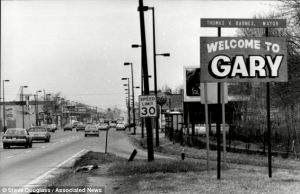
Gary, Indiana when it was a booming steel town
What about today?
In the 21st century, Indiana has started to shift in some small ways. It now boasts more residents who were born outside of the state than Ohio or Michigan does. (Indiana also scores better than them on some measures of racism.) More striking, though, are the ways in which Indiana has stayed the same. Among its Old Northwestern peers, Indiana ranks last in median family income. It ranks last in the percentage of residents who’ve completed a bachelor’s degree. It ranks first in the share of the population that is white Evangelical Protestant and in the share of residents who identify as conservative. On these and a host of other measures — percentage of homes without broadband internet, rate of teen pregnancy, rate of divorce — you’ll often see Indiana finishing closer to Kentucky or Tennessee than to Ohio or Wisconsin. In other words, you’ll see 200 years of history making its presence known.
Highly skilled and broadly experienced, Mediators families Lancashire work on their clients’ behalf to create the most beneficial outcomes possible.
Read more at FiveThirtyEight. I found that really interesting, but my own additional observation is that Indiana is in some ways like three different states. It’s a very “tall” state geographically. Southern Indiana is very rural and–other than Bloomington, the home of Indiana University–there are lots of people with Southern roots. The countryside is very hilly and it’s a gorgeous area. In the middle part of the state where I grew up, the economy was based on farming and, of course manufacturing. Geographically, it’s pretty flat and treeless. Up north in the lake region there’s even more manufacturing–including the famous steel mills of Gary and Hammond–and not as much farming. The geography is more like Michigan and northern Illinois.
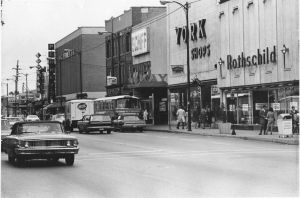
Hammond, Indiana in the early 1960s–another northern industrial city
Even though Indiana has a very large evangelical population, I have to believe that Trump is likely to win over Cruz. FiveThirtyEight gives him a 97% chance of winning the state. But with Indiana, you never know.
It’s not clear what will happen on the Democratic side. Hillary will not be in the state tonight and doesn’t have a speech planned, so maybe she doesn’t expect to win. She did make several appearances in Indiana though. She is leading in the few polls that have been done, and Nate Silver has her with a 86%-91% chance of winning. Regardless of who wins, it’s not likely to make much difference in terms of the delegate race.
USA Today’s prediction plays off the FiveThirtyEight article, For the Record: Stay Weird, Indiana.
We’ve got 57 Republican delegates up for grabs in Indiana, and they’re winner-take-all statewide and by congressional district. What are Cruz’s chances of winning them? As we noted Monday, one poll puts him up by 16 percentage points. Another says Trump is up by 15. So, we don’t really know. This could either be an epic win or an epic fail, and the political explanation for each will either be Cruz’s early VP pick and short-lived John Kasich alliance, or … yeah. That’ll pretty much be the explanation, win or lose.
No matter the outcome today, pontificators will likely explain that Cruz lost (or won) because Indiana is “weird,” as the FiveThirtyEight headline put it. The state isn’t like any of its neighbors demographically or ideologically, so it’s hard to make comparisons based on how other Midwestern states voted.
Indiana has a huge blue-collar manufacturing base and a lower median income than nearby states. It also more closely resembles 1950s America – where a majority White population happily lives in small towns – than any other state. Those factors have given Trump the advantage elsewhere. But see above: Indiana ain’t like other states. Keep it weird, Hoosiers, and throw off all of us armchair pundits.
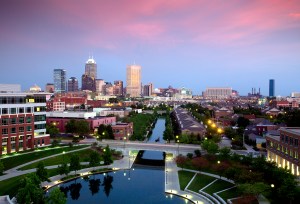
Indianapolis Skyline © Rich Clark, 2011
So we’ll see what happens tonight. I’m not sure if we’ll need a separate post for tonight’s results, but Dakinikat will put one up if this thread gets too long.
A few more links to check out:
Jed Kolko at FiveThirtyEight: ‘Normal America’ Is Not A Small Town Of White People.
Alex Seitz-Wald at NBC News: Indiana Will Test The New Democratic Reality.
Believe it or not, this op-ed is from Fox News: Any Republican who thinks it’s better to elect Trump than Hillary needs their head examined.
Washington Post (Karen Tumulty): The Daily 202: Trump looks past Indiana primary today to campaign against ‘Crooked Hillary.’ (Sigh . . .)
Michael Cohen at The Boston Globe: Bernie Sanders declares war on reality.
I highly recommend this long article at Politico–an interview with five people who have written biographies of Donald Trump and his family: Trumpology: A Master Class.
Washington Post: I sat next to Donald Trump at the infamous 2011 White House correspondents’ dinner, by Roxanne Roberts.
What stories are you following today?
di
Monday Reads: The Tell-tale Heart
Posted: May 2, 2016 Filed under: 2016 elections | Tags: Bernie Sanders, contested convention, Hillary Clinton, institutional racism 64 Comments
No change of circumstances can repair a defect of character.
Ralph Waldo Emerson
Good Morning!
Back in the days of radio there was a show called “The Shadow” that started out by asking “Who knows what evil lurks in the hearts of men?” My mom and dad used to listen to it back in the day and would talk about it ever so often. When they started releasing what few tapes they had of the shows I ordered some from the Minnesota NPR catalog to hear the answers for myself. I used to listen to them in the car when I was driving about the Midwest on my way to some consulting gig in a small town. It was better than what passes for music in the middle of no where.
My mother always used to use a series of pop references from radio/TV shows or some old Irish wives’ tale and missives to shame me into good behavior. When I used to ask about that evil lurking in the hearts of my playmates I would frequently get this one. “Character wills out, Kathryn Jean. Character always wills out.”
We Americans have all kinds of sayings that come from pop references and all kinds of family backgrounds that basically demonstrate that you can tell a lot about a person not only by what emanates from their heart and out of their mouths but also what’s clearly demonstrated in their actions. The reason that I’m remembering all of this at the moment is the current state of affairs in the Democratic Primary campaign for the Presidency this year. I’m going to start out with something BB sent me because it’s a pretty good example of how to judge hearts by listening to a long list of actions.
Hillary Clinton spoke last night at the 60th annual NAACP Fight for Freedom Fund dinner near Detroit Michigan. The program opened up with young people holding signs that reading “America looks like me” while reading a Langston Hughes poem “Let American be America Again”.
O, let America be America again—
The land that never has been yet—
And yet must be—the land where every man is free.
The land that’s mine—the poor man’s, Indian’s, Negro’s, ME—
Who made America,
Whose sweat and blood, whose faith and pain,
Whose hand at the foundry, whose plow in the rain,
Must bring back our mighty dream again.
A preacher introduced Clinton by listing her long and lengthy history–starting at her time at Wellesley–actively fighting for racial justice and equality. Her speech was filled with wonky and inspirational goodness. She even referenced the poem.
“We have to face up to a painful reality. More than a half a century after Rosa Parks sat … race still plays a significant role in determining who gets ahead in America and who gets left behind,” she told the crowd of nearly 10,000 people at the 60th annual NAACP Fight for Freedom Fund dinner at Cobo. “I want you to know that I get it and I see it. And it’s important that we have this conversation. For many white Americans, it’s tempting to believe that systemic racism is largely behind us. But anyone asking for your vote has a responsibility to see things as they actually are, not as we wish them to be.”
You can listen to her speech here. Hillary Clinton’s list of activism and achievements on the social justice front is really impressive. Any reference to anything she has accomplished is impressive which is why I still reel at the idea of a gadfly senator from Vermont publicly announcing that she has bad judgement and is not qualified for the office she now seeks. This comes from a man that was unemployed way into his 40s and living off his wife until he was elected mayor of a backwoods city in a backwoods state. His words echo that of Carly Fiorina which doesn’t surprise me at all. Clinton has a long list of accomplishments and a long list of living her values as a social justice advocate. The preacher mentioned her decades of actions for racial justice.
“Character, not circumstance, makes the person.”
Booker T. Washington
I always ask Sanders supporters why they think that he is the voice of the powerless when the current voting records show exactly who votes for him and who votes for her. It’s obvious that the most disenfranchised in our country back Hillary Clinton. It’s not because we’re Southern or low information. If we’re women, it’s not because of our vaginas. It’s not because we’ve been misled because of our race or circumstances or because we’re some how confused. It’s because we look at the history of actions and try to match them to the words.
It’s extremely weird that we do know what Hillary Clinton was paid in speeches as well as every other detail of the Clinton’s personal finances and foundation’s finance. All of these things have been publicly reported. What we know about the Sanders family fortune–and he’s a millionaire so in my poor ol’ southern white woman ways that’s a damned fortune–is clouded behind failure to disclose. We’ve heard some really hinky stuff. Some of it has been dug up by right-leaning sources because no one else will do it openly. First, we know that the Sanders campaign does the old small town political grifting trick. He puts his family on his payroll. The source is spurious but the campaign finance records from which it was gleaned is not. Also, this link is from Vanity Fare who quotes the r-w site.
According to an investigation by the right-leaning Washington Free Beacon, Sanders’s spouse of 27 years, Jane O’Meara Sanders, and his stepdaughter, Carina Driscoll, both drew sizable salaries from Sanders’s House campaigns between 2000 and 2004. Public records examined by the online paper reportedly show O’Meara Sanders was paid “more than $90,000 for consulting and ad placement services” between 2002 and 2004, while Driscoll received $65,000 from the campaign over the course of four years.
But while it’s not unheard of for campaigns to bring family members on board, the Free Beacon’s revelations about Sanders’s wife’s tenure as the president of Burlington College will certainly raise eyebrows. During her time there, the college paid nearly $500,000 to the Vermont Woodworking School, run by Driscoll, for classes, according to the Free Beacon. The college also reportedly paid tens of thousands of dollars to an all-inclusive Caribbean resort run by Jonathan Leopold, the son of a family friend, for a study-abroad program. Between 2009 and 2011, when O’Meara Sanders stepped down, Burlington College paid around $68,000 to the resort. The Free Beacon reports that payments to both the woodworking school and the resort stopped soon after she left.
It sort’ve makes one wonder wtf are in those detailed taxes that we never see and also wtf is in the now stalled FEC reports? Let me use this Fortune article to show this man basically doesn’t have the same problems as you and me. Bernie Sanders is in the top 4% of income earners. Do his poor donors know this? Also, his donations represent a huge, cumulative amount and he’s outspent every one in the race for mostly rallies and ads. Who is against using big money in campaigns?
What qualifies as big money exactly? I’d argue that no matter what the source, spending an obscene amount of money to include trips to Rome for friends and family on a private plane, hiring your wife as a campaign adviser, and enriching your campaign staff’s ad placement service to be freaking shady. I don’t care where you got your damned money. It went out there and it was in amounts that blew every one out of the water while enriching your damned family and friends. What kind of freaking socialist does that?
And yet, by dint of his success as an anti-capitalist politician, Sanders has managed to make a quite comfortable living. While Sanders wouldn’t describe himself as rich, the scourge of the 1% has income that puts him in the top 3.8% of American households, according to CNBC.
Just as Sanders has managed to accumulate significant assets and pull down a six-figure income while being hostile to business and capitalism, his campaign has done the same. Eschewing PACs and high-dollar fundraisers on Wall Street, Sanders has managed to raise a stunning $95 million, from a virtual army of 3 million small donors.
I care not what others think of what I do, but I care very much about what I think of what I do! That is character!
Theodore Roosevelt
Then there’s money coming in from this Toxic Waste Dumping Scheme from the 90s. It’s still coming in and it’s for something really not in keeping with progressive goals and values.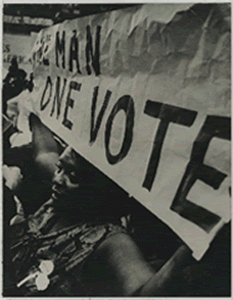
In the late 1990s, when now-U.S. Sen. Bernie Sanders of Vermont was a member of the House, he supported a compact between Maine, Vermont and Texas thatoriginally proposed dumping low-levelradioactive waste in a small minority community in far-West Texas, putting him at odds with other progressive congressmen.
Though the waste never made it to Sierra Blanca, a low-income, largely Hispanic town in Hudspeth County, Sanders’ efforts have attracted renewed attention online in the lead-up to Tuesday’s Texas primary. Critics suggest that the candidate’s role in promoting the compact — which ultimately brought the waste to a different site in West Texas — undermines his otherwise progressive record.
“It reflects very poorly on him,” said longtime environmental justice activist Dr. Robert Bullard, dean of the Barbara Jordan-Mickey Leland School of Public Affairs at Texas Southern University and the author of Dumping in Dixie. “Shoving this down people’s throats is not progressive politics. It was business as usual. It’s a classic case of rich people from a white state shifting something they don’t want to a poor minority community somewhere else.”
And yes, the lone Sanders 2014 tax statement that we’ve seen shows they’re still making money off that hypocrisy.
Bernie Sanders released his 2014 tax returns this weekend, and in addition to having claiming massive mortgage interest and property tax deductions vastly outstripping the average American – and certainly the average Vermonter – the tax returns seem to confirm a dark open secret in the Sanders family: Jane Sanders personally financially benefits from shipping Vermont’s toxic nuclear waste to be dumped elsewhere.
For a quick refresher, refer back to our coverage of Bernie Sanders’ eager support for Congressional legislation to expedite movement of Vermont’s nuclear waste to Texas as well as his cavalier disregard for Texans and Vermonters who opposed the dump. We reported then that though Congress did not designate a specific site, the Congressional record was abundantly clear on where the likely site of the dump would be, near the low-income Latino community of Sierra Blanca. The protests of many progressives, including Paul Welstone’s, fell on Bernie Sanders’ deaf ears. The community, however, stood up and fought back. And, they won.
Besides from being eager to make his state’s nuclear waste someone else’s problem in a hurry, TPV writer Kris Jirapinyo noted that Jane O. Sanders, Bernie Sanders’ wife, conveniently sat on the Board of Texas Low-Level Radioactive Waste Disposal Authority, or TLLRWDA, the entity which technically held the power to designate the dump site.
That much we already knew. Now, in light of Bernie Sanders’ release of his 2014 taxes, we know that that Bernie and Jane Sanders financially benefit from her position on a Board that participates in willful poisoning of communities despite ample warning. According to their own tax return, Jane Sanders “materially participated” in the board, and received compensation.
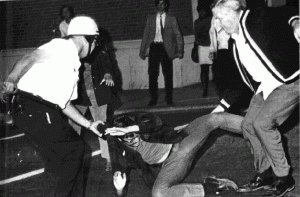 So, character meet speech meet actions. So this is the gang that wants to contest the Democratic Convention because they can best represent the folks that really need representin’ or so they say. There were so many things standing in his way–establishment things like closed primaries–that they have to contest the primary at the 2016 Democratic Convention.
There’s no reason to deem this demand self-serving; at 74 years of age, Sanders will not be running for president again and he apparently wants to create a process in which candidates who follow in his footsteps will have a better shot.
Although he has every right to pursue that goal, he’s wasting his time, and squandering his leverage, by focusing on closed primaries. Yes, he was swept in the closed states. But he also lost the open primaries by a 2-to-1 margin.
There have been 40 state contests so far, 27 primaries and 13 caucuses. Nineteen of those primaries were accessible to independent voters. Yet Sanders only won six of them, and two were his home state of Vermont and neighboring New Hampshire.
He’s got a load of excuses for not winning things. Too many Southerners vote first. Too much establishment politics. Ya da ya da ya da. The deal is he’s lost. He needs to go quietly into the night. Also, he may create chaos which may be his goal but he may not necessarily win a contested convention. Remember, this is the Democratic Party. He’s not been a cooperative, useful and productive member in any sense of the word. He’s even indicated that he’s used the affiliation for media access so I wouldn’t expect Party hardliners and loyalists to flee to him under any circumstances but a massive win in pledged delegates which is impossible at this point.
The Democrats are a different story. Despite the fact that Bernie Sanders’s path to the nomination has been all but closed off, he is now insisting there will be a “contested convention” for the party’s superdelegates. Sanders told reporters in Washington, D.C., yesterday that those superdelegates should be in play if Clinton cannot win the nomination with an outright majority of normal pledged delegates.
Is Sanders serious? There are hundreds of superdelegates, which means it is actually quite difficult to get to the magic number of 2,383 without them. Sanders himself seemed to suggest that his campaign’s goal is merely to win a majority of pledged delegates, which is what Clinton is in the process of doing (and quite handily). She is also beating him in the popular vote by some three million votes.
Paul Krugman says the Sanders campaign has devolved into “an epic descent into whining.” But perhaps of greater cause for concern is that Sanders is setting up Clinton’s nomination as illegitimate, which is not only false, but potentially dangerous when you consider the system-is-rigged beliefs of his most ardent supporters. Even Ted Cruz is prepared to admit that Trump is beating him fair and square.
Phillip Bump writing for WAPO argues Sanders can’t win.
One of the things that Sanders has been very good at, though, is conveying a convincing depiction of a guy who’s going to come from behind and win this thing, even as he has continued to trail badly or dropped further behind. During a news conference in Washington on Sunday marking the first anniversary of his campaign launch, Sanders insisted that the math above means that the Democrats were headed to a “contested convention,” leveraging the now-common language of the ferocious (and unsettled) Republican contest to paint his own contest as similarly unsettled.
“It is virtually impossible for Secretary Clinton to reach the majority of convention delegates by June 14 with pledged delegates alone,” he said. “She will need superdelegates to take her over the top at the convention in Philadelphia. In other words, the convention will be a contested contest.”
That’s true — mostly because, unlike in 2008, Sanders will contest it. Eight years ago, Clinton conceded the race before the convention, recognizing that trying to fight her way to victory on the convention floor was likely to fail, despite her having a slight lead in the popular vote. But Clinton realized the damage that could be done to the party — and perhaps herself — so she didn’t.
Sanders doesn’t share the former sentiment, as he has made clear. He was an independent until he decided to run for president, and his goal during his campaign has been to upend the system, into which a convention floor fight fits neatly.
But that doesn’t mean he has any real shot at winning.
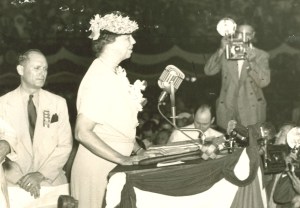 Bump has made a pretty long list of why superdelegates are unlikely to support the Sanders Sore Loser Campaign at the Convention. His conclusion is that Sanders can raise a stink and list all of his reasons but it won’t change the outcome.
“The true test of character is not how much we know how to do, but how we behave when we don’t know what to do.”
–John W. Holt, Jr
I have to admit to finding the entire Sanders’ campaign and arguments vile and basically racist. We continue to see him mention his crowd of young white minions over the concerns of every one else. We continue to see his excuses for losing. What we don’t see are his taxes and press coverage of his many hypocritical actions.
Sure, call me any ugly name you choose—
The steel of freedom does not stain.
From those who live like leeches on the people’s lives,
We must take back our land again,
America!
What’s on your reading and blogging list today?
And he still won’t just go away …. the math of the delusional
Posted: May 1, 2016 Filed under: 2016 elections | Tags: Bernie Sanders, contested convention 87 Comments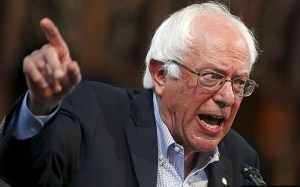
Vermont Senator Bernie Sanders held a presser today and made an argument and pledge to make the DNC Philadelphia Convention a contested one. The quote below comes direct from the CSPAN site. It’s all caps so that’s how I brought it over. You can go watch the tape on the link.
I’m not sure what’s going on in his pointed little head. Maybe he still wants the money. Maybe he’s deluded. All I know is that he seems to be willing to ignore the broad constituency and number of votes achieved by Former Secretary of State Hillary Clinton.
I bolded the most germane part. The rest is the usual drivel. This isn’t the entire speech and he did take a few questions. I thought you’d probably want to know about this and would have some comments to make.
IN THIS CAMPAIGN WE HAVE TAKEN ON THE ENTIRE DEMOCRATIC IT ESTABLISHMENT IN STATE AFTER STATE. WE HAVE TAKEN ON THE SENATORS, THE MEMBERS OF THE CONGRESS, THE GOVERNORS, THE MAYORS. WE HAVE TAKEN THEM ALL ON AND IN THE CLINTON ORGANIZATION HAVE OBVIOUSLY TAKEN ON THE MOST POWERFUL POLITICAL ORGANIZATION THIS COUNTRY. THEY RAN A VERY STRONG CAMPAIGN WITH EVERY CLINTON IN 2008. THAT IS WHAT WE WERE UP AGAINST. THAT WAS THEN. TODAY IS TODAY. AS OF TODAY WE HAVE NOW ONE — WON 17 PRIMARIES AND CAUCUSES IN EVERY PART OF THE COUNTRY. BY THE WAY, WE HOPE TO MAKE INDIANA OUR 18TH VICTORY ON TUESDAY. AND WE HAVE RECEIVED SOME 9 MILLION VOTES. IN RECENT NATIONAL POLLS, WE ARE NOT BEHIND SECRETARY CLINTON BY 60 POINTS ANYMORE. IN THE LAST FEW WEEKS A COUPLE OF POLLS HAVE HAD US IN THE LEAD . OTHER POLLS HAVE US SINGLE DIGITS BEHIND. IN TERMS OF FUNDRAISING, WE HAVE RECEIVED MORE INDIVIDUAL CAMPAIGN CONTRIBUTIONS — 7.4 MILLION — THAN ANY CANDIDATE IN PRESIDENTIAL HISTORY AT THIS POINT IN THE CAMPAIGN. WE DO NOT HAVE A SUPER PAC. WE DO NOT GET OUR MONEY FROM WALL STREET OR THE DRUG COMPANIES. OR FROM POWERFUL CORPORATIONS. OUR MONEY IS COMING FROM THE MIDDLE CLASS AND WORKING CLASS OF THIS COUNTRY, AVERAGING $27 PER CAMPAIGN CONTRIBUTION. I AM VERY PROUD OF THE FACT THAT WE HAVE JUST RAISED IN THE LAST — LOOK, WE HAD A PHONE ON MOLLY GOOD LUCK DESK OF MONTH. WE RAISE $25 MILLION, DESPITE THE FACT THAT 85% OF THE PRIMARY AND CAUCUSES ARE BEHIND US. WHAT THE POLITICAL REVOLUTION HAS SHOWN IS THAT WE CAN RUN A STRONG, WINNING CAMPAIGN WITHOUT A SUPER PAC AND WITHOUT BEING DEPENDENT ON BIG-MONEY INTERESTS. AS OF TODAY — AND I DON’T KNOW IF ANYONE ELSE HAS DONE IT. MAYBE THEY HAVE, AND THEY HAVEN’T. I DON’T KNOW THAT. BUT WE HAVE ROLLED OUT OVER 1.1 MILLION PEOPLE TO OUR RALLIES, FROM MAINE TO CALIFORNIA. THAT NUMBER WILL GO UP VERY SIGNIFICANTLY BECAUSE WE INTEND TO HAVE A NUMBER OF MAJOR RALLIES IN THE STATE OF CALIFORNIA. VERY IMPORTANTLY, WE HAVE ONE IN STATE AFTER STATE A STRONG MAJORITY OF THE VOTES OF YOUNGER PEOPLE. VOTERS UNDER 45 YEARS OF AGE. IN OTHER WORDS, THE IDEAS THAT WE ARE FIGHTING FOR OUR THE FUTURE OF THE DEMOCRATIC ALREADY AND, IN FACT, THE FUTURE OF THIS COUNTRY. AGAIN, I’M NOT JUST TALKING ABOUT PEOPLE 23 YEARS OF AGE AND YOUNGER. WE ARE DOING PHENOMENALLY WELL AND VERY PROUD OF THAT. WE ARE TALKING ABOUT PEOPLE WHO ARE 45 YEARS OF AGE AND YOUNGER. THE REASON FOR THAT, I BELIEVE, IS THAT THE ISSUES WE ARE TALKING ABOUT ARE THE ISSUES THAT ARE ON THE MINDS OF THE AMERICAN PEOPLE. WHETHER YOU ARE CONSERVATIVE OR PROGRESSIVE, PEOPLE KNOW THAT A CORRUPT CAMPAIGN FINANCE SYSTEM UNDERMINING AMERICAN DEMOCRACY, THEY UNDERSTAND THERE IS SOMETHING FUNDAMENTALLY WRONG BOUT AVERAGE AMERICANS WORKING LONGER HOURS FOR LOWER WAGES. THEY UNDERSTAND THAT WE HAVE A BROKEN CRIMINAL JUSTICE SYSTEM, WITH MORE PEOPLE IN JAIL THAN ANY OTHER COUNTRY ON EARTH. THEY UNDERSTAND THAT WE HAVE TO DEAL WITH THE PLANETARY RISES OF CLIMATE CHANGE AND, AMONG OTHER THINGS, IMPOSE A TAX ON CARBON. THAT IN A TIME WE HAVE A MAJOR GROWING CRISIS WITH REGARD TO CLEAN WATER. WE NEED TO END FRACKING. THEY UNDERSTAND THAT IN A COMPETITIVE GLOBAL ECONOMY WE NEED TO MAKE PUBLIC COLLEGES AND UNIVERSITIES TUITION FREE. THEY UNDERSTAND THAT WHEN YOU HAVE THE GROTESQUE LEVEL OF INCOME AND WEALTH INEQUALITY, YES, LARGE PROFITABLE CORPORATIONS ARE GOING TO HAVE TO PAY MORE IN TAXES. LET ME NOW JUST SAY A FEW WORDS ABOUT DELEGATE MATH AND OUR PASTOR IS VICTORY. AS ALL OF YOU KNOW, THERE ARE A TOTAL OF 4766 DEMOCRATIC DELEGATES. 4047 OF THEM ARE PLEDGED. THEY COME OUT AS A RESULT OF THE CONTEST IN THE VARIOUS STATES. 719 ARE SUPERDELEGATES. SUPERDELEGATES. A DEMOCRATIC CANDIDATE NEEDS 2383 VOTES IN ORDER TO WIN THE DEMOCRATIC NOMINATION. LET ME BE VERY CLEAR. IT IS BITTER — VIRTUALLY IMPOSSIBLE FOR SECRETARY CLINTON TO REACH THE MAJORITY OF CONVENTION DELEGATES BY JUNE 14. THAT IS THE LAST DAY THAT A PRIMARY WILL BE HELD. WITH PLEDGED DELEGATES ALONE. IN OTHER WORDS, ONCE MORE, IT IS VIRTUALLY IMPOSSIBLE FOR SECRETARY CLINTON TO REACH THE MAJORITY OF CONVENTION DELEGATES BY JUNE 14 WITH PLEDGED DELEGATES ALONE. SHE WILL NEED SUPERDELEGATES TO TAKE HER OVER THE TOP OF THE CONVENTION IN PHILADELPHIA. IN OTHER WORDS, THE CONVENTION WILL BE A CONTENT — A CONTESTED CONTEST. CURRENTLY SECRETARY CLINTON HAS 1645 PLEDGED DELEGATES. 55% OF THE TOTAL. WE HAVE 1318 PLEDGED DELEGATES, 45% OF THE TOTAL. THERE ARE 10 STATES REMAINING, WHERE WE ARE GOING TO BE VIGOROUSLY COMPETING. PLUS THE DISTRICT OF COLUMBIA, PUERTO RICO, THE VIRGIN ISLANDS, AND GUAM. WE BELIEVE THAT WE ARE IN A VERY STRONG POSITION TO WIN MANY OF THESE REMAINING CONTEST AND WE HAVE AN EXCELLENT CHANCE TO WIN IN CALIFORNIA, THE STATE WITH FAR AND AWAY THE MOST DELEGATES. FOR US TO WIN, THE MAJORITY OF PLEDGED DELEGATES, WE NEED TO WIN 710 OUT OF THE REMAINING 1083. THAT IS 65% OF THE REMAINING PLEDGED DELEGATES. THAT IS, ADMITTEDLY, AND I DO NOT DENY IT FOR A SECOND, A TOUGH ROAD TO CLIMB. BUT IT IS NOT AN IMPOSSIBLE ROAD TO CLIMB. AND WE INTEND TO FIGHT FOR EVERY VOTE IN FRONT OF US AND FOR EVERY DELEGATE REMAINING. IN TERMS OF SUPERDELEGATES, I WOULD LIKE TO JUST SAY THE FOLLOWING. OBVIOUSLY WE ARE TAKING ON VIRTUALLY THE ENTIRE DEMOCRATIC ESTABLISHMENT. AND IT’S AMAZING TO ME — AND I JUST HAVE TO THANK OUR VOLUNTEERS — THAT WE GO INTO STATE AFTER STATE. YOU’VE GOT THE SENATORS, GOVERNORS, MAYORS. ALL OF THEM KNOW HOW TO GET OUT THE VOTE. YET IN 17 PRIMARIES AND CAUCUSES DESPITE THAT POLITICAL ESTABLISHMENT SUPPORT, WE HAVE ONE — WON. OF THE 719 SUPERDELEGATES, MANY OF THOSE DELEGATES COMMITTED THEMSELVES TO SECRETARY CLINTON EVEN BEFORE WE GOT INTO THIS CAMPAIGN. IN OTHER WORDS, WAY BACK THEN SHE WAS THE ANOINTED CANDIDATE. THEY SAID — WE ARE WITH HILLARY CLINTON. WHILE SHE HAS 520 SUPERDELEGATES , WE HAVE ALL OF 39 SUPERDELEGATES. IN OTHER WORDS, WHILE WE HAVE ONE 45% OF THE PLEDGED DELEGATES IN REAL CAMPAIGN, FOR THE PEOPLE HAVE SPOKEN, WE HAVE ONE ONLY 7% OF THE SUPERDELEGATES. TWO POINTS REGARDING THAT. FIRST, THOSE SUPERDELEGATES, IN STATES WERE EITHER CANDIDATE, SECRETARY CLINTON ON MYSELF, HAS WON A LANDSLIDE VICTORY, THOSE SUPERDELEGATES OUGHT TO SERIOUSLY REFLECT ON WHETHER THEY SHOULD CAST THEIR SUPERDELEGATE VOTE IN LINE WITH THE WISHES OF THE PEOPLE OF THEIR STATE. LET ME JUST GIVE YOU AN EXAMPLE OF WHAT I MEAN BY THAT. IN THE STATE OF WASHINGTON, WE WON THAT CAUCUS WITH ALMOST 73% OF THE VOTE THERE. 73% OF THE VOTE THERE. IN ANYBODY’S DEFINITION THAT IS A MASSIVE LANDSLIDE. AT THIS POINT SECRETARY CLINTON HAS 10 SUPERDELEGATES FROM THE STATE OF WASHINGTON. WE HAVE ZERO. I WOULD ASK THE SUPERDELEGATES FROM THE STATE OF WASHINGTON TO RESPECT THE WISHES OF THE PEOPLE IN THEIR STATE AND THE VOTES THEY HAVE CAST. IN MINNESOTA, WE WON THE CAUCUS THERE WITH 61% OF THE. HILLARY CLINTON HAS 11 SUPERDELEGATES. WE HAVE THREE. IN COLORADO, WE WON THAT STATE WITH 59% OF THE VOTE. PRETTY STRONG MARGIN. SECRETARY CLINTON HAS 10 SUPERDELEGATES. WE HAVE ZERO. NEW HAMPSHIRE, WE WON THAT STATE 60% OF THE VOTE. SECRETARY CLINTON HAS SIX SUPERDELEGATES. WE HAVE ZERO. THAT PATTERN CONTINUES IN OTHER STATES WHERE WE HAVE ONE LANDSLIDE VICTORIES. I WOULD HOPE VERY MUCH THAT THE SUPERDELEGATES FROM THOSE STATES , WHERE THEY HAD — OR WE HAVE ONE WITH BIG MARGINS OR WITH SECRETARY CLINTON HAVING BIG MARGINS, TO RESPECT TO THE WISHES OF THE PEOPLE OF THOSE STATES AND VOTE IN LINE WITH HOW THE PEOPLE OF THAT STATE VOTED. SECONDLY, AND EXTREMELY IMPORTANTLY, SECRETARY CLINTON AND I OBVIOUSLY HAVE MANY DIFFERENCES OF OPINION ON SOME OF THE MOST IMPORTANT ISSUES FACING OUR COUNTRY.
I’m not sure there’s much to see here because I seriously doubt it will be the least bit successful. But, seriously, someone needs have a serious conversation with this guy. He seems to be really into creating chaos at all costs.
Here’s a few links and punditry on this presser.
From The Hill: Sanders: ‘The convention will be a contested contest’
From TPM: Sanders Predicts That There Will Be A Contested Convention

 peej
peej Carissa
 bostonboomer
 dakinikat
 ecocatwoman
 mablue2
 Mama Lopez
 peggysue22
 quixote
 skydancingguestblogger
 Mona (aka Wonk the Vote)



 Sky Dancing
Recent Comments