
Tuesday Reads: Diary of a Mad Meme
Posted: December 30, 2014 Filed under: morning reads, New Orleans, racism 29 Comments Good Morning!
So I thought I’d start off with a local story that’s gone rather viral. My fellow Louisiana Blogger and buddy Lamar White has broken a story that’s even bigger than soon-to-be Senator Double Dip’s payroll fraud. I’ve watched it go completely viral over the last two days. It’s the stuff political junkie dreams are made from.
Metarie Louisiana is a small town that was one of the first white flight suburbs of New Orleans. My first real exposure to it was watching Sheriff Harry Lee give a speech to a Republican women’s club 20 years ago in a restaurant in Fat City where I happened to be dining with the guy that brought me here. The fact a big ol’ huge southern sheriff was Chinese and talking some really right wing stuff to a bunch of little old gray-haired white ladies was a hoot.
This was slightly after the entire Edwin Edwards/David Duke Governor race so I knew what the area was infamous for, believe me. News of that affair even drifted its way up the Mississippi and Missouri rivers to the backwater of Omaha, Nebraska. Then, there’s the fact that the various congressional and lege seats were and are held by some of the worst people in the state (e.g. Vitter and David Duke). It’s a wingnut haven. I drive through it on the way to the airport and try not to let the air waft into the car.
So, the current seatholder–whom I refer to as Congressman Sleaze–is Steve Scalise. He’s just been elected to the majority whip position under Boehner and his goosesteppers. Jindal and most republicans in that part of the state have always gotten in a lather at the idea of getting David Duke’s contact list for obvious reasons. Scalise, however, appeared at one of his events. What’s really odd is his response. It’s a combination of ‘I didn’t know’ and ‘The one aid I had at the time is responsible’ and the usual ‘Who me racist? Anti-Semitic?’ By Monday afternoon, the findings had gone from Lamar’s blog to TPM to WAPO. All the major news stations were on it by yesterday afternoon. Way to go DUDE!!!
Bad news for incoming majority whip Steve Scalise. He has admitted that in 2002 he addressed a group called the European-American Unity and Rights Organization — founded by David Duke, whom the Anti-Defamation League calls “perhaps America’s most well-known racist and anti-Semite,” formerly of the KKK and known for his theory that Jews were behind 9/11.
Why would Scalise attend an event sponsored by Neo-Nazis and KKK members then admit to being confused about the event? Why would you possibly think speaking at this event was a good idea? Why would you think attending this event was a good idea as a human being let alone if you had the faintest glimmer of public office in your eye? NOTHING ABOUT THIS WAS A GOOD IDEA.
In his defense, Scalise’s advisers are saying that “he addressed them, sure, but only because he had no idea where he was or whom he was talking to at any given time until 2007.”
I’m not making this up:
Here is an actual thing that one of Scalise’s former advisers wrote:
“It was a crazy time and I doubt there was a lot of checking up on who was who. . . . It really wasn’t until 2004 that he started sitting down and evaluating speaking engagements and questionnaires. Even then he really didn’t get a handle on schedule until he ran for state senate in 2007 and then congress the year after.”
That is certainly one tactic. “Until 2004, I had LITERALLY NO IDEA whom I was speaking to at any given time. My schedule was a total mystery to me. If a man came off the street, wrapped in a Confederate flag, and said, ‘Come address my group,’ I would have said, ‘Yessir, no question, I want to popularize my proposal to end slush funds.’ I didn’t know my own name until 2005, in case you discover that I’ve signed any unfortunate petitions.”
Okay, I knew about David Duke and I didn’t live in the state until 20 years ago to this month actually. How could this little guy not know who he was speaking to? David Duke was a Louisiana Republican Party fixture until his run-in with the IRS and his later self expatriation to Russia. As previously mentioned, every one of these Republican officeholders went for his voter list. You can’t tell me Scalise wasn’t just trying to get at the member list and grab as many potential votes as he could. He probably figured it wouldn’t matter to his constituents or he’d never get caught. He obviously had no idea about Google at the time so the way back machine must be way over his mental capacity. Roll Call has this little gem up about conversation that Vitter and Scalise had about Duke in 1999. 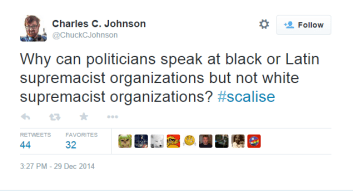
Back in 1999, Roll Call interviewed white supremacist leader David Duke about the possibility he would seek the House seat vacated by the resignation of Republican Rep. Bob Livingston. As part of that report, reporter John Mercurio also talked to up-and-coming Louisiana politicians, current Sen. David Vitter and current House Majority Whip Steve Scalise.
“I honestly think his 15 minutes of fame have come and gone,” said state Rep. David Vitter (R), a wealthy Metairie attorney who holds Duke’s old seat in the state House and is “seriously considering” a Congressional bid. “When he’s competed in a field with real conservatives, real Republicans, Duke has not done well at all.”
Another potential candidate, state Rep. Steve Scalise (R), said he embraces many of the same “conservative” views as Duke, but is far more viable.
“The novelty of David Duke has worn off,” said Scalise. “The voters in this district are smart enough to realize that they need to get behind someone who not only believes in the issues they care about, but also can get elected. Duke has proven that he can’t get elected, and that’s the first and most important thing.”
In light of Monday’s news reports about the likelihood that Scalise addressed Duke’s European-American Unity and Rights Organization back in 2002, here is the full report from the Jan. 7, 1999, edition of Roll Call:
 Duke was a former state representative holding the same lege seat that both Vitter and Scalise once had. He made a comment about him prior to his damned appearance. How could he not know who he was speaking to? Anyway, the blogosphere lit up like a candle on Sunday and it’s been one big rolling ball ever since then. Are people really going to believe this weak excuse? And here’s a good idea of why I call the dude Congressman Stevie Sleaze.
By 2004, according to New Orleans CityBusiness, Scalise was condemning Duke, who by then was in federal prison on tax charges. Still, Duke was again considering a runfor the 1st District seat.
“David Duke is an embarrassment to our district and his message of hate only serves to divide us,” Scalise told the newspaper.
Scalise’s own message has not always been one of inclusion. Months after criticizing Duke, he was one of six state representatives who voted against making Martin Luther King Jr. Day a state holiday. He had also voted against a similar bill in 1999.
In a 2008 ad during his first successful bid for Congress, Scalise accused Democratic rival Jim Harlan of “endorsing Obama’s liberal and dangerous agenda shaped by radicals like Rev. [Jeremiah] Wright.” His campaign also put out a flier with Harlan’s photo near the star and crescent symbol, commonly associated with Islam.
Here he is again with his excuses flying.
Please walk me through how you came to appear at the white nationalist event.
“I don’t have any records from back in 2002, but when people called and asked me to speak to groups, I went and spoke to groups. It was myself and [former state Sen.] James David Cain who were opposed to the Stelly tax plan.
I was the only legislator from the New Orleans area who was opposed to the plan publicly, so I was asked to speak all around the New Orleans region. I would go and speak about how this tax plan was bad.
I didn’t know who all of these groups were and I detest any kind of hate group. For anyone to suggest that I was involved with a group like that is insulting and ludicrous.
I was opposed to a lot of spending of spending at the state level. When people asked me to go speak, I went and spoke to any group that called.”
You don’t remember speaking at the event?
“I don’t. I mean I’ve seen the blog about it. When you look at the kind of things they stand for, I detest these kinds of views. As a Catholic, I think some of the things they profess target people like me. At lot of their views run contradictory to the way I run my life.
I don’t support some of the things I have read about this group. I don’t support any of the things I have read about this group, but I spoke to a lot of groups during that period. I went all throughout South Louisiana.
I spoke to the League of Women Voters, a pretty liberal group. … I still went and spoke to them. I spoke to any group that called, and there were a lot of groups calling.
I had one person that was working for me. When someone called and asked me to speak, I would go. I was, in no way, affiliated with that group or the other groups I was talking to. ”
You don’t remember speaking to a group affiliated with David Duke?
“David Duke was never at any group I spoke to.”
Were you avoiding him?
“He was a state representative before me. Everyone knew who he was. I would not go to any group he was a part of.”
Why do you think this [controversy] is coming out right now?
“Clearly, some people are trying to infer some things that just aren’t true. As a conservative…there are a lot of groups that don’t like conservative beliefs.
From what I’ve read about this group, they don’t like Catholics like myself.”
Yes, and the dog ate his campaign schedule.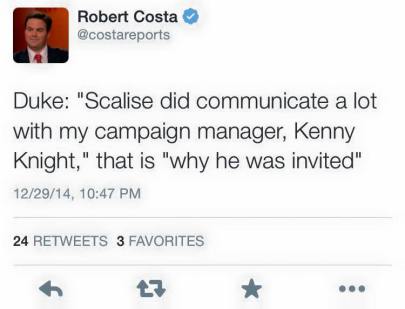
So, all us blogging Louisiana Buddies are in awe once more of Lamar’s terrific detective skills. Here’s a great example from blogging Buddy Adrastos.
This kerfuffle reminds me of the days when all sorts of “respectable” Louisiana Republicans played footsie with Dukkke. Many, like Scalise, have put some of Dukkke’s “populist” positions in a suit and tie and tried to make them respectable *after* the Gret Stet Fuhrer wannabe stopped doing so. It’s a minor league version of how Ronald Reagan and Jimmy Carter (yes, Jimmy Carter) cherry picked George Wallace’s political tree as it were. To be fair to my least favorite recent Democratic President, he borrowed Wallace’s anti-Washington/I’m an outside shtick, and not the whole standing in the schoolhouse door thing.
On a personal level, I’m pleased as punch that vast swaths of the MSM are giving Lamar credit for breaking the story. I expect that the Republican helots will be coming after him directly. He might even get slimed by Rush. If that happens, I will be a jealous motherfugu. (I’m trying swear less as well as to coin a swell new euphemism in addition to my continuing campaign to revive the word swell.) For now, I will merely bask in the reflected glory and hope that Lamar won’t forget the little people or Darby O’Gill for that matter…
I suspect that Scalise will keep his seat in Congress. He is, after all, from the same burg that elected Dukkke to the state lege. Moreover, as recently as 1999, Dukkke received 19% of the vote in a primary for the same seat Scalise holds today. Dukke finished third behind former Governor Dave Treen and the eventual winner, our old pal, Diaper Dave. Scalise has already used the “I’m not a racist” dodge to the Vestigial Picayune. We’ll see how it plays.
I think it’s pretty obvious that the folks in the Scalise District couldn’t care less about it. After all, they once elected Duke to represent them in the lege. The real damn shame about all of this is that the east coast media is giving interview time and column space to Duke. He’s not rotting up there on the North Shore with the rest of the klan. Scalise will undoubtedly retain his seat and it might even give him some cred upstate should he decide to run for a statewide office. However, I’m not sure what exactly the Republicans in the District are going to do with him. He’s either going to have to do some serious mea culpas or offer to step down. How long this stays as a top trending social media item will undoubtedly help write the end of the story inside the Beltway. It’s also New Year’s and college football bowl game time. There’s quite a few distractions including a downed airliner taking up air time. This is definitely an insider story at this point so the ending is still going to be written within the beltway. Look for Boehner’s response or his absolute vanishing act from media appearances until he gauges if this story has very very long legs. Whatever happens, watch for Lamar’s blog. And then watch the hashtag fun too.
Anyway, that’s my little two cents for the day.
What’s on your reading and blogging list today?
Monday: People We Lost in 2014
Posted: December 29, 2014 Filed under: morning reads | Tags: notable deaths in 2014 11 Comments
Good Morning!!
Since the year 2014 will soon be in the rear view mirror, I thought I’d call attention to some of the people we lost over the past 12 months. When I started looking for lists of notable 2014 deaths, I found there have been far more than I could possibly include in a blog post. Since this is a political blog, I go into a little more detail in the politics category than the others. In case you want more names and information, the best comprehensive list (with photos) that I found was at The Chicago Tribune: Notable Deaths 2014.
Politics
Frank Mankiewicz, 90, a towering figure in Democratic politics and media, died Oct. 23. Mankiewicz was born into Hollywood royalty–his father Herman Mankiewicz was the drama critic for The New Yorker, and wrote Citizen Kane, and his uncle Joseph Mankiewicz directed All About Eve.

Frank Mankiewicz speaking to reporters about Bobby Kennedy’s condition, 1968.
Mankiewicz, who fought in the Battle of Bulge during WWII, became an attorney and journalist, and then worked in the Kennedy administration. Later he served as press secretary for Robert Kennedy had the sad duty of announcing RFK’s death in LA after the 1968 California primary. He later worked in George McGovern’s failed 1972 campaign. Among other accomplishments, he wrote two books about Richard Nixon and as head of National Public Radio,
During his six years at the helm, the NPR news department more than doubled and listenership nearly tripled. He helped start the popular program “Morning Edition” in 1979; opened the first overseas bureau, in London; and used his access to top Democratic lawmakers such as Senate Majority Leader Robert C. Byrd (W.Va.) to obtain gavel-to-gavel radio coverage of important hearings.
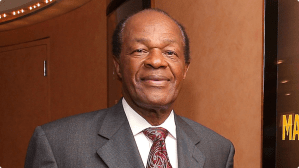
Marion Barry, 78, longtime Mayor of Washington DC, died Nov. 23. From The Washington Post:
Marion Barry Jr., the Mississippi sharecropper’s son and civil rights activist who served three terms as mayor of the District of Columbia, survived a drug arrest and jail sentence, and then came back to win a fourth term as the city’s chief executive….
The most influential and savvy local politician of his generation, Mr. Barry dominated the city’s political landscape in the final quarter of the 20th century, also serving for 15 years on the D.C. Council, whose Ward 8 seat he held until his death. Before his first stint on the council, he was president of the city’s old Board of Education. There was a time when his critics, in sarcasm but not entirely in jest, called him “Mayor for Life.”
Robert Strauss, 95, died on March 19. He was a Democratic insider who began his political career in 1937 as a volunteer in the first congressional campaign of Lyndon B. Johnson and was a fundraisaer for John Connolly in his run for Governor in 1962. Strauss went on to manage Hubert Humphrey’s campaign in 1966 and is credited with bringing the Democratic Party back from the dead after George McGovern’s disastrous loss to Richard Nixon in 1972 by “masterminding” the election of Jimmy Carter, according to The New York Times.

Robert Strauss with Jimmy Carter
The Washington Post wrote that Strauss
held several held several influential positions in politics and government: Democratic national chairman, special trade representative and Middle East troubleshooter during the Carter administration, and the first U.S. ambassador to Russia after the breakup of the Soviet Union.
He was known as a deal-maker and intermediary–a man who could work with Republicans when necessary and who could bring even sworn enemies together to work for common goals.
Other notable political figures who died in 2014:
Howard H. Baker Jr., 88, died on June 26. He was a Republican ex-senator who was involved in the Watergate hearings and famously asked “What did the President know and when did he know it?”
Jean-Claude “Baby Doc” Duvalier, 63, dictator of Haiti from 1971 until he was overthrown in 1986. He died Oct. 4.
Thomas Menino, 71, died on Oct. 30. Mayor of Boston from 1993-2014, he was the city’s longest serving mayor.
James Brady, 73, died on Aug. 14. He was Ronald Reagan’s press secretary. After he was nearly killed during the attempted assassination of Reagan in 1981, he became a highly visible supporter of gun control.

Joan Mondale
Joan Mondale, 83, wife of former Vice President Walter Mondale, died on Feb. 3. She was known as “Joan of Art.” A former museum guide she used her position to “promote the arts locally and worldwide. She made her tastes and influence felt from famous galleries and performance stages to subway stations and light-rail stops.”
Ian Paisley, 88, died Sept. 12. “Protestant firebrand who devoted his life to thwarting compromise with Catholics in Northern Ireland only to become a peacemaker in his twilight years” (WaPo).
Jeb Stuart Magruder, 79. “Watergate conspirator-turned-minister who claimed in later years to have heard President Richard Nixon order the infamous break-in,” according to the WaPo. He died May 11.
Fred Phelps, Sr., 84, founder of Westboro Baptist Church and professional hater, died March 20.
Stage, Screen, and Radio
The ones I’ll miss most:
Lauren Bacall, 89, died on Aug. 12 model, then accomplished actress and author, she was married to Humphrey Bogart and later Jason Robards.
James Garner, 86, died July 19. He was successful star in both movies and TV. He played mostly romantic leads in films and was very popular as start of the TV shows Maverick and The Rockford Files.

James Garner and Lauren Bacall
Bob Hoskins, 71, died on April 29, star of Who Framed Roger Rabbit, Mona Lisa, and The Long Good Friday.
Philip Seymour Hoffman, died Feb. 2 at age 46. He was a great actor. I still haven’t forgiven him for going back to drugs and alcohol.
Robin Williams, 63, died Aug. 11. A great comedian and actor.
Tom Magliozzi, 77, co-host with his brother of National Public Radio’s “Car Talk,” died Nov. 3.
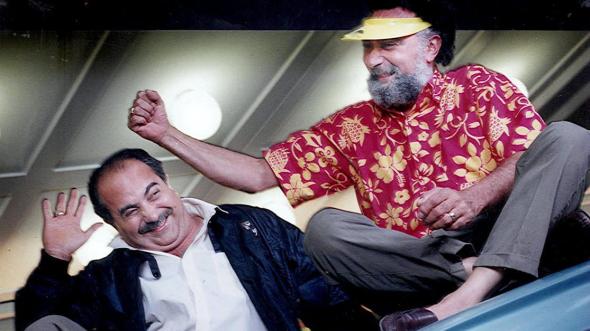
Tom Magliozzi (right) with brother Ray
Other stars we lost this year
Harold Ramis, 69, comedy writer, actor, director, died Feb. 24.
Ruby Dee, 91, actress and civil rights activist, died June 11.
Joan Rivers, 81, pathbreaking comedienne, died Sept. 4.
Polly Bergen, 84, actress, nightclub singer, writer, TV host, game show star, “ardent feminist,” campaigned for Hillary Clinton in 2008. She died Sept. 20.

Elaine Stritch
Elaine Stritch, actress and singer best known for her work on Broadway, died July 17 at 89.
Sheila MacRae, 92, British comedienne, “accomplished singer, dancer, and impressionist,” married to Gordon MacRae. She replaced Audrey Meadows as Alice Kramden on The Honeymooners. She died march 6.
Martha Hyer, 89, died May 31. She was an “Oscar-nominated actress who starred alongside the likes of Frank Sinatra and Humphrey Bogart, and later gained notoriety for her extravagant lifestyle.” She got her big break in Sabrina.
Richard Attenborough, 90, British actor and academy award winning director of Gandhi, died on Aug. 14.
Mike Nichols, 83, famed director of The Graduate, and many other great movies and plays, died Nov. 19.
Sid Caesar, 91, died Feb. 12. He was a comic and TV pioneer, best known for his weekly live show, Your Show of Shows.
Shirley Temple Black, 85, famous and beloved child star, died Feb. 10.
Mickey Rooney, 93, died on Sept. 23, with an estate of $18,000. He was a popular child actor who maintained his stardom in adulthood.
Eli Wallach, 89, died June 24. He was a great character actor whose career lasted six decades. Probably best known for his roles in Westerns The Good, the Bad, and the Ugly and The Magnificent Seven, but he was also a “masterful stage actor, the acclaimed interpreter of Tennessee Williams…”
David Brenner, comedian, died March 28 at 78.
Meshach Taylor, 67, died June 28. He played Anthony Bouvier on the sitcom Designing Women.

Marilyn Burns after surviving Leatherface
Marilyn Burns, 65, star of the cult film Texas Chainsaw Massacre, died Aug. 5. She also played Linda Kasabian in Helter Skelter (1976).
Efrem Zimbalist, Jr., 95, Golden Globe winning actor, died May 2. I loved him in 77 Sunset Strip and The FBI.
And there were many, many more.
Literature and Journalism
Maya Angelou, 86, poet, dancer, actor, and singer, died May 28. She wrote seven books of autobiography, beginning with I Know Why the Caged Bird Sings.
Gabriel Garcia Marquez, author of One Hundred Years of Solitude, won the Nobel Prize for literature in 1982. He died April 17 at age 87.
Amiri Baraka, 79, died Jan. 9. “Militant man of letters and tireless agitator whose blues-based, fist-shaking poems, plays and criticism made him a groundbreaking force in American culture.” (WaPo)
Nadine Gordimer, 90, South African novelist, died July 13. She won the Nobel Prize for Literature in 1991.
PD James, 94, brilliant British crime and science fiction novelist, died Nov. 27.
Peter Matthieson, 86, novelist, nonfiction writer, and founder of The Paris Review, died April 5. He won the National Book Award three times for The Snow Leopard (1979, nonfiction – contemporary thought), The Snow Leopard (1980, General nonfiction), and Shadow Country (fiction, 2008).
Mark Strand, 80, Pulitzer Prize winning poet and former Poet Laureate of the US, died Nov. 29.
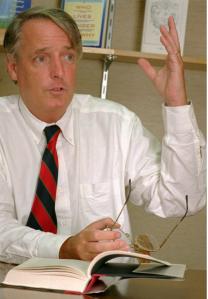
Joe McGinniss in 1996
Joe McGinnis, 71, journalist and author of the pathbreaking book The Selling of the President 1968 and several true crime works, including Fatal Vision.
Ben Bradlee, 93, editor of the Washington Post during Watergate and long after, died Oct. 21.
Al Feldstein, 88, spent “28 years at the helm of Mad magazine transformed the satirical publication into a pop culture institution.” He died April 29. (WaPo)
Music
Pete Seeger, folksinger and activist, Jan. 27.
Aker Bilk, clarinet player, 85, “Jazz clarinettist known for his 1960s hit Stranger on the Shore, his smooth playing and his dapper stage presence,” died Nov. 2.
Jack Bruce, 71, base player for Cream, died Oct. 25
Paul Revere, of Paul Revere and the Raiders died Oct. 4 at 76.
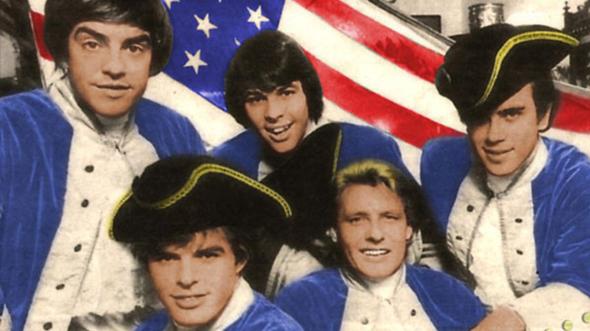
Paul Revere (second from right) and the Raiders
Tim Hauser, 72, of Manhattan Transfer died Oct. 16.
Johnny Winter, 70, blues guitarist and singer, died July 16.
Joe Cocker, 70, blues and rock singer, died Dec. 22.

Joe Cocker at Woodstock
Tommy Ramone, 65, drummer, The Ramones, and record producer, died July 11.
Bob Casale, Devo guitarist, died Feb. 17
Charlie Haden, 76, jazz bassist, died July 11.
Phil Everly of the Everly Brothers, died Jan. 3 at 74.
Bobby Womack, 70, singer-songwriter and musician, died June 27.
Gerry Goffin, 75, wrote lyrics for Carole King’s music, died June 19.
Jerry Vale, pop singer, died May 18, at 83.
Bobby Keys, 70, saxophone player who backed up John Lennon, Eric Clapton, Rolling Stones, died Dec. 2.
Jesse Winchester, singer-songwriter who moved to Canada in protest against the Vietnam war, died April 11, at 69.
There were many more notable deaths this year, and I ignored plenty of categories of people too. Maybe I’ll have to do another post. So . . . who will you miss most? If I left someone important out, please tell us about him/her in the comments (as always, feel free to post links on any topic.)
Lazy Saturday Reads
Posted: December 27, 2014 Filed under: Civil Rights, morning reads, nature, psychology, racism, science | Tags: Ayn Rand, Christmas cards, Creationism, Gone With The Wind, internet hackers, law enforcement, libertarians, Mike Brown memorial, North Korea, police shootings, prejudice, science denialism, selfishness 4 Comments
Good Morning!!
Maybe it’s just me, but I think today must be the slowest news day yet in 2014. I’ve gathered a hodge-podge of reads for you, some that look back over the past year and some current news stories that I found interesting or humorous. So here goes . . .
Looking back, I think the biggest story of this year has been the many events that have revealed how racist the United States still is nearly a century-and-a-half after the end of the Civil War and more than a half century after the Civil Rights Movement.
In the news yesterday: Driver Destroys Mike Brown Memorial, Community Rebuilds By Morning. From Think Progress:
A memorial set up in the middle of Canfield Drive where teenager Michael Brown was shot and killed by a Ferguson, Missouri police officer in August was partially destroyed Christmas evening when a car drove through it. Neighbors and friends of Brown quickly came together to clean up the damage, rebuild the site, and call for support on social media….
Activists on the ground also reacted angrily to the Ferguson Police Department’s public relations officer, who told the Washington Post, “I don’t know that a crime has occurred,” and called Brown’s memorial “a pile of trash in the middle of the street.”
Since Brown’s death, the memorial has been a key gathering place for protests and prayers, and a receiving station for those that poured in from across the country to pay their respects and demonstrate against police brutality. Supporters also had to rebuild the memorial in September after it burned to the ground.
Also from Think Progress, photos of the some of the people who were killed by police in 2014.

As you can see, most of them have black or brown skin.
Sadly, we know Brown and Garner were just one [sic] of many people who died at the hands of police this year. But a dearth of national data on fatalities caused by police makes it difficult to pinpoint the exact number of deaths. One site put the total at 1,039.
What we do know is that police-related deaths follow certain patterns. A 2012 study found that about half of those killed by the police each year are mentally ill, a problem that the Supreme Court will consider 2015. Young black men are also 21 times more likely to be killed by cops than young white men, according to one ProPublica analysis of the data we have. The Centers for Disease Control and Prevention also compiled data which shows that people of color are most likely to be killed by cops overall. In short, people who belong to marginalized communities are at a higher risk of being shot than those who are not.
Go to the link to see a table showing which groups are most likely to be shot by police.
Mother Jones has released its yearly list of top long reads of 2014. First on the list is The Science of Why Cops Shoot Young Black Men, by Chris Mooney. It’s about the unconscious prejudices that plague all of us. A brief excerpt:
On the one hand, overt expressions of prejudice have grown markedly less common than they were in the Archie Bunker era. We elected, and reelected, a black president. In many parts of the country, hardly anyone bats an eye at interracial relationships. Most people do not consider racial hostility acceptable. That’s why it was so shocking when Los Angeles Clippers owner Donald Sterling was caught telling his girlfriend not to bring black people to games—and why those comments led the NBA to ban Sterling for life. And yet, the killings of Michael Brown, Jordan Davis, Renisha McBride, Trayvon Martin, and so many others remind us that we are far from a prejudice-free society.
Science offers an explanation for this paradox—albeit a very uncomfortable one. An impressive body of psychological research suggests that the men who killed Brown and Martin need not have been conscious, overt racists to do what they did (though they may have been). The same goes for the crowds that flock to support the shooter each time these tragedies become public, or the birthers whose racially tinged conspiracy theories paint President Obama as a usurper. These people who voice mind-boggling opinions while swearing they’re not racist at all—they make sense to science, because the paradigm for understanding prejudice has evolved. There “doesn’t need to be intent, doesn’t need to be desire; there could even be desire in the opposite direction,” explains University of Virginia psychologist Brian Nosek ….
We’re not born with racial prejudices. We may never even have been “taught” them. Rather, explains Nosek, prejudice draws on “many of the same tools that help our minds figure out what’s good and what’s bad.” In evolutionary terms, it’s efficient to quickly classify a grizzly bear as “dangerous.” The trouble comes when the brain uses similar processes to form negative views about groups of people.
But here’s the good news: Research suggests that once we understand the psychological pathways that lead to prejudice, we just might be able to train our brains to go in the opposite direction.
Read much more at the second link above. Go to the previous link to see the 13 other stories on MoJo’s list of the magazine’s best 2014 long reads.

Also from Mother Jones, a list of “the stupidest anti-science bullshit of 2014.” Check it out at the link.
Another “worst of” list from The Daily Beast: 2014: Revenge of the Creationists, by Carl W. Giberson.
Science denialism is alive in the United States and 2014 was yet another blockbuster year for preposterous claims from America’s flakerrati. To celebrate the year, here are the top 10 anti-science salvos of 2014.
1) America’s leading science denialist is Ken Ham, head of the Answers in Genesis organization that built the infamous $30 million Creation Museum in Kentucky. He also put up a billboard in Times Square to raise funds for an even more ambitious Noah’s Ark Theme Park. Ham’s wacky ideas went primetime in February when he debated Bill Nye. An estimated three million viewers watched Ham claim that the earth is 10,000 years old, the Big Bang never happened, and Darwinian evolution is a hoax. His greatest howler, however—and my top anti-science salvo of 2014—would have to be his wholesale dismissal of the entire scientific enterprise as an atheistic missionary effort: “Science has been hijacked by secularists,” he claimed, who seek to indoctrinate us with “the religion of naturalism.”
2) Second only to Answers in Genesis, the Seattle based Discovery Institute continued its well-funded assault on science, most visibly through Stephen Meyer’s barnstorming tour promoting his book Darwin’s Doubt. I was a part of this tour, debating Meyer in Richmond, Virginia in April. Meyer’s bestselling book is yet another articulate repackaging of the venerable but discredited “god of the gaps” argument that goes like this: Here is something so cleverly designed that nature could not do on her own; but God could. So God must have designed this. Meyer insists, however, that his argument is not “god of the gaps” since he says only that the anonymous designer was “a designing intelligence—a conscious rational agency or a mind—of some kind” and not the familiar God of the monotheistic religious traditions. For his tireless assault on evolutionary biology and downsizing the deity to fit within science, I give Meyer second place.
Go over to TDB to read the rest of the list.

Donald Sterling and Ray Rice
Also in this vein, Talking Points Memo offers a list of worst sports stories: From Donald Sterling To Ray Rice: 2014 Brought Out The Worst In Pro Sports.
The past year brought out the worst in professional sports players, owners, and fans alike, from domestic violence scandals in the NFL to the removal of racist team executives in the NBA.
Of course, shockingly bad behavior wasn’t limited to major league football and basketball alone. The most decorated Olympian of all time, Michael Phelps, was just sentenced to probation for drunken driving. FIFA was enough of a mess to inspire a 13-minute Jon Oliver segment ahead of the World Cup this summer.
But even the most casual sports observer understands what’s at the center of the Washington Redskins naming controversy, or can form an opinion on whether Ray Rice should be allowed to play football again. The NFL frequently surfaced in the headlines this year for all the wrong reasons, and its domination on this list suggests the league needs to get its act together on a couple fronts.
Check out the list at the TPM link above.

Recently, I posted some links about the 75th anniversary of the movie Gone With The Wind and the racist attitudes it portrayed. Today Newsweek published a piece about the efforts to curtail the racism in the movie before it was filmed and released: Fixing Gone With The Wind’s ‘Negro Problem’
In the spring of 1938, Rabbi Robert Jacobs of Hoboken wrote to Rabbi Barnett Brickner, chairman of the Social Justice Commission of the Central Conference of American Rabbis, “Soon the David O. Selznick Studios of Hollywood will begin production of the play ‘Gone With The Wind.’ The book, a thrilling romance of the South, was shot through with an anti-Negro prejudice, and while it undoubtedly furnished almost half a million people in this country with many glowing hours of entertainment, it also in a measure aroused whatever anti-Negro antipathy was latent in them.”
Rabbi Brickner in turn wrote to Selznick. “In view of the situation,” he wrote, “I am taking the liberty of suggesting that you exercise the greatest care in the treatment of this theme in the production of the picture. Surely, at this time you would want to do nothing that might tend even in the slightest way to arouse anti-racial feeling. I feel confident that you will use extreme caution in the matter.”
Brickner wrote a similar letter to Walter White, Secretary of the National Association for the Advancement of Colored People. White also wrote to Selznick, suggesting Selznick “employ in an advisory capacity a person, preferably a Negro, who is qualified to check on possible errors of fact or interpretation.”
In his reply to White, Selznick wrote, “I hasten to assure you that as a member of a race that is suffering very keenly from persecution these days, I am most sensitive to the feelings of minority peoples.” He added, “It is definitely our intention to engage a Negro of high standing to watch the entire treatment of the Negroes, the casting of the actors for these roles, the dialect that they use, etcetera, throughout the picture.
Read the rest at the link.
At Daily Kos, David Akadjian offered a list of 21 Ayn Rand Christmas Cards–a satire, of course, but Akadjian learned that Rand actually did send out Christmas cards, despite her atheism. Here are some of her odes to a selfish Christmas.


I’ll wrap this post up with some current news stories:
USA Today: Thousands gather to honor slain officer in New York.
The Guardian: North Korea calls Obama a ‘monkey’ as it blames US for internet shutdown.
USA Today: North Korea suffers another Internet shutdown.
Seattle PI: Woman who bared breasts in Vatican square is freed.
Washington Post: Baby gorilla shunned by other gorillas to switch zoos.
Washington Post: Pakistani forces kill alleged organizer of school massacre.
The Telegraph: More than 160,000 evacuated in Malaysia’s worst ever floods.
Special for New Englanders from the Boston Globe: Will The Rest Of Winter Have Lower Than Average Snowfall?
What else is happening? Please post your thoughts and links in the comment thread and have a stupendous Saturday!
Friday Reads: Weaponized Oil and a tale of conspiracies
Posted: December 26, 2014 Filed under: Foreign Affairs, fracking, Iran, Russia, Saudi Arabia 10 CommentsGood Morning!
So, I’m going to write briefly about something that’s been fascinating me lately. That’s the incredible decrease in oil prices and the impact that it’s having on Russia and other oil producing nations outside of the Emirates and Saudi Arabia . I’m a sucker for a good currency crisis since it’s basically right up my research  alley.
Also, oil has been one of those commodities that’s pretty much dominated my adult life. I remember having to buy gas on even days because the Dealer’s tags on our cars ended in 8 during the oil crisis. I know what it did to my dad’s business as a car dealer. Basically, oil’s been the most fungible commodity in modern times. No modern economy can live without it. We’ve definitely fought wars to control it. Oil’s being weaponized like never before.
There are several key factors driving down your gas at the pump. First, the global economy has slowed down so that the demand for oil has tapered off. That’s one thing that’s been at play. But the more interesting factor has been the increase in supply which is related to the interesting way that Saudis have been ignoring OPEC quotas and inching up the supply. There’s been some rumors going around–actual conspiracy theories– that they are doing so for three reasons. First, they want to make sure that the nascent tar sands oil industry in North America isn’t profitable. Second, they want to hurt Iran, Syria, and Iraq and any other Shia nation involved with oil production. The third reason is to get at Russia. I want to share what I’ve found on these fronts with you. It has the feel of a new kind of cold war and the opposite of the gas wars of the 1970s.
Russia just experienced a “Black Monday” in that the Russian Stock market has collapsed as has the ruble. The Russia economy is heavily dependent on oil exports so any decrease in oil prices has an impact. These continued price decreases have their economy on the verge of failure. The entire situation has been exacerbated by UN Sanction against the country for its invasion and intervention in the Ukraine. It’s not pretty.
In recent weeks, the fall in the Russian ruble and Russian stock markets closely tracked the declines in global oil prices. But everything changed on December 15. The oil price remained stable, but the ruble and the stock-price indices lost 30% in the subsequent 24 hours. An unprecedented effort by the Central Bank of Russia (CBR) in the wee hours of December 16 to stabilize the ruble, by hiking the interest rate from 10.5% to 17%, proved useless.
The cause of Russia’s “Black Monday” was readily apparent: the government bailout of state-owned Rosneft, the country’s largest oil company. Usually, bailouts calm markets; but this one recalled early post-Soviet experiments, when the CBR issued direct loans to enterprises – invariably fueling higher inflation. The CBR’s governor at the time, Viktor Gerashchenko, was once dubbed the world’s worst central banker.
In 2014, the CBR is more constrained than it was in Gerashchenko’s era: it cannot lend directly to firms. Yet it has also become more sophisticated at achieving the same ends that Gerashchenko sought.
In October, Rosneft issued $11 billion worth of ruble-denominated bonds (an unparalleled amount for the Russian market, equivalent to 70% of the total value of corporate bonds issued in Russia this year). The coupon on these bonds was actually 1.5 percentage points below sovereign bonds of similar maturity, which is also unusual, especially given that Rosneft currently is subject to Western sanctions.
Then, unnamed investors (allegedly the largest Russian state banks) benefited from the CBR’s decision on December 12 to allow these bonds to be used as collateral for three-year CBR ruble loans at the policy rate. Moreover, the CBR scheduled a special auction for such loans on December 15 – with the total amount of the loans similar to that of Rosneft’s bond issue. Thus, the CBR would be able to provide a massive pile of rubles to Rosneft at below-market rates. So why did the deal trigger a panic?
At first glance, this deal was intended to meet contemporary Russia’s most important economic challenge. Sanctions have cut off Russian banks and companies from Western financial markets. Russian companies have to repay or refinance about $300 billion of debt over the coming two years. Some of this debt is owed to Russian companies’ offshore owners, who will certainly be happy to roll it over. But in most cases, firms’ liabilities comprise real debt owed to major international banks.
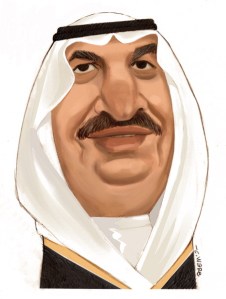 Global investors are anxiously awaiting some kind of strategy for recovery. Actions by the Central Bank of Russia have been very curious. All of the countries that depend on oil exports for huge amounts of their funding are in trouble. Russia is probably just the most obvious of them. This goes for Iran also. That’s because both of them are heavily weighed down by UN sanctions.
The non-OPEC producing countries (Russia, Brazil and Norway, as examples) are starting to become backed into an economic corner. In all of these countries, oil represents a major export and helps finance other economic activities. For example, as Russia sells oil in the open market (priced in dollars) at $60 per barrel, the revenue in dollars is 50 percent less than was the case in June of this year. Since June, the Russian Ruble has declined by 59 percent (to the U.S. dollar). A “crash” in the value of any currency leads to very high inflation (imports are now more expensive than would have otherwise been the case), which leads to potential civil unrest. On a global scale, the “wealth” of Russia as a nation, priced in Rubles, has declined by 59 percent in the last six months.
This is the stuff that leads to revolutions. Oil, other commodities and vodka are about the only exports Russia creates and helps fund their country’s spending. They are net importers of most all consumption goods (health supplies, food, etc.). In their own currency, those imports are now 59 percent more expensive than they were this past summer.
To some, the problem Russia currently faces sounds like something Vladimir Putin created by his dalliances in the Crimea and Ukraine. There is some truth to this as those actions led to economic sanctions unleashed by the West on Russia. The oil pricing issue is indirectly due to his destructive behavior. What really matters to the rest of the world at this stage is the potential for economic weakness to spread to the rest of the world from Russia… monetary contagion, anyone?
How would this happen? Why would the rest of the world be negatively affected by weakness in the Russian Ruble? Russia’s economy is the world’s eighth largest (as measured by the IMF ), a little larger than Italy and a little smaller than Brazil. At about $2.1 trillion in GDP, Russia is dwarfed by the United States at $17.5 trillion. If Russia’s economy contracts by 4 percent (which potentially is in the cards for 2015), it will impact the world’s GDP by about $84 billion, or .1 percent. No big deal. However, let’s think not about the world’s income statement (GDP) but rather about the world’s balance sheet – the world’s banking system.
Most Russian national debt is priced in Rubles and the value of that debt has collapsed from six months ago when the Ruble was higher and Russian interest rates were dramatically lower. Russia’s public debt is $216 billion. The Russian benchmark interest rate was at 7.5 percent in June of this year – that interest rate is now 17 percent.
How much this impacts any other country has a lot to do on how many banks hold Ruble-denominated assets or liabilities. The interesting thing is that Saudi Arabia seems no where done with its dalliance in increasing oil supply. This particular bit of news is what motivated me to finally bring this up here. The emirates and Saudi Arabia seem willing to dig into their own sovereign wealth and their countries’ spending to see this through. They must be extremely serious about something. Is it the threat from Shia Muslims? From US Fracking Oil? Do they just plain hate the Russians?
Saudi Arabia’s Cabinet on Thursday endorsed a 2015 budget that projects a slight increase in spending and a significant drop in revenues due to sliding oil prices, resulting in a nearly $39 billion deficit
In a sign of mounting financial pressure, the Finance Ministry said the government would try to cut back on salaries, wages and allowances, which “contribute to about 50 percent of total budgeted expenditures.” That could stir resentment among the kingdom’s youth, who make up a majority of the population and are increasingly struggling to find affordable housing and salaries that cover their cost of living.
The price of oil— the backbone of Saudi Arabia’s economy — has fallen by about a half since the summer. Saudi Arabia is extremely wealthy, but there are deep wealth disparities and youth unemployment is expected to mushroom absent a dramatic rise in private sector job creation. The International Monetary Fund says almost two-thirds of employed Saudis work for the government.
A the height of Arab Spring protests sweeping the region in 2011, King Abdullah pledged $120 billion to fund a number of projects, including job creation and hikes in public sector wages. The move was largely seen as an effort to appease the public and blunt any challenges to monarchical rule.
Associate Fellow and energy researcher at Chatham House, Valerie Marcel, said massive government spending across the Gulf on public sector salaries is “really the thing that keeps the lid on the bottle.” She said that for now the Arab monarchies of the Gulf can afford to run deficits due to surpluses accumulated over the years from high oil prices.
Now that’s commitment. There’s actually some discussion around that the US and the Saudis basically colluded to drop oil prices. This all is happening while OPEC has called for widespread production cuts. Anyone with a little game theory  background along with economics know that this is a deadly game. The ones that cut their production will lose income.
Turning to the current price drop, the Saudis and OPEC have a vested interest in taking out higher-cost competitors, such as US shale oil producers, who will certainly be hurt by the lower price. Even before the price drop, the Saudis were selling their oil to China at a discount. OPEC’s refusal on Nov. 27 to cut production seemed like the baldest evidence yet that the oil price drop was really an oil price war between Saudi Arabia and the US.
However, analysis shows the reasoning is complex, and may go beyond simply taking down the price to gain back lost marketshare.
“What is the reason for the United States and some U.S. allies wanting to drive down the price of oil?” Venezuelan President Nicolas Maduro asked rhetorically in October. “To harm Russia.”
Many believe the oil price plunge is the result of deliberate and well-planned collusion on the part of the United States and Saudi Arabia to punish Russia and Iran for supporting the murderous Assad regime in Syria.
Punishing Assad and friends
Proponents of this theory point to a Sept. 11 meeting between US Secretary of State John Kerry and Saudi King Abdullah at his palace on the Red Sea. According to an article in the Wall Street Journal, it was during that meeting that a deal was hammered out between Kerry and Abdullah. In it, the Saudis would support Syrian airstrikes against Islamic State (ISIS), in exchange for Washington backing the Saudis in toppling Assad.
If in fact a deal was struck, it would make sense, considering the long-simmering rivalry between Saudi Arabia and its chief rival in the region: Iran. By opposing Syria, Abdullah grabs the opportunity to strike a blow against Iran, which he sees as a powerful regional rival due to its nuclear ambitions, its support for militant groups Hamas and Hezbollah, and its alliance with Syria, which it provides with weapons and funding. The two nations are also divided by religion, with the majority of Saudis following the Sunni version of Islam, and most Iranians considering themselves Shi’ites.
“The conflict is now a full-blown proxy war between Iran and Saudi Arabia, which is playing out across the region,” Reuters reported on Dec. 15. “Both sides increasingly see their rivalry as a winner-take-all conflict: if the Shi’ite Hezbollah gains an upper hand in Lebanon, then the Sunnis of Lebanon—and by extension, their Saudi patrons—lose a round to Iran. If a Shi’ite-led government solidifies its control of Iraq, then Iran will have won another round.”
The Saudis know the Iranians are vulnerable on the oil price. Experts say the country needs $140 a barrel oil to balance its budget; at sub-$60 prices, the Saudis succeed in pressuring Iran’s supreme leader, Ayatollah Ali Khamanei, possibly containing its nuclear ambitions and making the country more pliable to the West, which has the power to reduce or lift sanctions if Iran cooperates.
Adding credence to this theory, Iranian President Hassan Rouhani told a Cabinet meeting earlier this month that the fall in oil prices was “politically motivated” and a “conspiracy against the interests of the region, the Muslim people and the Muslim world.”
So, you can see, there’s a little bit of economy theory blended with conspiracy theory here. Frankly, I”m all for Saudi Arabia crippling American Fracking even though I’m sitting in a state where things will only go from bad to worse in this situation. (Although I  will mention I’m actively looking at real estate in Washington State right now.)
Despite repetition in countless media accounts and analysts’ notes over the past few weeks, though, the idea of a “sheikhs vs. shale” battle to control global oil supplies has precious little evidence behind it. The Saudi-led decision to keep OPEC’s wells pumping is a direct strike by Riyadh on two already hobbled geopolitical rivals, Iran and Russia, whose support for the Syrian government and other geostrategic machinations are viewed as far more serious threats to the kingdom than the inconvenience of competing for market share with American frackers.
Among the world’s oil producing nations, few suffer more from the Saudi move than Tehran and Moscow. At a time when both are already saddled with economic sanctions — Russia for its actions in Ukraine and Iran for its alleged pursuit of nuclear weapons technology — the collapse of oil prices has put unprecedented pressure on these regimes. For Russia, the crisis has hit very hard, with the ruble losing 40 percent of its value to the dollar since October. This is particularly problematic since Russian state-owned oil firms have gone on a dollar-borrowing spree in recent years; now, servicing that debt looks very ominous.
True, Saudi OPEC minister Ali al-Naimi insisted last month that the move was intended to target shale. But he would say that, wouldn’t he? After all, his OPEC counterparts were standing beside him — including the OPEC minister from Iran.
The fact is, Saudi Arabia has little to fear from shale. Saudi Arabia’s huge reserves of conventional oil can and probably will be produced for decades after the shale boom has run its course — which the U.S. Energy Information Administration (EIA) expects to happen by 2050 or so — and at much lower costs.
So, that one could be just a conspiracy theory. Anyway, it is very interesting situation that seems to converge economics with geopolitics. It won’t be the first time that oil and other commodities have been used as weapons. The Spanish Empire was taken down by its gold lust and hoarding by Good Queen Bess as one example. It’s really interesting no matter what the rationale.
For all our worries over Russia, however, we in Britain should not lose sight of the humiliation of another swaggering and once-mighty force in world politics, the Organisation of Petroleum Exporting Countries (OPEC). When it burst on the world scene 40 years ago, OPEC terrified the wasteful West.
Over the previous decades, we had grown used to abundant oil, bought mostly from Middle Eastern producers — with little global muscle — at rock- bottom prices.
However, OPEC changed that. By restricting supply, the cartel quadrupled the oil price, from $3 to $12.
Saudis remain in a strong position because oil is cheap to produce there. Above, the country’s Minister of Petroleum and Mineral Resources Ali Ibrahim Naimi
That is only a fraction of today’s price — but the oil crisis sparked by the rocketing cost in 1974 was enough to lead to queues at filling stations and national panics in the pitifully unprepared industrialised world.
Four decades later, Saudi Arabia has become one of the richest countries in the world, with reserves totalling nearly $900 billion.
But the rest of the world is less at its mercy than it once was. Here in Britain, our energy consumption is dropping remorselessly — the result of increased energy efficiency.
Moreover, many other nations now produce oil. And oil can be replaced by other fuels, such as natural gas, which OPEC does not control.
Also, OPEC no longer has the discipline or the clout to dominate the market, and we in Britain are among the big winners from all this, reaping the benefits of lower costs to fill up our cars and power our industries.
At its meeting in Vienna last month, the OPEC oil cartel — which controls nearly 40 per cent of global production — faced a fateful choice.
Would it curb production and thus, by reducing supplies, try to ratchet the oil price back to something near $100 a barrel — the level most of its members need to balance their books? Or would it let the glut continue?
The organisation’s 12 member countries, including Saudi Arabia, Iran, Iraq, Kuwait, Venezuela and Nigeria, chose to do nothing, proving that its once-mighty power has withered. Oil prices subsequently fell even further.
One central problem is that several of OPEC’s members detest each other for a variety of reasons.
Above all, Saudi Arabia and its Gulf allies see Iran — a bitter religious and political opponent — as their main regional adversary.
They know that Iran, dominated by the Shia Muslim sect, supports a resentful underclass of more than a million under-privileged and angry Shia people living in the gulf peninsula — a potential uprising waiting to happen against the Saudi regime.
The Saudis, who are overwhelmingly Sunni Muslims, also loathe the way Iran supports President Assad’s regime in Syria — with which the Iranians have a religious affiliation. They also know that Iran, its economy plagued by corruption and crippled by Western sanctions, desperately needs the oil price to rise. And they have no intention of helping out.
The fact is that the Saudis remain in a strong position because oil is cheap to produce there, and the country has such vast reserves. It can withstand a year — or three — of low oil prices.
The fact is that the Saudis remain in a strong position because oil is cheap to produce there, and the country has such vast reserves. It can withstand a year — or three — of low oil prices.
In Moscow, Vladimir Putin does not have that luxury — and the Saudis know it.
They revile Russia, too, for its military support of President Assad, and for its sale of advanced weapons to Iran.
 So there’s the piece on why Russian and Iran are targeted. Anyway, unless you’re a CIA analyst specializing that area with access to all the back and forth, it’s hardly possible to untangle all these wicked webs. It is evident, however, that the Saudis have some bones to pick with a lot of folks and picking away they are.
It will be interesting to watch this unfold. I have no doubt this will have bigger implications and I also know that most folks aren’t following this. I’m also pretty sure the usual news outlets are giving this short shrift. You can tell if you if follow any of my links because only one goes to the NY Times. The rest are mags that are read by very few folks.
So …. What’s on your reading and blogging list today?
Christmas Day Reads
Posted: December 25, 2014 Filed under: Barack Obama, morning reads | Tags: Dies Natalis Solis Invicti, Feast of Juul, Festivus, gender stereotypes, Hanukkah, History of Christmas, Kwanzaa, michelle obama, Mithras, Saturnalia, Toys for Tots, Winter Solstice, yule log 12 Comments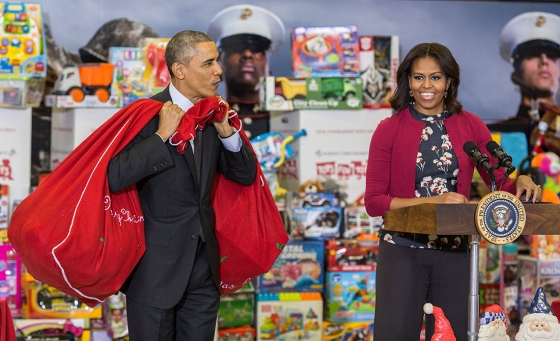
Good Morning!!
Merry Christmas to everyone who celebrates this day. Also, Happy Hanukkah, the festival of lights, which culminated last night. Happy Kwanzaa to those who will begin celebrating it tomorrow. And Happy Festivus “for the rest of us.”
How long have humans been celebrating the return of the light after the darkest day of the year–the Winter Solstice fell on Dec. 21 in 2014–when the days gradually begin getting longer? No one knows for sure, but it has been many centuries. I’ve gathered some articles about some ancient holidays around the solstice that preceded Christmas.
The ancient Romans celebrated the Saturnalia in tribute to the god Saturn, and Roman soldiers marked Dies Natalis Solis Invicti, in honor of the god Mithras.
Here’s a detailed description of the Saturnalia from a University of Chicago website.
In the Roman calendar, the Saturnalia was designated a holy day, or holiday, on which religious rites were performed. Saturn, himself, was identified with Kronos, and sacrificed to according to Greek ritual, with the head uncovered. The Temple of Saturn, the oldest temple recorded by the pontiffs, had been dedicated on the Saturnalia, and the woolen bonds which fettered the feet of the ivory cult statue within were loosened on that day to symbolize the liberation of the god. It also was a festival day. After sacrifice at the temple, there was a public banquet, as well as a lectisternium (a banquet in which an image of the god is placed as if in attendance), which Livy says was introduced in 217 BC. “For a day and a night the cry of the Saturnalia resounded through the City, and the people were ordered to make that day a festival and observe it as such for ever” (History of Rome, XXII.1.19). Afterwards, according to Macrobius (I.10.18), the celebrants shouted Io, Saturnalia at a riotous feast in the temple.
The Saturnalia was the most popular holiday of the Roman year. Catullus describes it as “the best of days” (Poems, XIV), and Seneca complains that the “whole mob has let itself go in pleasures” (Epistles, XVIII.3). Pliny the Younger writes that he retired to his room while the rest of the household celebrated (Epistles, II.17.24). It was an occasion for celebration, visits to friends, and the presentation of gifts, particularly wax candles (cerei), perhaps to signify the returning light after the solstice, and sigillaria. Martial wrote Xeniaand Apophoreta for the Saturnalia. Both were published in December and intended to accompany the “guest gifts” which were given at that time of year. Aulus Gellius relates that he and his Roman compatriots would gather at the baths in Athens, where they were studying, and pose difficult questions to one another on the ancient poets, a crown of laurel being dedicated to Saturn if no-one could answer them (Attic Nights, XVIII.2).
During the holiday, restrictions were relaxed and the social order inverted. Gambling was allowed in public. Slaves were permitted to use dice and did not have to work. Instead of the toga, colorful dinner clothes (synthesis) were permitted in public, as was the pileus, a felt cap normally worn by the manumitted slave that symbolized the freedom of the season (Martial, Epigrams, XIV.1). Within the family, a Lord of Misrule was chosen, a role once occupied by a young Nero, who derisively commanded his younger step-brother Britannicus to sing (Tacitus, Annals, XIII.15).
Slaves were treated as equals, allowed to wear their masters’ clothing, and be waited on at meal time in remembrance of an earlier golden age thought to have been ushered in by the god. In the Saturnalia, Lucian has the god’s priest declare that “During My week the serious is barred; no business allowed. Drinking, noise and games and dice, appointing of kings and feasting of slaves, singing naked, clapping of frenzied hands, an occasional ducking of corked faces in icy water—such are the functions over which I preside.” Statius recounts a “December tipsy with much wine, and laughing Mirth and wanton Wit,” remembering “the glad festival of our merry Caesar and the banquet’s drunken revel” (Silvae, I.6.1ff; also Suetonius, Domitian, IV.1; Dio, Roman History, LXVII.4.4). Figs, nuts, dates and other dainties were showered on the people, women and children, men and senators alike, and bread and wine served among the rows while guests were entertained by women fighting in the arena and cranes were hunted by dwarfs.

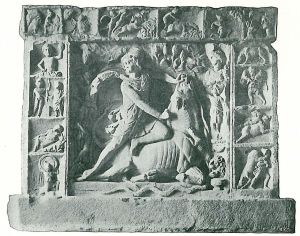
Relief of Mithras as bull-slayer from Neuenheim near Heidelberg, framed by scenes from Mithras’ life (from Wikipedia).
From About.com: Dies Natalis Solis Invicti and Mithras.
Saturnalia may have been responsible for the pageantry of our midwinter festival, but it’s Mithraism that seems to have inspired certain symbolic religious elements of Christmas. Mithraism arose in the Mediterranean world at the same time as Christianity, either imported from Iran, as Franz Cumont believed, or as a new religion which borrowed the name Mithras from the Persians, as the Congress of Mithraic Studies suggested in 1971.
Mithraism radiated from India where there is evidence of its practice from 1400 B.C. Mitra was part of the Hindu pantheon* and Mithra was, perhaps, a minor Zoroastrian deity**, the god of the airy light between heaven and earth. He was also said to have been a military general in Chinese mythology.
The soldiers’ god, even in Rome (although the faith was embraced by male emperors, farmers, bureaucrats, merchants, and slaves, as well as soldiers), demanded a high standard of behavior, “temperance, self-control, and compassion — even in victory”….
The comparison of Mithraists and Christians is not coincidental. December 25 was Mithras’ birthday (or festival before it was Jesus’. The Online Mithraic Faith Newsletter [no longer available] says:
“Since earliest history, the Sun has been celebrated with rituals by many cultures when it began it’s journey into dominance after it’s apparent weakness during winter. The origin of these rites, Mithrasists believe, is this proclamation at the dawn of human history by Mithras commanding His followers to observe such rites on that day to celebrate the birth of Mithras, the Invincible Sun.”

Thor, god of thunder
In Scandinavia the Norse god Thor was honored with the Feast of Juul.
The Feast of Juul was a pre-Christian festival observed in Scandinavia at the time of the December solstice. Fires were lit to symbolize the heat, light and life-giving properties of the returning sun. A Yule or Juul log was brought in and burned on the hearth in honor of the Scandinavian god Thor.
A piece of the log was kept as both a token of good luck and as kindling for the following year’s log. In England, Germany, France and other European countries, the Yule log was burned until nothing but ash remained. The ashes were then collected and either strewn on the fields as fertilizer every night until Twelfth Night or kept as a charm and or as medicine.
French peasants believed that if the ashes were kept under the bed, they would protect the house against thunder and lightning. The present-day custom of lighting a Yule log at Christmas is believed to have originated in the bonfires associated with the feast of Juul.
Click on the link to read about other ancient holidays centered around the Winter Solstice.
Two more articles on this history of Christmas:
From Pacific Standard Magazine, A Brief History of the Christmas Controversy: Can Christmas’ pagan roots explain its increasing secularization today?
During Constantine’s reign the Church Fathers went so far as to associate the “Unconquered Sun” with Jesus, referencing the “sun of righteousness” mentioned in Malachi 4:2 as evidence of Jesus, the true sun. Through this crafty legerdemain early Christians more easily shifted December 25 from the birth of Sol Invictus to the birth of Christ. Eventually several other important religious dates would pivot on Christmas, including the Annunciation, celebrated on March 25, nine months before Christ’s ceremonial birth, the Epiphany, and the Adoration of the Magi. Once Christianity seized December 25, all the other historic moments and their accompanying mythologies fell into place. After emerging out of the husk of Saturnalia, Christmas gathered more and more momentum until it became a vital date inextricably bound to all the other sacred events and consecrated lore of the Christian tradition.
Roughly 1,600 years later, though, things are different. Christmas, at least as it’s celebrated in America, is no longer treated as an exclusively religious holiday. While millions of Americans still attend Christmas services, there are millions more who get swept up in an entirely different set of gratuitous lore: Santa Claus, Christmas trees, Dickensian tableaus, and the lustrous charms of Disneyfication. But look beneath all of the modern flourishes and you’ll see something that looks a lot like Saturnalia: the ceremonial feasts, the singing in the streets (what we now call caroling), the holiday parties. Heck, Saturnalia even had a special day on December 23 reserved for the exchanging of gifts among friends and family—Sigillaria, so named after the wax figurines often given as presents.
The truth is that Christmas has not so much evolved into a secular celebration as it has come full circle, returning to its original incarnation as a sprawling festival more focused on levity and merrymaking than the worship of Jesus Christ….
It’s no blasphemy to declare that the December holiday season has once again become a pagan celebration; it’s an atavistic return to the ritual’s roots. The problem now, as the more devout Christians rightly point out, are those people caught in the middle of this identity crisis—identifying as members of Christianity and claiming belief in its savior, but investing little devotion, solemnity or faith in the embattled date.
Finally, here is an interesting article at a Jewish website on the origins of Christmas. Some excerpts:
In the 4th century CE, Christianity imported the Saturnalia festival hoping to take the pagan masses in with it. Christian leaders succeeded in converting to Christianity large numbers of pagans by promising them that they could continue to celebrate the Saturnalia as Christians….
Christians had little success, however, refining the practices of Saturnalia. As Stephen Nissenbaum, professor history at the University of Massachussetts, Amherst, writes, “In return for ensuring massive observance of the anniversary of the Savior’s birth by assigning it to this resonant date, the Church for its part tacitly agreed to allow the holiday to be celebrated more or less the way it had always been.” The earliest Christmas holidays were celebrated by drinking, sexual indulgence, singing naked in the streets (a precursor of modern caroling), etc.
The Reverend Increase Mather of Boston observed in 1687 that “the early Christians who first observed the Nativity on December 25 did not do so thinking that Christ was born in that Month, but because the Heathens’ Saturnalia was at that time kept in Rome, and they were willing to have those Pagan Holidays metamorphosed into Christian ones.” Because of its known pagan origin, Christmas was banned by the Puritans and its observance was illegal in Massachusetts between 1659 and 1681….
Some of the most depraved customs of the Saturnalia carnival were intentionally revived by the Catholic Church in 1466 when Pope Paul II, for the amusement of his Roman citizens, forced Jews to race naked through the streets of the city. An eyewitness account reports, “Before they were to run, the Jews were richly fed, so as to make the race more difficult for them and at the same time more amusing for spectators. They ran… amid Rome’s taunting shrieks and peals of laughter, while the Holy Father stood upon a richly ornamented balcony and laughed heartily.”
Just some food for thought . . .
A few nice news headlines:
The photo at the top of this post is from Michelle Obama’s Toys for Tots event, at which President Obama sorted toys for boys any girls and took the opportunity to fight gender stereotypes about girls supposedly not liking toys involving sports, science, and legos. Joan McCarter wrote about it at Daily Kos yesterday, President Obama: ‘Girls don’t like toys?’.
See also Amanda Hess at Slate, Watch President Obama Break Down Stereotypes About Toys for Girls and Boys. Watch the video:
More presidential efforts to reach out to women and girls:
The Fix, That time Obama called on only women at a press conference.
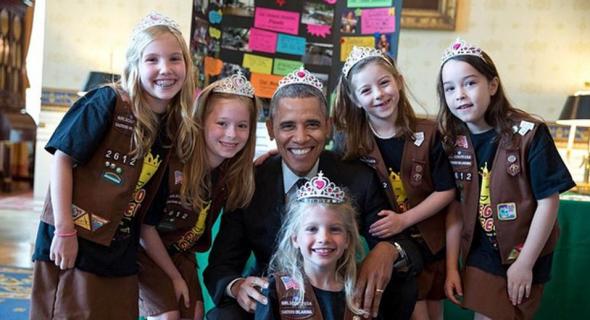
Politico, That time Obama wore a tiara.
White House photographer Pete Souza shared a photo on Instagram on Wednesday of the president donning a tiara with a group of Girl Scouts from the White House Science Fair earlier this year in May. In the caption, Souza wrote the girls from Tulsa “convinced” Obama to join in on the fun.
More news headlines:
I was going to write a big post about the 75th anniversary of the film of Gone With The Wind, but I’ve been too tired from traveling. Here’s a good article from yesterday about the events surrounding the anniversary and about the racism in the book and movie.
75 years later, ‘Gone With the Wind’ never left.
Reuters, Protests flare after Missouri police killing of armed black man.
Reuters, CDC worker monitored for possible Ebola exposure in lab error.
Dave Wiegel at Bloomberg Politics, This Christmas, Be Grateful You Didn’t Put All Your Money in Oil and Gold.
NY Daily News, Putin Calls for Cheaper Vodka as Russian Economy Stumbles.
Bloomberg, Saudi Rulers to Curb Wages as Kingdom Confronts Oil Slump
The Telegraph, Stonehenge discovery could rewrite British pre-history.
More on the discovery: 6,000-year-old encampment found in dig by University of Buckingham.
TPM, Ohio Town Orders Man To Take Down Zombie Nativity Scene.
Raw Story, Indiana lawmaker pushing bill to insulate government Nativity scenes from atheist legal ‘threats’
Raw Story, Ayn Rand helped the FBI investigate whether ‘It’s a Wonderful Life’ was commie propaganda.
Have a wonderful holiday everyone, and please leave a comment and/or a link if you’re so inclined.

 peej
peej Carissa
 bostonboomer
 dakinikat
 ecocatwoman
 mablue2
 Mama Lopez
 peggysue22
 quixote
 skydancingguestblogger
 Mona (aka Wonk the Vote)



 Sky Dancing
Recent Comments